Archive for the ‘Law Enforcement’ Category
ABC NEWS, ADOLF HITLER, ALTERNET, AP, BBC, BUZZFEED, CBS NEWS, CNN, DAILY KOS, DIMITRI SHOSTAKOVICH, DONALD TRUMP, FACEBOOK, FBI, GREAT TERROR, JAMES COMEY, JEFF SESSIONS, JOSEPH STALIN, KEITH SCHILLER, MIKE FLYNN, MIKHAIL TUKHACHEVESKY, MOTHER JONES, MOVEON, NAZI GERMANY, NBC NEWS, NEWSWEEK, NICCOLO MACHIAVELLI, NIKITA KHRUSHCHEV, NIKOLAI ZHILAYEV, NPR, POLITICO, RAW STORY, REUTERS, ROBERT MUELLER III, ROD ROSENSTEIN, RUSSIAN ESPIONAGEky, SALON, SEATTLE TIMES, SENATE INTELLIGENCE COMMITTEE, SERGEY KISLYAK, SERGEY LAVOV, SLATE, SOVIET UNION, THE ATLANTIC, THE CHICAGO SUN-TIMES, THE CHICAGO TRIBUNE, THE DAILY BEAST, THE DISCOURSES, THE GUARDIAN, THE HILL, THE HUFFINGTON POST, THE LOS ANGELES TIMES, THE NEW YORK TIMES, THE WALL STREET JOURNAL, THE WASHINGTON POST, TIME, TWITTER, U.S. NEWS & WORLD REPORT, UPI, USA TODAY, WEHRMACHT, WORLD WAR 11
In Bureaucracy, History, Law, Law Enforcement, Military, Politics, Social commentary on April 11, 2018 at 12:04 am
Nikolai Sergeyvich Zhilayev (pronounced Zill-lay-ev) was a Russian musicologist and the teacher of several 20th-century Russian composers.
Among these: Dimitri Shostakovich.
Among his friends—to his ultimate misfortune—was Mikhail Tukhachevsky, the former military hero now falsely condemned and executed as a traitor by Soviet dictator Joseph Stalin.
In 1938, Zhilayev (November 18, 1881 – January 20, 1938) also became a casualty of what has become known as The Great Terror.
In his posthumously-published memoirs, Testimony, Shostakovich, his pupil and friend, described how Zhilayev faced his end with a calmness that awed even the NKVD (the predecessor to the KGB) secret police sent to arrest him.
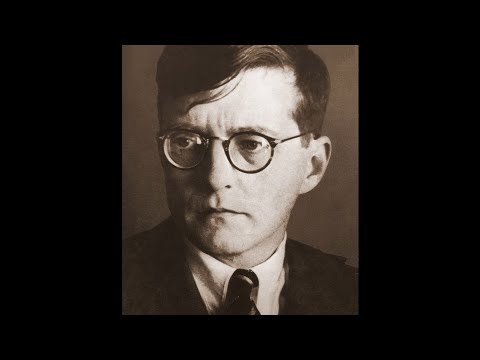
Dimitri Shostakovich
“He had a large picture of Tukhachevsky in his room, and after the announcement that Tukhachevsky had been shot as a traitor to the homeland, Zhilayev did not take the picture down.
“I don’t know if I can explain how heroic a deed that was….As soon as the next poor soul was declared an enemy of the people, everyone destroyed in a panic everything connected with that person….
“And naturally, photographs flew into the fire first, because if someone informed on you, reported that you had a picture of an enemy of the people, it meant certain death.
“Zhilayev wasn’t afraid. When they came for him, Tukhachevsky’s prominently hung portrait amazed even the executioners.”
“What, it’s still up?” one of the secret police asked.
“The time will come,” Zhilayev replied, “when they’ll erect a monument to him.”
As, in fact, has happened.
Meanwhile, Stalin has been universally condemned as one of history’s greatest tyrants.

Mikhail Tukhachevsky appears on a 1963 Soviet Union postage stamp
Third hero—James Brien Comey (December 14, 1960)
Comey served as United States Attorney (federal prosecutor) for the Southern District of New York (2002-2003).
As United States Deputy Attorney General (2003-2005), he opposed the warrantless wiretapping program of the George W. Bush administration. He also argued against the use of water boarding as an interrogation method.
In 2005, he entered the private sector as General Counsel and Senior Vice President for Lockheed Martin, the biggest contractor for the Department of Defense.
On July 29, 2013, the United States Senate voted 93 -1 to confirm Comey as director of the FBI, the seventh in its history.

James B. Comey
He directed the FBI from his appointment in 2013 by President Barack Obama until his firing on May 9 by President Donald Trump.
In a move that Joseph Stalin would have admired, Trump gave no warning of his intentions. Instead, he sent Keith Schiller, his longtime bodyguard, to the FBI with a letter announcing Comey’s dismissal.
Trump had three reasons for firing Comey:
- Comey had refused to pledge his personal loyalty to Trump. Trump had made this “request” during a private dinner at the White House in January. After refusing to make that pledge, Comey told Trump that he would always be honest with him. But that didn’t satisfy Trump’s demand that the head of the FBI act as his personal secret police chief.
- Trump had tried to coerce him into dropping the FBI’s investigation into former National Security Adviser Mike Flynn, for his secret ties to Russia and Turkey. Comey had similarly resisted that demand.
- Comey had recently asked the Justice Department to fund an expanded FBI investigation into contacts between Trump’s 2016 Presidential campaign and Russian Intelligence agents.
As a Presidential candidate and President, Trump:
- Steadfastly denied those revelations;
- Repeatedly attacked the “fake news” media reporting these revelations. Chief among his targets: CNN, The New York Times and The Washington Post; and
- Attacked the Intelligence agencies responsible for America’s security.
On May 10—the day after firing Comey—Trump met in the Oval Office with Russian Foreign Minister Sergey Lavov and Russian Ambassador Sergey Kislyak.
Kislyak is reportedly a top recruiter for Russia’s SVR foreign intelligence agency. He has been closely linked with Jeff Sessions, now Attorney General, and fired National Security Adviser Mike Flynn.
“I just fired the head of the F.B.I.,” Trump told the two dignitaries. “He was crazy, a real nut job. I faced great pressure because of Russia. That’s taken off.”
During that meeting he gave the Russians sensitive Intelligence on ISIS that had been supplied by Israel.
Two days later, on May 12, Trump tweeted a threat to the fired FBI director: “James Comey better hope that there are no ‘tapes’ of our conversations before he starts leaking to the press.”
But shortly afterward, it appeared Trump was the one who should worry: Reports surfaced that Comey had written memos to himself immediately after his private meetings with Trump.
He had also told close aides that Trump was trying to pressure him into dropping the investigation into close ties between Russian Intelligence agents and Trump campaign staffers.
As for Trump’s threat of having tapes of his and Comey’s conversations: Like Trump’s claim that he could prove that Barack Obama wasn’t an American citizen, this, too, proved to be a lie.
And Comey’s firing led directly to a result Trump did not anticipate: Acting Attorney General Rod Rosenstein yielded to demands from Democrats and appointed former FBI Director Robert Meuller III as a special prosecutor to investigate those ties.
ABC NEWS, ADOLF HITLER, ALTERNET, AP, BBC, BUZZFEED, CBS NEWS, CNN, DAILY KOS, DIMITRI SHOSTAKOVICH, DONALD TRUMP, FACEBOOK, FBI, GREAT TERROR, JAMES COMEY, JEFF SESSIONS, JOSEPH STALIN, KEITH SCHILLER, MIKE FLYNN, MIKHAIL TUKHACHEVESKY, MOTHER JONES, MOVEON, NAZI GERMANY, NBC NEWS, NEWSWEEK, NICCOLO MACHIAVELLI, NIKITA KHRUSHCHEV, NIKOLAI ZHILAYEV, NPR, POLITICO, RAW STORY, REUTERS, ROBERT MUELLER III, ROD ROSENSTEIN, RUSSIAN ESPIONAGEky, SALON, SEATTLE TIMES, SENATE INTELLIGENCE COMMITTEE, SERGEY KISLYAK, SERGEY LAVOV, SLATE, SOVIET UNION, THE ATLANTIC, THE CHICAGO SUN-TIMES, THE CHICAGO TRIBUNE, THE DAILY BEAST, THE DISCOURSES, THE GUARDIAN, THE HILL, THE HUFFINGTON POST, THE LOS ANGELES TIMES, THE NEW YORK TIMES, THE WALL STREET JOURNAL, THE WASHINGTON POST, TIME, TWITTER, U.S. NEWS & WORLD REPORT, UPI, USA TODAY, WEHRMACHT, WORLD WAR 11
In Bureaucracy, History, Law Enforcement, Military, Politics, Social commentary on April 10, 2018 at 3:03 pm
…A truly great man is ever the same under all circumstances. And if his fortune varies, exalting him at one moment and oppressing him at another, he himself never varies, but always preserves a firm courage, which is so closely interwoven with his character that everyone can readily see that the fickleness of fortune has no power over him.
The conduct of weak men is very different. Made vain and intoxicated by good fortune, they attribute their success to merits which they do not possess. And this makes them odious and insupportable to all around them. And when they have afterwards to meet a reverse of fortune, they quickly fall into the other extreme, and become abject and vile.
–Niccolo Machiavelli, The Discourses
Three heroes, two villains.
Two of the heroes are Russian; the third is an American.
The villains: One Russian (actually, Georgian); one American.
First up—in order of disappearance: Mikhail Nikolayevich Tukhachevsky (pronounced too-ka-chev-sky)
Tukhachevsky (February 4, 1893 – June 12, 1937) was a leading Soviet military leader and theoretician from 1918 to 1937.
He commanded the Soviet Western Front during the Russian-Polish War (1920-21) and served as Chief of Staff of the Red Army (1925-1928).
He fought to modernize Soviet armament, as well as develop airborne, aviation and mechanized forces. Almost singlehandedly, he created the theory of deep operations for Soviet forces.

Mikhail Tukhachevsky
All of these innovations would reap huge dividends when the Soviet Union faced the lethal fury of Adolf Hitler’s Wehrmacht.
In 1936, Tukhachevsky warned Soviet dictator Joseph Stalin that Nazi Germany might attack without warning—and ignite a long and murderous war.
Stalin—the son of a Georgian cobbler—resented Tukhachevsky’s coming from a noble family. A monumental egomaniac, he also hated that Tukhachevesky’s fame rivaled his own.
Warned of the approaching German danger, Stalin shouted: “What are you trying to do—frighten Soviet authority?”
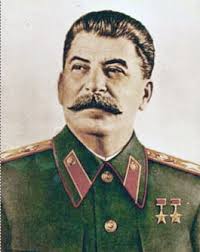
Joseph Stalin
The attack that Tukhachevsky warned against came five years later—on June 22, 1941, leaving at least 20 million Russians dead.
But Tukhachevsky wasn’t alive to command a defense.
The 1930s were a frightening and dangerous time to be alive in the Soviet Union. In 1934, Stalin, seeing imaginary enemies everywhere, ordered a series of purges that lasted right up to the German invasion.
An example of Stalin’s paranoia occurred one day while the dictator walked through the Kremlin corridors with Admiral Ivan Isakov. Officers of the NKVD (the predecessor to the KGB) stood guard at every corner.
“Every time I walk down the corridors,” said Stalin, “I think: Which one of them is it? If it’s this one, he will shoot me in the back. But if I turn the corner, the next one can shoot me in the face.”
In 1937-38, the Red Army fell prey to Stalin’s paranoia.
Its victims included:
- Three of five marshals (five-star generals);
- Thirteen of 15 army commanders (three- and four-star generals);
- Fifty of 57 army corps commanders; and
- One hundred fifty-four out of 186 division commanders.
And heading the list of those marked for death was Marshal Mikhail Tukhachevsky.
Arrested on May 22, 1937, he was interrogated and tortured. As a result, he “confessed” to being a German agent plotting to overthrow Stalin and seize power.
On his confession, which survives in the archives, his bloodstains can clearly be seen.
On June 11, the Soviet Supreme Court convened a special military tribunal to try Tukhachevsky and eight generals for treason.
It was a sham: The accused were denied defense attorneys, and could not appeal the verdict—-which was foregone: Death.
In a Russian version of poetic justice, five of the eight generals who served as Tukhachevsky’s judges were themselves later condemned and executed as traitors.
Within hours of the verdict, Tukhachevsky was summoned from his cell and shot once in the back of the head.
From 1937 until 1956, Tukhachevsky was officially declared a traitor and fifth-columnist.
Then, on February 25, 1957, Soviet Premier Nikita Khrushchev delivered his bombshell “Secret Speech” to the 20th Congress of the Communist Party of the Soviet Union.
In this, he denounced Stalin (who had died in 1953) as a ruthless tyrant responsible for the slaughter of millions of innocent men, women and children. He condemned Stalin for creating a “personality cult” around himself, and for so weakening the Red Army that Nazi Germany was able to easily overrun half of the Soviet Union from 1941 to 1943.
On January 31, 1957, Tukhachevsky and his co-defendants were declared innocent of all charges and were “rehabilitated.”
Today, he is once again—rightly—considered a Russian hero and military genius. And Stalin is universally—and rightly—seen as a blood-stained tyrant.
Next hero: Nikolai Sergeyvich Zhilayev (pronounced Zill-lay-ev)
Zhilayev (November 18, 1881 – January 20, 1938) was a Russian musicologist and the teacher of several 20th-century Russian composers. Among these: Dimitri Shostakovich.
Zhilayev, a member of the Russian Academy of Art-Sciences, taught at the Moscow Conservatory. Among his friends–to his ultimate misfortune–was Mikhail Tukhachevsky.
In 1938, he, too, became a casualty of what has become known as The Great Terror.
In his posthumously-published memoirs, Testimony, Shostakovich, his pupil and friend, described how Zhilayev faced his end with a calmness that awed even the NKVD (the predecessor to the KGB) secret police sent to arrest him.
ABC NEWS, AL QAEDA, ALTERNET, ANAPOLIS NAVAL ACADEMY, AP, BARACK OBAMA, BUZZFEED, CBS NEWS, CNN, CROOKS AND LIARS, DAILY KOZ, DEFENSE DEPARTMENT, FACEBOOK, FBI, GEORGE W. BUSH, JUSTICE DEPARTMENT, MOTHER JONES, MOVEON, NBC NEWS, NEWSWEEK, NO-FLY LIST, NPR, POLITICO, RAW STORY, REUTERS, ROBERT GATES, SALON, SEATTLE TIMES, SLATE, TERRORISM, THE ATLANTIC, THE CHICAGO SUN-TIMES, THE CHICAGO TRIBUNE, THE DAILY BEAST, THE GUARDIAN, THE HILL, THE HUFFINGTON POST, THE LOS ANGELES TIMES, THE NATION, THE NEW YORK TIMES, THE PENTAGON, THE WASHINGTON POST, TIME, TWITTER, U.S. NEWS & WORLD REPORT, UPI, USA TODAY
In Bureaucracy, History, Law, Law Enforcement, Politics, Social commentary on April 6, 2018 at 2:29 pm
In 2005, Rahinah Ibrahim, a Malaysian architect, was placed on the United States Government’s No-Fly list, operated by the Terrorist Screening Center.
It wasn’t because she was a member of Al Qaeda. It happened because of an FBI screw-up.
The mess started in January 2005, when Ibrahim and her 14-year-old daughter arrived at the San Francisco Airport. Their destination: Hawaii, to attend a conference trip sponsored by Stanford.
Ibrahim, still recovering from a recent hysterectomy, was in a wheelchair.
When she approached the United Airlines counter to check in, she was seized, handcuffed, thrown in the back of a police car and taken to a holding cell.
There she was interrogated. During this, paramedics had to be summoned because she hadn’t taken her surgery medication.
Then, to her surprise, she was released—and told that her name had been removed from the No-Fly list. She boarded a flight to Hawaii and attended the conference.
But in March 2005, the situation suddenly changed.
Having returned to Malasia, she bought a ticket to fly back to California to meet with her Stanford thesis adviser. But at the airport, she was banned from the flight.
She was told that her student visa had been revoked, and that she would longer be let into the United States. When she asked why, authorities refused to give a reason.
She would not learn the answer for another eight years.
An FBI agent in San Jose, California, had conducted a background check on Ibrahim. He hadn’t meant to place her on theNo-Fly list.

Headquarters in Washington, D.C.
He had simply checked the wrong boxes on a form. He didn’t even realize the mistake until nearly a decade later, during his deposition in 2013.
In fact, he filled out the form exactly the opposite way from the instructions provided on the form. He did so even though the form stated, “It is recommended that the subject NOT be entered into the following selected terrorist screening databases.”
Thus, Ibrahim was placed on the No-Fly list.
That was bad enough—but at least understandable. FBI agents are human, and can and do err like anyone else.
What is not understandable or forgivable is this:
After Ibrahim filed a lawsuit against the United States Government in 2006, the Justice Department ordered a cover-up—to prevent word from leaking that one of its agents had made a mistake.
Moreover, Ibrahim was ordered by the Justice Department to not divulge to anyone that she was suing the United States Government—or the reason for the lawsuit.
Ibrahim is currently the dean of architecture at University Putra Malaysia.
Because the Justice Department refused to admit its mistake, attorneys working pro bono for Ibrahim incurred a reported $3.8 million in legal fees, as well as $300,000 in litigation costs.
In his recent decision on the case, U.S. District Judge William Alsup, based in San Francisco, called the agent’s error “conceded, proven, undeniable and serious.”
“Once derogatory information is posted to the Terrorist Screening Database, it can propagate extensively through the government’s interlocking complex of databases, like a bad credit report that will never go away,” he wrote.
The Justice Department could have quickly admitted the mistake and quickly moved to correct it. But the egos of Federal law enforcement agents and prosecutors effectively ruled out this option.
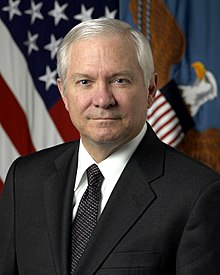
Robert Gates, who served as Secretary of Defense under Presidents George W. Bush and Barack Obama (2006-2011) had a completely different approach to dealing with mistakes.
In his autobiography, Duty, he writes of his determination to promote good relations between the Pentagon and the reporters who covered it.
Robert Gates
In his commencement address at the Anapolis Naval Academy on May 25, 2007, he said:
“…the press, in my view [is] a critically important guarantor of our freedom.
“When it identifies a problem, the response of senior leaders should be to find out if the allegations are true. And if so, say so, and then act to remedy the problem.
“If [the allegations are] untrue, then be able to document that fact.”
Millions of Americans not only distrust the Federal Government—they believe it is aggressively conspiring against them.
But the vast majority of Federal employees do not come to work intent on destroying the lives of their fellow Americans.
They spend most of their time carrying out routine, often mind-numbing tasks—such as filling out what seem like an endless series of forms.
But even where no malice is involved, their actions can have devastating consequences for innocent men and women. It’s easy, for example, to turn down someone for disability coverage when you’ve reduced human applicants to black-and-white documents.
But the consequences become even more frightening in cases where “national security” can be invoked to hide error, stupidity, or even criminality.
The refusal of the Justice Department to quickly admit the honest mistake of one of its agents prevented Ibrahim from boarding a commercial flight for seven years.
Federal agencies should follow the advice given by Robert Gates: Admit your mistakes and act quickly to correct them.
Unless this happens, the poisonous atmosphere of distrust between the Government and its citizens will only worsen.
2016 PRESIDENTIAL RACE, ABC NEWS, ALTERNET, AP, BOEING, BUZZFEED, CBS NEWS, CNN, CROOKS AND LIARS, DAILY KOZ, DAVID BROOKS, DONALD TRUMP, FACEBOOK, GEORGE C. WALLACE, HILLARY CLINTON, JOHN F. KENNEDY, JOHN MCCAIN, JUSTICE DEPARTMENT, MAFIA, MARTIN LUTHER KING JUNIOR, MOTHER JONES, MOVEON, NBC NEWS, NEWSWEEK, NPR, POLITICO, PRISONERS OF WAR, RAW STORY, REUTERS, ROBERT F. KENNEDY, SALON, SAUDI ARABIA, SEATTLE TIMES, SLATE, STATE DEPARTMENT, THE ATLANTIC, THE CHICAGO SUN-TIMES, THE CHICAGO TRIBUNE, THE DAILY BEAST, THE GUARDIAN, THE HILL, THE HUFFINGTON POST, THE KENNEDYS, THE LOS ANGELES TIMES, THE NATION, THE NEW YORK TIMES, THE WALL STREET JOURNAL, THE WASHINGTON POST, TIME, TWITTER, U.S. NEWS & WORLD REPORT, UPI, USA TODAY, WOMEN
In Bureaucracy, History, Law Enforcement, Military, Politics, Social commentary on April 5, 2018 at 12:09 am
Fifty years ago, the Reverend Martin Luther King was shot to death as he stood on a balcony in Memphis, Tennessee. He had come there to lead a march of striking garbage workers.
New York United States Senator—and now Presidential candidate—Robert Francis Kennedy had been scheduled to give a speech in Indianapolis, Indiana, before a black audience.
Just before he drove into the city to deliver his address, he learned of King’s assassination. There was a real danger that rioting would erupt. Police who had been assigned to protect him said they wouldn’t accompany him into the inner city.
Kennedy drove off anyway, leaving behind his police escort.
Standing on a podium mounted on a flatbed truck, Kennedy spoke for just four minutes and 57 seconds.
His waiting audience hadn’t yet learned of King’s death. Kennedy broke the news to gasps, and then gave an impromptu speech eulogizing the slain civil rights leader.
For the first time since the assassination of his brother, President John F. Kennedy, in 1963, he spoke publicly of that killing. He noted that JFK—like King—had also been killed by a white man.
And he called upon the crowd to “dedicate ourselves to what the Greeks wrote so many years ago: to tame the savageness of man and to make gentle the life of this world.”
Riots erupted in 60 cities following King’s death—but not in Indianapolis.
Fifty years ago, Robert Kennedy aroused passions of an altogether different sort from those aroused by Donald Trump.
Kennedy had been a United States Attorney General (1961-1964) and Senator from New York (1964-1968). But it was his connection to his beloved and assassinated brother, President John F. Kennedy, for which he was best known.
In October, 1962, during the Cuban Missile Crisis, his wise counsel helped steer America from the brink of nuclear war with the Soviet Union. As a U.S Senator he championed civil rights and greater Federal efforts to fight poverty.

Robert F. Kennedy campaigning for President
Millions saw RFK as the only candidate who could make life better for America’s impoverished—while standing firmly against those who threatened the Nation’s safety.
As television correspondent Charles Quinn observed: “I talked to a girl in Hawaii who was for [George] Wallace [the segregationist governor of Alabama]. And I said ‘Really?’ [She said] ‘Yeah, but my real candidate is dead.’
“You know what I think it was? All these whites, all these blue collar people who supported Kennedy…all of these people felt that Kennedy would really do what he thought best for the black people, but, at the same time, would not tolerate lawlessness and violence.
“They were willing to gamble…because they knew in their hearts that the country was not right. They were willing to gamble on this man who would try to keep things within reasonable order; and at the same time do some of the things they knew really should be done.”
Campaigning for the Presidency in 1968, RFK had just won the crucial California primary on June 4—when he was shot in the back of the head.
His killer: Sirhan Sirhan, a young Palestinian furious at Kennedy’s support for Israel.
Kennedy died at 1:44 a.m. on June 6. He was 42.
On June 8, 1,200 men and women boarded a specially-reserved passenger train at New York’s Pennsylvania Station. They were accompanying Kennedy’s body to its final resting place at Arlington National Cemetery.
As the train slowly moved along 225 miles of track, throngs of men, women and children lined the rails to pay their final respects to a man they considered a genuine hero.
Little Leaguers clutched baseball caps across their chests. Uniformed firemen and policemen saluted. Burly men in shirtsleeves held hardhats over their hearts. Black men in overalls waved small American flags. Women from all levels of society stood and cried.

A nation says goodbye to Robert Kennedy
Commenting on RFK’s legacy, historian William L. O’Neil wrote in Coming Apart: An Informal History of America in the 1960′s:
“…He aimed so high that he must be judged for what he meant to do, and, through error and tragic accident, failed at….He will also be remembered as an extraordinary human being who, though hated by some, was perhaps more deeply loved by his countrymen than any man of his time.
“That too must be entered into the final account, and it is no small thing. With his death something precious disappeared from public life.”
America has never again seen a Presidential candidate who combined toughness on crime and compassion for the poor.
Republican candidates have waged war on crime—and the poor. And Democratic candidates have moved to the Right in eliminating anti-poverty programs.
RFK had the courage to fight the Mafia—and the compassion to fight poverty. At a time when Americans long for candidates to give them positive reasons for voting, his kind of politics are sorely missed.
9/11, ABC NEWS, ABORTION, ADOLF HITLER, ALTERNET, ANTISEMITISM, AP, ARIZONA, BBC, BUZZFEED, CBS NEWS, CNN, DAILY KOS, DAVID HOGG, DISCRIMINATION, FACEBOOK, FASCISM, FBI, FIRST RESPONDERS, GAYS, INDIANA, JEWS, KAREN HANDEL, LAURA INGRAHAM, MARJORY STONEMAN DOUGLAS HIGH SCHOOL, MOTHER JONES, MOVEON, NAZI GERMANY, NBC NEWS, NEWSWEEK, NPR, NRA, PLANNED PARENTHOOD, POLITICO, RAW STORY, RELIGIOUS F THE CHICAGO TRIBUNE, RELIGIOUS FREEDOM RESTORATION ACT, REPUBLICAN PARTY, REUTERS, SALON, SEATTLE TIMES, SLATE, STALINGRAD, SUSAN G. KOMEN FOUNDATION, THE ATLANTIC, THE CHICAGO SUN-TIMES, THE CHICAGO TRIBUNE, THE DAILY BEAST, THE GUARDIAN, THE HILL, THE HUFFINGTON POST, THE LOS ANGELES TIMES, THE NEW YORK TIMES, THE WALL STREET JOURNAL, THE WASHINGTON POST, THIRD REICH, TIME, TWITTER, U.S. NEWS & WORLD REPORT, UPI, USA TODAY
In Bureaucracy, History, Law, Law Enforcement, Politics, Social commentary on April 2, 2018 at 12:04 am
In 2014, Arizona Republicans passed Senate Bill 1062.
This allowed business owners to legally discriminate against gay and lesbian customers—including the right to refuse medical care to them.
Its intent: To appease the hatred of gays and lesbians by the religious Right, a key constituency of the Republican party.
Gays and their supporters reacted by threatening a legal business and tourism boycott of Arizona. And the business community and its supporters, alarmed, took notice.
- Large businesses—such as Apple, American Airlines, AT&T, Delta Airlines, Verizon and Intel—publicly opposed the measure.
- With Super Bowl XL1X scheduled to be played in 2015 at the University of Phoenix Stadium in Glendale, Arizona, the Arizona Super Bowl Host Committee expressed concern.
- Arizona’s United States Senators John McCain and Jeff Flake publicly urged Governor Jan Brewer to veto the measure, citing worries about the economic impact on the state’s businesses.
Faced with a choice between monetary greed and ideological fanaticism, Brewer chose to veto the legislation on February 26, 2014.
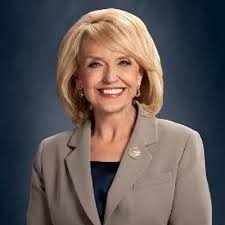
Governor Jan Brewer
Suddenly, Right-wingers who had anticipated becoming persecutors now claimed themselves to be victims. Among their rants on Twitter:
- “CNN led full court media press to take away rights of Christians. Just the beginning. Using tolerance as weapon against us. Wake up.” –John Nolte(@NolteNC)
- “Not sure what the GOP stands for when it stands against religious freedom out of pure fear of political correctness.” –Ben Shapiro (@benshapiro)
- “Arizona Gov. Jan Brewer makes Christians in her state second class citizens.” –toddstarnes (@toddstarnes)
- “A sad day for Arizonans who cherish and understand religious liberty.” –The Center for Arizona Policy
American Rightists believed they had a right to withhold their business services from those they hated.
But they considered it unfair and even demonic for gays and their supporters to withhold monies from discriminatory Arizona businesses.
Story #3:
On February 14, 19-year-old Nikolas Cruz slaughtered two faculty members and 15 students at Marjory Stoneman Douglas High School in Parkland, Florida. His weapon of choice: An AR-15 assault rifle, often favored by gun massacre killers.
Among the students who survived the carnage: 17-year-old David Hogg. He quickly joined the student-led gun control advocacy group Never Again, becoming one of its best-known spokesmen.
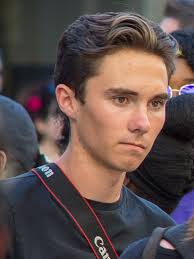
David Hogg
He and his fellow student activists were immediately targeted for vicious insults and even death threats by the National Rifle Association and its shills—especially those in Congress and the Fox News Network.
One of these shills was Fox News host Laura Ingraham. On March 28, not content with attacking Hogg’s efforts to ban assault weaponry, she attacked him personally, tweeting:
“David Hogg Rejected By Four Colleges To Which He Applied and whines about it. (Dinged by UCLA with a 4.1 GPA…totally predictable given acceptance rates.)”
Hogg hadn’t been able to get into UC Los Angeles, UC San Diego, UC Santa Barbara, or UC Irvine, despite having a 4.2 grade point average.
For many Twitter users, this was beyond the pale, and they made their anger known:
“Laura, you’re a parent. This is pretty deplorable.”
“Can’t imagine why any adult would make fun of a kid over college rejections, let alone a kid who’s been through what the Parkland kids have.”
“What is the purpose of this tweet? What is wrong with you? Are you actually proud of this? Regardless of your political beliefs and motivations, THIS is how you choose to present yourself? You must be so sad, angry and scared.”
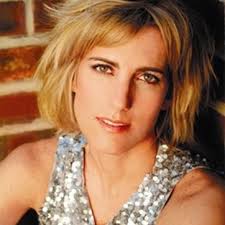
Laura Ingraham
But it fell to David Hogg to strike back in a way guaranteed to frighten even the most fanatical Rightists.
“I’m not going to stoop to her level and go after her on a personal level,” he said. “I’m going to go after her advertisers.”
He posted the following tweet to his 600,000 Twitter followers:
“Pick a number 1-12 contact the company next to that #
“Top Laura Ingraham Advertisers
1. @sleepnumber
2. @ATT
3. Nutrish
4. @Allstate & @esurance
5. @Bayer
6. @RocketMortgage Mortgage
7. @LibertyMutual
8. @Arbys
9. @TripAdvisor
10. @Nestle
11. @hulu
12. @Wayfair
Nutrish was the first advertiser to drop its sponsorship of Ingraham’s program. Other brands followed.
Suddenly alarmed, Ingraham tweeted the next day: “Any student should be proud of a 4.2 GPA —incl. @DavidHogg111. On reflection, in the spirit of Holy Week, I apologize for any upset or hurt my tweet caused him or any of the brave victims of Parkland. For the record, I believe my show was the first to feature David…”
Hogg dismissed her statement: “She only apologized after we went after her advertisers.” He said that he would accept her apology only if she denounced “the way your network has treated my friends and I in this fight.”
Ingraham isn’t likely to do that. She has stayed silent since her tweet. Meanwhile, her advertisers have continued to fall off:
- The Atlantis
- Bayer
- Paradise Island Resort
- Office Depot
- Jenny Craig Miracle
- Ear
- Honda
- Progressive
- Hulu
- TripAdvisor
- Expedia
- Wayfair
- StitchFix
- Jos A. Bank
- Nestle and
- Johnson & Johnson.
Although only 17, David Hogg knows it’s better to stand up to tyrants than submit to them. He is sending a message that even the most hard-core Fascists can understand: Attack me and you’ll get it right back in your ugly faces.
9/11, ABC NEWS, ABORTION, ADOLF HITLER, ALTERNET, ANTISEMITISM, AP, ARIZONA, BBC, BUZZFEED, CBS NEWS, CNN, DAILY KOS, DAVID HOGG, DISCRIMINATION, FACEBOOK, FASCISM, FBI, FIRST RESPONDERS, GAYS, INDIANA, JEWS, KAREN HANDEL, LAURA INGRAHAM, MARJORY STONEMAN DOUGLAS HIGH SCHOOL, MOTHER JONES, MOVEON, NAZI GERMANY, NBC NEWS, NEWSWEEK, NPR, NRA, PLANNED PARENTHOOD, POLITICO, RAW STORY, RELIGIOUS F THE CHICAGO TRIBUNE, RELIGIOUS FREEDOM RESTORATION ACT, REPUBLICAN PARTY, REUTERS, SALON, SEATTLE TIMES, SLATE, STALINGRAD, SUSAN G. KOMEN FOUNDATION, THE ATLANTIC, THE CHICAGO SUN-TIMES, THE CHICAGO TRIBUNE, THE DAILY BEAST, THE GUARDIAN, THE HILL, THE HUFFINGTON POST, THE LOS ANGELES TIMES, THE NEW YORK TIMES, THE WALL STREET JOURNAL, THE WASHINGTON POST, THIRD REICH, TIME, TWITTER, U.S. NEWS & WORLD REPORT, UPI, USA TODAY
In Bureaucracy, History, Law, Law Enforcement, Politics, Social commentary on March 30, 2018 at 12:24 am
There are two ways to deal with bullies: Submit to them—or stand up to them.
Here are three stories of what happened when intended victims counterattacked their would-be predators.
Story #1:
Karen Handel, vice president of public affairs for Susan G. Komen for the Cure, had it all worked out.
She had fashioned what she believed was a politically viable plan for Komen to pull its grant monies from Planned Parenthood (PP).
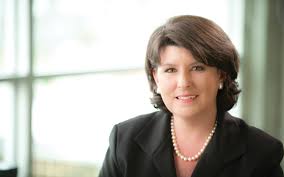
Karen Handel
She didn’t care that this money went entirely for breast cancer screenings for poor women. What she did care about was that about 3% of all PP revenues went toward providing abortion services.
Since being hired by Komen as vice president of public affairs, in April, 2011, Handel had pushed to drop PP from grants. She had promised to de-fund PP during her failed 2010 campaign for governor of Georgia.
So, in 2012, she made her move.
The official version, as put out by Handel and the top brass of Komen, went: “We’ve halted grants to Planned Parenthood because it’s under investigation by Congress for misuse of funds.”
Unfortunately for Komen, the public instantly saw through the lie. And the results for Komen were as devastating as those that threatened to engulf Arizona two years later.
Any crank in Congress can start an “investigation” into anything.
And PP was “under investigation” by a crank: Rep. Cliff Stearns (R-Fla.), chairman of the Energy and Commerce Subcommittee on Oversight and Investigations.
Stearns, a fanatical anti-abortionist, claimed he wanted to determine whether PP had spent public money on abortions over the last decade.
But Stearns didn’t hesitate to slander the patriotism of thousands of 9/11 “first responders”–the police, firefighters, construction workers and others who risked their lives to save their fellow Americans.
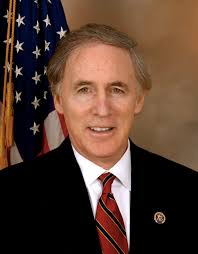
Rep. Cliff Stearns
He did so by demanding that they submit their names, birthplaces, addresses, government ID numbers and other personal data to the FBI to prove they were not terrorists.
Only then could they receive federally-subsidized medical care for injuries caused by exposure to toxic dust and debris at the site.
Not one terrorist was discovered in the resulting investigations.
Public outrage at Komen was immediate and overwhelming:
- More than 50 members of Congress signed letters asking Komen to reverse course.
- New York City Mayor Michael Bloomberg publicly rebuked Komen and pledged $250,000 to PP.
- Approximately 37,000 people from all over the country signed a petition demanding Handel’s resignation.
- PP raised nearly $3 million in contributions.
Reeling before this onslaught of criticism, Komen issued a statement: “We will continue to fund existing grants, including those of Planned Parenthood, and preserve their eligibility to apply for future grants.”
Having failed in their latest assault on women’s rights, the Right’s would-be predators now portrayed themselves as victims:
- “The last time I checked,” Handel told Right-wing Fox News, “private non-profit organizations have a right and a responsibility to be able to set the highest standards and criteria on their own without interference, let alone the level of vicious attacks and coercion that has occurred by Planned Parenthood. It’s simply outrageous.”
- “Planned Parenthood campaigns to destroy anyone who questions them,” charged Marjorie Dannenfelser, president of the anti-abortion Susan B. Anthony List.
- “Their attitude is that of an immature teenager with an enormous sense of entitlement. This is just more proof that Planned Parenthood will pulverize anyone who dares to question them,” Dannenfelser said.
- “What Planned Parenthood did to that venerable and honorable organization [Komen Foundation] is nothing less than a Mafia-style shakedown,” said Steven H. Aden, senior counsel for the Alliance Defense Fund. The Fund bitterly opposes abortion, gay marriage, birth control and the separation of church and state.
Many conservatives correctly defended Komen’s right, as a private charitable organization, to give—or withhold—its money as it saw fit.
But these same conservatives refused to grant PP’s outraged supporters the same right: To withhold their own monies from Komen.
National Review’s Daniel Foster called the backlash to Komen “disgusting,” attacking PP and “the Left” for their “gangsterism.”
Story #2:
Two years later, in 2014, the Right made another move to strip Americans it didn’t like of their most basic rights. Their weapon of choice: Arizona Senate Bill 1062.
The legislation had been passed by the Republican-controlled State House of Representatives and Senate. Its intent:
- Allow business owners to turn away gay and lesbian customers.
- Allow employers to deny equal pay to women.
- Allow individuals to renege on contract obligations.
- Allow hospitals to refuse to provide medical care to a gay or lesbian patient.
And all of these actions would have been legally protected—so long as “sincere religious belief” was cited as the reason.
The legislation was written by the Right-wing advocacy group Center for Arizona Policy and the Christian legal organization, Alliance Defending Freedom.
Officially, its intent was to prevent the government from forcing business owners to act in ways contrary to strongly held religious beliefs.
Unofficially, its intent was to appease the hatred of gays and lesbians by the religious Right, a key constituency of the Republican party.
Gays and their supporters reacted by threatening a legal business and tourism boycott of Arizona. And the business community and its supporters, alarmed, took notice.
2016 PRESIDENTIAL ELECTION, ABC NEWS, ALTERNET, AP, ARCHIBALD COX, ARRON COPELAND, ARTHUR MILLER, BUZZFEED, CBS NEWS, CHARLIE CHAPLAN, CNN, CROOKS AND LIARS, DAILY KOZ, DASHIELL HAMMETT, DELORES DEL RIO, DONALD TRUMP, DWIGHT D. EISENHOWER, EDWARD G. ROBINSON, EDWARD R. MURROW, ELMER BERNSTEIN, FACEBOOK, FBI, FOX NEWS, GEORGE C. MARSHALL, HARRY S. TRUMAN, HOWARD DA SILVA, HOWARD FAST, IRWIN SHAW, J. ROBER OPPENHEIMER, JAMES COMEY, JOHN BIRCH SOCIETY, JOHN GARFIELD, JOHN STEINBECK, JOSEPH R. MCCARTHY, LEE GRANT, LILLIAN HELLMAN, LLOYD BRIDGES, LUCILLE BALL, MOTHER JONES, MOVEON, NAZI GERMANY, NBC NEWS, NEWSWEEK, NPR, PETE SEEGER, POLITICO, RAW STORY, REUTERS, RICHARD M. NIXON, ROBERT MUELLER, ROBERT WELCH, ROD ROSENSTEIN, RUSSIAN INTELLIGENCE, RUTH GORDON, SALON, SEATTLE TIMES, SLATE, SOVIET UNION, STATE DEPARTMENT, SUBVERSION, THE ATLANTIC, THE CHICAGO SUN-TIMES, THE CHICAGO TRIBUNE, THE DAILY BEAST, THE GUARDIAN, THE HILL, THE HUFFINGTON POST, THE LOS ANGELES TIMES, THE NATION, THE NEW YORK TIMES, THE WASHINGTON POST, TIME, TWITTER, U.S. DEPARTMENT OF JUSTICE, U.S. NEWS & WORLD REPORT, UPI, USA TODAY, USA TODAY EDWARD R. MURROW, WILLIAM L. SHIRER, ZERO MOSTEL
In Bureaucracy, History, Law, Law Enforcement, Politics, Social commentary on March 20, 2018 at 12:04 am
During the 1950s, Wisconsin United States Senator Joseph R. McCarthy rode a wave of paranoia to national prominence–by attacking the patriotism of anyone who disagreed with him.
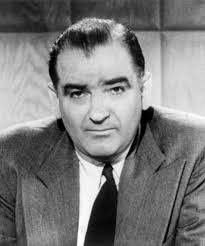
Joseph McCarthy
Elected to the Senate in 1946, he rose to national prominence on February 9, 1950, after giving a fiery speech in Wheeling, West Virginia:
“The State Department is infested with communists. I have here in my hand a list of 205—a list of names that were made known to the Secretary of State as being members of the Communist Party and who nevertheless are still working and shaping policy in the State Department.”
No American—no matter how prominent—was safe from the accusation of being a Communist or a Communist sympathizer—”a Comsymp” or “fellow traveler” in the style of the era.
Among those accused:
- Secretary of State George C. Marshall, who had overseen America’s strategy for defeating Nazi Germany and Imperial Japan;
- President Harry S. Truman;
- Playwrights Lillian Hellman and Arthur Miller;
- Actors Charlie Chaplin, Zero Mostel, Lloyd Bridges, Howard Da Silva, Edward G. Robinson and John Garfield;
- Composers Arron Copland and Elmer Bernstein;
- Physicist J. Robert Oppenheimer, who presided over the creation of America’s atomic bomb;
- Actresses Lee Grant, Delores del Rio, Ruth Gordon and Lucille Ball;
- Journalists Edward R. Murrow and William L. Shirer, who had chronicled the rise of Nazi Germany;
- Folksinger Pete Seeger;
- Writers Irwin Shaw, Howard Fast, John Steinbeck and Dashiell Hammett.
Even “untouchable” Republicans became targets for such slander.
The most prominent of these was President Dwight D. Eisenhower–labeled ”a conscious, dedicated agent of the Communist Conspiracy” by Robert Welch, who founded the John Birch Society in 1958.
On March 9, 1954, at the height of the McCarthy hysteria, Edward R. Murrow, the most respected broadcast journalist in America, delivered a powerful blow against the Senator’s dictatorial tactics and agenda. He did so on his high-rated CBS program, “See It Now.”
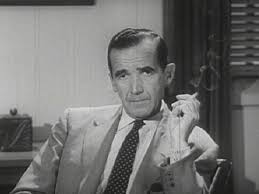
Edward R. Murrow
Today, 64 years later, Murrow’s eloquent appeal for moral courage in the face of tyranny still stands, and is still worth remembering.
This is especially true since the United States finds itself once again endangered by a fearful demagogue. But this one is even more dangerous than McCarthy.
For, unlike McCarthy, he commands the Justice Department to bludgeon his “enemies” at home and the Defense Department to literally destroy any country he dislikes abroad.
He is the President of the United States: Donald J. Trump.
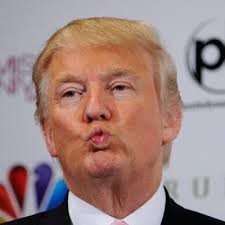
Donald Trump
Even before taking office on January 20, 2017, he was dogged by charges that Russian Intelligence agents had aided his 2016 Presidential campaign. And that members of his campaign had actively colluded with them.
The FBI, headed by James Comey, was then investigating that alleged collusion. Then, on May 8, 2017, Trump abruptly fired Comey from his position as FBI director.
A national firestorm erupted—unprecedented since President Richard M. Nixon had fired Watergate Special Prosecutor Archibald Cox on October 20, 1973.
To squelch it, Deputy Attorney General Rod Rosenstein moved quickly.
On May 17, 2017, he appointed Robert Mueller to serve as Special Counsel for the United States Department of Justice.
Mueller had dedicated almost his entire adult life to serving the Justice Department:
- United States Attorney for Massachusetts (1986–1987);
- United States Assistant Attorney General for the Criminal Division (1990–1993);
- United States Attorney for the Northern District of California (1998–2001);
- United States Deputy Attorney General (January 20, 2001 – May 10, 2001) and
- Director of the Federal Bureau of Investigation (2001-2013);
Mueller had amassed a solid reputation for integrity and efficiency. So highly respected was he that when he planned to retire after serving out the mandatory 10-year term as FBI director, both Democrats and Republicans prevailed on him to stay on until President Barack Obama could find a suitable replacement for him.
That replacement turned out to be James Comey, Mueller’s former deputy director at the FBI.
Rosenstein now charged Mueller to investigate “any links and/or coordination between the Russian government and individuals associated with the campaign of President Donald Trump, and any matters that arose or may arise directly from the investigation.”
Trump has claimed from the outset that there was “no collusion” between him and members of Russia’s Intelligence community.
But he has acted like a guilty man desperate to stop the investigation before it uncovers the full extent of his criminality.
Since May, Trump, his shills in Congress and Right-wing Fox News have relentlessly attacked Mueller’s integrity and investigative methods.
From the outset of that investigation, there have been widespread fears that Trump would fire Mueller, just as he did Comey.
Those fears increased over the weekend of Marcy 17-18, when Trump spewed a series of angry tweets on Twitter:
“The Mueller probe should never have been started in that there was no collusion and there was no crime. It was based on fraudulent activities and a Fake Dossier paid for by Crooked Hillary and the DNC, and improperly used in FISA COURT for surveillance of my campaign. WITCH HUNT!”
“Why does the Mueller team have 13 hardened Democrats, some big Crooked Hillary supporters, and Zero Republicans? Another Dem recently added…does anyone think this is fair? And yet, there is NO COLLUSION!”
“A total WITCH HUNT with massive conflicts of interest!”
ABC NEWS, ALTERNET, AP, BUZZFEED, CBS NEWS, CNN, CROOKS AND LIARS, DAILY KOZ, DISTRICT ATTORNEY OF SAN FRANCISCO, FACEBOOK, ILLEGAL ALIENS, IMMIGRATION LAWS, JEFF SESSIONS, Kamala Harris, LAW ENFORCEMENT, LIBBY SCHAAF, MOTHER JONES, MOVEON, NBC NEWS, NEWSWEEK, NPR, POLITICO, RAW STORY, REUTERS, SALON, SAN FRANCISCO, SEATTLE TIMES, SLATE, THE ATLANTIC, THE CHICAGO SUN-TIMES, THE CHICAGO TRIBUNE, THE DAILY BEAST, THE GUARDIAN, THE HILL, THE HUFFINGTON POST, THE LOS ANGELES TIMES, THE NATION, THE NEW YORK TIMES, THE WASHINGTON POST, TIME, TOM HOMAN, TWITTER, U.S. NEWS & WORLD REPORT, UNITED STATES ATTORNEY GENERAL, UPI, USA TODAY
In Bureaucracy, History, Law, Law Enforcement, Politics, Social commentary on March 12, 2018 at 12:10 am
Libby Schaaf has been the Democratic mayor of Oakland since 2015. But she also considers herself a mayor to illegal aliens—who, by their very presence, are violating American immigration laws.
On February 24, she released the following statement: “Earlier today, I learned from multiple credible sources that the U.S. Immigration and Customs Enforcement (ICE) is preparing to conduct an operation in the Bay Area, including Oakland, starting as soon as within the next 24 hours….
“My priority is for the well-being and safety of all residents—particularly the most vulnerable….”
Acting ICE Director Tom Homan disagreed: “What she did is no better than a gang lookout yelling ‘police’ when a police cruiser comes in the neighborhood, except she did it to an entire community. This is beyond the pale.”
And so did United States Attorney General Jeff Sessions.
On March 7, he appeared in Sacramento, California, to deliver a speech before some 200 law enforcement officers. His topic: An upcoming Federal lawsuit to block three new California immigration laws from taking effect.
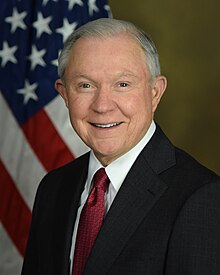
U.S. Attorney General Jeff Sessions
The purpose of these laws: To provide statewide protections for those who knowingly violate United States immigration laws.
“Here’s my message to Mayor Schaaf,” said Sessions. “How dare you, how dare you needlessly endanger the lives of our law enforcement officers to promote a radical open borders agenda.”
Attacking “sanctuary cities”—which illegally shield violators of Federal immigration laws from arrest—Sessions said: “There is no nullification. There is no secession. Federal law is the supreme law of the land.”
But California United States Senator Kamala Harris—a potential candidate for the Democratic Presidential nomination in 2020—sees matters differently.
“I think Mayor Schaaf is doing exactly what she believes is in the best interest of her community and I support that 100 percent,” she said on March 9.
But conspiring to violate United States immigration laws Harris is nothing new for Kamala Harris..
From 2004 to 2011, Harris had served as District Attorney for San Francisco. In total defiance of the law, she set up a secret unit to keep even convicted illegal aliens out of prison—and in the United States.
Click here: San Francisco D.A.’s program trained illegal immigrants for jobs they couldn’t legally hold – Los Angeles Times
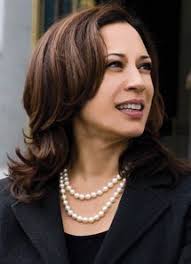
U.S. Senator Kamala Harris
Her program, called Back on Track, trained them for jobs they could not legally hold.
This was a flagrant violation of Federal immigration law.
One such alumnus was Alexander Izaguirre, an illegal alien who had pled guilty to selling cocaine. Four months later, in July, 2008, he assaulted Amanda Kiefer, a legal San Francisco resident.
Snatching her purse, he jumped into an SUV, then tried to run Kiefer down. Terrified, she leaped onto the hood and saw Izaguirre and a driver laughing.
The driver slammed on the brakes, sending Kiefer flying onto the pavement and fracturing her skull.
The program, Back on Track, became a centerpiece of Harris’ campaign for state Attorney General.
Until she was questioned by the Los Angeles Times about the Izaguirre case, Harris had never publicly admitted that the program included illegal aliens.
Harris claimed she first learned that illegal aliens were training for jobs only after Izaguirre was arrested for the Kiefer assault. Apparently not one of her fellow prosecutors ever mentioned this to her.
Harris said it was a “flaw in the design” of the program to let illegal aliens into the program. “I believe we fixed it,” she told the Times.
Harris never released statistics on how many illegal aliens were included since the program started in 2005.
She said that after Izaguirre’s arrest she never asked—or learned—how many illegal aliens were in Back on Track. A strange lapse in curiosity for a prosecutor charged with enforcing the law.
When Harris learned that illegal aliens were enrolled, she allowed those who were following the rules to finish the program and have their criminal records expunged.
It is not the duty of local law enforcement, she said, to enforce Federal immigration laws.
So much for her oath to faithfully defend the Constitution of the United States and that of the state of California “against all enemies, foreign and domestic.”
From 2005 to 2009, 113 admitted drug dealers graduated from Back on Track. Another 99 were kicked off the program for failing to meet the requirements. They were sentenced under their guilty plea, the D.A.’s office claimed.
Harris told the Times that graduates of Back on Track were less likely than other offenders to commit crimes again. But her spokeswoman refused to offer detailed statistics to back this up.
When Harris became San Francisco District Attorney, she vowed she would “never charge the death penalty.”
Her opposition to capital punishment would be better-suited to a public defender.
Meanwhile, Amanda Kiefer left California. Interviewed by the Times, she said she could not understand why San Francisco police and prosecutors would allow convicted illegal aliens back onto the streets.
“If they’re committing crimes,” she said, “I think there’s something wrong that they’re not being deported.”
It’s a sentiment that law-abiding Americans agree with. And it should go double for those who are charged with enforcing the law.
2016 PRESIDENTIAL CAMPAIGN, ABC NEWS, ALTERNET, AP, BARACK OBAMA, BBC, BUZZFEED, CBS NEWS, CLINTON WATTS, CNN, CYBERWARFARE, DAILY KOS, DEMOCRATIC NATIONAL COMMITTEE, DONALD TRUMP, ESPIONAGE, EUROPEAN UNION (EU), FACEBOOK, FBI, HILLARY CLINTON, JEFF SESSIONS, JOE SCARBOROUGH, MICHAEL T. FLYNN, MIKE PENCE, MOTHER JONES, MOVEON, NBC NEWS, NEWSWEEK, NORTH ATLANTIC TREATY ORGANIZATION (NATO), NPR, POLITICO, RAW STORY, REUTERS, REX TILLERSON, RUSSIA, SALLY YATES, SALON, SEATTLE TIMES, SLATE, THE ATLANTIC, THE CHICAGO SUN-TIMES, THE CHICAGO TRIBUNE, THE DAILY BEAST, THE GUARDIAN, THE HILL, THE HUFFINGTON POST, THE LOS ANGELES TIMES, THE NEW YORK TIMES, THE WALL STREET JOURNAL, THE WASHINGTON POST, TIME, TWITTER, U.S. NEWS & WORLD REPORT, U.S. SENATE SELECT COMMITTEE ON INTELLIGENCE, UPI, USA TODAY, VLADIMIR PUTIN, WIKILEAKS
In Bureaucracy, History, Law Enforcement, Military, Politics, Social commentary on March 7, 2018 at 12:28 am
One year and almost two months after taking office, President Donald Trump remains haunted by “the Russian connection.”
Throughout 2016, the CIA, FBI and National Security Agency (NSA) found numerous ties between officials of the Trump Presidential campaign and Russian Intelligence agents.
And many of those he has appointed to office have strong ties to the government of Russian President Vladimir Putin.
One of these is Secretary of State Rex Tillerson. In 2013, as the chief executive of ExxonMobil, he was presented with the 2013 Order of Friendship award. He had just signed deals with the state-owned Russian oil company Rosneft. Its chief, Igor Sechin, is a loyal Putin lieutenant.

Rex Tillerson
Another such official is Attorney General Jeff Sessions. During the 2016 campaign, Session—hen serving as a surrogate for Donald Trump’s campaign—twice spoke with Russian Ambassador Sergey Kislyak.
But during his Senate nomination hearings, Sessions denied that he had had “communications with the Russians” during the campaign. Following this disclosure after he became Attorney General, Sessions removed himself from oversight of the investigation into Russian subversion of the election.
The discovery of numerous contacts between Trump campaign officials and Russian Intelligence agents led the FBI to launch an investigation into Russia’s efforts to influence the outcome of the 2016 Presidential election. That investigation is still ongoing.
And the House and Senate Intelligence Committees launched their own investigations into the same.
On March 30, 2017, Clinton Watts, an expert on cyber warfare, testified before the U.S. Senate Select Committee on Intelligence. As part of his testimony, he presented a prepared statement on “Disinformation: A Primer In Russian Active Measures And Influence Campaigns.”

FROM WATTS’ STATEMENT: Russia certainly seeks to promote Western candidates sympathetic to their worldview and foreign policy objectives. But winning a single election is not their end goal.
Russian Active Measures hope to topple democracies….from the inside out [by] creating political divisions….
[Their ultimate goals are] the dissolution of the European Union and the break up of the North American Treaty Organization (NATO).
Achieving these two victories against the West will allow Russia to reassert its power globally and pursue its foreign policy objectives bilaterally through military, diplomatic and economic aggression.
Trump has repeatedly praised Russian President Vladimir Putin. On December 18, 2015, Trump appeared on MSNBC’s “Morning Joe.” Its host, Joe Scarborough, was upset by Trump’s praise for Putin:
SCARBOROUGH: Well, I mean, [he’s] also a person who kills journalists, political opponents, and invades countries. Obviously that would be a concern, would it not?
TRUMP: He’s running his country, and at least he’s a leader. Unlike what we have in this country.
SCARBOROUGH: But again: He kills journalists that don’t agree with him.
TRUMP: I think our country does plenty of killing, also, Joe, so, you know. There’s a lot of stupidity going on in the world right now, Joe. A lot of killing going on.
On July 22, 2016, Wikileaks released 19,252 emails and 8,034 attachments hacked from computers of the highest-ranking officials of the Democratic National Committee (DNC). Early reports traced the leak to Russian hackers.
At a press conference in Doral, Florida, Trump declared: “Russia, if you are listening, I hope you are able to find the 33,000 emails that are missing—I think you will probably be rewarded mightily by our press.”
This was nothing less than treason—calling upon a foreign power, hostile to the United States, to interfere in its Presidential election.
On December 16, 2016, then-FBI Director James B. Comey and Director of National Intelligence James R. Clapper Jr. agreed with a CIA assessment that Russia intervened in the 2016 election in part to help Donald Trump win the White House.

Trump, however, has steadfastly denied any such role by Russia: “I think it’s ridiculous,” he told “Fox News Sunday.” “I think it’s just another excuse. I don’t believe it….No, I don’t believe it at all.”
On October 19, 2016, Trump’s admiration of Putin became a major target for his Democratic opponent, Hillary Clinton.
This occurred during their third and last Presidential debate.
CLINTON: … that the Russians have engaged in cyber attacks against the United States of America, that you encouraged espionage against our people, that you are willing to spout the Putin line, sign up for his wish list, break up NATO, do whatever he wants to do, and that you continue to get help from him, because he has a very clear favorite in this race.
So I think that this is such an unprecedented situation. We’ve never had a foreign government trying to interfere in our election.
We have 17–17 intelligence agencies, civilian and military, who have all concluded that these espionage attacks, these cyber attacks, come from the highest levels of the Kremlin and they are designed to influence our election. I find that deeply disturbing. And I think it’s time you take a stand…
TRUMP: She has no idea whether it’s Russia, China, or anybody else.
CLINTON: I am not quoting myself.
TRUMP: She has no idea.
CLINTON: I am quoting 17…
TRUMP: Hillary, you have no idea.
CLINTON: … 17 intelligence–do you doubt 17 military and civilian…
TRUMP: And our country has no idea.
CLINTON: … agencies.
TRUMP: Yeah, I doubt it. I doubt it.
2016 PRESIDENTIAL CAMPAIGN, ABC NEWS, AL QAEDA, ALEXANDER THE GREAT, ALTERNET, ANDREW G. MCCABE, BARACK OBAMA, BUZZFEED, CBS NEWS, CHINA, CIA, CNN, CONSERVATIVE POLITICAL ACTION CONFERENCE, DAILY KOS, DONALD TRUMP, FACEBOOK, FBI, FEDERAL JUDICIARY, FOX NEWS SUNDAY, INTELLIGENCE AGENCIES, JAMES COMEY, JAMES ROBART, JEFF SESSIONS, MOTHER JONES, MOVEON, NAVY SEALS, NBC NEWS, NEW YORK TIMES, NEWSWEEK, NINTH CIRCUIT COURT OF APPEALS, NPR, NSA, PLUTARCH, POLITICO, RAW STORY, REPUBLICAN DONORS, ROBERT MUELLER, ROD J. ROSENSTEIN, RUSSIA, RUSSIAN INTELLIGENCE, SALON, SLATE, STEPHEN MILLER, THE CHICAGO SUN-TIMES, THE CHICAGO TRIBUNE, THE DAILY BEAST, THE HUFFINGTON POST, THE LOS ANGELES TIMES, THE NEW YORK TIMES, THE PRESS, THE WALL STREET JOURNAL, THE WASHINGTON POST, TIME, TWITTER, U.S. NEWS & WORLD REPORT, USA TODAY, WILLIAM “RYAN” OWENS, WIRETAPPING, XI JINPING, YEMEN
In Bureaucracy, History, Law, Law Enforcement, Military, Politics, Social commentary on March 5, 2018 at 12:06 am
And the most glorious exploits do not always furnish us with the clearest discoveries of virtue or vice in men; sometimes a matter of less moment, an expression or a jest, informs us better of their characters and inclinations, than the most famous sieges, the greatest armaments, or the bloodiest battles whatsoever.
—Plutarch, “Life of Alexander”
In a closed-door speech to Republican donors on March 3, 2018, President Donald Trump proved the accuracy of Plutarch’s observation.
He praised China’s President, Xi Jinping, for recently assuming full dictatorial powers: “He’s now president for life. President for life. No, he’s great. And look, he was able to do that. I think it’s great. Maybe we’ll have to give that a shot some day.”
The statement was greeted with cheers and laughter by Republican donors.
And, in making that unguarded statement, Trump perhaps has revealed his ultimate intention: To overthrow America’s constitutional government.
Since taking office as the Nation’s 45th President, Donald Trump has attacked or undermined one public or private institution after another.
Donald Trump
Among these:
- American Intelligence: Even before taking office, Trump refused to accept the findings of the FBI, CIA and NSA that Russian Intelligence agents had intervened in the 2016 election to ensure his victory.
- “I think it’s ridiculous,” he told “Fox News Sunday.” “I think it’s just another excuse. I don’t believe it….No, I don’t believe it at all.”
- And when FBI Director James Comey dared to pursue a probe into “the Russia thing,” Trump fired him without warning.
- American law enforcement agencies: Trump has repeatedly attacked his own Attorney General, Jeff Sessions, for not “protecting” him from agents pursuing the Russia investigation.
- He repeatedly attacked the integrity of Deputy FBI Director Andrew G. McCabe until the latter resigned.
- He has threatened to fire Rod J. Rosenstein, the deputy attorney general, Rod J. Rosenstein, who oversees Special Counsel Robert Mueller’s investigation into Russian subversion of the 2016 election.
- He intended to fire Mueller during the summer of 2017, but was talked out of it by aides fearful that it would set off calls for his impeachment.
- American military agencies: In February, 2017, Trump approved and ordered a Special Forces raid in Yemen on an Al Qaeda stronghold. The assault cost the life of Navy SEAL Chief Petty Officer William “Ryan” Owens.
- Disavowing any responsibility for the failure, Trump said: ““This was a mission that was started before I got here. This was something they wanted to do. They came to me, they explained what they wanted to do–the generals–who are very respected, my generals are the most respected that we’ve had in many decades, I believe. And they lost Ryan.”
- The press: On February 17, 2017, Trump tweeted: “The FAKE NEWS media (failing @nytimes, @NBCNews, @ABC, @CBS, @CNN) is not my enemy, it is the enemy of the American People!”
- Seven days later, appearing before the Conservative Political Action Conference on February 24, Trump said: “I want you all to know that we are fighting the fake news. It’s fake, phony, fake….I’m against the people that make up stories and make up sources. They shouldn’t be allowed to use sources unless they use somebody’s name. Let their name be put out there.”
- The judiciary: Trump has repeatedly attacked Seattle US District Judge James Robart, who halted Trump’s first travel ban.
- In one tweet, Trump claimed: “Just cannot believe a judge would put our country in such peril. If something happens blame him and court system. People pouring in. Bad!”
- At Trump’s bidding, White House aide Stephen Miller attacked the Ninth Circuit Court of Appeals: “We have a judiciary that has taken far too much power and become, in many cases, a supreme branch of government.”
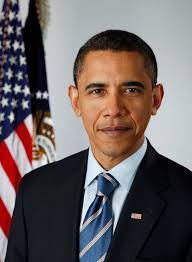
- President Barack Obama: For five years, Trump, more than anyone else, popularized the slander that President Barack Obama was born in Kenya—and was therefore not an American citizen.
- Even after Obama released the long-form version of his birth certificate—on April 27, 2011—Trump tweeted, on August 6, 2012: “An ‘extremely credible source’ has called my office and told me that @BarackObama‘s birth certificate is a fraud.”
Barack Obama
- On March 4, 2017, in a series of unhinged tweets, Trump accused former President Obama of tapping his Trump Tower phones prior to the election: “Terrible! Just found out that Obama had my ‘wires tapped’ in Trump Tower just before the victory. Nothing found. This is McCarthyism!”
Trump was later forced to admit he had no evidence to back up his slanderous claims.
* * * * *
Donald Trump isn’t crazy, as many of his critics charge. He knows what he’s doing—and why.
He intends to strip every potential challenger to his authority—or his version of reality—of legitimacy with the public. If he succeeds, there will be:
- No independent press to reveal his failures and crimes.
- No independent law enforcement agencies to investigate his abuses of office.
- No independent judiciary to hold him accountable.
- No independent military to dissent as he recklessly hurtles toward a nuclear disaster.
- No candidate—Democrat or Republican—to challenge him for re-election in 2020.
- No candidate—Democrat or Republican—to challenge his remaining in office as “President-for-Life.”


ABC NEWS, ADOLF HITLER, ALTERNET, AP, BBC, BUZZFEED, CBS NEWS, CNN, DAILY KOS, DIMITRI SHOSTAKOVICH, DONALD TRUMP, FACEBOOK, FBI, GREAT TERROR, JAMES COMEY, JEFF SESSIONS, JOSEPH STALIN, KEITH SCHILLER, MIKE FLYNN, MIKHAIL TUKHACHEVESKY, MOTHER JONES, MOVEON, NAZI GERMANY, NBC NEWS, NEWSWEEK, NICCOLO MACHIAVELLI, NIKITA KHRUSHCHEV, NIKOLAI ZHILAYEV, NPR, POLITICO, RAW STORY, REUTERS, ROBERT MUELLER III, ROD ROSENSTEIN, RUSSIAN ESPIONAGEky, SALON, SEATTLE TIMES, SENATE INTELLIGENCE COMMITTEE, SERGEY KISLYAK, SERGEY LAVOV, SLATE, SOVIET UNION, THE ATLANTIC, THE CHICAGO SUN-TIMES, THE CHICAGO TRIBUNE, THE DAILY BEAST, THE DISCOURSES, THE GUARDIAN, THE HILL, THE HUFFINGTON POST, THE LOS ANGELES TIMES, THE NEW YORK TIMES, THE WALL STREET JOURNAL, THE WASHINGTON POST, TIME, TWITTER, U.S. NEWS & WORLD REPORT, UPI, USA TODAY, WEHRMACHT, WORLD WAR 11
GREATNESS IN HEROES: PART TWO (END)
In Bureaucracy, History, Law, Law Enforcement, Military, Politics, Social commentary on April 11, 2018 at 12:04 amNikolai Sergeyvich Zhilayev (pronounced Zill-lay-ev) was a Russian musicologist and the teacher of several 20th-century Russian composers.
Among these: Dimitri Shostakovich.
Among his friends—to his ultimate misfortune—was Mikhail Tukhachevsky, the former military hero now falsely condemned and executed as a traitor by Soviet dictator Joseph Stalin.
In 1938, Zhilayev (November 18, 1881 – January 20, 1938) also became a casualty of what has become known as The Great Terror.
In his posthumously-published memoirs, Testimony, Shostakovich, his pupil and friend, described how Zhilayev faced his end with a calmness that awed even the NKVD (the predecessor to the KGB) secret police sent to arrest him.
Dimitri Shostakovich
“He had a large picture of Tukhachevsky in his room, and after the announcement that Tukhachevsky had been shot as a traitor to the homeland, Zhilayev did not take the picture down.
“I don’t know if I can explain how heroic a deed that was….As soon as the next poor soul was declared an enemy of the people, everyone destroyed in a panic everything connected with that person….
“And naturally, photographs flew into the fire first, because if someone informed on you, reported that you had a picture of an enemy of the people, it meant certain death.
“Zhilayev wasn’t afraid. When they came for him, Tukhachevsky’s prominently hung portrait amazed even the executioners.”
“What, it’s still up?” one of the secret police asked.
“The time will come,” Zhilayev replied, “when they’ll erect a monument to him.”
As, in fact, has happened.
Meanwhile, Stalin has been universally condemned as one of history’s greatest tyrants.
Mikhail Tukhachevsky appears on a 1963 Soviet Union postage stamp
Third hero—James Brien Comey (December 14, 1960)
Comey served as United States Attorney (federal prosecutor) for the Southern District of New York (2002-2003).
As United States Deputy Attorney General (2003-2005), he opposed the warrantless wiretapping program of the George W. Bush administration. He also argued against the use of water boarding as an interrogation method.
In 2005, he entered the private sector as General Counsel and Senior Vice President for Lockheed Martin, the biggest contractor for the Department of Defense.
On July 29, 2013, the United States Senate voted 93 -1 to confirm Comey as director of the FBI, the seventh in its history.
James B. Comey
He directed the FBI from his appointment in 2013 by President Barack Obama until his firing on May 9 by President Donald Trump.
In a move that Joseph Stalin would have admired, Trump gave no warning of his intentions. Instead, he sent Keith Schiller, his longtime bodyguard, to the FBI with a letter announcing Comey’s dismissal.
Trump had three reasons for firing Comey:
As a Presidential candidate and President, Trump:
On May 10—the day after firing Comey—Trump met in the Oval Office with Russian Foreign Minister Sergey Lavov and Russian Ambassador Sergey Kislyak.
Kislyak is reportedly a top recruiter for Russia’s SVR foreign intelligence agency. He has been closely linked with Jeff Sessions, now Attorney General, and fired National Security Adviser Mike Flynn.
“I just fired the head of the F.B.I.,” Trump told the two dignitaries. “He was crazy, a real nut job. I faced great pressure because of Russia. That’s taken off.”
During that meeting he gave the Russians sensitive Intelligence on ISIS that had been supplied by Israel.
Two days later, on May 12, Trump tweeted a threat to the fired FBI director: “James Comey better hope that there are no ‘tapes’ of our conversations before he starts leaking to the press.”
But shortly afterward, it appeared Trump was the one who should worry: Reports surfaced that Comey had written memos to himself immediately after his private meetings with Trump.
He had also told close aides that Trump was trying to pressure him into dropping the investigation into close ties between Russian Intelligence agents and Trump campaign staffers.
As for Trump’s threat of having tapes of his and Comey’s conversations: Like Trump’s claim that he could prove that Barack Obama wasn’t an American citizen, this, too, proved to be a lie.
And Comey’s firing led directly to a result Trump did not anticipate: Acting Attorney General Rod Rosenstein yielded to demands from Democrats and appointed former FBI Director Robert Meuller III as a special prosecutor to investigate those ties.
Share this: