300 (MOVIE), ACHILLES, AGAMEMNON, ALEXANDER THE GREAT, ALTERNET, AMAZONS, AMERICABLOG, ANNE HATHAWAY, AP, BABY BOOMER RESISTANCE, BBC, BEN HUR (MOVIE), BLOOMBERG, BLUESKY, BUZZFEED, CBS NEWS, CHARLES LAUGHTON, CHARLIZE THERON, CHARLTON HESTON, CHRISTOPHER NOLAN, CLEOPATRA (MOVIE), CNN, COLMAN DOMINGO, CROOKS AND LIARS, DAILY KOS, DAVID AND BATHSHEBA (MOVIE), ELLIOT PAGE, ELON MUSK, FIVETHIRTYEIGHT, GORDON MITCHELL, GREEK MYTHOLOGY, GREGORY PECK, HARPER’S MAGAZINE, HECTOR, HELEN OF TROY, HENRY V (PLAY), HERCULES, HOMER, HOMOSEXUALITY, HUFFINGTON POST, ISRAELITES, JESUS CHRIST, JIMMY KIMMEL LIVE!, KINIG OF KINGS (MOVIE), LATIN, LAURENCE OLIVER, MATT DAMON, MATT WALSH, MEDIA MATTERS, MEL GIBSON, MENELAUS, MOTHER JONES, MOVEON, MSNBC, NBC NEWS, NEWSDAY, NEWSWEEK, NPR, ODYSSEUS, OPPENHEIMER (MOVIE), PBS NEWSHOUR, PENELOPE, PETE HEGSETH, PETER USTINOV, POLITICO, POLITICUSUSA, PRIAM, RAW STORY, REUTERS, REX HARRISON, RICHARD BURTON, SALON, SAMSON AND DELILAH (MOVIE), SAVING PRIVATE RYAN (MOVIE), SEATTLE TIMES, SLATE, SPARTA, SPARTACUS (MOVIE), SUSAN DEACY, TALKING POINTS MEMO, THE 300 SPARTANS (MOVIE), THE ATLANTIC, THE CHICAGO SUN-TIMES, THE CHICAGO TRIBUNE, THE DAILY BEAST, THE DAILY BLOG, THE FURY OF ACHILLES (MOVIE), THE GUARDIAN, THE HILL, THE HUFFINGTON POST, THE ILIAD, THE INTERCEPT, THE LOS ANGELES TIMES, THE NATION, THE NEW REPUBLIC, THE NEW YORK TIMES, THE NEW YORKER, THE ODYSSEY (MOVIE), THE ODYSSEY (POEM), THE PASSION OF THE CHRIST (MOVIE), THE TEN COMMANDMENTS (MOVIE), THE VILLAGE VOICE, THE WASHINGTON POST, THINKPROGRESS, TIME, TROJAN WAR, TROY, TROY (MOVIE), TRUTHDIG, TRUTHOUT, TWO POLITICAL JUNKIES, U.S. NEWS & WORLD REPORT, UPI, USA TODAY, WILLIAM SHAKESPEARE, WOLFGANG PETERSON, X
In Business, Entertainment, History, Military, Politics, Social commentary on July 29, 2026 at 12:10 am
Most of what Americans believe about the ancient world comes from blockbuster movies—many of them dating back to the 1940s, 1950s and 1960s.
Among those beliefs:
THE ISRAELITES WERE THE GOOD GUYS. That’s because Biblical movies were based (often loosely) on Old Testament stories. And the Old Testament was written by Israelites.
- The Israelites were never portrayed as being as ruthless as their enemies, despite this instruction in Jeremiah 51:22-23: “With you I will shatter men and women, old people and children, young men and maidens. With you I will shatter shepherds and flocks, farmers and oxen, captains and rulers.”
- “Sansom and Delilah” (1949) and “The Ten Commandments” (1956), pitted noble Israelites against, respectively, evil Philistines and Egyptians.
- Even when a major figure like King David (Gregory Peck in “David and Bathsheba” (1951) committed major sins like adultery and murder, the movie ended on a high note: God forgives him and sends rain to quench a parched Israel.
A big difference once existed between how audiences treated movies based on Greek mythology and those based on the Bible.
Audiences were content to enjoy films based on Greek myths without taking them seriously. But those watching movies based on Bible stories assumed they were watching history unfolding before them.
This was never truer than audiences’ reaction to director Mel Gibson’s 2004 blockbuster, The Passion of the Christ. Orthodox Christians flocked to the movie, which blamed Jesus’ crucifixion on Jewish high priests, not the Roman governor, Pontius Pilate.

Now audiences seem to believe that “The Odyssey” is delivering history, not mythology. When the first trailer was released in December, critics said that Odysseus’s boat looked like a “Viking ship.”
“I wonder whether we have become inclined to treat mythological material as though it were historical material,” said Susan Deacy, professor of Classics at the University of Roehampton and the author of The Greek Gods and Their Worlds. “Yet the Odyssey is continually being reimagined, with pretty well every age producing its own Homer.”
Many viewers were surprised to hear British actors, such as Tom Holland, speaking with American accents and using modern, contemporary expressions.
But Deacy said this is based on cinematic tradition, not historical accuracy. The ancient Greeks did not speak either modern American English or formal British English. So conversational language may actually be closer to the spirit of Homer’s oral storytelling than the formal style often used in historical films.

Susan Deacy
Susandeacy, CC0, via Wikimedia Commons
Audiences didn’t “treat mythological material as though it were historical material” in 2004, when Wolfgang Peterson’s “Troy” hit movie screens. It featured Brad Pitt as Achilles, Eric Bana as Hector, Orlando Bloom as Paris, Sean Bean as Odysseus and Diane Kruger as Helen.
Among its deviations from Homer and Greek mythology:
- Menelaus, the husband of Helen, is killed by Hector (instead of returning to Sparta with Helen).
- Agamemnon is killed during the fall of Troy by Briseis, the woman once held captive by Achilles. (According to Greek myth, he was murdered, upon his return home, by his wife, Clytemnestra.)
- Achilles infiltrates Troy in the wooden horse—and is killed on the city’s last night. (Greek mythology has him killed at the gates of Troy before the Greeks erected the Trojan horse.)
- Most incredibly, Paris and Helen escape Troy to presumably find happiness somewhere else. (In Greek mythology, Menelaus intends to kill Helen for running off with Paris. But when he sees her, she bares her still-magnificent breasts and yells: “Kill me!” He’s so dumbstruck by her beauty he drops his sword and walks hand-in-hand with her to his ship for the voyage home.)

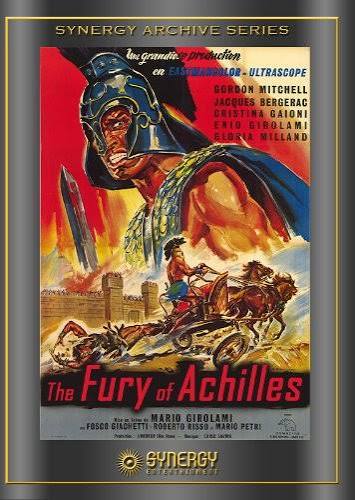
For those seeking a movie that adhere closely to the Iliad, the winner, hands down, is “The Fury of Achilles” (1962). It’s an Italian drama set in the tenth year of the Trojan War directed by Marino Girolami and starring Gordon Mitchell as Achilles.
It lacks the spectacle of “Troy” (owing to CGI) but is surprisingly sympathetic to its main characters—Achilles, Hector and Priam.
In one deeply moving scene, Achilles tells Briseis that every other Greek soldier hopes to return home, but he is doomed to die at Troy. He knows he has a vulnerable spot, but he doesn’t know where it is. He knows he is fated to kill Hector, Troy’s finest warrior—and that he himself will die soon afterward.
Hector is similarly treated with sympathy, knowing he must die—and that when he does, his beloved city will soon follow him. But then he kills Achilles’ dear companion, Patroclus, and feels obligated to accept Achilles’ challenge to single combat.
And finally there is Priam, king of Troy, who, as in Homer, movingly pleads to Achilles for the body of his son, Hector. Achilles answers: “Your son is luckier than I. He has a father who mourns him. Who will mourn me when I’m gone? My father is dead.”
And elderly Priam replies: “If I am still alive when you are dead, I will mourn you as another son I have lost.”
At which point a sorrowful Achilles hands over the body of Hector to his grieving father—and the movie, like the Iliad, comes to an end.
300 (MOVIE), ACHILLES, AGAMEMNON, ALEXANDER THE GREAT, ALTERNET, AMAZONS, AMERICABLOG, ANNE HATHAWAY, AP, BABY BOOMER RESISTANCE, BBC, BEN HUR (MOVIE), BLOOMBERG, BLUESKY, BUZZFEED, CBS NEWS, CHARLES LAUGHTON, CHARLIZE THERON, CHARLTON HESTON, CHRISTOPHER NOLAN, CLEOPATRA (MOVIE), CNN, COLMAN DOMINGO, CROOKS AND LIARS, DAILY KOS, DAVID AND BATHSHEBA (MOVIE), ELLIOT PAGE, ELON MUSK, FIVETHIRTYEIGHT, GORDON MITCHELL, GREEK MYTHOLOGY, GREGORY PECK, HARPER’S MAGAZINE, HECTOR, HELEN OF TROY, HENRY V (PLAY), HERCULES, HOMER, HOMOSEXUALITY, HUFFINGTON POST, ISRAELITES, JESUS CHRIST, JIMMY KIMMEL LIVE!, KINIG OF KINGS (MOVIE), LATIN, LAURENCE OLIVER, MATT DAMON, MATT WALSH, MEDIA MATTERS, MEL GIBSON, MENELAUS, MOTHER JONES, MOVEON, MSNBC, NBC NEWS, NEWSDAY, NEWSWEEK, NPR, ODYSSEUS, OPPENHEIMER (MOVIE), PBS NEWSHOUR, PENELOPE, PETE HEGSETH, PETER USTINOV, POLITICO, POLITICUSUSA, PRIAM, RAW STORY, REUTERS, REX HARRISON, RICHARD BURTON, SALON, SAMSON AND DELILAH (MOVIE), SAVING PRIVATE RYAN (MOVIE), SEATTLE TIMES, SLATE, SPARTA, SPARTACUS (MOVIE), SUSAN DEACY, TALKING POINTS MEMO, THE 300 SPARTANS (MOVIE), THE ATLANTIC, THE CHICAGO SUN-TIMES, THE CHICAGO TRIBUNE, THE DAILY BEAST, THE DAILY BLOG, THE FURY OF ACHILLES (MOVIE), THE GUARDIAN, THE HILL, THE HUFFINGTON POST, THE ILIAD, THE INTERCEPT, THE LOS ANGELES TIMES, THE NATION, THE NEW REPUBLIC, THE NEW YORK TIMES, THE NEW YORKER, THE ODYSSEY (MOVIE), THE ODYSSEY (POEM), THE PASSION OF THE CHRIST (MOVIE), THE TEN COMMANDMENTS (MOVIE), THE VILLAGE VOICE, THE WASHINGTON POST, THINKPROGRESS, TIME, TROJAN WAR, TROY, TROY (MOVIE), TRUTHDIG, TRUTHOUT, TWO POLITICAL JUNKIES, U.S. NEWS & WORLD REPORT, UPI, USA TODAY, WILLIAM SHAKESPEARE, WOLFGANG PETERSON, X
THE RIGHT’S NEW TARGET: “THE ODYSSEY”–PART TWO (END)
In Business, Entertainment, History, Military, Politics, Social commentary on July 29, 2026 at 12:10 amMost of what Americans believe about the ancient world comes from blockbuster movies—many of them dating back to the 1940s, 1950s and 1960s.
Among those beliefs:
THE ISRAELITES WERE THE GOOD GUYS. That’s because Biblical movies were based (often loosely) on Old Testament stories. And the Old Testament was written by Israelites.
A big difference once existed between how audiences treated movies based on Greek mythology and those based on the Bible.
Audiences were content to enjoy films based on Greek myths without taking them seriously. But those watching movies based on Bible stories assumed they were watching history unfolding before them.
This was never truer than audiences’ reaction to director Mel Gibson’s 2004 blockbuster, The Passion of the Christ. Orthodox Christians flocked to the movie, which blamed Jesus’ crucifixion on Jewish high priests, not the Roman governor, Pontius Pilate.
Now audiences seem to believe that “The Odyssey” is delivering history, not mythology. When the first trailer was released in December, critics said that Odysseus’s boat looked like a “Viking ship.”
“I wonder whether we have become inclined to treat mythological material as though it were historical material,” said Susan Deacy, professor of Classics at the University of Roehampton and the author of The Greek Gods and Their Worlds. “Yet the Odyssey is continually being reimagined, with pretty well every age producing its own Homer.”
Many viewers were surprised to hear British actors, such as Tom Holland, speaking with American accents and using modern, contemporary expressions.
But Deacy said this is based on cinematic tradition, not historical accuracy. The ancient Greeks did not speak either modern American English or formal British English. So conversational language may actually be closer to the spirit of Homer’s oral storytelling than the formal style often used in historical films.
Susan Deacy
Susandeacy, CC0, via Wikimedia Commons
Audiences didn’t “treat mythological material as though it were historical material” in 2004, when Wolfgang Peterson’s “Troy” hit movie screens. It featured Brad Pitt as Achilles, Eric Bana as Hector, Orlando Bloom as Paris, Sean Bean as Odysseus and Diane Kruger as Helen.
Among its deviations from Homer and Greek mythology:
For those seeking a movie that adhere closely to the Iliad, the winner, hands down, is “The Fury of Achilles” (1962). It’s an Italian drama set in the tenth year of the Trojan War directed by Marino Girolami and starring Gordon Mitchell as Achilles.
It lacks the spectacle of “Troy” (owing to CGI) but is surprisingly sympathetic to its main characters—Achilles, Hector and Priam.
In one deeply moving scene, Achilles tells Briseis that every other Greek soldier hopes to return home, but he is doomed to die at Troy. He knows he has a vulnerable spot, but he doesn’t know where it is. He knows he is fated to kill Hector, Troy’s finest warrior—and that he himself will die soon afterward.
Hector is similarly treated with sympathy, knowing he must die—and that when he does, his beloved city will soon follow him. But then he kills Achilles’ dear companion, Patroclus, and feels obligated to accept Achilles’ challenge to single combat.
And finally there is Priam, king of Troy, who, as in Homer, movingly pleads to Achilles for the body of his son, Hector. Achilles answers: “Your son is luckier than I. He has a father who mourns him. Who will mourn me when I’m gone? My father is dead.”
And elderly Priam replies: “If I am still alive when you are dead, I will mourn you as another son I have lost.”
At which point a sorrowful Achilles hands over the body of Hector to his grieving father—and the movie, like the Iliad, comes to an end.
Share this:
Like this: