A dictator can die of illness or old age.
But there are other ways a tyrant can be forced to give up power—such as Gaius Caligula, Adolf Hitler and—possibly—Joseph Stalin.
Death by Fellow Bureaucrat
Joseph Stalin ruled as absolute dictator of the Soviet Union from January 21, 1924, to March 5, 1953—29 years.
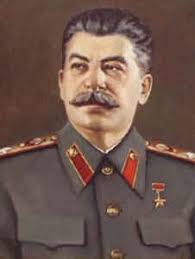
Joseph Stalin
Throughout his nearly 30-year reign over the Soviet Union, at least 20 million men, women and children died—from executions, deportations, imprisonment in Gulag camps, and a man-made famine through the forced collection of harvests.
Robert Payne, the acclaimed British historian, vividly portrayed the crimes of this murderous tyrant in his brilliant 1965 biography, The Rise and Fall of Stalin.
According to Payne, Stalin was planning yet another purge during the last weeks of his life. This would be “a holocaust greater than any he had planned before.
“This time there would be a chistka [purge] to end all chistkas, a purging of the entire body of the state from top to bottom. No one, not even the highest officials, was to be spared.”
Then, on March 5, 1953, Stalin died—officially from a cerebral hemorrhage.
He was 73 and in poor health from a lifetime of smoking, drinking and little exercise. But he could have died of unnatural causes.
In the 2004 book, Stalin’s Last Crime, Vladimir P. Naumov, a Russian historian, and Jonathan Brent, a Yale University Soviet scholar, assert that he might have been poisoned.
If this happened, the occasion was during a final dinner with four members of the Politburo. Two of these were Lavrenti P. Beria, chief of the secret police, and Nikita S. Khrushchev, who eventually succeeded Stalin.
The authors believe that, if Stalin was poisoned, the most likely suspect was Beria. The method: Slipping warfarin, a tasteless and colorless blood thinner also used as a rat killer, into his glass of wine.
In Nikita Khrushchev’s 1970 memoirs, he quotes Beria as telling Vyacheslav M. Molotov, another Politburo member, two months after Stalin’s death: “I did him in! I saved all of you.”
It’s entirely possible that Donald Trump’s “Presidency-for-Life” may end by natural causes.
He’s 79, and despite his repeated boastings that he’s the healthiest President in United States history, clearly he isn’t.
He is grotesquely overweight, doesn’t exercise, falls asleep in public appearances and slurs his words. Much of his diet consists of greasy, artery-clogging fast food—such as from McDonald’s and KFC.
He stays up late at night, pouring out his hatred for countless real and imagined enemies on his website, Truth Social.
But that is not the only way his reign could disappear in other ways:
- The Vice President and a majority of the Cabinet could invoke the Twenty-Fifth Amendment to the United States Constitution. This allows the removal of the President when he is “unable to discharge the powers and duties of his office.” The Vice President then becomes President.
- Within the Senate and House of Representatives, Republicans could stop backing his every infamy and secure his impeachment and conviction.
- Generals could protest publicly Trump’s attacks on their intelligence and even patriotism—or his racist and sexist firings of professional military officers.
- FBI agents could initiate their own unofficial investigations of Trump’s crimes and leak those results to the press. It was through such leaks that Bob Woodward and Carl Bernstein brought down Richard Nixon.
* * * * * * * * * *
More than 500 years ago, Niccolo Machiavelli, the Florentine statesman, authored The Discourses on Livy, a work of political history and philosophy. In it, he outlined how citizens of a republic can maintain their freedoms.
One of the longest chapters—Book Three, Chapter Six—covers “Of Conspiracies.” In it, those who wish to conspire against a ruler will find highly useful advice. And so will those who wish to foil such a conspiracy.
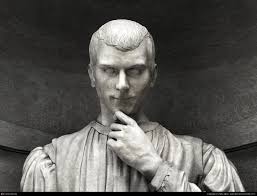
Niccolo Machiavelli
Above all, he notes how important it is for rulers to make themselves loved—or at least respected—by their fellow citizens:
“Note how much more praise those Emperors merited who, after Rome became an empire, conformed to her laws like good princes, than those who took the opposite course.
“Titus, Nerva, Trajan, Hadrian, Antoninus and Marcus Auelius did not require the Praetorians nor the multitudinous legions to defend them, because they were protected by their own good conduct, the good will of the people, and by the love of the Senate.
“On the other hand, neither the Eastern nor the Western armies saved Caligula, Nero, Vitellius and so many other wicked Emperors from the enemies which their bad conduct and evil lives had raised up against them.”
In his better-known work, The Prince, Machiavelli warns rulers who—like Donald Trump–are inclined to rule by fear:
“A prince should make himself feared in such a way that if he does not gain love, he at any rate avoids hatred: for fear and the absence of hatred may well go together.”
By Machiavelli’s standards, Trump has made himself the perfect target for a conspiracy:
“When a prince becomes universally hated, it is likely that he’s harmed some individuals—who thus seek revenge. This desire is increased by seeing that the prince is widely loathed.”
 Bureaucracybuster's Blog
ABC NEWS, ADOLF HITLER, AFFORDABLE CARE ACT (ACA), ALTERNET, AMERICABLOG, AP, AUSTRIA, BABY BOOMER RESISTANCE, BBC, BELGIUM, BLOOMBERG, BLUESKY, BOB WOODWARD, BUZZFEED, CARL BERNSTEIN, CBS NEWS, CHINA, CIA, CNN, CONSPIRACIES, CROOKS AND LIARS, CUBA, CZECHOSLOVAKIA, DAILY KOS, DONALD TRUMP, FBI, FEDERAL GOVERNMENT SHUTDOWN, FIDEL CASTRO, FIVETHIRTYEIGHT, FRANCE, FRANCISCO FRANCO, GAIUS CALIGULA, GAIUS SUETONIUS TRANQUILLUS, GREECE, HARPER’S MAGAZINE, HOLOCAUST, HUFFINGTON POST, IMMIGRATION AND CUSTOMS ENFORCEMENT (ICE), JANUARY 6 COUP ATTEMPT, JIMMY KIMMEL, JOSEPH STALIN, KFC, LAVRENTI BERIA, LEON TROTSKY, LETITIA JAMES, MACDONALD’S, MAO ZEDONG, MEDIA MATTERS, MOTHER JONES, MOVEON, MSNBC, NAZI GERMANY, NBC NEWS, NEWSDAY, NEWSWEEK, NICCOLO MACHIAVELLI, NIKITA KHRUSHCHEV, NORWAY, NPR, PAUL VON HINDENBURG, PBS NEWSHOUR, POLITBURO, POLITICO, POLITICUSUSA, RAW STORY, REPUBLICANS, REUTERS, ROBERT PAYNE, SALON, SEATTLE TIMES, SLATE, SOVIET UNION, SPAIN, TALKING POINTS MEMO, THE ATLANTIC, THE CHICAGO SUN-TIMES, THE CHICAGO TRIBUNE, THE DAILY BEAST, THE DAILY BLOG, THE DAILY KOS, THE DISCOURSES ON LIVY (BOOK), THE GUARDIAN, THE HILL, THE HUFFINGTON POST, THE INTERCEPT, THE LOS ANGELES TIMES, THE NATION, THE NEW REPUBLIC, THE NEW YORK TIMES, THE NEW YORKER, THE RISE AND FALL OF STALIN (BOOK), THE VILLAGE VOICE, THE WASHINGTON POST, THINKPROGRESS, TIME, TRUTHDIG, TRUTHOUT, TWO POLITICAL JUNKIES, U.S. NEWS & WORLD REPORT, UNITED STATES, UNITED STATES DEPARTMENT OF JUSTICE, UPI, USA TODAY, Vladimir Lenin, VYACHESLAV MOLOTOV, WATERGATE, WORLD WAR 1, WORLD WAR 11, X, YUGOSLAVIA
THREE WAYS A TYRANT CAN LOSE POWER: PART TWO (END)
In Bureaucracy, History, Law, Law Enforcement, Military, Politics, Social commentary on April 13, 2026 at 12:07 amA dictator can die of illness or old age.
But there are other ways a tyrant can be forced to give up power—such as Gaius Caligula, Adolf Hitler and—possibly—Joseph Stalin.
Death by Fellow Bureaucrat
Joseph Stalin ruled as absolute dictator of the Soviet Union from January 21, 1924, to March 5, 1953—29 years.
Joseph Stalin
Throughout his nearly 30-year reign over the Soviet Union, at least 20 million men, women and children died—from executions, deportations, imprisonment in Gulag camps, and a man-made famine through the forced collection of harvests.
Robert Payne, the acclaimed British historian, vividly portrayed the crimes of this murderous tyrant in his brilliant 1965 biography, The Rise and Fall of Stalin.
According to Payne, Stalin was planning yet another purge during the last weeks of his life. This would be “a holocaust greater than any he had planned before.
“This time there would be a chistka [purge] to end all chistkas, a purging of the entire body of the state from top to bottom. No one, not even the highest officials, was to be spared.”
Then, on March 5, 1953, Stalin died—officially from a cerebral hemorrhage.
He was 73 and in poor health from a lifetime of smoking, drinking and little exercise. But he could have died of unnatural causes.
In the 2004 book, Stalin’s Last Crime, Vladimir P. Naumov, a Russian historian, and Jonathan Brent, a Yale University Soviet scholar, assert that he might have been poisoned.
If this happened, the occasion was during a final dinner with four members of the Politburo. Two of these were Lavrenti P. Beria, chief of the secret police, and Nikita S. Khrushchev, who eventually succeeded Stalin.
The authors believe that, if Stalin was poisoned, the most likely suspect was Beria. The method: Slipping warfarin, a tasteless and colorless blood thinner also used as a rat killer, into his glass of wine.
In Nikita Khrushchev’s 1970 memoirs, he quotes Beria as telling Vyacheslav M. Molotov, another Politburo member, two months after Stalin’s death: “I did him in! I saved all of you.”
It’s entirely possible that Donald Trump’s “Presidency-for-Life” may end by natural causes.
He’s 79, and despite his repeated boastings that he’s the healthiest President in United States history, clearly he isn’t.
He is grotesquely overweight, doesn’t exercise, falls asleep in public appearances and slurs his words. Much of his diet consists of greasy, artery-clogging fast food—such as from McDonald’s and KFC.
He stays up late at night, pouring out his hatred for countless real and imagined enemies on his website, Truth Social.
But that is not the only way his reign could disappear in other ways:
* * * * * * * * * *
More than 500 years ago, Niccolo Machiavelli, the Florentine statesman, authored The Discourses on Livy, a work of political history and philosophy. In it, he outlined how citizens of a republic can maintain their freedoms.
One of the longest chapters—Book Three, Chapter Six—covers “Of Conspiracies.” In it, those who wish to conspire against a ruler will find highly useful advice. And so will those who wish to foil such a conspiracy.
Niccolo Machiavelli
Above all, he notes how important it is for rulers to make themselves loved—or at least respected—by their fellow citizens:
“Note how much more praise those Emperors merited who, after Rome became an empire, conformed to her laws like good princes, than those who took the opposite course.
“Titus, Nerva, Trajan, Hadrian, Antoninus and Marcus Auelius did not require the Praetorians nor the multitudinous legions to defend them, because they were protected by their own good conduct, the good will of the people, and by the love of the Senate.
“On the other hand, neither the Eastern nor the Western armies saved Caligula, Nero, Vitellius and so many other wicked Emperors from the enemies which their bad conduct and evil lives had raised up against them.”
In his better-known work, The Prince, Machiavelli warns rulers who—like Donald Trump–are inclined to rule by fear:
“A prince should make himself feared in such a way that if he does not gain love, he at any rate avoids hatred: for fear and the absence of hatred may well go together.”
By Machiavelli’s standards, Trump has made himself the perfect target for a conspiracy:
“When a prince becomes universally hated, it is likely that he’s harmed some individuals—who thus seek revenge. This desire is increased by seeing that the prince is widely loathed.”
Share this:
Related