A dictator can die of illness or old age.
But there are other ways a tyrant can be forced to give up power—such as the following three.
First up: Gaius Caligula, the “Mad Emperor” of Imperial Rome.
Caligula’s reign spanned March 18, 37 A.D. to January 24, 41 A.D.—four years.

Gaius Caligula
Carole Raddato from FRANKFURT, Germany, CC BY-SA 2.0 <https://creativecommons.org/licenses/by-sa/2.0>, via Wikimedia Commons
He became Emperor in 37 A.D. after succeeding the Emperor Tiberius, his uncle who had adopted him as a son after his father died.
Caligula’s reign began well—and popularly. He gave Tiberius a magnificent funeral—then recalled to Rome all those whom Tiberius had banished, and ignored all charges that Tiberius had leveled against them.
He gave bonuses to the military and allowed the magistrates unrestricted jurisdiction, without appeal to himself.
But in October 37 A.D. he fell seriously ill or perhaps was poisoned.
Caligula soon recovered but emerged a changed man. He began claiming to be a god, and killing or exiling anyone he saw as a threat. He ordered his victims tortured to death with many slight wounds: “Strike so that he may feel that he is dying.”
Among his litany of crimes, according to his biographer, Gaius Suetonius Tranquillus:
“He forced parents to attend the executions of their sons, sending a litter for one man who pleaded ill health, and inviting another to dinner immediately after witnessing the death, and trying to rouse him to gaiety and jesting by a great show of affability.”
For all his cruelty and egomania, the trait that finally destroyed Caligula was his joy in humiliating others.
His fatal mistake was to taunt Cassius Chaerea, a member of his own bodyguard. Caligula considered Chaerea effeminate because of a weak voice and mocked him with names like “Priapus” and “Venus.”
On January 22 41 A.D. Chaerea and several other bodyguards hacked Caligula to death with swords before other guards could save him.
Next up: Adolf Hitler, dictator of Nazi Germany from January 30, 1933, to April 30, 1945—12 years.
He was born on April 20, 1889, in Braunau am Inn in Austria-Hungary.
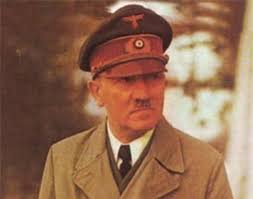
Adolf Hitler
He was appointed Chancellor—chief law enforcement officer—of Germany on January 30, 1933, by President Paul von Hindenburg. Upon Hindenburg’s death in 1934, Hitler assumed the Presidency and established himself as absolute dictator.
From 1933 to 1939 he presided over Germany’s rapid economic recovery from the Great Depression, the defiance of restrictions imposed on Germany after World War 1, and the annexation of Austria and Czechoslovakia, where millions of ethnic Germans lived.
These accomplishments won him widespread popular support.
But after absorbing Czechoslovakia in 1938, Hitler felt himself invincible. On September 1, 1939, his armies attacked Poland—and unintentionally ignited World War II.
After conquering Norway, Denmark, Holland, Belgium, France, Greece and Yugoslavia, he made his two greatest mistakes of the war: He invaded the far more powerful Soviet Union on June 22, 1941, and declared war on the equally more powerful United States on December 11.
Parallel to unleashing a war that slaughtered 50 million people, Hitler orchestrated the extermination of at least six million Jews during the Holocaust.
By April, 1945, Germany faced destruction from the advancing Russians on the East, and from the advancing Americans on the West.
On April 30, with Russian forces only blocks from his underground bunker, Hitler lifted a heavy 7.65mm Walther PPK pistol to his right temple, bit on a cyanide capsule, and pulled the trigger.
Just as Caligula’s mangled remains were hastily burned and buried in the Horti Lamiani gardens, Hitler’s body was hastily cremated in the Reich Chancellery garden.
Last up: Joseph Stalin, dictator of the Soviet Union from January 21, 1924, to March 5, 1953—29 years.
Born on December 18, 1878, in Georgia, Russia, he hated Czarist rule and in 1903 joined the Communist Bolsheviks party, led by Vladimir Lenin, to overthrow it.
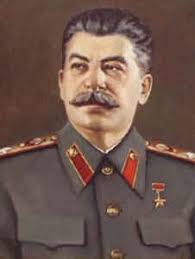
Joseph Stalin
On November 7, 1917, Lenin overthrew the Provisional Government, which had taken power in February, after Czarist rule collapsed.
Stalin became a member of the new Soviet government, gradually working his way to the position of General Secretary. When Lenin died on January 21, 1924, Stalin outmaneuvered Leon Trotsky, his major rival for the succession, and became absolute dictator.
Starting in 1934, a series of massive purges followed—most notably between August, 1936, and March, 1938.
Throughout his nearly 30-year reign over the Soviet Union, at least 20 million men, women and children died—from executions, deportations, imprisonment in Gulag camps, and a man-made famine through the forced collection of harvests.
Robert Payne, the acclaimed British historian, vividly portrayed the crimes of this murderous tyrant in his brilliant 1965 biography, The Rise and Fall of Stalin.
According to Payne, Stalin was planning yet another purge during the last weeks of his life. This would be “a holocaust greater than any he had planned before.
“This time there would be a chistka [purge] to end all chistkas, a purging of the entire body of the state from top to bottom. No one, not even the highest officials, was to be spared.”
Yet Stalin did nothing to calm their fears. He often summoned his “comrades” to the Kremlin for late-night drinking bouts, where he freely humiliated them.
 Bureaucracybuster's Blog
ABC NEWS, ADOLF HITLER, AFFORDABLE CARE ACT (ACA), ALTERNET, AMERICABLOG, AP, AUSTRIA, BABY BOOMER RESISTANCE, BBC, BELGIUM, BLOOMBERG, BLUESKY, BUZZFEED, CBS NEWS, CHINA, CIA, CNN, CONSERVATIVE POLITICAL ACTION CONFERENCE (C-PAC), CONSPIRACIES, CROOKS AND LIARS, CZECHOSLOVAKIA, DAILY KOS, DONALD TRUMP, FBI, FEDERAL GOVERNMENT SHUTDOWN, FIRST AMENDMENT, FIVETHIRTYEIGHT, FRANCE, FRANCISCO FRANCO, GAIUS CALIGULA, GAIUS SUETONIUS TRANQUILLUS, GREECE, HARPER’S MAGAZINE, HOLLAND, HOLOCAUST, HUFFINGTON POST, IMMIGRATION AND CUSTOMS ENFORCEMENT (ICE), JACK SMITH, JAMES COMEY, JAMES ROBART, JANUARY 6 COUP ATTEMPT, JEFF SESSIONS, JIMMY KIMMEL, JMES COMEY, JOSEPH STALIN, KFC, LAVRENTI BERIA, LEON TROTSKY, LETITIA JAMES, MACDONALD’S, MAO ZEDONG, MARK MILLEY, MEDIA MATTERS, MEDICARE, MOTHER JONES, MOVEON, MSNBC, NAZI GERMANY, NBC NEWS, NEWSDAY, NEWSWEEK, NICCOLO MACHIAVELLI, NIKITA KHRUSHCHEV, NINTH CIRCUIT COURT OF APPEALS, NO KINGS MARCHES, NORWAY, NPR, NSA, PAUL VON HINDENBURG, PBS NEWSHOUR, POLITBURO, POLITICO, POLITICUSUSA, RAW STORY, REPUBLICANS, REUTERS, ROBERT MUELLER, ROBERT PAYNE, ROD J. ROSENSTEIN, SALON, SEATTLE TIMES, SLATE, SOVIET UNION, SPAIN, STEPHEN MILLER, TALKING POINTS MEMO, THE ATLANTIC, THE CHICAGO SUN-TIMES, THE CHICAGO TRIBUNE, THE DAILY BEAST, THE DAILY BLOG, THE DAILY KOS, THE DISCOURSES ON LIVY (BOOK), THE GUARDIAN, THE HILL, THE HUFFINGTON POST, THE INTERCEPT, THE LOS ANGELES TIMES, THE NATION, THE NEW REPUBLIC, THE NEW YORK TIMES, THE NEW YORKER, THE RISE AND FALL OF STALIN (BOOK), THE VILLAGE VOICE, THE WASHINGTON POST, THINKPROGRESS, TIME, TRUTHDIG, TRUTHOUT, TWO POLITICAL JUNKIES, U.S. NEWS & WORLD REPORT, UNITED STATES, UPI, USA TODAY, Vladimir Lenin, VYACHESLAV MOLOTOV, WORLD WAR 1, WORLD WAR 11, X, XI JINPING, YUGOSLAVIA
THREE POSSIBLE FATES FOR A TYRANT: PART TWO (OF THREE)
In Bureaucracy, History, Law, Law Enforcement, Military, Politics, Social commentary on October 21, 2025 at 12:10 amA dictator can die of illness or old age.
But there are other ways a tyrant can be forced to give up power—such as the following three.
First up: Gaius Caligula, the “Mad Emperor” of Imperial Rome.
Caligula’s reign spanned March 18, 37 A.D. to January 24, 41 A.D.—four years.
Gaius Caligula
Carole Raddato from FRANKFURT, Germany, CC BY-SA 2.0 <https://creativecommons.org/licenses/by-sa/2.0>, via Wikimedia Commons
He became Emperor in 37 A.D. after succeeding the Emperor Tiberius, his uncle who had adopted him as a son after his father died.
Caligula’s reign began well—and popularly. He gave Tiberius a magnificent funeral—then recalled to Rome all those whom Tiberius had banished, and ignored all charges that Tiberius had leveled against them.
He gave bonuses to the military and allowed the magistrates unrestricted jurisdiction, without appeal to himself.
But in October 37 A.D. he fell seriously ill or perhaps was poisoned.
Caligula soon recovered but emerged a changed man. He began claiming to be a god, and killing or exiling anyone he saw as a threat. He ordered his victims tortured to death with many slight wounds: “Strike so that he may feel that he is dying.”
Among his litany of crimes, according to his biographer, Gaius Suetonius Tranquillus:
“He forced parents to attend the executions of their sons, sending a litter for one man who pleaded ill health, and inviting another to dinner immediately after witnessing the death, and trying to rouse him to gaiety and jesting by a great show of affability.”
For all his cruelty and egomania, the trait that finally destroyed Caligula was his joy in humiliating others.
His fatal mistake was to taunt Cassius Chaerea, a member of his own bodyguard. Caligula considered Chaerea effeminate because of a weak voice and mocked him with names like “Priapus” and “Venus.”
On January 22 41 A.D. Chaerea and several other bodyguards hacked Caligula to death with swords before other guards could save him.
Next up: Adolf Hitler, dictator of Nazi Germany from January 30, 1933, to April 30, 1945—12 years.
He was born on April 20, 1889, in Braunau am Inn in Austria-Hungary.
Adolf Hitler
He was appointed Chancellor—chief law enforcement officer—of Germany on January 30, 1933, by President Paul von Hindenburg. Upon Hindenburg’s death in 1934, Hitler assumed the Presidency and established himself as absolute dictator.
From 1933 to 1939 he presided over Germany’s rapid economic recovery from the Great Depression, the defiance of restrictions imposed on Germany after World War 1, and the annexation of Austria and Czechoslovakia, where millions of ethnic Germans lived.
These accomplishments won him widespread popular support.
But after absorbing Czechoslovakia in 1938, Hitler felt himself invincible. On September 1, 1939, his armies attacked Poland—and unintentionally ignited World War II.
After conquering Norway, Denmark, Holland, Belgium, France, Greece and Yugoslavia, he made his two greatest mistakes of the war: He invaded the far more powerful Soviet Union on June 22, 1941, and declared war on the equally more powerful United States on December 11.
Parallel to unleashing a war that slaughtered 50 million people, Hitler orchestrated the extermination of at least six million Jews during the Holocaust.
By April, 1945, Germany faced destruction from the advancing Russians on the East, and from the advancing Americans on the West.
On April 30, with Russian forces only blocks from his underground bunker, Hitler lifted a heavy 7.65mm Walther PPK pistol to his right temple, bit on a cyanide capsule, and pulled the trigger.
Just as Caligula’s mangled remains were hastily burned and buried in the Horti Lamiani gardens, Hitler’s body was hastily cremated in the Reich Chancellery garden.
Last up: Joseph Stalin, dictator of the Soviet Union from January 21, 1924, to March 5, 1953—29 years.
Born on December 18, 1878, in Georgia, Russia, he hated Czarist rule and in 1903 joined the Communist Bolsheviks party, led by Vladimir Lenin, to overthrow it.
Joseph Stalin
On November 7, 1917, Lenin overthrew the Provisional Government, which had taken power in February, after Czarist rule collapsed.
Stalin became a member of the new Soviet government, gradually working his way to the position of General Secretary. When Lenin died on January 21, 1924, Stalin outmaneuvered Leon Trotsky, his major rival for the succession, and became absolute dictator.
Starting in 1934, a series of massive purges followed—most notably between August, 1936, and March, 1938.
Throughout his nearly 30-year reign over the Soviet Union, at least 20 million men, women and children died—from executions, deportations, imprisonment in Gulag camps, and a man-made famine through the forced collection of harvests.
Robert Payne, the acclaimed British historian, vividly portrayed the crimes of this murderous tyrant in his brilliant 1965 biography, The Rise and Fall of Stalin.
According to Payne, Stalin was planning yet another purge during the last weeks of his life. This would be “a holocaust greater than any he had planned before.
“This time there would be a chistka [purge] to end all chistkas, a purging of the entire body of the state from top to bottom. No one, not even the highest officials, was to be spared.”
Yet Stalin did nothing to calm their fears. He often summoned his “comrades” to the Kremlin for late-night drinking bouts, where he freely humiliated them.
Share this:
Related