Posts Tagged ‘WINSTON CHURCHILL’
2016 PRESIDENTIAL CAMPAIGN, ABC NEWS, ADOLF HITLER, ALTERNET, ANN COULTER, AP, AUSTRIA, BARACK OBAMA, BILL CLINTON, BORDER WALL, BUZZFEED, CBS NEWS, CHARLES SCHUMER, CHRIS CILLIZZA, CNN, CONTRACTORS, COUNCIL OF ECONOMIC ADVISERS, CROOKS AND LIARS, CZECHOSLOVAKIA, DAILY KOZ, DAVID BROOKS, DEMOCRATS, DEPARTMENT OF COMMERCE, DEPARTMENT OF HOMELAND SECURITY, DICK CHENEY, DONALD TRUMP, EDOUARD DELADIER, FACEBOOK, FBI, FEDERAL AVIATION ADMINISTRATION (FAA), FOX NEWS, FRANCE, GEORGE W. BUSH, GOVERNMENT SHUTDOWN, HOUSE OF REPRESENTATIVES, JAPAN, JEDEDIAH BILA, JOSE ANDRES, JULIAN ZELITZER, KEVIN HASSETT, KURT VON SCHUSCHNIGG, MARIE ANTOINETTE, MARK SHIELDS, MIKE PENCE, MITCH MECONNELL, MOTHER JONES, MOVEON, MSNBC, MUNICH CONFERENCE, NANCY PELOSI, NAZI GERMANY, NBC NEWS, NEVILLE CHAMBERLAIN, NEWSWEEK, NICCOLO MACHIAVELLI, NPR, PBS NEWSHOUR, POLAND, POLITICO, RAW STORY, REPUBLICANS, REUTERS, ROBERT PAYNE, RUSH LIMBAUGH, SALON, SEATTLE TIMES, SLATE, SOUP KITCHENS, STATE OF THE UNION ADDRESS, SUPER BOWL, THE ATLANTIC, THE CHICAGO SUN-TIMES, THE CHICAGO TRIBUNE, THE DAILY BEAST, THE GUARDIAN, THE HILL, THE HUFFINGTON POST, THE LIFE AND DEATH OF ADOLF HITLER, THE LOS ANGELES TIMES, THE NATION, THE NEW YORK TIMES, THE PRINCE, THE WALL STREET JOURNAL, THE WASHINGTON POST, TIME, TRANSPORTATION SAFETY ADMINISTRATION (TSA), TWITTER, U.S. NEWS & WORLD REPORT, UBER, UNITED STATES HOUSE OF REPRESENTATIVES, UNITED STATES SECRET SERVICE, UNITED STATES SENATE, UPI, USA TODAY, WILBUR ROSS, WINSTON CHURCHILL, WORLD WAR 11
In Bureaucracy, History, Military, Politics, Social commentary on January 30, 2019 at 12:08 am
“If we do not have these negotiations over border security with an open government, this president will continue to use this tool. And if we give in, if we pay the ransom now, what will happen the next time there’s a disagreement with this president and Congress?”
—Rep. Katherine Clark, D-Mass.
Republican leaders in Congress didn’t want to be blamed for shutting down the government. They seemed to persuade President Donald Trump to back away from his threat to do so if he didn’t get funding for his border wall.
The Senate passed a short-term funding measure without his wall money.
Vice President Mike Pence told lawmakers that Trump was open to approving it
Then the Fox News Network stepped in
“I think a lot of people who voted for President Trump counted on him on this particular issue,” Fox & Friends host Jedediah Bila said.
“I think their feet were to the fire. And you see a lot of people around the country saying: ‘Hold on a second. You told us that you weren’t afraid to shut down the government, that’s why we like you. What happened? You just gave in right away?’”
And Right-wing columnist Ann Coulter said: “Trump will just have been a joke presidency who scammed the American people, amused the populists for a while, but he’ll have no legacy whatsoever.
“Trump will very likely not finish his term and definitely not be elected to a second term.”
For a man who had “joked” that having a “President-for-Life” would be “great,” Coulter’s words were a nightmare.
On December 22, 2018, Trump shut down the government.
An estimated 380,000 government employees were furloughed and another 420,000 were ordered to work without pay.
And Trump told Congressional leaders the shutdown could last months or even years.
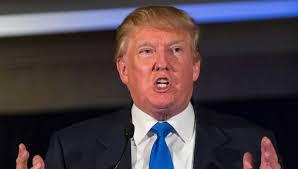
Donald Trump
For Trump, “the wall” was absolutely necessary—but not to keep illegal aliens out. They would go over, under or around it.
The real intent of the wall was to keep Trump in—the White House.
Trump’s fanatical base believed that a wall across the U.S.-Mexico border would stop all illegal immigration. And he knew that if he didn’t build it, they wouldn’t re-elect him.
Like Adolf Hitler, who ordered the complete destruction of Germany when he realized his dreams of conquest were over, Trump’s attitude was: “If I can’t rule America, there won’t be an America.”
Among the agencies directly affected by the shutdown: The Department of Homeland Security (DHS)—whose employees included Secret Service agents.
In short: The men and women guarding Trump were facing financial ruin—along with their families—because Trump didn’t get his way.
The effects of the shutdown quickly became evident:
- For weeks, hundreds of thousands of government workers missed paychecks.
- Smithsonian museums closed their doors.
- Trash piled up in national parks.
- Increasing numbers of employees of the Transportation Safety Administration (TSA)—which provides security against airline terrorism—began refusing to come to work, claiming to be sick.
- At the Federal Aviation Administration (FAA) many air traffic controllers called in “sick.” Those who showed up to work without pay grew increasingly frazzled as they feared being evicted for being unable to make rent or house payments.
- Due to the shortage of air traffic controllers, many planes weren’t able to land safely at places like New York’s LaGuardia Airport.
- Many Federal employees—such as FBI agents—were forced to rely on soup kitchens to feed their families.
- Celebrity chef Jose Andres launched ChefsForFeds, which offered free hot meals for government employees and their families at restaurants across the country.
- Many workers tried to bring in money by babysitting or driving for Uber,
Those employed by the government could at least expect to receive reimbursement for missed pay once the shutdown ended.
The question was: Would they be evicted, need medical care or be unable to pay for food before that happened?
For Federal contractors, the situation was far worse.
During the George W. Bush administration, Vice President Dick Cheney pushed to “outsource” many federal responsibilities to private contractors. This was hugely supported by Republicans and even many Democrats.
Now, in the wake of the shutdown, these employees faced a cruel reality: Since they were not Federal employees, they would not be reimbursed for the time they were forced to not work.
Adding insult to injury were the callous remarks of two Trump administration officials.
“A huge share of government workers were going to take vacation days, say, between Christmas and New Year’s,” said Kevin Hassett, chairman of the Council of Economic Advisers.

Kevin Hassett
“And then we have a shutdown, and so they can’t go to work, and so then they have the vacation, but they don’t have to use their vacation days. And then they come back, and then they get their back pay. Then they’re—in some sense, they’re better off.”
Another equally contemptuous remark was offered by Commerce Secretary Wilbur Ross—a billionaire. Asked on CNBC if he knew that many Federal employees had been reduced to going to food banks, Ross said yes, but he didn’t understand why.
His suggestion: They could just take out a loan.
2016 PRESIDENTIAL CAMPAIGN, ABC NEWS, ADOLF HITLER, ALTERNET, ANN COULTER, AP, AUSTRIA, BARACK OBAMA, BILL CLINTON, BORDER WALL, BUZZFEED, CBS NEWS, CHARLES SCHUMER, CHRIS CILLIZZA, CNN, CONTRACTORS, COUNCIL OF ECONOMIC ADVISERS, CROOKS AND LIARS, CZECHOSLOVAKIA, DAILY KOZ, DAVID BROOKS, DEMOCRATS, DEPARTMENT OF COMMERCE, DEPARTMENT OF HOMELAND SECURITY, DICK CHENEY, DONALD TRUMP, EDOUARD DELADIER, FACEBOOK, FBI, FEDERAL AVIATION ADMINISTRATION (FAA), FOX NEWS, FRANCE, GEORGE W. BUSH, GOVERNMENT SHUTDOWN, HOUSE OF REPRESENTATIVES, JAPAN, JEDEDIAH BILA, JOSE ANDRES, JULIAN ZELITZER, KEVIN HASSETT, KURT VON SCHUSCHNIGG, MARIE ANTOINETTE, MARK SHIELDS, MIKE PENCE, MITCH MECONNELL, MOTHER JONES, MOVEON, MSNBC, MUNICH CONFERENCE, NANCY PELOSI, NAZI GERMANY, NBC NEWS, NEVILLE CHAMBERLAIN, NEWSWEEK, NICCOLO MACHIAVELLI, NPR, PBS NEWSHOUR, POLAND, POLITICO, RAW STORY, REPUBLICANS, REUTERS, ROBERT PAYNE, RUSH LIMBAUGH, SALON, SEATTLE TIMES, SLATE, SOUP KITCHENS, STATE OF THE UNION ADDRESS, SUPER BOWL, THE ATLANTIC, THE CHICAGO SUN-TIMES, THE CHICAGO TRIBUNE, THE DAILY BEAST, THE GUARDIAN, THE HILL, THE HUFFINGTON POST, THE LIFE AND DEATH OF ADOLF HITLER, THE LOS ANGELES TIMES, THE NATION, THE NEW YORK TIMES, THE PRINCE, THE WALL STREET JOURNAL, THE WASHINGTON POST, TIME, TRANSPORTATION SAFETY ADMINISTRATION (TSA), TWITTER, U.S. NEWS & WORLD REPORT, UBER, UNITED STATES HOUSE OF REPRESENTATIVES, UNITED STATES SECRET SERVICE, UNITED STATES SENATE, UPI, USA TODAY, WILBUR ROSS, WINSTON CHURCHILL, WORLD WAR 11
In Bureaucracy, History, Military, Politics, Social commentary on January 29, 2019 at 12:51 am
After selling out Czechoslovakia, Prime Minister Neville Chamberlain returned to England a hero. Holding aloft a copy of the worthless agreement he had signed with Germany’s dictator, Adolf Hitler, he told cheering crowds in London: “I believe it is peace for our time.”
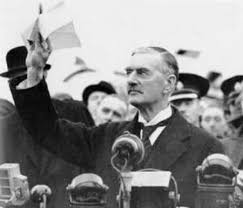
Neville Chamberlain
Winston Churchill knew better, predicting: “Britain and France had to choose between war and dishonor. They chose dishonor. They will have war.”
Hitler—still planning more conquests—also knew better. Speaking of the British and French leaders he had intimidated at Munich, he later asserted: “Our enemies are little worms. I saw them at Munich.”
In March, 1939, the German army occupied the rest of Czechoslovakia.
Chamberlain would soon be seen as a naive weakling—even before bombs started falling on London.
Hitler next turned his attention—and demands—to Poland. But, this time, France and Britain refused to be intimidated—and pledged to go to war if Hitler invaded Poland.
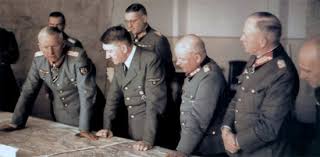
Adolf Hitler and his generals
Hitler ordered the invasion of Poland on September 1, 1939—unintentionally triggering World War II.
In time, historians and statesmen would regard Munich as an object lesson in the futility—and danger—in appeasing evil and aggression.
But for the postwar Republican party, Hitler’s my-way-or-else “negotiating” methods would become standard operating procedure.
President Donald J. Trump used precisely the same “negotiating” style during his December 11, 2018 Oval Office meeting with then-House Minority Leader Nancy Pelosi (D-CA) and Senate Minority Leader Charles Schumer (D-NY).
And, true to his love of publicity, Trump made sure the meeting was televised live.

Nancy Pelosi
Trump opened with on a positive note: “We’ve actually worked very hard on a couple of things that are happening. Criminal justice reform…[Republican Kentucky U.S. Senator] Mitch McConnell and the group, we’re going to be putting it up for a vote. We have great Democrat support, great Republican support.”
But he soon moved to the matter he truly cared about: Demanding $5.6 billion to create a wall along the U.S.-Mexican border: “And one way or the other, it’s going to get built. I’d like not to see a government closing, a shutdown. We will see what happens over the next short period of time.”
“One way or the other”—“so doer so”—was a favorite phrase of Adolf Hitler’s, meaning: If he couldn’t bully his opponents into surrendering, he would use violence.
PELOSI: “I think the American people recognize that we must keep government open, that a shutdown is not worth anything, and that you should not have a Trump shutdown. You have the Senate. You have the House of Representatives. You have the votes. You should pass it right now.”
Trump claimed he could get “Wall” legislation passed in the House but admitted he didn’t have the 60 votes he needed in the Senate.
PELOSI: “Well, the fact is you can get it started that way.”
Trump then contradicted himself: “The House we can get passed very easily, and we do.”
PELOSI: “Okay, then do it.”
Trump kept insisting that “the House would give me the vote if I wanted it.”
PELOSI: “Well, let’s take the vote and we’ll find out.”
SCHUMER: “We do not want to shut down the government. You have called 20 times to shut down the government….We want to come to an agreement. If we can’t come to an agreement, we have solutions that will pass the House and Senate right now, and will not shut down the government. And that’s what we’re urging you to do. Not threaten to shut down the government because you can’t get your way.”

Charles Schumer
TRUMP: “We need border security. And I think we all agree that we need border security.”
SCHUMER: “Yes, we do.”
TRUMP: “The wall is a part of border security. You can’t have very good border security without the wall.”
PELOSI: “That’s simply not true. That is a political promise. Border security is a way to effectively honor our responsibilities.”
By “political promise,” Pelosi meant this is was an appeal Trump had made to his hardcore base. which he expected to re-elect him.
SCHUMER: “And the experts say you can do border security without a wall, which is wasteful and doesn’t solve the problem.”
TRUMP: “It totally solves the problem.”
Schumer then goaded Trump into taking responsibility for closing down the government if he didn’t get funding for his border wall.
TRUMP: “I’ll take it. You know what I’ll say: Yes, if we don’t get what we want, one way or the other…I will shut down the government. Absolutely.”
Thus, Schumer guaranteed that any government shutdown during the Christmas season would be blamed on Trump.
But Republican leaders in Congress didn’t want to be blamed for shutting down the government. They seemed to persuade him to back away from his threat. The Senate passed a short-term funding measure without Trump’s wall money.
Vice President Mike Pence told lawmakers that Trump was open to approving it
Then the Fox News Network stepped in.
2016 PRESIDENTIAL CAMPAIGN, ABC NEWS, ADOLF HITLER, ALTERNET, ANN COULTER, AP, AUSTRIA, BARACK OBAMA, BILL CLINTON, BORDER WALL, BUZZFEED, CBS NEWS, CHARLES SCHUMER, CHRIS CILLIZZA, CNN, CONTRACTORS, COUNCIL OF ECONOMIC ADVISERS, CROOKS AND LIARS, CZECHOSLOVAKIA, DAILY KOZ, DAVID BROOKS, DEMOCRATS, DEPARTMENT OF COMMERCE, DEPARTMENT OF HOMELAND SECURITY, DICK CHENEY, DONALD TRUMP, EDOUARD DELADIER, FACEBOOK, FBI, FEDERAL AVIATION ADMINISTRATION (FAA), FOX NEWS, FRANCE, GEORGE W. BUSH, GOVERNMENT SHUTDOWN, HOUSE OF REPRESENTATIVES, JAPAN, JEDEDIAH BILA, JOSE ANDRES, JULIAN ZELITZER, KEVIN HASSETT, KURT VON SCHUSCHNIGG, MARIE ANTOINETTE, MARK SHIELDS, MIKE PENCE, MITCH MECONNELL, MOTHER JONES, MOVEON, MSNBC, MUNICH CONFERENCE, NANCY PELOSI, NAZI GERMANY, NBC NEWS, NEVILLE CHAMBERLAIN, NEWSWEEK, NICCOLO MACHIAVELLI, NPR, PBS NEWSHOUR, POLAND, POLITICO, RAW STORY, REPUBLICANS, REUTERS, ROBERT PAYNE, RUSH LIMBAUGH, SALON, SEATTLE TIMES, SLATE, SOUP KITCHENS, STATE OF THE UNION ADDRESS, SUPER BOWL, THE ATLANTIC, THE CHICAGO SUN-TIMES, THE CHICAGO TRIBUNE, THE DAILY BEAST, THE GUARDIAN, THE HILL, THE HUFFINGTON POST, THE LIFE AND DEATH OF ADOLF HITLER, THE LOS ANGELES TIMES, THE NATION, THE NEW YORK TIMES, THE PRINCE, THE WALL STREET JOURNAL, THE WASHINGTON POST, TIME, TRANSPORTATION SAFETY ADMINISTRATION (TSA), TWITTER, U.S. NEWS & WORLD REPORT, UBER, UNITED STATES HOUSE OF REPRESENTATIVES, UNITED STATES SECRET SERVICE, UNITED STATES SENATE, UPI, USA TODAY, WILBUR ROSS, WINSTON CHURCHILL, WORLD WAR 11
In Bureaucracy, History, Military, Politics, Social commentary on January 28, 2019 at 1:03 am
Robert Payne, author of the bestselling biography, The Life and Death of Adolf Hitler (1973), described Hitler’s “negotiating” style thus:
“Although Hitler prized his own talents as a negotiator, a man always capable of striking a good bargain, he was totally lacking in finesse.
“He was incapable of bargaining. He was like a man who goes up to a fruit peddler and threatens to blow his brains out if he does not sell his applies at the lowest possible price.”
By studying Hitler’s mindset and “negotiating” methods, we can learn much about the mindset and “negotiating” style of today’s Republican party.
A classic example of Hitler’s “negotiating style” came in September, 1938, when he focused his rage and aggression on Czechoslovakia.
Seven months earlier, he had absorbed Austria. He had done so by inviting its Chancellor, Kurt Shuschnigg, to Berlin. Then Hitler threatened Austria with invasion if Shuschnigg did not immediately agree to make his country a vassal-state of Germany.
This time, his threats were aimed at Neville Chamberlain, the prime minister of Great Britain, and Eduoard Deladier, the prime minister of France. Both countries had pledged to support Czechoslovakia against Hitler’s aggression.
Once again, he opened “negotiations” with a lie: The Czechoslovak government was trying to exterminate 3.5 million Germans living in the “Sudetenland.”
This consisted of the northern, southwest and western regions of Czechoslovakia, inhabited mostly by ethnic Germans.
Then he followed this up with the threat of war: Germany would protect its citizens and halt such “oppression.”
For British Prime Minister Neville Chamberlain, the thought of another European war erupting less than 20 years after the end of World War I was simply unthinkable.

The Cenotaph, in London, honoring the unknown British dead of World War 1
Something had to be done to prevent it. And he believed himself to be just the man to do it.
He quickly sent Hitler a telegram, offering to help resolve the crisis: “I could come to you by air and am ready to leave tomorrow. Please inform me of earliest time you can receive me, and tell me the place of the meeting. I should be grateful for a very early reply.”
Once again, another head-of-state was prepared to meet Hitler on his home ground. Again, Hitler took this concession as a sign of weakness. And Chamberlain’s use of such words as “please” and “grateful” only further convinced Hitler of another impending triumph.
Chamberlain was determined to grant his every demand—so long as this meant avoiding a second world war.
The two European leaders met in Berchtesgaden, Germany, on September 15, 1938.
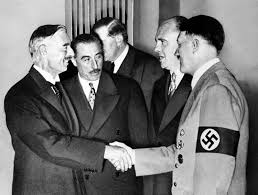
Neville Chamberlain and Adolf Hitler
During their talks, Chamberlain said he had come to discuss German grievances. But, he added, it was necessary in all circumstances to exclude the use of force.
Hitler appeared to be shocked that he could be accused of such intentions: “Force? Who speaks of force?“
Then, without warning, he switched to an aggressive mode. He accused the Czechs of having mobilized their army in May. They had mobilized—in response to the mobilization of the German army.
“I shall not put up with this any longer,” shouted Hitler. “I shall settle this question in one way or another. I shall take matters in my own hands!”
Suddenly, Chamberlain seemed alarmed—and possibly angry: “If I understood you right, you are determined to proceed against Czechoslovakia in any case. If this is so, why did you let me come to Berchtesgaden?
“In the circumstances, it is best for me to return at once. Anything else now seems pointless.”
Hitler was taken aback by the unexpected show of defiance. He realized he was about to lose his chance to bully the British into accepting his latest demands.
So he softened his tone and said they should consider the Sudetenland according to the principle of self-determination.
Chamberlain said he must immediately return to England to consult with his colleagues.
Hitler appeared uneasy. But then the German translator finished the sentence: “…and then meet you again.”
Hitler realized he still had a chance to attain victory without going to war.
Chamberlain agreed to the cession of the Sudetenland. Three days later, French Prime Minister Edouard Daladier did the same. No Czechoslovak representative was invited to these discussions.
Chamberlain met Hitler again in Godesberg, Germany, on September 22 to confirm the agreements. But Hitler aimed to use the crisis as a pretext for war.
He now demanded not only the annexation of the Sudetenland but the immediate military occupation of the territories. This would give the Czechoslovak army no time to adapt their defense measures to the new borders.
To achieve a solution, Italian dictator Benito Mussolini suggested a conference of the major powers in Munich.
On September 29, Hitler, Daladier and Chamberlain met and agreed to Mussolini’s proposal. They signed the Munich Agreement, which accepted the immediate occupation of the Sudetenland.
The Czechoslovak government had not been a party to the talks. Nevertheless, it promised to abide by the agreement on September 30.
It actually had no choice. It faced the threat of an immediate German invasion after being deserted by its pledged allies: Britain, France and the Soviet Union.
2016 PRESIDENTIAL ELECTION, ABC NEWS, AISNE-MARNE AMERICAN CEMETARY AND MEMORIAL, ALTERNET, AP, BILL MAULDIN, BUZZFEED, CBS NEWS, CIA, CNN, CROOKS AND LIARS, DAILY KOZ, DAVID FRUN, DONALD TRUMP, DRAFT DODGING, FACEBOOK, FBI, FRANCE, GENERAL LUCIAN K. TRUSCOTT, GEORGE W. BUSH, JOE DUNFORD, JOHN KELLY, MEMORIAL DAY, MOTHER JONES, MOVEON, MSNBC, NBC NEWS, NEWSWEEK, NICHOLAS SOAMES, NPR, OLD GLORY, POLITICO, RAW STORY, REUTERS, RUSSIA, SALON, SAVING PRIVATE RYAN, SEATTLE TIMES, SLATE, STEVEN SPIELBERG, THE ATLANTIC, THE CHICAGO SUN-TIMES, THE CHICAGO TRIBUNE, THE DAILY BEAST, THE GUARDIAN, THE HILL, THE HUFFINGTON POST, THE LOS ANGELES TIMES, THE NATION, THE NEW YORK TIMES, THE WASHINGTON POST, TIME, TWITTER, U.S. NEWS & WORLD REPORT, UPI, USA TODAY, VIETNAM WAR, VLADIMIR PUTIN, WINSTON CHURCHILL, WORLD WAR 1, WORLD WAR 11
In Bureaucracy, History, Military, Politics, Social commentary on November 13, 2018 at 12:23 am
Saving Private Ryan, Steven Spielberg’s 1998 World War II epic, opens with a scene of an American flag snapping in the wind.
Except that the brilliant colors of Old Glory have been washed out, leaving only black-and-white stripes and black stars.
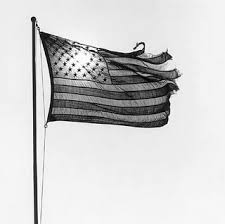
And then the movie opens—not during World war II but the present day.
Did Spielberg know something that his audience could only sense? Such as that the United States, for all its military power, has become a pale shadow of its former glory?
May 30, 1945, marked the first Memorial Day after World War II ended in Europe. On that day, the Sicily-Rome American Cemetery, near the town of Nettuno, held about 20,000 graves.
Most were soldiers who died in Sicily, at Salerno, or at Anzio. One of the speakers at the ceremony was Lieutenant General Lucian K. Truscott, Jr., the U.S. Fifth Army Commander.
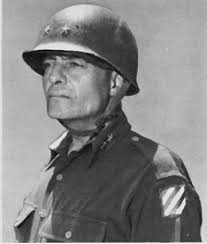
Lieutenant General Lucian K. Truscott, Jr.
Unlike many other generals, Truscott had shared in the dangers of combat, pouring over maps on the hood of his jeep with company commanders as bullets or shells whizzed about him.
When it came his turn to speak, Truscott moved to the podium. Then he turned his back on the assembled visitors—which included several Congressmen.
The audience he now faced were the graves of his fellow soldiers.
Among those who heard Truscott’s speech was Bill Mauldin, the famous cartoonist for the Army newspaper, Stars and Stripes. Mauldin had created Willie and Joe, the unshaved, slovenly-looking “dogfaces” who came to symbolize the GI.
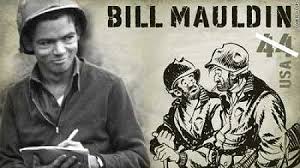
Bill Mauldin and “Willie and Joe,” the characters he made famous
It’s from Mauldin that we have the fullest account of Truscott’s speech that day.
“He apologized to the dead men for their presence there. He said that everybody tells leaders that it is not their fault that men get killed in war, but that every leader knows in his heart that this is not altogether true.
“He said he hoped anybody here through any mistake of his would forgive him, but he realized that he was asking a hell of a lot under the circumstances….
“Truscott said he would not speak of the ‘glorious’ dead because he didn’t see much glory in getting killed in your teens or early twenties.
“He promised that if in the future he ran into anybody, especially old men, who thought death in battle was glorious, he would straighten them out. He said he thought it was the least he could do.”
Then Truscott walked away, without acknowledging his audience of celebrities.
Fast forward 73 years later—to November 10, 2018.
President Donald J.Trump flies to Paris to commemorate the 100th anniversary of the end of WWI—November 11, 1918.
Upon arriving, he tweets: “I am in Paris getting ready to celebrate the end of World War One. Is there anything better to celebrate than the end of a war, in particular that one, which was one of the bloodiest and worst of all time?”
A scheduled event of his trip is a visit to the Aisne-Marne American Cemetery and Memorial, 50 miles outside Paris.
Nearly 2,300 war dead are buried there. And many of them perished in the same area during the summer of 1918.
Trump is scheduled to take his Marine 1 helicopter to the memorial site.
But, suddenly, he refuses to go.
The White House claims it’s “due to scheduling and logistical difficulties caused by the weather.”
The real reason: The appearance of gray skies and drizzle.
Canadian Prime Minister Justin Trudeau, German Chancellor Angela Merkel and French President Emmanuel Macron don’t allow rain to intimidate them.
Trump’s critics are quick to respond.
“They died with their face to the foe and that pathetic inadequate Donald Trump couldn’t even defy the weather to pay his respects to The Fallen,” says Nicholas Soames, Winston Churchill’s grandson and a member of the British Parliament.
And David Frun, a former speechwriter for President George W. Bush, tweets:
“It’s incredible that a president would travel to France for this significant anniversary – and then remain in his hotel room watching TV rather than pay in person his respects to the Americans who gave their lives in France for the victory gained 100 years ago tomorrow.”
Despite the rain, an American delegation led by Chief of Staff General John Kelly and Chairman of the Joint Chiefs of Staff General Joe Dunford still attend the event.
This marks only the latest in a series of embarrassing outrages committed by President Donald J. Trump, who has:
- Claimed that “bone spurs” made it impossible for him to serve his country during the Vietnam war.
- Equated his reckless sex life during the 1970s with the risks American soldiers faced in Vietnam.
- Relentlessly defended Russian dictator Vladimir Putin against all criticism, even as he’s slandered literally hundreds of his fellow citizens on Twitter.
- Rejected the findings by the FBI and CIA that Russia intervened in the 2016 election to help him win the White House.
- “Joked” that it would be “great” if the United States had a “President-for-Life”—like China.
Small wonder then, that, for many people, Old Glory has taken on a darker, washed-out appearance—in real-life as in film.
9/11, ABC NEWS, ALTERNET, AP, ARTHUR M. CUMMINGS, BUZZFEED, CBS NEWS, CHRISTIANITY, CNN, COLUMBIA UNIVERSITY, CROOKS AND LIARS, DAILY KOZ, FACEBOOK, FBI, HARVARD UNIVERSITY, ISLAM, LEBANON, MOTHER JONES, MOVEON, MSNBC, MUNICH OLYMPICS MASSACRE, NBC NEWS, NEWSWEEK, NPR, POLITICAL CORRECTNESS, POLITICO, RACIAL PROFILING, RAW STORY, RELIGION, REUTERS, SALON, SAMUEL P. HUNTINGTON, SEATTLE TIMES, SLATE, TERRORISM, THE ATLANTIC, THE CHICAGO SUN-TIMES, THE CHICAGO TRIBUNE, THE CLASH OF CIVILIZATIONS, THE DAILY BEAST, THE GUARDIAN, THE HILL, THE HUFFINGTON POST, THE LOS ANGELES TIMES, THE NATION, THE NEW YORK TIMES, THE SPECTATOR, THE WASHINGTON POST, TIME, TWITTER, U.S. NEWS & WORLD REPORT, UPI, USA TODAY, WINSTON CHURCHILL, WORLD TRADE CENTER
In Bureaucracy, History, Law Enforcement, Politics, Social commentary on August 10, 2018 at 2:02 am
There is a famous joke about racial profiling that’s long made the rounds of the Internet. It appears in the guise of a “history test,” and offers such multiple-choice questions as:
In 1972 at the Munich Olympics, athletes were kidnapped and massacred by:
- Olga Korbut
- Sitting Bull
- Arnold Schwarzenegger
- Muslim male extremists mostly between the ages of 17 and 40
In 1979, the US embassy in Iran was taken over by:
- Lost Norwegians
- Elvis
- A tour bus full of 80-year-old women
- Muslim male extremists mostly between the ages of 17 and 40
During the 1980s a number of Americans were kidnapped in Lebanon by:
- John Dillinger
- The King of Sweden
- The Boy Scouts
- Muslim male extremists mostly between the ages of 17 and 40
In 1983, the US Marine barracks in Beirut was blown up by:
- A pizza delivery boy
- Pee Wee Herman
- Geraldo Rivera
- Muslim male extremists mostly between the ages of 17 and 40
On September 11, 2001, four airliners were hijacked. Two were used as missiles to take out the World Trade Center; one crashed into the Pentagon; and the other was diverted and crashed by the passengers. Thousands of people were killed by:
- Bugs Bunny, Wiley E. Coyote, Daffy Duck and Elmer Fudd
- The Supreme Court of Florida
- Mr. Bean
- Muslim male extremists mostly between the ages of 17 and 40
* * * * *
It’s well to remember the bitter truth behind this joke, especially in light of comments by Arthur M. Cummings, the FBI’s executive assistant director for national security.
Cummings has no use for such Politically Correct terms as “man-caused disasters” in referring to terrorism. Nor does he shrink from terms such as “jihadists” or “Islamists.”
“Of course Islamists dominate the terrorism of today,” he says bluntly. “I had this discussion with the director of a very prominent Muslim organization here [Washington, D.C.]. And he said ‘Why are you guys always looking at the Muslim community?’
“I can name the homegrown cells, all of whom are Muslim, all of whom are seeking to kill Americans,” replied Cummings. “It’s not the Irish. It’s not the French. It’s not the Catholics. It’s not the Protestants. It’s the Muslims.”
One man who did foresee the present conflicts with stunning clarity—and had the courage to say what has since become Politically Incorrect—was Samuel P. Huntington.

Samuel P. Huntington
A political scientist, Huntington taught government at Harvard University (1950-1959, then at Columbia University (1959-1962). He returned to Harvard in 1963, and remained there until his death in 2008.
The author of nine books, in 1996 he published his most influential one: The Clash of Civilizations and the Remaking of World Order. Its thesis was that, in the post-Cold War world, people’s cultural and religious identities would be the primary sources of conflict.
Among the points he makes:
- Modernization does not mean Westernization.
- Economic progress has come with a revival of religion.
- Post-Cold War politics emphasize ethnic nationalism over ideology.
- Civilizations are fundamentally differentiated from each other by centuries-old history, language, culture, tradition, and, most important, religion.
- As the world becomes smaller, different civilizations increasingly interact. These intensify civilization consciousness and the awareness of differences between civilizations.
- Economic modernization and social change separate people from age-old identities (such as hometowns and familiar neighbors). Religion has replaced this gap, providing a basis for identity, socialization and commitment that transcends national boundaries and unites civilizations.
- The West, at the peak of its power, is confronting non-Western countries that increasingly have the desire, will and resources to shape the world in non-Western ways.
- Cultural characteristics and differences are less mutable and hence less easily compromised and resolved than political and economic ones.
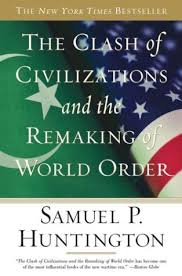
The most controversial part of The Clash of Civilizations focuses on Islam. Huntington points out, for example, that Muslim countries are involved in far more inter-group violence than others.
And he warns that the West’s future conflicts with Islamic nations will be rooted in the Islamic religion:
“Islam’s borders are bloody and so are its innards. The fundamental problem for the West is not Islamic fundamentalism. It is Islam, a different civilisation whose people are convinced of the superiority of their culture and are obsessed with the inferiority of their power.”
Huntington argues that civilizational conflicts are “particularly prevalent between Muslims and non-Muslims.” Among the reasons for these conflicts: Both Islam and Christianity have similarities which heighten conflicts between their followers:
- Both seek to convert others.
- Both are “all-or-nothing” religions; each side believes that only its faith is the correct one.
- The followers of both Islam and Christianity believe that people who violate the base principles of their religion are idolators and thus damned.
Other reasons for the Western-Islamic clash are:
- The Islamic revival, which began in the 1970s and is manifested in greater religious piety and in a growing adoption of Islamic culture, values, dress, separation of the sexes, speech and media censorship.
- Western universalism—the belief that all civilizations should adopt Western values—infuriates Islamic fundamentalists.
These are not differences that will disappear—overnight or even over the span of several centuries. Nor will they be sweet-talked away by Politically Correct politicians, however well-meaning.
ABC NEWS, ADOLF HITLER, AFGHANISTAN, ALTERNET, AP, BARACK OBAMA, BUZZFEED, CBS NEWS, CNN, CROOKS AND LIARS, DAILY KOZ, DONALD TRUMP, EL ELAMEIN, ERWIN ROMMEL, FACEBOOK, FRIEDRICH VON PAULUS, GEORGE W. BUSH, GREAT BRITAIN, IRAQ, JAPAN, JOSEPH GOEBBELS, MOSCOW, MOTHER JONES, MOVEON, NAZI GERMANY, NBC NEWS, NEWSWEEK, NPR, PEARL HARBOR, POLITICO, RAW STORY, REUTERS, SALON, SEATTLE TIMES, SLATE, SOVIET UNION, STALINGRAD, THANKSGIVING MESSAGE TO U.S. TROOPS, THE ATLANTIC, THE CHICAGO SUN-TIMES, THE CHICAGO TRIBUNE, THE DAILY BEAST, THE GUARDIAN, THE HILL, THE HUFFINGTON POST, THE LOS ANGELES TIMES, THE NATION, THE NEW YORK TIMES, THE WASHINGTON POST, TIME, TOTAL WAR SPEECH, TWITTER, U.S. NEWS & WORLD REPORT, UNITED STATES, UPI, USA TODAY, WEHRMACHT, WINSTON CHURCHILL, WORLD WAR ii
In Bureaucracy, History, Military, Politics, Social commentary on April 20, 2018 at 12:07 am
By February, 1943, the tide of war had turned irrevocably for Nazi Germany.
The string of quick and easy victories that had started on September 1, 1939 was over:
- Poland
- Norway
- Denmark
- Holland
- Belgium
- Luxembourg
- Greece
- France.
All had fallen under the heel of the Nazi jackboot. The swastika flag still flew triumphantly over the capitols of these once-free nations.

And the word—and whim—of Germany’s Fuhrer, Adolf Hitler remained law for their populations.
But by March, 1943, all except the most fanatical Nazis could see that Germany was on a collision course with disaster.
- Under the unshakable leadership of Prime Minister Winston Churchill, Great Britain still remained a sworn enemy of the Third Reich.
- After six months of spectacular victories against the Soviet Union, the Wehrmacht had become hopelessly bogged down in the snow before Moscow.
- On December 11, 1941, following the attack on Pearl Harbor by his ally, Japan, Hitler declared war on the United States—thus pitting the Reich against the world’s two most powerful nations: America and Russia.
- In November, 1942, at El Alamein, the British Army halted the advance of General Erwin Rommel and his famed Afrika Korps across North Africa.
- On February 2, 1943, General Friedrich von Paulus surrendered the remains of the once-powerful Sixth Army at Stalingrad. The Reich suffered 730,000 total casualties, including nearly 91,000 German prisoners taken prisoner.
- On June 6, 1944, American, British and Canadian armies overwhelmed German’s “impregnable wall of death” on the Normandy beaches.
- In February, 1945, following the Vistula-Oder Offensive, the Red Army temporarily halted 37 miles east of Berlin.
So, by March, 1943, Germany desperately needed to hear some good news. And Propaganda Minister Joseph Goebbels was eager to supply it.
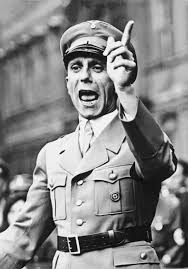
Joseph Goebbels
He did so in one of his last public addresses, delivered to a large but carefully selected audience in Gorlitz.
For Goebbels, the greatest challenge to the Reich lay in “the Bolshevist danger in the East.” And, for him, the solution was clear: “Total war is the demand of the hour.”
“Our soldiers, as soon as the great push on the Eastern Front gets under way, will ask no mercy and give no mercy.
“Already, our forces have begun softening up operations, and in the next weeks and months the big offensive will begin. They will go into battle with devotion like congregations going to a religious service.
“And when our men shoulder their weapons and climb into their tanks, there will be before their eyes the sight of their violated women and murdered children. A cry of vengeance will rise from their throats that will make the enemy tremble with fear!
“So, as the Fuhrer has overcome crises in the past, so will he triumph now.
“The other day he told me ‘I firmly believe that we shall overcome this crisis. I firmly believe that our army of millions will beat back our enemy and annihilate him. And some day our banners will be victorious. This is my life’s unshakable belief.’”
Thunderous applause repeatedly interrupted Goebbels’ address. Yet this could not replace the enormous losses Germany had suffered since 1939. Nor could it reverse the march of the Allied armies as they closed in on the Reich from East and West.
Now, fast-forward 74 years to November 23, 2017—Thanksgiving Day.
Donald Trump, President of the United States, speaks by video teleconference to American forces stationed in Iraq and Afghanistan.
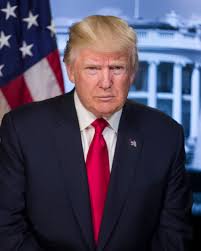
Donald Trump
President George W. Bus had flown into Baghdad in 2003 to spend Thanksgiving with American forces. He flew into Iraq once again to visit troops in June, 2006.
And President Barack Obama visited American soldiers in Iraq in 2009, in Afghanistan in 2010, 2012 and 2014.
Trump’s “visit” was unique—in that he addressed American troops from his Mar-a-Lago Club and Resort in Palm Beach, Florida.
The address started off predictably enough: “It’s an honor to speak with you all and to give God thanks for the blessings of freedom and for the heroes who really have this tremendous courage that you do to defend us and to defend freedom.”
But, being Trump, he could not resist paying homage to himself: “We’re being talked about again as an armed forces. We’re really winning. We know how to win, but we have to let you win. They weren’t letting you win before; they we’re letting you play even. We’re letting you win….
“They say we’ve made more progress against ISIS than they did in years of the previous administration, and that’s because I’m letting you do your job….”
In short: All those sacrifices you made under Presidents Bush and Obama went for nothing.
“A lot of things have happened with our country over the last very short period of time, and they’re really good—they’re really good. I especially like saying that companies are starting to come back.
“Now we’re working on tax cuts—big, fat, beautiful tax cuts. And hopefully we’ll get that and then you’re going to really see things happen.”
Or, put another way: Be grateful they elected me—because you’re about to see the 1% richest get even richer. Too bad you won’t be so lucky.
ABC NEWS, ADOLF HITLER, AFGHANISTAN, ALTERNET, AP, BARACK OBAMA, BUZZFEED, CBS NEWS, CNN, CROOKS AND LIARS, DAILY KOZ, DONALD TRUMP, EL ELAMEIN, ERWIN ROMMEL, FACEBOOK, FRIEDRICH VON PAULUS, GEORGE W. BUSH, GREAT BRITAIN, IRAQ, JAPAN, JOSEPH GOEBBELS, MOSCOW, MOTHER JONES, MOVEON, NAZI GERMANY, NBC NEWS, NEWSWEEK, NPR, PEARL HARBOR, POLITICO, RAW STORY, REUTERS, SALON, SEATTLE TIMES, SLATE, SOVIET UNION, STALINGRAD, THANKSGIVING MESSAGE TO U.S. TROOPS, THE ATLANTIC, THE CHICAGO SUN-TIMES, THE CHICAGO TRIBUNE, THE DAILY BEAST, THE GUARDIAN, THE HILL, THE HUFFINGTON POST, THE LOS ANGELES TIMES, THE NATION, THE NEW YORK TIMES, THE WASHINGTON POST, TIME, TOTAL WAR SPEECH, TWITTER, U.S. NEWS & WORLD REPORT, UNITED STATES, UPI, USA TODAY, WEHRMACHT, WINSTON CHURCHILL, WORLD WAR ii
In Bureaucracy, History, Military, Politics, Social commentary on November 27, 2017 at 1:50 am
By February, 1943, the tide of war had turned irrevocably for Nazi Germany.
The string of quick and easy victories that had started on September 1, 1939 was over:
- Poland
- Norway
- Denmark
- Holland
- Belgium
- Luxembourg
- Greece
- France.
All had fallen under the heel of the Nazi jackboot. The swastika flag still flew triumphantly over the capitols of these once-free nations.
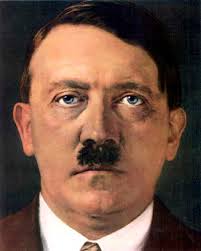
Adolf Hitler
And the word—and whim—of Germany’s Fuhrer, Adolf Hitler remained law for their populations.
But by March, 1943, all except the most fanatical Nazis could see that Germany was on a collision course with disaster.
- Under the unshakable leadership of Prime Minister Winston Churchill, Great Britain still remained a sworn enemy of the Third Reich.
- After six months of spectacular victories against the Soviet Union, the Wehrmacht had become hopelessly bogged down in the snow before Moscow.
- On December 11, 1941, following the attack on Pearl Harbor by his ally, Japan, Hitler declared war on the United States—thus pitting the Reich against the world’s two most powerful nations: America and Russia.
- In November, 1942, at El Alamein, the British Army halted the advance of General Erwin Rommel and his famed Afrika Korps across North Africa.
- On February 2, 1943, General Friedrich von Paulus surrendered the remains of the once-powerful Sixth Army at Stalingrad. The Reich suffered 730,000 total casualties, including nearly 91,000 German prisoners taken prisoner.
- On June 6, 1944, American, British and Canadian armies overwhelmed German’s “impregnable wall of death” on the Normandy beaches.
- In February, 1945, following the Vistula-Oder Offensive, the Red Army temporarily halted 37 miles east of Berlin.
So, by March, 1943, Germany desperately needed to hear some good news. And Propaganda Minister Joseph Goebbels was eager to supply it.
Joseph Goebbels
He did so in one of his last public addresses, delivered to a large but carefully selected audience in Gorlitz.
For Goebbels, the greatest challenge to the Reich lay in “the Bolshevist danger in the East.” And, for him, the solution was clear: “Total war is the demand of the hour.”
“Our soldiers, as soon as the great push on the Eastern Front gets under way, will ask no mercy and give no mercy.
“Already, our forces have begun softening up operations, and in the next weeks and months the big offensive will begin. They will go into battle with devotion like congregations going to a religious service.
“And when our men shoulder their weapons and climb into their tanks, there will be before their eyes the sight of their violated women and murdered children. A cry of vengeance will rise from their throats that will make the enemy tremble with fear!
“So, as the Fuhrer has overcome crises in the past, so will he triumph now.
“The other day he told me ‘I firmly believe that we shall overcome this crisis. I firmly believe that our army of millions will beat back our enemy and annihilate him. And some day our banners will be victorious. This is my life’s unshakable belief.'”
Thunderous applause repeatedly interrupted Goebbels’ address. Yet this could not replace the enormous losses Germany had suffered since 1939. Nor could it reverse the march of the Allied armies as they closed in on the Reich from East and West.
Now, fast-forward 74 years to November 23, 2017—Thanksgiving Day.
Donald Trump, President of the United States, speaks by video teleconference to American forces stationed in Iraq and Afghanistan.
Donald Trump
President George W. Bush had flown into Baghdad in 2003 to spend Thanksgiving with American forces. He flew into Iraq once again to visit troops in June, 2006.
And President Barack Obama visited American soldiers in Iraq in 2009, in Afghanistan in 2010, 2012 and 2014.
Trump’s “visit” was unique—in that he addressed American troops from his Mar-a-Lago Club and Resort in Palm Beach, Florida.
The address started off predictably enough: “It’s an honor to speak with you all and to give God thanks for the blessings of freedom and for the heroes who really have this tremendous courage that you do to defend us and to defend freedom.”
But, being Trump, he could not resist paying homage to himself: “We’re being talked about again as an armed forces. We’re really winning. We know how to win, but we have to let you win. They weren’t letting you win before; they we’re letting you play even. We’re letting you win….
“They say we’ve made more progress against ISIS than they did in years of the previous administration, and that’s because I’m letting you do your job….”
In short: All those sacrifices you made under Presidents Bush and Obama went for nothing.
“A lot of things have happened with our country over the last very short period of time, and they’re really good — they’re really good. I especially like saying that companies are starting to come back.
“Now we’re working on tax cuts—big, fat, beautiful tax cuts. And hopefully we’ll get that and then you’re going to really see things happen.”
Or, put another way: Be grateful they elected me—because you’re about to see the 1% richest get even richer. Too bad you won’t be so lucky.
ABC NEWS, ADOLF HITLER, ALTERNET, AP, BARACK OBAMA, BBC, BUZZFEED, CBS NEWS, CIA, CNN, CZECHOSLOVAKIA, DAILY KOS, DEBT CEILING, DONALD TRUMP, EDUARD DELADIER, EXTORTION, FACEBOOK, FBI, HOUSE SPEAKER JOHN BOEHNER, JAY PARINI, MOTHER JONES, MOVEON, MUNICH CONFERENCE, NATIONAL SECURITY AGENCY, NBC NEWS, NEGOTIATING, NEVILLE CHAMBERLAIN, NEWSWEEK, NICCOLO MACHIAVELLI, NPR, POLITICO, RAW STORY, REPUBLICAN PARTY, REPUBLICANS, REUTERS, RICO ACT, RUSSIA, SALON, SEATTLE TIMES, SLATE, THE ATLANTIC, THE CHICAGO SUN-TIMES, THE CHICAGO TRIBUNE, THE DAILY BEAST, THE GUARDIAN, THE HILL, THE HUFFINGTON POST, THE LOS ANGELES TIMES, THE NEW YORK TIMES, THE WALL STREET JOURNAL, THE WASHINGTON POST, TIME, TWITTER, U.S. NEWS & WORLD REPORT, UPI, USA PATRIOT ACT, USA TODAY, WINSTON CHURCHILL
In Bureaucracy, History, Law, Law Enforcement, Military, Politics, Social commentary on June 30, 2017 at 12:03 am
During the summer of 2011, Republicans threatened to destroy the Nation’s credit rating unless Democrats agreed to massively cut social programs for the elderly, poor and disabled.
President Barack Obama could have countered this extortion through the Racketeer Influenced Corrupt Organization (RICO) Act.
RICO opens with a series of definitions of “racketeering activity” which can be prosecuted by Justice Department attorneys. Among those crimes: Extortion.
Extortion is defined as “a criminal offense which occurs when a person unlawfully obtains either money, property or services from a person(s), entity, or institution, through coercion.”
The RICO Act defines “a pattern of racketeering activity” as “at least two acts of racketeering activity, one of which occurred after the effective date of this chapter and the last of which occurred within ten years…after the commission of a prior act of racketeering activity.”
And if President Obama had believed that RICO was not sufficient to counter Republicans’ extortion attempts, he could have relied on the USA Patriot Act of 2001, passed in the wake of 9’11.
In Section 802, the Act defines domestic terrorism. Among the behavior so defined: “Activities that…appear to be intended…to influence the policy of a government by intimidation or coercion [and]…occur primarily within the territorial jurisdiction of the United States.”
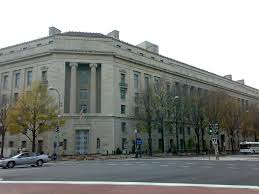
U.S. Department of Justice
The remedies for punishing such criminal behavior were now legally in place. President Obama needed only to direct the Justice Department to apply them.
Criminally investigating and possibly indicting members of Congress would not violate the separation-of-powers principle. Congressmen have in the past been investigated, indicted and convicted for various criminal offenses.
The indictment of large numbers of Republican extortionists would have substantially changed the course of American history while Obama held office.
Instead of raising huge sums of money for re-election battles, those Representatives and Senators would have been forced to raise monies for their legal defense. And while some might have been convicted, others almost certainly would have been.
This would have substantially depleted the ranks of Obama’s sworn enemies—and given him far greater opportunities to enact his legislative agenda.
Such indictments and prosecutions—and especially convictions—would have served notice on current and future members of Congress: The lives and fortunes of American citizens may not be held hostage to gain leverage in a political settlement.
A Cuban Missile Crisis Speech
But Obama could have stood up to Republican extortionists in another way: By urging his fellow Americans to rally to him in a moment of supreme national danger.
President John F. Kennedy did just that—successfully—during the most dangerous crisis of his administration. Addressing the Nation on October 22, 1962, Kennedy shocked his fellow citizens by revealing that the Soviet Union had installed offensive nuclear missiles in Cuba.

John F. Kennedy
Kennedy outlined a series of steps he had taken to end the crisis—most notably, a blockade of Cuba.
Then he sought to reassure and inspire his audience: “The cost of freedom is always high, but Americans have always paid it. And one path we shall never choose, and that is the path of surrender or submission.”
President Obama could have sent that same message to the extortionists of the Republican Party—by explaining to the American people:
- Republicans have adopted the same my-way-or-else “negotiating” stance as Adolf Hitler.
- Like the Nazis, they are determined to gain absolute power—or destroy the Nation they claim to love.
- They raised the debt ceiling seven times during the eight-year Presidency of George W. Bush.
- But now that a Democrat holds the White House, raising the debt ceiling is unacceptable.
- Despite Republican lies, we cannot revitalize the economy by slashing taxes on the wealthy and on cash-hoarding corporations while cutting benefits for millions of average Americans.
- We will need both tax increases and sensible entitlement cuts to regain our economic strength.
And he could have ended his speech with a direct call to action by the American people:

President Barack Obama addressing the Nation
“We stand on the edge of economic disaster. Therefore, I am asking each of you to stand up for America tonight–by demanding the recall of the entire membership of the Republican Party.
“This is the moment when each of us must decide—whether we will survive as a Republic, or allow ruthless political fanatics to destroy what has lasted and thrived for more than 200 years.”
Instead, Obama caved in to Republican extortion demands.
In September, 1939, British Prime Minister Neville Chamberlain and French Prime Minister Edouard Daladier sold out their ally, Czechoslovakia, to Adolf Hitler at the infamous Munich Conference.
As Winston Churchill aptly predicted: “Britain and France had to choose between war and dishonor. They chose dishonor. They will have war.”
To paraphrase Churchill: President Obama had to choose between confrontation and timidity. He chose timidity. He got contempt and obstruction in return.
Five years later, the FBI, CIA and National Security Agency informed Obama that Russian Intelligence agents were actively working to ensure Donald Trump’s election as President.
Obama did not publicly release this information–nor indict Trump campaign staffers who were colluding with those agents.
Thus, Trump won the election–and gained the power to destroy Obama’s Presidential legacy.
ABC NEWS, ADOLF HITLER, ALTERNET, AP, BARACK OBAMA, BBC, BUZZFEED, CBS NEWS, CIA, CNN, CZECHOSLOVAKIA, DAILY KOS, DEBT CEILING, DONALD TRUMP, EDOUARD DELADIER, EXTORTION, FACEBOOK, FBI, HOUSE SPEAKER JOHN BOEHNER, JAY PARINI, MOTHER JONES, MOVEON, MUNICH CONFERENCE, NATIONAL SECURITY AGENCY, NBC NEWS, NEGOTIATING, NEVILLE CHAMBERLAIN, NEWSWEEK, NPR, POLITICO, RAW STORY, REPUBLICAN PARTY, REPUBLICANS, REUTERS, RICO ACT, RUSSIA, SALON, SEATTLE TIMES, SLATE, THE ATLANTIC, THE CHICAGO SUN-TIMES, THE CHICAGO TRIBUNE, THE DAILY BEAST, THE GUARDIAN, THE HILL, THE HUFFINGTON POST, THE LOS ANGELES TIMES, THE NEW YORK TIMES, THE WALL STREET JOURNAL, THE WASHINGTON POST, TIME, TWITTER, U.S. NEWS & WORLD REPORT, UPI, USA PATRIOT ACT, USA TODAY, WINSTON CHURCHILL
In Bureaucracy, History, Law, Law Enforcement, Military, Politics, Social commentary on June 29, 2017 at 11:40 am
“[Barack] Obama needs to find his voice now in ways that, during his time in the Oval Office, he was too often reluctant to do, perhaps fearing the immense power of the bully pulpit.
“But now there is a real bully in the pulpit, and Obama–like the rest of us–has no choice but to speak, and to act.”
So writes noted author and poet Jay Parini in an Op-Ed piece for CNN.
“[President Donald] Trump has, in fact, gone out of his way to attack Obama, as in his recent nonsensical reversal wherein he attacked Obama for his lack of response to Russian meddling in the 2016 election: ‘Obama did NOTHING,’ Trump tweeted. He went on to accuse Obama of colluding with the Russians!”
Parini believes that Obama should have warned the American public that Russia was trying to sway the 2016 election for Trump: “There can be no sound reason for not alerting the people of this country to a major attack on their most cherished right, the right to vote.”
But Obama didn’t issue any such warning. The findings of the FBI, CIA and National Security Agency were kept strictly confidential until after Trump won the campaign.
Parini also believes that Obama should now forcefully respond to Trump’s attacks on him and his signature legislative achievement: The Affordable Care Act, also known as “Obamacare.”
But Obama has long refused to respond forcefully to Republican attacks. As a result, Republicans now dominate both houses of Congress–and the White House.
During the summer of 2011, Republicans threatened to destroy the Nation’s credit rating unless their budgetary demands were met. They refused to raise the debt ceiling unless Democrats agreed to massively cut social programs for the elderly, poor and disabled.

Sign of the Mafia “Black Hand”
If Congress failed to raise the borrowing limit of the federal government by August 2, the date when the U.S. reached the limit of its borrowing abilities, it would have begun defaulting on its loans.
As Warren Buffett, CEO of Berkshire Hathaway, explained the looming economic catastrophe: “If you don’t send out Social Security checks, I would hate to think about the credit meeting at S&P and Moody’s the next morning.
“If you’re not paying millions and millions and millions of people that range in age from 65 on up, money you promised them, you’re not a AAA,” said Buffett.
A triple-A credit rating is the highest possible rating that can be received.
President Obama offered to make historic cuts in the federal government and the social safety net–on which millions of Americans depend for their most basic needs.
But House Speaker John Boehner rejected that offer. He would not agree to the tax increases that Democrats wanted to impose on the wealthiest 1% as part of the bargain.

John Boehner
To raise taxes on the wealthy, Republicans insisted, would be a “jobs-killer.” It would “discourage” corporate CEOs from creating tens of thousands of jobs they allegedly “wanted” to create.
As the calendar moved ever closer to the fateful date of August 2, Republican leaders continued to insist: Any deal that includes taxes “can’t pass the House.”
One senior Republican said talks would go right up to—and maybe beyond—the brink of default.
“I think we’ll be here in August,” said Republican Representative Pete Sessions, of Texas. “We are not going to leave town until a proper deal gets done.”
President Obama had previously insisted on extending the debt ceiling through 2012. But in mid-July, he simply asked congressional leaders to review three options with their members:
- The “Grand Bargain” choice—favored by Obama–would cut deficits by about $4 trillion, including spending cuts and new tax revenues.
- A medium-range plan would aim to reduce the deficit by about $2 trillion.
- The smallest option would cut between $1 trillion and $1.5 trillion, without increased tax revenues or any medicare and Medicaid cuts.
And the Republican response?
Said Rep. Darrell Issa, chairman of the Oversight and Government Reform Committee: “Quite frankly, [Republican] members of Congress are getting tired of what the president won’t do and what the president wants.”
With the United States teetering on the brink of national bankruptcy, President Obama faced three choices:
- Counter Republican extortion attempts via RICO—the Racketeer Influenced Corrupt Organization Act.
- Make a “Cuban Missile Crisis”-style address to the American people, seeking to rally them against a criminal threat to the fiscal security of the Nation.
- Cave in to Republican demands.
Unfortunately for Obama and the Nation, he chose Number Three.
Here is how he could have applied the other two options.
Racketeer Influenced Corrupt Organizations (RICO) Act
In 1970, Congress passed the Racketeer Influenced and Corrupt Organizations (RICO) Act, Title 18, United States Code, Sections 1961-1968.
Congress’ goal was to eliminate the stranglehold of organized crime on the nation’s economy. To put it bluntly, RICO was intended to destroy the Mafia.

But in United States v. Turkette, 452 U.S. 576 (1981), the Supreme Court held that RICO applied as well to legitimate enterprises being operated in a criminal manner.
After Turkette, RICO could also be used against corporations, political protest groups, labor unions and loosely knit-groups of people.
In short, the stage was set to hold even Congressional extortionists accountable.
ADOLF HITLER, BARACK OBAMA, BILL CLINTON, CHRIS MATTHEWS, CNN'S "STARTING POINT", CZECHOSLAVAKIA, DARRELL ISSA, DEBT CEILING, EXECUTIVE ORDERS, EXTORTION, FACEBOOK, GEORGE W. BUSH, HOUSE SPEAKER JOHN BOEHNER, immigration reform, JIMMY CARTER, MSNBC'S "HARDBALL", NAZI GERMANY, NEGOTIATING, NEVILLE CHAMBERLAIN, NEWT GINGRICH, NICCOLO MACHIAVELLI, PAP SMEARS, PLANNED PARENTHOOD, POLAND, R.I.CO. ACT, REPUBLICAN PARTY, REPUBLICANS, Ronald Reagan, THE CHICAGO SUN-TIMES, THE CHICAGO TRIBUNE, THE LOS ANGELES TIMES, THE NEW YORK TIMES, THE PRINCE, THE WASHINGTON POST, TITLE X, TWITTER, WARREN BUFFET, WINSTON CHURCHILL, WORLD WAR 11
In Bureaucracy, History, Law, Law Enforcement, Military, Politics, Social commentary on October 19, 2016 at 12:02 am
In 2011, Republicans threatened to destroy the Nation’s credit rating unless their budgetary demands were met.
As Ernst Casier, chairman of philosophy at Hamburg University once warned:
“Those who are willing to risk everything, even death and destruction, to attain their ends will prevail over more responsible and prudent men who have more to lose and are rational, not suicidal.”
Yet President Barack Obama could have ended that threat via the Racketeer Influenced Corrupt Organizations (RICO) Act.
Passed by Congress in 1970, as Title 18, United States Code, Sections 1961-1968, its goal was to destroy the Mafia.
Originally, RICO was aimed at the Mafia and other organized crime syndicates. But in United States v. Turkette, 452 U.S. 576 (1981), the Supreme Court held that RICO applied as well to legitimate enterprises being operated in a criminal manner.
After Turkette, RICO could also be used against corporations, political protest groups, labor unions and loosely knit-groups of people.
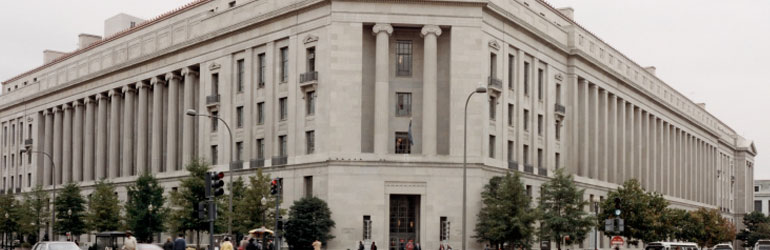
Department of Justice
RICO opens with a series of definitions of “racketeering activity” which can be prosecuted by Justice Department attorneys. Among those crimes: Extortion.
Extortion is defined as “a criminal offense which occurs when a person unlawfully obtains either money, property or services from a person(s), entity, or institution, through coercion.”
The RICO Act defines “a pattern of racketeering activity” as “at least two acts of racketeering activity, one of which occurred after the effective date of this chapter and the last of which occurred within ten years…after the commission of a prior act of racketeering activity.”
And if President Obama had believed that RICO was not sufficient to deal with Republicans’ extortion attempts, he could have relied on the USA Patriot Act of 2001, passed in the wake of 9/11.
In Section 802, the Act defines domestic terrorism. Among the behavior that is defined as criminal:
“Activities that…appear to be intended…to influence the policy of a government by intimidation or coercion [and]…occur primarily within the territorial jurisdiction of the United States.”
The remedies for punishing such criminal behavior were now legally in place. President Obama needed only to direct the Justice Department to apply them.
- President Obama could have directed Attorney General Eric Holder to investigate whether actions by Republican Congressman–and their Tea Party cohorts–broke Federal anti-racketeering and/or anti-terrorism laws.
- Holder, in turn, could have ordered the FBI to conduct that investigation.
- If the FBI found sufficient evidence that these laws had been violated, Holder could have convened criminal grand juries to indict those violators.
Criminally investigating and possibly indicting members of Congress would not violate the separation-of-powers principle. Congressmen have in the past been investigated, indicted and convicted for various criminal offenses.
Such indictments and prosecutions–and especially convictions–would have served notice on current and future members of Congress: The lives and fortunes of American citizens may not be held hostage to gain leverage in a political settlement.
In short: Obama could have replaced the law of fear with the rule of law.
But Obama could have stood up to Republican extortionists in another way: By urging his fellow Americans to rally to him in a moment of supreme national danger.
President John F. Kennedy did just that–successfully–during the most dangerous crisis of his administration.
Addressing the Nation on October 22, 1962, Kennedy shocked his fellow citizens by revealing that the Soviet Union had installed offensive nuclear missiles in Cuba.
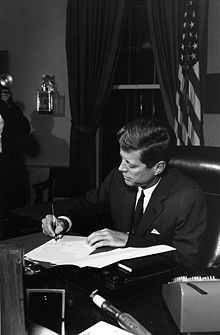
John F. Kennedy
Kennedy outlined a series of steps he had taken to end the crisis–most notably, a blockade of Cuba. Then he sought to reassure and inspire his audience:
“The cost of freedom is always high, but Americans have always paid it. And one path we shall never choose, and that is the path of surrender or submission.”
President Obama could have sent that same message to the extortionists of the Republican Party–by explaining to the American people:
- Republicans have adopted the same my-way-or-else “negotiating” stance as Adolf Hitler.
- Like the Nazis, they are determined to gain absolute power–or destroy the Nation they claim to love.
- They raised the debt ceiling seven times during the eight-year Presidency of George W. Bush.
- But now that a Democrat holds the White House, raising the debt ceiling is unacceptable.
- Despite Republican lies, we cannot revitalize the economy by slashing taxes on the wealthy and on cash-hoarding corporations while cutting benefits for millions of average Americans.
- We will need both tax increases and sensible entitlement cuts to regain our economic strength.
And he could have ended his speech with a direct call for action by the American people:
“We stand on the edge of economic disaster. Therefore, I am asking each of you to stand up for America tonight–by demanding the recall of the entire membership of the Republican Party.
“This is the moment when each of us must decide–whether we will survive as a Republic, or allow ruthless political fanatics to destroy what has lasted and thrived for more than 200 years.”
To paraphrase Winston Churchill: President Obama had to choose between timidity and confrontation.
He chose timidity.
He would get contempt and obstruction at every turn.


.jpg)

.svg)


 Bureaucracybuster's Blog
2016 PRESIDENTIAL CAMPAIGN, ABC NEWS, ADOLF HITLER, ALTERNET, ANN COULTER, AP, AUSTRIA, BARACK OBAMA, BILL CLINTON, BORDER WALL, BUZZFEED, CBS NEWS, CHARLES SCHUMER, CHRIS CILLIZZA, CNN, CONTRACTORS, COUNCIL OF ECONOMIC ADVISERS, CROOKS AND LIARS, CZECHOSLOVAKIA, DAILY KOZ, DAVID BROOKS, DEMOCRATS, DEPARTMENT OF COMMERCE, DEPARTMENT OF HOMELAND SECURITY, DICK CHENEY, DONALD TRUMP, EDOUARD DELADIER, FACEBOOK, FBI, FEDERAL AVIATION ADMINISTRATION (FAA), FOX NEWS, FRANCE, GEORGE W. BUSH, GOVERNMENT SHUTDOWN, HOUSE OF REPRESENTATIVES, JAPAN, JEDEDIAH BILA, JOSE ANDRES, JULIAN ZELITZER, KEVIN HASSETT, KURT VON SCHUSCHNIGG, MARIE ANTOINETTE, MARK SHIELDS, MIKE PENCE, MITCH MECONNELL, MOTHER JONES, MOVEON, MSNBC, MUNICH CONFERENCE, NANCY PELOSI, NAZI GERMANY, NBC NEWS, NEVILLE CHAMBERLAIN, NEWSWEEK, NICCOLO MACHIAVELLI, NPR, PBS NEWSHOUR, POLAND, POLITICO, RAW STORY, REPUBLICANS, REUTERS, ROBERT PAYNE, RUSH LIMBAUGH, SALON, SEATTLE TIMES, SLATE, SOUP KITCHENS, STATE OF THE UNION ADDRESS, SUPER BOWL, THE ATLANTIC, THE CHICAGO SUN-TIMES, THE CHICAGO TRIBUNE, THE DAILY BEAST, THE GUARDIAN, THE HILL, THE HUFFINGTON POST, THE LIFE AND DEATH OF ADOLF HITLER, THE LOS ANGELES TIMES, THE NATION, THE NEW YORK TIMES, THE PRINCE, THE WALL STREET JOURNAL, THE WASHINGTON POST, TIME, TRANSPORTATION SAFETY ADMINISTRATION (TSA), TWITTER, U.S. NEWS & WORLD REPORT, UBER, UNITED STATES HOUSE OF REPRESENTATIVES, UNITED STATES SECRET SERVICE, UNITED STATES SENATE, UPI, USA TODAY, WILBUR ROSS, WINSTON CHURCHILL, WORLD WAR 11
LEARNING FROM THE MUNICH DISASTER: PART THREE (OF FIVE)
In Bureaucracy, History, Military, Politics, Social commentary on January 30, 2019 at 12:08 am“If we do not have these negotiations over border security with an open government, this president will continue to use this tool. And if we give in, if we pay the ransom now, what will happen the next time there’s a disagreement with this president and Congress?”
—Rep. Katherine Clark, D-Mass.
Republican leaders in Congress didn’t want to be blamed for shutting down the government. They seemed to persuade President Donald Trump to back away from his threat to do so if he didn’t get funding for his border wall.
The Senate passed a short-term funding measure without his wall money.
Vice President Mike Pence told lawmakers that Trump was open to approving it
Then the Fox News Network stepped in
“I think a lot of people who voted for President Trump counted on him on this particular issue,” Fox & Friends host Jedediah Bila said.
“I think their feet were to the fire. And you see a lot of people around the country saying: ‘Hold on a second. You told us that you weren’t afraid to shut down the government, that’s why we like you. What happened? You just gave in right away?’”
And Right-wing columnist Ann Coulter said: “Trump will just have been a joke presidency who scammed the American people, amused the populists for a while, but he’ll have no legacy whatsoever.
“Trump will very likely not finish his term and definitely not be elected to a second term.”
For a man who had “joked” that having a “President-for-Life” would be “great,” Coulter’s words were a nightmare.
On December 22, 2018, Trump shut down the government.
An estimated 380,000 government employees were furloughed and another 420,000 were ordered to work without pay.
And Trump told Congressional leaders the shutdown could last months or even years.
Donald Trump
For Trump, “the wall” was absolutely necessary—but not to keep illegal aliens out. They would go over, under or around it.
The real intent of the wall was to keep Trump in—the White House.
Trump’s fanatical base believed that a wall across the U.S.-Mexico border would stop all illegal immigration. And he knew that if he didn’t build it, they wouldn’t re-elect him.
Like Adolf Hitler, who ordered the complete destruction of Germany when he realized his dreams of conquest were over, Trump’s attitude was: “If I can’t rule America, there won’t be an America.”
Among the agencies directly affected by the shutdown: The Department of Homeland Security (DHS)—whose employees included Secret Service agents.
In short: The men and women guarding Trump were facing financial ruin—along with their families—because Trump didn’t get his way.
The effects of the shutdown quickly became evident:
Those employed by the government could at least expect to receive reimbursement for missed pay once the shutdown ended.
The question was: Would they be evicted, need medical care or be unable to pay for food before that happened?
For Federal contractors, the situation was far worse.
During the George W. Bush administration, Vice President Dick Cheney pushed to “outsource” many federal responsibilities to private contractors. This was hugely supported by Republicans and even many Democrats.
Now, in the wake of the shutdown, these employees faced a cruel reality: Since they were not Federal employees, they would not be reimbursed for the time they were forced to not work.
Adding insult to injury were the callous remarks of two Trump administration officials.
“A huge share of government workers were going to take vacation days, say, between Christmas and New Year’s,” said Kevin Hassett, chairman of the Council of Economic Advisers.
Kevin Hassett
“And then we have a shutdown, and so they can’t go to work, and so then they have the vacation, but they don’t have to use their vacation days. And then they come back, and then they get their back pay. Then they’re—in some sense, they’re better off.”
Another equally contemptuous remark was offered by Commerce Secretary Wilbur Ross—a billionaire. Asked on CNBC if he knew that many Federal employees had been reduced to going to food banks, Ross said yes, but he didn’t understand why.
His suggestion: They could just take out a loan.
Share this: