Posts Tagged ‘VOLODMYR ZELENSKY’
2020 PRESIDENTIAL ELECTION, ABC NEWS, ALEX VINDMAN, ALTERNET, AMERICABLOG, AP, BABY BOOMER RESISTANCE, BBC, BLOOMBERG NEWS, BUZZFEED, CBS NEWS, CNN, CROOKS AND LIARS, DAILY KOS, DAVID PRESSMAN, DEMOCRATS, DONALD TRUMP, DRUDGE RETORT, FIVETHIRTYEIGHT, GORDON SONDLAND, HARPER’S MAGAZINE, HUFFINGTON POST, JOHN ROOD, JOSEPH BIDEN, MARK ESPER, MEDIA MATTERS, MORNING JOE, MOTHER JONES, MOVEON, MSNBC, NBC NEWS, NEW REPUBLIC, NEWSDAY, NEWSWEEK, NICCOLO MACHIAVELLI, NPR, PBS NEWSHOUR, POLITICO, POLITICUSUSA, RAW STORY, REPUBLICANS, REUTERS, SALON, SEATTLE TIMES, SLATE, TALKING POINTS MEMO, THE ATLANTIC, THE CHICAGO SUN-TIMES, THE CHICAGO TRIBUNE, THE DAILY BEAST, THE DAILY BLOG, THE GUARDIAN, THE HILL, THE HUFFINGTON POST, THE INTERCEPT, THE LOS ANGELES TIMES, THE NATION, THE NEW REPUBLIC, THE NEW YORK TIMES, THE NEW YORKER, THE PENTAGON, THE PRINCE, THE VILLAGE VOICE, THE WASHINGTON POST, THINKPROGRESS, TIME, TRUTHDIG, TRUTHOUT, TWO POLITICAL JUNKIES, U.S. NEWS & WORLD REPORT, UKRAINE, UPI, USA TODAY, VOLODMYR ZELENSKY, WONKETTE, X, YEVGENEY VINDMAN
In Bureaucracy, History, Law, Military, Politics, Social commentary on August 19, 2024 at 12:11 am
“There is no other way of guarding oneself against flattery than by letting men understand that they will not offend you by speaking the truth. But when every one can tell you the truth, you lose their respect.
“A prudent prince must therefore take a third course, by choosing for his counsel wise men, and giving them alone full liberty to speak the truth to him, but only of those things that he asks and of nothing else.”
So wrote the Italian statesman Niccolo Machiavelli more than 500 years ago in his famous treatise on politics, The Prince. And he added:
“But he must be a great asker about everything and hear their opinions, and afterwards deliberate by himself in his own way, and in these counsels and with each of these men comport himself so that every one may see that the more freely he speaks, the more he will be acceptable.
“Beyond these he should listen to no one, go about the matter deliberately, and be determined in his decisions.”
Machiavelli’s words remain as true in our day as they were in his.
Especially for “a very stable genius,” as ex-President Donald J. Trump once referred to himself.
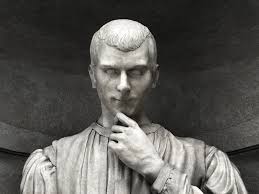
Niccolo Machiavelli
Asked on MSNBC’s “Morning Joe” who he consults about foreign policy, Trump replied; “I’m speaking with myself, number one, because I have a very good brain and I’ve said a lot of things.”
Machiavelli offers a related warning that especially applies to Trump: Unwise princes cannot be wisely advised:
“It is an infallible rule that a prince who is not wise himself cannot be well advised, unless by chance he leaves himself entirely in the hands of one man who rules him in everything, and happens to be a very prudent man. In this case, he may doubtless be well governed, but it would not last long, for the governor would in a short time deprive him of the state.”
Competent executives surround themselves with experts in diverse fields and pay attention to their expertise. They don’t feel threatened by it but rely on it to implement their agenda. Advisers whose counsel proves correct are to be retained and rewarded.
Machiavelli offers practical advice on this:
“The prince, in order to retain his fidelity, ought to think of his minister, honoring and enriching him, doing him kindnesses and conferring on him favors and responsible tasks, so that the great favors and riches bestowed on him cause him not to desire other honors and riches, and the offices he holds make him fearful of changes.”
But rewarding those who try to head off ruinous decision-making is not Trump’s way.
Consider the case of John Rood, the Pentagon’s top policy official until February 19. That was when he resigned, saying he was leaving at Trump’s request.
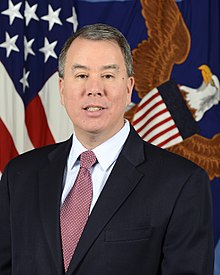
John Rood
Rood had certified in 2019 that Ukraine had made enough anti-corruption progress to justify the release of Congressionally-authorized aid for its efforts to thwart Russian aggression.
And that totally conflicted with Trump’s attempt to extort a “favor” from Ukrainian President Volodymyr Zelensky.
In July, 2019, Trump told his acting chief of staff, Mick Mulvaney, to withhold almost $400 million in promised military aid for Ukraine.
On July 25, Trump telephoned Zelensky to “request” a “favor”: Investigate Democratic Presidential Candidate Joseph Biden and his son, Hunter, who has had business dealings in Ukraine.
The reason for such an investigation: To find embarrassing “dirt” on Biden.

Joe Biden
But then a CIA whistleblower filed a complaint about the extortion attempt—and this led directly to impeachment proceedings by the Democratically-controlled House for abuse of power and obstruction of Congress.
But the Republican-dominated Senate voted to acquit him.
Afterwards, Trump purged several officials he considered disloyal for cooperating with the impeachment hearings:
- Army Lt. Col. Alex Vindman, from the National Security Council.
- White House Attorney Lt. Col. Yevgeny Vindman, Vindman’s twin brother.
- Gordon Sondland, Trump’s ambassador to the European Union.
“The truth has cost Lt. Col. Alexander Vindman his job, his career, and his privacy,” his attorney David Pressman, said in a statement.
For Trump, Rood had been “disloyal” on two occasions:
- He stated in a May 23, 2019 letter to Congress that the Pentagon had thoroughly assessed Ukraine’s anti-corruption actions. And he said that those reforms justified the authorized $400 million in aid.
- He told reporters last year: “In the weeks after signing the certification I did become aware that the aid had been held. I never received a very clear explanation other than there were concerns about corruption in Ukraine.”
Asked about Rood’s resignation, chief Pentagon spokesman Jonathan Hoffman declined to speculate on the reason for Trump’s decision.
According to Secretary of Defense Mark Esper, Rood played “a critical role” on issues such as nuclear deterrence, NATO, missile defense and the National Defense Strategy.
That did not protect him, however, from Trump’s vendetta against those who dared to reveal his crimes to Democratic impeachment committees.
All of which would lead Niccolo Machiavelli to warn, if he could witness American politics today: “This bodes ill for your Republic.”
2016 PRESIDENTIAL CAMPAIGN, 2020 PRESIDENTIAL ELECTION, ABC NEWS, ADOLF HITLER, ALTERNET, AMERICABLOG, AP, AUSTRIA, BABY BOOMER RESISTANCE, BERLIN, BLOOMBERG, BORDER WALL, BRIAN KEMP, BUZZFEED, CBS NEWS, CIA, CNN, COVID-19, CROOKS AND LIARS, CZECHOSLOVAKIA, DAILY KOZ, DEMOCRATS, DONALD TRUMP, DRUDGE REPORT, EMILY MURPHY, ENGLAND, FBI, FIVETHIRTYEIGHT, FRANCE, GAIUS CALIGULA, GENERAL SERVICES ADMINISTRATION, GEORGE FLOYD, GOVERNMENT SHUTDOWN, HARPER’S MAGAZINE, HUFFINGTON POST, JAMES COMEY, JEFF SESSIONS, JOE BIDEN, LAMAR ALEXANDER, MARTIN GUGINO, MEDIA MATTERS, MIKE PENCE, MITCH MCCONNELL, MITCH MECONNELL, MOTHER JONES, MOVEON, MSNBC, MUNICH CONFERENCE, NANCY PELOSI, NATIONAL SECURITY AGENCY, NAZI GERMANY, NBC NEWS, NEWSWEEK, NPR, PBS NEWSHOUR, POLAND, POLITICO, POLITICUSUSA, RAFAEL EDUARDO "TED" CRUZ, RAW STORY, REPUBLICANS, REUTERS, ROME, RON JOHNSON, RUSSIA, SALON, SEATTLE TIMES, Secret Service, SERGEY KISLYAK, SERGEY LAVROV, SLATE, TALKING POINTS MEMO, THE ATLANTIC, THE CHICAGO SUN-TIMES, THE CHICAGO TRIBUNE, THE DAILY BEAST, THE DAILY BLOG, THE DISCOURSES, THE GUARDIAN, THE HILL, THE HUFFINGTON POST, THE LOS ANGELES TIMES, THE NATION, THE NEW REPUBLIC, THE NEW YORK TIMES, THE PRESS, THE VILLAGE VOICE, THE WALL STREET JOURNAL, THE WASHINGTON POST, THINKPROGRESS, TIME, TREASON, TRUTHDIG, TRUTHOUT, TWENTY-FIFTH AMENDMENT, TWITTER, TWO POLITICAL JUNKIES, U.S. NEWS & WORLD REPORT, UKRAINE, UNITED STATES HOUSE OF REPRESENTATIVES, UNITED STATES SENATE, UPI, USA TODAY, VLADIMIR PUTIN, VOLODMYR ZELENSKY, WONKETTE
In Bureaucracy, History, Law, Law Enforcement, Military, Politics, Social commentary on March 31, 2023 at 12:13 am
Once he became the 45th President of the United States, Donald Trump began undermining one public or private institution after another.
On November 3, 2020, 80 million voters decided they wanted a change—and elected former Vice President Joe Biden as the 46th President of the United States.
Trump refused to accept that verdict.
Speaking from the White House in the early hours of November 4, he said:
“Millions and millions of people voted for us tonight, and a very sad group of people is trying to disenfranchise that group of people and we won’t stand for it.”
For the first time in American history, a President demanded a halt to the counting of votes while the outcome of an election hung in doubt.
States ignored his demand and kept counting.
Next, Trump ordered his attorneys to file lawsuits to overturn the election results, charging electoral fraud.
Specifically:
- Illegal aliens had been allowed to vote.
- Trump ballots had been systematically destroyed.
- Tampered voting machines had turned Trump votes into Biden ones.
Throughout November and December, cases were filed in Wisconsin, Arizona, Nevada, Michigan, Minnesota and Georgia challenging the election results. And, one by one, more than 30 cases were withdrawn by Trump’s attorneys or dismissed by Federal judges—some of them appointed by Trump himself.
For 20 days, General Services Administrator Emily Murphy refused to release $7.3 million in transition funding and Federal resources to the President-elect’s team.
Under the law governing presidential transitions, Murphy was responsible for determining the winner based on publicly available information before the actual Electoral College vote.
Finally, on November 23, Murphy released the transition funding and resources.
Losing in the courts, Trump invited two Republican legislative leaders from Michigan to the White House to persuade them to stop the state from certifying the vote.
Nothing changed.
On December 5, Trump called Georgia Governor Brian Kemp and asked him to call a special legislative session and convince state legislators to select their own electors that would support him, thus overturning Biden’s win.
Kemp refused, saying he lacked the authority to do so.
Meanwhile, top Republicans—such as Vice President Mike Pence and Senate Majority Leader Mitch McConnell—refused to congratulate Biden as the winner.
None of them branded Trump’s efforts to overturn the election as those of a tyrant.
Just as Germans did nothing to stop Adolf Hitler’s inexorable march toward war—and the destruction of millions of lives and Germany itself—so, too, did Americans seem paralyzed to put an end to the equally self-destructive reign of the man often dubbed “Carrot Caligula.”

Gaius Caligula was “the mad emperor” of ancient Rome. Like Trump, he lived by a philosophy of “Let them hate me, so long as they fear me.”
He ruled as the most powerful man of his time—three years, 10 months and eight days. And all but the first six months of his reign were drenched in slaughter and debauchery.
There are basically three ways America’s continuing slide into tyranny could have been stopped:
Congressional Republicans could have revolted against Trump’s authority and/or agenda.
They could, for example, have demanded that Trump accept the verdict of the electorate—as every other past President had. But they didn’t.
Invoking the Twenty-Fifth Amendment to the United States Constitution.
This allows the Vice President and a majority of the Cabinet to recommend the removal of the President in cases where he is “unable to discharge the powers and duties of his office.” It also allows the House and Senate to confirm the recommendation over the President’s objection by two-thirds vote.
The Vice President then takes over as President.
A case could easily have been made that Trump, emotionally distraught over his loss and determined to circumvent the will of the electorate, had been rendered unfit to continue in office. But, once again, Republicans let fear be their guide.
He had fired FBI Director James Comey in 2017 and publicly humiliated his Attorney General, Jeff Sessions, for more than a year until firing him in 2018. Vice President Mike Pence in particular had set new records for sycophancy.
The “Caligula solution.” Like Trump, Roman emperor Gaius Caligula delighted in humiliating others. His fatal mistake was taunting Cassius Chaerea, a member of his own bodyguard. Caligula considered Chaerea effeminate because of a weak voice and mocked him with names like “Priapus” and “Venus.”

Gaius Caligula
On January 22 41 A.D. Chaerea and several other bodyguards hacked Caligula to death with swords before other guards could save him.
Trump had similarly behaved arrogantly toward his Secret Service guards. He forced them to work without pay during his 35-day government shutdown in 2018. He also forced them to accompany him to COVID-infected states—both during the Presidential campaign and afterward. Many of them were stricken with this often lethal disease as a result.
During the 12 years that Adolf Hitler ruled Nazi Germany, at least 42 assassination plots were launched against him.
The best-known of these literally exploded on July 20, 1944, when Colonel Count Claus Shenk von Stauffenberg planted a bomb in a conference room attended by Hitler and his generals. Hitler survived only by sheer luck.
By contrast, no similar plot was aimed at Donald Trump.
2016 PRESIDENTIAL CAMPAIGN, 2020 PRESIDENTIAL CAMPAIGN, ABC NEWS, ADOLF HITLER, ALTERNET, AMERICABLOG, AP, AUSTRIA, BABY BOOMER RESISTANCE, BERLIN, BLOOMBERG, BORDER WALL, BRIAN KEMP, BUZZFEED, CBS NEWS, CIA, CNN, COVID-19, CROOKS AND LIARS, CZECHOSLOVAKIA, DAILY KOZ, DEMOCRATS, DONALD TRUMP, DRUDGE REPORT, EMILY MURPHY, ENGLAND, FBI, FIVETHIRTYEIGHT, FRANCE, GAIUS CALIGULA, GENERAL SERVICES ADMINISTRATION, GEORGE FLOYD, GOVERNMENT SHUTDOWN, HARPER’S MAGAZINE, HUFFINGTON POST, JAMES COMEY, JEFF SESSIONS, JOE BIDEN, LAMAR ALEXANDER, MARTIN GUGINO, MEDIA MATTERS, MIKE PENCE, MITCH MCCONNELL, MITCH MECONNELL, MOTHER JONES, MOVEON, MSNBC, MUNICH CONFERENCE, NANCY PELOSI, NATIONAL SECURITY AGENCY, NAZI GERMANY, NBC NEWS, NEWSWEEK, NICCOLO MACHIAVELLI, NPR, PBS NEWSHOUR, POLAND, POLITICO, POLITICUSUSA, RAFAEL EDUARDO "TED" CRUZ, RAW STORY, REPUBLICANS, REUTERS, ROME, RON JOHNSON, RUSSIA, SALON, SEATTLE TIMES, Secret Service, SERGEY KISLYAK, SERGEY LAVROV, SLATE, TALKING POINTS MEMO, THE ATLANTIC, THE CHICAGO SUN-TIMES, THE CHICAGO TRIBUNE, THE DAILY BEAST, THE DAILY BLOG, THE DISCOURSES, THE GUARDIAN, THE HILL, THE HUFFINGTON POST, THE LOS ANGELES TIMES, THE NATION, THE NEW REPUBLIC, THE NEW YORK TIMES, THE PRESS, THE VILLAGE VOICE, THE WALL STREET JOURNAL, THE WASHINGTON POST, THINKPROGRESS, TIME, TRUTHDIG, TRUTHOUT, TWENTY-FIFTH AMENDMENT, TWITTER, TWO POLITICAL JUNKIES, U.S. NEWS & WORLD REPORT, UKRAINE, UNITED STATES HOUSE OF REPRESENTATIVES, UNITED STATES SENATE, UPI, USA TODAY, VLADIMIR PUTIN, VOLODMYR ZELENSKY, WONKETTE
In Bureaucracy, History, Law, Law Enforcement, Military, Politics, Social commentary on March 30, 2023 at 12:13 am
“Why are we letting one man systematically destroy our nation before our eyes?”
It’s a question millions of Americans asked themselves since Donald Trump became President of the United States.
Millions of Germans asked themselves the same question throughout the six years of World War II.
In September, 1938, as Adolf Hitler threatened to go to war against France and England over Czechoslovakia, most Germans feared he would. They knew that Germany was not ready for war, despite all of their Fuhrer’s boasts about how invincible the Third Reich was.
A group of high-ranking German army officers was prepared to overthrow Hitler—provided that England and France held firm and handed him a major diplomatic reverse.
But then England and France—though more powerful than Germany—flinched at the thought of war.
They surrendered to Hitler’s demands that he be given the “Sudetenland”—the northern, southwest and western regions of Czechoslovakia, inhabited mostly by ethnic Germans.
Hitler’s popularity among Germans soared. He had expanded the territories of the Reich by absorbing Austria and Czechoslovakia—without a shot being fired!
The plotters in the German high command, realizing that public opinion stood overwhelmingly against them, abandoned their plans for a coup. They decided to wait for a more favorable time.
It never came.
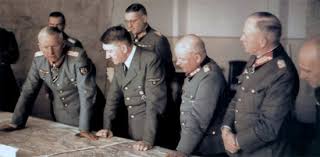
Adolf Hitler and his generals
Less than one year after the infamous “Munich conference,” England and France were at war—and fighting for the lives of their peoples.
As for the Germans: Most of them blindly followed their Fuhrer right to the end—believing his lies (or at least wanting to believe them), serving in his legions, defending his rampant criminality.
And then, in April, 1945, with Russian armies pouring into Berlin, it was too late for conspiracies against the man who had led them to total destruction.
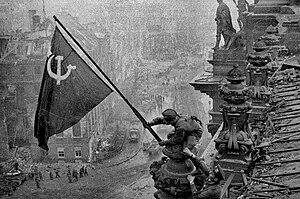
Soviet flag waves over defeated Nazi Germany
Berliners paid the price for their loyalty to a murderous dictator—through countless rapes, murders and the wholesale destruction of their city. And from 1945 to 1989, Germans living in the eastern part of their country paid the price as slaves to the Soviet Union.
Have Americans learned anything from this warning from history about subservience to a madman?
The answer seems to be half-no, half-yes.
Half-no: In 2016, almost 63 million Americans elected Donald Trump—a racist, serial adulterer and longtime fraudster—as President.
On November 3, 2020, 81,255,933 Democratic voters outvoted 74,196,153 Republican voters to elect former Vice President Joseph Biden as the 46th President of the United States.
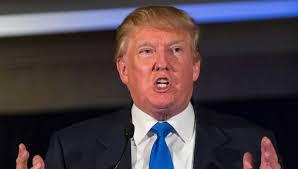
Donald Trump
Upon taking office on January 20, 2017, Trump began undermining one public or private institution after another.
- Repeatedly attacking the nation’s free press for daring to report his growing list of crimes and disasters, calling it “the enemy of the American people.”
- Siding with Russian dictator Vladimir Putin against the FBI, CIA and National Security Agency which unanimously agreed that Russia had subverted the 2016 Presidential election.
- Firing FBI Director James Comey for investigating that subversion.
- Giving Russian Foreign Minister Sergey Lavrov and Russian Ambassador Sergey Kislyak highly classified CIA Intelligence about an Islamic State plot to turn laptops into concealable bombs.
- Shutting down the Federal Government for 35 days because Democrats refused to fund his ineffective “border wall” between the United States and Mexico. An estimated 380,000 government employees were furloughed and another 420,000 were ordered to work without pay. The shutdown ended due to public outrage—without Trump getting the funding amount he had demanded.
- Trying to coerce Ukrainian President Volodymyr Zelensky to smear former Vice President Joe Biden, who was likely to be his Democratic opponent in the 2020 Presidential election.
- Allowing the deadly COVID-19 virus to ravage the country, infecting (to date) 14.8 million Americans and killing 282,000.
- Attacking medical experts and governors who urged Americans to wear masks and socially distance to protect themselves from COVID-19.
- Ordering his Right-wing followers to defy states’ orders to citizens to “stay-at-home” and wear of masks in public to halt surging COVID-19 rates.
And throughout all those outrages, House and Senate Republican majorities remained silent or vigorously supported him.
A typical example:
On June 4, 2020, during protests over the police murder of black security guard George Floyd, a curfew was imposed on Buffalo, New York. As police swept through Niagara Square, Martin Gugino, a 75-year-old peace activist with the Catholic Worker Movement, walked into their path as if attempting to speak with them.
Two officers pushed him and he fell backwards, hitting the back of his head on the pavement and losing consciousness.
On June 9, Trump charged that Gugino was part of a radical leftist “set up.” Trump offered no evidence to back up his slander.
Typical Republican responses included:
- Kentucky Senate Majority Leader Mitch McConnell refused to say whether Trump’s tweet was appropriate.
- Texas Senator Ted Cruz: “I don’t comment on the tweets.”
- Wisconsin Senator Ron Johnson said he hadn’t seen the tweet—and didn’t want it read to him: “I would rather not hear it.”
- Tennessee Senator Lamar Alexander: “Voters can evaluate that. I’m not going to give a running commentary on the President’s tweets.”
Half-yes: On November 3, 2020, 80 million voters decided they wanted a change—and elected former Vice President Joe Biden as the 46th President of the United States.
2020 PRESIDENTIAL ELECTION, ABC NEWS, ALEX VINDMAN, ALTERNET, AMERICABLOG, AP, BABY BOOMER RESISTANCE, BBC, BLOOMBERG NEWS, BUZZFEED, CBS NEWS, CNN, CROOKS AND LIARS, DAILY KOZ, DAVID PRESSMAN, DEMOCRATS, DONALD TRUMP, DRUDGE RETORT, FACEBOOK, FIVETHIRTYEIGHT, GORDON SONDLAND, HARPER’S MAGAZINE, HUFFINGTON POST, JOHN ROOD, JOSEPH BIDEN, MARK ESPER, MEDIA MATTERS, MORNING JOE, MOTHER JONES, MOVEON, MSNBC, NBC NEWS, NEW REPUBLIC, NEWSDAY, NEWSWEEK, NICCOLO MACHIAVELLI, NPR, PBS NEWSHOUR, POLITICO, POLITICUSUSA, RAW STORY, REPUBLICANS, REUTERS, SALON, SEATTLE TIMES, SLATE, TALKING POINTS MEMO, THE ATLANTIC, THE CHICAGO SUN-TIMES, THE CHICAGO TRIBUNE, THE DAILY BEAST, THE DAILY BLOG, THE GUARDIAN, THE HILL, THE HUFFINGTON POST, THE INTERCEPT, THE LOS ANGELES TIMES, THE NATION, THE NEW REPUBLIC, THE NEW YORK TIMES, THE NEW YORKER, THE PENTAGON, THE PRINCE, THE VILLAGE VOICE, THE WASHINGTON POST, THINKPROGRESS, TIME, TRUTHDIG, TRUTHOUT, TWITTER, TWO POLITICAL JUNKIES, U.S. NEWS & WORLD REPORT, UKRAINE, UPI, USA TODAY, VOLODMYR ZELENSKY, WONKETTE, YEVGENEY VINDMAN
In Bureaucracy, History, Law, Military, Politics, Social commentary on April 15, 2022 at 12:13 am
“There is no other way of guarding oneself against flattery than by letting men understand that they will not offend you by speaking the truth. But when every one can tell you the truth, you lose their respect.
“A prudent prince must therefore take a third course, by choosing for his counsel wise men, and giving them alone full liberty to speak the truth to him, but only of those things that he asks and of nothing else.”
So wrote the Italian statesman Niccolo Machiavelli more than 500 years ago in his famous treatise on politics, The Prince. And he added:
“But he must be a great asker about everything and hear their opinions, and afterwards deliberate by himself in his own way, and in these counsels and with each of these men comport himself so that every one may see that the more freely he speaks, the more he will be acceptable.
“Beyond these he should listen to no one, go about the matter deliberately, and be determined in his decisions.”
Machiavelli’s words remain as true in our day as they were in his.
Especially for “a very stable genius,” as ex-President Donald J. Trump once referred to himself.
Niccolo Machiavelli
Asked on MSNBC’s “Morning Joe” who he consults about foreign policy, Trump replied; “I’m speaking with myself, number one, because I have a very good brain and I’ve said a lot of things.”
Machiavelli offers a related warning that especially applies to Trump: Unwise princes cannot be wisely advised:
“It is an infallible rule that a prince who is not wise himself cannot be well advised, unless by chance he leaves himself entirely in the hands of one man who rules him in everything, and happens to be a very prudent man. In this case, he may doubtless be well governed, but it would not last long, for the governor would in a short time deprive him of the state.”
Competent executives surround themselves with experts in diverse fields and pay attention to their expertise. They don’t feel threatened by it but rely on it to implement their agenda. Advisers whose counsel proves correct are to be retained and rewarded.
Machiavelli offers practical advice on this:
“The prince, in order to retain his fidelity, ought to think of his minister, honoring and enriching him, doing him kindnesses and conferring on him favors and responsible tasks, so that the great favors and riches bestowed on him cause him not to desire other honors and riches, and the offices he holds make him fearful of changes.”
But rewarding those who try to head off ruinous decision-making is not Trump’s way.
Consider the case of John Rood, the Pentagon’s top policy official until February 19. That was when he resigned, saying he was leaving at Trump’s request.
John Rood
Rood had certified last year that Ukraine had made enough anti-corruption progress to justify the release of Congressionally-authorized aid for its efforts to thwart Russian aggression.
And that totally conflicted with Trump’s attempt to extort a “favor” from Ukrainian President Volodymyr Zelensky.
In July, 2019, Trump told his acting chief of staff, Mick Mulvaney, to withhold almost $400 million in promised military aid for Ukraine.
On July 25, Trump telephoned Zelensky to “request” a “favor”: Investigate Democratic Presidential Candidate Joseph Biden and his son, Hunter, who has had business dealings in Ukraine.
The reason for such an investigation: To find embarrassing “dirt” on Biden.
Joe Biden
But then a CIA whistleblower filed a complaint about the extortion attempt—and this led directly to impeachment proceedings by the Democratically-controlled House for abuse of power and obstruction of Congress.
But the Republican-dominated Senate voted to acquit him.
Afterwards, Trump purged several officials he considers disloyal for cooperating with the impeachment hearings:
- Army Lt. Col. Alex Vindman, from the National Security Council.
- White House Attorney Lt. Col. Yevgeny Vindman, Vindman’s twin brother.
- Gordon Sondland, Trump’s ambassador to the European Union.
“The truth has cost Lt. Col. Alexander Vindman his job, his career, and his privacy,” his attorney David Pressman, said in a statement.
For Trump, Rood had been “disloyal” on two occasions:
- He stated in a May 23, 2019 letter to Congress that the Pentagon had thoroughly assessed Ukraine’s anti-corruption actions. And he said that those reforms justified the authorized $400 million in aid.
- He told reporters last year: “In the weeks after signing the certification I did become aware that the aid had been held. I never received a very clear explanation other than there were concerns about corruption in Ukraine.”
Asked about Rood’s resignation, chief Pentagon spokesman Jonathan Hoffman declined to speculate on the reason for Trump’s decision.
According to Secretary of Defense Mark Esper, Rood played “a critical role” on issues such as nuclear deterrence, NATO, missile defense and the National Defense Strategy.
That did not protect him, however, from Trump’s vendetta against those who dared to reveal his crimes to Democratic impeachment committees.
All of which would lead Niccolo Machiavelli to warn, if he could witness American politics today: “This bodes ill for your Republic.”
2016 PRESIDENTIAL CAMPAIGN, 2020 PRESIDENTIAL ELECTION, ABC NEWS, ADOLF HITLER, ALTERNET, AMERICABLOG, AP, AUSTRIA, BABY BOOMER RESISTANCE, BERLIN, BLOOMBERG, BORDER WALL, BRIAN KEMP, BUZZFEED, CBS NEWS, CIA, CNN, COVID-19, CROOKS AND LIARS, CZECHOSLOVAKIA, DAILY KOZ, DEMOCRATS, DONALD TRUMP, DRUDGE REPORT, EMILY MURPHY, ENGLAND, FACEBOOK, FBI, FIVETHIRTYEIGHT, FRANCE, GAIUS CALIGULA, GENERAL SERVICES ADMINISTRATION, GEORGE FLOYD, GOVERNMENT SHUTDOWN, HARPER’S MAGAZINE, HUFFINGTON POST, JAMES COMEY, JEFF SESSIONS, JOE BIDEN, LAMAR ALEXANDER, MARTIN GUGINO, MEDIA MATTERS, MIKE PENCE, MITCH MCCONNELL, MITCH MECONNELL, MOTHER JONES, MOVEON, MSNBC, MUNICH CONFERENCE, NANCY PELOSI, NATIONAL SECURITY AGENCY, NAZI GERMANY, NBC NEWS, NEWSWEEK, NPR, PBS NEWSHOUR, POLAND, POLITICO, POLITICUSUSA, RAFAEL EDUARDO "TED" CRUZ, RAW STORY, REPUBLICANS, REUTERS, ROME, RON JOHNSON, RUSSIA, SALON, SEATTLE TIMES, Secret Service, SERGEY KISLYAK, SERGEY LAVROV, SLATE, TALKING POINTS MEMO, THE ATLANTIC, THE CHICAGO SUN-TIMES, THE CHICAGO TRIBUNE, THE DAILY BEAST, THE DAILY BLOG, THE DISCOURSES, THE GUARDIAN, THE HILL, THE HUFFINGTON POST, THE LOS ANGELES TIMES, THE NATION, THE NEW REPUBLIC, THE NEW YORK TIMES, THE PRESS, THE VILLAGE VOICE, THE WALL STREET JOURNAL, THE WASHINGTON POST, THINKPROGRESS, TIME, TREASON, TRUTHDIG, TRUTHOUT, TWENTY-FIFTH AMENDMENT, TWITTER, TWO POLITICAL JUNKIES, U.S. NEWS & WORLD REPORT, UKRAINE, UNITED STATES HOUSE OF REPRESENTATIVES, UNITED STATES SENATE, UPI, USA TODAY, VLADIMIR PUTIN, VOLODMYR ZELENSKY, WONKETTE
In Bureaucracy, History, Law, Law Enforcement, Military, Politics, Social commentary on March 29, 2022 at 12:11 am
On November 3, 80 million voters elected former Vice President Joe Biden as the 46th President of the United States.
President Donald Trump had often “joked” that America needed a “President-for-Life.” Now he demanded that he be awarded that title.
Trump refused to accept that verdict.
Speaking from the White House in the early hours of November 4, he said: “Millions and millions of people voted for us tonight, and a very sad group of people is trying to disenfranchise that group of people and we won’t stand for it.”
For the first time in American history, a President demanded a halt to the counting of votes while the outcome of an election hung in doubt.
States ignored his demand and kept counting.
Next, Trump ordered his attorneys to file lawsuits to overturn the election results, charging electoral fraud.
He claimed:
- Illegal aliens had been allowed to vote.
- Trump ballots had been systematically destroyed.
- Tampered voting machines had turned Trump votes into Biden ones.
Throughout November and December, cases were filed in Wisconsin, Arizona, Nevada, Michigan, Minnesota and Georgia challenging the election results. More than 30 cases were withdrawn by Trump’s attorneys or dismissed by Federal judges—some of them appointed by Trump himself.
For 20 days, General Services Administrator Emily Murphy refused to release $7.3 million in transition funding and Federal resources to the President-elect’s team.
Under the law governing presidential transitions, Murphy was responsible for determining the winner based on publicly available information before the actual Electoral College vote.
Finally, on November 23, Murphy released the transition funding and resources.
Trump invited two Republican legislative leaders from Michigan to the White House to persuade them to stop the state from certifying the vote.
Nothing changed.
On December 5, Trump called Georgia Governor Brian Kemp and asked him to call a special legislative session to convince state legislators to select their own electors that would support him, thus overturning Biden’s win.
Kemp refused, saying he lacked the authority to do so.
Top Republicans—such as Vice President Mike Pence and Senate Majority Leader Mitch McConnell—refused to congratulate Biden as the winner.
None of them branded Trump’s efforts to overturn the election as those of a tyrant.
Just as Germans did nothing to stop Adolf Hitler’s inexorable march toward war—and the destruction of millions of lives and Germany itself—so, too, did Americans seem paralyzed to end the equally self-destructive reign of the man often dubbed “Carrot Caligula.”
Gaius Caligula was “the mad emperor” of ancient Rome. Like Trump, he lived by a philosophy of “Let them hate me, so long as they fear me.”
He ruled as the most powerful man of his time—three years, 10 months and eight days. And all but the first six months of his reign were drenched in slaughter and debauchery.
There were basically three ways America’s slide into tyranny could have been stopped:
First, Congressional Republicans could have revolted against Trump’s authority and/or agenda.
They could have demanded that Trump accept the verdict of the electorate—as every other past President had.
But they didn’t.
Republicans feared that if they openly defied him, his fanatical base would turn on them in coming elections—and end their comfortable reign of power and privileges.
Second, invoking the Twenty-Fifth Amendment to the United States Constitution.
This allows the Vice President and a majority of the Cabinet to recommend the removal of the President in cases where he is “unable to discharge the powers and duties of his office.” It also allows the House and Senate to confirm the recommendation over the President’s objection by two-thirds vote.
The Vice President then takes over as President.
A case could easily have been made that Trump, emotionally distraught over his loss and determined to circumvent the will of the electorate, had been rendered unfit to continue in office.
This did not happen.
Most of Trump’s cabinet rightly feared him. He fired FBI Director James Comey in 2017 and publicly humiliated his Attorney General, Jeff Sessions, for more than a year until firing him in 2018. Vice President Mike Pence in particular had set new records for sycophancy.
Third, the “Caligula solution.” Like Trump, Caligula delighted in humiliating others. His fatal mistake was taunting Cassius Chaerea, a member of his own bodyguard. Caligula considered Chaerea effeminate owing to a weak voice and mocked him with names like “Priapus” and “Venus.”
Gaius Caligula
On January 22 41 A.D. Chaerea and several other bodyguards hacked Caligula to death with swords before other guards could save him.
Trump had similarly behaved arrogantly toward his Secret Service guards. He forced them to work without pay during his 35-day government shutdown in 2018. He also forced them to accompany him to COVID-infected states—both during the Presidential campaign and afterward. Many of them had been stricken with this often lethal disease as a result.
During Adolf Hitler’s 12-years reign of Nazi Germany, high-ranking military officers tried to kill him at least 42 times.
The best-known of these attempts occurred on July 20, 1944, when Colonel Count Claus Shenk von Stauffenberg planted a bomb in a conference room attended by Hitler and his generals. Hitler survived only by sheer luck.
By contrast, no similar plot was aimed at Donald Trump.
2016 PRESIDENTIAL CAMPAIGN, 2020 PRESIDENTIAL CAMPAIGN, ABC NEWS, ADOLF HITLER, ALTERNET, AMERICABLOG, AP, AUSTRIA, BABY BOOMER RESISTANCE, BERLIN, BLOOMBERG, BORDER WALL, BRIAN KEMP, BUZZFEED, CBS NEWS, CIA, CNN, COVID-19, CROOKS AND LIARS, CZECHOSLOVAKIA, DAILY KOZ, DEMOCRATS, DONALD TRUMP, DRUDGE REPORT, EMILY MURPHY, ENGLAND, FACEBOOK, FBI, FIVETHIRTYEIGHT, FRANCE, GAIUS CALIGULA, GENERAL SERVICES ADMINISTRATION, GEORGE FLOYD, GOVERNMENT SHUTDOWN, HARPER’S MAGAZINE, HUFFINGTON POST, JAMES COMEY, JEFF SESSIONS, JOE BIDEN, LAMAR ALEXANDER, MARTIN GUGINO, MEDIA MATTERS, MIKE PENCE, MITCH MCCONNELL, MITCH MECONNELL, MOTHER JONES, MOVEON, MSNBC, MUNICH CONFERENCE, NANCY PELOSI, NATIONAL SECURITY AGENCY, NAZI GERMANY, NBC NEWS, NEWSWEEK, NPR, PBS NEWSHOUR, POLAND, POLITICO, POLITICUSUSA, RAFAEL EDUARDO "TED" CRUZ, RAW STORY, REPUBLICANS, REUTERS, ROME, RON JOHNSON, RUSSIA, SALON, SEATTLE TIMES, Secret Service, SERGEY KISLYAK, SERGEY LAVROV, SLATE, TALKING POINTS MEMO, THE ATLANTIC, THE CHICAGO SUN-TIMES, THE CHICAGO TRIBUNE, THE DAILY BEAST, THE DAILY BLOG, THE DISCOURSES, THE GUARDIAN, THE HILL, THE HUFFINGTON POST, THE LOS ANGELES TIMES, THE NATION, THE NEW REPUBLIC, THE NEW YORK TIMES, THE PRESS, THE VILLAGE VOICE, THE WALL STREET JOURNAL, THE WASHINGTON POST, THINKPROGRESS, TIME, TRUTHDIG, TRUTHOUT, TWENTY-FIFTH AMENDMENT, TWITTER, TWO POLITICAL JUNKIES, U.S. NEWS & WORLD REPORT, UKRAINE, UNITED STATES HOUSE OF REPRESENTATIVES, UNITED STATES SENATE, UPI, USA TODAY, VLADIMIR PUTIN, VOLODMYR ZELENSKY, WONKETTE
In Bureaucracy, History, Law, Law Enforcement, Military, Politics, Social commentary on March 28, 2022 at 12:10 am
“Why are we letting one man systematically destroy our nation before our eyes?”
It’s a question millions of Americans asked themselves after Donald Trump became President of the United States.
Millions of Germans asked themselves the same question throughout the six years of World War II.
In September, 1938, as Adolf Hitler threatened to go to war against France and England over Czechoslovakia, most Germans feared he would. They knew that Germany was not ready for war, despite all of their Fuhrer’s boasts about how invincible the Third Reich was.
A group of high-ranking German army officers was prepared to overthrow Hitler—provided that England and France held firm and handed him a major diplomatic reverse.
But then England and France—though more powerful than Germany—flinched at the thought of war.
They surrendered to Hitler’s demands that he be given the “Sudetenland”—the northern, southwest and western regions of Czechoslovakia, inhabited mostly by ethnic Germans.
Hitler’s popularity among Germans soared. He had expanded the territories of the Reich by absorbing Austria and Czechoslovakia—without a shot being fired!
The plotters in the German high command, realizing that public opinion stood overwhelmingly against them, abandoned their plans for a coup. They decided to wait for a more favorable time.
It never came.
Adolf Hitler and his generals
Less than one year after the infamous “Munich conference,” England and France were at war—and fighting for the lives of their peoples.
As for the Germans: Most of them blindly followed their Fuhrer right to the end—believing his lies (or at least wanting to believe them), serving in his legions, defending his rampant criminality.
And then, in April, 1945, with Russian armies pouring into Berlin, it was too late for conspiracies against the man who had led them to total destruction.
Germans paid the price for their loyalty to a murderous dictator—through countless rapes, murders and the wholesale destruction of their cities. And from 1945 to 1989, Germans living in the eastern part of their country paid the price as slaves to the Soviet Union.
Have Americans learned anything from this this warning from history about subservience to a madman?
The answer seems to be half-yes, half-no.
In 2016, almost 63 million Americans elected Donald Trump—a racist, serial adulterer and longtime fraudster—as President.
Donald Trump
Upon taking office on January 20, 2017, Trump began undermining one public or private institution after another.
- Repeatedly attacking the nation’s free press for daring to report his growing list of crimes and disasters, calling it “the enemy of the American people.”
- Siding with Russian dictator Vladimir Putin against the FBI, CIA and National Security Agency which unanimously agreed that Russia had subverted the 2016 Presidential election.
- Firing FBI Director James Comey for investigating that subversion.
- Giving Russian Foreign Minister Sergey Lavrov and Russian Ambassador Sergey Kislyak highly classified CIA Intelligence about an Islamic State plot to turn laptops into concealable bombs.
- Shutting down the Federal Government for 35 days because Democrats refused to fund his ineffective “border wall” between the United States and Mexico. An estimated 380,000 government employees were furloughed and another 420,000 were ordered to work without pay. The shutdown ended due to public outrage—without Trump getting the funding amount he had demanded.
- Trying to coerce Ukrainian President Volodymyr Zelensky to smear former Vice President Joe Biden, who was likely to be his Democratic opponent in the 2020 Presidential election.
- Allowing the deadly COVID-19 virus to ravage the country, infecting (to date) 14.8 million Americans and killing 282,000.
- Attacking medical experts and governors who urged Americans to wear masks and socially distance to protect themselves from COVID-19.
- Ordering his Right-wing followers to defy states’ orders to citizens to “stay-at-home” and wear of masks in public to halt surging COVID-19 rates.
And throughout all those outrages, House and Senate Republican majorities remained silent or vigorously supported him.
A typical example:
On June 4, 2020, during protests over the police murder of black security guard George Floyd, a curfew was imposed on Buffalo, New York. As police swept through Niagara Square, Martin Gugino, a 75-year-old peace activist with the Catholic Worker Movement, walked into their path as if attempting to speak with them.
Two officers pushed him and he fell backwards, hitting the back of his head on the pavement and losing consciousness.
On June 9, Trump charged that Gugino was part of a radical leftist “set up.” Trump offered no evidence to back up his slander.
Typical Republican responses included:
- Kentucky Senate Majority Leader Mitch McConnell refused to say whether Trump’s tweet was appropriate.
- Texas Senator Ted Cruz: “I don’t comment on the tweets.”
- Wisconsin Senator Ron Johnson said he hadn’t seen the tweet—and didn’t want it read to him: “I would rather not hear it.”
- Tennessee Senator Lamar Alexander: “Voters can evaluate that. I’m not going to give a running commentary on the President’s tweets.”
On November 3, 2020, 81,255,933 Democratic voters outvoted 74,196,153 Republican voters to elect former Vice President Joseph Biden as the 46th President of the United States.
ABC NEWS, ABUSE OF POWER, ADAM SCHIFF, ADOLF HITLER, ALTERNET, AMERICABLOG, AP, ARTICLES OF IMPEACHMENT, BABY BOOMER RESISTANCE, BAVARIA, BBC, BEER HALL PUTSCH, BLOOMBERG NEWS, BUZZFEED, CBS NEWS, CIA, CNN, CROOKS AND LIARS, DAILY KOZ, DONALD TRUMP, DONALD TRUMP JUNIOR, ELECTORAL COLLEGE, FACEBOOK, FIVETHIRTYEIGHT, GOVERNMENT ACCOUNTABILITY OFFICE (GAO), HARPER’S MAGAZINE, HITLER: ASCENT: 1889 – 1933 (BOOK), HUFFINGTON POST, HUNITED STATES OUSE OF REPRESENTATIVES, HUNTER BIDEN, IMPEACHMENT, JOSEPH BIDEN, MEDIA MATTERS, MEIN KAMPF, MICK MULVANEY, MIKE PENCE, MITT ROMNEY, MO BROOKS, MOTHER JONES, MOVEON, MSNBC, MUNICH, NANCY PELOSI, NAZI GERMANY, NBC NEWS, NEW REPUBLIC, NEWSDAY, NEWSWEEK, NPR, OBSTRUCTION OF CONGRESS, PBS NEWSHOUR, POLITICO, POLITICUSUSA, RAW STORY, REUTERS, RUDY GIULIANI, SALON, SEATTLE TIMES, SLATE, TALKING POINTS MEMO, THE ATLANTIC, THE CHICAGO SUN-TIMES, THE CHICAGO TRIBUNE, THE DAILY BEAST, THE DAILY BLOG, THE GUARDIAN, THE HILL, THE HUFFINGTON POST, THE LOS ANGELES TIMES, THE NATION, THE NEW REPUBLIC, THE NEW YORK TIMES, THE NEW YORKER, THE VILLAGE VOICE, THE WASHINGTON POST, THINKPROGRESS, TIME, TRUTHDIG, TRUTHOUT, TWITTER, TWO POLITICAL JUNKIES, U.S. NEWS & WORLD REPORT, UKRAINE, UNITED STAITES SENATE, UNITED STATES CAPITOL, UNITED STATES DEPARTMENT OF JUSTICE, UPI, USA TODAY, VOLKER ULRICH, VOLODMYR ZELENSKY, WONKETTE
In Bureaucracy, History, Law, Law Enforcement, Politics, Social commentary on August 4, 2021 at 12:07 am
On January 6, 2021, members of the United States Senate and House of Representatives met to count the Electoral Votes cast for then-President Donald Trump and former Vice President Joseph R. Biden.
Trump knew that Biden has received more Electoral College votes than he had—306 to 232.
And he wanted that vote-count stopped—thus allowing him to remain in office as “President-for-Life.”
For weeks Trump had ordered his legions of Right-wing Stormtrumpers to descend on Washington, D.C. on January 6.
On December 20, 2020, he had tweeted: “Statistically impossible to have lost the 2020 Election. Big protest in DC on January 6th. Be there, will be wild!”
In tweets, he promoted the rally again on December 27 and 30, and January 1.
Thus, through his lies, he had aroused the fury of his Right-wing supporters.
It would take only his command to send it hurtling at his perceived enemies: Those who would dare elect Joe Biden in his place.
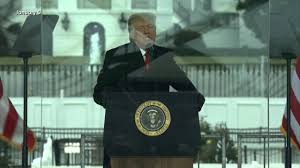
Donald Trump addresses his Stormtrumpers
On January 6, Trump appeared at the Ellipse, a 52-acre park south of the White House fence and north of Constitution Avenue and the National Mall in Washington, D.C.
A stage had been set up for him to address tens of thousands of his supporters, who eagerly awaited him.
Trump ordered them to march on the Capitol building to express their anger at the voting process and to intimidate their elected officials to reject the results:
“And after this, we’re going to walk down and I’ll be there with you. We’re going to walk down to the Capitol. And we’re going to cheer on our brave Senators and Congressmen and women and we’re probably not going to be cheering so much for some of them.
“Because you’ll never take back our country with weakness. You have to show strength and you have to be strong. We have come to demand that Congress do the right thing and only count the electors who have been lawfully slated.”
The Stormtrumpers marched to the United States Capitol—and quickly overwhelmed Capitol Police.

Tyler Merbler from USA, CC BY 2.0 <https://creativecommons.org/licenses/by/2.0>, via Wikimedia Commons
- Members of the mob attacked police with chemical agents or lead pipes.
- Many of the lawmakers’ office buildings were occupied and vandalized—including that of House Speaker Nancy Pelosi, a favorite Right-wing target.
- Shouts of “Hang Pence!” and “Hang Pelosi!” often rang out.
- According to CBS News, more than 150 officers were injured in the attack.
- Several rioters carried plastic handcuffs, possibly intending to take hostages.
- Others carried treasonous Confederate flags.
After more than three hours, police—using riot gear, shields and batons—retook control of the Capitol.
And Trump? After giving his inflammatory speech, he didn’t march with his followers to the Capitol.
Like the draft-dodger he had been during the Vietnam war, he kept himself out of harm’s way and returned to the White House.
There he watched his handiwork on television—and initially rebuffed requests to mobilize the National Guard.
Six months later—by July 30—599 Stormtrumpers had been arrested and charged.
- At least 27 defendants have pleaded guilty.
- At least 22 have pleaded guilty to misdemeanors.
- Six have pleaded guilty to felonies.
- Three defendants have been sentenced: One drew a sentence of eight months for a felony. Two were sentenced for misdemeanor charges.
- Another was sentenced to three years probation and no jail time.
- Another was sentenced to six months imprisonment, but was credited for the time he had already spent in jail awaiting trial.
Yet no major Trump supporter has been arrested, let alone indicted.
- NOT Trump’s attorney, Rudy Giuliani, who cried to the demonstrators, “Let’s have trial by combat!”
- NOT Donald Trump, Jr., who, just hours before the Trump mob stormed Congress, threatened Republican lawmakers at a large rally outside the White House: “These guys better fight for Trump. Because if they’re not, guess what? I’m going to be in your backyard in a couple of months!”
- NOT Rep, Mo Brooks (R-Ala.) who incited the Trump crowd with: “Today is the day American patriots start taking down names and kicking ass!”
- And, above all, NOT Donald Trump. He not only incited his followers to attack the Capitol, he has spent the last six months spreading poisonous lies that the 2020 election was “stolen” from him through “massive” voter fraud. As a result, he continues to undermine the democratic process as he terrorizes the Republican party to stand behind him.
For attempting to overthrow the government of Bavaria in 1923, Adolf Hitler could have spent five years in prison. Instead, a sympathetic Right-leaning judge gave him only nine months.
Had he served out his full sentence, he might not have been able to revive his political career. But once he emerged from prison, he reorganized the Nazi party and began a series of campaigns for the presidency.
By January 30, 1933, he had become Chancellor of Germany. By August, 1934, he had become absolute dictator.
At the battle of the Alamo, 200 Texans killed 600 Mexican soldiers before being overwhelmed. During the Capitol battle, hundreds of police killed one Stormtrumper, thus sending the message: You can commit treason with impunity.
The Justice Department must soon indict, prosecute and—hopefully—convict Donald Trump—to both punish his treason and warn his potential imitators of treason’s penalties.
ABC NEWS, ABUSE OF POWER, ADAM SCHIFF, ADOLF HITLER, ALTERNET, AMERICABLOG, AP, ARTICLES OF IMPEACHMENT, BABY BOOMER RESISTANCE, BAVARIA, BBC, BEER HALL PUTSCH, BLOOMBERG NEWS, BUZZFEED, CBS NEWS, CIA, CNN, CROOKS AND LIARS, DAILY KOZ, DONALD TRUMP, DONALD TRUMP JUNIOR, ELECTORAL COLLEGE, FACEBOOK, FIVETHIRTYEIGHT, GOVERNMENT ACCOUNTABILITY OFFICE (GAO), HARPER’S MAGAZINE, HITLER: ASCENT: 1889 – 1933 (BOOK), HUFFINGTON POST, HUNITED STATES OUSE OF REPRESENTATIVES, HUNTER BIDEN, IMPEACHMENT, JOSEPH BIDEN, MEDIA MATTERS, MEIN KAMPF, MICK MULVANEY, MIKE PENCE, MITT ROMNEY, MO BROOKS, MOTHER JONES, MOVEON, MSNBC, MUNICH, NANCY PELOSI, NAZI GERMANY, NBC NEWS, NEW REPUBLIC, NEWSDAY, NEWSWEEK, NPR, OBSTRUCTION OF CONGRESS, PBS NEWSHOUR, POLITICO, POLITICUSUSA, RAW STORY, REUTERS, RUDY GIULIANI, SALON, SEATTLE TIMES, SLATE, TALKING POINTS MEMO, THE ATLANTIC, THE CHICAGO SUN-TIMES, THE CHICAGO TRIBUNE, THE DAILY BEAST, THE DAILY BLOG, THE GUARDIAN, THE HILL, THE HUFFINGTON POST, THE LOS ANGELES TIMES, THE NATION, THE NEW REPUBLIC, THE NEW YORK TIMES, THE NEW YORKER, THE VILLAGE VOICE, THE WASHINGTON POST, THINKPROGRESS, TIME, TRUTHDIG, TRUTHOUT, TWITTER, TWO POLITICAL JUNKIES, U.S. NEWS & WORLD REPORT, UKRAINE, UNITED STAITES SENATE, UNITED STATES CAPITOL, UNITED STATES DEPARTMENT OF JUSTICE, UPI, USA TODAY, VOLKER ULRICH, VOLODMYR ZELENSKY, WONKETTE
In Bureaucracy, History, Law, Law Enforcement, Politics, Social commentary on August 3, 2021 at 12:13 am
On November 9, 1923, Nazi Party Fuhrer Adolf Hitler tried to overthrow the government in Munich, Bavaria.
About 2,500-3,000 Nazis marched to the center of Munich, where they confronted heavily-armed police. A shootout erupted, killing 16 Nazis and four policemen.
Hitler was injured during the clash, but managed to escape. Two days later, he was arrested and charged with treason.
Put on trial, he found himself treated as a celebrity by a judge sympathetic to Right-wing groups. He was allowed to brutally cross-examine witnesses and even make inflammatory speeches. As a result, he emerged a national figure, popular in Right-wing circles.
At the end of the trial, he was convicted of treason and sentenced to nine months’ imprisonment—by a Right-wing judge hostile to the the newly-created Weimar Republic.
Serving time in Landsberg Prison, in Bavaria. he was given a huge cell, allowed to receive unlimited visitors and gifts, and treated with deference by guards and inmates.
Hitler used his time in prison to write his infamous book, Mein Kampf-–“My Struggle.” Part autobiography, part political treatise, it laid out his future plans—including the extermination of the Jews and the conquest of the Soviet Union.

Adolf Hitler leaving Landsberg Prison, December, 20, 1924
Nine months later, he was released on parole.
Hitler immediately began rebuilding the shattered Nazi party—and deciding on a new strategy to gain power. Never again would he resort to armed force. He would win office by election—or intrigue.
In less than 10 years—on January 30, 1933—he had done so. By August 2, 1934, he had become absolute dictator of Germany.
Writes historian Volker Ullrich, in his monumental 2016 biography, Hitler: Ascent 1889 – 1939: “Historians have perennially tried to answer the question of whether Hitler’s rise to power could have been halted….
“There were repeated opportunities to end Hitler’s run of triumphs. The most obvious one was after the failed Putsch of November 1923. Had the Munich rabble-rouser been forced to serve his full five-year term of imprisonment in Landsberg, it is extremely unlikely that he would have been able to restart his political career.”

Thus, it isn’t just what happens that can influence the course of history. Often, it’s what doesn’t happen that has at least as great a result.
Consider the case of America’s own would-be Fuhrer: Donald Trump.
On December 18, 2019, the House of Representatives had approved two Articles of Impeachment against Trump for:
Article 1: Abuse of Power: For pressuring Ukraine to assist him in his re-election campaign by smearing a potential rival for the White House.
Article 2: Obstruction of Congress: For obstructing Congress by blocking testimony of subpoenaed witnesses and refusing to provide documents in response to House subpoenas in the impeachment inquiry.
On September 9, 2019, the House Foreign Affairs, Intelligence and Oversight and Reform committees began investigating his attempted extortion of Ukraine President Volodymyr Zelensky.
On July 25, 2019, Trump had “asked” Zelensky to do him a “favor”: Find embarrassing “dirt” on former Vice President Joseph Biden and his son, Hunter.
Hunter had had business dealings in Ukraine. And Joseph Biden might be Trump’s Democratic opponent for the White House in 2020.
To underline the seriousness of his “request,” earlier in July Trump had told Mick Mulvaney, his White House chief of staff, to withhold $400 million in military aid that Congress had approved for Ukraine, which faced an increasingly aggressive Russia.
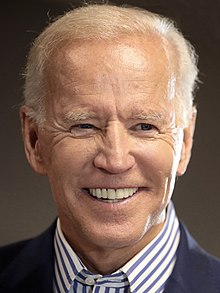
Joseph Biden
Gage Skidmore from Peoria, AZ, United States of America / CC BY-SA (https://creativecommons.org/licenses/by-sa/2.0)
But then a CIA whistleblower filed a complaint about the extortion attempt—and the media and Congress soon learned of it. And ever since, the evidence linking Trump to impeachable offenses had mushroomed.
On January 16, 2020, the Government Accountability Office (GAO) announced that the Trump administration broke the law when it withheld security aid to Ukraine.
As trial proceedings unfolded in the 2020 impeachment of Trump, the majority Republican Senators consistently put their own partisan interests over those of their country.
Among their actions:
- Refusing to hear from eyewitnesses who could prove that Trump had committed impeachable offenses,
- Refusing to provide evidence on Trump’s behalf—but attacking witnesses who had testified against him in the House.
- Attacking Joseph and Hunter Biden as if they were on trial—instead of having been the targets of Trump’s smear-attempt.
As Lead Impeachment Manager, Representative Adam Schiff (D-CA) held the role of a prosecutor.
Faced with the unwillingness of Trump’s Senatorial defenders to accept any evidence—no matter how damning—against him, Schiff warned: “Donald Trump must be convicted and removed from office. Because he will always choose his own personal interest over our national interest. Because in America, right matters. Truth matters. If not, no Constitution can protect us. If not, we are lost.”

Adam Schiff
On February 5, 2020, the Republican-dominated Senate—as expected—absolved him from trying to extort Ukraine into smearing a possible rival for the White House.
Only one Republican—Utah Senator Mitt Romney—had the moral courage to vote for conviction.
On January 6, 2021, Schiff’s prophecy came true.
2016 PRESIDENTIAL CAMPAIGN, 2020 PRESIDENTIAL ELECTION, ABC NEWS, ADOLF HITLER, ALTERNET, AMERICABLOG, AP, AUSTRIA, BABY BOOMER RESISTANCE, BERLIN, BLOOMBERG, BORDER WALL, BRIAN KEMP, BUZZFEED, CBS NEWS, CIA, CNN, COVID-19, CROOKS AND LIARS, CZECHOSLOVAKIA, DAILY KOZ, DEMOCRATS, DONALD TRUMP, DRUDGE REPORT, EMILY MURPHY, ENGLAND, FACEBOOK, FBI, FIVETHIRTYEIGHT, FRANCE, GAIUS CALIGULA, GENERAL SERVICES ADMINISTRATION, GEORGE FLOYD, GOVERNMENT SHUTDOWN, HARPER’S MAGAZINE, HUFFINGTON POST, JAMES COMEY, JEFF SESSIONS, JOE BIDEN, LAMAR ALEXANDER, MARTIN GUGINO, MEDIA MATTERS, MIKE PENCE, MITCH MCCONNELL, MITCH MECONNELL, MOTHER JONES, MOVEON, MSNBC, MUNICH CONFERENCE, NANCY PELOSI, NATIONAL SECURITY AGENCY, NAZI GERMANY, NBC NEWS, NEWSWEEK, NPR, PBS NEWSHOUR, POLAND, POLITICO, POLITICUSUSA, RAFAEL EDUARDO "TED" CRUZ, RAW STORY, REPUBLICANS, REUTERS, ROME, RON JOHNSON, RUSSIA, SALON, SEATTLE TIMES, Secret Service, SERGEY KISLYAK, SERGEY LAVROV, SLATE, TALKING POINTS MEMO, THE ATLANTIC, THE CHICAGO SUN-TIMES, THE CHICAGO TRIBUNE, THE DAILY BEAST, THE DAILY BLOG, THE DISCOURSES, THE GUARDIAN, THE HILL, THE HUFFINGTON POST, THE LOS ANGELES TIMES, THE NATION, THE NEW REPUBLIC, THE NEW YORK TIMES, THE PRESS, THE VILLAGE VOICE, THE WALL STREET JOURNAL, THE WASHINGTON POST, THINKPROGRESS, TIME, TREASON, TRUTHDIG, TRUTHOUT, TWENTY-FIFTH AMENDMENT, TWITTER, TWO POLITICAL JUNKIES, U.S. NEWS & WORLD REPORT, UKRAINE, UNITED STATES HOUSE OF REPRESENTATIVES, UNITED STATES SENATE, UPI, USA TODAY, VLADIMIR PUTIN, VOLODMYR ZELENSKY, WONKETTE
In Bureaucracy, History, Law, Law Enforcement, Military, Politics, Social commentary on December 8, 2020 at 12:15 am
Once he became the 45th President of the United States, Donald Trump began undermining one public or private institution after another.
On November 3, 80 million voters decided they wanted a change—and elected former Vice President Joe Biden as the 46th President of the United States.
Trump refused to accept that verdict. Speaking from the White House in the early hours of November 4, he said:
“Millions and millions of people voted for us tonight, and a very sad group of people is trying to disenfranchise that group of people and we won’t stand for it.”
For the first time in American history, a President demanded a halt to the counting of votes while the outcome of an election hung in doubt.
States ignored his demand and kept counting.
Next, Trump ordered his attorneys to file lawsuits to overturn the election results, charging electoral fraud. Specifically:
- Illegal aliens had been allowed to vote.
- Trump ballots had been systematically destroyed.
- Tampered voting machines had turned Trump votes into Biden ones.
Throughout November and December, cases were filed in Wisconsin, Arizona, Nevada, Michigan, Minnesota and Georgia challenging the election results. And, one by one, more than 30 cases were withdrawn by Trump’s attorneys or dismissed by Federal judges—some of them appointed by Trump himself.
For 20 days, General Services Administrator Emily Murphy refused to release $7.3 million in transition funding and Federal resources to the President-elect’s team. Under the law governing presidential transitions, Murphy was responsible for determining the winner based on publicly available information before the actual Electoral College vote.
Finally, on November 23, Murphy released the transition funding and resources.
Losing in the courts, Trump invited two Republican legislative leaders from Michigan to the White House to persuade them to stop the state from certifying the vote.
Nothing changed.
On December 5, Trump called Georgia Governor Brian Kemp and asked him to call a special legislative session and convince state legislators to select their own electors that would support him, thus overturning Biden’s win.
Kemp refused, saying he lacked the authority to do so.
Meanwhile, top Republicans—such as Vice President Mike Pence and Senate Majority Leader Mitch McConnell—have refused to congratulate Biden as the winner. None of them branded Trump’s efforts to overturn the election as those of a tyrant.
Just as Germans did nothing to stop Adolf Hitler’s inexorable march toward war—and the destruction of millions of lives and Germany itself—so, too, did Americans seem paralyzed to put an end to the equally self-destructive reign of the man often dubbed “Carrot Caligula.”
Gaius Caligula was “the mad emperor” of ancient Rome. Like Trump, he lived by a philosophy of “Let them hate me, so long as they fear me.”
He ruled as the most powerful man of his time—three years, 10 months and eight days. And all but the first six months of his reign were drenched in slaughter and debauchery.
There are basically three ways America’s continuing slide into tyranny could have been stopped:
Congressional Republicans could have revolted against Trump’s authority and/or agenda. They could, for example, have demanded that Trump accept the verdict of the electorate—as every other past President had. But they didn’t.
Invoking the Twenty-Fifth Amendment to the United States Constitution. This allows the Vice President and a majority of the Cabinet to recommend the removal of the President in cases where he is “unable to discharge the powers and duties of his office.” It also allows the House and Senate to confirm the recommendation over the President’s objection by two-thirds vote.
The Vice President then takes over as President.
A case could easily have been made that Trump, emotionally distraught over his loss and determined to circumvent the will of the electorate, had been rendered unfit to continue in office. But, once again, Republicans let fear be their guide.
He had fired FBI Director James Comey in 2017 and publicly humiliated his Attorney General, Jeff Sessions, for more than a year until firing him in 2018. Vice President Mike Pence in particular had set new records for sycophancy.
The “Caligula solution.” Like Trump, Caligula delighted in humiliating others. His fatal mistake was taunting Cassius Chaerea, a member of his own bodyguard. Caligula considered Chaerea effeminate because of a weak voice and mocked him with names like “Priapus” and “Venus.”

Gaius Caligula
Sergey Sosnovskiy from Saint-Petersburg, Russia, CC BY-SA 2.0 <https://creativecommons.org/licenses/by-sa/2.0>, via Wikimedia Commons
On January 22 41 A.D. Chaerea and several other bodyguards hacked Caligula to death with swords before other guards could save him.
Trump had similarly behaved arrogantly toward his Secret Service guards. He forced them to work without pay during his 35-day government shutdown in 2018. He also forced them to accompany him to COVID-infected states—both during the Presidential campaign and afterward. Many of them were stricken with this often lethal disease as a result.
During the 12 years that Adolf Hitler ruled Nazi Germany, at least 42 assassination plots were launched against him.
The best-known of these literally exploded on July 20, 1944, when Colonel Count Claus Shenk von Stauffenberg planted a bomb in a conference room attended by Hitler and his generals. Hitler survived only by sheer luck.
By contrast, no similar plot was aimed at Donald Trump.
2016 PRESIDENTIAL CAMPAIGN, 2020 PRESIDENTIAL CAMPAIGN, ABC NEWS, ADOLF HITLER, ALTERNET, AMERICABLOG, AP, AUSTRIA, BABY BOOMER RESISTANCE, BERLIN, BLOOMBERG, BORDER WALL, BRIAN KEMP, BUZZFEED, CBS NEWS, CIA, CNN, COVID-19, CROOKS AND LIARS, CZECHOSLOVAKIA, DAILY KOZ, DEMOCRATS, DONALD TRUMP, DRUDGE REPORT, EMILY MURPHY, ENGLAND, FACEBOOK, FBI, FIVETHIRTYEIGHT, FRANCE, GAIUS CALIGULA, GENERAL SERVICES ADMINISTRATION, GEORGE FLOYD, GOVERNMENT SHUTDOWN, HARPER’S MAGAZINE, HUFFINGTON POST, JAMES COMEY, JEFF SESSIONS, JOE BIDEN, LAMAR ALEXANDER, MARTIN GUGINO, MEDIA MATTERS, MIKE PENCE, MITCH MCCONNELL, MITCH MECONNELL, MOTHER JONES, MOVEON, MSNBC, MUNICH CONFERENCE, NANCY PELOSI, NATIONAL SECURITY AGENCY, NAZI GERMANY, NBC NEWS, NEWSWEEK, NICCOLO MACHIAVELLI, NPR, PBS NEWSHOUR, POLAND, POLITICO, POLITICUSUSA, RAFAEL EDUARDO "TED" CRUZ, RAW STORY, REPUBLICANS, REUTERS, ROME, RON JOHNSON, RUSSIA, SALON, SEATTLE TIMES, Secret Service, SERGEY KISLYAK, SERGEY LAVROV, SLATE, TALKING POINTS MEMO, THE ATLANTIC, THE CHICAGO SUN-TIMES, THE CHICAGO TRIBUNE, THE DAILY BEAST, THE DAILY BLOG, THE DISCOURSES, THE GUARDIAN, THE HILL, THE HUFFINGTON POST, THE LOS ANGELES TIMES, THE NATION, THE NEW REPUBLIC, THE NEW YORK TIMES, THE PRESS, THE VILLAGE VOICE, THE WALL STREET JOURNAL, THE WASHINGTON POST, THINKPROGRESS, TIME, TRUTHDIG, TRUTHOUT, TWENTY-FIFTH AMENDMENT, TWITTER, TWO POLITICAL JUNKIES, U.S. NEWS & WORLD REPORT, UKRAINE, UNITED STATES HOUSE OF REPRESENTATIVES, UNITED STATES SENATE, UPI, USA TODAY, VLADIMIR PUTIN, VOLODMYR ZELENSKY, WONKETTE
In Bureaucracy, History, Law, Law Enforcement, Military, Politics, Social commentary on December 7, 2020 at 12:24 am
“Why are we letting one man systematically destroy our nation before our eyes?”
It’s a question millions of Americans have asked themselves since Donald Trump became President of the United States.
Millions of Germans asked themselves the same question throughout the six years of World War II.
In September, 1938, as Adolf Hitler threatened to go to war against France and England over Czechoslovakia, most Germans feared he would. They knew that Germany was not ready for war, despite all of their Fuhrer’s boasts about how invincible the Third Reich was.
A group of high-ranking German army officers was prepared to overthrow Hitler—provided that England and France held firm and handed him a major diplomatic reverse.
But then England and France—though more powerful than Germany—flinched at the thought of war.
They surrendered to Hitler’s demands that he be given the “Sudetenland”—the northern, southwest and western regions of Czechoslovakia, inhabited mostly by ethnic Germans.
Hitler’s popularity among Germans soared. He had expanded the territories of the Reich by absorbing Austria and Czechoslovakia—without a shot being fired!
The plotters in the German high command, realizing that public opinion stood overwhelmingly against them, abandoned their plans for a coup. They decided to wait for a more favorable time.
It never came.
Adolf Hitler and his generals
Less than one year after the infamous “Munich conference,” England and France were at war—and fighting for the lives of their peoples.
As for the Germans: Most of them blindly followed their Fuhrer right to the end—believing his lies (or at least wanting to believe them), serving in his legions, defending his rampant criminality.
And then, in April, 1945, with Russian armies pouring into Berlin, it was too late for conspiracies against the man who had led them to total destruction.
Berliners paid the price for their loyalty to a murderous dictator—through countless rapes, murders and the wholesale destruction of their city. And from 1945 to 1989, Germans living in the eastern part of their country paid the price as slaves to the Soviet Union.
Have Americans learned anything from this this warning from history about subservience to a madman?
The answer seems to be half-yes, half-no.
In 2016, almost 63 million Americans elected Donald Trump—a racist, serial adulterer and longtime fraudster—as President.
On November 3, 2020, 81,255,933 Democratic voters outvoted 74,196,153 Republican voters to elect former Vice President Joseph Biden as the 46th President of the United States.
Donald Trump
Upon taking office on January 20, 2017, Trump began undermining one public or private institution after another.
- Repeatedly attacking the nation’s free press for daring to report his growing list of crimes and disasters, calling it “the enemy of the American people.”
- Siding with Russian dictator Vladimir Putin against the FBI, CIA and National Security Agency which unanimously agreed that Russia had subverted the 2016 Presidential election.
- Firing FBI Director James Comey for investigating that subversion.
- Giving Russian Foreign Minister Sergey Lavrov and Russian Ambassador Sergey Kislyak highly classified CIA Intelligence about an Islamic State plot to turn laptops into concealable bombs.
- Shutting down the Federal Government for 35 days because Democrats refused to fund his ineffective “border wall” between the United States and Mexico. An estimated 380,000 government employees were furloughed and another 420,000 were ordered to work without pay. The shutdown ended due to public outrage—without Trump getting the funding amount he had demanded.
- Trying to coerce Ukrainian President Volodymyr Zelensky to smear former Vice President Joe Biden, who was likely to be his Democratic opponent in the 2020 Presidential election.
- Allowing the deadly COVID-19 virus to ravage the country, infecting (to date) 14.8 million Americans and killing 282,000.
- Attacking medical experts and governors who urged Americans to wear masks and socially distance to protect themselves from COVID-19.
- Ordering his Right-wing followers to defy states’ orders to citizens to “stay-at-home” and wear of masks in public to halt surging COVID-19 rates.
And throughout all those outrages, House and Senate Republican majorities remained silent or vigorously supported him.
A typical example:
On June 4, 2020, during protests over the police murder of black security guard George Floyd, a curfew was imposed on Buffalo, New York. As police swept through Niagara Square, Martin Gugino, a 75-year-old peace activist with the Catholic Worker Movement, walked into their path as if attempting to speak with them.
Two officers pushed him and he fell backwards, hitting the back of his head on the pavement and losing consciousness.
On June 9, Trump charged that Gugino was part of a radical leftist “set up.” Trump offered no evidence to back up his slander.
Typical Republican responses included:
- Kentucky Senate Majority Leader Mitch McConnell refused to say whether Trump’s tweet was appropriate.
- Texas Senator Ted Cruz: “I don’t comment on the tweets.”
- Wisconsin Senator Ron Johnson said he hadn’t seen the tweet—and didn’t want it read to him: “I would rather not hear it.”
- Tennessee Senator Lamar Alexander: “Voters can evaluate that. I’m not going to give a running commentary on the President’s tweets.”
On November 3, 2020, 80 million voters decided they wanted a change—and elected former Vice President Joe Biden as the 46th President of the United States.


 Bureaucracybuster's Blog
2020 PRESIDENTIAL ELECTION, ABC NEWS, ALEX VINDMAN, ALTERNET, AMERICABLOG, AP, BABY BOOMER RESISTANCE, BBC, BLOOMBERG NEWS, BUZZFEED, CBS NEWS, CNN, CROOKS AND LIARS, DAILY KOS, DAVID PRESSMAN, DEMOCRATS, DONALD TRUMP, DRUDGE RETORT, FIVETHIRTYEIGHT, GORDON SONDLAND, HARPER’S MAGAZINE, HUFFINGTON POST, JOHN ROOD, JOSEPH BIDEN, MARK ESPER, MEDIA MATTERS, MORNING JOE, MOTHER JONES, MOVEON, MSNBC, NBC NEWS, NEW REPUBLIC, NEWSDAY, NEWSWEEK, NICCOLO MACHIAVELLI, NPR, PBS NEWSHOUR, POLITICO, POLITICUSUSA, RAW STORY, REPUBLICANS, REUTERS, SALON, SEATTLE TIMES, SLATE, TALKING POINTS MEMO, THE ATLANTIC, THE CHICAGO SUN-TIMES, THE CHICAGO TRIBUNE, THE DAILY BEAST, THE DAILY BLOG, THE GUARDIAN, THE HILL, THE HUFFINGTON POST, THE INTERCEPT, THE LOS ANGELES TIMES, THE NATION, THE NEW REPUBLIC, THE NEW YORK TIMES, THE NEW YORKER, THE PENTAGON, THE PRINCE, THE VILLAGE VOICE, THE WASHINGTON POST, THINKPROGRESS, TIME, TRUTHDIG, TRUTHOUT, TWO POLITICAL JUNKIES, U.S. NEWS & WORLD REPORT, UKRAINE, UPI, USA TODAY, VOLODMYR ZELENSKY, WONKETTE, X, YEVGENEY VINDMAN
MACHIAVELLI: HOW TO RECOGNIZE GOOD–AND STUPID–LEADERS
In Bureaucracy, History, Law, Military, Politics, Social commentary on August 19, 2024 at 12:11 am“There is no other way of guarding oneself against flattery than by letting men understand that they will not offend you by speaking the truth. But when every one can tell you the truth, you lose their respect.
“A prudent prince must therefore take a third course, by choosing for his counsel wise men, and giving them alone full liberty to speak the truth to him, but only of those things that he asks and of nothing else.”
So wrote the Italian statesman Niccolo Machiavelli more than 500 years ago in his famous treatise on politics, The Prince. And he added:
“But he must be a great asker about everything and hear their opinions, and afterwards deliberate by himself in his own way, and in these counsels and with each of these men comport himself so that every one may see that the more freely he speaks, the more he will be acceptable.
“Beyond these he should listen to no one, go about the matter deliberately, and be determined in his decisions.”
Machiavelli’s words remain as true in our day as they were in his.
Especially for “a very stable genius,” as ex-President Donald J. Trump once referred to himself.
Niccolo Machiavelli
Asked on MSNBC’s “Morning Joe” who he consults about foreign policy, Trump replied; “I’m speaking with myself, number one, because I have a very good brain and I’ve said a lot of things.”
Machiavelli offers a related warning that especially applies to Trump: Unwise princes cannot be wisely advised:
“It is an infallible rule that a prince who is not wise himself cannot be well advised, unless by chance he leaves himself entirely in the hands of one man who rules him in everything, and happens to be a very prudent man. In this case, he may doubtless be well governed, but it would not last long, for the governor would in a short time deprive him of the state.”
Competent executives surround themselves with experts in diverse fields and pay attention to their expertise. They don’t feel threatened by it but rely on it to implement their agenda. Advisers whose counsel proves correct are to be retained and rewarded.
Machiavelli offers practical advice on this:
“The prince, in order to retain his fidelity, ought to think of his minister, honoring and enriching him, doing him kindnesses and conferring on him favors and responsible tasks, so that the great favors and riches bestowed on him cause him not to desire other honors and riches, and the offices he holds make him fearful of changes.”
But rewarding those who try to head off ruinous decision-making is not Trump’s way.
Consider the case of John Rood, the Pentagon’s top policy official until February 19. That was when he resigned, saying he was leaving at Trump’s request.
John Rood
Rood had certified in 2019 that Ukraine had made enough anti-corruption progress to justify the release of Congressionally-authorized aid for its efforts to thwart Russian aggression.
And that totally conflicted with Trump’s attempt to extort a “favor” from Ukrainian President Volodymyr Zelensky.
In July, 2019, Trump told his acting chief of staff, Mick Mulvaney, to withhold almost $400 million in promised military aid for Ukraine.
On July 25, Trump telephoned Zelensky to “request” a “favor”: Investigate Democratic Presidential Candidate Joseph Biden and his son, Hunter, who has had business dealings in Ukraine.
The reason for such an investigation: To find embarrassing “dirt” on Biden.
Joe Biden
But then a CIA whistleblower filed a complaint about the extortion attempt—and this led directly to impeachment proceedings by the Democratically-controlled House for abuse of power and obstruction of Congress.
But the Republican-dominated Senate voted to acquit him.
Afterwards, Trump purged several officials he considered disloyal for cooperating with the impeachment hearings:
“The truth has cost Lt. Col. Alexander Vindman his job, his career, and his privacy,” his attorney David Pressman, said in a statement.
For Trump, Rood had been “disloyal” on two occasions:
Asked about Rood’s resignation, chief Pentagon spokesman Jonathan Hoffman declined to speculate on the reason for Trump’s decision.
According to Secretary of Defense Mark Esper, Rood played “a critical role” on issues such as nuclear deterrence, NATO, missile defense and the National Defense Strategy.
That did not protect him, however, from Trump’s vendetta against those who dared to reveal his crimes to Democratic impeachment committees.
All of which would lead Niccolo Machiavelli to warn, if he could witness American politics today: “This bodes ill for your Republic.”
Share this: