Posts Tagged ‘VLADIMIR PUTIN’
ABC NEWS, ADOLF HITLER, ALTERNET, AP, BAVARIA, BBC, BEER HALL PUTSCH, BREITBART NEWS, BUZZFEED, CBS NEWS, CHRISTOPHER S. MURPHY, CIA, CNN, DAILY KOS, DEMOCRATIC NATIONAL COMMITTEE, DEMOCRATIC PARTY, DONALD TRUMP, EDMUNC BURKE, EXTORTION, FACE THE NATION, FACEBOOK, FERGUS CULLEN, FOX NEWS SUNDAY, GREG ABBOTT, HACKING, HILLARY CLINTON, HITLER: ASCENT, IRS, JAMES B. COMEY, JAMES R. CLAPPER, JEWS, JOHN KASICH, JUSTICE DEPARTMENT, KEN PAXTON, LEON PANETTA, MEIN KAMPF, MICHAEL ROGERS, MIKE PENCE, MOTHER JONES, MOVEON, MUNICH, NATIONAL SECURITY AGENCY, NAZI PARTY, NBC NEWS, NEW HAMPSHIRE REPUBLICAN PARTY, NEWSWEEK, NPR, PAM BONDI, PAUL RYAN, PHILIP KLEIN, POLITICO, Racketeer Influenced Corrupt Organizations (RICO) Act, RAW STORY, REPUBLICAN NATIONAL COMMITTEE, REPUBLICAN NATIONAL CONVENTION, REPUBLICAN PARTY, REUTERS, ROGER STONE, SALON, SEATTLE TIMES, SLATE, SOVIET UNION, THE ATLANTIC, THE CHICAGO SUN-TIMES, THE CHICAGO TRIBUNE, THE DAILY BEAST, THE GUARDIAN, THE HILL, THE HUFFINGTON POST, THE LOS ANGELES TIMES, THE NEW YORK TIMES, THE WALL STREET JOURNAL, THE WASHINGTON EXAMINER, THE WASHINGTON POST, THREATS, TIME, TREASON, TRUMP UNIVERSITY, TWITTER, U.S. NEWS & WORLD REPORT, U.S. SECRET SERVICE, UPI, USA PATRIOT ACT, USA TODAY, VLADIMIR PUTIN, VOLKER ULLRICH, WEIMAR REPUBLIC
In Bureaucracy, History, Law, Law Enforcement, Politics, Social commentary on May 25, 2017 at 12:06 am
“The only thing necessary for the triumph of evil is for good men to do nothing.”
So wrote Edmund Burke (1729-1797) the Irish statesman, author, orator, political theorist and philosopher. And history has repeatedly proved him right.
One such example was the rise of Adolf Hitler as Germany’s Fuhrer.
Writes historian Volker Ullrich, in his monumental new biography, Hitler: Ascent 1889–1939: “Historians have perennially tried to answer the question of whether Hitler’s rise to power could have been halted….
“There were repeated opportunities to end Hitler’s run of triumphs. The most obvious one was after the failed Putsch of November 1923. Had the Munich rabble-rouser been forced to serve his full five-year term of imprisonment in Landsberg, it is extremely unlikely that he would have been able to restart his political career.”
But that didn’t happen.

Tried for and convicted of treason, he was sentenced to five years’ imprisonment.
At Landsberg Prison, in Bavaria. he was given a huge cell, allowed to receive unlimited visitors and gifts, and treated with deference by guards and inmates.
Nine months later, he was released on parole–by authorities loyal to the authoritarian Right instead of the newly-created Weimar Republic.
Hitler immediately began rebuilding the shattered Nazi party–and deciding on a new strategy to gain power. Disdaining armed force, he would win office by election–or intrigue.
On January 30, 1933, those intrigues bore fruit: Adolf Hitler was appointed Chancellor of Germany.
A second example: The ascent of Donald Trump to the Presidency of the United States.
Future historians may one day write that what didn’t happen played at least as great a role in electing Donald Trump President as what actually did.
There were at least four instances where intervention by Federal law enforcement authorities could have utterly changed the outcome of the 2016 election. Yet, for reasons still unknown, they chose to do nothing.
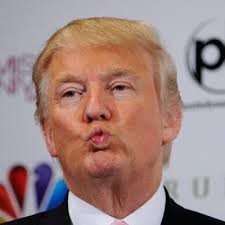
Donald Trump
Case #1: The Justice Department did not indict Trump and/or the Attorney Generals of Texas and/or Florida for their roles in the Trump University scandal.
- Florida Attorney General Pam Bondi personally solicited a political contribution from Donald Trump around the same time her office deliberated joining an investigation of alleged fraud at Trump University and its affiliates.
- After Bondi dropped the Trump University case against Trump, he wrote her a check $25,000 for her re-election campaign. The money came from the Donald J. Trump Foundation.
- Republican Texas Attorney General Ken Paxton moved to muzzle a former state regulator who says he was ordered in 2010 to drop a fraud investigation into Trump University for political reasons.
- Paxton’s office issued a cease and desist letter to former Deputy Chief of Consumer Protection John Owens after he made public copies of a 14-page internal summary of the state’s case against Donald Trump for scamming millions from students of his now-defunct real estate seminar.
- After the Texas case was dropped, Trump cut a $35,000 check to the gubernatorial campaign of then attorney general and now Texas Governor Greg Abbott.
One attorney general who refused to accept money from Trump was New York’s Eric Schneiderman. His decision to press fraud claims against Trump forced the real estate mogul to settle the case out of court for $25 million.
“Today’s $25 million settlement agreement is a stunning reversal by Donald Trump,” said Schneiderman on November 18, “and a major victory for the over 6,000 victims of his fraudulent university.”
There have been no press reports that the Justice Department investigated these cases to determine if Trump violated the Racketeer Influenced Corrupt Organizations (RICO) Act statutes.

If the Justice Department did not investigate these cases, it should have. And if he did violate the RICO statutes, he should have been indicted, even as a Presidential candidate or President-elect.
Even if an indictment had not produced a conviction, the mere bringing of one would have cast an unprecedented cloud over his candidacy–let alone his being sworn in as President.
Case #2: The Justice Department did not indict Trump for his series of threats he made–directly or indirectly–against his Republican and Democratic opponents throughout the 2016 campaign.
- On March 16, he warned Republicans that if he didn’t win the GOP nomination in July, his supporters would literally riot: “I think you’d have riots. I think you would see problems like you’ve never seen before. I think bad things would happen. I really do. I wouldn’t lead it, but I think bad things would happen.”
- An NBC reporter summed it up as: “The message to Republicans was clear on [March 16]: ‘Nice convention you got there, shame if something happened to it.’”
- That Republicans clearly saw this as a threat is undeniable. Paul Ryan, their Speaker of the House, said on March 17: “Nobody should say such things in my opinion because to even address or hint to violence is unacceptable.”
- And Ohio governor and Republican presidential candidate John Kasich chinned in. “Leaders don’t imply violence,” Kasich told “Face the Nation” on March 20. “When he says that there could be riots, that’s inappropriate. I think you understand that, okay? Secondly, while we have our differences and disagreements, we’re Americans. Americans don’t say, ‘Let’s take to the streets and have violence.’”
9/11 ATTACKS, ABC NEWS, ADOLF HITLER, AFGHANISTAN, AL QAEDA, ALTERNET, AP, BARACK OBAMA, BASHAR AL-ASSAD, BBC, BUZZFEED, CARLOS THE JACKAL, CBS NEWS, CHEMICAL WARFARE, CHINA, CNN, CONGRESS, DAILY KOS, DONALD TRUMP, FACEBOOK, GEORGE H.W. BUSH, GEORGE W. BUSH, HARRY S. TRUMAN, HIZBOLLAH, IRAN, IRAQ, ISLAM, ISRAEL, MOTHER JONES, MOVEON, NAZI GERMANY, NBC NEWS, NEWSWEEK, NPR, OSAMA BIN LADEN, POLITICO, RAW STORY, RELIGION, REUTERS, RUSSIA, SADDAM UISSEIN, SALON, SAMUEL P. HUNTINGTON, SEATTLE TIMES, SHIITE MUSLIMS, SLATE, SUNNI MUSLIMS, SYRIA, SYRIAN OBSERVATORY FOR HUMAN RIGHTS, TERRORISM, THE ATLANTIC, THE CHICAGO SUN-TIMES, THE CHICAGO TRIBUNE, THE CLASH OF CIVILIZATIONS, THE DAILY BEAST, THE GUARDIAN, THE HILL, THE HUFFINGTON POST, THE LOS ANGELES TIMES, THE NEW YORK TIMES, THE SYRIAN OBSERVATORY FOR HUMAN RIGHTS, THE WALL STREET JOURNAL, THE WASHINGTON POST, THE WORLD POST, TIME, TWITTER, U.S. NEWS & WORLD REPORT, UPI, USA TODAY, VLADIMIR PUTIN, WORLD WAR 1
In Bureaucracy, History, Law Enforcement, Military, Politics, Social commentary on April 7, 2017 at 12:10 am
Contrary to the propaganda of Republican militarists and Democratic do-gooders, Americans should be thrilled at the mutual destruction of their most dedicated enemies. Such as is now taking place in Syria.
And yet, faced with an unprecedented threat to their security, many Western leaders refuse to publicly acknowledge this fundamental truth.
One man who predicted the ongoing Islamic-vs.-West conflicts with stunning clarity was Samuel P. Huntington.
A political scientist, Huntington taught government at Harvard University (1950-1959, then at Columbia University (1959-1962). He returned to Harvard in 1963, and remained there until his death in 2008.
The author of nine books, in 1996 he published his most influential one: The Clash of Civilizations and the Remaking of World Order.
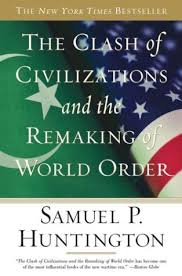
Its thesis was that, in the post-Cold War world, people’s cultural and religious identities would be the primary sources of conflict.
Huntington warned that the West’s future conflicts with Islamic nations would be rooted in the Islamic religion:
“The fundamental problem for the West is not Islamic fundamentalism. It is Islam, a different civilisation whose people are convinced of the superiority of their culture and are obsessed with the inferiority of their power.”
Among his assertions:
- Western nations should distance themselves from Islamic ones. The more both civilizations interact, the greater tensions between them will be.
- Relations between Muslims and non-Muslims have been marked by Islamic antagonism and violence.
- A fundamental clash of civilizations between Islam and the West is inevitable.
- Even if Arab dictatorships fall, the new regimes won’t modernize along Western lines.
- When the Muslim world conflicts with other civilizations, tensions and wars result.
- Their primary attachment is to their religion, not to their nation-state.
- Islamic civilization do not share the general ideals of the Western world–such as individualism and democracy.
Despite such realities, both Democratic and Republican politicians insist on constantly intervening in Middle East conflicts–such as the one in Syria.
In Part One of this series, five reasons were given for why the United States should not intervene in the Syrian conflict. Here are the remaining five.
Sixth, intervening in Syria could lead to Syrian attacks against Israel.
An accidental or deliberate American military strike on Syrian government forces could lead the country’s dictator, Bashar al-Assad, to attack Israel–perhaps even with chemical weapons.
If that happened, the Islamic world would rally to Syria against the United States, Israel’s chief ally.
Seventh, committing American ground forces to Syria or just continuing to bomb targets there could lead to Islamic terrorism against the United States–at home or abroad.
Terrorists have already targeted Russia–which, on September 30, 2015, began bombing airstrikes on forces trying to overthrow Assad.
On October 31, Airbus A321, a Russian airliner, broke up in mid-air, then crashed in Egypt’s Sinai Peninsula, killing all 224 people on board. In Egypt, a militant group affiliated to the Islamic State of Iraq and Syria (ISIS) claimed it had brought down the plane “in response to Russian airstrikes that killed hundreds of Muslims on Syrian land.”

Airbus A321
The same fate could well befall American civilians and/or soldiers.
Eighth, China and Russia are supporting the Assad dictatorship–and the brutalities it commits against its own citizens.
This reflects badly on them–not the United States. And any move by the United States to directly attack the Assad regime could ignite an all-out war with Russia and/or China.
What happens if a case of “friendly fire” leads Russian and American forces to start trading salvos? Or if Russian President Vladimir Putin orders an attack on America’s ally, Israel, in return for some perceived American slight of Russia’s ally, Syria?
It was exactly that scenario–Great Powers going to war over conflicts between their small-state allies–that triggered World War I.
Ninth, the United States cannot defeat ISIS in Syria through air power alone–thus making commitment of ground troops inevitable.
President Barack Obama authorized airstrikes against ISIS in September, 2014. The United States Air Force has since dropped thousands of bombs on ISIS convoys. This has not destroyed ISIS.
And its failure to do so has only led to demands by hawkish Republicans and Democrats for “boots on the ground.”
Tenth–and most importantly: While Islamic nations like Syria, Iraq and Egypt wage war within their own borders, they will lack the resources–and incentive–to attack the United States.
Every dead Hezbollah and Al-Qaeda and ISIS member makes the United States that much safer. So does the death of every sympathizer of Hezbollah, Al-Qaeda and ISIS.
When Al-Qaeda blows up civilians in Beirut, their relatives will urge Hezbollah to take brutal revenge. And Hezbollah will do so.

Al Qaeda terrorists–taking aim at Hezbollah terrorists
Similarly, when Hezbollah does, those who support Al-Qaeda will demand even more brutal reprisals against Hezbollah.
If the West is lucky, this conflict could easily become the Islamic equivalent of “the Hundred Years War” that raged from 1337 to 1453 between England and France.
When Adolf Hitler invaded the Soviet Union in 1941, then-Senator Harry S. Truman said: “I hope the Russians kill lots of Nazis–and vice versa.”
That should be America’s position whenever its sworn enemies start killing off each other. Americans should welcome such self-slaughters, not become entrapped in them.
9/11 ATTACKS, ABC NEWS, ADOLF HITLER, AFGHANISTAN, AL QAEDA, ALTERNET, AP, BARACK OBAMA, BASHAR AL-ASSAD, BBC, BUZZFEED, CARLOS THE JACKAL, CBS NEWS, CHEMICAL WARFARE, CHINA, CNN, CONGRESS, DAILY KOS, DONALD TRUMP, FACEBOOK, GEORGE H.W. BUSH, GEORGE W. BUSH, HARRY S. TRUMAN, HIZBOLLAH, IRAN, IRAQ, ISLAM, ISRAEL, MOTHER JONES, MOVEON, NAZI GERMANY, NBC NEWS, NEWSWEEK, NPR, OSAMA BIN LADEN, POLITICO, RAW STORY, RELIGION, REUTERS, RUSSIA, SADDAM UISSEIN, SALON, SAMUEL P. HUNTINGTON, SEATTLE TIMES, SHIITE MUSLIMS, SLATE, SUNNI MUSLIMS, SYRIA, SYRIAN OBSERVATORY FOR HUMAN RIGHTS, TERRORISM, THE ATLANTIC, THE CHICAGO SUN-TIMES, THE CHICAGO TRIBUNE, THE CLASH OF CIVILIZATIONS, THE DAILY BEAST, THE GUARDIAN, THE HILL, THE HUFFINGTON POST, THE LOS ANGELES TIMES, THE NEW YORK TIMES, THE SYRIAN OBSERVATORY FOR HUMAN RIGHTS, THE WALL STREET JOURNAL, THE WASHINGTON POST, THE WORLD POST, TIME, TWITTER, U.S. NEWS & WORLD REPORT, UPI, USA TODAY, VLADIMIR PUTIN, WORLD WAR 1
In History, Military, Politics, Social commentary on April 6, 2017 at 2:15 am
“Yesterday’s chemical attack, a chemical attack that was so horrific in Syria against innocent people, including women, small children and even beautiful little babies, their deaths were an affront to humanity.”
So spoke President Donald J. Trump at an April 5 press conference in the White House Rose Garden.
He was referring to an April 4 chemical weapons attack in northwestern Syria that had killed scores of civilians.
The bombing was carried out by the Syrian Air Force in an effort to put down a six-year civil war.
The Syrian conflict began on March 15, 2011, triggered by protests demanding political reforms and the ouster of dictator Bashar al-Assad. Since then, the fighting has reportedly taken the lives of 470,000 men, women and children.

Bashar al-Assad
Yet, despite Trump’s rhetoric, there is an optimistic way to view this incident–and the Syrian conflict generally: As a win for the United States.
Consider:
- As many as 470,000 actual or potential enemies of Western civilization–and especially the United States–have chosen to slaughter one another.
- Additional thousands are certain to follow their example.
- The United States cannot be held in any way responsible for it.
- And Russia–which openly supports the brutal Assad dictatorship–daily earns the hatred of the Islamic world.
Yet, Left-wing do-gooders and Right-wing militarists demand that the United States thrust itself into a conflict that doesn’t threaten America in any way.
In fact, it’s in America’s best interests that this conflict last as long as possible and spread as widely as possible throughout the Islamic community.
Here’s why:
First, in Syria, two of America’s most deadly enemies are waging war on each other.
Yes, it’s Hezbollah (Party of God) vs. Al-Qaeda (The Base). Hezbollah is comprised of Shiite Muslims. A sworn enemy of Israel, it has kidnapped scores of Americans suicidal enough to visit Lebanon and truck-bombed the Marine barracks in Beirut in 1983, killing 299 Americans.
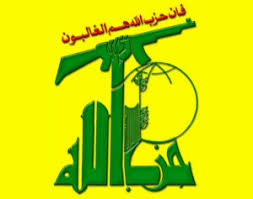
Flag of Hezbollah
Al Qaeda, on the other hand, is made up of Sunni Muslims. It is intolerant of Shiites and has instigated violence against them. It denounces them as takfirs–“apostates”–and thus worthy of extermination.
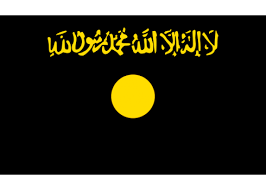
Flag of Al-Qaeda
Al Qaeda has attacked the mosques and gatherings of liberal Muslims, Shiites, Suffis and other non-Sunnis. Examples of sectarian attacks include the Sadr City bombings, the 2004 Ashoura massacre and the April, 2007 Baghdad bombings.
On one side of this conflict is the Ba’ath regime of Bashar al-Assad, whose allies include Russia, Iran, Hezbollah and elements of the Iraqi government.
On the other side are a host of Syrians and thousands of foreign Sunni fighters, some of whom are affiliated with Al-Qaeda.
Second, the United States has been at war in the Middle East for 15 years–since the terror attacks of September 11, 2001.
In October, 2001, America first committed its forces to Afghanistan, in pursuit of Osama bin Laden, the 9/11 mastermind. Failing to find him, its forces nevertheless stayed on in that country, hoping–and failing–to bring civilization to its barbaric population.
Then, in March, 2003, President George W. Bush invaded Iraq to settle a personal score with its dictator, Saddam Hussein.
After Bush’s father, George H.W. Bush, launched the 1991 Gulf War, Hussein had had the bad grace to not topple from power. When the elder Bush lost a second term as President to Bill Clinton in 1992, his son blamed Hussein.
By contrast: America entered World War 1 in 1917–and wrapped up its fighting in Europe in 1918. Similarly, the United States first committed forces in World War II in 1942–and saw an end to that conflict in 1945.
Even the Vietnam war–far more divisive for Americans than either World War 1 or II–ended after eight years of fighting (1965-1973.
Third, the United States is still fighting a brutal war in Afghanistan.
America originally intended to withdraw all but a small embassy-based force of 1,000 troops by the end of 2016.
But as the Taliban re-emerged as a threat, President Barack Obama announced he would maintain 9,800 troops there for most of 2016. Those troops are still stationed there–some of them advising local Afghan troops, others locked in deadly combat with the Taliban and Al-Qaeda.
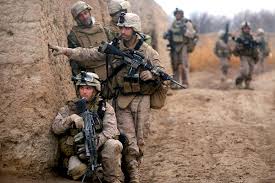
American soldiers in Afghanistan
Fourth, since 1979, Syria has been listed by the U.S. State Department as a sponsor of terrorism.
Among the terrorist groups it supports: Hezbollah and Hamas. For many years, Syria provided a safe-house in Damascus for Illich Ramirez Sanchez–the notorious international terrorist known as Carlos the Jackal.
Fifth, the United States had no part in creating or supporting the decades-long dictatorship of the Assad regime–which has long been hostile to America.
After a long series of political maneuverings, Hafez al-Assad seized power in 1970 and was proclaimed “president” next year. With aid from the Soviet Union, he built up the Syrian army. Using arrest, torture and execution, he ruled Syria as a dictator until he died in 2000.
His son, Bashar, then took command of Syria. Like his father, he has supported Palestinian and Lebanese militant groups. And, like his father, he continues to receive financial and military support from the successor to the Soviet Union, the Russian Federation.
Thus, America has no moral obligation of any kind to Syria–or Syrians.
2016 PRESIDENTIAL CAMPAIGN, ABC NEWS, ALTERNET, AMERICABLOG, AP, BABY BOOMER RESISTANCE, BARACK OBAMA, BBC, BLOOMBERG NEWS, BUZZFEED, CBS NEWS, CLINTON WATTS, CNN, CROOKS AND LIARS, CYBERWARFARE, DAILY KOS, DAILY KOZ, DEMOCRATIC NATIONAL COMMITTEE, DONALD TRUMP, ESPIONAGE, EUROPEAN UNION (EU), FACEBOOK, FBI, FIVETHIRTYEIGHT, HARPER’S MAGAZINE, HILLARY CLINTON, HUFFINGTON POST, JEFF SESSIONS, JOE SCARBOROUGH, MEDIA MATTERS, MICHAEL T. FLYNN, MIKE PENCE, MOTHER JONES, MOVEON, MSNBC, NBC NEWS, NEW REPUBLIC, NEWSDAY, NEWSWEEK, NORTH ATLANTIC TREATY ORGANIZATION (NATO), NPR, PBS NEWSHOUR, POLITICO, POLITICUSUSA, RAW STORY, REUTERS, REX TILLERSON, RUSSIA, SALLY YATES, SALON, SEATTLE TIMES, SLATE, TALKING POINTS MEMO, THE ATLANTIC, THE CHICAGO SUN-TIMES, THE CHICAGO TRIBUNE, THE DAILY BEAST, THE DAILY BLOG, THE GUARDIAN, THE HILL, THE HUFFINGTON POST, THE INTERCEPT, THE LOS ANGELES TIMES, THE NATION, THE NEW REPUBLIC, THE NEW YORK TIMES, THE NEW YORKER, THE VILLAGE VOICE, THE WALL STREET JOURNAL, THE WASHINGTON POST, THINKPROGRESS, TIME, TRUTHDIG, TRUTHOUT, TWITTER, TWO POLITICAL JUNKIES, U.S. NEWS & WORLD REPORT, U.S. SENATE SELECT COMMITTEE ON INTELLIGENCE, UPI, USA TODAY, VLADIMIR PUTIN, WIKILEAKS
In Bureaucracy, History, Military, Politics, Social commentary on April 5, 2017 at 12:08 am
“We do not need a reckless President who believes she is above the law.”
As chants of “Lock her up!” spread across the floor of the Republican National Convention, Michael T. Flynn voiced his agreement. “Lock her up—that’s right.”
Movie-star handsome, the former United States Army lieutenant general and director of the Defense Intelligence Agency was clearly enjoying his moment as a keynote speaker.
Clapping his hands, he continued: “I’m gonna tell you what. It’s unbelievable—unbelievable.
“I have called on Hillary Clinton to drop out of the race, because she—she—put our nation’s security at extremely high risk for their careless use of a private email server.
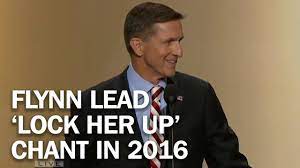
Michael Flynn at the Republican convention
“Lock her up–lock her up. You guys [the audience] are good. Damn right—that’s exactly right. There’s nothing wrong with that.
“You know why we’re saying that? We’re saying that because if I—a guy who knows this business—if I did a tenth of what she did, I would be in jail today.”
That was July 18, 2016.
Six months and two days later, he was riding even higher: On January 20—the day Donald J. Trump became President—Flynn took office as the nation’s 25th National Security Adviser.
Two days later, The Wall Street Journal reported that Flynn was under investigation by U.S. counterintelligence agents for his communications with Russian officials.
On February 8, Flynn flatly denied having spoken to Russian ambassador Sergey Kislyak in December, 2016, about removing the sanctions placed on Russia by the outgoing Obama administration.
The sanctions had been placed in retaliation for Russia’s efforts to manipulate the 2016 Presidential election.
On February 13, The Washington Post reported that Acting Attorney General Sally Yates had warned Trump in late January that Flynn had lied about his contacts with Kislyak—and that he could be blackmailed by Russian Intelligence.
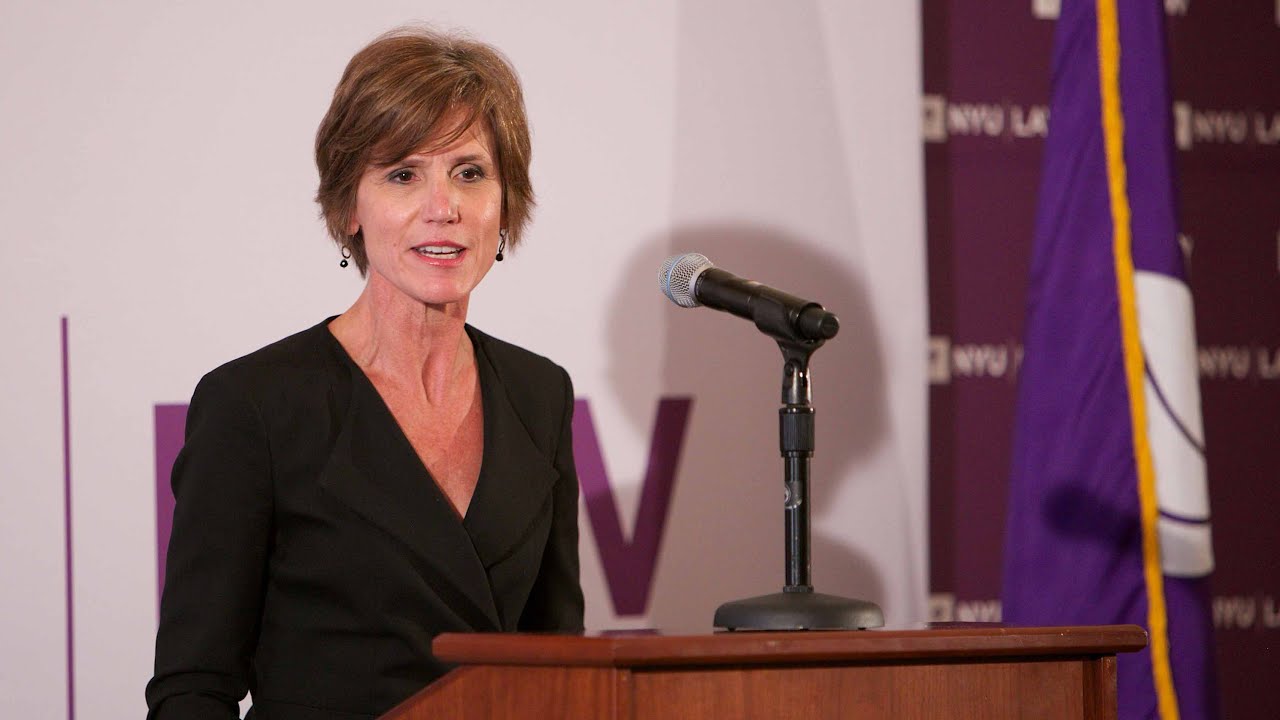
Sally Yates
Flynn was forced to resign that same day–after only 24 days as National Security Adviser.
Officially, the reason given was that he had misled Vice President Mike Pence. But Flynn’s deception had already been known—via the warning to Trump by Yates.
Only after Yates’ warning became known to the media was Flynn forced to resign.
Even worse for Flynn: The same Washington Post story reported that, in December, 2015, he had appeared on Russia Today, the news network that American Intelligence agencies consider “the Kremlin’s principal international propaganda outlet.”
He had also received more than $45,000 as a “speaking fee” from the network for a talk on world affairs. At the gala where Flynn received the fee, he sat next to Vladimir Putin for dinner.
Flynn did not file the required paperwork for the trip. Nor did he report the “fee” to the Pentagon.
On March 30, The Wall Street Journal reported that Flynn had offered to testify to the FBI or the Senate and House Intelligence committees in exchange for immunity from prosecution. So far, neither the FBI nor the Congressional Intelligence committees has agreed to such a deal.
Meanwhile, as a Presidential candidate and President, Donald Trump has steadfastly denied the revelations about collaboration between members of his 2016 Presidential campaign and Russian Intelligence agents.
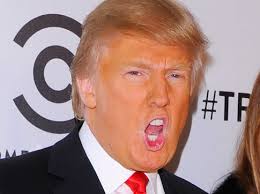
Donald Trump
He has repeatedly attacked the “fake news” media reporting these revelations. Chief among his targets: CNN, The New York Times and The Washington Post.
He has also derided the Intelligence agencies responsible for America’s security.
On October 7, 2016, the Department of Homeland Security and the Office of the Director of National Intelligence issued a joint statement blaming the Russian government for the hacking of Democratic National Committee emails. Its motive: “To interfere with the US election process.”
Two days later, Trump publicly stated: “But I notice, anytime anything wrong happens, they like to say the Russians are– Maybe there is no hacking. But they always blame Russia.”
On March 4, Trump unleashed a series of tweets accusing former President Barack Obama of tapping his Trump Tower phones prior to the election: “How low has President Obama gone to tapp my phones during the very sacred election process. This is Nixon/Watergate. Bad (or sick) guy!”
One month later, Trump has offered no evidence to support that accusation. Nor have the FBI and Justice Department provided any. Yet Trump has refused to apologize or retract the libel.
Former Obama White House Press Secretary Josh Earnest has his own take on Trump’s motivation. Appearing on the March 5 edition of ABC’s This Week, he said:
“We know exactly why President Trump tweeted what he tweeted.
“Because there is one page in the Trump White House crisis management playbook. And that is simply to tweet or say something outrageous to distract from the scandal, and the bigger the scandal, the more outrageous the tweet.”
In time, the epitaph for the Trump administration may prove to be a bitter parody of The Muppet Movie song, “The Rainbow Connection”:
Why are there so many
Tales about Russians
And Right-wingers taking bribes?
Russians are Commies
And have lots of rubles
For traitors with something to hide.
So I’ve been told
And some choose to believe it.
It’s clear as the old KGB.
Someday we’ll find it
The Russian Connection–
The bribers, the traitors–you’ll see.
2016 PRESIDENTIAL CAMPAIGN, ABC NEWS, ALTERNET, AMERICABLOG, AP, BABY BOOMER RESISTANCE, BARACK OBAMA, BBC, BLOOMBERG NEWS, BUZZFEED, CBS NEWS, CLINTON WATTS, CNN, CROOKS AND LIARS, CYBERWARFARE, DAILY KOS, DAILY KOZ, DEMOCRATIC NATIONAL COMMITTEE, DONALD TRUMP, ESPIONAGE, EUROPEAN UNION (EU), FACEBOOK, FBI, FIVETHIRTYEIGHT, HARPER’S MAGAZINE, HILLARY CLINTON, HUFFINGTON POST, JEFF SESSIONS, JOE SCARBOROUGH, MEDIA MATTERS, MICHAEL T. FLYNN, MIKE PENCE, MOTHER JONES, MOVEON, MSNBC, NBC NEWS, NEW REPUBLIC, NEWSDAY, NEWSWEEK, NORTH ATLANTIC TREATY ORGANIZATION (NATO), NPR, PBS NEWSHOUR, POLITICO, POLITICUSUSA, RAW STORY, REUTERS, REX TILLERSON, RUSSIA, SALLY YATES, SALON, SEATTLE TIMES, SLATE, TALKING POINTS MEMO, THE ATLANTIC, THE CHICAGO SUN-TIMES, THE CHICAGO TRIBUNE, THE DAILY BEAST, THE DAILY BLOG, THE GUARDIAN, THE HILL, THE HUFFINGTON POST, THE INTERCEPT, THE LOS ANGELES TIMES, THE NATION, THE NEW REPUBLIC, THE NEW YORK TIMES, THE NEW YORKER, THE VILLAGE VOICE, THE WALL STREET JOURNAL, THE WASHINGTON POST, THINKPROGRESS, TIME, TRUTHDIG, TRUTHOUT, TWITTER, TWO POLITICAL JUNKIES, U.S. NEWS & WORLD REPORT, U.S. SENATE SELECT COMMITTEE ON INTELLIGENCE, UPI, USA TODAY, VLADIMIR PUTIN, WIKILEAKS
In Bureaucracy, History, Law Enforcement, Military, Politics, Social commentary on April 4, 2017 at 12:16 am
Slightly more than two months after taking office, President Donald Trump has become haunted by “the Russian connection.”
Throughout 2016, the CIA, FBI and National Security Agency (NSA) found numerous ties between officials of the Trump Presidential campaign and Russian Intelligence agents.
And many of those he has appointed to office have strong ties to the government of Russian President Vladimir Putin.
One of these is Secretary of State Rex Tillerson. In 2013, as the chief executive of ExxonMobil, he was presented with the 2013 Order of Friendship award. He had just signed deals with the state-owned Russian oil company Rosneft. Its chief, Igor Sechin, is a loyal Putin lieutenant.

Rex Tillerson
Another such official is Attorney General Jeff Sessions. During the 2016 campaign, Sessions–then serving as a surrogate for Donald Trump’s campaign–twice spoke with Russian Ambassador Sergey Kislyak.
But during his Senate nomination hearings, Sessions denied that he had had “communications with the Russians” during the campaign.
The discovery of numerous contacts between Trump campaign officials and Russian Intelligence agents led the FBI to launch an investigation into Russia’s efforts to influence the outcome of the 2016 Presidential election. That investigation is still ongoing.
And the House and Senate Intelligence Committees have launched their own investigations into the same.
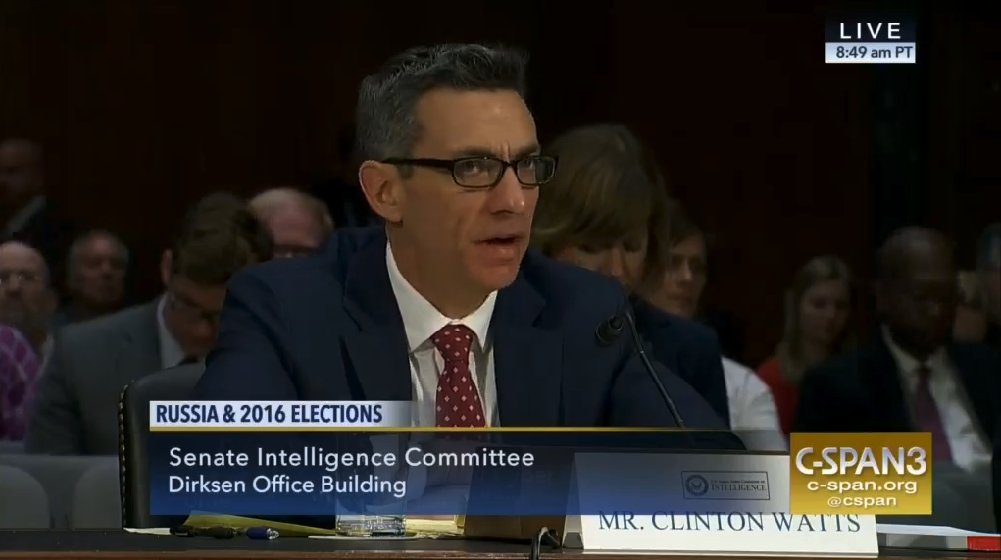
On March 30, Clinton Watts, an expert on cyber warfare, testified before the U.S. Senate Select Committee on Intelligence. As part of his testimony, he presented a prepared statement on “Disinformation: A Primer In Russian Active Measures And Influence Campaigns.”

FROM WATTS’ STATEMENT: Russia certainly seeks to promote Western candidates sympathetic to their worldview and foreign policy objectives. But winning a single election is not their end goal.
Russian Active Measures hope to topple democracies….from the inside out [by] creating political divisions….
[Their ultimate goals are] the dissolution of the European Union and the break up of the North American Treaty Organization (NATO).
Achieving these two victories against the West will allow Russia to reassert its power globally and pursue its foreign policy objectives bilaterally through military, diplomatic and economic aggression.
Trump has repeatedly praised Russian President Vladimir Putin. On December 18, 2015, Trump appeared on MSNBC’s “Morning Joe.” Its host, Joe Scarborough, was upset by Trump’s praise for Putin:
SCARBOROUGH: Well, I mean, [he’s] also a person who kills journalists, political opponents, and invades countries. Obviously that would be a concern, would it not?
TRUMP: He’s running his country, and at least he’s a leader. Unlike what we have in this country.
SCARBOROUGH: But again: He kills journalists that don’t agree with him.
TRUMP: I think our country does plenty of killing, also, Joe, so, you know. There’s a lot of stupidity going on in the world right now, Joe. A lot of killing going on. A lot of stupidity. And that’s the way it is.
On July 22, 2016, Wikileaks released 19,252 emails and 8,034 attachments hacked from computers of the highest-ranking officials of the Democratic National Committee (DNC). Early reports traced the leak to Russian hackers.
At a press conference in Doral, Florida, Trump declared: “Russia, if you are listening, I hope you are able to find the 33,000 emails that are missing–I think you will probably be rewarded mightily by our press.”
This was nothing less than treason–calling upon a foreign power, hostile to the United States, to interfere in its Presidential election.
On December 16, 2016, FBI Director James B. Comey and Director of National Intelligence James R. Clapper Jr. agreed with a CIA assessment that Russia intervened in the 2016 election in part to help Donald Trump win the White House.

Trump, however, has steadfastly denied any such role by Russia: “I think it’s ridiculous,” he told “Fox News Sunday.” “I think it’s just another excuse. I don’t believe it….No, I don’t believe it at all.”
On October 19, 2016, Trump’s admiration of Putin became a major target for his Democratic opponent, Hillary Clinton.
This occurred during their third and last Presidential debate.
CLINTON: … that the Russians have engaged in cyber attacks against the United States of America, that you encouraged espionage against our people, that you are willing to spout the Putin line, sign up for his wish list, break up NATO, do whatever he wants to do, and that you continue to get help from him, because he has a very clear favorite in this race.
So I think that this is such an unprecedented situation. We’ve never had a foreign government trying to interfere in our election.
We have 17–17 intelligence agencies, civilian and military, who have all concluded that these espionage attacks, these cyber attacks, come from the highest levels of the Kremlin and they are designed to influence our election. I find that deeply disturbing. And I think it’s time you take a stand…
TRUMP: She has no idea whether it’s Russia, China, or anybody else.
CLINTON: I am not quoting myself.
TRUMP: She has no idea.
CLINTON: I am quoting 17…
TRUMP: Hillary, you have no idea.
CLINTON: … 17 intelligence–do you doubt 17 military and civilian…
TRUMP: And our country has no idea.
CLINTON: … agencies.
TRUMP: Yeah, I doubt it. I doubt it.
2016 PRESIDENTIAL CAMPAIGN, ABC NEWS, ALTERNET, AMERICABLOG, AP, BABY BOOMER RESISTANCE, BARACK OBAMA, BBC, BLOOMBERG NEWS, BUZZFEED, CBS NEWS, CLINTON WATTS, CNN, CROOKS AND LIARS, CYBERWARFARE, DAILY KOS, DAILY KOZ, DEMOCRATIC NATIONAL COMMITTEE, DONALD TRUMP, ESPIONAGE, EUROPEAN UNION (EU), FACEBOOK, FBI, FIVETHIRTYEIGHT, HARPER’S MAGAZINE, HILLARY CLINTON, HUFFINGTON POST, JEFF SESSIONS, JOE SCARBOROUGH, MEDIA MATTERS, MICHAEL T. FLYNN, MIKE PENCE, MOTHER JONES, MOVEON, MSNBC, NBC NEWS, NEW REPUBLIC, NEWSDAY, NEWSWEEK, NORTH ATLANTIC TREATY ORGANIZATION (NATO), NPR, PBS NEWSHOUR, POLITICO, POLITICUSUSA, RAW STORY, REUTERS, REX TILLERSON, RUSSIA, SALLY YATES, SALON, SEATTLE TIMES, SLATE, TALKING POINTS MEMO, THE ATLANTIC, THE CHICAGO SUN-TIMES, THE CHICAGO TRIBUNE, THE DAILY BEAST, THE DAILY BLOG, THE GUARDIAN, THE HILL, THE HUFFINGTON POST, THE INTERCEPT, THE LOS ANGELES TIMES, THE NATION, THE NEW REPUBLIC, THE NEW YORK TIMES, THE NEW YORKER, THE VILLAGE VOICE, THE WALL STREET JOURNAL, THE WASHINGTON POST, THINKPROGRESS, TIME, TRUTHDIG, TRUTHOUT, TWITTER, TWO POLITICAL JUNKIES, U.S. NEWS & WORLD REPORT, U.S. SENATE SELECT COMMITTEE ON INTELLIGENCE, UPI, USA TODAY, VLADIMIR PUTIN, WIKILEAKS
In Bureaucracy, History, Law Enforcement, Military, Politics, Social commentary on April 3, 2017 at 12:56 am
Clinton Watts is a consultant and researcher on cyberwarfare. He has served as
- A U.S. Army infantry officer;
- An FBI Special Agent on a Joint Terrorism Task Force (JTTF);
- The Executive Officer of the Combating Terrorism Center at West Point (CTC); and
- As a consultant to the FBI’s Counter Terrorism Division (CTD) and National Security Branch (NSB).
In a statement he prepared for the U.S. Senate Select Committee on Intelligence, he outlined cyberwarfare measures that Russia used to influence the 2016 Presidential campaign.
He delivered this on March 30. Part of this reads as follows:
Through the end of 2015 and start of 2016, the Russian influence system….began pushing themes and messages seeking to influence the outcome of the U.S. Presidential election.
Russia’s overt media outlets and covert trolls sought to sideline opponents on both sides of the political spectrum with adversarial views toward the Kremlin. The final months leading up to the election have been the predominate focus of Russian influence discussions to date.
Clinton Watts
However, Russian Active Measures were in full swing during both the Republican and Democratic primary season and may have helped sink the hopes of candidates more hostile to Russian interests long before the field narrowed.
The final piece of Russia’s modern Active Measures surfaced in the summer of 2016 as hacked materials from previous months were strategically leaked.
On 22 July 2016, Wikileaks released troves of stolen communications from the Democratic National Committee and later batches of campaign emails. Guccifer 2.0 and DC Leaks revealed hacked information from a host of former U.S. government officials throughout July and August 2016.
For the remainder of the campaign season, this compromising material powered the influence system Russia successfully constructed in the previous two years.
Meanwhile, Donald Trump–as both Presidential candidate and President–has steadfastly refused to acknowledge the efforts of Vladimir Putin’s government to ensure his election.
Consider his exchange about this with Democratic Presidential nominee Hillary Clinton during the third and final Presidential debate on October 19, 2016:
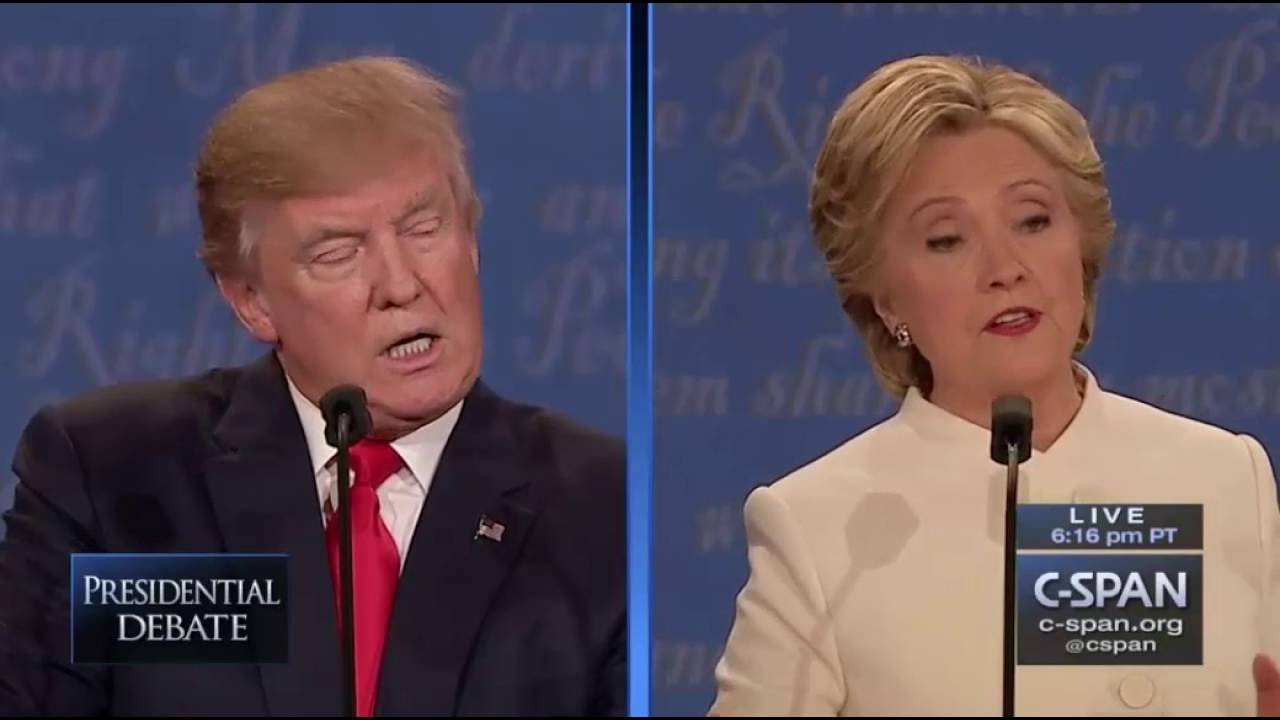
CLINTON: So I actually think the most important question of this evening, Chris, is, finally, will Donald Trump admit and condemn that the Russians are doing this and make it clear that he will not have the help of Putin in in this election, that he rejects Russian espionage against Americans, which he actually encouraged in the past?
Those are the questions we need answered. We’ve never had anything like this happen in any of our elections before.
CHRIS WALLACE: Well?
TRUMP: That was a great pivot off the fact that she wants open borders, OK? How did we get on to Putin?
[After insisting that Clinton wants “open borders” and “people are going to pour into this country,” Trump deigned to address Wallace’s question.]
TRUMP: Now we can talk about Putin. I don’t know Putin. He said nice things about me.
If we got along well, that would be good. If Russia and the United States got along well and went after ISIS, that would be good. He has no respect for her. He has no respect for our president.
And I’ll tell you what: We’re in very serious trouble, because we have a country with tremendous numbers of nuclear warheads–1,800, by the way–where they expanded and we didn’t, 1,800 nuclear warheads. And she’s playing chicken.
FROM WATTS’ STATEMENT: This pattern of Russian falsehoods and social media manipulation of the American electorate continued through Election Day and persists today.
Many of the accounts we watched push the false Incirlik story in July now focus their efforts on shaping the upcoming European elections, promoting fears of immigration or false claims of refugee criminality.
They’ve not forgotten about the United States either. This past week, we observed social media campaigns targeting Speaker of the House Paul Ryan hoping to foment further unrest amongst U.S. democratic institutions, their leaders and their constituents.
As we noted two days before the Presidential election in our article describing Russian influence operations, Russia certainly seeks to promote Western candidates sympathetic to their worldview and foreign policy objectives.
But winning a single election is not their end goal. Russian Active Measures hope to topple democracies through the pursuit of five complementary objectives:
- Undermine citizen confidence in democratic governance;
- Foment and exacerbate divisive political fractures;
- Erode trust between citizens and elected officials and democratic institutions;
- Popularize Russian policy agendas within foreign populations;
- Create general distrust or confusion over information sources by blurring the lines between fact and fiction.
From these objectives, the Kremlin can crumble democracies from the inside out creating political divisions resulting in two key milestones:
- The dissolution of the European Union and
- The break up of the North American Treaty Organization (NATO).
FROM THE TRUMP-CLINTON DEBATE:
TRUMP: … from everything I see, [Putin] has no respect for this person.
CLINTON: Well, that’s because he’d rather have a puppet as president of the United States.
TRUMP: No puppet. No puppet.
CLINTON: And it’s pretty clear…
TRUMP: You’re the puppet!
CLINTON: It’s pretty clear you won’t admit…
TRUMP: No, you’re the puppet.
2016 PRESIDENTIAL CAMPAIGN, ABC NEWS, ALTERNET, AMERICABLOG, AP, APRIL D. RYAN, BABY BOOMER RESISTANCE, BARACK OBAMA, BBC, BLOOMBERG NEWS, BUZZFEED, CBS NEWS, CIA, CNN, CONDOLEEZA RICE, CROOKS AND LIARS, DAILY KOS, DAILY KOZ, DONALD TRUMP, FACEBOOK, FBI, FIVETHIRTYEIGHT, GEORGE W. BUSH, HARPER’S MAGAZINE, HUFFINGTON POST, MEDIA MATTERS, MOTHER JONES, MOVEON, MSNBC, NATIONAL SECURITY AGENCY, NBC NEWS, NEW REPUBLIC, NEWSDAY, NEWSWEEK, NPR, PBS NEWSHOUR, POLITICO, POLITICUSUSA, RAW STORY, REUTERS, RUSSIAN INTELLIGENCE, SALON, SEAN SPICER, SEATTLE TIMES, SLATE, TALKING POINTS MEMO, THE ATLANTIC, THE CHICAGO SUN-TIMES, THE CHICAGO TRIBUNE, THE DAILY BEAST, THE DAILY BLOG, THE GUARDIAN, THE HILL, THE HUFFINGTON POST, THE INTERCEPT, THE LOS ANGELES TIMES, THE NATION, THE NEW REPUBLIC, THE NEW YORK TIMES, THE NEW YORKER, THE VILLAGE VOICE, THE WALL STREET JOURNAL, THE WASHINGTON POST, THINKPROGRESS, TIME, TRUTHDIG, TRUTHOUT, TWITTER, TWO POLITICAL JUNKIES, U.S. NEWS & WORLD REPORT, UPI, USA TODAY, VLADIMIR PUTIN, WIRETAPPING
In Bureaucracy, History, Military, Politics, Social commentary on March 30, 2017 at 12:10 am
On March 28, a White House press conference turned into a battlefield.
The contestants: White House Press Secretary Sean Spicer vs. April D. Ryan, the White House correspondent and Washington bureau chief for American Urban Radio Network.
Ryan noted that President Donald J. Trump would soon receive a visit from Condoleeza Rice, the former Secretary of State under President George W. Bush. She also noted that, in 2006, Trump had “called her a negative name.”
Although she didn’t utter the word, it was “bitch.”
Spicer: But at some point, the reality is that this president continues to reach out to individuals who’ve supported him, who didn’t support him, Republicans, Democrats, to try to bring the country together and move forward on an agenda that’s gonna help every American. That’s it. Plain and simple.
Donald Trump
[Actually, it isn’t “plain and simple.” Since taking office, Trump has made no effort to “reach out to individuals…who didn’t support him.” Nor has he tried “to bring the country together.”
[On March 4, he libeled Barack Obama in a series of tweets, accusing the former President of illegally wiretapping his phones at Trump Tower. Since making that accusation, Trump has offered absolutely no proof to back it up.
[Nor has the Justice Department or FBI come forward with such evidence.]
So, if you’re asking what we’re doing, I think we continue to do it. Which is to bring groups together that have been supportive of him, that haven’t been supportive of him, but that to share a goal which is finding common ground on areas of national security, of personal security, of economic security, of job creation, of safer communities, of education, of healthcare, that can unite us as a country and make the country stronger.
[It’s ironic that Spicer would say the administration’s goal is “finding common ground on areas” such as “healthcare.” Trump’s version of “repeal and replace” for “Obamacare” totally ignored any input by Democrats. On March 23, the House failed to pass Trumpcare because Republicans couldn’t agree to support it.
[Following her face-off with Spicer, Ryan had a message of her own for The Washington Post: “This is just par for the course, unfortunately. But I’ll be back. I’ll be back.”]
* * * * *
Trump’s admiration for Russian President Vladimir Putin has been well-established–by himself.
On the December 18, 2015 edition of MSNBC’s “Morning Joe,” Trump said: “He’s running his country, and at least he’s a leader. Unlike what we have in this country.”
The program’s host, Joe Scarborough, noted: “Well, I mean, [he’s] also a person who kills journalists, political opponents, and invades countries. obviously that would be a concern, would it not?”
TRUMP: “I think our country does plenty of killing, also, Joe, so, you know. There’s a lot of stupidity going on in the world right now, Joe. A lot of killing going on. A lot of stupidity. And that’s the way it is.”

Vladimir Putin
On July 22, 2016, Wikileaks released 19,252 emails and 8,034 attachments hacked from computers of the highest-ranking officials of the Democratic National Committee (DNC). Early reports traced the leak to Russian hackers.
At a press conference in Doral, Florida, Trump declared: “Russia, if you are listening, I hope you are able to find the 33,000 emails that are missing–I think you will probably be rewarded mightily by our press.”
This was nothing less than treason—calling upon a foreign power, hostile to the United States, to interfere in its Presidential election.
As President, Trump has defended the leader of the Communist world against hostile journalists and American Intelligence agencies.
On February 5, he gave an interview to Fox News host Bill O’Reilly. As startled viewers watched, there occurred this exchange:
O’REILLY: “Do you respect Putin?”
TRUMP: “I do respect him but—”
O’REILLY: “Do you? Why?”
TRUMP: “Well, I respect a lot of people but that doesn’t mean I’m going to get along with him. He’s a leader of his country. I say it’s better to get along with Russia than not.
“And if Russia helps us in the fight against ISIS, which is a major fight, and Islamic terrorism all over the world —that’s a good thing. Will I get along with him? I have no idea.”
O’REILLY: “But he’s a killer though. Putin’s a killer.”
TRUMP: “There are a lot of killers. We’ve got a lot of killers. What do you think—our country’s so innocent? You think our country’s so innocent?”
Trump launched his Presidential campaign on June 16, 2015.
According to The New York Times, by late October, 2016, he had aimed nearly 4,000 insulting tweets at 281 targets.
Among those insulted:
- Women
- Blacks
- Hispanics
- The news media
- Asians
- Muslims
- The disabled
- Prisoners-of-war
- The Pope
Considering his hair-trigger temper and willingness to insult virtually anyone, Trump’s careful, even fawning attitude toward Vladimir Putin stands out.
Following Trump’s February 5 remarks on Putin, House Minority Leader Nancy Pelosi said it best:
“I want to know what the Russians have on Donald Trump. I think we have to have an investigation by the FBI into his financial, personal and political connections to Russia, and we want to see his tax returns, so we can have truth in the relationship between Putin, whom he admires, and Donald Trump.”
2016 PRESIDENTIAL CAMPAIGN, ABC NEWS, ALTERNET, AMERICABLOG, AP, APRIL D. RYAN, BABY BOOMER RESISTANCE, BARACK OBAMA, BBC, BLOOMBERG NEWS, BUZZFEED, CBS NEWS, CIA, CNN, CONDOLEEZA RICE, CROOKS AND LIARS, DAILY KOS, DAILY KOZ, DONALD TRUMP, FACEBOOK, FBI, FIVETHIRTYEIGHT, GEORGE W. BUSH, HARPER’S MAGAZINE, HUFFINGTON POST, MEDIA MATTERS, MOTHER JONES, MOVEON, MSNBC, NATIONAL SECURITY AGENCY, NBC NEWS, NEW REPUBLIC, NEWSDAY, NEWSWEEK, NPR, PBS NEWSHOUR, POLITICO, POLITICUSUSA, RAW STORY, REUTERS, RUSSIAN INTELLIGENCE, SALON, SEAN SPICER, SEATTLE TIMES, SLATE, TALKING POINTS MEMO, THE ATLANTIC, THE CHICAGO SUN-TIMES, THE CHICAGO TRIBUNE, THE DAILY BEAST, THE DAILY BLOG, THE GUARDIAN, THE HILL, THE HUFFINGTON POST, THE INTERCEPT, THE LOS ANGELES TIMES, THE NATION, THE NEW REPUBLIC, THE NEW YORK TIMES, THE NEW YORKER, THE VILLAGE VOICE, THE WALL STREET JOURNAL, THE WASHINGTON POST, THINKPROGRESS, TIME, TRUTHDIG, TRUTHOUT, TWITTER, TWO POLITICAL JUNKIES, U.S. NEWS & WORLD REPORT, UPI, USA TODAY, VLADIMIR PUTIN, WIRETAPPING
In Bureaucracy, History, Military, Politics, Social commentary on March 29, 2017 at 12:05 am
It was the verbal equivalent of a prizefight.
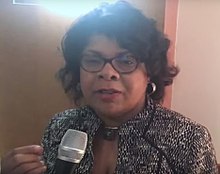
In one corner was April D. Ryan, the longtime White House correspondent and Washington bureau chief for American Urban Radio Network.
April D. Ryan
By MahoganyBooks [CC BY 3.0 (https://creativecommons.org/licenses/by/3.0)%5D, via Wikimedia Commons
In the other corner was Sean Spicer, White House press secretary for President Donald J. Trump.
Since taking office on January 20, Trump has been ensnared in a series of revelations about collaboration between members of his 2016 Presidential campaign and Russian Intelligence agents.
The FBI, CIA and National Security Agency have officially stated that Russian Intelligence played a major role in trying to sway the election for Trump.
Trump has repeatedly attacked the “fake news” media reporting these revelations. Chief among his targets: CNN, The New York Times and The Washington Post.
On March 28, disgusted with the administration’s stonewalling and outright lying, reporter April Ryan directly confronted Sean Spicer at a White House press conference.
The result was explosive.
April Ryan: With all of these investigations, questions of what is, is? How does this administration try to revamp its image two and a half months in? You’ve got this Yates story today, you’ve got other things going on. You’ve got Russia. You’ve got, you’ve got wiretapping. You’ve got —
Sean Spicer: No, we don’t have that. You’ve …
Ryan: There are investigations on Capitol Hill–
Spicer: No, no, no. I get it. But you keep — I’ve said it from the day that I got here until whatever that there is no connection. You’ve got Russia. If the president puts Russian salad dressing on his salad tonight, somehow that’s a Russian connection.
Sean Spicer
But every single person. No. Well, no, that’s … I appreciate your agenda here. But the reality is … oh no, no. Hold on, no, at some point, report the facts. The facts are that every single person who has been briefed on this subject has come away with the same conclusion. Republican, Democrat.
[This is a lie. In fact, the more digging that goes on, the more embarrassing revelations turn up of collusion between high-ranking administration officials and Russian agents or monies.]
So, I’m sorry that that disgusts you. You’re shaking your head. I appreciate it. But, but …
Ryan: … I’m trying to understand …
Spicer: But understand this. At some point, the facts are what they are. And every single person who has been briefed on this situation with respect to the situation with Russia, Republican, Democrat, Obama-appointee, career, have all come to the same conclusion.
[Another lie. The FBI is now investigating contacts between Russian Intelligence agents and members of the Trump Presidential campaign.]
At some point, April, you’re gonna have to take no for an answer with respect to whether or not there was collusion.
Ryan: How do you change the perception of, of…
Spicer: We’re going to keep doing everything we’re doing to make sure that the president’s — that what the president told the American people he was going to do, to fulfill those pledges and promises that he made, to bring back jobs, to grow the economy, to keep our nation safe.
That’s what he’s been focused on since day one. We’re going to keep focusing on that every single day.
[In short: We’re going to continue to lie and deny.]
Ryan: Condi Rice [Secretary of State under President George W. Bush] comes Friday. Condi Rice did not support this president. She did not go to the convention. She comes, what is on the agenda?
And how is their relationship? Has it healed since 2006 when he used a very negative word to describe her?

Condoleeza Rice
[The word was “bitch.” In 2006, Trump told an audience at a Learning Annex convention speech: “Condoleezza Rice, she’s a lovely woman, but I think she’s a bitch. She goes around to other countries and other nations, negotiates with their leaders, comes back and nothing ever happens.”]
Spicer: So here’s what I’ll tell you. It’s interesting that you ask those two questions back to back. On the one hand you’re saying what’re we doing to improve our image? And then here he is, once again, meeting somebody that hasn’t been a big supporter of his. Hold on ...
Ryan: He called her a negative name in 2006.
Spicer: But, April, hold on. It seems like you’re hellbent on trying to make sure that whatever image that you want to tell about this White House stays, because at the end of the day. Let me answ ….
Ryan: … call her that name. I am just reporting what —
Spicer: Okay, but, you know what, you’re asking me a question and I’m going to answer it. Which is, the president, I’m sorry, please stop shaking your head again.
But at some point, the reality is that this president continues to reach out to individuals who’ve supported him, who didn’t support him, Republicans, Democrats, to try to bring the country together and move forward on an agenda that’s gonna help every American. That’s it. Plain and simple.
[Actually, it isn’t “plain and simple.” And additional proof of this will be offered in Part Two of this series.]
ABC NEWS, BARACK OBAMA, BREITBART NEWS, CBS NEWS, CHRISTOPHER S. MURPHY, CIA, CNN, DEMOCRATIC NATIONAL COMMITTEE, DEMOCRATIC PARTY, DONALD TRUMP, ERIC SCHNEIDERMAN, EXTORTION, FACE THE NATION, FACEBOOK, FERGUS CULLEN, FOX NEWS SUNDAY, GREG ABBOTT, HACKING, HILLARY CLINTON, IRS, JAMES B. COMEY, JAMES R. CLAPPER, JEFF SESSIONS, JEWS, JOHN KASICH, JUSTICE DEPARTMENT, KEN PAXTON, MARK LEVIN, MICHAEL ROGERS, MIKE PENCE, NATIONAL SECURITY AGENCY, NBC NEWS, NEW HAMPSHIRE REPUBLICAN PARTY, NEWSWEEK, NPR, PAM BONDI, PAUL RYAN, PHILIP KLEIN, POLITICO, Racketeer Influenced Corrupt Organizations (RICO) Act, REPUBLICAN NATIONAL COMMITTEE, REPUBLICAN NATIONAL CONVENTION, REPUBLICAN PARTY, ROGER STONE, SALON, SOVIET UNION, THE CHICAGO SUN-TIMES, THE CHICAGO TRIBUNE, THE HUFFINGTON POST, THE LOS ANGELES TIMES, THE NEW YORK TIMES, THE WASHINGTON EXAMINER, THE WASHINGTON POST, THREATS, TIME, TREASON, TRUMP UNIVERSITY, TRUMP-RUSSIA TIES, TWITTER, U.S. NEWS & WORLD REPORT, U.S. SECRET SERVICE, USA PATRIOT ACT, USA TODAY, VLADIMIR PUTIN, WIRETAPPING
In Bureaucracy, History, Law, Law Enforcement, Politics, Social commentary on March 8, 2017 at 12:06 am
President Donald Trump claims that, as a Presidential candidate, he was a victim of illegal wiretapping ordered by President Barack Obama.
In fact, even without wiretaps, there were at least four instances where Federal law enforcement authorities could have utterly changed the outcome of the 2016 election.
Two of these dealt with purely domestic issues–
- The Trump University scandal; and
- Trump’s repeated threats of violence against Republican and Democratic opponents.
The third and fourth ones dealt with issues directly affecting the security of the United States.
It is unprecedented for an American Presidential candidate to repeatedly bestow fulsome praise on the leader of a foreign power hostile to the United States. And to receive equally fawning compliments in return from that leader.
Yet that is precisely what has happened between Donald Trump and Vladimir Putin.
Thus Putin on Trump: “He is a bright personality, a talented person, no doubt about it. It is not up to us to appraise his positive sides, it is up to the U.S. voters. but, as we can see, he is an absolute leader in the presidential race.”
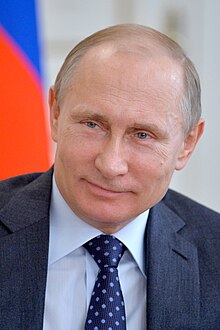
Vladimir Putin
And Trump on Putin: “It is always a great honor to be so nicely complimented by a man so highly respected within his own country and beyond. He’s running his country, and at least he’s a leader. Unlike what we have in this country”–a clear attack on President Barack Obama.
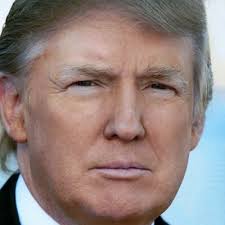
Donald Trump
Case #3: The Justice Department did not invalidate the results of the 2016 election, despite overwhelming evidence that Russia intervened to elect Trump as Vladimir Putin’s chosen candidate.
- Admiral Michael Rogers, director of the National Security Agency (NSA) and US Cyber Command, said in mid-November that Russia made “a conscious effort” to sway the results of the Presidential election by the hacking of 20,000 emails from the Democratic National Committee.
- “There shouldn’t be any doubt in anybody’s mind,” said Rogers. “This was not something that was done casually. This was not something that was done by chance. This was not a target that was selected purely arbitrarily. This was a conscious effort by a nation-state to attempt to achieve a specific effect.”

- The Russians hacked the Democratic committee’s servers–but not those of the Republican National Committee.
- On December 16, FBI Director James B. Comey and Director of National Intelligence James R. Clapper Jr. agreed with a CIA assessment that Russia intervened in the 2016 election in part to help Donald Trump win the White House.
Trump, however, has steadfastly denied any such role by Russia: “I think it’s ridiculous,” he told “Fox News Sunday.” “I think it’s just another excuse. I don’t believe it….No, I don’t believe it at all.”
Case #4: The Justice Department did not prosecute Trump for treason, even though he solicited aid from Russia, a nation hostile to the United States. And no major official of the government–including President Obama–publicly condemned him as a traitor.
At a news conference in Doral, Florida on July 27, Trump publicly invited “Russia”–i.e., Vladimir Putin–to hack Hillary Clinton’s emails: “I will tell you this, Russia: If you’re listening, I hope you’re able to find the 30,000 emails that are missing. I think you will probably be rewarded mightily by our press.”
This was essentially treason–calling on a hostile foreign power to interfere directly in an American Presidential election. And it was seen as such by both Democrats and even Republicans.
- “This has to be the first time that a major presidential candidate has actively encouraged a foreign power to conduct espionage against his political opponent,” Hillary for America policy adviser Jake Sullivan said in a statement. “That’s not hyperbole, those are just the facts. This has gone from being a matter of curiosity, and a matter of politics, to being a national security issue.”
- “I find those kinds of statements to be totally outrageous because you’ve got now a presidential candidate who is, in fact, asking the Russians to engage in American politics,” said former CIA Director Leon Panetta, a Clinton surrogate. “I just think that’s beyond the pale.”
- Brendan Buck, a spokesman for House Speaker Paul Ryan, said: “Russia is a global menace led by a devious thug. Putin should stay out of this election.”
- Even Trump’s Vice Presidential running mate, Mike Pence, said: “If it is Russia and they are interfering in our elections, I can assure you both parties and the United States government will ensure there are serious consequences.”
FBI Director James Comey believed that Hillary Clinton’s emails on a private server were so dangerous to national security that he announced–11 days before the election–that he was re-opening an investigation he had closed.
That announcement erased widespread outrage over Trump’s unintended admissions of predatory behavior toward women–“Grab them by the pussy”–and reversed Clinton’s growing lead in the polls.
Yet the Bureau has not issued any such statements about the continuing reports of close ties between Trump and Putin, and Trump’s possible investments in Russia.
To their shame, the federal agencies charged with safeguarding America failed to take action against these abuses.
And, to their shame, the news media, to date, has failed to indict them for their negligence.
ABC NEWS, BARACK OBAMA, BREITBART NEWS, CBS NEWS, CHRISTOPHER S. MURPHY, CIA, CNN, DEMOCRATIC NATIONAL COMMITTEE, DEMOCRATIC PARTY, DONALD TRUMP, ERIC SCHNEIDERMAN, EXTORTION, FACE THE NATION, FACEBOOK, FERGUS CULLEN, FOX NEWS SUNDAY, GREG ABBOTT, HACKING, HILLARY CLINTON, IRS, JAMES B. COMEY, JAMES R. CLAPPER, JEFF SESSIONS, JOHN KASICH, JUSTICE DEPARTMENT, KEN PAXTON, LEON PANETTA, MARK LEVIN, MICHAEL ROGERS, MIKE PENCE, NATIONAL SECURITY AGENCY, NBC NEWS, NEW HAMPSHIRE REPUBLICAN PARTY, NEWSWEEK, NPR, PAM BONDI, PAUL RYAN, PHILIP KLEIN, POLITICO, Racketeer Influenced Corrupt Organizations (RICO) Act, REPUBLICAN NATIONAL COMMITTEE, REPUBLICAN NATIONAL CONVENTION, REPUBLICAN PARTY, ROGER STONE, SALON, SOVIET UNION, THE CHICAGO SUN-TIMES, THE CHICAGO TRIBUNE, THE HUFFINGTON POST, THE LOS ANGELES TIMES, THE NEW YORK TIMES, THE WASHINGTON EXAMINER, THE WASHINGTON POST, THREATS, TIME, TREASON, TRUMP UNIVERSITY, TRUMP-RUSSIA TIES, TWITTER, U.S. NEWS & WORLD REPORT, U.S. SECRET SERVICE, USA PATRIOT ACT, USA TODAY, VLADIMIR PUTIN, WEIMAR REPUBLIC, WIRETAPPING
In Bureaucracy, History, Law, Law Enforcement, Politics, Social commentary on March 7, 2017 at 12:35 am
Even without wiretaps, there were at least four instances when Federal law enforcement authorities could have disqualified Donald Trump as a Presidential candidate–or secured his indictment.
Threatening your political opponents with violence is a crime under Federal law. Yet such threats against his Republican and Democratic opponents played a major role in Trump’s Presidential campaign.
- Philip Klein, the managing editor of the Washington Examiner, wrote on the eve of the Republican National Convention in July: “Political commentators now routinely talk about the riots that would break out in Cleveland if Trump were denied the nomination, about how his supporters have guns and all hell could break loose, that they would burn everything to the ground. It works to Trump’s advantage to not try too hard to dispel these notions.”
- On August 9, 2016, Trump told a rally in Wilmington, North Carolina: “Hillary [Clinton] wants to abolish, essentially abolish, the Second Amendment. If she gets to pick her [Supreme Court] judges, nothing you can do folks. Although the Second Amendment people, maybe there is, I don’t know.”
- Reacting to Trump’s “dog-whistle” threat against Clinton, Michael Hayden, former head of the CIA and National Security Agency (NSA) said: “Well, let me say if someone else said that outside of the hall, he’d be in the back of a police wagon now, with the Secret Service questioning him.”
Making threats against anyone under protection by the U.S. Secret Service is a felony. Yet Donald Trump was never held legally accountable by the Justice Department.
Threats of violence continued to be made by Trump supporters right up to the day of the election.
- On July 29, 2016, Roger Stone, a notorious Right-wing political consultant acting as a Trump strategist, told Breitbart News: “The first thing Trump needs to do is begin talking about [voter fraud] constantly. If there’s voter fraud, this election will be illegitimate, the election of the winner will be illegitimate, we will have a constitutional crisis, widespread civil disobedience, and the government will no longer be the government.”
- At a town hall meeting where Trump’s Vice Presidential nominee Mike Pence appeared, a woman named Rhonda said: “For me personally, if Hillary Clinton gets in, I myself am ready for a revolution.”
- In Cincinnati, a Trump supporter threatened to forcibly remove Hillary Clinton, the Democratic nominee, from the White House if she won the race: “If she’s in office, I hope we can start a coup. She should be in prison or shot. That’s how I feel about it,” said Dan Bowman, a 50-year-old contractor. “We’re going to have a revolution and take them out of office if that’s what it takes. There’s going to be a lot of bloodshed. But that’s what it’s going to take….”
Even Fergus Cullen, former chairman of the New Hampshire GOP, expressed fear of what might happen if Trump lost the election:

Fergus Cullen
“That’s really scary,” Cullen said, recounting the violence at Trump rallies around the country leading up to the Republican National Convention. “In this country, we’ve always had recriminations after one side loses. But we haven’t had riots. We haven’t had mobs that act out with violence against supporters of the other side.
“There’s no telling what his supporters would be willing to do at the slightest encouragement from their candidate,” he said.
Trump even began encouraging his mostly white supporters to sign up online to be “election observers” to stop “Crooked Hillary from rigging this election.” He urged them to act as poll watchers in “other” [non-white] communities to ensure that things are “on the up and up.”
Many of his supporters promised to do so.
“Trump said to watch your precincts. I’m going to go, for sure,” said Steve Webb, a 61-year-old carpenter from Fairfield, Ohio.
“I’ll look for…well, it’s called racial profiling. Mexicans. Syrians. People who can’t speak American,” he said. “I’m going to go right up behind them. I’ll do everything legally. I want to see if they are accountable. I’m not going to do anything illegal. I’m going to make them a little bit nervous.”
Knowing that large numbers of angry–and possibly armed–Right-wingers planned to descend on polling places could only have had a chilling effect on untold numbers of Democratic voters. And this would have been especially true in heavily conservative states.
Both the USA Patriot Act and the Racketeer Influenced Corrupt Organizations (RICO) Act have statutes dealing with making terrorist threats against government institutions to influence their members.
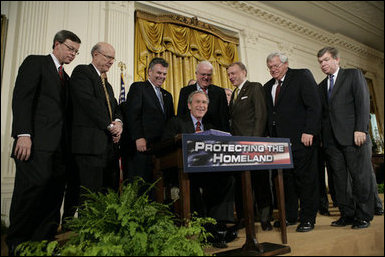
President George W. Bush signing the USA Patriot Reauthorization Act of 2005
If Trump’s remarks did not violate one or both of those laws, certainly remarks made by his surrogates did.
Thus, the Justice Department could have cited the Patriot Act in indicting Trump and/or any number of his followers for “activities that…appear to be intended…to influence the policy of a government by intimidation or coercion [and]…occur primarily within the territorial jurisdiction of the United States.”
The Justice Department could have also demanded that the results of the election be invalidated on the basis that widespread voter and candidate intimidation played a massive role in it.
But of course this did not happen.

.jpg)
_08.jpg)


 Bureaucracybuster's Blog
ABC NEWS, ADOLF HITLER, ALTERNET, AP, BAVARIA, BBC, BEER HALL PUTSCH, BREITBART NEWS, BUZZFEED, CBS NEWS, CHRISTOPHER S. MURPHY, CIA, CNN, DAILY KOS, DEMOCRATIC NATIONAL COMMITTEE, DEMOCRATIC PARTY, DONALD TRUMP, EDMUNC BURKE, EXTORTION, FACE THE NATION, FACEBOOK, FERGUS CULLEN, FOX NEWS SUNDAY, GREG ABBOTT, HACKING, HILLARY CLINTON, HITLER: ASCENT, IRS, JAMES B. COMEY, JAMES R. CLAPPER, JEWS, JOHN KASICH, JUSTICE DEPARTMENT, KEN PAXTON, LEON PANETTA, MEIN KAMPF, MICHAEL ROGERS, MIKE PENCE, MOTHER JONES, MOVEON, MUNICH, NATIONAL SECURITY AGENCY, NAZI PARTY, NBC NEWS, NEW HAMPSHIRE REPUBLICAN PARTY, NEWSWEEK, NPR, PAM BONDI, PAUL RYAN, PHILIP KLEIN, POLITICO, Racketeer Influenced Corrupt Organizations (RICO) Act, RAW STORY, REPUBLICAN NATIONAL COMMITTEE, REPUBLICAN NATIONAL CONVENTION, REPUBLICAN PARTY, REUTERS, ROGER STONE, SALON, SEATTLE TIMES, SLATE, SOVIET UNION, THE ATLANTIC, THE CHICAGO SUN-TIMES, THE CHICAGO TRIBUNE, THE DAILY BEAST, THE GUARDIAN, THE HILL, THE HUFFINGTON POST, THE LOS ANGELES TIMES, THE NEW YORK TIMES, THE WALL STREET JOURNAL, THE WASHINGTON EXAMINER, THE WASHINGTON POST, THREATS, TIME, TREASON, TRUMP UNIVERSITY, TWITTER, U.S. NEWS & WORLD REPORT, U.S. SECRET SERVICE, UPI, USA PATRIOT ACT, USA TODAY, VLADIMIR PUTIN, VOLKER ULLRICH, WEIMAR REPUBLIC
EVIL TRIUMPHS WHEN GOOD MEN DO NOTHING: PART ONE (OF THREE)
In Bureaucracy, History, Law, Law Enforcement, Politics, Social commentary on May 25, 2017 at 12:06 am“The only thing necessary for the triumph of evil is for good men to do nothing.”
So wrote Edmund Burke (1729-1797) the Irish statesman, author, orator, political theorist and philosopher. And history has repeatedly proved him right.
One such example was the rise of Adolf Hitler as Germany’s Fuhrer.
Writes historian Volker Ullrich, in his monumental new biography, Hitler: Ascent 1889–1939: “Historians have perennially tried to answer the question of whether Hitler’s rise to power could have been halted….
“There were repeated opportunities to end Hitler’s run of triumphs. The most obvious one was after the failed Putsch of November 1923. Had the Munich rabble-rouser been forced to serve his full five-year term of imprisonment in Landsberg, it is extremely unlikely that he would have been able to restart his political career.”
But that didn’t happen.
Tried for and convicted of treason, he was sentenced to five years’ imprisonment.
At Landsberg Prison, in Bavaria. he was given a huge cell, allowed to receive unlimited visitors and gifts, and treated with deference by guards and inmates.
Nine months later, he was released on parole–by authorities loyal to the authoritarian Right instead of the newly-created Weimar Republic.
Hitler immediately began rebuilding the shattered Nazi party–and deciding on a new strategy to gain power. Disdaining armed force, he would win office by election–or intrigue.
On January 30, 1933, those intrigues bore fruit: Adolf Hitler was appointed Chancellor of Germany.
A second example: The ascent of Donald Trump to the Presidency of the United States.
Future historians may one day write that what didn’t happen played at least as great a role in electing Donald Trump President as what actually did.
There were at least four instances where intervention by Federal law enforcement authorities could have utterly changed the outcome of the 2016 election. Yet, for reasons still unknown, they chose to do nothing.
Donald Trump
Case #1: The Justice Department did not indict Trump and/or the Attorney Generals of Texas and/or Florida for their roles in the Trump University scandal.
One attorney general who refused to accept money from Trump was New York’s Eric Schneiderman. His decision to press fraud claims against Trump forced the real estate mogul to settle the case out of court for $25 million.
“Today’s $25 million settlement agreement is a stunning reversal by Donald Trump,” said Schneiderman on November 18, “and a major victory for the over 6,000 victims of his fraudulent university.”
There have been no press reports that the Justice Department investigated these cases to determine if Trump violated the Racketeer Influenced Corrupt Organizations (RICO) Act statutes.
If the Justice Department did not investigate these cases, it should have. And if he did violate the RICO statutes, he should have been indicted, even as a Presidential candidate or President-elect.
Even if an indictment had not produced a conviction, the mere bringing of one would have cast an unprecedented cloud over his candidacy–let alone his being sworn in as President.
Case #2: The Justice Department did not indict Trump for his series of threats he made–directly or indirectly–against his Republican and Democratic opponents throughout the 2016 campaign.
Share this: