Posts Tagged ‘TRUTHDIG’
ABC NEWS, ALTERNET, AMERICABLOG, AP, BABY BOOMER RESISTANCE, BBC, BIG BEAR LAKE, BLOOMBERG, BLUESKY, BUZZFEED, CARLOS THE JACKAL, CBS NEWS, CHARLES DE GAULLE, CHRISTOPHER DORNER, CNN, CROOKS AND LIARS, DAILY KOS, DAILY KOZ, DAY OF THE JACKAL, FACEBOOK, FBI, FIVETHIRTYEIGHT, FREDERICK FORSYTH, HARPER’S MAGAZINE, HAWAII FIVE-O, HUFFINGTON POST, JACK LORD, LOS ANGELES POLICE DEPARTMENT, MEDIA MATTERS, MILITARY DRONES, MOTHER JONES, MOVEON, MSNBC, NBC NEWS, NEW REPUBLIC, NEWSDAY, NEWSWEEK, NPR, PBS NEWSHOUR, POLITICO, POLITICUSUSA, RAW STORY, REUTERS, SALON, SEATTLE TIMES, SLATE, SWAT TEAMS, TALKING POINTS MEMO, THE ATLANTIC, THE CHICAGO SUN-TIMES, THE CHICAGO TRIBUNE, THE DAILY BEAST, THE DAILY BLOG, THE GUARDIAN, THE HILL, THE HUFFINGTON POST, THE INTERCEPT, THE LOS ANGELES TIMES, THE NATION, THE NEW REPUBLIC, THE NEW YORK TIMES, THE NEW YORKER, THE VILLAGE VOICE, THE WASHINGTON POST, THINKPROGRESS, TIME, TRUTHDIG, TRUTHOUT, TWITTER, TWO POLITICAL JUNKIES, U.S. MARSHALS SERVICE, U.S. NEWS & WORLD REPORT, UPI, USA TODAY, X
In Bureaucracy, History, Law Enforcement, Politics, Social commentary on February 5, 2018 at 12:15 am
The LAPD’s leadership were terrified after they read Christopher Dorner’s 11-page “manifesto” published on his Facebook page.
Clearly, he intended to take revenge on the agency he blamed for the 2008 termination of his police career.
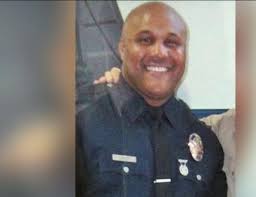
Christopher Dorner
As a result, the LAPD rushed to provide security and surveillance details to more than 50 endangered police officers and their families.
The agency also declared a “tactical alert,” forcing officers to remain on their shifts as long as needed.
Shortly after 1 a.m. on February 7, in Corona, California, Dorner fired at Los Angeles police officers who had been assigned to protect someone connected to threats he had posted in an online “manifesto.”
One officer was grazed in the head, but the wound was not life-threatening. The officers returned fire, and Dorner fled.
Then, at about 1:35 a.m., Dorner struck again, shooting two Riverside police officers who had stopped at a red light during a routine patrol. One officer was killed and the other wounded. The injured officer was taken to a hospital and was reported to be in stable condition.
Word instantly spread through the police grapevine about the shootings. And officers decided it was better to shoot first and ask questions later.
At 5:30 a.m. on February 7, LAPD officers were patrolling a Torrance neighborhood to guard yet another target named in Dorner’s manifesto.
They spotted a car they thought was Dorner’s and opened fire, injuring two women. One suffered a minor bullet wound, and the other was shot twice. Taken to a hospital, the latter was reported to be in stable condition.
Sometime after the Torrance shooting, a passer-by found a wallet with an LAPD badge and a picture ID of Dorner on a street near San Diego International Airport.
This was only a short distance from the naval base motel where he had reportedly checked in on February 7—but had never checked out.
Amid frantic TV news reports that Dorner was barricaded inside, police swarmed the hotel. But the soon learned that he hadn’t been there after all.
The FBI and U.S. Marshals Service, meanwhile, were seeking the public’s help in providing information about Dorner or his whereabouts.
At about noon on February 7, a burning truck was located in the snow-covered woods near Big Bear Lake, 80 miles east of Los Angeles.
The San Bernardino Sheriff’s Department later confirmed that the vehicle was Dorner’s Nissan Titan. No one was in the truck.
SWAT teams from the LAPD, San Bernardino Sheriff’s deputies, FBI agents and deputy U.S. marshals flooded the area. All were heavily armed, carrying assault rifles or machine guns.
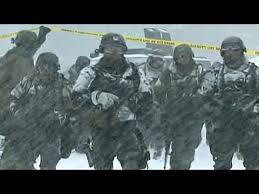
 A SWAT team
Dorner, in his manifesto, had boasted of owning assault rifles and even a Barrett .50 caliber sniper rifle whose bullets can pierce bulletproof vests and even tanks, airplanes and concrete. A marksman with a Barrett could easily hit a target from a mile away.
Police initially searched 400 homes in the area, but found no trace of Dorner.
The manhunt was slowed down by a heavy snowfall, but police, determined to find Dorner, pressed on.
Meanwhile, FBI SWAT teams and local police served a search warrant at a Las Vegas home belonging to Dorner. The lawmen carried out boxes of his possessions. No weapons were found.
After issuing a search warrant, Irvine police combed through the La Pama house belonging to Christopher Dorner’s mother. Investigators removed from the home seven grocery bags of evidence and several electronic items.
On February 9, at a late afternoon press conference, authorities announced the creation of a joint task force to search for Dorner. The task force comprised the Los Angeles, Irvine and Riverside police departments, the FBI and U.S. Marshals, and other affiliated law enforcement agencies.
“We will look under every rock, around every corner, we will search mountain tops for him,” said Riverside Police Assistant Chief Chris Vicino at the press conference.
Underscoring this point, LAPD Chief Charlie Beck said: “This is an act–and make no mistake about it–of domestic terrorism. This is a man who has targeted those that we entrust to protect the public. His actions cannot go unanswered.”
Besides manpower and technology, police employed psychology. That same day, the LAPD announced that it would reopen the investigation into Dorner’s firing.
“I do this not to appease a murderer,” LAPD Chief Beck said in a statement. “I do it to reassure the public that their police department is transparent and fair in all the things we do.”
Clearly police hoped this would lead Dorner to back off or even surrender.
On February 10, at 11:46 a.m., Los Angeles County Supervisors Michael D. Antonovich and Mark Ridley-Thomas announced they were offering a $100,000 reward for information leading to the arrest of Dorner.
Later that day, at 1 p.m., a joint task force offered a $1 million reward for information leading to Dorner’s arrest.
Federal authorities were also relentlessly hunting Dorner—and not only through the FBI and U.S. Marshals Service. The Bureau of Customs and Border Protection deployed unmanned drone aircrafts to find him.
As in The Day of the Jackal, despite a widespread dragnet and all-out search, law enforcement’s Number One fugitive had vanished.
ABC NEWS, ALTERNET, AMERICABLOG, AP, BABY BOOMER RESISTANCE, BBC, BIG BEAR LAKE, BLOOMBERG, BLUESKY, BUZZFEED, CARLOS THE JACKAL, CBS NEWS, CHARLES DE GAULLE, CHRISTOPHER DORNER, CNN, CROOKS AND LIARS, DAILY KOS, DAILY KOZ, DAY OF THE JACKAL, FACEBOOK, FBI, FIVETHIRTYEIGHT, FREDERICK FORSYTH, HARPER’S MAGAZINE, HAWAII FIVE-O, HUFFINGTON POST, JACK LORD, LOS ANGELES POLICE DEPARTMENT, MEDIA MATTERS, MILITARY DRONES, MOTHER JONES, MOVEON, MSNBC, NBC NEWS, NEW REPUBLIC, NEWSDAY, NEWSWEEK, NPR, PBS NEWSHOUR, POLITICO, POLITICUSUSA, RAW STORY, REUTERS, SALON, SEATTLE TIMES, SLATE, SWAT TEAMS, TALKING POINTS MEMO, THE ATLANTIC, THE CHICAGO SUN-TIMES, THE CHICAGO TRIBUNE, THE DAILY BEAST, THE DAILY BLOG, THE GUARDIAN, THE HILL, THE HUFFINGTON POST, THE INTERCEPT, THE LOS ANGELES TIMES, THE NATION, THE NEW REPUBLIC, THE NEW YORK TIMES, THE NEW YORKER, THE VILLAGE VOICE, THE WASHINGTON POST, THINKPROGRESS, TIME, TRUTHDIG, TRUTHOUT, TWITTER, TWO POLITICAL JUNKIES, U.S. MARSHALS SERVICE, U.S. NEWS & WORLD REPORT, UPI, USA TODAY, X
In Bureaucracy, History, Law Enforcement, Politics, Social commentary on February 2, 2018 at 12:04 am
The Day of the Jackal is a 1971 thriller by the English writer Frederick Forsyth. Its intricate plot centers on the efforts of a professional assassin to kill Charles de Gaulle, the President of France.
His motive: A reward of $500,000, paid by the OAS, a right-wing French paramilitary organization determined to that France should retain its Algerian colony.
The actual name of the assassin is never revealed. He is simply known by his code name: The Jackal.
But a great deal else about him is revealed before the novel reaches its shattering climax:
He is calculating, a crack shot, skilled in unarmed combat, quick-witted in emergencies and utterly ruthless in pursuing his goal of eliminating his chosen targets.
In 1973, director Fred Zinnemann (“High Noon”) brought Jackal to the big screen. Edward Fox starred as the assassin, and Michael Lonsdale played Claude Lebel, the police inspector who leads the hunt for him.


The book and movie proved commercial successes.
Then fate lifted the fictional Jackal into the world of real-life international terrorism.
In 1975, Ilich Ramírez Sánchez, the international terrorist now known as “Carlos,” gained notoriety by shooting two French detectives and an informer in Paris.
Barry Woodhams, an Englishman whose girlfriend had once dated Carlos, found a bag of weapons belonging to the terrorist in their London apartment. Not trusting the police, he called The Guardian newspaper, whose reporter Peter Niesewand quickly showed up.
Rummaging through the apartment, Niesewand found a copy of The Day Of The Jackal on a bookshelf, and assumed that Carlos had read it. The next day, in its front-page world scoop, the Guardian dubbed Carlos: “The Jackal.”
Only one thing was wrong: The book didn’t belong to Carlos at all; it belonged to Woodhams. “Carlos The Jackal” had probably never even read the book he was named after.
Nevertheless, the nickname stuck.
(In 1994, the government of Sudan betrayed Carlos—then seeking refuge there—to French intelligence agents. He was flown to France, tried for murder, and given a life sentence.)
But The Jackal was far from dead. In 2013, he took up residence in Los Angeles.
This time his name was known: Christopher Jordan Dorner.
And his target wasn’t the President of France or the leader of any other country. It was the officers of the Los Angeles Police Department (LAPD).
It’s an organization Dorner knew well, since he had belonged to it from 2005 to 2008.
In July, 2007, he reported excessive force by a fellow police officer against a handcuffed prisoner.
The LAPD charged that he had slandered the accused policewoman in a falsified report and relieved him of his duties.
Dorner claimed he was the victim of police retaliation for breaking the “code of silence.”
Dorner tried to reclaim his job in 2008, but LAPD’s Board of Rights rejected his appeal. He took the case to court, but a judge ruled against his appeal in October, 2011.

Christopher Jordan Dorner
That seemed to be the end of Dorner’s association with the LAPD.
Then, on February 3, 2013, Dorner’s long-suppressed rage exploded.
Monica Quan, 27, and her fiancee, Keith Lawrence, were shot dead in Irvine, California, while sitting in their white Kia in the parking lot of their new apartment building.
Quan was the daughter of former LAPD officer Randal Quan, who had represented Dorner at his termination appeal.
At the time, there seemed to be no motive for the murders. But on February 6, police named Dorner a suspect in the Irvine murders.
He had posted an 11-page “manifesto” on his Facebook page, implicating himself in the slayings. He accused Randal Quan of bungling his termination appeal.
And he repeatedly complained about his treatment in the LAPD.
I lost my position as a Commanding Officer of a Naval Security Forces reserve unit at NAS Fallon because of the LAPD, wrote Dorner.
I’ve lost a relationship with my mother and sister because of the LAPD. I’ve lost a relationship with close friends because of the LAPD.

In essence, I’ve lost everything because the LAPD took my name and new [sic] I was INNOCENT!!!
And he vowed vengeance on those he believed had wronged him:
I will conduct DA operations to destroy, exploit and seize designated targets. If unsuccessful or unable to meet objectives in these initial small scale offensive actions, I will reassess my BDA and re-attack until objectives are met.
I have nothing to lose. My personal casualty means nothing….You can not prevail against an enemy combatant who has no fear of death.
An enemy who embraces death is a lose, lose situation for their enemy combatants.
It wasn’t enough for Dorner to attack police officers. He would target their families as well:
I know your significant others routine, your children’s best friends and recess. I know Your Sancha’s gym hours and routine.
For police generally, it was their worst nightmare come true.
A cop-killer was on the loose. Worse, he had once been one of their own.
He knew their tactics, and now threatened to use that knowledge to murder not only cops but even their families.
For the LAPD, it was a declaration of war. And the department responded accordingly.
"HAMILTON", ABC NEWS, ALTERNET, AMERICABLOG, AP, ARNOLD SCHWARZENEGGER, BABY BOOMER RESISTANCE, BARACK OBAMA, BBC, BLOOMBERG, BLOOMBERG NEWS, BLUESKY, BUZZFEED, CBS NEWS, CNN, CROOKS AND LIARS, DAILY KOS, DAILY KOZ, DONALD TRUMP, FACEBOOK, FBI, FIVETHIRTYEIGHT, HARPER’S MAGAZINE, HILLARY CLINTON, HUFFINGTON POST, JAMES COMEY, JOHN OLIVER, MEDIA MATTERS, MERYL STREEP, MIKE PENCE, MOTHER JONES, MOVEON, MSNBC, NBC NEWS, NEIL YOUNG, NEW REPUBLIC, NEWSDAY, NEWSWEEK, NPR, PBS NEWSHOUR, POLITICO, POLITICUSUSA, RAW STORY, REUTERS, SALON, SEATTLE TIMES, SLATE, TALKING POINTS MEMO, THE ATLANTIC, THE CHICAGO SUN-TIMES, THE CHICAGO TRIBUNE, THE DAILY BEAST, THE DAILY BLOG, THE GUARDIAN, THE HILL, THE HUFFINGTON POST, THE INTERCEPT, THE LOS ANGELES TIMES, THE NATION, THE NEW REPUBLIC, THE NEW YORK TIMES, THE NEW YORKER, THE VILLAGE VOICE, THE WASHINGTON POST, THINKPROGRESS, TIME, TRUTHDIG, TRUTHOUT, TWITTER RULES, TWO POLITICAL JUNKIES, U.S. NEWS & WORLD REPORT, UPI, USA TODAY, X
In Bureaucracy, Business, History, Politics, Social commentary on January 24, 2018 at 12:07 am
On May 9, 2017, President Donald Trump abruptly fired FBI Director James Comey.
Reports soon surfaced that his reason for doing so was that Comey had refused to pledge his personal loyalty to Trump.
Just 72 hours after firing Comey, Trump issued a threat to him via Twitter: “James Comey better hope that there are no ‘tapes’ of our conversations before he starts leaking to the press!”
And Twitter’s reaction to such a blatant threat?
Silence.
James B. Comey
From the start of his Presidency, Trump has put his ambitions, excuses and rants on social media. And this has unnerved foreign leaders as well as Trump’s fellow Americans.
As CNN Political Analyst Julian Zelizer outlined in a July 3 article:
“Putting aside the specific content of the recent blasts from the Oval smart phone, the President’s ongoing Twitter storms make all leaders uneasy. The heads of government in most nations prefer a certain amount of predictability and decorum from other heads of state.
“To have one of the most powerful people in the room being someone who is willing to send out explosive and controversial statements through social media, including nasty personal attacks or an edited video of him physically assaulting the media, does not make others….feel very confident about how he will handle deliberations with them.”
On December 12, 2017, Trump used Twitter to attack New York United States Senator Kirsten Gillibrand.
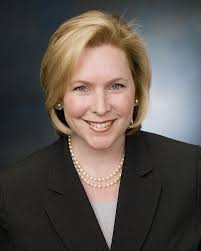
Kirsten Gillibrand
Gillibrand was among six Democratic senators who called for Trump’s resignation after sexual harassment allegations forced three Republican and Democratic members of Congress to resign.
Trump tweeted: “Lightweight Senator Kirsten Gillibrand, a total flunky for Chuck Schumer and someone who would come to my office ‘begging’ for campaign contributions not so long ago (and would do anything for them), is now in the ring fighting against Trump. Very disloyal to Bill & Crooked-USED!”
“I see it as a sexist smear. I mean that’s what it is,” Gillibrand replied in a press conference. “It’s part of the President’s efforts of name calling and it’s not going to silence me, it’s not going to silence me. It’s intended to silence me.”
So how does this behavior apply to “The Twitter Rules”?
Abuse: You may not engage in the targeted harassment of someone, or incite other people to do so. We consider abusive behavior an attempt to harass, intimidate, or silence someone else’s voice. [Italics added.]
On February 17, 2017, Trump tweeted: “The FAKE NEWS media (failing @nytimes, @NBCNews, @ABC, @CBS, @CNN) is not my enemy, it is the enemy of the American People!”
On July 2, 2017, Trump tweeted a video showing him punching a man with the CNN logo superimposed on his head during a WWE wrestling match.
And on August 15, the President retweeted a cartoon photo of a “Trump Train” running over a CNN reporter.
Yet Twitter’s Terms of Service state:
Hateful imagery and display names: You may not use hateful images or symbols in your profile image or profile header. You also may not use your username, display name, or profile bio to engage in abusive behavior, such as targeted harassment or expressing hate towards a person, group, or protected category. We will begin enforcing this rule on December 18, 2017. [Italics added.]
So how do Twitter’s top executives justify allowing these repeated violations of “Twitter Rules”? On September 25, the company tweeted:
“We hold all accounts to the same Rules, and consider a number of factors when assessing whether Tweets violate our Rules.
“Among the considerations is ‘newsworthiness’ and whether a Tweet is of public interest. This has long been internal policy and we’ll soon update our public-facing rules to reflect it. We need to do better on this, and will.”
Twitter has never acknowledged publicly that Trump has violated any of its guidelines. It rarely even acknowledges Trump’s tweets.
So what gives?
Money.
Trump’s apologists have fiercely defended his tweetstorms, claiming they allow him to bypass the media and “communicate directly with the American people.”
One of those apologists is former Twitter CEO Jack Dorsey, who said: “I believe it’s really important to have these conversations out in the open, rather than have them behind closed doors.”

Jack Dorsey
In April, 2017, Twitter announced that it had added 9,000,000 new users, its largest quarter-over-quarter jump in two years.
“We believe Twitter is the best at showing you what’s happening in the world and what’s being talked about,” said Anthony Noto, Twitter’s chief financial officer.
“Having political leaders of the world as well as news agencies participating and driving that is an important element to reinforcing what we’re the best at.”
In short: Trump is good at attracting more Twitter users. and if the company needs to overlook his blatant and repeated violations of its “Twitter Rules,” so be it.
Twitter has been so plagued by trolling that potential investors like the Walt Disney Company refused to taint their own reputations by partnering with it.
But that hasn’t led high-ranking Twitter executives to end their Faustian pact with the biggest Twitter troll of all.
And, as all devotees of the Faust legend know, there comes a time when the Devil wins the bargain.
"HAMILTON", ABC NEWS, ALTERNET, AMERICABLOG, AP, ARNOLD SCHWARZENEGGER, BABY BOOMER RESISTANCE, BARACK OBAMA, BBC, BLOOMBERG, BLOOMBERG NEWS, BLUESKY, BUZZFEED, CBS NEWS, CNN, CROOKS AND LIARS, DAILY KOS, DAILY KOZ, DONALD TRUMP, FACEBOOK, FBI, FIVETHIRTYEIGHT, HARPER’S MAGAZINE, HILLARY CLINTON, HUFFINGTON POST, JAMES COMEY, JOHN OLIVER, MEDIA MATTERS, MERYL STREEP, MIKE PENCE, MOTHER JONES, MOVEON, MSNBC, NBC NEWS, NEIL YOUNG, NEW REPUBLIC, NEWSDAY, NEWSWEEK, NPR, PBS NEWSHOUR, POLITICO, POLITICUSUSA, RAW STORY, REUTERS, SALON, SEATTLE TIMES, SLATE, TALKING POINTS MEMO, THE ATLANTIC, THE CHICAGO SUN-TIMES, THE CHICAGO TRIBUNE, THE DAILY BEAST, THE DAILY BLOG, THE GUARDIAN, THE HILL, THE HUFFINGTON POST, THE INTERCEPT, THE LOS ANGELES TIMES, THE NATION, THE NEW REPUBLIC, THE NEW YORK TIMES, THE NEW YORKER, THE VILLAGE VOICE, THE WASHINGTON POST, THINKPROGRESS, TIME, TRUTHDIG, TRUTHOUT, TWITTER RULES, TWO POLITICAL JUNKIES, U.S. NEWS & WORLD REPORT, UPI, USA TODAY, X
In Bureaucracy, Business, History, Politics, Social commentary on January 23, 2018 at 12:04 am
According to “The Twitter Rules,” posted on the Twitter website:
We believe in freedom of expression and open dialogue, but that means little as an underlying philosophy if voices are silenced because people are afraid to speak up.
In order to ensure that people feel safe expressing diverse opinions and beliefs, we prohibit behavior that crosses the line into abuse, including behavior that harasses, intimidates, or uses fear to silence another user’s voice.
Context matters when evaluating for abusive behavior and determining appropriate enforcement actions. Factors we may take into consideration include, but are not limited to whether:
- the behavior is targeted at an individual or group of people;
- the report has been filed by the target of the abuse or a bystander;
- the behavior is newsworthy and in the legitimate public interest.
Abuse: You may not engage in the targeted harassment of someone, or incite other people to do so. We consider abusive behavior an attempt to harass, intimidate, or silence someone else’s voice.
Unwanted sexual advances: You may not direct abuse at someone by sending unwanted sexual content, objectifying them in a sexually explicit manner, or otherwise engaging in sexual misconduct.
Hateful conduct: You may not promote violence against, threaten, or harass other people on the basis of race, ethnicity, national origin, sexual orientation, gender, gender identity, religious affiliation, age, disability, or serious disease. Read more about our hateful conduct policy.
Hateful imagery and display names: You may not use hateful images or symbols in your profile image or profile header. You also may not use your username, display name, or profile bio to engage in abusive behavior, such as targeted harassment or expressing hate towards a person, group, or protected category. We will begin enforcing this rule on December 18, 2017.
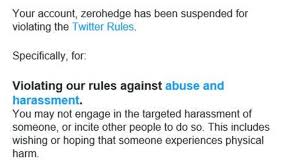
So much for the official version of what Twitter users—and non-Twitter users—can expect from those charged with policing Twitter.
Which leads to the question: Why hasn’t Twitter policed—and purged—the single greatest abuser of its “Twitter Rules”: Donald Trump?
Consider:
Donald Trump’s tweet-first-and-never-mind-the-consequences approach to life has been thoroughly documented.
From June 15, 2015, when he launched his Presidential campaign, until October 24, 2016, he fired nearly 4,000 angry, insulting tweets at 281 people and institutions. The New York Times needed two full pages of its print edition to showcase them.
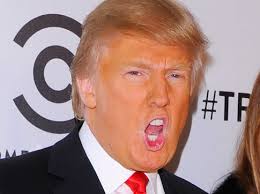
Donald Trump
Among these targets were:
- His Democratic rival, Hillary Clinton
- His fellow Republican Presidential candidates
- Actress Meryl Streep
- News organizations
- President Barack Obama
- Comedian John Oliver
- Obamacare
- Singer Neil Young
- The state of New Jersey
- Actor Arnold Schwarzenegger.
His Twitter assaults have often dominated entire news cycles for days on end.
As President-elect, he continued these assaults—such as the one on November 18, 2016.
On that evening, Vice President-elect Mike Pence attended a Broadway performance of the hit musical “Hamilton.”
After the curtain call, the actor Brandon Victor Dixon—who plays Aaron Burr—respectfully addressed Pence:
“We are the diverse America who are alarmed and anxious that your new administration will not protect us, our friends, our children, our parents, or defend us and uphold our inalienable rights. But we truly hope that this show has inspired you to uphold our American values and to work on behalf of all of us.”

Brandon Victor Dixon
The Official Tony Awards Youtube Channel, CC BY 4.0 <https://creativecommons.org/licenses/by/4.0>, via Wikimedia Commons
Dixon—who is black—was rightly alarmed.
Trump had received the open and enthusiastic support of the Ku Klux Klan, American Nazi Party and other white supremacist groups. Since his election, white thugs had assaulted blacks and other non-whites across the country.
Trump’s reaction to Dixon’s plea came in two Twitter rants:
“Our wonderful future V.P. Mike Pence was harassed last night at the theater by the cast of Hamilton, cameras blazing. This should not happen!”
And: “The Theater must always be a safe and special place. The cast of Hamilton was very rude last night to a very good man, Mike Pence. Apologize!”
And during his first two weeks as President, Trump attacked 22 people, places and things on his @realDonaldTrump account.
Then, on March 4, 2017, in a series of unhinged tweets, Trump accused former President Barack Obama of tapping his Trump Tower phones prior to the election:
“Terrible! Just found out that Obama had my ‘wires tapped’ in Trump Tower just before the victory. Nothing found. This is McCarthyism!”
“Is it legal for a sitting President to be ‘wire tapping’ a race for president prior to an election? Turned down by court earlier. A NEW LOW!”
“I’d bet a good lawyer could make a great case out of the fact that President Obama was tapping my phones in October, just prior to Election!”
“How low has President Obama gone to tapp my phones during the very sacred election process. This is Nixon/Watergate. Bad (or sick) guy!”
Thus, without offering a shred of evidence to back it up, Trump accused his predecessor—on Twitter—of committing an impeachable offense.
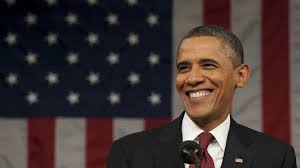
President Barack Obama
On May 9, 2017, Trump abruptly fired FBI Director James Comey.
Reports soon surfaced that his reason for doing so was that Comey had refused to pledge his personal loyalty to Trump.
Trump had made this “request” during a private dinner at the White House in January.
Another unpunished violation of Twitter’s Terms-of-Service was about to occur.
ABC NEWS, ALTERNET, AMERICABLOG, AP, BABY BOOMER RESISTANCE, BBC, BLOOMBERG, BUZZFEED, CALVIN COOLIDGE, CBS NEWS, CHERYL BEHYMER, CNN, CROOKS AND LIARS, DAILY KOS, DAILY KOZ, EMPLOYERS, FACEBOOK, FISHER & PHILLIPS LAW FIRM, FIVETHIRTYEIGHT, GLASSDOOR, HARPER’S MAGAZINE, HUFFINGTON POST, JERRY BROWN, JOB-SEEKERS, MEDIA MATTERS, MOTHER JONES, MOVEON, MSNBC, NBC NEWS, NEW REPUBLIC, NEWSDAY, NEWSWEEK, NPR, PBS NEWSHOUR, POLITICO, POLITICUSUSA, RAW STORY, REUTERS, SALARY HISTORY, SALON, SEATTLE TIMES, SLATE, SUSAN EGGMAN, TALKING POINTS MEMO, THE ATLANTIC, THE CHICAGO SUN-TIMES, THE CHICAGO TRIBUNE, THE DAILY BEAST, THE DAILY BLOG, THE GUARDIAN, THE HILL, THE HUFFINGTON POST, THE INTERCEPT, THE LOS ANGELES TIMES, THE NATION, THE NEW REPUBLIC, THE NEW YORK TIMES, THE NEW YORKER, THE VILLAGE VOICE, THE WASHINGTON POST, THINKPROGRESS, TIME, TRUTHDIG, TRUTHOUT, TWITTER, TWO POLITICAL JUNKIES, U.S. NEWS & WORLD REPORT, UNEMPLOYMENT, UPI, USA TODAY, USA TODAY NICCOLO MACHIAVELLI, WAGE GAP, X
In Bureaucracy, Business, History, Politics, Social commentary on January 3, 2018 at 2:38 am
“All those who have written upon civil institutions demonstrate…that whoever desires to found a state and give it laws, must start with assuming that all men are bad and ever ready to display their vicious nature, whenever they may find occasion for it.
“If their evil disposition remains concealed for a time, it must be attributed to some unknown reason; and we must assume that it lacked occasion to show itself. But time, which has been said to be the father of all truth, does not fail to bring it to light.”
Niccolo Machiavelli knew what he was writing about.
And now, California legislators have wisely—if belatedly—acted on that warning by reigning in the vicious nature of corporate employers.
As of January 1, it is now illegal for California employers to ask job applicants about their former salaries and benefits.
Governor Jerry Brown signed a new state privacy bill into law during the last week of December, 2017.
This is good news for applicants who believe they shouldn’t be judged on how much—or little—money they earned in the past.
The truth is that, for decades, employers have used “salary histories” to discriminate against applicants who earned large—or small—salaries in their previous jobs.
For example: If an applicant had been paid a miserly wage even though he had performed major tasks for an employer, the new potential one would use that low salary as a weapon against him: “Well, it says here you earned $—– in your most recent job. Why should we pay you more than that?”
And if an applicant had earned a high salary, an employer would often use that against him: “We can’t afford to match that, let alone give you more than that.” In many cases, employers simply refused to give a reason for refusing to hire the applicant.
In either case, it was clearly an “I win/You lose” situation.
And, naturally, when employers whined about how expensive it was to pay a living wage to those who made their profits a reality, they never mentioned the exorbitant salary paid to their own CEO.
According to Glassdoor: “Across all companies, the average CEO pay was $13.8 million per year, the average median worker pay was about $77,800, and the average ratio of CEO pay to median worker pay was 204. In other words, on average, CEOs earn around 204 times what his or her median worker earns.” 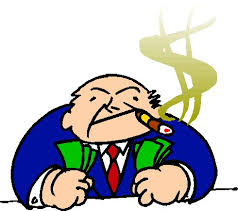
One job-seeking applicant tried to finesse the salary history demand by filling out the job application form except for the salary history part. He then attached a cover-letter, which read:
“I am interested in speaking with you or one of your representatives about the above-named position. I have filled out the required application—-with the exception of the box inquiring into my Current/last Income.
“I have in the past responded to ‘Salary History’ inquires and have found these have only one purpose: To elicit the lowest salary received, so that the salary to be offered can be adjusted to that level.
“I have been paid on a per-hour basis, a per-assignment basis, and on a bi-weekly basis. Each of these salaries was for a different job, and each job required a specific set of skills and efforts on my part.
“I am prepared to discuss in detail how my skills and experiences can prove of use to your company. But I do not discuss past salaries earned with anyone but the Internal Revenue Service.
“If you are prepared to hire on the basis of what I can do for your company, and not on the basis of what other employers have paid me in the past for assignments that had nothing to do with your company, please contact me at your earliest convenience.”
As of January 1, 2018, California job-seekers will no longer have to worry about that part of the application.
Supporters of the law believe it will help reduce the notorious wage-gap between male and female employees.
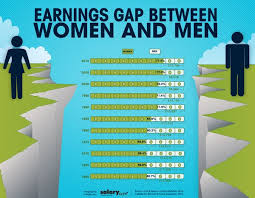
“Women negotiating a salary shouldn’t have to wrestle an entire history of wage disparity,” said the bill’s principal author, California Assemblywoman Susan Talamantes Eggman.
California’s new law also requires potential employers to disclose a salary range for the job in question, should an applicant ask about it.
This arms job seekers with valuable information because they will now know how much a company is willing to offer for that position.
In the past, employers held that information close to the vest as one more way of gaining control over their potential employee.
Although California has long been a trailblazer in employee/employer relations, it was not the first state to pass such a law. Oregon, Delaware and Massachusetts had already passed laws forbidding employers from asking about salary history.
Many employers and their paid shills believe that President Calvin Coolidge was right when he said: “The man who builds a factory builds a temple; the man who works there worships there.”
Cheryl Behymer, an attorney for the law firm Fisher & Phillips, which represents employers, said: “Here’s another point where the government is dictating to an employer how to conduct its business and employers resent that.”
As do all tyrants forced to relinquish any part of their tyranny.
ABC NEWS, ALABAMA, ALTERNET, AMERICABLOG, AP, BABY BOOMER RESISTANCE, BBC, BLOOMBERG, BUZZFEED, CBS NEWS, CHILD MOLESTATION, CNN, CROOKS AND LIARS, DAILY KOS, DAILY KOZ, DONALD TRUMP, FIVETHIRTYEIGHT, HARPER’S MAGAZINE, HUFFINGTON POST, MEDIA MATTERS, MOTHER JONES, MOVEON, MSNBC, NBC NEWS, NEW REPUBLIC, NEWSDAY, NEWSWEEK, NPR, PBS NEWSHOUR, POLITICO, POLITICUSUSA, RAW STORY, REUTERS, ROY MOORE, SALON, SEATTLE TIMES, SLATE, TALKING POINTS MEMO, THE ATLANTIC, THE CHICAGO SUN-TIMES, THE CHICAGO TRIBUNE, THE DAILY BEAST, THE DAILY BLOG, THE GUARDIAN, THE HILL, THE HUFFINGTON POST, THE INTERCEPT, THE LOS ANGELES TIMES, THE NATION, THE NEW REPUBLIC, THE NEW YORK TIMES, THE NEW YORKER, THE VILLAGE VOICE, THE WASHINGTON POST, THINKPROGRESS, TIME, TRUTHDIG, TRUTHOUT, TWITTER, TWO POLITICAL JUNKIES, U.S. NEWS & WORLD REPORT, UPI, USA TODAY, X
In Bureaucracy, History, Politics, Social commentary on December 7, 2017 at 12:33 am
Roy Moore wants to be United States Senator from Alabama. And polls indicate he might well become that on December 12.
But first he has to overcome a serious obstacle: The allegation that, during his 30s, he pursued relationships with teenage girls.
At least nine women have accused him of making improper advances toward them—ranging from harassment to sexual assault.
In years past, such allegations would have proven fatal for any political candidate—especially one who repeatedly cited the Bible as his source of inspiration.
But in 2016, Presidential candidate Donald Trump proved that more than a dozen women can accuse you of sexual harassment–or even assault—and you can still win office.
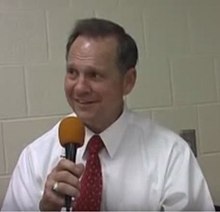
Roy Moore
Moore is hoping that what worked for Trump will work for him: Deny all the charges and accuse your accusers of lying in pursuit of a corrupt political agenda.
And plenty of Alabama voters have said they’re willing to support him—even if the charges are true. The reasons:
“The Lord has forgiven him.”
According to voter Dottie Finch.
“At first, I really wasn’t sure how I felt about the situation. But then I look at it this way: I don’t have the best past, and to have it be brought up after years of speculation and never anything being said about it, I don’t know just because he’s trying to prove himself that now people want to come out of the closet and accuse him of things.
“And if it has happened, I believe the good Lord has forgiven him and he has the right to continue to prove himself.
“I would power forward and keep on supporting him, just like I have with Donald Trump as our president.”
“Yes, he acted improperly. But so did other people in the Bible.”
One such voter is Jim Ziegler, Alabama state auditor: “Take the Bible: Zechariah and Elizabeth, for instance. Zechariah was extremely old to marry Elizabeth and they became the parents of John the Baptist.
“Also take Joseph and Mary. Mary was a teenager and Joseph was an adult carpenter. They became parents of Jesus. There’s just nothing immoral or illegal here. Maybe just a little bit unusual.”
“Other people’s sexual behavior is more important than that of my candidate.”
Moore has claimed that electing Doug Jones, a Democrat, would result in “abortion, sodomy, sexual perversion and transgender troops in our bathrooms.”
Same-sex marriages are now legal—courtesy of the United States Supreme Court. The vast majority of sexual assaults are committed by heterosexuals, not homosexuals. And there has been no invasion of “transgender troops in our bathrooms.”
“He didn’t do anything wrong.”
Says Alfonso Bradford: “I don’t think he’s done anything like that. Why didn’t it come up seven to eight months ago when he was running? All of a sudden, when it’s two weeks from now, all of this stuff comes up. I believe it’s a lot of BS. I really do.”
“He may be a pedophile, but he’s my kind of political pedophile.”
Even a pedophile Republican is better, in their eyes, than any Democrat. For them, it’s strictly a matter of holding power over those they hate. And the best way to guarantee that is with a Congress stocked with only Republicans.
According to Alabama Governor Kay Ivey:
“I believe in the Republican party, what we stand for, and, most important, we need to have a Republican in the United States Senate to vote on things like the Supreme Court justices, other appointments the Senate has to confirm and make major decisions. So that’s what I plan to do, vote for Republican nominee Roy Moore.”
* * * * *
Seventy-two years ago, another fanatical, Right-wing woman concluded: “If we can’t rule the world, there’s no point in living in it.”
She was Magda Goebbels, wife of Joseph Goebbels—Propaganda Minister for the rapidly-collapsing Third Reich.
On April 30, 1945, Russian troops lay only a few blocks from the underground bunker where Adolf Hitler—and the Goebbels family—-awaited the inevitable.
That afternoon, at about 3 P.M., Hitler shot himself in the right temple while biting on a cyanide capsule.
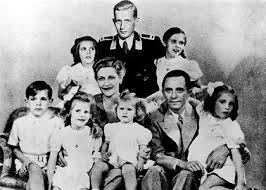
Magda and Joseph Goebbels, with their six children and a uniformed friend
On May 1, it was the turn of his propaganda minister—and his wife.
“I do not wish to live in a world without National Socialism,” Magda Goebbels said.
Nor did she want her six children to do so: “The children are much too good for anything that will come after us.”
To make certain they escaped living in a world not governed by Nazis, she gave each of them a powerful sleeping tablet. Then she crushed a cyanide capsule between their jaws.
Finally, it was time to for Joseph and Magda Goebbels to exit the Third Reich: He shot her in the back of the head, and then he shot himself.
That, more than anything, is the mentality at work in the upcoming Alabama election.
Those supporting Moore care, foremost, about having power over those they hate. And they will give their allegiance to any candidate, no matter how despicable, who promises to give them that.
ABC NEWS, ALTERNET, AMERICA: INSIDE OUT, AMERICABLOG, AP, BABY BOOMER RESISTANCE, BBC, BLOOMBERG NEWS, BUZZFEED, CBS NEWS, CNN, CROOKS AND LIARS, DAILY KOZ, DAVID SHOENBRUN, DONALD TRUMP, DRUG-TESTING, EMPLOYERS RESPONSIBILITY ACT, FACEBOOK, FISHER INVESTMENTS, FIVETHIRTYEIGHT, FORBES MAGAZINE, HARPER’S MAGAZINE, HUFFINGTON POST, KENNETH FISHER, MEDIA MATTERS, MEDICAL INSURANCE, MOTHER JONES, MOVEON, MSNBC, NBC NEWS, NEW REPUBLIC, NEWSDAY, NEWSWEEK, NPR, PBS NEWSHOUR, POLITICO, POLITICUSUSA, RAW STORY, REPUBLICANS, REUTERS, Ronald Reagan, SALON, SEATTLE TIMES, SLATE, TALKING POINTS MEMO, THE ATLANTIC, THE CHICAGO SUN-TIMES, THE CHICAGO TRIBUNE, THE DAILY BEAST, THE DAILY BLOG, THE GUARDIAN, THE HILL, THE HUFFINGTON POST, THE LOS ANGELES TIMES, THE NATION, THE NEW REPUBLIC, THE NEW YORK TIMES, THE NEW YORKER, THE VILLAGE VOICE, THE WASHINGTON POST, THINKPROGRESS, TIME, TRUTHDIG, TRUTHOUT, TWITTER, TWO POLITICAL JUNKIES, U.S. NEWS & WORLD REPORT, UNEMPLOYMENT, UP, UPI, USA TODAY, WAL-MART, WEALTH GAP
In Bureaucracy, History, Law, Law Enforcement, Politics, Social commentary on November 1, 2017 at 12:15 am
America can quickly find employment for willing-to-work job-seekers—by installing a nationwide Employers Responsibility Act. Its last seven provisions would read as follows:
(9) Employers refusing to hire would be required to pay an additional “crime tax.”
Sociologists and criminologists agree that “the best cure for crime is a job.” Thus, employers who refuse to hire contribute to a growing crime rate in this Nation. Such non-hiring employers would be required to pay an additional tax, which would be earmarked for agencies of the criminal justice system at State and Federal levels.
(10) The seeking of “economic incentives” by companies in return for moving to or remaining in cities/states would be strictly forbidden.
Such “economic incentives” usually:
- allow employers to ignore existing laws protecting employees from unsafe working conditions;
- allow employers to ignore existing laws protecting the environment;
- allow employers to pay their employees the lowest acceptable wages, in return for the “privilege” of working at these companies; and/or
- allow employers to pay little or no business taxes, at the expense of communities who are required to make up for lost tax revenues.
(11) Employers who continue to make such overtures would be criminally prosecuted for attempted bribery or extortion:
- Bribery, if they offered to move to a city/state in return for “economic incentives,” or
- Extortion, if they threatened to move their companies from a city/state if they did not receive such “economic incentives.”
This would protect employees against artificially-depressed wages and unsafe working conditions; protect the environment in which these employees live; and protect cities/states from being pitted against one another at the expense of their economic prosperity.
(12) The U.S. Departments of Justice and Labor would regularly monitor the extent of employer compliance with the provisions of this act.
Among these measures: Sending undercover agents, posing as highly-qualified job-seekers, to apply at companies—and then vigorously prosecuting those employers who blatantly refused to hire despite their proven economic ability to do so.
This would be comparable to the long-time and legally-validated practice of using undercover agents to determine compliance with fair-housing laws.
(13) The Justice Department and/or the Labor Department would be required to maintain a publicly-accessible database on those companies that have been cited, sued and/or convicted for such offenses as:
- discrimination,
- harassment,
- health and/or safety violations or
- violating immigration laws.
Employers would be legally required to regularly provide such information to these agencies, so that it would remain accurate and up-to-date.
Such information would arm job applicants with vital information about the employers they were approaching. They could thus decide in advance if an employer is deserving of their skills and dedication.
As matters now stand, employers can legally demand to learn even the most private details of an applicant’s life without having to disclose even the most basic information about themselves and their history of treating employees.
(14) CEOs whose companies employ illegal aliens would be held directly accountable for the actions of their subordinates. Upon conviction, the CEO would be sentenced to a mandatory prison term of at least 10 years.
This would prove a more effective remedy for controlling illegal immigration than stationing tens of thousands of soldiers on the U.S./Mexican border. With CEOs forced to account for their subordinates’ actions, they would take drastic steps to ensure their companies complied with Federal immigration laws.
Without employers eager to hire illegal aliens at a fraction of the money paid to American workers, the invasions of illegal job-seekers would quickly come to an end.
(15) A portion of employers’ existing Federal taxes would be set aside to create a national clearinghouse for placing unemployed but qualified job-seekers.
* * * * *
For thousands of years, otherwise highly intelligent men and women believed that kings ruled by divine right. That kings held absolute power, levied extortionate taxes and sent countless millions of men off to war—all because God wanted it that way.
That lunacy was dealt a deadly blow in 1776 when American Revolutionaries threw off the despotic rule of King George III of England.
But today, millions of Americans remain imprisoned by an equally outrageous and dangerous theory: The Theory of the Divine Right of Employers.

Summing up this employer-as-God attitude, Calvin Coolidge still speaks for the overwhelming majority of employers and their paid shills in government: “The man who builds a factory builds a temple, and the man who works there worships there.”
America can no longer afford such a dangerous fallacy as the Theory of the Divine Right of Employers.
Americans did not win their freedom from Great Britain—and its enslaving doctrine of “the divine right of kings”—-by begging for their rights.
And Americans will not win their freedom from their corporate masters–-and the equally enslaving doctrine of “the divine right of employers”—-by begging for the right to work and support themselves and their families.
Corporations can—and do—spend millions of dollars on TV ads, selling lies—lies such as the “skills gap,” and how if the wealthy are forced to pay their fair share of taxes, jobs will inevitably disappear.
But Americans can choose to reject those lies—and demand that employers behave like patriots instead of predators.
ABC NEWS, ALTERNET, AMERICA: INSIDE OUT, AMERICABLOG, AP, BABY BOOMER RESISTANCE, BBC, BLOOMBERG NEWS, BUZZFEED, CBS NEWS, CNN, CROOKS AND LIARS, DAILY KOZ, DAVID SHOENBRUN, DONALD TRUMP, DRUG-TESTING, EMPLOYERS RESPONSIBILITY ACT, FACEBOOK, FISHER INVESTMENTS, FIVETHIRTYEIGHT, FORBES MAGAZINE, HARPER’S MAGAZINE, HUFFINGTON POST, KENNETH FISHER, MEDIA MATTERS, MEDICAL INSURANCE, MOTHER JONES, MOVEON, MSNBC, NBC NEWS, NEW REPUBLIC, NEWSDAY, NEWSWEEK, NPR, PBS NEWSHOUR, POLITICO, POLITICUSUSA, RAW STORY, REPUBLICANS, REUTERS, Ronald Reagan, SALON, SEATTLE TIMES, SLATE, TALKING POINTS MEMO, THE ATLANTIC, THE CHICAGO SUN-TIMES, THE CHICAGO TRIBUNE, THE DAILY BEAST, THE DAILY BLOG, THE GUARDIAN, THE HILL, THE HUFFINGTON POST, THE LOS ANGELES TIMES, THE NATION, THE NEW REPUBLIC, THE NEW YORK TIMES, THE NEW YORKER, THE VILLAGE VOICE, THE WASHINGTON POST, THINKPROGRESS, TIME, TRUTHDIG, TRUTHOUT, TWITTER, TWO POLITICAL JUNKIES, U.S. NEWS & WORLD REPORT, UNEMPLOYMENT, UP, UPI, USA TODAY, WAL-MART, WEALTH GAP
In Bureaucracy, History, Law, Law Enforcement, Politics, Social commentary on October 31, 2017 at 12:10 am
An Employers Responsibility Act (ERA) would simultaneously address the following evils for which employers are directly responsible:
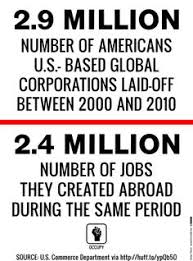
- The loss of jobs within the United States owing to companies’ moving their operations abroad—solely to pay substandard wages to their new employees.
- The mass firings of employees which usually accompany corporate mergers or acquisitions.
- The widespread victimization of part-time employees, who are not legally protected against such threats as racial discrimination, sexual harassment and unsafe working conditions.
- The refusal of many employers to create better than menial, low-wage jobs.
- The widespread employer practice of extorting “economic incentives” from cities or states in return for moving to or remaining in those areas. Such “incentives” usually absolve employers from complying with laws protecting the environment and/or workers’ rights.
- The refusal of many employers to provide medical and pension benefits—nearly always in the case of part-time employees, and, increasingly, for full-time, permanent ones as well.
- Rising crime rates, due to rising unemployment.
Among its provisions:
(1) American companies that close plants in the United States and open others abroad would be forbidden to sell products made in those foreign plants within the United States.
This would protect both American and foreign workers from employers seeking to profit at their expense. American workers would be ensured of continued employment. And foreign laborers would be protected against substandard wages and working conditions.
Companies found violating this provision would be subject to Federal criminal prosecution. Guilty verdicts would result in heavy fines and lengthy imprisonment for their owners and top managers.
(2) Large companies (those employing more than 100 persons) would be required to create entry-level training programs for new, future employees.
These would be modeled on programs now existing for public employees, such as firefighters, police officers and members of the armed services.
Such programs would remove the employer excuse, “I’m sorry, but we can’t hire you because you’ve never had any experience in this line of work.” After all, the Air Force has never rejected an applicant because, “I’m sorry, but you’ve never flown a plane before.”
This Nation has greatly benefited from the humane and professional efforts of the men and women who have graduated from public-sector training programs. There is no reason for the private sector to shun programs that have succeeded so brilliantly for the public sector.
(3) Employers would receive tax credits for creating professional, well-paying, full-time jobs.
This would encourage the creation of better than the menial, dead-end, low-paying and often part-time jobs which exist in the service industry. Employers found using such tax credits for any other purpose would be prosecuted for tax fraud.
(4) A company that acquired another—through a merger or buyout—would be forbidden to fire en masse the career employees of that acquired company.
This would be comparable to the protection existing for career civil service employees. Such a ban would prevent a return to the predatory “corporate raiding” practices of the 1980s, which left so much human and economic wreckage in their wake.
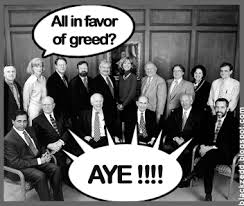
The wholesale firing of employees would trigger the prosecution of the company’s new owners. Employees could still be fired, but only for provable just cause, and only on a case-by-case basis.
(5) Employers would be required to provide full medical and pension benefits for all employees, regardless of their full-time or part-time status.
Increasingly, employers are replacing full-time workers with part-time ones—solely to avoid paying medical and pension benefits.
Requiring employers to act humanely and responsibly toward all their employees would encourage them to provide full-time positions—and hasten the death of this greed-based practice.
(6) Employers of part-time workers would be required to comply with all federal labor laws.
Under current law, part-time employees are not protected against such abuses as discrimination, sexual harassment and unsafe working conditions. Closing this loophole would immediately create two positive results:
- Untold numbers of currently-exploited workers would be protected from the abuses of predatory employers; and
- Even predatorily-inclined employers would be encouraged to offer permanent, fulltime jobs rather than only part-time ones—since a major incentive for offering part-time jobs would now be eliminated.
(7) Employers would be encouraged to hire to their widest possible limits,through a combination of financial incentives and legal sanctions. Among those incentives:
Employers demonstrating a willingness to hire would receive substantial Federal tax credits, based on the number of new, permanent employees hired per year.
Employers claiming eligibility for such credits would be required to make their financial records available to Federal investigators. Employers found making false claims would be prosecuted for perjury and tax fraud, and face heavy fines and imprisonment if convicted.
(8) Among those sanctions: Employers refusing to hire could be required to prove, in court:
- Their economic inability to hire further employees, and/or
- The unfitness of the specific, rejected applicant.
Companies found guilty of unjustifiably refusing to hire would face the same penalties as now applying in cases of discrimination on the basis of age, race, sex and disability.
Two benefits would result from this:
- Employers would thus fund it easier to hire than to refuse to do so; and
- Job-seekers would no longer be prevented from even being considered for employment because of arbitrary and interminable “hiring freeze.”
ABC NEWS, ALTERNET, AMERICA: INSIDE OUT, AMERICABLOG, AP, BABY BOOMER RESISTANCE, BBC, BLOOMBERG NEWS, BUZZFEED, CBS NEWS, CNN, CROOKS AND LIARS, DAILY KOZ, DAVID SHOENBRUN, DONALD TRUMP, DRUG-TESTING, EMPLOYERS RESPONSIBILITY ACT, FACEBOOK, FISHER INVESTMENTS, FIVETHIRTYEIGHT, FORBES MAGAZINE, HARPER’S MAGAZINE, HUFFINGTON POST, KENNETH FISHER, MEDIA MATTERS, MEDICAL INSURANCE, MOTHER JONES, MOVEON, MSNBC, NBC NEWS, NEW REPUBLIC, NEWSDAY, NEWSWEEK, NPR, PBS NEWSHOUR, POLITICO, POLITICUSUSA, RAW STORY, REPUBLICANS, REUTERS, Ronald Reagan, SALON, SEATTLE TIMES, SLATE, TALKING POINTS MEMO, THE ATLANTIC, THE CHICAGO SUN-TIMES, THE CHICAGO TRIBUNE, THE DAILY BEAST, THE DAILY BLOG, THE GUARDIAN, THE HILL, THE HUFFINGTON POST, THE LOS ANGELES TIMES, THE NATION, THE NEW REPUBLIC, THE NEW YORK TIMES, THE NEW YORKER, THE VILLAGE VOICE, THE WASHINGTON POST, THINKPROGRESS, TIME, TRUTHDIG, TRUTHOUT, TWITTER, TWO POLITICAL JUNKIES, U.S. NEWS & WORLD REPORT, UNEMPLOYMENT, UP, UPI, USA TODAY, WAL-MART, WEALTH GAP
In Bureaucracy, History, Law, Law Enforcement, Politics, Social commentary on October 30, 2017 at 12:41 am
President Donald Trump wants huge tax cuts for corporations. He wants to cut the corporate income tax rate from its current 35% to 20%.
He claims that, with this extra income, CEOs will invest in their businesses and create tens of thousands of new jobs.

Donald Trump
But that’s not what some of the biggest S&P 500 companies are saying they’ll do. The people they are seeking to please are investors, not workers. And, least of all, those seeking work but unable to find employers willing to hire.
Darius Adamczyk, CEO of Honeywell International Inc., said “tax reform” would “offer greater flexibility for Honeywell.” He added that the corporation would invest more cash in the United States to pay for mergers and acquisitions, share buybacks and paying down debt.
He didn’t say anything about hiring more workers.
According to Moody’s Investors Service, American corporations have stockpiled nearly $1.8 trillion in cash overseas.
Apple has more than $240 billion of that total.
Apple’s CEO Tim Cook says the company wants to bring back offshore cash if tax rates for doing so were lower: “What we would do with it, let’s wait and see exactly what it is, but as I’ve said before we are always looking at acquisitions.”
Apple expects a tax windfall if Trump’s tax-cutting plan passes Congress. And analysts openly expect Apple to use those monies to boost its capital return program via buybacks, dividends and perhaps making a big acquisition.
What analysts don’t expect Apple to do with its tax cut monies is create new American jobs.
Most of the offshore cash brought home by U.S. companies in past tax holidays was used to buy back shares or make acquisitions, not to fund investments in production capacity or jobs.
Corporations were not legally required to use those tax cut savings to hire more workers. And Trump’s tax cut proposal has no such requirement, either.
According to John Divine, staff writer for U.S. News & World Report‘s Money section: “As long as there are no strings attached on how or where companies spend these savings, taxpayers get a raw deal.”
Tax cuts for the wealthy have been a favorite—perhaps the favorite—Republican mantra since 1980, when former California Governor Ronald Reagan ran for and became President.
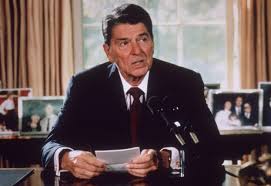
Ronald Reagan
Reagan, like every major Republican Presidential candidate since, promised that giving tax cuts to the wealthy would prove highly beneficial to ordinary workers.
The official name for this policy was “supply side economics.” In reality, it was known—and functioned—as “trickle down economics.”
“A rising tide lifts all boats,” claimed Reagan. A more realistic slogan for the results of his economics policies would have been: “A rising tide lifts some yachts.”
Among those charting Reagan’s economics legacy as President was former CBS Correspondent David Schoenbrun. In his bestselling autobiography, America Inside Out: At Home and Abroad from Roosevelt to Reagan, he noted:
- On January 28, 1981, keeping a pledge to his financial backers in the oil industry, Reagan abolished Federal controls on the price of oil.
- Within a week, Exxon, Texaco and Shell raised gasoline prices and prices of home heating oil.
- Reagan saw it as his duty to put a floor under prices, not a ceiling above them.
- Reagan believed that when government helped business it wasn’t interfering. Loaning money to bail out a financially incompetent Chrysler was “supporting the free enterprise system.”
- But putting a high-profits tax on price-gouging corporations or filing anti-trust suits against them was “Communistic” and therefore intolerable.
- Tax-breaks for wealthy businesses meant helping America become stronger.
- But welfare for the poor or the victims of a predatory marketplace economy weakened America by sapping its morale.
“In short,” wrote Schoenbrun, “welfare for the rich is good for America. But welfare for the poor is bad for America, even for the poor themselves, for it encourages them to be shiftless and lazy.
“Somehow, loans to the inefficient management of American corporations would not similarly encourage them in their inefficient methods.”
To be unemployed in America is considered by most Americans—including the unemployed—the same as being a bum.
And Republicans are quick to point accusing fingers at those willing-to-work Americans who can’t find willing-to-hire employers.
According to Republicans such as Mitt Romney and Herman Cain: If you can’t find a job, it’s entirely your fault.
And when Republicans are forced—by public pressure or Democratic majorities—to provide benefits to the unemployed, these nearly always come at a price.
Those receiving subsistence monies are, in many states, required to undergo drug-testing, even though there is no evidence of widespread drug-abuse among the unemployed.
But America can put an end to this “I’ve-got-mine-and-the-hell-with-you” job-killing arrogance of people like Kenneth Fisher.
The answer lies in three words: Employers Responsibility Act (ERA).
If passed by Congress and vigorously enforced by the U.S. Departments of Justice and Labor, an ERA would ensure full-time, permanent and productive employment for millions of capable, job-seeking Americans.
And it would achieve this without raising taxes or creating controversial government “make work” programs.
Such legislation would legally require employers to demonstrate as much initiative for hiring as job-seekers are now expected to show in searching for work.
How it would work will be outlined in the next two columns.
ABC NEWS, ADOLF HITLER, ALTERNET, AMERICABLOG, AP, ARAB SHEIKS, “DROOPERS”, BABY BOOMER RESISTANCE, BBC, BLACKS, BLOOMBERG NEWS, BUMS, BUZZFEED, CAITLYN JENNER, CBS NEWS, CNN, COSTUMES, CRAZED KILLERS, CROOKS AND LIARS, DAILY KOS, DAILY KOZ, ESCAPED MENTAL PATIENTS, FACEBOOK, FAT PERSONS, FIVETHIRTYEIGHT, GEISHAS, HALLOWEEN, HARPER’S MAGAZINE, HILLARY CLINTON, HOMOSEXUALS, HUFFINGTON POST, ILLEGAL ALIENS, INDIAN SNAKE CHARMERS, MEDIA MATTERS, MEXICANS, MOTHER JONES, MOVEON, MSNBC, NAUGHTY PRIESTS, NBC NEWS, NEW REPUBLIC, NEWSDAY, NEWSWEEK, NPR, NURSES, PBS NEWSHOUR, PIMPS, POLITICAL CORRECTNESS, POLITICO, POLITICUSUSA, RAW STORY, REUTERS, ROBERT E. LEE, SALON, SAN FRANCISCO CASTRO DISTRICT, SEATTLE TIMES, SEXY CONVICTS, SEXY HAREM SLAVES, SEXY PRISON GUARDS, SLATE, TALKING POINTS MEMO, TERRORISTS, THE ATLANTIC, THE CHICAGO SUN-TIMES, THE CHICAGO TRIBUNE, THE DAILY BEAST, THE DAILY BLOG, THE GUARDIAN, THE HILL, THE HUFFINGTON POST, THE INTERCEPT, THE LOS ANGELES TIMES, THE NATION, THE NEW REPUBLIC, THE NEW YORK TIMES, THE NEW YORKER, THE VILLAGE VOICE, THE WALL, THE WASHINGTON POST, THINKPROGRESS, TIME, TRUTHDIG, TRUTHOUT, TWITTER, U.S. NEWS & WORLD REPORT, UP, UPI, USA TODAY
In Business, History, Politics, Social commentary on October 26, 2017 at 12:58 am
Halloween isn’t just for kids anymore.
In 2017, about 179 million Americans will participate in Halloween, and will spend an estimated $9.1 billion. Yes, that’s with a “b”. That will be up from 2016, when 171 million Americans spent $8.4 billion.
The average American will spend $25 on candy, $30 on Halloween decor, and costumes (men will spend $96 each, women $77).

Those putting out this avalanche of money will, of course, be adults. And a lot of those costumes will be worn by adults at parties across the nation.
This will be especially true in San Francisco.
In 1979, Halloween in its Castro District shifted from being a children’s event to a celebration among homosexuals.
The massive crowds quickly overwhelmed the streets, mass transit and due to the Castro’s location along two major transport corridors, disrupted traffic flow well outside the neighborhood.
In 2002, 500,000 people celebrated Halloween in the Castro and four people were stabbed.
It continued to grow into a massive annual street party until 2006, when a shooting wounded nine people and prompted the city to call off the event.
In 2007, 600 police were deployed in the Castro on Halloween. By 2010, San Francisco had banned the event in the Castro, directing celebrants to various balls and parties elsewhere.
But there’s another force working to suppress Halloween joy among its participants: Political Correctness.
A number of articles highlight a series of costumes it’s now Politically Incorrect to wear on Halloween. As a result, it’s now virtually impossible to enjoy this occasion without fearing that you’ll hurt the Politically Correct sensitivities of almost every group imaginable.
For example:
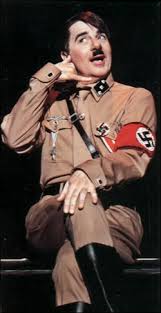
Adolf Hitler: PC types damn it as offensive and upsetting to many people—such as Jews generally and Holocaust survivors in particular. (The same could be said for any actor who portrays Hitler in a movie, such as Downfall or The Bunker.)
Homeless Persons: Such costumes will hurt the feelings of bums who won’t be attending Halloween parties anyway.

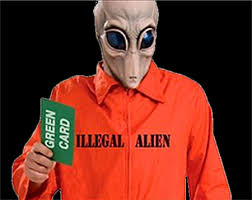
Illegal Alien: It’s not nice to spotlight people who constantly violate the immigration laws of the United States.
Terrorist: You might upset Islamics, who make up the vast majority of the world’s terrorists.

Others on the list of groups that uber-liberals believes it’s Politically Incorrect to dress up as include:
- Blacks (if you’re white).
- Naughty priests: It’s offensive to mock religious hypocrites who violate the bodies of children.
- Caitlyn Jenner: It’s cruel to make fun of a man who, as a man, won gold medals as an Olympic athlete—and then had sophisticated surgery to make himself look like a woman.
- Mexicans (such as a woman wearing a mariachi outfit or a man sporting a sombrero, serape and drooping moustache).
- Pimp: It’s offensive to blacks—especially those who make their living through the sale of women’s bodies.
- Sexy nurse: Because nursing is a serious profession—and everybody knows that nurses never enter into romances with doctors.
- Fat costumes: It will hurt the feelings of people who can barely fit into an airplane seat—many of them because they simply eat too much.
- Crazed Killer: Because it’s not fair to make fun of psychopathic murderers who prey on innocent men, women and children.
- Sexy Convict/Prison Guard: You could be accused of “trivializing” the United States prison system.
- The Wall: Wearing an imitation brick wall reminds people that millions of Hispanics have illegally violated America’s immigration laws—and millions more intend to.
- Arab Sheik: It’s not nice to dress like an OPEC board member in a long flowing robe and headdress.
- Sexy Harem Slave: Consider this the flip side of “Arab Sheik.” It’s uncool to remind people that women throughout the Islamic world are treated like chattel.
- “Droopers”: An obvious parody of the “Hooters” outfit, this features a fake pair of drooping breasts, thus winning it dual charges of “ageism” and “sexism.”
- Geisha: You could be accused of “cultural appropriation.”
- Hillary in Prison: Depicting a woman who often skirted the law as paying the price for it is anti-feminist.
- Robert E. Lee: Once a Southern icon of the Civil War, he is now damned as a racist defender of slavery.
- Escaped Mental Patient: Wearing an imitation straitjacket makes fun of real-life whackjobs who need to be restrained—for their own safety and that of others.
- Indian Snake Charmer: This costume supposedly appropriates Middle Eastern culture and has “disturbing sexual undertones”—if you equate snakes with penises.
If you follow the guidelines of these articles, you might as well skip Halloween altogether.
Yet no one objects to children—or adults—dressing up as pirates like Blackbeard, who once terrorized the oceans as modern-day terrorists menace the world.
No one objects to those who dress up like skeletons—when almost everyone has lost a friend or family member to death.
No one objects to those who dress up as witches, who have been associated with evil for hundreds of years.
No one objects to those who dress up as Satan—the literal personification of evil for millions of Christians, Jews and Muslims.
The whole idea of Halloween is to momentarily step into a character that’s utterly different from you.
So if you are a terrorist, try dressing up at Halloween as Dr. Albert Schweitzer or Florence Nightingale.


 Bureaucracybuster's Blog
ABC NEWS, ALTERNET, AMERICABLOG, AP, BABY BOOMER RESISTANCE, BBC, BIG BEAR LAKE, BLOOMBERG, BLUESKY, BUZZFEED, CARLOS THE JACKAL, CBS NEWS, CHARLES DE GAULLE, CHRISTOPHER DORNER, CNN, CROOKS AND LIARS, DAILY KOS, DAILY KOZ, DAY OF THE JACKAL, FACEBOOK, FBI, FIVETHIRTYEIGHT, FREDERICK FORSYTH, HARPER’S MAGAZINE, HAWAII FIVE-O, HUFFINGTON POST, JACK LORD, LOS ANGELES POLICE DEPARTMENT, MEDIA MATTERS, MILITARY DRONES, MOTHER JONES, MOVEON, MSNBC, NBC NEWS, NEW REPUBLIC, NEWSDAY, NEWSWEEK, NPR, PBS NEWSHOUR, POLITICO, POLITICUSUSA, RAW STORY, REUTERS, SALON, SEATTLE TIMES, SLATE, SWAT TEAMS, TALKING POINTS MEMO, THE ATLANTIC, THE CHICAGO SUN-TIMES, THE CHICAGO TRIBUNE, THE DAILY BEAST, THE DAILY BLOG, THE GUARDIAN, THE HILL, THE HUFFINGTON POST, THE INTERCEPT, THE LOS ANGELES TIMES, THE NATION, THE NEW REPUBLIC, THE NEW YORK TIMES, THE NEW YORKER, THE VILLAGE VOICE, THE WASHINGTON POST, THINKPROGRESS, TIME, TRUTHDIG, TRUTHOUT, TWITTER, TWO POLITICAL JUNKIES, U.S. MARSHALS SERVICE, U.S. NEWS & WORLD REPORT, UPI, USA TODAY, X
HOW COPS PROTECT THEIR OWN: PART TWO (OF FOUR)
In Bureaucracy, History, Law Enforcement, Politics, Social commentary on February 5, 2018 at 12:15 amThe LAPD’s leadership were terrified after they read Christopher Dorner’s 11-page “manifesto” published on his Facebook page.
Clearly, he intended to take revenge on the agency he blamed for the 2008 termination of his police career.
Christopher Dorner
As a result, the LAPD rushed to provide security and surveillance details to more than 50 endangered police officers and their families.
The agency also declared a “tactical alert,” forcing officers to remain on their shifts as long as needed.
Shortly after 1 a.m. on February 7, in Corona, California, Dorner fired at Los Angeles police officers who had been assigned to protect someone connected to threats he had posted in an online “manifesto.”
One officer was grazed in the head, but the wound was not life-threatening. The officers returned fire, and Dorner fled.
Then, at about 1:35 a.m., Dorner struck again, shooting two Riverside police officers who had stopped at a red light during a routine patrol. One officer was killed and the other wounded. The injured officer was taken to a hospital and was reported to be in stable condition.
Word instantly spread through the police grapevine about the shootings. And officers decided it was better to shoot first and ask questions later.
At 5:30 a.m. on February 7, LAPD officers were patrolling a Torrance neighborhood to guard yet another target named in Dorner’s manifesto.
They spotted a car they thought was Dorner’s and opened fire, injuring two women. One suffered a minor bullet wound, and the other was shot twice. Taken to a hospital, the latter was reported to be in stable condition.
Sometime after the Torrance shooting, a passer-by found a wallet with an LAPD badge and a picture ID of Dorner on a street near San Diego International Airport.
This was only a short distance from the naval base motel where he had reportedly checked in on February 7—but had never checked out.
Amid frantic TV news reports that Dorner was barricaded inside, police swarmed the hotel. But the soon learned that he hadn’t been there after all.
The FBI and U.S. Marshals Service, meanwhile, were seeking the public’s help in providing information about Dorner or his whereabouts.
At about noon on February 7, a burning truck was located in the snow-covered woods near Big Bear Lake, 80 miles east of Los Angeles.
The San Bernardino Sheriff’s Department later confirmed that the vehicle was Dorner’s Nissan Titan. No one was in the truck.
SWAT teams from the LAPD, San Bernardino Sheriff’s deputies, FBI agents and deputy U.S. marshals flooded the area. All were heavily armed, carrying assault rifles or machine guns.
Dorner, in his manifesto, had boasted of owning assault rifles and even a Barrett .50 caliber sniper rifle whose bullets can pierce bulletproof vests and even tanks, airplanes and concrete. A marksman with a Barrett could easily hit a target from a mile away.
Police initially searched 400 homes in the area, but found no trace of Dorner.
The manhunt was slowed down by a heavy snowfall, but police, determined to find Dorner, pressed on.
Meanwhile, FBI SWAT teams and local police served a search warrant at a Las Vegas home belonging to Dorner. The lawmen carried out boxes of his possessions. No weapons were found.
After issuing a search warrant, Irvine police combed through the La Pama house belonging to Christopher Dorner’s mother. Investigators removed from the home seven grocery bags of evidence and several electronic items.
On February 9, at a late afternoon press conference, authorities announced the creation of a joint task force to search for Dorner. The task force comprised the Los Angeles, Irvine and Riverside police departments, the FBI and U.S. Marshals, and other affiliated law enforcement agencies.
“We will look under every rock, around every corner, we will search mountain tops for him,” said Riverside Police Assistant Chief Chris Vicino at the press conference.
Underscoring this point, LAPD Chief Charlie Beck said: “This is an act–and make no mistake about it–of domestic terrorism. This is a man who has targeted those that we entrust to protect the public. His actions cannot go unanswered.”
Besides manpower and technology, police employed psychology. That same day, the LAPD announced that it would reopen the investigation into Dorner’s firing.
“I do this not to appease a murderer,” LAPD Chief Beck said in a statement. “I do it to reassure the public that their police department is transparent and fair in all the things we do.”
Clearly police hoped this would lead Dorner to back off or even surrender.
On February 10, at 11:46 a.m., Los Angeles County Supervisors Michael D. Antonovich and Mark Ridley-Thomas announced they were offering a $100,000 reward for information leading to the arrest of Dorner.
Later that day, at 1 p.m., a joint task force offered a $1 million reward for information leading to Dorner’s arrest.
Federal authorities were also relentlessly hunting Dorner—and not only through the FBI and U.S. Marshals Service. The Bureau of Customs and Border Protection deployed unmanned drone aircrafts to find him.
As in The Day of the Jackal, despite a widespread dragnet and all-out search, law enforcement’s Number One fugitive had vanished.
Share this: