In the 1992 courtroom drama, “A Few God Men,” Jack Nicholson, as Marine Colonel Nathan Jessup, utters a line that has since become famous.
When his prosecutor, Lieutenant Daniel Kaffee (Tom Cruise) demands the truth about the murder of a fellow Marine, Jessup shouts: “You can’t handle the truth!”
Jack Nicholson in “A Few Good Men”
Apparently, many of those who work in the television news business feel the same way about their audience.
[WARNING:This column contains some words that some readers may find offensive. Read on at your own risk.]
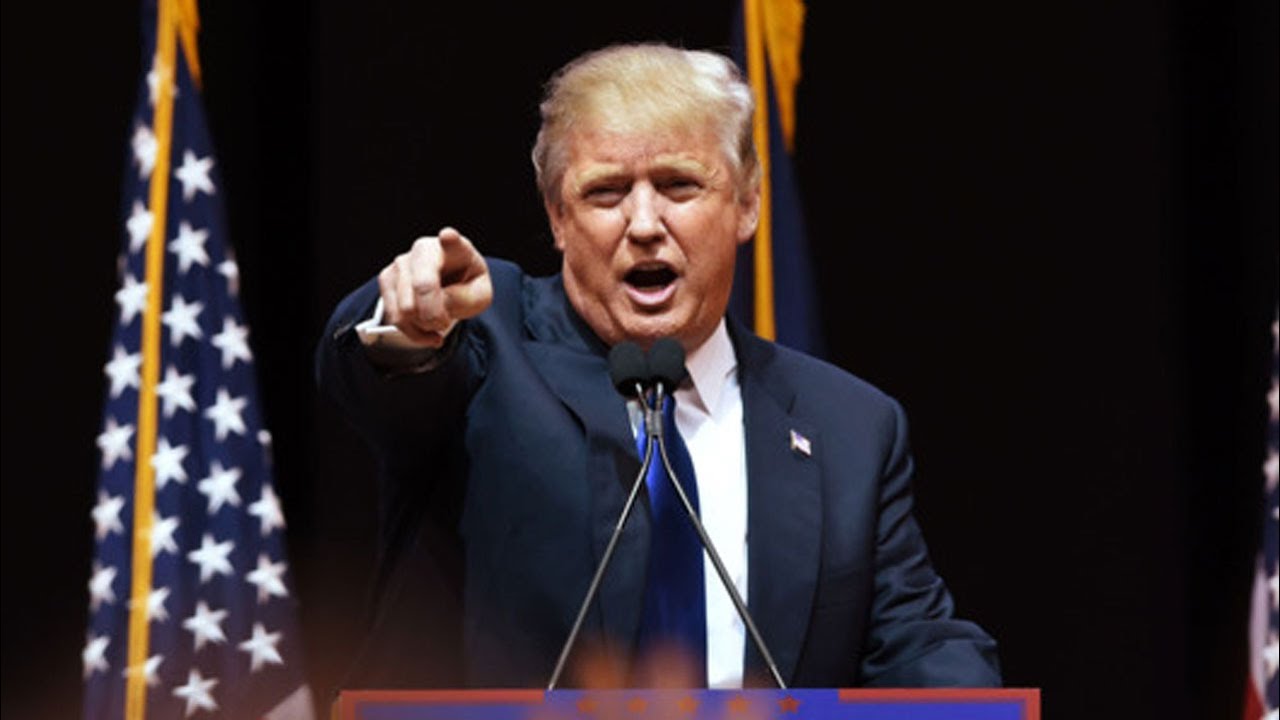
On February 9, 2016, businessman Donald Trump scored a new blow at his Rafael “Ted” Cruz, his closest rival for the Republican Presidential nomination.
Speaking at a rally in Manchester, New Hampshire, Trump attacked Cruz, the United States Senator from Texas, for being unwilling to support the widespread use of torture against America’s Islamic enemies.
“He’s a pussy!” yelled a woman in the crowd.
Apparently a certain portion of the attendees didn’t hear—or misheard—the insult. So Trump—pretending to be shocked–repeated it for them:
“She said–I never expect to hear that from you again! She said: ‘He’s a pussy.’ That’s terrible.”
“What kind of people do I have here?”joked Trump, clearly playing to the boisterous crowd.
Donald Trump
The incident went viral on social media. But all the major TV news outlets—for ABC, CBS, CNN and NBC—bleeped the word and/or coyly referred to it as “the P-word.”
It was as if they assumed their viewers would of course know what had been said despite the networks’ censorship of it. And if viewers didn’t already know what the woman—and Trump—had said, the networks weren’t going to enlighten them.
Of course, “the P-word” could just as easily have been “prick” or “pervert.” So it’s understandable that many viewers might have thought a very different word had been used.
No doubt the networks hoped to avoid offending large numbers of viewers.
But when the use of certain words becomes central to a news story, editors and reporters should have the courage to reveal just what was said. It should then be up to the audience to decide if the language was offensive–and, if so, if its user deserves condemnation.
The evening news is—supposedly—aimed at voting-age adults. And adults need–and deserve–the hard truth about the world they live in. Only then do they have a chance to reform it—if, in fact, they decide it needs reforming.
Those who wanted to learn—rather than guess—what Trump had repeated had to turn to the Internet or to a handful of news source such as Vox: Policy and Politics.
In their defense, the networks could argue that the Federal Communications Commission, which regulates radio and television, does not usually permit the word “pussy” to be aired between 6 am and 10 pm.
On the other hand, immediately after the 9/11 terror attacks, all the major TV networks endlessly replayed the destruction of the World Trade Center, with the resulting deaths of hundreds of men and women.
Censorship, then, tends to center on two types of subject material:
Sex, or “obscenity,” which is sex-related; and
Race, meaning racial slurs that would offend some minority group.
An example of race-related censorship occurred during the short-lived administration of President Gerald R. Ford.
During a lull in the 1976 Republican convention, entertainer Pat Boone asked Earl Butz, then Secretary of Agriculture: Why was the party of Lincoln having so much trouble winning black votes for its candidates?
“I’ll tell you what the coloreds want,”said Butz. “It’s three things: first, a tight pussy; second, loose shoes; and third, a warm place to shit.”
Earl Butz
Unknown to Butz, a Rolling Stone reporter was standing nearby. When his comments became public, Butz was quickly forced to resign.
Meanwhile, most TV and print media struggled to protect their audiences from the truth of Butz’ racism. Many newspapers simply reported that Butz had said something too obscene to print. Some invited their readers to contact the editors if they wanted more information.
TV newsmen generally described Butz’ firing as stemming from “a racially-offensive remark,” which they refused to explain.
In short: A high-ranking government official had been fired, but audiences were not allowed to judge whether his language justified that termination.
Forty years later, TV news viewers were again prevented from reaching their own conclusions about Trump’s repetition of the slur aimed at his rival.
Censoring the truth has always been a hallmark of dictatorships. It has no place in a democracy–despite the motives of those doing the censoring.
The ancient historian, Plutarch, sounded a warning that remains timely:
“And the most glorious exploits do not always furnish us with the clearest discoveries of virtue or vice in men; sometimes a matter of less moment, an expression or a jest, informs us better of their characters and inclinations, than the most famous sieges, the greatest armaments, or the bloodiest battles whatsoever.”
In a democracy, citizens must be alert for those tell-tale expressions or jests. And this demands that the media, in turn, have the courage to bring those truths to their attention.
On October 18, more than seven million Americans protested the dictatorial policies of President Donald J. Trump.
It was the second nationwide “No Kings” series of protest marches since he took office on January 20.
The first marches, on June 14, had drawn about five million people.
Republicans, knowing the marches were coming, tried to pre-empt their “I Hate Dictators” message with one of their own: That the intended marchers hated America.
Speaker of the House Mike Johnson: “You’re gonna bring together the Marxists, the socialists, the Antifa advocates, the anarchists, and the pro-Hamas wing of the far-left Democrat party.”
Mike Johnson
Other Republicans quickly joined his chorus.
Treasury Secretary Scott Bessent: “This crazy No Kings rally this weekend, which is gonna be the farthest left, the hardest-core, the most unhinged in the Democratic Party, which is a big title.”
Kansas Senator Roger Marshall warned that the protests would turn violent and have to be stopped by the national guard.
Attorney general Pam Bondi claimed, without proof, that the protests were an organized effort with dedicated funding: “You’re seeing people out there with thousands of signs that all match, pre-bought, pre-put together. They are organized, and someone is funding it.”
Pam Bondi
But, according to an October 19 opinion piece in The New Republic, such slanders were proven wrong:
“The atmosphere was extremely energetic and family friendly for both young and old.
“People walked slowly, often with kids in tow. Countless attendees wore large inflatable costumes, inspired by the Portland frog. There was live music, tabling, and speeches by Bill Nye, Mehdi Hasan, and Senators Bernie Sanders and Chris Murphy, among others.”
The greatest threat posed to the Trump administration didn’t come from the “No Kings” rallies. It came from no less a figure than President Donald J. Trump.
To show his utter contempt for those who oppose his policies and dictatorial rule, he posted an AI-generated video on his Truth Social account. It showed him wearing a crown and flying a jet labeled “King Trump” that dumps feces on protesters.
It’s set to the music of the 1986 Top Gun film song, “Danger Zone,” by Kenny Loggiins.
Loggins responded on NPR: “This is an unauthorized use of my performance of ‘Danger Zone.’ Nobody asked me for my permission, which I would have denied, and I request that my recording on this video is removed immediately.
“I can’t imagine why anybody would want their music used or associated with something created with the sole purpose of dividing us. Too many people are trying to tear us apart, and we need to find new ways to come together. We’re all Americans, and we’re all patriotic.
“There is no ‘us and them’ – that’s not who we are, nor is it what we should be. It’s all of us. We’re in this together, and it is my hope that we can embrace music as a way of celebrating and uniting each and every one of us.”
Owing to Logginis’ demand, many YouTube versions of this video don’t contain that music.
NPR contacted to the White House for a response to Loggins’ reaction.
White House spokesman Davis R. Ingle ignored NPR’s questions but contemptuously replied with an image from Top Gun of stars Tom Cruise and the late Val Kilmer, captioned: “I FEEL THE NEED FOR SPEED.”
Loggins could file a copyright infringement suit against Trump.
The Internet erupted with outrage:
“Can’t believe that’s a president of a country.”
“It tells you everything you need to know about what he thinks about the people of America who are, in fact, America.”
“Just to be clear, Americans, this is what Donald Trump thinks of you if you oppose him, protest, or simply ask questions.”
“Trump’s AI fantasy of crowning himself King & dumping shit from a fighter jet is the most honest thing he’s ever posted. He’s literally shitting on Americans because he doesn’t give a fuck about them. And the MAGA stupids will cheer it, calling it “patriotism.”
But these were tame compared to the warning issued by Niccolo Machiavelli, the Florentine statesman, more than 500 years ago.
Niccolo Machiavelli
In his best-known work, The Prince, he advised rulers to “mingle with [citizens] from time to time, and give them an example of his humanity and munificence, always upholding, however, the majesty of his dignity, which must never be allowed to fail in anything whatever.”
“…A prince need trouble little about conspiracies when the people are well disposed. But when they are hostile and hold him in hatred, then he must fear everything and everybody.
“….For whoever conspires always believes that he will satisfy the people by the death of the prince.
“…[The Roman Emperor Commodus], being of a cruel and bestial disposition, in order to…exercise his rapacity on the people, he sought to favor the soldiers and render them licentious. On the other hand, by not maintaining his dignity, by often descending into the theater to fight with gladiators and committing other contemptible actions…he became despicable in the eyes of the soldiers. And being hated on the one hand and despised on the other, he was conspired against and killed.”
The 1992 military courtroom drama, “A Few Good Men,” climaxes with a brutal exchange that has since become famous.
The legal combatants are Lieutenant Daniel Kaffee (Tom Cruise) and Marine Colonel Nathan R. Jessup (Jack Nicholson).
COLONEL JESSUP: You want answers?
KAFFEE: I want the truth!
COLONEL JESSUP:You can’t handle the truth!
Apparently, many of those who work in the television news business feel the same way about their audiences.
Jack Nicolson vs. Tom Cruise in “A Few Good Men”
[WARNING:The following column contains some words that some readers may find offensive. Read on at your own risk.]
On February 18, 2012, editor Anthony Federico posted this headline on ESPN’s mobile website:
Chink in the Armor: Jeremy Lin’s 9 Turnovers
Cost Knicks in Streak-Snapping Loss to Hornets.
The headline was posted at 2:30 a.m. and quickly removed when someone realized that it might be seen as offensive. By Sunday afternoon, Federico had been fired from ESPN.
Jeremy Lin
It’s true that “Chink” is seen by Asians as a derogatory word. It’s equally true that ESPN has the right to discipline its employees when they violate its journalistic standards.
But ESPN should not have the right to treat its audience like so many school children who must be protected, at all costs, from life’s unpleasantness.
Consider ESPN’s apology:
“Last night, ESPN.com’s mobile web site posted an offensive headline referencing Jeremy Lin at 2:30 am ET. The headline was removed at 3:05 am ET.
“We are conducting a complete review of our cross-platform editorial procedures and are determining appropriate disciplinary action to ensure this does not happen again. We regret and apologize for this mistake.”
Note the words “posted an offensive headline.” If you didn’t already know what the headline had said, ESPN wasn’t going to enlighten you.
And other news networks—such as ABC and NBC—have acted similarly, referring to the “c-word” without telling viewers just what was actually posted.
Since the “c-word” is often used as a euphemism for “cunt,” it’s easy to see how many viewers could imagine the writer had used a very different expression.
The official reason given for refraining from actually saying the word that lies at the center of the story is to offending some members of the audience.
But when the use of certain words becomes central to a news story, editors and reporters should have the courage to reveal just what was said—and let the audience decide for itself.
The evening news is—supposedly—aimed at voting-age adults. And adults need—and deserve—the hard truth about the world they live in. Only then do they have a chance to reform it–if, in fact, they decide it needs reforming.
Examples of such censorship are legion. For instance:
In 1976, during the Republican Presidential Convention, entertainer Pat Boone asked Earl Butz, then Secretary of Agriculture: Why was the party of Lincoln having so much trouble winning black votes for its candidates?
“I’ll tell you what the coloreds want,” said Butz. “It’s three things: first, a tight pussy; second, loose shoes; and third, a warm place to shit.”
Earl Butz
Unknown to Butz, a Rolling Stone reporter was standing nearby. When his comments became public, Butz was forced to resign.
Meanwhile, most TV and print media struggled to protect their audiences from the truth of Butz’ racism.
Many newspapers simply reported that Butz had said something too obscene to print. Some invited their readers to contact the editors if they wanted more information.
TV newsmen generally described Butz’ firing as stemming from “a racially-offensive remark,” which they refused to explain.
In short: A high-ranking government official had been fired, but adult audiences were not allowed to judge whether his language justified that termination.
Or consider this:
On February 16, 2012, Foster Friess, offered his views about the importance of legalized birth control. Friess was the wealthy investor bankrolling a super PAC for GOP presidential candidate Rick Santorum.
“This contraceptive thing, my gosh it’s such inexpensive,” said Friess. “Back in my days, they used Bayer Aspirin for contraception. The gals put it between their knees and it wasn’t that costly.”
Many news organizations refused to share Friess’ statement, merely saying that he had made an “offensive remark about women.”
It’s understandable that women would be highly offended by this remark. But shielding them from the repressive mindset of those who support Right-wing candidates like Santorum would ill serve their interests.
Censoring the truth has always been a hallmark of dictatorships. It has no place in a democracy—no matter how well-intentioned the motives of those doing the censoring.
Some words will always be hateful—to blacks, whites, Hispanics, Asians, women, men. In short, everybody.
Refusing to acknowledge their use will not cause them to vanish.
The truth is the truth. If you can’t handle it, that’s your problem.
But those of us who can deserve the opportunity to learn it. And, when necessary, to act on it.
The 1992 military courtroom drama, “A Few Good Men,” climaxes with a brutal exchange that has since become famous.
Jack Nicolson vs. Tom Cruise in “A Few Good Men”
The legal combatants are Lieutenant Daniel Kaffee (Tom Cruise) and Marine Colonel Nathan R. Jessup (Jack Nicholson).
COLONEL JESSUP: You want answers?
KAFFEE: I want the truth!
COLONEL JESSUP:You can’t handle the truth!
Apparently, many of those who work in the television news business feel the same way about their audiences.
[WARNING:This column contains some words that some readers may find offensive. Read on at your own risk.]
On February 18, 2012, editor Anthony Federico posted this headline on ESPN’s mobile website:
Chink in the Armor: Jeremy Lin’s 9 Turnovers
Cost Knicks in Streak-Snapping Loss to Hornets.
The headline was posted at 2:30 a.m. and quickly removed when someone realized that it might be seen as offensive. By Sunday afternoon, Federico had been fired from ESPN.
Jeremy Lin
It’s true that “Chink” is seen by Asians as a derogatory word. It’s equally true that ESPN has the right to discipline its employees when they violate its journalistic standards.
But ESPN should not have the right to treat its audience like so many school children who must be protected, at all costs, from life’s unpleasantness.
Consider ESPN’s apology:
“Last night, ESPN.com’s mobile web site posted an offensive headline referencing Jeremy Lin at 2:30 am ET. The headline was removed at 3:05 am ET.
“We are conducting a complete review of our cross-platform editorial procedures and are determining appropriate disciplinary action to ensure this does not happen again. We regret and apologize for this mistake.”
Note the words “posted an offensive headline.” If you didn’t already know what the headline had said, ESPN wasn’t going to enlighten you.
And other news networks—such as ABC and NBC—have acted similarly, referring to the “c-word” without telling viewers just what was actually posted.
Since the “c-word” is often used as a euphemism for “cunt,” it’s easy to see how many viewers could imagine the writer had used a very different expression.
The official reason given for refraining from actually saying the word that lies at the center of the story is to offending some members of the audience.
But when the use of certain words becomes central to a news story, editors and reporters should have the courage to reveal just what was said—and let the audience decide for itself.
The evening news is—supposedly—aimed at voting-age adults. And adults need—and deserve—the hard truth about the world they live in. Only then do they have a chance to reform it–if, in fact, they decide it needs reforming.
Examples of such censorship are legion. For instance:
In 1976, during the Republican Presidential Convention, entertainer Pat Boone asked Earl Butz, then Secretary of Agriculture: Why was the party of Lincoln having so much trouble winning black votes for its candidates?
“I’ll tell you what the coloreds want,” said Butz. “It’s three things: first, a tight pussy; second, loose shoes; and third, a warm place to shit.”
Earl Butz
Unknown to Butz, a Rolling Stone reporter was standing nearby. When his comments became public, Butz was forced to resign.
Meanwhile, most TV and print media struggled to protect their audiences from the truth of Butz’ racism.
Many newspapers simply reported that Butz had said something too obscene to print. Some invited their readers to contact the editors if they wanted more information.
TV newsmen generally described Butz’ firing as stemming from “a racially-offensive remark,” which they refused to explain.
In short: A high-ranking government official had been fired, but adult audiences were not allowed to judge whether his language justified that termination.
Or consider this:
On February 16, 2012, Foster Friess, offered his views about the importance of legalized birth control. Friess was the wealthy investor bankrolling a super PAC for GOP presidential candidate Rick Santorum.
“This contraceptive thing, my gosh it’s such inexpensive,” said Friess. “Back in my days, they used Bayer Aspirin for contraception. The gals put it between their knees and it wasn’t that costly.”
Many news organizations refused to share Friess’ statement, merely saying that he had made an “offensive remark about women.”
It’s understandable that women would be highly offended by this remark. But shielding them from the repressive mindset of those who support Right-wing candidates like Santorum would ill serve their interests.
Censoring the truth has always been a hallmark of dictatorships. It has no place in a democracy—no matter how well-intentioned the motives of those doing the censoring.
Some words will always be hateful—-to blacks, whites, Hispanics, Asians, women, men. In short, everybody.
Refusing to acknowledge their use will not cause them to vanish.
The truth is the truth. If you can’t handle it, that’s your problem.
But those of us who can deserve the opportunity to learn it. And, when necessary, to act on it.
In the 1992 courtroom drama, “A Few God Men,” Jack Nicholson, as Marine Colonel Nathan Jessup, utters a line that has since become famous.
When his prosecutor, Lieutenant Daniel Kaffee (Tom Cruise) demands the truth about the murder of a fellow Marine, Jessup shouts: “You can’t handle the truth!”
Jack Nicholson in “A Few Good Men”
Apparently, many of those who work in the television news business feel the same way about their audience.
[WARNING:This column contains some words that some readers may find offensive. Read on at your own risk.]
On February 9, 2016, businessman Donald Trump scored a new blow at his Rafael “Ted” Cruz, his closest rival for the Republican Presidential nomination.
Speaking at a rally in Manchester, New Hampshire, Trump attacked Cruz, the United States Senator from Texas, for being unwilling to support the widespread use of torture against America’s Islamic enemies.
“He’s a pussy!” yelled a woman in the crowd.
Apparently a certain portion of the attendees didn’t hear–or misheard–the insult. So Trump–pretending to be shocked–repeated it for them:
“She said–I never expect to hear that from you again! She said: ‘He’s a pussy.’ That’s terrible.”
“What kind of people do I have here?” joked Trump, clearly playing to the boisterous crowd.
Donald Trump
The incident went viral on social media. But all the major TV news outlets–for ABC, CBS, CNN and NBC–bleeped the word and/or coyly referred to it as “the P-word.”
It was as if they assumed their viewers would of course know what had been said despite the networks’ censorship of it. And if viewers didn’t already know what the woman–and Trump–had said, the networks weren’t going to enlighten them.
Of course, “the P-word” could just as easily have been “prick” or “pervert.” So it’s understandable that many viewers might have thought a very different word had been used.
No doubt the networks hoped to avoid offending large numbers of viewers.
But when the use of certain words becomes central to a news story, editors and reporters should have the courage to reveal just what was said. It should then be up to the audience to decide if the language was offensive–and, if so, if its user deserves condemnation.
The evening news is–supposedly–aimed at voting-age adults. And adults need–and deserve–the hard truth about the world they live in. Only then do they have a chance to reform it–if, in fact, they decide it needs reforming.
Those who wanted to learn–rather than guess–what Trump had repeated had to turn to the Internet or to a handful of news source such as Vox: Policy and Politics.
In their defense, the networks could argue that the Federal Communications Commission, which regulates radio and television, does not usually permit the word “pussy” to be aired between 6 am and 10 pm.
On the other hand, immediately after the 9/11 terror attacks, all the major TV networks endlessly replayed the destruction of the World Trade Center, with the resulting deaths of hundreds of men and women.
Censorship, then, tends to center on two types of subject material:
Sex, or “obscenity,” which is sex-related; and
Race, meaning racial slurs that would offend some minority group.
An example of race-related censorship occurred during the short-lived administration of President Gerald R. Ford.
During a lull in the 1976 Republican convention, entertainer Pat Boone asked Earl Butz, then Secretary of Agriculture: Why was the party of Lincoln having so much trouble winning black votes for its candidates?
“I’ll tell you what the coloreds want,” said Butz. “It’s three things: first, a tight pussy; second, loose shoes; and third, a warm place to shit.”
Earl Butz
Unknown to Butz, a Rolling Stone reporter was standing nearby. When his comments became public, Butz was quickly forced to resign.
Meanwhile, most TV and print media struggled to protect their audiences from the truth of Butz’ racism. Many newspapers simply reported that Butz had said something too obscene to print. Some invited their readers to contact the editors if they wanted more information.
TV newsmen generally described Butz’ firing as stemming from “a racially-offensive remark,” which they refused to explain.
In short: A high-ranking government official had been fired, but audiences were not allowed to judge whether his language justified that termination.
Forty years later, TV news viewers were again prevented from reaching their own conclusions about Trump’s repetition of the slur aimed at his rival.
Nor is there any guarantee that such censorship will not occur again.
Censoring the truth has always been a hallmark of dictatorships. It has no place in a democracy–despite the motives of those doing the censoring.
The ancient historian, Plutarch, sounded a warning that remains timely:
“And the most glorious exploits do not always furnish us with the clearest discoveries of virtue or vice in men; sometimes a matter of less moment, an expression or a jest, informs us better of their characters and inclinations, than the most famous sieges, the greatest armaments, or the bloodiest battles whatsoever.”
In a democracy, citizens must be alert for those tell-tale expressions or jests. And this demands that the media, in turn, have the courage to bring those truths to their attention.
In the 1992 courtroom drama, “A Few God Men,” Jack Nicholson, as Marine Colonel Nathan Jessup, utters a line that has since become famous.
When his prosecutor, Lieutenant Daniel Kaffee (Tom Cruise) demands the truth about the murder of a fellow Marine, Jessup shouts: “You can’t handle the truth!”
Jack Nicholson in “A Few Good Men”
Apparently, many of those who work in the television news business feel the same way about their audience.
[WARNING:This column contains some words that some readers may find offensive. Read on at your own risk.]
On February 9, businessman Donald Trump scored a new blow at his Rafael “Ted” Cruz, his closest rival for the Republican Presidential nomination.
Speaking at a rally in Manchester, New Hampshire, Trump attacked Cruz, the United States Senator from Texas, for being unwilling to support the widespread use of torture against America’s Islamic enemies.
“He’s a pussy!” yelled a woman in the crowd.
Apparently a certain portion of the attendees didn’t hear–or misheard–the insult. So Trump–pretending to be shocked–repeated it for them:
“She said–I never expect to hear that from you again! She said: ‘He’s a pussy.’ That’s terrible.”
“What kind of people do I have here?” joked Trump, clearly playing to the boisterous crowd.
Donald Trump
The incident went viral on social media. But all the major TV news outlets–for ABC, CBS, CNN and NBC–bleeped the word and/or coyly referred to it as “the P-word.”
It was as if they assumed their viewers would of course know what had been said despite the networks’ censorship of it. And if viewers didn’t already know what the woman–and Trump–had said, the networks weren’t going to enlighten them.
Of course, “the P-word” could just as easily have been “prick” or “pervert.” So it’s understandable that many viewers might have thought a very different word had been used.
No doubt the networks hoped to avoid offending large numbers of viewers.
But when the use of certain words becomes central to a news story, editors and reporters should have the courage to reveal just what was said. It should then be up to the audience to decide if the language was offensive–and, if so, if its user deserves condemnation.
The evening news is–supposedly–aimed at voting-age adults. And adults need–and deserve–the hard truth about the world they live in. Only then do they have a chance to reform it–if, in fact, they decide it needs reforming.
Those who wanted to learn–rather than guess–what Trump had repeated had to turn to the Internet or to a handful of news source such as Vox: Policy and Politics.
In their defense, the networks could argue that the Federal Communications Commission, which regulates radio and television, does not usually permit the word “pussy” to be aired between 6 am and 10 pm.
On the other hand, immediately after the 9/11 terror attacks, all the major TV networks endlessly replayed the destruction of the World Trade Center, with the resulting deaths of hundreds of men and women.
Censorship, then, tends to center on two types of subject material:
Sex, or “obscenity,” which is sex-related; and
Race, meaning racial slurs that would offend some minority group.
An example of race-related censorship occurred during the short-lived administration of President Gerald R. Ford.
During a lull in the 1976 Republican convention, entertainer Pat Boone asked Earl Butz, then Secretary of Agriculture: Why was the party of Lincoln having so much trouble winning black votes for its candidates?
“I’ll tell you what the coloreds want,” said Butz. “It’s three things: first, a tight pussy; second, loose shoes; and third, a warm place to shit.”
Earl Butz
Unknown to Butz, a Rolling Stone reporter was standing nearby. When his comments became public, Butz was quickly forced to resign.
Meanwhile, most TV and print media struggled to protect their audiences from the truth of Butz’ racism. Many newspapers simply reported that Butz had said something too obscene to print. Some invited their readers to contact the editors if they wanted more information.
TV newsmen generally described Butz’ firing as stemming from “a racially-offensive remark,” which they refused to explain.
In short: A high-ranking government official had been fired, but audiences were not allowed to judge whether his language justified that termination.
Forty years later, TV news viewers were again prevented from reaching their own conclusions about Trump’s repetition of the slur aimed at his rival.
Nor is there any guarantee that such censorship will not occur again.
Censoring the truth has always been a hallmark of dictatorships. It has no place in a democracy–despite the motives of those doing the censoring.
The ancient historian, Plutarch, sounded a warning that remains timely:
“And the most glorious exploits do not always furnish us with the clearest discoveries of virtue or vice in men; sometimes a matter of less moment, an expression or a jest, informs us better of their characters and inclinations, than the most famous sieges, the greatest armaments, or the bloodiest battles whatsoever.”
In a democracy, citizens must be alert for those tell-tale expressions or jests. And this demands that the media, in turn, have the courage to bring those truths to their attention.
The 1992 military courtroom drama, “A Few Good Men,” climaxes with a brutal exchange that has since become famous.
Jack Nicolson vs. Tom Cruise in “A Few Good Men”
The legal combatants are Lieutenant Daniel Kaffee (Tom Cruise) and Marine Colonel Nathan R. Jessup (Jack Nicholson).
COLONEL JESSUP: You want answers?
KAFFEE: I want the truth!
COLONEL JESSUP:You can’t handle the truth!
Apparently, many of those who work in the television news business feel the same way about their audiences.
[WARNING:This column contains some words that some readers may find offensive. Read on at your own risk.]
On February 18, 2012, editor Anthony Federico posted this headline on ESPN’s mobile website: “Chink in the Armor: Jeremy Lin’s 9 Turnovers Cost Knicks in Streak-Snapping Loss to Hornets.”
The headline was posted at 2:30 a.m. and quickly removed when someone realized that it might be seen as offensive. By Sunday afternoon, Federico had been fired from ESPN.
Jeremy Lin
It’s true that “Chink” is seen by Asians as a derogatory word. It’s equally true that ESPN has the right to discipline its employees when they violate its journalistic standards.
But ESPN should not have the right to treat its audience like so many school children who must be protected, at all costs, from life’s unpleasantness.
Consider ESPN’s apology:
“Last night, ESPN.com’s mobile web site posted an offensive headline referencing Jeremy Lin at 2:30 am ET. The headline was removed at 3:05 am ET.
“We are conducting a complete review of our cross-platform editorial procedures and are determining appropriate disciplinary action to ensure this does not happen again. We regret and apologize for this mistake.”
Note the words “posted an offensive headline.” If you didn’t already know what the headline had said, ESPN wasn’t going to enlighten you.
And other news networks–such as ABC and NBC–have acted similarly, referring to the “c-word” without telling viewers just what was actually posted.
Since the “c-word” is often used as a euphemism for “cunt,” it’s easy to see how many viewers could imagine the writer had used a very different expression.
The official reason given for refraining from actually saying the word that lies at the center of the story is to offending some members of the audience.
But when the use of certain words becomes central to a news story, editors and reporters should have the courage to reveal just what was said–and let the audience decide for itself.
The evening news is–supposedly–aimed at voting-age adults. And adults need–and deserve–the hard truth about the world they live in. Only then do they have a chance to reform it–if, in fact, they decide it needs reforming.
Examples of such censorship are legion. For instance:
In 1976, entertainer Pat Boone asked Earl Butz, then Secretary of Agriculture: Why was the party of Lincoln having so much trouble winning black votes for its candidates?
“I’ll tell you what the coloreds want,” said Butz. “It’s three things: first, a tight pussy; second, loose shoes; and third, a warm place to shit.”
Unknown to Butz, a Rolling Stone reporter was standing nearby. When his comments became public, Butz was forced to resign.
Meanwhile, most TV and print media struggled to protect their audiences from the truth of Butz’ racism.
Many newspapers simply reported that Butz had said something too obscene to print. Some invited their readers to contact the editors if they wanted more information.
TV newsmen generally described Butz’ firing as stemming from “a racially-offensive remark,” which they refused to explain.
In short: A high-ranking government official had been fired, but audiences were not allowed to judge whether his language justified that termination.
Nor is there any guarantee that such censorship will not occur again.
On February 16, 2012, Foster Friess, offered his views about the importance of legalized birth control. Friess was the wealthy investor bankrolling a super PAC for GOP presidential candidate Rick Santorum.
Foster Friess
“This contraceptive thing, my gosh it’s such inexpensive,” said Friess. “Back in my days, they used Bayer Aspirin for contraception. The gals put it between their knees and it wasn’t that costly.”
It’s understandable that women would be highly offended by this remark.
But shielding them from the women-hating mindset of those who support right-wing candidates like Santorum would ill serve their interests.
Censoring the truth has always been a hallmark of dictatorships. It has no place in a democracy–no matter how well-intentioned the motives of those doing the censoring.
Some words will always be hateful–to blacks, whites, Hispanics, Asians, women, men. In short, everybody. Refusing to acknowledge their use will not cause them to vanish.
The truth is the truth. If you can’t handle it, that’s your problem.
But those of us who can deserve the opportunity to learn it. And, when necessary, to act on it.
Steffen White’s Email: Sparta480@aol.com Former reporter, legal investigator and troubleshooter. Columnist at Bureaucracybuster.com. Fighting political and bureaucratic arrogance, incompetence and/or indifference.
When making complaints in writing, carefully review your email or letter before sending it. Remove any words that are vulgar or profane. Don't make sweeping accusations: "Your agency is a waste."
Don't attribute motives to people you've had problems with, such as: "The postal clerk refused to help me because he's a drunk." If the person actually appeared to be drunk, then be precise in your description: "As he leaned over the counter I could smell beer on his breath. Behind him, in a waste basket, I saw an empty bottle of Coors beer."
Show how the failure of the official to address your problem reflects badly on the company or agency: "This is not the level of service your ads would lead potential customers to expect."
If necessary, note any regulatory agencies that can make life rough for the company or agency if your complaint isn't resolved. For the phone company, for example, cite the FCC or the PUC. But do this only after you have stated you hope your complaint can be settled amicably and privately within the company.


 Bureaucracybuster's Blog
9/11 TERROR ATTACKS, A FEW GOOD MEN (MOVIE), ABC NEWS, ALTERNET, AMERICABLOG, AP, BABY BOOMER RESISTANCE, BBC, BLOOMBERG, BLUESKY, BUZZFEED, CBS NEWS, CENSORSHIP, CNN, CROOKS AND LIARS, DAILY KOS, DONALD TRUMP, EARL BUTZ, FEDERAL COMMUNICATIONS COMMISSION, FIVETHIRTYEIGHT, HARPER’S MAGAZINE, HUFFINGTON POST, JACK NICHOLSON, MEDIA MATTERS, MOTHER JONES, MOVEON, MSNBC, NBC NEWS, NEWSDAY, NEWSWEEK, NPR, PAT BOONE, PBS NEWSHOUR, PLUTARCH, POLITICO, POLITICUSUSA, RAW STORY, REUTERS, ROLLING STONE, SALON, SEATTLE TIMES, SEX, SLATE, TALKING POINTS MEMO, THE ATLANTIC, THE CHICAGO SUN-TIMES, THE CHICAGO TRIBUNE, THE DAILY BEAST, THE DAILY BLOG, THE GUARDIAN, THE HILL, THE HUFFINGTON POST, THE INTERCEPT, THE LOS ANGELES TIMES, THE NATION, THE NEW REPUBLIC, THE NEW YORK TIMES, THE NEW YORKER, THE VILLAGE VOICE, THE WASHINGTON POST, THINKPROGRESS, TIME, TOM CRUISE, TRUTHDIG, TRUTHOUT, TWO POLITICAL JUNKIES, U.S. NEWS & WORLD REPORT, UPI, USA TODAY, X
THE NEWS MEDIA: TREATING ADULTS LIKE CHILDREN
In Bureaucracy, History, Politics, Social commentary on November 3, 2025 at 12:06 amIn the 1992 courtroom drama, “A Few God Men,” Jack Nicholson, as Marine Colonel Nathan Jessup, utters a line that has since become famous.
When his prosecutor, Lieutenant Daniel Kaffee (Tom Cruise) demands the truth about the murder of a fellow Marine, Jessup shouts: “You can’t handle the truth!”
Jack Nicholson in “A Few Good Men”
Apparently, many of those who work in the television news business feel the same way about their audience.
[WARNING: This column contains some words that some readers may find offensive. Read on at your own risk.]
On February 9, 2016, businessman Donald Trump scored a new blow at his Rafael “Ted” Cruz, his closest rival for the Republican Presidential nomination.
Speaking at a rally in Manchester, New Hampshire, Trump attacked Cruz, the United States Senator from Texas, for being unwilling to support the widespread use of torture against America’s Islamic enemies.
“He’s a pussy!” yelled a woman in the crowd.
Apparently a certain portion of the attendees didn’t hear—or misheard—the insult. So Trump—pretending to be shocked–repeated it for them:
“She said–I never expect to hear that from you again! She said: ‘He’s a pussy.’ That’s terrible.”
“What kind of people do I have here?” joked Trump, clearly playing to the boisterous crowd.
Donald Trump
The incident went viral on social media. But all the major TV news outlets—for ABC, CBS, CNN and NBC—bleeped the word and/or coyly referred to it as “the P-word.”
It was as if they assumed their viewers would of course know what had been said despite the networks’ censorship of it. And if viewers didn’t already know what the woman—and Trump—had said, the networks weren’t going to enlighten them.
Of course, “the P-word” could just as easily have been “prick” or “pervert.” So it’s understandable that many viewers might have thought a very different word had been used.
No doubt the networks hoped to avoid offending large numbers of viewers.
But when the use of certain words becomes central to a news story, editors and reporters should have the courage to reveal just what was said. It should then be up to the audience to decide if the language was offensive–and, if so, if its user deserves condemnation.
The evening news is—supposedly—aimed at voting-age adults. And adults need–and deserve–the hard truth about the world they live in. Only then do they have a chance to reform it—if, in fact, they decide it needs reforming.
Those who wanted to learn—rather than guess—what Trump had repeated had to turn to the Internet or to a handful of news source such as Vox: Policy and Politics.
In their defense, the networks could argue that the Federal Communications Commission, which regulates radio and television, does not usually permit the word “pussy” to be aired between 6 am and 10 pm.
On the other hand, immediately after the 9/11 terror attacks, all the major TV networks endlessly replayed the destruction of the World Trade Center, with the resulting deaths of hundreds of men and women.
Censorship, then, tends to center on two types of subject material:
An example of race-related censorship occurred during the short-lived administration of President Gerald R. Ford.
During a lull in the 1976 Republican convention, entertainer Pat Boone asked Earl Butz, then Secretary of Agriculture: Why was the party of Lincoln having so much trouble winning black votes for its candidates?
“I’ll tell you what the coloreds want,” said Butz. “It’s three things: first, a tight pussy; second, loose shoes; and third, a warm place to shit.”
Earl Butz
Unknown to Butz, a Rolling Stone reporter was standing nearby. When his comments became public, Butz was quickly forced to resign.
Meanwhile, most TV and print media struggled to protect their audiences from the truth of Butz’ racism. Many newspapers simply reported that Butz had said something too obscene to print. Some invited their readers to contact the editors if they wanted more information.
TV newsmen generally described Butz’ firing as stemming from “a racially-offensive remark,” which they refused to explain.
In short: A high-ranking government official had been fired, but audiences were not allowed to judge whether his language justified that termination.
Forty years later, TV news viewers were again prevented from reaching their own conclusions about Trump’s repetition of the slur aimed at his rival.
Censoring the truth has always been a hallmark of dictatorships. It has no place in a democracy–despite the motives of those doing the censoring.
The ancient historian, Plutarch, sounded a warning that remains timely:
“And the most glorious exploits do not always furnish us with the clearest discoveries of virtue or vice in men; sometimes a matter of less moment, an expression or a jest, informs us better of their characters and inclinations, than the most famous sieges, the greatest armaments, or the bloodiest battles whatsoever.”
In a democracy, citizens must be alert for those tell-tale expressions or jests. And this demands that the media, in turn, have the courage to bring those truths to their attention.
Share this: