Posts Tagged ‘THE PRINCE’
ABC NEWS, AFFORDABLE CARE ACT, BARACK OBAMA, CBS NEWS, CNN, CUBAN MISSILE CRISIS, ERIC HOLDER, EXTORTION, FACEBOOK, GOVERNMENT SHUTDOWN, HILLARY CLINTON, HOUSE OF REPRESENTATIVES, JOHN BOEHNER, JON STEWART, JUSTICE DEPARTMENT, NICCOLO MACHIAVELLI, OBAMACARE, RACKETEER INFLUENCED CORRUPT ORGANIZATIONS ACT, REPUBLICANS, RICHARD WOLFFE, TED CRUZ, THE CHICAGO SUN-TIMES, THE CHICAGO TRIBUNE, THE DAILY SHOW, THE NEW YORK TIMES, THE PRINCE, THE WASHINGTON POST, TWITTER, USA PATRIOT ACT
In Bureaucracy, History, Law, Law Enforcement, Politics, Social commentary on July 22, 2016 at 12:05 am
The ancient Greeks believed: “A man’s character is his fate.” It is Barack Obama’s character–and America’s fate–that he is more inclined to conciliation than confrontation.
Richard Wolffe chronicled Obama’s winning of the White House in his book Renegade: The Making of a President. He noted that Obama was always more comfortable when responding to Republican attacks on his character than he was in making attacks of his own.
Rule #4: Be Open to Compromise–Not Capitulation
Obama came into office determined to find common ground with Republicans. But they quickly made it clear to him that they only wanted his political destruction.
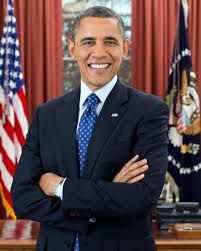
President Barack Obama
At that point, he should have put aside his hopes for a “Kumbaya moment” and applied what Niccolo Machiavelli famously said in The Prince on the matter of love versus fear:
From this arises the question whether it is better to be loved than feared, or feared more than loved. The reply is, that one ought to be both feared and loved, but as it is difficult for the two to go together, it is much safer to be feared than loved.
For it may be said of men in general that they are ungrateful, voluble, dissemblers, anxious to avoid danger and covetous of gain.
As long as you benefit them, they are entirely yours: they offer you their blood, their goods, their life and their children, when the necessity is remote. But when it approaches, they revolt….
And men have less scruple in offending one who makes himself loved than one who makes himself feared; for love is held by a chain of obligations which, men being selfish, is broken whenever it serves their purpose; but fear is maintained by a dread of punishment which never fails.

Niccolo Machiavelli
By refusing to vigorously prosecute acts of Republican extortion, President Obama has encouraged Republicans to intensify their aggression against him.
Their most recent act: Refusing to meet with federal appeals court judge Merrick Garland. Obama’s designated nominee to the Supreme Court after the February 13 death of Justice Antonin Scalia.
Kentucky United States Senator Mitch McConnell has flatly stated: There will be no Supreme Court hearing–not during regular business or a post-election lame-duck session.
Had Obama proceeded with indictments against Republican extortion in 2011 or 2013, McConnell–who supported the extortion attempts of those years–would now be desperately meeting with his lawyers.
Rule #5: First Satisfy Your Citizens, Then Help Them
Obama started off well. Americans had high expectations of him.
This was partly due to his being the first black elected President. And it was partly due to the legacies of needless war and financial catastrophe left by his predecessor, George W. Bush.
Obama entered office intending to reform the American healthcare system, to make medical care available to all citizens, and not just the richest.
But that was not what the vast majority of Americans wanted him to concentrate his energies on. With the loss of 2.6 million jobs in 2008, Americans wanted Obama to find new ways to create jobs.
This was especially true for the 11.1 million unemployed, or those employed only part-time.
Jonathan Alter, who writes sympathetically about the President in The Center Holds: Obama and His Enemies, candidly states this.
But Obama chose to spend most of his first two years as President pushing the Affordable Care Act (ACA)–which soon became known as Obamacare–through Congress.
The results were threefold:
First, those desperately seeking employment felt the President didn’t care about them.
Second, the reform effort became a lightning rod for conservative groups like the Tea Party.
And, third, in 2010, a massive Right-wing turnout cost Democrats the House of Representatives and threatened Democratic control of the Senate.
Rule #6: Be Careful What You Promise
Throughout his campaign to win support for the ACA, Obama had repeatedly promised that, under it: “If you like your health insurance plan, you can keep your plan. Period. If you like your doctor, you can keep your doctor. Period.”
But, hidden in the 906 pages of the law, was a fatal catch for the President’s own credibility.
The law stated that those who already had medical insurance could keep their plans--so long as those plans met the requirements of the new healthcare law.
If their plans didn’t meet those requirements, they would have to obtain new coverage that did.
It soon turned out that a great many Americans wanted to keep their current plan–even if it did not provide the fullest possible coverage.
Suddenly, the President found himself facing a PR nightmare: Charged and ridiculed as a liar.
Even Jon Stewart, who on “The Daily Show” had supported the implementation of “Obamacare,” sarcastically ran footage of Obama’s “you can keep your doctor” promise.
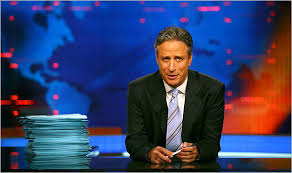
Jon Stewart
The implication: You said we could keep our plan/doctor; since we can’t, you must be a liar.
As a result, the President found his reputation for integrity–long his greatest asset–tarnished.
All of which takes us to yet another warning offered by Machiavelli: Whence it may be seen that hatred is gained as much by good works as by evil….
ABC NEWS, AFFORDABLE CARE ACT, BARACK OBAMA, CBS NEWS, CNN, CUBAN MISSILE CRISIS, ERIC HOLDER, EXTORTION, FACEBOOK, GOVERNMENT SHUTDOWN, HILLARY CLINTON, HOUSE OF REPRESENTATIVES, JOHN BOEHNER, JON STEWART, JUSTICE DEPARTMENT, NICCOLO MACHIAVELLI, OBAMACARE, RACKETEER INFLUENCED CORRUPT ORGANIZATIONS ACT, REPUBLICANS, RICHARD WOLFFE, TED CRUZ, THE CHICAGO SUN-TIMES, THE CHICAGO TRIBUNE, THE DAILY SHOW, THE NEW YORK TIMES, THE PRINCE, THE WASHINGTON POST, TWITTER, USA PATRIOT ACT
In Bureaucracy, History, Law, Law Enforcement, Politics, Social commentary on July 21, 2016 at 12:07 am
If Hillary Clinton succeeds Barack Obama as President, can gain much by learning from his mistakes.
In 2011, Obama could have ended Republican extortion by invoking the law–that of the Racketeer Influenced Corrupt Organizations (RICO) Act and/or the USA Patriot Act.
Or he could have faced down Republican extortionists by urging his fellow Americans to rally to him in a moment of supreme national danger.
Rule #2: Rally Your Citizens Against a Dangerous Enemy
President John F. Kennedy did just that–successfully–during the most dangerous crisis of his administration.
Addressing the Nation on October 22, 1962, Kennedy shocked his fellow citizens by revealing that the Soviet Union had installed offensive nuclear missiles in Cuba.

John F. Kennedy
After outlining a series of steps he had taken to end the crisis, Kennedy sought to reassure and inspire his audience. His words are worth remembering today:
“The path we have chosen for the present is full of hazards, as all paths are, but it is the one most consistent with our character and courage as a nation and our commitments around the world.
“The cost of freedom is always high, but Americans have always paid it. And one path we shall never choose, and that is the path of surrender or submission.”
President Obama could have sent that same message to the extortionists of the Republican Party.
Yet this was another option he failed to exploit. And he and the Nation have continued to pay the price for it.
Rule #3: Timidity Toward Aggressors Only Leads to More Aggression
In September, 2013, Republicans once again threatened to shut down the Federal Government unless the President agreed to defund the Affordable Care Act (ACA), better known as “Obamacare.
They were enraged that millions of uninsured Americans might receive medical care on a par with that given members of the House and Senate.
So on September 20, the House voted on a short-term government funding bill that included a provision to defund Obamacare.
Obama and Senate Democrats rejected that provision. If the House and Senate couldn’t reach a compromise, many functions of the federal government would be shut down indefinitely on October 1.
According to Republicans: They wanted to save the country from bankruptcy–although the Congressional Budget Office stated that the ACA would lower future deficits and Medicare spending.
After passing the House and Senate, the ACA had been signed into law by President Obama on March 23, 2010.
On June 28, 2012, the United States Supreme Court–whose Chief Justice, John Roberts, is a Republican–had upheld the constitutionality of the ACA.
Yet House Republicans still sought a way to stop the law from taking effect. By September, 2013, they had voted 42 times to repeal “Obamacare.”
But their efforts had failed; the Democratic-led Senate made it clear it would never go along with such legislation.
Finally, unable to legally overturn the Act or to legislatively repeal it, House Republicans fell back on something much simpler: Threats and fear.
Threats–of voting to shut down salaries paid to most Federal employees. Most, because they themselves would continue to draw hefty salaries while denying them to FBI agents, air traffic controllers and members of the military, among others.
And fear–that would be generated throughout the Federal government, the United States and America’s international allies.
Republicans claimed it was Obama and Senate Democrats who refused to see reason and negotiate.
But then a Republican accidentally gave away the real reason for the shutdown.
“We’re not going to be disrespected,” Rep. Marlin Stutzman (R-Ind.) told the Washington Examiner. “We have to get something out of this. And I don’t know what that even is.”

Martin Stutzman
In short, Republicans–as admitted by Martlin Stutzman–were out to get “respect.” A member of the Crips or Bloods couldn’t have said it better.
The shutdown began on October 1, 2013–and ended 16 days later with even Republicans admitting it had been a failure.
President Obama, a former attorney, denounced House Republicans as guilty of “extortion” and “blackmail.” If he truly believed them to be so guilty, he could have once again invoked RICO and/or the USA Patriot Act.
Yet he did neither.
Had the President dared to prosecute such criminal conduct, the results would have been:
- Facing lengthy prison terms, those indicted Republicans would have been forced to lawyer-up. That in itself would have been no small thing, since good criminal attorneys cost big bucks.
- Obsessed with their own personal survival, they would have found little time for engaging in the same thuggish behavior that got them indicted. In fact, doing so would have only made their conviction more likely.
- The effect on Right-wing Republicans would have been the same as that of President Ronald Reagan’s firing of striking air traffic controllers: “You cross me and threaten the security of this Nation at your own peril.”

True, some prosecuted Republicans might have beaten the rap. But first they would have been forced to spend huge amounts of time and money on their defense.
And with 75% of Americans voicing disgust with Congress, most of those prosecuted might well have been convicted.
It would have been a long time before Republicans again dared to engage in such behavior.
ABC NEWS, AFFORDABLE CARE ACT, BARACK OBAMA, CBS NEWS, CNN, CUBAN MISSILE CRISIS, ERIC HOLDER, EXTORTION, FACEBOOK, GOVERNMENT SHUTDOWN, HILLARY CLINTON, HOUSE OF REPRESENTATIVES, JOHN BOEHNER, JON STEWART, JUSTICE DEPARTMENT, NICCOLO MACHIAVELLI, OBAMACARE, RACKETEER INFLUENCED CORRUPT ORGANIZATIONS ACT, REPUBLICANS, RICHARD WOLFFE, TED CRUZ, THE CHICAGO SUN-TIMES, THE CHICAGO TRIBUNE, THE DAILY SHOW, THE NEW YORK TIMES, THE PRINCE, THE WASHINGTON POST, TWITTER, USA PATRIOT ACT, WARREN BUFFETT
In Bureaucracy, History, Law, Law Enforcement, Politics, Social commentary on July 20, 2016 at 12:11 am
If Hillary Clinton becomes the nation’s first woman President, that will certainly be as big a historical milestone as Barack Obama’s becoming the first black man to hold that office.
But simply being elected President will not guarantee her success–any more than it guarantees success to any President.
Every President faces challenges that his (up to now) predecessor didn’t. But others can be reasonably anticipated. For Clinton, a totally predictable challenge will be the sheer hatred and ruthless opposition Republicans aimed at Obama.
And unless she determines, early on, to confront and overcome it, she will find her agenda just as blocked and undermined as Obama so often did.
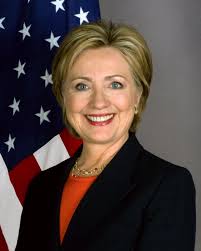
Hillary Clinton
For example:
On July 9, 2011, Republican extortionists threatened the Nation with financial ruin and international disgrace unless their budgetary demands were met.
They refused to raise the debt ceiling unless Democrats agreed to massively cut social programs for the elderly, poor and disabled.
If Congress failed to raise the borrowing limit of the federal government by August 2, the date when the U.S. reached the limit of its borrowing abilities, it would begin defaulting on its loans.
As Warren Buffett, CEO of Berkshire Hathaway, explained the looming economic catastrophe: “If you don’t send out Social Security checks, I would hate to think about the credit meeting at S&P and Moody’s the next morning.
“If you’re not paying millions and millions and millions of people that range in age from 65 on up, money you promised them, you’re not a AAA,” said Buffett.

Warren Buffett
A triple-A credit rating is the highest possible rating that can be received.
And while Republicans demanded that the disadvantaged tighten their belts, they rejected raising taxes on their foremost constituency–the wealthiest 1%.
Raising taxes on the wealthy, they insisted, would be a “jobs-killer.” It would “discourage” corporate CEOs from creating tens of thousands of jobs they “want” to create.
As the calendar moved closer to the fateful date of August 2, Republican leaders continued to insist: Any deal that includes taxes “can’t pass the House.”
One senior Republican said talks would go right up to–and maybe beyond–the brink of default.
“I think we’ll be here in August,” said Republican Rep. Pete Sessions, of Texas. “We are not going to leave town until a proper deal gets done.”
President Obama had previously insisted on extending the debt ceiling through 2012. But in mid-July, he simply asked congressional leaders to review three options with their members:
- The “Grand Bargain” choice–favored by Obama–would cut deficits by about $4 trillion, including spending cuts and new tax revenues.
- A medium-range plan would aim to reduce the deficit by about $2 trillion.
- The smallest option would cut between $1 trillion and $1.5 trillion, without increased tax revenue or any Medicare and Medicaid cuts.
And the Republican response?
Said Rep. Darrell Issa, chairman of the Oversight and Government Reform Committee: “Quite frankly, [Republican] members of Congress are getting tired of what the president won’t do and what the president wants.”
With the United States teetering on the brink of national bankruptcy, President Obama faced three choices:
- Counter Republican extortion attempts via RICO–the Racketeer Influenced Corrupt Organizations Act.
- Make a Cuban Missile Crisis-style address to the American people, seeking to rally them against a criminal threat to the financial security of the Nation.
- Cave in to Republican demands.
Unfortunately for Obama and the Nation, he chose Number Three.
Rule #1 Ruthlessly Prosecute the Acts of Ruthless Criminals
But Obama could have countered that danger via the Racketeer Influenced Corrupt Organizations (RICO) Act.
In 1970, Congress passed RICO, Title 18, United States Code, Sections 1961-1968. Its goal: Destroy the Mafia.
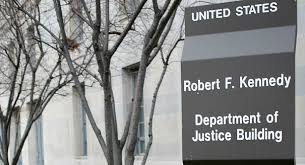
U.S. Department of Justice
RICO opens with a series of definitions of “racketeering activity” which can be prosecuted by Justice Department attorneys. Among those crimes: Extortion.
Extortion is defined as “a criminal offense which occurs when a person unlawfully obtains either money, property or services from a person(s), entity, or institution, through coercion.”
And if President Obama had believed that RICO was insufficient to deal with this crisis, he could have relied on the USA Patriot Act of 2001, passed in the wake of 9/11.

President George W. Bush signs the USA Patriot Act into law – October 26, 2001
In Section 802, the Act defines domestic terrorism. Among the behavior that is defined as criminal:
“Activities that…appear to be intended…to influence the policy of a government by intimidation or coercion [and]…occur primarily within the territorial jurisdiction of the United States.”
The remedies for punishing such criminal behavior were legally in place. President Obama needed only to direct the Justice Department to apply them.
“Activities that…appear to be intended…to influence the policy of a government by intimidation or coercion [and]…occur primarily within the territorial jurisdiction of the United States.”
The remedies for punishing such criminal behavior were legally in place. President Obama needed only to direct the Justice Department to apply them.
Prosecuting members of Congress would not have violated the separation-of-powers principle. Congressmen had been investigated, indicted and convicted for various criminal offenses.
Such prosecutions–and especially convictions–would have served notice on current and future members of Congress that the lives and fortunes of American citizens may not be held hostage as part of a negotiated settlement.
ABC NEWS, ADVICE, BAY OF PIGS, CBS NEWS, CNN, CORPORATIONS, CUBA, FACEBOOK, FIDEL CASTRO, JOHN F. KENNEDY, NBC NEWS, NICCOLO MACHIAVELLI, POLITICS, THE CHICAGO SUN-TIMES, THE CHICAGO TRIBUNE, THE DISCOURSES, THE LOS ANGELES TIMES, THE NEW YORK TIMES, THE PRINCE, THE WASHINGTON POST, TWITTER
In Bureaucracy, Business, History, Military, Politics on June 23, 2016 at 1:14 am
On the rare occasion when most people think of Niccolo Machiavelli, the image of the devil comes to mind.

Niccolo Machiavelli
In fact, “The Old Nick” became an English term used to describe Satan and slander Machiavelli at the same time.
The truth, however, is more complex. Machiavelli was a passionate Republican, who spent most of his adult life in the service of his beloved city-state, Florence.
The years he spent as a diplomat were tumultuous ones for Italy–with men like Pope Julius II and Caesare Borgia vying for power and plunging Italy into one bloodbath after another.
Machiavelli is best-known for his writing of The Prince, a pamphlet on the arts of gaining and holding power. Its admirers have included Benito Mussolini and Joseph Stalin.

But his longer and more thoughtful work is The Discourses, in which he offers advice on how to maintain liberty within a republic. Among its admirers were many of the men who framed the Constitution of the United States.

Also contrary to what most people believe about Machiavelli, he did not advocate evil for its own sake. Rather, he recognized that sometimes there is no perfect–or perfectly good–solution to a problem.
Sometimes it’s necessary to take stern–even brutal–action to stop an evil (such as a riot) before it becomes widespread.
His counsel remains as relevant today as it did during his lifetime (1469 – 1527)–especially for politicians.
But plenty of ordinary citizens can also benefit from the advice he has to offer–such as those who are asked to give advice to more powerful superiors.
Machiavelli warns there is danger in urging rulers to take a particular course of action:
“For men only judge of matters by the result, all the blame of failure is charged upon him who first advised it, while in case of success he receives commendations. But the reward never equals the punishment.”
This puts would-be counselors in a difficult position: “If they do not advise what seems to them for the good of the republic or the prince, regardless of the consequences to themselves, then they fail to do their duty.
“And if they do advise it, then it is at the risk of their position and their lives, for all men are blind in thus, that they judge of good or evil counsels only by the results.”
Thus, Machiavelli warns that an adviser should “take things moderately, and not to undertake to advocate any enterprise with too much zeal, but to give one’s advice calmly and modestly.”
The person who asked for the advice may follow it, or not, as of his own choice, and not because he was led or forced into it by the adviser.
Above all, the adviser must avoid the danger of urging a course of action that runs “contrary to the wishes of the many.
“For the danger arises when your advice has caused the many to be contravened. In that case, when the result is unfortunate, they all concur in your destruction.”
Or, as President John F. Kennedy famously said after the disastrous invasion of Cuba at the Bay of Pigs in April, 1961: “Victory has a hundred fathers and defeat is an orphan.”

John F. Kennedy
By “not advocating any enterprise with too much zeal,” the adviser gains two advantages:
“The first is, you avoid all danger.
“And the second consists in the great credit which you will have if, after having modestly advised a certain course, your counsel is rejected, and the adoption of a different course results unfortunately.”
Finally, the time to give advice is before a catastrophe occurs, not after. Machiavelli gives a vivid example of what can happen if this rule is ignored.
King Perseus of Macedon had gone to war with Paulus Aemilius–and suffered a humiliating defeat. Fleeing the battlefield with a handful of his men, he later bewailed the disaster that had overtaken him.
Suddenly, one of his lieutenants began to lecture Perseus on the many errors he had committed, which had led to his ruin.
“Traitor,” raged the king, turning upon him, “you have waited until now to tell me all this, when there is no longer any time to remedy it–” And Perseus slew him with his own hands.
Niccolo Machiavelli sums up the lesson as this:
“Thus was this man punished for having been silent when he should have spoken, and for having spoken when he should have been silent.”
Be careful that you don’t make the same mistake.
ABC NEWS, AIRLINE PASSENGER RIGHTS, AIRLINES, AIRTRAN, AMERICAN AIRLINES, AMERICAN CUSTOMER SATISFACTION INDEX, BUSINESS INSIDER, CBS NEWS, CNN, COMPLAINT LETTERS, CONSUMER RIGHTS, DAVE CARROLL, DELTA AIRLINES, FACEBOOK, ITUNES, JETBLUE AIRWAYS, KGB, LEISHA HAILEY, NBC NEWS, NICCOLO MACHIAVELLI, SOUTHWEST AIRLINES, THE CHICAGO SUN-TIMES, THE CHICAGO TRIBUNE, THE LOS ANGELES TIMES, THE NEW YORK TIMES, THE PRINCE, THE WASHINGTON POST, TWITTER, U.S. AIRWAYS, UNITED BREAKS GUITARS, US AIRWAYS, YOUTUBE
In Bureaucracy, Business, History, Law, Self-Help, Social commentary on June 10, 2016 at 12:21 am
The concept of “consumer rights” has not yet reached the airline industry.
Under Federal law, as enforced by the Federal Aviation Administration, airline passengers have only the following guaranteed rights:
If your flight is delayed (such as by bad weather) and you’re stuck on the tarnac:
- Tarnac delays cannot exceed three hours. You can leave the plane if you choose after that.
- Food and water must be available after the plane has been stuck on the tarnac for two hours.
- The airline must service toilets, keep air conditioning on, and keep trash cans clean.
In addition, the U.S. government mandates these “rights” for air travelers:
- Compensation when you’re bumped due to overbooking –and for no other reason.
- An airline must accept lost/damaged baggage liability up to $3,000 in depreciated value per passenger for a domestic flight (limits on international flights are either about $1,700 or $635, depending on which rule applies).
Beyond those, all you can claim is what’s in each airline’s “contract of carriage.” Those contracts are–naturally–heavily biased toward airlines, not customers.
Unfortunately, the law–and the Congressmen who create it–is still largely owned by the airlines. Thus you, as a customer, are forced to make do with the weapons at hand.
These essentially boil down to two:
- Threatening the airlines with bad publicity; and
- Threatening the airlines with a private or class-action lawsuit.
In both cases, it’s best to first contact the highest-ranking officials in the airline company.
There are two reasons for this:
- They have the most to lose, and
- They have the power to redress your complaint.
You can try to reach the CEO or one of his assistants during the time of the incident. But, most likely, this will happen afterwards.
If a mini-Hitler of an airline steward decides to eject you because s/he doesn’t like your clothes or request for help, there’s nothing you can do about it.
If you physically resist, you will almost certainly be arrested and charged with some version of domestic terrorism. You’ll be shipped off to jail and forced to defend yourself against the bogus charge.
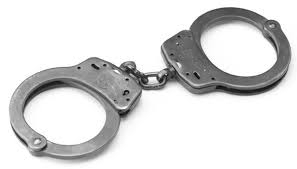
Even if the authorities decide to not prosecute, you’ll have to spend at least several hundred dollars on legal representation.
And, of course, the airlines won’t care. They won’t be spending a dime on your prosecution–that will be paid for by the local U.S. Attorney’s (federal prosecutor’s) office.
Niccolo Machiavelli, the father of political science, wisely advised in The Prince:
“A prince…must imitate the fox and the lion, for the lion cannot protect himself from traps, and the fox cannot defend himself from wolves. One must therefore be a fox to avoid traps, and a lion to frighten wolves.”
This is definitely the time to take on the trappings of a fox. However painful it is to swallow the insult at the time it’s given, don’t give the airlines an excuse to have you arrested.
Take your revenge afterward. That’s what musician Dave Carroll did.
Carroll alleged that, in 2008, he and fellow passengers saw United Airlines’ baggage-handling crew throwing guitars on the tarmac in Chicago O’Hare. He arrived at Omaha, Nebraska, his destination to discover that the neck of his $3,500 Taylor guitar had been broken.
Carroll complained to three United employees, but they proved indifferent. He filed a claim with the airline–but was told he was ineligible for compensation.
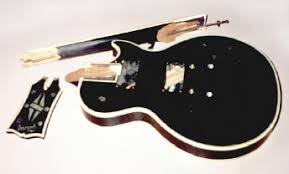
The reason? He had not filed the claim within the company’s stipulated “standard 24-hour timeframe.”
Carroll turned to his musical roots for a remedy. He wrote a song, “United Breaks Guitars,” and turned it into a music video which he posted on YouTube and iTunes in July, 2009.
Click here: United Breaks Guitars – YouTube
The song went viral, and became a public relations nightmare for the airline.
The Sunday Times reported that, four days after the video’s posting, United Airlines’ stock price fell 10% costing stockholders about $180 million in value.
Most customers, admittedly, aren’t musicians. For them–short of suing–the weapons of choice will be:
- The phone
- Letters
- The Internet
- Consumer protection organizations that can be enlisted
Let’s start with the first: The phone.
Most customers assume the place to take their anger is the airline Customer Service desk. And the airlines encourage people to do just that.
Don’t do it.
Customer Service is staffed by people who may ooze compassion but who aren’t authorized to do anything on your behalf. And of course they’ll be well-versed in the standard airline excuses for why your request is denied.
(Think of Dave Carroll and the excuse United’s reps offered him: You didn’t file your claim within 24 hours.)
Even if they truly want to help you, they’ll find themselves outranked at every level.
So take your complaint to someone who has the authority to resolve it. This means, preferably, the CEO of the airline, or at least one of his executive colleagues.
The other above-mentioned remedies will be discussed in my coming series, “KGB Airways: Fighting Airline Arrogance.”
ABC NEWS, AIRLINE PASSENGER RIGHTS, AIRLINES, AIRTRAN, AMERICAN AIRLINES, AMERICAN CUSTOMER SATISFACTION INDEX, BUSINESS INSIDER, CBS NEWS, CNN, COMPLAINT LETTERS, CONSUMER RIGHTS, DAVE CARROLL, DELTA AIRLINES, FACEBOOK, ITUNES, JETBLUE AIRWAYS, KGB, LEISHA HAILEY, NBC NEWS, NICCOLO MACHIAVELLI, SOUTHWEST AIRLINES, THE CHICAGO SUN-TIMES, THE CHICAGO TRIBUNE, THE LOS ANGELES TIMES, THE NEW YORK TIMES, THE PRINCE, THE WASHINGTON POST, TWITTER, U.S. AIRWAYS, UNITED BREAKS GUITARS, US AIRWAYS, YOUTUBE
In Bureaucracy, Business, Law, Self-Help, Social commentary on June 9, 2016 at 12:07 am
When Leisha Hailey and her girlfriend kissed aboard a Southwest Airlines flight to Los Angeles, they quickly found themselves in trouble.

Leisha Hailey
A flight attendant told them that Southwest was “a family airline.” When they argued they were targets of homophobia, the attendant ejected them from the plane.
Hailey–the star of Showtime’s The L-Word (and a lesbian)–posted her experience on Twitter. Calling for a boycott of Southwest, she tweeted:
“I want to know what Southwest Airlines considers as ‘family.’ I know plenty of wonderful same-sex families I would like to introduce them to. Boycott @SouthwestAir if you are gay. They don’t like us.”
Naturally, Southwest had its own explanation for what had happened:
“…We received several passenger complaints characterizing the behavior as excessive. Our crew, responsible for the comfort of all Customers on board, approached the passengers based solely on behavior and not gender. The conversation escalated to a level that was better resolved on the ground, as opposed to in flight.”
In short, the situation was “better resolved on the ground” by forcing two unarmed, non-threatening women to leave the plane rather than having the airline honor their high-priced tickets.
Now, a quick question: When does a camera become a dangerous weapon?
When you snap a picture of an especially rude airline employee.
- A Miami photographer was escorted off a US Airways plane and deemed a “security risk” after she did this at Philadelphia International Airport in July, 2011.
Sandy DeWitt believed the employee, Tonialla G., was being rude to several passengers in the boarding area of the flight to Miami.
So DeWitt, a professional photographer, used her iPhone to snap a picture of G.’s nametag. She intended to file a complaint with US Airways and wanted the picture as evidence.

As DeWitt settled into her seat, preparing for take-off, G. entered the plane and confronted her.
She ordered DeWitt to delete the photo.
DeWitt had already turned off her iPhone, as required before take-off. She turned the phone back on to prove that the photo hadn’t come out. Even so, she deleted the too-dark picture.
G. then walked into the cockpit to inform the pilot that DeWitt was a “security risk.”
Suddenly, DeWitt found herself being escorted off the plane by two flight attendants. Her husband followed.
Speaking with Michael Lofton, a US Airways manager at Philadelphia International Airport, she learned that she would not be allowed back on the plane.
The reason: She was a “security risk.”
But that didn’t keep Lofton from directing her to American Airlines for a flight back to Miami.
But that flight had already departed and it was already after 7 p.m. And there were no other flights back to Miami until the following morning.
“We were expecting to spend the night at the airport,” she said.
They eventually boarded a Southwest Airlines flight to Fort Lauderdale at 11 p.m.
Apparently, Southwest didn’t consider her to be a “security risk.”
Naturally, US Airways had a cover-story to explain what had happened.
Todd Lehmacher, a spokesman for US Airways, told msnbc.com that DeWitt was removed for being “disruptive.”
“Once onboard, she was using foul and explicit language,” Lehmacher said. “She was removed at the request of the captain.”
Apparently, “disruptive” means whatever an airline official claims it to mean.
Business Insider ranked US Airways sixth in a list of the 19 Most Hated Companies in America.
The American Customer Satisfaction Index (ACSI) is an economic indicator that measures the satisfaction of consumers across the United States. It is produced by the American Customer Satisfaction Index, a private company based in Ann Arbor, Michigan.
The ACSI interviews about 80,000 Americans annually and asks about their satisfaction with the goods and services they have consumed. And Americans’ most-hated companies include large banks, airlines, power and telecom companies.
David VanAmburg, managing director at ACSI, offered a critical insight into why these companies are so detested.
“These are not terribly competitive industries, as the switching barriers for most of them are quite high,” he told Business Insider in June, 2011.
“In other industries, like the food or clothing sector, the competition is huge. They bend over backwards to make customers happy, because they have to.”
That certainly does not apply to applies to airlines–whose numbers are limited and continue to shrink due to mergers and the occasionally rising cost of fuel.
For the airline industry generally, the former slogan of United Airlines–”Fly the Friendly Skies–has unofficially been replaced with: “We don’t care. We don’t have to.”
So–when you’re facing a would-be KGB agent masquerading as an airline employee–what do you do?
First, you recognize that the concept of “consumer rights” has not yet reached the airline industry.
Then you do what you can to see that it does.
ABC NEWS, AIRLINE PASSENGER RIGHTS, AIRLINES, AIRTRAN, AMERICAN AIRLINES, AMERICAN CUSTOMER SATISFACTION INDEX, BUSINESS INSIDER, CBS NEWS, CNN, COMPLAINT LETTERS, CONSUMER RIGHTS, DAVE CARROLL, DELTA AIRLINES, FACEBOOK, ITUNES, JETBLUE AIRWAYS, KGB, LEISHA HAILEY, NBC NEWS, NICCOLO MACHIAVELLI, SOUTHWEST AIRLINES, THE CHICAGO SUN-TIMES, THE CHICAGO TRIBUNE, THE LOS ANGELES TIMES, THE NEW YORK TIMES, THE PRINCE, THE WASHINGTON POST, TWITTER, U.S. AIRWAYS, UNITED BREAKS GUITARS, US AIRWAYS, YOUTUBE
In Bureaucracy, Business, History, Law, Self-Help, Social commentary on June 8, 2016 at 12:14 am
The First Amendment of the American Constitution guarantees freedom of speech.
But some airline employees haven’t gotten the word.
Click here: 3 Easy Ways to Tell If a Business Puts Its Customers First – DailyFinance
Yes, what you say can get you thrown off an airplane–or worse. And it doesn’t have to be anything even remotely like a threat.
- In May, 2011, a US Airways flight was due to depart San Francisco International Airport for Charlotte, North Carolina at 1:20 p.m. But due to bad weather, passengers boarded the plane after 2 p.m.

Once on the plane, a flight attendant told customers over the intercom to hurry up and put their carry-ons in bins so they could take off and make their connecting flight in Charlotte.
One of the passengers, Luke Hazlewood, turned to the person next to him and said it was the airline’s fault they were late, “so don’t get mad at us.”
The flight attendant rushed out of the galley demanding to know who had said that. Once she determined it was Hazlewood, she told him he would have to leave for being disruptive and a threat to the plane.
Sandra Kraus, a former flight attendant, came to Hazlewood’s defense–and the flight attendant told her to get off the plane as well.
Both passengers asked to speak with the captain but he refused to speak with them.
Kraus was put on another flight. Hazlewood and his accompanying girlfriend (who had left the plane with him) found that US Airways wouldn’t compensate them for a hotel room.
The airline refused to answer questions about the matter. Its written statement said “The passengers interfered with the flight crew and in the interest of safety they had to be removed.”
It’s a truism in both journalism and police work: When people refuse to answer questions, it’s nearly always because they know they have something to hide.
And the airline’s response came in the classic voice of the all-powerful dictator: “They refused to treat me like God and so they had to be eliminated.”
Business Insider ranked US Airways #6 on a list of Click here: The 19 Most Hated Companies In America – Business Insider
- In December, 2011, three middle-aged women were thrown off an AirTran flight at Palm Beach International Airport after a steward began roughly handling the luggage of one of them.
Marilyn Miller, a lawyer, was buckled in for takeoff when the attendant mishandled her overhead luggage. “I have breakables in that,” she said.
The attendant ignored her and kept shoving other bags into hers.

Another passenger, Carol Gray, a retired travel agent, asked the same attendant for help, saying that her seat was broken.
“I’m not talking to you,” said the attendant, and poked her in the arm. He then threatened to throw Miller and Gray off the plane.
“You’ve got to be kidding me,” said Miller.
“Well, you’re getting off,” said the attendant.
Two sheriff’s deputies and airline staff arrived to remove them.
A third passenger, a therapist named Karyn Schoor, spoke up in their defense: “This is crazy, they didn’t do anything. Why are you doing this to them?”
“Throw her off too,”’ ordered the attendant.
All three women were marched off the plane and back into the terminal.
The women were offered flights on other airlines paid for by AirTran.
And the official explanation given by AirTran?
“Our employees are responsible for the safety and comfort of everyone onboard a flight. Our goal is always to mitigate any uncomfortable situation prior to departure.”
Uncomfortable for whom–the passenger who doesn’t want her luggage roughly treated? Or the attendant whose ego gets bent out of shape at the slightest objection?
- In July, 2010, Southwest Airlines removed a slender, five-foot-four woman from a plane to accomodate an obese passenger.
The woman was flying standby from Las Vegas to Sacramento. She had paid full fare for the last available seat, boarded and stowed her bags–and was told she must deplane immediately.
The reason: A late-arriving, 14-year-old passenger required two seats because of her girth.
When the woman asked Southwest personnel why she was being removed her from the flight, they berated her for daring to question their decision.
The temporarily stranded passenger managed to catch the next flight out to Sacramento.
- You don’t have to assault someone to be thrown off an airplane. Even kissing your partner will do.
Southwest Airlines kicked Leisha Hailey–who not only played a lesbian in Showtime’s The L-Word series but is one–and her girlfriend off a flight to Los Angeles.
Their crime? Kissing.
A flight attendant told them that Southwest was “a family airline.” When they argued they were targets of homophobia, the attendant ejected them from the plane.
ABC NEWS, AIRLINE PASSENGER RIGHTS, AIRLINES, AIRTRAN, AMERICAN AIRLINES, AMERICAN CUSTOMER SATISFACTION INDEX, BUSINESS INSIDER, CBS NEWS, CNN, COMPLAINT LETTERS, CONSUMER RIGHTS, DAVE CARROLL, DELTA AIRLINES, FACEBOOK, ITUNES, JETBLUE AIRWAYS, KGB, LEISHA HAILEY, NBC NEWS, NICCOLO MACHIAVELLI, SOUTHWEST AIRLINES, THE CHICAGO SUN-TIMES, THE CHICAGO TRIBUNE, THE LOS ANGELES TIMES, THE NEW YORK TIMES, THE PRINCE, THE WASHINGTON POST, TWITTER, U.S. AIRWAYS, UNITED BREAKS GUITARS, US AIRWAYS, YOUTUBE
In Bureaucracy, Business, Law, Self-Help, Social commentary on June 7, 2016 at 12:02 am
With the summer tourism season now on, tens of thousands of Americans will be flying across the country to visit with loved ones.
And many of them will become the victims of KGB Airways.
In truth, many airline personnel treat passengers the way KGB agents once treated Soviet citizens–with the arrogance that comes from holding near-absolute power over the lives of others.

Consider the following:
- From the website of American Airlines:
ESSENTIAL NEEDS DURING EXTRAORDINARY DELAYS
In the case of extraordinary events that result in very lengthy onboard delays, American will make every reasonable effort to ensure that essential needs of food (snack bar such as Nutri-Grain®), water, restroom facilities, and basic medical assistance are met.
We are not responsible for any special, incidental or consequential damages if we do not meet this commitment.
Translation: On one hand, American promises that it will try to ensure that “essential needs of food, water, restroom facilities and basic medical assistance are met” during “very lengthy onboard delays.” On the other hand, if they “do not meet this commitment,” that’s just the passengers’ tough luck.

ACCEPTANCE OF PASSENGERS
American may refuse to transport you, or may remove you from your flight at any point, for one or several reasons, including but not limited to:
- Compliance with government requisition of space.
- Action necessary or advisable due to weather, or other conditions beyond American’s control.
- Refusal to permit a search of person or property for explosives or for deadly, controlled, or dangerous weapons, articles or substances.
- Refusal to produce positive identification upon request.
- Your physical or mental condition is such that in American’s sole opinion, you are rendered or likely to be rendered incapable of comprehending or complying with safety instructions without the assistance of an attendant.
- Your conduct is disorderly, abusive or violent.
- Appear to be intoxicated or under the influence of drugs.
- Attempt to interfere with any member of the flight crew.
- Have a communicable disease that has been determined by a federal public health authority to be transmissible to other persons in the normal course of flight.
- Refuse to obey instructions from any flight crew member.
- Have an offensive odor not caused by a disability or illness.
- Are clothed in a manner that would cause discomfort or offense to other passengers or are barefoot.
- Engage in any action, voluntary or involuntary, that might jeopardize the safety of the aircraft or any of its occupants.
Translation: “American may refuse to transport you, or may remove you from your flight at any point” for just about any reason it wants to give.
Click here: Conditions of carriage – Contract of transportation – American Airlines
DELAYS, CANCELLATIONS AND DIVERSIONS
American Airlines will provide customers at the airport and onboard an affected aircraft with timely and frequent updates regarding known delays, cancellations and diversions and will strive to provide the best available information concerning the duration of delays and to the extent available, the flight’s anticipated departure time.
We are not responsible for any special, incidental or consequential damages if we do not meet this commitment.
Translation: On one hand, American promises to give customers “timely and frequent updates regarding known delays, cancellations and diversions.” On the other hand, American absolves itself from any damages “if we do not meet this commitment.”
And how does all this translate into action?
- In late March, 2012, a woman was barred from boarding an American Airlines flight because its staff disliked her choice of clothing. She was wearing a T-shirt bearing the words: “IF I WANTED THE GOVERNMENT IN MY WOMB, I’D F— A SENATOR.”
After taking a seat she was told by a flight attendant that she needed to speak with the captain, who found the T-shirt “offensive.” He said she would have to change before she could re-board the plane.
The passenger claims this interaction caused her to miss her connection: Her luggage was checked and “changing shirts without spending money wasn’t an option.”
Business Insider ranked American Airlines 8th on a list of The 19 Most Hated Companies In America.
- In July, 2011, Malinda Knowles, a 27-year-old financial consultant, was kicked off a JetBlue flight at JFK Airport in New York because of her attire–a baggy blue T-shirt and denim shorts.

A male JetBlue employee walking down the aisle noticed Knowles. He told her he didn’t think she was wearing enough clothing. An argument erupted when the employee put his walkie-talkie between her legs to see if she was wearing shorts underneath. When Knowles objected, the JetBlue worker brought her off the plane and to a hangar.
There she modeled for the employees, showing that she was wearing shorts. She returned to the plane, but the same employee once again approached her and said: “The captain is refusing to fly you today. We need to remove you from the flight.”
After waiting four hours for another flight, she arrived in Florida. Apparently the crew of that plane didn’t have any problem with her attire.
Knowles has since filed a lawsuit against JetBlue.
2016 PRESIDENTIAL CAMPAIGN, ABC NEWS, ADOLF HITLER, ALTERNET, AMERICABLOG, AP, BABY BOOMER RESISTANCE, BARACK OBAMA, BBC, BERNIE SANDERS, BLOOMBERG NEWS, BUZZFEED, CBS NEWS, CNN, CROOKS AND LIARS, D-DAY, DAILY KOZ, DAVID BROOKS, DEMOCRATIC PARTY, DONALD TRUMP, ELIZABETH WARREN, FACEBOOK, FIVETHIRTYEIGHT, GEORGE S. PATTON, HARPER’S MAGAZINE, HEINZ GUERIAN, HILLARY CLINTON, HUFFINGTON POST, JOSEPH MCCARTHY, LIBERALS, MARCO RUBIO, MARK SHIELDS, MEDIA MATTERS, MOTHER JONES, MOVEON, MSNBC, NAZI GERMANY, NBC NEWS, NEW REPUBLIC, NEWSDAY, NEWSWEEK, NEWT GINGRICH, NOCCOLO MACHIAVELLI, NPR, PBS NEWSHOUR, POLITICO, POLITICUSUSA, RAW STORY, REPUBLICAN PARTY, REPUBLICANS, REUTERS, SALON, SEATTLE TIMES, SLANDER, SLATE, STALINGRAD, TALKING POINTS MEMO, TED CRUZ, THE ATLANTIC, THE CHICAGO SUN-TIMES, THE CHICAGO TRIBUNE, THE DAILY BEAST, THE DAILY BLOG, THE GUARDIAN, THE HILL, THE HUFFINGTON POST, THE LOS ANGELES TIMES, THE NATION, THE NEW REPUBLIC, THE NEW YORK TIMES, THE NEW YORKER, THE PRINCE, THE VILLAGE VOICE, THE WASHINGTON POST, THINKPROGRESS, TIME, TRUTHDIG, TRUTHOUT, TWITTER, TWO POLITICAL JUNKIES, U.S. NEWS & WORLD REPORT, UPI, USA TODAY, WAFFEN-SS
In Bureaucracy, History, Politics, Social commentary on June 2, 2016 at 12:13 am
Massachusetts U.S. Senator Elizabeth Warren seems to know something that most of her fellow Democrats don’t–or choose to ignore.
Nazi Germany wasn’t defeated because “we were the Good Guys and they were the Bad Guys.”
On the contrary: It was defeated because the Allies waged war as brutally as the Germans.
For example:
- From D-Day to the fall of Berlin, captured Waffen-SS soldiers were often shot out of hand.
- When American troops came under fire in the German city of Aachen, Lt. Col. Derrill Daniel brought in a self-propelled 155mm artillery piece and opened up on a theater housing German soldiers. After the city surrendered, a German colonel labeled the use of the 155 “barbarous” and demanded that it be outlawed.
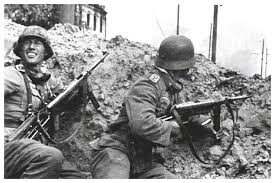
German soldiers at Stalingrad
- The United States and Great Britain carpet-bombed about 150 German cities by day and night, killing 305,000 to 600,000 civilians.
- During the battle of Stalingrad in 1942, Wilhelm Hoffman, a young German soldier and diarist, was appalled that the Russians refused to surrender. He wrote: “You don’t see them at all, they have established themselves in houses and cellars and are firing on all sides, including from our rear! Barbarians! They use gangster methods….”
In short: The Allies won because they dared to meet the brutality of a Heinz Guderian with that of a George S. Patton.
This is a lesson that has been totally lost on the liberals of the Democratic Party. Which explains why they lost most of the Presidential elections of the 20th century.
To Republicans, “lawfully elected” applies only to Republican Presidents. A Democrat who runs against a Republican is automatically considered a traitor.
And a Democrat who defeats a Republican is automatically considered a usurper, and thus deserves to be slandered and obstructed, if not impeached.
Unable to defeat Bill Clinton in 1992 and 1996, Republicans tried in 1998 to impeach him for getting oral sex in the White House.
Similarly, 2012 Presidential candidate Herman Cain, asked in a conference call with bloggers why Republicans couldn’t just impeach President Barack Obama, replied:
“That’s a great question and it is a great–it would be a great thing to do but because the Senate is controlled by Democrats we would never be able to get the Senate first to take up that action.”
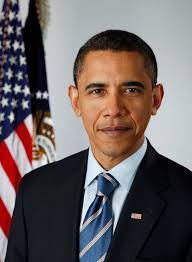
Barack Obama
In Renegade: The Making of a President, Richard Wolffe chronicled Obama’s successful 2008 bid for the White House. Among his revelations:
Obama, a believer in rationality and decency, felt more comfortable in responding to attacks on his character than in making them on the character of his enemies.
A graduate of Columbia University and Harvard Law School, Obama is easily one of the most academically gifted Presidents in United States history.
But for all this, he failed–from the onset of his Presidency–to grasp and apply this fundamental lesson taught by Niccolo Machiavelli, the father of modern political science.
Niccolo Machiavelli
In The Prince, Machiavelli warns:
From this arises the question whether it is better to be more loved than feared, or feared more than loved.
The reply is, that one ought to be both feared and loved, but as it is difficult for the two to go together, it is much safer to be feared than loved….
And men have less scruple in offending one who makes himself loved than one who makes himself feared; for love is held by a chain of obligations which, men being selfish, is broken whenever it serves their purpose; but fear is maintained by a dread of punishment which never fails.
Just as they have blithely disregarded the lessons of history, liberals have ignored the Realpolitik of Machiavelli–with catastrophic results.
On Facebook and Twitter, liberals are already celebrating the “certain” Presidency of Vermont U.S. Senator Bernie Sanders or former First Lady Hillary Clinton in 2017.
They forget–or ignore–that liberals couldn’t believe America would elect, respectively, Richard Nixon (1968 and 1972), Ronald Reagan (1980 and 1984), George H.W. Bush (1988) and George W. Bush (2000 and 2004).
But Elizabeth Warren clearly hasn’t forgotten those Republican victories. Nor does she take for granted that Republican Presidential nominee Donald Trump is certain to lose in November.
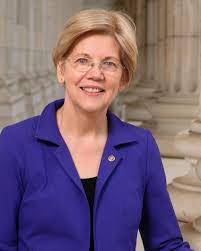
Elizabeth Warren
Instead, Warren has dared to do what no other Democrat–or Republican–has: Attack Trump head-on, with the kind of blunt, insulting language he has lavished on his opponents.
On March 31, she appeared on The Late Show, with Stephen Colbert. Her take on the egotistical billionaire:
“Donald Trump is looking out for exactly one guy, and that guy’s name is Donald Trump. He smells that there’s change in the air and what he wants to do is make sure that that change works really, really well for Donald Trump.
“The truth is, he inherited a fortune from his father, he kept it going by cheating and defrauding people, and then he takes his creditors through Chapter 11.”
When Colbert said that Trump had never broken the law, Warren replied that he had never broken the law “and been caught.”
For Democrats to win elective victories and enact their agenda, they must find their own George Patton to take on the Waffen-SS generals among Republican ranks.
Only Elizabeth Warren has so far grasped this truth. And only she seems determined to act on it.
2016 PRESIDENTIAL CAMPAIGN, ABC NEWS, ADOLF HITLER, ALTERNET, AMERICABLOG, AP, BABY BOOMER RESISTANCE, BARACK OBAMA, BBC, BERNIE SANDERS, BLOOMBERG NEWS, BUZZFEED, CBS NEWS, CNN, CROOKS AND LIARS, D-DAY, DAILY KOZ, DAVID BROOKS, DEMOCRATIC PARTY, DONALD TRUMP, ELIZABETH WARREN, FACEBOOK, FIVETHIRTYEIGHT, GEORGE S. PATTON, HARPER’S MAGAZINE, HEINZ GUERIAN, HILLARY CLINTON, HUFFINGTON POST, JOSEPH MCCARTHY, LIBERALS, MARCO RUBIO, MARK SHIELDS, MEDIA MATTERS, MOTHER JONES, MOVEON, MSNBC, NAZI GERMANY, NBC NEWS, NEW REPUBLIC, NEWSDAY, NEWSWEEK, NEWT GINGRICH, NOCCOLO MACHIAVELLI, NPR, PBS NEWSHOUR, POLITICO, POLITICUSUSA, RAND PAUL, RAW STORY, REPUBLICAN PARTY, REPUBLICANS, REUTERS, SALON, SEATTLE TIMES, SLANDER, SLATE, STALINGRAD, TALKING POINTS MEMO, TED CRUZ, THE ATLANTIC, THE CHICAGO SUN-TIMES, THE CHICAGO TRIBUNE, THE DAILY BEAST, THE DAILY BLOG, THE GUARDIAN, THE HILL, THE HUFFINGTON POST, THE LOS ANGELES TIMES, THE NATION, THE NEW REPUBLIC, THE NEW YORK TIMES, THE NEW YORKER, THE PRINCE, THE VILLAGE VOICE, THE WASHINGTON POST, THINKPROGRESS, TIME, TRUTHDIG, TRUTHOUT, TWITTER, TWO POLITICAL JUNKIES, U.S. NEWS & WORLD REPORT, UPI, USA TODAY, WAFFEN-SS
In Bureaucracy, History, Politics, Social commentary on June 1, 2016 at 12:04 am
Donald Trump, “for all his moral flaws, is a marketing genius.”
So stated New York Times columnist David Brooks on the May 27 edition of the PBS Newshour.
“And you look at what he does. He just picks a word and he attaches it to a person. Little Marco {Rubio], Lyin’ Ted [Cruz], Crooked Hillary [Clinton].

Donald Trump
“And that’s a word. And that’s how marketing works. It’s a simple, blunt message, but it gets under. It sticks, and it diminishes. And so it has been super effective for him, because he knows how to do that. And [Hillary] just comes with ‘Oh, he’s divisive.’
“These are words that are not exciting people. And her campaign style has gotten, if anything…a little more stagnant and more flat.”
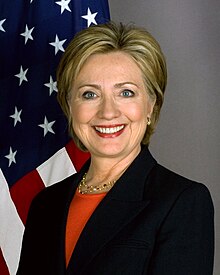
Hillary Clinton
Hillary Clinton isn’t the only Presidential candidate who has proven unable to cope with Trump’s gifts for insult. His targets–and insults–have included:
-
Former Texas Governor Rick Perry: “Wears glasses to seem smart.”
-
Former Florida Governor Jeb Bush: “Low Energy Jeb.”
-
Vermont U.S. Senator Bernie Sanders: “Crazy Bernie.”
-
Ohio Governor John Kasich: “Mathematically dead and totally desperate.”
So far, only one opponent has managed to stand up to Trump: Massachusetts U.S. Senator Elizabeth Warren, whom Trump has called “goofy.”
Florida U.S. Senator Marco Rubio tried to out-insult Trump at the Republican Presidential candidates’ debate on March 3.
“I call him Little Marco. Little Marco. Hello, Marco,” said Trump.
And so Rubio retaliated with “Big Donald.” Since Americans generally believe that “bigger is better,” this was a poor choice of insult.
On the May 27 edition of the PBS Newshour, syndicated columnist Mark Shields noted the ability of Elizabeth Warren to rattle Trump:
“Elizabeth Warren gets under Donald Trunp’s skin. And I think she’s been the most effective adversary. I think she’s done more to unite the Democratic party than either Hillary Clinton or Bernie Sanders.
“I mean, she obviously–he can’t stay away from her. He is tweeting about her.”
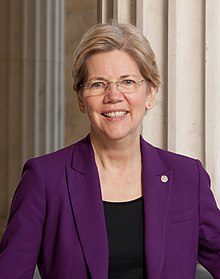
Elizabeth Warren
JUDY WOODRUFF (moderator): “But whether it’s Elizabeth Warren or not, doesn’t Hillary Clinton need to come up with some approach that works, that is as effective comeback?”
DAVID BROOKS: “Yes. Well, I think she does, not that anybody else has managed to do this….
“And so the tactics…is either you do what Elizabeth Warren has done, like full-bore negativity, that kind of [get] under the skin, or try to ridicule him and use humor. Humor is not Hillary Clinton’s strongest point.”
But sharp-edged humor clearly works for Warren.
A May 12 story on CNN–“Elizabeth Warren Gives Trump a Dose of His Own Medicine on Twitter”–notes:
“In the past week the Massachusetts Democrat has refined an aggressive anti-Trump message through a series of so-called tweetstorms.
“Whenever Trump criticizes her, Warren fires right back at him, sometimes twice as hard.”
Warren’s tweets, according to the article, appear to have two goals:
- Challenge Trump on social media, which he has so far dominated; and
- Use attention-catching words like “bully” and “loser.”
Among her tweets:
- “But here’s the thing. You can beat a bully–not by tucking tail and running, but by holding your ground.”
- When Trump boasted “I’m driving her nuts” Warren tweeted: “No, @realDonaldTrump – your racism, sexism & xenophobia doesn’t drive me nuts. It makes me sick. And I’m not alone.”
- “You care so much about struggling American workers, @realDonaldTrump, that you want to abolish the federal minimum wage?”
- “@realDonaldTrump: Your policies are dangerous. Your words are reckless. Your record is embarrassing. And your free ride is over.”
Nor has Warren restricted herself to battling Trump on Twitter.
On May 24, Warren unleashed perhaps her most devastating attack on Trump at an event hosted by the Center for Popular Democracy:
“Just yesterday, it came out that Donald Trump had said back in 2007 that he was ‘excited’ for the real estate market to crash because, quote, ‘I’ve always made more money in bad markets than in good markets.’
“That’s right. The rest of us were horrified by the 2008 financial crisis, by what happened to the millions of families…that were forced out of their homes.
“But Donald Trump was drooling over the idea of a housing meltdown–because it meant he could buy up a bunch more property on the cheap.
“What kind of a man does that? Root for people to get thrown out on the street? Root for people to lose their jobs? Root for people to lose their pensions?
“What kind of a man does that? I’ll tell you exactly what kind—a man who cares about no one but himself. A small, insecure moneygrubber who doesn’t care who gets hurt, so long as he makes some money off it….
“Sometimes Trump claims he is tough on Wall Street–tough on the guys who cheated people….. But now he’s singing a very different song.
“Last week, he said that the new Dodd-Frank financial regulations have…’made it impossible for bankers to function’ and he will put out a new plan soon that ‘will be close to dismantling Dodd-Frank.’
“Donald Trump is worried about helping poor little Wall Street? Let me find the world’s smallest violin to play a sad, sad song.”


ABC NEWS, AFFORDABLE CARE ACT, BARACK OBAMA, CBS NEWS, CNN, CUBAN MISSILE CRISIS, ERIC HOLDER, EXTORTION, FACEBOOK, GOVERNMENT SHUTDOWN, HILLARY CLINTON, HOUSE OF REPRESENTATIVES, JOHN BOEHNER, JON STEWART, JUSTICE DEPARTMENT, NICCOLO MACHIAVELLI, OBAMACARE, RACKETEER INFLUENCED CORRUPT ORGANIZATIONS ACT, REPUBLICANS, RICHARD WOLFFE, TED CRUZ, THE CHICAGO SUN-TIMES, THE CHICAGO TRIBUNE, THE DAILY SHOW, THE NEW YORK TIMES, THE PRINCE, THE WASHINGTON POST, TWITTER, USA PATRIOT ACT
AVOIDING OBAMA’S MISTAKES: PART THREE (END)
In Bureaucracy, History, Law, Law Enforcement, Politics, Social commentary on July 22, 2016 at 12:05 amThe ancient Greeks believed: “A man’s character is his fate.” It is Barack Obama’s character–and America’s fate–that he is more inclined to conciliation than confrontation.
Richard Wolffe chronicled Obama’s winning of the White House in his book Renegade: The Making of a President. He noted that Obama was always more comfortable when responding to Republican attacks on his character than he was in making attacks of his own.
Rule #4: Be Open to Compromise–Not Capitulation
Obama came into office determined to find common ground with Republicans. But they quickly made it clear to him that they only wanted his political destruction.
President Barack Obama
At that point, he should have put aside his hopes for a “Kumbaya moment” and applied what Niccolo Machiavelli famously said in The Prince on the matter of love versus fear:
From this arises the question whether it is better to be loved than feared, or feared more than loved. The reply is, that one ought to be both feared and loved, but as it is difficult for the two to go together, it is much safer to be feared than loved.
For it may be said of men in general that they are ungrateful, voluble, dissemblers, anxious to avoid danger and covetous of gain.
As long as you benefit them, they are entirely yours: they offer you their blood, their goods, their life and their children, when the necessity is remote. But when it approaches, they revolt….
And men have less scruple in offending one who makes himself loved than one who makes himself feared; for love is held by a chain of obligations which, men being selfish, is broken whenever it serves their purpose; but fear is maintained by a dread of punishment which never fails.
Niccolo Machiavelli
By refusing to vigorously prosecute acts of Republican extortion, President Obama has encouraged Republicans to intensify their aggression against him.
Their most recent act: Refusing to meet with federal appeals court judge Merrick Garland. Obama’s designated nominee to the Supreme Court after the February 13 death of Justice Antonin Scalia.
Kentucky United States Senator Mitch McConnell has flatly stated: There will be no Supreme Court hearing–not during regular business or a post-election lame-duck session.
Had Obama proceeded with indictments against Republican extortion in 2011 or 2013, McConnell–who supported the extortion attempts of those years–would now be desperately meeting with his lawyers.
Rule #5: First Satisfy Your Citizens, Then Help Them
Obama started off well. Americans had high expectations of him.
This was partly due to his being the first black elected President. And it was partly due to the legacies of needless war and financial catastrophe left by his predecessor, George W. Bush.
Obama entered office intending to reform the American healthcare system, to make medical care available to all citizens, and not just the richest.
But that was not what the vast majority of Americans wanted him to concentrate his energies on. With the loss of 2.6 million jobs in 2008, Americans wanted Obama to find new ways to create jobs.
This was especially true for the 11.1 million unemployed, or those employed only part-time.
Jonathan Alter, who writes sympathetically about the President in The Center Holds: Obama and His Enemies, candidly states this.
But Obama chose to spend most of his first two years as President pushing the Affordable Care Act (ACA)–which soon became known as Obamacare–through Congress.
The results were threefold:
First, those desperately seeking employment felt the President didn’t care about them.
Second, the reform effort became a lightning rod for conservative groups like the Tea Party.
And, third, in 2010, a massive Right-wing turnout cost Democrats the House of Representatives and threatened Democratic control of the Senate.
Rule #6: Be Careful What You Promise
Throughout his campaign to win support for the ACA, Obama had repeatedly promised that, under it: “If you like your health insurance plan, you can keep your plan. Period. If you like your doctor, you can keep your doctor. Period.”
But, hidden in the 906 pages of the law, was a fatal catch for the President’s own credibility.
The law stated that those who already had medical insurance could keep their plans--so long as those plans met the requirements of the new healthcare law.
If their plans didn’t meet those requirements, they would have to obtain new coverage that did.
It soon turned out that a great many Americans wanted to keep their current plan–even if it did not provide the fullest possible coverage.
Suddenly, the President found himself facing a PR nightmare: Charged and ridiculed as a liar.
Even Jon Stewart, who on “The Daily Show” had supported the implementation of “Obamacare,” sarcastically ran footage of Obama’s “you can keep your doctor” promise.
Jon Stewart
The implication: You said we could keep our plan/doctor; since we can’t, you must be a liar.
As a result, the President found his reputation for integrity–long his greatest asset–tarnished.
All of which takes us to yet another warning offered by Machiavelli: Whence it may be seen that hatred is gained as much by good works as by evil….
Share this: