Posts Tagged ‘THE NEW YORK TIMES’
ABC NEWS, ALTERNET, ANTHONY SCARAMUCCI, AP, BUZZFEED, CBS NEWS, CNN, CROOKS AND LIARS, DAILY KOZ, DEIDRE BALL, DONALD TRUMP, FACEBOOK, JOAN BENNETT, JOHN F. KELLY, MOTHER JONES, MOVEON, NBC NEWS, NEWSWEEK, NPR, POLITICO, RAW STORY, REINCE PRIEBUS, REUTERS, RYAN LIZZA, SALON, SEAN SPICER, SEATTLE TIMES, SLATE, STEVE BANNON, THE ATLANTIC, THE CHICAGO SUN-TIMES, THE CHICAGO TRIBUNE, THE DAILY BEAST, THE GUARDIAN, THE HILL, THE HUFFINGTON POST, THE LOS ANGELES TIMES, THE MAN I MARRIED, THE NATION, THE NEW YORK TIMES, THE NEW YORKER, THE WASHINGTON POST, TIME, TWITTER, U.S. NEWS & WORLD REPORT, UP, UPI, USA TODAY, WHITE HOUSE CHIEF OF STAFF, WHITE HOUSE COMMUNICATIONS DIRECTOR, WHITE HOUSE PRESS SECRETARY
In Bureaucracy, Business, Entertainment, History, Military, Social commentary, Uncategorized on August 2, 2017 at 1:51 am
Anthony “The Mooch” Scaramucci desperately sought a high-stakes position with the Donald Trump White House.
He would have done better to have studied the truths offered in the 1940 movie, The Man I Married.
Carol Cabbott (Joan Bennett) is the editor of The Smart World, married to Eric Hoffman (Francis Lederer) a German. They have a seven-year-old son, Ricky (Johnny Russell).
Sometime in the 1930s they decide to vacation in Nazi Germany. Eric is quickly enamored of the Third Reich. His ardor is shared by Frieda (Anna Sten) a former schoolmate who reunites with him.
Frieda and Eric attend Nazi gatherings, and he decides to stay in Germany. Carol, however, is appalled at the cruelty and barbarism of the Reich and can’t wait to return to the United States.
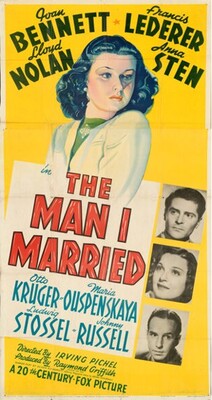
As time passes, Eric becomes more strident in his worship of Adolf Hitler. Carol and he grow increasingly estranged.
Eventually, Eric tells Carol he is in love with Frieda and wants a divorce. Even worse, he wants to keep his son in Germany, to become a loyal follower of the Nazis.
For Carol, the situation is desperate: Under German law, Eric’s rights will trump hers.
But then fate takes a hand. While visiting his elderly father, Eric learns something truly shocking: His mother was a Jewess—the absolute worst calamity that could befall an ardent Nazi.
“If you won’t let your son return to America with his mother,” says his father, “I will go to the authorities and show them the marriage certificate.”
Eric is stunned. So is Frieda, who is standing by when the news breaks. Disgusted that she was about to “racially defile” herself, she angrily stalks out.
Suddenly, Eric now says he doesn’t know what came over him, and he wants to return to the United States. Even more startling, he expects to go on with his marriage to Carol, as if nothing has happened.
But, for Carol, the damage is too great and the marriage is over.
She and Ricky return to the United States without Eric—who has lost everything: His wife, his son and his future with the Third Reich.
Now, fast forward to the 21st century of Donald Trump’s America—and the fate of Anthony Scaramucci.

Anthony Scaramucci
Jdarsie11 [CC BY-SA 4.0 (https://creativecommons.org/licenses/by-sa/4.0)%5D
In 2005, Scaramucci founded SkyBridge Capital, a global alternative investment firm.
But, in 2017, hoping to attain a position with the Trump administration, he resigned from his co-management role and ended his affiliation with SkyBridge.
On January 12, he was named Assistant to President Trump and director of the White House Office of Public Liaison and Intergovernmental Affairs.
Then disaster struck. On January 31, Trump’s chief of staff, Reince Priebus, called Scaramucci “to tell him he should pull out of consideration.”
Priebus opposed Scaramucci’s appointment because of Scaramucci’s stake in Skybridge Capital. The reason: Skybridge held a majority stake sale to RON Transatlantic EG and HNA Capital (U.S.) Holding, a Chinese conglomerate with close ties to China’s Communist Party.
But then Scaramucci’s future with the Trump administration suddenly appeared a reality.
On July 21, 2017, he was named as White House Communications Director, to take office on July 25. Even more importantly, he would report directly to the President—and not to Priebus, as had White House Press Secretary Sean Spicer.
Spicer, who had opposed Scarmucci’s hiring, resigned on the day of the appointment. Priebus had also strongly argued against the hiring, to no avail.
Then Scaramucci’s own hubris intervened.
On July 26, in a call to Ryan Lizza of The New Yorker, Scaramucci said he would rid the White House of “leakers.” He threatened to fire the entire White House Communications staff if Lizza didn’t reveal the source who had leaked the story of a dinner he had had with Trump.
He blasted Priebus as a “leaker” and “a fucking paranoid schizophrenic, a paranoiac,” and predicted that Priebus “would resign soon.”
Scaramucci also had harsh words for Trump’s chief strategist, Steve Bannon: “I’m not Steve Bannon, I’m not trying to suck my own cock. I’m not trying to build my own brand off the fucking strength of the President. I’m here to serve the country.”
On July 27, Priebus resigned as chief of staff.
The next day, Trump announced that he had named retired general John F. Kelley as Priebus’ replacement.
Then, on July 31, Scaramucci joined Spicer and Priebus as an ex-White House employee—dismissed by Trump at Kelly’s request, according to The New York Times.
And, like Eric Hoffman in The Man I Married, Scaramucci found himself without a marriage.
His wife, Deidre Ball—like Carol Hoffman—despised the man he yearned to work for: Donald Trump.
Married to Scaramucci in 2014, Ball filed for divorce in early July 2017 when she was eight months pregnant with their second child.
On July 24, Deidre gave birth to the couple’s son, James—while Anthony was in West Virginia attending the Boy Scouts Jamboree with Trump. He reportedly sent her a note: “Congratulations, I’ll pray for our child.”
Like Icarus, the mythical character who flew too close to the sun, he rose to the heights—and plunged to his doom.
"TOMBSTONE", ABC NEWS, AFFORDABLE CARE ACT, ALTERNET, AMERICABLOG, AP, ARNOLD SCHWARTZNEGGER, ASIANS, “BIRTHER” CAMPAIGN, BABY BOOMER RESISTANCE, BARACK OBAMA, BBC, BLACKS, BLOOMBERG NEWS, BOY SCOUT JAMBOREE, BUZZFEED, CBS NEWS, CNN, CROOKS AND LIARS, DAILY KOS, DAILY KOZ, DISABLED, DONALD TRUMP, FACEBOOK, FBI, FIVETHIRTYEIGHT, HARPER’S MAGAZINE, HILLARY CLINTON, HISPANICS, HUFFINGTON POST, IKE CLANTON, JEFF SESSIONS, JOHN H. "DOC" HOLLIDAY, JOHN OLIVER, JOHNNY RINGO, JUSTICE DEPARTMENT, MEDIA MATTERS, MERYL STREEP, MORGAN EARP, MOTHER JONES, MOVEON, MSNBC, MUSLIMS, NBC NEWS, NEIL YOUNG, NEW REPUBLIC, NEWSDAY, NEWSWEEK, NPR, OBAMACARE, PBS NEWSHOUR, POLITICO, POLITICUSUSA, PRISONERS OF WAR, RAW STORY, REINCE PRIEBUS, REUTERS, ROSIE O’DONNELL, SALON, SEAN SPICER, SEATTLE TIMES, SLATE, TALKING POINTS MEMO, THE ATLANTIC, THE CHICAGO SUN-TIMES, THE CHICAGO TRIBUNE, THE DAILY BEAST, THE DAILY BLOG, THE GUARDIAN, THE HILL, THE HUFFINGTON POST, THE INTERCEPT, THE LOS ANGELES TIMES, THE NATION, THE NEW REPUBLIC, THE NEW YORK TIMES, THE NEW YORKER, THE POPE, THE VILLAGE VOICE, THE WASHINGTON POST, THINKPROGRESS, TIME, TRUTHDIG, TRUTHOUT, TWITTER, U.S. NEWS & WORLD REPORT, UP, UPI, USA TODAY, VIRGIL EARP, WOMEN, WYATT EARP
In Bureaucracy, Entertainment, History, Politics, Social commentary on July 31, 2017 at 12:56 am
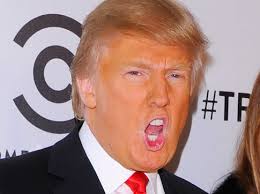
As both a Presidential candidate and President, Donald Trump has repeatedly used Twitter to attack hundreds of real and imagined enemies in politics, journalism, TV and films.
From June 15, 2015, when he launched his Presidential campaign, until October 24, 2016, Trump fired almost 4,000 angry, insulting tweets at 281 people and institutions that had somehow offended him.
Donald Trump
The New York Times needed two full pages of its print edition to showcase them.
Among his targets:
- Hillary Clinton
- President Barack Obama
- Actress Meryl Streep
- Singer Neil Young
- Actor Arnold Schwarzenegger
- Comedian John Oliver
- News organizations
- The State of New Jersey
- Beauty pageant contestants
Others he clearly delighted in insulting during the campaign included:
- Women
- Blacks
- Hispanics
- Asians
- Muslims
- The disabled
- Prisoners-of-war
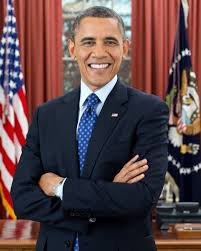
As a Presidential candidate and President, he has shown outright hatred for President Barack Obama. For five years, he slandered Obama as a Kenyan-born alien who had no right to hold the Presidency.
Barack Obama
Only on the eve of the first Presidential debate with Hillary Clinton—in September, 2016—did he finally admit that Obama had been born in the United States.
Then, on March 4, 2017, in a series of unhinged tweets, Trump accused Obama of tapping his Trump Tower phones prior to the election:
“Terrible! Just found out that Obama had my ‘wires tapped’ in Trump Tower just before the victory. Nothing found. This is McCarthyism!”
Thus, without offering a shred of evidence to back it up, Trump accused his predecessor of committing an impeachable offense.
Both the FBI and Justice Department have vigorously refuted this slander.
Trump’s all-out effort to destroy the Affordable Care Act—nicknamed “Obamacare”—has been driven by his mania to erase every vestige of the Obama Presidency.
Even attending a Boy Scout Jamboree became, for Trump, a way to attack the former President.
“By the way, just a question. Did President Obama ever come to a jamboree?” Trump asked the crowd of 40,000, encouraging them to boo Obama. And many of them did.
As President, he has bullied and insulted even his own handpicked Cabinet officers and White House officials.
- His press secretary, Sean Spicer, quit on July 21. The reason: He believed—correctly—that his loyalty to Trump had become a one-way street. Trump kept him in the dark about events Spicer needed to know—such as an interview that Trump arranged with the New York Times—and which ended disastrously for Trump.
- Trump has waged a Twitter-laced feud against Jeff Sessions, his Attorney General. Sessions’ “crime”? Recusing himself from any decisions involving investigations into well-established ties between Russian Intelligence agents and members of Trump’s Presidential campaign.
- Trump has publicly said that if he had known Sessions would recuse himself—because of his past contacts with Russian officials—he would have picked someone else for Attorney General.
- Trump repeatedly humiliated his chief of staff, Reince Priebus—at one point ordering him to kill a fly that was buzzing about. On July 28, Priebus resigned.
As Americans have watched Trump’s behavior with morbid fascination, many of them have asked: “What makes him do the things he does?”
It’s a question asked–and answered—in the 1993 Western, Tombstone. And the answer given in that movie may be just hold the answer to the question so many Americans are now asking about Trump.
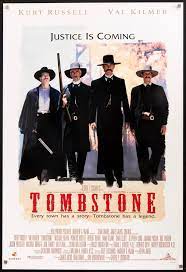
Tombstone recounts the legendary blood feud between the Ike Clanton outlaw gang and the Earp brothers—Wyatt, Morgan and Virgil—in the famous gold-mining town in 1880s Arizona.
Wyatt Earp has been challenged to a gunfight by quick-trigger gunman Johnny Ringo. Although he impulsively accepted the challenge, Wyatt now realizes he’s certain to be killed. Thus follows this exchange with his longtime friend, the pistol-packing dentist, John H. “Doc” Holliday:
WYATT EARP: What makes a man like Ringo, Doc? What makes him do the things he does?
JOHN H. “DOC” HOLLIDAY: A man like Ringo….got a great empty hole right through the middle of him. He can never kill enough or steal enough….or inflict enough pain to ever fill it.
EARP: What does he need?
HOLLIDAY: Revenge.
EARP: For what?
HOLLIDAY: Bein’ born.
Donald Trump was born into a world of wealth and privilege. His father gave him $200 million, which he channeled into a real estate empire. He has claimed to be worth a billion dollars.
He has been linked—often by his own boasts—to some of the most beautiful women in the world. He has been a major force on TV through his “reality show,” The Apprentice. He has literally stamped his name on hundreds of buildings.
And now he holds the Presidency of the United States, the most powerful office in the Western world.
Yet he remains filled with a poisonous hatred that encompasses almost everyone. Since taking office, he has offered nothing positive in his agenda.
Instead, he has focused his efforts on what he can take from others. At the top of his list: The Affordable Health Act, which provides access to medical care for millions who previously could not obtain it.
As first-mate Starbuck says of Captain Ahab in Herman Melville’s classic novel, Moby Dick: “He is a champion of darkness.”
ABC NEWS, AL QAEDA, ALTERNET, AP, BUZZFEED, CBS NEWS, CNN, CROOKS AND LIARS, DAILY KOZ, FACEBOOK, FBI, IDENTIFICATION CARDS, MOTHER JONES, MOVEON, NBC NEWS, NEWSWEEK, NPR, OSAMA BIN LADEN, PENTAGON, POLITICO, RAW STORY, REUTERS, SALON, SEATTLE TIMES, SECURITY, SECURITY THEATER, SLATE, TERRORISM, THE ATLANTIC, THE CHICAGO SUN-TIMES, THE CHICAGO TRIBUNE, THE DAILY BEAST, THE GUARDIAN, THE HILL, THE HUFFINGTON POST, THE LOS ANGELES TIMES, THE NATION, THE NEW YORK TIMES, THE WASHINGTON POST, TIME, TWITTER, U.S. NEWS & WORLD REPORT, UP, UPI, USA TODAY, VIET CONG
In Bureaucracy, History, Law, Law Enforcement, Politics, Social commentary on July 28, 2017 at 12:02 am
So you want to visit the Pentagon and see how America’s military works to protect you? Fine.
Just be prepared to accept the requirements that go with “security theater.”
A memo from the Public Affairs Office of the Assistant Secretary of Defense, dated February 2, 2012, offers this gem:

The Pentagon
“Proper personal identification (ID) must be produced when requested by Pentagon Police prior to entering the Pentagon as follows.
- Ages 12 and under – ID not required.
- Ages 13 to 17 – One form of photo ID or a parent/guardian to vouch for them.
- Ages 18 and up – Two forms of ID: one form must be a government issued photo ID, the other may be a credit/debit card, U.S. passport, birth certificate, or another item with the individual’s name printed on it, excluding business cards.”
Let’s break all this down:
“Ages 12 and under – ID not required.” Strapping bombs to children was a favorite tactic of the Viet Cong. And Al Qaeda has not hesitated to make use of the same weapon. It’s not comforting to learn that our military is still looking at children as “babes of innocence” rather than as possible “bombs of convenience.”
“Ages 13 to 17 – One form of photo ID or a parent/guardian to vouch for them.” Great! So long as an adult says, “Yeah, he’s mine,” any teenager can gain entry to America’s most important military center. This includes those teens who resent the American military’s presence around the world.
“Ages 18 and up – Two forms of ID: one form must be a government issued photo ID, the other may be a credit/debit card, U.S. passport, birth certificate, or another item with the individual’s name printed on it.”

Knowing a person’s identity is useful—so long as you have a reliable database system to match it against. An example of this is the FBI’s National Crime Information Center (NCIC).
Since 1967, the NCIC has been America’s central database for tracking crime-related information. It’s linked with such information repositories as:
- Federal law enforcement agencies
- State law enforcement agencies
- Local law enforcement agencies
- Federal and state motor vehicle registration/licensing agencies.

The NCIC makes available a variety of personal and property records for law enforcement and security purposes, covering:
- Convicted sex offenders
- Criminal convictions
- Foreign fugitives
- Immigration violators
- Persons with active protection orders
- Parolees
- Persons with active arrest warrants
- Secret Service protective alerts
- Terrorist organizations and membership
- Violent gang organizations and membership
Behind this lies a simple but highly effective formula, which was best-expressed in the classic 1973 movie, The Day of the Jackal. An anonymous professional killer has been hired to assassinate French President Charles de Gaulle.
At a government meeting called to thwart the plot, a top security expert says: “The first task is to give this man a name. With a name, we get a face, with a face a passport, with a passport an arrest.”
But if you don’t have a reliable database system to match an ID against, forcing people to “show me your ID” is worthless. What does “John Smith” mean to the average ill-paid security guard?
Even if the person is a wanted criminal, just looking at his ID card is worthless. Unless, of course, the person is so notorious as a criminal that his name is known to almost everyone: “My God, it’s Osama bin Laden!”
That’s presuming that the person is not only notorious but stupid enough to flaunt it. There is, after all, such a thing as a falsified ID. Every teenager who’s ever wanted access to a can of beer knows that.
If it seems impossible that any security official could be so stupid, consider this:
In 2010 a friend of mine decided to rent a P.O. box at his local Postal Service office. He was promptly told he would have to provide two pieces of identification, such as:
- A driver’s license or State ID card
- A passport
- A birth certificate
- A bill from a utility company, such as for phone or electric service.
Now, consider:
- He lived only a few blocks from the post office where he was applying for a P.O. box.
- He had lived at the same apartment building for 22 years.
- The Postal Service had been delivering his mail there that entire time—sometimes knocking at his door to do so.
- When he came to its counter to retrieve mail that was otherwise un-deliverable, his showing a State ID card had been entirely enough.
But, to rent a P.O. box at that very same post office, he had to prove he wasn’t a terrorist. And one of the ways he was to do this was to show a utility bill.
What does paying money to an electric or gas company prove about anyone? Osama bin Laden was paying for utilities in a Pakistani house—and the Pakistanis didn’t say: “Hey, we can’t supply electricity to you–you’re a terrorist.”
9/11, ABC NEWS, ALTERNET, AP, BARACK OBAMA, BENGHAZI TERROR ATTACK, BIRTH CERTIFICATE, BUZZFEED, CBS NEWS, CHARLES KOCH, CNN, CROOKS AND LIARS, DAILY KOZ, DAVID KOCH, DR. STANTON GLANTZ, FACEBOOK, FBI, GEORGE W. BUSH, IMPEACHMENT, IRS, MOTHER JONES, MOVEON, NATIONAL CANCER INSTITUTE, NATIONAL SECURITY AGENCY, NAVY SEALS, NBC NEWS, NEWSWEEK, NPR, OSAMA BIN LADEN, POLITICO, RAW STORY, REUTERS, SALON, SEATTLE TIMES, SLATE, TEA PARTY, THE ATLANTIC, THE CHICAGO SUN-TIMES, THE CHICAGO TRIBUNE, THE DAILY BEAST, THE GUARDIAN, THE HILL, THE HUFFINGTON POST, THE LOS ANGELES TIMES, THE NATION, THE NEW YORK TIMES, THE WASHINGTON POST, TIME, TOBACCO INDUSTRY, TWITTER, U.S. NEWS & WORLD REPORT, UP, UPI, USA TODAY
In Bureaucracy, Business, History, Politics, Social commentary on July 27, 2017 at 12:05 am
The Tea Party hated President Barack Obama and believed he should be impeached.
That you could have easily learned by visiting its website.
But there is a great deal about the Tea Party itself that its website won’t tell you.
Such as:
- Despite its propaganda, it is not a “grassroots organization” comprised of “ordinary Americans.”
- It was created with money from the tobacco industry and the billionaire Koch brothers.
- Its purpose is to co-opt Right-wing Americans and channel their votes into legislation that benefits the 1% richest.
That’s the conclusion of a study by the National Cancer Institute of the National Institute of Health.

National Cancer Institute
The roots of the Tea Party lie in the early 1980s, when tobacco companies started pouring money into third-party groups.
Their mission was two-fold:
- To fight excise taxes on cigarettes; and
- To combat health studies showing a link between cancer and secondhand smoke.
Stanton Glantz, professor of medicine at the University of California, San Francisco, has been a longtime foe of the tobacco industry.
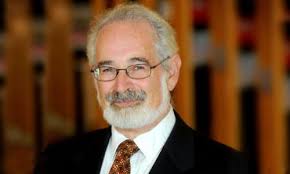
Dr. Stanton Glantz
In 2012, he authored a study for the peer-reviewed academic journal, Tobacco Control. Writing about the ties between the Tea Party and the tobacco industry, Glantz noted:
“The Tea Party, which gained prominence in the USA in 2009, advocates limited government and low taxes. Tea Party organisations, particularly Americans for Prosperity and FreedomWorks, oppose smoke-free laws and tobacco taxes.
“Rather than being a purely grassroots movement that spontaneously developed in 2009, the Tea Party has developed over time, in part through decades of work by the tobacco industry and other corporate interests.”
Click here: ‘To quarterback behind the scenes, third-party efforts’: the tobacco industry and the Tea Party — Fallin et al. –
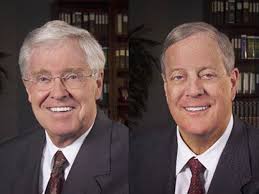
Charles and David Koch, the real founders of the Tea Party
Most people believe the Tea Party originated as a 2009 grassroots uprising to protest taxes. But its origins can be traced to 2002.
That was when the Charles and David Koch and tobacco-backed Citizens for a Sound Economy set up the first Tea Party website.
From the National Cancer Institute’s study of the Tea Party:
- “The Tea Party, a loosely organised network of grassroots coalitions at local and state levels, is a complex social and political movement to the right of the traditional Republican Party that promotes less government regulation and lower taxes.”
- “David Koch was a co-founder of Citizens for a Sound Economy (CSE) and Americans for Prosperity (AFP) Foundation,” both major allies of the tobacco industry.
- “National organisations funded by corporations, particularly Americans for Prosperity (AFP) and FreedomWorks, played an important role in structuring and supporting the Tea Party in the initial stages. They provided training, communication and materials for the earliest Tea Party activities, including the first ‘Tea Party’ on 27 February 2009.”
- “FreedomWorks organised the nationwide Tea Party tax protests in April 2009, the town hall protests about the proposed healthcare reform in August 2009 and the Taxpayers’ March on Washington the following September 2009.”
- “As of 2012, AFP and FreedomWorks were supporting the tobacco companies’ political agenda by mobilising local Tea Party opposition to tobacco taxes and smoke-free laws.”
- “In many ways, the Tea Party of the late 2000s has become the ‘movement’ envisioned by Tim Hyde, RJR director of national field operations in the 1990s, which was grounded in patriotic values of ‘freedom’ and ‘choice’ to change how people see the role of ‘government’ and ‘big business’ in their lives, particularly with regard to taxes and regulation.”
- “Many factors beyond the tobacco industry have contributed to the development of the Tea Party. Anti-tax sentiment has been linked to notions of patriotism since the inception of the USA when the colonies were protesting against taxation by the British.”
- “In addition, the Tea Party has origins in the ultra-right John Birch Society of the 1950s, of which Fred Koch (Charles and David Koch’s father) was a founding member.”
- “Although the Tea Party is a social movement, it has been affiliated closely with, and somewhat incorporated into, the Republican Party. This may be due in part to the increased conservatism of politically active Republicans since 1970s and the increased polarisation of American politics.”
- “….AFP and FreedomWorks…capitalised on the changing political realities following President Barack Obama’s election in 2008.”
- “In particular, they harnessed anti-government sentiment arising from the confluence of the mortgage and banking bailout, President Barack Obama’s stimulus package and the Democratic push for healthcare reform, which provided them with the opportunity for more successful grassroots-level Tea Party organising.”
Since 2008, the Tea Party has played a major role in American politics.
Throughout 2009, its thuggish supporters sought to terrorize members of Congress into opposing passage of the Affordable Care Act (ACA), otherwise known as Obamacare.
This despite the fact that the ACA offered many of them their only chance to obtain access to medical care.
And in 2010 they played a pivotal role in delivering the House of Representatives to the Republican Party. Similarly, they helped Republicans take control of the Senate in 2014.
Yet the vast majority of the Tea Party’s low-level membership probably doesn’t know the origins—or the real purposes—of their organization.
But for those for whom truth is important, “the truth”—as The X-Files tagline once went—“is out there.”
9/11, ABC NEWS, ALTERNET, AP, BARACK OBAMA, BENGHAZI TERROR ATTACK, BIRTH CERTIFICATE, BUZZFEED, CBS NEWS, CHARLES KOCH, CNN, CROOKS AND LIARS, DAILY KOZ, DAVID KOCH, DR. STANTON GLANTZ, FACEBOOK, FBI, GEORGE W. BUSH, IMPEACHMENT, IRS, MOTHER JONES, MOVEON, NATIONAL CANCER INSTITUTE, NATIONAL SECURITY AGENCY, NAVY SEALS, NBC NEWS, NEWSWEEK, NPR, OSAMA BIN LADEN, POLITICO, RAW STORY, REUTERS, SALON, SEATTLE TIMES, SLATE, TEA PARTY, THE ATLANTIC, THE CHICAGO SUN-TIMES, THE CHICAGO TRIBUNE, THE DAILY BEAST, THE GUARDIAN, THE HILL, THE HUFFINGTON POST, THE LOS ANGELES TIMES, THE NATION, THE NEW YORK TIMES, THE WASHINGTON POST, TIME, TOBACCO INDUSTRY, TWITTER, U.S. NEWS & WORLD REPORT, UP, UPI, USA TODAY
In Bureaucracy, Business, History, Politics, Social commentary on July 26, 2017 at 12:41 am
“Should Barack Obama Be Impeached?” shouted the September, 2014 headline on the Right-wing website of TeaParty.org.
“A fake birth certificate, the Benghazi attack, the IRS scandal, National Security invasions on privacy….Many are questioning Obama’s competence. Should Congress initiate impeachment proceedings?
“What do you think?”
Then the site offered this in tribute to its sponsor:
“TeaParty.org, one of America’s leading websites and top online news sources is conducting a poll about an important issue.
“The results of these polls will be published online and are shared with major news networks and policymakers.
“Don’t miss this opportunity to let your voice be heard! Vote today!”
The viewer was then given two questions to answer.
The first was: “Should Barack Obama be impeached?”
The website offered three possible answers for the visitor to choose:
- “Yes, the events are now overwhelming.”
- “No, these do not meet the threshold of high crimes and misdemeanors.”
- “Not sure, still waiting to review the evidence.”
The second question was: “Whom do you believe has better solutions for the nation’s problems?”
It, too, provided three possible answers:
- “Conservatives”
- “Liberals”
- “Neither.”
The website omitted a number of truths—about both President Barack Obama and the Tea Party itself.
Slander #1: “A false birth certificate”
The election of Barack Obama pushed the Right to new heights of infamy. With no political scandal (such as Bill Clinton’s affair with Monica Lewinsky) to fasten on, the Republican Party deliberately promoted the slander that Obama was not an American citizen.
From this there could be only one conclusion: That he was an illegitimate President, and should be removed from office.
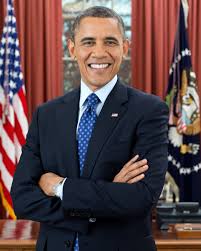
President Barack Obama
During the 2008 Presidential campaign, Republicans charged that Obama was really a Muslim non-citizen who intended to sell out America’s security to his Muslim “masters.”
And this smear campaign continued throughout his Presidency.
To the dismay of his enemies, Obama—in the course of a single week—dramatically proved the falsity of both charges.
On April 27, 2011, he released the long-form of his Hawaii birth certificate.
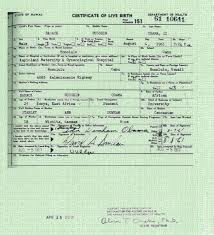
The long-form version of President Obama’s birth certificate
“We do not have time for this kind of silliness,” said Obama at a press conference, speaking as a father might to a roomful of spiteful children. “We have better stuff to do. I have got better stuff to do. We have got big problems to solve.
“We are not going to be able to do it if we are distracted, we are not going to be able to do it if we spend time vilifying each other…if we just make stuff up and pretend that facts are not facts, we are not going to be able to solve our problems if we get distracted by side shows and carnival barkers.”
And on May 1, he announced the solving of one of those “big problems”: Osama bin Laden, mastermind of the September 11, 2001 terrorist attacks, had been tracked down and shot dead by elite U.S. Navy SEALS in Pakistan.
Slander #2: “The Benghazi attack”
A total of four Americans died in a terrorist attack on the American diplomatic consulate in Benghazi, Libya, on September 11, 2012.
Whereas a total of 3,000 Americans died in the Al Qaeda attacks of September 11, 2001. But those occurred on the watch of a white Republican President, so naturally no treason charges were invoked by the Right.
Slander #3: “The IRS scandal”
In 2013, the Internal Revenue Service (IRS) disclosed that it had selected political groups applying for tax-exempt status for intensive scrutiny based on their names or political themes.
Although Right-wingers have claimed that their political organizations were exclusively targeted by the IRS, the agency opened investigations based on such trigger-words as:
- Tea Party
- Patriots
- 9/12 Project
- progressive
- occupy
- Israel
- medical marijuana
“While some of the IRS questions may have been overbroad, you can look at some of these groups and understand why these questions were being asked,” said Ohio State University law professor Donald Tobin.
In January, 2014, the FBI announced that it had found no evidence warranting the filing of federal criminal charges in connection with the scandal.
No evidence has come to light suggesting that President Obama was responsible for the IRS’s actions.
Slander #4: “National Security Agency (NSA) invasions on privacy”
This totally ignores that it was former President George W. Bush who, after 9/11, ordered the NSA to vastly increase its electronic-interception capabilities.
No longer would the agency be confined to spying on calls outside the United States. From now on, it would target Americans who might be linked to international terror cells.
Slander #5: “Many are questioning Obama’s competence”
While this was true—among those on the Right and Left—it missed the essential legal point: Even if true, “incompetence” is not a legitimate impeachable offense.
And no evidence ever came forth to indict President Obama for “high crimes and misdemeanors.”
Meanwhile, there was a great deal about the Tea Party itself that its founders didn’t reveal in their “poll”.
Such as the truth that it was created by the tobacco industry and the billionaire Koch brothers.
ABC NEWS, ALTERNET, AP, BUZZFEED, CBS NEWS, CNN, CRIME, CROOKS AND LIARS, DAILY KOZ, FACEBOOK, GUN CONTROL, MARTIN LUTHER KING, MOTHER JONES, MOVEON, NATIONAL RIFLE ASSOCIATION, NBC NEWS, NEWSWEEK, NPR, POLITICO, RAW STORY, REUTERS, ROBERT F. KENNEDY, SALON, SEATTLE TIMES, SECOND AMENDMENT, SELF-DEFENSE, SLATE, STAND-YOUR-GROUND LAWS, THE ATLANTIC, THE CHICAGO SUN-TIMES, THE CHICAGO TRIBUNE, THE DAILY BEAST, THE GUARDIAN, THE HILL, THE HUFFINGTON POST, THE LOS ANGELES TIMES, THE NATION, THE NEW YORK TIMES, THE WASHINGTON POST, TIME, TWITTER, U.S. CONSTITUTION, U.S. NAVY SEALS, U.S. NEWS & WORLD REPORT, UPI, USA TODAY, VIRGINIA TECH SHOOTINGS, WRONGFUL-DEATH LAWSUITS
In Bureaucracy, Business, History, Law, Law Enforcement, Politics, Social commentary on July 25, 2017 at 12:09 am
The victims of the violence are black and white, rich and poor, young and old, famous and unknown. They are, most important of all, human beings whom other human beings loved and needed. No one—no matter where he lives or what he does— can be certain who will suffer from some senseless act of bloodshed. And yet it goes on and on.
–Robert F. Kennedy, April 4, 1968

Senator Robert F. Kennedy announcing the murder of Dr. Martin Luther King, Jr.
What should the surviving victims of gun massacres do to seek redress?
And how can the relatives and friends of those who didn’t survive seek justice for those they loved?
Two things:
First, don’t count on politicians to support a ban on assault weapons.
Politicians—with rare exceptions—have only two goals:
- Get elected to office, and
- Stay in office.
And too many of them fear the economic and voting clout of the NRA to risk its wrath.
Consider Mitt Romney and President Barack Obama.
Both rushed to offer condolences to the surviving victims of the massacre at the Century 16 Theater in Aurora, Colorado, on July 20, 2012.
And both steadfastly refused to even discuss gun control—let alone support a ban on the type of assault weapons used by James Holmes, leaving 12 dead and 58 wounded.
Second, those who survived the massacre–and the relatives and friends of those who didn’t–should file wrongful death, class-action lawsuits against the NRA.
There is sound, legal precedent for this.
- For decades, the American tobacco industry peddled death and disability to millions and reaped billions of dollars in profits.
- The industry vigorously claimed there was no evidence that smoking caused cancer, heart disease, emphysema or any other ailment.
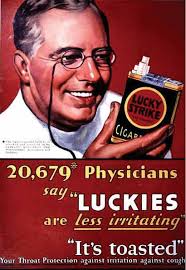
- Tobacco companies spent billions on slick advertising campaigns to win new smokers and attack medical warnings about the dangers of smoking.
- Tobacco companies spent millions to elect compliant politicians and block anti-smoking legislation.
- From 1954 to 1994, over 800 private lawsuits were filed against tobacco companies in state courts. But only two plaintiffs prevailed, and both of those decisions were reversed on appeal.
- In 1994, amidst great pessimism, Mississippi Attorney General Mike Moore filed a lawsuit against the tobacco industry. But other states soon followed, ultimately growing to 46.
- Their goal: To seek monetary, equitable and injunctive relief under various consumer-protection and anti-trust laws.
- The theory underlying these lawsuits was: Cigarettes produced by the tobacco industry created health problems among the population, which badly strained the states’ public healthcare systems.
- In 1998, the states settled their Medicaid lawsuits against the tobacco industry for recovery of their tobacco-related, health-care costs. In return, they exempted the companies from private lawsuits for tobacco-related injuries.
- The companies agreed to curtail or cease certain marketing practices. They also agreed to pay, forever, annual payments to the states to compensate some of the medical costs for patients with smoking-related illnesses.
The parallels with the NRA are obvious:
- For decades, the NRA has peddled deadly weapons to millions, reaped billions of dollars in profits and refused to admit the carnage those weapons have produced: “Guns don’t kill people. People kill people.” With guns.
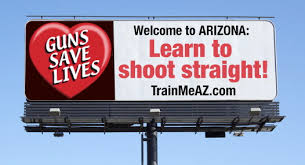
- The NRA has bitterly fought background checks on gun-buyers, in effect granting even criminals and the mentally ill the right to own arsenals of death-dealing weaponry.
- The NRA has spent millions on slick advertising campaigns to win new members and frighten them into buying guns.
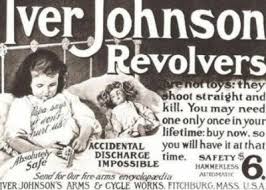
- The NRA has spent millions on political contributions to block gun-control legislation.
- The NRA has spent millions attacking political candidates and elected officials who warned about the dangers of unrestricted access to assault and/or concealed weapons.

- The NRA has spent millions pushing “Stand Your Ground” laws in more than half the states, which potentially give every citizen a “license to kill.”
- The NRA receives millions of dollars from online sales of ammunition, high-capacity ammunition magazines, and other accessories through its point-of-sale Round-Up Program—thus directly profiting by selling a product that kills about 30,288 people a year.
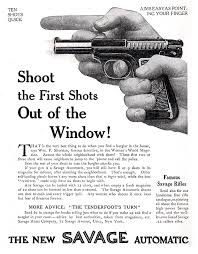
- Firearms made indiscriminately available through NRA lobbying have filled hospitals with casualties, and have thus badly strained the states’ public healthcare systems.
It will take a series of highly expensive and well-publicized lawsuits to significantly weaken the NRA, financially and politically.
The first ones will have to be brought by the surviving victims of gun violence—and by the friends and families of those who did not survive it. Only they will have the courage and motivation to take such a risk.
As with the cases first brought against tobacco companies, there will be losses. And the NRA will rejoice with each one.
But, in time, state Attorneys General will see the clear parallels between lawsuits filed against those who peddle death by cigarette and those who peddle death by armor-piercing bullet.
And then the NRA—like the tobacco industry—will face an adversary wealthy enough to stand up for the rights of the gun industry’s own victims.
Only then will those politicians supporting reasonable gun controls dare to stand up for the victims of these needless tragedies.
ABC NEWS, AFFORDABLE CARE ACT, ALTERNET, AMERICABLOG, AP, BABY BOOMER RESISTANCE, BARACK OBAMA, BBC, BLOOMBERG, BUZZFEED, CBS NEWS, CHILDRENS HEALTH INSURANCE PROGRAM, CNN, CROOKS AND LIARS, DAILY KOS, DAILY KOZ, DAVID BROOKS, DONALD TRUMP, FIVETHIRTYEIGHT, HARPER’S MAGAZINE, HEALTHCARE AND RECONCILIATION ACT OF 2010, HUFFINGTON POST, JOHN MCCAIN, MARK SHIELDS, MEDIA MATTERS, MOTHER JONES, MOVEON, MSNBC, NBC NEWS, NEW REPUBLIC, NEWSDAY, NEWSWEEK, NPR, OBAMACARE, PBS NEWSHOUR, POLITICO, POLITICUSUSA, RAW STORY, RESTORING AMERICANS HEALTHCARE FREEDOM RECONCILIATION ACT OF 2015, REUTERS, SALON, SEATTLE TIMES, SLATE, TALKING POINTS MEMO, TAX POLICY CENTER, THE ATLANTIC, THE CHICAGO SUN-TIMES, THE CHICAGO TRIBUNE, THE DAILY BEAST, THE DAILY BLOG, THE GUARDIAN, THE HILL, THE HUFFINGTON POST, THE INTERCEPT, THE LOS ANGELES TIMES, THE NATION, THE NEW REPUBLIC, THE NEW YORK TIMES, THE NEW YORKER, THE VILLAGE VOICE, THE WASHINGTON POST, THINKPROGRESS, TIME, TRUTHDIG, TRUTHOUT, TWO POLITICAL JUNKIES, U.S. NEWS & WORLD REPORT, UP, UPI, USA TODAY, WARREN BUFFETT, X
In Bureaucracy, Business, History, Law, Politics, Social commentary on July 24, 2017 at 2:44 pm
On July 14, Arizona’s United States Senator John McCain underwent a “minimally invasive” medical procedure at Mayo Clinic Hospital in Phoenix to remove a blood clot from above his left eye.
Soon afterward, his Senate office announced:
“Senator McCain received excellent treatment at Mayo Clinic Hospital in Phoenix, and appreciates the tremendous professionalism and care by its doctors and staff.
“He is in good spirits and recovering comfortably at home with his family. On the advice of his doctors, Senator McCain will be recovering in Arizona next week.”
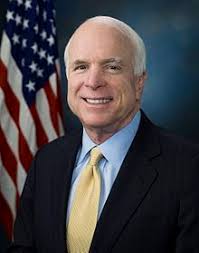
John McCain
McCain, who has a fair complexion, has repeatedly battled melanoma, a sometimes-deadly form of skin cancer. In 2000, the year he ran for President against George W. Bush, he had a particularly serious episode.
When he ran again for President in 2008, he told reporters: “Like most Americans, I go to see my doctor fairly frequently.”
He has had at least four documented cases of melanoma.
Lost in the massive publicity of McCain’s latest brush with melanoma was the sheer irony of the situation.
McCain had “received excellent treatment at Mayo Clinic Hospital” at a time when he and his fellow Republicans were vigorously trying to repeal President Barack Obama’s Affordable Care Act (ACA).
Barack Obama
The Act—nicknamed “Obamacare”—has provided access to healthcare to millions of poor and middle-class Americans who had previously been unable to afford it.
Since its becoming law on March 23, 2010, Republicans have declared it Public Enemy Number One and set out to repeal it. By March 2014 they had voted against it 54 times, trying to undo or substantially change it.
In October, 2013, they shut down the Federal Government for 15 days. They hoped to extort Obama into de-funding the ACA: If he did, they would re-open Federal agencies.
But, facing pressure from voters unable to obtain basic government services, Republicans backed down.
During the 2016 Presidential campaign, every Republican candidate pledged to repeal Obamacare if s/he were elected.
Donald Trump—who won the Republican nomination and then the election—repeatedly made this the centerpiece of his campaign.
On October 25, he promised: “My first day in office, I am going to ask Congress to put a bill on my desk getting rid of this disastrous law and replacing it with reforms that expand choice, freedom, affordability.”
McCain himself has repeatedly tried to restrict access to healthcare by ordinary Americans.
On January 29, 2009, he voted against the Childrens Health Insurance Program Reauthorization and Expansion.
This expanded State Children’s Health Insurance Program coverage from 6.6 million children to about 11 million children.
On December 24, 2009, he voted against the ACA.
On February 2, 2011, McCain voted to repeal the ACA.
On July 26, 2015, McCain voted to repeal the ACA and the Health Care and Education Reconciliation Act of 2010.
On December 3, 2015, he voted for the “Restoring Americans’ Healthcare Freedom Reconciliation Act of 2015.”
This would have gutted “Obamacare” by repealing the individual mandate, the employer mandate, the medical device excise tax, and the “Cadillac tax”” on expensive employee health insurance premiums.
It also included a measure to eliminate federal Medicaid funding for Planned Parenthood for one year.
And what lay behind Republican efforts to “repeal and replace” the ACA?
Americans earning $5 million or more—those in the top 0.1%—would receive an average tax cut of nearly $250,000 in 2026, according to an analysis by the Tax Policy Center. Those earning $875,000 and more—those in the top 1%—would save $45,500 in taxes a year.
Appearing on the June 23 edition of the PBS Newshour, syndicated columnist Mark Shields said: “And what it is, the only thing that the House and the Senate are consistently faithful on is that it’s a major tax cut, It is a redistribution.
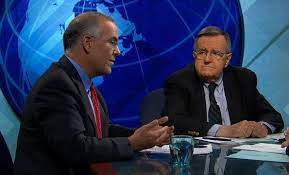
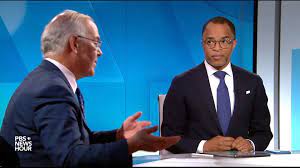
David Brooks and Mark Shields
“Obama, who was, you know, if anything, overly moderate for many tastes, did, in fact, lay it on the most advantaged among us to pay, to cover people who couldn’t afford it in his plan. And a 3.8 percent tax on unearned income for those earning over a quarter of a million dollars became the rallying cry, the organizing principle for the opposition.
“And that’s the one constant that has been through it all. Warren Buffett, to his everlasting credit, pointed out that he will get a tax cut under the Republican plan this year of $630,000. That’s the redistribution.
“And, you know, in the richest nation in the history of the world, it is a terrible indictment, a sad commentary that the most vulnerable among us, the least—the least among us are really tossed off as a political statement.”
Speaking on the same program, David Brooks, conservative columnist for the New York Times, said: “What it does—you ought to start with, what kind of country are we in? We’re in a country where—widening inequality.
“And so I think it’s possible to be a conservative and to support market mechanisms basically to redistribute wealth down to those who are suffering.
“This bill doesn’t do that. It goes the other way. So, I think, fundamentally, it doesn’t solve the basic problem our country has, which is a lot of people are extremely vulnerable.”
ABC NEWS, ADOLF HITLER, AFFORDABLE CARE ACT, ALBERT SPEER, ALTERNET, BARACK OBAMA, BUZZFEED, CBS NEWS, CNN, DAILY KOS, DEBT CEILING, DEPARTMENT OF HOMELAND SECURITY, DONALD TRUMP, EXTORTION, FACEBOOK, FASCISM, HOUSE SPEAKER JOHN BOEHNER, MOTHER JONES, MOVEON, NAZI GERMANY, NBC NEWS, NEGOTIATING, NEWSWEEK, NPR, OBAMACARE, PAP SMEARS, PLANNED PARENTHOOD, POLITICO, RAW STORY, REPUBLICAN PARTY, REPUBLICANS, SALON, SLATE, THE CHICAGO SUN-TIMES, THE CHICAGO TRIBUNE, THE DAILY BEAST, THE HUFFINGTON POST, THE LOS ANGELES TIMES, THE NEW YORK TIMES, THE WALL STREET JOURNAL, THE WASHINGTON POST, TIME, TRICKLE-DOWN ECONOMICS, TWITTER, U.S. NEWS & WORLD REPORT, USA TODAY, WARREN BUFFET, WORLD WAR 11
In Bureaucracy, History, Law, Military, Politics, Social commentary on July 21, 2017 at 12:21 am
On March 6, 2017, House Republican leaders unveiled the American Health Care Act (AHCA) as their replacement for “Obamacare.”
Conservative Republicans immediately declared that it didn’t repeal and replace Obamacare. And “moderates” complained that it would leave too many people uninsured.
Democrats, meanwhile, stayed silent. They had pushed hard in 2009-10 to provide all Americans with access to healthcare. And they weren’t going to participate in dismantling their signature legislation.
On March 13, the non-partisan Congressional Budget Office released its report estimating that about 18 million people would be uninsured in 2018 if the AHCA were enacted. The number of uninsured people would reach 19 million in 2020 and 24 million in 2026.

Still, Republicans plunged forward, with House leaders tweaking it slightly to win conservative and “moderate” votes.
Still, conservatives felt the bill helped too many people. And “moderates” feared that the millions of voters who would lose their insurance would vote them out of office at the next election.
On March 24, President Donald Trump, knowing the AHCA couldn’t pass the House, asked Speaker Paul Ryan to pull it off the floor.
And Ryan did so, only moments before a scheduled vote.
Finally, on May 4, House Republicans were ready to vote to pass the AHCA.
The vote was preceded by a pep rally, which featured beer, the “Rocky” theme song, the “Taking Care of Business” song, a prayer and the reciting of the Pledge of Allegiance.
Some Republicans, asked whether they had read the bill they supported, refused to answer.
That up to 24 million Americans would lose their medical insurance meant nothing to Right-wingers.
What did matter to them was:
- Destroying the legacy of Barack Obama, the nation’s first black President; and
- Initiating a huge transfer of wealth from the poor and middle-class to the 1% wealthiest.
On May 4, House Republicans passed the AHCA and sent it the Senate. There it was expected to be significantly revised.
But this, too, didn’t matter to House Republicans. They had “kept faith” with their hate-filled. Right-wing constituents—and assured their own re-elections.
Speaking in front of nearly 100 GOP lawmakers in the White House Rose Garden, Trump boasted that the AHCA would “finish off” the “catastrophe” of Obamacare.

Donald Trump
At a White House celebration, Trump boasted: “This has brought the Republican Party together.”
But then came disaster—for Republicans—in the Senate.
With Democrats abstaining, Republicans found themselves fighting each other.
Some wanted to gut “Obamacare” entirely, whatever the consequences for the 24 million Americans who would be left without insurance.
Others feared that slashing more than $700 billion from Medicaid—the Federal medical insurance program for the poor—would lead to millions of angry voters turning out Republicans at the polls.
(And slashing Medicaid—as opposed to expanding it, as President Obama had sought to do—was a major reason why Republicans wanted to overturn “Obamacare.”)
Senate Majority Leader Mitch McConnell (R-KY) desperately tried to hammer out a compromise between the two opposing sides. When this proved impossible, it was clear the “repeal and replace” bill wouldn’t pass the Senate.
At that point, President Trump tweeted his own solution: “Republicans should just ‘REPEAL’ failing ObamaCare now & work on a new Healthcare Plan that will start from a clean slate. Dems will join in!”
But this proved too politically risky for some Republicans.
On July 18, Republican Senators’ efforts to replace the ACA without a ready replacement collapsed.
As usual, Donald Trump had a ready “solution” to offer. Like Adolf Hitler issuing his “scorched earth” order in a doomed Berlin in 1945, the President said:
“Let Obamacare fail; it’ll be a lot easier. And I think we’re probably in that position where we’ll just let Obamacare fail.
“We’re not going to own it. I’m not going to own it. I can tell you the Republicans are not going to own it. We’ll let Obamacare fail, and then the Democrats are going to come to us and they’re going to say, ‘How do we fix it? How do we fix it?’ Or, ‘How do we come up with a new plan?’”
* * * * *
Allowing Obamacare to fail would deprive millions of Americans of healthcare. But that meant nothing to Donald Trump.
Just as destroying everything still remaining in Germany had meant nothing to Adolf Hitler.
Fortunately for Germany, one man—Albert Speer—finally broke ranks with his Fuhrer.
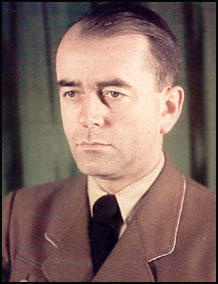
Albert Speer
Risking death, he refused to carry out Hitler’s “scorched earth” order. Even more important, he mounted a successful effort to block such destruction and persuade influential military and civilian leaders to disobey the order as well.
As a result, those targets slated for destruction were spared.
Since the election of America’s first black President, Republicans have waged a similar “scorched earth” campaign.
Acting as extortionists, they repeatedly threatened to shut down the government if they didn’t get their way in legislative matters. And they repeatedly blocked legislation to help the poor, the unemployed, the sick, women, the elderly, the disabled and the middle-class.
Like Adolf Hitler, their attitude has been: “If I can’t rule America, there won’t be an America.”
The country is still waiting for a Republican Albert Speer to step forward and save America from the self-destructive brutalities of its own Right-wing fanatics.
ABC NEWS, ADOLF HITLER, AFFORDABLE CARE ACT, ALBERT SPEER, ALTERNET, BARACK OBAMA, BUZZFEED, CBS NEWS, CNN, DAILY KOS, DEBT CEILING, DEPARTMENT OF HOMELAND SECURITY, DONALD TRUMP, EXTORTION, FACEBOOK, FASCISM, HOUSE SPEAKER JOHN BOEHNER, MOTHER JONES, MOVEON, NAZI GERMANY, NBC NEWS, NEGOTIATING, NEWSWEEK, NPR, OBAMACARE, PAP SMEARS, PLANNED PARENTHOOD, POLITICO, RAW STORY, REPUBLICAN PARTY, REPUBLICANS, SALON, SLATE, THE CHICAGO SUN-TIMES, THE CHICAGO TRIBUNE, THE DAILY BEAST, THE HUFFINGTON POST, THE LOS ANGELES TIMES, THE NEW YORK TIMES, THE WALL STREET JOURNAL, THE WASHINGTON POST, TIME, TRICKLE-DOWN ECONOMICS, TWITTER, U.S. NEWS & WORLD REPORT, USA TODAY, WARREN BUFFET, WORLD WAR 11
In Bureaucracy, History, Law, Military, Politics, Social commentary on July 20, 2017 at 12:50 am
Albert Speer, Minister of Armaments for the Third Reich, was appalled.
His Fuhrer, Adolf Hitler—the man he had idolized for 14 years—had just passed a death sentence on Germany, the nation he claimed to love above all others.
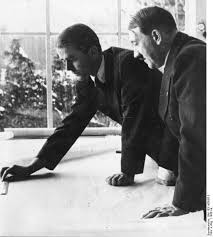
Albert Speer and Adolf Hitler pouring over architectural plans
On March 19, 1945, facing certain defeat, Hitler had ordered a massive “scorched-earth” campaign throughout Germany.
All German agriculture, industry, ships, communications, roads, food stuffs, mines, bridges, stores and utility plants were to be destroyed.
If implemented, it would deprive the entire German population of even the barest necessities after the war.
Now living in a bunker 50 feet below bomb-shattered Berlin, Hitler gave full vent to his most destructive impulses.
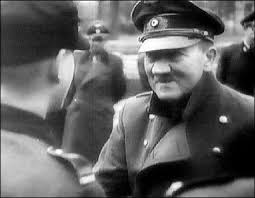
Adolf Hitler addressing boy soldiers as the Third Reich crumbles
“If the war is lost,” Hitler told Speer, “the nation will also perish. This fate is inevitable. There is no necessity to take into consideration the basis which the people will need to continue even a most primitive existence.
“On the contrary, it will be better to destroy these things ourselves, because this nation will have proved to be the weaker one and the future will belong solely to the stronger eastern nation.
“Besides, those who will remain after the battle are only the inferior ones, for the good ones have all been killed.”
Speer argued in vain that there must be a future for the German people. But Hitler refused to back down. He gave Speer 24 hours to reconsider his opposition to the order.
The next day, Speer told Hitler: “My Fuhrer, I stand unconditionally behind you!”
“Then all is well,” said Hitler, suddenly with tears in his eyes.
“If I stand unreservedly behind you,” said Speer, “then you must entrust me rather than the Gauleiters [district Party leaders serving as provincial governors] with the implementation of your decree.”
Filled with gratitude, Hitler signed the decree Speer had thoughtfully prepared before their fateful meeting.
By doing so, Hitler unintentionally gave Speer the power to thwart his “scorched earth” decree.
Speer had been the closest thing to a friend in Hitler’s life. Trained as an architect, he had joined the Nazi Party in 1931.
He met Hitler in 1933, when he presented the Fuhrer with architectural designs for the Nuremberg Rally scheduled for that year.
From then on, Speer became Hitler’s “genius architect” assigned to create buildings meant to last for a thousand years.
In 1943, Hitler appointed him Minister of Armaments, charged with revitalizing the German war effort.
Nevertheless, Speer now crisscrossed Germany, persuading military leaders and district governors to not destroy the vital facilities that would be needed after the war.
“No other senior National Socialist could have done the job,” writes Randall Hanson, author of Disobeying Hitler: German Resistance After Valkyrie.
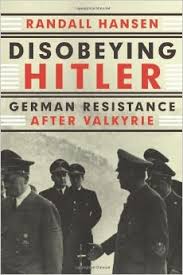
“Speer was one of the very few people in the Reich—perhaps even the only one—with such power to influence actors’ willingness/unwillingness to destroy.”
Despite his later conviction for war crimes at Nuremberg, Speer never regretted his efforts to save Germany from total destruction at the hands of Adolf Hitler.
Fast-forward to the United States and the 2008 election of the nation’s first black President.
On March 23, 2010, President Barack Obama signed into law the Affordable Care Act (ACA), nicknamed Obamacare. Its purpose: To provide access to healthcare for millions of poor and middle-class Americans who had heretofore been unable to obtain it.
President Barack Obama
It became—and remains—Obama’s signature legislative accomplishment.
Republicans immediately declared “Obamacare” Public Enemy Number One and set out to repeal it. By March 2014 they had already voted against it 54 times, trying to undo or substantially change it.
In October, 2013, they shut down the Federal Government for 15 days. They hoped to extort Obama into de-funding the ACA: If he did, they would re-open Federal agencies.
But, facing pressure from voters unable to obtain basic government services, Republicans backed down.
During the 2016 Presidential campaign, every Republican candidate pledged to repeal Obamacare if s/he were elected.
Donald Trump—who won the Republican nomination and then the election—repeatedly made this the centerpiece of his campaign.
On October 25, he promised: “My first day in office, I am going to ask Congress to put a bill on my desk getting rid of this disastrous law and replacing it with reforms that expand choice, freedom, affordability.
“You’re going to have such great health care at a tiny fraction of the cost. And it’s going to be so easy.”
But after taking office on January 20, he found that replacing the ACA wasn’t so easy.
On March 6, 2017, House Republicans unveiled the American Health Care Act (AHCA). This was attacked by conservatives because it didn’t repeal and replace Obamacare. And “moderate” Republicans complained that it would leave too many people uninsured.
On March 13, 2017, the Congressional Budget Committee released its report estimating that about 18 million people would be uninsured in 2018 if the AHCA were enacted. The number of uninsured people would reach 19 million in 2020 and 23 million in 2026.
Still, Republicans plunged forward, with House leaders making slight changes to win conservative and moderate votes.
ABC NEWS, ALTERNET, AMERICABLOG, AP, BABY BOOMER RESISTANCE, BBC, BILL CLINTON, BLOOMBERG NEWS, BOB LIVINGSTON, BUZZFEED, CBS NEWS, CNN, CROOKS AND LIARS, DAILY KOZ, DEFENSE OF MARRIAGE ACT, DEMOCRATIC PARTY, DENNIS HASTERT, EMPLOYMENT NON-DISCRIMINATION ACT, FACEBOOK, FAMILY RESEARCH COUNCIL, FBI, FIVETHIRTYEIGHT, HARPER’S MAGAZINE, HOMOSEXUALITY, HUFFINGTON POST, HUSTLER, LARRY FLYNT, MEDIA MATTERS, MONICA LEWINSKY, MOTHER JONES, MOVEON, MSNBC, NBC NEWS, NEW REPUBLIC, NEWSDAY, NEWSWEEK, NEWT GINGRICH, NPR, PBS NEWSHOUR, POLITICO, POLITICUSUSA, RAW STORY, REPUBLICAN PARTY, REUTERS, SALON, SAME-SEX MARRIAGE, SEATTLE TIMES, SLATE, TALKING POINTS MEMO, THE ATLANTIC, THE CHICAGO SUN-TIMES, THE CHICAGO TRIBUNE, THE CHRISTIAN COALITION, THE DAILY BEAST, THE DAILY BLOG, THE GUARDIAN, THE HILL, THE HUFFINGTON POST, THE INTERCEPT, THE LOS ANGELES TIMES, THE NATION, THE NATIONAL RIFLE ASSOCIATION, THE NATIONAL RIGHT TO LIFE COMMITTEE, THE NEW REPUBLIC, THE NEW YORK TIMES, THE NEW YORKER, THE VILLAGE VOICE, THE WASHINGTON POST, THINKPROGRESS, TIME, TRUTHDIG, TRUTHOUT, TWITTER, TWO POLITICAL JUNKIES, U.S. NEWS & WORLD REPORT, UP, UPI, USA TODAY
In Bureaucracy, History, Law, Law Enforcement, Military, Politics, Social commentary on July 19, 2017 at 12:10 am
Dennis Hastert, the former Republican Speaker of the House of Representatives, was released from Federal prison today–July 18.
He had served 13 months of a 15-month sentence.
Hastert was the Republican Speaker of the House of Representatives from 1999 to 2007. He had been indicted on May 28, 2015, for violating federal banking laws and lying to the FBI.
He had tried to conceal $3.5 million he had paid since 2010 to a man he had molested as a high school student.
The student had been on the wrestling team that Hastert had coached as a teacher at Yorkville High School in Yorkfille, Ill.
“I felt a special bond with our wrestlers,” Hastert wrote in his 2004 memoirs, Speaker: Lessons From Forty Years of Coaching and Politics. “And I think they felt one with me.”
Apparently that “special bond” extended to activities outside the ring. In the pre-sentence report, Justice Department prosecutors charged that Hastert had abused four young boys when he was their wrestling coach. One was only 14 years old.
Hastert had claimed that a coach should never strip away another person’s dignity. But, said federal prosecutors, “that is exactly what defendant did to his victims. He made them feel alone, ashamed, guilty, and devoid of dignity.”
Later, in 1981, Hastert entered Congress.

Dennis Hastert
Hastert was not indicted for having had a sexual relationship with an underage student. The statute of limitations had long ago run out on that offense.
He was indicted for trying to evade federal banking laws and lying to the FBI.
The Bureau had wanted to know if Hastert was using the cash for criminal purposes or if he was the victim of a criminal extortion.
And Hastert had claimed he was storing cash because he didn’t feel safe with the banking system: “Yeah, I kept the cash. That’s what I’m doing.”

J. Edgar Hoover FBI Building
On October 28, 2015, Hastert pleaded guilty to structuring money transactions in a way to avoid requirements to report where the money was going.
Although he escaped going to prison as a child molester, he did not escape the stigma of being labeled one.
“The defendant is a serial child molester,” pronounced Judge Thomas M. Durkin at Hastert’s sentencing. “Some actions can obliterate a lifetime of good works. Nothing is more stunning than having ‘serial child molester’ and ‘Speaker of the House’ in the same sentence.”
During his tenure as Speaker of the House, Hastert had waged all-out war on homosexual rights. This included:
- Pushing the anti-homosexual Defense of Marriage Act (DOMA) through the House. This “forbids requiring any state or any other political subdivision of the United States to credit as a marriage a same-sex relationship treated as marriage in another state or equivalent government.”
- Proposing a Constitutional amendment to “establish that marriage shall consist of one man and one woman.”
- Voting against the Employment Non-Discrimination Act, which banned companies from discriminating against employees “on the basis of sexual orientation.”
Owing to Hastert’s “deeply conservative” voting record, in 1998, he received perfect scores of 100 from
- The National Rifle Association;
- The Christian Coalition;
- The National Right to Life Committee; and
- The Chamber of Commerce.
Hastert, who concealed his past as a sexual predator while claiming to be a man of virtue, wrote in his autobiography: “I was never a very good liar. Maybe I wasn’t smart enough. I could never get away with it, so I made up my mind as a kid to tell the truth and pay the consequences.”
It would take decades before the revealing of the truth forced him to pay the consequences.
Hastert makes the third Republican “family values” Speaker of the House to become ensnared in an ethics scandal.
- Newt Gingrich was the first Speaker (1985-1999) in the history of the House to be reprimanded and punished for ethics violations. His offense: Claiming tax-exempt status for a college course run for political purposes.
- His successor, Bob Livingston, a supposedly happily married man and Gingrich’s presumed successor, was forced to resign when Hustler publisher Larry Flynt revealed his sexual infidelities. He had self-righteously demanded that President Bill Clinton, who had had an extramarital affair with White House intern Monica Lewinsky, resign his office.
- Dennis Hastert’s conduct involved neither money nor women—but a series of male high school students.
Of course, Democrats have had their sex scandals as well. But Democrats usually don’t suffer as badly from them.
The reason: Republicans portray themselves as moral examples for the nation. So for them, being caught literally with their pants down proves a double-whammy.
They are condemned for their specific illegal/immoral acts—and for the sheer hypocrisy of their false claims of sainthood.
Ironically, Right-wingers like Hastert would fare better when caught in homosexual or extramarital affairs if they simply admitted their sexual tastes and registered as Democrats.
But in heavily Right-wing states like Texas and Oklahoma, they wouldn’t stand a chance of being elected as a Democrat. And Red-state voters, feeling themselves moral arbiters of the nation, wouldn’t elect anyone they thought was “unnatural.”
So Right-wingers will continue pretending to be moral paragons—and will continue paying the price when they’re exposed as fallible humans.


ABC NEWS, ALTERNET, ANTHONY SCARAMUCCI, AP, BUZZFEED, CBS NEWS, CNN, CROOKS AND LIARS, DAILY KOZ, DEIDRE BALL, DONALD TRUMP, FACEBOOK, JOAN BENNETT, JOHN F. KELLY, MOTHER JONES, MOVEON, NBC NEWS, NEWSWEEK, NPR, POLITICO, RAW STORY, REINCE PRIEBUS, REUTERS, RYAN LIZZA, SALON, SEAN SPICER, SEATTLE TIMES, SLATE, STEVE BANNON, THE ATLANTIC, THE CHICAGO SUN-TIMES, THE CHICAGO TRIBUNE, THE DAILY BEAST, THE GUARDIAN, THE HILL, THE HUFFINGTON POST, THE LOS ANGELES TIMES, THE MAN I MARRIED, THE NATION, THE NEW YORK TIMES, THE NEW YORKER, THE WASHINGTON POST, TIME, TWITTER, U.S. NEWS & WORLD REPORT, UP, UPI, USA TODAY, WHITE HOUSE CHIEF OF STAFF, WHITE HOUSE COMMUNICATIONS DIRECTOR, WHITE HOUSE PRESS SECRETARY
THE PRICE OF FANATICISM–IN FILM AND REAL LIFE
In Bureaucracy, Business, Entertainment, History, Military, Social commentary, Uncategorized on August 2, 2017 at 1:51 amAnthony “The Mooch” Scaramucci desperately sought a high-stakes position with the Donald Trump White House.
He would have done better to have studied the truths offered in the 1940 movie, The Man I Married.
Carol Cabbott (Joan Bennett) is the editor of The Smart World, married to Eric Hoffman (Francis Lederer) a German. They have a seven-year-old son, Ricky (Johnny Russell).
Sometime in the 1930s they decide to vacation in Nazi Germany. Eric is quickly enamored of the Third Reich. His ardor is shared by Frieda (Anna Sten) a former schoolmate who reunites with him.
Frieda and Eric attend Nazi gatherings, and he decides to stay in Germany. Carol, however, is appalled at the cruelty and barbarism of the Reich and can’t wait to return to the United States.
As time passes, Eric becomes more strident in his worship of Adolf Hitler. Carol and he grow increasingly estranged.
Eventually, Eric tells Carol he is in love with Frieda and wants a divorce. Even worse, he wants to keep his son in Germany, to become a loyal follower of the Nazis.
For Carol, the situation is desperate: Under German law, Eric’s rights will trump hers.
But then fate takes a hand. While visiting his elderly father, Eric learns something truly shocking: His mother was a Jewess—the absolute worst calamity that could befall an ardent Nazi.
“If you won’t let your son return to America with his mother,” says his father, “I will go to the authorities and show them the marriage certificate.”
Eric is stunned. So is Frieda, who is standing by when the news breaks. Disgusted that she was about to “racially defile” herself, she angrily stalks out.
Suddenly, Eric now says he doesn’t know what came over him, and he wants to return to the United States. Even more startling, he expects to go on with his marriage to Carol, as if nothing has happened.
But, for Carol, the damage is too great and the marriage is over.
She and Ricky return to the United States without Eric—who has lost everything: His wife, his son and his future with the Third Reich.
Now, fast forward to the 21st century of Donald Trump’s America—and the fate of Anthony Scaramucci.
Anthony Scaramucci
Jdarsie11 [CC BY-SA 4.0 (https://creativecommons.org/licenses/by-sa/4.0)%5D
In 2005, Scaramucci founded SkyBridge Capital, a global alternative investment firm.
But, in 2017, hoping to attain a position with the Trump administration, he resigned from his co-management role and ended his affiliation with SkyBridge.
On January 12, he was named Assistant to President Trump and director of the White House Office of Public Liaison and Intergovernmental Affairs.
Then disaster struck. On January 31, Trump’s chief of staff, Reince Priebus, called Scaramucci “to tell him he should pull out of consideration.”
Priebus opposed Scaramucci’s appointment because of Scaramucci’s stake in Skybridge Capital. The reason: Skybridge held a majority stake sale to RON Transatlantic EG and HNA Capital (U.S.) Holding, a Chinese conglomerate with close ties to China’s Communist Party.
But then Scaramucci’s future with the Trump administration suddenly appeared a reality.
On July 21, 2017, he was named as White House Communications Director, to take office on July 25. Even more importantly, he would report directly to the President—and not to Priebus, as had White House Press Secretary Sean Spicer.
Spicer, who had opposed Scarmucci’s hiring, resigned on the day of the appointment. Priebus had also strongly argued against the hiring, to no avail.
Then Scaramucci’s own hubris intervened.
On July 26, in a call to Ryan Lizza of The New Yorker, Scaramucci said he would rid the White House of “leakers.” He threatened to fire the entire White House Communications staff if Lizza didn’t reveal the source who had leaked the story of a dinner he had had with Trump.
He blasted Priebus as a “leaker” and “a fucking paranoid schizophrenic, a paranoiac,” and predicted that Priebus “would resign soon.”
Scaramucci also had harsh words for Trump’s chief strategist, Steve Bannon: “I’m not Steve Bannon, I’m not trying to suck my own cock. I’m not trying to build my own brand off the fucking strength of the President. I’m here to serve the country.”
On July 27, Priebus resigned as chief of staff.
The next day, Trump announced that he had named retired general John F. Kelley as Priebus’ replacement.
Then, on July 31, Scaramucci joined Spicer and Priebus as an ex-White House employee—dismissed by Trump at Kelly’s request, according to The New York Times.
And, like Eric Hoffman in The Man I Married, Scaramucci found himself without a marriage.
His wife, Deidre Ball—like Carol Hoffman—despised the man he yearned to work for: Donald Trump.
Married to Scaramucci in 2014, Ball filed for divorce in early July 2017 when she was eight months pregnant with their second child.
On July 24, Deidre gave birth to the couple’s son, James—while Anthony was in West Virginia attending the Boy Scouts Jamboree with Trump. He reportedly sent her a note: “Congratulations, I’ll pray for our child.”
Like Icarus, the mythical character who flew too close to the sun, he rose to the heights—and plunged to his doom.
Share this: