Posts Tagged ‘THE DISCOURSES’
ABC NEWS, ALLERGIES, ALTERNET, AMERICABLOG, AP, BABY BOOMER RESISTANCE, BBC, BERNIE SANDERS, BLOOMBERG NEWS, BUZZFEED, CBS NEWS, CHARLES GRASSLEY, CNN, CROOKS AND LIARS, DAILY KOZ, EPINEPHRINE, EPIPEN, EXTORTION, FACEBOOK, FEDERAL TRADE COMMISSION, FIVETHIRTYEIGHT, HARPER’S MAGAZINE, HEATHER BRESCH, HENRY FORD, HUFFINGTON POST, INSTANT CHECKMATE, INTELLIUS, JOHN D. ROCKEFELLER, MEDIA MATTERS, MISSISSIPPI ATTORNEY GENERAL MIKE MOORE, MOTHER JONES, MOVEON, MSNBC, MYLAN PHARMACEUTICALS, NBC NEWS, NERVE GAS, NEW REPUBLIC, NEWSDAY, NEWSWEEK, NICCOLO MACHIAVELLI, NPR, PBS NEWSHOUR, PEOPLE-FINDER WEBSITES, PEOPLE-FINDING SERVICES, PEOPLE-FINDING WEBSITES, POLITICO, POLITICUSUSA, RACKETEER INFUENCED CORRUPT ORGANIZATIONS (RICO) ACT, RAW STORY, REUTERS, SALON, SCHOOL ACCESS TO EMERGENCY EPINEPHRINE ACT AMY KLOBUCHAR, SEATTLE TIMES, SHELDON KAPLAN, SLATE, TALKING POINTS MEMO, THE ATLANTIC, THE CHICAGO SUN-TIMES, THE CHICAGO TRIBUNE, THE DAILY BEAST, THE DAILY BLOG, THE DISCOURSES, THE GUARDIAN, THE HILL, THE HUFFINGTON POST, THE LOS ANGELES TIMES, THE NATION, THE NEW REPUBLIC, THE NEW YORK TIMES, THE NEW YORKER, THE VILLAGE VOICE, THE WASHINGTON POST, THINKPROGRESS, TIME, TOBACCO COMPANY LAWSUITS, TRUTHDIG, TRUTHOUT, TWITTER, TWO POLITICAL JUNKIES, U.S. NEWS & WORLD REPORT, UPI, USA TODAY, VEROMI
In Bureaucracy, Business, History, Law, Law Enforcement, Medical, Politics, Social commentary on August 29, 2016 at 1:04 am
More than 500 years ago, Niccolo Machiavelli, the father of modern politics, delivered this sage advice in his political masterwork, The Discourses:
All those who have written upon civil institutions demonstrate…that whoever desires to found a state and give it laws, must start with assuming that all men are bad and ever ready to display their vicious nature, whenever they may find occasion for it.
If their evil disposition remains concealed for a time, it must be attributed to some unknown reason; and we must assume that it lacked occasion to show itself. But time, which has been said to be the father of all truth, does not fail to bring it to light.

Niccolo Machiavelli
Unfortunately, it’s advice that members of the United States Congress have blissfully chosen to ignore. And, in doing so, they have condemned millions of Americans to suffering and death at the hands of greed-based, predatory corporations.
One of these corporations is Mylan Pharmaceuticals.
In 2007, Mylan acquired the patent for the EpiPen, a lifesaving device for anyone allergic to common foods like peanuts, shellfish and eggs. Millions of people with life-threatening allergies depend on the EpiPen for survival.

During an allergy attack, the EpiPen injects an emergency dosage of epinephrine to the user, preventing a possibly fatal reaction, known as anaphylaxis, from occurring.
Between 2007 and 2015, the wholesale price of an EpiPen skyrocketed from $56.64 to $317.82–an increase of 461%.
According to NBC News, compensation for Mylan CEO Heather Bresch similarly skyrocketed during the same period: From $2,453,456 in 2007 to $18,931,068 in 2015–a 671% raise in eight years.
Bresch wasn’t the only one to profit at the expense of the most vulnerable.
Mylan’s president, Rajiv Malik, got an 11% pay increase to $1 million annually by 2015. And Mylan Chief Commercial Officer Anthony Mauro got a 13.6% raise, amounting to $625,000 per year.
Between 2007 and 2015, Mylan’s stock price tripled, going from $13.29 per share in 2007 to a high of $47.59 in 2016. By late August, 2016, Mylan’s stock is hovering around $45.68 per share on the NASDAQ index.
Bloomberg states that the EpiPen now accounts for about 40% of Mylan’s profits.
Ironically, Sheldon Kaplan, the man who invented the now-famous device, never made a dime off it, and died in obscurity.
After working at NASA, Kaplan worked for Survival Technology, Inc., in Bethesda, Maryland. His assignment: Create a device to quickly inject a victim of anaphylaxis–a potentially fatal allergic reaction–with an emergency dose of epinephrine.
In 1973, when Kaplan was finalizing the design concept for what would ultimately become the EpiPen, the Defense Department asked him to take on a new assignment. The military needed a device that could quickly inject an antidote for nerve gas.
Kaplan’s design perfectly fitted this need: When a victim plunged a needle into his thigh, a spring-loaded mechanism shot a needle containing life-saving medicine into his bloodstream.
Kaplan’s invention became known as the ComboPen, and was initially used by the Pentagon before becoming available for use by the general public several years later as the EpiPen.
Kaplan left Survival Technology shortly after creating the ComboPen to become a biochemical engineer. He didn’t follow the success of his invention–and didn’t reap any of the huge financial rewards that it has produced.
That has certainly not been true for Mylan Pharmaceuticals.
After cornering the patent on the EpiPen in 2007, the company has made billions on the life-saving device.
According to Bloomberg, a package of two EpiPens costs $415 in the United States after insurance discounts. The same package in France–which has price controls under socialized medicine–costs $85.
The chief beneficiary of this legalized price-gouging has been Mylan’s CEO, Heather Bresch.
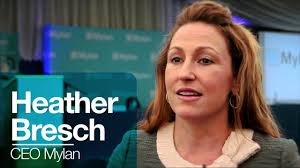
Heather Bresch
The daughter of U..S. Senator Joseph Manchin (D-WV), she joined Mylan in 1992 and held various positions within the company. Among these: Its chief lobbyist before Congress.
It was in that capacity that she persuaded Congress to enact a bill requiring all public schools to carry EpiPens for students with food allergies. It was signed into law by President Barack Obama in November, 2013.
Over the next three years, schools nationwide bought EpiPens by the truckload. And Mylan jacked up its prices for the EpiPen every other quarter.
On January 1, 2012, Heather Bresch became Mylan’s CEO.
But it wasn’t enough to have a monopoly on a device millions of men, women and children desperately needed. In 2014, true to its “profits-at-any-price” philosophy, Mylan reincorporated in the Netherlands to lower its effective tax rate.
It did so through a corporate accounting trick known as a tax inversion, and thus claiming the status of a foreign-owned corporation although its headquarters remained in Canonsburg, Pennsylvania.
Even her own father, U..S. Senator Joseph Manchin, condemned Mylan’s use of the inversion scheme and said it should be illegal.
But Bresch fiercely defended it in an interview with the New York Times: “You can’t maintain competitiveness by staying at a competitive disadvantage. I mean you just can’t.”
No doubt, with her $18 million-a-year CEO salary and moneyed ties to high-powered attorneys and influential members of Congress, Bresch thinks herself invulnerable.
But all that could quickly change–if even a small number of her victims become angry enough.
2016 PRESIDENTIAL CAMPAIGN, ABC NEWS, ANTHEM INC., ASHLEY MADISON, BERNIE SANDERS, CBS NEWS, CNN, CYBERSECURITY, DAIRY QUEEN, DEBBIE WASSERMAN-SCHULTZ, DEMOCRATIC NATIONAL COMMITTEE, DEMOCRATIC PARTY, DONALD TRUMP, FACEBOOK, HACKING, HILLARY CLINTON, HOME DEPOT, JPMORGAN/CHASE, KMART, NAPOLEON BONAPARTE, NATIONAL LEGAL AND POLICY CENTER, NBC NEWS, NICCOLO MACHIAVELLI, REPUBLICAN PARTY, SONY PICTURES, STAPLES, TARGET, THE DISCOURSES, THE LOS ANGELES TIMES, THE NEW YORK TIMES, THE OFFICE OF PERSONNEL MANAGEMENT, THE PENTAGON, THE PRINCE, THE U.S. DEPARTMENT OF STATE, THE WASHINGTON POST, TWITTER, WIKILEAKS
In Bureaucracy, History, Military, Politics, Social commentary on July 26, 2016 at 12:15 am
On July 22, Wikileaks released 19,252 emails and 8,034 attachments hacked from computers of the highest-ranking officials of the Democratic National Committee (DNC).
The emails were exchanged from January 2015 through May 2016.
These clearly reveal a bias for Hillary Clinton and against her lone challenger, Vermont U.S. Senator Bernie Sanders.
One email revealed that Brad Marshall, the chief financial officer of the DNC, suggested that Sanders, who is Jewish, could be portrayed as an atheist.
Sanders’ supporters have long charged that the DNC and its chair, Debbie Wasserman-Schultz, were plotting to undercut his campaign. Now thousands of them are expected to descend on the Democratic convention as furious protesters.
The leak could not have come at a worse time for Hillary Clinton, the former First Lady, U.S. Senator from New York and Secretary of State under President Barack Obama.
About to receive the Democratic nomination for President, she finds herself charged with undermining the electoral process.
Wasserman-Schultz has proven the first casualty of the leak, resigning from her position as chair of the DNC and saying she would not open the Democratic convention as previously scheduled.
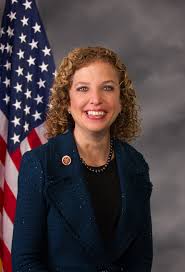
Debbie Wasserman-Schultz
As for Clinton: Her campaign manager, Bobby Mook, blamed the Russians for the leak. Their alleged motive: To help Republican Presidential nominee Donald Trump.
Cyber-security experts believe the hackers originated from Russia–and that Russian President Vladimir Putin may have authorized it.
His alleged motive: Trump has repeatedly attacked United States’ membership in the North Atlantic Treaty Organization (NATO).
He believes the United States is paying an unfairly large portion of the monies needed to maintain this alliance–and he wants other members to contribute far more. Otherwise, if he is elected President, they would be on their own if attacked by Russia.
Trump took to twitter to offer his take on the release: “How much BAD JUDGEMENT was on display by the people in DNC in writing those really dumb e-mails, using even religion, against Bernie!”

Bernie Sanders
Which brings up the obvious question: Why was such sensitive information entrusted to computers that could be hacked?
This is not the first time a major corporation or government agency has fallen prey to hackers.
Name-brand companies, trusted by millions, have been hit with massive data breaches that compromised their customers’ and/or employees’ most sensitive financial and personal information.
Among those companies and agencies:
- Target
- Kmart
- Home Depot
- JPMorgan/Chase
- Staples
- Dairy Queen
- Anthem, Inc.
- Sony Pictures
- The U.S. State Department
- The Pentagon
- The Office of Personnel Management
Perhaps the most notorious target so far hacked is Ashley Madison, the website for cheating wives and husbands. Launched in 2001, its catchy slogan is: “Life is short. Have an affair.”

On July 15, 2015, its more than 37 million members learned that highly embarrassing secrets they had entrusted to Ashley Madison had been compromised.
This included their sexual fantasies, matching credit card transactions, real names and addresses, and employee documents and emails.
A website offering cheating services to those wealthy enough to afford high-priced fees is an obvious target for hackers. After all, its database is a blackmailer’s dream-come-true.
And the same is true for computers of one of the two major political parties of the United States.
Among the secrets unearthed in the WikiLeaks document-dump: Plans by Democratic party officials to reward large donors and prominent fundraisers with lucrative appointments to federal boards and commissions.
Most of the donors listed gave to Clinton’s campaign. None gave to Sanders.
According to Ken Boehm, chairman of the National Legal and Policy Center, a government watchdog group:
“The disclosed DNC emails sure look like the potential Clinton Administration has intertwined the appointments to federal government boards and commissions with the political and fund raising operations of the Democratic Party. That is unethical, if not illegal.”
Centuries before the invention of computers–and the machinery needed to hack into them–Niccolo Machiavelli offered cautionary advice to those thinking of entering into a conspiracy. He did so in his masterwork on politics, The Discourses.

Niccolo Machiavelli
Unlike his better-known work, The Prince, which deals with how to secure power, The Discourses lays out rules for preserving liberty within a republic.
In Book Three, Chapter Six (“Of Conspiracies”) he writes:
“I have heard many wise men say that you may talk freely with any one man about everything, for unless you have committed yourself in writing, the ‘Yes’ of one man is worth as much as the ‘No’ of another.
“And therefore one should guard most carefully against writing, as against a dangerous rock, for nothing will convict you quicker than your own handwriting.”
In 1804, Napoleon Bonaparte, then First Consul of France, ordered the execution of the popular Louis Antoine de Bourbon, Duke of Enghien, claiming that he had aided Britain and plotted against France.
The aristocracy of Europe, still recalling the slaughters of the French Revolution, was shocked.
Asked for his opinion on the execution, Napoleon’s chief of police, Joseph Fouche, said: “It was worse than a crime; it was a blunder.”
This may prove to be history’s verdict on the storing of so many incriminating computer files by the DNC.
ABC NEWS, ADVICE, BAY OF PIGS, CBS NEWS, CNN, CORPORATIONS, CUBA, FACEBOOK, FIDEL CASTRO, JOHN F. KENNEDY, NBC NEWS, NICCOLO MACHIAVELLI, POLITICS, THE CHICAGO SUN-TIMES, THE CHICAGO TRIBUNE, THE DISCOURSES, THE LOS ANGELES TIMES, THE NEW YORK TIMES, THE PRINCE, THE WASHINGTON POST, TWITTER
In Bureaucracy, Business, History, Military, Politics on June 23, 2016 at 1:14 am
On the rare occasion when most people think of Niccolo Machiavelli, the image of the devil comes to mind.

Niccolo Machiavelli
In fact, “The Old Nick” became an English term used to describe Satan and slander Machiavelli at the same time.
The truth, however, is more complex. Machiavelli was a passionate Republican, who spent most of his adult life in the service of his beloved city-state, Florence.
The years he spent as a diplomat were tumultuous ones for Italy–with men like Pope Julius II and Caesare Borgia vying for power and plunging Italy into one bloodbath after another.
Machiavelli is best-known for his writing of The Prince, a pamphlet on the arts of gaining and holding power. Its admirers have included Benito Mussolini and Joseph Stalin.

But his longer and more thoughtful work is The Discourses, in which he offers advice on how to maintain liberty within a republic. Among its admirers were many of the men who framed the Constitution of the United States.

Also contrary to what most people believe about Machiavelli, he did not advocate evil for its own sake. Rather, he recognized that sometimes there is no perfect–or perfectly good–solution to a problem.
Sometimes it’s necessary to take stern–even brutal–action to stop an evil (such as a riot) before it becomes widespread.
His counsel remains as relevant today as it did during his lifetime (1469 – 1527)–especially for politicians.
But plenty of ordinary citizens can also benefit from the advice he has to offer–such as those who are asked to give advice to more powerful superiors.
Machiavelli warns there is danger in urging rulers to take a particular course of action:
“For men only judge of matters by the result, all the blame of failure is charged upon him who first advised it, while in case of success he receives commendations. But the reward never equals the punishment.”
This puts would-be counselors in a difficult position: “If they do not advise what seems to them for the good of the republic or the prince, regardless of the consequences to themselves, then they fail to do their duty.
“And if they do advise it, then it is at the risk of their position and their lives, for all men are blind in thus, that they judge of good or evil counsels only by the results.”
Thus, Machiavelli warns that an adviser should “take things moderately, and not to undertake to advocate any enterprise with too much zeal, but to give one’s advice calmly and modestly.”
The person who asked for the advice may follow it, or not, as of his own choice, and not because he was led or forced into it by the adviser.
Above all, the adviser must avoid the danger of urging a course of action that runs “contrary to the wishes of the many.
“For the danger arises when your advice has caused the many to be contravened. In that case, when the result is unfortunate, they all concur in your destruction.”
Or, as President John F. Kennedy famously said after the disastrous invasion of Cuba at the Bay of Pigs in April, 1961: “Victory has a hundred fathers and defeat is an orphan.”

John F. Kennedy
By “not advocating any enterprise with too much zeal,” the adviser gains two advantages:
“The first is, you avoid all danger.
“And the second consists in the great credit which you will have if, after having modestly advised a certain course, your counsel is rejected, and the adoption of a different course results unfortunately.”
Finally, the time to give advice is before a catastrophe occurs, not after. Machiavelli gives a vivid example of what can happen if this rule is ignored.
King Perseus of Macedon had gone to war with Paulus Aemilius–and suffered a humiliating defeat. Fleeing the battlefield with a handful of his men, he later bewailed the disaster that had overtaken him.
Suddenly, one of his lieutenants began to lecture Perseus on the many errors he had committed, which had led to his ruin.
“Traitor,” raged the king, turning upon him, “you have waited until now to tell me all this, when there is no longer any time to remedy it–” And Perseus slew him with his own hands.
Niccolo Machiavelli sums up the lesson as this:
“Thus was this man punished for having been silent when he should have spoken, and for having spoken when he should have been silent.”
Be careful that you don’t make the same mistake.
ABC NEWS, ALTERNET, AP, BLACKS, BUZZFEED, CBS NEWS, CNN, CROOKS AND LIARS, DAILY KOZ, DAVID BROOKS, DONALD TRUMP, FACEBOOK, HILLARY CLINTON, JOHN KASICH, JOHN MCCAIN, LATINOS, MOTHER JONES, MOVEON, MSNBC, MUSLIMS, NBC NEWS, NEWSWEEK, NICCOLO MACHIAVELLI, NPR, NUCLEAR TRIAD, PBS NEWSHOUR, POLITICO, PRISONERS OF WAR, RAFAEL CRUZ, RAW STORY, REPUBLICAN PRESIDENTIAL NOMINATION, REUTERS, SALON, SEATTLE TIMES, SLATE, THE ATLANTIC, THE CHICAGO SUN-TIMES, THE CHICAGO TRIBUNE, THE DAILY BEAST, THE DISCOURSES, THE GUARDIAN, THE HILL, THE HUFFINGTON POST, THE LOS ANGELES TIMES, THE NATION, THE NEW YORK TIMES, THE PRINCE, THE WASHINGTON POST, TIME, TWITTER, U.S. NEWS & WORLD REPORT, UPI, USA TODAY, WOMEN
In History, Military, Politics, Social commentary on May 10, 2016 at 12:01 am
Donald Trump is riding high, the almost certain Republican nominee for President when that party holds its convention in Cleveland during the week of July 18.
But Niccolo Machiavelli, the 16th-century Florentine statesmen and father of modern politics, has more than a few timely warnings to offer him–and voters inclined to vote for him.
For openers: Trump has drawn heavy criticism for his angry and brutal attacks on a wide range of persons and organizations–including his fellow Republicans, journalists, news organizations, other countries and even celebrities who have nothing to do with politics.

Donald Trump
Now consider Machiavelli’s advice on gratuitously handing out insults and threats:
-
“I hold it to be a proof of great prudence for men to abstain from threats and insulting words towards any one.
-
“For neither the one nor the other in any way diminishes the strength of the enemy–but the one makes him more cautious, and the other increases his hatred of you, and makes him more persevering in his efforts to injure you.”
And Trump’s reaction to the criticism he’s received?
“I can be Presidential, but if I was Presidential I would only have–about 20% of you would be here because it would be boring as hell, I will say,” Trump told supporters at a rally in Superior, Wisconsin.
Trump admitted that his wife, Melania, and daughter, Ivanka, had urged him to be more Presidential. And he promised that he would.
“But I gotta knock off the final two [Republican candidates–Ohio Governor John Kasich and Texas U.S. Senator Rafael Cruz] first, if you don’t mind.”
For those who expect Trump to shed his propensity for constantly picking fights, Machiavelli has a stern warning:
-
“…If it happens that time and circumstances are favorable to one who acts with caution and prudence he will be successful. But if time and circumstances change he will be ruined, because he does not change the mode of his procedure.
-
“No man can be found so prudent as to be able to adopt himself to this, either because he cannot deviate from that to which his nature disposes him, or else because, having always prospered by walking in one path, he cannot persuade himself that it is well to leave it…
-
“For if one could change one’s nature with time and circumstances, fortune would never change.”
Niccolo Machiavelli
Then there is Trump’s approach to consulting advisers:
Asked on MSNBC’s “Morning Joe” who he consults about foreign policy, Trump replied; “I’m speaking with myself, number one, because I have a very good brain and I’ve said a lot of things.”
This totally contrasts the advice given by Machiavelli:
-
“A prudent prince must [choose] for his counsel wise men, and [give] them alone full liberty to speak the truth to him, but only of those things that he asks and of nothing else.
-
“But he must be a great asker about everything and hear their opinions, and afterwards deliberate by himself in his own way, and in these counsels…comport himself so that every one may see that the more freely he speaks, the more he will be acceptable.”
And Machiavelli offers a related warning on the advising of rulers: Unwise princes cannot be wisely advised.
During the fifth GOP debate in the Presidential sweepstakes, host Hugh Hewitt asked Trump this question:
“Mr. Trump, Dr. [Ben] Carson just referenced the single most important job of the president, the command and the care of our nuclear forces. And he mentioned the triad.
“The B-52s are older than I am. The missiles are old. The submarines are aging out. It’s an executive order. It’s a commander-in-chief decision.
“What’s your priority among our nuclear triad?”
[The triad refers to America’s land-, sea- and air-based systems for delivering nuclear missiles and bombs.]

Nuclear missile in silo
Trump’s reply: “Well, first of all, I think we need somebody absolutely that we can trust, who is totally responsible, who really knows what he or she is doing. That is so powerful and so important.”
He then digressed to his having called the Iraq invasion a mistake in 2003 and 2004. Finally he came back on topic:
“But we have to be extremely vigilant and extremely careful when it comes to nuclear.
“Nuclear changes the whole ballgame. The biggest problem we have today is nuclear–nuclear proliferation and having some maniac, having some madman go out and get a nuclear weapon.
“I think to me, nuclear, is just the power, the devastation is very important to me.”
Which brings us back to Machiavelli:
-
“…Some think that a prince who gains the reputation of being prudent [owes this to] the good counselors he has about him; they are undoubtedly deceived.
-
“It is an infallible rule that a prince who is not wise himself cannot be well advised, unless by chance he leaves himself entirely in the hands of one man who rules him in everything, and happens to be a very prudent man. In this case, he may doubtless be well governed, but it would not last long, for the governor would in a short time deprive him of the state.”
All of which would lead Niccolo Machiavelli to warn, if he could witness American politics today: “This bodes ill for your Republic.”
ABC NEWS, ALTERNET, AP, ASIANS, BLACKS, BUZZFEED, CBS NEWS, CNN, CROOKS AND LIARS, DAILY KOZ, DAVID BROOKS, DONALD TRUMP, FACEBOOK, HILLARY CLINTON, JOHN KASICH, JOHN MCCAIN, LATINOS, MOTHER JONES, MOVEON, MSNBC, MUSLIMS, NBC NEWS, NEWSWEEK, NICCOLO MACHIAVELLI, NPR, NUCLEAR TRIAD, PBS NEWSHOUR, POLITICO, PRISONERS OF WAR, RAFAEL CRUZ, RAW STORY, REPUBLICAN PRESIDENTIAL NOMINATION, REUTERS, SALON, SEATTLE TIMES, SLATE, THE ATLANTIC, THE CHICAGO SUN-TIMES, THE CHICAGO TRIBUNE, THE DAILY BEAST, THE DISCOURSES, THE GUARDIAN, THE HILL, THE HUFFINGTON POST, THE LOS ANGELES TIMES, THE NATION, THE NEW YORK TIMES, THE PRINCE, THE WASHINGTON POST, TIME, TWITTER, U.S. NEWS & WORLD REPORT, UPI, USA TODAY, USA TODAY DONALD TRUMP, WOMEN
In History, Military, Politics, Social commentary on May 9, 2016 at 12:37 am
Donald Trump has swept the field of his political rivals. The Republican nomination for President now stands within his reach.
The “Anybody-But-Trump” coalition no longer has a champion. Its last two–Ohio Governor John Kasich and Texas U.S. Senator Rafael Cruz–have bowed out of the race.
On May 3, Trump captured 53.3% of the votes in the Indiana primary, compared to 36.7% for Cruz and 7.5% for Kasich.
That night, Cruz threw in the towel.
“Together we left it all on the field in Indiana,” Cruz told his disappointed supporters in Indianapolis. “We gave it everything we’ve got. But the voters chose another path.”

Rafael “Ted” Cruz
The next day–May 4–so did Kasich, the only candidate who had dared compare Trump to Adolf Hitler.
All that Trump need do, from here on, is wait until the Republican convention assembles in Cleveland during the week of July 18.
Even so, Trump gets poor marks as a man and a candidate from many of his fellow conservatives.
One of these is New York Times political columnist David Brooks.

David Brooks
Appearing on the May 25 edition of The PBS Newshour, Brooks offered some highly disturbing assessments about the man who seeks to control the most powerful nation in the world.
- “The odd thing about [Trump’s] whole career and his whole language, his whole world view is there is no room for love in it. You get a sense of a man who has received no love, can give no love, so his relationship with women, it has no love in it. It’s trophy.”
- “And [Trump’s] relationship toward the world is one of competition and beating, and as if he’s going to win by competition what other people get by love.”
- “And so you really are seeing someone who just has an odd psychology unleavened by kindness and charity, but where it’s all winners and losers, beating and being beat. And that’s part of the authoritarian personality….”
An even more damning assessment comes from Niccolo Machiavelli, the 16th-century Florentine statesman whose two great works on politics–The Prince and The Discourses–remain textbooks for successful politicians more than 500 years later.
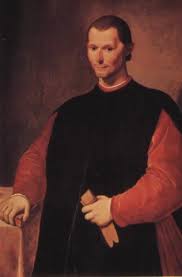
Niccolo Machiavelli
Consider Trump’s notoriety for hurling insults at virtually everyone, including:
- Latinos
- Asians
- Muslims
- Blacks
- The Disabled
- Women
- Prisoners-of-War
These insults delight his white, under-educated followers. But they have alienated millions of other Americans who might have voted for him.
Among those groups–and the insults Trump has leveled at them:
- Mexicans: “They’re bringing drugs. They’re bringing crime. They’re rapists.” He’s also promised to “build a great, great wall on our southern border and I will have Mexico pay for that wall.”
- Prisoners-of-War: Speaking of Arizona U.S. Senator John McCain, a Vietnam POW for seven years: “He’s not a war hero. He’s a war hero because he was captured. I like people that weren’t captured.”
- Blacks: At a Trump rally in Birmingham, Alabama, he was interrupted by black activist Mercutio Southall, who repeatedly shouted: “Black lives matter!” Trump ordered his removal, and several of his supporters beat and kicked Southall. Later, Trump said: “Maybe he should have been roughed up, because it was absolutely disgusting what he was doing.”
- Trump retweeted an image of a masked, dark-skinned man with a handgun and a series of alleged crime statistics, including: “Blacks killed by whites – 2%”; “Whites killed by blacks – 81%.” The image cites the “Crime Statistics Bureau – San Francisco”–an agency that doesn’t exist.
- Muslims: Trump has boasted he would require Muslims to register with the Federal Government. And he would close “some mosques” if he felt they were being used by Islamic terrorists.
- Women: “If Hillary Clinton can’t satisfy her husband, what makes her think she can satisfy America?”
- “Twenty-six thousand unreported sexual assaults in the military–only 238 convictions. What did these geniuses expect when they put men and women together?”
- Asians: “Negotiating with Japan, negotiating with China, when these people walk into the room, they don’t say, ‘Oh hello, how’s the weather? So beautiful outside, isn’t it lovely? How are the Yankees doing? Oh, they are doing wonderful, great.’ They say, ‘We want deal!’”
Machiavelli, on the other hand, advises leaders to refrain from gratuitous insults:
- “It is not necessary for a prince to have all the above-named qualities [mercy, faith, humanity, integrity and religion] but it is very necessary to seem to have them….”
- “A prince must take care that nothing goes out of his mouth which is not full of the above-named five qualities, and he should seem to be all mercy, faith, integrity, humanity and religion.”
- “And nothing is more necessary than to seem to have this last quality, for men in general judge more by the eyes than by the hands, for every one can see, but very few have to feel. Everyone seems what you appear to be, few feel what you are….”
- “…[The Roman Emperor Commodus]…by not maintaining his dignity, by often descending into the theater to fight with gladiators and committing other contemptible actions…became despicable in the eyes of the soldiers. And being hated on the one hand and despised on the other, he was conspired against and killed.”
ABC NEWS, AL QAEDA, BARACK OBAMA, BRUSSELS, CBS NEWS, CIA, CNN, DONALD TRUMP, EDUARDO "TED" CRUZ, FACEBOOK, FBI, GUANTANAMO, ISLAM, ISLAMIC STATE OF IRAQ AND SYRIA (ISIS), NBC NEWS, NEWT GINGRICH, NICCOLO MACHIAVELLI, PARIS, PENTAGON, RICK SANTORUM, RUDOLPH GIULIANI, SAN BERNADINO, SUPREME COURT, TERRORISM, THE DISCOURSES, THE LOS ANGELES TIMES, THE NEW YORK TIMES, THE WASHINGTON POST, TORTURE, TWITTER, WATERBOARDING
In Bureaucracy, History, Law, Law Enforcement, Military, Politics, Social commentary on April 5, 2016 at 12:11 am
Donald Trump has made a return to waterboarding terrorism suspects a prime issue in his campaign for the 2016 Republican Presidential nomination.
And a recent Reuters/lpsos poll shows that nearly two-thirds of Americans believe that the use of torture can be justified to force suspected terrorists to talk.
A growing fear by Americans of Islamic terrorism has been ignited by a series of deadly Islamic terrorist attacks in Europe and the United States.

Humiliating a prisoner in Iraq
In fact, however, torture, generally, and waterboarding in particular, have proven worthless at obtaining reliable information.
Victims will say anything they think their captors want to hear to stop the agony.
Yoshia Chee, a Special Forces veteran of Vietnam, recalled his use of torture against suspected Vietcong:
“One of the favorite things was popping one of their eyeballs out with a spoon….
“If I had one of my eyeballs hanging out, I’d say I killed Kennedy. I’d agree to anything in the whole world.
“We would do that, and they still wouldn’t talk….You rarely got anything out of them. Just more hatred. More reason to fight back.”
Click here: Strange Ground: An Oral History Of Americans In Vietnam, 1945-1975: Harry Maurer: 9780306808395: Amazon.com: Books
During the George W. Bush Presidency, the CIA relied on harsh physical punishments–beatings, humiliations and waterboarding–to convince suspects to talk. These were euphemistically referred to as “enhanced interrogation techniques.”
Upon assuming the Presidency in 2009, Barack Obama ordered an immediate halt to such methods. Since then, Republicans generally and their Presidential aspirants in particular have harshly criticized Obama’s decision.
Like Trump, they claim that Obama has endangered American security in the name of Political Correctness. In turn, Obama has argued that the use of torture produces unreliable information and inflames Muslim hatred of America.
Meanwhile, the FBI has applied its traditional “kill them with kindness” approach to interrogation. And agents found this yielded far greater results.
For one thing, most Al Qaeda members relished appearing before grand juries.
Unlike organized crime members, they were talkative–and even tried to proselytize to the jury members. They were proud of what they had done–and wanted to talk.
“This is what the FBI does,” said Mike Rolince, an FBI expert on counter-terrorism. “Nearly 100% of the terrorists we’ve taken into custody have confessed. The CIA wasn’t trained. They don’t do interrogations.”
According to The Threat Matrix: The FBI at War in the Age of Global Terror (2011) jihadists had been taught to expect severe torture at tha hands of American interrogators.
Writes Author Garrett M. Graff:
“Often, in the FBI’s experience, their best cooperation came when detainees realized they weren’t going to get tortured, that the United States wasn’t the Great Satan. Interrogators were figuring out…that not playing into Al Qaeda’s propaganda could produce victories.”
And the FBI isn’t alone in believing that acts of simple humanity can turn even sworn enemies into allies.
No less an authority on “real-politick” than Niccolo Machiavelli reached the same conclusion more than 500 years ago.
In his small and notorious book, The Prince, he writes about the methods a ruler must use to gain power. But in his larger and lesser-known work, The Discourses, he outlines the ways that liberty can be maintained in a republic.
Niccolo Machiavelli
For Machiavelli, only a well-protected state can hope for peace and prosperity. Toward that end, he wrote at length about the best ways to succeed militarily. And in war, humanity can prevail at least as often as severity.
Consider the following example from The Discourses:
Camillus [a Roman general] was besieging the city of the Faliscians, and had surrounded it….A teacher charged with the education of the children of some of the noblest families of that city [to ingratiate himself] with Camillus and the Romans, led these children…into the Roman camp.
And presenting them to Camillus [the teacher] said to him, “By means of these children as hostages, you will be able to compel the city to surrender.”
Camillus not only declined the offer but had the teacher stripped and his hands tied behind his back….[Then Camillus] had a rod put into the hands of each of the children…[and] directed them to whip [the teacher] all the way back to the city.
Upon learning this fact, the citizens of Faliscia were so much touched by the humanity and integrity of Camillus, that they surrendered the place to him without any further defense.
This example shows that an act of humanity and benevolence will at all times have more influence over the minds of men than violence and ferocity.
It also proves that provinces and cities which no armies…could conquer, have yielded to an act of humanity, benevolence, chastity or generosity.
This truth should be kept firmly in mind whenever Right-wingers start bragging about their own patriotism and willingness to get “down and dirty” with America’s enemies.
Many–like Newt Gingrich, Rudolph Giuliani, Rick Santorum, Eduardo “Ted” Cruz and Donald Trump–did their heroic best to avoid military service. These “chickenhawks” talk tough and are always ready to send others into battle–but keep themselves well out of harm’s way.
Such men are not merely contemptible; they are dangerous.
ABC NEWS, AFGHANISTAN, CBS NEWS, CIA, CNN, COMPUTER SECURITY, DAVID PETRAEUS, EXTRAMARITAL AFFAIRS, FACEBOOK, FBI, GENERAL JOHN ALLEN, IAN FLEMING, IRAQ, JAMES BOND, JILL KELLEY, NBC NEWS, NICCOLO MACHIAVELLI, PAULA BROADWELL, SECRECY, THE CHICAGO SUN-TIMES, THE CHICAGO TRIBUNE, THE DISCOURSES, THE LOS ANGELES TIMES, THE NEW YORK TIMES, THE WALL STREET JOURNAL, THE WASHINGTON POST, TWITTER, USA TODAY, WEST POINT
In Bureaucracy, History, Military, Politics, Social commentary on November 4, 2015 at 12:00 pm
James Bond, the legendary creation of novelist Ian Fleming, routinely bedded femme fatales–and sometimes killed them. But he never faced indictment for romancing them.
That’s the difference between Bond and real-world spying.
And David Petraeus, former director of the Central Intelligence Agency, should have known this better than anyone.
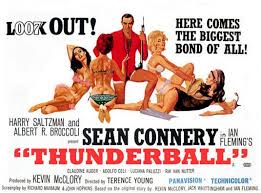
Movie poster for Thunderball (1965)
In January 2015, the FBI and Justice Department decided to bring criminal charges against Petraeus for sharing–as CIA director–classified information with his then-mistress and biographer, Paula Broadwell.
FBI agents found classified information on a personal computer Broadwell used–and determined that Petraeus had supplied it.
As an Army General, Petraeus had successfully led U.S. troops in Afghanistan and Iraq and was thought to be a potential candidate for president.
In 2011, he won appointment to CIA director–which ended abruptly in 2012 with the revelation of his extramarital affair with Broadwell.
Petraeus is one of the most highly educated men in the United States:
- Alumnus of the United States Military Academy at West Point–graduating among the top 5% of his 1974 class.
- Earned an M.P.A. in 1985 and a Ph.D. in International Relations in 1987 from the Woodrow Wilson School of Public and International Affairs at Princeton University.
- Served as Assistant Professor of International Relations at the United States Military Academy
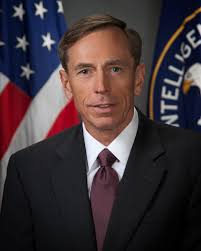
David Petraeus
And Paula Broadwell is one of the most highly educated women in the United States:
- Graduate of the United States Military Academy at West Point in 1995, majoring in political geography.
- Earned a master’s degree in international security from the University of Denver’s Joseph Korbel School of International Studies in 2006.
- Earned a Master of Public Administration from the John F. Kennedy School of Government at Harvard University in 2008.
In addition, Petraeus, as director of the CIA, knew the importance of secrecy in keeping clandestine affairs (military and personal) out of sight.
So did Broadwell, having earned a reputation as an expert on counter-terrorism.
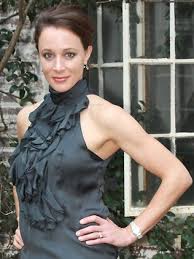
Paula Broadwell
Yet they both violated the most basic rules of security.
They exchanged emails using a cyber trick known to both terrorists and teenagers: Sharing a private email account, or “dropbox.”
In this they composed drafts to each other in order not to directly transmit messages to one another. Each could log onto the same account and read the draft emails there.
By doing so, they flagrantly left a cyber-trail of their infidelities. (Broadwell was also married.)
It was Niccolo Machiavelli, the father of political science, who warned: If you don’t want it known, don’t write it down.
More than 500 years ago, in his masterwork, The Discourses, he warned:

Niccolo Machiavelli
…You may talk freely with any one man about everything, for unless you have committed yourself in writing, the “Yes” of one man is worth as much as the “No” of another.
And therefore one should guard most carefully against writing, as against a dangerous rock, for nothing will convict you quicker than your own handwriting….
Nor were Petraeus and Broadwell the only ones guilty of thumbing their noses at this most basic of precautions.
General John Allen, the top American commander in Afghanistan, exchanged thousands of emails with Jill Kelley, a Florida socialite.
Although charged with directing American military efforts against the Taliban, Allen found time to exchange 20,000 to 30,000 pages’ worth of emails with Kelley between 2010 and 2012.
The scandal began when Kelley began receiving harassing emails from an unidentified woman. So she complained to the FBI.
The emails allegedly came from Broadwell, who thought that Kelley was trying to move in on “her man”–Petraeus. Apparently, Broadwell didn’t feel similarly threatened by Holly, Petraeus’ wife.)
The FBI investigation ultimately led to the discovery of the Petraeus/Broadwell affair.
There are several lessons to be learned from this behavior by Petraeus, Broadwell, Allen and Kelley:
- They believed they were so privileged–by education, status and/or wealth–that conventional rules of morality didn’t apply to them.
- They believed they were so clever they could violate the most basic rule of security and common sense–and get away with it.
- They were so caught up in their illicit passions that they threw caution to the winds.
- David Petraeus, a highly disciplined man, clearly expected Paula Broadwell to behave in a similarly disciplined manner–and do nothing to compromise their lives.
- Petraeus felt so confident about the secrecy of his affair he had his wife and mistress present when he appeared before the Senate Intelligence Committee in 2011 to become CIA director.

General David Petraeus’ CIA confirmation hearings. His wife, Holly (in white) and mistress, Paula Broadwell (in black).
- Petraeus didn’t imagine that Broadwell suspected another of his admirers–Jill Kelley–of having romantic designs on him.
- And he was utterly surprised when her harassing emails to Kelley led the FBI to uncover his illicit relationship.
In March, 2015, Petraeus agreed to plead guilty in federal court to a charge of unauthorized removal and retention of classified information. On April 23, 2015, a federal judge sentenced Petraeus to two years’ probation plus a fine of $100,000
Thus does hubris meet its punishment in Nemesis.
ABC NEWS, CBS NEWS, CNN, FACEBOOK, FBI, MEXICAN WAR, NBC NEWS, NICCOLO MACHIAVELLI, POLICE, POLICE BRUTALITY, SANDRA BLAND, TEXAS RANGERS, THE CHICAGO SUN-TIMES, THE CHICAGO TRIBUNE, THE DISCOURSES, THE LOS ANGELES TIMES, THE NEW YORK TIMES, THE PRINCE, THE WASHINGTON POST, TWITTER, USA TODAY
In Bureaucracy, History, Law Enforcement, Social commentary on July 31, 2015 at 12:10 am
By now, a second–and female–officer has arrived on the scene of the arrest of motorist Sandra Bland.
Bland: Make you feel real good for a female. Y’all strong, y’all real strong.
Encinia: I want you to wait right here.
Bland: I can’t go anywhere with your fucking knee in my back, duh!
Encinia: (to bystander): You need to leave! You need to leave!
(Bland continues screaming, but much of it is inaudible)
Encinia: For a warning you’re going to jail.
Bland: Whatever, whatever.
Encinia: You’re going to jail for resisting arrest. Stand up.
Bland: If I could, I can’t.
Encinia: OK, roll over.
Bland: I can’t even fucking feel my arms.
Encinia: Tuck your knee in, tuck your knee in.
Bland: (Crying): Goddamn. I can’t [muffled].
Encinia: Listen, listen. You’re going to sit up on your butt.
Bland: You just slammed my head into the ground and you do not even care …
[Bland has already told both officers that (1) she is an epileptic, and (2) Encinia slammed her head into the ground. Now she is again putting them on notice that she could have sustained a traumatic brain injury. But neither officer shows any concern.]
Sandra Bland’s jail booking photo
Encinia: Sit up on your butt.
Female officer: Listen to how he is telling you to get up.
Bland: I can’t even hear.
Female officer: Yes you can.
[After having her head slammed into the ground, Bland says she cannot hear. Both officers should consider that the injury to her head may be serious–and take her to an emergency room for evaluation.]
Encinia: Sit up on your butt.
Bland: He slammed my fucking head into the ground.
Encinia: Sit up on your butt.
Bland: What the hell.
Encinia: Now stand up.
Bland: All of this for a traffic signal. I swear to God. All of this for a traffic signal. (To bystander.) Thank you for recording! Thank you! For a traffic signal — slam me into the ground and everything! Everything! I hope y’all feel good.
Encinia: This officer saw everything.
Female officer: I saw everything.
[Since the female officer was not present when Encinia initially encountered Bland–as the video proves–she could not have “seen everything.” Her claiming to have done so could be seen as evidence that she intends to lie on Encinia’s behalf.]
Bland: And (mufled) no you didn’t. You didn’t see everything leading up to it.
Female Officer: I’m not talking to you.
Bland: You don’t have to.
[This is the last exchange between Bland and the officers as recorded on the dashcam video of Brian Encinia’s police cruiser.]
* * * * *
Born in 1987, Sandra Bland grew up in Illinois, and lived with her family in suburban Chicago.
She graduated Willowbrook High School in Villa Park, Illinois, where she ran track and played volleyball. She was also a varsity cheerleader and part of the marching band.
She then attended Prairie View A&M University outside Hempstead, Waller County, Texas. She graduated in 2009 with a degree in agriculture.
Bland returned to Illinois in 2009.
In January 2015, she began posting videos on Facebook about police brutality against blacks.
In early July she traveled to Waller County, Texas, to begin a job at her alma mater, Prairie View A&M.
In one of her last conversations with her mother, Geneva Reed-Veal, Bland said:
“Momma, now I know what my purpose is. My purpose is to go back to Texas. My purpose is to stop all social injustice in the South.”
On July 13–three days after her arrest on July 10–Bland was found dead in her cell in Waller County Jail in Hempstead, Texas.

Sandra Bland memorial
Police claimed that she had hanged herself, citing a video she posted in Facebook in March, where Bland stated she was depressed.
Cannon Lambert, an attorney for the Bland family, said that at the time of Bland’s death, her relatives were raising money for Bland’s $5,000 bail. And Bland knew it.
“We don’t understand this,” said Lambert. “It doesn’t make sense.”
The Texas Rangers and the FBI are still investigating Bland’s death.
The Harris County medical examiner conducted an autopsy and ruled her death a suicide, claiming that it found no evidence of a violent struggle.
One possibility: Bland came to Texas to “stop all social injustice in the South.” She may have grown fatally depressed at her inability to “save herself” from jail over a simple traffic violation.
Another possibility: Texas authorities may have indulged in a long-cherished Texas tradition, best explained by a 19th-century Texas Ranger named Samuel Reid.
Reid served as a Ranger scout during the Mexican War (1846-1848). Recalling his experiences south of the border, he wrote:
“Our orders were most strict not to molest any unarmed Mexican.
“And if some of the most notorious of these villians were found shot, or hung up in the chaparral…the [United States] government was charitably bound to suppose that, during a fit of remorse and desperation, tortured by conscience for the many evil deeds they had committed, they had recklessly laid violent hands upon their own lives! Quien sabe?”
Meanwhile, Brian Encinia has been placed on administrative duties after the state Department of Public Safety found “violations of procedures regarding traffic stops and the department’s courtesy policy.”
ABC NEWS, CBS NEWS, CNN, FACEBOOK, FBI, MEXICAN WAR, NBC NEWS, NICCOLO MACHIAVELLI, POLICE, POLICE BRUTALITY, SANDRA BLAND, TEXAS RANGERS, THE CHICAGO SUN-TIMES, THE CHICAGO TRIBUNE, THE DISCOURSES, THE LOS ANGELES TIMES, THE NEW YORK TIMES, THE PRINCE, THE WASHINGTON POST, TWITTER, USA TODAY
In Bureaucracy, History, Law Enforcement, Social commentary on July 30, 2015 at 1:02 am
The confrontation between black motorist Sandra Bland and Texas State Trooper Brian Encinia continued to worsen.
Encinia: If you would’ve just listened.
Bland: I was trying to sign the fucking ticket — whatever.
Encinia: Stop moving!
Bland: Are you fucking serious?
Encinia: Stop moving!
Bland: Oh I can’t wait ’til we go to court. Ooh I can’t wait. I cannot wait ’til we go to court. I can’t wait. Oh I can’t wait! You want me to sit down now?
Encinia: No.
Bland: Or are you going to throw me to the floor? That would make you feel better about yourself?
[Bland continues to attack Encinia’s masculinity–almost as if she’s daring him to rough her up. If he wasn’t thinking of throwing her to the floor, she just gave him the idea.]

Sandra Bland voicemail from jail
Encinia: Knock it off!
Bland: Nah that would make you feel better about yourself. That would make you feel real good wouldn’t it? Pussy ass. Fucking pussy. For a failure to signal you’re doing all of this. In little ass Praire View, Texas. My God they must have …
[Niccolo Machiavelli, in his masterwork, The Discourses, offers this cautionary advice: “I hold it to be a proof of great prudence for men to abstain from threats and insulting words toward any one, for neither the one or the other in any way diminishes the strength of the enemy.
[“(Contempt) make(s) him more cautious, and (insults) increase his hatred of you, and make him more persevering in his efforts to injure you.”
[That’s clearly what happened here.]
Encinia: You were getting a warning, until now you’re going to jail.
Bland: I’m getting a — for what? For what?
Encinia: You can come read.
Bland: I’m getting a warning for what? For what!?
Encinia: Stay right here.
Bland: Well you just pointed me over there! Get your mind right.
Encinia: I said stay over here. Stay over here.
Bland: Ooh I swear on my life, y’all are some pussies. A pussy-ass cop, for a fucking signal you’re gonna take me to jail.
[Again, Bland is essentially daring Encinia–who has total control of her–to physically abuse her. For her own sake, the smart thing to do would be to shut up.]
Encinia (to dispatch, or an officer arriving on scene): I got her in control she’s in some handcuffs.
Bland: For a fucking ticket. What a pussy. What a pussy. You’re about to break my fucking wrist!
Encinia: Stop moving.
Bland: I’m standing still! You keep moving me, goddammit.
Encinia: Stay right here. Stand right there.
Bland: Don’t touch me. Fucking pussy — for a traffic ticket (inaudible).
(door slams)
[Again: More profanity–and yet another challenge to Encinia’s masculinity.]
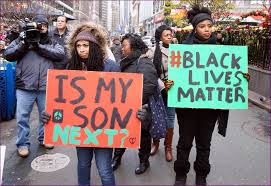
Sandra Bland was an activist in the Black Lives Matter movement
Encinia: Come read right over here. This right here says ‘a warning.’ You started creating the problems.
Bland: You asked me what was wrong!
Encinia: Do you have anything on your person that’s illegal?
Bland: Do I feel like I have anything on me? This a fucking maxi dress.
Encinia: I’m going to remove your glasses.
Bland: This a maxi dress. (Inaudible) Fucking assholes.
Encinia: Come over here.
Bland: You about to break my wrist. Can you stop? You’re about to fucking break my wrist! Stop!!!
Encinia: Stop now! Stop it! If you would stop resisting.
Female officer: Stop resisting ma’am.
[Even if Bland is not resisting, the testimony of a second officer who says she is could have been used against her in court.]
Bland: (cries) For a fucking traffic ticket, you are such a pussy. You are such a pussy.
[Is Bland referring to Encinia or the female officer? In either case, such language will do her no good–on the street or in court.]
Female officer: No, you are. You should not be fighting.
Encinia: Get on the ground!
Bland: For a traffic signal!
Encinia: You are yanking around, when you pull away from me, you’re resisting arrest.
Bland: Don’t it make you feel real good don’t it? A female for a traffic ticket. Don’t it make you feel good Officer Encinia? You’re a real man now. You just slammed me, knocked my head into the ground. I got epilepsy, you motherfucker.
[By stating she is epileptic, Bland has notified both officers that she could be in danger of a potentially lethal seizure at any moment. The smart move for the police would have been to rush her to a hospital for an emergency checkup. But they don’t even talk about doing this.]
Encinia: Good. Good.
Bland: Good? Good?
Female officer: You should have thought about it before you started resisting.
[The female officer has just confimed–perhaps unintentionally–that her partner slammed Bland’s head into the ground. She has also demonstrated her own indifference to Bland’s having received a potentially life-threatening injury.]
Bland: Make you feel real good for a female. Y’all strong, y’all real strong.
Encinia: I want you to wait right here.
Bland: I can’t go anywhere with your fucking knee in my back, duh!
Encinia: (to bystander): You need to leave! You need to leave!
[Although the bystander is not interfering in any way with the arrest, Encinia clearly does not want a non-cop witness to his treatment of Bland.]
ABC NEWS, CBS NEWS, CNN, FACEBOOK, FBI, MEXICAN WAR, NBC NEWS, NICCOLO MACHIAVELLI, POLICE, POLICE BRUTALITY, SANDRA BLAND, TEXAS RANGERS, THE CHICAGO SUN-TIMES, THE CHICAGO TRIBUNE, THE DISCOURSES, THE LOS ANGELES TIMES, THE NEW YORK TIMES, THE PRINCE, THE WASHINGTON POST, TWITTER, USA TODAY
In Bureaucracy, History, Law Enforcement, Social commentary on July 29, 2015 at 12:17 am
There are some useful lessons to be learned from the arrest of Sandra Bland.
Lessons about how a police officer should behave toward the public. And lessons about how the public can protect themselves from police abuse.
On July 10, Texas State Trooper Brian Encinia stopped black motorist Sandra Bland for failing to signal a lane change.
The confrontation quickly escalated to unwarranted aggression and threats by Encinia and foul-mouthed, combative behavior by Bland.
Brian Encinia: I’m going to yank you out of here.
Sandra Bland: OK, you’re going to yank me out of my car? OK, alright.
Encinia (calling in backup): 2547.
Bland: Let’s do this.
Encinia: Yeah, we’re going to. (Grabs for Bland.)
Bland: Don’t touch me!
[Although Encinia is clearly angry, Bland’s refusal to exit her car was technically “resisting arrest.” This was a charge to be fought–in court–by her attorney, not–on the street–by Bland.]
Encinia: Get out of the car!
Bland: Don’t touch me. Don’t touch me! I’m not under arrest–you don’t have the right to take me out of the car.
Encinia: You are under arrest!
[Once the officer says, “You are under arrest,” legally, that’s it. The arrest can be challenged later–in court. And it may be found unwarranted–in court. But it’s useless and even dangerous to dispute a cop’s right to make an arrest on the street.]
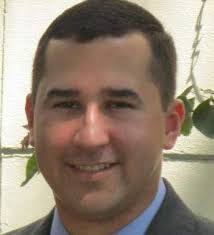
Brian Encinia
Bland: I’m under arrest? For what? For what? For what?
Encinia (to dispatch): 2547 county fm 1098 (inaudible) send me another unit. (To Bland) Get out of the car! Get out of the car now!
Bland: Why am I being apprehended? You’re trying to give me a ticket for failure….
Encinia: I said get out of the car!
Bland: Why am I being apprehended? You just opened my–
Encinia: I‘m giving you a lawful order. I’m going to drag you out of here.
Bland: So you’re threatening to drag me out of my own car?
Encinia: Get out of the car!
Bland: And then you’re going to [crosstalk] me?
Encinia: I will light you up! Get out! Now! (Draws stun gun and points it at Bland.)
Bland: Wow. Wow. (Bland exits car.)
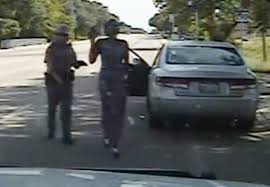
Brian Encinia aiming a Taser at Sandra Bland
Encinia: Get out. Now. Get out of the car!
Bland: For a failure to signal? You’re doing all of this for a failure to signal?
Encinia: Get over there.
Bland: Right, yeah, let’s take this to court, let’s do this.
Encinia: Go ahead.
Bland: For a failure to signal? Yup, for a failure to signal!
Encinia: Get off the phone!
Bland: (crosstalk)
Encinia: Get off the phone! Put your phone down!
Bland: I’m not on the phone. I have a right to record. This is my property. Sir?
Encinia: Put your phone down right now. Put your phone down!
(Bland slams phone down on her trunk.)
Bland: For a fucking failure to signal. My goodness. Y’all are interesting. Very interesting.
[Profanity is never helpful in a situation like this–and usually leads to further escalation. And when the case comes to trial, it’s likely to convince a jury: “She got what she deserved.”]
Encinia: Come over here. Come over here now.
Bland: You feelin’ good about yourself?
Encinia: Stand right here. Stand right there.
Bland: You feelin’ good about yourself? For a failure to signal? You feel real good about yourself don’t you? You feel good about yourself don’t you?
[Bland would have been well-advised to remain silent–and refrain from personal attacks on a man who’s clearly shown himself over the edge.]
Encinia: Turn around. Turn around. Turn around now. Put your hands behind your back.
Bland: Why am I being arrested?
Encinia: Turn around.
Bland: Why can’t you–
Encinia: I’m giving you a lawful order. I will tell you–
Bland: Why am I being arrested?
Encinia: Turn around!
[Obviously, if Bland were complying with the order to “turn around,” Encinia would not be repeating it.]
Bland: Why won’t you tell me that part?
Encinia: I’m giving you a lawful order. Turn around.
Bland: Why will you not tell me what’s going on?
Encinia: You are not complying.
Bland: I’m not complying ’cause you just pulled me out of my car.
[Bland admits that she’s “not complying.” Had she lived, this could have been used against her in court.]
Encinia: Turn around.
Bland: Are you fucking kidding me? This is some bull…
Encinia: Put your hands behind your back.
Bland: ‘Cause you know this straight bullshit. And you’re full of shit. Full of straight shit. That’s all y’all are is some straight scared cops. South Carolina got y’all bitch asses scared. That’s all it is. Fucking scared of a female.
[Bland is directly challenging the masculinity of a man who clearly feels he has something to prove. Big mistake.]


&docid=9ui1_6eEdC2RvM&tbnid=7tZltVZLvyljAM%3A&w=535&h=395&ei=3YOzVMOUCdjUoASWqIDQBA&ved=0CAIQxiAwAA&iact=c)


ABC NEWS, ALLERGIES, ALTERNET, AMERICABLOG, AP, BABY BOOMER RESISTANCE, BBC, BERNIE SANDERS, BLOOMBERG NEWS, BUZZFEED, CBS NEWS, CHARLES GRASSLEY, CNN, CROOKS AND LIARS, DAILY KOZ, EPINEPHRINE, EPIPEN, EXTORTION, FACEBOOK, FEDERAL TRADE COMMISSION, FIVETHIRTYEIGHT, HARPER’S MAGAZINE, HEATHER BRESCH, HENRY FORD, HUFFINGTON POST, INSTANT CHECKMATE, INTELLIUS, JOHN D. ROCKEFELLER, MEDIA MATTERS, MISSISSIPPI ATTORNEY GENERAL MIKE MOORE, MOTHER JONES, MOVEON, MSNBC, MYLAN PHARMACEUTICALS, NBC NEWS, NERVE GAS, NEW REPUBLIC, NEWSDAY, NEWSWEEK, NICCOLO MACHIAVELLI, NPR, PBS NEWSHOUR, PEOPLE-FINDER WEBSITES, PEOPLE-FINDING SERVICES, PEOPLE-FINDING WEBSITES, POLITICO, POLITICUSUSA, RACKETEER INFUENCED CORRUPT ORGANIZATIONS (RICO) ACT, RAW STORY, REUTERS, SALON, SCHOOL ACCESS TO EMERGENCY EPINEPHRINE ACT AMY KLOBUCHAR, SEATTLE TIMES, SHELDON KAPLAN, SLATE, TALKING POINTS MEMO, THE ATLANTIC, THE CHICAGO SUN-TIMES, THE CHICAGO TRIBUNE, THE DAILY BEAST, THE DAILY BLOG, THE DISCOURSES, THE GUARDIAN, THE HILL, THE HUFFINGTON POST, THE LOS ANGELES TIMES, THE NATION, THE NEW REPUBLIC, THE NEW YORK TIMES, THE NEW YORKER, THE VILLAGE VOICE, THE WASHINGTON POST, THINKPROGRESS, TIME, TOBACCO COMPANY LAWSUITS, TRUTHDIG, TRUTHOUT, TWITTER, TWO POLITICAL JUNKIES, U.S. NEWS & WORLD REPORT, UPI, USA TODAY, VEROMI
BRINGING JUSTICE TO CEOs (CORRUPT EGOTISTICAL OLIGARCHS): PART ONE (OF TWO)
In Bureaucracy, Business, History, Law, Law Enforcement, Medical, Politics, Social commentary on August 29, 2016 at 1:04 amMore than 500 years ago, Niccolo Machiavelli, the father of modern politics, delivered this sage advice in his political masterwork, The Discourses:
All those who have written upon civil institutions demonstrate…that whoever desires to found a state and give it laws, must start with assuming that all men are bad and ever ready to display their vicious nature, whenever they may find occasion for it.
If their evil disposition remains concealed for a time, it must be attributed to some unknown reason; and we must assume that it lacked occasion to show itself. But time, which has been said to be the father of all truth, does not fail to bring it to light.
Niccolo Machiavelli
Unfortunately, it’s advice that members of the United States Congress have blissfully chosen to ignore. And, in doing so, they have condemned millions of Americans to suffering and death at the hands of greed-based, predatory corporations.
One of these corporations is Mylan Pharmaceuticals.
In 2007, Mylan acquired the patent for the EpiPen, a lifesaving device for anyone allergic to common foods like peanuts, shellfish and eggs. Millions of people with life-threatening allergies depend on the EpiPen for survival.
During an allergy attack, the EpiPen injects an emergency dosage of epinephrine to the user, preventing a possibly fatal reaction, known as anaphylaxis, from occurring.
Between 2007 and 2015, the wholesale price of an EpiPen skyrocketed from $56.64 to $317.82–an increase of 461%.
According to NBC News, compensation for Mylan CEO Heather Bresch similarly skyrocketed during the same period: From $2,453,456 in 2007 to $18,931,068 in 2015–a 671% raise in eight years.
Bresch wasn’t the only one to profit at the expense of the most vulnerable.
Mylan’s president, Rajiv Malik, got an 11% pay increase to $1 million annually by 2015. And Mylan Chief Commercial Officer Anthony Mauro got a 13.6% raise, amounting to $625,000 per year.
Between 2007 and 2015, Mylan’s stock price tripled, going from $13.29 per share in 2007 to a high of $47.59 in 2016. By late August, 2016, Mylan’s stock is hovering around $45.68 per share on the NASDAQ index.
Bloomberg states that the EpiPen now accounts for about 40% of Mylan’s profits.
Ironically, Sheldon Kaplan, the man who invented the now-famous device, never made a dime off it, and died in obscurity.
After working at NASA, Kaplan worked for Survival Technology, Inc., in Bethesda, Maryland. His assignment: Create a device to quickly inject a victim of anaphylaxis–a potentially fatal allergic reaction–with an emergency dose of epinephrine.
In 1973, when Kaplan was finalizing the design concept for what would ultimately become the EpiPen, the Defense Department asked him to take on a new assignment. The military needed a device that could quickly inject an antidote for nerve gas.
Kaplan’s design perfectly fitted this need: When a victim plunged a needle into his thigh, a spring-loaded mechanism shot a needle containing life-saving medicine into his bloodstream.
Kaplan’s invention became known as the ComboPen, and was initially used by the Pentagon before becoming available for use by the general public several years later as the EpiPen.
Kaplan left Survival Technology shortly after creating the ComboPen to become a biochemical engineer. He didn’t follow the success of his invention–and didn’t reap any of the huge financial rewards that it has produced.
That has certainly not been true for Mylan Pharmaceuticals.
After cornering the patent on the EpiPen in 2007, the company has made billions on the life-saving device.
According to Bloomberg, a package of two EpiPens costs $415 in the United States after insurance discounts. The same package in France–which has price controls under socialized medicine–costs $85.
The chief beneficiary of this legalized price-gouging has been Mylan’s CEO, Heather Bresch.
Heather Bresch
The daughter of U..S. Senator Joseph Manchin (D-WV), she joined Mylan in 1992 and held various positions within the company. Among these: Its chief lobbyist before Congress.
It was in that capacity that she persuaded Congress to enact a bill requiring all public schools to carry EpiPens for students with food allergies. It was signed into law by President Barack Obama in November, 2013.
Over the next three years, schools nationwide bought EpiPens by the truckload. And Mylan jacked up its prices for the EpiPen every other quarter.
On January 1, 2012, Heather Bresch became Mylan’s CEO.
But it wasn’t enough to have a monopoly on a device millions of men, women and children desperately needed. In 2014, true to its “profits-at-any-price” philosophy, Mylan reincorporated in the Netherlands to lower its effective tax rate.
It did so through a corporate accounting trick known as a tax inversion, and thus claiming the status of a foreign-owned corporation although its headquarters remained in Canonsburg, Pennsylvania.
Even her own father, U..S. Senator Joseph Manchin, condemned Mylan’s use of the inversion scheme and said it should be illegal.
But Bresch fiercely defended it in an interview with the New York Times: “You can’t maintain competitiveness by staying at a competitive disadvantage. I mean you just can’t.”
No doubt, with her $18 million-a-year CEO salary and moneyed ties to high-powered attorneys and influential members of Congress, Bresch thinks herself invulnerable.
But all that could quickly change–if even a small number of her victims become angry enough.
Share this: