Posts Tagged ‘SOREN KIERKEGAARD’
2020 PRESIDENTIAL ELECTION, ABC NEWS, ABRAHAM LINCOLN, ALTERNET, AMERICABLOG, AP, APOCALYPSE, ARMAGEDDON, BABY BOOMER RESISTANCE, BLOOMBERG, BOLDNESS, BUZZFEED, CAUTION, CBS NEWS, CHINA, CLIMATE CHANGE, CNN, COVID-19, CROOKS AND LIARS, DONALD TRUMP, FIVETHIRTYEIGHT, GAIUS CASSIUS, GAZA, HAMAS, HARPER’S MAGAZINE, HUFFINGTON POST, illegal immigration, IMAGE, ISRAEL, J.P. MORGAN, JESUS CHRIST, JULIUS CAESAR (PLAY), KEVIN MCCARTHY, MAFIA, MEDIA MATTERS, MOTHER JONES, MOVEON, MSNBC, NBC NEWS, NEW YEAR'S DAY, NEW YEAR'S EVE, NEW YORK, NEWSWEEK, NICCOLO MACHIAVELLI, NPR, PBS NEWSHOUR, POLITICO, POLITICUSUSA, RAW STORY, REALITY, REPUBLICANS, REUTERS, RUSSIA, SALON, SEATTLE TIMES, SLATE, SOREN KIERKEGAARD, TALKING POINTS MEMO, THE ATLANTIC, THE CHICAGO SUN-TIMES, THE CHICAGO TRIBUNE, THE DAILY BEAST, THE DAILY BLOG, THE GUARDIAN, THE HILL, THE HUFFINGTON POST, THE LOS ANGELES TIMES, THE MILLENNIUM, THE NATION, THE NEW REPUBLIC, THE NEW YORK TIMES, THE VILLAGE VOICE, THE WASHINGTON POST, THINKPROGRESS, TIME, TITLE 42, TRUTHDIG, TRUTHOUT, TWITTER, TWO POLITICAL JUNKIES, U.S. NEWS & WORLD REPORT, UKRAINE, UNITED STATES HOUSE OF REPRESENTATIVES, UPI, USA TODAY, VLADIMIR PUTIN, WEALTH, WILLIAM SHAESPEARE, WONKETTE
In Bureaucracy, Business, History, Medical, Military, RELIGION, Social commentary on January 1, 2024 at 12:49 am
New Year’s Eve, 2023, will soon lie behind us.
And for many people, saying “Goodbye” to 2023 can’t happen soon enough.
New Year’s Eve is traditionally a time for people to reflect on the major events of the previous 12 months. Some of these are highly personal. Others have been shared by the entire country.
Some of these remembrances inevitably bring pleasure. Others bring pain.
And 2023 has been a year of pain for millions.
- Russian President Vladimir Putin continued to violently assault Ukraine. Despite a series of military setbacks, he continued to hurl missiles at Russia’s “brother nation.” Many Ukrainians spent a second Christmas without electricity or running water.
- On October 7, the Hamas terrorist group launched an attack on Israel, slaughtering 1,400 men, women and children and kidnapping at least 250 others. Israel responded with massive airstrikes and ground assault on Gaza, killing upwards of 20,000.

Emblem of Hamas
- In the United States, Donald Trump continued to lie that he had been cheated of victory in the 2020 Presidential election. His lie resonated with millions of Fascistic Americans, including members of Congress.
- And he prepared to run again for President—even as he faced 91 felony counts in four criminal cases. Determined to make himself “President-for-Life,” he posed the single greatest threat to American democracy in its history.
But 2023 also brought reason for hope:
- Republicans remained lethal but divided, ousting Kevin McCarthy, their own Speaker of the House and threatening to cannibalize others in their quest for dictatorial power.
- The COVID-19 pandemic had been largely contained, although the virus posed a lethal threat to those refusing to get vaccinated.
- Conscious of the dangers of climate change, Americans made wind, solar and hydropower more than 20 percent of the power supply.
Every New Year’s Eve celebration brings the fantasy that you get to start fresh in a matter of hours. And with that fantasy comes hope—that, this time, you can put your sorrows and failures behind you.
And each new year comes with lessons to be learned—and applied.
Each year gives us the chance to learn from history—our own and that of others. Try to learn from your mistakes—and especially those of others. With luck, you won’t repeat your past ones—or those of others. But don’t expect to lead a mistake-free life.
There is a time to be bold—and a time to be cautious. As Niccolo Machiavelli put it: “A prince….must imitate the fox and the lion: For the lion cannot protect himself from traps, and the fox cannot defend himself from wolves.” Learn to tell when is the appropriate time to be which—and to play that role to the hilt.
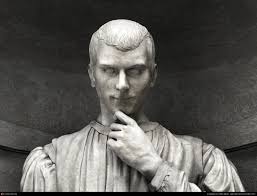
Niccolo Machiavelli
There is image—and there is reality. J.P. Morgan once said: “A man always has two reasons for doing anything: A good reason and the real reason.” This is never truer than when a corporation or politician is asking for your money / vote.
When trying to decide whether to commit yourself to either, ask yourself: Who benefits? For example: When studying a proposed law that claims to aid the environment, find out who supports it. That will usually tell you what you need to know.
Learn how to evaluate others. Once again, Niccolo Machiavelli supplies the answer: “The first impression that one gets of a ruler and his brains is from seeing the men that he has about him. When they are competent and loyal one can always consider him wise, as he has been able to recognize their ability and keep them faithful.
“But when they are the reverse, one can always form an unfavorable opinion of him, because the first mistake that he makes is in making this choice.”
Don’t confuse wealth with virtue. Too many Americans believe that God bestows wealth on the worthy. If this were true, every Mafia boss would be a candidate for sainthood.
Each year is a journey unto itself—filled with countless joys and sorrows. Many of these joys can’t be predicted. And many of these tragedies can’t be prevented.
Learn to tell real dangers from imaginary ones. Computers are real—and sometimes they crash. Men who died 2,000 years ago do not leap out of graveyards, no matter what their disciples predict.
Don’t expect any particular year to usher in the Apocalypse. In any given year there will be wars, famines, earthquakes, riots, floods and a host of other disasters. These have always been with us—and always will be. As Abraham Lincoln once said: “The best thing about the future is that it comes one day at a time.”

Don’t expect some Great Leader to lead you to success. As Gaius Cassius says in William Shakespeare’s “Julius Caesar”: “Men at some time are masters of their fate. The fault, dear Brutus, is not in our stars but in ourselves that we are underlings.”
Don’t expect any particular year or event to usher in your happiness. To again quote Lincoln: “Most people are about as happy as they make up their minds to be.”
If your life seems to make no sense to you, consider this: The philosopher Soren Kierkegaard once noted: “Life can only be understood backwards, but it must be lived forwards.”
2020 PRESIDENTIAL ELECTION, ABC NEWS, ABRAHAM LINCOLN, ALTERNET, AMERICABLOG, AP, APOCALYPSE, ARMAGEDDON, BABY BOOMER RESISTANCE, BLOOMBERG, BOLDNESS, BUZZFEED, CAUTION, CBS NEWS, CHINA, CNN, COVID-19, CROOKS AND LIARS, DONALD TRUMP, FIVETHIRTYEIGHT, GAIUS CASSIUS, HARPER’S MAGAZINE, HUFFINGTON POST, illegal immigration, IMAGE, J.P. MORGAN, JESUS CHRIST, JULIUS CAESAR (PLAY), MAFIA, MEDIA MATTERS, MOTHER JONES, MOVEON, MSNBC, NBC NEWS, NEW YEAR'S DAY, NEW YEAR'S EVE, NEW YORK, NEWSWEEK, NICCOLO MACHIAVELLI, NPR, PBS NEWSHOUR, POLITICO, POLITICUSUSA, RAW STORY, REALITY, REUTERS, RUSSIA, SALON, SEATTLE TIMES, SLATE, SOREN KIERKEGAARD, TALKING POINTS MEMO, THE ATLANTIC, THE CHICAGO SUN-TIMES, THE CHICAGO TRIBUNE, THE DAILY BEAST, THE DAILY BLOG, THE GUARDIAN, THE HILL, THE HUFFINGTON POST, THE LOS ANGELES TIMES, THE MILLENNIUM, THE NATION, THE NEW REPUBLIC, THE NEW YORK TIMES, THE VILLAGE VOICE, THE WASHINGTON POST, THINKPROGRESS, TIME, TITLE 42, TRUTHDIG, TRUTHOUT, TWITTER, TWO POLITICAL JUNKIES, U.S. NEWS & WORLD REPORT, UKRAINE, UNITED STATES HOUSE OF REPRESENTATIVES, UPI, USA TODAY, VLADIMIR PUTIN, WEALTH, WILLIAM SHAESPEARE, WONKETTE
In Bureaucracy, Business, History, Medical, RELIGION, Social commentary on December 30, 2022 at 1:01 am
New Year’s Eve, 2022, will soon lie behind us.
And for many people, saying “Goodbye” to 2022 can’t happen soon enough.
New Year’s Eve is traditionally a time for people to reflect on the major events of the previous 12 months. Some of these are highly personal. Others have been shared by the entire country.
Some of these remembrances inevitably bring pleasure. Others bring pain.
And 2022 has been a year of pain for millions.
Starting on February 24, Russian President Vladimir Putin unleashed a violent assault on Ukraine. Even after his forces were battered by Ukrainian armies, he continued to hurl missiles at Russia’s “brother nation.” As a result, many Ukrainians spent Christmas without electricity or running water.
The invasion was accompanied by Putin’s threats of nuclear war if the West didn’t stop supplying Ukraine with weaponry to repulse his unprovoked attack.
COVID-19 continued to sweep across the globe. Although largely under control in the United States, it remained a mortal threat. In China, that threat surged as the government dropped restrictions that had largely kept it at bay since 2020.

COVID-19
But, as the year ended, hope suddenly dawned: During mid-term elections, millions of Americans rejected Donald Trump’s continuing lies that he had been cheated of victory in 2020. As a result, Republicans won only the House, whereas they had been expected to win the Senate as well.
And as the United States braced itself for an onslaught of tens of thousands—if not millions—of illegal aliens, the Supreme Court upheld—at least temporarily—Title 42.
This policy, begun in 2020, during the early weeks of the COVID-19 pandemic, has allowed immigration agents to expel 2.4.million illegal aliens from the southern border.
At the heart of every New Year’s Eve celebration is the fantasy that you get to start fresh in a matter of hours. And with that fantasy comes hope—that, this time, you can put your sorrows and failures behind you.
And each new year comes with lessons to be learned—and applied.
Each year gives us the chance to learn from history—our own and that of others. Try to learn from your mistakes—and especially those of others. With luck, you won’t repeat your past ones—or those of others. But don’t expect to lead a mistake-free life.
There is a time to be bold—and a time to be cautious. As Niccolo Machiavelli put it: “A prince….must imitate the fox and the lion: For the lion cannot protect himself from traps, and the fox cannot defend himself from wolves.” Learn to tell when is the appropriate time to be which—and to play that role to the hilt.
Niccolo Machiavelli
There is image—and there is reality. J.P. Morgan once said: “A man always has two reasons for doing anything: A good reason and the real reason.” This is never truer than when a corporation or politician is asking for your money / vote. When trying to decide whether to commit yourself to either, ask yourself: Who benefits? For example: When studying a proposed law that claims to aid the environment, find out who supports it. That will usually tell you what you need to know.
Learn how to evaluate others. Once again, Niccolo Machiavelli supplies the answer: “The first impression that one gets of a ruler and his brains is from seeing the men that he has about him. When they are competent and loyal one can always consider him wise, as he has been able to recognize their ability and keep them faithful. But when they are the reverse, one can always form an unfavorable opinion of him, because the first mistake that he makes is in making this choice.”
Don’t confuse wealth with virtue. Too many Americans believe that wealth is a gift that God bestows on the worthy. If this were true, every Mafia boss would be a candidate for sainthood.
Each year is a journey unto itself—filled with countless joys and sorrows. Many of these joys can’t be predicted. And many of these tragedies can’t be prevented.
Learn to tell real dangers from imaginary ones. Computers are real—and sometimes they crash. Men who died 2,000 years ago do not leap out of graveyards, no matter what their disciples predict.
Don’t expect any particular year to usher in the Apocalypse. In any given year there will be wars, famines, earthquakes, riots, floods and a host of other disasters. These have always been with us—and always will be. As Abraham Lincoln once said: “The best thing about the future is that it comes one day at a time.”
Don’t expect some Great Leader to lead you to success. As Gaius Cassius says in William Shakespeare’s “Julius Caesar”: “Men at some time are masters of their fate. The fault, dear Brutus, is not in our stars but in ourselves that we are underlings.”
Don’t expect any particular year or event to usher in your happiness. To again quote Lincoln: “Most people are about as happy as they make up their minds to be.”
If your life seems to make no sense to you, consider this: The philosopher Soren Kierkegaard once noted: “Life can only be understood backwards, but it must be lived forwards.”
1999 (YEAR), 2000 (YEAR), 2020, 2020 PRESIDENTIAL ELECTION, ABC NEWS, ABRAHAM LINCOLN, ALTERNET, AMERICABLOG, AP, APOCALYPSE, ARMAGEDDON, BABY BOOMER RESISTANCE, BLOOMBERG, BUZZFEED, CBS NEWS, CHINA, CNN, COLD WAR, COMPUTERS, COVID-19, CROOKS AND LIARS, DAILY KOZ, DONALD TRUMP, DRUDGE REPORT, FACEBOOK, FIVETHIRTYEIGHT, GAIUS CASSIUS, GERMANY, HARPER’S MAGAZINE, HUFFINGTON POST, JAPAN, JESUS CHRIST, JOSEPH BIDEN, JULIUS CAESAR (PLAY), MEDIA MATTERS, MILLENNIUM, MOTHER JONES, MOVEON, MSNBC, NBC NEWS, NEW YEAR'S DAY, NEW YEAR'S EVE, NEW YORK, NEWSWEEK, NPR, PBS NEWSHOUR, POLITICO, POLITICUSUSA, RAW STORY, REUTERS, RIOTS, SALON, SAN FRANCISCO, SEATTLE TIMES, SLATE, SOREN KIERKEGAARD, SOVIET UNION, TALKING POINTS MEMO, THE ATLANTIC, THE CHICAGO SUN-TIMES, THE CHICAGO TRIBUNE, THE DAILY BEAST, THE DAILY BLOG, THE GUARDIAN, THE HILL, THE HUFFINGTON POST, THE LOS ANGELES TIMES, THE MILLENNIUM, THE NATION, THE NEW REPUBLIC, THE NEW YORK TIMES, THE VILLAGE VOICE, THE WASHINGTON POST, THINKPROGRESS, TIME, TIMES SQUARE, TRUTHDIG, TRUTHOUT, TWITTER, TWO POLITICAL JUNKIES, U.S. NEWS & WORLD REPORT, UPI, USA TODAY, WILLIAM SHAESPEARE, WONKETTE, Y2K
In Entertainment, History, Medical, Social commentary on December 31, 2021 at 12:23 am
New Year’s Eve, 2021, will soon lie behind us.
And for most people, saying “Goodbye” to 2021 can’t happen soon enough.
New Year’s Eve is traditionally a time for people to reflect on the major events of the previous 12 months. Some of these are highly personal. Others have been shared by the entire country.
Some of these remembrances inevitably bring pleasure. Others bring pain.
And 2021 has been a year of pain for millions.
Starting on January 6, then-President Donald Trump incited thousands of his fanatical disciples to attack the United States Capitol Building.
The reason: To halt the counting of Electoral College votes to certify the legitimate Presidential victory of Joe Biden in 2020—thus leaving Trump in office as “President-for-Life.”

Donald Trump
Fortunately, democracy was saved—for the moment.
Meanwhile, COVID-19 continued to sweep across the globe. To date, it’s infected 285 million worldwide—and killed 5.42 million. In the United States, it’s infected 153.8 million and killed 822,000.
But by March, three new vaccines were being rolled out—and thus saving the lives of untold numbers of potential COVID victims.
COVID-19
At the heart of every New Year’s Eve celebration is the fantasy that you get to start fresh in a matter of hours. And with that fantasy comes hope—that, this time, you can put your sorrows and failures behind you.
And for millions in 2022, life will look brighter—because Donald Trump, whose Presidency was marked by unprecedented criminality and treason, no longer holds office.
True, Trump has refused to admit that he was defeated in a legitimate election. And his lust to become America’s Dictator-in-chief remains as lethal as ever.
But democracies are always threatened by would-be tyrants. And Americans can take heart in the knowledge that, in 1945, they helped defeat two of the worst—in Germany and Japan.
And, for 50 years during the Cold War, they stood firm against dictators in China and the Soviet Union.
The last New Year’s Eve to be marked by worldwide fears was that of 1999:
- Fear of Y2K—that our highly computerized, globally-interconnected world would crash when the “19″ at the start of every year was replaced with a “20″.
- Fear of Armageddon—that Jesus, after dying 2,000 years ago, would magically return to destroy mankind (except for those 144,000 righteous souls He deemed worthy of salvation).
- Fear of the Millennium itself—of ending not simply another decade and century but an entire thousand-year period of history, and thus losing our historical ties to the familiar highlights of our own (and America’s) past.
And, especially where Y2K was concerned, news commentators were quick to stoke our anxieties.
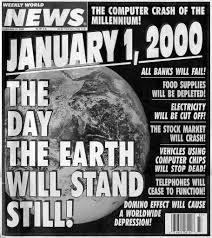
Long before New Year’s Eve, TV newscasters repeatedly warned that, when midnight struck on January 1, 2000, the three places you did not want to be were:
- In an airplane.
- In an elevator.
- In a hospital.
Countless numbers of people in America and around the world stocked up on food, water, batteries and other essentials for surviving an emergency.
Merchants and police feared widespread rioting and violence. If Y2K didn’t set it off, then fears of a heaven-sent Apocalypse might.
In San Francisco, along Powell Street—a major center of tourism and commerce—store owners boarded up their doors and windows as New Year’s Eve approached. Many closed earlier than usual that day.
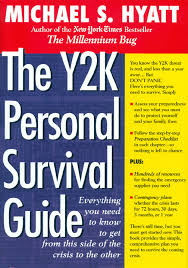
Fortunately, when midnight struck on January 1, 2000, the predictors of the coming Apocalypse were proven wrong.
- Computers kept working—and civilization didn’t crash along with them.
- Jesus didn’t miraculously return from the dead—just as he hadn’t during any previous year.
- And those who feared that the Millennium would usher in a strange and frightening new world soon found that 2000 was not all that different from previous years.
New Year’s Eve 1999 is now 22 years distant. But some lessons may still be learned from it:
Each year is a journey unto itself—filled with countless joys and sorrows. Many of these joys can’t be predicted. And many of these tragedies can’t be prevented.
Learn to tell real dangers from imaginary ones. Computers are real—and sometimes they crash. Men who died 2,000 years ago do not leap out of graveyards, no matter what their disciples predict.
Don’t expect any particular year to usher in the Apocalypse. In any given year there will be wars, famines, earthquakes, riots, floods and a host of other disasters. These have always been with us—and always will be. As Abraham Lincoln once said: “The best thing about the future is that it comes one day at a time.”
BumFluff2009, CC BY-SA 2.0 <https://creativecommons.org/licenses/by-sa/2.0>, via Wikimedia Commons
Don’t expect some Great Leader to lead you to success. As Gaius Cassius says in William Shakespeare’s “Julius Caesar”: “Men at some time are masters of their fate. The fault, dear Brutus, is not in our stars but in ourselves that we are underlings.”
Don’t expect any particular year or event to usher in your happiness. To again quote Lincoln: “Most people are about as happy as they make up their minds to be.”
If your life seems to make no sense to you, consider this: The philosopher Soren Kierkegaard once noted: “Life can only be understood backwards, but it must be lived forwards.”
1999 (YEAR), 2000 (YEAR), 2020, 2020 PRESIDENTIAL ELECTION, ABC NEWS, ABRAHAM LINCOLN, ALTERNET, AMERICABLOG, AP, APOCALYPSE, ARMAGEDDON, BABY BOOMER RESISTANCE, BLOOMBERG, BUZZFEED, CBS NEWS, CNN, COMPUTERS, COVID-19, CROOKS AND LIARS, DAILY KOZ, DONALD TRUMP, DRUDGE REPORT, FACEBOOK, FIVETHIRTYEIGHT, GAIUS CASSIUS, HARPER’S MAGAZINE, HUFFINGTON POST, JESUS CHRIST, JOSEPH BIDEN, JULIUS CAESAR (PLAY), MEDIA MATTERS, MILLENNIUM, MOTHER JONES, MOVEON, MSNBC, NBC NEWS, NEW YEAR'S DAY, NEW YEAR'S EVE, NEW YORK, NEWSWEEK, NPR, PBS NEWSHOUR, POLITICO, POLITICUSUSA, RAW STORY, REUTERS, RIOTS, SALON, SAN FRANCISCO, SEATTLE TIMES, SLATE, SOREN KIERKEGAARD, TALKING POINTS MEMO, THE ATLANTIC, THE CHICAGO SUN-TIMES, THE CHICAGO TRIBUNE, THE DAILY BEAST, THE DAILY BLOG, THE GUARDIAN, THE HILL, THE HUFFINGTON POST, THE LOS ANGELES TIMES, THE MILLENNIUM, THE NATION, THE NEW REPUBLIC, THE NEW YORK TIMES, THE VILLAGE VOICE, THE WASHINGTON POST, THINKPROGRESS, TIME, TIMES SQUARE, TRUTHDIG, TRUTHOUT, TWITTER, TWO POLITICAL JUNKIES, U.S. NEWS & WORLD REPORT, UPI, USA TODAY, WILLIAM SHAESPEARE, WONKETTE, Y2K
In Entertainment, History, Social commentary, Uncategorized on December 31, 2020 at 12:08 am
New Year’s Eve, 2020, will soon lie behind us.
And for most people, saying “Goodbye” to 2020 can’t happen soon enough.
New Year’s Eve is traditionally a time for people to reflect on the major events of the previous 12 months. Some of these are highly personal. Others have been shared by the entire country.
Some of these remembrances inevitably bring pleasure. Others bring pain.
And 2020 has been a year of pain for millions.
Starting in January, COVID-19 swept across the globe. To date, it’s infected 82 million worldwide—and taken 1.79 million. In the United States, it’s infected 19.7 million and killed 341,000.
COVID-19
But, as the year came near its end, a ray of hope suddenly dawned: Two anti-COVID vaccines finally appeared on the market.
It would take time for them to reach significant numbers of people. But now an end to the global pandemic was finally within sight.
At the heart of every New Year’s Eve celebration is the fantasy that you get to start fresh in a matter of hours. And with that fantasy comes hope—that, this time, you can put your sorrows and failures behind you.
And for millions in 2021, life will look brighter—because Donald Trump, whose Presidency has been marked by unprecedented criminality and treason, will leave office on January 20.
True, he’s not going gently into that good night.
Donald Trump
Ever since former Vice President Joseph Biden won the votes of 81 million Americans, Trump has refused to concede. Even worse, he’s repeatedly—and falsely—claimed that he was “cheated” of victory by massive electoral fraud.
He’s pressed these lies as high as the Supreme Court—and has seen more than 50 cases dismissed by judges or withdrawn by his lawyers.
So he is going.
The last New Year’s Eve to be marked by worldwide fears was that of 1999:
- Fear of Y2K—that our highly computerized, globally-interconnected world would crash when the “19″ at the start of every year was replaced with a “20″.
- Fear of Armageddon—that Jesus, after dying 2,000 years ago, would return to destroy mankind (except for those 144,000 righteous souls He deemed worthy of salvation).
- Fear of the Millennium itself—of ending not simply another decade and century but an entire thousand-year period of history, and thus losing our historical ties to the familiar highlights of our own (and America’s) past.
And, especially where Y2K was concerned, news commentators were quick to stoke our anxieties.
Long before New Year’s Eve, TV newscasters repeatedly warned that, when midnight struck on January 1, 2000, the three places you did not want to be were:
- In an airplane.
- In an elevator.
- In a hospital.
Countless numbers of people in America and around the world stocked up on food, water, batteries and other essentials for surviving an emergency.
Merchants and police feared widespread rioting and violence. If Y2K didn’t set it off, then fears of a heaven-sent Apocalypse might.
In San Francisco, along Powell Street—a major center of tourism and commerce—store owners boarded up their doors and windows as New Year’s Eve approached. Many closed earlier than usual that day.
Fortunately, when midnight struck on January 1, 2000, the predictors of the coming Apocalypse were proven wrong.
- Computers kept working—and civilization didn’t crash along with them.
- Jesus didn’t miraculously return from the dead—just as he hadn’t during any previous year.
- And those who feared that the Millennium would usher in a strange and frightening new world soon found that 2000 was not all that different from previous years.
New Year’s Eve 1999 is now 21 years distant. But some lessons may still be learned from it:
Each year is a journey unto itself—filled with countless joys and sorrows. Many of these joys can’t be predicted. And many of these tragedies can’t be prevented.
Learn to tell real dangers from imaginary ones. Computers are real—and sometimes they crash. Men who died 2,000 years ago do not leap out of graveyards, no matter what their disciples predict.
Don’t expect any particular year to usher in the Apocalypse. In any given year there will be wars, famines, earthquakes, riots, floods and a host of other disasters. These have always been with us–and always will be. As Abraham Lincoln once said: “The best thing about the future is that it comes one day at a time.”

Don’t expect some Great Leader to lead you to success. As Gaius Cassius says in William Shakespeare’s “Julius Caesar”: “Men at some time are masters of their fate. The fault, dear Brutus, is not in our stars but in ourselves that we are underlings.”
Don’t expect any particular year or event to usher in your happiness. To again quote Lincoln: “Most people are about as happy as they make up their minds to be.”
If your life seems to make no sense to you, consider this: The philosopher Soren Kierkegaard once noted: “Life can only be understood backwards, but it must be lived forwards.”
1999 (YEAR), 2000 (YEAR), ABC NEWS, ABRAHAM LINCOLN, ALTERNET, AP, APOCALYPSE, ARMAGEDDON, BUZZFEED, CBS NEWS, CNN, COMPUTERS, CROOKS AND LIARS, DAILY KOZ, FACEBOOK, GAIUS CASSIUS, JESUS CHRIST, JULIUS CAESAR (PLAY), MILLENNIUM, MOTHER JONES, MOVEON, MSNBC, NBC NEWS, NEW YEAR'S DAY, NEW YEAR'S EVE, NEW YORK, NEWSWEEK, NPR, PBS NEWSHOUR, POLITICO, RAW STORY, REUTERS, RIOTS, SALON, SAN FRANCISCO, SEATTLE TIMES, SLATE, SOREN KIERKEGAARD, THE ATLANTIC, THE CHICAGO SUN-TIMES, THE CHICAGO TRIBUNE, THE DAILY BEAST, THE GUARDIAN, THE HILL, THE HUFFINGTON POST, THE LOS ANGELES TIMES, THE MILLENNIUM, THE NATION, THE NEW YORK TIMES, THE WASHINGTON POST, TIME, TIMES SQUARE, TWITTER, U.S. NEWS & WORLD REPORT, UPI, USA TODAY, WILLIAM SHAESPEARE, Y2K
In History, Social commentary on December 31, 2018 at 12:12 am
New Year’s Eve, 2018, will soon lie behind us.
But for those who consciously lived through Friday, December 31, 1999, there will never be another New Year’s Eve like it.
New Year’s Eve is traditionally a time for people to reflect on the major events of the previous 12 months. Some of these are highly personal. Others have been shared by the entire country.
Some of these remembrances inevitably bring pleasure. Others bring pain.
But at the heart of every New Year’s Eve celebration is the fantasy that you get to start fresh in a matter of hours. And with that fantasy comes hope—that, this time, you can put your sorrows and failures behind you.
New Year’s Eve, 1999, was marked far more by apprehension and fear than joy.
- Fear of Y2K—that our highly computerized, globally-interconnected world would crash when the “19″ at the start of every year was replaced with a “20″.
- Fear of Armageddon—that Jesus, after dying 2,000 years ago, would return to destroy mankind (except for those 144,000 righteous souls He deemed worthy of salvation).
- Fear of the Millennium itself—of ending not simply another decade and century but an entire thousand-year period of history, and thus losing our historical ties to the familiar highlights of our own (and America’s) past.
And, especially where Y2K was concerned, news commentators were quick to stoke our anxieties.
For those living on the West Coast of the United States on December 31, 1999, the day began with news reports of celebrations of the New Year in such distant countries as Australia and New Zealand.
“So far,” each of these reports ended, “there have been no reports of Y2K-related outages.”
But the underlying message was clear: Stay tuned—it could still happen. And this message kept blaring for the rest of the day and into the evening.
Long before New Year’s Eve, TV newscasters repeatedly warned that, when midnight struck on January 1, 2000, the three places you did not want to be were:
- In an airplane.
- In an elevator.
- In a hospital.
Countless numbers of people in America and around the world stocked up on food, water, batteries and other essentials for surviving an emergency.
Merchants and police feared widespread rioting and violence. If Y2K didn’t set it off, then fears of a heaven-sent Apocalypse might.
In San Francisco, along Powell Street—a major center of tourism and commerce—store owners boarded up their doors and windows as New Year’s Eve approached. Many closed earlier than usual that day.
At 9 p.m. California time, a friend of mine turned off a VCR and turned on a local news station to watch celebrations—or chaos—unfold in New York City.
If the lights went off in New York at midnight Eastern time, then, in three more hours, the same would happen in California.
When he saw lights glittering in Times Square, he felt reasonably certain that Y2K would probably be a dud.
Fortunately, no Y2K disasters occurred.
Three people I know decided to throw an “End of the World” party. They didn’t believe the world was coming to an end. But they decided to throw an “absolute last blast” party as though it were.
Among the items they stockpiled for this occasion:
- Country pork spareribs
- Yams
- Crabs
- Apple cider
- Black olives
- Fresh cranberries
- Avocados
- Chocolate chip ice cream
- Lambrusco
- Gin and tonic water
- Root beer
- Smoked cheese
- Artichoke hearts
- Pumpkin cream mousse cake
- Chocolate cake
- Pickles
- Asparagus
- Tortilla chips
- Picante sauce
It was definitely an unforgettable night.
New Year’s Eve 1999 is now 16 years distant. But some lessons may still be learned from it:
Each year is a journey unto itself–filled with countless joys and sorrows. Many of these joys can’t be predicted. And many of these tragedies can’t be prevented.
Learn to tell real dangers from imaginary ones. Computers are real—and sometimes they crash. Men who died 2,000 years ago do not leap out of graveyards, no matter what their disciples predict.
Don’t expect any particular year to usher in the Apocalypse. In any given year there will be wars, famines, earthquakes, riots, floods and a host of other disasters. These have always been with us–and always will be. As Abraham Lincoln once said: “The best thing about the future is that it comes one day at a time.”
Don’t expect some Great Leader to lead you to success. As Gaius Cassius says in William Shakespeare’s “Julius Caesar”: “Men at some time are masters of their fate. The fault, dear Brutus, is not in our stars but in ourselves that we are underlings.”
Don’t expect any particular year or event to usher in your happiness. To again quote Lincoln: “Most people are about as happy as they make up their minds to be.”
If your life seems to make no sense to you, consider this: The philosopher Soren Kierkegaard once noted: “Life can only be understood backwards, but it must be lived forwards.”
ABC NEWS, ALTERNET, AP, ARMAGEDDON, BUZZFEED, CBS NEWS, CNN, CROOKS AND LIARS, DAILY KOZ, FACEBOOK, JESUS CHRIST, MOTHER JONES, MOVEON, NBC NEWS, NEW YEAR'S DAY, NEW YEAR'S EVE, NEWSWEEK, NPR, POLITICO, RAW STORY, REUTERS, RIOTS, SALON, SAN FRANCISCO, SEATTLE TIMES, SLATE, SOREN KIERKEGAARD, THE ATLANTIC, THE CHICAGO SUN-TIMES, THE CHICAGO TRIBUNE, THE DAILY BEAST, THE GUARDIAN, THE HILL, THE HUFFINGTON POST, THE LOS ANGELES TIMES, THE MILLENNIUM, THE NATION, THE NEW YORK TIMES, THE WASHINGTON POST, TIME, TWITTER, U.S. NEWS & WORLD REPORT, UPI, USA TODAY, Y2K
In Business, History, Social commentary on January 2, 2018 at 12:06 am
New Year’s Eve, 2017, now lies behind us.
But for those who consciously lived through December 31, 1999, there will never be another New Year’s Eve like it.
New Year’s Eve is traditionally a time for people to reflect on the major events of the previous 12 months. Some of these are highly personal. Others have been shared by the entire country.
Some of these remembrances inevitably bring pleasure. Others bring pain.
But at the heart of every New Year’s Eve celebration is the fantasy that you get to start fresh in a matter of hours. And with that fantasy comes hope—that, this time, you can put your sorrows and failures behind you.
New Year’s Eve, 1999, was marked far more by apprehension and fear than joy.
- Fear of Y2K—that our highly computerized, globally-interconnected world would crash when the “19″ at the start of every year was replaced with a “20″.
- Fear of Armageddon—that Jesus, after dying 2,000 years ago, would return to destroy mankind (except for those 144,000 righteous souls He deemed worthy of salvation).
- Fear of the Millennium itself—of ending not simply another decade and century but an entire thousand-year period of history, and thus losing our historical ties to the familiar highlights of our own (and America’s) past.
And, especially where Y2K was concerned, news commentators were quick to stoke our anxieties.
For those living on the West Coast of the United States on December 31, 1999, the day began with news reports of celebrations of the New Year in such distant countries as Australia and New Zealand.
“So far,” each of these reports ended, “there have been no reports of Y2K-related outages.”
But the underlying message was clear: Stay tuned—it could still happen. And this message kept blaring for the rest of the day and into the evening.
Long before New Year’s Eve, TV newscasters repeatedly warned that, when midnight struck on January 1, 2000, the three places you did not want to be were:
- In an airplane.
- In an elevator.
- In a hospital.
Countless numbers of people in America and around the world stocked up on food, water, batteries and other essentials for surviving an emergency.
Merchants and police feared widespread rioting and violence. If Y2K didn’t set it off, then fears of a heaven-sent Apocalypse might.
In San Francisco, along Powell Street—a major center of tourism and commerce—store owners boarded up their doors and windows as New Year’s Eve approached. Many closed earlier than usual that day.
At 9 p.m. California time, a friend of mine turned off a VCR and turned on a local news station to watch celebrations—or chaos—unfold in New York City.
If the lights went off in New York at midnight Eastern time, then, in three more hours, the same would happen in California.
When he saw lights glittering in Times Square, he felt reasonably certain that Y2K would probably be a dud.
Fortunately, no Y2K disasters occurred.
Three people I know decided to throw an “End of the World” party. They didn’t believe the world was coming to an end. But they decided to throw an “absolute last blast” party as though it were.
Among the items they stockpiled for this occasion:
- Country pork spareribs
- Yams
- Crabs
- Apple cidar
- Black olives
- Fresh cranberries
- Avacodos
- Chocolate chip ice cream
- Lambrusco
- Gin and tonic water
- Root beer
- Smoked cheese
- Artichoke hearts
- Pumpkin cream mousse cake
- Chocolate cake
- Pickles
- Asparagus
It was definitely an unforgettable night.
New Year’s Eve 1999 is now 18 years distant. But some lessons may still be learned from it:
Each year is a journey unto itself–filled with countless joys and sorrows. Many of these joys can’t be predicted. And many of these tragedies can’t be prevented.
Learn to tell real dangers from imaginary ones. Computers are real—and sometimes they crash. Men who died 2,000 years ago do not leap out of graveyards, no matter what their disciples predict.
Don’t expect any particular year to usher in the Apocalypse. In any given year there will be wars, famines, earthquakes, riots, floods and a host of other disasters. These have always been with us–and always will be. As Abraham Lincoln once said: “The best thing about the future is that it comes one day at a time.”

Don’t expect some Great Leader to lead you to success. As Gaius Cassius says in William Shakespeare’s “Julius Caesar”: “Men at some time are masters of their fate. The fault, dear Brutus, is not in our stars but in ourselves that we are underlings.”
Don’t expect any particular year or event to usher in your happiness. To again quote Lincoln: “Most people are about as happy as they make up their minds to be.”
If your life seems to make no sense to you, consider this: The philosopher Soren Kierkegaard once noted: “Life can only be understood backwards, but it must be lived forwards.”
ABC NEWS, BILL CLINTON, CBS NEWS, CNN, COLIN POWELL, CONDOLEEZA RICE, DAVID GERGEN, EYEWITNESS TO POWER, FACEBOOK, HILLARY CLINTON, IMPEACHMENT, KENNETH STARR, MONICA LEWINSKY, NBC NEWS, REPUBLICANS, RICHARD NIXON, Ronald Reagan, SECRECY, SOREN KIERKEGAARD, STONEWALLING, THE CHICAGO SUN-TIMES, THE CHICAGO TRIBUNE, THE LOS ANGELES TIMES, THE NEW YORK TIMES, THE WASHINGTON POST, TWITTER, WATERGATE, WHITEWATER
In Bureaucracy, History, Law, Politics on August 9, 2016 at 12:20 am
The Washington Post was angry.
Its reporters and editors believed they had been stonewalled by the 1992 Bill Clinton Presidential campaign.
And now that he had been elected President, they wanted access to a treasury of documents relating to potential irregularities in Whitewater and a gubernatorial campaign.
David Gergen, a conservative adviser to Republican Presidents Richard Nixon, Gerald Ford and Ronald Reagan, had been hired by Clinton in 1993 to provide a counterbalancing perspective to his liberal team members.

Gergen had served in the Nixon White House during Watergate. He knew firsthand the political dangers of stonewalling–or merely appearing to stonewall.
So he advised Clinton: Give the Post the documents. Yes, it will be temporarily embarrassing. But in a little while the bad stories will blow over and you can get on with the job.
If you don’t hand over the documents, you’ll look like you’re hiding something. The press will raise a stink. The Republicans will demand a Special Prosecutor. And there will be no end to it.
Clinton agreed with Gergen. But there was a catch: He didn’t feel he could make the decision alone. Hillary had been a partner in the Whitewater land transactions.
“You’ll have to speak to Hillary and get her agreement,” he told Gergen. “If she agrees, we’ll do it.”
Gergen promised to see her.
Two days later, Gergen called Hillary Clinton’s office and asked for an appointment.
“We’ll get back to you,” her secretary promised.

Hillary Clinton
Hillary never did. Finally, two weeks after the canceled December 10 meeting with the Clintons, Gergen got the news he had been dreading: Bruce Lindsay, Clinton’s trusted adviser, would deliver a one-paragraph letter to the Post, essentially saying; “Screw you.”
Events quickly unfolded exactly as Gergen had predicted:
- The Post’s executive editor, Leonard Downie, called the White House: “Nothing personal, but we’re going to pursue this story relentlessly.”
- The New York Times and Newsweek–among other news outlets–joined the journalistic investigation.
- Coverage of Whitewater intensified.
- Republicans began demanding that Attorney General Janet Reno appoint an independent counsel.
- On January 20, 1994–exactly a year after Clinton took the oath as President–Edward Fiske, a former federal prosecutor, was named independent counsel.
- In August, Fiske was dismissed by a Federal judge who considered him too liberal and replaced with Kenneth Starr, a former solicitor general and federal appeals court judge.
- Starr unearthed Clinton’s salacious affair with White House intern Monica Lewinsky, which culminated in an unsuccessful Republican impeachment attempt in 1998.
- Starr resigned in 1999, and was replaced by Robert W. Ray.
- The investigation continued until 2002, but no criminal charges were ever filed against either Clinton.
In his 2001 book, Eyewitness to Power, Gergen summarizes the meaning of this episode:
If the Clintons had turned over the Whitewater documents to the Washington Post in December 1993, their history–and that of the United States–would have been entirely different.
Disclosure would have brought embarrassing revelations–such as Hillary’s investment in commodity futures.
“But we know today that nothing in those documents constituted a case for criminal prosecution of either one of the Clintons in their Whitewater land dealings…
“Edward Fiske and Kenneth Starr would never have arrived on the scene, we might never have heard of Monica Lewinsky (who had nothing to do with the original Whitewater matter) and there would have been no impeachment.
“The country would have been spared that travail, and the President himself could have had a highly productive second term.”
Gergen blames President Clinton rather than Hillary for refusing to disclose the documents. Voters elected him–not her–to run the government. He–not she–ultimately bears the responsibility.
Still, his comments about Hillary are telling, considering:
- That she is likely to win election to the White House this November; and
- That she continues to reflexively stonewall instead of opt for transparency when facing questions.
As Gergen puts it: “She should have said yes [to disclosure] from the beginning, accepting short-term embarrassment in exchange for long-term protection of both herself and her husband.
“She listened too easily to the lawyers and to her own instincts as a litigator, instincts that told her never to give an inch to the other side. Whitewater was always more a political than a legal problem.”
The same might be said of her lingering credibility problem with the use of a private email server as Secretary of State.
Both of her predecessors, Colin Powell and Condoleeza Rice, used private servers, and neither has been subjected to Republican inquisition.
She could have easily avoided the turmoil that has dogged her for years by simply admitting at the outset: “Yes, I used a private server–just like my two Republican predecessors did. Everyone knows government servers are compromised.”
Instead, she fell back on Nixonian stonewalling tactics–which proved fatal to Richard Nixon and almost fatal to her husband.
This is, in short, a woman who has learned nothing from the past–her own nor that of her husband.
It’s a safe bet that as President Hillary Clinton will continue to stonewall over matters whose disclosure is embarrassing only in the short-term–thus jeopardizing her tenure as Chief Executive.
ABC NEWS, BILL CLINTON, CBS NEWS, CNN, COLIN POWELL, CONDOLEEZA RICE, DAVID GERGEN, EYEWITNESS TO POWER, FACEBOOK, HILLARY CLINTON, IMPEACHMENT, KENNETH STARR, MONICA LEWINSKY, NBC NEWS, REPUBLICANS, RICHARD NIXON, Ronald Reagan, SECRECY, SOREN KIERKEGAARD, STONEWALLING, THE CHICAGO SUN-TIMES, THE CHICAGO TRIBUNE, THE LOS ANGELES TIMES, THE NEW YORK TIMES, THE WASHINGTON POST, TWITTER, WATERGATE, WHITEWATER
In Bureaucracy, History, Law, Politics on August 8, 2016 at 10:30 am
“History can only be understood backwards, but it must be lived forwards.”
So wrote the philosopher Soren Kierkegaard. And with history–in the form of a second Clinton Presidency–about to repeat itself, useful lessons may be found by studying the first one.
Since her debut as a potential First Lady in 1992, Hillary Clinton has aroused strong passions–for and against.
David Gergen is one former staffer who has viewed her up close and yet offers a balanced perspective of her strengths and weaknesses.
He did so in his 2001 book, Eyewitness to Power, in which he chronicled his experiences as an adviser to Republican Presidents Richard Nixon, Gerald Ford, Ronald Reagan–and a Democratic one: Bill Clinton.
In 1993, then a conservative political commentator, Gergen returned to the White House.
The liberal Clinton, sensitive to criticism on the Right, wanted Gergen’s advice on how to defuse it.

David Gergen
In December, 1993, Gergen got a call from Bob Kaiser, the managing editor of the Washington Post: “We’re getting the runaround over there on Whitewater and I want you to know about it.”
“Whitewater” encompassed the Arkansas real estate investments of Bill and Hillary Clinton and their associates, Jim and Susan McDougal in the Whitewater Development Corporation, a failed business venture in the 1970s and 1980s.
A Post reporter had sent a letter to Bruce Lindsay, a trusted Clinton adviser, raising questions about the finances of the Clintons in the years before they came to Washington.
Two weeks had passed, and there had been no reply.
Gergen assured Kaiser that this was the first time he had heard about the letter: “I’ll look into it and get back to you.”
Gergen and Kaiser shared a Watergate past–Gergen had worked in the Nixon White House, Kaiser at the Washington Post, whose reporting had ultimately brought Nixon down.
Both men, Gergen later wrote, “remembered how destructive the stonewalling of those days had been.” And Gergen respected Kaiser, believing him “fair but tough–and, if misled, very tough.”
Gergen immediately consulted with Thomas F. “Mack” McLarty, Clinton’s White House Chief of Staff. He advised McLarty that a trio of White House officials should visit the Post and find out what the reporters wanted.
McLarty agreed.
When the White House officials arrived at the Post, they were met by a chorus of hostile reporters.
They felt they had been stonewalled throughout the 1992 Presidential race. And now they wanted access to a treasury of documents relating to potential irregularities in Whitewater and a gubernatorial campaign.
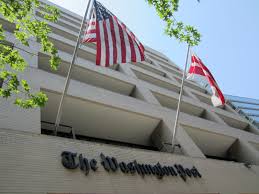
The Washington Post
Gergen and Mark Gearan, the White House director of communications, agreed that the best course was to give the Post all the documents it was requesting.
The next day, Gergen laid out his case to Chief of Staff McLarty:
The Post should be allowed to view the documents and report on them. Then the papers should be made available to the entire White House press corps.
Yes, said Gergen, a lot of negative stories would probably result. But if Watergate had taught any lesson, it was that it was better to admit mistakes and not try to hide them. Stonewalling only brought on criminal investigations–and potential criminal charges.
McLarty agreed to set up a meeting with President Clinton where Gergen and Gearan could make their case.
On December 10, Gergen and Gearan were scheduled to meet with President Clinton, his wife, and possibly their lawyers.
But when the appointed hour arrived, they found that the meeting had been scrubbed.
The Clintons had had their lawyers come in early for a private discussion of the documents, had heard their arguments, and had decided not to discuss anything. They didn’t even want to hear a case for disclosure.
Gergen was furious. He had been hired months earlier with the promise of full access to the President. And now he insisted on it.
McLarty arranged for him to see Clinton the next morning.
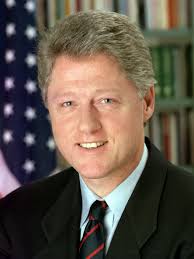
Bill Clinton
Gergen laid out three reasons why the Post should be given the documents it wanted.
First, he believed the paper had tried to be fair in its coverage of the Clintons.
Second, Watergate proved that it was politically lethal to be accused of a cover-up.
And, third, having won international renown with Watergate, the Post would never back down on Whitewater.
Gergen warned that the Post “would sic a big team of investigative reporters on the White House” and that would lead other news organizations to follow.
“I agree with you,” said Clinton. “I think we should turn over all of the documents.”
But there was a catch: He didn’t feel he could make the decision alone. Hillary had been a partner in the Whitewater land transactions.
“You’ll have to speak to Hillary and get her agreement,” he told Gergen. “If she agrees, we’ll do it.”
Gergen promised to see her.
Two days later, Gergen called Hillary Clinton’s office and asked for an appointment.
“We’ll get back to you,” her secretary promised.
ABC NEWS, ARMAGEDDON, CBS NEWS, CNN, FACEBOOK, JESUS CHRIST, NBC NEWS, NEW YEAR'S DAY, NEW YEAR'S EVE, RIOTS, SAN FRANCISCO, SOREN KIERKEGAARD, THE CHICAGO SUN-TIMES, THE CHICAGO TRIBUNE, THE HUFFINGTON POST, THE LOS ANGELES TIMES, THE MILLENNIUM, THE WASHINGTON POST, TWITTER, USA TODAY, Y2K
In History, Social commentary on January 4, 2016 at 12:56 am
New Year’s Eve, 2015, now lies behind us.
But for those who consciously lived through December 31, 1999, there will never be another New Year’s Eve like it.
New Year’s Eve is traditionally a time for people to reflect on the major events of the previous 12 months. Some of these are highly personal. Others have been shared by the entire country.
Some of these remembrances inevitably bring pleasure. Others bring pain.
But at the heart of every New Year’s Eve celebration is the fantasy that you get to start fresh in a matter of hours. And with that fantasy comes hope–that, this time, you can put your sorrows and failures behind you.
New Year’s Eve, 1999, was marked far more by apprehension and fear than joy.
- Fear of Y2K–that our highly computerized, globally-interconnected world would crash when the “19″ at the start of every year was replaced with a “20″.
- Fear of Armageddon–that Jesus, after dying 2,000 years ago, would return to destroy mankind (except for those 144,000 righteous souls He deemed worthy of salvation).
- Fear of the Millennium itself–of ending not simply another decade and century but an entire thousand-year period of history, and thus losing our historical ties to the familiar highlights of our own (and America’s) past.
And, especially where Y2K was concerned, news commentators were quick to stoke our anxieties.
For those living on the West Coast of the United States on December 31, 1999, the day began with news reports of celebrations of the New Year in such distant countries as Australia and New Zealand.
“So far,” each of these reports ended, “there have been no reports of Y2K-related outages.”
But the underlying message was clear: Stay tuned–it could still happen. And this message kept blaring for the rest of the day and into the evening.
Long before New Year’s Eve, TV newscasters repeatedly warned that, when midnight struck on January 1, 2000, the three places you did not want to be were:
- In an airplane.
- In an elevator.
- In a hospital.
Countless numbers of people in America and around the world stocked up on food, water, batteries and other essentials for surviving an emergency.
Merchants and police feared widespread rioting and violence. If Y2K didn’t set it off, then fears of a heaven-sent Apocalypse might.
In San Francisco, along Powell Street–a major center of tourism and commerce–store owners boarded up their doors and windows as New Year’s Eve approached. Many closed earlier than usual that day.
At 9 p.m. California time, a friend of mine turned off a VCR and turned on a local news station to watch celebrations–or chaos–unfold in New York City.
If the lights went off in New York at midnight Eastern time, then, in three more hours, the same would happen in California.
When he saw lights glittering in Times Square, he felt reasonably certain that Y2K would probably be a dud.
Fortunately, no Y2K disasters occurred.
Three people I know decided to throw an “End of the World” party. They didn’t believe the world was coming to an end. But they decided to throw an “absolute last blast” party as though it were.
Among the items they stockpiled for this occasion:
- Country pork spareribs
- Yams
- Crabs
- Apple cidar
- Black olives
- Fresh cranberries
- Avacodos
- Chocolate chip ice cream
- Lambrusco
- Gin and tonic water
- Root beer
- Smoked cheese
- Artichoke hearts
- Pumpkin cream mousse cake
- Chocolate cake
- Pickles
- Asparagus
It was definitely an unforgettable night.
New Year’s Eve 1999 is now 16 years distant. But some lessons may still be learned from it:
Each year is a journey unto itself–filled with countless joys and sorrows. Many of these joys can’t be predicted. And many of these tragedies can’t be prevented.
Learn to tell real dangers from imaginary ones. Computers are real–and sometimes they crash. Men who died 2,000 years ago do not leap out of graveyards, no matter what their disciples predict.
Don’t expect any particular year to usher in the Apocalypse. In any given year there will be wars, famines, earthquakes, riots, floods and a host of other disasters. These have always been with us–and always will be. As Abraham Lincoln once said: “The best thing about the future is that it comes one day at a time.”
Don’t expect some Great Leader to lead you to success. As Gaius Cassius says in William Shakespeare’s “Julius Caesar”: “Men at some time are masters of their fate. The fault, dear Brutus, is not in our stars but in ourselves that we are underlings.”
Don’t expect any particular year or event to usher in your happiness. To again quote Lincoln: “Most people are about as happy as they make up their minds to be.”
If your life seems to make no sense to you, consider this: The philosopher Soren Kierkegaard once noted: “Life can only be understood backwards, but it must be lived forwards.”
ABC NEWS, ARMAGEDDON, CBS NEWS, CNN, FACEBOOK, JESUS CHRIST, NBC NEWS, NEW YEAR'S DAY, NEW YEAR'S EVE, RIOTS, SAN FRANCISCO, SOREN KIERKEGAARD, THE CHICAGO SUN-TIMES, THE CHICAGO TRIBUNE, THE HUFFINGTON POST, THE LOS ANGELES TIMES, THE MILLENNIUM, THE WASHINGTON POST, TWITTER, USA TODAY, Y2K
In History, Self-Help, Social commentary on January 1, 2015 at 12:16 am
New Year’s Eve, 2014, now lies behind us.
But for those who consciously lived through December 31, 1999, there will never be another New Year’s Eve like it.
New Year’s Eve is traditionally a time for people to reflect on the major events of the previous 12 months. Some of these are highly personal. Others have been shared by the entire country.
Some of these remembrances inevitably bring pleasure. Others bring pain.
But at the heart of every New Year’s Eve celebration is the fantasy that you get to start fresh in a matter of hours. And with that fantasy comes hope–that, this time, you can put your sorrows and failures behind you.
New Year’s Eve, 1999, was marked far more by apprehension and fear than joy.
- Fear of Y2K–that our highly computerized, globally-interconnected world would crash when the “19″ at the start of every year was replaced with a “20″.
- Fear of Armageddon–that Jesus, after dying 2,000 years ago, would return to destroy mankind (except for those 144,000 righteous souls He deemed worthy of salvation).
- Fear of the Millennium itself–of ending not simply another decade and century but an entire thousand-year period of history, and thus losing our historical ties to the familiar highlights of our own (and America’s) past.
And, especially where Y2K was concerned, news commentators were quick to stoke our anxieties.
For those living on the West Coast of the United States on December 31, 1999, the day began with news reports of celebrations of the New Year in such distant countries as Australia and New Zealand.
“So far,” each of these reports ended, “there have been no reports of Y2K-related outages.”
But the underlying message was clear: Stay tuned–it could still happen. And this message kept blaring for the rest of the day and into the evening.
At 9 p.m. California time, a friend of mine turned off a VCR and turned on a local news station to watch celebrations–or chaos–unfold in New York City.
If the lights went off in New York at midnight Eastern time, then, in three more hours, the same would happen in California.
When he saw lights glittering in Times Square, he felt reasonably certain that Y2K would probably be a dud.
Long before New Year’s Eve, TV newscasters had repeatedly warned that, when midnight struck on January 1, 2000, the three places you did not want to be were:
- In an airplane.
- In an elevator.
- In a hospital.
Fortunately, no Y2K disasters occurred.
Countless numbers of people in America and around the world stocked up on food, water, batteries and other essentials for surviving an emergency.
Merchants and police feared widespread rioting and violence. If Y2K didn’t set it off, then fears of a heaven-sent Apocalypse might.
In San Francisco, along Powell Street–a major center of tourism and commerce–store owners boarded up their doors and windows as New Year’s Eve approached. Many closed earlier than usual that day.
Fortunately, these fears proved groundless.
Three people I know decided to throw an “End of the World” party. They didn’t believe the world was coming to an end. But they decided to throw an “absolute last blast” party as though it were.
Among the items they stockpiled for this occasion:
- Country pork spareribs
- Yams
- Crabs
- Apple cidar
- Black olives
- Fresh cranberries
- Avacodos
- Chocolate chip ice cream
- Lambrusco
- Gin and tonic water
- Root beer
- Smoked cheese
- Pumpkin cream mousse cake
- Chocolate cake
It was definitely an unforgettable night.
New Year’s Eve 1999 is now 15 years distant. But some lessons may still be learned from it:
Each year is a journey unto itself–filled with countless joys and sorrows. Many of these joys can’t be predicted. And many of these tragedies can’t be prevented.
Learn to tell real dangers from imaginary ones. Computers are real–and sometimes they crash. Men who died 2,000 years ago do not leap out of graveyards, no matter what their disciples predict.
Don’t expect any particular year to usher in the Apocalypse. In any given year there will be wars, famines, earthquakes, riots, floods and a host of other disasters. These have always been with us–and always will be. As Abraham Lincoln once said: “The best thing about the future is that it comes one day at a time.”
Don’t expect some Great Leader to lead you to success. As Gaius Cassius says in William Shakespeare’s “Julius Caesar”: “Men at some time are masters of their fate. The fault, dear Brutus, is not in our stars but in ourselves that we are underlings.”
Don’t expect any particular year or event to usher in your happiness. To again quote Lincoln: “Most people are about as happy as they make up their minds to be.”
If your life seems to make no sense to you, consider this: The philosopher Soren Kierkegaard once noted: “Life can only be understood backwards, but it must be lived forwards.”


 Bureaucracybuster's Blog
2020 PRESIDENTIAL ELECTION, ABC NEWS, ABRAHAM LINCOLN, ALTERNET, AMERICABLOG, AP, APOCALYPSE, ARMAGEDDON, BABY BOOMER RESISTANCE, BLOOMBERG, BOLDNESS, BUZZFEED, CAUTION, CBS NEWS, CHINA, CLIMATE CHANGE, CNN, COVID-19, CROOKS AND LIARS, DONALD TRUMP, FIVETHIRTYEIGHT, GAIUS CASSIUS, GAZA, HAMAS, HARPER’S MAGAZINE, HUFFINGTON POST, illegal immigration, IMAGE, ISRAEL, J.P. MORGAN, JESUS CHRIST, JULIUS CAESAR (PLAY), KEVIN MCCARTHY, MAFIA, MEDIA MATTERS, MOTHER JONES, MOVEON, MSNBC, NBC NEWS, NEW YEAR'S DAY, NEW YEAR'S EVE, NEW YORK, NEWSWEEK, NICCOLO MACHIAVELLI, NPR, PBS NEWSHOUR, POLITICO, POLITICUSUSA, RAW STORY, REALITY, REPUBLICANS, REUTERS, RUSSIA, SALON, SEATTLE TIMES, SLATE, SOREN KIERKEGAARD, TALKING POINTS MEMO, THE ATLANTIC, THE CHICAGO SUN-TIMES, THE CHICAGO TRIBUNE, THE DAILY BEAST, THE DAILY BLOG, THE GUARDIAN, THE HILL, THE HUFFINGTON POST, THE LOS ANGELES TIMES, THE MILLENNIUM, THE NATION, THE NEW REPUBLIC, THE NEW YORK TIMES, THE VILLAGE VOICE, THE WASHINGTON POST, THINKPROGRESS, TIME, TITLE 42, TRUTHDIG, TRUTHOUT, TWITTER, TWO POLITICAL JUNKIES, U.S. NEWS & WORLD REPORT, UKRAINE, UNITED STATES HOUSE OF REPRESENTATIVES, UPI, USA TODAY, VLADIMIR PUTIN, WEALTH, WILLIAM SHAESPEARE, WONKETTE
LIFE LESSONS FOR 2024—AND EVERY NEW YEAR
In Bureaucracy, Business, History, Medical, Military, RELIGION, Social commentary on January 1, 2024 at 12:49 amNew Year’s Eve, 2023, will soon lie behind us.
And for many people, saying “Goodbye” to 2023 can’t happen soon enough.
New Year’s Eve is traditionally a time for people to reflect on the major events of the previous 12 months. Some of these are highly personal. Others have been shared by the entire country.
Some of these remembrances inevitably bring pleasure. Others bring pain.
And 2023 has been a year of pain for millions.
Emblem of Hamas
But 2023 also brought reason for hope:
Every New Year’s Eve celebration brings the fantasy that you get to start fresh in a matter of hours. And with that fantasy comes hope—that, this time, you can put your sorrows and failures behind you.
And each new year comes with lessons to be learned—and applied.
Each year gives us the chance to learn from history—our own and that of others. Try to learn from your mistakes—and especially those of others. With luck, you won’t repeat your past ones—or those of others. But don’t expect to lead a mistake-free life.
There is a time to be bold—and a time to be cautious. As Niccolo Machiavelli put it: “A prince….must imitate the fox and the lion: For the lion cannot protect himself from traps, and the fox cannot defend himself from wolves.” Learn to tell when is the appropriate time to be which—and to play that role to the hilt.
Niccolo Machiavelli
There is image—and there is reality. J.P. Morgan once said: “A man always has two reasons for doing anything: A good reason and the real reason.” This is never truer than when a corporation or politician is asking for your money / vote.
When trying to decide whether to commit yourself to either, ask yourself: Who benefits? For example: When studying a proposed law that claims to aid the environment, find out who supports it. That will usually tell you what you need to know.
Learn how to evaluate others. Once again, Niccolo Machiavelli supplies the answer: “The first impression that one gets of a ruler and his brains is from seeing the men that he has about him. When they are competent and loyal one can always consider him wise, as he has been able to recognize their ability and keep them faithful.
“But when they are the reverse, one can always form an unfavorable opinion of him, because the first mistake that he makes is in making this choice.”
Don’t confuse wealth with virtue. Too many Americans believe that God bestows wealth on the worthy. If this were true, every Mafia boss would be a candidate for sainthood.
Each year is a journey unto itself—filled with countless joys and sorrows. Many of these joys can’t be predicted. And many of these tragedies can’t be prevented.
Learn to tell real dangers from imaginary ones. Computers are real—and sometimes they crash. Men who died 2,000 years ago do not leap out of graveyards, no matter what their disciples predict.
Don’t expect any particular year to usher in the Apocalypse. In any given year there will be wars, famines, earthquakes, riots, floods and a host of other disasters. These have always been with us—and always will be. As Abraham Lincoln once said: “The best thing about the future is that it comes one day at a time.”
Don’t expect some Great Leader to lead you to success. As Gaius Cassius says in William Shakespeare’s “Julius Caesar”: “Men at some time are masters of their fate. The fault, dear Brutus, is not in our stars but in ourselves that we are underlings.”
Don’t expect any particular year or event to usher in your happiness. To again quote Lincoln: “Most people are about as happy as they make up their minds to be.”
If your life seems to make no sense to you, consider this: The philosopher Soren Kierkegaard once noted: “Life can only be understood backwards, but it must be lived forwards.”
Share this: