It’s probably the most-quoted passage of Niccolo Machiavelli’s infamous book, The Prince:
“From this arises the question whether it is better to be loved than feared, or feared more than loved. The reply is, that one ought to be both feared and loved, but as it is difficult for the two to go together, it is much safer to be feared than loved.
“For it may be said of men in general that they are ungrateful, voluble, dissemblers, anxious to avoid danger and covetous of gain. As long as you benefit them, they are entirely yours: they offer you their blood, their goods, their life and their children, when the necessity is remote, but when it approaches, they revolt.
“And the prince who has relied solely on their words, without making other preparations, is ruined. For the friendship which is gained by purchase and not through grandeur and nobility of spirit is bought but not secured, and at a pinch is not to be expended in your service.
“And men have less scruple in offending one who makes himself loved than one who makes himself feared. For love is held by a chain of obligations which, men being selfish, is broken whenever it serves their purpose. But fear is maintained by a dread of punishment which never fails.”

Niccolo Machiavelli
So—which is better: To be feared or loved?
In the 1993 film, A Bronx Tale, 17-year-old Calogero (Lillo Brancato) poses that question to his idol, the local Mafia capo, Sonny (Chazz Palminteri).
“That’s a good question,” Sonny replies. “It’s nice to be both, but it’s very difficult. But if I had my choice, I would rather be feared.
“Fear lasts longer than love. Friendships that are bought with money mean nothing. You see how it is around here. I make a joke, everybody laughs. I know I’m funny, but I’m not that funny. It’s fear that keeps them loyal to me.”
Presidents face the same dilemma as Mafia capos—and resolve it in their own ways.
LOVE ME BECAUSE I NEED TO BE LOVED
Bill Clinton believed that he could win over his self-appointed Republican enemies through his sheer charm.
Part of this lay in self-confidence: He had won the 1992 and 1996 elections by convincing voters that “I feel your pain.”

Bill Clinton
And part of it lay in his need to be loved. He once said that if he were in a room with 100 people and 99 of them liked him but one didn’t, he would spend all his time with that one person, trying to win him over.
But while he could charm voters, he could not bring himself to retaliate against his sworn Republican enemies.
On April 19, 1995, Right-wing terrorist Timothy McVeigh drove a truck–packed with 5,000 pounds of ammonium nitrate and nitromethane–to the front of the Alfred P. Murrah Federal Building in Oklahoma City.
The explosion killed 168 people, including 19 children in the day care center on the second floor, and injured 684 others.
Suddenly, Republicans were frightened. Since the end of World War II, they had vilified the very Federal Government they belonged to. They had deliberately courted the Right-wing militia groups responsible for the bombing.
So Republicans feared Clinton would now turn their decades of hate against them.
They need not have worried. On April 23, Clinton presided over a memorial service for the victims of the bombing. He gave a moving eulogy—without condemning the hate-filled Republican rhetoric that had at least indirectly led to the slaughter.
Clinton further sought to endear himself to Republicans by:
- Adopting NAFTA—the Republican-sponsored North American Free Trade Act, which later proved so devastating to American workers;
- Siding with Republicans against poor Americans on welfare; and
- Championing the gutting of the Depression-era Glass-Steagall law, which barred investment banks from commercial banking activities.
The result: Republicans believed Clinton was weak–and could be rolled.
In 1998, House Republicans moved to impeach him over a sex scandal with White House intern Monica Lewinsky. But his Presidency survived when the Senate refused to convict.
LOVE ME BECAUSE I’LL HURT YOU IF YOU DON’T
Lyndon Johnson wanted desperately to be loved.
Once, he complained to Dean Acheson, the former Secretary of State under Harry S. Truman, about the ingratitude of American voters. He had passed far more legislation than his predecessor, John F. Kennedy, and yet Kennedy remained beloved, while he, Johnson, was not.
Why was that? Johnson demanded.
“You are not a very likable man,” said Acheson truthfully.
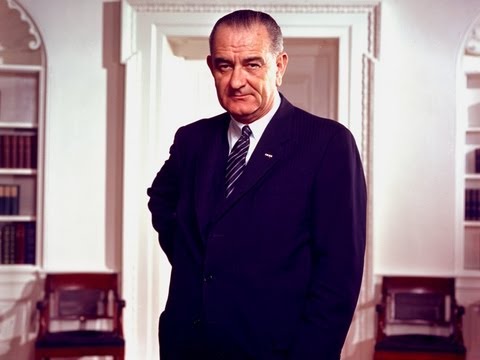
Lyndon B. Johnson
Johnson tried to make his subordinates love him. He would humiliate a man, then give him an expensive gift—such a Cadillac. It was his way of binding the man to him.
He was on a first-name basis with J. Edgar Hoover, the longtime director of the FBI. He didn’t hesitate to request—and get—raw FBI files on his political opponents.
On at least one occasion, he told members of his Cabinet: No one would dare walk out on his administration—because if they did, two men would follow their ass to the end of the earth: Mr. J. Edgar Hoover and the head of the Internal Revenue Service.


 Bureaucracybuster's Blog
2016 PRESIDENTIAL ELECTION, A BRONX TALE, ABC NEWS, ADOLF HITLER, ALTERNET, AP, BILL CLINTON, BUZZFEED, CBS NEWS, CHAZZ PALMINTERI, CNN, CROOKS AND LIARS, DAILY KOZ, DONALD TRUMP, FACEBOOK, FBI, H.R. MCMASTER, HILLARY CLINTON, IRS, J. EDGAR HOOVER, JEFF SESSIONS, JOHN F. KENNEDY, JOHN KELLY, LYNDON B. JOHNSON, MOTHER JONES, MOVEON, NBC NEWS, NEWSWEEK, NICCOLO MACHIAVELLI, NPR, POLITICO, RAW STORY, REINCE PREBIUS, REPUBLICAN PARTY, REUTERS, RICHARD M. NIXON, ROBERT DE NIRO, ROBERT F. KENNEDY, Ronald Reagan, SALON, SEATTLE TIMES, SERGEI KISLYAK, SLATE, THE ATLANTIC, THE CHICAGO SUN-TIMES, THE CHICAGO TRIBUNE, THE DAILY BEAST, THE GUARDIAN, THE HILL, THE HUFFINGTON POST, THE LOS ANGELES TIMES, THE NATION, THE NEW YORK TIMES, THE PRINCE, THE WASHINGTON POST, TIME, TWITTER, U.S. NEWS & WORLD REPORT, UP, UPI, USA TODAY, WILLIAM RALPH INGE
THE LIMITS OF LOVE AND FEAR: PART TWO (OF THREE)
In Bureaucracy, History, Law Enforcement, Politics, Social commentary on September 20, 2017 at 12:30 amIs it better to be loved or feared?
That was the question Florentine statesman Niccolo Machiavelli raised more than 500 years ago.
Presidents have struggled to answer this question—and have come to different conclusions.
LOVE ME, FEAR MY BROTHER
Most people felt irresistibly drawn to John F. Kennedy—even his political foes. Henry Luce, the conservative publisher of Time, once said, “He makes me feel like a whore.”
But JFK could afford to bask in the love of others—because his younger brother, Robert, was the one who inspired fear.
Robert F. Kennedy and John F. Kennedy
He had done so as Chief Counsel for the Senate Rackets Committee (1957-59), grilling Mafia bosses and corrupt union officials–most notably Teamsters President James Hoffa.
Appointed Attorney General by JFK, he unleashed the FBI on the Mafia. When the steel companies colluded in an inflationary rise in the price of steel in 1962, Bobby sicced the FBI on them.
In 1963, JFK’s cavorting with Ellen Rometsh threatened to destroy his Presidency. Rometsch, a Washington, D.C. call girl, was suspected by the FBI of being an East German spy.
With Republican Senators preparing to investigate the rumors, Bobby ordered Rometsch deported immediately (to which, as a German citizen, she was subject).
He also ordered FBI Director J. Edgar Hoover to deliver a warning to the Majority and Minority leaders of the Senate: The Bureau was fully aware of the extramarital trysts of most of its members. And an investigation into the President’s sex life could easily lead into revelations of Senatorial sleaze.
Plans for a Senatorial investigation were shelved.
BEING LOVED AND FEARED
In the 1993 movie, A Bronx Tale, 17-year-old Calogero (Lillo Brancato) asks his idol, the local Mafia capo, Sonny (Chazz Palminteri): “Is it better to be loved or feared?”
Sonny gives advice to his adopted son, Calogero
Sonny says if he had to choose, he would rather be feared. But he adds a warning straight out of Machiavelli: “The trick is not being hated. That’s why I treat my men good, but not too good.
“I give too much, then they don’t need me. I give them just enough where they need me, but they don’t hate me.”
Machiavelli, writing in The Prince, went further:
“Still a Prince should make himself feared in such a way that if he does not gain love, he at any rate avoids hatred, for fear and the absence of hatred may well go together. And [this] will always be attained by one who abstains from interfering with the property of his citizens and subjects or with their women.”
Many who quote Machiavelli in defense of being feared overlook this vital point: It’s essential to avoid becoming hated.
To establish a fearful reputation, a leader must act decisively and ruthlessly when the interests of the organization are threatened. Punitive action must be taken promptly and confidently.
One or two harsh actions of this kind can make a leader more feared than a reign of terror.
In fact, it’s actually dangerous to constantly employ cruelties or punishments. Whoever does so, warns Machiavelli, “is always obliged to stand with knife in hand, and can never depend on his subjects, because they, owing to continually fresh injuries, are unable to depend upon him.”
The 20th century President who came closest to realizing Machiavelli’s “loved and feared” prince in himself was Ronald Reagan.
Always smiling, quick with a one-liner (especially at press conferences), seemingly unflappable, he projected a constantly optimistic view of his country and its citizens.
Ronald Reagan
In his acceptance speech at the 1980 Republican National Convention he declared: “[The Democrats] say that the United States has had its days in the sun, that our nation has passed its zenith.… My fellow citizens, I utterly reject that view.”
And Americans enthusiastically responded to that view, twice electing him President (1980 and 1984).
But there was a steely, ruthless side to Reagan that appeared when he felt crossed.
On August 3, 1981, nearly 13,000 air traffic controllers walked out after contract talks with the Federal Aviation Administration collapsed. As a result, some 7,000 flights across the country were canceled on that day at the peak of the summer travel season.
Reagan branded the strike illegal. He threatened to fire any controller who failed to return to work within 48 hours.
On August 5, Reagan fired more than 11,000 air traffic controllers who hadn’t returned to work. The mass firing slowed commercial air travel, but it did not cripple the system as the strikers had forecast.
Reagan’s action stunned the American labor movement. Reagan was the only American President to have belonged to a union, the Screen Actors Guild. He had even been president of this–from 1947 to 1954.
There were no more strikes by Federal workers during Reagan’s tenure in office.
Similarly, Libya’s dictator, Moammar Kadaffi, learned that Reagan was not a man to cross.
On April 5, 1986, Libyan agents bombed a nightclub in West Berlin, killing three people, one a U.S. serviceman. The United States quickly learned that Libyan agents in East Germany were behind the attack.
On April 15, acting on Reagan’s orders, U.S. Air Force, Navy and Marine Corps bombers struck at several sites in Tripoli and Benghazi. Reportedly, Kaddafi himself narrowly missed becoming a casualty.
There were no more acts of Libyan terrorism against Americans for the rest of Reagan’s term.
Share this: