American Presidents—like politicians everywhere–strive to be loved. There are two primary reasons for this.
First, even the vilest dictators want to believe they are good people—and that their goodness is rewarded by the love of their subjects.
Second, it’s universally recognized that a leader who’s beloved has great clout than one who isn’t. In the United States, a Presidential candidate who wins by a landslide is presumed to have a mandate to pursue his agenda—at least, for the first two years of his administration.
But those—like Barack Obama—who strive to avoid conflict often get treated with contempt and hostility by their adversaries.
Barack Obama
In Renegade: The Making of a President, Richard Wolffe chronicled Obama’s successful 2008 bid for the White House. Among his revelations:
Obama, a believer in rationality and decency, felt more comfortable in responding to attacks on his character than in attacking the character of his enemies.
A graduate of Columbia University and Harvard Law School, Obama was one of the most academically gifted Presidents in United States history.
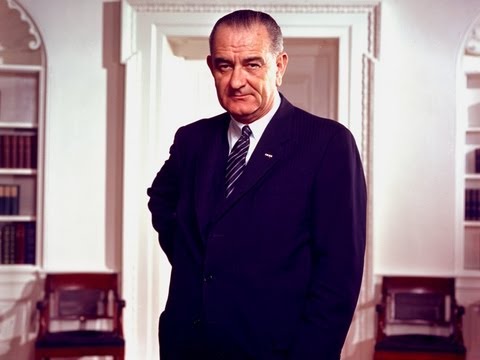
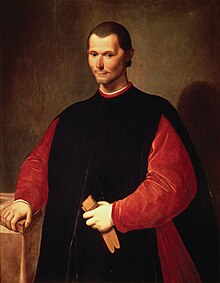
Yet he failed to grasp and apply this fundamental lesson taught by Niccolo Machiavelli, the father of modern political science:
A man who wishes to make a profession of goodness in everything must inevitably come to grief among so many who are not good. And therefore it is necessary for a prince, who wishes to maintain himself, to learn how not to be good, and to use this knowledge and not use it, according to the necessity of the case.
This explains why Obama found most of his legislative agenda stymied by Republicans.
For example: In 2014, Senator Rand Paul (R-Ky.) sought to block David Barron, Obama’s nominee to the First Circuit Court of Appeals.
Rand Paul
Paul objected to Barron’s authoring memos that justified the killing of an American citizen by a drone in Yemen on September 30, 2011.
The target was Anwar al-Awlaki, a radical Muslim cleric notorious on the Internet for encouraging Muslims to attack the United States.
Paul demanded that the Justice Department release the memos Barron crafted justifying the drone policy.
Anwar al-Awlaki
Imagine how Republicans would depict Paul—or any Democratic Senator—who did the same with a Republican President: “Rand Paul: A traitor who supports terrorists. He sides with America’s sworn enemies against its own lawfully elected President.”
But Obama did nothing of the kind.
(On May 22, 2014, the Senate voted 53–45 to confirm Barron to the First Circuit Court of Appeals.)
But Presidents who seek to rule primarily by fear can encounter their own limitations. Which immediately brings to mind Donald Trump.
As both a Presidential candidate and President, Trump has repeatedly used Twitter to attack hundreds of real and imagined enemies in politics, journalism, TV and films.
From June 15, 2015, when he launched his Presidential campaign, until October 24, 2016, Trump fired almost 4,000 angry, insulting tweets at 281 people and institutions that had somehow offended him.
Donald Trump
The New York Times needed two full pages of its print edition to showcase them.
As a Presidential candidate and President, he has shown outright hatred for President Obama. For five years, he slandered Obama as a Kenyan-born alien who had no right to hold the Presidency.
Then, on March 4, 2017, in a series of unhinged tweets, Trump falsely accused Obama of committing an impeachable offense: Tapping his Trump Tower phones prior to the election.
As President, Trump has refused to reach beyond the narrow base of white, racist, ignorant, hate-filled, largely rural voters who elected him.
And he has bullied and insulted even White House officials and his own handpicked Cabinet officers:
- Trump has waged a Twitter-laced feud against Jeff Sessions, his Attorney General. Sessions’ “crime”? Recusing himself from investigations into well-established ties between Russian Intelligence agents and members of Trump’s Presidential campaign.
- Trump repeatedly humiliated Chief of Staff, Reince Priebus—at one point ordering him to kill a fly that was buzzing about. On July 28, Priebus resigned.
- Trump similarly tongue-lashed Priebus’ replacement, former Marine Corps General John Kelly. Trump has reportedly been angered by Kelly’s efforts to limit the number of advisers who have unrestricted access to him. Kelly told colleagues he had never been spoken to like that during 35 years of military service—and would not tolerate it again.
- After Trump gave sensitive Israeli intelligence to Russian ambassador Sergey Kislyak, his national security advisor, H.R. McMaster, denied this had happened. Trump then contradicted McMaster in a tweet: “As president, I wanted to share with Russia (at an openly scheduled WH meeting) which I have the absolute right to do, facts pertaining to terrorism and airline flight safety.”
If Trump ever read Niccolo Machiavelli’s The Prince, he’s clearly forgotten this passage:
Cruelties ill committed are those which, although at first few, increase rather than diminish with time….Whoever acts otherwise….is always obliged to stand with knife in hand, and can never depend on his subjects, because they, owing to continually fresh injuries, are unable to depend upon him.
And this one:
Still, a prince should make himself feared in such a way that if he does not gain love, he at any rate avoids hatred.
Or, as Cambridge Professor of Divinity William Ralph Inge put it: “A man may build himself a throne of bayonets, but he can’t sit on it.”


 Bureaucracybuster's Blog
ABC NEWS, AFFORDABLE HEALTHCARE ACT, ALTERNET, AP, ARIZONA SHOOTINGS, ARNOLD SCHWARZNEGGER, ASSASSINATION, BARACK OBAMA, BILL CLINTON, BIRTHERS, BUZZFEED, CBS NEWS, CIA, CNN, CROOKS AND LIARS, DAILY KOZ, DEBBIE WASSERMAN SCHULTS, DEVIN NUNES, DONALD TRUMP, ERIC HOLDER, FACEBOOK, FBI, GABRIELLE GIFFORDS, GEORGE SOROS, GEORGE W. BUSH, HATE CRIMES, HEALTHCARE, HILLARY CLINTON, JOE BIDEN, JOHN BRENNAN, JOSEPH MCCARTHY, MAXINE WATERS, MICHELE BACHMANN, MOTHER JONES, MOVEON, MSNBC, NBC NEWS, NEWSWEEK, NPR, OBAMACARE, PHIL GRAMM, POLITICO, RAW STORY, REPUBLICANS, REUTERS, ROBERT DE NIRO, ROLLING STONE MAGAZINE, SALON, Sarah Palin, SEATTLE TIMES, SLATE, STEVE SCHMIDT, TEA PARTY, THE ATLANTIC, THE CHICAGO SUN-TIMES, THE CHICAGO TRIBUNE, THE DAILY BEAST, THE GUARDIAN, THE HILL, THE HUFFINGTON POST, THE LOS ANGELES TIMES, THE NATION, THE NEW YORK TIMES, THE WASHINGTON POST, TIME, TIMOTHY MCVEIGH, TWITTER, U.S. NEWS & WORLD REPORT, UPI, USA TODAY
REPUBLICANS: SOLICITING ASSASSINATION
In Bureaucracy, History, Law, Law Enforcement, Politics, Social commentary on October 26, 2018 at 12:06 am“The Republican Party has weaponized its supporters, made violence a virtue and, with almost every pronouncement for 50 years, given them an enemy politicized, radicalized and indivisible.”
So wrote a Rolling Stone writer in a blistering June 19, 2017 editorial. The touchstone was the slaughter of nine black worshipers by a white supremacist at a South Carolina black church.
A little more than one year later, on October 24, 2018, pipe bombs were mailed to:
All of these intended victims had one thing in common: All of them had been brutally and repeatedly attacked by President Donald Trump.
Donald Trump
But the proof of Republican culpability in political violence goes back much further.
Gabrille Giffords, 40, is a moderate Democrat who narrowly wins re-election in November, 2010, against a Republican Tea Party candidate.
Her support of President Barack Obama’s health care reform law has made her a target for violent rhetoric–-especially from former Alaska Governor Sarah Palin.
In March, 2010, Palin releases a map featuring 20 House Democrats that uses cross-hairs images to show their districts. In case her supporters don’t get the message, she later writes on Twitter: “Don’t Retreat, Instead – RELOAD!”
As the campaign continues, Giffords finds her Tucson office vandalized after the House passes the healthcare overhaul in March.
At one of her rallies, her aides call the police after an attendee drops a gun.
On January 8, 2011, Giffords is shot in the head while meeting with constituents outside a grocery store in Tucson, Arizona. She survives and vows to return to her former Congressional duties, but is forced to resign for health reasons in 2012.
Increasingly, Republicans have repeatedly aimed violent—-and violence-arousing—-rhetoric at their Democratic opponents. This is not a case of careless language that is simply misinterpreted, with tragic results.
Republicans like Sarah Palin and Donald Trump fully understand the constituency they are trying to reach: Those masses of alienated, uneducated Americans who live only for their guns and hardline religious beliefs—and who can be easily manipulated by perceived threats to either.
If a “nutcase” assaults a Democratic politician and misses, then the Republican establishment claims to be shocked—-shocked!—that such a thing could have happened.
And if the attempt proves successful—as the January 8, 2011 Tucson shootings did—then Republicans weep crocodile tears for public consumption.
The difference is that, in this case, they rejoice in knowing that Democratic ranks have been thinned and their opponents are even more on the defensive, for fear of the same happening to them.
Consider the following:
Steve Schmidt, a former Republican campaign strategist for President George W. Bush and California Governor Arnold Schwarznegger, summed up Trump’s responsibility for this latest wave of political violence.
Steve Schmidt
Josh Sam, CC BY-SA 4.0 <https://creativecommons.org/licenses/by-sa/4.0>, via Wikimedia Commons
In a series of tweets on the day of the attempted bombings, Schmidt wrote:
“Trump has stoked a cold civil war in this Country. His rallies brim with menace and he has labeled journalists as enemies of the people.
“That someone would seek to kill their political enemies is not aberrational but rather the inevitable consequence of Trumps incitement.
“The targets are political not coincidental. Trump, the greatest demagogue in American history has celebrated violence over and over again. It looks like someone finally took Trump both literally and seriously. The WH will feign outrage when this obvious point is made.
“No journalist or commentator should be intimidated from making this point. The stoking of hatred and sundering of the American people was always going to lead to terrible consequences. Chief amongst them would be the initiation of partisan or sectarian violence within our country.”
Schmidt is one of the few commentators to courageously lay responsibility for this latest wave of political violence on the man who instigates it: President Donald Trump
Share this: