Posts Tagged ‘RICHARD NIXON’
2016 PRESIDENTIAL CAMPAIGN, 9/11, ABC NEWS, ADAM KINZINGER, ALEXANDRIA OCASIO-CORTEZ, ALLEN WEST, ALTERNET, AMERICABLOG, ANN COULTER, AP, BABY BOOMER RESISTANCE, BBC, BILL CLINTON, BLOOMBERG NEWS, BUZZFEED, CAPITOL ATTACK, CBS NEWS, CHRISTOPHER S. MURPHY, CNN, COMMUNISM, CROOKS AND LIARS, DAILY KOZ, DEMOCRATS, DONALD TRUMP, DWIGHT D. EISENHOWER, EGYPT, FACEBOOK, FERGUS CULLEN, FIVETHIRTYEIGHT, GAMAL ABDEL NASSER, GEORGE H.W. BUSH, HARPER’S MAGAZINE, HILLARY CLINTON, HOUSE OVERSIGHT AND REFORM COMMITTEE, HUFFINGTON POST, IMPEACHMENT, ISRAEL, JEB LUND, JIMMY CARTER, JOHN F. KENNEDY, JOHN KASICH, JORDAN, JOSEPH MCCARTHY, LIZ CHENEY, LYNDON B. JOHNSON, MARJORIE TAYLOR GREENE, MEDIA MATTERS, MICHAEL HAYDEN, MICHELLE BACHMANN, MIKE PENCE, MITCH MCCONNELL, MOSHE DAYAN, MOTHER JONES, MOVEON, MSNBC, NANCY PELOSI, NATIONAL SECURITY AGENCY, NATURAL RESOURCES COMMITTEE, NBC NEWS, NEW REPUBLIC, NEWSDAY, NEWSWEEK, NPR, OSAMA BIN LADEN, PAUL GOSAR, PAUL RYAN, PBS NEWSHOUR, PHIL GRAMM, PHILIP KLINE, POLITICO, POLITICUSUSA, RAW STORY, REPUBLICAN NATIONAL CONVENTION, REPUBLICANS, REUTERS, RICHARD NIXON, ROGER STONE, ROLLING STONE, RON KLEIN, SALON, Sarah Palin, SEATTLE TIMES, SLATE, SOVIET UNION, TALKING POINTS MEMO, THE ATLANTIC, THE CHICAGO SUN-TIMES, THE CHICAGO TRIBUNE, THE DAILY BEAST, THE DAILY BLOG, THE GUARDIAN, THE HILL, THE HUFFINGTON POST, THE LOS ANGELES TIMES, THE NATION, THE NEW REPUBLIC, THE NEW YORK TIMES, THE NEW YORKER, THE PENTAGON, THE VILLAGE VOICE, THE WASHINGTON POST, THINKPROGRESS, TIME, TIMOTHY MCVEIGH, TRUTHDIG, TRUTHOUT, TWITTER, TWO POLITICAL JUNKIES, U.S. NEWS & WORLD REPORT, UNITED STATES HOUSE OF REPRESENTATIVES, UNITED STATES SECRET SERVICE, UPI, USA TODAY, VIETNAM WAR, WONKETTE, WORLD TRADE CENTER
In Bureaucracy, History, Law, Law Enforcement, Military, Politics, Social commentary on November 24, 2021 at 12:17 am
Republicans in past decades tried—and often won—elections on the basis of ideology and/or appeals to racism.
During the 1960s and 1970s, the “enemy” was blacks. The key to winning votes of racist whites without appearing racist lay in what Republicans called “the Southern Strategy”—stoking whites’ fears of blacks.
It was this that won Richard Nixon the Presidency in 1968 and 1972 and the White House for George H.W. Bush in 1988.
In a now-infamous 1981 interview, Right-wing political consultant Lee Atwater explained how this worked.
“You start out in 1954 by saying, ‘Nigger, nigger, nigger.’ By 1968 you can’t say ‘nigger’—that hurts you, backfires.
“So you say stuff like, uh, forced busing, states’ rights, and all that stuff, and you’re getting so abstract.
“Now, you’re talking about cutting taxes, and all these things you’re talking about are totally economic things and a byproduct of them is, blacks get hurt worse than whites.…
“’We want to cut this,’ is much more abstract than even the busing thing, uh, and a hell of a lot more abstract than ‘Nigger, nigger.’
“So anyway you look at it, race is coming on the back burner.”

Lee Atwater
Since the end of World War II, Republicans regularly hurled the charge of “treason” against anyone who dared to run against them for office or think other than Republican-approved thoughts.
Republicans had been locked out of the White House from 1933 to 1952, during the administrations of Franklin D. Roosevelt and Harry S. Truman.
Determined to regain the Presidency by any means, they found that attacking the integrity of their fellow Americans a highly effective tactic.
During the 1950s, Wisconsin Senator Joseph R. McCarthy rode a wave of paranoia to national prominence—by attacking the patriotism of anyone who disagreed with him.
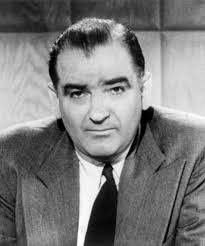
Joseph McCarthy
Elected to the Senate in 1946, he rose to national prominence on February 9, 1950, after giving a fiery speech in Wheeling, West Virginia:
“The State Department is infested with communists. I have here in my hand a list of 205—a list of names that were made known to the Secretary of State as being members of the Communist Party and who nevertheless are still working and shaping policy in the State Department.”
Anti-communism as a lever to political advancement sharply accelerated following McCarthy’s speech.
No American—no matter how prominent—was safe from the accusation of being a Communist or a Communist sympathizer—a “Comsymp” or “fellow traveler” in the style of the era.
Republicans rode the issue of anti-Communism to victory from 1948 to 1992.
After holding the White House for eight years under Dwight D. Eisenhower, they lost it in 1960 to John F. Kennedy and again in 1964 to Lyndon B. Johnson.
By 1968, with the nation mired in Vietnam and convulsed by antiwar demonstrations and race riots, Americans turned once more to those who preyed upon their fears and hates.
They elected Richard Nixon, who promised to end the Vietnam war and crack down on “uppity” blacks and antiwar demonstrators.
The same strategy re-elected him in 1972.
After Jimmy Carter won the Presidency in 1976 and lost it in 1980 to Ronald Reagan, Republicans held the White House until 1992.
During the 1970s and 1980s, they continued to accuse their opponents of being devious agents—or at least unwitting pawns—of “the Communist conspiracy.”
Even as late as 1992, President George H.W. Bush and the Republican establishment charged that Arkansas Governor Bill Clinton might be a KGB plant.
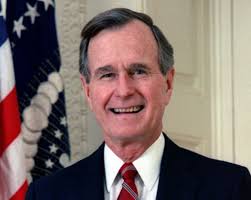
George H.W. Bush
Their “evidence”: During his tenure at Oxford University in 1969-70, Clinton had briefly visited Moscow.
Thus, the Republican charged that he might have been “programmed” as a real-life “Manchurian candidate” to become, first, Governor of Arkansas—one of America’s poorest states—and then President.
What made this charge all the more absurd: The Soviet Union had officially dissolved in December, 1991.
Republicans continued to accuse their opponents of being “Communists” and “traitors.” But these charges no longer carried the weight they had while the Soviet Union existed.
Then, on September 11, 2001, Republicans—-and their right-wing supporters—at last found a suitable replacement for the Red Menace.
Two highjacked jetliners slammed into the World Trade Center in New York and one struck the Pentagon in Washington, D.C.
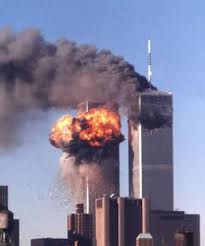
World Trade Center on September 11, 2001
Exit The Red Bogeyman. Enter The Maniacal Muslim.
For several years, fears of Islamic terror carried Republicans to electoral victory—most importantly in 2004, when George W. Bush won re-election as President.
But after the invasion of Iraq in 2003 and the killing of Osama bin Laden in 2011, Americans lost interest in The Maniacal Muslim as a surefire election tactic.
With the rise of Donald Trump to Republican standard-bearer in 2015, threats of violence entered the rhetoric—and tactics—of the Republican party.
For example:
- On March 16, 2016, he warned Republicans that if he didn’t win the GOP nomination in July, his supporters would literally riot: “I think you’d have riots. I think you would see problems like you’ve never seen before. I think bad things would happen. I really do. I wouldn’t lead it, but I think bad things would happen.”
- An NBC reporter summed it up as: “The message to Republicans was clear on [March 16]: ‘Nice convention you got there, shame if something happened to it.'”
2016 PRESIDENTIAL CAMPAIGN, 9/11, ABC NEWS, ADAM KINZINGER, ALEXANDRIA OCASIO-CORTEZ, ALLEN WEST, ALTERNET, AMERICABLOG, ANN COULTER, AP, BABY BOOMER RESISTANCE, BBC, BILL CLINTON, BLOOMBERG NEWS, BUZZFEED, CAPITOL ATTACK, CBS NEWS, CHRISTOPHER S. MURPHY, CNN, COMMUNISM, CROOKS AND LIARS, DAILY KOZ, DEMOCRATS, DONALD TRUMP, DWIGHT D. EISENHOWER, EGYPT, FACEBOOK, FERGUS CULLEN, FIVETHIRTYEIGHT, GAMAL ABDEL NASSER, GEORGE H.W. BUSH, HARPER’S MAGAZINE, HILLARY CLINTON, HOUSE OVERSIGHT AND REFORM COMMITTEE, HUFFINGTON POST, IMPEACHMENT, ISRAEL, JEB LUND, JIMMY CARTER, JOHN F. KENNEDY, JOHN KASICH, JORDAN, JOSEPH MCCARTHY, LIZ CHENEY, LYNDON B. JOHNSON, MARJORIE TAYLOR GREENE, MEDIA MATTERS, MICHAEL HAYDEN, MICHELLE BACHMANN, MIKE PENCE, MITCH MCCONNELL, MOSHE DAYAN, MOTHER JONES, MOVEON, MSNBC, NANCY PELOSI, NATIONAL SECURITY AGENCY, NATURAL RESOURCES COMMITTEE, NBC NEWS, NEW REPUBLIC, NEWSDAY, NEWSWEEK, NPR, OSAMA BIN LADEN, PAUL GOSAR, PAUL RYAN, PBS NEWSHOUR, PHIL GRAMM, PHILIP KLINE, POLITICO, POLITICUSUSA, RAW STORY, REPUBLICAN NATIONAL CONVENTION, REPUBLICANS, REUTERS, RICHARD NIXON, ROGER STONE, ROLLING STONE, RON KLEIN, SALON, Sarah Palin, SEATTLE TIMES, SLATE, SOVIET UNION, TALKING POINTS MEMO, THE ATLANTIC, THE CHICAGO SUN-TIMES, THE CHICAGO TRIBUNE, THE DAILY BEAST, THE DAILY BLOG, THE GUARDIAN, THE HILL, THE HUFFINGTON POST, THE LOS ANGELES TIMES, THE NATION, THE NEW REPUBLIC, THE NEW YORK TIMES, THE NEW YORKER, THE PENTAGON, THE VILLAGE VOICE, THE WASHINGTON POST, THINKPROGRESS, TIME, TIMOTHY MCVEIGH, TRUTHDIG, TRUTHOUT, TWITTER, TWO POLITICAL JUNKIES, U.S. NEWS & WORLD REPORT, UNITED STATES HOUSE OF REPRESENTATIVES, UNITED STATES SECRET SERVICE, UPI, USA TODAY, VIETNAM WAR, WONKETTE, WORLD TRADE CENTER
In Bureaucracy, History, Law, Law Enforcement, Military, Politics, Social commentary on November 23, 2021 at 12:27 am
It was a moment both poignant and prophetic: Representative Alexandria Ocasio-Cortez (D-N.Y.) responding to a brutal virtual attack on her by a fellow member of Congress.
Representative Paul Gosar (R-Ariz.) had tweeted a doctored anime video depicting him killing Ocasio-Cortez and then turning his sword towards President Joseph Biden.

Paul Gosar
As a result, the Democratically-controlled House of Representatives was now meeting to decide if he should be censured over that video.
“What is so hard, what is so hard about saying this is wrong?” asked Ocasio-Cortez. “This is not about me. This is not about Representative Gosar. This is about what we are willing to accept. If you believe that this behavior should not be accepted, then vote yes. It’s really that simple.”
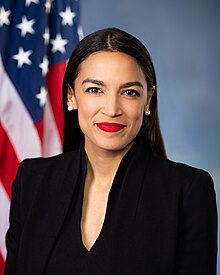
Alexandria Ocasio-Cortez
And the Republican response was equally telling: Of the 213 Republicans serving in the House, only two—Liz Cheney (Wyoming) and Adam Kinzinger (Illinois)—dared to support censure of Gosar.
A censure resolution is the most severe form of punishment in the House, and stripping a member of committee assignments removes a powerful platform to influence legislation and give voice to constituent priorities.
The resolution approved by the House removed Gosar from the House Oversight and Reform Committee, which Ocasio-Cortez also serves on, and the Natural Resources Committee.
“We cannot have a member joking about murdering each other or threatening the President of the United States,” House Speaker Nancy Pelosi said in a floor speech.
“Disguising death threats as a video doesn’t make it less real. It’s a sad day for the House of Representatives, but a necessary day.”

Nancy Pelosi
Before the vote which censured him, Gosar said: “I have said decisively there is no threat in the cartoon other than the threat that immigration poses to our country. And no threat was intended by my staff or me.
“I voluntarily took the cartoon down not because it was itself a threat, but because some thought it was. Out of compassion for those who generally felt offense, I self-censored.”
Yet only minutes after the House voted to censure him, Gosar retweeted the video. He also retweeted Right-wing podcaster Elijah Schaffer’s tweet of the video: “Really well done. We love @DrPaulGosar, don’t we folks?”
This marriage of violence with Right-wing ideology is not new.
Rolling Stone magazine writer Jeb Lund noted in a June 19, 2015 editorial: “The Republican Party has weaponized its supporters, made violence a virtue and, with almost every pronouncement for 50 years, given them an enemy politicized, racialized and indivisible.
“Movement conservatives have fetishized a tendentious and ahistorical reading of the Second Amendment to the point that the Constitution itself somehow paradoxically ‘legitimizes’ an armed insurrection against the government created by it. “
“This is no longer an argument about whether one party’s beliefs are beneficial or harmful, but an attitude that labels leftism so antithetical to the American idea that empowering it on any level is an act of usurpation.”
Increasingly, Republicans have repeatedly aimed violent—-and violence-arousing—-rhetoric at their Democratic opponents. This is not a case of careless language that is simply misinterpreted, with tragic results.
Republicans like Paul Gosar fully understand the constituency they are trying to reach: Those masses of alienated, uneducated Americans who live only for their guns and hardline religious beliefs—and who can be easily manipulated by perceived threats to either.
If a “nutcases” assaults a Democratic politician and misses, then the Republican establishment claims to be shocked—-shocked!—that such a thing could have happened.
And if the attempt proves successful, then Republicans weep crocodile tears for public consumption.
The difference is that, in this case, they rejoice in knowing that Democratic ranks have been thinned and their opponents are even more on the defensive, for fear of the same happening to them.
Consider the following:
- Florida GOP Congressional candidate Allen West, referring to his Democratic opponent, Representative Ron Klein, told Tea Party activists: “You’ve got to make the fellow scared to come out of his house. That’s the only way that you’re going to win. That’s the only way you’re going to get these people’s attention.”
- Representative Michelle Bachmann (R-MINN.) said she wanted her constituents “armed and dangerous” against the Obama administration.
- Former Governor (R-Alaska) Sarah Palin told her supporters: “Get in their face and argue with them. No matter how tough it gets, never retreat, instead RELOAD!”
- Right-wing pundit Ann Coulter: “My only regret with Timothy McVeigh is he did not go to the New York Times building.”
- Senator Phil Gramm (R-TEX.) “We’re going to keep building the party until we’re hunting Democrats with dogs.”
Republicans in past decades tried—and often won—elections on the basis of ideology and/or appeals to racism.
During the 1960s and 1970s, the “enemy” was blacks. The key to winning votes of racist whites without appearing racist lay in what Republicans called “the Southern Strategy”—stoking white fears of blacks.
It was this that won Richard Nixon the Presidency in 1968 and 1972 and the White House for George H.W. Bush in 1988.
In a now-infamous 1981 interview, Right-wing political consultant Lee Atwater explained how this worked.
ABC NEWS, ADOLF HITLER, AFFORDABLE HEALTHCARE ACT, ALTERNET, AMERICABLOG, ANN COULTER, AP, ARIZONA SHOOTINGS, ASSASSINATION, BABY BOOMER RESISTANCE, BARACK OBAMA, BBC, BILL CLINTON, BIRTHERS, BLOOMBERG NEWS, BUZZFEED, CBS NEWS, CHRISTINA-TAYLOR GREEN, CNN, CONFEDERATE FLAG, CROOKS AND LIARS, DAILY KOZ, DEVIN NUNES, DICK ARMEY, DICK MORRIS, DYLANN ROOF, FACEBOOK, FBI, FIVETHIRTYEIGHT, FRANKLIN D. ROOSEVELT, GABRIELLE GIFFORDS, GEORGE H.W. BUSH, GEORGE W. BUSH, GLENN BECK, HARPER’S MAGAZINE, HARRY S. TRUMAN, HATE CRIMES, HEALTHCARE, HUFFINGTON POST, JOSEPH MCCARTHY, MEDIA MATTERS, MEIN KAMPF, MICHAEL SAVAGE, MICHELE BACHMANN, MOTHER JONES, MOVEON, MSNBC, NBC NEWS, NEW REPUBLIC, NEWSDAY, NEWSWEEK, NEWT GINGRICH, NPR, OBAMACARE, PBS NEWSHOUR, PHIL GRAMM, POLITICO, POLITICUSUSA, RAW STORY, REP. GABRIELLE GIFFORDS, REPUBLICAN PARTY, REPUBLICANS, REUTERS, RICHARD NIXON, RICK SANTORUM, RODNEY KING RIOTS, ROLLING STONE MAGAZINE, RUSH LIMBAUGH, SALON, Sarah Palin, SEAN HANNITY, SEATTLE TIMES, SLATE, SOVIET UNION, SPIRO AGNEW, TALKING POINTS MEMO, TEA PARTY, TERRORISM, THE ATLANTIC, THE CHICAGO SUN-TIMES, THE CHICAGO TRIBUNE, THE DAILY BEAST, THE DAILY BLOG, THE GUARDIAN, THE HILL, THE HUFFINGTON POST, THE LOS ANGELES TIMES, THE NATION, THE NEW REPUBLIC, THE NEW YORK TIMES, THE NEW YORKER, THE VILLAGE VOICE, THE WASHINGTON POST, THINKPROGRESS, TIME, TRUTHDIG, TRUTHOUT, TWITTER, TWO POLITICAL JUNKIES, U.S. DISTRICT JUDGE JOHN ROLL, U.S. MARSHALS SERVICE, U.S. NEWS & WORLD REPORT, UPI, USA TODAY, WONKETTE
In Bureaucracy, History, Law, Law Enforcement, Politics, Social commentary on November 19, 2021 at 12:12 am
The electoral success of Senator Joseph McCarthy’s Red-baiting treason slanders proved too alluring for other Republicans to resist.
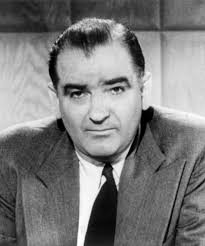
Joseph McCarthy
Among those who have greatly profited from hurling similar charges were:
- President Richard Nixon
- His vice president, Spiro Agnew
- Former Speaker of the House Newt Gingrich
- Former Congressman Dick Armey
- President George W. Bush
- Vice Presidential candidate Sarah Palin
- Congresswoman Michelle Bachmann
- Rush Limbaugh
- Sean Hannity
- Bill O’Reilly.
During the 1992 Presidential campaign, Republicans tried to paint Bill Clinton as a brainwashed “Manchurian candidate” because he had briefly visited the Soviet Union during his college years.
After the Soviet Union collapsed in 1991, Republicans lost their “soft on Communism” slander-line. So they tried to persuade voters that Democrats were “soft on crime.”
When riots flared in 1992 after the acquittal of LAPD officers who had savagely beaten Rodney King, President George H.W. Bush blamed the carnage on the “Great Society” programs of the 1960s.
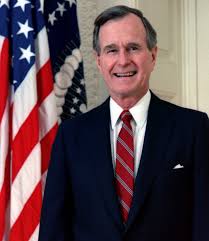
George H.W. Bush
After losing the White House to Clinton at the polls in 1992 and 1996, Republicans tried to oust him another way: By impeaching him over a tryst with a penis-loving intern named Monica Lewinsky.
The Republican-controlled House of Representatives voted to impeach, but the effort was defeated in the Democratically-controlled Senate.
The 2008 election of Barack Obama pushed the Republican “treason chorus” to new heights of infamy.
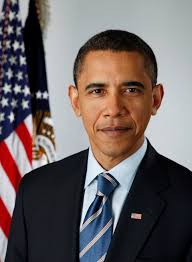
Barack Obama
Almost immediately after Obama took office, he came under attack by an industry of right-wing book authors such as Sean Hannity, Ann Coulter and Rush Limbaugh.
The following titles vividly reveal the hates, fears and ambitions of their authors—and audience:
- Conservative Victory: Defeating Obama’s Radical Agenda by Sean Hannity
- Obama Zombies: How the Liberal Machine Brainwashed My Generation by Jason Mattera
- How Barack Obama is Bankrupting the U.S. Economy by Stephen Moore
- Let Freedom Ring: Winning the War of Liberty over Liberalism by Sean Hannity
- The Manchurian President: Barack Obama’s Ties to Communists,Socialists and Other Anti-American Extremists by Aaron Klein
- The Blueprint: Obama’s Plan to Subvert the Constitution and Build an Imperial Presidency by Ken Blackwell
- Culture of Corruption: Obama and His Team of Tax Cheats, Crooks, and Croniesby Michelle Malkin
- Why Obama’s Government Takeover of Health Care Will Be a Disaster by David Gratzer
- To Save America: Stopping Obama’s Secular-Socialist Machine by Newt Gingrich
- Obama’s Radical Transformation of America: Year One by Joshua Muravchik
- How the Obama Administration Threatens to Undermine Our Elections by John Fund
- Power Grab: How Obama’s Green Policicies Will Steal Your Freedom and Bankrupt America by Christopher C. Horner
- The Bad Science and Bad Policy of Obama’s Global Warning Agenda by Roy W. Spencer
- America’s March to Socialism: Why We’re One Step Closer to Giant Missile Parades by Glenn Beck
- Obama’s Betrayal of Israel by Michael Ledeen
- The Obama Nation: Leftist Politics and the Cult of Personality by Jerome R. Corsi
- The Case Against Barack Obama: The Unlikely Rise and Unexamined Agenda of the Media’s Favorite Candidate by David Freddoso
- Censorship: The Threat to Silence Talk Radio by Brian Jennings
- The War On Success: How the Obama Agenda Is Shattering the American Dream by Tommy Newberry
- Green Hell: How Environmentalists Plan to Control Your Life and What You Can Do to Stop Them by Steven Milloy
- Liberalism is a Mental Disorder: Savage Solutions by Michael Savage
- Treason: Liberal Treachery from the Cold War to the War on Terrorism by Ann Coulter
- How to Talk to a Liberal (If You Must): The World According to Ann Coulter by Ann Coulter
- Slander: Liberal Lies About the American Right by Ann Coulter
- If Democrats Had Any Brains, They’d Be Republicans by Ann Coulter
- Guilty: Liberal “Victims” and Their Assault on America by Ann Coulter
- Catastrophe: How Obama, Congress and the Special Interests Are Transforming…a Slump into a Crash, Freedom Into Socialism and a Disaster into a Catastrophe….And How to Fight Back by Dick Morris
Consider the vocabulary Right-wingers use to describe their political adversaries:
“Liberals,” “radicals, “bankrupting,” “treason,” subversion,” “slander,” “terrorism,” “betrayal,” “catastrophe,” “shattering the American dream,” “leftists,” “Communists,” “government takeover,” “socialism,” “power grab,” “secularism,” “environmentalism.”
And while the Right lusts to constantly compare Democrats and liberals (the two aren’t always the same) to Adolf Hitler, its propaganda campaign draws heavily on the Nazi leader’s own advice.
In Mein Kampf, Hitler laid out his formula for successful propaganda: “All effective propaganda must be confined to a few bare essentials.
“Those must be expressed as far as possible in stereotypical formulas. These slogans should be persistently repeated until the very last individual has come to grasp the idea that has been put forward.”
“[The masses] more readily fall victims to the big lie than the small lie, since they themselves often tell small lies in little matters but would be ashamed to resort to large-scale falsehoods.”
Thus, Republicans spent the eight years of Barack Obama’s Presidency repeating the lie that he was born in Kenya—not Hawaii, as the long-form version of his birth certificate attests.
The reason: To “prove” that he was an illegitimate President, and should be removed from office.
To Republicans’ dismay, their slander campaign didn’t prevent Obama from being elected in 2008—and re-elected in 2012.
ABC NEWS, ADOLF HITLER, AFFORDABLE HEALTHCARE ACT, ALTERNET, AMERICABLOG, ANN COULTER, AP, ARIZONA SHOOTINGS, ASSASSINATION, BABY BOOMER RESISTANCE, BARACK OBAMA, BBC, BILL CLINTON, BIRTHERS, BLOOMBERG NEWS, BUZZFEED, CBS NEWS, CHRISTINA-TAYLOR GREEN, CNN, CONFEDERATE FLAG, CROOKS AND LIARS, DAILY KOZ, DEVIN NUNES, DICK ARMEY, DICK MORRIS, DYLANN ROOF, FACEBOOK, FBI, FIVETHIRTYEIGHT, FRANKLIN D. ROOSEVELT, GABRIELLE GIFFORDS, GEORGE H.W. BUSH, GEORGE W. BUSH, GLENN BECK, HARPER’S MAGAZINE, HARRY S. TRUMAN, HATE CRIMES, HEALTHCARE, HUFFINGTON POST, JOSEPH MCCARTHY, MEDIA MATTERS, MEIN KAMPF, MICHAEL SAVAGE, MICHELE BACHMANN, MOTHER JONES, MOVEON, MSNBC, NBC NEWS, NEW REPUBLIC, NEWSDAY, NEWSWEEK, NEWT GINGRICH, NPR, OBAMACARE, PBS NEWSHOUR, PHIL GRAMM, POLITICO, POLITICUSUSA, RAW STORY, REP. GABRIELLE GIFFORDS, REPUBLICAN PARTY, REPUBLICANS, REUTERS, RICHARD NIXON, RICK SANTORUM, RODNEY KING RIOTS, ROLLING STONE MAGAZINE, RUSH LIMBAUGH, SALON, Sarah Palin, SEAN HANNITY, SEATTLE TIMES, SLATE, SOVIET UNION, SPIRO AGNEW, TALKING POINTS MEMO, TEA PARTY, TERRORISM, THE ATLANTIC, THE CHICAGO SUN-TIMES, THE CHICAGO TRIBUNE, THE DAILY BEAST, THE DAILY BLOG, THE GUARDIAN, THE HILL, THE HUFFINGTON POST, THE LOS ANGELES TIMES, THE NATION, THE NEW REPUBLIC, THE NEW YORK TIMES, THE NEW YORKER, THE VILLAGE VOICE, THE WASHINGTON POST, THINKPROGRESS, TIME, TRUTHDIG, TRUTHOUT, TWITTER, TWO POLITICAL JUNKIES, U.S. DISTRICT JUDGE JOHN ROLL, U.S. MARSHALS SERVICE, U.S. NEWS & WORLD REPORT, UPI, USA TODAY, WONKETTE
In Bureaucracy, History, Law, Law Enforcement, Politics, Social commentary on November 18, 2021 at 12:23 am
“The Republican Party has weaponized its supporters, made violence a virtue and, with almost every pronouncement for 50 years, given them an enemy politicized, radicalized and indivisible.”
So wrote Rolling Stone writer in a blistering June 19, 2015 editorial. The touchstone was the slaughter of nine black worshipers by a white supremacist at a South Carolina black church.
But the proof of Republican culpability in political violence goes back much further.
Consider:
Gabrille Giffords, 40, is a moderate Democrat who narrowly wins re-election in November, 2010, against a Republican Tea Party candidate.
Her support of President Obama’s health care reform law has made her a target for violent rhetoric–-especially from former Alaska Governor Sarah Palin.
In March, 2010, Palin releases a map featuring 20 House Democrats that uses cross-hairs images to show their districts. In case her supporters don’t get the message, she later writes on Twitter: “Don’t Retreat, Instead – RELOAD!”

Sarah Palin
Shemp Howard, Jr. at en.wikipedia, CC BY-SA 3.0 <https://creativecommons.org/licenses/by-sa/3.0>, via Wikimedia Commons
As the campaign continues, Giffords finds her Tucson office vandalized after the House passes the healthcare overhaul in March.
Giffords senses that she has become a target for removal–in more than political terms. In an interview after the vandalizing of her office, she refers to the animosity against her by conservatives.
She specifically cites Palin’s decision to list her seat as one of the top “targets” in the midterm elections.
“For example, we’re on Sarah Palin’s targeted list, but the thing is, that the way that she has it depicted has the cross-hairs of a gun sight over our district. When people do that, they have to realize that there are consequences to that action,” Giffords tells MSNBC.
At one of her rallies, her aides call the police after an attendee drops a gun.
Giffords may have seen the spectre of violence closing in on her. In April, 2010, she supported Rep. Raúl Grijalva after he had to close two offices when he and his staff received threats.
He had called for a boycott of Arizona businesses in opposition to the state’s controversial immigration law.
“I am deeply troubled about reports that Congressman Grijalva and members of his staff have been subjected to death threats,” Giffords said.
“This is not how we, as Americans, express our political differences. Intimidation has no place in our representative democracy. Such acts only make it more difficult for us to resolve our differences.”
But intimidation—-and worse—-does have a place among the tactics used by influential Republicans in the pursuit of absolute power.
Increasingly, Republicans have repeatedly aimed violent—-and violence-arousing—-rhetoric at their Democratic opponents. This is not a case of careless language that is simply misinterpreted, with tragic results.
Republicans like Sarah Palin fully understand the constituency they are trying to reach: Those masses of alienated, uneducated Americans who live only for their guns and hardline religious beliefs—and who can be easily manipulated by perceived threats to either.
If a “nutcases” assaults a Democratic politician and misses, then the Republican establishment claims to be shocked—-shocked!—that such a thing could have happened.
And if the attempt proves successful—as the January 8, 2011 Tucson shootings did—then Republicans weep crocodile tears for public consumption.
The difference is that, in this case, they rejoice in knowing that Democratic ranks have been thinned and their opponents are even more on the defensive, for fear of the same happening to them.
Consider the following:
- Rep. Randy Neugebauer (R-Tex.) yelled “baby killer” at Bart Stupak (D-Mich.) on the House floor.
- Florida GOP Congressional candidate Allen West, referring to his Democratic opponent, Rep. Ron Klein, told Tea Party activists: You’ve got to make the fellow scared to come out of his house. That’s the only way that you’re going to win. That’s the only way you’re going to get these people’s attention.”
- Rep. Devin Nunes (R-CA) said Tea Partiers had “every right” to use racist and homophobic slurs against Democrats, justifying it via Democrats’ “totalitarian tactics.”
- Rep. Michelle Bachmann (R-Minn.) said she wanted her constituents “armed and dangerous” against the Obama administration.
- Sarah Palin told her supporters: “Get in their face and argue with them. No matter how tough it gets, never retreat, instead RELOAD!”
- Right-wing pundit Ann Coulter: “My only regret with Timothy McVeigh is he did not go to the New York Times building.”
- Senator Phil Gramm (R-Tex.) “We’re going to keep building the party until we’re hunting Democrats with dogs.”
- Rep. Louisa M. Slauter (D-NY) received a phone message threatening sniper attacks against lawmakers and their families.
Since the end of World War 11, Republicans have regularly hurled the charge of “treason” against anyone who dared to run against them for office or think other than Republican-sponsored thoughts.
Republicans had been locked out of the White House from 1933 to 1952, during the administrations of Franklin D. Roosevelt and Harry S. Truman.
Determined to regain the Presidency by any means, they found that attacking the integrity of their fellow Americans a highly effective tactic.
During the 1950s, Wisconsin Senator Joseph R. McCarthy rode a wave of paranoia to national prominence–by attacking the patriotism of anyone who disagreed with him.
The fact that McCarthy never uncovered one actual case of treason was conveniently overlooked during his lifetime.
ABC NEWS, ADOLF HITLER, AFFORDABLE HEALTHCARE ACT, ALTERNET, AMERICABLOG, ANN COULTER, AP, ARIZONA SHOOTINGS, ASSASSINATION, BABY BOOMER RESISTANCE, BARACK OBAMA, BBC, BILL CLINTON, BIRTHERS, BLOOMBERG NEWS, BUZZFEED, CBS NEWS, CHRISTINA-TAYLOR GREEN, CNN, CONFEDERATE FLAG, CROOKS AND LIARS, DAILY KOZ, DEVIN NUNES, DICK ARMEY, DICK MORRIS, DYLANN ROOF, FACEBOOK, FBI, FIVETHIRTYEIGHT, FRANKLIN D. ROOSEVELT, GABRIELLE GIFFORDS, GEORGE H.W. BUSH, GEORGE W. BUSH, GLENN BECK, HARPER’S MAGAZINE, HARRY S. TRUMAN, HATE CRIMES, HEALTHCARE, HUFFINGTON POST, JOSEPH MCCARTHY, MEDIA MATTERS, MEIN KAMPF, MICHAEL SAVAGE, MICHELE BACHMANN, MOTHER JONES, MOVEON, MSNBC, NBC NEWS, NEW REPUBLIC, NEWSDAY, NEWSWEEK, NEWT GINGRICH, NPR, OBAMACARE, PBS NEWSHOUR, PHIL GRAMM, POLITICO, POLITICUSUSA, RAW STORY, REP. GABRIELLE GIFFORDS, REPUBLICAN PARTY, REPUBLICANS, REUTERS, RICHARD NIXON, RICK SANTORUM, RODNEY KING RIOTS, ROLLING STONE MAGAZINE, RUSH LIMBAUGH, SALON, Sarah Palin, SEAN HANNITY, SEATTLE TIMES, SLATE, SOVIET UNION, SPIRO AGNEW, TALKING POINTS MEMO, TEA PARTY, TERRORISM, THE ATLANTIC, THE CHICAGO SUN-TIMES, THE CHICAGO TRIBUNE, THE DAILY BEAST, THE DAILY BLOG, THE GUARDIAN, THE HILL, THE HUFFINGTON POST, THE LOS ANGELES TIMES, THE NATION, THE NEW REPUBLIC, THE NEW YORK TIMES, THE NEW YORKER, THE VILLAGE VOICE, THE WASHINGTON POST, THINKPROGRESS, TIME, TRUTHDIG, TRUTHOUT, TWITTER, TWO POLITICAL JUNKIES, U.S. DISTRICT JUDGE JOHN ROLL, U.S. MARSHALS SERVICE, U.S. NEWS & WORLD REPORT, UPI, USA TODAY, WONKETTE
In Bureaucracy, History, Law, Law Enforcement, Politics, Social commentary on November 17, 2021 at 12:06 am
On June 17, 2015, Dylann Roof, a white high school dropout, gunned down three black men and six black women at Emanuel African Methodist Episcopal Church in Charleston, South Carolina.
At 21, Roof was unemployed, dividing his time between playing video games and taking drugs.
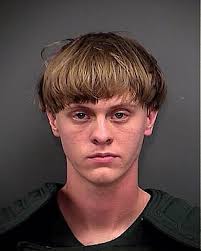
Dylann Roof
The signs of Roof’s malignant racism were evident long before he turned mass murderer:
- He had posed for a photo sitting on the hood of his parents’ car—whose license plate bore a Confederate flag.
- He had posed for pictures wearing a jacket sporting the white supremacist flags of Rhodesia and apartheid South Africa.
- He told a friend that he hoped “to start a civil war” between the black and white races.
- Roof reportedly told friends and neighbors of his plans to kill people.
- In the midst of his massacre of unarmed worshipers, he told one of his victims: “You’ve raped our women, and you are taking over the country.” Then Roof shot him.
The evidence makes clear that Roof’s slaughter was racially motivated. Yet no 2016 Republican Presidential candidate dared acknowledge it:
- Jeb Bush, former governor of Florida: “I don’t know what was on the mind or the heart of the man who committed these atrocious crimes.”
- Rick Santorum, former United States Senator from Pennsylvania: “You talk about the importance of prayer in this time and we’re now seeing assaults on our religious liberty we’ve never seen before. It’s a time for deeper reflection beyond this horrible situation.”
- Bobby Jindal, former governor of Louisiana: “I don’t think we’ll ever know what was going on in his mind.”
But Rolling Stone magazine writer Jeb Lund left no doubt as to what—and who—was ultimately responsible for this crime: Racism and Republicans.
In a June 19, 2015 editorial—published two days after the massacre—Lund noted: “This [crime] is political because American movement conservatism has already made these kinds of killings political.
“The Republican Party has weaponized its supporters, made violence a virtue and, with almost every pronouncement for 50 years, given them an enemy politicized, racialized and indivisible.
“Movement conservatives have fetishized a tendentious and ahistorical reading of the Second Amendment to the point that the Constitution itself somehow paradoxically ‘legitimizes’ an armed insurrection against the government created by it.
“Those leading said insurrection are swaddled by the blanket exculpation of patriotism. At the same time, they have synonymized the Democratic Party with illegitimacy and abuse of the American order.
“This is no longer an argument about whether one party’s beliefs are beneficial or harmful, but an attitude that labels leftism so antithetical to the American idea that empowering it on any level is an act of usurpation.”
Click here: The Charleston Shooter: Racist, Violent, and Yes – Political | Rolling Stone
On December 15, 2016, Dylann Roof was convicted of 33 Federal hate crime charges. On January 11, 2017, he was sentenced to death. He remains on Death Row to this day.
Yet the leadership of the Republican party whose hate-filled rhetoric inspired Root escaped indictment—and even widespread condemnation.
The evidence that Republicans have weaponized hatred—with deadly results—was on display long before Dylann Roof opened fire on “uppity blacks” praying in their own church.
Consider:
On January 8, 2011, Democratic Rep. Gabrielle Giffords was shot in the head while meeting with constituents outside a grocery store in Tucson, Arizona. After a miraculous recovery, she continues to struggle with language and has lost 50% of her vision in both eyes.
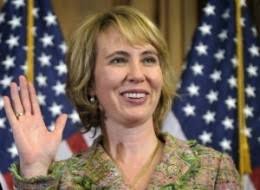
Rep. Gabrielle Giffords
She vowed to return to her former Congressional duties, but was forced to resign for health reasons in 2012.
Giffords was only one victim of a shooting spree that claimed the lives of six people and left 13 others wounded.
Also killed was Arizona’s chief U.S. District judge, John Roll, who had just stopped by to see his friend Giffords after celebrating Mass.
Although the actual shooter, Jared Lee Loughner, was immediately arrested, those who fanned the flames of political violence that consumed 19 people that day have remained unpunished.
Consider the circumstances behind the shootings:
John Roll is Arizona’s chief federal judge. Appointed in 2006, he wins acclaim as a respected jurist and leader who pushes to beef up the court’s strained bench to handle a growing number of border crime-related cases.
In 2009, he becomes a target for threats after allowing a $32 million civil-rights lawsuit by illegal aliens to proceed against a local rancher. The case arouses the fury of local talk radio hosts, who encourage their audiences to threaten Roll’s life.
In one afternoon, Roll logs more than 200 threatening phone calls. Callers threaten the judge and his family. They post personal information about Roll online.
Roll and his wife are placed under fulltime protection by deputy U.S. marshals. Roll finds living under security “unnerving and invasive.”
Authorities identify four men believed responsible for the threats. But Roll declines to press charges on the advice of the Marshals Service.
9/11, ABC NEWS, AL QAEDA, ALTERNET, AMERICABLOG, AMERICAN CAESARS: THE LIVES OF THE PRESIDENTS FROM FRANKLIN D. ROOSEVELT TO GEORGE W. BUSH, AMERICAN EMPIRE, AP, BABY BOOMER RESISTANCE, BARACK OBAMA, BASHAR AL-ASSAD, BBC, BEN RHODES, BILL CLINTON, BLOOMBERG NEWS, BUREAUCRACY, BUZZFEED, CBS NEWS, CHRIS MATHEWS, CNN, CONDOLEEZA RICE, CROOKS AND LIARS, DAILY KOZ, DONALD TRUMP, DWIGHT EISENHOWER, FACEBOOK, FBI, FIVETHIRTYEIGHT, FRANKLIN D. ROOSEVELT, GEORGE H.W. BUSH, GEORGE W. BUSH, GERALD R. FORD, HARPER’S MAGAZINE, HARRY S. TRUMAN, HUFFINGTON POST, JIMMY CARTER, JOHN F. KENNEDY, LYNDON B. JOHNSON, MEDIA MATTERS, MOTHER JONES, MOVEON, MSNBC, NBC NEWS, NEW REPUBLIC, NEWSDAY, NEWSWEEK, NIGEL HAMILTON, NPR, OSAMA BIN LADEN, PBS NEWSHOUR, POLITICO, POLITICUSUSA, RAW STORY, REPUBLICAN PARTY, REUTERS, RICHARD CLARKE, RICHARD NIXON, ROMAN EMPIRE, SALON, SEATTLE TIMES, SEPTEMBER 11, SLATE, SUETONIUS, SYRIA, TALKING POINTS MEMO, TERRORISM, THE ATLANTIC, THE CHICAGO SUN-TIMES, THE CHICAGO TRIBUNE, THE DAILY BEAST, THE DAILY BLOG, THE GUARDIAN, THE HILL, THE HUFFINGTON POST, THE LOS ANGELES TIMES, THE NATION, THE NEW REPUBLIC, THE NEW YORK TIMES, THE NEW YORKER, THE TWELVE CAESARS, THE VILLAGE VOICE, THE WASHINGTON POST, THINKPROGRESS, TIME, TRUTHDIG, TRUTHOUT, TWITTER, TWO POLITICAL JUNKIES, U.S. NEWS & WORLD REPORT, UPI, USA TODAY, WONKETTE
In Bureaucracy, History, Military, Politics, Social commentary on August 27, 2021 at 12:05 am
On September 12, 2001, President George W. Bush attended a meeting of the National Security Council.
“Why shouldn’t we go against Iraq, not just Al-Qaeda?” demanded Donald Rumsfeld, the Secretary of Defense.
Vice President Dick Cheney enthusiastically agreed.
Secretary of State Colin Powell then pointed out there was absolutely no evidence that Iraq had had anything to do with 9/11 or Al-Qaeda. And he added: “The American people want us to do something about Al-Qaeda”—not Iraq.
On November 21, 2001, only 10 weeks after 9/11, Bush told Rumsfeld: It’s time to turn to Iraq.
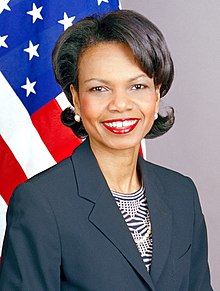

Condoleeza Rice
Bush and his war-hungry Cabinet officials knew that Americans demanded vengeance on AlQaeda’s mastermind, Osama bin Laden, and not Iraqi dictator Saddam Hussein. So they repeatedly fabricated “links” between the two:
- Saddam had worked hand-in-glove with Bin Laden to plan 9/11.
- Saddam was harboring and supporting Al-Qaeda throughout Iraq.
- Saddam, with help from Al-Qaeda, was scheming to build a nuclear bomb.
Yet as early as September 22, 2001, Bush had received a classified President’s Daily Brief intelligence report, which stated that there was no evidence linking Saddam Hussein to 9/11.
The report added that there was scant credible evidence that Iraq had any significant collaborative ties with Al-Qaeda.
Even more important: Saddam had tried to monitor Al Qaeda through his intelligence service—because he saw Al-Qaeda and other theocratic radical Islamist organizations as a potential threat to his secular regime.

Dick Cheney
Bush administration officials repeatedly claimed that Iraq possessed huge quantities of chemical and biological weapons, in violation of UN resolutions. And they further claimed that US intelligence agencies had determined:
- the precise locations where these weapons were stored;
- the identities of those involved in their production; and
- the military orders issued by Saddam Hussein for their use in the event of war.
Among other lies stated as fact by members of the Bush administration:
- Iraq had sought uranium from Niger, in west Africa.
- Thousands of aluminum tubes imported by Iraq could be used in centrifuges to create enriched uranium.
- Iraq had up to 20 long-range Scud missiles, prohibited under UN sanctions.
- Iraq had massive stockpiles of chemical and biological agents, including nerve gas, anthrax and botulinum toxin.
- Saddam Hussein had issued chemical weapons to front-line troops who would use them when US forces crossed into Iraq.

Donald Rumsfeld
Consider the following:
August 26, 2002: Cheney told the Veterans of Foreign Wars, “There is no doubt that Saddam Hussein now has weapons of mass destruction. There is no doubt he is amassing them to use against our friends, against our allies and against us.”
September 8, 2002: National Security Advisor Condoleeza Rice said on CNN: ”There is certainly evidence that Al-Qaeda people have been in Iraq. There is certainly evidence that Saddam Hussein cavorts with terrorists.”
September 18, 2002: Rumsfeld told the House Armed Services Committee, “We do know that the Iraqi regime has chemical and biological weapons. His regime has amassed large, clandestine stockpiles of chemical weapons—including VX, sarin, cyclosarin and mustard gas.”
October 7, 2002: Bush declared in a nationally televised speech in Cincinnati that Iraq “possesses and produces chemical and biological weapons. It is seeking nuclear weapons.”
March 16, 2003: Cheney declared on NBC’s “Meet the Press”: “We believe [Saddam Hussein] has, in fact, reconstituted nuclear weapons.”
Bush never regretted his decision to invade Iraq—on March 20, 2003.
Even as American occupying forces repeatedly failed to turn up any evidence of “weapons of mass destruction” (WMDs), Bush and his minions claimed the invasion a good thing.
In fact, Bush—who hid out the Vietnam war in the Texas Air National Guard—even joked publicly about the absence of WMDs.
He did so at a White House Correspondents dinner on March 24, 2004—one year after he had started the war.
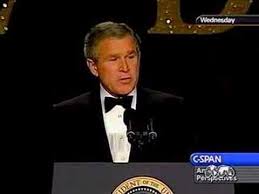
George W. Bush at the 2004 White House Correspondents’ dinner
To Bush, the non-existent WMDs were nothing more than the butt of a joke that night. While an overhead projector displayed photos of a puzzled-looking Bush searching around the Oval Office, Bush recited a comedy routine.
“Those weapons of mass destruction have gotta be somewhere,” Bush laughed, while a photo showed him poking around the corners in the Oval Office.
“Nope—no weapons over there! Maybe they’re under here,” he said, as a photo showed him looking under a desk.
Meanwhile, an assembly of wealthy, pampered men and women—-the elite of America’s media and political classes—laughed heartily during Bush’s performance.
It was a scene worthy of the court of the ancient Caesars, complete with royal flunkies: “Hey! The country we just destroyed wasn’t a threat to us after all! Isn’t that a gas?”
The war that Bush had deliberately provoked:
- Took the lives of 4,484 Americans.
- Cost the United States Treasury at least $2 trillion.
- Created a Middle East power vacumn.
- Allowed Iran—Iraq’s arch enemy—to eagerly fill it.
- Frightened and repelled even America’s closest allies.
- Killed at least 655,000 Iraqis.
- Bush retired from office with a lavish pension and full Secret Service protection.
- He wrote his memoirs and was paid $7 million for the first 1.5 million copies.
- Cheney, Rumsfeld, Rice retired to private business, wrote their own memoirs, and lived in comfort as respected elder statesmen.
9/11, ABC NEWS, AL QAEDA, ALTERNET, AMERICABLOG, AMERICAN CAESARS: THE LIVES OF THE PRESIDENTS FROM FRANKLIN D. ROOSEVELT TO GEORGE W. BUSH, AMERICAN EMPIRE, AP, BABY BOOMER RESISTANCE, BARACK OBAMA, BASHAR AL-ASSAD, BBC, BEN RHODES, BILL CLINTON, BLOOMBERG NEWS, BUREAUCRACY, BUZZFEED, CBS NEWS, CHRIS MATHEWS, CNN, CONDOLEEZA RICE, CROOKS AND LIARS, DAILY KOZ, DONALD TRUMP, DWIGHT EISENHOWER, FACEBOOK, FBI, FIVETHIRTYEIGHT, FRANKLIN D. ROOSEVELT, GEORGE H.W. BUSH, GEORGE W. BUSH, GERALD R. FORD, HARPER’S MAGAZINE, HARRY S. TRUMAN, HUFFINGTON POST, JIMMY CARTER, JOHN F. KENNEDY, LYNDON B. JOHNSON, MEDIA MATTERS, MOTHER JONES, MOVEON, MSNBC, NBC NEWS, NEW REPUBLIC, NEWSDAY, NEWSWEEK, NIGEL HAMILTON, NPR, OSAMA BIN LADEN, PBS NEWSHOUR, POLITICO, POLITICUSUSA, RAW STORY, REPUBLICAN PARTY, REUTERS, RICHARD CLARKE, RICHARD NIXON, ROMAN EMPIRE, SALON, SEATTLE TIMES, SEPTEMBER 11, SLATE, SUETONIUS, SYRIA, TALKING POINTS MEMO, TERRORISM, THE ATLANTIC, THE CHICAGO SUN-TIMES, THE CHICAGO TRIBUNE, THE DAILY BEAST, THE DAILY BLOG, THE GUARDIAN, THE HILL, THE HUFFINGTON POST, THE LOS ANGELES TIMES, THE NATION, THE NEW REPUBLIC, THE NEW YORK TIMES, THE NEW YORKER, THE TWELVE CAESARS, THE VILLAGE VOICE, THE WASHINGTON POST, THINKPROGRESS, TIME, TRUTHDIG, TRUTHOUT, TWITTER, TWO POLITICAL JUNKIES, U.S. NEWS & WORLD REPORT, UPI, USA TODAY, WONKETTE
In Bureaucracy, History, Military, Politics, Social commentary on August 26, 2021 at 12:14 am
September 11, 2018, will mark the 20th anniversary of the worst terrorist attack on United States soil. Inevitably, this is a time to remember all those whose lives were so cruelly snuffed out.
But it is also a time to remember those Americans who made this atrocity—and the Iraq war that followed—inevitable.
British historian Nigel Hamilton has chronicled their arrogance and indifference in his 2010 biography: American Caesars: Lives of the Presidents from Franklin D. Roosevelt to George W. Bush.

Hamilton noted that Richard Clarke, the national security advisor on terrorism, was certain that Osama bin Laden had arranged the USS Cole bombing in Aden on October 12, 2000.
For months, Clarke tried to convince others in the Bush Administration that Bin Laden was plotting another attack against the United States—either abroad or at home.
But Clarke could not prevail against the know-it-all arrogance of such higher-ranking Bush officials as Vice President Dick Cheney; Secretary of Defense Donald Rumsfeld; Rumsfeld’s deputy, Paul Wolfowitz; and National Security Advisor Condoleeza Rice.
Rice initially refused to hold a cabinet-level meeting on the subject. Then she “insisted the matter be handled only by a more junior Deputy Principals meeting” in April, 2001, writes Hamilton.
Wolfowitz, the number-two man at the Department of Defense, said: “I don’t understand why we are beginning by talking about this one man, bin Laden.”
Even after Clarke outlined the threat posed by Al-Qaeda, Wolfowitz—whose real target was Saddam Hussein—said: “You give bin Laden too much credit.”
Wolfowitz insisted that bin Laden couldn’t carry out his terrorist acts without the aid of a state sponsor—namely, Iraq.
Wolfowitz, in fact, blamed Iraq for the 1993 bombing of the World Trade Center. Clarke was stunned, since there was absolutely no evidence of Iraqi involvement in this.
“Al-Qaeda plans major acts of terrorism against the United States,” Clarke warned his colleagues. He pointed out that, like Adolf Hitler, bin Laden had actually published his plans for future destruction.
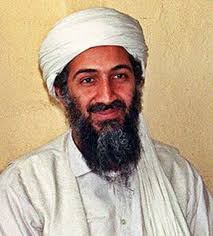
Osama bin Laden
And he added: “Sometimes, as with Hitler in Mein Kampf, you have to believe that these people will actually do what they say they will do.”
Wolfowitz heatedly traded on his Jewish heritage to bring Clarke’s unwelcome arguments to a halt: “I resent any comparison between the Holocaust and this little terrorist in Afghanistan.”
Writing in outraged fury, Hamilton sums up Clarke’s agonizing frustrations:
- Bush’s senior advisors treated their colleagues who had served in the Clinton administration with contempt.
- President Bush, Vice President Dick Cheney, National Security Advisor Condoleeza Rice, Secretary of Defense Donald Rumsfeld and Deputy Defense Secretary Paul Wolfowitz seemed content to ignore the danger signals of an impending al-Qaeda attack.
- This left only Secretary of State Colin Powell, his deputy Richard Armitage, Richard Clarke and a skeptical Treasury Secretary, Paul O’Neill, to wage “a lonely battle to waken a seemingly deranged new administration.”
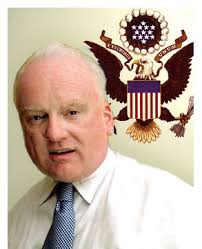
Richard Clarke
Clarke alerted Federal Intelligence agencies that “Al-Qaeda is planning a major attack on us.” He asked the FBI and CIA to report to his office all they could learn about suspicious persons or activities at home and abroad.
Finally, at a meeting with Rice on September 4, 2001, Clarke challenged her to “picture yourself at a moment when in the very near future Al-Qaeda has killed hundreds of Americans, and imagine asking yourself what you wish then that you had already done.”
Seven days later, Al-Qaeda struck, and 3,000 Americans died horrifically—and needlessly.
Neither Bush, Cheney, Rice, Rumsfeld nor Wolfowitz ever admitted their negligence. Nor would any of them be brought to account.
Disgustingly, these were the same officials who, afterward, posed as the Nation’s saviors—and branded anyone who disagreed with them as a traitor, practices the Right continues to exploit to this day.
Only Richard Clarke—who had vainly argued for stepped-up security precautions and taking the fight to Al-Qaeda—gave that apology.
On March 24, 2004, Clarke testified at the public 9/11 Commission hearings. Addressing relatives of victims in the audience, he said: “Your government failed you, those entrusted with protecting you failed you, and I failed you.”
Yet even worse was to come.
On the evening after the September 11 attacks, Bush took Clarke aside during a meeting in the White House Situation Room:
“I want you, as soon as you can, to go back over everything, everything. See if Saddam [Hussein, the dictator of Iraq] did this. See if he’s linked in any way.”
Clarke was stunned: “But, Mr. President, Al-Qaeda did this.”
“I know, I know,” said Bush. “But see if Saddam was involved. I want to know.”
Hussein had not plotted the attack–and there was no evidence proving that he did. But the attack gave “W” the excuse he wanted to remove the man he blamed for the 1992 defeat of his father, President George H.W. Bush.
Bush believed that his father would have been re-elected if he had “gone all the way” into Baghdad during the 1991 Gulf War.
He would finish the job that his father had started but failed to compete.
On September 12, 2001, Bush attended a meeting of the National Security Council.
“Why shouldn’t we go against Iraq, not just Al-Qaeda?” demanded Donald Rumsfeld, the Secretary of Defense.
Vice President Dick Cheney enthusiastically agreed.
9/11, ABC NEWS, AL QAEDA, ALTERNET, AMERICABLOG, AMERICAN CAESARS: THE LIVES OF THE PRESIDENTS FROM FRANKLIN D. ROOSEVELT TO GEORGE W. BUSH, AMERICAN EMPIRE, AP, BABY BOOMER RESISTANCE, BARACK OBAMA, BASHAR AL-ASSAD, BBC, BEN RHODES, BILL CLINTON, BLOOMBERG NEWS, BUREAUCRACY, BUZZFEED, CBS NEWS, CHRIS MATHEWS, CNN, CONDOLEEZA RICE, CROOKS AND LIARS, DAILY KOZ, DONALD TRUMP, DWIGHT EISENHOWER, FACEBOOK, FBI, FIVETHIRTYEIGHT, FRANKLIN D. ROOSEVELT, GEORGE H.W. BUSH, GEORGE W. BUSH, GERALD R. FORD, HARPER’S MAGAZINE, HARRY S. TRUMAN, HUFFINGTON POST, JIMMY CARTER, JOHN F. KENNEDY, LYNDON B. JOHNSON, MEDIA MATTERS, MOTHER JONES, MOVEON, MSNBC, NBC NEWS, NEW REPUBLIC, NEWSDAY, NEWSWEEK, NIGEL HAMILTON, NPR, OSAMA BIN LADEN, PBS NEWSHOUR, POLITICO, POLITICUSUSA, RAW STORY, REPUBLICAN PARTY, REUTERS, RICHARD CLARKE, RICHARD NIXON, ROMAN EMPIRE, SALON, SEATTLE TIMES, SEPTEMBER 11, SLATE, SUETONIUS, SYRIA, TALKING POINTS MEMO, TERRORISM, THE ATLANTIC, THE CHICAGO SUN-TIMES, THE CHICAGO TRIBUNE, THE DAILY BEAST, THE DAILY BLOG, THE GUARDIAN, THE HILL, THE HUFFINGTON POST, THE LOS ANGELES TIMES, THE NATION, THE NEW REPUBLIC, THE NEW YORK TIMES, THE NEW YORKER, THE TWELVE CAESARS, THE VILLAGE VOICE, THE WASHINGTON POST, THINKPROGRESS, TIME, TRUTHDIG, TRUTHOUT, TWITTER, TWO POLITICAL JUNKIES, U.S. NEWS & WORLD REPORT, UPI, USA TODAY, WONKETTE
In History, Military, Politics, Social commentary on August 25, 2021 at 12:05 am
“Many of the people who work in American foreign policy today were shaped by the experience of the 1990s, when the United States was ascendant. The Berlin Wall came down. Democracy was spreading across Europe, Latin America and East Asia.
“Russia was on its back foot, and China had not yet risen. We really could shape events in much of the world. NATO could expand into the former Soviet Union without fear that Russia would invade one of those countries. We could bring together the whole world to kick Saddam Hussein out of Kuwait.”
So wrote Ben Rhodes, author of The World As It Is: A Memoir of the Obama White House (2018).
For eight years, Rhodes saw Barack Obama up close as few others did. He served as, first, a speechwriter, then deputy national security adviser, and finally as all-around aide and diplomat-without-portfolio.
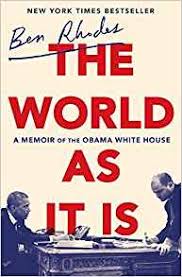
Rhodes noted that Obama sometimes warned that America’s post-Cold War moment in the sun wouldn’t last: “Shock and awe. Regime change. A trillion dollars later, we couldn’t keep the electricity running in Baghdad.
“The Iraq war disturbed other countries—including U.S. allies—in its illogic and destruction, and accelerated a realignment of power and influence that was further advanced by the global financial crisis.
“By the time Obama took office, a global correction had already taken place. Russia was resisting American influence. China was throwing its weight around. Europeans were untangling a crisis in the Euro-zone.”
To begin at the beginning:
Even as the rubble was being cleared at the Pentagon and World Trade Center following the September 11, 2001 attacks, President George W. Bush was preparing to use the attacks as an excuse to topple Iraqi dictator Saddam Hussein.
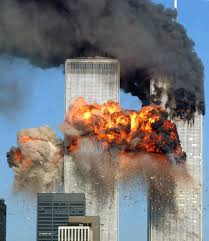
World Trade Center on September 11, 2001
Hussein had not plotted 9/11, and there was no evidence that he did. But that didn’t matter to Bush and those planning the invasion and conquest of Iraq.
British historian Nigel Hamilton has dared to lay bare the facts of this disgrace. Hamilton is the author of several acclaimed political biographies, including JFK: Reckless Youth and Bill Clinton: Mastering the Presidency.
In 2007, he began research on his latest book: American Caesars: The Lives of the Presidents From Franklin D. Roosevelt to George W. Bush.

Nigel Hamilton
By Nigel Hamilton (Nigel Hamilton picture)
The inspiration for this came from a classic work of ancient biography: The Twelve Caesars, by Gaius Suetonius Tranquillus—known as Suetonius.
Suetonius, a Roman citizen and historian, had chronicled the lives of the first twelve Caesars of imperial Rome: Julius Caesar, Augustus, Tiberius, Caligula, Claudius, Nero, Galba, Otho, Vitellius, Vespasian, Titus and Domitian.
Hamilton wanted to examine post-World War II United States history as Suetonius had examined that of ancient Rome: Through the lives of the 12 “emperors” who had held the power of life and death over their fellow citizens—and those of other nations.
For Hamilton, the “greatest of American emperors, the Caesar Augustus of his time,” was Franklin D. Roosevelt, who led his country through the Great Depression and World War II.
His “”great successors” were Harry S. Truman, Dwight D. Eisenhower and John F. Kennedy—who, in turn, contained the Soviet Union abroad and presided over sustained economic prosperity at home.
By contrast, “arguably the worst of all the American Caesars” was “George W. Bush, and his deputy, Dick Cheney, who willfully and recklessly destroyed so much of the moral basis of American leadership in the modern world.”
Among the most lethal of Bush’s offenses: The appointing of officials who refused to take seriously the threat posed by Al-Qaeda.
And this arrogance and indifference continued—right up to September 11, 2001, when the World Trade Center and Pentagon became targets for destruction.
Among the few administration officials who did take Al-Qaeda seriously was Richard Clarke, the chief counter-terrorism adviser on the National Security Council.
Clarke had been thus appointed in 1998 by President Bill Clinton. He continued in the same role under President Bush—but the position was no longer given cabinet-level access.
This put him at a severe disadvantage when dealing with other, higher-ranking Bush officials—such as Vice President Dick Cheney, Secretary of Defense Donald Rumsfeld, Rumsfeld’s deputy, Paul Wolfowitz and National Security Advisor Condoleeza Rice.
These turned out to be the very officials who refused to believe that Al-Qaeda posed a lethal threat to the United States.
“Indeed,” writes Hamilton, “in the entire first eight months of the Bush Presidency, Clarke was not permitted to brief President Bush a single time, despite mounting evidence of plans for a new al-Qaeda outrage.” [Italics added]
Nor did it help that, during his first eight months in office before September 11, Bush was on vacation, according to the Washington Post, 42% of the time.
For months, Clarke tried to convince others in the Bush Administration that Bin Laden was plotting another attack against the United States–either abroad or at home.
But Clarke could not prevail against the know-it-all arrogance of such higher-ranking Bush officials as Vice President Dick Cheney; Secretary of Defense Donald Rumsfeld; Rumsfeld’s deputy, Paul Wolfowitz; and National Security Advisor Condoleeza Rice.
ABC NEWS, ALTERNET, AMERICABLOG, AMERICAN TABLOID (BOOK), ANTI-CASTRO CUBANS, AP, ASSASSINATION, BABY BOOMER RESISTANCE, BBC, BLOOMBERG NEWS, BUZZFEED, CBS NEWS, CIA, CNN, COMMUNISM, CROOKS AND LIARS, CUBA, CUBAN MISSILE CRISIS, DAILY KOZ, DONALD TRUMP, DWIGHT D. EISENHOWER, FACEBOOK, FBI, FIDEL CASTRO, FIVETHIRTYEIGHT, FLORIDA, FULGENCIO BATISTA, GUS RUSSO, HARPER’S MAGAZINE, HUFFINGTON POST, JACK RUBY, JAMES ELLROY, JOHN F. KENNEDY, JOHNNY ROSELLI, LEE HARVEY OSWALD, LIVE BY THE SWORD (BOOK), LYNDON B. JOHNSON, MAFIA, MARCO RUBIO, MARINA OSWALD, MARTIN SHEEN, MEDIA MATTERS, MIAMI, MOTHER JONES, MOVEON, MSNBC, NBC NEWS, NEW REPUBLIC, NEWSDAY, NEWSWEEK, NIKITA KHRUSHCHEV, NPR, PBS NEWSHOUR, POLITICO, POLITICUSUSA, RAW STORY, REUTERS, RICHARD NIXON, ROBERT F. KENNEDY, ROBERT MCNAMARA, SALON, SAM GIANCANA, SEATTLE TIMES, SLATE, TALKING POINTS MEMO, THE ATLANTIC, THE CHICAGO SUN-TIMES, THE CHICAGO TRIBUNE, THE DAILY BEAST, THE DAILY BLOG, THE GUARDIAN, THE HILL, THE HUFFINGTON POST, THE LOS ANGELES TIMES, THE MISSILES OF OCTOBER (MOVIE), THE NATION, THE NEW REPUBLIC, THE NEW YORK TIMES, THE NEW YORKER, THE VILLAGE VOICE, THE WASHINGTON POST, THINKPROGRESS, THIRTEEN DAYS (BOOK), TIME, TRUTHDIG, TRUTHOUT, TWITTER, TWO POLITICAL JUNKIES, U.S. NEWS & WORLD REPORT, UPI, USA TODAY, WARREN COMMISSION, WILLIAM DEVANE, WONKETTE
In Bureaucracy, History, Military, Politics, Social commentary on August 20, 2021 at 12:12 am
“John and Robert Kennedy knew what they were doing. They waged a vicious war against Fidel Castro—a war someone had to lose.”
And the loser turned out to be John F. Kennedy.
So writes investigative reporter Gus Russo in Live By the Sword: The Secret War Against Castro and the Death of JFK, published in 1998.
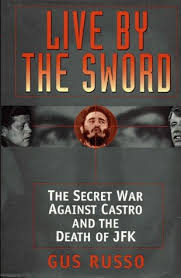
In what is almost certainly the definitive account of the assassination of President John F. Kennedy, Russo reaches some startling—but highly documented—conclusions:
- Lee Harvey Oswald assassinated Kennedy.
- He did it alone.
- Oswald, a former Marine, was a committed Marxist—whose hero was Castro.
- The CIA’s ongoing campaign to overthrow and/or assassinate Castro was an open secret throughout the Gulf.
- Oswald visited New Orleans in the spring of 1963.
- There he learned that Castro was in the crosshairs of the CIA.
- For this, he blamed John F. Kennedy.
- Oswald told his Russian-born wife, Marina: “Fidel Castro needs defenders. I’m going to join his army of volunteers.”
- Jack Ruby, a Dallas nightclub owner, murdered Oswald because he was distraught over Kennedy’s death.
- Ruby was not part of a Mafia conspiracy to silence Oswald.
- Skeptics of the Warren Commission—which concluded that Oswald had acted alone—asked the wrong question: “Who killed Kennedy?”
- They should have asked: “Why was he killed?”
- The answer—according to Russo: “The Kennedys’ relentless pursuit of Castro and Cuba backfired in tragedy on that terrible day in November, 1963.”
Another book well worth reading about America’s Cuban obsession during the early 1960s is American Tabloid, by James Ellroy.
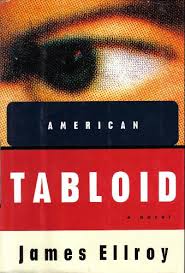
Although a novel, it vividly captures the atmosphere of intrigue, danger and sleaziness that permeated that era in a way that dry, historical documents never can.
“The 50’s are finished,” reads its paperback dust jacket. “Zealous young lawyer Robert Kennedy has a red-hot jones to nail Jimmy Hoffa. JFK has his eyes on the Oval Office.
“J. Edgar Hoover is swooping down on the Red Menace. Howard Hughes is dodging subpoenas and digging up Kennedy dirt. And Castro is mopping up the bloody aftermath of his new Communist nation….
“Mob bosses, politicos, snitches, psychos, fall guys and femmes fatale. They’re mixing up a Molotov cocktail guaranteed to end the country’s innocence with a bang.”
Among the legacies of America’s twisted romance with anti-Castro Cubans:
- The Cuban Missile Crisis remains the single most dangerous moment of the 50-year Cold War, when the world stood only minutes away from nuclear Armageddon.
- That crisis stemmed from the American Right’s twisted obsession with Cuba, an obsession that continues today.
- Following the JFK assassination, there was a cover-up.
- Its purpose: To protect the reputation of the United States Government—and that of its newly-martyred President.
- The CIA and FBI concealed the CIA-Mafia assassination plots from the Warren Commission assigned to investigate Kennedy’s murder.
- Other government officials participating in the cover-up included Attorney General Robert F. Kennedy and President Lyndon B. Johnson.
- Ironically, this secrecy ignited the widespread—and false—belief that the President had died at the hands of a government conspiracy.
- Robert Kennedy feared that his relentless pursuit of Castro might have led Castro to “take out” JFK first.
- Fearing his own assassination if he continued Kennedy’s efforts to murder Castro, President Johnson ordered the CIA to halt its campaign to overthrow and/or assassinate the Cuban leader.
- The huge Cuban community throughout Florida—and especially Miami—continues to exert a blackmailing influence on American politics.
- Right-wing politicians from Richard Nixon to Donald Trump have reaped electoral rewards by catering to the demands of this hate-obsessed voting block.
- These Cuban ex-patriots hope that the United States will launch a full-scale military invasion of the island to remove Castro.
- Having grown rich and soft in the United States, they fear to risk their own lives by returning to Cuba to overthrow the Castro regime—Castro he had overthrown Fulgencio Batista.
- Only President Barack Obama had the political courage to re-establish diplomatic relations with Cuba—in 2015.
- This occurred long after the United States had done so with such former enemies as the Soviet Union, China and Vietnam.
- President Donald Trump. hoping to please anti-Castro voters in Florida, abandoned engagement and increased sanctions against Cuba.
So what are the lessons to be learned from America’s twisted obsession with Cuba?
- Americans should initiate major changes in its foreign policy toward Cuba.
- America should end the half-century contamination of American politics by those Cubans who live only for their hatred of Castro—and those political candidates who live to exploit it.
- (For example: Marco Rubio got elected U.S. Senator from Florida in 2010 by claiming that his parents had been forced to leave Cuba in 1959, after Fidel Castro took power. In fact, they had left Cuba in 1956—during the Batista dictatorship.)
- America needs to end this wag-the-dog relationship. A population of about 1.53 million Cuban exiles living in Florida should not be allowed to shape the domestic and foreign policy of a nation of 333 million.
- Those who continue to hate—or love—Fidel Castro should be left to their own private feud. But that is a feud they should settle on their own island, and not from the shores of the United States.
ABC NEWS, ALTERNET, AMERICABLOG, AMERICAN TABLOID (BOOK), ANTI-CASTRO CUBANS, AP, ASSASSINATION, BABY BOOMER RESISTANCE, BBC, BLOOMBERG NEWS, BUZZFEED, CBS NEWS, CIA, CNN, COMMUNISM, CROOKS AND LIARS, CUBA, CUBAN MISSILE CRISIS, DAILY KOZ, DONALD TRUMP, DWIGHT D. EISENHOWER, FACEBOOK, FBI, FIDEL CASTRO, FIVETHIRTYEIGHT, FLORIDA, FULGENCIO BATISTA, GUS RUSSO, HARPER’S MAGAZINE, HUFFINGTON POST, JACK RUBY, JAMES ELLROY, JOHN F. KENNEDY, JOHNNY ROSELLI, LEE HARVEY OSWALD, LIVE BY THE SWORD (BOOK), LYNDON B. JOHNSON, MAFIA, MARCO RUBIO, MARINA OSWALD, MARTIN SHEEN, MEDIA MATTERS, MIAMI, MOTHER JONES, MOVEON, MSNBC, NBC NEWS, NEW REPUBLIC, NEWSDAY, NEWSWEEK, NIKITA KHRUSHCHEV, NPR, PBS NEWSHOUR, POLITICO, POLITICUSUSA, RAW STORY, REUTERS, RICHARD NIXON, ROBERT F. KENNEDY, ROBERT MCNAMARA, SALON, SAM GIANCANA, SEATTLE TIMES, SLATE, TALKING POINTS MEMO, THE ATLANTIC, THE CHICAGO SUN-TIMES, THE CHICAGO TRIBUNE, THE DAILY BEAST, THE DAILY BLOG, THE GUARDIAN, THE HILL, THE HUFFINGTON POST, THE LOS ANGELES TIMES, THE MISSILES OF OCTOBER (MOVIE), THE NATION, THE NEW REPUBLIC, THE NEW YORK TIMES, THE NEW YORKER, THE VILLAGE VOICE, THE WASHINGTON POST, THINKPROGRESS, THIRTEEN DAYS (BOOK), TIME, TRUTHDIG, TRUTHOUT, TWITTER, TWO POLITICAL JUNKIES, U.S. NEWS & WORLD REPORT, UPI, USA TODAY, WARREN COMMISSION, WILLIAM DEVANE, WONKETTE
In Bureaucracy, History, Military, Politics, Social commentary on August 19, 2021 at 12:15 am
On October 22, 1962, President John F. Kennedy went on nationwide TV to announce the discovery of the missiles and his blockade of Cuba.
He warned that any nuclear missile launched from Cuba against any nation would be regarded as an attack on the United States by the Soviet Union—and would trigger “a full retaliatory response” upon the U.S.S.R.
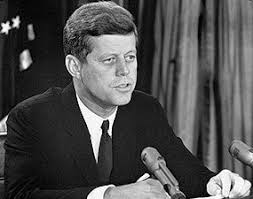
President John F. Kennedy addresses the nation
And he demanded that the Soviets remove all of their offensive weapons from Cuba:
“The path we have chosen for the present is full of hazards, as all paths are, but it is the one most consistent with our character and courage as a nation and our commitments around the world.
“The cost of freedom is always high, but Americans have always paid it. And one path we shall never choose, and that is the path of surrender or submission.”
On October 26, the United States raised the readiness level of SAC forces to DEFCON 2—the step just short of war. For the only time in U.S. history, B-52 bombers were dispersed to various locations and made ready to take off, fully equipped, on 15 minutes’ notice.
Other measures taken included:
- One-eighth of America’s 1,436 bombers were on airborne alert.
- About 145 intercontinental ballistic missiles stood on ready alert.
- Air Defense Command redeployed 161 nuclear-armed interceptors to 16 dispersal fields within nine hours with one-third maintaining 15-minute alert status.
- Twenty-three nuclear-armed B-52 were sent to orbit points within striking distance of the Soviet Union.
An invasion date was set for October 29. But the Kennedy Administration–and the American military—didn’t know that the Russian soldiers guarding the missiles had been armed with tactical nuclear weapons.
Had the Marines gone in, those mini-nukes would have been used. And a full-scale nuclear exchange between the United States and the Soviet Union would have almost certainly followed.
At the height of the crisis, Attorney General Robert F. Kennedy offered a solution.
Khrushchev had sent two teletypes to Kennedy. The first had agreed to remove the missiles, but the second had demanded that the United States remove its own missiles from Turkey, which bordered the Soviet Union.
Robert Kennedy’s solution: The administration should ignore the second message—and announce that it had accepted Khrushchev’s offer to remove the missiles.
After this announcement was made, President Kennedy said to his advisers: “It can go either way now.”
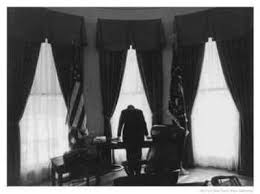
John F. Kennedy in the Oval Office
The crisis ended on October 28. Under enormous pressure, Khrushchev agreed to remove the missiles from Cuba.
Behind his decision lay a secret promise by the Kennedy administration to remove its obsolete nuclear missiles from Turkey, which bordered the Soviet Union. And a public pledge to not invade Cuba.
On the night the crisis ended, there occurred a prophetic exchange between the two Kennedy brothers.
JFK: “Maybe this is the night I should go to the theater”—a reference to Abraham Lincoln’s fatal attendance of Ford’s Theater at the end of the Civil War.
RFK: “If you go, I want to go with you.”
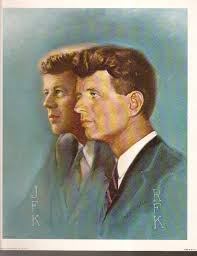
John F. and Robert F. Kennedy
But President Kennedy was not finished with Castro. While continuing the campaign of sabotage throughout Cuba, the Kennedys were preparing something far bigger: A full-scale American invasion of the island.
On October 4, 1963, the Joint Chiefs of Staff submitted its latest version of the invasion plan, known as OPLAN 380-63. Its timetable went:
- January, 1964: Infiltration into Cuba by Cuban exiles.
- July 15, 1964: U.S. conventional forces join the fray.
- August 3, 1964: All-out U.S. air strikes on Cuba.
- October 1, 1964: Full-scale invasion to install “a government friendly to the U.S.”
During the Cuban Missile Crisis, Robert Kennedy–r-eferring to the 1941 Japanese attack on Pearl Harbor—had resisted demands for a “sneak attack” on Cuba by saying: “I don’t want my brother to be the Tojo of the 1960s.”
Now the Kennedys planned such an attack on Cuba just one month before the November, 1964 Presidential election.
Then fate—in the unlikely figure of Lee Harvey Oswald—intervened.
On November 22, 1963, while the President rode through Dallas in an open-air automobile, a rifle-wielding assassin opened fire. He scored two hits on Kennedy—in the back of the neck and head. The second wound proved instantly fatal.
The nation and the world were shocked—and plunged into deep mourning.
But for some of those who had waged a secret, lethal war against Fidel Castro for the previous two years, Kennedy’s death—at least in retrospect—didn’t come as a surprise.
Robert Kennedy, in particular, spent the remaining years of his life agonizing over the possibility that his highly personal war against Castro had backfired.
That Castro, fed up with the CIA’s assassination plots against him, had retaliated with one of his own.
Robert Kennedy’s fears and guilt were compounded by the fact that, while waging war on Castro, he had waged an equally ruthless crusade against organized crime.
He knew that some of the mobsters he had tried to send to prison had played a major role in the CIA’s efforts to “hit” Castro. Had the Mafia—believing itself the victim of a double-cross—put out a “contract” on JFK instead?
It was a question that haunted him until the day he died.


 Bureaucracybuster's Blog
2016 PRESIDENTIAL CAMPAIGN, 9/11, ABC NEWS, ADAM KINZINGER, ALEXANDRIA OCASIO-CORTEZ, ALLEN WEST, ALTERNET, AMERICABLOG, ANN COULTER, AP, BABY BOOMER RESISTANCE, BBC, BILL CLINTON, BLOOMBERG NEWS, BUZZFEED, CAPITOL ATTACK, CBS NEWS, CHRISTOPHER S. MURPHY, CNN, COMMUNISM, CROOKS AND LIARS, DAILY KOZ, DEMOCRATS, DONALD TRUMP, DWIGHT D. EISENHOWER, EGYPT, FACEBOOK, FERGUS CULLEN, FIVETHIRTYEIGHT, GAMAL ABDEL NASSER, GEORGE H.W. BUSH, HARPER’S MAGAZINE, HILLARY CLINTON, HOUSE OVERSIGHT AND REFORM COMMITTEE, HUFFINGTON POST, IMPEACHMENT, ISRAEL, JEB LUND, JIMMY CARTER, JOHN F. KENNEDY, JOHN KASICH, JORDAN, JOSEPH MCCARTHY, LIZ CHENEY, LYNDON B. JOHNSON, MARJORIE TAYLOR GREENE, MEDIA MATTERS, MICHAEL HAYDEN, MICHELLE BACHMANN, MIKE PENCE, MITCH MCCONNELL, MOSHE DAYAN, MOTHER JONES, MOVEON, MSNBC, NANCY PELOSI, NATIONAL SECURITY AGENCY, NATURAL RESOURCES COMMITTEE, NBC NEWS, NEW REPUBLIC, NEWSDAY, NEWSWEEK, NPR, OSAMA BIN LADEN, PAUL GOSAR, PAUL RYAN, PBS NEWSHOUR, PHIL GRAMM, PHILIP KLINE, POLITICO, POLITICUSUSA, RAW STORY, REPUBLICAN NATIONAL CONVENTION, REPUBLICANS, REUTERS, RICHARD NIXON, ROGER STONE, ROLLING STONE, RON KLEIN, SALON, Sarah Palin, SEATTLE TIMES, SLATE, SOVIET UNION, TALKING POINTS MEMO, THE ATLANTIC, THE CHICAGO SUN-TIMES, THE CHICAGO TRIBUNE, THE DAILY BEAST, THE DAILY BLOG, THE GUARDIAN, THE HILL, THE HUFFINGTON POST, THE LOS ANGELES TIMES, THE NATION, THE NEW REPUBLIC, THE NEW YORK TIMES, THE NEW YORKER, THE PENTAGON, THE VILLAGE VOICE, THE WASHINGTON POST, THINKPROGRESS, TIME, TIMOTHY MCVEIGH, TRUTHDIG, TRUTHOUT, TWITTER, TWO POLITICAL JUNKIES, U.S. NEWS & WORLD REPORT, UNITED STATES HOUSE OF REPRESENTATIVES, UNITED STATES SECRET SERVICE, UPI, USA TODAY, VIETNAM WAR, WONKETTE, WORLD TRADE CENTER
VIOLENCE: IT’S THE REPUBLICAN WAY: PART TWO (OF FOUR)
In Bureaucracy, History, Law, Law Enforcement, Military, Politics, Social commentary on November 24, 2021 at 12:17 amRepublicans in past decades tried—and often won—elections on the basis of ideology and/or appeals to racism.
During the 1960s and 1970s, the “enemy” was blacks. The key to winning votes of racist whites without appearing racist lay in what Republicans called “the Southern Strategy”—stoking whites’ fears of blacks.
It was this that won Richard Nixon the Presidency in 1968 and 1972 and the White House for George H.W. Bush in 1988.
In a now-infamous 1981 interview, Right-wing political consultant Lee Atwater explained how this worked.
“You start out in 1954 by saying, ‘Nigger, nigger, nigger.’ By 1968 you can’t say ‘nigger’—that hurts you, backfires.
“So you say stuff like, uh, forced busing, states’ rights, and all that stuff, and you’re getting so abstract.
“Now, you’re talking about cutting taxes, and all these things you’re talking about are totally economic things and a byproduct of them is, blacks get hurt worse than whites.…
“’We want to cut this,’ is much more abstract than even the busing thing, uh, and a hell of a lot more abstract than ‘Nigger, nigger.’
“So anyway you look at it, race is coming on the back burner.”
Lee Atwater
Since the end of World War II, Republicans regularly hurled the charge of “treason” against anyone who dared to run against them for office or think other than Republican-approved thoughts.
Republicans had been locked out of the White House from 1933 to 1952, during the administrations of Franklin D. Roosevelt and Harry S. Truman.
Determined to regain the Presidency by any means, they found that attacking the integrity of their fellow Americans a highly effective tactic.
During the 1950s, Wisconsin Senator Joseph R. McCarthy rode a wave of paranoia to national prominence—by attacking the patriotism of anyone who disagreed with him.
Joseph McCarthy
Elected to the Senate in 1946, he rose to national prominence on February 9, 1950, after giving a fiery speech in Wheeling, West Virginia:
“The State Department is infested with communists. I have here in my hand a list of 205—a list of names that were made known to the Secretary of State as being members of the Communist Party and who nevertheless are still working and shaping policy in the State Department.”
Anti-communism as a lever to political advancement sharply accelerated following McCarthy’s speech.
No American—no matter how prominent—was safe from the accusation of being a Communist or a Communist sympathizer—a “Comsymp” or “fellow traveler” in the style of the era.
Republicans rode the issue of anti-Communism to victory from 1948 to 1992.
After holding the White House for eight years under Dwight D. Eisenhower, they lost it in 1960 to John F. Kennedy and again in 1964 to Lyndon B. Johnson.
By 1968, with the nation mired in Vietnam and convulsed by antiwar demonstrations and race riots, Americans turned once more to those who preyed upon their fears and hates.
They elected Richard Nixon, who promised to end the Vietnam war and crack down on “uppity” blacks and antiwar demonstrators.
The same strategy re-elected him in 1972.
After Jimmy Carter won the Presidency in 1976 and lost it in 1980 to Ronald Reagan, Republicans held the White House until 1992.
During the 1970s and 1980s, they continued to accuse their opponents of being devious agents—or at least unwitting pawns—of “the Communist conspiracy.”
Even as late as 1992, President George H.W. Bush and the Republican establishment charged that Arkansas Governor Bill Clinton might be a KGB plant.
George H.W. Bush
Their “evidence”: During his tenure at Oxford University in 1969-70, Clinton had briefly visited Moscow.
Thus, the Republican charged that he might have been “programmed” as a real-life “Manchurian candidate” to become, first, Governor of Arkansas—one of America’s poorest states—and then President.
What made this charge all the more absurd: The Soviet Union had officially dissolved in December, 1991.
Republicans continued to accuse their opponents of being “Communists” and “traitors.” But these charges no longer carried the weight they had while the Soviet Union existed.
Then, on September 11, 2001, Republicans—-and their right-wing supporters—at last found a suitable replacement for the Red Menace.
Two highjacked jetliners slammed into the World Trade Center in New York and one struck the Pentagon in Washington, D.C.
World Trade Center on September 11, 2001
Exit The Red Bogeyman. Enter The Maniacal Muslim.
For several years, fears of Islamic terror carried Republicans to electoral victory—most importantly in 2004, when George W. Bush won re-election as President.
But after the invasion of Iraq in 2003 and the killing of Osama bin Laden in 2011, Americans lost interest in The Maniacal Muslim as a surefire election tactic.
With the rise of Donald Trump to Republican standard-bearer in 2015, threats of violence entered the rhetoric—and tactics—of the Republican party.
For example:
Share this: