Posts Tagged ‘NEWT GINGRICH’
2012 PRESIDENTIAL RACE, 2016 PRESIDENTIAL RACE, ABC NEWS, ADULTERY, ALTERNET, AMERICABLOG, AP, ATHEISTS, BABY BOOMER RESISTANCE, BARACK OBAMA, BBC, BIBLE, BILL MAHER, BIRTH CONTROL, BLOOMBERG NEWS, BUZZFEED, CATHOLICS, CBS NEWS, CIVIL LIBERTIES, CNN, CROOKS AND LIARS, DAILY KOZ, DONALD TRUMP, ELEANOR ROOSEVELT, FACEBOOK, FIVETHIRTYEIGHT, FRANKLIN GRAHAM, HARPER’S MAGAZINE, HOMOSEXUALITY, HOMOSEXUALS, HUFFINGTON POST, ISLAM, JERRY FALWELL JR., JESUS CHRIST, JEWS, LESBIANS, LIBERALS, MEDIA MATTERS, MIKE PENCE, MITT ROMNEY, MOTHER JONES, MOVEON, MSNBC, MUSLIMS, NBC NEWS, NEW REPUBLIC, NEWSDAY, NEWSWEEK, NEWT GINGRICH, NON-CHRISTIANS, NPR, PBS NEWSHOUR, POLITICO, POLITICUSUSA, RAW STORY, RELIGION, RELIGIOUS FREEDOM RESTORATION ACT, REPUBLICAN PARTY, REUTERS, RICHARD FEYNMAN, RICK SANTORUM, SALON, SAUDI ARABIA, SCIENCE, SEATTLE TIMES, SLATE, SLAVERY, SPANISH INQUISITION, STORMY DANIELS, SUPREME COURT, TALKING POINTS MEMO, TEA PARTY, THE ATLANTIC, THE CHICAGO SUN-TIMES, THE CHICAGO TRIBUNE, THE DAILY BEAST, THE DAILY BLOG, THE GUARDIAN, THE HILL, THE HUFFINGTON POST, THE LOS ANGELES TIMES, THE NATION, THE NEW REPUBLIC, THE NEW YORK TIMES, THE NEW YORKER, THE VILLAGE VOICE, THE WALL STREET JOURNAL, THE WASHINGTON POST, THEOLOGY, THINKPROGRESS, TIME, TOMAS DE TORQUEMADA, TRUTHDIG, TRUTHOUT, TWITTER, TWO POLITICAL JUNKIES, U.S. NEWS & WORLD REPORT, UPI, USA TODAY, WAR, WOMEN, WONKETTE
In Bureaucracy, History, Law, Law Enforcement, Military, Politics, RELIGION, Social commentary on November 11, 2021 at 12:07 am
On February 18, 2012, Republican Presidential candidate Rick Santorum warned about the “phony theology” of President Barack Obama.
“It’s not about you,” Santorum told supporters of the Right-wing Tea Party in Columbus, Ohio. “It’s not about your quality of life. It’s not about your jobs.
“It’s about some phony ideal. Some phony theology. Oh, not a theology based on the Bible. A different theology.”
What would a Bible-based agenda mean for the country?
The death penalty would be vastly expanded to cover such “crimes” as:
- Sabbath-breaking: Because the Lord considers it a holy day, anyone who works on the Sabbath must be put to death. (Exodus 31:12-15)
- Adultery: If a man commits adultery with another man’s wife, both the man and the woman must be put to death. (Leviticus 20:10)
- Fornication: A priest’s daughter who loses her honor by committing fornication and thereby dishonors her father also, shall be burned to death. (Leviticus 21:9)
- Nonbelievers: They entered into a covenant to seek the Lord, the God of their fathers, with all their heart and soul; and everyone who would not seek the Lord, the God of Israel, was to be put to death, whether small or great, whether man or woman. (2 Chronicles 15:12-13)
- Homosexuality: If a man also lies with mankind, as he lies with a woman, both of them have committed an abomination. They shall surely be put to death. Their blood shall be upon them. (Leviticus 20-13)

A modern-day stoning–in Somalia
The Thirteenth Amendment to the Constitution—which forbids slavery—would be repealed.
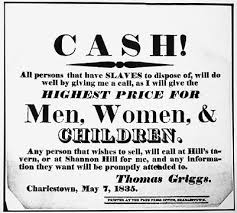
The Bible not only permits slavery but lays out rules for its practice—such as:
- However, you may purchase male or female slaves from among the foreigners who live among you. You may also purchase the children of such resident foreigners, including those who have been born in your land. (Leviticus 25:44-45)
- When a man sells his daughter as a slave, she will not be freed at the end of six years as the men are. (Exodus 21-7)
- Slaves, submit yourselves to your masters with all respect, not only to those who are good and considerate, but also to those who are harsh. (1 Peter 2:18)
Almost all scientific progress would be discarded, since most of its findings conflict with the Bible:
- One generation passes away, and another generation comes: but the earth abides forever. (Ecclesiastes 1:4).
- This claim is totally contradicted by what astronomers now know about the eventual fate of the Earth: In about 7.6 billion years, the sun will exhaust its nuclear fuels. This will vastly increase its heat and gravitational pull, and at least Mercury, Earth and Venus will be vaporized.

The sun
- The Bible speaks of a world where physical laws are often violated by the will of God. Thus, Jesus turns water into wine and raises Lazarus from the dead; Jonah lives inside a fish for three days; Noah dies at 950 years; and demons are exorcised.
- In Biblical times, mental illness was seen as a manifestation of demonic possession. Today we know that mental illness has nothing to do with evil spirits.
Laws guaranteeing equal rights for women would be repealed:
- I do not permit a woman to teach or to have authority over a man; she must be silent. (1 Timothy 12:10)
- Wives, submit to your husbands as to the Lord. (Ephesians 5:22)
- A woman should learn in quietness and full submission. (1 Timothy 2:11)
- But if…and evidence of the girl’s virginity is not found, they shall bring the girl to the entrance of her father’s house and there her townsman shall stone her to death. (Deuteronomy 22:20-21)
Military conflicts would be fought without regard to the Geneva Convention—as the Israelites did:
- “You are my battle-ax and sword,” says the Lord. “With you I will shatter nations and destroy many kingdoms. With you I will shatter armies, destroying the horse and rider, the chariot and charioteer. With you I will shatter men and women, old people and children, young men and maidens. With you I will shatter shepherds and flocks, farmers and oxen, captains and rulers.” (Jeremiah 51:20-23)
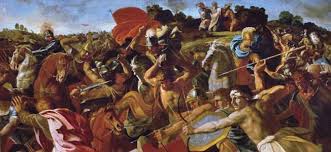
Depiction of the taking of Jericho by the Israelites
- Samuel said to Saul, “This is what the Lord Almighty says: ‘I will punish the Amalekites for what they did to Israel when they waylaid them as they came up from Egypt. Now go, attack the Amalekites and totally destroy everything that belongs to them. Do not spare them; put to death men and women, children and infants, cattle and sheep, camels and donkeys.’” (1 Samuel 15, 1-3)
* * * * *
Yes, a nation governed by “a theology based on the Bible” would be one far different from the United States we know today.
Since a number of Old Testament practices might lend themselves to easy abuse, this is not a matter to be taken lightly.
ABC NEWS, ADOLF HITLER, ALTERNET, AMERICABLOG, AP, BABY BOOMER RESISTANCE, BARACK OBAMA, BBC, BILL CLINTON, BLOOMBERG NEWS, BUZZFEED, CBS NEWS, CHRIS MATTHEWS, CNN, CNN'S "STARTING POINT", CROOKS AND LIARS, CZECHOSLAVAKIA, DAILY KOZ, DARRELL ISSA, DEBT CEILING, EXECUTIVE ORDERS, EXTORTION, FACEBOOK, FIVETHIRTYEIGHT, GEORGE W. BUSH, HARPER’S MAGAZINE, HOUSE SPEAKER JOHN BOEHNER, HUFFINGTON POST, immigration reform, INSIDER, JANET YELLEN, JIMMY CARTER, JOSEPH BIDEN, MEDIA MATTERS, MITCH MCCONNELL, MOTHER JONES, MOVEON, MSNBC, MSNBC'S "HARDBALL", NANCY PELOSI, NAZI GERMANY, NBC NEWS, NEGOTIATING, NEVILLE CHAMBERLAIN, NEW REPUBLIC, NEWSDAY, NEWSWEEK, NEWT GINGRICH, NICCOLO MACHIAVELLI, NPR, PAP SMEARS, PBS NEWSHOUR, PLANNED PARENTHOOD, POLAND, POLITICO, POLITICUSUSA, R.I.CO. ACT, RAW STORY, REPUBLICAN PARTY, REPUBLICANS, REUTERS, Ronald Reagan, SALON, SEATTLE TIMES, SLATE, TALKING POINTS MEMO, THE ATLANTIC, THE CHICAGO SUN-TIMES, THE CHICAGO TRIBUNE, THE DAILY BEAST, THE DAILY BLOG, THE GUARDIAN, THE HILL, THE HUFFINGTON POST, THE LOS ANGELES TIMES, THE NATION, THE NEW REPUBLIC, THE NEW YORK TIMES, THE NEW YORKER, THE PRINCE, THE VILLAGE VOICE, THE WASHINGTON POST, THINKPROGRESS, TIME, TITLE X, TRUTHDIG, TRUTHOUT, TWITTER, TWO POLITICAL JUNKIES, U.S. NEWS & WORLD REPORT, UPI, USA TODAY, WARREN BUFFET, WINSTON CHURCHILL, WONKETTE, WORLD WAR 11
In Bureaucracy, Business, History, Law, Law Enforcement, Military, Politics, Social commentary on October 11, 2021 at 12:14 am
In 2011, Republicans threatened to destroy the Nation’s credit rating unless their budgetary demands were met.
President Barack Obama could have ended that threat via the Racketeer Influenced Corrupt Organizations (RICO) Act. Unfortunately for him and the Nation, he didn’t.
Originally, RICO was aimed at the Mafia and other organized crime syndicates. But in United States v. Turkette, 452 U.S. 576 (1981), the Supreme Court held that RICO applied as well to legitimate enterprises being operated in a criminal manner.
After Turkette, RICO could also be used against corporations, political protest groups, labor unions and loosely knit-groups of people.
Department of Justice
RICO opens with a series of definitions of “racketeering activity” which can be prosecuted by Justice Department attorneys. Among those crimes: Extortion.
Extortion is defined as “a criminal offense which occurs when a person unlawfully obtains either money, property or services from a person(s), entity, or institution, through coercion.”
The RICO Act defines “a pattern of racketeering activity” as “at least two acts of racketeering activity, one of which occurred after the effective date of this chapter and the last of which occurred within ten years…after the commission of a prior act of racketeering activity.”
And if President Obama had believed that RICO was not sufficient to deal with Republicans’ extortion attempts, he could have relied on the USA Patriot Act of 2001, passed in the wake of 9/11.
In Section 802, the Act defines domestic terrorism. Among the behavior that is defined as criminal:
“Activities that…appear to be intended…to influence the policy of a government by intimidation or coercion [and]…occur primarily within the territorial jurisdiction of the United States.”
The remedies for punishing such criminal behavior were now legally in place. President Obama needed only to direct the Justice Department to apply them.
- President Obama could have directed Attorney General Eric Holder to investigate whether actions by Republican Congressman—and their Tea Party cohorts—broke Federal anti-racketeering and/or anti-terrorism laws.
- Holder, in turn, could have ordered the FBI to conduct that investigation.
- If the FBI found sufficient evidence that these laws had been violated, Holder could have convened criminal grand juries to indict those violators.
Criminally investigating and possibly indicting members of Congress would not violate the separation-of-powers principle. Congressmen have in the past been investigated, indicted and convicted for various criminal offenses.
Such indictments and prosecutions—-and especially convictions—would have served notice on current and future members of Congress: The lives and fortunes of American citizens may not be held hostage to gain leverage in a political settlement.
In short: Obama could have replaced the law of fear with the rule of law.
And Obama could have stood up to Republican extortionists in another way: By urging his fellow Americans to rally to him in a moment of supreme national danger.
President John F. Kennedy did just that—successfully—during the most dangerous crisis of his administration.
Addressing the Nation on October 22, 1962, Kennedy shocked his fellow citizens by revealing that the Soviet Union had installed offensive nuclear missiles in Cuba.
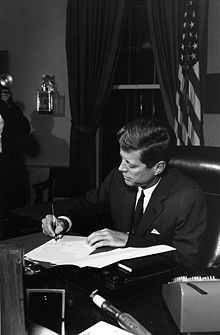
John F. Kennedy
Kennedy outlined a series of steps he had taken to end the crisis—most notably, a blockade of Cuba. Then he sought to reassure and inspire his audience:
“The cost of freedom is always high, but Americans have always paid it. And one path we shall never choose, and that is the path of surrender or submission.”
President Obama could have sent that same message to the extortionists of the Republican Party—by explaining to the American people:
- Republicans have adopted the same my-way-or-else “negotiating” stance as Adolf Hitler.
- Like the Nazis, they are determined to gain absolute power—or destroy the Nation they claim to love.
- They raised the debt ceiling seven times during the eight-year Presidency of George W. Bush.
- But now that a Democrat holds the White House, raising the debt ceiling is unacceptable.
- Despite Republican lies, we cannot revitalize the economy by slashing taxes on the wealthy and on cash-hoarding corporations while cutting benefits for millions of average Americans.
- We will need both tax increases and sensible entitlement cuts to regain our economic strength.
And he could have ended his speech with a direct call for action by the American people:
“We stand on the edge of economic disaster. Therefore, I am asking each of you to stand up for America tonight—by demanding the recall of the entire membership of the Republican Party.
“This is the moment when each of us must decide—whether we will survive as a Republic, or allow ruthless political fanatics to destroy what has lasted and thrived for more than 200 years.”
To paraphrase Winston Churchill: President Obama had to choose between timidity and confrontation.
He chose timidity.
Today, Republicans are once again threatening the Nation with economic destruction unless their extortionate demands are met.
President Joseph Biden now faces that same choice as President Obama: Timidity or confrontation.
If he chooses correctly, he will save the Nation from financial extinction. And he will send a message to future extortionists: The lives and fortunes of American citizens may not be held hostage to gain leverage in a political settlement.
ABC NEWS, ADOLF HITLER, ALTERNET, AMERICABLOG, AP, BABY BOOMER RESISTANCE, BARACK OBAMA, BBC, BILL CLINTON, BLOOMBERG NEWS, BUZZFEED, CBS NEWS, CHRIS MATTHEWS, CNN, CNN'S "STARTING POINT", CROOKS AND LIARS, CZECHOSLAVAKIA, DAILY KOZ, DARRELL ISSA, DEBT CEILING, EXECUTIVE ORDERS, EXTORTION, FACEBOOK, FIVETHIRTYEIGHT, GEORGE W. BUSH, HARPER’S MAGAZINE, HOUSE SPEAKER JOHN BOEHNER, HUFFINGTON POST, immigration reform, INSIDER, JANET YELLEN, JIMMY CARTER, JOSEPH BIDEN, MEDIA MATTERS, MITCH MCCONNELL, MOTHER JONES, MOVEON, MSNBC, MSNBC'S "HARDBALL", NANCY PELOSI, NAZI GERMANY, NBC NEWS, NEGOTIATING, NEVILLE CHAMBERLAIN, NEW REPUBLIC, NEWSDAY, NEWSWEEK, NEWT GINGRICH, NICCOLO MACHIAVELLI, NPR, PAP SMEARS, PBS NEWSHOUR, PLANNED PARENTHOOD, POLAND, POLITICO, POLITICUSUSA, R.I.CO. ACT, RAW STORY, REPUBLICAN PARTY, REPUBLICANS, REUTERS, Ronald Reagan, SALON, SEATTLE TIMES, SLATE, TALKING POINTS MEMO, THE ATLANTIC, THE CHICAGO SUN-TIMES, THE CHICAGO TRIBUNE, THE DAILY BEAST, THE DAILY BLOG, THE GUARDIAN, THE HILL, THE HUFFINGTON POST, THE LOS ANGELES TIMES, THE NATION, THE NEW REPUBLIC, THE NEW YORK TIMES, THE NEW YORKER, THE PRINCE, THE VILLAGE VOICE, THE WASHINGTON POST, THINKPROGRESS, TIME, TITLE X, TRUTHDIG, TRUTHOUT, TWITTER, TWO POLITICAL JUNKIES, U.S. NEWS & WORLD REPORT, UPI, USA TODAY, WARREN BUFFET, WINSTON CHURCHILL, WONKETTE, WORLD WAR 11
In Bureaucracy, Business, History, Law, Law Enforcement, Military, Politics, Social commentary on October 8, 2021 at 12:12 am
In April, 2011, the United States government almost shut down over Republican demands about subsidized pap smears.
During a late-night White House meeting with President Barack Obama and key Congressional leaders, Republican House Speaker John Boehner made this threat:
His conference would not approve funding for the government if any money were allowed to flow to Planned Parenthood through Title X legislation.
Facing an April 8 deadline, negotiators worked day and night to strike a compromise—and finally reached one.
Three months later—on July 9—Republican extortionists again threatened the Nation with financial ruin and international disgrace unless their demands were met.

Symbol of the Mafia “Black Hand”
President Obama had offered to make historic cuts in the federal government and the social safety net—on which millions of Americans depend for their most basic needs.
But House Speaker John Boehner rejected that offer. He could not agree to the tax increases that Democrats wanted to impose on the wealthiest 1% as part of the bargain.
As the calendar moved ever closer to the fateful date of August 2, Republican leaders continued to insist: Any deal that includes taxes “can’t pass the House.”
One senior Republican said talks would go right up to—and maybe beyond—the brink of default.
“I think we’ll be here in August,” said Republican Representative Pete Sessions, of Texas. “We are not going to leave town until a proper deal gets done.”

John Boehner
President Obama had previously insisted on extending the debt ceiling through 2012. But in mid-July, he simply asked congressional leaders to review three options with their members:
- The “Grand Bargain” choice—favored by Obama—would cut deficits by about $4 trillion, including spending cuts and new tax revenues.
- A medium-range plan would aim to reduce the deficit by about $2 trillion.
- The smallest option would cut between $1 trillion and $1.5 trillion, without increased tax revenue or any Medicare and Medicaid cuts.
And the Republican response?
Said Rep. Darrell Issa, chairman of the House Oversight and Government Reform Committee: “Quite frankly, [Republican] members of Congress are getting tired of what the president won’t do and what the president wants.”
Noted political analyst Chris Matthews summed up the sheer criminality of what happened within the House of Representatives.
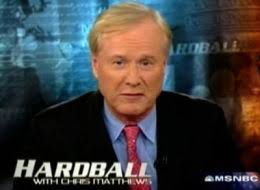
Chris Matthews
Speaking on MSNBC’s “Hardball,” on July 28—five days before Congress reached its August 2 deadline to raise the debt-ceiling—Matthews noted:
“The first people to bow to the demands of those threatening to blow up the economy were the Republicans in the House, the leaders. The leaders did what the followers told them to do: meet the demands, hold up the country to get their way.
“Those followers didn’t win the Senate, or the Presidency, just the House.
“But by using the House they were able to hold up the entire United States government. They threatened to blow things up economically and it worked.
“They said they were willing to do that—just to get their way—not by persuasion, not by politics, not by democratic government, but by threatening the destruction of the country’s finances.
“Right. So what’s next? The power grid? Will they next time threaten to close down the country’s electricity and communications systems?”
With the United States teetering on the brink of national bankruptcy, President Obama faced three choices:
- Prosecute Republican extortionists under the Racketeer Influenced Corrupt Organizations Act;
- Seek to rally the American people against a criminal threat to the financial security of the Nation;
- Cave in to Republican demands.
Unfortunately for Obama and the Nation, he chose Number Three.
A graduate of Columbia University and Harvard Law School, Obama was easily one of the most academically gifted Presidents in United States history.
But for all this, he failed—from the onset of his Presidency—to grasp and apply this fundamental lesson taught by Niccolo Machiavelli, the father of modern political science.

Niccolo Machiavelli
In his classic work on politics, The Prince, Machiavelli warns:
“From this arises the question whether it is better to be loved than feared, or feared more than loved.
“The reply is, that one ought to be both feared and loved, but as it is difficult for the two to go together, it is much safer to be feared than loved….
“Men have less scruple in offending one who makes himself loved than one who makes himself feared. For love is held by a chain of obligations which, men being selfish, is broken whenever it serves their purpose. But fear is maintained by a dread of punishment which never fails.”
Obama failed to heed this advice. And, predictably, his sworn enemies—which is what Republicans considered themselves to be—felt free to demonize and obstruct him at every turn.
As Ernst Casier, chairman of philosophy at Hamburg University once warned:
“Those who are willing to risk everything, even death and destruction, to attain their ends will prevail over more responsible and prudent men who have more to lose and are rational, not suicidal.”
Yet Obama could have ended that threat via the Racketeer Influenced Corrupt Organizations (RICO) Act.
Passed by Congress in 1970, as Title 18, United States Code, Sections 1961-1968, its goal was to destroy the Mafia.
Next up: Remedies for extortion are at hand.
ABC NEWS, ADOLF HITLER, ALTERNET, AMERICABLOG, AP, BABY BOOMER RESISTANCE, BARACK OBAMA, BBC, BILL CLINTON, BLOOMBERG NEWS, BUZZFEED, CBS NEWS, CHRIS MATTHEWS, CNN, CNN'S "STARTING POINT", CROOKS AND LIARS, CZECHOSLAVAKIA, DAILY KOZ, DARRELL ISSA, DEBT CEILING, EXECUTIVE ORDERS, EXTORTION, FACEBOOK, FIVETHIRTYEIGHT, GEORGE W. BUSH, HARPER’S MAGAZINE, HOUSE SPEAKER JOHN BOEHNER, HUFFINGTON POST, immigration reform, INSIDER, JANET YELLEN, JIMMY CARTER, JOSEPH BIDEN, MEDIA MATTERS, MITCH MCCONNELL, MOTHER JONES, MOVEON, MSNBC, MSNBC'S "HARDBALL", NANCY PELOSI, NAZI GERMANY, NBC NEWS, NEGOTIATING, NEVILLE CHAMBERLAIN, NEW REPUBLIC, NEWSDAY, NEWSWEEK, NEWT GINGRICH, NICCOLO MACHIAVELLI, NPR, PAP SMEARS, PBS NEWSHOUR, PLANNED PARENTHOOD, POLAND, POLITICO, POLITICUSUSA, R.I.CO. ACT, RAW STORY, REPUBLICAN PARTY, REPUBLICANS, REUTERS, Ronald Reagan, SALON, SEATTLE TIMES, SLATE, TALKING POINTS MEMO, THE ATLANTIC, THE CHICAGO SUN-TIMES, THE CHICAGO TRIBUNE, THE DAILY BEAST, THE DAILY BLOG, THE GUARDIAN, THE HILL, THE HUFFINGTON POST, THE LOS ANGELES TIMES, THE NATION, THE NEW REPUBLIC, THE NEW YORK TIMES, THE NEW YORKER, THE PRINCE, THE VILLAGE VOICE, THE WASHINGTON POST, THINKPROGRESS, TIME, TITLE X, TRUTHDIG, TRUTHOUT, TWITTER, TWO POLITICAL JUNKIES, U.S. NEWS & WORLD REPORT, UPI, USA TODAY, WARREN BUFFET, WINSTON CHURCHILL, WONKETTE, WORLD WAR 11
In Bureaucracy, Business, History, Law, Law Enforcement, Military, Politics, Social commentary on October 7, 2021 at 12:11 am
For the postwar Republican party, Adolf Hitler’s my-way-or-else “negotiating” methods would become standard operating procedure.
During the summer of 2011, Republicans refused to raise the debt ceiling unless Democrats agreed to massively cut social programs for the elderly, poor and disabled.
And while Republicans demanded that the disadvantaged tighten their belts, they rejected any raising of taxes on their foremost constituency—the wealthiest 1%.
To raise taxes on the wealthy, they insisted, would be a “jobs-killer.” It would “discourage” corporate CEOs from creating tens of thousands of jobs they supposedly wanted to create.
If Congress failed to raise the borrowing limit of the federal government by August 2, 2011, the date when the U.S. reached the limit of its borrowing abilities, America would begin defaulting on its loans.
As Warren Buffett, CEO of Berkshire Hathaway, explained the looming economic catastrophe:
“If you don’t send out Social Security checks, I would hate to think about the credit meeting at S&P and Moody’s the next morning.
“If you’re not paying millions and millions and millions of people that range in age from 65 on up, money you promised them, you’re not a AAA,” said Buffett.
A triple-A credit rating is the highest possible rating that can be received.
Republicans knew their argument was a lie. And so did the editors of Time. The difference is, the editors of Time were willing to reveal the truth.
In its June 20, 2011 cover-story on “What U.S. Economic Recovery? Five Destructive Myths,” Rana Foroohar, the magazine’s assistant managing editor in charge of economics and business, delivered this warning:
Profit-seeking corporations can’t be relied on to ”make it all better.”
American companies “are doing quite well,” but most American workers “are earning a lower hourly wage now than they did during the recession.”
Corporations, in short, are doing extremely well. But they don’t spend their profits on American workers.
“There may be $2 trillion sitting on the balance sheets of American corporations globally, but firms show no signs of wanting to spend it in order to hire workers at home.”
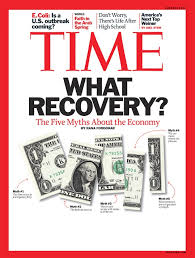
In short: Giving even greater tax breaks to mega-corporations—the standard Republican mantra—has not persuaded them to stop “outsourcing” jobs. Nor has it convinced them to start hiring Americans.
Many American companies prefer opening factories in Brazil, China or India to doing so in the United States—and thus creating jobs for American workers.
While embarrassingly overpaid CEOs squander corporate wealth on themselves, millions of Americans can’t afford medical care or must depend on charity to feed their families.
Yet there is also a disconnect between the truth of this situation and the willingness of Americans to face up to that truth.
The reason, writes Foroohar:
Republicans have convinced most Americans they can revitalize the economy by slashing “taxes on the wealthy and on cash-hoarding corporations while cutting benefits for millions of Americans.”
And she concludes: To restore prosperity America needs both tax increases and cuts in entitlement programs.
According to Mein Kampf-—”My Struggle”—Hitler’s autobiography and political treatise:
- Most people are ruled by sentiment, not reason.
- This sentiment is simple and consistent. It is rooted in notions of love and hatred, right and wrong, truth and falsehood.
- Propaganda isn’t based on objective truth but must present only that part of the truth that makes its own side look good.
- People are not intelligent, and quickly forget.
- Confine propaganda to a few bare essentials and express these in easily-remembered stereotyped images.
- Persistently repeat these slogans until the very last individual has come to grasp the idea that has been put forward.
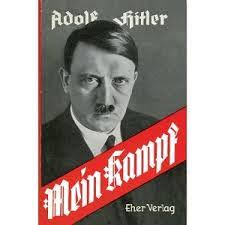
Following these principles, Republicans have proved hugely successful at persuading millions that truth is whatever their party claims it to be at any given moment.
“Fascism,” said author Ernest Hemingway, “is a lie told by bullies.” Thus, when Republicans couldn’t attain their goals by lying, they sought to do so by force—or at least the threat of it.
Republicans have repeatedly threatened to shut down the government unless their constantly escalating demands are met.
In November, 1995, Newt Gingrich, then Speaker of the House of Representatives, carried out his threat. Gingrich unwisely admitted that he did so because President Bill Clinton had put him in the back of Air Force One during a recent trip to Israel.
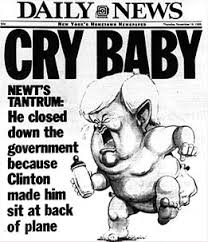
The shutdown proved a disaster for Republicans. Clinton was handily re-elected in 1996 and Gingrich suddenly resigned from Congress in 1998.
Still, the Republicans continued their policy of my-way-or-else.
In April, 2011, the United States government almost shut down over Republican demands about subsidized pap smears.
During a late-night White House meeting with President Barack Obama and key Congressional leaders, Republican House Speaker John Boehner made this threat:
His conference would not approve funding for the government if any money were allowed to flow to Planned Parenthood through Title X legislation.
Facing an April 8 deadline, negotiators worked day and night to strike a compromise—and finally reached one.
Three months later—on July 9—Republican extortionists again threatened the Nation with financial ruin and international disgrace unless their demands were met.
Next up: Republicans: “Stop funding pap smears for women—or we’ll shut down the government.”
ABC NEWS, ADOLF HITLER, ALTERNET, AMERICABLOG, AP, BABY BOOMER RESISTANCE, BARACK OBAMA, BBC, BILL CLINTON, BLOOMBERG NEWS, BUZZFEED, CBS NEWS, CHRIS MATTHEWS, CNN, CNN'S "STARTING POINT", CROOKS AND LIARS, CZECHOSLAVAKIA, DAILY KOZ, DARRELL ISSA, DEBT CEILING, EXECUTIVE ORDERS, EXTORTION, FACEBOOK, FIVETHIRTYEIGHT, GEORGE W. BUSH, HARPER’S MAGAZINE, HOUSE SPEAKER JOHN BOEHNER, HUFFINGTON POST, immigration reform, INSIDER, JANET YELLEN, JIMMY CARTER, JOSEPH BIDEN, MEDIA MATTERS, MITCH MCCONNELL, MOTHER JONES, MOVEON, MSNBC, MSNBC'S "HARDBALL", NANCY PELOSI, NAZI GERMANY, NBC NEWS, NEGOTIATING, NEVILLE CHAMBERLAIN, NEW REPUBLIC, NEWSDAY, NEWSWEEK, NEWT GINGRICH, NICCOLO MACHIAVELLI, NPR, PAP SMEARS, PBS NEWSHOUR, PLANNED PARENTHOOD, POLAND, POLITICO, POLITICUSUSA, R.I.CO. ACT, RAW STORY, REPUBLICAN PARTY, REPUBLICANS, REUTERS, Ronald Reagan, SALON, SEATTLE TIMES, SLATE, TALKING POINTS MEMO, THE ATLANTIC, THE CHICAGO SUN-TIMES, THE CHICAGO TRIBUNE, THE DAILY BEAST, THE DAILY BLOG, THE GUARDIAN, THE HILL, THE HUFFINGTON POST, THE LOS ANGELES TIMES, THE NATION, THE NEW REPUBLIC, THE NEW YORK TIMES, THE NEW YORKER, THE PRINCE, THE VILLAGE VOICE, THE WASHINGTON POST, THINKPROGRESS, TIME, TITLE X, TRUTHDIG, TRUTHOUT, TWITTER, TWO POLITICAL JUNKIES, U.S. NEWS & WORLD REPORT, UPI, USA TODAY, WARREN BUFFET, WINSTON CHURCHILL, WONKETTE, WORLD WAR 11
In Bureaucracy, Business, History, Law, Law Enforcement, Military, Politics, Social commentary on October 6, 2021 at 12:11 am
In September, 1938, seven months after seizing Austria, German Fuhrer Adolf Hitler gave another exhibition of his “negotiating” methods. This time, the target of his rage and aggression was Czechoslovakia.
Once again, he opened “negotiations” with a lie: The Czechoslovak government was trying to exterminate 3.5 million Germans living in the “Sudetenland.”
Then he followed with the threat of war: Germany would protect its citizens and halt such “oppression.”
For British Prime Minister Neville Chamberlain, the thought of another European war erupting less than 20 years after the end of World War I was simply unthinkable.
He quickly sent Hitler a telegram, offering to help resolve the crisis: “I could come to you by air and am ready to leave tomorrow. Please inform me of earliest time you can receive me, and tell me the place of the meeting. I should be grateful for a very early reply.”
The two European leaders met in Berchtesgaden, Germany, on September 15, 1938.
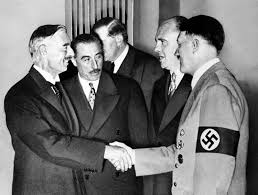
Neville Chamberlain and Adolf Hitler
During their talks, Chamberlain said he had come to discuss German grievances. But, he added, it was necessary in all circumstances to exclude the use of force.
Hitler appeared to be shocked that he could be accused of such intentions: “Force? Who speaks of force?“
Then, without warning, he switched to an aggressive mode. He accused the Czechs of having mobilized their army in May. They had mobilized–in response to the mobilization of the German army.
“I shall not put up with this any longer,” shouted Hitler. “I shall settle this question in one way or another. I shall take matters in my own hands!”
Suddenly, Chamberlain seemed alarmed—and possibly angry: “If I understood you right, you are determined to proceed against Czechoslovakia in any case. If this is so, why did you let me come to Berchtesgaden?
“In the circumstances, it is best for me to return at once. Anything else now seems pointless.”
Hitler was taken aback by the unexpected show of defiance. He realized he was about to lose his chance to bully the British into accepting his latest demands.
So he softened his tone and said they should consider the Sudetenland according to the principle of self-determination.
Chamberlain said he must immediately return to England to consult with his colleagues. Hitler appeared uneasy. But then the German translator finished the sentence: “…and then meet you again.”
Hitler realized he still had a chance to attain victory without going to war.
Chamberlain agreed to the cession of the Sudetenland. Three days later, French Prime Minister Edouard Daladier did the same. No Czechoslovak representative was invited to these discussions.
Chamberlain met Hitler again in Godesberg, Germany, on September 22 to confirm the agreements. But Hitler aimed to use the crisis as a pretext for war.
He now demanded not only the annexation of the Sudetenland but the immediate military occupation of the territories. This would give the Czechoslovak army no time to adapt their defense measures to the new borders.
To achieve a solution, Italian dictator Benito Mussolini suggested a conference of the major powers in Munich.
On September 29, Hitler, Daladier and Chamberlain met and agreed to Mussolini’s proposal. They signed the Munich Agreement, which accepted the immediate occupation of the Sudetenland.
The Czechoslovak government had not been a party to the talks. Nevertheless, it promised to abide by the agreement on September 30.
It actually had no choice. It faced the threat of an immediate German invasion after being deserted by its pledged allies: Britain, France and the Soviet Union.
Chamberlain returned to England a hero. Holding aloft a copy of the worthless agreement he had signed with Hitler, he told cheering crowds in London: “I believe it is peace for our time.”
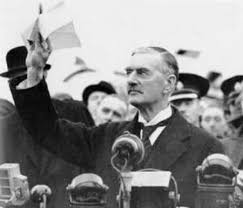
Neville Chamberlain
Winston Churchill knew better, predicting: “Britain and France had to choose between war and dishonor. They chose dishonor. They will have war.”
Hitler—still planning more conquests—also knew better. In March, 1939, the German army occupied the rest of Czechoslovakia.
Chamberlain would soon be seen as a naive weakling—even before bombs started falling on London.
Hitler next turned his attention—and demands—to Poland.
When his generals balked, warning that an invasion would trigger a war with France and Britain, Hitler quickly brushed aside their fears: “Our enemies are little worms. I saw them at Munich.”
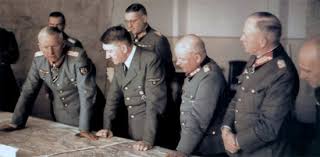
Adolf Hitler and his generals
Hitler ordered the invasion of Poland on September 1, 1939—unintentionally triggering World War II.
In time, historians and statesmen would regard Munich as an object lesson in the futility—and danger—in appeasing evil and aggression.
But for the postwar Republican party, Hitler’s my-way-or-else “negotiating” methods would become standard operating procedure.
During the summer of 2011, Republicans refused to raise the debt ceiling unless Democrats agreed to massively cut social programs for the elderly, poor and disabled.
And while Republicans demanded that the disadvantaged tighten their belts, they rejected any raising of taxes on their foremost constituency—the wealthiest 1%.
To raise taxes on the wealthy, they insisted, would be a “jobs-killer.” It would “discourage” corporate CEOs from creating tens of thousands of jobs they supposedly wanted to create.
Next up: Republicans: “Everything for the rich—or we’ll destroy the country.”
ABC NEWS, ADOLF HITLER, ALTERNET, AMERICABLOG, AP, BABY BOOMER RESISTANCE, BARACK OBAMA, BBC, BILL CLINTON, BLOOMBERG NEWS, BUZZFEED, CBS NEWS, CHRIS MATTHEWS, CNN, CNN'S "STARTING POINT", CROOKS AND LIARS, CZECHOSLAVAKIA, DAILY KOZ, DARRELL ISSA, DEBT CEILING, EXECUTIVE ORDERS, EXTORTION, FACEBOOK, FIVETHIRTYEIGHT, GEORGE W. BUSH, HARPER’S MAGAZINE, HOUSE SPEAKER JOHN BOEHNER, HUFFINGTON POST, immigration reform, INSIDER, JANET YELLEN, JIMMY CARTER, JOSEPH BIDEN, MEDIA MATTERS, MITCH MCCONNELL, MOTHER JONES, MOVEON, MSNBC, MSNBC'S "HARDBALL", NANCY PELOSI, NAZI GERMANY, NBC NEWS, NEGOTIATING, NEVILLE CHAMBERLAIN, NEW REPUBLIC, NEWSDAY, NEWSWEEK, NEWT GINGRICH, NICCOLO MACHIAVELLI, NPR, PAP SMEARS, PBS NEWSHOUR, PLANNED PARENTHOOD, POLAND, POLITICO, POLITICUSUSA, R.I.CO. ACT, RAW STORY, REPUBLICAN PARTY, REPUBLICANS, REUTERS, Ronald Reagan, SALON, SEATTLE TIMES, SLATE, TALKING POINTS MEMO, THE ATLANTIC, THE CHICAGO SUN-TIMES, THE CHICAGO TRIBUNE, THE DAILY BEAST, THE DAILY BLOG, THE GUARDIAN, THE HILL, THE HUFFINGTON POST, THE LOS ANGELES TIMES, THE NATION, THE NEW REPUBLIC, THE NEW YORK TIMES, THE NEW YORKER, THE PRINCE, THE VILLAGE VOICE, THE WASHINGTON POST, THINKPROGRESS, TIME, TITLE X, TRUTHDIG, TRUTHOUT, TWITTER, TWO POLITICAL JUNKIES, U.S. NEWS & WORLD REPORT, UPI, USA TODAY, WARREN BUFFET, WINSTON CHURCHILL, WONKETTE, WORLD WAR 11
In Bureaucracy, Business, History, Law, Law Enforcement, Military, Politics, Social commentary on October 5, 2021 at 12:15 am
By studying the “negotiating” methods used by Adolf Hitler, Americans generally—and Democrats in particular—can learn much about the mindset and “negotiating” style of today’s Republican party.
A classic example of Hitler’s “bargaining style” came in 1938, when he invited Austrian Chancellor Kurt von Schuschnigg to his mountaintop retreat in Obersalzberg, Germany.
Hitler, an Austrian by birth, intended to annex his native land to Germany. Schuschnigg was aware of Hitler’s desire, but nevertheless felt secure in accepting the invitation. He had been assured that the question of Austrian sovereignty would not arise.
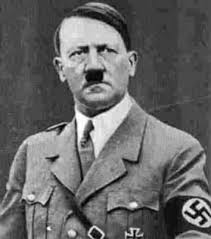
Adolf Hitler
The meeting occurred on February 12, 1938.
Shuschnigg opened the discussion with a friendly compliment. Walking over to a large window, he admired the breathtaking view of the mountains.
HITLER: We haven’t come here to talk about the lovely view or the weather!
Austria has anyway never done anything which was of help to the German Reich….I am resolutely determined to make an end to all this business. The German Reich is a great power. Nobody can and nobody will interfere if it restores order on its frontiers.
SCHUSCHNIGG: We simply have to go on living alongside one another, the little state next to the big one. We have no other choice.
And that is why I ask you to tell me what your concrete complaints are. We will do all in our power to sort things out and establish a friendly relationship, as far as it is possible to do so.
HITLER: That’s what you say, Herr Schuschnigg. And I am telling you that I intend to clear up the whole of the so-called Austrian question—one way or another. Do you think I don’t know that you are fortifying Austria’s border with the Reich?
SCHUSCHNIGG: There can be no suggestion at all of that—
HITLER: Ridiculous explosive chambers are being built under bridges and roads—
This was a lie, and Hitler knew it was a lie. But no matter. It gave him an excuse to threaten to destroy Austria—as he was to destroy so many other nations during the next seven years.
HITLER: I have only to give one command and all this comic stuff on the border will be blown to pieces overnight. You don’t seriously think you could hold me up, even for half an hour, do you?
Who knows—perhaps you will find me one morning in Vienna like a spring storm. Then you will go through something! I’d like to spare the Austrians that.
The S.A. [Hitler’s private army of Stormtroopers] and the [Condor] lLegion [which had bombed much of Spain into rubble during the three-year Spanish Civil War] would come in after the troops and nobody—not even I—could stop them from wreaking vengeance.
Schnuschigg made a cardinal mistake in dealing with Hitler: He showed fear. And this was precisely what the Nazi dictator looked for in an opponent.
Contrary to popular belief, Hitler did not constantly rage at everyone. On the contrary: he could, when he desired, be charming, especially to women. He used rage as a weapon, knowing that most people feel intimidated by it.
Republicans have profited by the same strategy.
In the case of Schuschnigg, Hitler opened with insults and threats at the outset of their discussion. Then there was a period of calm, to convince the Austrian chancellor the worst was over.
Finally, he once again attacked—this time with so much fury that Schuschnigg was terrified into submission.
With one stroke of a pen, Austria became a vassal-state to Nazi Germany.
Seven months later, in September, 1938, Hitler gave another exhibition of his “negotiating” methods. This time, the target of his rage and aggression was Czechoslovakia.
Once again, he opened “negotiations” with a lie: The Czechoslovak government was trying to exterminate 3.5 million Germans living in the “Sudetenland.”
This consisted of the northern, southwest and western regions of Czechoslovakia, inhabited mostly by ethnic Germans.
Then he followed this up with the threat of war: Germany would protect its citizens and halt such “oppression.”
For British Prime Minister Neville Chamberlain, the thought of another European war erupting less than 20 years after the end of World War I was simply unthinkable.

The Cenotaph, in London, honoring the unknown British dead of World War 1
Something had to be done to prevent it. And he believed himself to be just the man to do it.
He quickly sent Hitler a telegram, offering to help resolve the crisis: “I could come to you by air and am ready to leave tomorrow. Please inform me of earliest time you can receive me, and tell me the place of the meeting. I should be grateful for a very early reply.”
Once again, another head-of-state was prepared to meet Hitler on his home ground. Again, Hitler took this concession as a sign of weakness. And Chamberlain’s use of such words as “please” and “grateful” only further convinced Hitler of another impending triumph.
Chamberlain was determined to grant Hitler’s every demand–so long as this meant avoiding a second world war.
As a political party, Democrats have generally copied this same “strategy” when dealing with Republicans.
Next up: Hitler’s “negotiating” legacy lives on—among Republicans.
ABC NEWS, ADOLF HITLER, ALTERNET, AMERICABLOG, AP, BABY BOOMER RESISTANCE, BARACK OBAMA, BBC, BILL CLINTON, BLOOMBERG NEWS, BUZZFEED, CBS NEWS, CHRIS MATTHEWS, CNN, CNN'S "STARTING POINT", CROOKS AND LIARS, CZECHOSLAVAKIA, DAILY KOZ, DARRELL ISSA, DEBT CEILING, EXECUTIVE ORDERS, EXTORTION, FACEBOOK, FIVETHIRTYEIGHT, GEORGE W. BUSH, HARPER’S MAGAZINE, HOUSE SPEAKER JOHN BOEHNER, HUFFINGTON POST, immigration reform, INSIDER, JANET YELLEN, JIMMY CARTER, JOSEPH BIDEN, MEDIA MATTERS, MITCH MCCONNELL, MOTHER JONES, MOVEON, MSNBC, MSNBC'S "HARDBALL", NANCY PELOSI, NAZI GERMANY, NBC NEWS, NEGOTIATING, NEVILLE CHAMBERLAIN, NEW REPUBLIC, NEWSDAY, NEWSWEEK, NEWT GINGRICH, NICCOLO MACHIAVELLI, NPR, PAP SMEARS, PBS NEWSHOUR, PLANNED PARENTHOOD, POLAND, POLITICO, POLITICUSUSA, R.I.CO. ACT, RAW STORY, REPUBLICAN PARTY, REPUBLICANS, REUTERS, Ronald Reagan, SALON, SEATTLE TIMES, SLATE, TALKING POINTS MEMO, THE ATLANTIC, THE CHICAGO SUN-TIMES, THE CHICAGO TRIBUNE, THE DAILY BEAST, THE DAILY BLOG, THE GUARDIAN, THE HILL, THE HUFFINGTON POST, THE LOS ANGELES TIMES, THE NATION, THE NEW REPUBLIC, THE NEW YORK TIMES, THE NEW YORKER, THE PRINCE, THE VILLAGE VOICE, THE WASHINGTON POST, THINKPROGRESS, TIME, TITLE X, TRUTHDIG, TRUTHOUT, TWITTER, TWO POLITICAL JUNKIES, U.S. NEWS & WORLD REPORT, UPI, USA TODAY, WARREN BUFFET, WINSTON CHURCHILL, WONKETTE, WORLD WAR 11
In Bureaucracy, Business, History, Law, Law Enforcement, Military, Politics, Social commentary on October 4, 2021 at 12:41 am
Once again, Republicans are ruthlessly playing “chicken” with the nation’s financial security.
And, once again, Democrats are responding with their trademark cowardice and ineptitude.
On August 2, 2019, President Donald Trump signed into law a two-year budget deal that raised spending by $320 billion over existing spending caps set in a 2011 law—and boosted military and domestic spending.
The bill also lifted the debt ceiling, which is the legal limit on the amount of debt the federal government can have.
The bill threatened to push the budget deficit to more than $1 trillion in 2019 for only the second time since the Great Recession of 2007-2008 and add $1.7 trillion to the federal debt over a decade.

Donald Trump
During the Presidency of Barack Obama, Republicans used the threat of the U.S. defaulting on its loans to force sharp budget cuts to nonmilitary spending.
Seven years later, Senate Majority Leader Mitch McConnell praised the Republicans’ massive contribution to the national debt under Donald Trump.
By January, 2021, the national debt had risen by almost $7.8 trillion during Trump’s time in office. It amounted to about $23,500 in new federal debt for every person in the country.
But now, with Democrat Joseph Biden as President, Republicans have become “fiscal conservatives.”
And they’re prepared to plunge the United States into financial ruin unless Democrats meet their extortion demands.
The debt ceiling is the legal limit for how much debt the United States can take on as a country. Once that limit is hit, the U.S. Treasury can no longer issue bonds to raise funds to pay for everything that the government does.
In a September 8 letter, Treasury Secretary Janet Yellen warned House Speaker Nancy Pelosi (D-CA) of the consequences if the ceiling wasn’t raised:
“A delay that calls into question the federal government’s ability to meet all its obligations would likely cause irreparable damage to the U.S. economy and global financial markets.
“We have learned from past debt limit impasses that waiting until the last minute to suspend or increase the debt limit can cause serious harm to business and consumer confidence, raise short-term borrowing costs for taxpayers, and negatively impact the credit rating of the United States.”

Janet Yellen
Today, Republicans are threatening the nation with defaulting on its loans as Congress prepares to pass the centerpiece of President Biden’s economic agenda.
“I can’t imagine there will be a single Republican voting to raise the debt ceiling after what we’ve been experiencing,” McConnell told Punchbowl News in July.
Republicans, in short, have repeatedly utilized the same “negotiating” strategy as Nazi Germany’s Fuhrer, Adolf Hitler.
And Democrats—out of cowardice or an ignorance of history—are once again refusing to publicly make this comparison.
And while the country hurtles toward economic catastrophe, they squabble among themselves about how many budgetary items they can cram into Biden’s proposed $3.5 trillion budget. As if that budget will mean anything if the country’s economy crashes with failure to raise the debt ceiling.
By studying Adolf Hitler’s mindset and “negotiating” methods, we can learn much about the mindset and “negotiating” style of today’s Republican party.
Robert Payne, author of the bestselling biography, The Life and Death of Adolf Hitler (1973), described Hitler’s “negotiating” style thus:
“Although Hitler prized his own talents as a negotiator, a man always capable of striking a good bargain, he was totally lacking in finesse.
“He was incapable of bargaining. He was like a man who goes up to a fruit peddler and threatens to blow his brains out if he does not sell his applies at the lowest possible price.”
A classic example of Hitler’s “bargaining style” came in 1938, when he invited Austrian Chancellor Kurt von Schuschnigg to his mountaintop retreat in Obersalzberg, Germany.
Hitler, an Austrian by birth, intended to annex his native land to Germany. Schuschnigg was aware of Hitler’s desire, but nevertheless felt secure in accepting the invitation. He had been assured that the question of Austrian sovereignty would not arise.
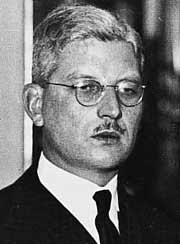
Kurt von Schuschnigg
The meeting occurred on February 12, 1938.
Shuschnigg opened the discussion with a friendly compliment. Walking over to a large window, he admired the breathtaking view of the mountains.
HITLER: We haven’t come here to talk about the lovely view or the weather!
Austria has anyway never done anything which was of help to the German Reich….I am resolutely determined to make an end to all this business. The German Reich is a great power. Nobody can and nobody will interfere if it restores order on its frontiers.
SCHUSCHNIGG: I am aware of your attitude toward the Austrian question and toward Austrian history….As we Austrians see it, the whole of our history is a very essential and valuable part of German history….And Austria’s contribution is a considerable one.
HITLER: It is absolutely zero—that I can assure you! Every national impulse has been trampled underfoot by Austria….
I could call myself an Austrian with just the same right—indeed with even more right—than you, Herr Schuschnigg. Why don’t you once try a plebiscite in Austria in which you and I run against each other? Then you would see!
Next up: Hitler “negotiates” Austria out of existence, then turns to Czechoslovakia.
2012 PRESIDENTIAL RACE, 2016 PRESIDENTIAL RACE, ABC NEWS, ADULTERY, ALTERNET, AMERICABLOG, AP, ATHEISTS, BABY BOOMER RESISTANCE, BARACK OBAMA, BBC, BIBLE, BILL MAHER, BIRTH CONTROL, BLOOMBERG NEWS, BUZZFEED, CATHOLICS, CBS NEWS, CIVIL LIBERTIES, CNN, CROOKS AND LIARS, DAILY KOZ, DONALD TRUMP, ELEANOR ROOSEVELT, FACEBOOK, FIVETHIRTYEIGHT, FRANKLIN GRAHAM, HARPER’S MAGAZINE, HOMOSEXUALITY, HOMOSEXUALS, HUFFINGTON POST, ISLAM, JERRY FALWELL JR., JESUS CHRIST, JEWS, LESBIANS, LIBERALS, MEDIA MATTERS, MIKE PENCE, MITT ROMNEY, MOTHER JONES, MOVEON, MSNBC, MUSLIMS, NBC NEWS, NEW REPUBLIC, NEWSDAY, NEWSWEEK, NEWT GINGRICH, NON-CHRISTIANS, NPR, PBS NEWSHOUR, POLITICO, POLITICUSUSA, RAW STORY, RELIGION, RELIGIOUS FREEDOM RESTORATION ACT, REPUBLICAN PARTY, REUTERS, RICHARD FEYNMAN, RICK SANTORUM, SALON, SAUDI ARABIA, SCIENCE, SEATTLE TIMES, SLATE, SLAVERY, SPANISH INQUISITION, STORMY DANIELS, SUPREME COURT, TALKING POINTS MEMO, TEA PARTY, THE ATLANTIC, THE CHICAGO SUN-TIMES, THE CHICAGO TRIBUNE, THE DAILY BEAST, THE DAILY BLOG, THE GUARDIAN, THE HILL, THE HUFFINGTON POST, THE LOS ANGELES TIMES, THE NATION, THE NEW REPUBLIC, THE NEW YORK TIMES, THE NEW YORKER, THE VILLAGE VOICE, THE WALL STREET JOURNAL, THE WASHINGTON POST, THEOLOGY, THINKPROGRESS, TIME, TOMAS DE TORQUEMADA, TRUTHDIG, TRUTHOUT, TWITTER, TWO POLITICAL JUNKIES, U.S. NEWS & WORLD REPORT, UPI, USA TODAY, WAR, WOMEN, WONKETTE
In Bureaucracy, History, Law, Law Enforcement, Military, Politics, RELIGION, Social commentary on September 9, 2021 at 12:06 am
Bernardo Gui was the chief inquisitor of the Dominican Order during the Medieval Inquisition (1184 – 1230s).
Gui closely studied the best methods for interrogating “heretics.” He set forth his findings in his most important and famous work, Practica Inquisitionis Heretice Pravitatis. or “Conduct of the Inquisition into Heretical Wickedness.”
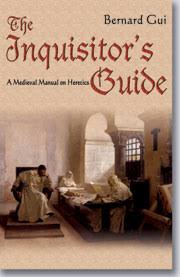
Here’s how such an interrogation might go:
When a heretic is first brought up for examination, he assumes a confident air, as though secure in his innocence. I ask him why he has been brought before me. He replies, smiling and courteous, “Sir, I would be glad to learn the cause from you.”
Interrogator: You are accused as a heretic, and that you believe and teach otherwise than Holy Church believes.
Accused Heretic: (Raising his eyes to heaven, with an air of the greatest faith) Lord, thou knowest that I am innocent of this, and that I never held any faith other than that of true Christianity.
Interrogator: You call your faith Christian, for you consider ours as false and heretical. But I ask whether you have ever believed as true another faith than that which the Roman Church holds to be true?
Accused Heretic: I believe the true faith which the Roman Church believes, and which you openly preach to us.
Interrogator: Perhaps you have some of your sect at Rome whom you call the Roman Church. I, when I preach, say many things, some of which are common to us both, as that God liveth, and you believe some of what I preach. Nevertheless you may be a heretic in not believing other matters which are to be believed.
Accused Heretic: I believe all things that a Christian should believe.
Interrogator: I know your tricks….But we waste time in this fencing. Say simply, Do you believe in one God the Father, and the Son, and the Holy Ghost?
Accused Heretic: I believe.
Interrogator: Do you believe in Christ born of the Virgin, suffered, risen, and ascended to heaven?
Accused Heretic: (Briskly) I believe.
Interrogator: Do you believe the bread and wine in the mass performed by the priests to be changed into the body and blood of Christ by divine virtue?
Accused Heretic: Ought I not to believe this?
Interrogator: I don’t ask if you ought to believe, but if you do believe.
Accused Heretic: I believe whatever you and other good doctors order me to believe.
Inquisitor: Those good doctors are the masters of your sect; if I accord with them you believe with me; if not, not.
Accused Heretic: I willingly believe with you if you teach what is good to me.
Inquisitor: You consider it good to you if I teach what your other masters teach. Say, then, do you believe the body of our Lord, Jesus Christ to be in the altar?
Accused Heretic: (Promptly) I believe that a body is there, and that all bodies are of our Lord.
Interrogator: I ask whether the body there is of the Lord who was born of the Virgin, hung on the cross, arose from the dead, ascended, etc.
Accused Heretic: And you, sir, do you not believe it?
Interrogator: I believe it wholly.
Accused Heretic: I believe likewise.
Men like Bernard Gui—and Franklin Graham—do not seek a golden future. They crave to return to a “golden” past—which includes the power Christians once held to forcibly impose their religious beliefs on others.
Among those slated for forced conversions by the Religious Right:
- Atheists
- Jews
- Women
- Homosexuals
- Lesbians
- Non-Christians
- Liberals
To gain absolute secular power over the lives of their fellow Americans, the Religious Right will support any candidate, no matter how morally despicable.
During the 2016 Presidential race, evangelicals—and their leaders such as Franklin Graham and Jerry Falwell, Jr.—fervently supported Donald Trump, despite:
- His being twice divorced;
- His multiple affairs (including one with porn star Stormy Daniels);
- His documented ties to Russian oligarchs and Mafia chieftains;
- His viciousness, greed, lying and egomania.
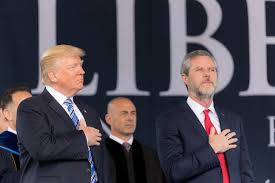
Donald Trump and Jerry Falwell, Jr., at Liberty University
And they continue to fervently support him.
They expect Trump to sponsor legislation that will—-by force of law—make their brand of Christianity supreme above all other religions.
Legislation such as The Religious Freedom Restoration Act.
This was signed into law on March 26, 2015, by Mike Pence, then Governor of Indiana.
This allows any individual or corporation to cite its religious beliefs as a defense when sued by a private party.
Officially, its intent is to prevent the government from forcing business owners to violate their religious beliefs.
Unofficially, its intent is to appease the hatred of gays and lesbians by the religious Right, a key constituency of the Republican party.
Thus, a bakery that doesn’t want to make a cake for a gay wedding or a restaurant that doesn’t want to serve lesbian patrons now has the legal right to refuse to do so.
And a hospital can legally turn away a gay patient if it wants to.
Islamic countries are notorious for their persecution of non-Muslims. Now the Religious Right wants to impose its own version of sharia law on American citizens.
2012 PRESIDENTIAL RACE, 2016 PRESIDENTIAL RACE, ABC NEWS, ADULTERY, ALTERNET, AMERICABLOG, AP, ATHEISTS, BABY BOOMER RESISTANCE, BARACK OBAMA, BBC, BIBLE, BILL MAHER, BIRTH CONTROL, BLOOMBERG NEWS, BUZZFEED, CATHOLICS, CBS NEWS, CIVIL LIBERTIES, CNN, CROOKS AND LIARS, DAILY KOZ, DONALD TRUMP, ELEANOR ROOSEVELT, FACEBOOK, FIVETHIRTYEIGHT, FRANKLIN GRAHAM, HARPER’S MAGAZINE, HOMOSEXUALITY, HOMOSEXUALS, HUFFINGTON POST, ISLAM, JERRY FALWELL JR., JESUS CHRIST, JEWS, LESBIANS, LIBERALS, MEDIA MATTERS, MIKE PENCE, MITT ROMNEY, MOTHER JONES, MOVEON, MSNBC, MUSLIMS, NBC NEWS, NEW REPUBLIC, NEWSDAY, NEWSWEEK, NEWT GINGRICH, NON-CHRISTIANS, NPR, PBS NEWSHOUR, POLITICO, POLITICUSUSA, RAW STORY, RELIGION, RELIGIOUS FREEDOM RESTORATION ACT, REPUBLICAN PARTY, REUTERS, RICHARD FEYNMAN, RICK SANTORUM, SALON, SAUDI ARABIA, SCIENCE, SEATTLE TIMES, SLATE, SLAVERY, SPANISH INQUISITION, STORMY DANIELS, SUPREME COURT, TALKING POINTS MEMO, TEA PARTY, THE ATLANTIC, THE CHICAGO SUN-TIMES, THE CHICAGO TRIBUNE, THE DAILY BEAST, THE DAILY BLOG, THE GUARDIAN, THE HILL, THE HUFFINGTON POST, THE LOS ANGELES TIMES, THE NATION, THE NEW REPUBLIC, THE NEW YORK TIMES, THE NEW YORKER, THE VILLAGE VOICE, THE WALL STREET JOURNAL, THE WASHINGTON POST, THEOLOGY, THINKPROGRESS, TIME, TOMAS DE TORQUEMADA, TRUTHDIG, TRUTHOUT, TWITTER, TWO POLITICAL JUNKIES, U.S. NEWS & WORLD REPORT, UPI, USA TODAY, WAR, WOMEN, WONKETTE
In Bureaucracy, History, Law, Law Enforcement, Military, Politics, RELIGION, Social commentary on September 8, 2021 at 12:06 am
American Right-wing elements relentlessly claimed that President Barack Obama was waging “a war on religion.”
GOP candidates like Rick Santorum, Newt Gingrich and Mitt Romney intended to make this a major theme of their respective campaigns for President.
Obama supported a woman’s right
- to obtain abortion—including in cases of rape and incest;
- to obtain birth control; and
- to obtain amniocentesis (pre-natal testing).
By promoting women’s rights, Obama was “waging a war against religion”—according to American fascists.”
Since access to such medical procedures as birth control and pre-natal testing has long been entirely legal, what’s all the fuss about?
It’s simple: The Right is not waging a “war for religious liberty.”
It’s waging a bitter struggle to establish a government that uses force or the threat of it to impose reactionary religious beliefs on religionists who do not share such religious beliefs.
And on atheists or agnostics, who share none at all.
These Rightists and their theocratic allies have less in common with Jesus Christ than with Tomas de Torquemada (1420 – 1498), the infamous Grand Inquisitor of the Spanish Inquisition.
Christ never ordered the torture or death of anyone. Torquemada—claiming to act in “defense” of the Roman Catholic Church—presided over the deaths of at least 2,000 “heretics.”

Tomas de Torquemada
Nor did these unfortunate victims of religious fanaticism meet their death quickly or painlessly. They died by perhaps the cruelest means possible—by being burned alive at the stake.
Torquemada didn’t hesitate to pronounce someone a heretic. He “knew” who such people were. They were Jews, Muslims, atheists. They were “lapsed Catholics” who, in his view, failed to show fervent devotion to the religious authorities—like himself—who tyrannically ruled their lives.
For such people, Torquemada believed, the only road to salvation lay in being “cleansed” of their sins. And nothing burns away impurities like fire.
But before the fire-stakes came the fire-mindset: The arrogance of “knowing” who qualified as “saved” and who would be forever “damned.”
Unless, of course, his or her soul had been “purified” by fire.
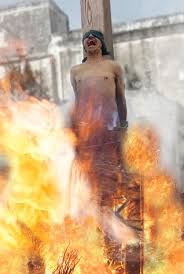
“Heretic” burned at the stake
Fundamentalist Christians can no longer sentence “heretics” to the stake.
But the mindset that ruled the Spanish Inquisition has not disappeared. It has been vividly displayed by no less a religious authority than Franklin Graham, son of America’s most famous preacher, Billy Graham.

Franklin Graham
Appearing on the MSNBC program, “Morning Joe,” on February 21, 2012, Graham was asked if he thought that Barack Obama, Rick Santorum, Newt Gingrich and Mitt Romney qualified as Christians.
On Obama: “Islam sees him as a son of Islam… I can’t say categorically that [Obama is not Muslim] because Islam has gotten a free pass under Obama.”
On Santorum: “I think so. His values are so clear on moral issues. No question about it… I think he’s a man of faith.”
On Gingrich: “I think Newt Gingrich is a Christian, at least he told me he is.”
On Romney: “Most Christians would not recognize Mormons as part of the Christian faith. They believe in Jesus Christ. They have a lot of other things they believe in too, that we don’t accept, theologically.”
Thus, Graham pronounced as “saved” a notorious multiple-adulterer like Gingrich. He also gave a pass to Santorum, who married a woman who had lived “in sin” with an abortionist for six years.
But he unhesitatingly damned a longtime churchgoer like Obama or a devout Mormon like Romney (whose faith, most evangelicals like Graham believe, is actually a non-Christian cult).
Six years later, in 2018, Graham defended President Donald Trump, a notorious womanizer and multiple-adulterer, against charges that, in 2006, he had slept with porn star Stormy Daniels.
“I believe at 70 years of age the president is a much different person today than he was four years ago, five years ago, 10 years ago. He is not President Perfect.”
This differs greatly from his position on President Bill Clinton’s affair with Monica Lewinsky: “If he will lie to or mislead his wife and daughter, those with whom he is most intimate, what will prevent him from doing the same to the American public?”
It’s easy to imagine Graham transported to the French city of Toulouse in the 14th century. And to imagine him wearing the robes of Bernardo Gui, the chief inquisitor of the Dominican Order during the Medieval Inquisition (1184 – 1230s).
Gui closely studied the best methods for interrogating “heretics.” He set forth his findings in his most important and famous work, Practica Inquisitionis Heretice Pravitatis. or “Conduct of the Inquisition into Heretical Wickedness.”
In this, he offered a vivid example of how such an interrogation might go. The following is taken from that manual:
When a heretic is first brought up for examination, he assumes a confident air, as though secure in his innocence. I ask him why he has been brought before me. He replies, smiling and courteous, “Sir, I would be glad to learn the cause from you.”
This is not a dialogue between equals. The Inquisitor literally holds the power of life or agonizing death over the man or woman he is interrogating.
2012 PRESIDENTIAL RACE, 2016 PRESIDENTIAL RACE, ABC NEWS, ADULTERY, ALTERNET, AMERICABLOG, AP, ATHEISTS, BABY BOOMER RESISTANCE, BARACK OBAMA, BBC, BIBLE, BILL MAHER, BIRTH CONTROL, BLOOMBERG NEWS, BUZZFEED, CATHOLICS, CBS NEWS, CIVIL LIBERTIES, CNN, CROOKS AND LIARS, DAILY KOZ, DONALD TRUMP, ELEANOR ROOSEVELT, FACEBOOK, FIVETHIRTYEIGHT, FRANKLIN GRAHAM, HARPER’S MAGAZINE, HOMOSEXUALITY, HOMOSEXUALS, HUFFINGTON POST, ISLAM, JERRY FALWELL JR., JESUS CHRIST, JEWS, LESBIANS, LIBERALS, MEDIA MATTERS, MIKE PENCE, MITT ROMNEY, MOTHER JONES, MOVEON, MSNBC, MUSLIMS, NBC NEWS, NEW REPUBLIC, NEWSDAY, NEWSWEEK, NEWT GINGRICH, NON-CHRISTIANS, NPR, PBS NEWSHOUR, POLITICO, POLITICUSUSA, RAW STORY, RELIGION, RELIGIOUS FREEDOM RESTORATION ACT, REPUBLICAN PARTY, REUTERS, RICHARD FEYNMAN, RICK SANTORUM, SALON, SAUDI ARABIA, SCIENCE, SEATTLE TIMES, SLATE, SLAVERY, SPANISH INQUISITION, STORMY DANIELS, SUPREME COURT, TALKING POINTS MEMO, TEA PARTY, THE ATLANTIC, THE CHICAGO SUN-TIMES, THE CHICAGO TRIBUNE, THE DAILY BEAST, THE DAILY BLOG, THE GUARDIAN, THE HILL, THE HUFFINGTON POST, THE LOS ANGELES TIMES, THE NATION, THE NEW REPUBLIC, THE NEW YORK TIMES, THE NEW YORKER, THE VILLAGE VOICE, THE WALL STREET JOURNAL, THE WASHINGTON POST, THEOLOGY, THINKPROGRESS, TIME, TOMAS DE TORQUEMADA, TRUTHDIG, TRUTHOUT, TWITTER, TWO POLITICAL JUNKIES, U.S. NEWS & WORLD REPORT, UPI, USA TODAY, WAR, WOMEN, WONKETTE
In Bureaucracy, History, Law, Law Enforcement, Military, Politics, RELIGION, Social commentary on September 7, 2021 at 5:07 pm
Hamza Kashgari, a 23-year-old columnist in Saudi Arabia, decided to celebrate the birthday of the Islamic prophet Muhammed in a truly unique way.

Hamza Kashgar
In early February, 2012, he posted on Twitter a series of mock conversations between himself and Muhammad:
“On your birthday, I will say that I have loved the rebel in you, that you’ve always been a source of inspiration to me, and that I do not like the halos of divinity around you. I shall not pray for you.”
“On your birthday, I find you wherever I turn. I will say that I have loved aspects of you, hated others, and could not understand many more.”
“On your birthday, I shall not bow to you. I shall not kiss your hand. Rather, I shall shake it as equals do, and smile at you as you smile at me. I shall speak to you as a friend, no more.”
“No Saudi women will go to hell, because it’s impossible to go there twice.”
The tweets sparked some 30,000 infuriated responses. Many Islamic clerics demanded that he face execution for blasphemy.
Kashgari posted an apology tweet: “I deleted my previous tweets because…I realized that they may have been offensive to the Prophet and I don’t want anyone to misunderstand.”
Soon afterward, Abdullah bin Abdulaziz Al Saud, then King of Saudi Arabia, ordered his arrest.
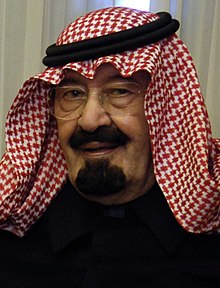
Saudi King King Abdullah
Kashgari fled to Malaysia, another majority-Muslim country. He was quickly arrested by police as he passed through Kuala Lumpur international airport. Three days later, he was deported to Saudi Arabia.
Human rights groups feared that he would be executed for blasphemy, a capitol offense in Saudi Arabia.
After nearly two years in prison, Kashgari was freed on October 29, 2013. Kashgari used Twitter to inform his supporters of his release.
Outrageous? By Western standards, absolutely.
Clearly there is no tolerence in Saudi Arabia for the freedoms of thought and expression that Americans take for granted.
Meanwhile, Right-wing American ayatollahs are working overtime to create just that sort of society—where theocratic despotism rules the most intimate aspects of our lives.
One of these is the former GOP Presidential candidate and U.S. Senator Rick Santorum. In early January, 2012, he said that states should have the right to outlaw birth control without the interference of the Supreme Court.
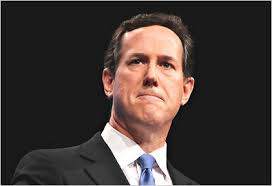
Rick Santorum
In an interview with ABC News, Santorum said he opposed the Supreme Court’s ruling that made birth control legal:
“The state has a right to do that [ban contraception]. I have never questioned that the state has a right to do that. It is not a Constitutional right. The state has the right to pass whatever statutes they have.
“That’s the thing I have said about the activism of the Supreme Court—they are creating rights, and it should be left up to the people to decide.”
In the landmark 1965 decision, Griswold v. Connecticut, the Court struck down a law that made it a crime to sell contraceptives to married couples. The Constitution, ruled the Justices, protected a right to privacy.
Two years later, in Eisenstadt v. Baird, the Court extended Griswold by striking down a law banning the sale of contraceptives to unmarried couples.
Santorum has left no doubt as to where he stands on contraception. On October 19, 2011, he said:
“One of the things I will talk about that no President has talked about before is I think the dangers of contraception in this country, the whole sexual libertine idea. Many in the Christian faith have said, ‘“Well, that’s okay. Contraception’s okay.’
“It’s not okay because it’s a license to do things in the sexual realm that is counter to how things are supposed to be. They’re supposed to be within marriage, they are supposed to be for purposes that are, yes, conjugal, but also…procreative.
“That’s the perfect way that a sexual union should happen. We take any part of that out, we diminish the act….And all of a sudden, it becomes deconstructed to the point where it’s simply pleasure.”
“How things are supposed to be”—according to Right-wing fanatics like Santorum and the evangelicals who support them.
Like the Saudi religious religious zealots who demand the death of a “blasphemer,” they demand that their religious views should govern everyone. That means Jews, Catholics, Islamics, atheists and agnostics.
American Christian fundamentalists and Islamic fundamentalists fervently agree on the following:
- Women should have fewer rights than men.
- Abortion should be illegal.
- There should be no separation between church and state.
- Religion should be taught in school.
- Religious doctrine trumps science.
- Government should be based on religious doctrine.
- Homosexuality should be outlawed.
The important difference—for Americans who value their freedom—is this:
The United States has a Supreme Court that can—and does—overturn laws that threaten civil liberties. Laws that GOP Presidential candidates clearly want to revive and force on those who don’t share their peculiar religious views.
Eleanor Roosevelt once said: “No one can make you feel inferior without your consent.”
The same holds true—in a democracy—for candidates who seek dictatorial power over their fellow citizens. Don’t give them your consent.


 Bureaucracybuster's Blog
2012 PRESIDENTIAL RACE, 2016 PRESIDENTIAL RACE, ABC NEWS, ADULTERY, ALTERNET, AMERICABLOG, AP, ATHEISTS, BABY BOOMER RESISTANCE, BARACK OBAMA, BBC, BIBLE, BILL MAHER, BIRTH CONTROL, BLOOMBERG NEWS, BUZZFEED, CATHOLICS, CBS NEWS, CIVIL LIBERTIES, CNN, CROOKS AND LIARS, DAILY KOZ, DONALD TRUMP, ELEANOR ROOSEVELT, FACEBOOK, FIVETHIRTYEIGHT, FRANKLIN GRAHAM, HARPER’S MAGAZINE, HOMOSEXUALITY, HOMOSEXUALS, HUFFINGTON POST, ISLAM, JERRY FALWELL JR., JESUS CHRIST, JEWS, LESBIANS, LIBERALS, MEDIA MATTERS, MIKE PENCE, MITT ROMNEY, MOTHER JONES, MOVEON, MSNBC, MUSLIMS, NBC NEWS, NEW REPUBLIC, NEWSDAY, NEWSWEEK, NEWT GINGRICH, NON-CHRISTIANS, NPR, PBS NEWSHOUR, POLITICO, POLITICUSUSA, RAW STORY, RELIGION, RELIGIOUS FREEDOM RESTORATION ACT, REPUBLICAN PARTY, REUTERS, RICHARD FEYNMAN, RICK SANTORUM, SALON, SAUDI ARABIA, SCIENCE, SEATTLE TIMES, SLATE, SLAVERY, SPANISH INQUISITION, STORMY DANIELS, SUPREME COURT, TALKING POINTS MEMO, TEA PARTY, THE ATLANTIC, THE CHICAGO SUN-TIMES, THE CHICAGO TRIBUNE, THE DAILY BEAST, THE DAILY BLOG, THE GUARDIAN, THE HILL, THE HUFFINGTON POST, THE LOS ANGELES TIMES, THE NATION, THE NEW REPUBLIC, THE NEW YORK TIMES, THE NEW YORKER, THE VILLAGE VOICE, THE WALL STREET JOURNAL, THE WASHINGTON POST, THEOLOGY, THINKPROGRESS, TIME, TOMAS DE TORQUEMADA, TRUTHDIG, TRUTHOUT, TWITTER, TWO POLITICAL JUNKIES, U.S. NEWS & WORLD REPORT, UPI, USA TODAY, WAR, WOMEN, WONKETTE
WHAT A BIBLE-BASED AGENDA FOR AMERICA WOULD MEAN
In Bureaucracy, History, Law, Law Enforcement, Military, Politics, RELIGION, Social commentary on November 11, 2021 at 12:07 amOn February 18, 2012, Republican Presidential candidate Rick Santorum warned about the “phony theology” of President Barack Obama.
“It’s not about you,” Santorum told supporters of the Right-wing Tea Party in Columbus, Ohio. “It’s not about your quality of life. It’s not about your jobs.
“It’s about some phony ideal. Some phony theology. Oh, not a theology based on the Bible. A different theology.”
What would a Bible-based agenda mean for the country?
The death penalty would be vastly expanded to cover such “crimes” as:
A modern-day stoning–in Somalia
The Thirteenth Amendment to the Constitution—which forbids slavery—would be repealed.
The Bible not only permits slavery but lays out rules for its practice—such as:
Almost all scientific progress would be discarded, since most of its findings conflict with the Bible:
The sun
Laws guaranteeing equal rights for women would be repealed:
Military conflicts would be fought without regard to the Geneva Convention—as the Israelites did:
Depiction of the taking of Jericho by the Israelites
* * * * *
Yes, a nation governed by “a theology based on the Bible” would be one far different from the United States we know today.
Since a number of Old Testament practices might lend themselves to easy abuse, this is not a matter to be taken lightly.
Share this: