Posts Tagged ‘NAZI GERMANY’
ABC NEWS, ADOLF HITLER, ANTISEMITISM, ARIZONA, BIRTH CONTROL, CBS NEWS, CNN, DISCRIMINATION, FACEBOOK, GAYS, JEWS, MARRIAGE, MUHAMMAD, NAZI GERMANY, NBC NEWS, NUREMBERG LAWS, REPUBLICAN PARTY, RICH SANTORUM, SAME-SEX MARRIAGE, SAUDI ARABIA, SPANISH INQUISITION, SUPREME COURT, THE LOS ANGELES TIMES, THE NEW YORK TIMES, THE WASHINGTON POST, TOMAS DE TORQUEMADA, TWITTER
In Bureaucracy, History, Law, Politics, Social commentary on February 25, 2014 at 11:20 am
Hamza Kashgari, a 23-year-old columnist in Saudi Arabia, decided to celebrate the birthday of the Islamic prophet Muhammed in a truly unique way.
In February, 2012, he posted on Twitter a series of mock conversations between himself and Muhammad:
“On your birthday, I will say that I have loved the rebel in you, that you’ve always been a source of inspiration to me, and that I do not like the halos of divinity around you. I shall not pray for you.”
“On your birthday, I find you wherever I turn. I will say that I have loved aspects of you, hated others, and could not understand many more.”
“On your birthday, I shall not bow to you. I shall not kiss your hand. Rather, I shall shake it as equals do, and smile at you as you smile at me. I shall speak to you as a friend, no more.”
“No Saudi women will go to hell, because it’s impossible to go there twice.”
The tweets sparked some 30,000 infuriated responses. Many Islamic clerics demanded that he face execution for blasphemy.
Kashgari posted an apology tweet: “I deleted my previous tweets because…I realized that they may have been offensive to the Prophet and I don’t want anyone to misunderstand.”
Soon afterward, King Abdullah ordered his arrest.
Kashgari served a prison sentence until October, 2013, when he was released.
Outrageous? By Western standards, absolutely.
Clearly there is no tolerence in Saudi Arabia for the freedoms of thought and expression that Americans take for granted.
But before you say, “Religious oppression like that could never happen in the United States,” think again.
Right-wing American ayatollahs are now working overtime to create just that sort of society–where theocratic despotism rules the most intimate aspects of our lives.
One of these ayatollahs was/is GOP Presidential candidate and former U.S. Senator Rick Santorum. In early January, 2012, he said that states should have the right to outlaw birth control without the interference of the Supreme Court.
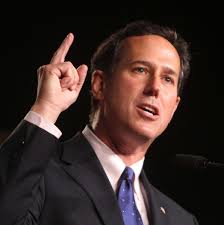
Rick Santorum
In an interview with ABC News, Santorum said he opposed the Supreme Court’s ruling that made birth control legal:
“The state has a right to do that [ban contraception]. I have never questioned that the state has a right to do that. It is not a Constitutional right. The state has the right to pass whatever statutes they have.
“That’s the thing I have said about the activism of the Supreme Court–they are creating rights, and it should be left up to the people to decide.”
In the landmark 1965 decision, Griswold v. Connecticut, the Court struck down a law that made it a crime to sell contraceptives to married couples. The Constitution, ruled the Justices, protected a right to privacy.
Two years later, in Eisenstadt v. Baird, the Court extended Griswold by striking down a law banning the sale of contraceptives to unmarried couples.
Santorum has left no doubt as to where he stands on contraception. On October 19, 2011, he said:
“One of the things I will talk about that no President has talked about before is I think the dangers of contraception in this country, the whole sexual libertine idea. Many in the Christian faith have said, ‘“Well, that’s okay. Contraception’s okay.’
“It’s not okay because it’s a license to do things in the sexual realm that is counter to how things are supposed to be. They’re supposed to be within marriage, they are supposed to be for purposes that are, yes, conjugal, but also…procreative.”
“How things are supposed to be”–according to right-wing fanatics like Santorum and the evangelicals who support him.
Like the Saudi religious religious zealots who demand the death of a “blasphemer,” they demand that their religious views should govern everyone. Both groups have far more in common than they want to admit.
The important difference–for Americans who value their freedom–is this:
The United States has a Supreme Court that can–and does–overturn laws that threaten civil liberties. Laws that GOP legislators–such as those in Arizona–clearly want to force on those who don’t share their peculiar religious views.
The Right is not waging a “war for religious liberty.”
It’s waging a bitter struggle to establish a government that uses force or the threat of it to impose highly conservative religious beliefs on those who do not share such religious beliefs.
And on atheists or agnostics, who share none at all.
These Rightists and their theocratic allies have more in common with Tomas de Torquemada (1420 – 1498) the infamous Grand Inquisitor of the Spanish Inquisition, than with Jesus Christ.

Tomas de Torquemada
Christ never ordered the torture or death of anyone. Torquemada–claiming to act in “defense” of the Roman Catholic Church–presided over the deaths of at least 2,000 “heretics.”
For such people, Torquemada believed, the only road to salvation lay in being “cleansed” of their sins. And nothing burns away impurities like fire.

Men like Torquemada and the anti-gay legislators of Arizona do not seek a golden future.
They crave to return to a “golden” past–which includes the one-time power of Christians to forcefully impose their religious beliefs on others.
ABC NEWS, ADOLF HITLER, ANTISEMITISM, ARIZONA, CBS NEWS, CNN, DISCRIMINATION, FACEBOOK, GAYS, JEWS, NAZI GERMANY, NBC NEWS, NUREMBERG LAWS, REPUBLICAN PARTY, THE LOS ANGELES TIMES, THE NEW YORK TIMES, THE WASHINGTON POST, TWITTER
In Bureaucracy, History, Law, Politics, Social commentary on February 24, 2014 at 6:08 pm
One party, just one, not both, not together, just one, is the party that seeks to judge others, limit access to goods/services and promote hate in America.
The reasons behind this bill are no different than the Jim Crow laws of the 60s and other acts of bigotry. If you vote Republican, this is you and your party across the nation.
–Scott Ackeridge
Scott Ackeridge wasn’t referring to the Nazi Party. But he could have been.
On September 15, 1935, the Nazis–who had taken power in Germany in 1933–introduced a series of anti-Semetic laws at their annual Nuremberg rally.
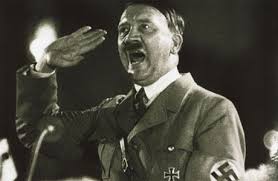
Adolf Hitler addressing a Nuremberg Rally of the Nazi Party
Under the Nuremberg laws:
- Marriages between Jews and German citizens were forbidden.
- Extramarital relations between Jews and German citizens were forbidden.
- Jews were forbidden to employ female German citizens under the age of 45 as domestic workers.
- Jews were banned from employment as attorneys, doctors or journalists.
- Jews were forbidden to use state hospitals.
- Jews could not be educated by the state past the age of 14.
- Jews were forbidden to enter public libraries, parks and beaches.
- The names of Jewish soldiers were to be expunged from war memorials.
With anti-Semitism now codified in German law, the foundations for the coming Holocaust were firmly laid.
Now, fast-forward to February 20, 2014.
The Republican-dominated Arizona legislature sends a bill to Republican Governor Jan Brewer that:
- Allows business owners to turn away gay and lesbian customers.
- Allows employers to deny equal pay to women.
- Allows individuals to renege on contract obligations.
All of these will be legally allowed–so long as “sincere religious belief” is claimed as the reason.
House Bill 2153/Senate Bill 1062 was written by the right-wing advocacy group Center for Arizona Policy and the Christian legal organization, Alliance Defending Freedom.
Specifically, the legislation proposes to:
- Expand the state’s definition of the exercise of religion to include both the practice and observance of religion.
- Allow someone to assert a legal claim of free exercise of religion regardless of whether the government is a party to the proceedings.
- Expand those protected under the state’s free-exercise-of-religion law to “any individual, association, partnership, corporation, church, religious assembly or institution or other business organization.”
- Allows any business, church or person to cite the law as a defense in any action brought by the government or individual claiming discrimination.
- Allows the business or person to seek an injunction once they show their actions are based on a sincere religious belief and the claim places a burden on the exercise of religion.
Advocates often cited the case of a New Mexico wedding photographer who was sued after refusing to take photos of a same-sex couople’s commitment ceremony due to the photographer’s religious beliefs.
“We are trying to protect people’s religious liberties,” said Representative Steve Montenegro, R-Litchfield Park.
“We don’t want the government coming in and forcing someone to act against their religious sacred faith beliefs or having to sell out if you are a small-business owner.”

Arizona Representative Steve Montenegro
But opponents say the law would:
- Protect a corporation that refuses to hire anyone who isn’t a Christian; and
- Block gays and lesbians from access to nearly any business or service–including fire and police.
“The message that’s interpreted is: We want you to work here, but we are not going to go out of our way to protect you, to protect your rights, to protect your family,” said Representative Ruben Gallego, D-Phoenix.
Similar anti-gay legislation has been introduced by Republicans in other states:
- In Kansas, lawmakers voted to exempt individuals from providing any service that was “contrary to their sincerely held religious beliefs.”
- That bill passed the state’s House chamber on February 11, triggering national backlash. It has since stalled in the Senate and is not expected to advance this year.
- In January, South Dakota Republicans introduced a bill to allow businesses refuse to serve same-sex couples on the grounds that “businesses are private and that their views on sexual orientation are protected to the same extent as the views of private citizens.”
- The bill–which was killed in February–would have made it illegal for a gay person to file a lawsuit charging discrimination.
- A ballot initiative in Oregon would let business owners refuse to serve same-sex couples “if doing so would violate a person’s deeply held religious beliefs.”
- The initiative could be voted on this year.
Ironically, many Right-wingers who support the right of Christians to discriminate fear that they will become victims of religious persecution if Islamic Sharia law comes to the United States.
ABC NEWS, ADOLF HITLER, ARIZONA, BENITO MUSSOLINI, CBS NEWS, CHRIS MATTHEWS, CNN, FACEBOOK, FASCISM, HARDBALL, ITALY, JOE ARPAIO, JOE THE PLUMBER, JOE WALSH, MSNBC, NAZI GERMANY, NBC NEWS, THE LOS ANGELES TIMES, THE NEW YORK TIMES, THE WASHINGTON POST, TWITTER
In History, Politics, Social commentary on January 31, 2014 at 4:19 am
It seems so long ago now.
Eighty-one years ago–on January 30, 1933–Adolf Hitler became Chancellor of Nazi Germany.
Six years later, on September 1, 1939, he ordered the invasion of Poland–and inintentionally ignited World War II.
Six years later, on April 30, 1945–in a war-ravaged Nazi Germany and facing certain defeat–Hitler shot himself in an underground bunker.
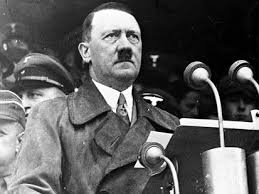
Adolf Hitler
But Hitler may be having the last laugh after all. His methods and goals are very much alive and flourishing–among the Americans who once drove literally drove him into the earth.
If you doubt it, consider the following from MSNBC’s “Hardball With Chris Matthews” for August 15, 2012:
MATTHEWS: Here is a group of less than average Joes. Joe the Plumber [Samuel Joseph Wurzelbacher], Sheriff Joe Arpaio of [Maricopa County] Arizona, and [Illinois Congressman] Joe Walsh all spew insanity. But rarely do they go back to back to back.
Well, first up, you have Joe the plumber telling an Arizona Republican fund-raiser that he wasn’t worried about being politically correct. He was going to tell it like it is. The way to protect the border, he says, is to build a fence and then start shooting.

Samuel Joseph “Joe the Plumber” Wurzelbacher
At that same fund-raiser, Sheriff Joe Arpaio…said his investigation [into] the president’s birth certificate is proceeding and [he] is convinced the document from Honolulu is a fraud.

Sheriff Joe Arpaio
And a few days earlier, Tea Party favorite Joe Walsh told a town hall audience in Illinois there were radical Islamists in the Chicago suburbs trying to kill Americans every week.

Congressman Joe Walsh
What do these Joes have in common? They [are] all trying to be as incendiary as possible and they all succeeded.
Turning to David Cantanese, a reporter for Politico, Matthews says:
MATTHEWS: These are heroes in the Republican culture. These are people like Donald Trump, he knows how to make money as least. They love these people, David. They’re the heroes.
DAVID CATANESE, POLITICO: I would actually put Joe Walsh in a bit of a different category….I think he’s a true believer.
This is a guy who says things on the record that most politicians would never do off the record. And again, he is an elected congressman in a very tough race. When he says something, I think he believes it.
I think…the Plumber and the sheriff are more showmen. They’ve got books to hawk. Joe the Plumber was revealed that he gets paid sometimes to go into these congressional districts.
Remember, Joe the Plumber is a congressional candidate running in Ohio, what is he doing in Arizona if he really wants to win that race? You know, it was revealed after her endorsed Herman Cain last year, Herman Cain campaign paid him $10,000.
MATTHEWS: We’ll skip ahead to Joe Walsh and what he’s been saying. He’s an elected an official, a United States congressman.
Let’s hear what he has to say about the near threat of radical Islam in this country.
REP. JOE WALSH (R), ILLINOIS: In this country, it’s not just over there, trying to kill Americans every week. It is a real threat. And it is a threat that is much more at home now than it was right after 9/11. It’s here. I’s in Elk Grove, it’s in Addison, it’s in Elgin. It’s here.
MATTHEWS: The specificity of this insanity, I guess it`s the old Joe McCarthy trick. The more specific you sound, the more credible you are. If you give a lot of details about the near threat of Islamic terrorism in this country plotting against us as a real threat — I guess it rings true to those people watching his pointer there as if he was the mad professor.
Well, there’s one common thing here. There’s a common thread in this insanity and it’s racial and ethnic. I mean, they go after people, Mexican-American, and other people who have come here to this country from Latin America, South America, they attack them. That’s Joe the Plumber.
Arpaio does the same thing. He’s going after the president because he’s African-American, go after his birth certificate. Let’s face it, he wouldn’t do it to a white guy.
* * * * *
Candidates like Joe Walsh, Joe Arpaio and “Joe the Plumber” (who isn’t a licensed plumber) don’t get on the ballot by accident.
They do so through the support of men and women whose hates and resentments they share–and exploit.
These voters are seeking a representative who will inflict their hatreds onto those they despise.
Adolf Hitler, for example, did not create anti-Semitism in Germany. He simply shared it–and exploited this poisonous hatred within his audiences to attain political power.
Postwar Germany, however, had an advantage that America now lacks.
The United States was determined to root out Nazism among the Germans. And, to a large extent, it succeeded: Germany today is a far different country from the one Hitler ruled.
But who will exorcise America’s own Fascistic elements?
9/11 ATTACKS, ABC NEWS, ADOLF HITLER, AFGHANISTAN, AL QAEDA, BARACK OBANA, BARCK OBAMA, BASHAR AL-ASSAD, CARL VON CLAUSEWITZ, CARLOS THE JACKAL, CBS NEWS, CHEMICAL WEAPONS, CHINA, CNN, CONGRESS, EGYPT, FACEBOOK, HARRY S. TRUMAN, HARRY TRUMAN, IRAN, IRAQ, ISLAM, ISRAEL, KORAN, MUSLIMS, NAZI GERMANY, NBC NEWS, OSAMA BIN LADEN, RUSSIA, SADDAM HUSSEIN, SOVIET UNION, SYRIA, TALIBAN, TERRORISM, THE LOS ANGELES TIMES, THE NEW YORK TIMES, THE WASHINGTON POST, TWITTER, UNITED NATIONS, WEAPONS OF MASS DESTRUCTION, WORLD WAR 1
In History, Military, Politics on January 7, 2014 at 12:15 am
Here’s another reason to welcome the coming of the New Year:
Al-Qaeda and Hezbollah have gone to war–with each other.

Al-Qaeda terrorists–now taking aim at Hezbollah terrorists
This is an event the United States could not have predicted or instigated. But it is definitely one in which Americans can take hope.
In Part One, two of those reasons were outlined. Here are the remaining eight:
Third, the United States is still fighting a brutal war in Afghanistan. By early 2012, the United States had about 90,000 troops in Afghanistan, with 22,000 of them due home by the fall.
There has been no schedule set for the pace of the withdrawal of the 68,000 American troops who will remain, only that all are to be out by the end of 2014.
The initial goal of this war was to quickly destroy Al Qaeda–especially its leader, Osama Bin Laden–and its Taliban protectors.
But, over time, Washington policy-makers embarked on a “nation-building” effort. And U.S. forces wound up occupying the country for the next ten years.
This increasingly brought them into conflict with primitive, xenophobic Afghans, whose mindset remains that of the sixth century.
On February 21, 2013, protests erupted throughout Afghanistan as reports emerged that NATO personnel at Bagram Air Base had burned copies of the Koran.
The books had been confiscated from suspected insurgents and inadvertently marked for incineration.
The incident sparked rabid anti-American demonstrations. At least 30 people, including four American troops, were killed, and many were wounded.
Two American military officers were murdered by a trusted member of the Afghan military.
As a result, American forces no longer trust their “brothers” in the Afghan army to stand shoulder-to-shoulder with them against the Taliban.
One American officer stated that he would no longer meet with his Afghan counterparts unless there were five armed U.S. troops in the same room.
Fourth, intervening in Syria could produce similar unintended consequences for American forces–and make the United States a target for more Islamic terrorism.
Fifth, since 1979, Syria has been listed by the U.S. State Department as a sponsor of terrorism. Among the terrorist groups it supports are Hezbollah and Hamas.
For many years, Syria provided a safe-house in Damascus to Ilich Ramírez Sánchez–the notorious terrorist better known as Carlos the Jackal.
Sixth, according to U.S. defense reports, Syria has weapons of mass destruction–and the ballistic missiles to deliver them. Syria has an active chemical weapons program, including significant reserves of the deadly nerve agent sarin.
The recent destruction of much of Syria’s WMD stockpile–at the demand of President Barack Obama–doesn’t erase its ability to create more. And this is likely to re-occur as soon as the United States becomes preoccupied with other concerns.
Seventh, the United States had no part in creating the Assad regime. Thus, Americans have no moral obligation to support those Syrians trying to overthrow it.
Eighth, China and Russia are fully supporting the Assad dictatorship–and the brutalities it commits against its own citizens. This reflects badly on them–not the United States. America should focus world outrage against these longtime Communist dictatorships for propping up another one.
Ninth, the United States could find itself in a shooting war with Russia and/or China.
The Russians sent two warships to Syria in 2013 in response to President Obama’s threat to “punish” Assad for using chemical weapons against insurgents.
What happens if American and Russian warships start trading salvos? Or if Russian President Vladimir Putin orders an attack on Israel, in return for America’s attack on Russia’s ally, Syria?
It was exactly that scenario–Great Powers going to war over conflicts between their small-state allies–that triggered World War l.
Tenth, while Islamic nations like Syria and Egypt wage war within their own borders, they will lack the resources–and incentive–to launch attacks against the United States.
Every dead Hezbollah and Al-Qaeda member makes the United States that much safer. Every dead supporter of Hezbollah or Al-Qaeda makes the United States that much safer.
The peoples of the Middle East have long memories for those who commit brutalities against them. In their veins, the cult of the blood feud runs deep.

When Al-Qaeda blows up civilians in Beirut, it’s certain that their relatives will urge Hezbollah to take brutal revenge. And it’s equally certain that Hezbollah will do so.
Similarly, when Hezbollah does, those who support Al-Qaeda will demand even more brutal reprisals against Hezbollah.
No American could instill such hatred in Al-Qaeda for Hezbollah–or vice versa. This is entirely a war of religious and sectarian hatred.
This conflict could easily become the Islamic equivalent of “the Hundred Years’ War” that raged from 1337 to 1453 between England and France.
When Adolf Hitler invaded the Soviet Union in 1941, then-Senator Harry Truman said: “I hope the Russians kill lots of Nazis and vice versa.”
That should be America’s view whenever its sworn enemies start killing off each other. Americans should welcome such self-slaughters, not become entrapped in them.
ABC NEWS, AFGHANISTAN, AL QAEDA, BARACK OBANA, BASHAR AL-ASSAD, BENJAMIN NETANYAHU, CARLOS THE JACKAL, CBS NEWS, CHINA, CNN, CONGRESS, EGYPT, FACEBOOK, HARRY S. TRUMAN, HEZBOLLAH, IRAN, IRAQ, IRAQ WAR, ISLAM, ISRAEL, KORAN, NAZI GERMANY, NBC NEWS, OSAMA BIN LADEN, PRESIDENT BARACK OBAMA, RUSSIA, SADDAM HUSSEIN, SHIA MUSLIMS, SOVIET UNION, SUNNI MUSLIMS, SYRIA, TALIBAN, TERRORISM, THE LOS ANGELES TIMES, THE NEW YORK TIMES, THE WASHINGTON POST, TWITTER, UNITED NATIONS, WEAPONS OF MASS DESTRUCTION
In History, Military, Politics on January 6, 2014 at 12:37 am
Sometimes your worst enemies aid you in ways you could never help yourself.
From July 10 to October 31, 1940, hundreds of badly-outnumbered pilots of the British Royal Air Force (RAF) fought off relentless attacks by Germany’s feared Luftwaffe.
For Germany’s Fuhrer, Adolf Hitler, it was a major setback.
He was forced to concede that he lacked the strength to destroy the British air force–thus making it possible for his navy to land German troop on English soil.
But Hitler wasn’t prepared to give up. He believed he could so terrorize Britons that they would demand that their government submit to German surrender demands.
From September 7, 1940 to May 21, 1941, the Luftwaffe subjected England–and especially London–to a ruthless bombing campaign that became known as The Blitz.
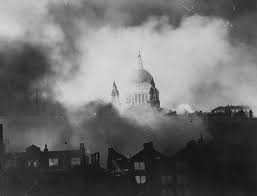
The undamaged St. Paul’s Cathredal, December, 1940
More than 100 tons of high explosives were dropped on 16 British cities. During 267 days (almost 37 weeks):
- London was attacked 71 times;
- Birmingham, Plymouth and Liverpool were attacked eight times;
- Bristol was attacked six times; Glasgow, five; Southampton four; and
- There was also at least one large raid on another eight cities.
Between 40,000 and 43,000 British civilians were killed. About 139,000 others were wounded.
“London can take it” went the British slogan. But, in the United States, Americans–including President Franklin D. Roosevelt–wondered: For how much longer?
Clearly, what Great Britain desperately needed most was a miracle.
Exactly that happened on June 22, 1941.
With 134 Divisions at full fighting strength and 73 more divisions for deployment behind the front, the German Wehrmacht invaded the Soviet Union.

German tank commander
Joseph Stalin, the longtime Soviet dictator, was stunned. The invasion had come less than two years after Germany had signed a non-aggression pact with the Soviet Union.
Hitler had turned on his partner-in-crime. The two dictators had greedily split Poland between them when Hitler launched his invasion on September 1, 1939.
Now they were locked in a fight to the death.
People in England were also surprised–but also suddenly hopeful. Britain now had an ally whose resources might tip the balance against Hitler.
In the United States, then-Senator Harry S. Truman spoke for many Americans when he said: “I hope the Russians kill lots of Nazis and vice versa.”
Today the United States faces just such an opportunity.
In Syria, two of America’s most deadly enemies are now waging war–with each other.
Yes, it’s Hezbollah (Party of God) vs. Al-Qaeda (The Base).
United Nations officials estimate that more than 70,000 people have died in Syria’s civil war since conflict began on March 15, 2011. The trigger: Protests demanding political reforms and the ouster of dictator Bashar al-Assad.
Hezbollah is comprised of Shiite Muslims, who form a minority of Islamics. A sworn enemy of Israel, it has kidnapped scores of Americans suicidal enough to visit Lebanon and truck-bombed the Marine Barracks in Beirut in 1983, killing 299 Americans.

Flag of Hezbollah
Al-Qaeda, on the other hand, is made up of Sunni Muslims, who form the majority of that religion. It is intolerent of non-Sunni Muslims and has instigated violence against them. It denounces them as “takfirs”–heretics–and thus worthy of extermination.
Al-Qaeda has attacked the mosques and gatherings of liberal Muslims, Shias, Sufis and other non-Sunnis. Examples of sectarian attacks include the Sadr City bombings, the 2004 Ashoura massacre and the April, 2007 Baghdad bombings.

Flag of Al-Qaeda
On one side is the Ba’ath regime of Bashir al-Assad, whose allies include Russia, Iran, Hezbullah, and elements in the Iraqi government.
On the other side are a host of Syrians and thousands of foreign Sunni fighters some of whom have affiliated with Al-Qaeda.
And now that civil war has spread into neighborhing Lebanon.
On January 2, at least four people were killed and 77 injured when a car bomb exploded in a residential neighborhood in southern Beirut.
The Shiite-dominated district, Haret Hreik, is known as a Hezbollah stronghold.
Two days later, an Al-Qaeda linked group claimed responsibility for the attack.
At a press conference for President Barack Obama on March 20, 2013, a reporter asked:
“Morally, how is it possible that for the last two years, tens of thousands of innocent civilians [in Syria] are being massacred and no one–the world, the United States and you–are doing anything to stop it immediately?”
That is entirely the wrong way to view this conflict.
There are solidly practical reasons why the United States should avoid this bloodfest–while cheering on each of its mortal enemies to do its worst.
First, the United States recently disengaged from Iraq. On Dec. 15, 2011, the American military formally ended its mission there. The war–begun in 2003–had cost the lives of 4,487 service members, with another 32,226 wounded.
Second, the war in Iraq fell victim to the law of unintended consequences. The Bush administration invaded Iraq to turn it into a base–from which to intimidate its neighboring states: Jordan, Saudi Arabia, Kuwait, Turkey, Syria and Iran.
But while Saddam Hussein’s Iraq had been a counter-weight to the regional ambitions of Iran, the destruction of the Iraqi military created a power-vacumn. Into this–eagerly–stepped the Iranian mullahs.
9/11, ABC NEWS, ADOLF HITLER, AMERICANS FOR TAX REFORM, ANDERSON COOPER, ANTI-COMMUNISM, ARTHUR MILLER, BILL CLINTON, CBS NEWS, CENTER FOR SECURITY POLICY, CHINA, CHRIS MATTHEWS, CNN, DICK CHENEY, DWIGHT D. EISENHOWER, EDWARD R. MURROW, FACEBOOK, GEORGE H.W. BUSH, HARRY S. TRUMAN, HEINRICH HIMMLER, HERMAN CAIN, HERMAN GORING, HILLARY CLINTON, HUMA ABEDIN, JEWS, JIMMY CARTER, JOHN BIRCH SOCIETY, JOHN F. KENNEDY, JOHN STEINBECK, JOSEPH GOEBBELS, JOSEPH MCCARTHY, JOSEPH STALIN, KGB, LIZ CHENEY, LUCILLE BALL, LYNDON B. JOHNSON, MICHELLE BACHMANN, MIKE HUCKABEE, MITT ROMNEY, MSNBC, MUSLIM BROTHERHOOD, MUSLIMS, NAZI GERMANY, NAZI PARTY, NBC NEWS, NEWT GINGRICH, PETE SEEGER, RED SCARE, REINHARD HEYDRICH, REPUBLICAN PARTY, RICHARD NIXON, RICK SANTORUM, Ronald Reagan, SENATOR MIKE ENZI, SOVIET UNION, SS, THE AMERICAN CENTER FOR SECURITY POLICY, THE HUFFINGTON POST, THE LOS ANGELES TIMES, THE NEW YORK TIMES, THE WASHINGTON POST, TWITTER, WYOMING
In Bureaucracy, History, Politics, Social commentary on November 28, 2013 at 12:00 am
With the Soviet Union collapsed in 1991, the Republican Party went into a tailspin of dismay.
For almost 50 years, Republicans had conjured up The Red Bogeyman to scare voters into sending them to Congress and the White House.
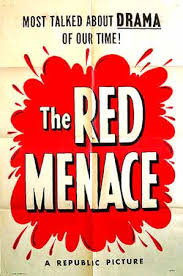
But now that the “workers’ paradise” had disappeared, Americans seemed to lose interest in the Communist Menace.
True, the People’s Republic of China remained, and its increasing economic clout would challenge the United States well into the 21st century. But Americans didn’t seem to fear the Red Chinese as they had the Red Russians.
What was the Republican Party to do to lure voters?
On September 11, 2001, the answer arrived–in two highjacked jetliners that crashed into the World Trade Center in New York and one that struck the Pentagon in Washington, D.C.
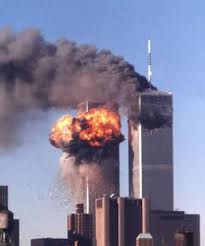
Exit The Red Bogeyman. Enter The Maniacal Muslim.
Consider:
- Mike Huckabee – “If the purpose of a church is to push forward the gospel of Jesus Christ, and then you have a Muslim group that says that Jesus Christ and all the people that follow him are a bunch of infidels who should be essentially obliterated, I have a hard time understanding that.”
- Herman Cain – ”I would not” appoint a Muslim in his administration.
- Newt Gingrich – “I am convinced that if we do not decisively win the struggle over the nature of America, by the time they [his grandchildren] are my age they will be in a secular atheist country, potentially one dominated by radical Islamists. …”
- Rick Santorum – On supporting the racial profiling of Muslims: “Obviously, Muslims would be someone you look at, absolutely.”
- Mitt Romney – “Based on the numbers of American Muslims in our population, I cannot see that a Cabinet position [for a Muslim] would be justified.”
And on July 13, Rep. Michelle Bachmann (R-Minn.) sent letters to the Inspectors General of the Departments of
- Defense;
- State;
- Justice; and
- Homeland Security.
“The purpose of these letters,” wrote Bachmann, was to “request a multi-department investigation into potential Muslim Brotherhood infiltration into the United States Government.”

Michelle Bachmann
Bachmann further asserted in her letter to the State Department that Huma Abedin, deputy chief of staff to Secretary of State Hillary Clinton, had ties to the Muslim Brotherhood.
And the evidence for this?
The Center for Security Policy’s claim that Abedin’s father (who died when she was a teenager), mother and brother are “connected” to the organization.
And what is the Center of Security Policy? A private organization subsidized by donors to neo-conservative causes.
In a separate letter, Bachmann demanded to know how Abedin received her security clearance.
Among the co-signers of Bachmann’s letter to the Inspectors General were:
- Rep. Trent Franks of Arizona, who has said abortion has done more harm to blacks than slavery;
- Rep. Lynn Westmoreland of Georgia, who called presidential candidate Barack Obama and his wife, Michelle, ”uppity”; and
- Rep. Louie Gohmert of Texas, who claims that terrorist organizations send pregnant women into the U.S. so that their children will be American citizens–who can enter and leave the country at will as they are trained to be terrorists abroad.
When pressed for their evidence of “a vast Muslim conspiracy,” right-wing accusers usually refuse to provide any.
An example of this occurred during an August 13, 2010 interview between Gohmert and CNN’s Anderson Cooper:
COOPER: What research? Can you tell us about the research?
GOHMERT: You are attacking the messenger, Anderson, you are better than this. You used to be good. You used to find that there was a problem and you would go after it.
COOPER: Sir, I am asking you for evidence of something that you said on the floor of the House.
GOHMERT: I did, and you listen, this is a problem. If you would spend as much time looking into the problem as you would have been trying to come after me and belittle me this week –
COOPER: Sir, do you want to offer any evidence? I’m giving you an opportunity to say what research and evidence you have. You’ve offered none, other than yelling.
Nor did Gohmert offer any evidence that evening.
Of course, the ultimate Republican Muslim slander is that President Barack Obama–a longtime Christian–is himself a Muslim.
No doubt Republicans feel totally safe in making these attacks, since Muslims comprise only 1% of the American population.
This has long been a hallmark of right-wing attacks–to go after a minority that cannot effectively defend itself.
Thus, Adolf Hitler attacked the Jews of Germany.
And Republicans have successively attacked blacks, Hispanics and gays–until each group became politically influential enough to defeat Republican candidates.
Today, most right-wing politicians at least grudgingly court all of these groups.
When Muslims become a significant political force in their own right, the Right will court them, too. And then move on to yet another helpless scapegoat to blame for America’s troubles.
9/11, ABC NEWS, ADOLF HITLER, AMERICANS FOR TAX REFORM, ANDERSON COOPER, ANTI-COMMUNISM, ARTHUR MILLER, BILL CLINTON, CBS NEWS, CENTER FOR SECURITY POLICY, CHINA, CHRIS MATTHEWS, CNN, DICK CHENEY, DWIGHT D. EISENHOWER, EDWARD R. MURROW, FACEBOOK, GEORGE H.W. BUSH, HARRY S. TRUMAN, HEINRICH HIMMLER, HERMAN CAIN, HERMAN GORING, HILLARY CLINTON, HUMA ABEDIN, JEWS, JIMMY CARTER, JOHN BIRCH SOCIETY, JOHN F. KENNEDY, JOHN STEINBECK, JOSEPH GOEBBELS, JOSEPH MCCARTHY, JOSEPH STALIN, KGB, LIZ CHENEY, LUCILLE BALL, LYNDON B. JOHNSON, MICHELLE BACHMANN, MIKE HUCKABEE, MITT ROMNEY, MSNBC, MUSLIM BROTHERHOOD, MUSLIMS, NAZI GERMANY, NAZI PARTY, NBC NEWS, NEWT GINGRICH, PETE SEEGER, RED SCARE, REINHARD HEYDRICH, REPUBLICAN PARTY, RICHARD NIXON, RICK SANTORUM, Ronald Reagan, SENATOR MIKE ENZI, SOVIET UNION, SS, THE AMERICAN CENTER FOR SECURITY POLICY, THE HUFFINGTON POST, THE LOS ANGELES TIMES, THE NEW YORK TIMES, THE WASHINGTON POST, TWITTER, WYOMING
In Bureaucracy, History, Politics, Social commentary on November 27, 2013 at 12:05 am
“Judge not, that you not be judged. For with what judgment you judged, you shall be judged, and with what measure you mete, it shall be measured to you again.”
So warns the Gospel of St. Matthew, 7:1-2. It’s advice that Right-wingers Joseph McCarthy, Robert Welch and George H.W. Bush would have done well to heed.
Joseph McCarthy, Wisconsin’s gift to the United States Senate, became infamous as the demagogue whose Red-baiting accusations terrified America from 1950 to 1954.
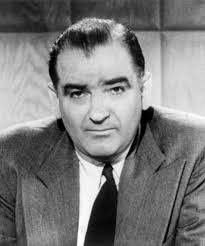
Joseph McCarthy
Elected to the Senate in 1946, he rose to national prominence on February 9, 1950, after giving a fiery speech in Wheeling, West Virginia:
“The State Department is infested with communists. I have here in my hand a list of 205—a list of names that were made known to the Secretary of State as being members of the Communist Party and who nevertheless are still working and shaping policy in the State Department.”
Americans were already growing increasingly fearful of Communism:
- Soviet dictator Joseph Stalin had not withdrawn the Red Army from the countries it had occupied in Eastern Europe during World War II.
- In 1948, the Soviet Union developed–and demonstrated–its own atomic bomb, an achievement U.S. scientists had claimed would not happen for at least a decade.
- In 1949, China fell to the triumphant armies of Mao Tse Tung.
But anti-communism as a lever to political advancement sharply accelerated following McCarthy’s speech. Republicans–resentful at being denied the White House since 1932–seized upon anti-communism as their passport to power.
No American–no matter how prominent–was safe from the accusation of being a Communist or a Communist sympathizer–”a Comsymp” or “fellow traveler” in the style of the era.
Among those accused:
- Secretary of State George C. Marshall, who had overseen America’s strategy for defeating Nazi Germany and Imperial Japan
- President Harry S. Truman
- Playwright Lillian Hellman and Arthur Miller
- Actors Charlie Chaplin, Zero Mostel, Lloyd Bridges, Howard Da Silva, Edward G. Robinson and John Garfield
- Composers Arron Copland and Elmer Bernstein
- Physicist J. Robert Oppenheimer, who presided over the creation of America’s atomic bomb
- Actressses Lee Grant, Delores del Rio, Ruth Gordon and Lucille Ball
- Journalists Edward R. Murrow and William L. Shirer, who had chronicled the rise of Nazi Germany
- Folksinger Pete Seeger
- Writers Irwin Shaw, Howard Fast, John Steinbeck and Dashiell Hammett
Even “untouchable” Republicans became targets for such slander.
The most prominent of these was President Dwight D. Eisenhower–labeled ”a conscious, dedicated agent of the Communist Conspiracy” by Robert Welch, who founded the John Birth Society in 1958.

Robert Welch
Welch, an independently wealthy businessman, used his money to publicize the Society and its views. Welch saw even hardline anti-Communists like Vice President Richard Nixon and actor Ronald Reagan as dangerously liberal.
Meanwhile, McCarthy finally overstepped himself. In 1953, he attacked the leadership of the United States Army as “a hotbed of traitors” and convened an inquiry through the Senate Permanent Subcommittee on Investigations.
But the hearings backfired, exposing McCarthy as the bullying demagogue he was. A Senate committee voted to condemn his behavior, charging that he had “acted contrary to senatorial ethics and tended to bring the Senate into dishonor and disrepute.”
Although McCarthy remained in the Senate another two and a half years, his political influence had ended.
Journalists who had raced to cover his latest slander now avoided him. So did his Republican colleagues–many of whom had once sought his help at election time.
Yet even without McCarthy, Republicans rode the issue of anti-Communism to victory from 1948 to 1960.
After holding the White House for eight years under Eisenhower, they lost it in 1960 to John F. Kennedy and again in 1964 to Lyndon Johnson.
By 1968, with the nation mired in Vietnam and convulsed by antiwar demonstrations, Americans turned once more to those who preyed upon their fears and hates. They elected Richard Nison–and re-elected him in 1972.
After Jimmy Carter won the Presidency in 1976 and lost it in 1980, Republicans held the White House until 1992. Throughout that time, they continued to accuse their opponents of being devious agents–or at least unwitting pawns–of “the Communist conspiracy.”
Even as late as 1992, President George H.W. Bush and the Republican establishment charged that Arkansas Governor Bill Clinton might be a KGB plant.
Their evidence: During his tenure at Oxford University in 1969-70, Clinton had briefly visited Moscow.
Thus, the Republican charged that he might have been “programmed” as a real-life “Manchrian candidate” to become, first, Governor of Arkansas–one of America’s poorest states–and then President.
What made this charge all the more absurd: The Soviet Union had officially dissolved in December, 1991.
Although Republicans continued to hurl “Communist!” and “treason!” at their opponents, these charges no longer carried the weight they had while the Soviet Union existed.
Right-wingers had to settle for attacking their opponents as “liberals” and “soft on crime.”
Then, on September 11, 2001, Republicans–and their right-wing supporters–at last found a suitable replacement for the Red Menace.
9/11, ABC NEWS, ADOLF HITLER, AMERICANS FOR TAX REFORM, ANDERSON COOPER, ANTI-COMMUNISM, ARTHUR MILLER, BILL CLINTON, CBS NEWS, CENTER FOR SECURITY POLICY, CHINA, CHRIS MATTHEWS, CNN, DICK CHENEY, DWIGHT D. EISENHOWER, EDWARD R. MURROW, FACEBOOK, GEORGE H.W. BUSH, HARRY S. TRUMAN, HEINRICH HIMMLER, HERMAN CAIN, HERMAN GORING, HILLARY CLINTON, HUMA ABEDIN, JEWS, JIMMY CARTER, JOHN BIRCH SOCIETY, JOHN F. KENNEDY, JOHN STEINBECK, JOSEPH GOEBBELS, JOSEPH MCCARTHY, JOSEPH STALIN, KGB, LIZ CHENEY, LUCILLE BALL, LYNDON B. JOHNSON, MARY CHENEY, MICHELLE BACHMANN, MIKE HUCKABEE, MITT ROMNEY, MSNBC, MUSLIM BROTHERHOOD, MUSLIMS, NAZI GERMANY, NAZI PARTY, NBC NEWS, NEWT GINGRICH, PETE SEEGER, RED SCARE, REINHARD HEYDRICH, REPUBLICAN PARTY, RICHARD NIXON, RICK SANTORUM, Ronald Reagan, SAME-SEX MARRIAGE, SENATOR MIKE ENZI, SOVIET UNION, SS, THE AMERICAN CENTER FOR SECURITY POLICY, THE HUFFINGTON POST, THE LOS ANGELES TIMES, THE NEW YORK TIMES, THE WASHINGTON POST, TWITTER, WYOMING
In Bureaucracy, History, Politics, Social commentary on November 26, 2013 at 12:09 am
“All revolutions,” said Ernst Rohem, leader of Adolf Hitler’s brown-shirted thugs, the S.A., “devour their own children.”
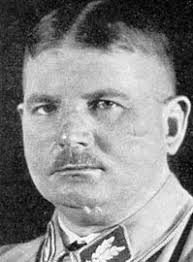
Ernst Rohem
Fittingly, he said this as he sat inside a prison cell awaiting his own execution.
On June 30, 1934, Hitler had ordered a massive purge of his private army, the S.A., or Stormtroopers. The purge was carried out by Hitler’s elite army-within-an-army, the Schutzstaffel, or Protective Squads, better known as the SS.
The S.A. Brownshirts had been instrumental in securing Hitler’s rise to Chancellor of Germany on January 30, 1933. They had intimidated political opponents and organized mass rallies for the Nazi Party.
But after Hitler reached the pinnacle of power, they became a liability.
Ernst Rohem, their commander, urged Hitler to disband the regular German army, the Reichswehr, and replace it with his own legions as the nation’s defense force.
Frightened by Rohem’s ambitions, the generals of the Reichswehr gave Hitler an ultimatum: Get rid of Rohem–or they would get rid of him.
So Rohem died in a hail of SS bullets–as did several hundred of his longtime S.A. cronies.
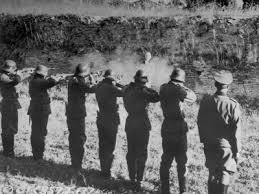
SS firing squad
Among the SS commanders supervising those executions was Reinhard Heydrich–a tall, blond-haired formal naval officer who was both a champion fencer and talented violinist.
Ultimately, he would become the personification of the Nazi ideal–”the man with the iron heart,” as Hitler eulogized at Heydrich’s funeral just eight years later.
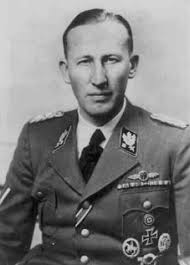
Reinhard Heydrich
Even so, Heydrich had a problem: He could never escape vicious rumors that his family tree contained a Jewish ancestor.
His paternal grandmother had married Reinhold Heydrich, and then Gustav Robert Suss. For unknown reasons, she decided to call herself Suss-Heydrich.
Since “Suss” was widely believed in Germany to indicate Jewish origin, the “stigma” of Jewish heritage attached itself to the Heydrich family.
Heydrich joined the SS in 1931 and quickly became head of its counterintelligence service. But his arrogance and overweening ambition created a great many enemies.
Only a year later, he became the target of an urgent investigation by the SS itself.
The charge: That he was part-Jewish, the ultimate sin in Hitler’s “racially pure” Nazi Germany.
The investigation cleared Heydrich, but the rumor of his “tainted” origins persisted, clearly tormenting the second most powerful man in the SS.
Even his superior, Heinrich Himmler, the Reichsfuhrer-SS, believed it.
When Heydrich was assassinated in 1942 by Czech assassins in Prague, Himmler attended his funeral.
He paid tribute to his former subordinate at the service–”You, Reinhard Heydrich, were a truly good SS-man.” But he could not resist saying in private:
“He was an unhappy man, completely divided against himself, as often happened with those of mixed race.”
Those who dare to harshly judge others usually find themselves assailed just as harshly.
A modern-day example is Liz Cheney, daughter of former Vice President Dick Cheney and now a candidate for U.S. Senator from Wyoming.
Liz is positioning herself as far more right-wing than her opponent, Republican U.S. Senator Michael Bradley “Mike” Enzi.
She has her work cut out for her: In March, 2007, Enzi was ranked by National Journal as the sixth-most conservative U.S. Senator.
Among his legislative priorities:
- Supporting partial privatization of Social Security
- Consistently voting against expanding Medicare.
- Voting against enrolling more children or the poor in public healthcare.

Mike Enzi
And Liz has a problem Enzi does not: Her sister, Mary, is not only a lesbian but legally married to another woman: Heather Poe.
This has led many Wyoming voters to wonder if Liz Cheney is far-Right enough to merit their support.
So Liz is going all-out to assure them that even though her sister leads a degenerate lifestyle, she, Liz, stands foursquare against legalizing gay marriage:
“I do believe it’s an issue that’s got to be left up to states. I do believe in the traditional definition of marriage.”

Liz Cheney
And, in another statement: “I am strongly pro-life and I am not pro-gay marriage.
“I believe the issue of marriage must be decided by the states, and by the people in the states, not by judges and not even by legislators, but by the people themselves.”
This stance has led to a heated rift between her and Mary.
“For the record, I love my sister, but she is dead wrong on the issue of marriage,” Mary Cheney wrote in a Facebook post in September.
“Freedom means freedom for everyone,” she continued. “That means that all families–regardless of how they look or how they are made–all families are entitled to the same rights, privileges and protections as every other.”
Adding to the complications: Their father, Dick Cheney—often ridiculed as “Darth Vader” for his own extreme Right-wing views—endorsed same-sex marriage in 2009.
But, as was true for officials in Nazi Germany, so is it true for Right-wing Republicans: It’s impossible to be too radical a Right-winger.
In the 1930s and 40s, it was politically—and personally—dangerous to be labeled “pro-Jewish” or “pro-Communist” in Hitler’s Germany.
And today it is equally dangerous—at least politically—to be labeled “pro-liberal” or “pro-gay” in the Republican Party.
ABC NEWS, ADOLF HITLER, AFFORDABLE CARE ACT, BARACK OBAMA, BBC, CBS NEWS, CNN, ENGLAND, FACEBOOK, GOVERNMENT SHUTDOWN, JOHN BOEHNER, NAZI GERMANY, NBC NEWS, OBAMACARE, REPUBLICANS, THE LOS ANGELES TIMES, THE NEW YORK TIMES, THE WASHINGTON POST, TWITTER, WINSTON CHURCHILL, WORLD WAR ii
In History, Military, Politics on October 21, 2013 at 10:21 pm
On October 1, Speaker of the House John Boehner (R-Ohio) said President Barack Obama told Congressional leaders at a White House meeting that “he will not negotiate.”
Boehner accused Democrats of being unwilling to negotiate key elements of the Affordable Care Act–in return for Republican agreement on a spending bill.
The Republicans were seeking–for now–a one-year delay in the rolling out of “Obamacare.”
Obama, in turn, said that he would not submit to Republican “extortion” and “blackmail.”
He said that the House should pass a “clean” spending bill–one without conditions–that met America’s obligations to its citizens and creditors. Only then would be be willing to discuss possible changes in “Obamacare.”
Republicans countered with slogans such as: “If Obama will negotiate with [Russian President] Vladimir Putin, why won’t he negotiate with Congress?”
Seventy-three years ago, another democratic leader found himself accused of being unreasonable and unwilling to negotiate.
That leader was British Prime Minister Winston Churchill. And those accusing him were among the most powerful men in the Third Reich.
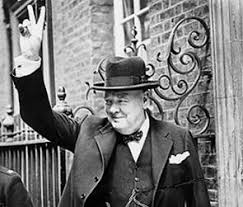
Winston Churchill
This was not a favorable time for Britain.
On September 1, 1939, Adolf Hitler had ordered his Whermacht (army) to invade Poland. In six weeks, Polish resistance vanished and Poland became the first of a series of Nazi vassal-states.
Then, on May 10, 1940, after waiting out the winter, Hitler’s army quickly overran Norway and Denmark.
And then it was the turn of France.
In six weeks, the German army accomplished what it couldn’t during the four years of World War 1. It bypassed the heavily defended Maginot Line and destroyed one French army after another.
The defeated French were forced to sign the armistice in the same railway car they had used in 1918 when they forced Germany to surrender after World War 1.
Although the British had committed their air force and army to defending France, both had been easily swept aside by the Wehrmact and Luftwaffe (air force).
Driven almost literally into the sea, the British evacuated about 338,226 men from the port of Dunkirk. It was a miracle made possible by Hitler’s unexplained halt of the German advance and the arrival of a fleet of civilian and naval vessels from England.
“The battle of France is over,” Churchill warned his countrymen. “The battle of Britain is about to begin.”
But not before Hitler offered his own version of “peace with honor.”
On July 19, the Fuehrer addressed the Reichstag, Germany’s rubber-stamp parliament:
“From Britain I now hear only a single cry–not of the people but of the politicians–that the war must go on….
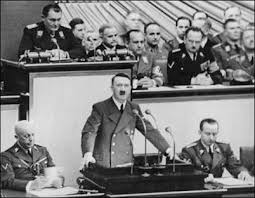
Hitler addressing the Reichstag
“Mr. Churchill ought, for once, to believe me when I prophesy that a great Empire will be destroyed–an Empire which it was never my intention to destroy or even to harm.
“In this hour I feel it to be my duty before my own conscience to appeal once more to reason and common sense in Great Britain as well as elsewhere.
“I consider myself in a position to make this appeal since I am not the vanquished begging favors but the victor speaking in the name of reason.
“I see no reason why this war must go on.”
The assembled parliamentary deputies and bemedaled generals were convinced the British would accept Hitler’s “generous” offer of peace.
They took it for granted that the British would be grateful for the opportunity Hitler was giving them to get out of the war.
The Fuehrer, they believed, had been truly magnanimous. How could the British be insane enough to turn him down?
Soon enough, they–and the Fuehrer–got their answer.
Correspondent William L. Shirer, waiting to make a broadcast at the CBS studio in Berlin, listened as the BBC introduced one of its own correspondents.
Sefton Delmner, fluent in German, had covered Nazi Germany for years. Although not authorized to speak for the British Government, his response could have come directly from Churchill himself.
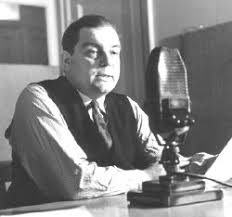
Sefton Delmer
“Herr Hitler,” said Delmer in his most deferential German, “you have on occasion in the past consulted me as to the mood of the British public.
“So permit me to render Your Excellency this little service once again tonight.
“Let me tell you what we here in Britain think of this appeal of yours to what you are pleased to call our reason and common sense. Herr Fuehrer and Reichskanzler [Reich Chancellor] we hurl it right back to you, right in your evil-smelling teeth.”
German officials listening to the broadcast in Shirer’s office were stunned.
“Can you make it out?” one demanded of Shirer. “Can you understand those British fools? To turn down peace now? They’re crazy!”
Although devastated by the forthcoming bombing raids of Hitler’s Luftwaffe, England held out.
Months later, it gained two powerful allies: The Soviet Union (invaded by Hitler on June 22, 1941) and the United States (attacked by Japan on December 7, 1941).
In the end, by standing up to Fascist aggression, England and its democracy were saved.
Americans can only hope the same proves true for their country.
9/11 ATTACKS, ABC NEWS, ADOLF HITLER, AFGHANISTAN, AL QAEDA, BARCK OBAMA, BASHAR AL-ASSAD, CARL VON CLAUSEWITZ, CBS NEWS, CHEMICAL WEAPONS, CHINA, CNN, FACEBOOK, HARRY TRUMAN, IRAN, IRAQ, ISLAM, ISRAEL, MUSLIMS, NAZI GERMANY, NBC NEWS, OSAMA BIN LADEN, RUSSIA, SOVIET UNION, SYRIA, TERRORISM, THE LOS ANGELES TIMES, THE NEW YORK TIMES, THE WASHINGTON POST, TWITTER, WORLD WAR 1
In Bureaucracy, History, Military, Politics on September 3, 2013 at 1:00 am
Here are ten excellent reasons for not sending American soldiers to bomb and/or invade Syria.
1. The United States just disengaged from Iraq. On Dec. 15, 2011, the American military formally ended its mission there. The war–begun in 2003–had killed 4,487 service members and wounded another 32,226.
2. The United States is still fighting a brutal war in Afghanistan. By early 2012, the United States had about 90,000 troops in Afghanistan, with 22,000 of them due home by the fall. There has been no schedule set for the pace of the withdrawal of the 68,000 American troops who will remain, only that all are to be out by the end of 2014.
The initial goal of this war was to destroy Al Qaeda–especially its leader, Osama Bin Laden–and its Taliban protectors. But, over time, Washington policy-makers embarked on a “nation-building” effort.
So the American military didn’t wrap up its campaign as quickly as possible and then leave the country to its own devices. Instead, U.S. forces wound up occupying the country for the next ten years.
This increasingly brought them into conflict with primitive, xenophobic Afghans, whose mindset remains that of the sixth century.
A series of murderous attacks on American soldiers by their supposed Afghan comrades-in-arms led to the inevitable result: American forces no longer trust their Afghan “allies” to stand shoulder-to-shoulder with them against the Taliban.
3. The war in Iraq fell victim to the law of unintended consequences. The Bush administration invaded Iraq to turn it into a base–from which to intimidate its neighboring states: Jordan, Saudi Arabia, Kuwait, Turkey, Syria and Iran.
But this demanded that the United States quickly pacify Iraq. The Iraqi insurgency totally undermined that goal, forcing U.S. troops to focus all their efforts inward.
Another unintended result of the war: Saddam Hussein’s Iraq had been a counter-weight to the regional ambitions of Iran, but the destruction of the Iraqi military created a power-vacumn. Into this–eagerly–stepped the Iranian mullahs.
4. Intervening in Syria could produce similar unintended consequences for American forces–and make the United States a target for more Islamic terrorism.
American bombs or missiles could land on one or more sites containing stockpiles of chemical weapons. Imagine the international outrage that will result if the release of those weapons kills hundreds or thousands of Syrians.

U.S. warship firing Tomahawk Cruise missile
Within the Islamic world, the United States will be seen as waging a war against Islam, and not simply another Islamic dictator.
Almost certainly, an American military strike on Syria would lead its dictator, Bashar al-Assad, to attack Israel–perhaps even with chemical weapons.
Assad could do this simply because he hates Jews–or to lure Israel into attacking Syria.
If that happened, the Islamic world–which lusts to destroy Israel more than anything else–would rally to Syria against the United States, Israel’s chief ally.
5. Since 1979, Syria has been listed by the U.S. State Department as a sponsor of terrorism.
Among the terrorist groups it supports are Hizbollah and Hamas. For years, Syria provided a safe-house in Damascus to Ilich Ramírez Sánchez–the notorious terrorist better known as Carlos the Jackal.
There are no “good Syrians” for the United States to support–only murderers who have long served a tyrant and now wish to become the next tyrant.
6. The United States doesn’t know what it wants to do in Syria, other than “send a message.”
Carl von Clausewitz, the Prussian military theorist, wrote: “War is the continuation of state policy by other means.” But President Barack Obama hasn’t stated what he intends gain by attacking Syria.
Obama has said he’s “not after regime-change.” If true, that would leave Assad in power–and free to go on killing those who resist his rule.
So it appears that Obama’s “message” is: “You can continue killing your own people–so long as you don’t use weapons that upset American TV viewers.”
7. The Assad regime is backed by–among others–the Iranian-supported terrorist group, Hizbollah (Party of God). Its enemies include another terrorist group–Al Qaeda.
When your enemies are intent on killing each other, it’s best to stand aside and let them do it.
8. China and Russia are fully supporting the Assad dictatorship–and the brutalities it commits against its own citizens. This reflects badly on them–not the United States.
9. The United States could find itself in a shooting war with Russia and/or China.
The Russians have sent two warships to Syria, in direct response to President Obama’s threat to “punish” Assad for using chemical weapons against unsurgents.
What happens if American and Russian warships start trading salvos? Or if Russian President Vladimir Putin orders an attack on Israel, in return for America’s attack on Russia’s ally, Syria?
It was exactly that scenario–Great Powers going to war over conflicts between their small-state allies–that triggered World War l.
10. While Islamic nations like Syria and Egypt wage war within their own borders, they will lack the resources to launch attacks against the United States.
When Adolf Hitler invaded the Soviet Union in 1941, then-Senator Harry Truman said: “I hope the Russians kill lots of Nazis and vice versa.”
That should be America’s view whenever its sworn enemies start killing themselves off. Americans should welcome such self-slaughters, not become entrapped in them.


ABC NEWS, ADOLF HITLER, ANTISEMITISM, ARIZONA, BIRTH CONTROL, CBS NEWS, CNN, DISCRIMINATION, FACEBOOK, GAYS, JEWS, MARRIAGE, MUHAMMAD, NAZI GERMANY, NBC NEWS, NUREMBERG LAWS, REPUBLICAN PARTY, RICH SANTORUM, SAME-SEX MARRIAGE, SAUDI ARABIA, SPANISH INQUISITION, SUPREME COURT, THE LOS ANGELES TIMES, THE NEW YORK TIMES, THE WASHINGTON POST, TOMAS DE TORQUEMADA, TWITTER
NUREMBERG COMES TO ARIZONA: PART TWO (END)
In Bureaucracy, History, Law, Politics, Social commentary on February 25, 2014 at 11:20 amHamza Kashgari, a 23-year-old columnist in Saudi Arabia, decided to celebrate the birthday of the Islamic prophet Muhammed in a truly unique way.
In February, 2012, he posted on Twitter a series of mock conversations between himself and Muhammad:
“On your birthday, I will say that I have loved the rebel in you, that you’ve always been a source of inspiration to me, and that I do not like the halos of divinity around you. I shall not pray for you.”
“On your birthday, I find you wherever I turn. I will say that I have loved aspects of you, hated others, and could not understand many more.”
“On your birthday, I shall not bow to you. I shall not kiss your hand. Rather, I shall shake it as equals do, and smile at you as you smile at me. I shall speak to you as a friend, no more.”
“No Saudi women will go to hell, because it’s impossible to go there twice.”
The tweets sparked some 30,000 infuriated responses. Many Islamic clerics demanded that he face execution for blasphemy.
Kashgari posted an apology tweet: “I deleted my previous tweets because…I realized that they may have been offensive to the Prophet and I don’t want anyone to misunderstand.”
Soon afterward, King Abdullah ordered his arrest.
Kashgari served a prison sentence until October, 2013, when he was released.
Outrageous? By Western standards, absolutely.
Clearly there is no tolerence in Saudi Arabia for the freedoms of thought and expression that Americans take for granted.
But before you say, “Religious oppression like that could never happen in the United States,” think again.
Right-wing American ayatollahs are now working overtime to create just that sort of society–where theocratic despotism rules the most intimate aspects of our lives.
One of these ayatollahs was/is GOP Presidential candidate and former U.S. Senator Rick Santorum. In early January, 2012, he said that states should have the right to outlaw birth control without the interference of the Supreme Court.
Rick Santorum
In an interview with ABC News, Santorum said he opposed the Supreme Court’s ruling that made birth control legal:
“The state has a right to do that [ban contraception]. I have never questioned that the state has a right to do that. It is not a Constitutional right. The state has the right to pass whatever statutes they have.
“That’s the thing I have said about the activism of the Supreme Court–they are creating rights, and it should be left up to the people to decide.”
In the landmark 1965 decision, Griswold v. Connecticut, the Court struck down a law that made it a crime to sell contraceptives to married couples. The Constitution, ruled the Justices, protected a right to privacy.
Two years later, in Eisenstadt v. Baird, the Court extended Griswold by striking down a law banning the sale of contraceptives to unmarried couples.
Santorum has left no doubt as to where he stands on contraception. On October 19, 2011, he said:
“One of the things I will talk about that no President has talked about before is I think the dangers of contraception in this country, the whole sexual libertine idea. Many in the Christian faith have said, ‘“Well, that’s okay. Contraception’s okay.’
“It’s not okay because it’s a license to do things in the sexual realm that is counter to how things are supposed to be. They’re supposed to be within marriage, they are supposed to be for purposes that are, yes, conjugal, but also…procreative.”
“How things are supposed to be”–according to right-wing fanatics like Santorum and the evangelicals who support him.
Like the Saudi religious religious zealots who demand the death of a “blasphemer,” they demand that their religious views should govern everyone. Both groups have far more in common than they want to admit.
The important difference–for Americans who value their freedom–is this:
The United States has a Supreme Court that can–and does–overturn laws that threaten civil liberties. Laws that GOP legislators–such as those in Arizona–clearly want to force on those who don’t share their peculiar religious views.
The Right is not waging a “war for religious liberty.”
It’s waging a bitter struggle to establish a government that uses force or the threat of it to impose highly conservative religious beliefs on those who do not share such religious beliefs.
And on atheists or agnostics, who share none at all.
These Rightists and their theocratic allies have more in common with Tomas de Torquemada (1420 – 1498) the infamous Grand Inquisitor of the Spanish Inquisition, than with Jesus Christ.
Tomas de Torquemada
Christ never ordered the torture or death of anyone. Torquemada–claiming to act in “defense” of the Roman Catholic Church–presided over the deaths of at least 2,000 “heretics.”
For such people, Torquemada believed, the only road to salvation lay in being “cleansed” of their sins. And nothing burns away impurities like fire.
Men like Torquemada and the anti-gay legislators of Arizona do not seek a golden future.
They crave to return to a “golden” past–which includes the one-time power of Christians to forcefully impose their religious beliefs on others.
Share this: