Posts Tagged ‘NATIONAL RIFLE ASSOCIATION’
ABC NEWS, ABCNEWS, ABILENE, ALTERNET, AP, BBC, BUFFALO BILL, BUZZFEED, CBS NEWS, CNN, DAILY KOS, FACEBOOK, GUNFIGHTERS, JACK MCCALL, MOTHER JONES, MOVEON, NATIONAL RIFLE ASSOCIATION, NBC NEWS, NEWSWEEK, NPR, POLITICO, RAW STORY, REUTERS, SALON, SEATTLE TIMES, SLATE, THE ATLANTIC, THE CHICAGO SUN-TIMES, THE CHICAGO TRIBUNE, THE DAILY BEAST, THE GUARDIAN, THE HILL, THE HUFFINGTON POST, THE LOS ANGELES TIMES, THE NEW YORK TIMES, THE WALL STREET JOURNAL, THE WASHINGTON POST, TIME, TWITTER, U.S. NEWS & WORLD REPORT, UPI, USA TODAY, WILD BILL HICKOK
In History, Law, Law Enforcement, Politics, Social commentary on July 7, 2017 at 12:16 am
After being fired as town marshal of Abilene, Kansas, James Butler “Wild Bill” Hickok lived another five years. But they weren’t good ones.
Unlike William F. Cody, Hickok couldn’t adjust to the changing West.
It was becoming less wild. His scouting days were over—the Indian wars were rapidly coming to an end.
(In June, 1876, barely two months before his own death, the Sioux and Cheyenne would wipe out the other famous “Long Hair” of the plains–George Armstrong Custer—at the battle of Little Bighorn.)
And most towns, like Abilene, increasingly had little use for lead-slinging lawmen like Hickok.
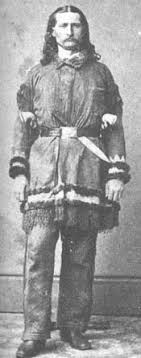
James Butler “Wild Bill” Hickok
Worst of all, he was going blind—either from a venereal disease he had contracted or from the glare of too many prairie sunrises.
In 1873, Hickok tried his hand as an actor in Buffalo Bill’s Wild West Show. But he was a terrible performer—and knew it.
The fault, however, did not lie entirely with him. Even Laurence Oliver would have rebelled at spouting lines like: “Fear not, fair maiden, for you are ever safe with Will Bill, who has sworn to defend to the death your maidenly virtue.”
Not that the audiences cared. They had come to see legendary plainsmen—such as Hickok and Cody—in the flesh, not great theater.
Hickok asked Cody to release him from his contract. Cody refused. So Hickok once again turned to his guns for a solution.
In this case, it meant shooting blanks into the legs and buttocks of “dead” Indians who suddenly sprang to life and rushed off the stage. And one night, Hickok put a real bullet through a stage light that was hurting his already sensitive eyes.
That, finally, convinced Cody that Hickok’s acting days were over.
In March, 1876, he married Agnes Lake Thatcher, a circus acrobat several years his senior.
In April, he told Agnes he was heading for the gold rush country of Deadwood, South Dakota. After he made his fortune, he would send for her.
But she never saw him again.
Deadwood was the sort of town the National Rifle Association wants to see replicated across modern-day America. Everyone wore a gun, and there was no town ordinance against doing so. Nor were there any law-enforcers like Hickok to protect the public from the kill-crazy antics of liquored-up gunmen.

Grave of “Wild Bill” Hickok
Worse for Hickok, he had two strikes against him: His reputation as a matchless gunfighter had preceded him—and his failing vision put him at a disadvantage in backing it up.
Arriving in Deadwood, he quickly decided that the strenuous life of a gold-miner was not for him. Instead, he would seek his fortune as he often had—in saloons as a gambler.
And, as he had so often, he spent more of his time losing money than making it.
On August 2, 1876, his long trail of bad luck finally ran out.
He had always sat with his back to a wall, as a precaution against ambush. On this afternoon, he found his preferred seat taken by another gambler named Charles Rich. Hickok asked Rich to trade places with him, but when the latter refused, Hickok didn’t press the matter.
It was a sign that Hickok’s reputation had sharply fallen. Ten years earlier, had he made such a request, the other gambler would have rushed to swap chairs.
Hickok paid no attention as a whiskey bum named Jack McCall walked around to the corner of the saloon to where the ex-lawman was playing.

Jack McCall
The previous night, Hickok had won considerable money from McCall in a poker game—and had generously given him back enough to buy something to eat.
(The 1995 movie, Wild Bill, depicted McCall as Hickok’s illegitimate son seeking vengeance on the father who had abandoned him. But this was completely false, as the two were completely unrelated. The one saving grace to this otherwise absurd film was Jeff Bridges’ gritty performance as Hickok.)
Suddenly, McCall pulled a double-action .45 from under his coat, shouted “Take that!” and shot Hickok in the back of the head.
Hickok died instantly. He was 39.
As he slid from the table, he dropped the cards he had been holding—a pair of eights and another pair of Aces, which has ever since been known as “the dead man’s hand.”
McCall was “tried” by a mining court. He claimed that Hickok had murdered his brother and he had sought revenge. He was acquitted.
He headed for Wyoming, where he incessantly bragged that he had killed the famous “Wild Bill” Hickok.
McCall was arrested in Laramie and charged with murder. The trial in Deadwood was found to have been invalid—owing to the town’s being in Indian territory and outside the reach of United States law.
Once again forced to stand trial, McCall found himself convicted. On March 1, 1877, he was hanged. Later, it was discovered that McCall had never had a brother.
ABC NEWS, ABCNEWS, ABILENE, ALTERNET, AP, BBC, BUFFALO BILL, BUZZFEED, CBS NEWS, CNN, DAILY KOS, FACEBOOK, GUNFIGHTERS, JACK MCCALL, MOTHER JONES, MOVEON, NATIONAL RIFLE ASSOCIATION, NBC NEWS, NEWSWEEK, NPR, POLITICO, RAW STORY, REUTERS, SALON, SEATTLE TIMES, SLATE, THE ATLANTIC, THE CHICAGO SUN-TIMES, THE CHICAGO TRIBUNE, THE DAILY BEAST, THE GUARDIAN, THE HILL, THE HUFFINGTON POST, THE LOS ANGELES TIMES, THE NEW YORK TIMES, THE WALL STREET JOURNAL, THE WASHINGTON POST, TIME, TWITTER, U.S. NEWS & WORLD REPORT, UPI, USA TODAY, WILD BILL HICKOK
In History, Law, Law Enforcement, Politics, Social commentary on July 6, 2017 at 12:33 am
Almost everyone has heard of “Wild Bill” Hickok—the legendary Western scout, Indian fighter, two-gun lawman and crack shot.
And the legend, not the man, is often invoked–inaccurately—by “gun rights” advocates who seek to reduce the entire Constitution to a single amendment: The Second Amendment.
But there is a vast difference between Hickok the legend–and Hickok the actual man.
For one thing, his real name wasn’t “Bill”—or even “William.” It was James Butler Hickok.
He supposedly got the name “Wild Bill” after thwarting an attempted lynching—and a woman applauded his bravery with: “Good for you, Wild Bill!”
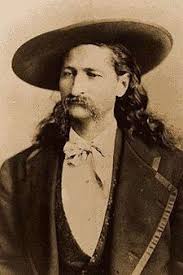
James Butler “Wild Bill” Hickok
For another, Hickok didn’t spend most of his life as a town marshal. His gunslinging days as a lawman lasted just two years—1869 to 1871.
And they ended badly. His first stint as a lawman came at Hays City, Kansas. As sheriff, he shot and killed at least two men.
According to legend, one of these shootings occurred when Hickok, looking in a bar mirror, saw a ruffian named Strawhan pull a pistol to shoot him in the back.
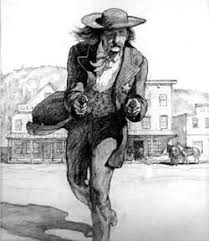
Hickok, looking into the mirror, threw a “trick shot” over his shoulder–and nailed Strawhan dead.
Then Hickok’s luck ran out. On July 17, 1870, several members of the 7th U.S. Cavalry attacked him in Drum’s Saloon. Knocked to the floor and repeatedly kicked, Hickok had reason to fear death.
Drawing his pistols, he killed one private and wounded another. Although he had acted in self-defense and the shootings were entirely justifiable, Hickok now faced even greater danger from other, enraged members of the same regiment.
He decided to leave Hays before they could take their revenge.
His next posting as town marshal came in Abilene, Kansas. This stint lasted from April to December, 1871.
And, like his last one as a “town-tamer,” it ended with a deadly shootout.
A major portion of his duties lay in enforcing the “no firearms worn or used in town” edict.
Abilene was a cattle town, the end of the line for many outfits seeking a major railhead where their hundreds of beeves could be dropped off and shipped eastward.
When cowboys—most of them in their teens or early 20s—reached Abilene, they wanted to celebrate. Their long drive was over, and now they could finally get paid. And there were plenty of bars and whores waiting to pick up their newly-issued monies.
This combination of randy men and ready supplies of alcohol and women often led to trouble. One cowboy might make a pass at another’s “lady” for the night. Or an argument might erupt over a card game.
It was Hickok’s duty to make sure that such arguments were settled only with fists. And that meant demanding that all cowboys’ guns be checked at the marshal’s office until the “boys” were ready to leave Abilene.

Replica of Hickok’s 1851 Navy Colt
This, of course, contradicts the “open carry” demands of the National Rifle Association. And most of its members—if transported to the Old West—would find themselves on the wrong side of Hickok.
And that wasn’t a good place to be—as Texas gambler Phil Coe learned to his dismay. Coe and Hickok had clashed before.
As co-owner of the Bull’s head Saloon, Coe had advertised its wares with a sign depicting a bull with oversized sexual organs. A number of citizens raged that this was obscene and demanded that the animal’s sexuality be greatly reduced.
The city fathers agreed. Hickok stood nearby with a shotgun while a painter made the necessary deletions.
On October 5, cowboys were flooding into Abilene, looking for a good time. Coe, feeling in high spirits, decided to celebrate by firing his pistol into the air several times.
The shots quickly brought Hickok to the scene.
“Did you fire that shot?” Hickok demanded.
Coe supposedly replied: “I shot at a dog—and I’ll shoot at another.”
Coe threw a shot at Hickok—which missed.
Hickok whipped out his two revolvers and put two bullets into Coe’s stomach, mortally wounding the Texan, who died three days later.
With Coe’s Texas buddies surrounding him, Hickok suddenly heard someone rushing at him from behind. Hickok whirled and fired twice more—into the chest of his own deputy, Mike Williams, who had been running to his aid.
Hickok, aghast at his mistake, gently carried Williams into a saloon and placed his body onto a billiard table. Then he raged through Abilene, ordering an end to the festivities and knocking down any cowboys foolish enough to resist.
Owing to this latest explosion in violence, the city fathers quickly reached two decision: First, they put an end to Abilene’s years as a major cattle shipping point. From now on, cattlemen were no longer welcome there.
And then they fired Hickok as city marshal in December, 1871.
ABC NEWS, ALTERNET, ANWAR SADAT, AP, ARTHUR BREMER, ASSASSINATION, BBC, BLACK LIVES MATTER, BUZZFEED, CBS NEWS, CHARLES L. COTTON, CIA, CNN, DAILY KOS, DALLAS POLICE OFFICER SHOOTINGS, FACEBOOK, GEORGE C. WALLACE, GUN CONTROL, MARK RAWLINGS, MOTHER JONES, MOVEON, NATIONAL RIFLE ASSOCIATION, NBC NEWS, NEWSWEEK, NPR, OPEN CARRY LAWS, POLITICO, RAW STORY, REPUBLICAN PARTY, REPUBLICANS, REUTERS, ROBERT F. KENNEDY, SALON, SEATTLE TIMES, Secret Service, SLATE, THE ATLANTIC, THE CHICAGO SUN-TIMES, THE CHICAGO TRIBUNE, THE DAILY BEAST, THE GUARDIAN, THE HILL, THE HUFFINGTON POST, THE LOS ANGELES TIMES, THE NEW YORK TIMES, THE SECOND AMENDMENT, THE WALL STREET JOURNAL, THE WASHINGTON POST, TIME, TWITTER, U.S. NEWS & WORLD REPORT, UPI, USA TODAY
In Bureaucracy, History, Law, Law Enforcement, Politics, Social commentary on June 16, 2017 at 12:04 am
On June 14, Rep. Steve Scalise (R-LA) was among five people shot during a Republican baseball practice in Alexandria, Virginia.
Scalise, the U.S. House majority whip, was shot in the hip. Other victims included a member of Scalise’s security detail, U.S. Capitol Police officer Crystal Griner; Zack Barth, an aide to Rep. Roger Williams, R-TX; and lobbyist Matt Mika.

Steve Scalise
The suspected gunman, James Hodgkinson, was shot dead by Capitol police.
And now, some GOP lawmakers think they have the answer to foiling any future such attacks: They want to carry guns themselves.
“The ability to protect ourselves individually, rather than having to rely on someone else is something that I cherish,” Rep. Jack Bergman (R-Michigan) told CNN. “I would like the opportunity to be able to protect myself as a congressman.”
Rep. Chris Collins (R-New York) told CNN: “I’ve had a carry permit for 30 years, and I would say off and on in different instances where I have, you know, felt it was appropriate, I would carry the weapon on myself.
“Certainly in the short run I’m going to go a step beyond just having it in the glove box in my car and I will be carrying.”
On the evening of June 14, Kentucky Rep. Thomas Massie wrote on Facebook: “What’s always evident in these situations is: The only thing that stops a bad guy with a gun is a good guy with a gun.”
That, of course, is the standard mantra of the National Rifle Association (NRA).
But it it true?
On July 7, 2016, five Dallas police officers were shot and killed by a disgruntled ex-Army Reserve Afghan War veteran named Michah Xavier Johnson. Another seven officers and two civilians were wounded before the carnage ended.
The shootings erupted during a Black Lives Matter protest march in downtown Dallas.
Texas has long been an “open carry” state for those who want to brandish rifles without fear of arrest. And about 20 people wearing “ammo gear and protective equipment [had] rifles slung over their shoulder,” said Dallas Mayor Mike Rawlings.
“When the shooting started, at different angles, [the armed protesters] started running,” Rawlings said, adding that open carry only brings confusion to a shooting scene. What I would do [if I were a police officer] is look for the people with guns,” he said.
“There were a number of armed demonstrators taking part,” said Max Geron, a Dallas police major. “There was confusion about the description of the suspects and whether or not one or more was in custody.”
A 2012 Mother Jones article on “More Guns, More Mass Shootings–Coincidence?” offered a striking finding. After analyzing 62 mass shootings over a 30-year period, the magazine determined: “In not a single case was the killing stopped by a civilian using a gun.”
So much for the ability of gun-toting, untrained amateurs to “stop a bad guy with a gun.”
But even highly-trained shooters–such as those assigned to the United States Secret Service–don’t always respond as expected.
On May 15, 1972, Alabama Governor George C. Wallace was campaigning for President in Laurel, Maryland. He gave a speech behind a bulletproof podium at the Laurel Shopping Center. Then he moved from it to mingle with the crowd.
Since the 1968 assassination of Senator Robert F. Kennedy, all those campaigning for President have been assigned Secret Service bodyguards. And Wallace was surrounded by them as he shook hands with his eager supporters.
Suddenly, Arthur Bremer, a fame-seeking failure in life and romance, pushed his way forward, aimed a .38 revolver at Wallace’s abdomen and opened fire. Before the Secret Service could subdue him, he hit Wallace four times, leaving him paralyzed for the rest of his life.

Arthur Bremer shoots George Wallace
Nor was he Bremer’s only victim. Three other people present were wounded unintentionally:
- Alabama State Trooper Captain E C Dothard, Wallace’s personal bodyguard, who was shot in the stomach;
- Dora Thompson, a campaign volunteer, who was shot in the leg; and
- Nick Zarvos, a Secret Service agent, who was shot in the neck, severely impairing his speech.
None of Wallace’s bodyguards got off a shot at Bremer–before or after he pulled the trigger.
On October 6, 1981, Egyptian President Anwar Sadat was reviewing a military parade in Cairo when a truck apparently broke down directly across from where he was seated.
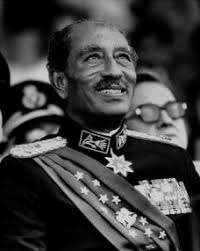
Anwar Sadat, moments before his assassination
Suddenly, soldiers bolted from the rear of the vehicle, throwing hand grenades and firing assault rifles. They rushed straight at Sadat–who died instantly under a hail of bullets.
Meanwhile, Sadat’s bodyguards–who had been trained by the CIA–panicked and fled.
Sadat had been assassinated by army officers who believed he had betrayed Islam by making peace with Israel in 1977.
The ultimate test of the NRA’s mantra that “there should not be any gun-free zones…anywhere” will come only when one or more heavily-armed gunmen target an NRA convention.
It will then be interesting to see if the surviving NRA members are as quick to blame themselves for being victims as they are to blame the victims of other mass slaughters.
ABC NEWS, ANWAR SADAT, ARTHUR BREMER, ASSASSINATION, BLACK LIVES MATTER, CBS NEWS, CHARLES L. COTTON, CIA, CNN, DALLAS POLICE OFFICER SHOOTINGS, DYLANN ROOF, EMANUEL AFRICAN METHODIST CHURCH, FACEBOOK, GEORGE C. WALLACE, GUN CONTROL, HATE CRIMES, MARK RAWLINGS, MICHAH XAVIER JOHNSON, NATIONAL RIFLE ASSOCIATION, NBC NEWS, OPEN CARRY LAWS, RAFAEL CRUZ, REPUBLICAN PARTY, REPUBLICANS, ROBERT F. KENNEDY, Secret Service, THE CHICAGO SUN-TIMES, THE CHICAGO TRIBUNE, THE LOS ANGELES TIMES, THE NEW YORK TIMES, THE SECOND AMENDMENT, THE WASHINGTON POST, TWITTER
In Bureaucracy, History, Law, Law Enforcement, Politics, Social commentary on July 11, 2016 at 12:14 am
On June 17, 2015, Dylann Roof, a white high school dropout, gunned down three black men and six black women at Emanuel African Methodist Episcopal Church in Charleston, South Carolina.
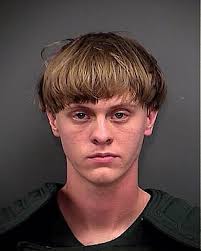
Dylann Roof
On June 18–one day after the church slaughter–Charles L. Cotton took insulting the dead to a whole new level.
Cotton is a National Rifle Association (NRA) board member who also runs TexasCHLForum.com, an online discussion forum about guns and gun owners’ rights in Texas and beyond.
In a discussion thread on the Forum, a board member noted that Clementa C. Pinckney, one of the nine people slain, was a pastor and a state legislator in South Carolina.
Cotton responded: “And he voted against concealed-carry. Eight of his church members who might be alive if he had expressly allowed members to carry handguns in church are dead. Innocent people died because of his position on a political issue.”

That discussion thread was quickly deleted.
During a subsequent phone interview, Cotton emphasized that he had been speaking as a private citizen–and not as an NRA board member:
“It was a discussion we were having about so called gun-free zones. It’s my opinion that there should not be any gun-free zones in schools or churches or anywhere else. If we look at mass shootings that occur, most happen in gun-free zones.”
If private citizens were allowed to carry guns everywhere, Cotton said, there will be fewer mass shootings because “if armed citizens are in there, they have a chance to defend themselves and other citizens.”
Cotton’s position–“there should not be any gun-free zones”–is exactly that of the NRA itself.
Under such circumstances, America will become a nation where anyplace, anytime, can be turned into the O.K. Corral.
Another point that Cotton didn’t mention: Dylann Roof did believe in concealed-carry–and it cost not his life but the lives of nine innocent men and women.
Finally, there is this: Even highly-trained shooters–such as those assigned to the United States Secret Service–don’t always respond as expected.
On May 15, 1972, Alabama Governor George Wallace was campaigning for President in Laurel, Maryland. He gave a speech behind a bulletproof podium at the Laurel Shopping Center. Then he moved from it to mingle with the crowd.
Since the 1968 assassination of Senator Robert F. Kennedy, all those campaigning for President have been assigned Secret Service bodyguards. And Wallace was surrounded by them as he shook hands with his eager supporters.
Suddenly, Arthur Bremer, a fame-seeking failure in life and romance, pushed his way forward, aimed a .38 revolver at Wallace’s abdomen and opened fire. Before the Secret Service could subdue him, he hit Wallace four times, leaving him paralyzed for the rest of his life.
Arthur Bremer shoots George Wallace
Nor was he Bremer’s only victim. Three other people present were wounded unintentionally:
- Alabama State Trooper Captain E C Dothard, Wallace’s personal bodyguard, who was shot in the stomach;
- Dora Thompson, a campaign volunteer, who was shot in the leg; and
- Nick Zarvos, a Secret Service agent, who was shot in the neck, severely impairing his speech.
None of Wallace’s bodyguards got off a shot at Bremer–before or after he pulled the trigger.
On October 6, 1981, Egyptian President Anwar Sadat was reviewing a military parade in Cairo when a truck apparently broke down directly across from where he was seated.
Anwar Sadat, moments before his assassination
Suddenly, soldiers bolted from the rear of the vehicle, throwing hand grenades and firing assault rifles. They rushed straight at Sadat–who died instantly under a hail of bullets.
Meanwhile, Sadat’s bodyguards–who had been trained by the CIA–panicked and fled.
Sadat had been assassinated by army officers who believed he had betrayed Islam by making peace with Israel in 1977.
Most recently, the NRA mantra, “If every citizen went armed…” was put to the test in Dallas, Texas. It flunked.
On July 7, five Dallas police officers were shot and killed by a disgruntled ex-Army Reserve Afghan War veteran named Michah Xavier Johnson. Another seven officers and two civilians were wounded before the carnage ended.
The shootings erupted during a Black Lives Matter protest march in downtown Dallas.
Texas has long been an “open carry” state for those who want to brandish rifles without fear of arrest. And about 20 people wearing “ammo gear and protective equipment [had] rifles slung over their shoulder,” said Dallas Mayor Mike Rawlings.
“When the shooting started, at different angles, [the armed protesters] started running,” Rawlings said, adding that open carry only brings confusion to a shooting scene. “What I would do [if I were a police officer] is look for the people with guns,” he said.
“There were a number of armed demonstrators taking part,” said Max Geron, a Dallas police major. “There was confusion on the radio about the description of the suspects and whether or not one or more was in custody.”
The ultimate test of the NRA’s mantra that “there should not be any gun-free zones…anywhere” will come only when one or more heavily-armed gunmen target an NRA convention.
It will then be interesting to see if the surviving NRA members are as quick to blame themselves for being victims as they are to blame the victims of other mass slaughters.
ABC NEWS, ACADEMY AWARDS, BARACK OBAMA, BEN-HUR, CBS NEWS, CHARLTON HESTON, CNN, EL CID, FACEBOOK, FOX NEWS, GUN CONTROL, JIM CARREY, JOHN F. KENNEDY, KHARTOUM, MAJOR DUNDEE, MOSES, MOVIES, NATIONAL RIFLE ASSOCIATION, NBC NEWS, PLANET OF THE APES, RICHARD M. NIXON, ROBERT F. KENNEDY, SCREEN ACTORS GUILD, THE CHICAGO SUN-TIMES, THE CHICAGO TRIBUNE, THE LOS ANGELES TIMES, THE NEW YORK TIMES, THE TEN COMMANDMENTS, THE WAR LORD, THE WASHINGTONPOST, TWITTER
In Bureaucracy, Entertainment, History, Politics on June 17, 2016 at 12:05 am
In March, 2013, the National Rifle Association (NRA) and its Right-wing allies declared war on comedian Jim Carrey.
The reason: His music parody video: “Cold Dead Hand,” which mocked gun fanatics and the late Charlton Heston, former president of the NRA.
Click here: Jim Carrey’s Pro-Gun Control Stance Angers Conservatives
Among its lyrics:
Charlton Heston movies are no longer in demand
And his immortal soul may lay forever in the sand.
The angels wouldn’t take him up to heaven like he’d planned.
’Cause they couldn’t pry that gun from his cold, dead hand.
The phrase, “cold dead hand,” originated with Heston himself.
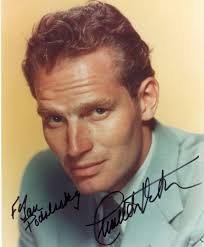
Charlton Heston in his prime
On May 20, 2000, the actor and then-president of the NRA addressed the organization at its 129th convention in Charlotte, North Carolina.
He warned that then-Vice President and Democratic Presidential candidade Al Gore “is going to smear you as the enemy,” and concluded:
“So, as we set out this year to defeat the divisive forces that would take freedom away, I want to say those fighting words for everyone within the sound of my voice to hear and to heed, and especially for you, Mr. Gore: ‘From my cold, dead hands!’”
Carrey’s stance on gun control couldn’t have been more opposite.
In in February, 2013, he outraged Right-wingers by tweeting: “Any1 who would run out to buy an assault rifle after the Newton massacre has very little left in their body or soul worth protecting.”
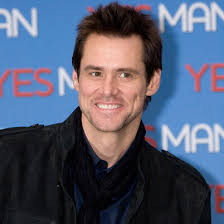
Jim Carrey
Fox Nation referred to the tweet as “nasty.”
Red Alert Politics writer Erin Brown dismissed it as “a careless remark …rooted in the shallow, parroted talking points so commonly espoused by liberal elites.”
But that was nothing compared to the rage that has greeted “Cold Dead Hand.” Reason TV’s Remy offered a parody rebuttal to Carrey’s song. Its lyrics included:
It takes a talking ass
to oppose a vaccination
when your PhD is in
making funny faces.
None of which bothered Carrey. In fact, he exulted in Right-wing outrage, tweeting: “Cold Dead Hand’ is abt u heartless motherf%ckers unwilling 2 bend 4 the safety of our kids. Sorry if you’re offended…”
Among its lyrics:
It takes a cold, dead hand to decide to pull the trigger.
Takes a cold, dead heart and as near as I can figger.
With your cold, dead aim you’re tryin’ to prove your dick is bigger …..
Many psychologists have long theorized that a fascination with firearms can compensate for inadequate sexual performance.
But it’s one thing for an unknown psychologist to write this in an obscure medical journal and another for a famous comedian to splash it across the Internet.
Carrey is especially ruthless in attacking those who–like the NRA–make a lucrative living off gun sales:
Imagine if the Lord were here…
And on the ones
Who sell the guns
He’d sic the vultures and coyotes
Only the devil’s true devotees
Could profiteer
From pain and fear.
Many Rightists attacked Carrey for parodying a man–Heston–who died in 2008 and could not defend himself. But Heston had appeared several times on “Saturday Night Live” to spoof his granite-hard image.
In his video, Carrey dares to attack not simply the masculinity of the Rightist NRA crowd, but even its courage:
You don’t want to get caught
With your trousers down
When the psycho killer
Comes around
So you make your home
Like a Thunderdome
And you’re always packin’
Everywhere you roam.
Perhaps that’s what most outraged the Right–the accusation that its members live in fear and do their best to generate needless fear in others.
Fear that can supposedly be abated by turning America into a society where everyone packs a weapon and every moment holds a potential High Noon.
Carrey was not shy in responding to his Rightist critics. On March 29, 2013, he issued this statement:
“Since I released my “Cold Dead Hand” video on Funny or Die this week, I have watched Fux News rant, rave, bare its fangs and viciously slander me because of my stand against large magazines and assault rifles.
“I would take them to task legally if I felt they were worth my time or that anyone with a brain in their head could actually fall for such irresponsible buffoonery. That would gain them far too much attention which is all they really care about.
“I’ll just say this: in my opinion Fux News is a last resort for kinda-sorta-almost-journalists whose options have been severely limited by their extreme and intolerant views; a media colostomy bag that has begun to burst at the seams and should be emptied before it becomes a public health issue.”
The NRA has spent decades bribing and intimidating its way through Congress. Those members who subscribe to its “guns for everyone” agenda get legalized bribes (i.e., “campaign contributions”).
Those who refuse to do so face the threat–if not the reality–of being ousted.
Bullies are conspicuously vulnerable to ridicule. Their only “defense” is to smash anyone who dares to mock their folly, brutality or pretense to omnipotence.
Or, as Ernest Hemingway once put it: “Fascism is a lie told by bullies.”
ABC NEWS, ACADEMY AWARDS, BARACK OBAMA, BEN-HUR, CBS NEWS, CHARLTON HESTON, CNN, EL CID, FACEBOOK, FOX NEWS, GUN CONTROL, JIM CARREY, JOHN F. KENNEDY, KHARTOUM, MAJOR DUNDEE, MOSES, MOVIES, NATIONAL RIFLE ASSOCIATION, NBC NEWS, PLANET OF THE APES, RICHARD M. NIXON, ROBERT F. KENNEDY, SCREEN ACTORS GUILD, THE CHICAGO SUN-TIMES, THE CHICAGO TRIBUNE, THE LOS ANGELES TIMES, THE NEW YORK TIMES, THE TEN COMMANDMENTS, THE WAR LORD, THE WASHINGTONPOST, TWITTER
In Entertainment, History, Politics, Social commentary on June 16, 2016 at 12:06 am
Bullies do not like to be mocked.
Anyone who doubts this need only examine the Right’s reaction to actor Jim Carrey’s March, 2013 “Cold Dead Hand” music video.
In this, Carrey–a strong advocate of gun control–mocked the National Rifle Association (NRA) and its right-wing allies.
These included rural America and (for the video’s purposes) the late actor Charlton Heston, who served as the NRA’s five-term president (1998-2003).

Jim Carrey as Charlton Heston
The video featured Carrey and alt-rock band Eels as “Lonesome Earl And The Clutterbusters,” a country band on a TV set modeled after the 1960s variety show, “Hee Haw.” Carrey also portrayed Heston as a dim-witted, teeth-clenching champion of the NRA.
“I find the gun problem frustrating,” Carrey said in a press release, “and ‘Cold Dead Hand’ is my fun little way of expressing that frustration.”
Carrey’s frustration triggered NRA outrage.
Click here: Jim Carrey’s Pro-Gun Control Stance Angers Conservatives
Fox News personality Greg Gutfeld ranted: “He is probably the most pathetic tool on the face of the earth and I hope his career is dead and I hope he ends up sleeping in a car.
“This video made me want to go out and buy a gun. He thinks this is biting satire going after rural America and a dead man… He’s a dirty, stinking coward… He’s such a pathetic, sad, little freak. He’s a gibbering mess. He’s a modern bigot.”
Columnist Larry Elder spared no venom in attacking Carrey: “Let’s be charitable–call Carrey ignorant, not stupid.”
Click here: Jim Carrey: Not ‘Dumb & Dumber,’ Just Ignorant
Much of his March 29 column centered on defending Heston, who died at 84 in 2008.
A lyric in Carrey’s song says “Charlton Heston’s movies are no longer in demand.” This prompted Elder to defend the continuing popularity of Heston’s 1956 movie, “The Ten Commandments,” where he played Moses.
Elder felt compelled to defend Heston’s off-screen persona as well, citing his 64-year marriage to his college sweetheart, Lydia.
On the other hand, writes Elder, Carrey, “followed the well-worn Hollywood path: Get famous; get rich; dump the first wife/mother of your kid(s), who stood by you during the tough times; and act out your social life in the tabs to the embarrassment of your kid(s).”
Clearly, Carrey’s video struck a nerve with Right-wing gun fanatics. But why?
Start with Gutfield’s accusation that Carry was “going after rural America.”
Rural America–home of the most superstitious, ignorant and knee-jerk Fascist elements in American society–boastfully refers to itself as “The Heartland.”
In short: a prime NRA and Rightist constituency.
It was rural America to which Senator Barack Obama referred–accurately–during his 2008 Presidential campaign:
“They get bitter, they cling to guns or religion or antipathy to people who aren’t like them or anti-immigrant sentiment or anti-trade sentiment as a way to explain their frustrations.”
Second, there’s Elder’s outrage that Carrey should dare to say that Heston’s movies “are no longer in demand.”
Among these movies: “Major Dundee,” “El Cid,” “Khartoum,” “The War Lord.” And even the hammiest film for which he is best-known: “The Ten Commandments.”
In a film career spanning 62 years, Heston vividly portrayed such historical characters as:
- Rodrigo Diaz de Bivar in “El Cid’:
- Mark Anthony in “Julius Caesar”;
- John the Baptist in “The Greatest Story Ever Told”;
- Andrew Jackson in “The President’s Lady” and “The Buccaneer”;
- Michaelangelo in “The Agony and the Ecstasy”;
- General Charles Gordon in “Khartoun.”
And he played fictitious characters, too:
- Civil War officers (“Major Dundee”);
- Norman knights (“The War Lord”);
- ranchers (“Three Violent People”;
- explorers (“The Naked Jungle”).
- Judah Ben-Hur (“Ben-Hur”);
- astronauts (“Planet of the Apes”)’
Heston was a widely respected actor who won the Academy Award for Best Actor in 1959 for “Ben Hur” and servecd as the president of the Screen Actors Guild from 1965 to 1971.
But it was not Heston’s film career that Carrey focused on–but his role as president of the NRA.
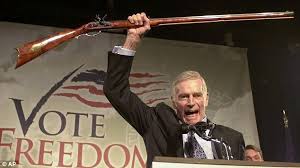
Charlton Heston at the NRA convention
Ironically, Heston had identified himself with liberal causes long before he became the face and voice of the gun lobby.
In 1961, he campaigned for Senator John F. Kennedy for President. In 1963, he took part in Martin Luther King’s March on Washington.
In 1968, after the assassination of Senator Robert F. Kennedy, he joined actors Kirk Douglas, James Stewart and Gregory Peck in issuing a statement supporting President Lyndon Johnson’s Gun Control Act of 1968.
But over the coming decades, Heston became increasingly conservative:
- Reportedly voting for Richard Nixon in 1972;
- Supporting gun rights; and
- Campaigning for Republican Presidential candidates Ronald Reagan, George H.W. Bush and George W. Bush.
When asked why he changed political alliances, Heston replied: “I didn’t change. The Democratic party changed.”
ABC NEWS, ANWAR SADAT, ARTHUR BREMER, ASSASSINATION, CBS NEWS, CHARLES L. COTTON, CIA, CNN, DYLANN ROOF, EMANUEL AFRICAN METHODIST CHURCH, FACEBOOK, GEORGE C. WALLACE, GUN CONTROL, HATE CRIMES, NATIONAL RIFLE ASSOCIATION, NBC NEWS, RAFAEL CRUZ, REPUBLICAN PARTY, REPUBLICANS, ROBERT F. KENNEDY, Secret Service, THE CHICAGO SUN-TIMES, THE CHICAGO TRIBUNE, THE LOS ANGELES TIMES, THE NEW YORK TIMES, THE SECOND AMENDMENT, THE WASHINGTON POST, TWITTER
In History, Law Enforcement, Politics, Social commentary on June 14, 2016 at 12:06 am
“You know the great thing about the state of Iowa is, I’m pretty sure you all define gun control the same way we do in Texas–hitting what you aim at.
“My wife, Heidi, who is a petite, 5’2 California blonde, she was standing at the tripod unloading the full machine gun with a pink baseball cap that said ‘armed and fabulous.’”
Yes, it was United States Senator Rafael Cruz (R-Texas) on the prowl for laughs–and votes–at a town hall meeting in Iowa. Normally, Cruz would do his vote-hunting in Texas.
But now Cruz had a bigger prize on his mind than simply being re-elected a United States Senator. Cruz wanted to be President in 2016.
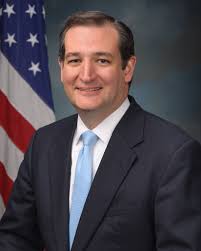
U.S. Senator Rafael Cruz
Cruz’ jokes about gun control came on June 19, 2015, only two days after Dylann Roof, a white high school dropout, gunned down three black men and six black women at Emanuel African Methodist Episcopal Church in Charleston, South Carolina.
Dylann Roof
Following his remarks, Cruz headed to a shooting range, where he fired off rounds on a semiautomatic .223-caliber Smith and Wesson M&P 15.
Cruz’ remarks no doubt appeared insensitive to the latest victims of gun violence and those who now mourned for them. But the comments of Charles L. Cotton took insulting the dead to a whole new level.
Cotton is a National Rifle Association (NRA) board member who also runs TexasCHLForum.com, an online discussion forum about guns and gun owners’ rights in Texas and beyond.
In a discussion thread on June 18, 2015–one day after the church slaughter–a board member noted that Clementa C. Pinckney, one of the nine people slain, was a pastor and a state legislator in South Carolina.
Cotton responded: “And he voted against concealed-carry. Eight of his church members who might be alive if he had expressly allowed members to carry handguns in church are dead. Innocent people died because of his position on a political issue.”
That discussion thread was quickly deleted.
During a subsequent phone interview, Cotton emphasized that he had been speaking as a private citizen–and not as an NRA board member:
“It was a discussion we were having about so called gun-free zones. It’s my opinion that there should not be any gun-free zones in schools or churches or anywhere else. If we look at mass shootings that occur, most happen in gun-free zones.”
If private citizens were allowed to carry guns everywhere, Cotton said, there will be fewer mass shootings because “if armed citizens are in there, they have a chance to defend themselves and other citizens.”
Cotton’s position–“there should not be any gun-free zones”–is exactly that of the NRA itself.
Under such circumstances, America will become a nation where anyplace, anytime, can be turned into the O.K. Corral.
Another point that Cotton didn’t mention: Dylann Roof did believe in concealed-carry–and it cost not his life but the lives of nine innocent men and women.
Finally, there is this: Even highly-trained shooters–such as those assigned to the United States Secret Service–don’t always respond as expected.
On May 15, 1972, Alabama Governor George Wallace was campaigning for President in Laurel, Maryland. He gave a speech behind a bulletproof podium at the Laurel Shopping Center. Then he moved from it to mingle with the crowd.
Since the 1968 assassination of Senator Robert F. Kennedy, all those campaigning for President have been assigned Secret Service bodyguards. And Wallace was surrounded by them as he shook hands with his eager supporters.
Suddenly, Arthur Bremer, a fame-seeking failure in life and romance, pushed his way forward, aimed a .38 revolver at Wallace’s abdomen and opened fire. Before the Secret Service could subdue him, he hit Wallace four times, leaving him paralyzed for the rest of his life.
Arthur Bremer shoots George Wallace
Nor was he Bremer’s only victim. Three other people present were wounded unintentionally:
- Alabama State Trooper Captain E C Dothard, Wallace’s personal bodyguard, who was shot in the stomach;
- Dora Thompson, a campaign volunteer, who was shot in the leg; and
- Nick Zarvos, a Secret Service agent, who was shot in the neck, severely impairing his speech.
None of Wallace’s bodyguards got off a shot at Bremer–before or after he pulled the trigger.
On October 6, 1981, Egyptian President Anwar Sadat was reviewing a military parade in Cairo when a truck apparently broke down directly across from where he was seated.
Anwar Sadat, moments before his assassination
Suddenly, soldiers bolted from the rear of the vehicle, throwing hand grenades and firing assault rifles. They rushed straight at Sadat–who died instantly under a hail of bullets.
Meanwhile, Sadat’s bodyguards–who had been trained by the CIA–panicked and fled.
Sadat had been assassinated by army officers who believed he had betrayed Islam by making peace with Israel in 1977.
The ultimate test of the NRA’s mantra that “there should not be any gun-free zones…anywhere” will come only when one or more heavily-armed gunmen target an NRA convention.
It will then be interesting to see if the surviving NRA members are as quick to blame themselves for being victims as they are the victims of other mass slaughters.
ABC NEWS, CBS NEWS, CNN, CRIME, ELLIOT ROGER, FACEBOOK, GAYS, GUN CONTROL, MARTIN LUTHER KING, MENTAL ILLNESS, NATIONAL RIFLE ASSOCIATION, NBC NEWS, PULSE NIGHTCLUB, ROBERT F. KENNEDY, SECOND AMENDMENT, SELF-DEFENSE, STAND-YOUR-GROUND LAWS, THE CHICAGO SUN-TIMES, THE CHICAGO TRIBUNE, THE LOS ANGELES TIMES, THE NEW YORK TIMES, THE WASHINGTON POST, TOBACCO INDUSTRY, TWITTER, U.S. CONSTITUTION, WRONGFUL-DEATH LAWSUITS
In History, Law, Law Enforcement, Politics, Social commentary on June 13, 2016 at 12:02 am
The victims of the violence are black and white, rich and poor, young and old, famous and unknown. They are, most important of all, human beings whom other human beings loved and needed. No one – no matter where he lives or what he does – can be certain who will suffer from some senseless act of bloodshed. And yet it goes on and on.
–Robert F. Kennedy, April 4, 1968

Senator Robert F. Kennedy announcing the murder of Dr. Martin Luther King, Jr.
What should the surviving victims of the Pulse nightclub massacre in Orlando, Florida, do to seek redress?
And how can the relatives and friends of those who didn’t survive seek justice for those they loved?
First, don’t count on politicians to support a ban on assault weapons.
Politicians–with rare exceptions–have only two goals:
- Get elected to office, and
- Stay in office.
And most of them fear the economic and voting clout of the National Rifle Association (NRA) to risk its wrath. Those that don’t greedily accept its bribes–i.e., “campaign contributions.”
Second, don’t expect the mental health profession to prevent such future tragedies.
There is simply no definitive way to predict who is likely to commit mass murder.
And even if such a method were developed, it would likely be ruled unconstitutional. A person can’t be jailed or hospitalized for fear of what he might do.
Third, those who survived the Pulse nightclub rampage–and the relatives and friends of those who didn’t–should file wrongful death, class-action lawsuits against the NRA.
There is sound, legal precedent for this.
For decades, the American tobacco industry peddled death and disability to millions and reaped billions of dollars in profits.
- The industry vigorously claimed there was no evidence that smoking caused cancer, heart disease, emphysema or any other ailment.
- Tobacco companies spent billions on slick advertising campaigns to win new smokers and attack medical warnings about the dangers of smoking.
- Tobacco companies spent millions to elect compliant politicians and block anti-smoking legislation.
- From 1954 to 1994, over 800 private lawsuits were filed against tobacco companies in state courts. But only two plaintiffs prevailed, and both of those decisions were reversed on appeal.
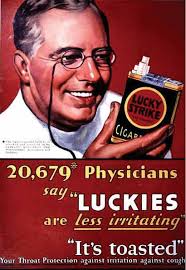
- In 1994, amidst great pessimism, Mississippi Attorney General Mike Moore filed a lawsuit against the tobacco industry. But other states soon followed, ultimately growing to 46.
- Their goal: To seek monetary, equitable and injunctive relief under various consumer-protection and anti-trust laws.
- The theory underlying these lawsuits was: Cigarettes produced by the tobacco industry created health problems among the population, which badly strained the states’ public healthcare systems.
- In 1998, the states settled their Medicaid lawsuits against the tobacco industry for recovery of their tobacco-related, health-care costs. In return, they exempted the companies from private lawsuits for tobacco-related injuries.
- The companies agreed to curtail or cease certain marketing practices. They also agreed to pay, forever, annual payments to the states to compensate some of the medical costs for patients with smoking-related illnesses.
The parallels with the NRA are obvious:
- For decades, the NRA has peddled deadly weapons to millions, reaped billions of dollars in profits and refused to admit the carnage those weapons have produced: “Guns don’t kill people. People kill people.” With guns.
- The NRA has steadfastly defended the right to own Teflon-coated “cop killer” bullets,” whose only purpose is to penetrate bullet-resistant vests worn by law enforcement officers.
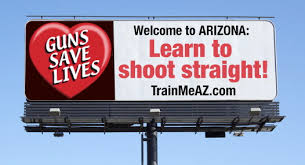
- The NRA has bitterly fought background checks on gun-buyers, in effect granting even criminals and the mentally ill the right to own arsenals of death-dealing weaponry.
- The NRA has spent millions on slick advertising campaigns to win new members and frighten them into buying guns.
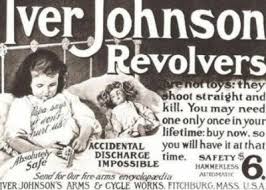
- The NRA has spent millions on political contributions to block gun-control legislation.
- The NRA has spent millions attacking political candidates and elected officials who warned about the dangers of unrestricted access to assault and/or concealed weapons.

- The NRA has spent millions pushing “Stand Your Ground” laws in more than half the states, which potentially give every citizen a “license to kill.”
- The NRA receives millions of dollars from online sales of ammunition, high-capacity ammunition magazines, and other accessories through its point-of-sale Round-Up Program–thus directly profiting by selling a product that kills about 30,288 people a year.
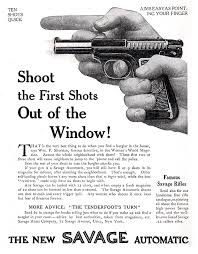
- Firearms made indiscriminately available through NRA lobbying have filled hospitals–such as those in Orlando–with casualties, and have thus badly strained the states’ public healthcare systems.
It will take a series of highly expensive and well-publicized lawsuits to significantly weaken the NRA, financially and politically.
The first ones will have to be brought by the surviving victims of gun violence–and by the friends and families of those who did not survive it. Only they will have the courage and motivation to take such a risk.
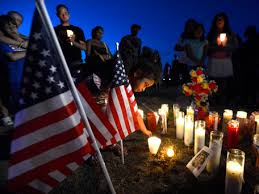
As with the cases first brought against tobacco companies, there will be losses. And the NRA will rejoice with each one.
But, in time, state Attorneys General will see the clear parallels between lawsuits filed against those who peddle death by cigarette and those who peddle death by armor-piercing bullet.
And then the NRA–like the tobacco industry–will face an adversary wealthy enough to stand up for the rights of the gun industry’s own victims.
Only then will those politicians supporting reasonable gun controls dare to stand up for the victims of such needless tragedies as the one in Orlando, Florida.
ABC NEWS, ABORTION, CBS NEWS, CLIMATE CHANGE, CNN, DEPARTMENT OF HOMELAND SECURITY, ERNEST HEMINGWAY, FACEBOOK, FASCISM, GUN CONTROL, HARRISON E. SALISBURY, JOSEPH MCCARTHY, NATIONAL OCEANIC AND ATMOSPHERIC ADMINISTRATION, NATIONAL RIFLE ASSOCIATION, NBC NEWS, PLANNED PARENTHOOD, REPUBLICANS, RIGHT-WING TERRORISM, ROE V. WADE, SPANISH CIVIL WAR, THE CHICAGO SUN-TIMES, THE CHICAGO TRIBUNE, THE LOS ANGELES TIMES, THE NEW YORK TIMES, THE WASHINGTON POST, TWITTER, UNIVERSITY OF MISSOURI, WORLD WAR ii
In Bureaucracy, History, Law, Law Enforcement, Medical, Politics, Social commentary on March 14, 2016 at 3:41 pm
Ernest Hemingway knew his Fascists. He fought against them in 1930s Spain, where Right-wing general Francisco Franco–aided by Adolf Hitler–ultimately overthrew the Spanish Republic in 1939.
And he fought against them in France after American forces landed in Normandy. He was one of the first Americans to reach Paris and help “liberate” the bar of the Ritz Hotel.
In the 1950s, he opposed the growing plague of anti-Red hysteria as represented by Wisconsin U.S. Senator Joseph R. McCarthy.
Addressing a 1937 Writers Congress in a rare public speech, Hemingway said: “There is only one form of government that cannot produce good writers, and that system is fascism. For fascism is a lie told by bullies. A writer who will not lie cannot live and work under fascism.”
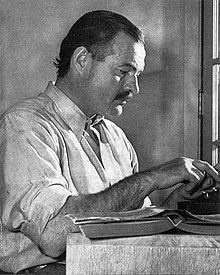
Ernest Hemingway
It’s thus clear what the Nobel-Prize winning author would think of a Missouri state senator’s efforts at censorship.
Lindsay Ruhr, a graduate student in the School of Social Work at the University of Missouri, chose to write her doctoral dissertation on the effects of the state’s recently imposed 72-hour waiting period for abortions.

Lindsay Ruhr
And this has drawn the ire of Missouri State Senator Kurt Schaefer, a Republican from Columbia, Missouri, who chairs the Missouri state senate’s interim Committee on the Sanctity of Life.
In late October, Schaefer sent a letter to the University of Missouri calling Ruhr’s dissertation “a marketing aid for Planned Parenthood — one that is funded, in part or in whole, by taxpayer dollars.”
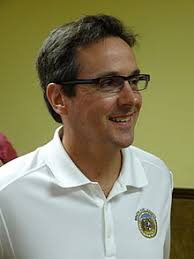
Kurt Schaefer
Schaefer demanded that the university hand over documents regarding the project’s approval and said that, because the University of Missouri is a public university, it should not fund research that he said would promote elective abortions.
Missouri law prohibits the use of public funds to promote non-life-saving abortions.
In September, 2014, Missouri enacted a 72-hour wait for abortions. Reproductive rights advocates believed this is an effort to deny women access to legal abortion as established by the Supreme Court’s Roe v. Wade decision in 1973.
Other Missouri legal restrictions require women seeking an abortion to undergo an ultrasound scan and receive informational material that aims to persuade them from obtaining an abortion.
Lindsay Ruhr wants to find out “how this policy [the 72-hour waiting limit] affects women. Whether this policy is having a harmful or beneficial effect, we don’t know.”
Schaefer claims that Ruhr is biased in favor of abortions because her adviser is affiliated with Planned Parenthood of Kansas.
“This is a concerning revelation considering the University’s recent troubling connections to Planned Parenthood,” wrote Schaefer in a letter to University of Missouri officials.
Schaefer argued that Ruhr is illegally using public funds to conduct her dissertation research.
“It is difficult to understand how a research study approved by the University, conducted by a University student, and overseen by the Director of the School of Social Work at the University can be perceived as anything but an expenditure of public funds to aid Planned Parenthood.”
Under Missouri law, it is illegal for public employees and facilities to use state money towards “encouraging or counseling” a woman to have an abortion not necessary to save her life.
Even though Ruhr is seeking a PhD at the university, she is employed by Planned Parenthood and the university is not paying for her research.
Abortions in Missouri aren’t the only scientific subject that Republicans have made it forbidden to study. Among these:
- A federal ban on studying gun-related deaths and the results of gun control. This followed aggressive efforts by the National Rifle Association to stop finding data that contradicted its “more guns are better” narrative. It’s prevented crucial research into how best to combat mass shootings and prevent gun accidents in the home.
- Harassment of climate scientists. Republicans have increasingly sought to cut funding to scientists studying the Earth’s climate because they keep finding more data to suggest the planet is actually warming. If the public demands an end to the use of fossil fuels–which are responsible for the warming–this will threaten Republicans’ ties to–and funding from–the oil and gas industries.
- The House Science Committee has demanded climate scientists working for the National Oceanic and Atmospheric Administration turn over all emails and documents–personal and professional–they wrote on this subject during the last seven years.
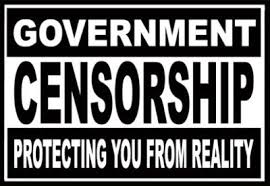
- Preventing scientists from studying Right-wing terrorism in the United States. The foremost expert on this subject–Daryl Johnson, a counter-terrorism analyst working at the Department of Homeland Security–was forced out of his job.
- Johnson had spent six years with the agency amassing a wealth of data on far-Right extremist groups–like the Ku Klux Klan and militia movement–that threaten the safety of American citizens. Republicans’ objection: The facts his research was finding on their constituents made conservatives look bad.
As Harrison E. Salisbury, former New York Times bureau chief in Moscow, observed: “…The message was always the same: Shut up! Don’t rock the boat. Keep those unpleasant truths to yourself. The truth, I was ultimately to learn, is the most dangerous thing. There are no ends to which men of power will not go to put out its eyes.”
ABC NEWS, ANWAR SADAT, ARTHUR BREMER, ASSASSINATION, CBS NEWS, CHARLES L. COTTON, CIA, CNN, DYLANN ROOF, EMANUEL AFRICAN METHODIST CHURCH, FACEBOOK, GEORGE C. WALLACE, GUN CONTROL, HATE CRIMES, NATIONAL RIFLE ASSOCIATION, NBC NEWS, RAFAEL CRUZ, REPUBLICAN PARTY, REPUBLICANS, Secret Service, THE CHICAGO SUN-TIMES, THE CHICAGO TRIBUNE, THE LOS ANGELES TIMES, THE NEW YORK TIMES, THE SECOND AMENDMENT, THE WASHINGTON POST, TWITTER
In Bureaucracy, History, Law, Law Enforcement, Politics, Social commentary on March 11, 2016 at 12:24 am
“You know the great thing about the state of Iowa is, I’m pretty sure you all define gun control the same way we do in Texas–hitting what you aim at.
“My wife, Heidi, who is a petite, 5’2 California blonde, she was standing at the tripod unloading the full machine gun with a pink baseball cap that said ‘armed and fabulous.’”
Yes, it was United States Senator Rafael Cruz (R-Texas) on the prowl for laughs–and votes–at a town hall meeting in Iowa. Normally, Cruz would do his vote-hunting in Texas.
But now Cruz has a bigger prize on his mind than simply being re-elected a United States Senator. Cruz wants to be President in 2016.
U.S. Senator Rafael Cruz
And Iowa held its precinct causes on February 1-2, 2016.
Cruz’ jokes about gun control came on June 19, 2015, only two days after Dylann Roof, a white high school dropout, gunned down three black men and six black women at Emanuel African Methodist Episcopal Church in Charleston, South Carolina.
Dylann Roof
Following his remarks, Cruz headed to a shooting range, where he fired off rounds on a semiautomatic .223-caliber Smith and Wesson M&P 15.
Cruz’ remarks no doubt appeared insensitive to the latest victims of gun violence and those who now mourned for them. But the comments of Charles L. Cotton took insulting the dead to a whole new level.
Cotton is a National Rifle Association (NRA) board member who also runs TexasCHLForum.com, an online discussion forum about guns and gun owners’ rights in Texas and beyond.
In a discussion thread on June 18, 2015–one day after the church slaughter–a board member noted that Clementa C. Pinckney, one of the nine people slain, was a pastor and a state legislator in South Carolina.
Cotton responded: “And he voted against concealed-carry. Eight of his church members who might be alive if he had expressly allowed members to carry handguns in church are dead. Innocent people died because of his position on a political issue.”

That discussion thread has since been deleted.
During a subsequent phone interview, Cotton emphasized that he had been speaking as a private citizen–and not as an NRA board member:
“It was a discussion we were having about so called gun-free zones. It’s my opinion that there should not be any gun-free zones in schools or churches or anywhere else. If we look at mass shootings that occur, most happen in gun-free zones.”
If private citizens were allowed to carry guns everywhere, Cotton says, there will be fewer mass shootings because “if armed citizens are in there, they have a chance to defend themselves and other citizens.”
Cotton’s position–“there should not be any gun-free zones”–is exactly that of the NRA itself.
Under such circumstances, America will become a nation where anyplace, anytime, can be turned into the O.K. Corral.
Another point that Cotton didn’t mention: Dylann Roof did believe in concealed-carry–and it cost the lives of nine innocent men and women.
Finally, there is this: Even highly-trained shooters–such as those assigned to the United States Secret Service–don’t always respond as expected.
On May 15, 1972, Alabama Governor George Wallace was campaigning for President in Laurel, Maryland. He gave a speech behind a bulletproof podium at the Laurel Shopping Center. Then he moved from it to mingle with the crowd.
Since the 1968 assassination of Senator Robert F. Kennedy, all those campaigning for President have been assigned Secret Service bodyguards. And Wallace was surrounded by them as he shook hands with his eager supporters.
Suddenly, Arthur Bremer, a fame-seeking failure in life and romance, pushed his way forward, aimed a .38 revolver at Wallace’s abdomen and opened fire. Before he could be subdued, he hit Wallace four times, leaving him paralyzed for the rest of his life.
Arthur Bremer shoots George Wallace
Nor was he Bremer’s only victim. Three other people present were wounded unintentionally:
- Alabama State Trooper Captain E C Dothard, Wallace’s personal bodyguard, who was shot in the stomach;
- Dora Thompson, a campaign volunteer, who was shot in the leg; and
- Nick Zarvos, a Secret Service agent, who was shot in the neck, severely impairing his speech.
None of Wallace’s bodyguards got off a shot at Bremer–before or after he pulled the trigger.
On October 6, 1981, Egyptian President Anwar Sadat was reviewing a military parade in Cairo when a truck apparently broke down directly across from where he was seated.
Anwar Sadat, moments before his assassination
Suddenly, soldiers bolted from the rear of the vehicle, throwing hand grenades and firing assault rifles. They rushed straight at Sadat–who died instantly under a hail of bullets.
Meanwhile, Sadat’s bodyguards–who had been trained by the CIA– panicked and fled.
Sadat had been assassinated by army officers who believed he had betrayed Islam by making peace with Israel in 1977.
The ultimate test of the NRA’s mantra that “there should not be any gun-free zones…anywhere” will come only when one or more heavily-armed gunmen target an NRA convention.
It will then be interesting to see if the surviving NRA members are as quick to blame themselves for being victims as they are the victims of other mass slaughters.


 Bureaucracybuster's Blog
ABC NEWS, ABCNEWS, ABILENE, ALTERNET, AP, BBC, BUFFALO BILL, BUZZFEED, CBS NEWS, CNN, DAILY KOS, FACEBOOK, GUNFIGHTERS, JACK MCCALL, MOTHER JONES, MOVEON, NATIONAL RIFLE ASSOCIATION, NBC NEWS, NEWSWEEK, NPR, POLITICO, RAW STORY, REUTERS, SALON, SEATTLE TIMES, SLATE, THE ATLANTIC, THE CHICAGO SUN-TIMES, THE CHICAGO TRIBUNE, THE DAILY BEAST, THE GUARDIAN, THE HILL, THE HUFFINGTON POST, THE LOS ANGELES TIMES, THE NEW YORK TIMES, THE WALL STREET JOURNAL, THE WASHINGTON POST, TIME, TWITTER, U.S. NEWS & WORLD REPORT, UPI, USA TODAY, WILD BILL HICKOK
WILD BILL HICKOK VS. THE NRA: PART TWO (END)
In History, Law, Law Enforcement, Politics, Social commentary on July 7, 2017 at 12:16 amAfter being fired as town marshal of Abilene, Kansas, James Butler “Wild Bill” Hickok lived another five years. But they weren’t good ones.
Unlike William F. Cody, Hickok couldn’t adjust to the changing West.
It was becoming less wild. His scouting days were over—the Indian wars were rapidly coming to an end.
(In June, 1876, barely two months before his own death, the Sioux and Cheyenne would wipe out the other famous “Long Hair” of the plains–George Armstrong Custer—at the battle of Little Bighorn.)
And most towns, like Abilene, increasingly had little use for lead-slinging lawmen like Hickok.
James Butler “Wild Bill” Hickok
Worst of all, he was going blind—either from a venereal disease he had contracted or from the glare of too many prairie sunrises.
In 1873, Hickok tried his hand as an actor in Buffalo Bill’s Wild West Show. But he was a terrible performer—and knew it.
The fault, however, did not lie entirely with him. Even Laurence Oliver would have rebelled at spouting lines like: “Fear not, fair maiden, for you are ever safe with Will Bill, who has sworn to defend to the death your maidenly virtue.”
Not that the audiences cared. They had come to see legendary plainsmen—such as Hickok and Cody—in the flesh, not great theater.
Hickok asked Cody to release him from his contract. Cody refused. So Hickok once again turned to his guns for a solution.
In this case, it meant shooting blanks into the legs and buttocks of “dead” Indians who suddenly sprang to life and rushed off the stage. And one night, Hickok put a real bullet through a stage light that was hurting his already sensitive eyes.
That, finally, convinced Cody that Hickok’s acting days were over.
In March, 1876, he married Agnes Lake Thatcher, a circus acrobat several years his senior.
In April, he told Agnes he was heading for the gold rush country of Deadwood, South Dakota. After he made his fortune, he would send for her.
But she never saw him again.
Deadwood was the sort of town the National Rifle Association wants to see replicated across modern-day America. Everyone wore a gun, and there was no town ordinance against doing so. Nor were there any law-enforcers like Hickok to protect the public from the kill-crazy antics of liquored-up gunmen.
Grave of “Wild Bill” Hickok
Worse for Hickok, he had two strikes against him: His reputation as a matchless gunfighter had preceded him—and his failing vision put him at a disadvantage in backing it up.
Arriving in Deadwood, he quickly decided that the strenuous life of a gold-miner was not for him. Instead, he would seek his fortune as he often had—in saloons as a gambler.
And, as he had so often, he spent more of his time losing money than making it.
On August 2, 1876, his long trail of bad luck finally ran out.
He had always sat with his back to a wall, as a precaution against ambush. On this afternoon, he found his preferred seat taken by another gambler named Charles Rich. Hickok asked Rich to trade places with him, but when the latter refused, Hickok didn’t press the matter.
It was a sign that Hickok’s reputation had sharply fallen. Ten years earlier, had he made such a request, the other gambler would have rushed to swap chairs.
Hickok paid no attention as a whiskey bum named Jack McCall walked around to the corner of the saloon to where the ex-lawman was playing.
Jack McCall
The previous night, Hickok had won considerable money from McCall in a poker game—and had generously given him back enough to buy something to eat.
(The 1995 movie, Wild Bill, depicted McCall as Hickok’s illegitimate son seeking vengeance on the father who had abandoned him. But this was completely false, as the two were completely unrelated. The one saving grace to this otherwise absurd film was Jeff Bridges’ gritty performance as Hickok.)
Suddenly, McCall pulled a double-action .45 from under his coat, shouted “Take that!” and shot Hickok in the back of the head.
Hickok died instantly. He was 39.
As he slid from the table, he dropped the cards he had been holding—a pair of eights and another pair of Aces, which has ever since been known as “the dead man’s hand.”
McCall was “tried” by a mining court. He claimed that Hickok had murdered his brother and he had sought revenge. He was acquitted.
He headed for Wyoming, where he incessantly bragged that he had killed the famous “Wild Bill” Hickok.
McCall was arrested in Laramie and charged with murder. The trial in Deadwood was found to have been invalid—owing to the town’s being in Indian territory and outside the reach of United States law.
Once again forced to stand trial, McCall found himself convicted. On March 1, 1877, he was hanged. Later, it was discovered that McCall had never had a brother.
Share this: