On January 12, the Wall Street Journal announced in a front-page headline:
TRUMP LAWYER ARRANGED $130,000 PAYMENT
FOR ADULT FILM-STAR’S SILENCE
According to the story that followed, real estate mogul Donald Trump had his personal lawyer, Michael D. Cohen, pay porn actress Stormy Daniels $130,000 in October 2016.
The payment was to ensure her silence about a tryst she had had with Trump in July, 2006.
The hush-money payment came while Trump was the Republican nominee for President—and the election was less than a month away.
At the time of the payoff, Daniels—whose real name is Stephanie Clifford—was reportedly in talks to be a guest on Good Morning America and be interviewed by Slate. She was also talking with The Daily Beast about an interview.
Then she backed out on November 3—five days before voters went to the polls.

Stormy Daniels in 2007 (Wikipedia)
Cohen initially said that Trump Trump “vehemently denies” they met.
But on February 13, Cohen said he paid $130,000 of his own money to Daniels: “In a private transaction in 2016, I used my own personal funds to facilitate a payment of $130,000 to Ms. Stephanie Clifford.
“Neither the Trump Organization nor the Trump campaign was a party to the transaction with Ms. Clifford, and neither reimbursed me for the payment, either directly or indirectly.”
Cohen didn’t explain why, if there had been no affair between Trump and Daniels, he paid $130,000 of his own money to a woman making false claims.
On January 17, 2018, In Touch Weekly published excerpts of a 2011 interview it had obtained with Daniels, where she had bragged of having a 2006 extramarital affair with Trump.
According to her, she met him at a charity golf tournament in Lake Tahoe. Trump asked for her number and she gave it to him. Then he asked if she would like to have dinner with him and she said yes. She went up to his hotel room where they ate dinner and talked. And then had sex.

Donald Trump
Trump had married his third wife, Melania, on January 22, 2005. At the time of his tryst with Daniels, Melania Trump was caring for their four-month-old son, Barron.
This was not Trump’s only encounter with Daniels.
Throughout 2007, Trump tried to persuade Daniels to land a her own TV show.
He gave her the phone numbers of his bodyguard, Keith Schiller, and his secretary, Rhona.
Whenever Daniels wanted to reach him, Trump immediately took her call or called back in 10 minutes. His number was always blocked.
Trump called her about every 10 days. He would start the conversation by asking, “How’s it going, honeybunch?”
For whatever reason, Daniels never landed a TV show of her own.
While in bed with Trump, Daniels told In Touch, she thought: “Please don’t try to pay me.” She thought of herself as a porn-star, not as a prostitute. But then she thought: “I bet if he did, it would be a lot.”
Apparently, Daniels has since decided that $130,000 wasn’t enough. In the months since the Wall Street Journal revealed the affair, she has made a grab for publicity, if not notoriety—and the monies that come with it.
After all, she will be 39 on March 17—long past her prime as a porn star in an industry that chews up women like raw meat.
As The Atlantic phrased it in a January 31 article, “The Upside Down Logic of Stormy Daniels”: “The adult-film actor and director is engaged in a promotional tour where she can’t discuss events she says never took place.”
On January 20, she began touring national strip clubs as part of her “Make America Horny Again” publicity campaign.
Ten days later—the same day as Trump’s first State of the Union address before Congress—she appeared on Jimmy Kimmel Live!
But Kimmel—-and his viewers—were seriously disappointed. Instead of spewing a lot of salacious details, she gave a series of giggled non-answers to questions about her encounter with Trump.
Only hours before the interview, Daniels had issued a statement, once again denying that she had ever had a sexual affair with Trump.
“Did you sign this letter that was released today?” asked Kimmel.
“I don’t know, did I?” Daniels coyly replied. “That doesn’t look like my signature …I do not know where it came from.”
Clearly, she was trying to have it both ways: To cash in on her newfound notoriety and avoid being sued for violating the hush-money’s non-disclosure clause.
Apparently she tired of being unable reap the publicity—and money—of sharing all the sordid details of the affair.
So, on March 6, she had her lawyer file a lawsuit on her behalf.
The filing, in Los Angeles Superior Court, states that Trump never signed the nondisclosure agreement presented to her in 2016, rendering it null and void.
Daniels claims she isn’t suing for money—but to ensure that she can tell her story without fear of being sued for violating the confidentiality agreement.
But if she can do so, the financial rewards will be considerable—such as a book deal and paid appearances at various clubs.
Whatever the outcome, for Trump, the episode marks yet another stain on his thoroughly scandal-stained reputation.




 Bureaucracybuster's Blog
ABC NEWS, ADOLF HITLER, ALTERNET, AP, BBC, BUZZFEED, CBS NEWS, CNN, DAILY KOS, DIMITRI SHOSTAKOVICH, DONALD TRUMP, FACEBOOK, FBI, GREAT TERROR, JAMES COMEY, JEFF SESSIONS, JOSEPH STALIN, KEITH SCHILLER, MIKE FLYNN, MIKHAIL TUKHACHEVESKY, MOTHER JONES, MOVEON, NAZI GERMANY, NBC NEWS, NEWSWEEK, NICCOLO MACHIAVELLI, NIKITA KHRUSHCHEV, NIKOLAI ZHILAYEV, NPR, POLITICO, RAW STORY, REUTERS, ROBERT MUELLER III, ROD ROSENSTEIN, RUSSIAN ESPIONAGEky, SALON, SEATTLE TIMES, SENATE INTELLIGENCE COMMITTEE, SERGEY KISLYAK, SERGEY LAVOV, SLATE, SOVIET UNION, THE ATLANTIC, THE CHICAGO SUN-TIMES, THE CHICAGO TRIBUNE, THE DAILY BEAST, THE DISCOURSES, THE GUARDIAN, THE HILL, THE HUFFINGTON POST, THE LOS ANGELES TIMES, THE NEW YORK TIMES, THE WALL STREET JOURNAL, THE WASHINGTON POST, TIME, TWITTER, U.S. NEWS & WORLD REPORT, UPI, USA TODAY, WEHRMACHT, WORLD WAR 11
GREATNESS IN HEROES: PART ONE (OF TWO)
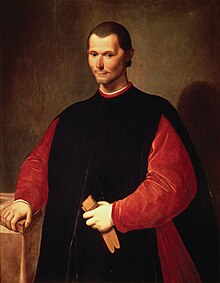
In Bureaucracy, History, Law Enforcement, Military, Politics, Social commentary on April 10, 2018 at 3:03 pm…A truly great man is ever the same under all circumstances. And if his fortune varies, exalting him at one moment and oppressing him at another, he himself never varies, but always preserves a firm courage, which is so closely interwoven with his character that everyone can readily see that the fickleness of fortune has no power over him.
The conduct of weak men is very different. Made vain and intoxicated by good fortune, they attribute their success to merits which they do not possess. And this makes them odious and insupportable to all around them. And when they have afterwards to meet a reverse of fortune, they quickly fall into the other extreme, and become abject and vile.
–Niccolo Machiavelli, The Discourses
Three heroes, two villains.
Two of the heroes are Russian; the third is an American.
The villains: One Russian (actually, Georgian); one American.
First up—in order of disappearance: Mikhail Nikolayevich Tukhachevsky (pronounced too-ka-chev-sky)
Tukhachevsky (February 4, 1893 – June 12, 1937) was a leading Soviet military leader and theoretician from 1918 to 1937.
He commanded the Soviet Western Front during the Russian-Polish War (1920-21) and served as Chief of Staff of the Red Army (1925-1928).
He fought to modernize Soviet armament, as well as develop airborne, aviation and mechanized forces. Almost singlehandedly, he created the theory of deep operations for Soviet forces.
Mikhail Tukhachevsky
All of these innovations would reap huge dividends when the Soviet Union faced the lethal fury of Adolf Hitler’s Wehrmacht.
In 1936, Tukhachevsky warned Soviet dictator Joseph Stalin that Nazi Germany might attack without warning—and ignite a long and murderous war.
Stalin—the son of a Georgian cobbler—resented Tukhachevsky’s coming from a noble family. A monumental egomaniac, he also hated that Tukhachevesky’s fame rivaled his own.
Warned of the approaching German danger, Stalin shouted: “What are you trying to do—frighten Soviet authority?”
Joseph Stalin
The attack that Tukhachevsky warned against came five years later—on June 22, 1941, leaving at least 20 million Russians dead.
But Tukhachevsky wasn’t alive to command a defense.
The 1930s were a frightening and dangerous time to be alive in the Soviet Union. In 1934, Stalin, seeing imaginary enemies everywhere, ordered a series of purges that lasted right up to the German invasion.
An example of Stalin’s paranoia occurred one day while the dictator walked through the Kremlin corridors with Admiral Ivan Isakov. Officers of the NKVD (the predecessor to the KGB) stood guard at every corner.
“Every time I walk down the corridors,” said Stalin, “I think: Which one of them is it? If it’s this one, he will shoot me in the back. But if I turn the corner, the next one can shoot me in the face.”
In 1937-38, the Red Army fell prey to Stalin’s paranoia.
Its victims included:
And heading the list of those marked for death was Marshal Mikhail Tukhachevsky.
Arrested on May 22, 1937, he was interrogated and tortured. As a result, he “confessed” to being a German agent plotting to overthrow Stalin and seize power.
On his confession, which survives in the archives, his bloodstains can clearly be seen.
On June 11, the Soviet Supreme Court convened a special military tribunal to try Tukhachevsky and eight generals for treason.
It was a sham: The accused were denied defense attorneys, and could not appeal the verdict—-which was foregone: Death.
In a Russian version of poetic justice, five of the eight generals who served as Tukhachevsky’s judges were themselves later condemned and executed as traitors.
Within hours of the verdict, Tukhachevsky was summoned from his cell and shot once in the back of the head.
From 1937 until 1956, Tukhachevsky was officially declared a traitor and fifth-columnist.
Then, on February 25, 1957, Soviet Premier Nikita Khrushchev delivered his bombshell “Secret Speech” to the 20th Congress of the Communist Party of the Soviet Union.
In this, he denounced Stalin (who had died in 1953) as a ruthless tyrant responsible for the slaughter of millions of innocent men, women and children. He condemned Stalin for creating a “personality cult” around himself, and for so weakening the Red Army that Nazi Germany was able to easily overrun half of the Soviet Union from 1941 to 1943.
On January 31, 1957, Tukhachevsky and his co-defendants were declared innocent of all charges and were “rehabilitated.”
Today, he is once again—rightly—considered a Russian hero and military genius. And Stalin is universally—and rightly—seen as a blood-stained tyrant.
Next hero: Nikolai Sergeyvich Zhilayev (pronounced Zill-lay-ev)
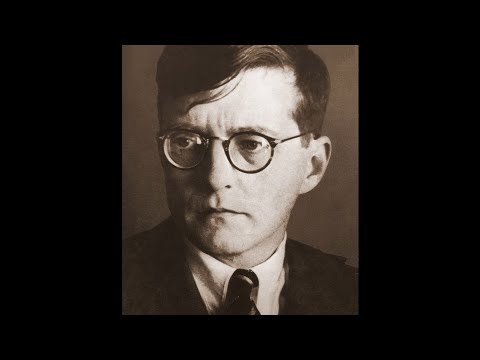
Zhilayev (November 18, 1881 – January 20, 1938) was a Russian musicologist and the teacher of several 20th-century Russian composers. Among these: Dimitri Shostakovich.
Zhilayev, a member of the Russian Academy of Art-Sciences, taught at the Moscow Conservatory. Among his friends–to his ultimate misfortune–was Mikhail Tukhachevsky.
In 1938, he, too, became a casualty of what has become known as The Great Terror.
In his posthumously-published memoirs, Testimony, Shostakovich, his pupil and friend, described how Zhilayev faced his end with a calmness that awed even the NKVD (the predecessor to the KGB) secret police sent to arrest him.
Share this: