Posts Tagged ‘JOHN F. KENNEDY’
2012 PRESIDENTIAL RACE, ALTERNET, AP, BARACK OBAMA, BAY OF PIGS, BBC, BERLIN WALL, BILL CLINTON, BRUCE GREENWOOD, BUZZFEED, CARLOS MARCELLO, CBS NEWS, CIA, CIVIL RIGHTS, CLIFF ROBERTSON, CNN, CUBAN MISSILE CRISIS, DAILY KOS, DAVID HALBERSTAM, DONALD J. TRUMP, FACEBOOK, FBI, FIDEL CASTRO, FRANK SINATRA, HERMAN CAIN, ICH BEN EIN BERLINNER SPEECH, INTERNET MOVIE DATABASE, J. EDGAR HOOVER, JAMES MARSDEN, JOHN F. KENNEDY, JOSEPH MCCARTHY, JOSEPH P. KENNEDY, LYNDON B. JOHNSON, MAFIA, MALCOM X, MARTIN LUTHER KING, MARTIN SHEEN, MOTHER JONES, MOVEON, MOVIES, NBC NEWS, NEWSWEEK, NEWT GINGRICH, NIKITA KHRUSHCHEV, NPR, NUCLEAR TEST BAN TREATY, POLITICO, PT-109, RAW STORY, REUTERS, RICK PERRY, ROBERT F. KENNEDY, ROBERT S. MCNAMARA, SALON, SAM GIANCANA, SANTOS TRAFFICANTE, Sarah Palin, SATURDAY NIGHT LIVE, SEATTLE TIMES, SLATE, SOVIET UNION, THE ATLANTIC, THE BEST AND THE BRIGHTEST, THE BUTLER, THE CHICAGO SUN-TIMES, THE CHICAGO TRIBUNE, THE DAILY BEAST, THE GUARDIAN, THE HILL, THE HUFFINGTON POST, THE LOS ANGELES TIMES, THE MISSILES OF OCTOBER, THE NEW YORK TIMES, THE RAT PACK, THE WALL STREET JOURNAL, THE WASHINGTON POST, THIRTEEN DAYS, TIME, TWILIGHT ZONE, TWITTER, U.S. NEWS & WORLD REPORT, UPI, USA TODAY, VIETNAM WAR, WILLIAM DEVANE, WILLIAM PETERSON
In Bureaucracy, Business, History, Law, Law Enforcement, Military, Politics, Social commentary on May 5, 2017 at 12:10 am
During the 1960 Presidential campaign, then-Senator John F. Kennedy promised to build a Peace Corps to train people in underdeveloped nations to help themselves.
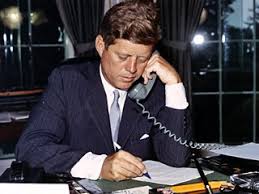
John F. Kennedy
In March, 1961, the program went into effect, with the President’s brother-in-law, Sergent Shriver, as director.
Starvation, illiteracy and disease were the enemies of the Corps. Any nation wanting aid could request it. The first group of volunteers went to the Philippines, the second to Ecuador and the third to Tanganyika.
The problems of the underdeveloped world were too great for any single organization to solve. But the Corps lifted the spirits of many living in those countries. And it captured the imagination of millions of Americans—especially those of thousands of idealistic youths who entered its ranks.
To combat the growing Communist threat to Latin America, Kennedy established the Alliance for Progress. He defined the Alliance’s goal as providing “revolutionary progress through powerful, democratic means.”
Within two years he could report:
“Some 140,000 housing units have been constructed. Slum clearance projects have begun, and 3,000 classrooms have been built. More than 4,000,000 school books have been distributed.
“The Alliance has fired the imagination and kindled the hopes of millions of our good neighbors. Their drive toward modernization is gaining momentum as it unleashes the energies of these millions.
“The United States is becoming increasingly identified in the minds of the people with the goal they move toward: a better life with freedom,” said Kennedy.
Critics of the program, however, charged that the President was trying to “dress up the old policies” of Franklin D. Roosevelt in new rhetoric. Since FDR’s time, the United States has believed in giving economic aid to Latin America.
Much—if not most—of these billions of dollars has wound up in the pockets of various right-wing dictators, such as Anastasio Somoza and Rafael Trujillo.
Meanwhile, Kennedy was urging action on another front—that of outer space.
“This generation does not intend to founder in the backwash of the coming age of space,” declared the President. He committed the United States to putting a man on the moon by the end of the decade.
As indeed it happened less than six years after his death—on July 20, 1969.
Kennedy’s idealistic rhetoric masked his real reason for going to the moon: To score a propaganda victory over the Soviet Union.
Another of his anti-Communist goals: To remove Fidel Castro from power in Cuba at almost any cost.
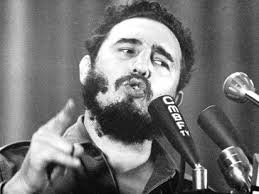
Fidel Castro
Immediately after the failed Bay of Pigs invasion, Kennedy appointed his brother, Robert–who was then the Attorney General—to oversee a CIA program to overthrow Castro.
The CIA and the Mafia entered into an unholy alliance to assassinate Castro—each for its own benefit:
- The CIA wanted to please Kennedy by overthrowing the Communist leader who had nationalized American corporate holdings.
- The Mafia wanted to regain its lucrative casino and brothel holdings that had made Cuba the playground of the rich in pre-Castro times.
The mobsters were authorized to offer $150,000 to anyone who would kill Castro and were promised any support the Agency could yield.
“We were hysterical about Castro at about the time of the Bay of Pigs and thereafter,” then-former Secretary of Defense Robert S. McNamara testified before Congress about these efforts. “And there was pressure from JFK and RFK to do something about Castro.”
Nor was everyone in the CIA enthusiastic about the “get Castro” effort.
“Everyone at CIA was surprised at Kennedy’s obsession with Fidel,” recalled Sam Halpern, who was assigned to the Cuba Project. “They thought it was a waste of time. We all knew [Fidel] couldn’t hurt us. Most of us at CIA initially liked Kennedy, but why go after this little guy?
“One thing is for sure: Kennedy wasn’t doing it out of national security concerns. It was a personal thing. The Kennedy family felt personally burnt by the Bay of Pigs and sought revenge.”
It was all-out war. Among the tactics used:
- Hiring Cuban gangsters to murder Cuban police officials and Soviet technicians.
- Sabotaging mines.
- Paying up to $100,000 per “hit” for the murder or kidnapping of Cuban officials.
- Using biological and chemical warfare against the Cuban sugar industry.
- Planting colorful seashells rigged to explode at a site where Castro liked to go skindiving.
- Trying to arrange for his being presented with a wetsuit impregnated with noxious bacteria and mold spores, or with lethal chemical agents.
- Attempting to infect Castro’s scuba regulator with tuberculous bacilli.
- Trying to douse his handkerchiefs, cigars, tea and coffee with other lethal bacteria.
But all of these efforts failed to assassinate Castro–or overthrow the Cuban Revolution he was heading.
“Bobby (Kennedy) wanted boom and bang all over the island,” recalled Halpern. “It was stupid. The pressure from the White House was very great.”
Americans would rightly label such methods as ”terrorist” if another power used them against the United States today. And the Cuban government saw the situation exactly the same way.
So Castro appealed to Nikita Khrushchev, leader of the Soviet Union, for assistance.
Khrushchev was quick to comply: “We must not allow the Communist infant to be strangled in its crib,” he told members of his inner circle.
2012 PRESIDENTIAL RACE, ALTERNET, AP, BARACK OBAMA, BAY OF PIGS, BBC, BERLIN WALL, BILL CLINTON, BRUCE GREENWOOD, BUZZFEED, CARLOS MARCELLO, CBS NEWS, CIA, CIVIL RIGHTS, CLIFF ROBERTSON, CNN, CUBAN MISSILE CRISIS, DAILY KOS, DAVID HALBERSTAM, DONALD J. TRUMP, FACEBOOK, FBI, FIDEL CASTRO, FRANK SINATRA, ICH BEN EIN BERLINNER SPEECH, INTERNET MOVIE DATABASE, J. EDGAR HOOVER, JAMES MARSDEN, JOHN F. KENNEDY, JOSEPH MCCARTHY, JOSEPH P. KENNEDY, LYNDON B. JOHNSON, MAFIA, MALCOM X, MARTIN LUTHER KING, MARTIN SHEEN, MOTHER JONES, MOVEON, MOVIES, NBC NEWS, NEWSWEEK, NEWT GINGRICH, NIKITA KHRUSHCHEV, NPR, NUCLEAR TEST BAN TREATY, POLITICO, PT-109, RAW STORY, REUTERS, RICK PERRY, ROBERT F. KENNEDY, ROBERT S. MCNAMARA, SALON, SAM GIANCANA, SANTOS TRAFFICANTE, Sarah Palin, SATURDAY NIGHT LIVE, SEATTLE TIMES, SLATE, SOVIET UNION, THE ATLANTIC, THE BEST AND THE BRIGHTEST, THE BUTLER, THE CHICAGO SUN-TIMES, THE CHICAGO TRIBUNE, THE DAILY BEAST, THE GUARDIAN, THE HILL, THE HUFFINGTON POST, THE LOS ANGELES TIMES, THE MISSILES OF OCTOBER, THE NEW YORK TIMES, THE RAT PACK, THE WALL STREET JOURNAL, THE WASHINGTON POST, THIRTEEN DAYS, TIME, TWILIGHT ZONE, TWITTER, U.S. NEWS & WORLD REPORT, UPI, USA TODAY, VIETNAM WAR, WILLIAM DEVANE, WILLIAM PETERSON
In Bureaucracy, Business, History, Law, Law Enforcement, Military, Politics, Social commentary on May 4, 2017 at 12:03 am
May 29, 2017, will mark the 100th anniversary of the birth of President John Fitzgerald Kennedy in Brookline, Massachusetts.
Today—-56 years after he took office—those who voted for him bitterly contrast his memory with the current President, Donald John Trump:
JFK – A decorated war hero
DJT – A five-times draft-dodger
JFK – Youthful (43 upon taking office) and handsome
DJT – Old (70) and overweight
JFK – A fervent anti-Communist
DJT – Elected with support from Russian Communist Intelligence
JFK – Witty, self-mocking
DJT – Humorless, self-bragging
JFK – Optimistic, well-informed, appealing to the best in Americans
DJT – Doom-saying, uninformed, appealing to the “darker side” of his Right-wing base
Some have called the Kennedy administration a golden era in American history. A time when touch football, lively White House parties, stimulus to the arts and the antics of the President’s children became national obsessions.
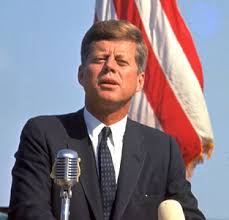
John F. Kennedy
Others have called the Kennedy Presidency a monument to the unchecked power of wealth and ambition. An administration staffed by young novices playing at statesmen, riddled with nepotism, and whose legacy includes the Bay of Pigs, the Vietnam war and the world’s first nuclear confrontation.
The opening days of the Kennedy Presidency raised hopes for a dramatic change in relations between the United States and the Soviet Union.
But detente was not possible then. The Russians had not yet experienced their coming agricultural problems and the setback in Cuba during the Missile Crisis. And the United States had not suffered defeat in Vietnam.
Kennedy’s first brush with international Communism came on April 17, 1961, with the invasion of Cuba at the Bay of Pigs. This operation had been planned and directed by the Central Intelligence Agency during the final months of Dwight D. Eisenhower’s term as President.
The U.S. Navy was to land about 1,400 Cuban exiles on the island to overthrow the Communist government of Fidel Castro. They were supposed to head into the mountains—as Castro himself had done against the dictatorship of Fulgencio Batista in 1956—and raise the cry of revolution.
The invasion would occur after an American air strike had knocked out the Cuban air force. But the airstrike failed and Kennedy, under the pressure of world opinion, called off a second try.
Even so, the invasion went ahead. When the invaders surged onto the beaches, they found Castro’s army waiting for them. Many of the invaders were killed on the spot. Others were captured—to be ransomed by the United States in December, 1962, in return for medical supplies.
It was a major public relations setback for the newly-installed Kennedy administration, which had raised hopes for a change in American-Soviet relations.
Kennedy, trying to abort widespread criticism, publicly took the blame for the setback: “There’s an old saying that victory has a hundred fathers and defeat is an orphan….I’m the responsible officer of the Government.”
The Bay of Pigs convinced Kennedy that he had been misled by the CIA and the Joint Chiefs of Staff. Out of this came his decision to rely heavily on the counsel of his brother, Robert, whom he had installed as Attorney General.
The failed Cuban invasion—unfortunately for Kennedy—convinced Soviet Premier Nikita S. Khrushchev that the President was weak.
Khrushchev told an associate that he could understand if Kennedy had not decided to invade Cuba. But once he did, Kennedy should have pressed on and wiped out Castro.
Khrushchev attributed this to Kennedy’s youth, inexperience and timidity—and believed he could bully the President.
On June 4, 1961, Kennedy met with Khrushchev in Vienna to discuss world tensions. Khrushchev threatened to go to nuclear war over the American presence in West Berlin—the dividing line between Western Europe, protected by the United States, and Eastern Europe, controlled by the Soviet Union.
Kennedy, who prized rationality, was shaken by Khrushchev’s unexpected rage. After the conference, he told an associate: “It’s going to be a cold winter.”
Meanwhile, East Berliners felt they were about to be denied access to West Berlin. A flood of 3,000 refugees daily poured into West Germany.
Khrushchev was embarrassed at this clear showing of the unpopularity of the Communist regime. In August, he ordered that a concrete wall—backed up by barbed wire, searchlights and armed guards—be erected to seal off East Berlin.
As tensions mounted and a Soviet invasion of West Berlin seemed likely, Kennedy sent additional troops to the city in a massive demonstration of American will.
Two years later, on June 26, 1963, during a 10-day tour of Europe, Kennedy visited Berlin to deliver his “I am a Berliner” speech to a frenzied crowd of thousands.
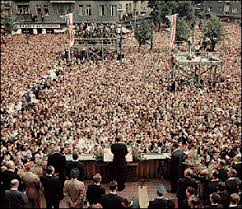
JFK addresses crowds at the Berlin Wall
“There are many people in the world who really don’t understand, or say they don’t, what is the great issue between the free world and the Communist world,” orated Kennedy. “Let them come to Berlin.”
Standing within gunshot of the Berlin wall, he lashed out at the Soviet Union and praised the citizens of West Berlin for being “on the front lines of freedom” for more than 20 years.
“All free men, wherever they may live,” said Kennedy, “are citizens of Berlin. And therefore, as a free man, I take pride in the words, ‘Ich ben ein Berliner.’”
ABC NEWS, ABRAHAM LINCOLN, ADOLF HITLER, ALTERNET, BUZZFEED, CBS NEWS, CIVIL WAR, CNN, DAILY KOS, DONALD TRUMP, FACEBOOK, FRANKLIN D. ROOSEVELT, GREAT DEPRESSION, HERBERT HOOVER, HITLER (BOOK), JOACHIM C. FEST, JOHN F. KENNEDY, LYNDON B. JOHNSON, MOTHER JONES, MOVEON, NBC NEWS, NEWSWEEK, NPR, OTTO VON BISMARK, POLITICO, RAW STORY, RICHARD M. NIXON, SALON, SLATE, SLAVERY, THE CHICAGO SUN-TIMES, THE CHICAGO TRIBUNE, THE DAILY BEAST, THE HUFFINGTON POST, THE LOS ANGELES TIMES, THE NEW YORK TIMES, THE WALL STREET JOURNAL, THE WASHINGTON POST, THEODORE ROOSEVELT, TIME, TWITTER, U.S. NEWS & WORLD REPORT, USA TODAY, VIETNAM WAR, WATERGATE, WORLD WAR ii
In Bureaucracy, History, Military, Politics, Social commentary on February 27, 2017 at 4:43 am
Why are some Presidents remembered with affection, while others are detested–or forgotten altogether?
Generally, Presidents who are warmly remembered are seen as making positive contributions to the lives of their fellow Americans and being “people-oriented.”
Among these:
- Abraham Lincoln
- Theodore Roosevelt
- Franklin Roosevelt
- John F. Kennedy
Among the reasons they are held in such high regard:
- Abraham Lincoln ended slavery and restored the Union. Although he ruthlessly prosecuted the Civil War, his humanity remains engraved in stories such as his pardoning a soldier condemned to be shot for cowardice: “If Almighty God gives a man a cowardly pair of legs, how can he help their running away with him?”
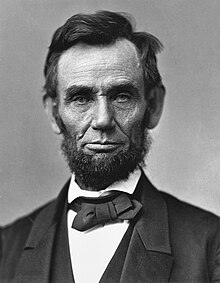
Abraham Lincoln
- Theodore Roosevelt championed an era of reform, such as creating the Food and Drug Administration and five National Parks. Popularly known as “Teddy,” he even had a toy bear–the teddy bear–named after him.
- Franklin D. Roosevelt successfully led America through the Great Depression and World War II. He was the first President to insist that government existed to directly better the lives of its citizens: “The test of our progress is not whether we add more to the abundance of those who have much; it is whether we provide enough for those who have too little.”
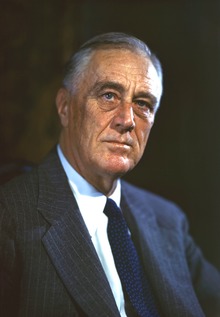
Franklin D. Roosevelt
- John F. Kennedy supported civil rights and called for an end to the Cold War. He challenged Americans to “ask what you can do for your country” and made government service respectable, even chic. His youth, charisma, intelligence and handsomeness led millions to mourn for “what might have been” had he lived to win a second term.
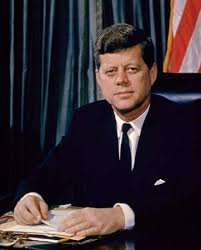
John F. Kennedy
Presidents who remain unpopular among Americans are seen as unlikable and responsible (directly or not) for mass suffering.
Among these:
- Herbert Hoover
- Lyndon B. Johnson
- Richard M. Nixon
Among the reasons they are held in such low regard:
- Herbert Hoover is still blamed for the 1929 Great Depression. He didn’t create it, but his conservative, “small-government” philosophy led him to refuse to aid its victims. An engineer by profession, he saw the Depression as a machine that needed repair, not as a catastrophe for human beings. This lack of “emotional intelligence” cost him heavily with voters.
- Lyndon B. Johnson is still blamed as the President “who got us into Vietnam.” John F. Kennedy had laid the groundwork by placing 16,000 American troops there by the time he died in 1963. But it was Johnson who greatly expanded the war in 1965 and kept it going–with hugely expanding casualties–for the next three years. Unlike Kennedy, whom he followed, he looked and sounded terrible on TV. Voters compared JFK’s wit and good looks with LBJ’s Texas drawl and false piety–and found him wanting.
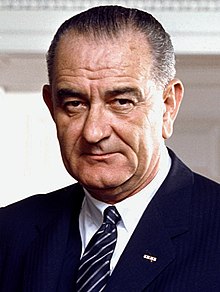
Lyndon B. Johnson
- Richard M. Nixon will be remembered foremost as the President who was forced to resign under threat of impeachment and removal from office. Like Herbert Hoover, he was not a “people person” and seemed remote to even his closest associates. Although he took office on a pledge to “bring us together” and end the Vietnam war, he attacked war protesters as traitors and kept the war going another four years. His paranoid fears of losing the 1972 election led to his creating an illegal “Plumbers” unit which bugged the Democratic offices at the Watergate Hotel. And his attempted cover-up of their illegal actions led to his being forced to resign from office in disgrace.
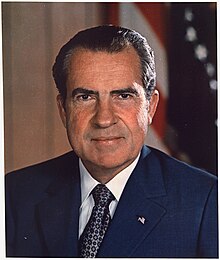
Richard M. Nixon
Which brings us to the question: How is Donald J. Trump likely to be remembered?
Historian Joachim C. Fest offers an unintended answer to this question in his 1973 bestselling biography Hitler:
“The phenomenon of the great man is primarily aesthetic, very rarely moral in nature; and even if we were prepared to make allowances in the latter realm, in the former we could not.
“An ancient tenet of aesthetics holds that one who for all his remarkable traits is a repulsive human being, is unfit to be a hero.”
Among the reasons for Hitler’s being “a repulsive human being,” Fest cites the Fuhrer’s
- “intolerance and vindictiveness”;
- “lack of generosity”; and
- “banal and naked materialism–power was the only motive he would recognize.”
Fest then quotes German chancellor Otto von Bismark on what constitutes greatness: “Impressiveness in this world is always akin to the fallen angel who is beautiful but without peace, great in his plans and efforts, but without success, proud but sad.”
And Fest concludes: “If this is true greatness, Hitler’s distance from it is immeasurable.”
What Fest writes about Adolf Hitler applies just as brutally to President Trump.
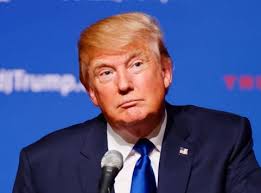
Donald Trump
Intolerant and vindictive. Lacking generosity. Nakedly materialistic.
He has:
- Boasted about the politicians he’s bought and the women he’s bedded–and forced himself on.
- Threatened his Democratic opponent–Hillary Clinton–with prosecution if he were elected.
- Slandered entire segments of Americans–blacks, Hispanics, women, journalists, Asians, the disabled, the Gold Star parents of a fallen soldier.
- Slandered President Barack Obama for five years as a non-citizen, finally admitting the truth only to win black votes.
- Attacked the FBI and CIA for accurately reporting that Russian President Vladimir Putin had intervened in the 2016 Presidential election to ensure Trump’s victory.
At this stage, it’s hard to imagine Trump joining that select number of Presidents Americans remember with awe and reverence.
ABC NEWS, ALTERNET, AMAZON.COM, BED BATH AND BEYOND, BLOOMINGDALE’S, BURLINGTON COAT FACTORY, BUZZFEED, CAMPAIGN LEGAL CENTER, CBS NEWS, CENTURY 21, CNN, DAILY KOS, DONALD TRUMP, ELIJAH E. CUMMINGS, EMOLUMENTS CLAUSE, FACEBOOK, FOUNDING FATHERS, GRAB YOUR WALLET, IVANKA TRUMP, JASON CHAFFETZ, JOE MCGINNIS, JOHN F. KENNEDY, KELLEYANNE CONWAY, LARRY NOBLE, LIBEL, MACY’S, MARSHALLS, MELANIA TRUMP, MOTHER JONES, MOVEON, NBC NEWS, NEIMAN MARCUS, NEWS ALTERNET, NORDSTROM, NPR, POLITICO, PROSTITUTION, RAW STORY, ROSS, SAKS OFF FIFTH, SALON, SEAN SPICER, SEARS, SELLING OF THE PRESIDENT, SLATE, THE CHICAGO SUN-TIMES, THE CHICAGO TRIBUNE, THE DAILY BEAST, THE DAILY MAIL, THE HUFFINGTON POST, THE LOS ANGELES TIMES, THE NEW YORK TIMES, THE WALL STREET JOURNAL, THE WASHINGTON POST, TIME, TJ MAXX, TWITTER, U.S. NEWS & WORLD REPORT, UNITED STATES CONSTITUTION, USA TODAY, WALMART, WEEK
In Bureaucracy, Business, History, Law, Politics, Social commentary on February 15, 2017 at 1:50 pm
President Donald Trump was furious.
Nordstrom department store had just dared to drop the clothing and accessories lines of his daughter, Ivanka.
So, true to form, on February 8 he took to Twitter to vent his displeasure: “My daughter Ivanka has been treated so unfairly by @Nordstrom. She is a great person — always pushing me to do the right thing! Terrible!”
Donald Trump
He used his personal Twitter account–@realDonaldTrump–to send this message. In fact, he sent it 21 minutes into his daily Intelligence briefing.
Still not satisfied, he retweeted his attack on Nordstrom on his official POTUS (President of the United States) Twitter account.
In short, he used a taxpayer-funded account to benefit his daughter.
Not content to attack Nordstrom by himself, Trump enlisted other members of his administration as assailants.
One of these was his press secretary, Sean Spicer:
“There’s a targeting of her brand and it’s her name. She’s not directly running the company. It’s still her name on it. There are clearly efforts to undermine that name based on her father’s positions on particular policies that he’s taken. This is a direct attack on his policies and her name. Her because she is being maligned because they have a problem with his policies.”

Sean Spicer
Nordstrom retorted that its decision to drop the Ivanka Trump line was “based on performance.”
“Over the past year, and particularly in the last half of 2016, sales of the brand have steadily declined to the point where it didn’t make good business sense for us to continue with the line for now.
“We’ve had a great relationship with the Ivanka Trump team. We’ve had open conversations with them over the past year to share what we’ve seen and Ivanka was personally informed of our decision in early January.”
But for the Trumpinistas, that wasn’t the end of it.
On Februrary 9, Kelleyanne Conway, a senior adviser to Trump, became a TV shill for Ivanka.
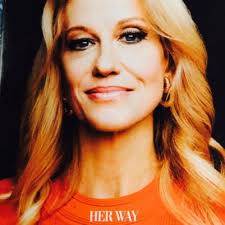
Kelleyanne Conway
Appearing on the Right-wing Fox News Channel program, “Fox and Friends,” Kelleyanne spoke from no less prestigious a forum than the White House itself:
“Go buy Ivanka’s stuff. I hate shopping and I’m going to go get some myself today. It’s a wonderful line. I own some of it. I’m going to give a free commercial here. Go buy it today, everybody. You can find it online.”
For Democrats and even some Republicans, Conway’s behavior was simply unacceptable.
Maryland Democratic Congressman Elijah E. Cummings, a member of the the House Committee on Oversight and Government Reform, sent a letter to Utah Republican Congressman Jason Chaffetz, who chairs the committee.
In it, he requested a referral to the Office of Government Ethics for possible disciplinary action against Conway.
The office does not have investigative or enforcement authority, but officials there can contact and provide guidance to other enforcement agencies.
Chaffetz told the Associated Press that Conway’s behavior was “wrong, wrong, wrong, clearly over the line, unacceptable.”
Larry Noble, the general counsel of the Campaign Legal Center, a nonpartisan organization of election law experts, said Trump’s tweet was “totally out of line.”
“He should not be promoting his daughter’s line, he should not be attacking a company that has business dealings with his daughter, and it just shows the massive amount of problems we have with his business holdings and his family’s business holdings,” Noble said.
Kathleen Clark, a government ethics expert, said the Nordstrom tweet could make other retailers hesitate to drop the Ivanka Trump brand. They may fear being similarly attacked by the President.
“The implicit threat was that he will use whatever authority he has to retaliate against Nordstrom, or anyone who crosses his interest,” said Clark, a law professor at Washington University in St. Louis.
* * * * *
In 1969, 25-year-old Joe McGinnis became famous overnight with the publication of his first book, The Selling of the President.
At the time, Americans were shocked to learn how Presidential candidate Richard Nixon had been sold to voters like any other product. In fact, the original book jacket featured Nixon’s face on a pack of cigarettes.
Today, Madison Avenue doesn’t simply sell Americans their Presidents. Now–with Donald J. Trump–Americans have a President determined to turn the White House into Trump, Inc.
A single example will serve to illustrate:
On January 27, Trump signed an executive order that:
- Suspends entry of all refugees to the United States for 120 days;
- Bars Syrian refugees indefinitely; and
- Blocks entry into the United States for 90 days for citizens of Iran, Iraq, Libya, Somalia, Sudan, Syria and Yemen.
Three countries not covered by Trump’s travel ban are Saudi Arabia, the United Arab Emirates, Egypt, and Turkey.
Approximately 3,000 Americans have been killed by immigrants from these countries–most of them during the attacks on the Pentagon and World Trade Center on September 11, 2001.
Saudi Arabia, the United Arab Emirates, Egypt, and Turkey are all countries where President Trump has close business ties. His properties include two luxury towers in Turkey and golf courses in the United Arab Emirates.
The full dimensions of Trump’s holdings throughout the Middle East aren’t known because he has refused to release his tax returns.
ABC NEWS, ALTERNET, AMAZON.COM, BED BATH AND BEYOND, BLOOMINGDALE’S, BURLINGTON COAT FACTORY, BUZZFEED, CAMPAIGN LEGAL CENTER, CBS NEWS, CENTURY 21, CNN, DAILY KOS, DONALD TRUMP, ELIJAH E. CUMMINGS, EMOLUMENTS CLAUSE, FACEBOOK, FOUNDING FATHERS, GRAB YOUR WALLET, IVANKA TRUMP, JASON CHAFFETZ, JOE MCGINNIS, JOHN F. KENNEDY, KELLEYANNE CONWAY, LARRY NOBLE, LIBEL, MACY’S, MARSHALLS, MELANIA TRUMP, MOTHER JONES, MOVEON, NBC NEWS, NEIMAN MARCUS, NEWS ALTERNET, NORDSTROM, NPR, POLITICO, PROSTITUTION, RAW STORY, ROSS, SAKS OFF FIFTH, SALON, SEAN SPICER, SEARS, SELLING OF THE PRESIDENT, SLATE, THE CHICAGO SUN-TIMES, THE CHICAGO TRIBUNE, THE DAILY BEAST, THE DAILY MAIL, THE HUFFINGTON POST, THE LOS ANGELES TIMES, THE NEW YORK TIMES, THE WALL STREET JOURNAL, THE WASHINGTON POST, TIME, TJ MAXX, TWITTER, U.S. NEWS & WORLD REPORT, UNITED STATES CONSTITUTION, USA TODAY, WALMART, WEEK
In Bureaucracy, Business, History, Law, Politics, Social commentary on February 13, 2017 at 2:33 am
Fifty-six years after John F. Kennedy gave his first and only Inaugural Address, these words remain its single most-quoted sentence: “Ask not what your country can do for you; ask what you can do for your country.”
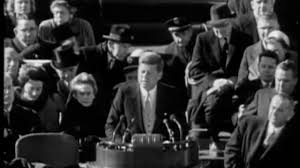
John F. Kennedy Inaugural
So millions of Americans who were alive that day–January 20, 1961–were probably shocked when they learned that Melania Trump had a very different view of government service.
On August 20, 2016, The Daily Mail, a British tabloid, published a story accusing her of having once worked as a prostitute.
The newspaper cited a Slovenian magazine’s report that a modeling agency that she worked with in New York in the 1990s also served as an escort business, linking wealthy clients with women for sexual services.
On September 1, Melania sued The Daily Mail in a state court in Montgomery County, Maryland. In early 2017, the Maryland court dismissed the case, saying it did not have jurisdiction.
On February 6, 2017, Melania filed another libel suit against The Daily Mail in the Manhattan Supreme Court.
Required to prove that she had been harmed in some way, Melania did not cite undeserved shame or how much her family and friends had been hurt.
Instead, she argued that the article had ruined her “once-in-a-lifetime opportunity” to cash in on the Presidency.

Melania Trump
According to the complaint that her attorney filed:
”Plaintiff had the unique, once-in-a-lifetime opportunity, as an extremely famous and well-known person…to launch a broad-based commercial brand in multiple product categories, each of which could have garnered multi-million dollar business relationships for a multi-year term during which plaintiff is one of the most photographed women in the world,” the Manhattan suit says.
“These product categories would have included, among other things, apparel, accessories, shoes, jewelry, cosmetics, hair care, skin care and fragrance.
“The [statements] also constitute defamation per se because they impugned on her fitness to perform her duties as First Lady of the United States,” the suit alleges.
Melania is alleging $150 million in damages.
Enter the Emoluments Clause.
This is a United States government law that specifically forbids any leader from using government services to “enrich” the President and his family.
Among the greatest dangers facing the newly-created American government, feared the Founding Fathers, was foreign interference. And this could be obtained through the use of bribes–money or gifts.

The Founding Fathers of the United States
To prevent this, the Founders inserted the Emoluments Clause into Article I, Section 9 of the United States Constitution:
“No title of nobility shall be granted by the United States: and no person holding any office of profit or trust under them, shall, without the consent of the Congress, accept of any present, emolument, office, or title, of any kind whatever, from any king, prince, or foreign state.”
This illustrates one of the dangers of bringing a libel or slander suit.
(NOTE: Libel is a written defamation; slander is a spoken one)
Whoever brings the suit must open himself to unprecedented privacy-invading questions. And, in answering them, he may unintentionally give away revelations that can prove highly damaging.
Such as the revelation–in Melania Trump’s case–that, from the outset, she intended to use her position as First Lady to enrich herself.
Another Trump seeking to find out “what the country can do for you” is the President’s daughter, Ivanka.
Starting in 2016, Shannon Coulter, a brand and digital strategist, started the Grab Your Wallet boycott aimed at more than 30 retailers who carry Ivanka’s line of fashion apparel.

Among the retailers targeted:
- Amazon.com
- Belk
- Bloomingdale’s
- Bed, Bath and Beyond
- Burlington Coat Factory
- Century 21
- DSW
- Macy’s
- Marshalls
- TJ Maxx
- Neiman Marcus
- Nordstrom
- Overstock.com
- Ross
- Saks Off Fifth
- Sears
- Walmart
- Zappos
During the first week of February, Nordstrom told The Seattle Times that it would no longer carry Ivanka Trump’s line of clothing and accessories.
Nordstrom said the decision to drop Ivanka Trump’s line was based on poor sales performance.
“We’ve got thousands of brands,” said a Nordstrom spokesman. “Each year we cut about 10 percent and refresh our assortment with about the same amount. In this case, based on the brand’s performance we’ve decided not to buy it for this season.”
President Trump had often boasted that he would defend the free enterprise system against an intrusive Federal government.
But for a major department store to drop his daughter’s clothing line was too much.
Turning to Twitter, his favorite weapon of insult, the President tweeted: “My daughter Ivanka has been treated so unfairly by @Nordstrom. She is a great person — always pushing me to do the right thing! Terrible!”
Trump drafted other members of his administration to attack Nordstrom.
One of these was White House Press Secretary Sean Spicer.
Spicer said that the store’s decision to stop carrying Ivanka Trump’s clothing and accessories line was nothing less than an attack on the president’s policies and his daughter.
“”I think this is less about his family’s business and an attack on his daughter. He ran for President, he won, he’s leading this country.
“I think for people to take out their concern about his actions or his executive orders on members of his family, he has every right to stand up for his family and applaud their business activities, their success.”
But even more was to come.
2003 IRAQ WAR, 2016 PRESIDENTIAL CAMPAIGN, ABC NEWS, ADOLF HITLER, AFFORDABLE CARE ACT, AL QAEDA, ALTERNET, ASIANS, BLACKS, BREITBART NEWS, BUZZFEED, CBS NEWS, CHILE, CIA, CLAUS VON STAFFENBERG, CNN, CUBAN MISSILE CRISIS, DAILY KOS, DAVID DUKE, DONALD TRUMP, EMPEROR TIBERIUS, FACEBOOK, FBI, GUATEMALA, HISPANICS, HOMOSEXUALS, INTELLIGENCE COMMUNITY, IRAN, JACABO ARBENZ, JAMES W. DOUGLAS, JFK AND THE UNSPEAKABLE, JOHN F. KENNEDY, JOHN KASICH, JOINT CHIEFS OF STAFF, KU KLUX KLAN, LATINOS, LESBIANS, MARTIN NIEMOELLER, MEDICARE, Military, MOHAMMED MOSADDEGH, MOTHER JONES, MOVEON, MUSLIMS, NATIONAL SECURITY AGENCY, NAVY SEALS, NAZI GERMANY, NBC NEWS, NEWSWEEK, NICCOLO MACHIAVELLI, NPR, POLITICO, PRISONERS OF WAR, RAW STORY, SALON, SALVADORE ALLENDE, SLATE, SS, STEVE BANNON, THE CHICAGO SUN-TIMES, THE CHICAGO TRIBUNE, THE DAILY BEAST, THE DISABLED, THE HUFFINGTON POST, THE LOS ANGELES TIMES, THE NEW YORK TIMES, THE WALL STREET JOURNAL, THE WASHINGTON POST, TIME, TWITTER, U.S. NEWS & WORLD REPORT, WEHRMACHT, WOMEN, WORLD WAR 11
In History, Military, Politics, Social commentary on February 6, 2017 at 12:01 am
On July 20, 1944, members of the Wehrmacht high command failed to assassinate Adolf Hitler with a bomb hidden in a briefcase.
But two setbacks prevented the conspirators from succeeding.
First, Hitler survived the bomb blast.
Second, the plotters failed to seize the key broadcast facilities of the Reich.
This allowed Hitler to make a late-night speech to the nation, revealing the failed plot and assuring Germans that he was alive. And he swore to flush out the “traitorous swine” who had tried to kill him.
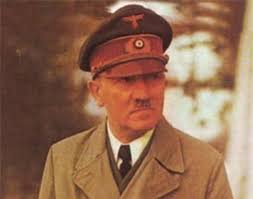
Adolf Hitler
Mass arrests quickly followed.
Among the first victims discovered and executed was the conspiracy’s leader, Colonel Claus von Stauffenberg. Standing before a makeshift firing squad at midnight, he cried: “Long live our sacred Germany!”
At least 7,000 persons were arrested by the Gestapo. According to records of the Fuehrer Conferences on Naval Affairs, 4,980 were executed.
Had the conspiracy succeeded, history would have turned out differently:
Thus, history can be altered by the appearance or disappearance of a single individual.
Which brings us back to Donald Trump.
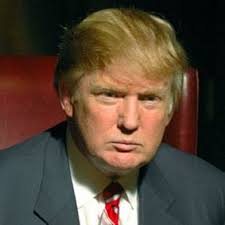
Donald Trump
Since becoming President on January 20, Trump has:
- Infuriated “Obamacare” patients: Trump authorized the directors of Federal agencies to waive requirements of the Affordable Care Act–which provides medical insurance to 22 million Americans–to the “maximum extent permitted by law.”
- Infuriated the CIA: Appearing at CIA headquarters on his first full day in office, Trump addressed about 400 case officers. Standing before the star-studded memorial wall honoring 117 CIA officers who had fallen in the line of duty. Trump ignored their sacrifice. Instead, he boasted of the size of his Inaugural crowd and how many times he had appeared on the cover of Time.
- Infuriated Muslims: Commenting on the 2003 Iraq war during his remarks at the CIA, Trump said: “So we should have kept the oil. But okay. Maybe you’ll have another chance….”
- Infuriated American Intelligence and military agencies: A Trump executive order allows the Director of National Intelligence and chairman of the Joint Chiefs of Staff to attend the Principals’ Committee only when it pertains to their “responsibilities and expertise.”
- Infuriated Jews and civil rights advocates: Senior Adviser and Chief Strategist Steve Bannon–an anti-Semitic white supremacist–will now wield influence over the National Security Council, Homeland Security Council and Principal’s Committee. When Bannon–previously executive chair of Breitbart News, a Right-wing website–was appointed senior adviser to Trump, former Ku Klux Klan leader David Duke called the selection “excellent.”
- Infuriated Medicare patients: During the 2016 campaign, Trump said he would allow Medicare to negotiate down the price of prescription drugs. At his January 10 press conference he charged that pharmaceutical companies were “getting away with murder.” But after meeting with pharmaceutical lobbyists on January 31, Trump said: “I’ll oppose anything that makes it harder for smaller, younger companies to take the risk of bringing their product to a vibrantly competitive market. That includes price-fixing by the biggest dog in the market, Medicare.”
During the 2016 Presidential campaign, Trump infuriated one group of voters after another, including: Hispanics, homosexuals, blacks, lesbians, Muslims, women, Asians, the disabled, prisoners-of-war.
As President, he has continued to anger highly influential groups. Some of these–such as “Obamacare” and Medicare patients–can retaliate only with their votes. And that won’t affect Trump until the 2020 Presidential election.
But other groups he has antagonized–such as the military and Intelligence communities–can do far more than vote against him.
Both have access to vast amounts of secret–and highly embarrassing–information. And both are expert in leaking choice bits of this to favored members of the media.
The Trump administration is only two weeks old and already this truth is on full display.
Anonymous military officials are blaming Trump for the death of a Navy SEAL during a January 29 raid on Al Qaeda in Yemen. According to Reuters, Trump approved the raid without sufficient intelligence, ground support or adequate backup preparations.
As for the CIA: This agency has been overthrowing heads of state for decades.
In 1953, its coup removed Mohammad Mosaddegh, the prime minister of Iran. In 1954, another coup did the same for Guatemalan president Jacobo Árbenz. In 1970, Chile’s president, Salvadore Allende, fell victim to a CIA-instigated plot.
Millions of Americans believe the CIA engineered the 1963 assassination of President John F. Kennedy. James W. Douglass’ 2008 book, JFK and the Unspeakable, charges that the CIA murdered Kennedy because he wanted to end the Cold War after the Cuban Missile Crisis.
Like the despised Roman emperor Tiberius, Donald Trump lives by the motto: “Let them hate me, so long as they fear me.”
Niccolo Machiavelli counseled better: “A prince should make himself feared in such a way that if he does not gain love, he at any rate avoids hatred: for fear and the absence of hatred may well go together.”
2003 IRAQ WAR, 2016 PRESIDENTIAL CAMPAIGN, ABC NEWS, ADOLF HITLER, AFFORDABLE CARE ACT, AL QAEDA, ALTERNET, ASIANS, BREITBART NEWS, BUZZFEED, CBS NEWS, CHILE, CIA, CLAUS VON STAFFENBERG, CNN, CUBAN MISSILE CRISIS, DAILY KOS, DAVID DUKE, DONALD TRUMP, EMPEROR TIBERIUS, FACEBOOK, FBI, GUATEMALA, HISPANICS, HOMOSEXUALS, INTELLIGENCE COMMUNITY, IRAN, JACABO ARBENZ, JAMES W. DOUGLAS, JFK AND THE UNSPEAKABLE, JOHN F. KENNEDY, JOHN KASICH, JOINT CHIEFS OF STAFF, KU KLUX KLAN, LESBIANS, MARTIN NIEMOELLER, MEDICARE, Military, MOHAMMED MOSADDEGH, MOTHER JONES, MOVEON, MUSLIMS, NATIONAL SECURITY AGENCY, NAVY SEALS, NAZI GERMANY, NBC NEWS, NEWSWEEK, NICCOLO MACHIAVELLI, NPR, POLITICO, PRISONERS OF WAR, RAW STORY, SALON, SALVADORE ALLENDE, SLATE, SS, STEVE BANNON, TERRORISTS, THE CHICAGO SUN-TIMES, THE CHICAGO TRIBUNE, THE DAILY BEAST, THE DISABLED, THE HOLOCAUST, THE HUFFINGTON POST, THE LOS ANGELES TIMES, THE NEW YORK TIMES, THE WALL STREET JOURNAL, THE WASHINGTON POST, TIME, TWITTER, U.S. NEWS & WORLD REPORT, WEHRMACHT, WOMEN, WORLD WAR 11
In History, Military, Politics, Social commentary on February 3, 2017 at 12:49 am
On July 20, 1944, a one-eyed, one-armed man tried to assassinate Adolf Hitler
Colonel Claus Schenk von Stuaffenberg had served with the Wehrmacht in Poland (1939), France (1940) and the Soviet Union (1941). And he had been seriously wounded in its service.
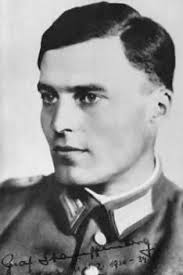
Colonel Claus Schenk von Stuaffenberg
Nevertheless, he now acted as the prime mover for the conspiracy among a growing number of German high command officers to arrest or assassinate Germany’s Fuehrer.
Most of the conspirators wanted to arrest Hitler and surrender to British and American forces–well before the much-feared Russians gained a foothold in Germany.
But Stauffenberg wanted him dead: A live Hitler might eventually be rescued by his Nazi colleagues.
But–how to do it?
Hitler was a closely-guarded target. He was surrounded by fanatical bodyguards who were expert marksmen. He often wore a bulletproof vest and a cap lined with three pounds of laminated steel.
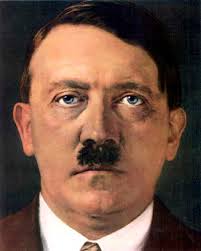
Adolf Hitler
But his single greatest protection–he claimed–was an instinct for danger. He would often suddenly change his schedule–to drop in where he was least expected. Or to suddenly depart an event where he was scheduled to stay a long time.
On November 9, 1939, this instinct saved his life. He had been set to give a long speech at a Munich beer hall before the “Old Fighters” of his storm troopers.
Sixteen years earlier on that day, in 1923, Hitler had led them in a disastrous attempt to overthrow the Bavarian government. Police had put down the effort, killing and wounding about a score of storm troopers in the process.
Hitler himself had later been arrested, tried and convicted for treason–and sentenced to a year’s imprisonment.
But instead of proving to be the end of Nazism, the “Beer Hall Putsch” turned Hitler into a national celebrity. And it launched his career as a legitimate, ultimately successful politician.
So Hitler was expected to speak to his longtime supporters for a long time that evening. Instead, he suddenly cut short his speech and left the beer hall.
Forty-five minutes later, a bomb exploded inside a pillar–before which Hitler had been speaking.
Since then, a series of other assassination attempts had been made against Hitler. All of them involved time-bombs. And all of the would-be assassins were members of the German General Staff.
In one case, a bomb secretly stashed aboard Hitler’s plane failed to explode. In another, an officer who had a bomb strapped to himself unexpectedly found his scheduled meeting with Hitler called off. He had to rush into a bathroom to defuse the bomb before it went off.
So now it was the turn of von Stauffenberg. He would carry his bomb–hidden in a briefcase–into a “Hitler conference” packed with military officers.
But Stauffenberg didn’t intend to be a suicide bomber. He meant to direct the government that would replace that of the Nazis.
His bomb–also rigged with a time-fuse–would be left in the conference room while he found an excuse to leave. After the explosion, he would phone one of his fellow conspirators with the news.
Then, the coup–“Operation Valkyrie”–would be on.
Anti-Nazi conspirators would seize control of key posts of the government. The British and Americans would then be informed of Germany’s willingness to surrender. Provided, of course, that the Russians did not have a say in its postwar future.
The Wehrmacht and Schutzstaffel (SS) had killed millions of Russians. Many had died in combat. Others had been murdered as captives. Still more had been allowed to die by starvation and exposure to the notorious Russian winter.
So the Germans–both Nazi and anti-Nazi–knew what they could expect if soldiers of the Soviet Union reached German soil.
On July 20, 1944, Stauffenberg appeared at Hitler’s well-guarded military headquarters in East Prussia. Like all his other outposts, Hitler had named it–appropriately enough–“Wolf’s Lair.”

“Wolf’s Lair”
Stauffenberg entered the large, concrete building while the conference was in session. He placed his yellow briefcase next to Hitler–who was standing with his generals at a heavy oaken table.
Then Stauffenberg excused himself to take an “urgent” phone call.
At 12:42 p.m. on July 20, 1944, Stauffenberg’s briefcase bomb erupted.
But the Third Reich didn’t come to an end–because, as if miraculously, Hitler had survived.

Hitler shows off the site of the explosion
What had happened?
First, the conference location had been changed–from a wooden building to a concrete one. The concrete absorbed much of the blast.
Second, owing to the summer’s heat, Hitler had ordered all the windows–about ten–opened to let in a breeze. This allowed much of the force of the blast to be dispersed.
Third, and perhaps most important: Stauffenberg had carefully placed his briefcase near Hitler, who was standing next to a heavy oaken support of the conference table.
But after Stauffenberg left the room, Colonel Heinz Brandt, who stood next to Hitler, found the briefcase blocking his legs. So he moved it–to the other side of the heavy oaken support.
When the bomb exploded, Hitler was partially shielded from its full blast. Brandt died, as did two other officers and a stenographer.
2003 IRAQ WAR, 2016 PRESIDENTIAL CAMPAIGN, ABC NEWS, ADOLF HITLER, AFFORDABLE CARE ACT, AL QAEDA, ALTERNET, ASIANS, BREITBART NEWS, BUZZFEED, CBS NEWS, CHILE, CIA, CLAUS VON STAFFENBERG, CNN, CUBAN MISSILE CRISIS, DAILY KOS, DAVID DUKE, DONALD TRUMP, EMPEROR TIBERIUS, FACEBOOK, FBI, GUATEMALA, HISPANICS, HOMOSEXUALS, INTELLIGENCE COMMUNITY, IRAN, JACABO ARBENZ, JAMES W. DOUGLAS, JFK AND THE UNSPEAKABLE, JOHN F. KENNEDY, JOHN KASICH, JOINT CHIEFS OF STAFF, KU KLUX KLAN, LESBIANS, MARTIN NIEMOELLER, MEDICARE, Military, MOHAMMED MOSADDEGH, MOTHER JONES, MOVEON, MUSLIMS, NATIONAL SECURITY AGENCY, NAVY SEALS, NAZI GERMANY, NBC NEWS, NEWSWEEK, NICCOLO MACHIAVELLI, NPR, POLITICO, PRISONERS OF WAR, RAW STORY, SALON, SALVADORE ALLENDE, SLATE, SS, STEVE BANNON, TERRORISTS, THE CHICAGO SUN-TIMES, THE CHICAGO TRIBUNE, THE DAILY BEAST, THE DISABLED, THE HUFFINGTON POST, THE LOS ANGELES TIMES, THE NEW YORK TIMES, THE WALL STREET JOURNAL, THE WASHINGTON POST, TIME, TWITTER, U.S. NEWS & WORLD REPORT, WEHRMACHT, WOMEN, WORLD WAR 11
In History, Military, Politics, Social commentary on February 2, 2017 at 12:12 am
The voice belonged to Tom Moe, a retired colonel in the U.S. Air Force–and a former Vietnam prisoner-of-war.
It was a video produced by the 2016 Presidential campaign for John Kasich. Kasich, the governor of Ohio, had been peddling a message of creating jobs, balancing the Federal budget and disdain for Washington, D.C.
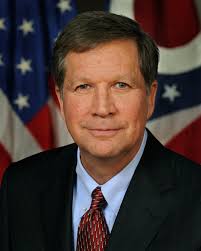
John Kasich
But he remained far behind in the polls, dropping 50% in support in just one month–from September to October. Meanwhile, Trump, the New York billionaire developer, was backed by 25% of Republican primary voters.
So, with nothing to lose, Kasich decided to take off the gloves. He invoked the “N” word for Republicans: Nazi. “You might not care if Donald Trump says Muslims must register with the government, because you’re not one,” continues Moe.
“And you might not care if Donald Trump says he’s going to round up all the Hispanic immigrants, because you’re not one.
Donald Trump
“And you might not care if Donald Trump says it’s OK to rough up black protesters, because you’re not one.
“And you might not care of Donald Trump wants to suppress journalists, because you’re not one.
“But think about this:
“If he keeps going, and he actually becomes President, he might just get around to you. And you’d better hope that there’s someone left to help you.”
Click here: Trump’s Dangerous Rhetoric – YouTube
The above is indeed a paraphrase of a famous quote by Martin Niemoeller (1892–1984), a prominent Protestant pastor. Although he had been a U-boat commander during World War 1, he became a bitter public foe of Adolf Hitler.
A staunch anti-Communist, he had initially supported the Nazis as Germany’s only hope of salvation against the Soviet Union. But when the Nazis made the church subordinate to State authority, Niemoeller created the Pastors’ Emergency League to defend religious freedom.
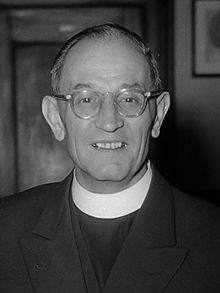
Martin Niemoeller
For his opposition to the Third Reich, Niemoeller spent seven years in concentration camps. With the collapse of the Reich in 1945, he was freed–and elected President of the Protestant church in Hesse and Nassau in 1947.
During the 1960s, he was a president of the World Council of Churches.
He is best remembered for his powerful condemnation of the failure of Germans to protest the increasing oppression of the Nazis:
First they came for the Communists, but I was not a Communist, so I did not speak out.
Then they came for the Socialists, but I was not a Socialist, so I did not speak out.
Then they came for the trade unionists, but I was not a trade unionist, so I did not speak out.
Then they came for the Jews, but I was not a Jew, so I did not speak out.
And when they came for me, there was no one left to speak out for me.
Neither “Adolf Hitler” nor “Nazi Party” was mentioned during the one-minute Kassich video. But Trump was furious.
“I will sue him [Kasich] just for fun,” said Trump, if he could find anything “not truthful” within the ad.
So said the man who called Mexican immigrants “rapists” and accused President Barack Obama of being a Muslim and born outside the United States.
The Kasich ad was by far the darkest attack made against Trump by any candidate–Republican or Democrat. And it raises a disturbing question:
If Donald Trump is America’s Adolf Hitler, who will be its Claus von Stauffenberg?
Colonel Claus Schenk von Stuaffenberg was the German army officer who, on July 20, 1944, tried to assassinate Adolf Hitler.
He had served with the Wehrmacht in Poland (1939), France (1940) and the Soviet Union (1941).
While serving in Tunisa, he was seriously wounded on April 7, 1943 when Allied fighters strafed his vehicle. He lost his left eye, right hand and two fingers of his left hand after surgery.
Colonel Claus Schenk von Stuaffenberg
Nevertheless, he now acted as the prime mover for the conspiracy among a growing number of German high command officers to arrest or assassinate Germany’s Fuehrer.
For most of these officers, the motive was craven: Germany was losing the war it had launched on the world–and they feared the worst. This was especially true now that the numerically superior forces of the Soviet Union had gone onto the offensive.
For Stauffenberg, there was another reason: His disgust at the horrors he had seen committed by his fellow Wehrmacht soldiers upon defenseless POW’s and civilians in Russia.
Thus, Stauffenberg–more than many German––knew firsthand the vengeance his country could expect if the “1,000 year Reich” fell.
Something must be done, he believed, to prove to the world that not all Germans–even members of the Wehrmacht–were criminals.
Most of the conspirators wanted to arrest Hitler and surrender to British and American forces–well before the much-feared Russians gained a toehold in Germany.
For Stauffenberg, arresting Hitler wasn’t enough.
Stauffenberg wanted him dead. A live Hitler might eventually be rescued by his Nazi colleagues.
But–how to do it?
2016 PRESIDENTIAL CAMPAIGN, 9/11 ATTACKS, ABC NEWS, ACADEMY AWARDS, ASSOCIATED PRESS, BARACK OBAMA, BEST ACTRESS, BEST SUPPORTING ACTRESS, BIRTHERS, BULLYING, CBS NEWS, CENSORSHIP, CHRIS CUOMO, CNN, CREDIBILITY GAP, DAVID BROOKS, DAVID HALBERSTAM, DISABILITY, DONALD TRUMP, FACEBOOK, FOX AND FRIENDS, FRANK STANTON, FULL METAL JACKET, GEORGE MCGOVERN, GOLDEN GLOBES, HILLARY CLINTON, JOHN F. KENNEDY, KELLEYANNE CONWAY, KRAMER VS. KRAMER, LYNDON B. JOHNSON, MARK SHIELDS, MERYL STREEP, MORLEY SAFER, MOTHER JONES, MOVEON, NAVY SEALS, NBC NEWS, NEEWSWEEK, NEW DAY, NPR, OSAMA BIN LADEN, PBS NEWSHOUR, PETER ARNETT, POLITICO, RICHARD NIXON, RONALD ZIEGLER, SALON, SERGE KOVALESKI, SLATE, SOPHIE'S CHOICE, STANLEY KUBRICK, THE CHICAGO SUN-TIMES, THE CHICAGO TRIBUNE, THE HUFFINGTON POST, THE IRON LADY, THE LOS ANGELES TIMES, THE NEW YORK TIMES, THE WALL STREET JOURNAL, THE WASHINGTON POST, TIME, TWITTER, U.S. NEWS & WORLD REPORT, USA TODAY, VIETNAM WAR, WATERGATE
In Bureaucracy, History, Law, Law Enforcement, Military, Politics, Social commentary on January 16, 2017 at 12:14 am
After being presented with the Cecil B. DeMille Lifetime Achievement Award, Meryl Streep criticized Donald Trump’s mocking of disabled New York Times reporter Serge Kovaleski.
Kovaleski suffers from arthrogryposis, a congenital condition that restricts the movement of the muscles in his arms.
At a South Carolina rally on November 24, 2015, Trump claimed that Kovaleski was backing away from an article he had written four years earlier.
Trump had earlier said the article proved that New Jersey Muslims had celebrated the September 11, 2001 terror attacks. Kovaleski had insisted there was no credible proof of such celebrations.
Angered at being contradicted, Trump mocked Kovaleski: He flopped his right arm around with his hand held at an odd angle while imitating the reporter: “Now, the poor guy, you’ve got to see this guy: ‘Uhh, I don’t know what I said. Uhh, I don’t remember,’ he’s going like ‘I don’t remember. Maybe that’s what I said.'”
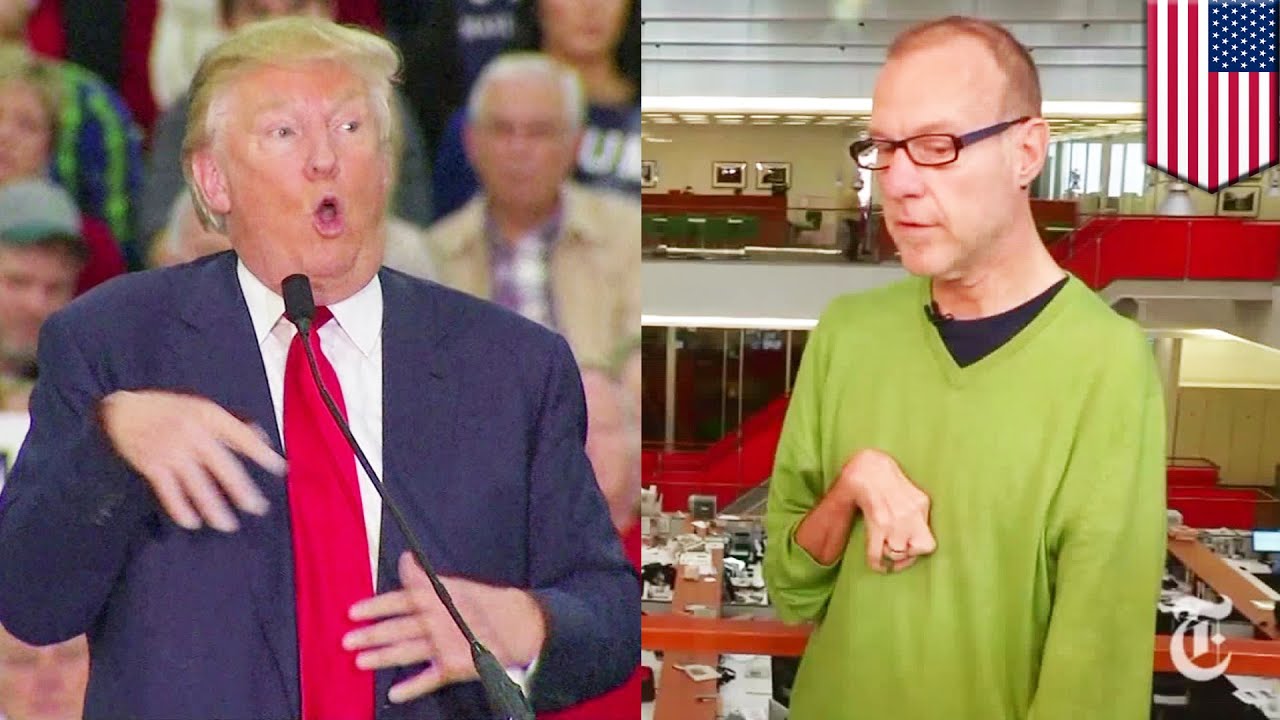
Trump mocking Kovaleski, left; Kovaleski, right
At the Golden Globe Awards on January 8, Streep denounced this behavior that “broke my heart.”
“And this instinct to humiliate, when it’s modeled by someone in the public platform, by someone powerful, it filters down into everybody’s life, because it kind of gives permission for other people to do the same thing.
“Disrespect invites disrespect. Violence incites violence. When the powerful use their position to bully others, we all lose.”
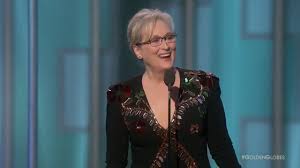
Meryl Streep at the Golden Globes
Streep’s words outraged Trump’s supporters–especially his mouthpiece, Kelleyanne Conway.
Appearing on Right-wing Fox and Friends the next morning, she said: “We have to now form a government, and I’m concerned that somebody with a platform like Meryl Streep is also, I think, inciting people’s worst instincts.
“When she won’t get up there and say, ‘I don’t like it, but let’s try to support him and see where we can find some common ground with him, which [Trump] has actually done from moment one.”
Conway didn’t say what common ground Streep should find with Trump. Perhaps agreeing on mocking the disabled?

Kelleyanne Conway
Then Conway visited CNN’s “New Day,” where she offered a “black-is-white” defense for Trump’s videotaped ridiculing of Kovaleski: It didn’t happen.
The host, Chris Cuomo, having seen the video, wasn’t buying it.
CUOMO: But is [Streep] wrong? Is she wrong that it was wrong for Trump to make gestures like that about a man with disabilities?
CONWAY: He didn’t–but that is not what he did and he has said that a thousand times. As he tweeted out today–
CUOMO: He can say it a million. Look at the video.
CONWAY: Why can’t you–wait, excuse me. Why can’t you give him the benefit of the doubt the way the benefit of the doubt was given to CNN’s polling, all of its analysts?
CUOMO: Because he’s making a disgusting gesture on video talking about Serge.
CONWAY: Not about that reporter and that’s just a fact. That is what he’s said. You should give him–
CUOMO: But how is it not about the reporter?
CONWAY: –the deference and respect if he says that it was–he was not mocking, he was mocking the groveling. He said it again this morning. He has three tweets out about it.
CUOMO: But he’s doing a gesture that goes right to the guy’s vulnerability.
CONWAY: You’re saying you don’t believe him. You’re calling him a liar and you shouldn’t.
CUOMO: Look, Kellyanne, to me that’s like you’re trying to scare me off the point and we both know it’s a waste of time.
CONWAY: I’m not going to scare you off anything.
CUOMO: He’s making a gesture that is so keenly tuned to what Serge’s vulnerability is.
CONWAY: And now you’re giving oxygen to what Meryl Streep said.
CUOMO: Forget about Meryl Streep. This happened before her. If our kids did that, could you imagine what we would say to them?
Conway said she would not bring her children into the discussion.
CUOMO: I will. If my kid did something like that, it’d be a really tough day.
CONWAY: You have to listen to what the president has said about that. Why don’t you believe him?
Conway tried to change the subject to Hillary Clinton: “She was given the benefit of the doubt here constantly.”
When Cuomo asked for specifics, she refused to give them. Then she returned to claiming that Trump had never mocked Kovaleski:
CONWAY: You can’t give him the benefit of the doubt on this, when he’s telling you what was in his heart? You always want to go by what’s come out of his mouth, rather than look at what’s in his heart.
* * * * *
Previously, politicians had defended themselves with arguments like: “You can see right here on the tape, I did (or, I didn’t)….”
Trump has cast aside that logic–and the taped evidence–by demanding: “Believe what I’m telling you, not what you’ve just seen.”
By that rationale, if a security camera shows Trump robbing a bank at gunpoint, we’re supposed to believe him if he says: “No, I didn’t rob that bank. I was simply checking my bank balance.”
Such “logic” holds appeal for paid shills like Kelleyanne Conway. But most people will continue to judge by the evidence.
2016 PRESIDENTIAL CAMPAIGN, 9/11 ATTACKS, ABC NEWS, ACADEMY AWARDS, ASSOCIATED PRESS, BARACK OBAMA, BEST ACTRESS, BEST SUPPORTING ACTRESS, BIRTHERS, BULLYING, CBS NEWS, CENSORSHIP, CHRIS CUOMO, CNN, CREDIBILITY GAP, DAVID BROOKS, DAVID HALBERSTAM, DISABILITY, DONALD TRUMP, FACEBOOK, FOX AND FRIENDS, FRANK STANTON, FULL METAL JACKET, GEORGE MCGOVERN, GOLDEN GLOBES, HILLARY CLINTON, JOHN F. KENNEDY, KELLEYANNE CONWAY, KRAMER VS. KRAMER, LYNDON B. JOHNSON, MARK SHIELDS, MERYL STREEP, MORLEY SAFER, MOTHER JONES, MOVEON, NAVY SEALS, NBC NEWS, NEEWSWEEK, NEW DAY, NPR, OSAMA BIN LADEN, PBS NEWSHOUR, PETER ARNETT, POLITICO, RICHARD NIXON, RONALD ZIEGLER, SALON, SERGE KOVALESKI, SLATE, SOPHIE'S CHOICE, STANLEY KUBRICK, THE CHICAGO SUN-TIMES, THE CHICAGO TRIBUNE, THE HUFFINGTON POST, THE IRON LADY, THE LOS ANGELES TIMES, THE NEW YORK TIMES, THE WALL STREET JOURNAL, THE WASHINGTON POST, TIME, TWITTER, U.S. NEWS & WORLD REPORT, USA TODAY, VIETNAM WAR, WATERGATE
In Bureaucracy, History, Law, Law Enforcement, Military, Politics, Social commentary on January 13, 2017 at 12:02 am
For five years, Donald Trump, more than anyone else, popularized the slander that Barack Obama was born in Kenya–and was therefore an illegitimate President.
For more than a year during his 2016 Presidential campaign, Trump continued doing so.
As his popularity fell to less than 1% among blacks, the managers of his campaign urged: Put the “birther” issue behind you.
So, on September 16, 2016–10 days before his scheduled first debate with Democratic Presidential nominee Hillary Clinton–Trump made his version of a reversal.
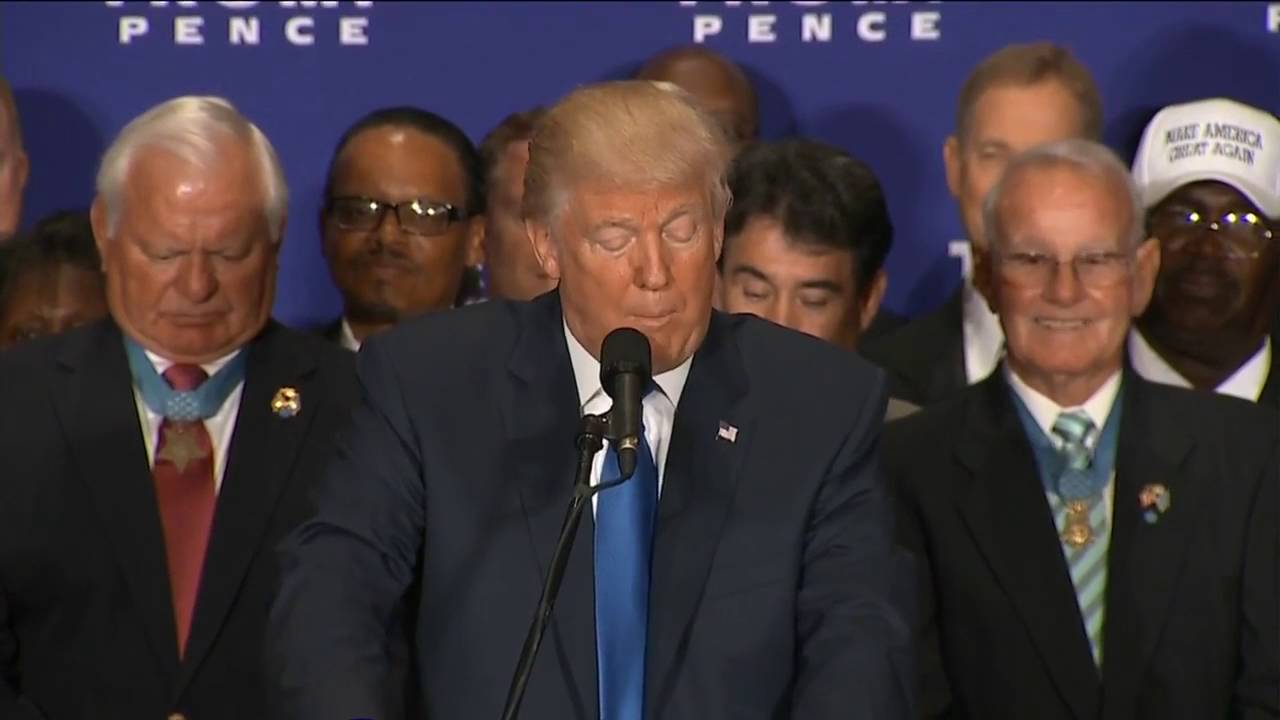
Donald Trump: “President Barack Obama was born in the United States.”
He did so in about seven seconds and 40 words–after spending a half hour paying tribute to the military and promoting his new upscale hotel in Washington, D.C.:
“Now, not to mention her in the same breath, but Hillary Clinton and her campaign of 2008 started the birther controversy.
“I finished it. I finished it. You know what I mean.
“President Barack Obama was born in the United States, period. Now we all want to get back to making America strong and great again.”
His tone made it clear that he felt uneasy making that statement–and wanted to get it over with as fast as possible.
He refused to take questions from reporters covering the event. Nor did he apologize for his five-year campaign of slander.
On the evening of September 16, Hillary Clinton strongly responded to Trump’s comments:
“For five years, he has led the birther movement to de-legitimize our first black president. His campaign was founded on this outrageous lie. There is no erasing it in history.”
And First Lady Michelle Obama slammed Trump for his “birther” claims:
“Then, of course, there were those who questioned, and who continue to question for the past eight years, and up to this very day, whether my husband was even born in this country.
“Well, during his time in office, I think Barack has answered those questions with the examples he set, by going high when they go low. And he’s answered these questions with the progress we’ve achieved together.”
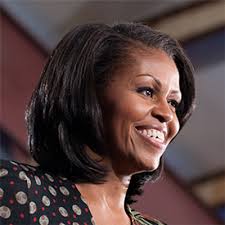
Michelle Obama
But perhaps the best perspective on this event was provided by syndicated columnist Mark Shields and New York Times columnist David Brooks. Each Friday they appear on the PBS Newshour to review the week’s major political events.
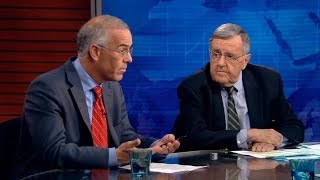
David Brooks and Mark Shields
On September 16, Shields (a liberal) and Brooks (a conservative) addressed Trump’s about-face on birtherism.
MARK SHIELDS: “I think it’s important to establish right at the outset that [Trump] wasn’t only the loudest and the highest-profile and the most persistent and the most well-publicized birther, he, Donald Trump. He lied. He lied consistently and persistently.
“And, today, without explanation or excuse, he just changed his position and tried to absolutely falsely shift the blame onto Hillary Clinton.
“And this was an appeal to–he debased democracy. He debased the national debate. He appealed to that which is most ignoble or least noble in all of us.”
DAVID BROOKS: “Usually, there’s some tangential relationship to the truth, but a corroding relationship to the truth, frankly, as politics has gone on over the years.
“But now we’re in a reverse, Orwellian inversion of the truth with this. And so we have a team of staffers and then the candidate himself who have taken the normal spin and smashed all the rules.
“And so we are really in Orwell land. We are in 1984. And it’s interesting that an authoritarian personality type comes in at the same time with a complete disrespect for even tangential relationship to the truth that words are unmoored.
“And so I do think this statement sort of shocked me with the purification of a lot of terrible trends that have been happening. And so what’s white is black, and what is up is down, what is down is up. And that really is something new in politics.
“And the fact that there is no penalty for it, apparently–he’s doing fantastic in the last two weeks in the polls–is just somehow where we have gotten.”
Less than two months later, Trump won the Presidency.
Since then, Trump has continued to inhabit what David Brooks called “Orwell land.”
The most recent example of this occurred on January 9, 2017.
The night before, Meryl Streep had enraged Trump and his mouthpiece, Kelleyanne Conway, at the Golden Globes Awards ceremony.
While being presented with the Cecil B. DeMille Lifetime Achievement Award, she had criticized Trump’s mocking, on November 25, 2015, of disabled New York Times reporter Serve Kovaleski:
“There was one performance this year that stunned me. It sank its hooks in my heart. Not because it was good. There was nothing good about it. But it was effective, and it did its job. It made its intended audience laugh and show their teeth.
“It was that moment when the person asking to sit in the most respected seat in our country imitated a disabled reporter. Someone he outranked in privilege, power and the capacity to fight back. It kind of broke my heart when I saw it. I still can’t get it out of my head because it wasn’t in a movie. It was real life.”


.jpg)


2012 PRESIDENTIAL RACE, ALTERNET, AP, BARACK OBAMA, BAY OF PIGS, BBC, BERLIN WALL, BILL CLINTON, BRUCE GREENWOOD, BUZZFEED, CARLOS MARCELLO, CBS NEWS, CIA, CIVIL RIGHTS, CLIFF ROBERTSON, CNN, CUBAN MISSILE CRISIS, DAILY KOS, DAVID HALBERSTAM, DONALD J. TRUMP, FACEBOOK, FBI, FIDEL CASTRO, FRANK SINATRA, HERMAN CAIN, ICH BEN EIN BERLINNER SPEECH, INTERNET MOVIE DATABASE, J. EDGAR HOOVER, JAMES MARSDEN, JOHN F. KENNEDY, JOSEPH MCCARTHY, JOSEPH P. KENNEDY, LYNDON B. JOHNSON, MAFIA, MALCOM X, MARTIN LUTHER KING, MARTIN SHEEN, MOTHER JONES, MOVEON, MOVIES, NBC NEWS, NEWSWEEK, NEWT GINGRICH, NIKITA KHRUSHCHEV, NPR, NUCLEAR TEST BAN TREATY, POLITICO, PT-109, RAW STORY, REUTERS, RICK PERRY, ROBERT F. KENNEDY, ROBERT S. MCNAMARA, SALON, SAM GIANCANA, SANTOS TRAFFICANTE, Sarah Palin, SATURDAY NIGHT LIVE, SEATTLE TIMES, SLATE, SOVIET UNION, THE ATLANTIC, THE BEST AND THE BRIGHTEST, THE BUTLER, THE CHICAGO SUN-TIMES, THE CHICAGO TRIBUNE, THE DAILY BEAST, THE GUARDIAN, THE HILL, THE HUFFINGTON POST, THE LOS ANGELES TIMES, THE MISSILES OF OCTOBER, THE NEW YORK TIMES, THE RAT PACK, THE WALL STREET JOURNAL, THE WASHINGTON POST, THIRTEEN DAYS, TIME, TWILIGHT ZONE, TWITTER, U.S. NEWS & WORLD REPORT, UPI, USA TODAY, VIETNAM WAR, WILLIAM DEVANE, WILLIAM PETERSON
JFK: ONE HUNDRED YEARS LATER: PART TWO (OF TEN)
In Bureaucracy, Business, History, Law, Law Enforcement, Military, Politics, Social commentary on May 5, 2017 at 12:10 amDuring the 1960 Presidential campaign, then-Senator John F. Kennedy promised to build a Peace Corps to train people in underdeveloped nations to help themselves.
John F. Kennedy
In March, 1961, the program went into effect, with the President’s brother-in-law, Sergent Shriver, as director.
Starvation, illiteracy and disease were the enemies of the Corps. Any nation wanting aid could request it. The first group of volunteers went to the Philippines, the second to Ecuador and the third to Tanganyika.
The problems of the underdeveloped world were too great for any single organization to solve. But the Corps lifted the spirits of many living in those countries. And it captured the imagination of millions of Americans—especially those of thousands of idealistic youths who entered its ranks.
To combat the growing Communist threat to Latin America, Kennedy established the Alliance for Progress. He defined the Alliance’s goal as providing “revolutionary progress through powerful, democratic means.”
Within two years he could report:
“Some 140,000 housing units have been constructed. Slum clearance projects have begun, and 3,000 classrooms have been built. More than 4,000,000 school books have been distributed.
“The Alliance has fired the imagination and kindled the hopes of millions of our good neighbors. Their drive toward modernization is gaining momentum as it unleashes the energies of these millions.
“The United States is becoming increasingly identified in the minds of the people with the goal they move toward: a better life with freedom,” said Kennedy.
Critics of the program, however, charged that the President was trying to “dress up the old policies” of Franklin D. Roosevelt in new rhetoric. Since FDR’s time, the United States has believed in giving economic aid to Latin America.
Much—if not most—of these billions of dollars has wound up in the pockets of various right-wing dictators, such as Anastasio Somoza and Rafael Trujillo.
Meanwhile, Kennedy was urging action on another front—that of outer space.
“This generation does not intend to founder in the backwash of the coming age of space,” declared the President. He committed the United States to putting a man on the moon by the end of the decade.
As indeed it happened less than six years after his death—on July 20, 1969.
Kennedy’s idealistic rhetoric masked his real reason for going to the moon: To score a propaganda victory over the Soviet Union.
Another of his anti-Communist goals: To remove Fidel Castro from power in Cuba at almost any cost.
Fidel Castro
Immediately after the failed Bay of Pigs invasion, Kennedy appointed his brother, Robert–who was then the Attorney General—to oversee a CIA program to overthrow Castro.
The CIA and the Mafia entered into an unholy alliance to assassinate Castro—each for its own benefit:
The mobsters were authorized to offer $150,000 to anyone who would kill Castro and were promised any support the Agency could yield.
“We were hysterical about Castro at about the time of the Bay of Pigs and thereafter,” then-former Secretary of Defense Robert S. McNamara testified before Congress about these efforts. “And there was pressure from JFK and RFK to do something about Castro.”
Nor was everyone in the CIA enthusiastic about the “get Castro” effort.
“Everyone at CIA was surprised at Kennedy’s obsession with Fidel,” recalled Sam Halpern, who was assigned to the Cuba Project. “They thought it was a waste of time. We all knew [Fidel] couldn’t hurt us. Most of us at CIA initially liked Kennedy, but why go after this little guy?
“One thing is for sure: Kennedy wasn’t doing it out of national security concerns. It was a personal thing. The Kennedy family felt personally burnt by the Bay of Pigs and sought revenge.”
It was all-out war. Among the tactics used:
But all of these efforts failed to assassinate Castro–or overthrow the Cuban Revolution he was heading.
“Bobby (Kennedy) wanted boom and bang all over the island,” recalled Halpern. “It was stupid. The pressure from the White House was very great.”
Americans would rightly label such methods as ”terrorist” if another power used them against the United States today. And the Cuban government saw the situation exactly the same way.
So Castro appealed to Nikita Khrushchev, leader of the Soviet Union, for assistance.
Khrushchev was quick to comply: “We must not allow the Communist infant to be strangled in its crib,” he told members of his inner circle.
Share this: