Posts Tagged ‘GEORGE W. BUSH’
ABC NEWS, AFFORDABLE CARE ACT, AIR TRAFFIC CONTROLLERS STRIKE, ALTERNET, BARCK OBAMA, BUZZFEED, CBS NEWS, CNN, COLUMBIA UNIVERSITY, DAILY KOS, EXTORTION, FACEBOOK, GEORGE W. BUSH, HARVARD LAW SCHOOL, HILLARY CLINTON, JOHN SCHNATTER, JON STEWART, JONATHAN ALTER, JUSTICE DEPARTMENT, MEDICAL CARE, MOTHER JONES, MOVEON, NBC NESS, NBC NEWS, NEWSWEEK, NICCOLO MACHIAVELLI, NPR, OBAMACARE, PAPA JOHN'S PIZZA, PATRIOT ACT, POLITICO, RACKETEER INFLUENCED CORRUPT ORGANIZATIONS ACT, RAW STORY, REFORM, REPUBLICAN PARTY, RICHARD WOLFFE, SALON, SLATE, TERRORISM, THE CHICAGO SUN-TIMES, THE CHICAGO TRIBUNE, THE DAILY BEAST, THE DAILY SHOW, THE HUFFINGTON POST, THE LOS ANGELES TIMES, THE NEW YORK TIMES, THE PRINCE, THE WALL STREET JOURNAL, THE WASHINGTON POST, TIME, TWITTER, U.S. NEWS & WORLD REPORT, USA TODAY
In Bureaucracy, History, Law, Medical, Politics, Social commentary on February 28, 2017 at 12:13 am
Barack Obama was easily one of the most highly educated Presidents in United States history. He is a graduate of Columbia University (B.A. in political science in 1983).
In 1988, he entered Harvard Law School, graduating magna cum laude–“with great honor”–in 1991.
He was selected as an editor of the Harvard Law Review at the end of his first year, and president of the journal in his second year.
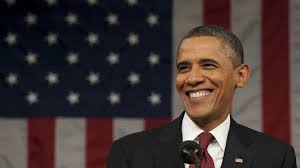
President Barack Obama
He then taught Constitutional law at the University of Chicago Law School for 12 years–as a Lecturer from 1992 to 1996, and as a Senior Lecturer from 1996 to 2004.
Yet, his signature plan to give every American access to healthcare, the Affordable Care Act–universally known as “Obamacare”–remains stricken with dangerous flaws.
So where did he go wrong?
Several ways–in all, at least six.
Obama Mistake No. 1: Putting off what people wanted while concentrating on what they didn’t.
Obama started off well when he took office. Americans had high expectations of him. This was partly due to his being the first black to be elected President.
And it was partly due to the disastrous legacies of needless war and financial catastrophe left by his predecessor, George W. Bush.
Obama entered office intending to reform the American healthcare system, to make medical care available to all citizens, and not just the richest. But that was not what the vast majority of Americans wanted him to concentrate his energies on.
With the lost of 2.6 million jobs in 2008, Americans wanted Obama to find new ways to create jobs. This was especially true for the 11.1 million unemployed, or those employed only part-time.
Jonathan Alter, who writes sympathetically about the President in The Center Holds: Obama and His Enemies, candidly states this.
But Obama chose to spend most of his first year as President pushing the Affordable Care Act (ACA)–which would soon become known as Obamacare–through Congress.
The results were:
- Those desperately seeking employment felt the President didn’t care about them.
- The reform effort became a lightning rod for Right-wing groups like the Koch-brothers-financed Tea Party.
- In 2010, a massive Rightist turnout cost the Democrats the House of Representatives, and threatened Democratic control of the Senate.
Obama Mistake No. 2: He underestimated the amount of opposition he would face to the ACA.
For all of Obama’s academic brilliance and supposed ruthlessness as a “Chicago politician,” he displayed an incredible naivety in dealing with his political opposition.
Niccolo Machiavelli (1469-1527), the Florentine statesman and father of modern politics, could have warned him of the consequences of this–through the pages of The Prince, his infamous treatise on the realities of politics.

Niccolo Machiavelli
And either Obama skipped those chapters or ignored their timeless advice for political leaders.
He should have started with Chapter Six: “Of New Dominions Which Have Been Acquired By One’s Own Arms and Ability”:
…There is nothing more difficult to carry out, nor more doubtful of success, nor more dangerous to handle than to initiate a new order of things.
For the reformer has enemies in all those who profit by the old order, and only lukewarm defenders in all those who would profit by the new order, this lukewarmness arising partly from fear of their adversaries, who have the laws in their favor, and partly from the incredulity of mankind, who do not truly believe in anything new until they have had actual experience of it.
This proved exactly the case with the proposed Affordable Care Act.
Its supporters–even when they comprised a majority of the Congress–have always shown far less fervor than its opponents.
This was true before the Act became effective on March 23, 2010. And it has remained true since, with House Republicans voting more than 60 times to repeal, delay or revise the law.
So before President Obama launched his signature effort to reform the American medical system, he should have taken this truism into account.
Obama Mistake No. 3: Failing to consider–and punish–the venom of his political enemies.
The ancient Greeks used to say: “A man’s character is his fate.” It was Obama’s character–and America’s fate–that he was by nature a man of conciliation, not conflict.
Richard Wolffe chronicled Obama’s winning of the White House in his 2009 book, Renegade: The Making of a President. He noted that Obama was always more comfortable when responding to Republican attacks on his character than he was in making attacks on his enemies.
President Obama came into office determined to find common ground with Republicans.
But they quickly made it clear to him that they only wanted his political destruction. At that point, he should have put aside his hopes for a “Kumbaya moment” and re-read what Niccolo Machiavelli said in The Prince on the matter of love versus fear:
From this arises the question whether it is better to be loved or feared, or feared more than love. The reply is, that one ought to be both feared and loved, but as it is difficult for the two to go together, it is much safer to be feared than loved.
ABC NEWS, ADOLF HITLER, ANDREI FEDEROV, BORIS YELTSIN, CBS NEWS, CNN, DONALD TRUMP, FACEBOOK, GEORGE W. BUSH, HILLARY CLINTON, JOE SCARBOROUGH, JOSEPH STALIN, KGB, KIM JONG-UN, MISS TEEN USA, MISS UNIVERSE, MISS USA, MORNING JOE, MSNBC, NAZI GERMANY, NAZI PARTY, NBC NEWS, RED ARMY, REPUBLICAN PARTY, SOVIET UNION, THE LOS ANGELES TIMES, THE NEW YORK TIMES, THE WASHINGTON POST, TWITTER, VLADIMIR PUTIN, WEHRMACHT
In Bureaucracy, History, Politics, Social commentary on February 23, 2017 at 3:39 pm
The love-fest between Donald and Vladimir Putin began on December 17, 2015.
Putin made the first move: “He is a bright and talented person without any doubt. He is the absolute leader of the presidential race.
“He says he will want to reach another, deeper, level of relations (with Russia). What else can we do but to welcome it? Certainly, we welcome it.
“That is none of our business to evaluate his accomplishments, but he remains the absolute front-runner in the presidential race. He is an outstanding and talented personality without any doubts.”
Appearing on the December 18, 2015 edition of MSNBC’s “Morning Joe,” Trump responded in kind: “Sure, when people call you ‘brilliant,’ it’s always good. Especially when the person heads up Russia.”
“It is always a great honor to be so nicely complimented by a man so highly respected within his own country and beyond.”
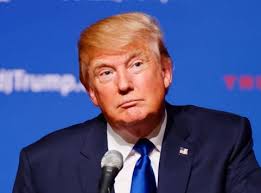
Donald Trump
The host, Joe Scarborough, was taken aback: “Well, I mean, [Putin’s] also a person who kills journalists, political opponents, and invades countries. obviously that would be a concern, would it not?”
TRUMP: He’s running his country, and at least he’s a leader. Unlike what we have in this country.
SCARBOROUGH: But again: He kills journalists that don’t agree with him.
TRUMP: I think our country does plenty of killing, also, Joe, so, you know. There’s a lot of stupidity going on in the world right now, Joe. A lot of killing going on. A lot of stupidity. And that’s the way it is.
SCARBOROUGH: I’m confused. So I mean, you obviously condemn Vladimir Putin killing journalists and political opponents, right?
TRUMP: Oh sure, absolutely.
When Trump praised Putin as a leader–“unlike what we have in this country”–he no doubt meant President Barack Obama.
Ironically, it was not Obama but President George W. Bush to whom his insult applies.
In June 2001, Bush and Vladimir Putin met in Slovenia. During the meeting a truly startling exchange occurred.
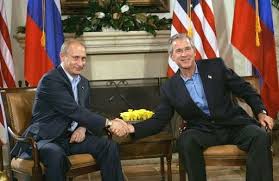
Vladimir Putin and George W. Bush
Putin, a former KGB Intelligence officer, had clearly done his homework on Bush. When he mentioned that one of the sports Bush had played was rugby, Bush was highly impressed.
“I did play rugby,” said Bush. “Very good briefing.”
Bush knew that Putin had worked for Soviet intelligence. So he should not have been surprised that the KGB had amassed a lengthy dossier on him.
But more was to come.
BUSH: Let me say something about what caught my attention, Mr. President, was that your mother gave you a cross which you had blessed in Israel, the Holy Land.
PUTIN: It’s true.
BUSH: That amazes me, that here you were a Communist, KGB operative, and yet you were willing to wear a cross. That speaks volumes to me, Mr. President. May I call you Vladimir?
Putin instantly sensed that Bush judged others–even world leaders–through the lens of his own fundamentalist Christian theology.
Falling back on his KGB training, Putin seized on this apparent point of commonality to build a bond. He told Bush that his dacha had once burned to the ground, and the only item that had been saved was that cross.
“Well, that’s the story of the cross as far as I’m concerned,” said Bush, clearly impressed. “Things are meant to be.”
Afterward, Bush and Putin gave an outdoor news conference.
“Is this a man that Americans can trust?” Associated Press correspondent Ron Fournier asked Bush.
“Yes,” said Bush. “I looked the man in the eye. I found him to be very straightforward and trustworthy. We had a very good dialogue.
“I was able to get a sense of his soul, a man deeply committed to his country and the best interests of his country. I wouldn’t have invited him to my ranch if I didn’t trust him.”
Now Putin is putting his KGB skills to work with another President–Trump.
At Putin’s direction, an Intelligence dossier is being prepared on Trump. According to Andrei Fedorov, former Russian Deputy Foreign Minister, a team of retired diplomats and Putin staffers are compiling a seven-page profile of Trump’s psychological state.
Trump is depicted as a naive risk-taker who acts like a “tough guy.”
The dossier will be given to Putin before their first meeting–for which no date has been set.
Federov said that Trump doesn’t understand Putin and should listen more to his team, “especially in the areas where he is weak.”
Trump’s constant battles with the American press worry the Kremlim: “He’s dancing on thin ice,” said Federov. “It’s a risky game.”
Mikhail Kasyanov, who was once prime minister under Putin, said that Putin was worried that, unless Trump is careful, he will lose the political clout he needs to improve relations with Russia.
In particular, Putin wants American economic sanctions against Russia–imposed by President Barack Obama over Russian interference in the 2016 election–lifted.
American hostility toward Russia has been increased by three major revelations:
- Russia’s hacks against the Democratic party to sway the election in favor of Trump;
- Members of Trump’s Presidential campaign were in regular contact with senior Russian Intelligence officials; and
- Trump’s being forced to fire his National Security Adviser, Michael Flynn, over his ties with Russia.
9/11, ABC NEWS, AFGHANISTAN, AL-QUAEDA, ALTERNET, ANDREW M. CUOMO, BARACK OBAMA, BUZZFEED, CBS NEWS, CNN, DAILY KOS, FACEBOOK, GEORGE W. BUSH, HAMID KARZAI, JOSEPH LEMM, MOTHER JONES, MOVEON, NBC NEWS, NEW YORK AIR NATIONAL GUARD, NEW YORK POLICE DEPARTMENT, NEWSWEEK, NORTH VIETNAMESE ARMY, NPR, OSAMA BIN LADEN, POLITICO, RAW STORY, ROLLING STONE MAGAZINE, SALON, SLATE, THE CHICAGO SUN-TIMES, THE CHICAGO TRIBUNE, THE DAILY BEAST, THE HUFFINGTON POST, THE LOS ANGELES TIMES, THE NEW YORK TIMES, THE PENTAGON, THE WALL STREET JOURNAL, THE WASHINGTON POST, TIME, TWITTER, U.S. NEWS & WORLD REPORT, USA TODAY, VIETCONG, VIETNAM, WORLD TRADE CENTER
In Bureaucracy, History, Military, Politics, Social commentary on February 16, 2017 at 1:02 am
On February 9, Army General John Nicholson told the Senate Armed Services Committee he had enough U.S. and NATO troops for counterterrorism operations in Afghanistan.
But he needed more to sufficiently “train, advise and assist” the Afghan forces.
There are now 8,400 U.S. troops in Afghanistan and another 5,000 troops from NATO countries.
To put this latest troop request into human terms:
On December 21, 2015, a suicide-bomber rammed an explosives-laden motorcycle into a joint NATO-Afghan patrol. Six American troops and an Afghan were killed.
One of the dead was Joseph Lemm, 45, a detective and 15-year veteran of the New York Police Department. A technical sergeant in the New York Air National Guard, he had been deployed three times–once to Iraq and twice to Afghanistan.

Joseph Lemm
Lemm left behind a daughter, Brook, 16, a son, Ryan, four, and his wife, Christine.
New York Governor Andrew M. Cuomo ordered that flags on all state government buildings be flown at half-staff on December 23 in Lemm’s honor.
“Staff Sergeant Joe Lemm served this nation with the selflessness and bravery that embodies the U.S. Armed Forces and the NYPD,” Cuomo said in a statement.
Lemm’s death was a double tragedy–that of a dedicated man who should not have died so needlessly.
In short: It’s long past time for the United States to quit its failed mission to civilize Afghanistan.
The history of American conflict in Afghanistan began on September 11, 2001.
On that date, 19 Islamic highjackers slammed two jetliners into the World Trade Center in New York and one into the Pentagon in Washington, D.C.
A fourth plane, headed for the White House or Capitol Building, failed to reach its target when its passengers rioted–and the highjackers dove it into a Pennsylvania field.
The mastermind of the attacks was Osama bin Laden, a Saudi millionaire then living in Afghanistan, under protection by its ruling thugocracy, the Taliban.
The administration of President George W. Bush demanded his immediate surrender to American justice.
The Taliban refused.
So, on October 7, 2011–less than one month from the 9/11 attacks–American bombers began pounding Taliban positions.
The whole point of the campaign was to pressure the Taliban to surrender Bin Laden.
But the Taliban held firm. Bin Laden holed up in the mountains of Tora Bora, and then ultimately escaped into Pakistan.
After December, 2001, American Intelligence completely lost track of Bin Laden. CIA officials repeatedly said he was likely living in the “no-man’s-land” between Afghanistan and Pakistan.
Thus, there was no longer any point in pressuring the Taliban to surrender Bin Laden.
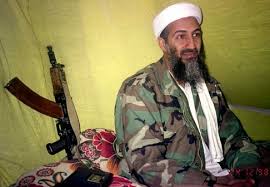
Osama bin Laden
Still, the United States continued to commit forces to Afghanistan–to turn a primitive, warlord-ruled country into a modern-day democracy.
There was, admittedly, a great deal to detest about the Taliban:
- When the Taliban ruled Afghanistan, they turned soccer stadiums into execution plazas for mass beheadings or shootings.
- Taliban “fighters” have proven their “courage” by throwing acid into the faces of women who dared to attend school.
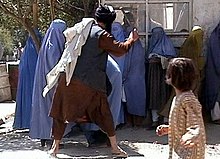
Taliban religious police beating a woman
- On August 8, 1989, the Taliban attacked Mazar-i-Sharif. Talibanists began shooting people in the street, then moved on to mass rapes of women. Thousands of people were locked in containers and left to suffocate.
- The Taliban forbade women to leave their homes unless accompanied by a male relative and wearing the burqa–a traditional dress covering the entire body. Those who disobeyed were publicly beaten.
Yet, as horrific as such atrocities were, these did not obligate the United States to spend eternity trying to bring civilization to this barbaric country.
And, in pursuing that goal, both the Bush and Obama administrations have repeatedly overlooked the following realities:
- Hamid Karzai, the “president” of Afghanistan (2001-2014) didn’t believe in democracy–despite American claims to support his efforts to bring this to Afghanistan.
- His authority didn’t extend beyond Kabul, and he was viewed by most Afghans as an illegitimate ruler, imposed by America.
- The same can be said for his successor, Mohammad Ashraf Ghani.
- American soldiers in Afghanistan feel surrounded by enemies and hamstrung by unrealistic orders to win “hearts and minds” at the risk of their own lives.
- The Taliban poses no threat to the security of the United States.
- Afghan “insurgents” are fighting American forces because (1) they are in a civil war; and (2) they believe their country has once again been occupied by foreigners.
- Counterinsurgency is being preached as the key to defeating the Taliban in Afghanistan–where it hasn’t worked.
- Americans entered Afghanistan without an exit strategy.
All these truths applied just as firmly to America’s failed misadventure in Vietnam.
Almost 50 years ago, American “grunts” felt about their so-called South Vietnamese allies as American troops now feel about their Afghan “allies.”
Dr. Dennis Greenbaum, a former army medic, summed up how Americans had really felt about their supposed South Vietnamese allies.
“The highest [priority for medical treatment] was any U.S. person. The second highest was a U.S. dog from the canine corps. The third was NVA [North Vietnamese Army]. The fourth was VC [Viet Cong].
“And the fifth was ARVIN [Army of the Republic of South Vietnam], because they had no particular value,” said Greenbaum.
When you despise the “ally” you’re spending lives and treasure to defend, it’s time to pack up.
ABC NEWS, ALTERNET, ANCIENT GREECE, ASIANS, AUBREY DE SELINCOURT, BERNIE SANDERS, BLACKS, BUZZFEED, CBS NEWS, CIA, CNN, CYBERSECURITY, DAILY KOS, DALLAS MORNING NEWS, DEBBIE WASSERMAN-SCHULTZ, DEMOCRATIC CONVENTION, DEMOCRATIC NATIONAL COMMITTEE, DONALD TRUMP, ELIZABETH WARREN, FACEBOOK, GEORGE W. BUSH, HERODOTUS, HILLARY CLINTON, HUBRIS, MARCO RUBIO, MEXICANS, MICHAEL HAYDEN, MOTHER JONES, MOVEON, MUSLIMS, NBC NEWS, NEWSWEEK, NPR, PAUL RYAN, POLITICO, PRISONERS OF WAR, RAW STORY, RUSSIA, SALON, SLATE, TED CRUZ, THE CHICAGO SUN-TIMES, THE CHICAGO TRIBUNE, THE DAILY BEAST, THE HUFFINGTON POST, THE LOS ANGELES TIMES, THE NEW YORK TIMES, THE WASHINGTON POST, TIME, TWITTER, U.S. NEWS & WORLD REPORT, U.S. STATE DEPARTMENT, VLADIMIR PUTIN, WIKILEAKS, WOMEN
In Bureaucracy, History, Military, Politics, Social commentary on February 7, 2017 at 4:00 pm
Donald Trump has changed Presidential campaigning–perhaps forever.
First, he routinely insulted his opponents. He made angry and brutal attacks on a wide range of persons and organizations–including his fellow Republicans, journalists, news organizations, other countries and even celebrities unconnected with politics.
Among those groups:
- Mexicans
- Prisoners-of-War
- Blacks
- Handicapped

Second, he weaponized social media. He made Twitter an essential arm of his campaign, swiftly insulting his opponents and keeping them constantly off-balance. He proved himself a master at the tabloid news culture and thoroughly in tune with his target audience.
Third, he used the media for free publicity. Since announcing his candidacy on June 16, 2015, he got a year’s worth of free media advertising. This wasn’t the result of a networks’ conspiracy to favor Trump.

Instead, it owed to the media’s lust for sensational copy. And scenes of conflict–such as making brutal attacks on others–generate huge viewership.
This was most apparent in debates, during which he belittled his Republican opponents with insulting nicknames, such as:
- “Little Marco” – Florida U.S. Senator Marco Rubio
- “Goofy” – Massachusetts U.S. Senator Elizabeth Warren
- “Lyin’ Ted” – Texas U.S. Senator Rafael Eduardo “Ted” Cruz
And looking beyond the Republican primary cycle, he created one for his future Democratic antagonist: “Crooked Hillary”–Hillary Clinton, former First Lady, U.S. Senator from New York and Secretary of State.
Political pundits marveled at Trump’s ability to jettison long-held niceties of political discourse and not pay an electoral price for it. They kept predicting that eventually this might happen. But it never did.
Fourth, he openly called for the subversion of the American political system.
On July 22, 2016, Wikileaks released 19,252 emails and 8,034 attachments hacked from computers of the highest-ranking officials of the Democratic National Committee (DNC).
Cyber-security experts believed the hackers originated from Russia–and that Russian President Vladimir Putin authorized it.

The emails revealed the DNC’s bias for Clinton for President. And they showed clear animosity toward her lone challenger, Vermont U.S. Senator Bernie Sanders.
Sanders’ supporters had long charged that the DNC and its chair, Debbie Wasserman-Schultz, were plotting to undercut his campaign.
Five days later, on July 27, at a press conference in Doral, Florida. Trump said:
“Russia, if you’re listening, I hope you’re able to find the 30,000 emails that are missing. I think you will probably be rewarded mightily by our press.”
Trump hoped to score points on Hillary Clinton’s using a private email server as Secretary of State. Instead, he ignited criticism–of himself–on both Left and Right.
“This has to be the first time that a major presidential candidate has actively encouraged a foreign power to conduct espionage against his political opponent,” said Jake Sullivan, Clinton’s chief foreign policy adviser. “This has gone from being a matter of curiosity, and a matter of politics, to being a national security issue.”
Republican Speaker of the House Paul Ryan was equally quick to react. “Russia is a global menace led by a devious thug,” said Brendan Buck, Ryan’s spokesman. “Putin should stay out of this election.”
“If he is talking about the State Department emails on her server, he is inviting a foreign intelligence service to steal sensitive American government information,” said Michael Hayden, head of the CIA under President George W. Bush.
“In addition to its implications for national security today,” wrote Benjy Sarlin, political reporter for MSNBC, “the incident raised disturbing questions about how Trump would govern as president. If a leader is willing to turn to ask foreign spy agencies to target a political opponent, what would he ask of his own spy agencies?”
The avalanche of criticism led Trump to claim: “I was only being sarcastic.”
For at least one normally conservative newspaper, Trump’s words were simply too much. In a July 27 editorial, The Dallas Morning News declared:
“Words have meaning. The world is listening. And what the world is hearing is a man demonstrating that he is unfit to sit in the Oval Office.”
Since the end of World War II, Republicans had taken an intensely anti-Communist stance. Now their Presidential nominee had not only complimented an ex-KGB agent but had even invited him to target the American political system.
Despite the criticism, the overwhelming majority of Republicans–including Paul Ryan–continued to support Trump’s candidacy. Nor did the Obama administration investigate or indict him for treason or subversion.
The ancient Greeks believed hubris–overweening pride–to be the greatest of sins. And, they warned, it was usually punished by divine wrath.

In his book, The World of Herodotus, Aubrey de Selincourt writes that the Greek historian filled his book, The Histories, with “stories of the perils of pride–pride of wealth, pride of power, pride of success, and, deadliest of all, the pride which leads a man to forget that he is a nothing in the sight of the gods.”
And, in the pages of The Histories lies this warning: “Look to the end, no matter what it is you are considering. Often enough, God gives a man a glimpse of happiness, and then utterly ruins him.”
Donald Trump has finally made it to the White House. But there is still time for hubris to overtake and destroy him.
2016 PRESIDENTIAL ELECTION, ABC NEWS, ALTERNET, ASTROLOGY, BIBLICAL PROPHECIES, CBS NEWS, CNN, CZAR NICHOLAS II, CZARINA ALEXANDRA, DONALD TRUMP, FACEBOOK, FORBES MAGAZINE, GEORGE W. BUSH, GOG AND MAGOG, GRIGORI RASPUTIN, HENRY KISSINGER, IRAQ WAR, JOAN QUIGLEY, JODIE FOSTER, JOHN HINCKLEY, MERV GRIFFIN, MIDDLE EAST, MIKHAIL GORBACHEV, NANCY REAGAN, NBC NEWS, NEWSWEEK, NPR, POLITICO, REPUBLICAN PARTY, Ronald Reagan, SOVIET UNION, THE CHICAGO SUN-TIMES, THE CHICAGO TRIBUNE, THE HUFFINGTON POST, THE LOS ANGELES TIMES, THE NEW YORK TIMES, THE WALL STREET JOURNAL, THE WASHINGTON POST, TIME, TWITTER, U.S. NEWS & WORLD REPORT, USA TODAY
In Bureaucracy, History, Politics, Social commentary on December 14, 2016 at 12:01 am
Americans like to believe they make rational choices for their Presidents.
But this has not always been the case.
One such example was Richard M. Nixon, elected in 1968 and re-elected in 1972.
In 1970, while deciding whether to widen the Vietnam war by bombing Cambodia, he repeatedly watched the movie “Patton.” Then he ordered the bombing to begin.
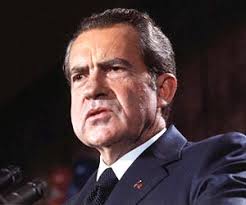
Richard Nixon
In 1974, as Justice Department investigations of Watergate increasingly threatened his Presidency, his behavior grew increasingly erratic.
He drank heavily, took pills by the handful, and, on at least one occasion, was seen talking to pictures of Presidents that adorned the walls of the White House.
In the final weeks of his administration, as impeachment for his Watergate abuses seemed increasingly certain, Nixon inspired fears of a military coup in his Secretary of Defense.
James Schlesinger warned all military commands to ignore any direct orders from the White House–or any other source–without the counter-signature of the SecDef himself.
On his last night in the White House–August 8, 1974–Nixon summoned Secretary of State Henry Kissinger to the Oval Office.
Half-rambling, half-crying, Nixon asked Kissinger to kneel with him on the White House rug and pray for God’s forgiveness. Kissinger, though Jewish, had never shown any interest in religion. Nevertheless, he reluctantly did so.
Later that night, Nixon called Kissinger and pleaded with him to never tell anyone “that I cried, and I was not strong.” Kissinger promised to keep his secret–and then promptly leaked it. It soon became the most talked-about revelation of Bob Woodward and Carl Bernstein’s blockbuster, The Final Days.
Nixon, however, was not the only President whose irrationality played havoc with history.
In June, 2001, George W. Bush met with Russian President Vladimir Putin in Slovenia. Bush judged others–even world leaders–through the lens of his own fundamentalist Christian theology.
And Putin was quick to take advantage of it.
George W. Bush and Vladimir Putin
BUSH: Let me say something about what caught my attention, Mr. President, was that your mother gave you a cross which you had blessed in Israel, the Holy Land.
PUTIN: It’s true.
BUSH: That amazes me, that here you were a Communist, KGB operative, and yet you were willing to wear a cross. That speaks volumes to me, Mr. President. May I call you Vladimir?
Falling back on his KGB training, Putin seized on this apparent point of commonality to build a bond. He told Bush that his dacha had once burned to the ground, and the only item that had been saved was that cross.
BUSH: Well, that’s the story of the cross as far as I’m concerned. Things are meant to be.
Afterward, Bush and Putin gave an outdoor news conference.
“Is this a man that Americans can trust?” Associated Press correspondent Ron Fournier asked Bush.
“Yes,” said Bush. “I was able to get a sense of his soul, a man deeply committed to his country and the best interests of his country. I wouldn’t have invited him to my ranch if I didn’t trust him.”
Of course, no one from the Right is now recalling such embarrassing words.
In early 2003, Bush telephoned French President Jaques Chirac, hoping to enlist his support–and troops–for his long-planned invasion of Iraq.
Failing to convince Chirac that overthrowing Saddam Hussein was politically advantageous, Bush took a different tack.
BUSH: Jaques, you and I share a common faith. You’re Roman Catholic, I’m Methodist, but we’re both Christians committed to the teachings of the Bible. We share one common Lord.
Gog and Magog are at work in the Middle East. Biblical prophecies are being fulfilled.
This confrontation is willed by God, who wants to use this conflict to erase His people’s enemies before a new age begins.
When the call ended, Chirac asked his advisers: “Gog and Magog–do any of you know what he’s talking about?”
When no one did, Chirac ordered: Find out.
The answer came from Thomas Roemer, a professor of theology at the University of Lausanne.
Romer explained that the Old Testament book of Ezekiel contains two chapters (38 and 39) in which God rages against Gog and Magog, sinister and mysterious forces menacing Israel.
Jehovah vows to slaughter them ruthlessly. In the New Testament book of Revelation (20:8) Gog and Magog are depicted as gathering nations for battle: “And fire came down from God out of Heaven, and devoured them.”
Chirac decided to oppose joining the upcoming invasion of Iraq. France, he said, would not fight a war based on an American Presient’s interpretation of the Bible.
Click here: 500 Days: Secrets and Lies in the Terror Wars: Kurt Eichenwald
Bush’s war cost the lives of 4,486 Americans–and an estimated 655,000 Iraqis. And the United States remains mired in Iraq, with more than 4,400 troops stationed there.
Bush, however, was not the first President to invoke Gog and Magog.
Ronald Reagan predicted that this Biblical confrontation would pit the United States against the Soviet Union–which had abandoned God at the time of the Russian Revolution.
Evangelical Christians twice elected Ronald Reagan and George W. Bush to the Presidency.
In light of this, voters should think carefully before choosing candidates who accept superstitious beliefs over rational inquiry.
2016 PRESIDENTIAL ELECTION, ABC NEWS, ALTERNET, ASTROLOGY, BIBLICAL PROPHECIES, CBS NEWS, CNN, CZAR NICHOLAS II, CZARINA ALEXANDRA, DONALD TRUMP, FACEBOOK, FORBES MAGAZINE, GEORGE W. BUSH, GOG AND MAGOG, GRIGORI RASPUTIN, HENRY KISSINGER, IRAQ WAR, JOAN QUIGLEY, JODIE FOSTER, JOHN HINCKLEY, MERV GRIFFIN, MIDDLE EAST, MIKHAIL GORBACHEV, NANCY REAGAN, NBC NEWS, NEWSWEEK, NPR, POLITICO, REPUBLICAN PARTY, Ronald Reagan, SOVIET UNION, THE CHICAGO SUN-TIMES, THE CHICAGO TRIBUNE, THE HUFFINGTON POST, THE LOS ANGELES TIMES, THE NEW YORK TIMES, THE WALL STREET JOURNAL, THE WASHINGTON POST, TIME, TWITTER, U.S. NEWS & WORLD REPORT, USA TODAY
In Bureaucracy, History, Politics, Social commentary on December 13, 2016 at 12:22 am
Millions of Americans are appalled that Donald Trump, who will take office as President on January 20, has repeatedly skipped national security briefings offered by the CIA and other Intelligence agencies.
“I’m, like, a smart person. I don’t have to be told the same thing in the same words every single day for the next eight years,” Trump told “Fox News Sunday” host Chris Wallace on December 11.
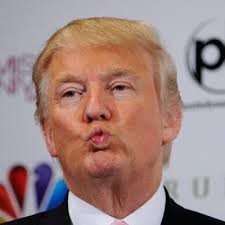
Donald Trump
Americans like to believe they choose rational men and women for their political leaders–especially their President.
And they like to believe that, once elected, the new President will base his decisions on rationality and careful consideration.
This is essential–because a Presidential decision can, in a matter of minutes, hurl nuclear bombers and missiles to lay waste entire nations.
Unfortunately, Presidential leadership hasn’t always been based on rationality.
A classic example of this was Ronald Reagan, the 40th President of the United States from 1981 to 1989.
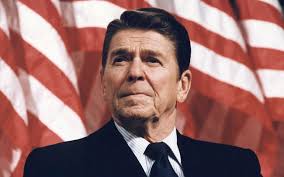
Ronald Reagan
His wife, Nancy–like the last Empress of Russia–sought answers from “the other side.”
For Czarina Alexandra, wife of Nicholas II, the last “Czar of all the Russias,” those “answers” came from Grigori Rasputin, the “mad monk” from Siberia.
Rasputin claimed the ability to work miracles on behalf of Alexandra’s hemophiliac son, Alexei, heir to the Russian throne.
Nancy Reagan’s Rasputin was an astrologer named Joan Quigley. The two met on “The Merv Griffin Show” in 1973.
Quigley gave Nancy–and through her, Reagan himself–astrological advice during the latter’s campaign for the Republican Presidential nomination in 1976.
That effort failed to unseat President Gerald Ford–who was defeated that November by Jimmy Carter.
Four years later, in 1980, Reagan defeated Carter to become the 40th President of the United States.
On March 30, 1981, a mentally-disturbed loner named John W. Hinckley shot and critically wounded Reagan. Hinckley’s motive: Fixated on actress Jodie Foster, he believed that by shooting the President he could gain her affection.
For Nancy, the assassination attempt proved a watershed.
Shortly after the shooting, Merv Griffin told her that Quigley had told him: If Nancy had called her on that fateful day, she–Quigley–could have warned that the President’s astrological charts had foretold a bad day.
From that moment on, Nancy made sure to regularly consult Quigley on virtually everything that she and the President intended to do.
Click here: The President’s Astrologers – Joan Quigley, Nancy Reagan, Politicians and Their Families, Ronald Reagan : People.c
Many–if not most–of these calls from the White House to Quigley’s office in San Francisco were made on non-secure phone lines.

Joan Quigley
This meant that foreign powers–most notably the Soviet Union and Communist China–could have been privy to Reagan’s intentions.
Nancy passed on Quigley’s suggestions in the form of commands to Donald Regan, chief of the White House staff.
As a result, Regan kept a color-coded calendar on his desk to remember when the astrological signs were good for the President to speak, travel, or negotiate with foreign leaders.
Green ink was used to highlight “good” days, red for “bad” days, and yellow for “iffy”days.
Forget relying on Intelligence supplied by the CIA, the National Security Agency or the Pentagon. Statecraft-by-astrologer was now the norm.
A list provided by Quigley to Nancy made the following recommendations–which Nancy, in turn, made into commands:
Late Dec thru March bad
Jan 16 – 23 very bad
Jan 20 nothing outside WH–possible attempt
Feb 20 – 26 be careful
March 7 – 14 bad period
March 10 – 14 no outside activity!
March 16 very bad
March 21 no
March 27 no
March 12 – 19 no trips exposure
March 19 – 25 no public exposure
April 3 careful
April 11 careful
April 17 careful
April 21 – 28 stay home
Donald Regan, no fan of Nancy’s, chafed under such restrictions: “Obviously, this list of dangerous or forbidden dates left very little latitude for scheduling,” he later wrote.
Forced out of the White House in 1987 by Nancy, Regan struck back in a 1988 tell-all memoir: For the Record: From Wall Street to Washington.
The book revealed, for the first time, how Ronald Reagan actually made his Presidential decisions.
All–including decisions to risk nuclear war with the Soviet Union–were based on a court astrologer’s horoscopes. Rationality and the best military intelligence available played a lesser, secondary role–at best.
In 1990, Quigley confirmed the allegations an autobiography, What Does Joan Say?: My Seven Years As White House Astrologer to Nancy and Ronald Reagan.
Click here: What Does Joan Say?: My Seven Years As White House Astrologer to Nancy and Ronald Reagan: Joan Quigley
The title came from the question that Ronald Reagan asked Nancy before making important decision––including those that could risk the destruction of the United States.
Among the success Quigley took credit for:
- Strategies for winning the Presidential elections of 1980 and 1984;
- Visiting a graveyard for SS soldiers in Bitburg, Germany;
- Pursuing “Star Wars” as a major part of his strategy against the Soviet Union;
- The Intermediate-Range Nuclear Forces Treaty; and
- Moving from seeing the Soviet Union as the “Evil Empire” to accepting Mikhail Gorbachev as a peace-seeking leader.
Thirty-five years after he became President, Ronald Reagan remains the most popular figure among Republicans.
His name is constantly invoked by Right-wing candidates, while his deliberately-crafted myth is held up as the example of Presidential greatness.
Conveniently left out: The small latter of his government-by-astrologer.
2016 PRESIDENTIAL RACE, ABC NEWS, BARACK OBAMA, BASKET OF DEPLORABLES SPEECH, BENGHAZI HEARINGS, BERNIE SANDERS, BILL CLINTON, BLACKS, CBS NEWS, CELINDA LAKE, CLINTON FUNDATION, CNN, COLIN POWELL, COMMUNISM, CONDOLEEZA RICE, DEBBIE WASSERMAN-SCHULTZ, DEMOCRATIC NATIONAL COMMITTEE, DONALD TRUMP, ELIZABETH WARREN, EMAIL SERVER, FACEBOOK, GEORGE W. BUSH, HILLARY CLINTON, HISPANICS, HOUSE OF REPRESENTATIVES, JAMES WEBB, JOSEPH STALIN, KARL MARX, KEVIN MCCARTHY, LIBYA, MAO ZEDONG, MICHELLE OBAMA, NBC NEWS, POPULISM, RACISM, REPUBLICAN NATIONAL COMMITTEE, Ronald Reagan, SATURDAY NIGHT LIVE, SOCIALISM, THE CHICAGO SUN-TIMES, THE CHICAGO TRIBUNE, THE LOS ANGELES TIMES, THE NEW YORK TIMES, THE WASHINGTON POST, TOM BROKAW, TONIGHT SHOW, TWITTER, U.S. HOUSE OF REPRESENTATIVES, U.S. SENATE, Vladimir Lenin, WHITES, WHITEWATER, WIKILEAKS, WOMEN, YOUTH
In Bureaucracy, Business, History, Politics, Social commentary on November 18, 2016 at 10:22 am
Donald Trump owes his victory to a wide range of circumstances. Among these:
#10 Hillary Clinton gave only one memorable speech during the campaign–and then she quashed any benefits that might have come from it.
This was the “basket of deplorables” speech, delivered at a New York fundraiser on September 9. It was the only Clinton speech to be widely quoted by Democrats and Republicans.
She divided Donald Trump’s supporters into two groups. The first group were the “deplorables,” for whom she showed open contempt:
“You know, to just be grossly generalistic, you could put half of Trump’s supporters into what I call the basket of deplorables. Right? The racist, sexist, homophobic, xenophobic, Islamaphobic –you name it. And unfortunately there are people like that. And he has lifted them up.
“He has given voice to their websites that used to only have 11,000 people–now 11 million. He tweets and retweets their offensive hateful mean-spirited rhetoric. Now, some of those folks—they are irredeemable, but thankfully they are not America.”
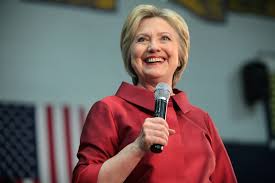
Hillary Clinton (Gage Skidmore photo)
But the second group, she said, consisted of poor, alienated Americans who rightly felt abandoned by their employers and their government:
“But the other basket–and I know this because I see friends from all over America here….but that other basket of people are people who feel that the government has let them down, the economy has let them down, nobody cares about them, nobody worries about what happens to their lives and their futures, and they’re just desperate for change. It doesn’t really even matter where it comes from.
“They don’t buy everything [Trump] says, but he seems to hold out some hope that their lives will be different. They won’t wake up and see their jobs disappear, lose a kid to heroin, feel like they’re in a dead-end. Those are people we have to understand and empathize with as well.”
After giving this speech, Clinton threw away the good it might well have done her.
First, the day after making the speech, she apologized for it: “Last night I was ‘grossly generalistic,’ and that’s never a good idea. I regret saying ‘half’–that was wrong.”
Many of Trump’s followers were racists, sexists and xenophobes–who deserved condemnation, not apologies. By apologizing, she looked weak, indecisive.
Second, having eloquently reached out to many of the men and women who were a prime constituency for Donald Trump, she made no effort to follow up.
She could have used this moment to offer an economic package that would quickly and effectively address their vital needs for jobs and medical care.
But that would have required her to put one together long ago. And all she had to offer now was boilerplate rhetoric, such as: “Education is the answer.”
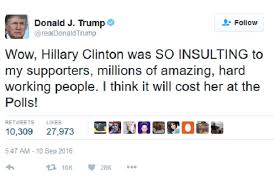
Worst of all, Trump turned her speech against her, tweeting: “Wow, Hillary Clinton was SO INSULTING to my supporters, millions of amazing, hard working people. I think it will cost her at the Polls!”
It did.
#11 Neither the Democrats nor the TV networks dared reveal the full intensity of hatred and violence that were hallmarks of Trump’s rallies–and campaign.
Three New York Times reporters who covered Trump’s rallies for over one year routinely witnessed his supporters hurl vulgar taunts such as:
At Hillary Clinton: “Trump that bitch!” “Kill her!” “Lock her up!” “Hillary is a whore!” “Hang the bitch!”
At protesters: “Get out of here, you fag!” “Get him!” “Get the fuck out of here!”
At Latinos: “Build a wall–kill them all!” “Fuck those dirty beaners!” “Send them bastards back. I’m sure that paperwork comes in Spanish.”
At Muslims: “Fuck Islam!” “Islam is not a religion, partner. It’s an ideology.” “You don’t come and talk about America when you’re supporting Muslims.”
At President Barack Obama: “Fuck that nigger!”
H. Allen Scott, a reporter for Fusion, attended a Trump rally and overheard conversations that startled him.
In one, a man marked Arabs as the enemy: “Those sand niggers are out to get us. We need to bomb the hell out of them.”
In the other, the supposed threat came from a different source: “The Donald will get all those Jews out of Washington.”
When protesters were ejected, Trump supporters went wild–and usually turned violent. Protesters were beaten and kicked–often with Trump’s encouragement.
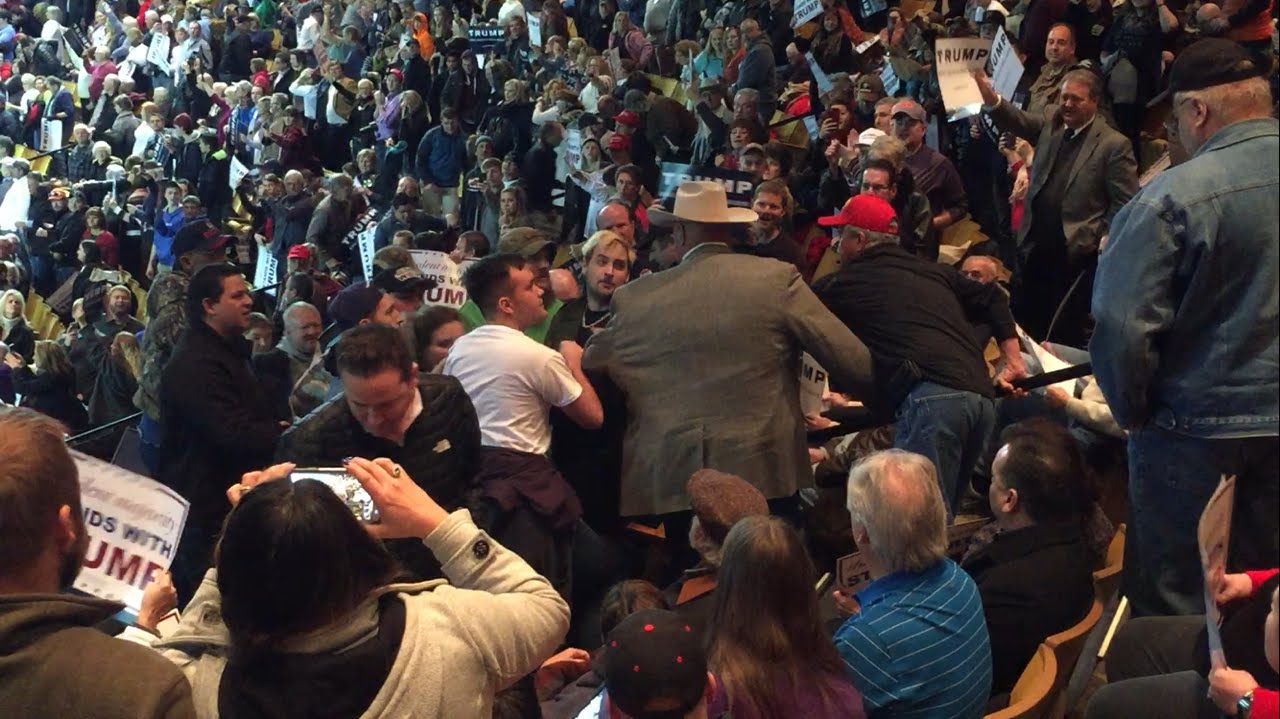
Protesters and supporters duke it out at a Donald Trump rally
Audiences at Trump rallies were overwhelmingly white. Not all were racists, but many of those who were advertised it on T-shirts: “MAKE AMERICA WHITE AGAIN.” Confederate flags were commonly displayed.
TV news networks and the Hillary Clinton campaign could have aired–repeatedly–such footage. Had they done so, Americans would have gotten a brutal, firsthand look at the anger and racism inherent in Trump’s candidacy–and followers.
Instead, Trump was allowed to appear on late-night shows like Saturday Night Live and The Tonight Show where he was treated with kid gloves for fun and laughs.
Thus, it is pointless to blame any one person (such as Hillary Clinton) or group (such as those who voted for third-party candidates) for Clinton’s loss. Many factors played a part–including some that, to keep this series at a reasonable length, could not be mentioned.
2016 PRESIDENTIAL RACE, ABC NEWS, BARACK OBAMA, BASKET OF DEPLORABLES SPEECH, BENGHAZI HEARINGS, BERNIE SANDERS, BILL CLINTON, BLACKS, CBS NEWS, CELINDA LAKE, CLINTON FUNDATION, CNN, COLIN POWELL, COMMUNISM, CONDOLEEZA RICE, DEBBIE WASSERMAN-SCHULTZ, DEMOCRATIC NATIONAL COMMITTEE, DONALD TRUMP, ELIZABETH WARREN, EMAIL SERVER, FACEBOOK, GEORGE W. BUSH, HILLARY CLINTON, HISPANICS, HOUSE OF REPRESENTATIVES, JAMES WEBB, JOSEPH STALIN, KARL MARX, KEVIN MCCARTHY, LIBYA, MAO ZEDONG, MICHELLE OBAMA, NBC NEWS, POPULISM, RACISM, REPUBLICAN NATIONAL COMMITTEE, Ronald Reagan, SATURDAY NIGHT LIVE, SOCIALISM, THE CHICAGO SUN-TIMES, THE CHICAGO TRIBUNE, THE LOS ANGELES TIMES, THE NEW YORK TIMES, THE WASHINGTON POST, TOM BROKAW, TONIGHT SHOW, TWITTER, U.S. HOUSE OF REPRESENTATIVES, U.S. SENATE, Vladimir Lenin, WHITES, WHITEWATER, WIKILEAKS, WOMEN, YOUTH
In Bureaucracy, Business, History, Politics, Social commentary on November 17, 2016 at 12:05 am
Fans of Vermont U.S. Senator Bernie Sanders have loudly claimed that if he had gotten the Democratic Presidential nomination, he would have crushed Donald Trump at the polls.
Since he didn’t get the nomination, we will never know.
But Sanders would have carried his own negatives–which the Republicans would have gleefully exploited. Among the issues he championed:
- Make college tuition free and debt-free.
- Medicare for all.
- Strengthen and expand Social Security.
Although worthy positions, they would have allowed Republicans to label him a “big-spending liberal.”
In addition, Sanders had labeled himself a “democratic Socialist.” For millions of proudly ignorant Americans, “socialist” means “Communist.” And Fox News and the Republican party would have gladly assured them they were correct.
Liberty Maniacs, a Minnesota-based brand that designs and sells political and satirical apparel, literally cashed in on this image with an eye-catching T-shirt.
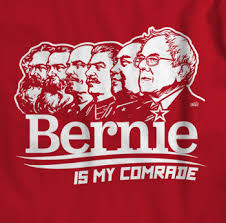
It depicted Sanders’ face alongside those of Karl Marx, Freidrich Engels, Vladimir Lenin, Joseph Stalin and Mao Zedong. And underneath were the words: “Bernie IS MY COMRADE.”
No doubt Republicans would have flooded the airways with similar images.
Sanders’ partisans continue to insist he was “cheated” out of the nomination by Hillary Clinton. But this still leaves unanswered the question:
If Sanders couldn’t prevail against the alleged ruthlessness of Clinton in the primaries, how could he have done so against Trump in the general election?
As the saying goes: “Politics ain’t beanbag.”
#5 Democrats and liberals fell prey to hubris. They dismissed Donald Trump as a bad joke: Surely voters would reject a bombastic, thrice-married “reality show” host who had filed for corporate bankruptcy four times.

If comments on Facebook are any guide, many liberals believed Clinton would bury him at the polls: Blacks, women, youth and Hispanics will turn out huge for her. Democrats will retake the Senate, and maybe even retake the House.
If many Democrats/liberals didn’t vote, one reason may be that they expected others to do it for them.
#6 The coalition that twice elected Barack Obama deserted Hillary Clinton.
Clinton did worse-than-expected among all the groups she was counting on to support her: Blacks, women, youth and Hispanics.
- In 2012, Obama got 93% of the black vote; in 2016, Clinton got 88%.
- In 2012, Obama got 55% of the women’s vote; in 2016, Clinton won 54%.
- In 2012, Obama got 60% of the vote of those under 30; in 2016, Clinton got 54%.
- In 2012, Obama got 71% of the Hispanic vote; in 2016, Clinton got 65%.
Clinton proved less popular even among whites than Obama: In 2012, Obama won 39% of their votes; in 2016, Clinton won 37%.
#7 For years, Republicans had waged a vicious campaign to demonize Hillary Clinton.
This included even falsely accusing her of conspiring to murder American diplomats in Benghazi, Libya.
Kevin McCarthy, a Republican member of the House of Representatives unintentionally admitted this on Fox News on September 30, 2015:
“Everybody thought Hillary Clinton was unbeatable, right? But we put together a Benghazi special committee. A select committee. What are her [poll] numbers today?
“Her numbers are dropping. Why? Because she’s untrustable. But no one would have known that any of that had happened had we not fought to make that happen.”
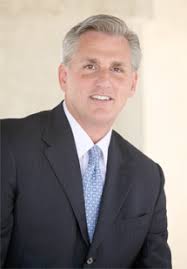
Kevin McCarthy
Thus, McCarthy revealed that:
- The House Select Committee on Benghazi was not a legitimate investigative body.
- Its true purpose was not to investigate the killings of four American diplomats during a 2012 terrorist attack in Benghazi, Libya.
- It’s actual purpose: To destroy the Presidential candidacy of Hillary Clinton.
#8 Republicans attacked Clinton for using a personal email account–while ignoring that her two Republican predecessors had done the same.
General Colin Powell served as Secretary of State under President George W. Bush from 2001 to 2005. He not only used a private email account but advised Clinton to do so as she was about to move into the same job in 2009.
Powell’s successor as Secretary of State, Condoleeza Rice, similarly used a private email account during her tenure (2005-2009).
Yet while Republicans hounded Clinton, accusing her of recklessly endangering national security, they totally ignored Powell’s and Rice’s uses of private email accounts.
#9 Trump, adopting the role of a populist, appealed to blue-collar voters. Clinton offered a “love-your-CEO” economic plan–and suffered for it.
Trump visited “Rustbelt” states like Michigan and Pennsylvania and vowed to “bring back” jobs that had been lost to China, such as those in coal mining and manufacturing. Clinton didn’t deign to show up, assuming she had those states “locked up.”
Most economists agree that, in a globalized economy, such jobs are not coming back, no matter who becomes President.
Even so, voters went for the man who promised them a better future, and shunned the woman who didn’t come to promise them any future at all.
In May, Democratic pollster CeLinda Lake had warned Clinton to revamp her economic platform.
“Democrats simply have to come up with a more robust economic frame and message,” Lake said after the election. “We’re never going to win those white, blue-collar voters if we’re not better on the economy. And 27 policy papers and a list of positions is not a frame. We can laugh about it all we want, but Trump had one.”
2016 PRESIDENTIAL RACE, ABC NEWS, BARACK OBAMA, BASKET OF DEPLORABLES SPEECH, BENGHAZI HEARINGS, BERNIE SANDERS, BILL CLINTON, BLACKS, CBS NEWS, CELINDA LAKE, CLINTON FUNDATION, CNN, COLIN POWELL, COMMUNISM, CONDOLEEZA RICE, DEBBIE WASSERMAN-SCHULTZ, DEMOCRATIC NATIONAL COMMITTEE, DONALD TRUMP, ELIZABETH WARREN, EMAIL SERVER, FACEBOOK, GEORGE W. BUSH, HILLARY CLINTON, HISPANICS, HOUSE OF REPRESENTATIVES, JAMES WEBB, JOSEPH STALIN, KARL MARX, KEVIN MCCARTHY, LIBYA, MAO ZEDONG, MICHELLE OBAMA, NBC NEWS, POPULISM, RACISM, REPUBLICAN NATIONAL COMMITTEE, Ronald Reagan, SATURDAY NIGHT LIVE, SOCIALISM, THE CHICAGO SUN-TIMES, THE CHICAGO TRIBUNE, THE LOS ANGELES TIMES, THE NEW YORK TIMES, THE WASHINGTON POST, TOM BROKAW, TONIGHT SHOW, TWITTER, U.S. HOUSE OF REPRESENTATIVES, U.S. SENATE, Vladimir Lenin, WHITES, WHITEWATER, WIKILEAKS, WOMEN, YOUTH
In Bureaucracy, Business, History, Politics, Social commentary on November 16, 2016 at 12:13 am
Since November 8, Democrats and liberals (the two are not always the same) have been in shock.
“How could this happen?” they keep asking–themselves and others. “How could the country go from electing a brilliant, sophisticated, humane man like Barack Obama to electing an ignorant, coarse, brutal man like Donald Trump?”
Efforts have been made to blame one person/group or another. But the truth is that many factors were involved, and the fallout will be felt for months–if not years–to come.
#1 Hillary Clinton was an uninspiring candidate. When Barack Obama ran for President in 2008, NBC Anchor Tom Brokaw compared his rallies to Hannah Montana concerts. Audiences were excited by his charisma, eloquence, relative youth (47) and optimism (“Yes We Can!”).
Clinton radiated none of these qualities. She was 67 when she declared her candidacy for President–and looked it. Her speaking voice grated like the proverbial fingernail on a blackboard.
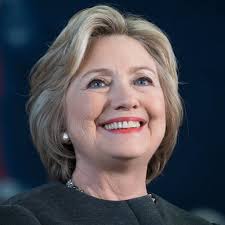
Hillary Clinton
She seemed to have been around forever–as First Lady (1993-2001), as Senator from New York (2001-2009) and as Secretary of State (2009-2013). Those born after 2000 thought of the Clinton Presidency as ancient history. She was offering a resume–and voters wanted an inspiration.
#2 Clinton brought a lot of baggage with her. In contrast to Obama, whose Presidency had been scandal-free, Clinton–rightly or wrongly–has always been dogged by charges of corruption.
During the Clinton Presidency, a failed land deal–Whitewater–while Bill Clinton was Governor of Arkansas triggered a seven-year investigation by a Republican special prosecutor. No criminality was uncovered, and no charge was brought against either Clinton.
After leaving the White House, she and her husband set up the Clinton Foundation, a public charity to bring government, businesses and social groups together to solve problems “faster, better, at lower cost.”
As Secretary of State, more than half of Clinton’s meetings with people outside government were with donors to the Clinton Foundation. If a “pay-to play” system wasn’t at work, one certainly seemed to be.
She cast further suspicion on herself by her unauthorized use of a private email server. This wasn’t revealed until March, 2015–after she was no longer Secretary of State.
She claimed she had used it to avoid carrying two cell-phones. But, as Secretary of State, she traveled with a huge entourage who carried everything she needed. Her critics believed she used a private email system to hide a “pay-for-pay” relationship with Clinton Foundation donors.
Finally, as a candidate for President, she “secretly” worked with Debbie Wasserman-Schultz, the chair of the Democratic National Committee, to ensure that she would get the nomination.
As DNC chair, Wasserman-Schultz was expected to be impartial toward all Democratic candidates seeking the prize. This included Vermont U.S. Senator Bernie Sanders, Clinton’s chief competitor.
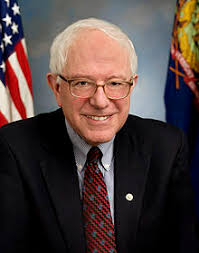
Bernie Sanders
So Sanders and his supporters were outraged when WikiLeaks released 19,252 emails and 8,034 attachments hacked from computers of the highest-ranking officials of the DNC.
The emails revealed a clear bias for Clinton and against Sanders. In one email, Brad Marshall, the chief financial officer of the DNC, suggested that Sanders, who is Jewish, could be portrayed as an atheist.
#3 The Obamas’ support proved a plus/minus for Clinton. Understandably, President Obama wanted to see his legacies continued–and she was the only candidate who could do it.
So he–and his wife, Michelle–stormed the country, giving eloquent, passionate speeches and firing up crowds on Clinton’s behalf.
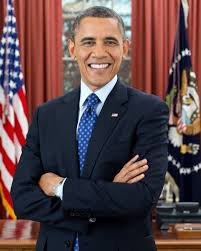
President Barack Obama
So long as either Obama stood before a crowd, the magic lasted. But once the event was over, the excitement vanished. Hillary simply didn’t arouse enough passion to keep it going.
And when Obama supporters compared the President and First Lady with Clinton, they found her wanting–in attractiveness, grace, eloquence, trustworthiness and the ability to inspire.
#4 Not enough Democrats entered the Presidential race. Among those few who did:
- Martin O’Malley, former governor of Maryland;
- Lincoln Chaffee, former governor of Rhode Island;
- James Webb, former U.S. Senator from Virginia;
- Lawrence Lessig, professor at Harvard Law School;
- Vermont U.S. Senator Bernie Sanders;
- and former First Lady/U.S. Senator/Secretary of State Hillary Clinton.
Of these candidates, it’s worth noting that O’Malley withdrew during the primaries. Chaffee, Webb and Lessig withdrew before the primaries started.
Many liberals wanted Massachusetts U.S. Senator Elizabeth Warren to run. As a specialist in consumer protection, she had become a leading figure in the Democratic party and a favorite among progressives.
But, without giving a reason, she declined to do so.
Thus, at least on the Democratic side, the stage was already set at the outset of the race.
No matter who the Republican nominee would be, the Democratic one would be Hillary Clinton or Bernie Sanders.
Sanders fans have loudly claimed that if only he had gotten the Democratic Presidential nomination, he would have crushed Trump at the polls.
But Sanders would have carried big negatives as well–which the Republicans would have gleefully exploited.
These will be explored in Part Two of this continuing series.
2016 PRESIDENTIAL ELECTION, 9/11, ABC NEWS, ADOLF HITLER, AFGHANISTAN, ALTERNET, AMERICABLOG, AP, ASIANS, BABY BOOMER RESISTANCE, BARACK OBAMA, BBC, BLACKS, BLOOMBERG, BULLYING, BUZZFEED, CBS NEWS, CNN, COMMUNISM, CROOKS AND LIARS, DAILY KOS, DAILY KOZ, DONALD TRUMP, FACEBOOK, FASCISM, FIVETHIRTYEIGHT, GEORGE W. BUSH, GREAT DEPRESSION, HARPER’S MAGAZINE, HILLARY CLINTON, HISPANICS, HUFFINGTON POST, IRAQ, JEWS, MEDIA MATTERS, MOTHER JONES, MOVEON, MSNBC, MUSLIMS, NAZI GERMANY, NAZI PARTY, NBC NEWS, NEW REPUBLIC, NEWSDAY, NEWSWEEK, NPR, PAUL VON HINDENBURG, PBS NEWSHOUR, POLITICO, POLITICUSUSA, RACISM, RAW STORY, REPUBLICANS, REUTERS, ROBERT PAYNE, Ronald Reagan, SALON, SEATTLE TIMES, SLATE, TALKING POINTS MEMO, THE ATLANTIC, THE CHICAGO SUN-TIMES, THE CHICAGO TRIBUNE, THE DAILY BEAST, THE DAILY BLOG, THE GUARDIAN, THE HILL, THE HUFFINGTON POST, THE INTERCEPT, THE LIFE AND DEATH OF ADOLF HITLER, THE LOS ANGELES TIMES, THE LOS ANGELS TIMES, THE NATION, THE NEW REPUBLIC, THE NEW YORK TIMES, THE NEW YORKER, THE VILLAGE VOICE, THE WASHINGTON POST, THINKPROGRESS, TIME, TRUMP EFFECT, TRUTHDIG, TRUTHOUT, TWITTER, TWO POLITICAL JUNKIES, U.S. NEWS & WORLD REPORT, UP, UPI, USA TODAY, WORLD WAR 11
In Bureaucracy, History, Politics, Social commentary on November 14, 2016 at 12:05 am
In his bestselling 1973 biography, The Life and Death of Adolf Hitler, British historian Robert Payne harshly condemned the German people for the rise of the Nazi dictator.
“[They] allowed themselves to be seduced by him and came to enjoy the experience….[They] followed him with joy and enthusiasm because he gave them license to pillage and murder to their hearts’ content. They were his servile accomplices, his willing victims….
“If he answered their suppressed desires, it was not because he shared them, but because he could make use of them. He despised the German people, for they were merely the instruments of his will.”
On November 8, millions of ignorant, hate-filled, Right-wing Americans elected Donald Trump—a man reflecting their own hate and ignorance—to the Presidency.
Yet, in some ways, Americans have fewer excuses for turning to a Fascistic style of government than the Germans did.
Adolf Hitler, joined the National Socialist German Workers (Nazi) Party in 1919—the year after World War 1 ended.
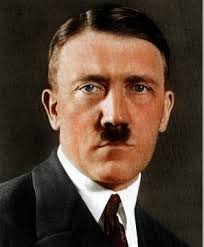
Adolf Hitler
It took him 14 years to win appointment to Chancellor (the equivalent of Attorney General) of Germany in 1933.
In 1923, he staged a coup attempt in Bavaria—which was quickly and brutally put down by police. He was arrested and sentenced to less than a year in prison.
After that, Hitler decided that winning power through violence was no longer an option. He must win it through election—or appointment.
He repeatedly ran for the highest office in Germany—President—but never got a clear majority in a free election.
When the 1929 Depression struck Germany, the fortunes of Hitler’s Nazi party rose as the life savings of ordinary Germans fell. Streets echoed with bloody clashes between members of Hitler’s Nazi Stormtroopers and those of the German Communist Party.
Germany seemed on the verge of collapsing.
Germans desperately looked for a leader—a Fuhrer–who could somehow deliver them from the threat of financial ruin and Communist takeover.
In early 1933, members of his own cabinet persuaded aging German president, Paul von Hindenburg, that only Hitler’s appointment as Chancellor could do this.
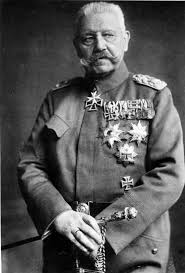
Paul von Hindenburg
Hindenburg was reluctant to do so. He considered Hitler a dangerous radical. But he allowed himself to be convinced that, by putting Hitler in the Cabinet, he could be “boxed in” and thus controlled.
So, on January 30, 1933, he appointed Adolf Hitler Chancellor of Germany.
On August 2, 1934, Hindenberg died, and Hitler immediately assumed the titles—and duties—of the offices of Chancellor and President. His rise to total power was now complete.
It had taken him 14 years to do so.
In 2015, Donald Trump declared his candidacy for President.
Now, consider this:
- The country was technically at war in the Middle East—but the fate of the United States was not truly threatened, as it had been during the Civil War.
- There was no draft; if you didn’t know someone in the military, you didn’t care about the casualties taking place.
- Nor were these conflicts—in Iraq and Afghanistan–imposing domestic shortages on Americans, as World War II had.
- Thanks to government loans from President Barack Obama, American capitalism had been saved from its own excesses during the George W. Bush administration.
- Employment was up. CEOs were doing extremely well.
- In contrast to the corruption that had plagued the administration of Ronald Reagan, whom Republicans idolize, there had been no such scandals during the Obama Presidency.
- Nor had there been any large-scale terrorist attacks on American soil—as there had on 9/11 under President George W. Bush.
Yet—not 17 months after announcing his candidacy for President—enough Americans fervently embraced Donald Trump to give him the most powerful position in the country and the world.
.jpg/220px-Donald_Trump_August_19,_2015_(cropped).jpg)
Donald Trump
The message of Barack Obama’s 2008 campaign had been one of hope—“Yes, We Can!”
That of Donald Trump’s campaign was one of hatred toward everyone who was not an avid Trump supporter: “No, You Can’t!”
Whites comprised the overwhelming majority of the audiences at Trump rallies. Not all were racists, but many of those who were advertised it on T-shirts: “MAKE AMERICA WHITE AGAIN.”
They knew that demographics were steadily working against them. Birthrates among non-whites were rising. By 2045, whites would make up less than 50 percent of the American population.
The 2008 election of the first black President had shocked whites. His 2012 re-election had deprived them of the hope that 2008 had been an accident.
Then came 2016—and the possibility that a black President might actually be followed by a woman: Hillary Clinton.
And the idea of a woman dictating to men was strictly too much to bear.
Since Trump’s election, educators have reported a surge in bullying among students of all ages, from elementary- to high-school. Those doing the bullying are mostly whites, and the victims are mostly blacks, Muslims, Jews, Hispanics, Asians.
It even has a name: “The Trump Effect.”
And this is where matters stand more than two months before Trump takes the oath as President.
All of this should be remembered the next time an American blames Germans for their embrace of Adolf Hitler.



&docid=EPok_ZIEc87UzM&tbnid=Mz_XfR6ARm69rM%3A&vet=1&w=215&h=309&bih=469&biw=819&ved=0ahUKEwj-7_me_6zQAhXrwlQKHXAtCcIQxiAIAg&iact=c&ictx=1)


 Bureaucracybuster's Blog
ABC NEWS, AFFORDABLE CARE ACT, AIR TRAFFIC CONTROLLERS STRIKE, ALTERNET, BARCK OBAMA, BUZZFEED, CBS NEWS, CNN, COLUMBIA UNIVERSITY, DAILY KOS, EXTORTION, FACEBOOK, GEORGE W. BUSH, HARVARD LAW SCHOOL, HILLARY CLINTON, JOHN SCHNATTER, JON STEWART, JONATHAN ALTER, JUSTICE DEPARTMENT, MEDICAL CARE, MOTHER JONES, MOVEON, NBC NESS, NBC NEWS, NEWSWEEK, NICCOLO MACHIAVELLI, NPR, OBAMACARE, PAPA JOHN'S PIZZA, PATRIOT ACT, POLITICO, RACKETEER INFLUENCED CORRUPT ORGANIZATIONS ACT, RAW STORY, REFORM, REPUBLICAN PARTY, RICHARD WOLFFE, SALON, SLATE, TERRORISM, THE CHICAGO SUN-TIMES, THE CHICAGO TRIBUNE, THE DAILY BEAST, THE DAILY SHOW, THE HUFFINGTON POST, THE LOS ANGELES TIMES, THE NEW YORK TIMES, THE PRINCE, THE WALL STREET JOURNAL, THE WASHINGTON POST, TIME, TWITTER, U.S. NEWS & WORLD REPORT, USA TODAY
THE SIX DEADLY FLAWS IN “OBAMACARE”: PART ONE (OF THREE)
In Bureaucracy, History, Law, Medical, Politics, Social commentary on February 28, 2017 at 12:13 amBarack Obama was easily one of the most highly educated Presidents in United States history. He is a graduate of Columbia University (B.A. in political science in 1983).
In 1988, he entered Harvard Law School, graduating magna cum laude–“with great honor”–in 1991.
He was selected as an editor of the Harvard Law Review at the end of his first year, and president of the journal in his second year.
President Barack Obama
He then taught Constitutional law at the University of Chicago Law School for 12 years–as a Lecturer from 1992 to 1996, and as a Senior Lecturer from 1996 to 2004.
Yet, his signature plan to give every American access to healthcare, the Affordable Care Act–universally known as “Obamacare”–remains stricken with dangerous flaws.
So where did he go wrong?
Several ways–in all, at least six.
Obama Mistake No. 1: Putting off what people wanted while concentrating on what they didn’t.
Obama started off well when he took office. Americans had high expectations of him. This was partly due to his being the first black to be elected President.
And it was partly due to the disastrous legacies of needless war and financial catastrophe left by his predecessor, George W. Bush.
Obama entered office intending to reform the American healthcare system, to make medical care available to all citizens, and not just the richest. But that was not what the vast majority of Americans wanted him to concentrate his energies on.
With the lost of 2.6 million jobs in 2008, Americans wanted Obama to find new ways to create jobs. This was especially true for the 11.1 million unemployed, or those employed only part-time.
Jonathan Alter, who writes sympathetically about the President in The Center Holds: Obama and His Enemies, candidly states this.
But Obama chose to spend most of his first year as President pushing the Affordable Care Act (ACA)–which would soon become known as Obamacare–through Congress.
The results were:
Obama Mistake No. 2: He underestimated the amount of opposition he would face to the ACA.
For all of Obama’s academic brilliance and supposed ruthlessness as a “Chicago politician,” he displayed an incredible naivety in dealing with his political opposition.
Niccolo Machiavelli (1469-1527), the Florentine statesman and father of modern politics, could have warned him of the consequences of this–through the pages of The Prince, his infamous treatise on the realities of politics.
Niccolo Machiavelli
And either Obama skipped those chapters or ignored their timeless advice for political leaders.
He should have started with Chapter Six: “Of New Dominions Which Have Been Acquired By One’s Own Arms and Ability”:
…There is nothing more difficult to carry out, nor more doubtful of success, nor more dangerous to handle than to initiate a new order of things.
For the reformer has enemies in all those who profit by the old order, and only lukewarm defenders in all those who would profit by the new order, this lukewarmness arising partly from fear of their adversaries, who have the laws in their favor, and partly from the incredulity of mankind, who do not truly believe in anything new until they have had actual experience of it.
This proved exactly the case with the proposed Affordable Care Act.
Its supporters–even when they comprised a majority of the Congress–have always shown far less fervor than its opponents.
This was true before the Act became effective on March 23, 2010. And it has remained true since, with House Republicans voting more than 60 times to repeal, delay or revise the law.
So before President Obama launched his signature effort to reform the American medical system, he should have taken this truism into account.
Obama Mistake No. 3: Failing to consider–and punish–the venom of his political enemies.
The ancient Greeks used to say: “A man’s character is his fate.” It was Obama’s character–and America’s fate–that he was by nature a man of conciliation, not conflict.
Richard Wolffe chronicled Obama’s winning of the White House in his 2009 book, Renegade: The Making of a President. He noted that Obama was always more comfortable when responding to Republican attacks on his character than he was in making attacks on his enemies.
President Obama came into office determined to find common ground with Republicans.
But they quickly made it clear to him that they only wanted his political destruction. At that point, he should have put aside his hopes for a “Kumbaya moment” and re-read what Niccolo Machiavelli said in The Prince on the matter of love versus fear:
From this arises the question whether it is better to be loved or feared, or feared more than love. The reply is, that one ought to be both feared and loved, but as it is difficult for the two to go together, it is much safer to be feared than loved.
Share this: