bureaucracybusters

Posts Tagged ‘ERWIN ROMMEL’

LIKE FUHRER, LIKE PRESIDENT?

In Bureaucracy, History, Law Enforcement, Military, Politics, Social commentary on December 28, 2018 at 12:10 am

“We will have so much winning if I get elected [President] that you may get bored with winning.”

It was vintage Donald Trump, speaking at a September, 2015 Capitol Hill rally to protest President Barack Obama’s nuclear deal with Iran.

That was before:

  • Trump became President—and, since then, has been entangled in multiple investigations into contacts between Russian Intelligence agents and high-level officials of his 2016 Presidential campaign.
  • He was forced to fire retired General Mike Flynn as his national security adviser. The reason: Flynn’s close ties to Russia and its dictator, Vladimir Putin, had recently come to light in the press.
  • He fired James Comey, the FBI director who had refused to give him a pledge of personal loyalty. 
  • Secretary of Defense James Mattis resigned to protest Trump’s impromptu decision to withdraw American troops from Syria.
  • An anonymous White House source told CNN: “He now lives within himself, which is a dangerous place for Donald Trump to be. I see him emotionally withdrawing. He’s gained weight. He doesn’t have anybody whom he trusts.”

Related image

Donald Trump

Trump’s boast reflected he mindset, if not the words, of an earlier CEO whose ego carried him—and his country—to ruin: Adolf Hitler.

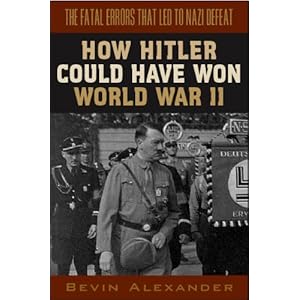
Literally thousands of books have been written on Hitler’s six-year stint as a self-appointed field commander. But for an overall view of Hitler’s generalship, an excellent choice is How Hitler Could have Won World War II by Bevin Alexander.

It’s essential reading—because many of the flaws in Hitler’s character can clearly be seen in Trump’s.

How Hitler Could Have Won World War II

Among the fatal errors that led to the defeat of the defeat of the Third Reich:

  • Wasting hundreds of  Luftwaffe [air force] pilots, fighters and bombers in a halfhearted attempt to conquer England.
  • Ignoring the pleas of generals like Erwin Rommel to conquer Syria, Iraq and Saudi Arabia, which would have given Germany control of most of the world’s oil.
  • Attacking his ally, the Soviet Union, while still at war with Great Britain.
  • Turning millions of Russians into enemies rather than allies by his brutal and murderous policies.
  • Needlessly declaring war on the United States after the Japanese attacked Pearl harbor. (Had he not done so, Americans would have focused all their attention on defeating Japan.)
  • Refusing to negotiate a separate peace with Soviet dictator Joseph Stalin—thus granting Germany a large portion of captured Russian territory in exchange for letting Stalin remain in power.
  • Insisting on a “not-one-step-back” military “strategy” that led to the needless surrounding, capture and/or deaths of hundreds of thousands of German servicemen.

As the war turned increasingly against him, Hitler became ever more rigid in his thinking.

He demanded absolute control over the smallest details of his forces. This, in turn, led to astonishing and unnecessary losses among their ranks. 

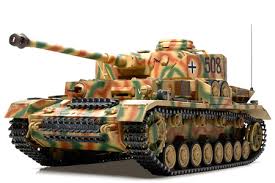
On June 6, 1944, General Erwin Rommel ordered the Panzer tanks to drive the Allies from the Normandy beaches. But these could not be released except on direct orders of the Fuehrer.


Panzer tank

Hitler’s chief of staff, General Alfred Jodl, informed Rommel: The Fuhrer was asleep-–and was not to be awakened. By the time Hitler awoke and issued the order, it was too late.  

Nor could Hitler accept responsibility for the policies that were leading Germany to certain defeat. He blamed his generals, accused them of cowardice, and relieved many of the best ones from command.  

Among those sacked was Heinz Guderian, creator of the German Panzer corps—and responsible for the blitzkreig victory against France in 1940.

Heinz Guderian

Another was Erich von Manstein, designer of the strategy that defeated France in six weeks—which Germany had failed to do during four years of World War 1.

Erich von Manstein

Finally, on April 29, 1945—with the Russians only blocks from his underground Berlin bunker—Hitler dictated his “Last Political Testament.”  

Once again, he refused to accept responsibility for unleashing a war that would ultimately consume 50 million lives: 

“It is untrue that I or anyone else in Germany wanted war in 1939. It was desired and instigated exclusively by those international statesmen who either were of Jewish origin or worked for Jewish interests.” 

Hitler had launched the invasion of Poland–and World War II—with a lie: That Poland had attacked Germany.

Fittingly, he closed the war—and his life—with a final lie.   

Joachim C. Fest, author of Hitler (1973), writes of the surprise that awaited Allied soldiers occupying Nazi Germany in 1945:  “Almost without exception, virtually from one moment to the next, Nazism vanished after the death of Hitler and the surrender.

“It was as if National Socialism had been nothing but the motion, the state of intoxication and the catastrophe it had caused….

“Once again it became plain that National Socialism, like Fascism in general, was dependent to the core on superior force, arrogance, triumph, and by its nature had no resources in the moment of defeat.”

The ancient Greeks believed that “a man’s character is his destiny.” For Adolf Hitler—and the nations he ravaged—that proved fatally true.  

It remains to be seen whether the same will prove true for Donald Trump—and the United States.

JUNE 6: ONE DAY, TWO ANNIVERSARIES

In History, Military, Politics, Social commentary, Uncategorized on June 4, 2018 at 10:21 am

“For it is the doom of men that they forget.”
—Merlin, in “Excalibur”

June 6—a day of glory and tragedy.

The glory came 74 years ago—on Tuesday, June 6, 1944.

On that morning, Americans awoke to learn—from radio and newspapers—that their soldiers had landed on the French coast of Normandy.

In Supreme Command of the Allied Expeditionary Force: American General Dwight D. Eisenhower. Overall command of ground forces was given to British General Bernard Law Montgomery.

Operation Overlord, the Allied invasion to liberate France from Nazi Germany, proved one of the pivotal actions of World War II.

It opened shortly after midnight, with an airborne assault of 24,000 American, British, Canadian and Free French troops.  This was followed at 6:30 a.m. by an amphibious landing of Allied infantry and armored divisions on the French coast.

Field Marshal Erwin Rommel—the legendary “Desert Fox”—commanded the German forces. For him, the first 24 hours of the battle would be decisive.

“For the Allies as well as the Germans,” he warned his staff, “it will be the longest day.”

The operation was the largest amphibious invasion in history. More than 160,000 troops landed—73,000 Americans, 61,715 British and 21,400 Canadians.

Into the Jaws of Death 23-0455M edit.jpg
Omaha Beach – June 6, 1944

Initially, the Allied assault seemed likely to be stopped at the water’s edge—where Rommel had always insisted it must be. He had warned that if the Allies established a beachhead, their overwhelming advantages in numbers and airpower would eventually prove irresistible.

German machine-gunners and mortarmen wreaked a fearful toll on Allied soldiers. But commanders like U.S. General Norman Cota led their men to victory through a storm of bullets and shells.

Coming upon a group of U.S. Army Rangers taking cover behind sand dunes, Cota demanded: “What outfit is this?”

“Rangers!” yelled one of the soldiers.

“Well, Goddamnit, then, Rangers, lead the way!” shouted Cota, inspiring the soldiers to rise and charge into the enemy.

The command also gave the Rangers the motto they carry to this day.

The allied casualty figures for D-Day have been estimated at 10,000, including 4,414 dead. By nationality, the D-Day casualty figures are about

  • 2,700 British
  • 946 Canadians
  • and 6,603 Americans.

The total number of German casualties on D-Day isn’t known, but is estimated at 4,000 to 9,000.

Allied and German armies continued to clash throughout France, Belgium and Germany until May 7, 1945, when Germany finally surrendered.

But those Americans who had taken part in D-Day could be proud of having dealt a fatal blow to the evil ambitions of Adolf Hitler’s Third Reich.

So much for the glory of June 6.  Now for the tragedy—which occurred 50 years ago, on Thursday, June 6, 1968.

Twenty-four years after D-Day, Americans awoke to learn—mostly from TV—that New York Senator Robert F. Kennedy had died at 1:44 a.m. of an assassin’s bullet.

He had been campaigning for the Democratic Presidential nomination, and had just won the California primary on June 4.

This had been a make-or-break event for Kennedy, a fierce critic of the seemingly endless Vietnam war.

He had won the Democratic primaries in Indiana and Nebraska, but had lost the Oregon primary to Minnesota Senator Eugene McCarthy.

If he could defeat McCarthy in California, Kennedy could force his rival to quit the race.  That would lead to a showdown between him and Vice President Hubert Humphery for the nomination.

(President Lyndon B. Johnson had withdrawn from the race on March 31—just 15 days after Kennedy announced his candidacy on March 16.)

After winning the California and South Dakota primaries, Kennedy gave a magnaminous victory speech in the ballroom of the Ambassador Hotel in Los Angeles:

Robert F. Kennedy, only moments from death 

“I think we can end the divisions within the United States….We are a great country, an unselfish country, and a compassionate country.  And I intend to make that my basis for running over the period of the next few months.”

Then he entered the hotel kitchen—where Sirhan Sirhan, a 24-year-old Palestinian from Jordan, opened fire with a .22 revolver.

Kennedy was hit three times—once fatally in the back of the head.  Five other people were also wounded.

Kennedy’s last-known words were: “Is everybody all right?” and “Jack, Jack”—the latter clearly a reference to his beloved older brother, John Fitzgerald Kennedy.

Almost five years earlier, that brother—then President of the United States—had been assassinated in Dallas on November 22, 1963.

Then Robert Kennedy lost consciousness—forever, dying in a hospital bed 24 hours later.

Kennedy had been a U.S. Attorney General (1961-1964) and Senator (1964-1968). But it was his connection to President Kennedy for which he was best-known.

His assassination—coming so soon after that of JFK—convinced many Americans there was something “sick” about the nation’s culture.

One of the best summaries of Robert Kennedy’s legacy was given in Coming Apart: An Informal History of America in the 1960′s, by historian William L. O’Neil. 

See the source image

“He aimed so high that he must be judged for what he meant to do, and through error and tragic accident, failed at…..He will also be remembered as an extraordinary human being who, though hated by some, was perhaps more deeply loved by his countrymen than any man of his time. 

“That, too, must be entered into the final account, and it is no small thing.  With his death, something precious vanished from public life.”


BRAGGING WORDS AND DEFEAT’S REALITY

In Bureaucracy, History, Military, Politics, Social commentary on April 20, 2018 at 12:07 am

By February, 1943, the tide of war had turned irrevocably for Nazi Germany.

The string of quick and easy victories that had started on September 1, 1939 was over:

  • Poland
  • Norway
  • Denmark
  • Holland
  • Belgium
  • Luxembourg
  • Greece
  • France.

All had fallen under the heel of the Nazi jackboot. The swastika flag still flew triumphantly over the capitols of these once-free nations. 

And the word—and whim—of Germany’s Fuhrer, Adolf Hitler remained law for their populations.

But by March, 1943, all except the most fanatical Nazis could see that Germany was on a collision course with disaster.

  • Under the unshakable leadership of Prime Minister Winston Churchill, Great Britain still remained a sworn enemy of the Third Reich.
  • After six months of spectacular victories against the Soviet Union, the Wehrmacht  had become hopelessly bogged down in the snow before Moscow.
  • On December 11, 1941, following the attack on Pearl Harbor by his ally, Japan, Hitler declared war on the United States—thus pitting the Reich against the world’s two most powerful nations: America and Russia.
  • In November, 1942, at El Alamein, the British Army halted the advance of General Erwin Rommel and his famed Afrika Korps across North Africa.
  • On February 2, 1943, General Friedrich von Paulus surrendered the remains of the once-powerful Sixth Army at Stalingrad. The Reich suffered 730,000 total casualties, including nearly 91,000 German prisoners taken prisoner. 
  • On June 6, 1944, American, British and Canadian armies overwhelmed German’s “impregnable wall of death” on the Normandy beaches. 
  • In February, 1945, following the Vistula-Oder Offensive, the Red Army temporarily halted 37 miles east of Berlin. 

So, by March, 1943, Germany desperately needed to hear some good news.  And Propaganda Minister Joseph Goebbels was eager to supply it. 

Related image

Joseph Goebbels

He did so in one of his last public addresses, delivered to a large but carefully selected audience in Gorlitz. 

For Goebbels, the greatest challenge to the Reich lay in “the Bolshevist danger in the East.”  And, for him, the solution was clear: “Total war is the demand of the hour.” 

“Our soldiers, as soon as the great push on the Eastern Front gets under way, will ask no mercy and give no mercy.

“Already, our forces have begun softening up operations, and in the next weeks and months the big offensive will begin. They will go into battle with devotion like congregations going to a religious service.

“And when our men shoulder their weapons and climb into their tanks, there will be before their eyes the sight of their violated women and murdered children. A cry of vengeance will rise from their throats that will make the enemy tremble with fear!

“So, as the Fuhrer has overcome crises in the past, so will he triumph now.

“The other day he told me ‘I firmly believe that we shall overcome this crisis. I firmly believe that our army of millions will beat back our enemy and annihilate him. And some day our banners will be victorious. This is my life’s unshakable belief.’” 

Thunderous applause repeatedly interrupted Goebbels’ address. Yet this could not replace the enormous losses Germany had suffered since 1939. Nor could it reverse the march of the Allied armies as they closed in on the Reich from East and West. 

Now, fast-forward 74 years to November 23, 2017—Thanksgiving Day.   

Donald Trump, President of the United States, speaks by video teleconference to American forces stationed in Iraq and Afghanistan. 

Related image

Donald Trump

President George W. Bus had flown into Baghdad in 2003 to spend Thanksgiving with American forces. He flew into Iraq once again to visit troops in June, 2006. 

And President Barack Obama visited American soldiers in Iraq in 2009, in Afghanistan in 2010, 2012 and 2014. 

Trump’s “visit” was unique—in that he addressed American troops from his Mar-a-Lago Club and Resort in Palm Beach, Florida. 

The address started off predictably enough: “It’s an honor to speak with you all and to give God thanks for the blessings of freedom and for the heroes who really have this tremendous courage that you do to defend us and to defend freedom.” 

But, being Trump, he could not resist paying homage to himself: “We’re being talked about again as an armed forces. We’re really winning. We know how to win, but we have to let you win. They weren’t letting you win before; they we’re letting you play even. We’re letting you win….

“They say we’ve made more progress against ISIS than they did in years of the previous administration, and that’s because I’m letting you do your job….”

In short: All those sacrifices you made under Presidents Bush and Obama went for nothing.  

“A lot of things have happened with our country over the last very short period of time, and they’re really good—they’re really good. I especially like saying that companies are starting to come back.

“Now we’re working on tax cuts—big, fat, beautiful tax cuts. And hopefully we’ll get that and then you’re going to really see things happen.” 

Or, put another way: Be grateful they elected me—because you’re about to see the 1% richest get even richer.  Too bad you won’t be so lucky.

TWO TYRANTS, NO VICTORY

In Bureaucracy, History, Military, Politics, Social commentary on November 27, 2017 at 1:50 am

By February, 1943, the tide of war had turned irrevocably for Nazi Germany.

The string of quick and easy victories that had started on September 1, 1939 was over:

  • Poland
  • Norway
  • Denmark
  • Holland
  • Belgium
  • Luxembourg
  • Greece
  • France.

All had fallen under the heel of the Nazi jackboot. The swastika flag still flew triumphantly over the capitols of these once-free nations. 

Adolf Hitler

And the word—and whim—of Germany’s Fuhrer, Adolf Hitler remained law for their populations.

But by March, 1943, all except the most fanatical Nazis could see that Germany was on a collision course with disaster.

  • Under the unshakable leadership of Prime Minister Winston Churchill, Great Britain still remained a sworn enemy of the Third Reich.
  • After six months of spectacular victories against the Soviet Union, the Wehrmacht  had become hopelessly bogged down in the snow before Moscow.
  • On December 11, 1941, following the attack on Pearl Harbor by his ally, Japan, Hitler declared war on the United States—thus pitting the Reich against the world’s two most powerful nations: America and Russia.
  • In November, 1942, at El Alamein, the British Army halted the advance of General Erwin Rommel and his famed Afrika Korps across North Africa.
  • On February 2, 1943, General Friedrich von Paulus surrendered the remains of the once-powerful Sixth Army at Stalingrad. The Reich suffered 730,000 total casualties, including nearly 91,000 German prisoners taken prisoner. 
  • On June 6, 1944, American, British and Canadian armies overwhelmed German’s “impregnable wall of death” on the Normandy beaches. 
  • In February, 1945, following the Vistula-Oder Offensive, the Red Army temporarily halted 37 miles east of Berlin. 

So, by March, 1943, Germany desperately needed to hear some good news.  And Propaganda Minister Joseph Goebbels was eager to supply it. 

Related image

Joseph Goebbels

He did so in one of his last public addresses, delivered to a large but carefully selected audience in Gorlitz. 

For Goebbels, the greatest challenge to the Reich lay in “the Bolshevist danger in the East.”  And, for him, the solution was clear: “Total war is the demand of the hour.” 

“Our soldiers, as soon as the great push on the Eastern Front gets under way, will ask no mercy and give no mercy.

“Already, our forces have begun softening up operations, and in the next weeks and months the big offensive will begin. They will go into battle with devotion like congregations going to a religious service.

“And when our men shoulder their weapons and climb into their tanks, there will be before their eyes the sight of their violated women and murdered children. A cry of vengeance will rise from their throats that will make the enemy tremble with fear!

“So, as the Fuhrer has overcome crises in the past, so will he triumph now.

“The other day he told me ‘I firmly believe that we shall overcome this crisis. I firmly believe that our army of millions will beat back our enemy and annihilate him. And some day our banners will be victorious. This is my life’s unshakable belief.'” 

Thunderous applause repeatedly interrupted Goebbels’ address. Yet this could not replace the enormous losses Germany had suffered since 1939. Nor could it reverse the march of the Allied armies as they closed in on the Reich from East and West. 

Now, fast-forward 74 years to November 23, 2017—Thanksgiving Day.   

Donald Trump, President of the United States, speaks by video teleconference to American forces stationed in Iraq and Afghanistan. 

Related image

Donald Trump

President George W. Bush had flown into Baghdad in 2003 to spend Thanksgiving with American forces. He flew into Iraq once again to visit troops in June, 2006. 

And President Barack Obama visited American soldiers in Iraq in 2009, in Afghanistan in 2010, 2012 and 2014. 

Trump’s “visit” was unique—in that he addressed American troops from his Mar-a-Lago Club and Resort in Palm Beach, Florida. 

The address started off predictably enough: “It’s an honor to speak with you all and to give God thanks for the blessings of freedom and for the heroes who really have this tremendous courage that you do to defend us and to defend freedom.” 

But, being Trump, he could not resist paying homage to himself: “We’re being talked about again as an armed forces. We’re really winning. We know how to win, but we have to let you win. They weren’t letting you win before; they we’re letting you play even. We’re letting you win….

“They say we’ve made more progress against ISIS than they did in years of the previous administration, and that’s because I’m letting you do your job….”

In short: All those sacrifices you made under Presidents Bush and Obama went for nothing.  

“A lot of things have happened with our country over the last very short period of time, and they’re really good — they’re really good. I especially like saying that companies are starting to come back.

“Now we’re working on tax cuts—big, fat, beautiful tax cuts. And hopefully we’ll get that and then you’re going to really see things happen.” 

Or, put another way: Be grateful they elected me—because you’re about to see the 1% richest get even richer.  Too bad you won’t be so lucky.

IS THERE A HITLER IN THE WHITE HOUSE?

In Bureaucracy, History, Military, Politics, Social commentary on June 8, 2017 at 1:11 pm

“We will have so much winning if I get elected [President] that you may get bored with winning.”

It was vintage Donald Trump, speaking at a September, 2015 Capitol Hill rally to protest President Barack Obama’s nuclear deal with Iran.

That was before Trump became President–and, since then, has been entangled in multiple investigations into contacts between Russian Intelligence agents and high-level officials of his 2016 Presidential campaign.

That was before he was forced to fire retired General Mike Flynn as his national security adviser. The reason: Flynn’s close ties to Russia and its dictator, Vladimir Putin, had recently come to light in the press.

That was before he fired James Comey, the FBI director who had refused to give him a pledge of personal loyalty. 

That was before Comey testified before the United States Senate’s Intelligence Committee and publicly branded Trump a liar on nationwide television.

And that was before an anonymous White House source told CNN: “He now lives within himself, which is a dangerous place for Donald Trump to be. I see him emotionally withdrawing. He’s gained weight. He doesn’t have anybody whom he trusts.”

Related image

Donald Trump

Trump’s boast reflected he mindset–if not the words–of an earlier CEO whose ego carried him–and his country–to ruin: Adolf Hitler.

Literally thousands of books have been written on Hitler’s six-year stint as a self-appointed field commander. But for an overall view of Hitler’s generalship, an excellent choice is How Hitler Could have Won World War II by Bevin Alexander.

How Hitler Could Have Won World War II

Among the fatal errors that led to the defeat of the defeat of the Third Reich:

  • Wasting hundreds of  Luftwaffe [air force] pilots, fighters and bombers in a halfhearted attempt to conquer England.
  • Ignoring the pleas of generals like Erwin Rommel to conquer Syria, Iraq and Saudi Arabia, thus giving Germany control of most of the world’s oil.
  • Attacking his ally, the Soviet Union, while still at war with Great Britain.
  • Turning millions of Russians into enemies rather than allies by his brutal and murderous policies.
  • Needlessly declaring war on the United States after the Japanese attacked Pearl harbor. (Had he not done so, Americans would have focused all their attention on defeating Japan.)
  • Refusing to negotiate a separate peace with Soviet dictator Joseph Stalin–thus granting Germany a large portion of captured Russian territory in exchange for letting Stalin remain in power.
  • Insisting on a “not-one-step-back” military “strategy” that led to the needless surrounding, capture and/or deaths of hundreds of thousands of German servicemen.

As the war turned increasingly against him, Hitler became ever more rigid in his thinking.

He demanded absolute control over the smallest details of his forces. This, in turn, led to astonishing and unnecessary losses among their ranks. 

One such incident was immortalized in the 1962 movie, The Longest Day, about the Allied invasion of France known as D-Day.

On June 6, 1944, General Erwin Rommel ordered the panzer tanks to drive the Allies from the Normandy beaches. But these could not be released except on direct orders of the Fuehrer.
 

Panzer tank

As Hitler’s chief of staff, General Alfred Jodl, informed Rommel: The Fuehrer was asleep–and was not to be awakened. By the time Hitler awoke and issued the order, it was too late.  

Nor could Hitler accept responsibility for the policies that were leading Germany to certain defeat. He blamed his generals, accused them of cowardice, and relieved many of the best ones from command.  

Among those sacked was Heinz Guderian, creator of the German Panzer corps–and responsible for the blitzkreig victory against France in 1940.

Heinz Guderian

Another was Erich von Manstein, designer of the strategy that defeated France in six weeks–which Germany had failed to do during four years of World War 1.

Erich von Manstein

Finally, on April 29, 1945–with the Russians only blocks from his underground Berlin bunker–Hitler dictated his “Last Political Testament.”  

Once again, he refused to accept responsibility for unleashing a war that would ultimately consume 50 million lives: 

“It is untrue that I or anyone else in Germany wanted war in 1939. It was desired and instigated exclusively by those international statesmen who either were of Jewish origin or worked for Jewish interests.” 

Hitler had launched the invasion of Poland–and World War II–with a lie: That Poland had attacked Germany. Fittingly, he closed the war–and his life–with a final lie.   

Joachim C. Fest, author of Hitler (1973), writes of the surprise that awaited Allied soldiers occupying Nazi Germany in 1945:  “Almost without exception, virtually from one moment to the next, Nazism vanished after the death of Hitler and the surrender.

“It was as if National Socialism had been nothing but the motion, the state of intoxication and the catastrophe it had caused….

“Once again it became plain that National Socialism, like Fascism in general, was dependent to the core on superior force, arrogance, triumph, and by its nature had no resources in the moment of defeat.”

The ancient Greeks believed that “a man’s character is his destiny.”  For Adolf Hitler–and the nations he ravaged–that proved fatally true.  

It remains to be seen whether the same will prove true for Donald Trump–and the United States.

A WARNING FOR TRUMP–AND AMERICA

In Bureaucracy, Business, History, Military, Politics, Social commentary on February 3, 2016 at 12:01 am

“We will have so much winning if I get elected [President] that you may get bored with winning.”

It was vintage Donald Trump, speaking at a September, 2015 Capitol Hill rally to protest President Barack Obama’s nuclear deal with Iran.

(That was before February 1, 2016, when Trump learned he had been beaten by Texas U.S. Senator Eduardo Cruz in the Iowa caucuses for the Republican Presidential nomination.   

(The man who had boasted, “No one remembers who came in second” found himself in exactly that place. And tens of thousands of Twitter users gleefully retweeted the quote to celebrate a defeat that Trump had said was impossible.)

“Believe me, I agree, you’ll never get bored with winning. We never get bored. We are going to turn this country around. We are going to start winning big on trade.

“Militarily, we’re going to build up our military. We’re going to have such a strong military that nobody, nobody is going to mess with us. We’re not going to have to use it.”

Related image

Donald Trump

Trump’s boast reflected he mindset–if not the words–of an earlier CEO whose ego carried him–and his country–to ruin.  

Ever since Adolf Hitler shot himself in his underground Berlin Bunker on April 30, 1945, historians have fiercely debated: Was der Fuehrer a military genius or a disastrous imbecile?  

Literally thousands of books have been written on Hitler’s six-year stint as a field commander. But for an overall view of Hitler’s generalship, an excellent choice is How Hitler Could have Won World War II by Bevin Alexander.

How Hitler Could Have Won World War II

Among the fatal errors that led to the defeat of the defeat of the Third Reich:

  • Wasting hundreds of  Luftwaffe [air force] pilots, fighters and bombers in a halfhearted attempt to conquer England.
  • Ignoring the pleas of generals like Erwin Rommel to conquer Syria, Iraq and Saudi Arabia, thus giving Germany control of most of the world’s oil.
  • Attacking his ally, the Soviet Union, while still at war with Great Britain.
  • Turning millions of Russians into enemies rather than allies by his brutal and murderous policies
  • Needlessly declaring war on the United States after the Japanese attacked Pearl harbor. (Had he not done so, Americans would have focused all their attention on defeating Japan.)
  • Refusing to negotiate a separate peace with Soviet dictator Joseph Stalin–thus granting Germany a large portion of captured Russian territory in exchange for letting Stalin remain in power.
  • Insisting on a “not-one-step-back” military “strategy” that led to the needless surrounding, capture and/or deaths of hundreds of thousands of German servicemen.

As the war turned increasingly against him, Hitler became ever more rigid in his thinking. He demanded absolute control over the smallest details of his forces.  

This, in turn, led to astonishing and unnecessary losses among their ranks.  

One such incident was immortalized in the 1962 movie, The Longest Day, about the Allied invasion of France known as D-Day.  

On June 6, 1944, General Erwin Rommel ordered the panzer tanks to drive the Allies from the Normandy beaches. But these could not be released except on direct orders of the Fuehrer.

As Hitler’s chief of staff, General Alfred Jodl, informed Rommel: The Fuehrer was asleep–and was not to be awakened. By the time Hitler awoke and issued the order, it was too late.  

Nor could Hitler accept responsibility for the policies that were leading Germany to certain defeat.  

He blamed his generals, accused them of cowardice, and relieved many of the best ones from command.  

Among those sacked was Heinz Guderian, creator of the German panzer corps–and responsible for the blitzkreig victory against France in 1940.

Another was Erich von Manstein, designer of the strategy that defeated France in six weeks–which Germany had failed to do during four years of World War 1.

Finally, on April 29, 1945–with the Russians only blocks from his underground Berlin bunker–Hitler dictated his “Last Political Testament.”  

Once again, he refused to accept responsibility for unleashing a war that would ultimately consume 50 million lives: 

“It is untrue that I or anyone else in Germany wanted war in 1939.  It was desired and instigated exclusively by those international statesmen who either were of Jewish origin or worked for Jewish interests.” 

Hitler had launched the invasion of Poland–and World War II–with a lie: That Poland had attacked Germany. Fittingly, he closed the war–and his life–with a final lie.   

Joachim C. Fest, author of Hitler (1973), writes of the surprise that awaited Allied soldiers occupying Nazi Germany in 1945:  

“Almost without exception, virtually from one moment to the next, Nazism vanished after the death of Hitler and the surrender.  

“It was as if National Socialism had been nothing but the motion, the state of intoxication and the catastrophe it had caused….

“Once again it became plain that National Socialism, like Fascism in general, was dependent to the core on superior force, arrogance, triumph, and by its nature had no resources in the moment of defeat.”

The ancient Greeks believed “A man’s character is his destiny.”  For Adolf Hitler–and the nations he ravaged–that proved fatally true.  

It’s to be seen whether the same will prove true for Donald Trump–and the United States.

JUNE 6: ONE DAY, TWO ANNIVERSARIES

In History, Military, Politics, Social commentary on June 5, 2015 at 12:38 am

“For it is the doom of men that they forget.”
–Merlin, in “Excalibur”

June 6–a day of glory and tragedy.

The glory came  71 years ago–-on Tuesday, June 6, 1944.

On that morning, Americans awoke to learn–-from radio and newspapers–-that their soldiers had landed on the French coast of Normandy.

In Supreme Command of the Allied Expeditionary Force was American General Dwight D. Eisenhower. Overall command of ground forces was given to British General Bernard Montgomery.

Operation Overlord, the Allied invasion to liberate France from Nazi Germany, proved one of the pivotal actions of World War II.

It opened shortly after midnight, with an airborne assault of 24,000 American, British, Canadian and Free French troops.

This was followed at 6:30 a.m. by an amphibious landing of Allied infantry and armored divisions on the French coast.

Field Marshal Erwin Rommel–-the legendary “Desert Fox”–-commanded the German forces.  For him, the first 24 hours of the battle would be decisive.

“For the Allies as well as the Germans,” he warned his staff, “it will be the longest day.”

The operation was the largest amphibious invasion in history.  More than 160,000 troops landed–-73,000 Americans, 61,715 British and 21,400 Canadians.

Initially, the Allied assault seemed likely to be stopped at the water’s edge–-where Rommel had always insisted it must be.

He had warned that if the Allies established a beachhead, their overwhelming advantages in numbers and airpower would eventually prove irresistible.

German machine-gunners and mortarmen wreaked a fearful toll on Allied soldiers.  But commanders like U.S. General Norman Cota led their men to victory through a storm of bullets and shells.

Coming upon a group of U.S. Army Rangers taking cover behind sand dunes, Cota demanded: “What outfit is this?”

“Rangers!” yelled one of the soldiers.

“Well, Goddamnit, then, Rangers, lead the way!” shouted Cota, inspiring the soldiers to rise and charge into the enemy.

The command also gave the Rangers the motto they carry to this day.

The allied casualty figures for D-Day have been estimated at 10,000, including 4,414 dead. By nationality, the D-Day casualty figures are about 2,700 British, 946 Canadians and 6,603 Americans.

The total number of German casualties on D-Day isn’t known, but is estimated at 4,000 to 9,000.

Allied and German armies continued to clash throughout France, Belgium and Germany until May 7, 1945, when Germany finally surrendered.

But those Americans who had taken part in D-Day could be proud of having dealt a fatal blow to the evil ambitions of Adolf Hitler’s Third Reich.

So much for the glory of June 6.  Now for the tragedy–-which occurred 47 years ago, on Thursday, June 6, 1968.

Twenty-four years after D-Day, Americans awoke to learn–-mostly from TV–-that New York Senator Robert F. Kennedy had died at 1:44 a.m. of an assassin’s bullet.

He had been campaigning for the Democratic Presidential nomination, and had just won the California primary on June 4.

This had been a make-or-break event for Kennedy, a fierce critic of the seemingly endless Vietnam war.

He had won the Democratic primaries in Indiana and Nebraska, but had lost the Oregon primary to Minnesota Senator Eugene McCarthy.

If he could defeat McCarthy in California, Kennedy could force his rival to quit the race.  That would lead to a showdown between him and Vice President Hubert Humphery for the nomination.

(President Lyndon B. Johnson had withdrawn from the race on March 31–-just 15 days after Kennedy announced his candidacy on March 16.)

After winning the California and South Dakota primaries, Kennedy gave a magnaminous victory speech in the ballroom of the Ambassador Hotel in Los Angeles:

“I think we can end the divisions within the United States….We are a great country, an unselfish country, and a compassionate country.

“And I intend to make that my basis for running over the period of the next few months.”

Then he entered the hotel kitchen–-where Sirhan Sirhan, a 24-year-old Palestinian from Jordan, opened fire with a .22 revolver.

Kennedy was hit three times–once fatally in the back of the head.  Five other people were also wounded.

Kennedy’s last-known words were: “Is everybody all right?” and “Jack, Jack”–-the latter clearly a reference to his beloved older brother, John Fitzgerald Kennedy.

Almost five years earlier, that brother–-then President of the United States–-had been assassinated in Dalas on November 22, 1963.

Then Robert Kennedy lost consciousness–-forever, dying in a hospital bed 24 hours later.

Kennedy had been a U.S. Attorney General (1961-1964) and Senator (1964-1968).  But it was his connection to  President Kennedy for which he was best-known.

His assassination–-coming so soon after that of JFK–-convinced many Americans there was something “sick” about the nation’s culture.

One of the best summaries of Robert Kennedy’s legacy was given in Coming Apart: An Informal History of America in the 1960′s, by historian William L. O’Neil:

“…He aimed so high that he must be judged for what he meant to do, and, through error and tragic accident, failed at….

“He will also be remembered as an extraordinary human being who, though hated by some, was perhaps more deeply loved by his countrymen than any man of his time.

“That too must be entered into the final account, and it is no small thing.  With his death something precious disappeared from public life.”

IS THERE A HITLER IN YOUR CEO?

In Bureaucracy, Business, History, Military, Politics, Social commentary on March 27, 2015 at 4:19 pm

Would-be CEOs and Fuehrers, listen up: Character is destiny.

Case in point: The ultimate Fuehrer and CEO, Adolf Hitler.

Ever since he shot himself in his underground Berlin bunker on April 30, 1945, historians have fiercely debated: Was der Fuehrer a military genius or an imbecile?

With literally thousands of titles to choose, the average reader may feel overwhelmed.  But if you’re looking for an understandable, overall view of Hitler’s generalship, an excellent choice would be How Hitler Could Have Won World War II by Bevin Alexander.

Among “the fatal errors that led to Nazi defeat” (as proclaimed on the book jacket) were:

  • Wasting hundreds of Luftwaffe pilots, fighters and bombers in a half-hearted attempt to conquer England.
  • Ignoring the pleas of generals like Erwin Rommel to conquer Syria, Iraq and Saudi Arabia–thus giving Germany control of most of the world’s oil.
  • Attacking his ally, the Soviet Union, while still at war with Great Britain.
  • Needlessly turning millions of Russians into enemies rather than allies by his brutal and murderous policies.
  • Declaring war on the United States after the Japanese attacked Pearl Harbor.  (Had he not done so, Americans would have focused all their attention on conquering Japan.)
  • Refusing to negotiate a separate peace with Soviet dictator Joseph Stalin–thus granting Germany a large portion of captured Russian territory in exchange for letting Stalin remain in power.
  • Insisting on a “not one step back” military “strategy” that led to the unnecessary surrounding, capture and/or deaths of hundreds of thousands of German servicemen.

As the war turned increasingly against him, Hitler became ever more rigid in his thinking.

He demanded absolute control over the smallest details of his forces.  This, in turn, led to astounding and needless losses in German soldiers.

One such incident was immortalized in the 1962 movie, The Longest Day, about the Allied invasion of France known as D-Day.

On June 6, 1944, Rommel ordered the panzer tanks to drive the Allies from the Normandy beaches.  But these could not be released except on direct order of theFuehrer.  As Hitler’s chief of staff, General Alfred Jodl, informed Rommel: The Fuehrer was asleep–and, no, he, Jodl, would not wake him. By the time Hitler awoke and issued the order, it was too late.

Nor could he accept responsibility for the policies that were clearly leading Germany to certain defeat.  Hitler blamed his generals, accused them of cowardice, and relieved many of the best ones from command.

Among those sacked was Heinz Guderian, creator of the German panzer corps–and thus responsible for its highly effective “blitzkrieg” campaign against France in 1940.

Heinz Guderian

Another was Erich von Manstein, designer of the strategy that defeated France in six weeks–something Germany couldn’t do during the four years of World War 1.

Erich von Manstein

Finally, on April 29, 1945–with the Russians only blocks from his underground bunker in Berlin–Hitler dictated his “Last Political Testament.”

Once again, he refused to accept responsibility for unleashing a war that would ultimately consume 50 million lives:

“It is untrue that I or anyone else in Germany wanted war in 1939.  It was desired and instigated exclusively by those international statesmen who either were of Jewish origin or worked for Jewish interests.”

Hitler had launched the war with a lie–that Poland had attacked Germany, rather than vice versa.  And he closed the war–and his life–with a final lie.

All of which brings us to Niccolo Machiavelli, the father of political science.

In his classic book, The Discourses, he wrote at length on the best ways to maintain liberty within a republic.

In Book Three, Chapter 31, Machiavelli declares: “Great Men and Powerful Republics Preserve an Equal Dignity and Courage in Prosperity and Adversity.”

It is a chapter that Adolf Hitler would have done well to read.

“…A truly great man is ever the same under all circumstances.  And if his fortune varies, exalting him at one moment and oppressing him at another, he himself never varies, but always preserves a firm courage, which is so closely interwoven with his character that everyone can readily see that the fickleness of fortune has no power over him.

“The conduct of weak men is very different.  Made vain and intoxicated by good fortune, they attribute their success to merits which they do not possess, and this makes them odious and insupportable to all around them. 

And when they have afterwards to meet a reverse of fortune, they quickly fall into the other extreme, and become abject and vile.  

“Thence it comes that princes of this character think more of flying in adversity than of defending themselves, like men who, having made a bad use of prosperity, are wholly unprepared for any defense against reverses.”

Stay alert to signs of such character flaws among your own business colleagues–and especially your superiors.  They are the warning signs of a future catastrophe.

ONE DAY, TWO ANNIVERSARIES

In History, Military, Politics, Social commentary on June 6, 2014 at 12:01 am

“For it is the doom of men that they forget.”
–Merlin, in “Excalibur”

June 6–a day of glory and tragedy.

The glory came  70 years ago–on Tuesday, June 6, 1944.

On that morning, Americans awoke to learn–from radio and newspapers–that their soldiers had landed on the French coast of Normandy.

In Supreme Command of the Allied Expeditionary Force was American General Dwight D. Eisenhower.  Overall command of ground forces was given to British General Bernard Montgomery.

Operation Overlord, the Allied invasion to liberate France from Nazi Germany, proved one of the pivotal actions of World War II.

It opened shortly after midnight, with an airborne assault of 24,000 American, British, Canadian and Free French troops.  This was followed at 6:30 a.m. by an amphibious landing of Allied infantry and armored divisions on the French coast.

Field Marshal Erwin Rommel–the legendary “Desert Fox”–commanded the German forces.  For him, the first 24 hours of the battle would be decisive.

“For the Allies as well as the Germans,” he warned his staff, “it will be the longest day.”

The operation was the largest amphibious invasion in history.  More than 160,000 troops landed–73,000 Americans, 61,715 British and 21,400 Canadians.

Initially, the Allied assault seemed likely to be stopped at the water’s edge–where Rommel had always insisted it must be.  He had warned that if the Allies established a beachhead, their overwhelming advantages in numbers and airpower would eventually prove irresistible.

German machine-gunners and mortarmen wreaked a fearful toll on Allied soldiers.  But commanders like U.S. General Norman Cota led their men to victory through a storm of bullets and shells.

Coming upon a group of U.S. Army Rangers taking cover behind sand dunes, Cota demanded: “What outfit is this?”

“Rangers!” yelled one of the soldiers.

“Well, Goddamnit, then, Rangers, lead the way!” shouted Cota, inspiring the soldiers to rise and charge into the enemy.

The command also gave the Rangers the motto they carry to this day.

The allied casualty figures for D-Day have been estimated at 10,000, including 4,414 dead.  By nationality, the D-Day casualty figures are about 2,700 British, 946 Canadians and 6,603 Americans.

The total number of German casualties on D-Day isn’t known, but is estimated at 4,000 to 9,000.

Allied and German armies continued to clash throughout France, Belgium and Germany until May 7, 1945, when Germany finally surrendered.

But those Americans who had taken part in D-Day could be proud of having dealt a fatal blow to the evil ambitions of Adolf Hitler’s Third Reich.

So much for the glory of June 6.  Now for the tragedy–which occurred 46 years ago, on Thursday, June 6, 1968.

Twenty-four years after D-Day, Americans awoke to learn–mostly from TV–that New York Senator Robert F. Kennedy had died at 1:44 a.m. of an assassin’s bullet.

He had been campaigning for the Democratic Presidential nomination, and had just won the California primary on June 4.

This had been a make-or-break event for Kennedy, a fierce critic of the seemingly endless Vietnam war.

He had won the Democratic primaries in Indiana and Nebraska, but had lost the Oregon primary to Minnesota Senator Eugene McCarthy.

If he could defeat McCarthy in California, Kennedy could force his rival to quit the race.  That would lead to a showdown between him and Vice President Hubert Humphery for the nomination.

(President Lyndon B. Johnson had withdrawn from the race on March 31–just 15 days after Kennedy announced his candidacy on March 16.)

After winning the California and South Dakota primaries, Kennedy gave a magnaminous victory speech in the ballroom of the Ambassador Hotel in Los Angeles:

“I think we can end the divisions within the United States….We are a great country, an unselfish country, and a compassionate country.  And I intend to make that my basis for running over the period of the next few months.”

Then he entered the hotel kitchen–where Sirhan Sirhan, a 24-year-old Palestinian from Jordan, opened fire with a .22 revolver.

Kennedy was hit three times–once fatally in the back of the head.  Five other people were also wounded.

Kennedy’s last-known words were: “Is everybody all right?” and “Jack, Jack”–the latter clearly a reference to his beloved older brother, John Fitzgerald Kennedy.

Almost five years earlier, that brother–then President of the United States–had been assassinated in Dalas on November 22, 1963.

Then Robert Kennedy lost consciousness–forever, dying in a hospital bed 24 hours later.

Kennedy had been a U.S. Attorney General (1961-1964) and Senator (1964-1968).  But it was his connection to  President Kennedy for which he was best-known.

His assassination–coming so soon after that of JFK–convinced many Americans there was something “sick” about the nation’s culture.

One of the best summaries of Robert Kennedy’s legacy was given in Coming Apart: An Informal History of America in the 1960′s, by historian William L. O’Neil:

“…He aimed so high that he must be judged for what he meant to do, and, through error and tragic accident, failed at….He will also be remembered as an extraordinary human being who, though hated by some, was perhaps more deeply loved by his countrymen than any man of his time.

“That too must be entered into the final account, and it is no small thing.  With his death something precious disappeared from public life.”

IS THERE A HITLER IN YOUR CEO?

In Bureaucracy, History, Military, Social commentary on September 2, 2013 at 12:01 am

Each Labor Day, American politicians offer lip-service tribute to those millions of American workers who make corportate profits a reality.

But no one ever says anything about those over-pampered, over-paid CEOs who all too often take credit for the work done by those millions of American workers.

Too many CEOs have–consciously or not–patterened themselves after the ultimate CEO: Adolf Hitler.

Ever since he shot himself in his underground Berlin bunker on April 30, 1945, historians have fiercely debated:  Was der Fuehrer a military genius or an imbecile?

With literally thousands of titles to choose, the average reader may feel overwhelmed.  But if you’re looking for an understandable, overall view of Hitler’s generalship, an excellent choice would be How Hitler Could Have Won World War II by Bevin Alexander.

How Hitler Could Have Won World War II

Among “the fatal errors that led to Nazi defeat” (as proclaimed on the book jacket) were:

  • Wasting hundreds of Luftwaffe pilots, fighters and bombers in a half-hearted attempt to conquer England.
  • Ignoring the pleas of generals like Erwin Rommel to conquer Syria, Iraq and Saudi Arabia–thus giving Germany control of most of the world’s oil.
  • Attacking his ally, the Soviet Union, while still at war with Great Britain.
  • Needlessly turning millions of Russians into enemies rather than allies by his brutal and murderous policies.
  • Declaring war on the United States after the Japanese attacked Pearl Harbor.  (Had he not done so, Americans would have focused all their attention on conquering Japan.)
  • Refusing to negotiate a separate peace with Soviet dictator Joseph Stalin–thus granting Germany a large portion of captured Russian territory in exchange for letting Stalin remain in power.
  • Insisting on a ”not one step back” military “strategy” that led to the unnecessary surrounding, capture and/or deaths of hundreds of thousands of German servicemen.

As the war turned increasingly against him, Hitler became ever more rigid in his thinking.  He demanded absolute control over the smallest details of his forces.  This, in turn, led to astounding and needless losses in German soldiers.

One such incident was immortalized in the 1962 movie, The Longest Day, about the Allied invasion of France known as D-Day.

On June 6, 1944, Rommel ordered the panzer tanks to drive the Allies from the Normandy beaches.  But these could not be released except on direct order of the Fuehrer.

As Hitler’s chief of staff, General Alfred Jodl, informed Rommel: The Fuehrer was asleep–and, no, he, Jodl, would not wake him.

By the time Hitler awoke and issued the order, it was too late.

Nor could he accept responsibility for the policies that were clearly leading Germany to certain defeat.  Hitler blamed his generals, accused them of cowardice, and relieved many of the best ones from command.

Among those sacked was Heinz Guderian, creator of the German panzer corps–and thus responsible for its highly effective “blitzkrieg” campaign against France in 1940.

Heinz Guderian

Another was Erich von Manstein, designer of the strategy that defeated France in six weeks–something Germany couldn’t do during the four years of World War 1.

Erich von Manstein

Finally, on April 29, 1945–with the Russians only blocks from his underground bunker in Berlin–Hitler dictated his “Last Political Testament.”  Once again, he refused to accept responsibility for unleashing a war that would ultimately consume 50 million lives:

“It is untrue that I or anyone else in Germany wanted war in 1939.  It was desired and instigated exclusively by those international statesmen who either were of Jewish origin or worked for Jewish interests.”

Hitler had launched the war with a lie–that Poland had attacked Germany, rather than vice versa.  And he closed the war–and his life–with a final lie.

All of which, once again, brings us back to Niccolo Machiavelli, the father of political science.

In his classic book, The Discourses, he wrote at length on the best ways to maintain liberty within a republic.  In Book Three, Chapter 31, Machiavelli declares: “Great Men and Powerful Republics Preserve an Equal Dignity and Courage in Prosperity and Adversity.”

It is a chapter that Adolf Hitler would have done well to read.

“…A truly great man is ever the same under all circumstances.  And if his fortune varies, exalting him at one moment and oppressing him at another, he himself never varies, but always preserves a firm courage, which is so closely interwoven with his character that everyone can readily see that the fickleness of fortune has no power over him.

“The conduct of weak men is very different.  Made vain and intoxicated by good fortune, they attribute their success to merits which they do not possess, and this makes them odious and insupportable to all around them. 

And when they have afterwards to meet a reverse of fortune, they quickly fall into the other extreme, and become abject and vile.  

“Thence it comes that princes of this character think more of flying in adversity than of defending themselves, like men who, having made a bad use of prosperity, are wholly unprepared for any defense against reverses.”

Stay alert to signs of such character flaws among your own business colleagues–and especially your superiors.  They are the warning signs of a future catastrophe.