bureaucracybusters

Posts Tagged ‘ENGLAND’

RELIGION VS. SECULAR

In Bureaucracy, Business, Entertainment, History, Law, Law Enforcement, Politics, Social commentary on March 15, 2016 at 12:55 am

In 1964, Thomas Becket, archbishop of Canterbury, once again struggled against King Henry II for power over English citizens.

This time, the conflict was fought across thousands of movie screens, with Richard Burton as Becket and Peter O’Toole as Henry, as portrayed in Jean Anouilh’s 1959 play.  

A quick summary:

Becket, a brilliant Saxon noble, is the favorite friend of Henry. They hunt, fight and bed women together. Henry even appoints him as Chancellor, the highest law enforcement officer in the country. 

But there is a storm on the horizon: The power of the Catholic Church is steadily rising, and Henry needs a highly-placed ally against its power. When the Archbishop of Canterbury dies, Henry appoints Becket in his place.  

But suddenly the entirely secular Becket undergoes a religious conversion–and an unexpected change in allegiance. He insists that priests accused of criminal offenses be tried only in the church’s own courts–thus making them immune from Henry’s secular ones.  

As a moviegoer, it’s easy to root for conscience-stricken Becket, as played by the charming Burton. Henry, as played by O’Toole, is a brutish adolescent, alternately fearful and enraged at his own incompetence.

But in rooting for Becket/Burton, the audience can overlook the significance of allowing religious doctrine to trump secular law.  

The consequences of this are now becoming clear in Indiana.

On March 26, 2015, its governor, Mike Pence, signed into law the Religious Freedom Restoration Act. This will allow any individual or corporation to cite its religious beliefs as a defense when sued by a private party.

Related image

Mike Pence

Officially, its intent is to prevent the government from forcing business owners to act in ways contrary to strongly held religious beliefs. Unofficially, its intent is to appease the hatred of gays and lesbians by the religious Right, a key constituency of the Republican party.

In short, a bakery that doesn’t want to make a cake to be used at a gay wedding or a restaurant that doesn’t want to serve lesbian patrons will have the legal right to refuse to do so.  

The same applies for a hospital that doesn’t want to provide care to a gay or lesbian patient. 

The bill was passed overwhelmingly by both chambers of the Republican-controlled state legislature. And signed into law by a Republican governor. 

“Today I signed the Religious Freedom Restoration Act, because I support the freedom of religion for every Hoosier of every faith,” Mike Pence said in a statement on the day he signed the bill.

“The Constitution of the United States and the Indiana Constitution both provide strong recognition of the freedom of religion but today, many people of faith feel their religious liberty is under attack by government action.”

Bill-signing ceremonies are usually highly public events. Governors–and presidents–normally want their constituents to see them creating new legislation.

Yet for all his praise for the bill, Pence signed it in a ceremony closed to the public and the press. The media were asked to leave even the waiting area of the governor’s office.

It’s almost as if Pence sensed that he was about to push open a door into a danger-filled room.  And this may well be the case.

Through that door may soon march the First Church of Cannabis. The day after Pence signed the Act, church founder Bill Levin announced on his Facebook page that he had filed paperwork with the office of the Indiana Secretary of State.

Its registration had been approved–and Levin was ecstatic: “Now we begin to accomplish our goals of Love, Understanding, and Good Health.

“Donate $100 or more and become a GREEN ANGEL. Donate $500 or more and become a GOLD ANGEL. Donate $1000 or more and become a CHURCH POOHBA.”

And Levin had a personal comment for the governor who had made it all possible:

“Dear Mikey Pence…

“DUDE!.. keep crapping all over the state.. and I will plant a seed of LOVE, UNDERSTANDING and COMPASSION in each pile you leave.. and it will grow into a big skunky cannabis tree. Crap away Mikey.. Crap Away…”

No doubt many Indiana legislators are furious that their effort to attack gays may have brought legal marijuana to their highly conservative state. But worse may be to come.

Since 9/11, Right-wingers such as Rush Limbaugh and Sean Hannity have warned that Muslims are trying to impose Sharia (Islamic law) on America. And now Indiana’s legislators, in elevating religion above the law, may have laid the legal foundations for making that possible.

Ironically, this may not be so far removed from the goals of the Republican party as many think. Both the party and adherents of Sharia agree:

  • Women should have fewer rights than men.
  • Abortion should be illegal.
  • There should be no separation between church and state.
  • Religion should be taught in school.
  • Religious doctrine trumps science.
  • Government should be based on religious doctrine.
  • Homosexuality should be outlawed.

What will happen when some Muslims in Indiana claim their right–guaranteed in Islamic religious law–to have as many as four wives?

And when they claim that the Religious Freedom Restoration Act protects that right?

Fasten your seatbelts, it’s going to be a bumpy nightmare.

A WARNING FOR TRUMP–AND AMERICA

In Bureaucracy, Business, History, Military, Politics, Social commentary on February 3, 2016 at 12:01 am

“We will have so much winning if I get elected [President] that you may get bored with winning.”

It was vintage Donald Trump, speaking at a September, 2015 Capitol Hill rally to protest President Barack Obama’s nuclear deal with Iran.

(That was before February 1, 2016, when Trump learned he had been beaten by Texas U.S. Senator Eduardo Cruz in the Iowa caucuses for the Republican Presidential nomination.   

(The man who had boasted, “No one remembers who came in second” found himself in exactly that place. And tens of thousands of Twitter users gleefully retweeted the quote to celebrate a defeat that Trump had said was impossible.)

“Believe me, I agree, you’ll never get bored with winning. We never get bored. We are going to turn this country around. We are going to start winning big on trade.

“Militarily, we’re going to build up our military. We’re going to have such a strong military that nobody, nobody is going to mess with us. We’re not going to have to use it.”

Related image

Donald Trump

Trump’s boast reflected he mindset–if not the words–of an earlier CEO whose ego carried him–and his country–to ruin.  

Ever since Adolf Hitler shot himself in his underground Berlin Bunker on April 30, 1945, historians have fiercely debated: Was der Fuehrer a military genius or a disastrous imbecile?  

Literally thousands of books have been written on Hitler’s six-year stint as a field commander. But for an overall view of Hitler’s generalship, an excellent choice is How Hitler Could have Won World War II by Bevin Alexander.
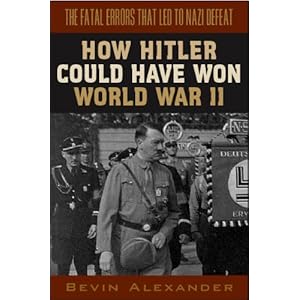
How Hitler Could Have Won World War II

Among the fatal errors that led to the defeat of the defeat of the Third Reich:

  • Wasting hundreds of  Luftwaffe [air force] pilots, fighters and bombers in a halfhearted attempt to conquer England.
  • Ignoring the pleas of generals like Erwin Rommel to conquer Syria, Iraq and Saudi Arabia, thus giving Germany control of most of the world’s oil.
  • Attacking his ally, the Soviet Union, while still at war with Great Britain.
  • Turning millions of Russians into enemies rather than allies by his brutal and murderous policies
  • Needlessly declaring war on the United States after the Japanese attacked Pearl harbor. (Had he not done so, Americans would have focused all their attention on defeating Japan.)
  • Refusing to negotiate a separate peace with Soviet dictator Joseph Stalin–thus granting Germany a large portion of captured Russian territory in exchange for letting Stalin remain in power.
  • Insisting on a “not-one-step-back” military “strategy” that led to the needless surrounding, capture and/or deaths of hundreds of thousands of German servicemen.

As the war turned increasingly against him, Hitler became ever more rigid in his thinking. He demanded absolute control over the smallest details of his forces.  

This, in turn, led to astonishing and unnecessary losses among their ranks.  

One such incident was immortalized in the 1962 movie, The Longest Day, about the Allied invasion of France known as D-Day.  

On June 6, 1944, General Erwin Rommel ordered the panzer tanks to drive the Allies from the Normandy beaches. But these could not be released except on direct orders of the Fuehrer.

As Hitler’s chief of staff, General Alfred Jodl, informed Rommel: The Fuehrer was asleep–and was not to be awakened. By the time Hitler awoke and issued the order, it was too late.  

Nor could Hitler accept responsibility for the policies that were leading Germany to certain defeat.  

He blamed his generals, accused them of cowardice, and relieved many of the best ones from command.  

Among those sacked was Heinz Guderian, creator of the German panzer corps–and responsible for the blitzkreig victory against France in 1940.

Another was Erich von Manstein, designer of the strategy that defeated France in six weeks–which Germany had failed to do during four years of World War 1.

Finally, on April 29, 1945–with the Russians only blocks from his underground Berlin bunker–Hitler dictated his “Last Political Testament.”  

Once again, he refused to accept responsibility for unleashing a war that would ultimately consume 50 million lives: 

“It is untrue that I or anyone else in Germany wanted war in 1939.  It was desired and instigated exclusively by those international statesmen who either were of Jewish origin or worked for Jewish interests.” 

Hitler had launched the invasion of Poland–and World War II–with a lie: That Poland had attacked Germany. Fittingly, he closed the war–and his life–with a final lie.   

Joachim C. Fest, author of Hitler (1973), writes of the surprise that awaited Allied soldiers occupying Nazi Germany in 1945:  

“Almost without exception, virtually from one moment to the next, Nazism vanished after the death of Hitler and the surrender.  

“It was as if National Socialism had been nothing but the motion, the state of intoxication and the catastrophe it had caused….

“Once again it became plain that National Socialism, like Fascism in general, was dependent to the core on superior force, arrogance, triumph, and by its nature had no resources in the moment of defeat.”

The ancient Greeks believed “A man’s character is his destiny.”  For Adolf Hitler–and the nations he ravaged–that proved fatally true.  

It’s to be seen whether the same will prove true for Donald Trump–and the United States.

IS THERE A HITLER IN YOUR CEO?

In Bureaucracy, Business, History, Military, Politics, Social commentary on March 27, 2015 at 4:19 pm

Would-be CEOs and Fuehrers, listen up: Character is destiny.

Case in point: The ultimate Fuehrer and CEO, Adolf Hitler.

Ever since he shot himself in his underground Berlin bunker on April 30, 1945, historians have fiercely debated: Was der Fuehrer a military genius or an imbecile?

With literally thousands of titles to choose, the average reader may feel overwhelmed.  But if you’re looking for an understandable, overall view of Hitler’s generalship, an excellent choice would be How Hitler Could Have Won World War II by Bevin Alexander.

Among “the fatal errors that led to Nazi defeat” (as proclaimed on the book jacket) were:

  • Wasting hundreds of Luftwaffe pilots, fighters and bombers in a half-hearted attempt to conquer England.
  • Ignoring the pleas of generals like Erwin Rommel to conquer Syria, Iraq and Saudi Arabia–thus giving Germany control of most of the world’s oil.
  • Attacking his ally, the Soviet Union, while still at war with Great Britain.
  • Needlessly turning millions of Russians into enemies rather than allies by his brutal and murderous policies.
  • Declaring war on the United States after the Japanese attacked Pearl Harbor.  (Had he not done so, Americans would have focused all their attention on conquering Japan.)
  • Refusing to negotiate a separate peace with Soviet dictator Joseph Stalin–thus granting Germany a large portion of captured Russian territory in exchange for letting Stalin remain in power.
  • Insisting on a “not one step back” military “strategy” that led to the unnecessary surrounding, capture and/or deaths of hundreds of thousands of German servicemen.

As the war turned increasingly against him, Hitler became ever more rigid in his thinking.

He demanded absolute control over the smallest details of his forces.  This, in turn, led to astounding and needless losses in German soldiers.

One such incident was immortalized in the 1962 movie, The Longest Day, about the Allied invasion of France known as D-Day.

On June 6, 1944, Rommel ordered the panzer tanks to drive the Allies from the Normandy beaches.  But these could not be released except on direct order of theFuehrer.  As Hitler’s chief of staff, General Alfred Jodl, informed Rommel: The Fuehrer was asleep–and, no, he, Jodl, would not wake him. By the time Hitler awoke and issued the order, it was too late.

Nor could he accept responsibility for the policies that were clearly leading Germany to certain defeat.  Hitler blamed his generals, accused them of cowardice, and relieved many of the best ones from command.

Among those sacked was Heinz Guderian, creator of the German panzer corps–and thus responsible for its highly effective “blitzkrieg” campaign against France in 1940.

Heinz Guderian

Another was Erich von Manstein, designer of the strategy that defeated France in six weeks–something Germany couldn’t do during the four years of World War 1.

Erich von Manstein

Finally, on April 29, 1945–with the Russians only blocks from his underground bunker in Berlin–Hitler dictated his “Last Political Testament.”

Once again, he refused to accept responsibility for unleashing a war that would ultimately consume 50 million lives:

“It is untrue that I or anyone else in Germany wanted war in 1939.  It was desired and instigated exclusively by those international statesmen who either were of Jewish origin or worked for Jewish interests.”

Hitler had launched the war with a lie–that Poland had attacked Germany, rather than vice versa.  And he closed the war–and his life–with a final lie.

All of which brings us to Niccolo Machiavelli, the father of political science.

In his classic book, The Discourses, he wrote at length on the best ways to maintain liberty within a republic.

In Book Three, Chapter 31, Machiavelli declares: “Great Men and Powerful Republics Preserve an Equal Dignity and Courage in Prosperity and Adversity.”

It is a chapter that Adolf Hitler would have done well to read.

“…A truly great man is ever the same under all circumstances.  And if his fortune varies, exalting him at one moment and oppressing him at another, he himself never varies, but always preserves a firm courage, which is so closely interwoven with his character that everyone can readily see that the fickleness of fortune has no power over him.

“The conduct of weak men is very different.  Made vain and intoxicated by good fortune, they attribute their success to merits which they do not possess, and this makes them odious and insupportable to all around them. 

And when they have afterwards to meet a reverse of fortune, they quickly fall into the other extreme, and become abject and vile.  

“Thence it comes that princes of this character think more of flying in adversity than of defending themselves, like men who, having made a bad use of prosperity, are wholly unprepared for any defense against reverses.”

Stay alert to signs of such character flaws among your own business colleagues–and especially your superiors.  They are the warning signs of a future catastrophe.

NEGOTIATING WITH NAZIS AND REPUBLICANS

In History, Military, Politics on October 21, 2013 at 10:21 pm

On October 1, Speaker of the House John Boehner (R-Ohio) said President Barack Obama told Congressional leaders at a White House meeting that “he will not negotiate.”

Boehner accused Democrats of being unwilling to negotiate key elements of the Affordable Care Act–in return for Republican agreement on a spending bill.

The Republicans were seeking–for now–a one-year delay in the rolling out of “Obamacare.”

Obama, in turn, said that he would not submit to Republican “extortion” and “blackmail.”

He said that the House should pass a “clean” spending bill–one without conditions–that met America’s obligations to its citizens and creditors.  Only then would be be willing to discuss possible changes in “Obamacare.”

Republicans countered with slogans such as: “If Obama will negotiate with [Russian President] Vladimir Putin, why won’t he negotiate with Congress?”

Seventy-three years ago, another democratic leader found himself accused of being unreasonable and unwilling to negotiate.

That leader was British Prime Minister Winston Churchill.  And those accusing him were among the most powerful men in the Third Reich.

Winston Churchill

This was not a favorable time for Britain.

On September 1, 1939, Adolf Hitler had ordered his Whermacht (army) to invade Poland.  In six weeks, Polish resistance vanished and Poland became the first of a series of Nazi vassal-states.

Then, on May 10, 1940, after waiting out the winter, Hitler’s army quickly overran Norway and Denmark.

And then it was the turn of France.

In six weeks, the German army accomplished what it couldn’t during the four years of World War 1.  It  bypassed the heavily defended Maginot Line and destroyed one French army after another.

The defeated French were forced to sign the armistice in the same railway car they had used in 1918 when they forced Germany to surrender after World War 1.

Although the British had committed their air force and army to defending France, both had been easily swept aside by the Wehrmact and Luftwaffe (air force).

Driven almost literally into the sea, the British evacuated about 338,226 men from the port of Dunkirk.  It was a miracle made possible by Hitler’s unexplained halt of the German advance and the arrival of a fleet of civilian and naval vessels from England.

“The battle of France is over,” Churchill warned his countrymen.  “The battle of Britain is about to begin.”

But not before Hitler offered his own version of “peace with honor.”

On July 19, the Fuehrer addressed the Reichstag, Germany’s rubber-stamp parliament:

“From Britain I now hear only a single cry–not of the people but of the politicians–that the war must go on….

Hitler addressing the Reichstag

“Mr. Churchill ought, for once, to believe me when I prophesy that a great Empire will be destroyed–an Empire which it was never my intention to destroy or even to harm.

“In this hour I feel it to be my duty before my own conscience to appeal once more to reason and common sense in Great Britain as well as elsewhere.

“I consider myself in a position to make this appeal since I am not the vanquished begging favors but the victor speaking in the name of reason.

“I see no reason why this war must go on.”

The assembled parliamentary deputies and bemedaled generals were convinced the British would accept Hitler’s “generous” offer of peace.

They took it for granted that the British would be grateful for the opportunity  Hitler was giving them to get out of the war.

The Fuehrer, they believed, had been truly magnanimous.  How could the British be insane enough to turn him down?

Soon enough, they–and the Fuehrer–got their answer.

Correspondent William L. Shirer, waiting to make a broadcast at the CBS studio in Berlin, listened as the BBC introduced one of its own correspondents.

Sefton Delmner, fluent in German, had covered Nazi Germany for years.  Although not authorized to speak for the British Government, his response could have come directly from Churchill himself.

Sefton Delmer

“Herr Hitler,” said Delmer in his most deferential German, “you have on occasion in the past consulted me as to the mood of the British public.

“So permit me to render Your Excellency this little service once again tonight.

“Let me tell you what we here in Britain think of this appeal of yours to what you are pleased to call our reason and common sense.  Herr Fuehrer and Reichskanzler [Reich Chancellor] we hurl it right back to you, right in your evil-smelling teeth.”

German officials listening to the broadcast in Shirer’s office were stunned.

“Can you make it out?” one demanded of Shirer.  “Can you understand those British fools?  To turn down peace now?  They’re crazy!”

Although devastated by the forthcoming bombing raids of Hitler’s Luftwaffe, England held out.

Months later, it gained two powerful allies: The Soviet Union (invaded by Hitler on June 22, 1941) and the United States (attacked by Japan on December 7, 1941).

In the end, by standing up to Fascist aggression, England and its democracy were saved.

Americans can only hope the same proves true for their country.

IS THERE A HITLER IN YOUR CEO?

In Bureaucracy, History, Military, Social commentary on September 2, 2013 at 12:01 am

Each Labor Day, American politicians offer lip-service tribute to those millions of American workers who make corportate profits a reality.

But no one ever says anything about those over-pampered, over-paid CEOs who all too often take credit for the work done by those millions of American workers.

Too many CEOs have–consciously or not–patterened themselves after the ultimate CEO: Adolf Hitler.

Ever since he shot himself in his underground Berlin bunker on April 30, 1945, historians have fiercely debated:  Was der Fuehrer a military genius or an imbecile?

With literally thousands of titles to choose, the average reader may feel overwhelmed.  But if you’re looking for an understandable, overall view of Hitler’s generalship, an excellent choice would be How Hitler Could Have Won World War II by Bevin Alexander.

How Hitler Could Have Won World War II

Among “the fatal errors that led to Nazi defeat” (as proclaimed on the book jacket) were:

  • Wasting hundreds of Luftwaffe pilots, fighters and bombers in a half-hearted attempt to conquer England.
  • Ignoring the pleas of generals like Erwin Rommel to conquer Syria, Iraq and Saudi Arabia–thus giving Germany control of most of the world’s oil.
  • Attacking his ally, the Soviet Union, while still at war with Great Britain.
  • Needlessly turning millions of Russians into enemies rather than allies by his brutal and murderous policies.
  • Declaring war on the United States after the Japanese attacked Pearl Harbor.  (Had he not done so, Americans would have focused all their attention on conquering Japan.)
  • Refusing to negotiate a separate peace with Soviet dictator Joseph Stalin–thus granting Germany a large portion of captured Russian territory in exchange for letting Stalin remain in power.
  • Insisting on a ”not one step back” military “strategy” that led to the unnecessary surrounding, capture and/or deaths of hundreds of thousands of German servicemen.

As the war turned increasingly against him, Hitler became ever more rigid in his thinking.  He demanded absolute control over the smallest details of his forces.  This, in turn, led to astounding and needless losses in German soldiers.

One such incident was immortalized in the 1962 movie, The Longest Day, about the Allied invasion of France known as D-Day.

On June 6, 1944, Rommel ordered the panzer tanks to drive the Allies from the Normandy beaches.  But these could not be released except on direct order of the Fuehrer.

As Hitler’s chief of staff, General Alfred Jodl, informed Rommel: The Fuehrer was asleep–and, no, he, Jodl, would not wake him.

By the time Hitler awoke and issued the order, it was too late.

Nor could he accept responsibility for the policies that were clearly leading Germany to certain defeat.  Hitler blamed his generals, accused them of cowardice, and relieved many of the best ones from command.

Among those sacked was Heinz Guderian, creator of the German panzer corps–and thus responsible for its highly effective “blitzkrieg” campaign against France in 1940.

Heinz Guderian

Another was Erich von Manstein, designer of the strategy that defeated France in six weeks–something Germany couldn’t do during the four years of World War 1.

Erich von Manstein

Finally, on April 29, 1945–with the Russians only blocks from his underground bunker in Berlin–Hitler dictated his “Last Political Testament.”  Once again, he refused to accept responsibility for unleashing a war that would ultimately consume 50 million lives:

“It is untrue that I or anyone else in Germany wanted war in 1939.  It was desired and instigated exclusively by those international statesmen who either were of Jewish origin or worked for Jewish interests.”

Hitler had launched the war with a lie–that Poland had attacked Germany, rather than vice versa.  And he closed the war–and his life–with a final lie.

All of which, once again, brings us back to Niccolo Machiavelli, the father of political science.

In his classic book, The Discourses, he wrote at length on the best ways to maintain liberty within a republic.  In Book Three, Chapter 31, Machiavelli declares: “Great Men and Powerful Republics Preserve an Equal Dignity and Courage in Prosperity and Adversity.”

It is a chapter that Adolf Hitler would have done well to read.

“…A truly great man is ever the same under all circumstances.  And if his fortune varies, exalting him at one moment and oppressing him at another, he himself never varies, but always preserves a firm courage, which is so closely interwoven with his character that everyone can readily see that the fickleness of fortune has no power over him.

“The conduct of weak men is very different.  Made vain and intoxicated by good fortune, they attribute their success to merits which they do not possess, and this makes them odious and insupportable to all around them. 

And when they have afterwards to meet a reverse of fortune, they quickly fall into the other extreme, and become abject and vile.  

“Thence it comes that princes of this character think more of flying in adversity than of defending themselves, like men who, having made a bad use of prosperity, are wholly unprepared for any defense against reverses.”

Stay alert to signs of such character flaws among your own business colleagues–and especially your superiors.  They are the warning signs of a future catastrophe.

IS THERE A HITLER IN YOUR CEO?

In Bureaucracy, Business, Politics, Social commentary on May 3, 2013 at 12:35 am

Would-be CEOs and Fuehrers, listen up: Character is destiny.

Case in point: The ultimate Fuehrer and CEO, Adolf Hitler.

Ever since he shot himself in his underground Berlin bunker on April 30, 1945, historians have fiercely debated: Was der Fuehrer a military genius or an imbecile?

With literally thousands of titles to choose, the average reader may feel overwhelmed. But if you’re looking for an understandable, overall view of Hitler’s generalship, an excellent choice would be How Hitler Could Have Won World War II by Bevin Alexander.

How Hitler Could Have Won World War II

Among “the fatal errors that led to Nazi defeat” (as proclaimed on the book jacket) were:

  • Wasting hundreds of Luftwaffe pilots, fighters and bombers in a half-hearted attempt to conquer England.
  • Ignoring the pleas of generals like Erwin Rommel to conquer Syria, Iraq and Saudi Arabia–thus giving Germany control of most of the world’s oil.
  • Attacking his ally, the Soviet Union, while still at war with Great Britain.
  • Needlessly turning millions of Russians into enemies rather than allies by his brutal and murderous policies.
  • Declaring war on the United States after the Japanese attacked Pearl Harbor. (Had he not done so, Americans would have focused all their attention on conquering Japan.)
  • Refusing to negotiate a separate peace with Soviet dictator Joseph Stalin–thus granting Germany a large portion of captured Russian territory in exchange for letting Stalin remain in power.
  • Insisting on a “not one step back” military “strategy” that led to the unnecessary surrounding, capture and/or deaths of hundreds of thousands of German servicemen.

As the war turned increasingly against him, Hitler became ever more rigid in his thinking. He demanded absolute control over the smallest details of his forces. This, in turn, led to astounding and needless losses in German soldiers.

One such incident was immortalized in the 1962 movie, The Longest Day, about the Allied invasion of France known as D-Day.

On June 6, 1944, Rommel ordered the panzer tanks to drive the Allies from the Normandy beaches. But these could not be released except on direct order of the Fuehrer.

As Hitler’s chief of staff, General Alfred Jodl, informed Rommel: The Fuehrer was asleep–and, no, he, Jodl, would not wake him.

By the time Hitler awoke and issued the order, it was too late.

Nor could he accept responsibility for the policies that were clearly leading Germany to certain defeat. Hitler blamed his generals, accused them of cowardice, and relieved many of the best ones from command.

Among those sacked was Heinz Guderian, creator of the German panzer corps–and thus responsible for its highly effective “blitzkrieg” campaign against France in 1940.

Heinz Guderian

Another was Erich von Manstein, designer of the strategy that defeated France in six weeks–something Germany couldn’t do during the four years of World War 1.

Erich von Manstein

Finally, on April 29, 1945–with the Russians only blocks from his underground bunker in Berlin–Hitler dictated his “Last Political Testament.” Once again, he refused to accept responsibility for unleashing a war that would ultimately consume 50 million lives:

“It is untrue that I or anyone else in Germany wanted war in 1939. It was desired and instigated exclusively by those international statesmen who either were of Jewish origin or worked for Jewish interests.”

Hitler had launched the war with a lie–that Poland had attacked Germany, rather than vice versa. And he closed the war–and his life–with a final lie.

All of which, once again, brings us back to Niccolo Machiavelli, the father of political science.

In his classic book, The Discourses, he wrote at length on the best ways to maintain liberty within a republic. In Book Three, Chapter 31, Machiavelli declares: “Great Men and Powerful Republics Preserve an Equal Dignity and Courage in Prosperity and Adversity.”

It is a chapter that Adolf Hitler would have done well to read.

“…A truly great man is ever the same under all circumstances. And if his fortune varies, exalting him at one moment and oppressing him at another, he himself never varies, but always preserves a firm courage, which is so closely interwoven with his character that everyone can readily see that the fickleness of fortune has no power over him.

“The conduct of weak men is very different. Made vain and intoxicated by good fortune, they attribute their success to merits which they do not possess, and this makes them odious and insupportable to all around them.

“And when they have afterwards to meet a reverse of fortune, they quickly fall into the other extreme, and become abject and vile.

“Thence it comes that princes of this character think more of flying in adversity than of defending themselves, like men who, having made a bad use of prosperity, are wholly unprepared for any defense against reverses.”

Stay alert to signs of such character flaws among your own business colleagues–and especially your superiors. They are the warning signs of a future catastrophe.