Posts Tagged ‘CUBAN MISSILE CRISIS’
ABC NEWS, AMERICAN TABLOID, ANTI-CASTRO CUBANS, ASSASSINATION, CBS NEWS, CIA, CNN, COMMUNISM, CUBA, CUBAN MISSILE CRISIS, DONALD TRUMP, DWIGHT D. EISENHOWER, FACEBOOK, FBI, FIDEL CASTRO, FLORIDA, FULGENCIO BATISTA, GUS RUSSO, JACK RUBY, JAMES ELLROY, JOHN F. KENNEDY, JOHNNY ROSELLI, LEE HARVEY OSWALD, LIVE BY THE SWORD, LYNDON B. JOHNSON, MAFIA, MARCO RUBIO, NBC NEWS, NIKITA KHRUSHCHEV, ROBERT F. KENNEDY, SAM GIANCANA, THE CHICAGO SUN-TIMES, THE CHICAGO TRIBUNE, THE LOS ANGELES TIMES, THE NEW YORK TIMES, THE WASHINGTON POST, TWITTER, WARREN COMMISSION
In Bureaucracy, History, Military, Politics, Social commentary on December 1, 2016 at 10:46 am
On October 22, 1962, President John F. Kennedy went on nationwide TV to announce the discovery of the missiles and his blockade of Cuba.
He warned that any nuclear missile launched from Cuba against any nation would be regarded as an attack on the United States by the Soviet Union–and would trigger “a full retaliatory response” upon the U.S.S.R.
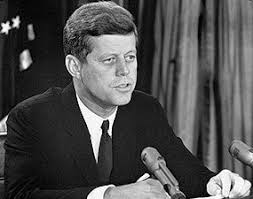
President John F. Kennedy addresses the nation
And he demanded that the Soviets remove all of their offensive weapons from Cuba:
“The path we have chosen for the present is full of hazards, as all paths are, but it is the one most consistent with our character and courage as a nation and our commitments around the world.
“The cost of freedom is always high, but Americans have always paid it. And one path we shall never choose, and that is the path of surrender or submission.”
On October 26, the United States raised the readiness level of SAC forces to DEFCON 2–the step just short of war. For the only time in U.S. history, B-52 bombers were dispersed to various locations and made ready to take off, fully equipped, on 15 minutes’ notice.
Other measures taken included:
- One-eighth of America’s 1,436 bombers were on airborne alert.
- About 145 intercontinental ballistic missiles stood on ready alert.
- Air Defense Command redeployed 161 nuclear-armed interceptors to 16 dispersal fields within nine hours with one-third maintaining 15-minute alert status.
- Twenty-three nuclear-armed B-52 were sent to orbit points within striking distance of the Soviet Union.
An invasion date was set for October 29. But the Kennedy Administration–and the American military–didn’t know that the Russian soldiers guarding the missiles had been armed with tactical nuclear weapons.
Had the Marines gone in, those mini-nukes would have been used. And a fullscale nuclear exchange between the United States and the Soviet Union would have almost certainly followed.
At the height of the crisis, Attorney General Robert F. Kennedy offered a solution.
Khrushchev had sent two teletypes to Kennedy. The first had agreed to remove the missiles, but the second had demanded that the United States remove its own missiles from Turkey, which bordered the Soviet Union.
Robert Kennedy’s solution: The administration should ignore the second message–and announce that it had accepted Khrushchev’s offer to remove the missiles.
After this announcement was made, President Kennedy said to his advisers: “It can go either way now.”
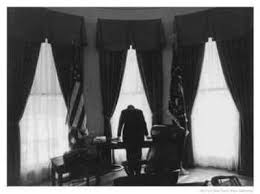
John F. Kennedy in the Oval Office
The crisis ended on October 28. Under enormous pressure, Khrushchev agreed to remove the missiles from Cuba.
Behind his decision lay a secret promise by the Kennedy administration to remove its obsolete nuclear missiles from Turkey, which bordered the Soviet Union. And a public pledge to not invade Cuba.
On the night the crisis ended, there occurred a prophetic exchange between the two Kennedy brothers.
JFK: “Maybe this is the night I should go to the theater”–a reference to Abraham Lincoln’s fatal attendance of Ford’s Theater at the end of the Civil War.
RFK: “If you go, I want to go with you.”
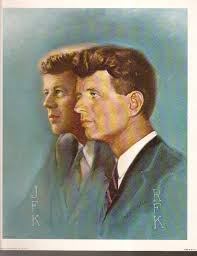
John F. and Robert F. Kennedy
But President Kennedy was not finished with Castro. While continuing the campaign of sabotage throughout Cuba, the Kennedys were preparing something far bigger: A fullscale American invasion of the island.
On October 4, 1963, the Joint Chiefs of Staff submitted its latest version of the invasion plan, known as OPLAN 380-63. Its timetable went:
- January, 1964: Infiltration into Cuba by Cuban exiles.
- July 15, 1964: U.S. conventional forces join the fray.
- August 3, 1964: All-out U.S. air strikes on Cuba.
- October 1, 1964: Full-scale invasion to install “a government friendly to the U.S.”
During the Cuban Missile Crisis, Robert Kennedy–referring to the 1941 Japanese attack on Pearl Harbor–had resisted demands for a “sneak attack” on Cuba by saying: “I don’t want my brother to be the Tojo of the 1960s.”
Now the Kennedys planned such an attack on Cuba just one month before the November, 1964 Presidential election.
Then fate–in the unlikely figure of Lee Harvey Oswald–intervened.
On November 22, 1963, while the President rode through Dallas in an open-air automobile, a rifle-wielding assassin opened fire. He scored two hits on Kennedy–in the back of the neck and head. The second wound proved instantly fatal.
The nation and the world were shocked–and plunged into deep mourning.
But for some of those who had waged a secret, lethal war against Fidel Castro for the previous two years, Kennedy’s death–at least in retrospect–didn’t come as a surprise.
Robert Kennedy, in particular, spent the remaining years of his life agonizing over the possibility that his highly personal war against Castro had backfired.
That Castro, fed up with the CIA’s assassination plots against him, had retaliated with one of his own.
Robert Kennedy’s fears and guilt were compounded by the fact that, while waging war on Castro, he had waged an equally ruthless crusade against organized crime.
He knew that some of the mobsters he had tried to send to prison had played a major role in the CIA’s efforts to “hit” Castro. Had the Mafia–believing itself the victim of a double-cross–put out a “contract” on JFK instead?
It was a question that haunted him until the day he died.
ABC NEWS, AMERICAN TABLOID, ANTI-CASTRO CUBANS, ASSASSINATION, CBS NEWS, CIA, CNN, COMMUNISM, CUBA, CUBAN MISSILE CRISIS, DONALD TRUMP, DWIGHT D. EISENHOWER, FACEBOOK, FBI, FIDEL CASTRO, FLORIDA, FULGENCIO BATISTA, GUS RUSSO, JAMES ELLROY, JOHN F. KENNEDY, JOHNNY ROSELLI, LEE HARVEY OSWALD, LIVE BY THE SWORD, LYNDON B. JOHNSON, MAFIA, MARCO RUBIO, NBC NEWS, NIKITA KHRUSHCHEV, ROBERT F. KENNEDY, SAM GIANCANA, THE CHICAGO SUN-TIMES, THE CHICAGO TRIBUNE, THE LOS ANGELES TIMES, THE NEW YORK TIMES, THE WASHINGTON POST, TWITTER, WARREN COMMISSION
In Bureaucracy, History, Military, Politics, Social commentary on November 30, 2016 at 12:02 am
In April, 1961, the CIA tried to overthrow the Communist regime of Cuba’s “Maximum Leader,” Fidel Castro, at the Bay of Pigs.
When that failed, President John F. Kennedy ordered Castro’s removal through a campaign of sabotage and assassination.
These covert operatives became known within the CIA as the Special Group, and were ultimately supervised by Robert F. Kennedy, the President’s brother and Attorney General.
The war against Castro became known within the CIA as Operation Mongoose.
But not everyone in the CIA was enthusiastic about the “get Castro” effort.
“Everyone at CIA was surprised at Kennedy’s obsession with Fidel,” recalled Sam Halpern, who was assigned to the Cuba Project. “They thought it was a waste of time. We all knew [Fidel] couldn’t hurt us. Most of us at CIA initially liked Kennedy, but why go after this little guy?
“One thing is for sure: Kennedy wasn’t doing it out of national security concerns. It was a personal thing. The Kennedy family felt personally burnt by the Bay of Pigs and sought revenge.”
It was all-out war. Among the tactics used:
- Hiring Cuban gangsters to murder Cuban police officials and Soviet technicians.
- Sabotaging mines.
- Paying up to $100,000 per “hit” for the murder or kidnapping of Cuban officials.
- Using biological and chemical warfare against the Cuban sugar industry.
“Bobby (Kennedy) wanted boom and bang all over the island,” recalled Halpern. “It was stupid. The pressure from the White House was very great.”
Among that “boom and bang” were a series of assassination plots against Castro, in which the Mafia was to be a key player.
Chicago Mobster Johnny Rosselli proposed a simple plan: through its underworld connections in Cuba, the Mafia would recruit a Cuban in Castro’s entourage, such as a waiter or bodyguard, who would poison him.
The CIA’s Technical Services division produced a botulinus toxin which was then injected into Castro’s favorite brand of cigars. The CIA also produced simpler botulinus toxin pills that could be dissolved in his food or drink.
But the deputized Mafia contacts failed to deliver any of the poisons to Castro.
Rosselli told the CIA that the first poisoner had been discharged from Castro’s employ before he could kill him, and the back-up agent got “cold feet.”
Other proposals or attempts included:
- Planting colorful seashells rigged to explode at a site where Castro liked to go skindiving.
- Trying to arrange for his being presented with a wetsuit impregnated with noxious bacteria and mold spores, or with lethal chemical agents.
- Attempting to infect Castro’s scuba regulator with tuberculous bacilli.
- Trying to douse his handkerchiefs, tea and coffee with other lethal bacteria.
Former members of the Kennedy Administration later insisted that neither John nor Robert Kennedy knew or approved of these assassination plots. But the sheer weight of available evidence indicates otherwise.
Bobby, in particular, was constantly pressing the CIA to “do something” about Castro. In the world of covert action, words like “Kill Castro” aren’t committed to paper. Or even spoken.
Castro, rightly seeing his life and regime threatened, appealed to Nikita Khrushchev, leader of the Soviet Union, for assistance.

1960s poster of Fidel Castro and Nikita Khrushchev
Keizers [CC BY-SA 3.0 (https://creativecommons.org/licenses/by-sa/3.0)%5D
Khrushchev was quick to comply: “We must not allow the communist infant to be strangled in its crib,” he told members of his inner circle.
By October, 1962, the Soviet Union had sent more than
- 40,000 soldiers,
- 1,300 field pieces,
- 700 anti-aircraft guns,
- 350 tanks and
- 150 jets
to Cuba to deter another invasion.
Most importantly, Khrushchev began supplying Castro with nuclear-tipped ballistic missiles.
Their discovery, on October 15, 1962, ignited the single most dangerous confrontation of the 50-year Cold War.
Suddenly, the United States and the Soviet Union–bristling with nuclear weapons–found themselves on the brink of nuclear war.
At the time, Kennedy officials claimed they couldn’t understand why Khrushchev had placed nuclear missiles in Cuba. “Maybe Khrushchev’s gone mad” was a typical public musing.
This remained the official American view for years afterward–as depicted in Robert Kennedy’s memoir, Thirteen Days: A Memoir of the Cuban Missile Crisis, published in 1969, the year after his death.
No admission was made that JFK had been waging a no-holds-barred campaign to overthrow the Cuban government and assassinate its leader.
The same proved true for the 1974 doc-u-drama, The Missiles of October, starring William Devane as John F. Kennedy and Martin Sheen as Robert Kennedy.
On October 16, President Kennedy was informed of the missile installations. He immediately convened a group of his 12 most important advisers, which became known as Ex-Comm, for Executive Committee.
Then followed seven days of guarded and intense debate by Kennedy and his advisers. Some of the participants–such as Air Force General Curtis LeMay–urged an all-out air strike against the missile sites.
Others–such as Adlai Stevenson, the United States delegate to the United Nations–urged a reliance on quiet diplomacy.
It was Secretary of Defense Robert S. McNamara who suggested a middle course: A naval blockade–a “quarantine” in Kennedy’s softened term–around Cuba. This would hopefully prevent the arrival of more Soviet offensive weapons on the island.
Finally, the President decided to to impose a naval blockade.
On October 22, Kennedy went on nationwide TV to announce the discovery of the missiles and his blockade of Cuba.
ABC NEWS, AMERICAN TABLOID, ANTI-CASTRO CUBANS, ASSASSINATION, CBS NEWS, CIA, CNN, COMMUNISM, CUBA, CUBAN MISSILE CRISIS, DONALD TRUMP, DWIGHT D. EISENHOWER, FACEBOOK, FBI, FIDEL CASTRO, FLORIDA, FULGENCIO BATISTA, GUS RUSSO, JACK RUBY, JAMES ELLROY, JOHN F. KENNEDY, JOHNNY ROSELLI, LEE HARVEY OSWALD, LIVE BY THE SWORD, LYNDON B. JOHNSON, MAFIA, MARCO RUBIO, NBC NEWS, NIKITA KHRUSHCHEV, ROBERT F. KENNEDY, SAM GIANCANA, THE CHICAGO SUN-TIMES, THE CHICAGO TRIBUNE, THE LOS ANGELES TIMES, THE NEW YORK TIMES, THE WASHINGTON POST, TWITTER, WARREN COMMISSION
In Bureaucracy, History, Military, Politics, Social commentary on November 29, 2016 at 12:08 am
On November 25, Fidel Castro, Cuba’s longtime “Maximum Leader,” died at the age of 90.
Old age and disease finally achieved what years of plotting by CIA and Mafia assassins could not.
To his supporters he was a tireless champion of the poor and a foe of American imperialism. To his enemies he was a ruthless dictator who drove his country to economic ruin in the name of a failed ideology–communism.
His reign began on January 1, 1959, when he swept triumphantly into Havana after a two-year guerrilla campaign against Cuban dictator Fulgencio Batista.
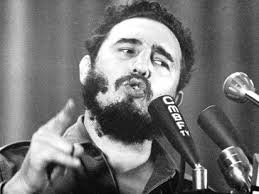
Fidel Castro
Almost immediately, hundreds of thousands of Cubans began fleeing to America. The first émigrés were more than 215,000 Batista followers. The exodus increased, peaking at approximately 78,000 in 1962.
In October, 1962, Castro stopped regularly scheduled travel between the two countries, and asylum seekers began sailing from Cuba to Florida.
Between 1962 and 1979, hundreds of thousands of Cubans entered the United States under the Attorney General’s parole authority.
By 2008, more than 1.24 million Cubans were living in the United States, mostly in South Florida, where the population of Miami was about one-third Cuban. Their sheer numbers transformed the state’s political, economic and cultural life. And not entirely for the better.
Many of these Cubans viewed themselves as political exiles, rather than immigrants, hoping to eventually return to Cuba after its Communist regime fell from power.
The large number of Cubans in South Florida, particularly in Miami’s “Little Havana,” allowed them to preserve their culture and customs to a degree rare for immigrant groups.
With so many discontented immigrants concentrated in Florida, they became a potential force for politicians to court.
And the issue guaranteed to sway their votes was unrelenting hostility to Castro. Unsurprisingly, most of their votes went to Right-wing Republicans.
John F. Kennedy was the first President to face this dilemma.
During the closing months of the administration of President Dwight D. Eisenhower, the CIA had begun training Cuban exiles for an invasion of their former homeland.
The exiles’ goal: To do what Castro had done–seek refuge in the mountains and launch a successful anti-Castro revolution.
But word of the coming invasion quickly leaked: The exiles were terrible secret-keepers. (A joke at the CIA went: “A Cuban thinks a secret is something you tell to only 300 people.”)
Kennedy insisted the invasion must appear to be an entirely Cuban enterprise. He refused to commit U.S. Marines and Air Force bombers.
More than 1,400 invaders landed on April 17, 1961 at the Bay of Pigs–and were quickly overwhelmed, with hundreds of the men taken prisoner.
Kennedy publicly took the blame for its failure: “Victory has a hundred fathers but defeat is an orphan.” But privately he seethed, and ordered the CIA to redouble its efforts to remove Castro at all costs.
To make certain his order was carried out, he appointed his brother, Robert–then Attorney General–to oversee the CIA’s “Castro removal” program.
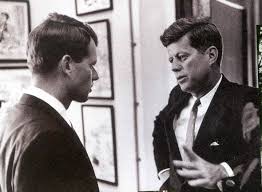
Robert F. Kennedy and John F. Kennedy
It’s here that America’s obsession with Cuba entered its darkest and most disgraceful period.
The CIA and the Mafia entered into an unholy alliance to assassinate Castro–each for its own benefit:
- The CIA wanted to please Kennedy.
- The mobsters wanted to regain their casino and brothel holdings that had made Cuba their private playground in pre-Castro times. They also hoped to use their pose as patriots to win immunity from future prosecution.
The CIA supplied poisons and explosives to various members of the Mafia. It was then up to the mobsters to assassinate Castro.
The CIA asked Johnny Roselli, a mobster linked to the Chicago syndicate, to go to Florida in 1961 and 1962 to organize assassination teams of Cuban exiles. They were to infiltrate their homeland and assassinate Castro.
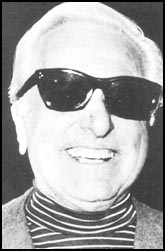
Johnny Roselli
Rosselli called upon two other crime figures: Chicago Mafia boss Sam Giancana and Santos Trafficante, the Costra Nostra chieftain for Tampa, for assistance.
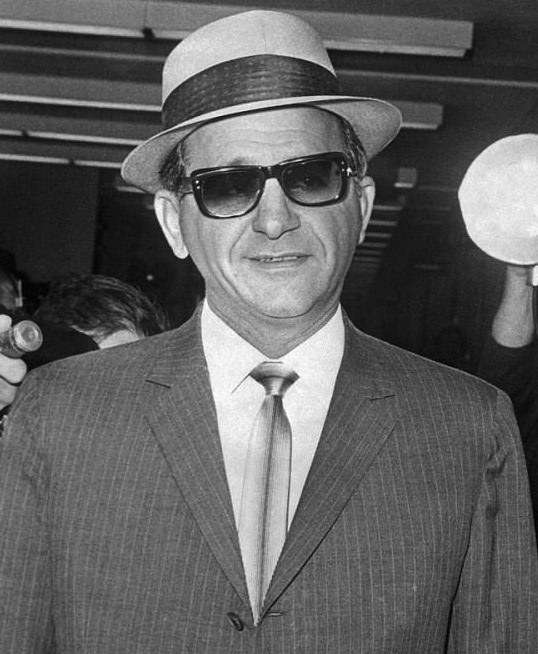
Sam Giancana
Giancana, using the name “Sam Gold” in his dealings with the CIA, was meanwhile being hounded by the FBI on direct orders of Attorney General Robert Kennedy.
The mobsters were authorized to offer $150,000 to anyone who would kill Castro and were promised any support the Agency could yield.
Giancana was to locate someone who was close enough to Castro to be able to drop pills into his food. Trafficante would serve as courier to Cuba, helping to make arrangements for the murder on the island.
Rosselli was to be the main link between all of the participants in the plot.
The available sources disagree on what actually happened. Some believe that the Mob made a genuine effort to “whack” Fidel.
Others are convinced the mobsters simply ran a scam on the government. They pretended to carry out their “patriotic duty” while in fact making no effort at all to penetrate Castro’s security.
The CIA’s war against Castro was known as Operation Mongoose–the mongoose being a traditional enemy of the cobra. And those entrusted with this assignment were known as the Special Group.
“We were hysterical about Castro at about the time of the Bay of Pigs and thereafter,” Secretary of Defense Robert S. McNamara later testified before Congress about these efforts. “And there was pressure from JFK and RFK to do something about Castro.”
2012 PRESIDENTIAL RACE, 2016 PRESIDENTIAL CAMPAIGN, ABC NEWS, AMERICAN UNIVERSITY SPEECH, BARACK OBAMA, BARBARA TUCHMAN, CBS NEWS, CNN, COLD WAR, CUBAN MISSILE CRISIS, DONALD TRUMP, DREAMS OF MY FATHER, FACEBOOK, HERMAN CAIN, JEB BUSH, JOHN F. KENNEDY, NBC NEWS, NUCLEAR TEST BAN TREATY, REPUBLICANS, RICK PERRY, Sarah Palin, SOVIET UNION, THE AUDACITY OF HOPE, THE CHICAGO SUN-TIMES, THE CHICAGO TRIBUNE, THE GUNS OF AUGUST, THE NEW YORK TIMES, THE WASHINGTON POST, TWITTER, USA TODAY, VIETNAM WAR
In Bureaucracy, History, Politics, Social commentary on November 24, 2016 at 12:19 am
November 22 marked 53 years since President John F. Kennedy was assassinated in Dallas, Texas by an embittered Marxist named Lee Harvey Oswald.
Historians generally agree that he left three great legacies to his country:
- The Nuclear Test Ban Treaty;
- The Apollo moon landing; and
- The Vietnam war.
But there was a fourth legacy—and perhaps the most important of all: The belief that mankind could overcome its greatest challenges through rationality and perseverance.
Kennedy demanded timely, reliable information about national and international issues. He speed-read several newspapers every morning. He nourished personal relationships with reporters—and not for entirely altruistic reasons.
These journalistic relationships gave Kennedy additional sources of information and perspectives he felt he could not get through government agencies.
When giving speeches, Kennedy—a 1940 cum laude graduate of Harvard University with a Bachelor of Arts in Government—never tried to hide his education. Nor did he talk down to his audiences.
Republicans, on the other hand, have made appealing to the ignorant and uneducated a centerpiece of their political campaigns.
During the 2016 Presidential campaign, real estate mogul Trump famously said; “I love the poorly educated.”
Trump may love “the poorly educated,” but he didn’t want to join them. He graduated from the University of Pennsylvania in 1968 with a Bachelor of Science degree in Economics.
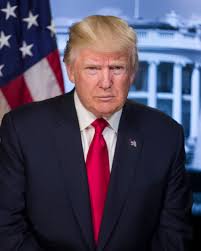
Donald Trump
And for all his notorious bragging about himself, Trump didn’t share this achievement with his audiences.
During the 2012 Presidential race, Republican candidates seemed to value ignorance as a prime requirement for entering the White House.
Former Godfather’s Pizza CEO Herman Cain thus excused his ignorance of the reasons for President Barack Obama’s intervention in Libya: “We need a leader, not a reader.”
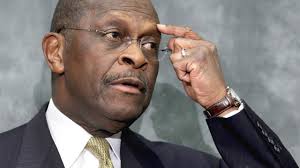
Herman Cain
Texas Governor Rick Perry showed similar pride in not knowing there are nine judges on the United States Supreme Court:
“Well, obviously, I know there are nine Supreme Court judges. I don’t know how eight came out my mouth. But the, uh, the fact is, I can tell you—I don’t have memorized all of those Supreme Court judges. And, uh, ah–
“Here’s what I do know. That when I put an individual on the Supreme Court, just like I done in Texas, ah, we got nine Supreme Court justices in Texas, ah, they will be strict constructionists….”
And former Alaska Governor Sarah Palin rewrote history via “The Midnight Ride of Paul Revere”:
“He warned the British that they weren’t going to be taking away our arms by ringing those bells and, um, making sure as he’s riding his horse through town to send those warning shots and bells that, uh, we were going to be secure and we were going to be free.”
Actually, Revere was warning his fellow Americans about an impending British attack—as his celebrated catchphrase “The British are coming!” made clear.
Republicans have attacked President Obama for his Harvard education and articulate use of language. Among their taunts: “Hitler also gave good speeches.”
And they resent his having earned most of his income as a writer of two books: Dreams From My Father and The Audacity of Hope.
As if being a writer is somehow subversive.
In that sense, Obama is a “throwback” to John F. Kennedy, who was similarly gifted with language as a writer and orator.
Kennedy was perhaps the last President to convince most Americans that they could overcome their problems through reason and open-mindedness.
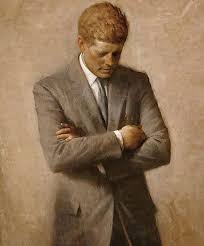
White House painting of JFK
At American University on June 10, 1963, Kennedy called upon his fellow Americans to re-examine the events and attitudes that had led to the Cold War. And he declared that the search for peace was not futile:
“Some say that it is useless to speak of peace or world law or world disarmament….But that is a dangerous, defeatist belief.
“It leads to the conclusion that war is inevitable—that mankind is doomed—that we are gripped by forces we cannot control.
“We need not accept that view. Our problems are man-made; therefore, they can be solved by man. And man can be as big as he wants. No problem of human destiny is beyond human beings.
“Man’s reason and spirit have often solved the seemingly unsolvable, and we believe they can do it again.”
Today, politicians from both parties cannot agree on solutions to even the most vital national problems.
On November 21, 2011, the 12 members of the “Super-Committee” of Congress, tasked with finding $1.2 trillion in cuts in government spending, threw up their hands in defeat.
At the height of the Cuban Missile Crisis, Kennedy spoke with aides about a book he had just finished: Barbara Tuchman’s The Guns of August, on the events leading to World War 1.
For him, the book’s most important revelation was how European leaders had blindly rushed into war, without thought to the possible consequences.
Kennedy said that he did not intend to make the same mistake. Having read his history, he was determined to learn from it.
And he did, for the world escaped all-out nuclear war.
When knowledge and literacy are attacked as “highfalutin’” arrogance, and ignorance and incoherence are embraced as sincerity, national decline and collapse lie just around the corner.
2016 ELECTION, ABC NEWS, BARACK OBAMA, BILL CLINTON, CBS NEWS, CHIANG KAI-SHEK, CHINA, CNN, CUBAN MISSILE CRISIS, DEMOCRATIC PARTY, DONALD TRUMP, DWIGHT D. EISENHOWER, FOX NEWS, GEORGE H.W. BUSH, GEORGE W. BUSH, HARRY S. TRUMAN, HILLARY CLINTON, JOHN F. KENNEDY, JOSEPH MCCARTHY, MAO TSE-TUNG, MITT ROMNEY, NAVY SEALS, NBC NEWS, NO EASY DAY, OSAMA BIN LADEN, PENTAGON, REPUBLICAN PARTY, RICHARD NIXON, Ronald Reagan, THE CHICAGO SUN-TIMES, THE CHICAGO TRIBUNE, THE LOS ANGELES TIMES, THE NEW YORK TIMES, THE NEW YORKER, THE WASHINGTONPOST, TREASON, U.S. NAVY SEALS, VLADIMIR PUTIN, WIKILEAKS
In Bureaucracy, History, Military, Politics, Social commentary on July 28, 2016 at 12:08 am
“Russia, if you’re listening, I hope you’re able to find the 30,000 emails that are missing. I think you will probably be rewarded mightily by our press.”
The speaker was Donald Trump, holding a July 27 press conference in Doral, Fla.
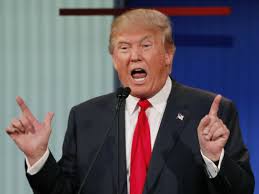
Donald Trump
And he was urging a foreign leader to hack into the private email server of his Presidential rival, Hillary Clinton.
Five days earlier, Wikileaks had released 19,252 emails and 8,034 attachments hacked from computers of the highest-ranking officials of the Democratic National Committee (DNC).
Cyber-security experts believe the hacking originated from Russia–and that Russian President Vladimir Putin may have authorized it.
Politicians on the Left and Right expressed outrage at Trump’s remarks.
But this is not the first time the Right has jeopardized American security.
During the 2012 Presidential campaign, supporters of Mitt Romney accused President Barack Obama of leaking top-secret details of the U.S. Navy SEALs raid on Osama bin Laden’s compound in Abbottabad, Pakistan.
The raid, launched on May 1, 2011, resulted in the death of the 9/11 mastermind and the capture of a treasury of highly sensitive Al Qaeda documents.
According to Right-wingers, Obama wanted to provide Hollywood screenwriters with material for a movie to glorify his role in authorizing the raid.
In August, 2012, the Right found its own secrets-leakers. And they operated under the name of the Fox News Network.
Their motive: To promote a book–No Easy Day: The Firsthand Account of the Mission That Killed Osama Bin Laden. It was slated to hit bookstores on September 11–the 11th anniversary of Al Qaeda’s attacks on the Pentagon and World Trade Center.
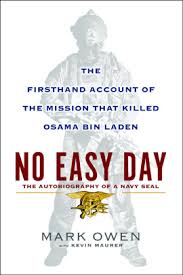
It had been penned under the pseudonym “Mark Owen.” But the real name of the author–a 36-year-old former Navy SEAL Team Six member who took part in the raid–was Matt Bissonnette, of Wrangell, Alaska.
Bissonnette’s real name became public after multiple sources leaked it to Fox News–who revealed it on August 23.
The Navy SEALs who killed bin Laden had previously been left unidentified.
Fox News had repeatedly accused President Obama and members of his administration of treasonously leaking military secrets to the media to glorify the President.
Many former and current SEAL members feared that the book would release information that could compromise future missions.
U.S. Navy SEALs insignia
One Navy SEAL told Fox News, “How do we tell our guys to stay quiet when this guy won’t?” Some SEALs called Bissonnette a “traitor.”
And Colonel Tim Nye, a Special Operations Command spokesman, said the author “put himself in danger” by writing the book.
“This individual came forward. He started the process. He had to have known where this would lead. He’s the one who started this, so he bears the ultimate responsibility for this.”
But Bissonnette placed more than his own life in jeopardy. He endangered the lives of every one of the men who participated in the bin Laden raid.
If Bissonnette fell into the hands of Al Qaeda terrorists or sympathizers, he could conceivably be tortured into revealing at least some of the names and locations of his former team members.
And Fox News not only revealed his true name but the town where he lived.

Even the liberal Nation magazine was appalled at the recklessness of this Right-wing propaganda outlet. Jeremy Scahill, a writer for Nation, tweeted:
“Why on earth would FOX News publish the alleged identity of one of the ST6 members who was in the OBL raid? Seriously.”
Millions of Right-wing Americans have been conditioned by decades of Fascistic propaganda to believe that:
- Democrats are all traitors–or at least potential traitors.
- Even those Democrats who aren’t traitors are too weak-kneed to protect the nation from its sworn enemies.
- Democrats (have betrayed) (are betraying) (intend to betray) national security secrets to the Soviet/Chinese Communists.
- Democrats have (betrayed/) (are betraying) (intend to betray) national security secrets to Islamic Jihadists.
- Only Republicans can be trusted to protect the nation.
Republicans blamed President Harry S. Truman for “losing China” to the forces of Mao Tse Tung in 1949. America could not have prevented a corrupt and incompetent Chiang Kai-Shek from being driven off the Chinese mainland by Mao’s overwhelmingly powerful armies.
Then, in 1950, Senator “Tail Gunner Joe” McCarthy charged that the State Department was infested by Communists–and that the Truman administration knew it but refused to take action. The charges were false.

Joseph R. McCarthy
During the 2008 Presidential campaign, Republicans charged that Barack Obama was really a Muslim non-citizen who intended to sell out America’s security to his Muslim “masters.”
Attacking the patriotism of their opponents has repeatedly elected Republicans:
- It elected Dwight Eisenhower President and turned Congress Republican in 1952 and 1956.
- It elected Richard Nixon President in 1968 and 1972.
- It elected Ronald Reagan President in 1980 and 1984.
- It elected George H.W. Bush President in 1988.
- It gave Republicans control of the Congress in 1994 (although Bill Clinton had been elected President in 1992).
- It elected George W. Bush President in 2000 and 2004.
- It gave control of the House to Republicans in 2010 and the Senate in 2014.
And now Republicans hope this appeal will elect a man who has openly called on Vladimir Putin to hack into American computers.
ABC NEWS, AFFORDABLE CARE ACT, BARACK OBAMA, CBS NEWS, CNN, CUBAN MISSILE CRISIS, ERIC HOLDER, EXTORTION, FACEBOOK, GOVERNMENT SHUTDOWN, HILLARY CLINTON, HOUSE OF REPRESENTATIVES, JOHN BOEHNER, JON STEWART, JUSTICE DEPARTMENT, NICCOLO MACHIAVELLI, OBAMACARE, RACKETEER INFLUENCED CORRUPT ORGANIZATIONS ACT, REPUBLICANS, RICHARD WOLFFE, TED CRUZ, THE CHICAGO SUN-TIMES, THE CHICAGO TRIBUNE, THE DAILY SHOW, THE NEW YORK TIMES, THE PRINCE, THE WASHINGTON POST, TWITTER, USA PATRIOT ACT
In Bureaucracy, History, Law, Law Enforcement, Politics, Social commentary on July 22, 2016 at 12:05 am
The ancient Greeks believed: “A man’s character is his fate.” It is Barack Obama’s character–and America’s fate–that he is more inclined to conciliation than confrontation.
Richard Wolffe chronicled Obama’s winning of the White House in his book Renegade: The Making of a President. He noted that Obama was always more comfortable when responding to Republican attacks on his character than he was in making attacks of his own.
Rule #4: Be Open to Compromise–Not Capitulation
Obama came into office determined to find common ground with Republicans. But they quickly made it clear to him that they only wanted his political destruction.
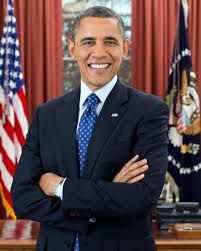
President Barack Obama
At that point, he should have put aside his hopes for a “Kumbaya moment” and applied what Niccolo Machiavelli famously said in The Prince on the matter of love versus fear:
From this arises the question whether it is better to be loved than feared, or feared more than loved. The reply is, that one ought to be both feared and loved, but as it is difficult for the two to go together, it is much safer to be feared than loved.
For it may be said of men in general that they are ungrateful, voluble, dissemblers, anxious to avoid danger and covetous of gain.
As long as you benefit them, they are entirely yours: they offer you their blood, their goods, their life and their children, when the necessity is remote. But when it approaches, they revolt….
And men have less scruple in offending one who makes himself loved than one who makes himself feared; for love is held by a chain of obligations which, men being selfish, is broken whenever it serves their purpose; but fear is maintained by a dread of punishment which never fails.
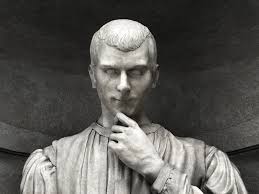
Niccolo Machiavelli
By refusing to vigorously prosecute acts of Republican extortion, President Obama has encouraged Republicans to intensify their aggression against him.
Their most recent act: Refusing to meet with federal appeals court judge Merrick Garland. Obama’s designated nominee to the Supreme Court after the February 13 death of Justice Antonin Scalia.
Kentucky United States Senator Mitch McConnell has flatly stated: There will be no Supreme Court hearing–not during regular business or a post-election lame-duck session.
Had Obama proceeded with indictments against Republican extortion in 2011 or 2013, McConnell–who supported the extortion attempts of those years–would now be desperately meeting with his lawyers.
Rule #5: First Satisfy Your Citizens, Then Help Them
Obama started off well. Americans had high expectations of him.
This was partly due to his being the first black elected President. And it was partly due to the legacies of needless war and financial catastrophe left by his predecessor, George W. Bush.
Obama entered office intending to reform the American healthcare system, to make medical care available to all citizens, and not just the richest.
But that was not what the vast majority of Americans wanted him to concentrate his energies on. With the loss of 2.6 million jobs in 2008, Americans wanted Obama to find new ways to create jobs.
This was especially true for the 11.1 million unemployed, or those employed only part-time.
Jonathan Alter, who writes sympathetically about the President in The Center Holds: Obama and His Enemies, candidly states this.
But Obama chose to spend most of his first two years as President pushing the Affordable Care Act (ACA)–which soon became known as Obamacare–through Congress.
The results were threefold:
First, those desperately seeking employment felt the President didn’t care about them.
Second, the reform effort became a lightning rod for conservative groups like the Tea Party.
And, third, in 2010, a massive Right-wing turnout cost Democrats the House of Representatives and threatened Democratic control of the Senate.
Rule #6: Be Careful What You Promise
Throughout his campaign to win support for the ACA, Obama had repeatedly promised that, under it: “If you like your health insurance plan, you can keep your plan. Period. If you like your doctor, you can keep your doctor. Period.”
But, hidden in the 906 pages of the law, was a fatal catch for the President’s own credibility.
The law stated that those who already had medical insurance could keep their plans--so long as those plans met the requirements of the new healthcare law.
If their plans didn’t meet those requirements, they would have to obtain new coverage that did.
It soon turned out that a great many Americans wanted to keep their current plan–even if it did not provide the fullest possible coverage.
Suddenly, the President found himself facing a PR nightmare: Charged and ridiculed as a liar.
Even Jon Stewart, who on “The Daily Show” had supported the implementation of “Obamacare,” sarcastically ran footage of Obama’s “you can keep your doctor” promise.
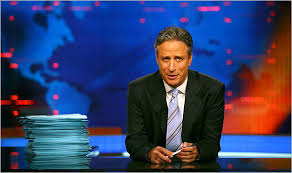
Jon Stewart
The implication: You said we could keep our plan/doctor; since we can’t, you must be a liar.
As a result, the President found his reputation for integrity–long his greatest asset–tarnished.
All of which takes us to yet another warning offered by Machiavelli: Whence it may be seen that hatred is gained as much by good works as by evil….
ABC NEWS, AFFORDABLE CARE ACT, BARACK OBAMA, CBS NEWS, CNN, CUBAN MISSILE CRISIS, ERIC HOLDER, EXTORTION, FACEBOOK, GOVERNMENT SHUTDOWN, HILLARY CLINTON, HOUSE OF REPRESENTATIVES, JOHN BOEHNER, JON STEWART, JUSTICE DEPARTMENT, NICCOLO MACHIAVELLI, OBAMACARE, RACKETEER INFLUENCED CORRUPT ORGANIZATIONS ACT, REPUBLICANS, RICHARD WOLFFE, TED CRUZ, THE CHICAGO SUN-TIMES, THE CHICAGO TRIBUNE, THE DAILY SHOW, THE NEW YORK TIMES, THE PRINCE, THE WASHINGTON POST, TWITTER, USA PATRIOT ACT
In Bureaucracy, History, Law, Law Enforcement, Politics, Social commentary on July 21, 2016 at 12:07 am
If Hillary Clinton succeeds Barack Obama as President, can gain much by learning from his mistakes.
In 2011, Obama could have ended Republican extortion by invoking the law–that of the Racketeer Influenced Corrupt Organizations (RICO) Act and/or the USA Patriot Act.
Or he could have faced down Republican extortionists by urging his fellow Americans to rally to him in a moment of supreme national danger.
Rule #2: Rally Your Citizens Against a Dangerous Enemy
President John F. Kennedy did just that–successfully–during the most dangerous crisis of his administration.
Addressing the Nation on October 22, 1962, Kennedy shocked his fellow citizens by revealing that the Soviet Union had installed offensive nuclear missiles in Cuba.

John F. Kennedy
After outlining a series of steps he had taken to end the crisis, Kennedy sought to reassure and inspire his audience. His words are worth remembering today:
“The path we have chosen for the present is full of hazards, as all paths are, but it is the one most consistent with our character and courage as a nation and our commitments around the world.
“The cost of freedom is always high, but Americans have always paid it. And one path we shall never choose, and that is the path of surrender or submission.”
President Obama could have sent that same message to the extortionists of the Republican Party.
Yet this was another option he failed to exploit. And he and the Nation have continued to pay the price for it.
Rule #3: Timidity Toward Aggressors Only Leads to More Aggression
In September, 2013, Republicans once again threatened to shut down the Federal Government unless the President agreed to defund the Affordable Care Act (ACA), better known as “Obamacare.
They were enraged that millions of uninsured Americans might receive medical care on a par with that given members of the House and Senate.
So on September 20, the House voted on a short-term government funding bill that included a provision to defund Obamacare.
Obama and Senate Democrats rejected that provision. If the House and Senate couldn’t reach a compromise, many functions of the federal government would be shut down indefinitely on October 1.
According to Republicans: They wanted to save the country from bankruptcy–although the Congressional Budget Office stated that the ACA would lower future deficits and Medicare spending.
After passing the House and Senate, the ACA had been signed into law by President Obama on March 23, 2010.
On June 28, 2012, the United States Supreme Court–whose Chief Justice, John Roberts, is a Republican–had upheld the constitutionality of the ACA.
Yet House Republicans still sought a way to stop the law from taking effect. By September, 2013, they had voted 42 times to repeal “Obamacare.”
But their efforts had failed; the Democratic-led Senate made it clear it would never go along with such legislation.
Finally, unable to legally overturn the Act or to legislatively repeal it, House Republicans fell back on something much simpler: Threats and fear.
Threats–of voting to shut down salaries paid to most Federal employees. Most, because they themselves would continue to draw hefty salaries while denying them to FBI agents, air traffic controllers and members of the military, among others.
And fear–that would be generated throughout the Federal government, the United States and America’s international allies.
Republicans claimed it was Obama and Senate Democrats who refused to see reason and negotiate.
But then a Republican accidentally gave away the real reason for the shutdown.
“We’re not going to be disrespected,” Rep. Marlin Stutzman (R-Ind.) told the Washington Examiner. “We have to get something out of this. And I don’t know what that even is.”

Martin Stutzman
In short, Republicans–as admitted by Martlin Stutzman–were out to get “respect.” A member of the Crips or Bloods couldn’t have said it better.
The shutdown began on October 1, 2013–and ended 16 days later with even Republicans admitting it had been a failure.
President Obama, a former attorney, denounced House Republicans as guilty of “extortion” and “blackmail.” If he truly believed them to be so guilty, he could have once again invoked RICO and/or the USA Patriot Act.
Yet he did neither.
Had the President dared to prosecute such criminal conduct, the results would have been:
- Facing lengthy prison terms, those indicted Republicans would have been forced to lawyer-up. That in itself would have been no small thing, since good criminal attorneys cost big bucks.
- Obsessed with their own personal survival, they would have found little time for engaging in the same thuggish behavior that got them indicted. In fact, doing so would have only made their conviction more likely.
- The effect on Right-wing Republicans would have been the same as that of President Ronald Reagan’s firing of striking air traffic controllers: “You cross me and threaten the security of this Nation at your own peril.”

True, some prosecuted Republicans might have beaten the rap. But first they would have been forced to spend huge amounts of time and money on their defense.
And with 75% of Americans voicing disgust with Congress, most of those prosecuted might well have been convicted.
It would have been a long time before Republicans again dared to engage in such behavior.
ABC NEWS, AFFORDABLE CARE ACT, BARACK OBAMA, CBS NEWS, CNN, CUBAN MISSILE CRISIS, ERIC HOLDER, EXTORTION, FACEBOOK, GOVERNMENT SHUTDOWN, HILLARY CLINTON, HOUSE OF REPRESENTATIVES, JOHN BOEHNER, JON STEWART, JUSTICE DEPARTMENT, NICCOLO MACHIAVELLI, OBAMACARE, RACKETEER INFLUENCED CORRUPT ORGANIZATIONS ACT, REPUBLICANS, RICHARD WOLFFE, TED CRUZ, THE CHICAGO SUN-TIMES, THE CHICAGO TRIBUNE, THE DAILY SHOW, THE NEW YORK TIMES, THE PRINCE, THE WASHINGTON POST, TWITTER, USA PATRIOT ACT, WARREN BUFFETT
In Bureaucracy, History, Law, Law Enforcement, Politics, Social commentary on July 20, 2016 at 12:11 am
If Hillary Clinton becomes the nation’s first woman President, that will certainly be as big a historical milestone as Barack Obama’s becoming the first black man to hold that office.
But simply being elected President will not guarantee her success–any more than it guarantees success to any President.
Every President faces challenges that his (up to now) predecessor didn’t. But others can be reasonably anticipated. For Clinton, a totally predictable challenge will be the sheer hatred and ruthless opposition Republicans aimed at Obama.
And unless she determines, early on, to confront and overcome it, she will find her agenda just as blocked and undermined as Obama so often did.
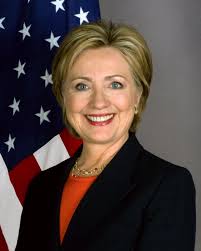
Hillary Clinton
For example:
On July 9, 2011, Republican extortionists threatened the Nation with financial ruin and international disgrace unless their budgetary demands were met.
They refused to raise the debt ceiling unless Democrats agreed to massively cut social programs for the elderly, poor and disabled.
If Congress failed to raise the borrowing limit of the federal government by August 2, the date when the U.S. reached the limit of its borrowing abilities, it would begin defaulting on its loans.
As Warren Buffett, CEO of Berkshire Hathaway, explained the looming economic catastrophe: “If you don’t send out Social Security checks, I would hate to think about the credit meeting at S&P and Moody’s the next morning.
“If you’re not paying millions and millions and millions of people that range in age from 65 on up, money you promised them, you’re not a AAA,” said Buffett.
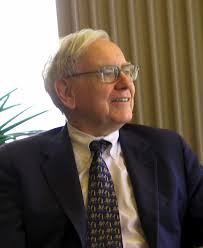
Warren Buffett
A triple-A credit rating is the highest possible rating that can be received.
And while Republicans demanded that the disadvantaged tighten their belts, they rejected raising taxes on their foremost constituency–the wealthiest 1%.
Raising taxes on the wealthy, they insisted, would be a “jobs-killer.” It would “discourage” corporate CEOs from creating tens of thousands of jobs they “want” to create.
As the calendar moved closer to the fateful date of August 2, Republican leaders continued to insist: Any deal that includes taxes “can’t pass the House.”
One senior Republican said talks would go right up to–and maybe beyond–the brink of default.
“I think we’ll be here in August,” said Republican Rep. Pete Sessions, of Texas. “We are not going to leave town until a proper deal gets done.”
President Obama had previously insisted on extending the debt ceiling through 2012. But in mid-July, he simply asked congressional leaders to review three options with their members:
- The “Grand Bargain” choice–favored by Obama–would cut deficits by about $4 trillion, including spending cuts and new tax revenues.
- A medium-range plan would aim to reduce the deficit by about $2 trillion.
- The smallest option would cut between $1 trillion and $1.5 trillion, without increased tax revenue or any Medicare and Medicaid cuts.
And the Republican response?
Said Rep. Darrell Issa, chairman of the Oversight and Government Reform Committee: “Quite frankly, [Republican] members of Congress are getting tired of what the president won’t do and what the president wants.”
With the United States teetering on the brink of national bankruptcy, President Obama faced three choices:
- Counter Republican extortion attempts via RICO–the Racketeer Influenced Corrupt Organizations Act.
- Make a Cuban Missile Crisis-style address to the American people, seeking to rally them against a criminal threat to the financial security of the Nation.
- Cave in to Republican demands.
Unfortunately for Obama and the Nation, he chose Number Three.
Rule #1 Ruthlessly Prosecute the Acts of Ruthless Criminals
But Obama could have countered that danger via the Racketeer Influenced Corrupt Organizations (RICO) Act.
In 1970, Congress passed RICO, Title 18, United States Code, Sections 1961-1968. Its goal: Destroy the Mafia.
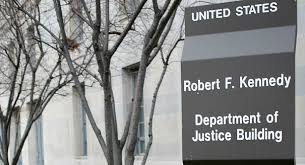
U.S. Department of Justice
RICO opens with a series of definitions of “racketeering activity” which can be prosecuted by Justice Department attorneys. Among those crimes: Extortion.
Extortion is defined as “a criminal offense which occurs when a person unlawfully obtains either money, property or services from a person(s), entity, or institution, through coercion.”
And if President Obama had believed that RICO was insufficient to deal with this crisis, he could have relied on the USA Patriot Act of 2001, passed in the wake of 9/11.

President George W. Bush signs the USA Patriot Act into law – October 26, 2001
In Section 802, the Act defines domestic terrorism. Among the behavior that is defined as criminal:
“Activities that…appear to be intended…to influence the policy of a government by intimidation or coercion [and]…occur primarily within the territorial jurisdiction of the United States.”
The remedies for punishing such criminal behavior were legally in place. President Obama needed only to direct the Justice Department to apply them.
“Activities that…appear to be intended…to influence the policy of a government by intimidation or coercion [and]…occur primarily within the territorial jurisdiction of the United States.”
The remedies for punishing such criminal behavior were legally in place. President Obama needed only to direct the Justice Department to apply them.
Prosecuting members of Congress would not have violated the separation-of-powers principle. Congressmen had been investigated, indicted and convicted for various criminal offenses.
Such prosecutions–and especially convictions–would have served notice on current and future members of Congress that the lives and fortunes of American citizens may not be held hostage as part of a negotiated settlement.
2016 REPUBLICAN CONVENTION, ABC NEWS, AFFORDABLE CARE ACT, BARACK OBAMA, BILL CLINTON, CBS NEWS, CHRIS MATTHEWS, CNN, CUBAN MISSILE CRISIS, DEBT CEILING, DONALD TRUMP, EXTORTION, FACEBOOK, HARDBALL, JOHN F. KENNEDY, JUDGE MERRICK GARLAND, MSNBC, NBC NEWS, NEWT GINGRICH, NICCOLO MACHIAVELLI, OBAMACARE, Racketeer Influenced Corrupt Organizations (RICO) Act, REPUBLICANS, RICHARD WOLFFE, ROBERT PAYNE, THE CHICAGO SUN-TIMES, THE CHICAGO TRIBUNE, THE LIFE AND DEATH OF ADOLF HITLER, THE LOS ANGELES TIMES, THE NEW YORK TIMES, THE PRINCE, THE WALL STREET JOURNAL, THE WASHINGTON POST, TWITTER, U.S. HOUSE OF REPRESENTATIVES, U.S. JUSTICE DEPARTMENT, U.S. SENATE, U.S. SENATOR MITCH MCCONNELL, U.S. SUPREME COURT, USA PATRIOT ACT, WARREN BUFFETT
In Bureaucracy, History, Law, Law Enforcement, Politics, Social commentary on March 25, 2016 at 12:04 am
In September, 2013, President Barack Obama and Senate Democrats refused to knuckle under to yet another Republican extortion threat: Defund the Affordable Care Act (ACA) or we’ll shut down the government.
Republicans claimed it was Obama and Senate Democrats who refused to see reason and negotiate.
But then a Republican accidentally gave away the real reason for the shutdown.
“We’re not going to be disrespected,” Rep. Marlin Stutzman (R-Ind.) told the Washington Examiner. “We have to get something out of this. And I don’t know what that even is.”
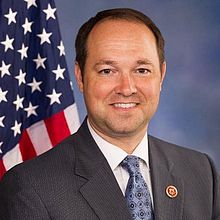
Marlin Stutzman
In short, Republicans–as admitted by Martlin Stutzman–were out to get “respect.” A member of the Crips or Bloods couldn’t have said it better.
The shutdown began on October 1, 2013–and ended 16 days later with even Republicans admitting it had been a failure.
President Obama, a former attorney, denounced House Republicans as guilty of “extortion” and “blackmail.” Had the President acted to prosecute such criminal conduct, the results would have been:
- Facing lengthy prison terms, those indicted Republicans would been forced to lawyer-up. That in itself would have been no small thing, since good criminal lawyers cost big bucks.
- Obsessed with their own personal survival, they would have found little time for engaging in the same thuggish behavior that got them indicted. In fact, doing so would have only made their conviction more likely.
- Those Republicans who hadn’t been indicted would have realized: “I could be next.” This would have produced a chilling effect on their willingness to engage in further acts of subversion and/or extortion.
- The effect on Right-wing Republicans would have been the same as that of President Ronald Reagan’s firing of striking air traffic controllers: “You cross me and threaten the security of this Nation at your own peril.”
True, some prosecuted Republicans might have beaten the rap. But first they would have been forced to spend huge amounts of time and money on their defense.
And with 75% of Americans voicing disgust with Congress, most of those prosecuted might well have been convicted.
It would have been a long time before Republicans again dared to engage in such behavior.
The ancient Greeks believed: “A man’s character is his fate.” It is Obama’s character–and America’s fate–that he is more inclined to conciliation than confrontation.
Richard Wolffe chronicled Obama’s winning of the White House in his book Renegade: The Making of a President. He noted that Obama was always more comfortable when responding to Republican attacks on his character than he was in making attacks of his own.
Obama came into office determined to find common ground with Republicans. But they quickly made it clear to him that they only wanted his political destruction.
At that point, he should have put aside his hopes for a “Kumbaya moment” and applied what Niccolo Machiavelli famously said in The Prince on the matter of love versus fear:
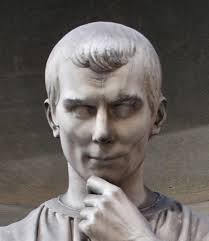
Niccolo Machiavelli
From this arises the question whether it is better to be loved than feared, or feared more than loved. The reply is, that one ought to be both feared and loved, but as it is difficult for the two to go together, it is much safer to be feared than loved.
For it may be said of men in general that they are ungrateful, voluble, dissemblers, anxious to avoid danger and covetous of gain.
As long as you benefit them, they are entirely yours: they offer you their blood, their goods, their life and their children, when the necessity is remote. But when it approaches, they revolt….
And men have less scruple in offending one who makes himself loved than one who makes himself feared; for love is held by a chain of obligations which, men being selfish, is broken whenever it serves their purpose; but fear is maintained by a dread of punishment which never fails.
By refusing to vigorously prosecute acts of Republican extortion, President Obama has unleashed twin disasters upon himself and the United States:
First, Republicans have been encouraged to intensify their acts of aggression against him.
Their most recent act: Refusing to meet with federal appeals court judge Merrick Garland. Obama’s designated nominee to the Supreme Court after the February 13 death of Justice Antonin Scalia.
Kentucky United States Senator Mitch McConnell has flatly stated: There will be no Supreme Court hearings–not during regular business or a post-election lame-duck session.
Had Obama proceeded with indictments against Republican extortion in 2011 or 2013, McConnell–who supported the extortion attempts of those years–would now be desperately meeting with his lawyers.
Second, Republicans have unleashed their tactics of extortion against one another.
Donald Trump, their front-running Presidential candidate, has openly threatened to aim violence at Republican delegates who do not accept him as their nominee.
As Philip Klein, the managing editor of the Washington Examiner, recently wrote:
“Political commentators now routinely talk about the riots that would break out in Cleveland if Trump were denied the nomination, about how his supporters have guns and all hell could break loose, that they would burn everything to the ground. It works to Trump’s advantage to not try too hard to dispel these notions.”
Thus, those who submit to the aggression of criminals only encourage contempt–and increased aggression–from those same criminals.
2016 REPUBLICAN CONVENTION, ABC NEWS, AFFORDABLE CARE ACT, BARACK OBAMA, BILL CLINTON, CBS NEWS, CHRIS MATTHEWS, CNN, CUBAN MISSILE CRISIS, DEBT CEILING, DONALD TRUMP, EXTORTION, FACEBOOK, HARDBALL, JOHN F. KENNEDY, JUDGE MERRICK GARLAND, MSNBC, NBC NEWS, NEWT GINGRICH, NICCOLO MACHIAVELLI, OBAMACARE, Racketeer Influenced Corrupt Organizations (RICO) Act, REPUBLICANS, RICHARD WOLFFE, ROBERT PAYNE, THE CHICAGO SUN-TIMES, THE CHICAGO TRIBUNE, THE LIFE AND DEATH OF ADOLF HITLER, THE LOS ANGELES TIMES, THE NEW YORK TIMES, THE PRINCE, THE WALL STREET JOURNJAL, TWITTER, U.S. HOUSE OF REPRESENTATIVES, U.S. JUSTICE DEPARTMENT, U.S. SENATE, U.S. SENATOR MITCH MCCONNELL, U.S. SUPREME COURT, USA PATRIOT ACT, WARREN BUFFETT
In Bureaucracy, History, Law, Law Enforcement, Politics, Social commentary on March 24, 2016 at 12:30 am
On July 9, 2011, Republican extortionists threatened the Nation with financial ruin and international disgrace unless their demands were met.
President Barack Obama could have countered that danger with the Racketeer Influenced Corrupt Organizations (RICO) Act. Among the crimes it authorizes for prosecution: Extortion.
Extortion is defined as “a criminal offense which occurs when a person unlawfully obtains either money, property or services from a person(s), entity, or institution, through coercion.”
And if President Obama had believed that RICO was not sufficient to deal with extortionate behavior, he could have relied on the USA Patriot Act of 2001, passed in the wake of 9/11.
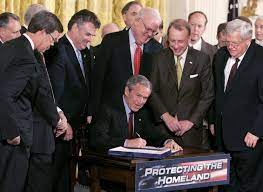
President George W. Bush signs the USA Patriot Act into law – October 26, 2001
In Section 802, the Act defines domestic terrorism. Among the behavior that is defined as criminal:
“Activities that…appear to be intended…to influence the policy of a government by intimidation or coercion [and]…occur primarily within the territorial jurisdiction of the United States.”
The remedies for punishing such criminal behavior were legally in place. President Obama needed only to direct the Justice Department to apply them.
Prosecuting members of Congress would not have violated the separation-of-powers principle. Congressmen have in the past been investigated, indicted and convicted for various criminal offenses.
Such prosecutions–and especially convictions–would have served notice on current and future members of Congress that the lives and fortunes of American citizens may not be held hostage as part of a negotiated settlement.
On August 1, Chris Matthews, host of MSNBC’s “Hardball,” wrapped up his program with a search for “options” to avoid another round of Republican extortion tactics.
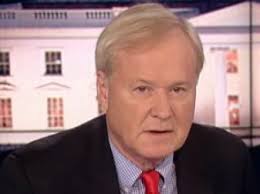
Chris Matthews
“I want to know what steps the president ‘could’ have taken to avoid this hostage-taking.
“…Is there another way than either buckling to the Republicans or letting the government and the country crash?
“How does he use the power of the presidency, the logic, emotion and basic patriotism of the people, to thwart those willing to threaten, disrupt, even possibly destroy to get their way?”
The answer to his questions–then and now–is: Replace the law of fear with the rule of law.
But there was another way Obama could have stood up to Republican extortionists: By urging his fellow Americans to rally to him in a moment of supreme national danger.
President John F. Kennedy did just that–successfully–during the most dangerous crisis of his administration.
Addressing the Nation on October 22, 1962, Kennedy shocked his fellow citizens by revealing that the Soviet Union had installed offensive nuclear missiles in Cuba.
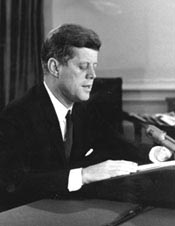
John F. Kennedy
After outlining a series of steps he had taken to end the crisis, Kennedy sought to reassure and inspire his audience. His words are worth remembering today:
“The path we have chosen for the present is full of hazards, as all paths are, but it is the one most consistent with our character and courage as a nation and our commitments around the world.
“The cost of freedom is always high, but Americans have always paid it. And one path we shall never choose, and that is the path of surrender or submission.”
President Obama could have sent that same message to the extortionists of the Republican Party.
Yet this was another option he failed to exploit. And he and the Nation have continued to pay the price for it.
In the fall of 2013, Republicans once again threatened to shut down the Federal Government unless the President agreed to defund the Affordable Care Act (ACA), better known as “Obamacare.
They were enraged that millions of uninsured Americans might receive medical care on a par with that given members of the House and Senate.
So on September 20, the House voted on a short-term government funding bill that included a provision to defund Obamacare.
That provision was a no-go for Senate Democrats and President Obama. If the House and Senate couldn’t reach a compromise, many functions of the federal government would be shut down indefinitely on October 1.
The official reason given by Republicans: They wanted to save the country from bankruptcy–although the Congressional Budget Office stated that the ACA would lower future deficits and Medicare spending.
After passing the House and Senate, the ACA had been signed into law by President Obama on March 23, 2010.
On June 28, 2012, the United States Supreme Court–whose Chief Justice, John Roberts, is a Republican–had upheld the constitutionality of the ACA.
Yet House Republicans continued searching for a way to stop the law from taking effect. By September, 2013, they had voted 42 times to repeal “Obamacare.”
But their efforts had failed; the Democratic-led Senate made it clear it would never go along with such legislation.
Finally, unable to legally overturn the Act or to legislatively repeal it, House Republicans fell back on something much simpler: Threats and fear.
Threats–of voting to shut down salaries paid to most Federal employees. Most, because they themselves would continue to draw hefty salaries while denying them to FBI agents, air traffic controllers and members of the military, among others.
And fear–that would be generated throughout the Federal government, the United States and America’s international allies.
On October 1, 2013, House Republicans made good on their threat. They “shut down the government.”


 Bureaucracybuster's Blog
ABC NEWS, AMERICAN TABLOID, ANTI-CASTRO CUBANS, ASSASSINATION, CBS NEWS, CIA, CNN, COMMUNISM, CUBA, CUBAN MISSILE CRISIS, DONALD TRUMP, DWIGHT D. EISENHOWER, FACEBOOK, FBI, FIDEL CASTRO, FLORIDA, FULGENCIO BATISTA, GUS RUSSO, JACK RUBY, JAMES ELLROY, JOHN F. KENNEDY, JOHNNY ROSELLI, LEE HARVEY OSWALD, LIVE BY THE SWORD, LYNDON B. JOHNSON, MAFIA, MARCO RUBIO, NBC NEWS, NIKITA KHRUSHCHEV, ROBERT F. KENNEDY, SAM GIANCANA, THE CHICAGO SUN-TIMES, THE CHICAGO TRIBUNE, THE LOS ANGELES TIMES, THE NEW YORK TIMES, THE WASHINGTON POST, TWITTER, WARREN COMMISSION
AMERICA’S POISONED CUBAN LEGACY: PART THREE (OF FOUR)
In Bureaucracy, History, Military, Politics, Social commentary on December 1, 2016 at 10:46 amOn October 22, 1962, President John F. Kennedy went on nationwide TV to announce the discovery of the missiles and his blockade of Cuba.
He warned that any nuclear missile launched from Cuba against any nation would be regarded as an attack on the United States by the Soviet Union–and would trigger “a full retaliatory response” upon the U.S.S.R.
President John F. Kennedy addresses the nation
And he demanded that the Soviets remove all of their offensive weapons from Cuba:
“The path we have chosen for the present is full of hazards, as all paths are, but it is the one most consistent with our character and courage as a nation and our commitments around the world.
“The cost of freedom is always high, but Americans have always paid it. And one path we shall never choose, and that is the path of surrender or submission.”
On October 26, the United States raised the readiness level of SAC forces to DEFCON 2–the step just short of war. For the only time in U.S. history, B-52 bombers were dispersed to various locations and made ready to take off, fully equipped, on 15 minutes’ notice.
Other measures taken included:
An invasion date was set for October 29. But the Kennedy Administration–and the American military–didn’t know that the Russian soldiers guarding the missiles had been armed with tactical nuclear weapons.
Had the Marines gone in, those mini-nukes would have been used. And a fullscale nuclear exchange between the United States and the Soviet Union would have almost certainly followed.
At the height of the crisis, Attorney General Robert F. Kennedy offered a solution.
Khrushchev had sent two teletypes to Kennedy. The first had agreed to remove the missiles, but the second had demanded that the United States remove its own missiles from Turkey, which bordered the Soviet Union.
Robert Kennedy’s solution: The administration should ignore the second message–and announce that it had accepted Khrushchev’s offer to remove the missiles.
After this announcement was made, President Kennedy said to his advisers: “It can go either way now.”
John F. Kennedy in the Oval Office
The crisis ended on October 28. Under enormous pressure, Khrushchev agreed to remove the missiles from Cuba.
Behind his decision lay a secret promise by the Kennedy administration to remove its obsolete nuclear missiles from Turkey, which bordered the Soviet Union. And a public pledge to not invade Cuba.
On the night the crisis ended, there occurred a prophetic exchange between the two Kennedy brothers.
JFK: “Maybe this is the night I should go to the theater”–a reference to Abraham Lincoln’s fatal attendance of Ford’s Theater at the end of the Civil War.
RFK: “If you go, I want to go with you.”
John F. and Robert F. Kennedy
But President Kennedy was not finished with Castro. While continuing the campaign of sabotage throughout Cuba, the Kennedys were preparing something far bigger: A fullscale American invasion of the island.
On October 4, 1963, the Joint Chiefs of Staff submitted its latest version of the invasion plan, known as OPLAN 380-63. Its timetable went:
During the Cuban Missile Crisis, Robert Kennedy–referring to the 1941 Japanese attack on Pearl Harbor–had resisted demands for a “sneak attack” on Cuba by saying: “I don’t want my brother to be the Tojo of the 1960s.”
Now the Kennedys planned such an attack on Cuba just one month before the November, 1964 Presidential election.
Then fate–in the unlikely figure of Lee Harvey Oswald–intervened.
On November 22, 1963, while the President rode through Dallas in an open-air automobile, a rifle-wielding assassin opened fire. He scored two hits on Kennedy–in the back of the neck and head. The second wound proved instantly fatal.
The nation and the world were shocked–and plunged into deep mourning.
But for some of those who had waged a secret, lethal war against Fidel Castro for the previous two years, Kennedy’s death–at least in retrospect–didn’t come as a surprise.
Robert Kennedy, in particular, spent the remaining years of his life agonizing over the possibility that his highly personal war against Castro had backfired.
That Castro, fed up with the CIA’s assassination plots against him, had retaliated with one of his own.
Robert Kennedy’s fears and guilt were compounded by the fact that, while waging war on Castro, he had waged an equally ruthless crusade against organized crime.
He knew that some of the mobsters he had tried to send to prison had played a major role in the CIA’s efforts to “hit” Castro. Had the Mafia–believing itself the victim of a double-cross–put out a “contract” on JFK instead?
It was a question that haunted him until the day he died.
Share this: