Posts Tagged ‘CONDOLEEZA RICE’
9/11, ABC NEWS, AL QAEDA, ALTERNET, AMERICAN CAESARS: THE LIVES OF THE PRESIDENTS FROM FRANKLIN D. ROOSEVELT TO GEORGE W. BUSH, AMERICAN EMPIRE, AP, BARACK OBAMA, BASHAR AL-ASSAD, BEN RHODES, BILL CLINTON, BUREAUCRACY, BUZZFEED, CBS NEWS, CHRIS MATHEWS, CNN, CONDOLEEZA RICE, CROOKS AND LIARS, DAILY KOZ, DONALD TRUMP, DWIGHT EISENHOWER, FACEBOOK, FBI, FRANKLIN D. ROOSEVELT, GEORGE H.W. BUSH, GEORGE W. BUSH, GERALD R. FORD, HARRY S. TRUMAN, JIMMY CARTER, JOHN F. KENNEDY, LYNDON B. JOHNSON, MOTHER JONES, MOVEON, MSNBC, NBC NEWS, NEWSWEEK, NIGEL HAMILTON, NPR, OSAMA BIN LADEN, POLITICO, RAW STORY, REPUBLICAN PARTY, REUTERS, RICHARD CLARKE, RICHARD NIXON, ROMAN EMPIRE, SALON, SEATTLE TIMES, SEPTEMBER 11, SLATE, SUETONIUS, SYRIA, TERRORISM, THE ATLANTIC, THE CHICAGO SUN-TIMES, THE CHICAGO TRIBUNE, THE DAILY BEAST, THE GUARDIAN, THE HILL, THE HUFFINGTON POST, THE LOS ANGELES TIMES, THE NATION, THE NEW YORK TIMES, THE TWELVE CAESARS, THE WASHINGTON POST, TIME, TWITTER, U.S. NEWS & WORLD REPORT, UPI, USA TODAY
In Bureaucracy, History, Military, Politics, Social commentary on July 18, 2018 at 12:04 am
September 11, 2018, will mark the 17th anniversary of the worst terrorist attack on United States soil. Inevitably, this is a time to remember all those whose lives were so cruelly snuffed out.
But it is also a time to remember those Americans who made this atrocity—and the Iraq war that followed—inevitable.
British historian Nigel Hamilton has chronicled their arrogance and indifference in his 2010 biography: American Caesars: Lives of the Presidents from Franklin D. Roosevelt to George W. Bush.

Hamilton noted that Richard Clarke, the national security advisor on terrorism, was certain that Osama bin Laden had arranged the [USS.] Cole bombing in Aden on October 12, 2000.
For months, Clarke tried to convince others in the Bush Administration that Bin Laden was plotting another attack against the United States—either abroad or at home.
But Clarke could not prevail against the know-it-all arrogance of such higher-ranking Bush officials as Vice President Dick Cheney; Secretary of Defense Donald Rumsfeld; Rumsfeld’s deputy, Paul Wolfowitz; and National Security Advisor Condoleeza Rice.
Rice initially refused to hold a cabinet-level meeting on the subject. Then she “insisted the matter be handled only by a more junior Deputy Principals meeting” in April, 2001, writes Hamilton.
Wolfowitz, the number-two man at the Department of Defense, said: “I don’t understand why we are beginning by talking about this one man, bin Laden.”
Even after Clarke outlined the threat posed by Al-Qaeda, Wolfowitz—whose real target was Saddam Hussein—said: “You give bin Laden too much credit.”
Wolfowitz insisted that bin Laden couldn’t carry out his terrorist acts without the aid of a state sponsor—namely, Iraq.
Wolfowitz, in fact, blamed Iraq for the 1993 bombing of the World Trade Center. Clarke was stunned, since there was absolutely no evidence of Iraqi involvement in this.
“Al-Qaeda plans major acts of terrorism against the United States,” Clarke warned his colleagues. He pointed out that, like Adolf Hitler, bin Laden had actually published his plans for future destruction.
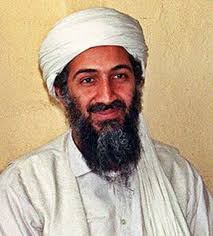
Osama bin Laden
And he added: “Sometimes, as with Hitler in Mein Kampf, you have to believe that these people will actually do what they say they will do.”
Wolfowitz heatedly traded on his Jewish heritage to bring Clarke’s unwelcome arguments to a halt: “I resent any comparison between the Holocaust and this little terrorist in Afghanistan.”
Writing in outraged fury, Hamilton sums up Clarke’s agonizing frustrations:
- Bush’s senior advisors treated their colleagues who had served in the Clinton administration with contempt.
- President Bush, Vice President Dick Cheney, National Security Advisor Condoleeza Rice, Secretary of Defense Donald Rumsfeld and Deputy Defense Secretary Paul Wolfowitz seemed content to ignore the danger signals of an impending al-Qaeda attack.
- This left only Secretary of State Colin Powell, his deputy Richard Armitage, Richard Clarke and a skeptical Treasury Secretary, Paul O’Neill, to wage “a lonely battle to waken a seemingly deranged new administration.”
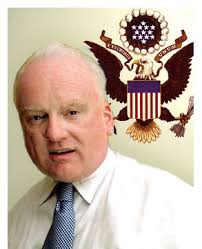
Richard Clarke
Clarke alerted Federal Intelligence agencies that “Al-Qaeda is planning a major attack on us.” He asked the FBI and CIA to report to his office all they could learn about suspicious persons or activities at home and abroad.
Finally, at a meeting with Rice on September 4, 2001, Clarke challenged her to “picture yourself at a moment when in the very near future Al-Qaeda has killed hundreds of Americans, and imagine asking yourself what you wish then that you had already done.”
Seven days later, Al-Qaeda struck, and 3,000 Americans died horrifically—and needlessly.
Neither Bush, Cheney, Rice, Rumsfeld nor Wolowitz ever admitted their negligence. Nor would any of them be brought to account.
Disgustingly, these were the same officials who, afterward, posed as the Nation’s saviors—and branded anyone who disagreed with them as a traitor, practices the Right continues to exploit to this day.
Only Richard Clarke—who had vainly argued for stepped-up security precautions and taking the fight to Al-Qaeda—gave that apology.
On March 24, 2004, Clarke testified at the public 9/11 Commission hearings. Addressing relatives of victims in the audience, he said: “Your government failed you, those entrusted with protecting you failed you, and I failed you.”
Yet even worse was to come.
On the evening after the September 11 attacks, Bush took Clarke aside during a meeting in the White House Situation Room:
“I want you, as soon as you can, to go back over everything, everything. See if Saddam [Hussein, the dictator of Iraq] did this. See if he’s linked in any way.”
Clarke was stunned: “But, Mr. President, Al-Qaeda did this.”
“I know, I know,” said Bush. “But see if Saddam was involved. I want to know.”
Hussein had not plotted the attack–and there was no evidence proving that he did. But the attack gave “W” the excuse he wanted to remove the man he blamed for the 1992 defeat of his father, President George H.W. Bush.
Bush believed that his father would have been re-elected if he had “gone all the way” into Baghdad during the 1991 Gulf War.
He would finish the job that his father had started but failed to compete.
On September 12, 2001, Bush attended a meeting of the National Security Council.
“Why shouldn’t we go against Iraq, not just Al-Qaeda?” demanded Donald Rumsfeld, the Secretary of Defense.
Vice President Dick Cheney enthusiastically agreed.
9/11, ABC NEWS, AL QAEDA, ALTERNET, AMERICAN CAESARS: THE LIVES OF THE PRESIDENTS FROM FRANKLIN D. ROOSEVELT TO GEORGE W. BUSH, AMERICAN EMPIRE, AP, BARACK OBAMA, BASHAR AL-ASSAD, BEN RHODES, BILL CLINTON, BUREAUCRACY, BUZZFEED, CBS NEWS, CHRIS MATHEWS, CNN, CONDOLEEZA RICE, CROOKS AND LIARS, DAILY KOZ, DONALD TRUMP, DWIGHT EISENHOWER, FACEBOOK, FBI, FRANKLIN D. ROOSEVELT, GEORGE H.W. BUSH, GEORGE W. BUSH, GERALD R. FORD, HARRY S. TRUMAN, JIMMY CARTER, JOHN F. KENNEDY, LYNDON B. JOHNSON, MOTHER JONES, MOVEON, MSNBC, NBC NEWS, NEWSWEEK, NIGEL HAMILTON, NPR, OSAMA BIN LADEN, POLITICO, RAW STORY, REPUBLICAN PARTY, REUTERS, RICHARD CLARKE, RICHARD NIXON, ROMAN EMPIRE, SALON, SEATTLE TIMES, SEPTEMBER 11, SLATE, SUETONIUS, SYRIA, TERRORISM, THE ATLANTIC, THE CHICAGO SUN-TIMES, THE CHICAGO TRIBUNE, THE DAILY BEAST, THE GUARDIAN, THE HILL, THE HUFFINGTON POST, THE LOS ANGELES TIMES, THE NATION, THE NEW YORK TIMES, THE TWELVE CAESARS, THE WASHINGTON POST, TIME, TWITTER, U.S. NEWS & WORLD REPORT, UPI, USA TODAY
In Bureaucracy, History, Military, Politics, Social commentary on July 17, 2018 at 1:19 am
“Many of the people who work in American foreign policy today were shaped by the experience of the 1990s, when the United States was ascendant. The Berlin Wall came down. Democracy was spreading across Europe, Latin America and East Asia.
“Russia was on its back foot, and China had not yet risen. We really could shape events in much of the world. NATO could expand into the former Soviet Union without fear that Russia would invade one of those countries. We could bring together the whole world to kick Saddam Hussein out of Kuwait.”
So writes Ben Rhodes, author of the newly-released The World As It Is: A Memoir of the Obama White House.
For eight years, Rhodes saw Barack Obama up close as few others did. He served as, first, a speechwriter, then deputy national security adviser, and finally as all-around aide and diplomat-without-portfolio.
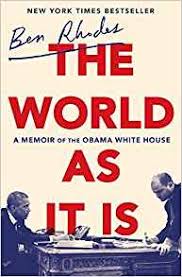
Rhodes notes that Obama sometimes warned that America’s post-Cold War moment in the sun wouldn’t last: “Shock and awe. Regime change. A trillion dollars later, we couldn’t keep the electricity running in Baghdad.
“The Iraq war disturbed other countries—including U.S. allies—in its illogic and destruction, and accelerated a realignment of power and influence that was further advanced by the global financial crisis.
“By the time Obama took office, a global correction had already taken place. Russia was resisting American influence. China was throwing its weight around. Europeans were untangling a crisis in the Euro-zone.”
To begin at the beginning:
Even as the rubble was being cleared at the Pentagon and World Trade Center, President George W. Bush was preparing to use the attack as an excuse to topple Iraqi dictator Saddam Hussein.
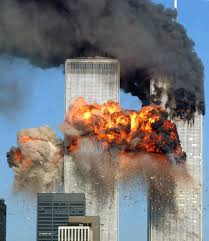
World Trade Center on September 11, 2001
Hussein had not plotted 9/11, and there was no evidence that he did. But that didn’t matter to Bush and those planning the invasion and conquest of Iraq.
British historian Nigel Hamilton has dared to lay bare the facts of this disgrace. Hamilton is the author of several acclaimed political biographies, including JFK: Reckless Youth and Bill Clinton: Mastering the Presidency.
In 2007, he began research on his latest book: American Caesars: The Lives of the Presidents From Franklin D. Roosevelt to George W. Bush.

Nigel Hamilton
By Nigel Hamilton (Nigel Hamilton picture)
The inspiration for this came from a classic work of ancient biography: The Twelve Caesars, by Gaius Suetonius Tranquillus—known as Suetonius.
Suetonius, a Roman citizen and historian, had chronicled the lives of the first twelve Caesars of imperial Rome: Julius Caesar, Augustus, Tiberius, Caligula, Claudius, Nero, Galba, Otho, Vitellius, Vespasian, Titus and Domitian.
Hamilton wanted to examine post-World War II United States history as Suetonius had examined that of ancient Rome: Through the lives of the 12 “emperors” who had held the power of life and death over their fellow citizens—and those of other nations.
For Hamilton, the “greatest of American emperors, the Caesar Augustus of his time,” was Franklin D. Roosevelt, who led his country through the Great Depression and World War II.
His “”great successors” were Harry S. Truman, Dwight D. Eisenhower and John F. Kennedy–who, in turn, contained the Soviet Union abroad and presided over sustained economic prosperity at home.
By contrast, “arguably the worst of all the American Caesars” was “George W. Bush, and his deputy, Dick Cheney, who willfully and recklessly destroyed so much of the moral basis of American leadership in the modern world.”
Among the most lethal of Bush’s offenses: The appointing of officials who refused to take seriously the threat posed by Al-Qaeda.
And this arrogance and indifference continued–right up to September 11, 2001, when the World Trade Center and Pentagon became targets for destruction.
Among the few administration officials who did take Al-Qaeda seriously was Richard Clarke, the chief counter-terrorism adviser on the National Security Council.
Clarke had been thus appointed in 1998 by President Bill Clinton. He continued in the same role under President Bush—but the position was no longer given cabinet-level access.
This put him at a severe disadvantage when dealing with other, higher-ranking Bush officials—such as Vice President Dick Cheney, Secretary of Defense Donald Rumsfeld, Rumsfeld’s deputy, Paul Wolfowitz and National Security Advisor Condoleeza Rice.
These turned out to be the very officials who refused to believe that Al-Qaeda posed a lethal threat to the United States.
“Indeed,” writes Hamilton, “in the entire first eight months of the Bush Presidency, Clarke was not permitted to brief President Bush a single time, despite mounting evidence of plans for a new al-Qaeda outrage.” [Italics added]
Nor did it help that, during his first eight months in office before September 11, Bush was on vacation, according to the Washington Post, 42% of the time.
For months, Clarke tried to convince others in the Bush Administration that Bin Laden was plotting another attack against the United States–either abroad or at home.
But Clarke could not prevail against the know-it-all arrogance of such higher-ranking Bush officials as Vice President Dick Cheney; Secretary of Defense Donald Rumsfeld; Rumsfeld’s deputy, Paul Wolfowitz; and National Security Advisor Condoleeza Rice.
1984 (BOOK), ABC NEWS, ALTERNET, AP, BARACK OBAMA, BUZZFEED, CBS NEWS, CNN, CONDOLEEZA RICE, CROOKS AND LIARS, DAILY KOZ, DONALD TRUMP, FACEBOOK, GEORGE ORWELL, GEORGE W. BUSH, GHAZALA KHAN, GREAT SOVIET ENCYCLOPEDIA, HILLARY CLINTON, HISTORY, HUMAYUN KHAN, JOSEPH STALIN, KATRINA PIERSON, KHIZR KHAN, LAVRENTI BERIA, MOTHER JONES, MOVEON, NBC NEWS, NEWSWEEK, NKVD, NPR, POLITICO, RAW STORY, REPUBLICAN PARTY, REUTERS, SALON, SEATTLE TIMES, SLATE, SOVIET UNION, THE ATLANTIC, THE CHICAGO SUN-TIMES, THE CHICAGO TRIBUNE, THE DAILY BEAST, THE GUARDIAN, THE HILL, THE HUFFINGTON POST, THE LOS ANGELES TIMES, THE NATION, THE NEW YORK TIMES, THE WASHINGTON POST, THE WASHINGTONPOST, TIME, TWITTER, U.S. NEWS & WORLD REPORT, UP, UPI, USA TODAY
In Bureaucracy, History, Military, Politics, Social commentary on September 22, 2017 at 12:15 am
At one time, Americans believed that the wholesale rewriting of history happened only in the Soviet Union.
A classic example of this occurred in the Great Soviet Encyclopedia.
Lavrenti Beria had been head of the NKVD, the dreaded secret police, from 1938 to 1953. In 1953, following the death of Soviet dictator Joseph Stalin, Beria was arrested and executed on orders of his fellow Communist Party leaders, who feared they were targets of a coming purge.
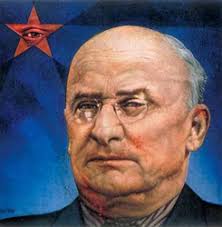
Lavrenti Beria
But the Great Soviet Encyclopedia had just gone to press with a long article singing Beria’s praises.
What to do?
The editors of the Encyclopedia wrote an equally long article about “the Bering Straits,” which was to be pasted over the article about Beria, and sent this off to its subscribers. An unknown number of them decided it was safer to paste accordingly.
During the 2016 Presidential race, the Republican party furiously sought to rewrite history in a desperate attempt to sway voters.
Specifically, its members tried to convince Americans that:
- Donald Trump, their nominee for President, did not insult the parents of Captain Humayun Khan, who was killed by a truck-bomb in Iraq in 2004; and/or
- Barack Obama was responsible for Khan’s death. And so was Democratic Presidential nominee Hillary Clinton.
That was history according to Trump’s spokeswoman, Katrina Pierson.
On July 28, Trump became embroiled in a no-win war-of-words with Khan’s father, Khizr, and his mother, Ghazala.
Khizr was a featured speaker at the Democratic National Convention, and he used the opportunity to attack Trump:
“If it was up to Donald Trump, [Humayun] never would have been in America. Donald Trump consistently smears the character of Muslims. He disrespects other minorities, women, judges, even his own party leadership. He vows to build walls and ban us from this country….You have sacrificed nothing and no one.”
Trump predictably responded during a July 30 interview with ABC News’ George Stephanopoulos.
“I think I’ve made a lot of sacrifices,” said Trump. “I work very, very hard. I’ve created thousands and thousands of jobs, tens of thousands of jobs.”
And, on Twitter, he posted: “I was viciously attacked by Mr. Khan at the Democratic Convention. Am I not allowed to respond? Hillary voted for the Iraq war, not me!”
Veterans’ organizations brutally attacked Trump for his running feud with the Khan family.
Republicans were desperate for Trump to end the conflict and return to attacking his Democratic opponent, Hillary Clinton.
Presumably, that was the assignment given to Trump’s spokeswoman, Katrina Pierson.
Appearing on CNN’s The Situation Room with Wolf Blitzer on August 2, Pierson said: “It was under Barack Obama and Hillary Clinton that changed the rules of engagements that probably cost his life.”
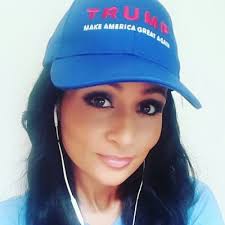
Katrina Pierson
Totally ignored in that scenario:
- President George W. Bush lied the nation into a needless war that cost the lives of 4,486 Americans and wounded another 33,226.
- Barack Obama did not become President until 2009—almost five years after Khan’s death.
- And Hillary Clinton did not become Secretary of State until the same year.
Pierson argued that Trump should be exempt from apologizing to the Khan family because he “never voted for the Iraq War.”
“Hillary Clinton did,” Pierson added. “And then she didn’t support the troops to have what they need.”
It’s true that Clinton, elected U.S. Senator from New York in 2000, voted in 2002 to support Bush’s attack on Iraq.
But Obama, elected U.S. Senator from Illinois in 2004, strongly opposed the Iraq war from the onset of his term. In fact, he made it a major issue during his 2008 Presidential race against Arizona U.S. Senator John McCain.
Pierson’s attempt to rewrite history touched off a frenzy on Twitter, leading to the creation of the hashtag #KatrinaPiersonHistory. Its purpose: To mock Pierson’s revisionist take on history.
Among the tweets offered:
- Hillary Clinton slashed funding for security at the Ford Theater, leading to Lincoln’s assassination.
- Obama introduced John Lennon to Yoko Ono, and well, you know.
- Obama gave Amelia Earhart directions to Kenya.
- Remember the Alamo? Obama and Hillary let it happen.
- Obama and Clinton kidnapped the Lindbergh baby.
- Obama decided that too many lifeboats would offend radical Islamic terrorists abord the Titanic.
- Barack Obama convinced the serpent to tempt Eve in the Garden of Eden.
- Barack Obama and Hillary Clinton organized The Spanish Inquisition.
The ridicule turned Trump’s spokeswoman into a nationwide laughingstock. And her efforts to rewrite history didn’t help Trump.
On August 3, Pierson appeared on CNN’s New Day. She admitted being wrong about the timeline and said she had been trying to say that Donald Trump had no connection to the Khans.
Later on CNN, Anderson Cooper Khizr Khan to comment on Pierson’s allegation.
“Do I need to say anything?” Khan replied. “Lack of understanding, lack of factual correctness, it’s just nothing but political vote pandering.”
In George Orwell’s novel, 1984, the unnamed Party’s slogan is: “He who controls the past controls the future. He who controls the present controls the past.”
The same holds true for Republicans: They hope to rewrite the past, as Joseph Stalin did, to wash away their crimes and errors—and pin these on their self-declared enemies.
And thus gain—and retain—absolute power over 300 million Americans.
9/11, ABC NEWS, AL QAEDA, ALTERNET, AMERICAN CAESARS: THE LIVES OF THE PRESIDENTS FROM FRANKLIN D. ROOSEVELT TO GEORGE W. BUSH, AMERICAN EMPIRE, AP, BASHAR AL-ASSAD, BILL CLINTON, BUREAUCRACY, BUZZFEED, CBS NEWS, CHRIS MATHEWS, CNN, CONDOLEEZA RICE, CROOKS AND LIARS, DAILY KOZ, DONALD TRUMP, DWIGHT EISENHOWER, FACEBOOK, FBI, FRANKLIN D. ROOSEVELT, GEORGE H.W. BUSH, GEORGE W. BUSH, GERALD R. FORD, HARRY S. TRUMAN, JIMMY CARTER, JOHN F. KENNEDY, LYNDON B. JOHNSON, MOTHER JONES, MOVEON, MSNBC, NBC NEWS, NEWSWEEK, NIGEL HAMILTON, NPR, OSAMA BIN LADEN, POLITICO, RAW STORY, REPUBLICAN PARTY, REUTERS, RICHARD CLARKE, RICHARD NIXON, ROMAN EMPIRE, SALON, SEATTLE TIMES, SEPTEMBER 11, SLATE, SUETONIUS, SYRIA, TERRORISM, THE ATLANTIC, THE CHICAGO SUN-TIMES, THE CHICAGO TRIBUNE, THE DAILY BEAST, THE GUARDIAN, THE HILL, THE HUFFINGTON POST, THE LOS ANGELES TIMES, THE NATION, THE NEW YORK TIMES, THE TWELVE CAESARS, THE WASHINGTON POST, TIME, TWITTER, U.S. NEWS & WORLD REPORT, UP, UPI, USA TODAY
In Bureaucracy, History, Military, Politics, Social commentary on September 18, 2017 at 12:05 am
On September 12, 2001, President George W. Bush attended a meeting of the National Security Council.
“Why shouldn’t we go against Iraq, not just Al-Qaeda?” demanded Donald Rumsfeld, the Secretary of Defense.
Vice President Dick Cheney enthusiastically agreed.
Secretary of State Colin Powell then pointed out there was absolutely no evidence that Iraq had had anything to do with 9/11 or Al-Qaeda. And he added: “The American people want us to do something about Al-Qaeda”–not Iraq.
On November 21, 2001, only 10 weeks after 9/11, Bush told Rumsfeld: It’s time to turn to Iraq.

Liars Club: Condoleeza Rice, Dick Cheney, George Bush, Donald Rumsfeld
Bush and his war-hungry Cabinet officials knew that Americans demanded vengeance on AlQaeda’s mastermind, Osama bin Laden, and not Iraqi dictator Saddam Hussein. So they repeatedly fabricated “links” between the two:
- Saddam had worked hand-in-glove with Bin Laden to plan 9/11.
- Saddam was harboring and supporting Al-Qaeda throughout Iraq.
- Saddam, with help from Al-Qaeda, was scheming to build a nuclear bomb.
Yet as early as September 22, 2001, Bush had received a classified President’s Daily Brief intelligence report, which stated that there was no evidence linking Saddam Hussein to 9/11.
The report added that there was scant credible evidence that Iraq had any significant collaborative ties with Al-Qaeda.
Even more important: Saddam had tried to monitor Al Qaeda through his intelligence service–because he saw Al-Qaeda and other theocratic radical Islamist organizations as a potential threat to his secular regime.
Bush administration officials repeatedly claimed that Iraq possessed huge quantities of chemical and biological weapons, in violation of UN resolutions. And they further claimed that US intelligence agencies had determined:
- the precise locations where these weapons were stored;
- the identities of those involved in their production; and
- the military orders issued by Saddam Hussein for their use in the event of war.
Among other lies stated as fact by members of the Bush administration:
- Iraq had sought uranium from Niger, in west Africa.
- Thousands of aluminum tubes imported by Iraq could be used in centrifuges to create enriched uranium.
- Iraq had up to 20 long-range Scud missiles, prohibited under UN sanctions.
- Iraq had massive stockpiles of chemical and biological agents, including nerve gas, anthrax and botulinum toxin.
- Saddam Hussein had issued chemical weapons to front-line troops who would use them when US forces crossed into Iraq.
Consider the following:
August 26, 2002: Cheney told the Veterans of Foreign Wars, “There is no doubt that Saddam Hussein now has weapons of mass destruction. There is no doubt he is amassing them to use against our friends, against our allies and against us.”
September 8, 2002: National Security Advisor Condoleeza Rice said on CNN: ”There is certainly evidence that Al-Qaeda people have been in Iraq. There is certainly evidence that Saddam Hussein cavorts with terrorists.”
September 18, 2002: Rumsfeld told the House Armed Services Committee, “We do know that the Iraqi regime has chemical and biological weapons. His regime has amassed large, clandestine stockpiles of chemical weapons–including VX, sarin, cyclosarin and mustard gas.”
October 7, 2002: Bush declared in a nationally televised speech in Cincinnati that Iraq “possesses and produces chemical and biological weapons. It is seeking nuclear weapons.”
March 16, 2003: Cheney declared on NBC’s “Meet the Press”: “We believe [Saddam Hussein] has, in fact, reconstituted nuclear weapons.”
March 30, 2003: On ABC’s “This Week” program, 10 days into the war, Rumsfeld said: “We know where they [weapons of mass destruction] are.”
Bush never regretted his decision to invade Iraq, which occurred on March 20, 2003.
Even as American occupying forces repeatedly failed to turn up any evidence of “weapons of mass destruction” (WMDs), Bush and his minions claimed the invasion a good thing.
In fact, Bush–who hid out the Vietnam war in the Texas Air National Guard–even joked publicly about the absence of WMDs.
He did so at a White House Correspondents dinner on March 24, 2004–one year after he had started the war.
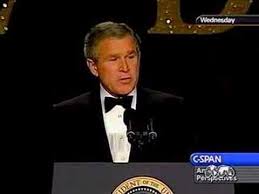
George W. Bush at the 2004 White House Correspondents’ dinner
To Bush, the non-existent WMDs were nothing more than the butt of a joke that night. While an overhead projector displayed photos of a puzzled-looking Bush searching around the Oval Office, Bush recited a comedy routine.
Click here: Bush laughs at no WMD in Iraq – YouTube
“Those weapons of mass destruction have gotta be somewhere,” Bush laughed, while a photo showed him poking around the corners in the Oval Office.
“Nope–no weapons over there! Maybe they’re under here,” he said, as a photo showed him looking under a desk.
Meanwhile, an assembly of wealthy, pampered men and women–the elite of America’s media and political classes–laughed heartily during Bush’s performance. It was a scene worthy of the court of the ancient Caesars, complete with royal flunkies.
Ultimately, the war that Bush had deliberately provoked
- Took the lives of 4,484 Americans.
- Cost the United States Treasury at least $2 trillion.
- Created a Middle East power vacumn.
- Allowed Iran–Iraq’s arch enemy–to eagerly fill it.
- Killed at least 655,000 Iraqis.
- Bush retired from office with a lavish pension and full Secret Service protection.
- He wrote his memoirs and was paid $7 for the first 1.5 million copies.
- Cheney, Rumsfeld, Rice retired to private business, wrote their own memoirs, and lived in comfort as respected elder statesmen.
9/11, ABC NEWS, AL QAEDA, ALTERNET, AMERICAN CAESARS: THE LIVES OF THE PRESIDENTS FROM FRANKLIN D. ROOSEVELT TO GEORGE W. BUSH, AMERICAN EMPIRE, AP, BASHAR AL-ASSAD, BILL CLINTON, BUREAUCRACY, BUZZFEED, CBS NEWS, CHRIS MATHEWS, CNN, CONDOLEEZA RICE, CROOKS AND LIARS, DAILY KOZ, DONALD TRUMP, DWIGHT EISENHOWER, FACEBOOK, FBI, FRANKLIN D. ROOSEVELT, GEORGE H.W. BUSH, GEORGE W. BUSH, GERALD R. FORD, HARRY S. TRUMAN, JIMMY CARTER, JOHN F. KENNEDY, LYNDON B. JOHNSON, MOTHER JONES, MOVEON, MSNBC, NBC NEWS, NEWSWEEK, NIGEL HAMILTON, NPR, OSAMA BIN LADEN, POLITICO, RAW STORY, REPUBLICAN PARTY, REUTERS, RICHARD CLARKE, RICHARD NIXON, ROMAN EMPIRE, SALON, SEATTLE TIMES, SEPTEMBER 11, SLATE, SUETONIUS, SYRIA, TERRORISM, THE ATLANTIC, THE CHICAGO SUN-TIMES, THE CHICAGO TRIBUNE, THE DAILY BEAST, THE GUARDIAN, THE HILL, THE HUFFINGTON POST, THE LOS ANGELES TIMES, THE NATION, THE NEW YORK TIMES, THE TWELVE CAESARS, THE WASHINGTON POST, TIME, TWITTER, U.S. NEWS & WORLD REPORT, UP, UPI, USA TODAY
In Bureaucracy, History, Military, Politics, Social commentary, Uncategorized on September 15, 2017 at 12:05 am
September 11, 2017, marks the 16th anniversary of the worst terrorist attack on United States soil. Inevitably, this is a time to remember all those whose lives were so cruelly snuffed out.
But it should also be a time to remember those who made this atrocity inevitable—by refusing to acknowledge and address the impending threat from Al-Qaeda.
British historian Nigel Hamilton has chronicled their arrogance and indifference in his 2010 biography: American Caesars: Lives of the Presidents from Franklin D. Roosevelt to George W. Bush.
Hamilton noted that Richard Clarke, the national security advisor on terrorism, was certain that Osama bin Laden had arranged the [USS.] Cole bombing in Aden on October 12, 2000.
Richard Clarke
For months, Clarke tried to convince others in the Bush Administration that Bin Laden was plotting another attack against the United States—either abroad or at home.
But Clarke could not prevail against the know-it-all arrogance of such higher-ranking Bush officials as Vice President Dick Cheney; Secretary of Defense Donald Rumsfeld; Rumsfeld’s deputy, Paul Wolfowitz; and National Security Advisor Condoleeza Rice.
Rice initially refused to hold a cabinet-level meeting on the subject. Then she “insisted the matter be handled only by a more junior Deputy Principals meeting” in April, 2001, writes Hamilton.
Wolfowitz, the number-two man at the Department of Defense, said: “I don’t understand why we are beginning by talking about this one man, bin Laden.”
Even after Clarke outlined the threat posed by Al-Qaeda, Wolfowitz—whose real target was Saddam Hussein—said: “You give bin Laden too much credit.”
Wolfowitz insisted that bin Laden couldn’t carry out his terrorist acts without the aid of a state sponsor–namely, Iraq.
Wolfowitz, in fact, blamed Iraq for the 1993 bombing of the World Trade Center. Clarke was stunned, since there was absolutely no evidence of Iraqi involvement in this.
“Al-Qaeda plans major acts of terrorism against the United States,” Clarke warned his colleagues. He pointed out that, like Adolf Hitler, bin Laden had actually published his plans for future destruction.
Osama bin Laden
And he added: “Sometimes, as with Hitler in Mein Kampf, you have to believe that these people will actually do what they say they will do.”
Wolfowitz heatedly traded on his Jewish heritage to bring Clarke’s unwelcome arguments to a halt: “I resent any comparison between the Holocaust and this little terrorist in Afghanistan.”
Writing in outraged fury, Hamilton sums up Clarke’s agonizing frustrations:
- Bush’s senior advisors treated their colleagues who had served in the Clinton administration with contempt.
- President Bush, Vice President Dick Cheney, National Security Advisor Condoleeza Rice, Secretary of Defense Donald Rumsfeld and Deputy Defense Secretary Paul Wolfowitz seemed content to ignore the danger signals of an impending al-Qaeda attack.
- This left only Secretary of State Colin Powell, his deputy Richard Armitage, Richard Clarke and a skeptical Treasury Secretary, Paul O’Neill, to wage “a lonely battle to waken a seemingly deranged new administration.”
Clarke alerted Federal Intelligence agencies that “Al-Qaeda is planning a major attack on us.” He asked the FBI and CIA to report to his office all they could learn about suspicious persons or activities at home and abroad.
Finally, at a meeting with Rice on September 4, 2001, Clarke challenged her to “picture yourself at a moment when in the very near future Al-Qaeda has killed hundreds of Americans, and imagine asking yourself what you wish then that you had already done.”
Seven days later, Al-Qaeda struck, and 3,000 Americans died horrifically—and needlessly.
Neither Bush, Cheney, Rice, Rumsfeld nor Wolowitz ever admitted their negligence. Nor would any of them be brought to account.
Disgustingly, these were the same officials who, afterward, posed as the Nation’s saviors—and branded anyone who disagreed with them as a traitor, practices the Right continues to exploit to this day.
Only Richard Clarke—who had vainly argued for stepped-up security precautions and taking the fight to Al-Qaeda—gave that apology.
On March 24, 2004, Clarke testified at the public 9/11 Commission hearings. Addressing relatives of victims in the audience, he said: “Your government failed you, those entrusted with protecting you failed you, and I failed you.”
Yet even worse was to come.
On the evening after the September 11 attacks, Bush took Clarke aside during a meeting in the White House Situation Room:
“I want you, as soon as you can, to go back over everything, everything. See if Saddam [Hussein, the dictator of Iraq] did this. See if he’s linked in any way.”
Clarke was stunned: “But, Mr. President, Al-Qaeda did this.”
“I know, I know,” said Bush. “But see if Saddam was involved. I want to know.”
Hussein had not plotted the attack–and there was no evidence proving that he did. But the attack gave “W” the excuse he wanted to remove the man he blamed for the 1992 defeat of his father, President George H.W. Bush.
Bush believed that his father would have been re-elected if he had “gone all the way” into Baghdad during the 1991 Gulf War.
He would finish the job that his father had started but failed to compete.
On September 12, 2001, Bush attended a meeting of the National Security Council.
“Why shouldn’t we go against Iraq, not just Al-Qaeda?” demanded Donald Rumsfeld, the Secretary of Defense.
Vice President Dick Cheney enthusiastically agreed.
9/11, ABC NEWS, AL QAEDA, ALTERNET, AMERICAN CAESARS: THE LIVES OF THE PRESIDENTS FROM FRANKLIN D. ROOSEVELT TO GEORGE W. BUSH, AMERICAN EMPIRE, AP, BASHAR AL-ASSAD, BILL CLINTON, BUREAUCRACY, BUZZFEED, CBS NEWS, CHRIS MATHEWS, CNN, CONDOLEEZA RICE, CROOKS AND LIARS, DAILY KOZ, DONALD TRUMP, DWIGHT EISENHOWER, FACEBOOK, FBI, FRANKLIN D. ROOSEVELT, GEORGE H.W. BUSH, GEORGE W. BUSH, GERALD R. FORD, HARRY S. TRUMAN, JIMMY CARTER, JOHN F. KENNEDY, LYNDON B. JOHNSON, MOTHER JONES, MOVEON, MSNBC, NBC NEWS, NEWSWEEK, NIGEL HAMILTON, NPR, OSAMA BIN LADEN, POLITICO, RAW STORY, REPUBLICAN PARTY, REUTERS, RICHARD CLARKE, RICHARD NIXON, ROMAN EMPIRE, SALON, SEATTLE TIMES, SEPTEMBER 11, SLATE, SUETONIUS, SYRIA, TERRORISM, THE ATLANTIC, THE CHICAGO SUN-TIMES, THE CHICAGO TRIBUNE, THE DAILY BEAST, THE GUARDIAN, THE HILL, THE HUFFINGTON POST, THE LOS ANGELES TIMES, THE NATION, THE NEW YORK TIMES, THE TWELVE CAESARS, THE WASHINGTON POST, TIME, TWITTER, U.S. NEWS & WORLD REPORT, UP, UPI, USA TODAY
In Bureaucracy, History, Military, Politics, Social commentary on September 14, 2017 at 12:10 am
It’s that time of year again—yet another anniversary celebration of September 11, 2001.
The day when Islamic terrorists slammed two jetliners into the World Trade Center and a third into the Pentagon.
They would have crashed a fourth jetliner into the White House or Capitol Building except for the heroic resistance of passengers aboard United Airlines Flight 93.
In the years immediately following 9/11, politicians of both parties used this anniversary to wave flags and make self-serving patriotic speeches.
This was especially true for officials of the administration of President George W. Bush—which, even as the rubble was being cleared at the Pentagon and World Trade Center, was preparing to use the attack as an excuse to topple Iraqi dictator Saddam Hussein.
Hussein had not plotted 9/11, and there was no evidence that he did. But that didn’t matter to Bush and those planning the invasion and conquest of Iraq.
World Trade Center on September 11, 2001
So here it is, 16 years later, and, once again, politicians are using 9/11 as a prop to advance their careers.
President Donald Trump claims that only he can protect America from Al Qaeda, ISIS and any other Islamic terrorist groups. So far, his weapon of choice has been banning Muslims from certain Islamic countries from entering the United States.
Interestingly, Islamic countries where Trump has close business ties—such as Saudi Arabia, the United Arab Emirates, Egypt, and Turkey—are exempt from the ban.
As on past commemorations of 9/11, those who died will be remembered by friends and relatives of those who knew and loved them.
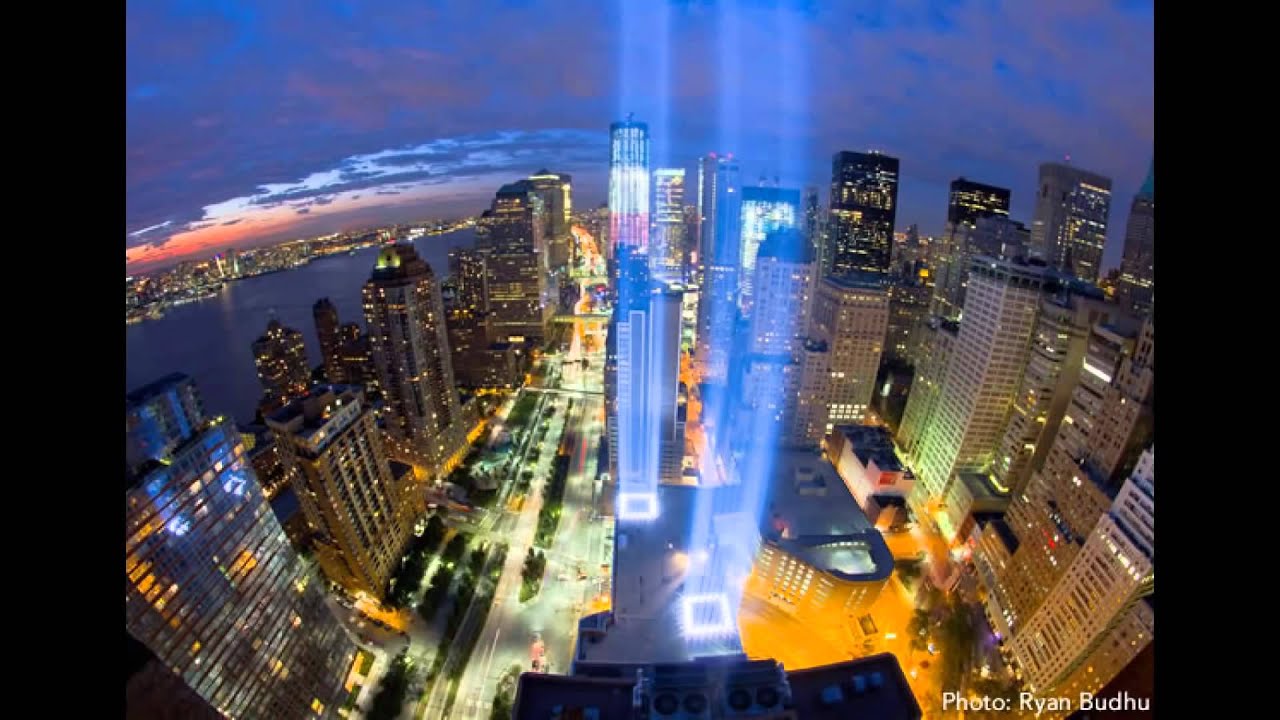
Tribute to 9/11 World Trade Center Victims
It is in fact appropriate to remember the innocents who died on that day—and the heroism of the police and firefighters who died trying to save them.
But it’s equally important to remember those who made 9/11 not simply possible but inevitable.
And that does not mean only the 19 highjackers who turned those planes into fuel-bombs. It means the officials at the highest levels of the administration of President George W. Bush.
Officials who, to this day, have never been held accountable in any way for the resulting death and destruction.
And who have been allowed to blatantly lie that they “kept us safe” from terrorism.
Obviously, such an indictment is not going to be presented by TV commentators today—not even on such liberal networks as CNN and MSNBC. And most definitely not on the right-wing Fox network.
Fortunately, British historian Nigel Hamilton has dared to lay bare the facts of this disgrace. Hamilton is the author of several acclaimed political biographies, including JFK: Reckless Youth and Bill Clinton: Mastering the Presidency.
In 2007, he began research on his latest book: American Caesars: The Lives of the Presidents From Franklin D. Roosevelt to George W. Bush.

The inspiration for this came from a classic work of ancient biography: The Twelve Caesars, by Gaius Suetonius Tranquillus—known as Suetonius.
Suetonius, a Roman citizen and historian, had chronicled the lives of the first twelve Caesars of imperial Rome: Julius Caesar, Augustus, Tiberius, Caligula, Claudius, Nero, Galba, Otho, Vitellius, Vespasian, Titus and Domitian.
Hamilton wanted to examine post-World War II United States history as Suetonius had examined that of ancient Rome: Through the lives of the 12 “emperors” who had held the power of life and death over their fellow citizens—and those of other nations.
For Hamilton, the “greatest of American emperors, the Caesar Augustus of his time,” was Franklin D. Roosevelt, who led his country through the Great Depression and World War II.
His “”great successors” were Harry S. Truman, Dwight D. Eisenhower and John F. Kennedy—who, in turn, contained the Soviet Union abroad and presided over sustained economic prosperity at home.
By contrast, “arguably the worst of all the American Caesars” was “George W. Bush, and his deputy, Dick Cheney, who willfully and recklessly destroyed so much of the moral basis of American leadership in the modern world.”
Among the most lethal of Bush’s offenses: The appointing of officials who refused to take seriously the threat posed by Al-Qaeda.
And this arrogance and indifference continued—right up to September 11, 2001, when the World Trade Center and Pentagon became targets for destruction.
Among the few administration officials who did take Al-Qaeda seriously was Richard Clarke, the chief counter-terrorism adviser on the National Security Council.
Clarke had been thus appointed in 1998 by President Bill Clinton. He continued in the same role under President Bush—but the position was no longer given cabinet-level access.
This put him at a severe disadvantage when dealing with other, higher-ranking Bush officials–such as Vice President Dick Cheney, Secretary of Defense Donald Rumsfeld, Rumsfeld’s deputy, Paul Wolfowitz and National Security Advisor Condoleeza Rice.
These turned out to be the very officials who refused to believe that Al-Qaeda posed a lethal threat to the United States.
“Indeed,” writes Hamilton, “in the entire first eight months of the Bush Presidency, Clarke was not permitted to brief President Bush a single time, despite mounting evidence of plans for a new al-Qaeda outrage.” [Italics added]
Nor did it help that, during his first eight months in office before September 11, Bush was on vacation, according to the Washington Post, 42% of the time.
2016 PRESIDENTIAL RACE, ABC NEWS, ALTERNET, AP, BARACK OBAMA, BASKET OF DEPLORABLES SPEECH, BERNIE SANDERS, BILL CLINTON, BLACKS, BUZZFEED, CBS NEWS, CELINDA LAKE, CLINTON FUNDATION, CNN, COMMUNISM, CONDOLEEZA RICE, CROOKS AND LIARS, DAILY KOZ, DEBBIE WASSERMAN-SCHULTZ, DEMOCRATIC NATIONAL COMMITTEE, DONALD TRUMP, FACEBOOK, GEORGE W. BUSH, HILLARY CLINTON, HISPANICS, HOUSE OF REPRESENTATIVES, JAMES WEBB, MICHELLE OBAMA, MOTHER JONES, MOVEON, NBC NEWS, NEWSWEEK, NPR, POLITICO, POPULISM, RACISM, RAW STORY, REPUBLICAN NATIONAL COMMITTEE, REUTERS, SALON, SEATTLE TIMES, SLATE, SOCIALISM, SUSAN BORDO, THE ATLANTIC, THE CHICAGO SUN-TIMES, THE CHICAGO TRIBUNE, THE DAILY BEAST, THE DESTRUCTION OF HILLARY CLINTON, THE GUARDIAN, THE HILL, THE HUFFINGTON POST, THE LOS ANGELES TIMES, THE NATION, THE NEW YORK TIMES, THE WASHINGTON POST, TIME, TOM BROKAW, TWITTER, U.S. HOUSE OF REPRESENTATIVES, U.S. NEWS & WORLD REPORT, U.S. SENATE, UP, UPI, USA TODAY, WHITES, WHITEWATER, WIKILEAKS, WOMEN, YOUTH
In History, Politics, Social commentary on September 11, 2017 at 12:03 am
In The Destruction of Hillary Clinton, author Susan Bordo indicts a wide range of groups for Clinton’s failure to win the 2016 election.
Yet she refuses to put any blame on Clinton herself for a series of self-inflicted wounds. Four of these have already been mentioned.
Among the otherss:
#5 Democrats and liberals fell prey to hubris. They dismissed Donald Trump as a bad joke: Surely voters would reject a bombastic, thrice-married “reality show” host who had filed for corporate bankruptcy four times.

Many liberals believed Clinton would bury him at the polls: Blacks, women, youth and Hispanics will turn out huge for her. Democrats will retake the Senate, and maybe even retake the House.
They didn’t.
#6 The coalition that twice elected Barack Obama deserted Hillary Clinton.
Clinton did worse-than-expected among all the groups she was counting on to support her: Blacks, women, youth and Hispanics.
- In 2012, Obama got 93% of the black vote; in 2016, Clinton got 88%.
- In 2012, Obama got 55% of the women’s vote; in 2016, Clinton won 54%.
- In 2012, Obama got 60% of the vote of those under 30; in 2016, Clinton got 54%.
- In 2012, Obama got 71% of the Hispanic vote; in 2016, Clinton got 65%.
Clinton proved less popular even among whites than Obama: In 2012, Obama won 39% of their votes; in 2016, Clinton won 37%.
#7 Trump, adopting the role of a populist, appealed to blue-collar voters. Clinton offered a “love-your-CEO” economic plan—and suffered for it.
Trump visited “Rustbelt” states like Michigan and Pennsylvania and vowed to “bring back” jobs that had been lost to China, such as those in coal mining and manufacturing. Clinton didn’t deign to show up, assuming she had those states “locked up.”
Most economists agree that, in a globalized economy, such jobs are not coming back, no matter who becomes President.
Even so, voters backed the man who came to promise them a better future, and shunned the woman who didn’t come to promise them any future at all.
In May, Democratic pollster CeLinda Lake had warned Clinton to revamp her economic platform. Clinton ignored the advice.
“Democrats simply have to come up with a more robust economic frame and message,” Lake said after the election. “We’re never going to win those white, blue-collar voters if we’re not better on the economy. And 27 policy papers and a list of positions is not a frame. We can laugh about it all we want, but Trump had one.”
#8 Hillary Clinton gave only one memorable speech during the campaign.
This was the “basket of deplorables” speech, delivered at a New York fundraiser on September 9. It was the only Clinton speech to be widely quoted by Democrats and Republicans.
She divided Donald Trump’s supporters into two groups. The first group were the “deplorables,” for whom she showed open contempt:
“You know, to just be grossly generalistic, you could put half of Trump’s supporters into what I call the basket of deplorables. Right? The racist, sexist, homophobic, xenophobic, Islamaphobic–you name it. And unfortunately there are people like that. And he has lifted them up.
“He has given voice to their websites that used to only have 11,000 people—now 11 million. He tweets and retweets their offensive hateful mean-spirited rhetoric. Now, some of those folks—they are irredeemable, but thankfully they are not America.”
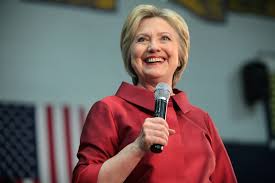
Hillary Clinton (Gage Skidmore photo)
But the second group, she said, consisted of poor, alienated Americans who rightly felt abandoned by their employers and their government:
“But….that other basket of people are people who feel that the government has let them down, the economy has let them down, nobody cares about them, nobody worries about what happens to their lives and their futures, and they’re just desperate for change. It doesn’t really even matter where it comes from.
“They don’t buy everything [Trump] says, but he seems to hold out some hope that their lives will be different. They won’t wake up and see their jobs disappear, lose a kid to heroin, feel like they’re in a dead-end. Those are people we have to understand and empathize with as well.”
#9 After giving this speech, Clinton threw away the good it might well have done her.
First, the day after making the speech, she apologized for it: “Last night I was ‘grossly generalistic,’ and that’s never a good idea. I regret saying ‘half—that was wrong.”
Many of Trump’s followers were racists, sexists and xenophobes—who deserved condemnation, not apologies. By apologizing, she looked weak, indecisive, even cowardly.
Second, having eloquently reached out to many of the men and women who were a prime constituency for Trump, she failed to offer an economic package to quickly and effectively address their vital needs for jobs and medical care.
The reason: She had failed to put one together long ago.
And all she had to offer now was boilerplate rhetoric, such as: “Education is the answer.”
Worst of all, Trump turned her speech against her, tweeting: “Wow, Hillary Clinton was SO INSULTING to my supporters, millions of amazing, hard working people. I think it will cost her at the Polls!”
It did.
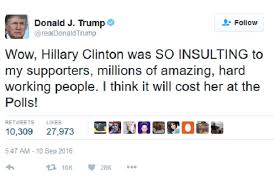
As long as liberals like Susan Bordo continue to blame everyone else—and refuse to correct their own weaknesses—they will continue to remain a minority political party.
2016 PRESIDENTIAL RACE, ABC NEWS, ALTERNET, AP, BARACK OBAMA, BASKET OF DEPLORABLES SPEECH, BERNIE SANDERS, BILL CLINTON, BLACKS, BUZZFEED, CBS NEWS, CELINDA LAKE, CLINTON FUNDATION, CNN, COMMUNISM, CONDOLEEZA RICE, CROOKS AND LIARS, DAILY KOZ, DEBBIE WASSERMAN-SCHULTZ, DEMOCRATIC NATIONAL COMMITTEE, DONALD TRUMP, FACEBOOK, GEORGE W. BUSH, HILLARY CLINTON, HISPANICS, HOUSE OF REPRESENTATIVES, JAMES WEBB, MICHELLE OBAMA, MOTHER JONES, MOVEON, NBC NEWS, NEWSWEEK, NPR, POLITICO, POPULISM, RACISM, RAW STORY, REPUBLICAN NATIONAL COMMITTEE, REUTERS, SALON, SEATTLE TIMES, SLATE, SOCIALISM, SUSAN BORDO, THE ATLANTIC, THE CHICAGO SUN-TIMES, THE CHICAGO TRIBUNE, THE DAILY BEAST, THE DESTRUCTION OF HILLARY CLINTON, THE GUARDIAN, THE HILL, THE HUFFINGTON POST, THE LOS ANGELES TIMES, THE NATION, THE NEW YORK TIMES, THE WASHINGTON POST, TIME, TOM BROKAW, TWITTER, U.S. HOUSE OF REPRESENTATIVES, U.S. NEWS & WORLD REPORT, U.S. SENATE, UP, UPI, USA TODAY, WHITES, WHITEWATER, WIKILEAKS, WOMEN, YOUTH
In History, Politics, Social commentary on September 8, 2017 at 12:03 am
Since losing the Presidency to Donald Trump last November, Hillary Clinton has been increasingly on the warpath.
She’s clearly intent on convincing everyone—perhaps most importantly herself—that it she waged a flawless campaign–and it was everyone else’s fault that she didn’t win.
Aiding her in this effort is Susan Bordo, author of The Destruction of Hillary Clinton. In its dust jacket blurb, the book asks:
“How did an extraordinarily well-qualified, experienced, and admired candidate—whose victory would have been as historic as Barack Obama’s—come to be seen as a tool of the establishment, a chronic liar, and a talentless politician?”
And it answers:
“In this masterful narrative of the 2016 campaign year and the events that led up to it, Susan Bordo unpacks the Rights’ assault on Clinton and her reputation, the way the left provoked suspicion and indifference among the youth vote, the inescapable presence of [FBI Director] James Comey, questions about Russian influence, and the media’s malpractice in covering the candidate.”

Others who come in for blame: WikiLeaks; Vermont U.S. Senator Bernie Sanders; younger women; and even Monica Lewinsky.
Yes, it was
- Bernie Sanders’ fault for daring to challenge Clinton for the Democratic nomination—and refusing to accept that it was “Hillary’s turn” to become President.
- WikiLeaks’ fault for publishing emails sent by members of the Democratic National Committee—which proved the supposedly impartial DNC was working to secure the nomination for Clinton.
- Younger women’s fault for not identifying with a woman old enough to be their grandmother—and who has lived an extraordinarily privileged life since she became First Lady in 1993.
- Monica Lewinsky’s fault for being a reminder to voters that Hillary’s husband had disgraced the Presidency in an oral sex scandal.
All of these factors certainly played a part in why Clinton lost the White House for the second time in eight years. But they are not all the factors behind her loss.
There were plenty of others—that are not mentioned in Bordo’s book.
Among these:
#1 Hillary Clinton was an uninspiring candidate. When Barack Obama ran for President in 2008, NBC Anchor Tom Brokaw compared his rallies to Hannah Montana concerts. Audiences were excited by his charisma, eloquence, relative youth (47) and optimism (“Yes We Can!”).
Clinton radiated none of these qualities. She was 67 when she declared her candidacy for President—and looked it. Her speaking voice grated like the proverbial fingernail on a blackboard.
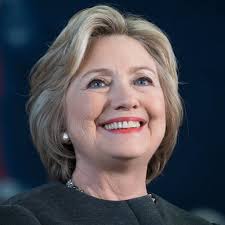
Hillary Clinton
She seemed to have been around forever—as First Lady (1993-2001), as Senator from New York (2001-2009) and as Secretary of State (2009-2013). Those born after 2000 thought of the Clinton Presidency as ancient history. She was offering a resume—and voters wanted an inspiration.
#2 Clinton brought a lot of baggage with her. In contrast to Obama, whose Presidency had been scandal-free, Clinton—rightly or wrongly—has always been dogged by charges of corruption.
During the Clinton Presidency, a failed land deal—Whitewater—while Bill Clinton was Governor of Arkansas triggered a seven-year investigation by a Republican special prosecutor. No criminality was uncovered, and no charge was brought against either Clinton.
After leaving the White House, she and her husband set up the Clinton Foundation, a public charity to bring government, businesses and social groups together to solve problems “faster, better, at lower cost.”
As Secretary of State, more than half of Clinton’s meetings with people outside government were with donors to the Clinton Foundation. If a “pay-to play” system wasn’t at work, one certainly seemed to be.
She cast further suspicion on herself by her unauthorized use of a private email server. This wasn’t revealed until March, 2015—after she was no longer Secretary of State.
She claimed she had used it to avoid carrying two cell-phones. But, as Secretary of State, she traveled with a huge entourage who carried everything she needed. Her critics believed she used a private email system to hide a “pay-for-pay” relationship with Clinton Foundation donors.
#3 As a candidate for President, she “secretly” worked with Debbie Wasserman-Schultz, the chair of the Democratic National Committee, to ensure that she would get the nomination.
As DNC chair, Wasserman-Schultz was expected to be impartial toward all Democratic candidates seeking the prize. This included Vermont U.S. Senator Bernie Sanders, Clinton’s chief competitor.
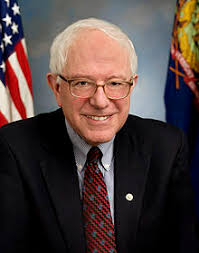
Bernie Sanders
So Sanders and his supporters were outraged when, on July 22, WikiLeaks released 19,252 emails and 8,034 attachments hacked from computers of the highest-ranking officials of the DNC.
The emails revealed a clear bias for Clinton and against Sanders. In one email, Brad Marshall, the chief financial officer of the DNC, suggested that Sanders, who is Jewish, could be portrayed as an atheist.
#4 The Obamas’ support proved a plus/minus for Clinton. Understandably, President Obama wanted to see his legacies continued—and she was the only candidate who could do it.
So he—and his wife, Michelle—stormed the country, giving eloquent, passionate speeches and firing up crowds on Clinton’s behalf.
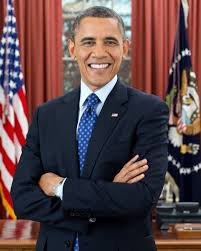
President Barack Obama
So long as either Obama stood before a crowd, the magic lasted. But once the event was over, the excitement vanished. Hillary simply didn’t arouse enough passion to keep it going.
Obama’s supporters found Clinton wanting–in attractiveness, grace, eloquence, trustworthiness and the ability to inspire.
2016 PRESIDENTIAL RACE, ABC NEWS, BARACK OBAMA, BASKET OF DEPLORABLES SPEECH, BERNIE SANDERS, BILL CLINTON, BLACKS, CBS NEWS, CELINDA LAKE, CLINTON FUNDATION, CNN, COMMUNISM, CONDOLEEZA RICE, DEBBIE WASSERMAN-SCHULTZ, DEMOCRATIC NATIONAL COMMITTEE, DONALD TRUMP, FACEBOOK, GEORGE W. BUSH, HILLARY CLINTON, HISPANICS, HOUSE OF REPRESENTATIVES, JAMES WEBB, MICHELLE OBAMA, NBC NEWS, POPULISM, RACISM, REPUBLICAN NATIONAL COMMITTEE, SOCIALISM, SUSAN BORDO, THE CHICAGO SUN-TIMES, THE CHICAGO TRIBUNE, THE DESTRUCTION OF HILLARY CLINTON, THE LOS ANGELES TIMES, THE NEW YORK TIMES, THE WASHINGTON POST, TOM BROKAW, TWITTER, U.S. HOUSE OF REPRESENTATIVES, U.S. SENATE, WHITES, WHITEWATER, WIKILEAKS, WOMEN, YOUTH
In History, Politics, Social commentary on April 24, 2017 at 1:29 am
If author Susan Bordo has her way, Americans will be sopping up tears with handkerchiefs for the next four years–if not longer.
Bordo is the author of a new book, The Destruction of Hillary Clinton. You need not read its full text to discover its thesis. Its dust jacket offers this in a Q and A format.
Question: “How did an extraordinarily well-qualified, experienced, and admired candidate—whose victory would have been as historic as Barack Obama’s—come to be seen as a tool of the establishment, a chronic liar, and a talentless politician?”
Answer: “In this masterful narrative of the 2016 campaign year and the events that led up to it, Susan Bordo unpacks the Rights’ assault on Clinton and her reputation, the way the left provoked suspicion and indifference among the youth vote, the inescapable presence of [FBI Director] James Comey, questions about Russian influence, and the media’s malpractice in covering the candidate.”

Others who come in for blame: WikiLeaks; Vermont U.S. Senator Bernie Sanders; younger women; and even Monica Lewinsky.
Yes, it was
- Bernie Sanders’ fault for daring to challenge Clinton for the Democratic nomination–and refusing to accept that it was “Hillary’s turn” to become President.
- WikiLeaks’ fault for publishing emails sent by members of the Democratic National Commitee–which proved the supposedly impartial DNC was working to secure the nomination for Clinton.
- Younger women’s fault for not identifying with a woman old enough to be their grandmother–and who has lived an extraordinarily privileged life since she became First Lady in 1993.
- Monica Lewinsky’s fault for being a reminder to voters that Hillary’s husband had disgraced the Presidency in an oral sex scandal.
All of these factors certainly played a part in why Clinton lost the White House for the second time in eight years. But they are not all the factors behind her loss.
There were plenty of others–that are not mentioned in Bordo’s book.
Among these:
#1 Hillary Clinton was an uninspiring candidate. When Barack Obama ran for President in 2008, NBC Anchor Tom Brokaw compared his rallies to Hannah Montana concerts. Audiences were excited by his charisma, eloquence, relative youth (47) and optimism (“Yes We Can!”).
Clinton radiated none of these qualities. She was 67 when she declared her candidacy for President–and looked it. Her speaking voice grated like the proverbial fingernail on a blackboard.
Hillary Clinton
She seemed to have been around forever–as First Lady (1993-2001), as Senator from New York (2001-2009) and as Secretary of State (2009-2013). Those born after 2000 thought of the Clinton Presidency as ancient history. She was offering a resume–and voters wanted an inspiration.
#2 Clinton brought a lot of baggage with her. In contrast to Obama, whose Presidency had been scandal-free, Clinton–rightly or wrongly–has always been dogged by charges of corruption.
During the Clinton Presidency, a failed land deal–Whitewater–while Bill Clinton was Governor of Arkansas triggered a seven-year investigation by a Republican special prosecutor. No criminality was uncovered, and no charge was brought against either Clinton.
After leaving the White House, she and her husband set up the Clinton Foundation, a public charity to bring government, businesses and social groups together to solve problems “faster, better, at lower cost.”
As Secretary of State, more than half of Clinton’s meetings with people outside government were with donors to the Clinton Foundation. If a “pay-to play” system wasn’t at work, one certainly seemed to be.
She cast further suspicion on herself by her unauthorized use of a private email server. This wasn’t revealed until March, 2015–after she was no longer Secretary of State.
She claimed she had used it to avoid carrying two cell-phones. But, as Secretary of State, she traveled with a huge entourage who carried everything she needed. Her critics believed she used a private email system to hide a “pay-for-pay” relationship with Clinton Foundation donors.
#3 As a candidate for President, she “secretly” worked with Debbie Wasserman-Schultz, the chair of the Democratic National Committee, to ensure that she would get the nomination.
As DNC chair, Wasserman-Schultz was expected to be impartial toward all Democratic candidates seeking the prize. This included Vermont U.S. Senator Bernie Sanders, Clinton’s chief competitor.
Bernie Sanders
So Sanders and his supporters were outraged when, on July 22, WikiLeaks released 19,252 emails and 8,034 attachments hacked from computers of the highest-ranking officials of the DNC.
The emails revealed a clear bias for Clinton and against Sanders. In one email, Brad Marshall, the chief financial officer of the DNC, suggested that Sanders, who is Jewish, could be portrayed as an atheist.
#4 The Obamas’ support proved a plus/minus for Clinton. Understandably, President Obama wanted to see his legacies continued–and she was the only candidate who could do it.
So he–and his wife, Michelle–stormed the country, giving eloquent, passionate speeches and firing up crowds on Clinton’s behalf.
President Barack Obama
So long as either Obama stood before a crowd, the magic lasted. But once the event was over, the excitement vanished. Hillary simply didn’t arouse enough passion to keep it going.
Obama’s supporters found Clinton wanting–in attractiveness, grace, eloquence, trustworthiness and the ability to inspire.
2016 PRESIDENTIAL CAMPAIGN, ABC NEWS, ALTERNET, AMERICABLOG, AP, APRIL D. RYAN, BABY BOOMER RESISTANCE, BARACK OBAMA, BBC, BLOOMBERG NEWS, BUZZFEED, CBS NEWS, CIA, CNN, CONDOLEEZA RICE, CROOKS AND LIARS, DAILY KOS, DAILY KOZ, DONALD TRUMP, FACEBOOK, FBI, FIVETHIRTYEIGHT, GEORGE W. BUSH, HARPER’S MAGAZINE, HUFFINGTON POST, MEDIA MATTERS, MOTHER JONES, MOVEON, MSNBC, NATIONAL SECURITY AGENCY, NBC NEWS, NEW REPUBLIC, NEWSDAY, NEWSWEEK, NPR, PBS NEWSHOUR, POLITICO, POLITICUSUSA, RAW STORY, REUTERS, RUSSIAN INTELLIGENCE, SALON, SEAN SPICER, SEATTLE TIMES, SLATE, TALKING POINTS MEMO, THE ATLANTIC, THE CHICAGO SUN-TIMES, THE CHICAGO TRIBUNE, THE DAILY BEAST, THE DAILY BLOG, THE GUARDIAN, THE HILL, THE HUFFINGTON POST, THE INTERCEPT, THE LOS ANGELES TIMES, THE NATION, THE NEW REPUBLIC, THE NEW YORK TIMES, THE NEW YORKER, THE VILLAGE VOICE, THE WALL STREET JOURNAL, THE WASHINGTON POST, THINKPROGRESS, TIME, TRUTHDIG, TRUTHOUT, TWITTER, TWO POLITICAL JUNKIES, U.S. NEWS & WORLD REPORT, UPI, USA TODAY, VLADIMIR PUTIN, WIRETAPPING
In Bureaucracy, History, Military, Politics, Social commentary on March 30, 2017 at 12:10 am
On March 28, a White House press conference turned into a battlefield.
The contestants: White House Press Secretary Sean Spicer vs. April D. Ryan, the White House correspondent and Washington bureau chief for American Urban Radio Network.
Ryan noted that President Donald J. Trump would soon receive a visit from Condoleeza Rice, the former Secretary of State under President George W. Bush. She also noted that, in 2006, Trump had “called her a negative name.”
Although she didn’t utter the word, it was “bitch.”
Spicer: But at some point, the reality is that this president continues to reach out to individuals who’ve supported him, who didn’t support him, Republicans, Democrats, to try to bring the country together and move forward on an agenda that’s gonna help every American. That’s it. Plain and simple.
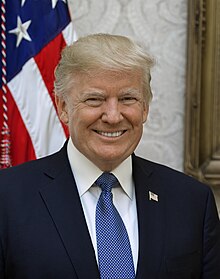
Donald Trump
[Actually, it isn’t “plain and simple.” Since taking office, Trump has made no effort to “reach out to individuals…who didn’t support him.” Nor has he tried “to bring the country together.”
[On March 4, he libeled Barack Obama in a series of tweets, accusing the former President of illegally wiretapping his phones at Trump Tower. Since making that accusation, Trump has offered absolutely no proof to back it up.
[Nor has the Justice Department or FBI come forward with such evidence.]
So, if you’re asking what we’re doing, I think we continue to do it. Which is to bring groups together that have been supportive of him, that haven’t been supportive of him, but that to share a goal which is finding common ground on areas of national security, of personal security, of economic security, of job creation, of safer communities, of education, of healthcare, that can unite us as a country and make the country stronger.
[It’s ironic that Spicer would say the administration’s goal is “finding common ground on areas” such as “healthcare.” Trump’s version of “repeal and replace” for “Obamacare” totally ignored any input by Democrats. On March 23, the House failed to pass Trumpcare because Republicans couldn’t agree to support it.
[Following her face-off with Spicer, Ryan had a message of her own for The Washington Post: “This is just par for the course, unfortunately. But I’ll be back. I’ll be back.”]
* * * * *
Trump’s admiration for Russian President Vladimir Putin has been well-established–by himself.
On the December 18, 2015 edition of MSNBC’s “Morning Joe,” Trump said: “He’s running his country, and at least he’s a leader. Unlike what we have in this country.”
The program’s host, Joe Scarborough, noted: “Well, I mean, [he’s] also a person who kills journalists, political opponents, and invades countries. obviously that would be a concern, would it not?”
TRUMP: “I think our country does plenty of killing, also, Joe, so, you know. There’s a lot of stupidity going on in the world right now, Joe. A lot of killing going on. A lot of stupidity. And that’s the way it is.”

Vladimir Putin
On July 22, 2016, Wikileaks released 19,252 emails and 8,034 attachments hacked from computers of the highest-ranking officials of the Democratic National Committee (DNC). Early reports traced the leak to Russian hackers.
At a press conference in Doral, Florida, Trump declared: “Russia, if you are listening, I hope you are able to find the 33,000 emails that are missing–I think you will probably be rewarded mightily by our press.”
This was nothing less than treason—calling upon a foreign power, hostile to the United States, to interfere in its Presidential election.
As President, Trump has defended the leader of the Communist world against hostile journalists and American Intelligence agencies.
On February 5, he gave an interview to Fox News host Bill O’Reilly. As startled viewers watched, there occurred this exchange:
O’REILLY: “Do you respect Putin?”
TRUMP: “I do respect him but—”
O’REILLY: “Do you? Why?”
TRUMP: “Well, I respect a lot of people but that doesn’t mean I’m going to get along with him. He’s a leader of his country. I say it’s better to get along with Russia than not.
“And if Russia helps us in the fight against ISIS, which is a major fight, and Islamic terrorism all over the world —that’s a good thing. Will I get along with him? I have no idea.”
O’REILLY: “But he’s a killer though. Putin’s a killer.”
TRUMP: “There are a lot of killers. We’ve got a lot of killers. What do you think—our country’s so innocent? You think our country’s so innocent?”
Trump launched his Presidential campaign on June 16, 2015.
According to The New York Times, by late October, 2016, he had aimed nearly 4,000 insulting tweets at 281 targets.
Among those insulted:
- Women
- Blacks
- Hispanics
- The news media
- Asians
- Muslims
- The disabled
- Prisoners-of-war
- The Pope
Considering his hair-trigger temper and willingness to insult virtually anyone, Trump’s careful, even fawning attitude toward Vladimir Putin stands out.
Following Trump’s February 5 remarks on Putin, House Minority Leader Nancy Pelosi said it best:
“I want to know what the Russians have on Donald Trump. I think we have to have an investigation by the FBI into his financial, personal and political connections to Russia, and we want to see his tax returns, so we can have truth in the relationship between Putin, whom he admires, and Donald Trump.”


 Bureaucracybuster's Blog
9/11, ABC NEWS, AL QAEDA, ALTERNET, AMERICAN CAESARS: THE LIVES OF THE PRESIDENTS FROM FRANKLIN D. ROOSEVELT TO GEORGE W. BUSH, AMERICAN EMPIRE, AP, BARACK OBAMA, BASHAR AL-ASSAD, BEN RHODES, BILL CLINTON, BUREAUCRACY, BUZZFEED, CBS NEWS, CHRIS MATHEWS, CNN, CONDOLEEZA RICE, CROOKS AND LIARS, DAILY KOZ, DONALD TRUMP, DWIGHT EISENHOWER, FACEBOOK, FBI, FRANKLIN D. ROOSEVELT, GEORGE H.W. BUSH, GEORGE W. BUSH, GERALD R. FORD, HARRY S. TRUMAN, JIMMY CARTER, JOHN F. KENNEDY, LYNDON B. JOHNSON, MOTHER JONES, MOVEON, MSNBC, NBC NEWS, NEWSWEEK, NIGEL HAMILTON, NPR, OSAMA BIN LADEN, POLITICO, RAW STORY, REPUBLICAN PARTY, REUTERS, RICHARD CLARKE, RICHARD NIXON, ROMAN EMPIRE, SALON, SEATTLE TIMES, SEPTEMBER 11, SLATE, SUETONIUS, SYRIA, TERRORISM, THE ATLANTIC, THE CHICAGO SUN-TIMES, THE CHICAGO TRIBUNE, THE DAILY BEAST, THE GUARDIAN, THE HILL, THE HUFFINGTON POST, THE LOS ANGELES TIMES, THE NATION, THE NEW YORK TIMES, THE TWELVE CAESARS, THE WASHINGTON POST, TIME, TWITTER, U.S. NEWS & WORLD REPORT, UPI, USA TODAY
THE ROAD TO DECLINE STARTS IN IRAQ: PART TWO (OF THREE)
In Bureaucracy, History, Military, Politics, Social commentary on July 18, 2018 at 12:04 amSeptember 11, 2018, will mark the 17th anniversary of the worst terrorist attack on United States soil. Inevitably, this is a time to remember all those whose lives were so cruelly snuffed out.
But it is also a time to remember those Americans who made this atrocity—and the Iraq war that followed—inevitable.
British historian Nigel Hamilton has chronicled their arrogance and indifference in his 2010 biography: American Caesars: Lives of the Presidents from Franklin D. Roosevelt to George W. Bush.
Hamilton noted that Richard Clarke, the national security advisor on terrorism, was certain that Osama bin Laden had arranged the [USS.] Cole bombing in Aden on October 12, 2000.
For months, Clarke tried to convince others in the Bush Administration that Bin Laden was plotting another attack against the United States—either abroad or at home.
But Clarke could not prevail against the know-it-all arrogance of such higher-ranking Bush officials as Vice President Dick Cheney; Secretary of Defense Donald Rumsfeld; Rumsfeld’s deputy, Paul Wolfowitz; and National Security Advisor Condoleeza Rice.
Rice initially refused to hold a cabinet-level meeting on the subject. Then she “insisted the matter be handled only by a more junior Deputy Principals meeting” in April, 2001, writes Hamilton.
Wolfowitz, the number-two man at the Department of Defense, said: “I don’t understand why we are beginning by talking about this one man, bin Laden.”
Even after Clarke outlined the threat posed by Al-Qaeda, Wolfowitz—whose real target was Saddam Hussein—said: “You give bin Laden too much credit.”
Wolfowitz insisted that bin Laden couldn’t carry out his terrorist acts without the aid of a state sponsor—namely, Iraq.
Wolfowitz, in fact, blamed Iraq for the 1993 bombing of the World Trade Center. Clarke was stunned, since there was absolutely no evidence of Iraqi involvement in this.
“Al-Qaeda plans major acts of terrorism against the United States,” Clarke warned his colleagues. He pointed out that, like Adolf Hitler, bin Laden had actually published his plans for future destruction.
Osama bin Laden
And he added: “Sometimes, as with Hitler in Mein Kampf, you have to believe that these people will actually do what they say they will do.”
Wolfowitz heatedly traded on his Jewish heritage to bring Clarke’s unwelcome arguments to a halt: “I resent any comparison between the Holocaust and this little terrorist in Afghanistan.”
Writing in outraged fury, Hamilton sums up Clarke’s agonizing frustrations:
Richard Clarke
Clarke alerted Federal Intelligence agencies that “Al-Qaeda is planning a major attack on us.” He asked the FBI and CIA to report to his office all they could learn about suspicious persons or activities at home and abroad.
Finally, at a meeting with Rice on September 4, 2001, Clarke challenged her to “picture yourself at a moment when in the very near future Al-Qaeda has killed hundreds of Americans, and imagine asking yourself what you wish then that you had already done.”
Seven days later, Al-Qaeda struck, and 3,000 Americans died horrifically—and needlessly.
Neither Bush, Cheney, Rice, Rumsfeld nor Wolowitz ever admitted their negligence. Nor would any of them be brought to account.
Disgustingly, these were the same officials who, afterward, posed as the Nation’s saviors—and branded anyone who disagreed with them as a traitor, practices the Right continues to exploit to this day.
Only Richard Clarke—who had vainly argued for stepped-up security precautions and taking the fight to Al-Qaeda—gave that apology.
On March 24, 2004, Clarke testified at the public 9/11 Commission hearings. Addressing relatives of victims in the audience, he said: “Your government failed you, those entrusted with protecting you failed you, and I failed you.”
Yet even worse was to come.
On the evening after the September 11 attacks, Bush took Clarke aside during a meeting in the White House Situation Room:
“I want you, as soon as you can, to go back over everything, everything. See if Saddam [Hussein, the dictator of Iraq] did this. See if he’s linked in any way.”
Clarke was stunned: “But, Mr. President, Al-Qaeda did this.”
“I know, I know,” said Bush. “But see if Saddam was involved. I want to know.”
Hussein had not plotted the attack–and there was no evidence proving that he did. But the attack gave “W” the excuse he wanted to remove the man he blamed for the 1992 defeat of his father, President George H.W. Bush.
Bush believed that his father would have been re-elected if he had “gone all the way” into Baghdad during the 1991 Gulf War.
He would finish the job that his father had started but failed to compete.
On September 12, 2001, Bush attended a meeting of the National Security Council.
“Why shouldn’t we go against Iraq, not just Al-Qaeda?” demanded Donald Rumsfeld, the Secretary of Defense.
Vice President Dick Cheney enthusiastically agreed.
Share this: