Posts Tagged ‘COLD WAR’
ABC NEWS, ALLEN DULLES, BRIDGE OF SPIES, CBS NEWS, CNN, COLD WAR, DWIGHT D. EISENHOWER, EAST GERMANY, FACEBOOK, FRANCIS GARY POWERS, JAMES DONOVAN, JOHN F. KENNEDY, JOSEPH MCCARTHY, KGB, NBC NEWS, RED SCARE, RUDOLPH ABEL, SOVIET UNION, STASI, STEVEN SPIELBERG, THE CHICAGO SUN-TIMES, THE CHICAGO TRIBUNE, THE LOS ANGELES TIMES, THE NEW YORK TIMES, THE WALL STREET JOURNAL, THE WASHINGTON POST, TOM HANKS, TWITTER, U-2
In Bureaucracy, Entertainment, History, Law, Law Enforcement, Military, Politics, Social commentary on March 21, 2016 at 12:01 am
“Bridge of Spies” vividly recaptures a now-forgotten time in American history.
It was the time of “the Cold War.” A time when:
- America was almost universally seen as “The Good Guy,” in contrast to “The Bad Guy” of the Soviet Union;
- The United States and the Soviet Union held each other at bay with arsenals of nuclear weapons;
- Wisconsin Senator Joseph R. McCarthy terrorized the nation, accusing anyone who disagreed with him of being a Communist–and leaving ruined lives in his wake;
- American TVs blared commercials warning that Soviet Premier Nikita Khrushchev had boasted: “We will bury you”; and
- Children and teenagers were taught in school that they could survive a nuclear attack through “duck and cover” drills. They were instructed to keep their bathtubs filled with water for safe drinking, in the event of a Soviet nuclear strike.
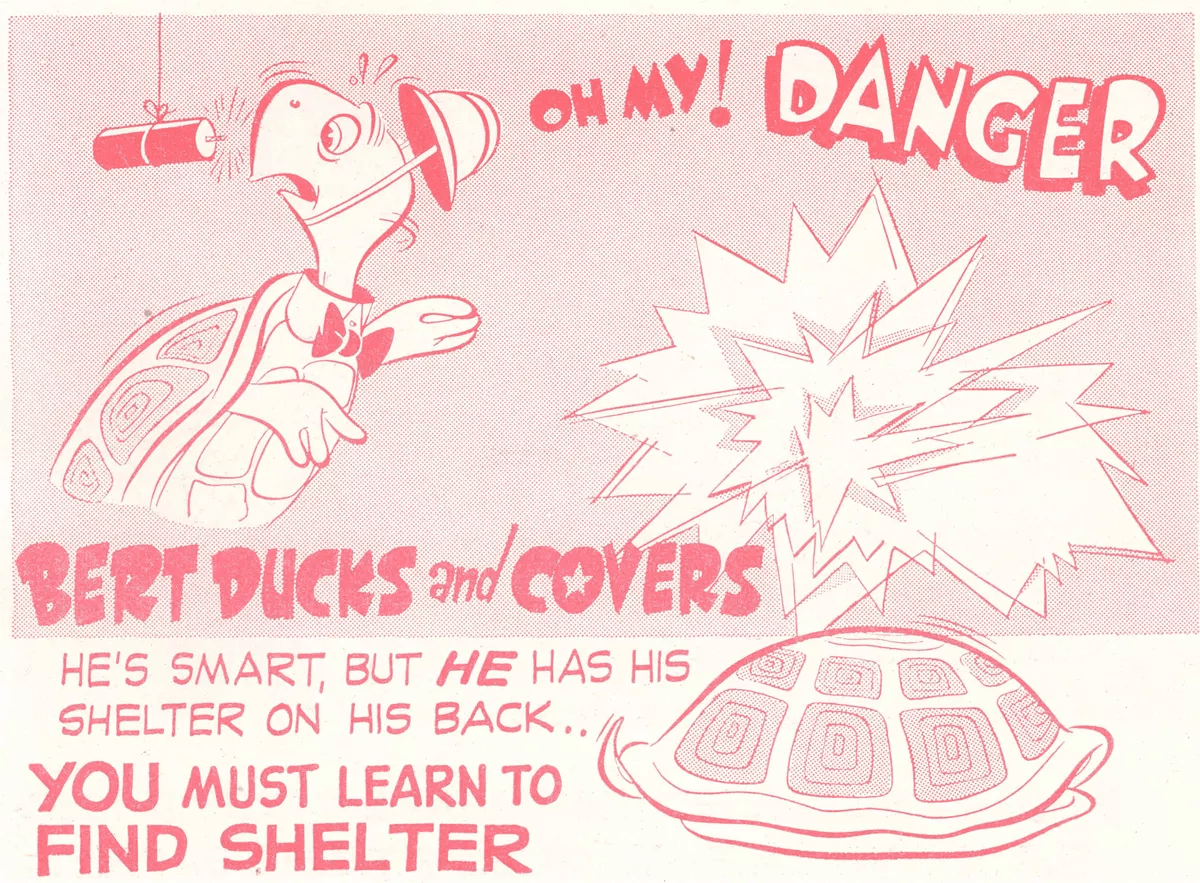
Bert the Turtle teaches schoolchildren to “Duck and Cover”
Yet even in this poisonous atmosphere of fear and denunciation, some men stood out as heroes–simply by holding fast to their consciences.
One of these was a New York insurance attorney named James B. Donovan (played by Tom Hanks). Asked by the Justice Department to defend arrested Soviet spy Rudolph Abel (Mark Rylance) Donovan did what no one expected.
He gave Abel a truly vigorous defense, arguing that the evidence used to convict him was the legally-tainted product of an invalid search warrant.
Upon Abel’s conviction and sentencing to 45 years’ imprisonment, Donovan again shocked the political and legal communities by appealing the case to the Supreme Court.
Donovan argued that Constitutional protections should apply to everyone–including non-Americans–tried in American courts. To do less made a mockery of the very freedoms we claimed to champion.
He lost by a vote of 5-4. But the arguments he made would resurface 50 years later when al-Qaeda suspects were hauled into American courts.

James B. Donovan
In 1961, Donovan was again called upon to render service by a Federal agency–this time the CIA. It wanted his help in negotiating the release of its spy, Francis Gary Powers, shot down over the Soviet Union in 1960 while flying a high-altitude U-2 spy plane.
Throughout “Bridge of Spies,” audiences learn some unsettling truths about how the American government–and governments generally– actually operate.
The first three of these were outlined in Part one of this series:
Truth #1: Appearance counts for more than reality.
Truth #2: Individual conscience can wreck the best-laid plans of government.
Truth #3: High-ranking government officials will ask citizens to take risks they themselves refuse to take.
Now for the remaining truths revealed in this movie.
Truth #4: Appeals to fear often prevail when appeals to humanity are ignored.
After crossing into East Germany, Donovan enters into negotiations with Wolfgang Vogel, a lawyer representing the East German government.
Vogel offers to exchange Frederic Pryor, an American economics graduate student seized by the East German secret police, for Abel. Donovan replies this is a deal-breaker; the United States (which is never mentioned during the negotiations) wants Powers, not Pryor.
Nevertheless, Donovan is equally concerned for Pryor, and adds him to the list of hostages to be released in return for Abel.
Then a new complication arises: The East German government that holds Pryor threatens to pull out. claiming to be insulted because Donovan did not inform them that the USSR was a party to the negotiation.
His reasoned, legal arguments having failed, Donovan resorts to a threat. He conveys a warning to the president of East Germany:
Abel has not yet revealed any Soviet secrets. But if this deal fails, he may well do so to earn favors from the United States government. And, in that case, the Soviets will blame you–Erich Honecker, the president of East Germany–for the resulting damage.
Where arguments based on humanity have failed, this one–based on fear–works. A prisoner-exchange is arranged.
Truth #5: Personal loyalty can supersede bureaucratic inventions.
On February 10, 1962, Donovan, Abel and several CIA agents arrive at the Glienicke Bridge, which connects East and West Germany. The Soviets have Powers, but not Pryor–who is to be released at Checkpoint Charlie, a crossing point between East and West Berlin.
Glienicke Bridge, the “Bridge of Spies”
The CIA agent in charge of the American delegation tells Abel he can cross into East Germany, even though Pryor has not been released.
But Abel has learned that Donovan has negotiated the release of not only Powers but Pryor. Out of loyalty to the man who has vigorously defended him, he waits on his side of the bridge until word arrives that Pryor has been released.
Then Abel crosses into East Germany while Powers crosses into the Western sector.
Donovan returns home. Before flying off to West Germany, he had told his wife he was going on a fishing trip in Scotland.
His wife and children learn the truth about the risks he ran and the success he attained only when a television newscast breaks the news:
Francis Gary Powers has been returned to the United States. And the man responsible is James Donovan, once the most reviled man in America for having defended a notorious Soviet spy.
ABC NEWS, ALLEN DULLES, BRIDGE OF SPIES, CBS NEWS, CIA, CNN, COLD WAR, DWIGHT D. EISENHOWER, EAST GERMANY, FACEBOOK, FRANCIS GARY POWERS, JOHN F. KENNEDY, JOSEPH MCCARTHY, KGB, NBC NEWS, RED SCARE, RUDOLPH ABEL, SOVIET UNION, STASI, STEVEN SPIELBERG, THE CHICAGO SUN-TIMES, THE CHICAGO TRIBUNE, THE LOS ANGELES TIMES, THE NEW YORK TIMES, THE WALL STREET JOURNAL, THE WASHINGTON POST, TOM HANKS, TWITTER, U-2
In Bureaucracy, Entertainment, History, Law, Law Enforcement, Military, Politics, Social commentary on March 18, 2016 at 12:01 am
Steven Spielberg’s new movie, “Bridge of Spies,” is that rarity among films: An intelligent mixture of history and drama, stripped of gratuitous sex and violence.
It’s also a film that accurately reveals unsettling truths about how government intelligence agencies really operate.

Truth #1: Appearance counts for more than reality.
The movie opens with the FBI’s arrest of KGB spy Rudolph Abel (Mark Rylance). The evidence against him is overwhelming. This–plus the “Red Scare” climate of 1957–will guarantee his conviction.
But the Eisenhower administration doesn’t want the upcoming trial to be seen as a hangman’s court. It must have the appearance of a fair proceeding.
So the Justice Department (through the Brooklyn Bar Association) asks a New York insurance attorney named James B. Donovan (Tom Hanks) to take on Abel’s defense. He’s expected to make a reasonably competent effort but not go all out on behalf of his client.
Truth #2: Individual conscience can wreck the best-laid plans of government.
Donovan has never handled a spy case before. And he has no delusions that Abel isn’t the spy he’s charged with being. But he’s determined to give Abel the same committed defense he would give to any other client.

Rudolph Abel (Mark Rylance) and James Donovan (Tom Hanks) in court
This comes as a shock to the prosecutors, the judge, his law firm and even his family.
A CIA agent approaches Donovan in a nearly deserted restaurant and asks him to reveal any secrets that might help win Abel’s conviction.
Donovan replies: “This conversation isn’t happening.”
“No, of course not,” replies the CIA agent, assuming Donovan is agreeing to keep the overture secret.
“No, I mean this conversation isn’t happening,” angrily says Donovan, who leaves the agent fuming.
Donovan becomes a pariah; his mailbox is stuffed with hate mail and one night a would-be drive-by killer riddles his house with bullets.
Abel is convicted and sentenced to 45 years’ imprisonment. But Donovan–again shocking everyone he knows–pursues an appeal up to the Supreme Court.
He argues that the evidence against Abel is tainted by an invalid search warrant. No American citizen could be convicted under such circumstances. And the Constitutional protections that hold true for Americans should hold equally true for non-Americans charged with crimes in American courts.
Donovan’s arguments will be heard a half-century later, when al-Qaeda suspects are hauled before American courts.
He puts on an impressive case on Abel’s behalf, but loses 5-4 at the Supreme Court.
That seems to be the end of Donovan’s relationship with Abel. But events soon dictate otherwise.
Before the judge could pronounce a death sentence on Abel, Donovan had argued that this might be a mistake. The day might come, he told the judge, when an American spy might fall into Soviet hands.
And then the United States would need to swap Abel to secure the release of its own agent.
The judge, moved by that argument, had given Abel a lengthy prison term instead.
That day comes sooner than anyone in the Pentagon expects.
On May 1, 1960, Francis Gary Powers, a former Air Force pilot, is flying a high-altitude U-2 plane above the Soviet Union for the CIA. The plane is equipped with state-of-the-art cameras, and Powers intends to photograph military sites and other important complexes.
Suddenly, a surface-to-air missile slams into the plane. Powers ejects before it crashes, but fails to commit suicide with a poison pin concealed in a phony silver dollar. He’s captured by the KGB and brutally interrogated, but maintains his silence.
At about the same time, Frederic Pryor, an American economics graduate student living in West Germany, visits his German girlfriend living in Soviet-dominated East Germany.
The Soviets are starting to build their infamous Berlin Wall, which will stop the flow of refugees from East to West. Pryor tries to bring his girlfriend and her father into West Berlin, but he’s stopped and arrested by agents of Stasi, the East German police, who accuse him of being a spy.
Meanwhile, the Soviet Union wants its spy, Abel, returned, before he can spell its secrets. In turn, the new Kennedy administration wants Powers returned, before he can be made to spill American secrets.
Truth #3: High-ranking government officials will ask citizens to take risks they themselves refuse to take.
In 1961, Donovan is once again sought out by the American government–this time by no less than CIA Director Allen Dulles.
And he’s asked to go where no official American representative can go–East Germany. His new assignment: Negotiate the exchange of Powers for Abel.
The CIA wants its spy back. And it’s willing to send Donovan into East Germany to negotiate his release. But it’s not willing to back him up if he’s arrested by Stasi, the notorious East German secret police.
The fiction must be maintained that Donovan is acting strictly on his own behalf, not that of the United States.
In such a case, Donovan could spend the rest of his life in a Communist prison cell.
2016 PRESIDENTIAL RACE, ABC NEWS, APOLLO MOON LANDING, BARACK OBAMA, BARBARA TUCHMAN, CBS NEWS, CNN, COLD WAR, DONALD TRUMP, DREAMS FROM MY FATHER, EDUCATION, HERMAN CAIN, IGNORANCE, JOHN F. KENNEDY, LITERACY, NBC NEWS, NEVADA PRIMARY, NUCLEAR TEST BAN TREATY, REPUBLICANS, RICK PERRY, Sarah Palin, SOVIET UNION, THE AUDACITY OF HOPE, THE CHICAGO SUN-TIMES, THE CHICAGO TRIBUNE, THE GUNS OF AUGUST, THE LOS ANGELES TIMES, THE NEW YORK TIMES, THE WASHINGTON POST, VIETNAM WAR
In Bureaucracy, History, Politics, Social commentary on February 25, 2016 at 9:55 am
After winning the Republican Nevada primary with over 44% of the votes on February 23, Republican Presidential candidate Donald Trump gave the expected victory speech.
But it came with an unexpected moment:
“So we won the evangelicals. We won with young. We won with old. We won with highly educated. We won with poorly educated. I love the poorly educated. We’re the smartest people, we’re the most loyal people.”
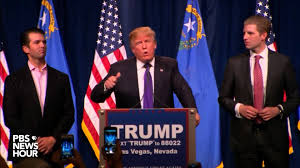
Donald Trump
“I love the poorly educated.”
As well he might: Polls have consistently shown that Trump relies on less-educated adults for his support.
Among Republicans, 71 percent of non-college graduates view Trump favorably, while 46 percent of college graduates support him.
In fact, appealing to the ignorant and uneducated has become a commonplace for politicians on the Right.
President John F. Kennedy speed-read several newspapers every morning. He nourished personal relationships with the press-–and not for altruistic reasons.
These journalistic relationships gave Kennedy additional sources of information and perspective on national and international issues.
But in 2012, Republican Presidential candidates celebrated their ignorance of both.
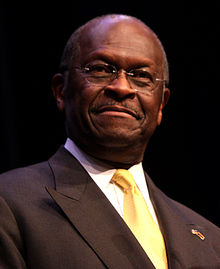
Herman Cain
Former Godfather’s Pizza CEO Herman Cain famously said, “We need a leader, not a reader.” In doing so, he stole this line from the fictionalized “President Schwarzenegger” in The Simpsons Movie.
Thus he excused his ignorance of the reasons for President Barack Obama’s intervention in Libya.
Then-Texas Governor Rick Perry showed similar pride in not knowing there are nine judges on the United States Supreme Court:
“Well, obviously, I know there are nine Supreme Court judges. I don’t know how eight came out my mouth. But the, uh, the fact is, I can tell you–I don’t have memorized all of those Supreme Court judges. And, uh, ah–
“Here’s what I do know. That when I put an individual on the Supreme Court, just like I done in Texas, ah, we got nine Supreme Court justices in Texas, ah, they will be strict constructionists….”
In short, it’s the media’s fault if they ask you a question and your answer reveals your own ignorance, stupidity or criminality.
Then there was Sarah Palin’s rewriting of history via “The Midnight Ride of Paul Revere”:
“He warned the British that they weren’t going to be taking away our arms by ringing those bells and, um, making sure as he’s riding his horse through town to send those warning shots and bells that, uh, we were going to be secure and we were going to be free.”
In fact, Revere wasn’t warning the British about anything. He was warning his fellow Americans about an impending British attack–as his celebrated catchphrase “The British are coming!” made clear.
Republicans have attacked President Obama for his Harvard education and articulate use of language. Among their taunts: “Hitler also gave good speeches.”
And they resent his having earned most of his income as a writer of two books: Dreams From My Father and The Audacity of Hope. As if being a writer is somehow subversive.
When President Kennedy was assassinated on November 22, 1963, it was said that he left three great legacies to his country:
- The Nuclear Test Ban Treaty;
- The Apollo moon landing; and
- The Vietnam War.
But there was a fourth legacy–and perhaps the most important of all: The belief that mankind could overcome its greatest challenges through rationality and perseverance.

White House painting of JFK
At American University on June 10, 1963, Kennedy called upon his fellow Americans to re-examine the events and attitudes that had led to the Cold War. And he declared that the search for peace was by no means absurd:
“Our problems are man-made; therefore, they can be solved by man. And man can be as big as he wants. No problem of human destiny is beyond human beings.
“Man’s reason and spirit have often solved the seemingly unsolvable, and we believe they can do it again.”
Today, politicians from both parties cannot agree on solutions to even the most vital national problems.
On November 21, 2011, the 12 members of the “Super-Committee” of Congress, tasked with finding $1.2 trillion in cuts in government spending, threw up their hands in defeat.
During the height of the Cuban Missile Crisis, Kennedy spoke with aides about a book he had just finished: Barbara Tuchman’s The Guns of August, on the events leading to World War 1.
He said that the book’s most important revelation was how European leaders had blindly rushed into war, without thought to the possible consequences.
Kennedy told his aides he did not intend to make the same mistake-–that, having read his history, he was determined to learn from it.
When knowledge and literacy are attacked as “highfalutin’” arrogance, and ignorance and incoherence are embraced as sincerity, national decline and collapse lie just around the corner.
ABC NEWS, BARACK OBAMA, CBS NEWS, CHRISTIAN RIGHT, CNN, COLD WAR, CZECHOSLOVAKIA, EGYPT, FACEBOOK, GLOBAL WARMING, HUNGARIAN UPRISING, HUNGARY, IRAQ, ISLAM, ISRAEL, JESUS CHRIST, MIDDLE EAST, NBC NEWS, Oil, REPUBLICANS, REUTERS, SAND CURTAIN, SECOND COMING, SOVIET UNION, THE CHICAGO SUN-TIMES, THE CHICAGO TRIBUNE, THE LOS ANGELES TIMES, THE NEW YORK TIMES, THE WALL STREET JOURNAL, THE WASHINGTON POST, TWITTER, UNITED STATES
In Bureaucracy, History, Military, Politics, Social commentary on December 8, 2015 at 12:02 am
President Barack Obama wants to attack the Islamic State of Iraq and Syria (ISIS) with bombing–supported by Special Forces and ground troops from “friendly” Islamic regimes.
Meanwhile, Congressional Republicans want to wage full-scale war against ISIS with massive numbers of regular forces.
But the United States has a third alternative to attain peace–for itself–in the Middle East. It is one that will demand radical changes in its approach to both Islamic regimes and Israel.
First, embark on a crash program to develop alternatives to oil.
The Islamic world offers only one reason for American concern: oil.
Yet its consumption threatens the future of the world through global warming. And it keeps America tethered to regimes that are fundamentally unstable and hostile to the West.
Second, with alternatives to fossil fuels, America can end its relationship with Islamic regimes.
That means putting an end to spending billions of dollars every year to prop up dictatorial, unpopular regimes like those in Iraq and Egypt. And it also means stopping the supply of big-ticket military hardware (like fighter planes and missiles) to such Islamic regimes.
Third, end the “permanent bodyguard” relationship with Israel.
Every nation--including Israel–has the absolute right to defend itself from aggression. But no nation–including Israel–should have the right to expect another nation to act as its permanent bodyguard.
Millions of Americans believe they are morally obligated to defend Israel owing to the barbarism of the Holocaust. But America was never a party to this, and has nothing to atone for.
Flag of Israel
But there is another reason many Americans feel committed to Israel. And it has nothing to do with concern for the fates of Israelis.
It lies in the mythology of the Christian Right: Many fundamentalist Christians believe that, for Jesus Christ to awaken from his 2,000-year slumber, Israel must first re-conquer every inch of territory it supposedly held during the reign of Kings David and Solomon.
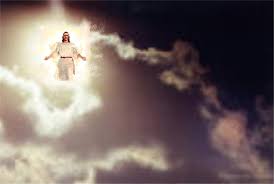
Right-wing Christian fantasy: Dead man hovering
This is the view of many Right-wing members of the House of Representatives and Senate. It should be obvious that people who hold such totally irrational views shouldn’t be allowed to hold public office.
Unfortunately, such unbalanced views are shared by millions of equally irrational evangelical Christians.
Fourth, accept that America faces a no-win situation with Israelis and Islamics.
Since the Arabs and Israelis hate each other, each side constantly tries to sway American support in its direction.
Every step the United States takes to defend Israel–diplomatically or militarily–ignites hatred of Americans among Islamics.
And every step–diplomatically or militarily–the United States takes to improve its relations with Islamic countries convinces Israelis that they’re being “sold out.”
In short: The United States is like a giant who has one foot stuck in Israel and the other stuck in any Islamic country–leaving his private parts fully exposed to whichever side wants to take a shot at them.
Fifth, erect a “Sand Curtain” around the Middle East.
For 44 years–1947 to 1991–the United States and the Soviet Union were locked in a Cold War. Essentially, the United States drew a ring around the Soviet Union–including those nations its armies had seized following the defeat of Nazi Germany in 1945.
The United States said, in effect: “We can’t liberate the countries you’re now occupying”–because trying to do so would have triggered a nuclear World War III. “But we won’t allow you to occupy and enslave any other countries. And if you try to do so, it will mean total war.”
That’s why the United States did nothing to aid Hungarians when they rose up against their Soviet occupiers in 1956. That rebellion was quickly and brutally crushed.
And that’s why America stood by when Soviet tanks rolled into Prague in 1968 when Czechoslovakia dared to relax controls over its citizens.
Sixth, stop fretting–and intervening–every time a new outbreak of barbarism occurs in the Middle East.
America would withdraw all of its forces from the Middle East–but keep a good portion stationed in Europe.

It would then publicly announce: “From now on, you are the masters of your own destinies–so long as what you do affects only those of you living in the Middle East.
“We recognize that barbarism and violence have always been a part of life in the Middle East. And we don’t expect this to change.
“So go ahead and destroy as many of your own citizens as you wish–either because they’re Jewish or Christians, or because Sunni Muslims hate Shiite Muslims and Shiite Muslims hate Sunni Muslims.
“Just don’t do anything that poses a threat to those living outside your barbaric lands. In short: Europe and the United States are strictly off-limits to you.
“And if you aim your aggression at either, we will consider this an act of war and use all the weapons at our disposal–including nuclear ones–to wipe you from the face of the Earth.“
The United States cannot enforce peace between Islamics and Israelis.
Nor between Christians and Islamics.
Nor between Islamics and Islamics.
But it can impose an embargo to confine such barbarism to only the Middle East.
ABC NEWS, AYATOLLAH RUHOLLAH KHOMEINI, CBS NEWS, CHRISTIAN RIGHT, CNN, COLD WAR, CZECHOSLOVAKIA, EGYPT, FACEBOOK, GLOBAL WARMING, HUNGARIAN UPRISING, HUNGARY, IRAN, IRAQ, ISLAM, ISRAEL, JESUS CHRIST, MIDDLE EAST, NBC NEWS, Oil, REUTERS, SAND CURTAIN, SECOND COMING, SHAH OF IRAN, SHIITE MUSLIMS, SOVIET UNION, SUNNI MUSLIMS, TERRORISM, THE CHICAGO SUN-TIMES, THE CHICAGO TRIBUNE, THE LOS ANGELES TIMES, THE NEW YORK TIMES, THE WALL STREET JOURNAL, THE WASHINGTON POST, TWITTER, UNITED STATES
In Bureaucracy, History, Military, Politics, Uncategorized on November 16, 2015 at 12:01 am
There can be peace–for the United States--in the Middle East.
But to achieve this, Western Europe and the United States will have to make radical changes in their approach to that part of the world.
First, the United States must embark on a crash program to develop alternatives to oil.
The Islamic world offers only one reason for American concern: oil.
Yet its consumption threatens the future of the world through global warming. And it keeps America tethered to regimes that are fundamentally unstable and hostile to the West.
Second, once the United States weans itself from its dependency on fossil fuels, it can safely end its relationship with such regimes.
That means putting an end to spending billions of dollars every year to prop up regimes like those in Iraq and Egypt. And it also means stopping the supply of big-ticket military hardware (like fighter planes and missiles) to Islamic regimes.
When the Shah of Iran was overthrown in 1979, he was probably the best-armed Islamic leader in the Middle East. His army and air force bristled with sophisticated American weaponry he had bought with billions of dollars in oil revenues.
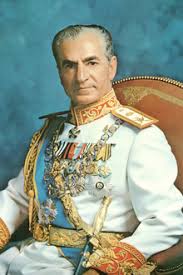
Shah of Iran
But he had thoroughly alienated his people. Liberals thought him a tyrant, and conservatives thought him a traitor to Islam. So when Ayatollah Ruhollah Khomeini flew to Iran from his self-exile in Paris, no one in the Shah’s army and air force raised a hand in his defense.
Third, the United States should end its “Permanent Bodyguard” relationship with Israel.
Every nation--including Israel–has the absolute right to defend itself from aggression. But no nation–including Israel–should have the right to expect another nation to act as its permanent bodyguard.
Millions of Americans believe they are morally obligated to defend Israel owing to the barbarism of the Holocaust. But America was never a party to this, and has nothing to atone for.
But there is another reason many Americans feel committed to Israel. And it has nothing to do with concern for the fates of Israelis.
It lies in the mythology of the Christian Right: Many fundamentalist Christians believe that, for Jesus Christ to awaken from his 2,000-year slumber, Israel must first re-conquer every inch of territory it supposedly held during the reign of Kings David and Solomon.
Right-wing Christian fantasy: Dead man hovering
After Christ returns, they believe, the Jews will face a choice: Become Christians or go to hell. For evangelical Christians, Jews remain the eternal “Christ killers.”
And if Jews must assume temporary control of the Middle East to bring about the return of a man who died 2,000 years ago, so be it.
This is the view of many Right-wing members of the House of Representatives and Senate. Obviously, people who hold such totally irrational views shouldn’t be allowed to hold public office.
Unfortunately, such unbalanced views are shared by millions of equally irrational evangelical Christians.
Fourth, the United States and its European allies should erect a “Sand Curtain” around the Middle East.
For 44 years–1947 to 1991–the United States and the Soviet Union were locked in a Cold War. Essentially, the United States drew a ring around the Soviet Union–including those nations its armies had seized following the defeat of Nazi Germany in 1945.
The United States said, in effect: “We can’t liberate the countries you’re now occupying”–because trying to do so would have triggered a nuclear World War III. “But we won’t allow you to occupy and enslave any other countries. And if you try to do so, it will mean total war.”
That’s why the United States did nothing to aid Hungarians when they rose up against their Soviet occupiers in 1956. That rebellion was quickly and brutally crushed.
And that’s why America stood by when Soviet tanks rolled into Prague in 1968 when Czechoslovakia dared to relax controls over its citizens.
Fifth, a “Sand Curtain” around the Middle East would work as follows:
America would withdraw all of its forces from the Middle East–but keep a good portion stationed in Europe.
It would then publicly announce: “From now on, you are the masters of your own destinies–so long as what you do affects only those of you living in the Middle East.
“We recognize that barbarism and violence have always been a part of life in the Middle East. And we don’t expect this to change.
“So go ahead and destroy as many of your own citizens as you wish–either because they’re Jewish or Christians, or because Sunni Muslims hate Shiite Muslims and Shiite Muslims hate Sunni Muslims.
“Just don’t do anything that poses a threat to those living outside your barbaric lands. In short: Europe and the United States are strictly off-limits to you.
“And if you aim your aggression at either, we will consider this an act of war and use all the weapons at our disposal–including nuclear ones–to wipe you from the face of the Earth.“
The United States cannot enforce peace between Islamics and Israelis. Nor between Christians and Islamics. Nor between Islamics and Islamics.
But it can impose an embargo to confine such barbarism to only the Middle East.
BARACK OBAMA, FBI, CIA, MITT ROMNEY, COMMUNISM, JOHN F. KENNEDY, ABC NEWS, CNN, THE NEW YORK TIMES, THE WASHINGTON POST, NBC NEWS, CBS NEWS, MAFIA, THE LOS ANGELES TIMES, ROBERT F. KENNEDY, NEWT GINGRICH, CUBA, FIDEL CASTRO, FLORIDA, RICK SANTORUM, FACEBOOK, TWITTER, RON PAUL, COLD WAR, 2012 PRESIDENTIAL RACE, BAY OF PIGS, SAM GIANCANA, GUS RUSSO, LIVE BY THE SWORD, JOHN ROSELLI, ROBERT MCNAMARA
In Politics, Bureaucracy, History, Social commentary, Military on April 17, 2015 at 12:15 am
“John and Robert Kennedy knew what they were doing. They waged a vicious war against Fidel Castro–a war someone had to lose.”
So writes Gus Russo in Live By the Sword: The Secret War Against Castro and the Death of JFK, published in 1998.
During the Cuban Missile Crisis, Robert Kennedy–referring to the 1941 Japanese attack on Pearl Harbor–had resisted demands for a “sneak attack” on Cuba by saying: “I don’t want my brother to be the Tojo of the 1960s.”
But in the fall of 1963, the Kennedys planned just such an attack on Cuba only one month before the November, 1964 Presidential election.
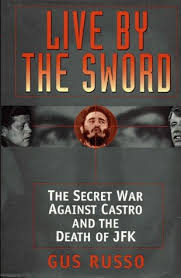
In what is almost certainly the definitive account of the assassination of President John F. Kennedy, Russo reaches some startling–but highly documented–conclusions:
- Lee Harvey Oswald assassinated Kennedy.
- He did it alone.
- Oswald, a former Marine, was a committed Marxist–whose hero was Castro.
- The CIA’s ongoing campaign to overthrow and/or assassinate Castro was an open secret throughout the Gulf.
- Oswald visited New Orleans in the spring of 1963.
- There he learned that Castro was in the crosshairs of the CIA.
- Oswald told his Russian-born wife, Marina: “Fidel Castro needs defenders. I’m going to join his army of volunteers.”
- Jack Ruby, a Dallas nightclub owner, murdered Oswald because he was distraught over Kennedy’s death.
- Ruby was not part of a Mafia conspiracy to silence Oswald.
- Skeptics of the Warren Commission–which concluded that Oswald had acted alone–asked the wrong question: “Who killed Kennedy?”
- They should have asked: “Why was he killed?”
- The answer–according to Russo: “The Kennedys’ relentless pursuit of Castro and Cuba backfired in tragedy on that terrible day in November, 1963.”
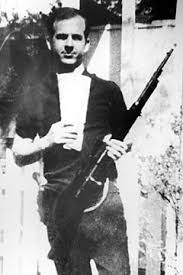
Lee Harvey Oswald
Another book well worth reading about America’s Cuban obsession during the early 1960s is American Tabloid, by James Ellroy.
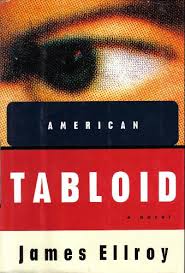
Although a novel, it vividly captures the atmosphere of intrigue, danger and sleaziness that permeated America’s Cuba obsession in a way that dry, historical documents never can.
“The 50s are finished,” reads its paperback dust jacket. “Zealous young lawyer Robert Kennedy has a red-hot jones to nail Jimmy Hoffa. JFK has his eyes on the Oval Office.
“J. Edgar Hoover is swooping down on the Red Menace. Howard Hughes is dodging subpoenas and digging up Kennedy dirt. And Castro is mopping up the bloody aftermath of his new Communist nation….
“Mob bosses, politicos, snitches, psychos, fall guys and femmes fatale. They’re mixing up a Molotov cocktail guaranteed to end the country’s innocence with a bang.”
Among the legacies of America’s twisted romance with anti-Castro Cubans:
- Following the JFK assassination, there was a coverup–to safeguard the reputation of the United States government and that of its newly-martyred President.
- Thus, the CIA and FBI concealed the anti-Castro murder plots from the Warren Commission investigating Kennedy’s assassination.
- Other participating officials in the cover-up included Attorney General Robert F. Kennedy and President Lyndon B. Johnson.
- This secrecy ignited the widespread–and false–belief that the President had died at the hands of a government conspiracy.
- Robert Kennedy feared that his relentless pursuit of Castro might have backfired against JFK, leading Castro to “take out” the President first.
- Fearing his own assassination if he continued Kennedy’s efforts to murder Castro, President Johnson ordered the CIA to halt its campaign to overthrow and/or assassinate the Cuban leader.
- The huge Cuban community throughout Florida–and especially Miami–continues to exert a blackmail influence on American politics.
- Right-wing politicians from Richard Nixon to Newt Gingrich have reaped electoral rewards by catering to the demands of this hate-obsessed voting block.
- As a result, the United States still refuses to open diplomatic relations with Cuba–even though it has done so with such former enemies as the Soviet Union, China and Vietnam.
- Cuban ex-patriots still hope that the United States will launch a full-scale military invasion of the island to remove Castro.
- These alleged Cuban patriots fear to risk their own lives by returning to Cuba and launching an uprising against him.
That crisis stemmed from our twisted obsession with Cuba, an obsession that continues today.
Texas Congressman Ron Paul is correct:
“But I think it’s time…to quit this isolation business of not talking to people. We talked to the Soviets. We talk to the Chinese. And we opened up trade, and we’re not killing each other now.
“We fought with the Vietnamese for a long time. We finally gave up, started talking to them, now we trade with them. I don’t know why…the Cuban people should be so intimidating.”
It’s time to end the half-century contamination of American politics by those Cubans who live for their hatred of Fidel Castro and those political candidates who live to exploit it.
It’s long past time to end this wag-the-dog relationship. A population of about 1,700,000 Cuban exiles should not be allowed to shape the domestic and foreign policy of a nation of 300 million.
Those who continue to hate–or love–Castro should be left to their own private feud. But that is a feud they should settle on their own island, and not from the shores of the United States.
BARACK OBAMA, FBI, CIA, MITT ROMNEY, COMMUNISM, JOHN F. KENNEDY, ABC NEWS, CNN, THE NEW YORK TIMES, THE WASHINGTON POST, NBC NEWS, CBS NEWS, MAFIA, THE LOS ANGELES TIMES, ROBERT F. KENNEDY, NEWT GINGRICH, CUBA, FIDEL CASTRO, FLORIDA, RICK SANTORUM, FACEBOOK, TWITTER, RON PAUL, COLD WAR, 2012 PRESIDENTIAL RACE, BAY OF PIGS, SAM GIANCANA, CARLOS MARCELLO, JOHN ROSELLI, ROBERT MCNAMARA
In Politics, Bureaucracy, History, Social commentary, Military on April 16, 2015 at 12:05 am
On April 17, 1961, the U.S. Navy landed 1,700 CIA-trained Cuban exiles ashore at Cuba’s Bay of Pigs.
President John F. Kennedy–wanting to disguise the role of the United States in the invasion–refused to commit U.S. Marines and Air Force bombers to the attack.
Long forewarned of the coming invasion, Fidel Castro sent in his forces to decimate the invaders.
Kennedy took responsibility for the failure. But privately he blamed Castro for refusing to be overthrown.
As a result, Kennedy and his brother, Robert–then Attorney General–created their own covert operation to depose Castro.
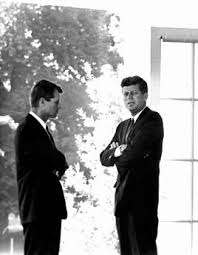
Robert and John F. Kennedy
Known as the Special Group, and overseen by Robert Kennedy, it launched a secret war against the Castro regime, code-named Operation Mongoose.
“We were hysterical about Castro at about the time of the Bay of Pigs and thereafter,” Secretary of Defense Robert S. McNamara later testified before Congress about these efforts. “And there was pressure from JFK and RFK to do something about Castro.”
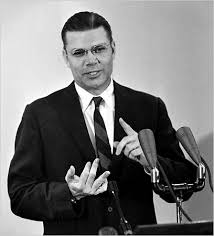
Robert S. McNamara
Nor was everyone in the CIA enthusiastic about the “get Castro” effort.
“Everyone at CIA was surprised at Kennedy’s obsession with Fidel,” recalled Sam Halpern, who was assigned to the Cuba Project. “They thought it was a waste of time. We all knew [Castro] couldn’t hurt us. Most of us at CIA initially liked Kennedy, but why go after this little guy?
“One thing is for sure: Kennedy wasn’t doing it out of national security concerns. It was a personal thing. The Kennedy family felt personally burnt by the Bay of Pigs and sought revenge.”
It was all-out war. Among the tactics used:
- Hiring Cuban gangsters to murder Cuban police officials and Soviet technicians.
- Sabotaging mines.
- Paying up to $100,000 per “hit” for the murder or kidnapping of Cuban officials.
- Using biological and chemical warfare against the Cuban sugar industry.
“Bobby (Kennedy) wanted boom and bang all over the island,” recalled Halpern. “It was stupid. The pressure from the White House was very great.”
Among that “boom and bang” were a series of assassination plots against Castro, in which the Mafia was to be a key player.
Chicago Mobster Johnny Rosselli proposed a simple plan: through its underworld connections in Cuba, the Mafia would recruit a Cuban in Castro’s entourage, such as a waiter or bodyguard, who would poison him.
The CIA’s Technical Services division produced a botulinus toxin which was then injected into Castro’s favorite brand of cigars. The CIA also produced simpler botulinus toxin pills that could be dissolved in his food or drink.
But the deputized Mafia contacts failed to deliver any of the poisons to Castro.
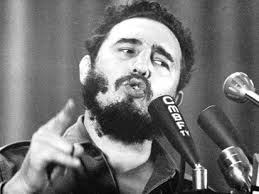
Fidel Castro
As Rosselli explained to the CIA, the first poisoner had been discharged from Castro’s employ before he could kill him, while a back-up agent got “cold feet.”
Other proposals or attempts included:
- Planting colorful seashells rigged to explode at a site where Castro liked to go skindiving.
- Trying to arrange for his being presented with a wetsuit impregnated with noxious bacteria and mould spores, or with lethal chemical agents.
- Attempting to infect Castro’s scuba regulator with tuberculous bacilli.
- Trying to douse his handkerchiefs, tea and coffee with other lethal bacteria.
Americans would rightly label such methods as “terrorist” if another power used them against the United States today. And the Cuban government saw the situation exactly the same way.
So Castro appealed to Nikita Khrushchev, leader of the Soviet Union, for assistance.
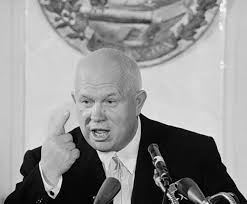
Nikita Khrushchev
Khrushchev was quick to comply: “We must not allow the communist infant to be strangled in its crib,” he told members of his inncer circle.
By October, 1962, the Soviet Union had sent more than 40,000 soldiers, 1,300 field pieces, 700 anti-airctaft guns, 350 tanks and 150 jets to Cuba to deter another invasion.
Khrushchev also began supplying Castro with nuclear-tipped ballistic missiles–whose discovery, on October 15, 1962, ignited the single most dangerous confrontation of the Cold War.
Suddenly, the two most powerful nuclear countries–the United States and the Soviet Union–found themselves on the brink of nuclear war.
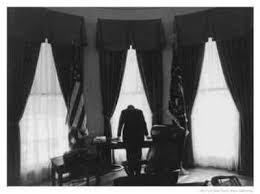
John F. Kennedy in the Oval Office
At the time, Kennedy officials claimed they couldn’t understand why Khrushchev had placed nuclear missiles in Cuba. “Maybe Khrushchev’s gone mad” was a typical musing.
None of these officials admitted that JFK had been waging a no-holds-barred campaign to overthrow the Cuban government and assassinate its leader.
The crisis ended when, after 13 harrowing days, Khrushchev agreed to remove the missiles from Cuba. Behind its resolution lay a promise by the Kennedy administration to not invade Cuba.
But President Kennedy was not finished with Castro. While continuing the campaign of sabotage throughout Cuba, the Kennedys were preparing something far bigger: A fullscale American invasion of the island.
On October 4, 1963, the Joint Chiefs of Staff submitted its latest version of the invasion plan, known as OPLAN 380-63. Its timetable went:
- January, 1964: Infiltration into Cuba by Cuban exiles.
- July 15, 1964: U.S. conventional forces join the fray.
- August 3, 1964: All-out U.S. air strikes on Cuba.
- October 1, 1964: Full-scale invasion to install “a government friendly to the U.S.”
But then fate–in the otherwise unimpressive form of Lee Harvey Oswald–suddenly intervened.
BARACK OBAMA, FBI, CIA, MITT ROMNEY, COMMUNISM, JOHN F. KENNEDY, ABC NEWS, CNN, THE NEW YORK TIMES, THE WASHINGTON POST, NBC NEWS, CBS NEWS, MAFIA, THE LOS ANGELES TIMES, ROBERT F. KENNEDY, NEWT GINGRICH, CUBA, FIDEL CASTRO, FLORIDA, RICK SANTORUM, FACEBOOK, TWITTER, RON PAUL, COLD WAR, 2012 PRESIDENTIAL RACE, BAY OF PIGS, SAM GIANCANA, CARLOS MARCELLO, JOHN ROSELLI, ROBERT MCNAMARA
In Politics, Bureaucracy, History, Social commentary, Military on April 15, 2015 at 12:10 am
On January 23, 2012, Newt Gingrich, Rick Santorum, Mitt Romney and Ron Paul–all seeking the Republican nomination for President–attended a candidates’ debate in Tampa, Florida.
Gingrich, Santorum and Romney played to the huge–and influential–Cuban community in Florida, especially in Miami.
All three had carefully avoided military service. But all three “chickenhawks” now wanted to show how eagerly they could send others into harm’s way.
Former House Speaker Gingrich spoke for all three when he said: “The policy of the United States should be aggressively to overthrow the [Castro] regime and to do everything we can to support those Cubans who want freedom.”
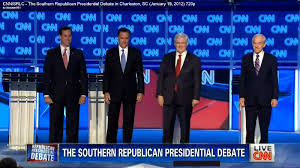
Rick Santorum, Mitt Romney, Newt Gingrich, Ron Paul
Only Texas Congressman Ron Paul–who had served as a flight surgeon in the U.S. Air Force from 1963 to 1968–dared to call for normalization of relations between the United States and Cuba.
But even Paul’s courage ignored a great many ugly historical truths. Among these:

- In October, 1962, Castro stopped regularly scheduled travel between the two countries, and asylum seekers began sailing from Cuba to Florida.
- Between 1962 and 1979, hundreds of thousands of Cubans entered the United States under the Attorney General’s parole authority.
- The overwhelming majority of Cubans who immigrated into the United States settled in Florida, whose political, economic, and cultural life they transformed.
- By 2008, more than 1.24 million Cuban Americans were living in the United States, mostly in South Florida, where the population of Miami was about one-third Cuban.
- Many of these Cubans viewed themselves as political exiles, rather than immigrants, hoping to return to Cuba after its communist regime fell from power.
- The large number of Cubans in South Florida, particularly in Miami’s “Little Havana,” allowed them to preserve their culture and customs to a degree rare for immigrant groups.
- These discontented immigrants became a potential force for politicians to court.
- Unsurprisingly, most of their votes went to Right-wing Republicans.
John F. Kennedy was the first President to face this dilemma.

John F. Kennedy
During the closing months of the administration of President Dwight D. Eisenhower, the CIA had begun training Cuban exiles for an invasion of their former homeland.
The goal: To do what Castro had done–seek refuge in the mountains and launch a successful anti-Castro revolution.
But word of the coming invasion quickly leaked: The exiles were terrible secret-keepers. (A joke at the CIA went: “A Cuban thinks a secret is something you tell to only 300 people.”)
Kennedy insisted the invasion must appear to be an entirely Cuban enterprise. He refused to commit U.S. Marines and Air Force bombers.
The invasion force was quickly overwhelmed at the Bay of Pigs, with hundreds of its men taken prisoner.
Kennedy publicly took the blame for its failure: “Victory has a hundred fathers but defeat is an orphan.” But privately he seethed, and ordered the CIA to redouble its efforts to remove Castro at all costs.
To make certain his order was carried out, he appointed his brother, Robert–then Attorney General–to oversee the CIA’s “Castro removal” program.
It’s here that America’s obsession with Cuba entered its darkest and most disgraceful period.
The CIA and the Mafia entered into an unholy alliance to assassinate Castro–each for its own benefit.
The CIA wanted to please Kennedy. The Mafia wanted to regain its casino and brothel holdings that had made Cuba the playground of the rich in pre-Castro times.
The CIA supplied poisons and explosives to various members of the Mafia. It was then up to the mobsters to assassinate Castro.
The available sources disagree on what actually happened. Some believe that the Mob made a genuine effort to “whack” Fidel.
Others are convinced the mobsters simply ran a scam on the government. They pretended to carry out their “patriotic duty” while in fact making no effort at all to penetrate Castro’s security.
The mobsters hoped to use their pose as patriots to win immunity from future prosecution.
The CIA asked John Roselli, a mobster linked to the Chicago syndicate, to go to Florida in 1961 and 1962 to organize assassination teams of Cuban exiles. They were to infiltrate their homeland and assassinate Castro.

John Roselli
Rosselli called upon two other crime figures: Chicago Mafia boss Sam Giancana and Santos Trafficante, the Costra Nostra chieftain for Cuba, to help him.
Giancana, using the name “Sam Gold” in his dealings with the CIA, was being hounded by the FBI on direct orders of Attorney General Kennedy.

Sam Giancana
BARACK OBAMA, CIA, MITT ROMNEY, COMMUNISM, JOHN F. KENNEDY, ABC NEWS, CNN, THE NEW YORK TIMES, NBC NEWS, CBS NEWS, MAFIA, THE LOS ANGELES TIMES, ROBERT F. KENNEDY, THE WALL STREET JOURNAL, NEWT GINGRICH, CUBA, FLORIDA, RICK SANTORUM, NIKITA KHRUSHCHEV, FACEBOOK, TWITTER, RON PAUL, COLD WAR, 2012 PRESIDENTIAL RACE, BAY OF PIGS, THE CHICAGO TRIBUNE, SAM GIANCANA, JOHNNY ROSELLI, MARCO RUBIO, USA TODAY, THE CHICAGO SUN-TIMES
In Politics, Bureaucracy, History, Social commentary, Military on December 29, 2014 at 11:07 am
“John and Robert Kennedy knew what they were doing. They waged a vicious war against Fidel Castro–a war someone had to lose.”
So writes Gus Russo in Live By the Sword: The Secret War Against Castro and the Death of JFK, published in 1998.
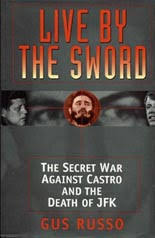
In what is almost certainly the definitive account of the assassination of President John F. Kennedy, Russo reaches some startling–but highly documented–conclusions:
- Lee Harvey Oswald assassinated Kennedy.
- He did it alone.
- Oswald, a former Marine, was a committed Marxist–whose hero was Castro.
- The CIA’s ongoing campaign to overthrow and/or assassinate Castro was an open secret throughout the Gulf.
- Oswald visited New Orleans in the spring of 1963.
- There he learned that Castro was in the crosshairs of the CIA.
- Oswald told his Russian-born wife, Marina: “Fidel Castro needs defenders. I’m going to join his army of volunteers.”
- Jack Ruby, a Dallas nightclub owner, murdered Oswald because he was distraught over Kennedy’s death.
- Ruby was not part of a Mafia conspiracy to silence Oswald.
- Skeptics of the Warren Commission–which concluded that Oswald had acted alone–asked the wrong question: “Who killed Kennedy?”
- They should have asked: “Why was he killed?”
- The answer–according to Russo: “The Kennedys’ relentless pursuit of Castro and Cuba backfired in tragedy on that terrible day in November, 1963.”
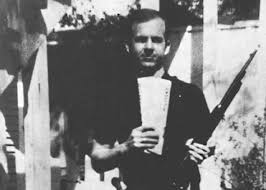
Lee Harvey Oswald
Another book well worth reading about America’s Cuban obsession during the early 1960s is American Tabloid, by James Ellroy.

Although a novel, it vividly captures the atmosphere of intrigue, danger and sleaziness that permeated that era in a way that dry, historical documents never can.
“The 50s are finished,” reads its paperback dust jacket. “Zealous young lawyer Robert Kennedy has a red-hot jones to nail Jimmy Hoffa. JFK has his eyes on the Oval Office.
“J. Edgar Hoover is swooping down on the Red Menace. Howard Hughes is dodging subpoenas and digging up Kennedy dirt. And Castro is mopping up the bloody aftermath of his new Communist nation….
“Mob bosses, politicos, snitches, psychos, fall guys and femmes fatale. They’re mixing up a Molotov cocktail guaranteed to end the country’s innocence with a bang.”
Among the legacies of America’s twisted romance with anti-Castro Cubans:
- Following the JFK assassination, there was a coverup.
- Its purpose was to safeguard the reputation of the United States government–and that of its newly-martyred President.
- To that end, the CIA and FBI concealed the anti-Castro assassination plots from the Warren Commission investigating Kennedy’s assassination.
- Other participating officials included Attorney General Robert F. Kennedy and President Lyndon B. Johnson.
- This secrecy ignited the widespread–and false–belief that the President had died at the hands of a government conspiracy.
- Robert Kennedy feared that his relentless pursuit of Castro might have backfired against JFK, leading Castro to “take out” the President first.
- Fearing his own assassination if he continued Kennedy’s efforts to murder Castro, President Johnson ordered the CIA to halt its campaign to overthrow and/or assassinate the Cuban leader.
- The huge Cuban community throughout Florida–and especially Miami–continues to exert a blackmail influence on American politics.
- Right-wing politicians from Richard Nixon to Newt Gingrich have reaped electoral rewards by catering to the demands of this hate-obsessed voting block.
- As a result, the United States still refuses to open diplomatic relations with Cuba–even though it has done so with such former enemies as the Soviet Union, China and Vietnam.
- The most fervent hope of these Cuban ex-patriots is that the United States will launch a full-scale military invasion of the island to remove Castro.
- At the same time, they fear to risk their own lives by returning to Cuba and launching an uprising against him. (Castro had done just that–successfully–from 1956 to 1958 against Fulgencio Batista, the dictator who had preceded him.)
The United States is fast approaching the 50th anniversay of the most dangerous moment of the Cold War: The Cuban Missile Crisis, when the world stood only minutes away from nuclear Armageddon.
That crisis stemmed from our twisted obsession with Cuba, an obsession that continues today.
Ron Paul is correct:
It’s time to end the half-century contamination of American politics by those Cubans who live for their hatred of Castro and those political candidates who live to exploit it.
(For example: Marco Rubio got himself elected U.S. Senator from Florida in 2010 by claiming that his parents had been forced to leave Cuba in 1959, after Fidel Castro came to power. In fact, they had left Cuba in 1956–three years earlier–during the Batista dictatorship.)
It’s long past time to end this wag-the-dog relationship. A population of about 1,700,000 Cubans should not be allowed to shape the domestic and foreign policy of a nation of 300 million.
Those who continue to hate–or love–Castro should be left to their own private feud. But that is a feud they should settle on their own island, and not from the shores of the United States.
BARACK OBAMA, CIA, MITT ROMNEY, COMMUNISM, JOHN F. KENNEDY, ABC NEWS, CNN, THE NEW YORK TIMES, NBC NEWS, CBS NEWS, MAFIA, THE LOS ANGELES TIMES, ROBERT F. KENNEDY, THE WALL STREET JOURNAL, NEWT GINGRICH, CUBA, FLORIDA, RICK SANTORUM, NIKITA KHRUSHCHEV, FACEBOOK, TWITTER, RON PAUL, COLD WAR, 2012 PRESIDENTIAL RACE, BAY OF PIGS, THE CHICAGO TRIBUNE, SAM GIANCANA, JOHNNY ROSELLI, MARCO RUBIO, USA TODAY, THE CHICAGO SUN-TIMES
In Politics, Bureaucracy, History, Social commentary, Military on December 27, 2014 at 5:20 pm
Following the disastrous Bay of Pigs invasion, President John F. Kennedy and his brother, Robert–then Attorney General–created their own covert operation to depose Fidel Castro.
Robert F. and John F. Kennedy conferring in the White House Rose Garden
Known as the Special Group, and overseen by Robert Kennedy, it launched a secret war against the Castro regime, code-named Operation Mongoose.
“We were hysterical about Castro at about the time of the Bay of Pigs and thereafter,” Secretary of Defense Robert S. McNamara later testified before Congress about these efforts. “And there was pressure from JFK and RFK to do something about Castro.”

Robert S. McNamara
Nor was everyone in the CIA enthusiastic about the “get Castro” effort.
“Everyone at CIA was surprised at Kennedy’s obsession with Fidel,” recalled Sam Halpern, who was assigned to the Cuba Project. “They thought it was a waste of time. We all knew [Fidel] couldn’t hurt us. Most of us at CIA initially liked Kennedy, but why go after this little guy?
“One thing is for sure: Kennedy wasn’t doing it out of national security concerns. It was a personal thing. The Kennedy family felt personally burnt by the Bay of Pigs and sought revenge.”
It was all-out war. Among the tactics used:
- Hiring Cuban gangsters to murder Cuban police officials and Soviet technicians.
- Sabotaging mines.
- Paying up to $100,000 per “hit” for the murder or kidnapping of Cuban officials.
- Using biological and chemical warfare against the Cuban sugar industry.
“Bobby (Kennedy) wanted boom and bang all over the island,” recalled Halpern. “It was stupid. The pressure from the White House was very great.”
Among that “boom and bang” were a series of assassination plots against Castro, in which the Mafia was to be a key player.
Chicago Mobster Johnny Rosselli proposed a simple plan: through its underworld connections in Cuba, the Mafia would recruit a Cuban in Castro’s entourage, such as a waiter or bodyguard, who would poison him.
The CIA’s Technical Services division produced a botulinus toxin which was then injected into Castro’s favorite brand of cigars. The CIA also produced simpler botulinus toxin pills that could be dissolved in his food or drink.
But the deputized Mafia contacts failed to deliver any of the poisons to Castro.
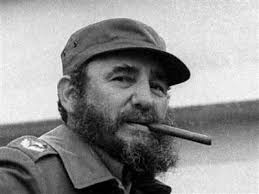
Fidel Castro
As Rosselli explained to the CIA, the first poisoner had been discharged from Castro’s employ before he could kill him, while a back-up agent got “cold feet.”
Other proposals or attempts included:
- Planting colorful seashells rigged to explode at a site where Castro liked to go skindiving.
- Trying to arrange for his being presented with a wetsuit impregnated with noxious bacteria and mould spores, or with lethal chemical agents.
- Attempting to infect Castro’s scuba regulator with tuberculous bacilli.
- Trying to douse his handkerchiefs, tea and coffee with other lethal bacteria.
Americans would rightly label such methods as “terrorist” if another power used them against the United States today. And the Cuban government saw the situation exactly the same way.
So Castro appealed to Nikita Khrushchev, leader of the Soviet Union, for assistance.

Nikita Khrushchev
Khrushchev was quick to comply: “We must not allow the communist infant to be strangled in its crib,” he told members of his inncer circle.
By October, 1962, the Soviet Union had sent more than 40,000 soldiers, 1,300 field pieces, 700 anti-airctaft guns, 350 tanks and 150 jets to Cuba to deter another invasion.
Khrushchev also began supplying Castro with nuclear-tipped ballistic missiles–whose discovery, on October 15, 1962, ignited the single most dangerous confrontation of the Cold War.
Suddenly, the two most powerful nuclear countries–the United States and the Soviet Union–found themselves on the brink of nuclear war.
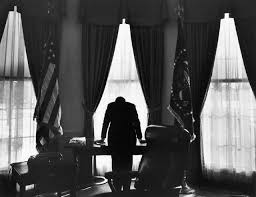
John F. Kennedy in the Oval Office
At the time, Kennedy officials claimed they couldn’t understand why Khrushchev had placed nuclear missiles in Cuba. “Maybe Khrushchev’s gone mad” was a typical musing.
None of these officials admitted that JFK had been waging a no-holds-barred campaign to overthrow the Cuban government and assassinate its leader.
The crisis ended when, after 13 harrowing days, Khrushchev agreed to remove the missiles from Cuba. Behind its resolution lay a promise by the Kennedy administration to not invade Cuba.
But President Kennedy was not finished with Castro. While continuing the campaign of sabotage throughout Cuba, the Kennedys were preparing something far bigger: A fullscale American invasion of the island.
On October 4, 1963, the Joint Chiefs of Staff submitted its latest version of the invasion plan, known as OPLAN 380-63. Its timetable went:
- January, 1964: Infiltration into Cuba by Cuban exiles.
- July 15, 1964: U.S. conventional forces join the fray.
- August 3, 1964: All-out U.S. air strikes on Cuba.
- October 1, 1964: Full-scale invasion to install “a government friendly to the U.S.”
During the Cuban Missile Crisis, Robert Kennedy–referring to the 1941 Japanese attack on Pearl Harbor–had resisted demands for a “sneak attack” on Cuba by saying: “I don’t want my brother to be the Tojo of the 1960s.”
Now the Kennedys planned such an attack on Cuba just one month before the November, 1964 Presidential election.
But then fate–in the otherwise unimpressive form of Lee Harvey Oswald–suddenly intervened.


 Bureaucracybuster's Blog
ABC NEWS, ALLEN DULLES, BRIDGE OF SPIES, CBS NEWS, CNN, COLD WAR, DWIGHT D. EISENHOWER, EAST GERMANY, FACEBOOK, FRANCIS GARY POWERS, JAMES DONOVAN, JOHN F. KENNEDY, JOSEPH MCCARTHY, KGB, NBC NEWS, RED SCARE, RUDOLPH ABEL, SOVIET UNION, STASI, STEVEN SPIELBERG, THE CHICAGO SUN-TIMES, THE CHICAGO TRIBUNE, THE LOS ANGELES TIMES, THE NEW YORK TIMES, THE WALL STREET JOURNAL, THE WASHINGTON POST, TOM HANKS, TWITTER, U-2
“BRIDGE OF SPIES” TELLS UGLY TRUTHS ABOUT GOVERNMENT: PART TWO (END)
In Bureaucracy, Entertainment, History, Law, Law Enforcement, Military, Politics, Social commentary on March 21, 2016 at 12:01 am“Bridge of Spies” vividly recaptures a now-forgotten time in American history.
It was the time of “the Cold War.” A time when:
Bert the Turtle teaches schoolchildren to “Duck and Cover”
Yet even in this poisonous atmosphere of fear and denunciation, some men stood out as heroes–simply by holding fast to their consciences.
One of these was a New York insurance attorney named James B. Donovan (played by Tom Hanks). Asked by the Justice Department to defend arrested Soviet spy Rudolph Abel (Mark Rylance) Donovan did what no one expected.
He gave Abel a truly vigorous defense, arguing that the evidence used to convict him was the legally-tainted product of an invalid search warrant.
Upon Abel’s conviction and sentencing to 45 years’ imprisonment, Donovan again shocked the political and legal communities by appealing the case to the Supreme Court.
Donovan argued that Constitutional protections should apply to everyone–including non-Americans–tried in American courts. To do less made a mockery of the very freedoms we claimed to champion.
He lost by a vote of 5-4. But the arguments he made would resurface 50 years later when al-Qaeda suspects were hauled into American courts.
James B. Donovan
In 1961, Donovan was again called upon to render service by a Federal agency–this time the CIA. It wanted his help in negotiating the release of its spy, Francis Gary Powers, shot down over the Soviet Union in 1960 while flying a high-altitude U-2 spy plane.
Throughout “Bridge of Spies,” audiences learn some unsettling truths about how the American government–and governments generally– actually operate.
The first three of these were outlined in Part one of this series:
Truth #1: Appearance counts for more than reality.
Truth #2: Individual conscience can wreck the best-laid plans of government.
Truth #3: High-ranking government officials will ask citizens to take risks they themselves refuse to take.
Now for the remaining truths revealed in this movie.
Truth #4: Appeals to fear often prevail when appeals to humanity are ignored.
After crossing into East Germany, Donovan enters into negotiations with Wolfgang Vogel, a lawyer representing the East German government.
Vogel offers to exchange Frederic Pryor, an American economics graduate student seized by the East German secret police, for Abel. Donovan replies this is a deal-breaker; the United States (which is never mentioned during the negotiations) wants Powers, not Pryor.
Nevertheless, Donovan is equally concerned for Pryor, and adds him to the list of hostages to be released in return for Abel.
Then a new complication arises: The East German government that holds Pryor threatens to pull out. claiming to be insulted because Donovan did not inform them that the USSR was a party to the negotiation.
His reasoned, legal arguments having failed, Donovan resorts to a threat. He conveys a warning to the president of East Germany:
Abel has not yet revealed any Soviet secrets. But if this deal fails, he may well do so to earn favors from the United States government. And, in that case, the Soviets will blame you–Erich Honecker, the president of East Germany–for the resulting damage.
Where arguments based on humanity have failed, this one–based on fear–works. A prisoner-exchange is arranged.
Truth #5: Personal loyalty can supersede bureaucratic inventions.
On February 10, 1962, Donovan, Abel and several CIA agents arrive at the Glienicke Bridge, which connects East and West Germany. The Soviets have Powers, but not Pryor–who is to be released at Checkpoint Charlie, a crossing point between East and West Berlin.
Glienicke Bridge, the “Bridge of Spies”
The CIA agent in charge of the American delegation tells Abel he can cross into East Germany, even though Pryor has not been released.
But Abel has learned that Donovan has negotiated the release of not only Powers but Pryor. Out of loyalty to the man who has vigorously defended him, he waits on his side of the bridge until word arrives that Pryor has been released.
Then Abel crosses into East Germany while Powers crosses into the Western sector.
Donovan returns home. Before flying off to West Germany, he had told his wife he was going on a fishing trip in Scotland.
His wife and children learn the truth about the risks he ran and the success he attained only when a television newscast breaks the news:
Francis Gary Powers has been returned to the United States. And the man responsible is James Donovan, once the most reviled man in America for having defended a notorious Soviet spy.
Share this: