Posts Tagged ‘CBSNEWS’
ABC NEWS, AIG, ALAN GREENSPAN, ALTERNET, AMERICABLOG, AP, AYN RAND, BABY BOOMER RESISTANCE, BAILOUT PROGRAM, BBC, BLOOMBERG, BUSINESS REGULATION, BUZZFEED, CALVIN COOLIDGE, CBS NEWS, CBSNEWS, CEOS, CNN, COLLEGE GRADUATES, CORPORATE BAILOUTS, CROOKS AND LIARS, DAILY KOS, DAILY KOZ, DRUG-TESTING, FACEBOOK, FBI, FINANCE, FIVETHIRTYEIGHT, GREED, HARPER’S MAGAZINE, HUFFINGTON POST, MEDIA MATTERS, MOTHER JONES, MOVEON, MSNBC, NBC NEWS, NEW REPUBLIC, NEWSDAY, NEWSWEEK, NPR, PBS NEWSHOUR, POLITICO, POLITICUSUSA, RAW STORY, REPUBLICANS, REUTERS, ROBERT BENMOSCHE, SALON, SEATTLE TIMES, SLATE, T.A.R.P. PROGRAM, TALKING POINTS MEMO, TEA PARTY, THE ATLANTIC, THE CHICAGO SUN-TIMES, THE CHICAGO TRIBUNE, THE DAILY BEAST, THE DAILY BLOG, THE GUARDIAN, THE HILL, THE HUFFINGTON POST, THE INTERCEPT, THE LOS ANGELES TIMES, THE NATION, THE NEW REPUBLIC, THE NEW YORK TIMES, THE NEW YORKER, THE VILLAGE VOICE, THE WASHINGTON POST, THINKPROGRESS, TIME, TIMOTHY GEITHNER, TREASURY DEPARTMENT, TRUTHDIG, TRUTHOUT, TWO POLITICAL JUNKIES, U.S. NEWS & WORLD REPORT, UNEMPLOYMENT, UPI, USA TODAY, WALL STREET, WELFARE, X
In Bureaucracy, Business, History, Law, Politics, Social commentary on December 20, 2024 at 12:19 am
Robert Benmosche, the CEO of American International Group (AIG) had some blunt advice to college graduates searching for work.
“You have to accept the hand that’s been dealt you in life,” Benmosche said in a 2013 interview on Bloomberg Television. “Don’t cry about it. Deal with it.”
As is typical of one-percenters, Benmosche blamed willing-to-work college graduates for the refusal of rich employers to offer jobs instead of excuses.
AIG’s way of “accepting the hand that’s been dealt you in life” was to go crying to the Federal Government for a bailout loan—which eventually ballooned to $182 billion.
If college graduates should “deal with” the hardships of finding a responsible, hiring-inclined employer with a stiff upper lip, as Benmosche advised, the same advice should work wonders on greed-fueled CEOs.
Greed-test CEOs for future government loans.
After all, drug-testing welfare recipients has become the new mantra for Republicans.
Some bills have even targeted people who seek unemployment insurance and food stamps, despite scanty evidence that the poor and jobless are disproportionately on drugs.
The concept of background screening is actually sound. But Republicans are aiming it at the wrong end of the economic spectrum.
Since 2008, the government has handed out billions of dollars in bailouts to CEOs of the wealthiest corporations in the country.
The reason: To rescue the economy from the calamity produced by the criminal greed and recklessness of those same corporations.
In 2008, Alan Greenspan, the former chairman of the Federal Reserve, testified before Congress about the origins of the Wall Street “meltdown.”
He admitted that he was “shocked” at the breakdown in U.S. credit markets and said he was “partially” wrong to resist regulation of some securities.
“Those of us who have looked to the self-interest of lending institutions to protect shareholder’s equity—myself especially—are in a state of shocked disbelief,” said Greenspan, who had ruled the Fed from 1987 to 2006.
Alan Greenspan
As a disciple of the right-wing philosopher, Ayan Rand, Greenspan had fiercely held to her belief that “The Market” was a divine institution. As such, “it” alone knew what was best for the nation’s economic prosperity.
“Enlightened self-interest,” he believed, would guarantee that those who dedicated their lives to making money would not allow mere greed to steer them—and the country—into disaster.
As he saw it, any attempt to regulate greed-based appetites could only harm that divine institution.
This had been the prevailing attitude among businessmen prior to the 1929 Wall Street crash that brought on the Great Depression. It proved wrong then.
And it proved wrong for Greenspan—and the country—in 2008. And the nation will be literally paying for such misguided confidence in profit-addicted men for decades to come.
So if Republicans want to protect the “poor, oppressed taxpayer,” they should demand background investigations for those whose addiction truly threatens the economic future of this country.
That is: The men (and occasionally women) who run the nation’s most important financial institutions, such as banks, insurance and mortgage companies.
Thus, in the future, all CEOs—and their families and topmost executives—of financial institutions seeking Federal bailouts should be required to:
- Undergo “full field investigations” by the FBI and IRS.
- Submit full financial disclosure forms concerning not only themselves but all members of their immediate families.
- Be subject to Federal prosecution for perjury if they provide false information or conceal evidence of criminal violations.
- Periodically submit themselves for additional background investigation.
- Be subject to arrest, indictment and prosecution if the background investigation turns up evidence of criminal activity.
In addition:
- If a bailout-seeking financial institution refuses to comply with these criteria, it should be refused the loan.
- If a CEO and/or other top officials are judged ineligible for a loan, the company should be asked to replace those executives with others who might qualify.
- Those alternative executives should be subject to the same background investigation requirements as just outlined.
- If the institution refuses to replace those executives found ineligible, the Government should refuse the loan.
- If the Government is forced to take over a troubled financial institution, its CEO and top executives should be replaced with applicants who have passed the required security screening.
The United States has a long and embarrassing history in worshiping wealth for its own sake. Part of this can be traced to the old Calvinistic doctrine that wealth is a proof of salvation, since it shows evidence of God’s favor.
“The man who builds a factory,” eulogized President Calvin Coolidge, “builds a temple. And the man who works there, worships there.”
Another reason for this worship of mammon is the belief that someone who is wealthy is automatically endowed with wisdom and integrity. If that were true, Mafia bosses would be the moral equivalent of Saint Augustine.
Following these beliefs to their ultimate conclusion will transform the United States into a plutocracy—a government of the wealthy, by the wealthy, for the wealthy.
Every day—from President Donald Trump on down—we see fresh evidence of the destruction wrought by the unchecked greed of wealthy, powerful men.
When they—and their paid shills in Congress—demand, “De-regulate business,” it’s essential to remember what this really means.
It means: “Let criminals be criminals.”
ABC NEWS, AIG, ALAN GREENSPAN, ALTERNET, AMERICABLOG, AP, AYN RAND, BABY BOOMER RESISTANCE, BAILOUT PROGRAM, BBC, BLOOMBERG, BUSINESS REGULATION, BUZZFEED, CALVIN COOLIDGE, CBS NEWS, CBSNEWS, CEOS, CNN, COLLEGE GRADUATES, CORPORATE BAILOUTS, CROOKS AND LIARS, DAILY KOS, DAILY KOZ, DRUG-TESTING, FACEBOOK, FBI, FINANCE, FIVETHIRTYEIGHT, GREED, HARPER’S MAGAZINE, HUFFINGTON POST, MEDIA MATTERS, MOTHER JONES, MOVEON, MSNBC, NBC NEWS, NEW REPUBLIC, NEWSDAY, NEWSWEEK, NPR, PBS NEWSHOUR, POLITICO, POLITICUSUSA, RAW STORY, REPUBLICANS, REUTERS, SALON, SEATTLE TIMES, SLATE, T.A.R.P. PROGRAM, TALKING POINTS MEMO, TEA PARTY, THE ATLANTIC, THE CHICAGO SUN-TIMES, THE CHICAGO TRIBUNE, THE DAILY BEAST, THE DAILY BLOG, THE GUARDIAN, THE HILL, THE HUFFINGTON POST, THE INTERCEPT, THE LOS ANGELES TIMES, THE NATION, THE NEW REPUBLIC, THE NEW YORK TIMES, THE NEW YORKER, THE VILLAGE VOICE, THE WASHINGTON POST, THINKPROGRESS, TIME, TIMOTHY GEITHNER, TREASURY DEPARTMENT, TRUTHDIG, TRUTHOUT, TWO POLITICAL JUNKIES, U.S. NEWS & WORLD REPORT, UNEMPLOYMENT, UPI, USA TODAY, WALL STREET, WELFARE, X
In Bureaucracy, Business, History, Law, Politics, Social commentary on December 19, 2024 at 12:11 am
The late Robert Benmosche, then CEO of American International Group (AIG), had some blunt advice to college graduates searching for work in a tight job market.
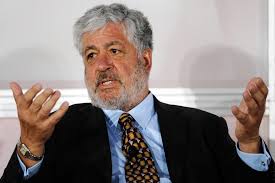
Robert Benmosche
“You have to accept the hand that’s been dealt you in life,” Benmosche said in a 2013 interview on Bloomberg Television. “Don’t cry about it. Deal with it.”
Typical advice from a one-percenter whose company, AIG, suffered a liquidity crisis when its credit ratings were downgraded below “AA” levels in September, 2008.
So how did AIG “deal with” its own crisis? It went crying to its Uncle Sugar, the United States Government, for a bailout.
Which it promptly got.
The United States Federal Reserve Bank, on September 16, 2008, made an $85 billion loan to AIG to meet increased collateral obligations resulting from its credit rating downgrade—and thus saving it from certain bankruptcy.
In return, the Government took an 80% stake in the firm.
(The bailout eventually ballooned to $182 billion in exchange for a 92% stake.)
College graduates, said Benmosche, needed to seize the opportunities that become available to them, even if their options are limited.
“They want me to talk to the students and give them a sense of encouragement, especially with the high unemployment,” said Benmosche.
“My advice will be, ‘Whatever opportunity comes your way, take it. Take it and treat it as if it’s the only one that’s coming your way, because that actually may be the truth.’”
Yes, if you have the opportunity to cry yourself into a multi-billion dollar loan from the Federal Government, by all means, do so.
Of course, willing-to-work college graduates who can’t find willing-to-hire employers won’t be able to count on a generous bailout from the Federal Government.
To which most of them will owe hundreds of thousands of dollars in student loans.
It’s long past time to apply to “untouchable” CEOs like Robert Benmosche the same criteria that Right-wing Republicans demand be applied to welfare recipients.
Republican lawmakers have vigorously pursued welfare drug-testing in Congress and more than 30 states.

Some bills have even targeted people who claim unemployment insurance and food stamps, despite scanty evidence the poor and jobless are disproportionately on drugs.
The concept of background screening is actually sound. But Republicans are aiming it at the wrong end of the economic spectrum.
Since 2008, the government has handed out billions of dollars in bailouts to the wealthiest corporations in the country.
The reason: To rescue the economy from the calamity produced by the criminal greed and recklessness of those same corporations.
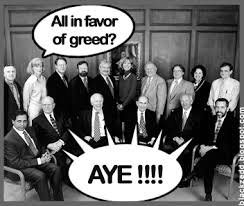
For example:
According to the Special Inspector General for the TARP bailout, the total commitment of government is $16.8 trillion dollars with the $4.6 trillion already paid out.
And it’s equally important to remember that welfare recipients did not:
- Hold CEO positions at any of the banks so far bailed out;
- Run such insurance companies as American International Group (AIG);
- Administer the Federal Home Loan Mortgage Corporation, known as Freddie Mac;
- Command the Federal National Mortgage Association, known as Fannie Mae.
The 2010 documentary Inside Job chronicles the events leading to the 2008 global financial crisis. One of its most insightful moments occurs at a party held by then-Treasury Secretary Henry Paulson.
“We can’t control our greed,” the CEO of a large bank admits to his fellow guests. “You should regulate us more.”
Greed is defined as an excessive desire for wealth or goods. At its worst, greed trumps rationality, judgment and concern about the damage it may cause.
Greed begins in the neurochemistry of the brain. A neurotransmitter called dopamine fuels our greed. The higher the dopamine levels in the brain, the greater the pleasure we experience.
Cocaine, for example, directly increases dopamine levels. So does money.
Harvard researcher Hans Breiter has found, via magnetic resonance imaging studies, that the craving for money activates the same regions of the brain as the lust for sex, cocaine or any other pleasure-inducer.
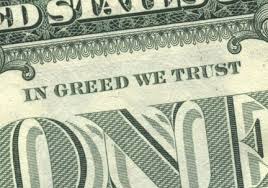
Dopamine is most reliably activated by an experience we haven’t had before. We crave recreating that experience.
But snorting the same amount of cocaine, or earning the same sum of money, does not cause dopamine levels to increase. So the pleasure-seeker must increase the amount of stimuli to keep enjoying the euphoria.
In time, this incessant craving for pleasure becomes an addiction. And feeding that addiction–-with ever more money–becomes the overriding goal.
Thus, the infamous line—”Greed is good”—in the 1987 film, Wall Street, turns out to be both false and deadly for all concerned.
But the situation need not remain this way.
ABC NEWS, ALGIER HISS, ALTERNET, AMERICABLOG, ANTHONY HOPKINS, AP, BABY BOOMER RESISTANCE, BARACK OBAMA, BENJAMIN C. BRADLEE, BILL CLINTON, BLOOMBERG, BOB WOODWARD, BUZZFEED, CARL BERNSTEIN, CBS NEWS, CBSNEWS, CNN, CROOKS AND LIARS, DAILY KOS, DANIEL ELLSBURG, FIVETHIRTYEIGHT, FRENCH LEGION OF HONOR, HARPER’S MAGAZINE, JASON ROBARDS, JOHN F. KENNEDY, JOURNALISM, LYNDON B. JOHNSON, MEDIA MATTERS, MOTHER JONES, MOVEON, MSNBC, NBC NEWS, NEWSWEEK, NPR, PBS NEWSHOUR, PENTAGON PAPERS, POLITICO, POLITICUSUSA, RAW STORY, REPUBLICAN PARTY, REPUBLICANS, REUTERS, RICHARD NIXON, SALON, SEATTLE TIMES, SENATE WATERGATE COMMITTEE, SLATE, TALKING POINTS MEMO, THE ATLANTIC, THE CHICAGO SUN-TIMES, THE CHICAGO TRIBUNE, THE DAILY BEAST, THE DAILY BLOG, THE GUARDIAN, THE HILL, THE HUFFINGTON POST, THE LOS ANGELES TIMES, THE NATION, THE NEW REPUBLIC, THE NEW YORK TIMES, THE PENTAGON PAPERS, THE VILLAGE VOICE, THE WALL STREET JOURNAL, THE WASHINGTON POST, THE WASHINGTONPOST, THINKPROGRESS, TIME, TRUTHDIG, TRUTHOUT, TWO POLITICAL JUNKIES, U.S. NEWS & WORLD REPORT, UNITED STATES SUPREME COURT, UPI, USA TODAY, WATERGATE, WONKETTE, WORLD WAR 11, X
In Bureaucracy, History, Law Enforcement, Politics, Social commentary on August 9, 2024 at 12:10 am
August 9, 2024, will mark an anniversary increasingly fewer Americans remember: Fifty years to the weekday that Richard Milhous Nixon, 37th President of the United States, resigned in disgrace.
Benjamin Crowninshield Bradlee, the former executive editor of The Washington Post, remains virtually unknown outside the journalism profession. Yet his paper did more than any other to bring Nixon down.
Both Nixon and Bradlee were driven to succeed. And both achieved fame and power in doing so.
Bradlee made his name in journalism.
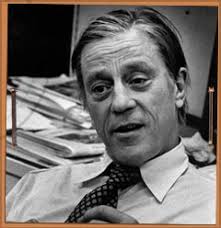
Benjamin C. Bradlee
Nixon made his name in politics.
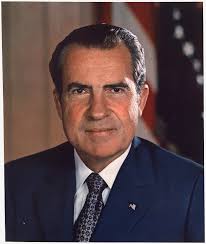
Richard Nixon
Both served in the United States Navy in the Pacific during World War II.
Both had strong connections to John F. Kennedy.
- Bradlee knew him as a friend and reporter during JFK’s years as a Senator and President.
- Nixon—as a Senator and later Vice President—knew Kennedy as a Senatorial colleague and as a political adversary, unsuccessfully contesting him for the Presidency in 1960.
For both, 1948 was a pivotal year.
- Bradlee joined The Washington Post as a reporter.
- Nixon, as a U.S. Representative, accused Algier Hiss, a former State Department official, of having been a Communist spy. Hiss was eventually convicted of perjury and sent to prison.
Both reached their positions of maximum power in 1968:
- Bradlee became executive editor of The Washington Post.
- Nixon became the 37th President of the United States.
But there was a fundamental difference between them:
- Bradlee made it his business to dig up the truth.
- Nixon made it his business to distort the truth—or to conceal it when distortion wasn’t enough.
Nixon and Bradlee had their first major clash in 1971 with the Pentagon Papers, a secret government study of how the United States became enmeshed in the Vietnam war.
- Although the Papers concerned events that had occurred during the Presidencies of John F. Kennedy and Lyndon B. Johnson, Nixon was outraged at their release by a former Defense Department analyst named Daniel Ellsberg.
- Bradlee, as executive editor of The Washington Post, successfully urged his publisher, Katherine Graham, to publish the papers after The New York Times was enjoined from doing so.
- The controversy ended when the Supreme Court ruled, 6–3, that the government failed to meet the burden of proof required for prior restraint of the press.
In 1972, Bradlee and Nixon squared off for their most important battle––a “third-rate burglary” of the Democratic National Committee headquarters at the Watergate Hotel.
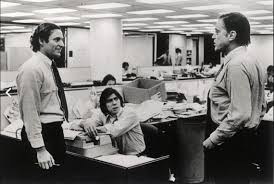
Bob Woodward, Carl Bernstein and Benjamin C. Bradlee
- Bradlee backed two young, aggressive reporters named Bob Woodward and Carl Bernstein, as they probed the burglary.
- This led to their discovering a series of illegal dirty tricks the Nixon re-election campaign had aimed at various Democratic opponents.
- The Post’s revelations led to the formation of the Senate Watergate Committee, the discovery of Nixon’s tape-recordings of his private—and criminal—conversations, and, finally, to Nixon’s own resignation in disgrace on August 9, 1974.
Bradlee became an advocate for education and the study of history. Nixon entered history as the only American President forced to resign from office.
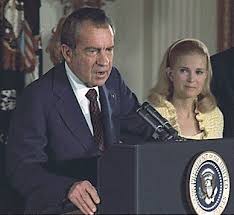
:Richard Nixon saying farewell at the White House
Bradlee became a media celebrity. Nixon became a media target.
- Bradlee was portrayed by Jason Robards in the hit 1976 film, All the President’s Men (for which he won an Academy Award for Best Supporting Actor).
- Nixon was portrayed—in Oliver Stone’s 1995 drama, Nixon—by Anthony Hopkins.
Bradlee and Nixon each published a series of books.
- Bradlee’s: That Special Grace and Conversations With Kennedy focused on his longtime friendship with John F. Kennedy; A Good Life: Newspapering and Other Adventures was Bradlee’s memoirs.
- Nixon’s: Among his 11 titles: Six Crises; RN: The Memoirs of Richard Nixon; The Real War; Leaders; Real Peace; No More Vietnams; Beyond Peace.
After leaving the White House, Nixon worked hard behind-the-scenes to refashion himself into an elder statesman of the Republican Party.
- Throughout the 1980s, he traveled the lecture circuit, wrote books, and met with many foreign leaders, especially those of Third World countries.
- He supported Ronald Reagan for president in 1980, making television appearances portraying himself as the senior statesman above the fray.
- For the rest of his life, he fought ferociously through the courts to prevent the release of most of the infamous “Watergate tapes” that chronicled his crimes as President.
- Only since his death have many of these been made public.
Nixon died on April 22, 1994, aged 81.
- Eulogists at his funeral included President Bill Clinton and former Presidents Gerald Ford, Ronald Reagan and George H.W. Bush, California Governor Pete Wilson and the Reverend Billy Graham.
- Despite his efforts to portray himself as an elder statesman, Nixon could never erase his infamy as the only President to resign in disgrace.
- To this day, he remains a nonperson within the Republican Party.
Bradlee remained executive editor of The Washington Post until retiring in 1991. But he continued to serve as vice president-at-large until his death at 93 on October 21, 2014.
- In 2007, he received the French Legion of Honor, the highest award given by the French government, at a ceremony in Paris.
- In 2013, he was named as a recipient of the Presidential Medal of Freedom by President Barack Obama. He was presented the medal at a White House ceremony on November 20, 2013.
ABC NEWS, ALGIER HISS, ALTERNET, AMERICABLOG, ANTHONY HOPKINS, AP, BABY BOOMER RESISTANCE, BARACK OBAMA, BENJAMIN C. BRADLEE, BILL CLINTON, BLOOMBERG, BOB WOODWARD, BUZZFEED, CARL BERNSTEIN, CBS NEWS, CBSNEWS, CNN, CROOKS AND LIARS, DAILY KOS, DANIEL ELLSBURG, DRUDGE REPORT, FACEBOOK, FIVETHIRTYEIGHT, FRENCH LEGION OF HONOR, HARPER’S MAGAZINE, JASON ROBARDS, JOHN F. KENNEDY, JOURNALISM, LYNDON B. JOHNSON, MEDIA MATTERS, MOTHER JONES, MOVEON, MSNBC, NBC NEWS, NEWSWEEK, NPR, PBS NEWSHOUR, PENTAGON PAPERS, POLITICO, POLITICUSUSA, RAW STORY, REPUBLICAN PARTY, REPUBLICANS, REUTERS, RICHARD NIXON, SALON, SEATTLE TIMES, SENATE WATERGATE COMMITTEE, SLATE, TALKING POINTS MEMO, THE ATLANTIC, THE CHICAGO SUN-TIMES, THE CHICAGO TRIBUNE, THE DAILY BEAST, THE DAILY BLOG, THE GUARDIAN, THE HILL, THE HUFFINGTON POST, THE LOS ANGELES TIMES, THE NATION, THE NEW REPUBLIC, THE NEW YORK TIMES, THE PENTAGON PAPERS, THE VILLAGE VOICE, THE WALL STREET JOURNAL, THE WASHINGTON POST, THE WASHINGTONPOST, THINKPROGRESS, TIME, TRUTHDIG, TRUTHOUT, TWITTER, TWO POLITICAL JUNKIES, U.S. NEWS & WORLD REPORT, UNITED STATES SUPREME COURT, UPI, USA TODAY, WATERGATE, WONKETTE, WORLD WAR 11
In Bureaucracy, History, Law Enforcement, Politics, Social commentary on September 2, 2022 at 12:10 am
August 9, 2022, marked an anniversary increasingly fewer Americans remember: Forty-eight years to the day that Richard Milhous Nixon, 37th President of the United States, resigned in disgrace.
Benjamin Crowninshield Bradlee, the former executive editor of The Washington Post, remains virtually unknown outside the journalism profession. Yet his paper did more than any other to bring Nixon down.
Both Nixon and Bradlee were driven to succeed. And both achieved fame and power in doing so.
Bradlee made his name in journalism.
Benjamin C. Bradlee
Nixon made his name in politics.
Richard Nixon
Both served in the United States Navy in the Pacific during World War II.
Both had strong connections to John F. Kennedy.
- Bradlee knew him as a friend and reporter during JFK’s years as a Senator and President.
- Nixon—as a Senator and later Vice President—knew Kennedy as a Senatorial colleague and as a political adversary, unsuccessfully contesting him for the Presidency in 1960.
For both, 1948 was a pivotal year.
- Bradlee joined The Washington Post as a reporter.
- Nixon, as a U.S. Representative, accused Algier Hiss, a former State Department official, of having been a Communist spy. Hiss was eventually convicted of perjury and sent to prison.
Both reached their positions of maximum power in 1968:
- Bradlee became executive editor of The Washington Post.
- Nixon became the 37th President of the United States.
But there was a fundamental difference between them:
- Bradlee made it his business to dig up the truth.
- Nixon made it his business to distort the truth—or to conceal it when distortion wasn’t enough.
Nixon and Bradlee had their first major clash in 1971 with the Pentagon Papers, a secret government study of how the United States became enmeshed in the Vietnam war.
- Although the Papers concerned events that had occurred during the Presidencies of John F. Kennedy and Lyndon B. Johnson, Nixon was outraged at their release by a former Defense Department analyst named Daniel Ellsberg.
- Bradlee, as executive editor of The Washington Post, successfully urged his publisher, Katherine Graham, to publish the papers after The New York Times was enjoined from doing so.
- The controversy ended when the Supreme Court ruled, 6–3, that the government failed to meet the burden of proof required for prior restraint of the press.
In 1972, Bradlee and Nixon squared off for their most important battle—a “third-rate burglary” of the Democratic National Committee headquarters at the Watergate Hotel.
Bob Woodward, Carl Bernstein and Benjamin C. Bradlee
- Bradlee backed two young, aggressive reporters named Bob Woodward and Carl Bernstein, as they probed the burglary.
- This led to their discovering a series of illegal dirty tricks the Nixon re-election campaign had aimed at various Democratic opponents.
- The Post’s revelations led to the formation of the Senate Watergate Committee, the discovery of Nixon’s tape-recordings of his private—and criminal—conversations, and, finally, to Nixon’s own resignation in disgrace on August 9, 1974.
Bradlee became an advocate for education and the study of history.Nixon entered history as the only American President forced to resign from office.
:Richard Nixon saying farewell at the White House
Bradlee became a media celebrity. Nixon became a media target.
- Bradlee was portrayed by Jason Robards in the hit 1976 film, All the President’s Men (for which he won an Academy Award for Best Supporting Actor).
- Nixon was portrayed—in Oliver Stone’s 1995 drama, Nixon—by Anthony Hopkins.
Bradlee and Nixon each published a series of books.
- Bradlee’s: That Special Grace and Conversations With Kennedy focused on his longtime friendship with John F. Kennedy; A Good Life: Newspapering and Other Adventures was Bradlee’s memoirs.
- Nixon’s: Among his 11 titles: Six Crises; RN: The Memoirs of Richard Nixon; The Real War; Leaders; Real Peace; No More Vietnams; Beyond Peace.
After leaving the White House, Nixon worked hard behind-the-scenes to refashion himself into an elder statesman of the Republican Party.
- Throughout the 1980s, he traveled the lecture circuit, wrote books, and met with many foreign leaders, especially those of Third World countries.
- He supported Ronald Reagan for president in 1980, making television appearances portraying himself as the senior statesman above the fray.
- For the rest of his life, he fought ferociously through the courts to prevent the release of most of the infamous “Watergate tapes” that chronicled his crimes as President.
- Only since his death have many of these been made public.
Nixon died on April 22, 1994.
- Eulogists at his funeral included President Bill Clinton and former Presidents Gerald Ford, Ronald Reagan and George H.W. Bush, California Governor Pete Wilson and the Reverend Billy Graham.
- Despite his efforts to portray himself as an elder statesman, Nixon could never erase his infamy as the only President to resign in disgrace.
- To this day, he remains a nonperson within the Republican Party.
Bradlee remained executive editor of The Washington Post until retiring in 1991. But he continued to serve as vice president-at-large until his death on October 21, 2014.
- In 2007, he received the French Legion of Honor, the highest award given by the French government, at a ceremony in Paris.
- In 2013, he was named as a recipient of the Presidential Medal of Freedom by President Barack Obama. He was presented the medal at a White House ceremony on November 20, 2013.
ABC NEWS, ALGIER HISS, ALTERNET, AMERICABLOG, AP, BABY BOOMER RESISTANCE, BARACK OBAMA, BENJAMIN C. BRADLEE, BILL CLINTON, BLOOMBERG, BUZZFEED, CBS NEWS, CBSNEWS, CNN, CROOKS AND LIARS, DAILY KOZ, DANIEL ELLSBURG, DRUDGE REPORT, FACEBOOK, FIVETHIRTYEIGHT, FRENCH LEGION OF HONOR, HARPER’S MAGAZINE, JASON ROBARDS, JOHN F. KENNEDY, JOURNALISM, LYNDON B. JOHNSON, MEDIA MATTERS, MOTHER JONES, MOVEON, MSNBC, NBC NEWS, NEWSWEEK, NPR, PBS NEWSHOUR, PENTAGON PAPERS, POLITICO, POLITICUSUSA, RAW STORY, REPUBLICAN PARTY, REPUBLICANS, REUTERS, RICHARD NIXON, SALON, SEATTLE TIMES, SLATE, TALKING POINTS MEMO, THE ATLANTIC, THE CHICAGO SUN-TIMES, THE CHICAGO TRIBUNE, THE DAILY BEAST, THE DAILY BLOG, THE GUARDIAN, THE HILL, THE HUFFINGTON POST, THE LOS ANGELES TIMES, THE NATION, THE NEW REPUBLIC, THE NEW YORK TIMES, THE PENTAGON PAPERS, THE VILLAGE VOICE, THE WALL STREET JOURNAL, THE WASHINGTON POST, THE WASHINGTONPOST, THINKPROGRESS, TIME, TRUTHDIG, TRUTHOUT, TWITTER, TWO POLITICAL JUNKIES, U.S. NEWS & WORLD REPORT, UPI, USA TODAY, WATERGATE, WONKETTE, WORLD WAR 11
In Bureaucracy, History, Law Enforcement, Politics, Social commentary on August 14, 2020 at 12:11 am
August 9, 2020, marked an anniversary increasingly fewer Americans remember: Forty-six years to the day that Richard Milhous Nixon, 37th President of the United States, resigned in disgrace.
Benjamin Crowninshield Bradlee, the former executive editor of The Washington Post, remains virtually unknown outside the journalism profession. Yet his paper did more than any other to bring Nixon down.
Both Nixon and Bradlee were driven to succeed. And both achieved fame and power in doing so.
Bradlee made his name in journalism.
Benjamin C. Bradlee
Nixon made his name in politics.
Richard Nixon
Both served in the United States Navy in the Pacific during World War II.
Both had strong connections to John F. Kennedy.
- Bradlee knew him as a friend and reporter during JFK’s years as a Senator and President.
- Nixon—as a Senator and later Vice President—knew Kennedy as a Senatorial colleague and as a political adversary, unsuccessfully contesting him for the Presidency in 1960.
For both, 1948 was a pivotal year.
- Bradlee joined The Washington Post as a reporter.
- Nixon, as a U.S. Representative, accused Algier Hiss, a former State Department official, of having been a Communist spy. Hiss was eventually convicted of perjury and sent to prison.
Both reached their positions of maximum power in 1968:
- Bradlee became executive editor of The Washington Post.
- Nixon became the 37th President of the United States.
But there was a fundamental difference between them:
- Bradlee made it his business to dig up the truth.
- Nixon made it his business to distort the truth—or to conceal it when distortion wasn’t enough.
Nixon and Bradlee had their first major clash in 1971 with the Pentagon Papers, a secret government study of how the United States became enmeshed in the Vietnam war.
- Although the Papers concerned events that had occurred during the Presidencies of John F. Kennedy and Lyndon B. Johnson, Nixon was outraged at their release by a former Defense Department analyst named Daniel Ellsberg.
- Bradlee, as executive editor of The Washington Post, successfully urged his publisher, Katherine Graham, to publish the papers after The New York Times was enjoined from doing so.
- The controversy ended when the Supreme Court ruled, 6–3, that the government failed to meet the burden of proof required for prior restraint of the press.
In 1972, Bradlee and Nixon squared off for their most important battle—a “third-rate burglary” of the Democratic National Committee headquarters at the Watergate Hotel.
Bob Woodward, Carl Bernstein and Benjamin C. Bradlee
- Bradlee backed two young, aggressive reporters named Bob Woodward and Carl Bernstein, as they probed the burglary.
- This led to their discovering a series of illegal dirty tricks the Nixon re-election campaign had aimed at various Democratic opponents.
- The Post’s revelations led to the formation of the Senate Watergate Committee, the discovery of Nixon’s tape-recordings of his private—and criminal—conversations, and, finally, to Nixon’s own resignation in disgrace on August 9, 1974.
Bradlee became an advocate for education and the study of history.Nixon entered history as the only American President forced to resign from office.
:Richard Nixon saying farewell at the White House
Bradlee became a media celebrity. Nixon became a media target.
- Bradlee was portrayed by Jason Robards in the hit 1976 film, All the President’s Men (for which he won an Academy Award for Best Supporting Actor).
- Nixon was portrayed—in Oliver Stone’s 1995 drama, Nixon—by Anthony Hopkins.
Bradlee and Nixon each published a series of books.
- Bradlee’s: That Special Grace and Conversations With Kennedy focused on his longtime friendship with John F. Kennedy; A Good Life: Newspapering and Other Adventures was Bradlee’s memoirs.
- Nixon’s: Among his 11 titles: Six Crises; RN: The Memoirs of Richard Nixon; The Real War; Leaders; Real Peace; No More Vietnams; Beyond Peace.
After leaving the White House, Nixon worked hard behind-the-scenes to refashion himself into an elder statesman of the Republican Party.
- Throughout the 1980s, he traveled the lecture circuit, wrote books, and met with many foreign leaders, especially those of Third World countries.
- He supported Ronald Reagan for president in 1980, making television appearances portraying himself as the senior statesman above the fray.
- For the rest of his life, he fought ferociously through the courts to prevent the release of most of the infamous “Watergate tapes” that chronicled his crimes as President.
- Only since his death have many of these been made public.
Nixon died on April 22, 1994.
- Eulogists at his funeral included President Bill Clinton and former Presidents Gerald Ford, Ronald Reagan and George H.W. Bush, California Governor Pete Wilson and the Reverend Billy Graham.
- Despite his efforts to portray himself as an elder statesman, Nixon could never erase his infamy as the only President to resign in disgrace.
- To this day, he remains a nonperson within the Republican Party.
Bradlee remained executive editor of The Washington Post until retiring in 1991. But he continued to serve as vice president-at-large until his death on October 21, 2014.
- In 2007, he received the French Legion of Honor, the highest award given by the French government, at a ceremony in Paris.
- In 2013, he was named as a recipient of the Presidential Medal of Freedom by President Barack Obama. He was presented the medal at a White House ceremony on November 20, 2013.
ABC NEWS, AIG, ALAN GREENSPAN, ALTERNET, AP, AYN RAND, BAILOUT PROGRAM, BUSINESS REGULATION, BUZZFEED, CALVIN COOLIDGE, CBS NEWS, CBSNEWS, CEOS, CNN, COLLEGE GRADUATES, CORPORATE BAILOUTS, CROOKS AND LIARS, DAILY KOZ, DRUG-TESTING, FACEBOOK, FBI, FINANCE, GREED, MOTHER JONES, MOVEON, NBC NEWS, NEWSWEEK, NPR, POLITICO, RAW STORY, REPUBLICANS, REUTERS, ROBERT BENMOSCHE, SALON, SEATTLE TIMES, SLATE, T.A.R.P. PROGRAM, TEA PARTY, THE ATLANTIC, THE CHICAGO SUN-TIMES, THE CHICAGO TRIBUNE, THE DAILY BEAST, THE GUARDIAN, THE HILL, THE HUFFINGTON POST, THE LOS ANGELES TIMES, THE NATION, THE NEW YORK TIMES, THE WASHINGTON POST, TIME, TIMOTHY GEITHNER, TREASURY DEPARTMENT, TWITTER, U.S. NEWS & WORLD REPORT, UNEMPLOYMENT, UPI, USA TODAY, WALL STREET, WELFARE
In Bureaucracy, Business, History, Law, Politics, Social commentary on April 4, 2018 at 1:26 am
Robert Benmosche, the CEO of American International Group (AIG) had some blunt advice to college graduates searching for work.
“You have to accept the hand that’s been dealt you in life,” Benmosche said in a 2013 interview on Bloomberg Television. “Don’t cry about it. Deal with it.”
As is typical of one-percenters, Benmosche blamed willing-to-work college graduates for the refusal of rich employers to offer jobs instead of excuses.
AIG’s way of “accepting the hand that’s been dealt you in life” was to go crying to the Federal Government for a bailout loan—which eventually ballooned to $182 billion.
If college graduates should “deal with” the hardships of finding a responsible, hiring-inclined employer with a stiff upper lip, as Benmosche advised, the same advice should work wonders on greed-fueled CEOs.
Greed-test CEOs for future government loans.
After all, drug-testing welfare recipients has become the new mantra for Republicans.
Some bills have even targeted people who seek unemployment insurance and food stamps, despite scanty evidence that the poor and jobless are disproportionately on drugs.
The concept of background screening is actually sound. But Republicans are aiming it at the wrong end of the economic spectrum.
Since 2008, the government has handed out billions of dollars in bailouts to CEOs of the wealthiest corporations in the country.
The reason: To rescue the economy from the calamity produced by the criminal greed and recklessness of those same corporations.
In 2008, Alan Greenspan, the former chairman of the Federal Reserve, testified before Congress about the origins of the Wall Street “meltdown.”
He admitted that he was “shocked” at the breakdown in U.S. credit markets and said he was “partially” wrong to resist regulation of some securities.
“Those of us who have looked to the self-interest of lending institutions to protect shareholder’s equity—myself especially—are in a state of shocked disbelief,” said Greenspan, who had ruled the Fed from 1987 to 2006.
Alan Greenspan
As a disciple of the right-wing philosopher, Ayan Rand, Greenspan had fiercely held to her belief that “The Market” was a divine institution. As such, “it” alone knew what was best for the nation’s economic prosperity.
“Enlightened self-interest,” he believed, would guarantee that those who dedicated their lives to making money would not allow mere greed to steer them—and the country—into disaster.
As he saw it, any attempt to regulate greed-based appetites could only harm that divine institution.
This had been the prevailing attitude among businessmen prior to the 1929 Wall Street crash that brought on the Great Depression. It proved wrong then.
And it proved wrong for Greenspan—and the country—in 2008. And the nation will be literally paying for such misguided confidence in profit-addicted men for decades to come.
So if Republicans want to protect the “poor, oppressed taxpayer,” they should demand background investigations for those whose addiction truly threatens the economic future of this country.
That is: The men (and occasionally women) who run the nation’s most important financial institutions, such as banks, insurance and mortgage companies.
Thus, in the future, all CEOs—and their families and topmost executives—of financial institutions seeking Federal bailouts should be required to:
- Undergo “full field investigations” by the FBI and IRS.
- Submit full financial disclosure forms concerning not only themselves but all members of their immediate families.
- Be subject to Federal prosecution for perjury if they provide false information or conceal evidence of criminal violations.
- Periodically submit themselves for additional background investigation.
- Be subject to arrest, indictment and prosecution if the background investigation turns up evidence of criminal activity.
In addition:
- If a bailout-seeking financial institution refuses to comply with these criteria, it should be refused the loan.
- If a CEO and/or other top officials are judged ineligible for a loan, the company should be asked to replace those executives with others who might qualify.
- Those alternative executives should be subject to the same background investigation requirements as just outlined.
- If the institution refuses to replace those executives found ineligible, the Government should refuse the loan.
- If the Government is forced to take over a troubled financial institution, its CEO and top executives should be replaced with applicants who have passed the required security screening.
The United States has a long and embarrassing history in worshiping wealth for its own sake. Part of this can be traced to the old Calvinistic doctrine that wealth is a proof of salvation, since it shows evidence of God’s favor.
“The man who builds a factory,” eulogized President Calvin Coolidge, “builds a temple. And the man who works there, worships there.”
Another reason for this worship of mammon is the belief that someone who is wealthy is automatically endowed with wisdom and integrity. If that were true, Mafia bosses would be the moral equivalent of Saint Augustine.
Following these beliefs to their ultimate conclusion will transform the United States into a plutocracy—a government of the wealthy, by the wealthy, for the wealthy.
Every day—from President Donald Trump on down—we see fresh evidence of the destruction wrought by the unchecked greed of wealthy, powerful men.
When they—and their paid shills in Congress—demand, “De-regulate business,” it’s essential to remember what this really means.
It means: “Let criminals be criminals.”
ABC NEWS, AIG, ALAN GREENSPAN, ALTERNET, AP, AYN RAND, BAILOUT PROGRAM, BUSINESS REGULATION, BUZZFEED, CALVIN COOLIDGE, CBS NEWS, CBSNEWS, CEOS, CNN, COLLEGE GRADUATES, CORPORATE BAILOUTS, CROOKS AND LIARS, DAILY KOZ, DRUG-TESTING, FACEBOOK, FBI, FINANCE, GREED, MOTHER JONES, MOVEON, NBC NEWS, NEWSWEEK, NPR, POLITICO, RAW STORY, REPUBLICANS, REUTERS, SALON, SEATTLE TIMES, SLATE, T.A.R.P. PROGRAM, TEA PARTY, THE ATLANTIC, THE CHICAGO SUN-TIMES, THE CHICAGO TRIBUNE, THE DAILY BEAST, THE GUARDIAN, THE HILL, THE HUFFINGTON POST, THE LOS ANGELES TIMES, THE NATION, THE NEW YORK TIMES, THE WASHINGTON POST, TIME, TIMOTHY GEITHNER, TREASURY DEPARTMENT, TWITTER, U.S. NEWS & WORLD REPORT, UNEMPLOYMENT, UPI, USA TODAY, WALL STREET, WELFARE
In Bureaucracy, Business, History, Law, Politics, Social commentary on April 3, 2018 at 12:13 am
The late Robert Benmosche, then CEO of American International Group (AIG), had some blunt advice to college graduates searching for work in a tight job market.
Robert Benmosche
“You have to accept the hand that’s been dealt you in life,” Benmosche said in a 2013 interview on Bloomberg Television. “Don’t cry about it. Deal with it.”
Typical advice from a one-percenter whose company, AIG, suffered a liquidity crisis when its credit ratings were downgraded below “AA” levels in September, 2008.
So how did AIG “deal with” its own crisis? It went crying to its Uncle Sugar, the United States Government, for a bailout.
Which it promptly got.
The United States Federal Reserve Bank, on September 16, 2008, made an $85 billion loan to AIG to meet increased collateral obligations resulting from its credit rating downgrade–and thus saving it from certain bankruptcy.
In return, the Government took an 80% stake in the firm.
(The bailout eventually ballooned to $182 billion in exchange for a 92% stake.)
College graduates, said Benmosche, needed to seize the opportunities that become available to them, even if their options are limited.
“They want me to talk to the students and give them a sense of encouragement, especially with the high unemployment,” said Benmosche.
“My advice will be, ‘Whatever opportunity comes your way, take it. Take it and treat it as if it’s the only one that’s coming your way, because that actually may be the truth.’”
Yes, if you have the opportunity to cry yourself into a multi-billion dollar loan from the Federal Government, by all means, do so.
Of course, willing-to-work college graduates who can’t find willing-to-hire employers won’t be able to count on a generous bailout from the Federal Government.
To which most of them will owe hundreds of thousands of dollars in student loans.
It’s long past time to apply to “untouchable” CEOs like Robert Benmosche the same criteria that Right-wing Republicans demand be applied to welfare recipients.
Republican lawmakers have vigorously pursued welfare drug-testing in Congress and more than 30 states.
Some bills have even targeted people who claim unemployment insurance and food stamps, despite scanty evidence the poor and jobless are disproportionately on drugs.
The concept of background screening is actually sound. But Republicans are aiming it at the wrong end of the economic spectrum.
Since 2008, the government has handed out billions of dollars in bailouts to the wealthiest corporations in the country.
The reason: To rescue the economy from the calamity produced by the criminal greed and recklessness of those same corporations.
For example:
According to the Special Inspector General for the TARP bailout, the total commitment of government is $16.8 trillion dollars with the $4.6 trillion already paid out.
And it’s equally important to remember that welfare recipients did not:
- Hold CEO positions at any of the banks so far bailed out;
- Run such insurance companies as American International Group (AIG);
- Administer the Federal Home Loan Mortgage Corporation, known as Freddie Mac;
- Command the Federal National Mortgage Association, known as Fannie Mae.
The 2010 documentary Inside Job chronicles the events leading to the 2008 global financial crisis. One of its most insightful moments occurs at a party held by then-Treasury Secretary Henry Paulson.
“We can’t control our greed,” the CEO of a large bank admits to his fellow guests. “You should regulate us more.”
Greed is defined as an excessive desire for wealth or goods. At its worst, greed trumps rationality, judgment and concern about the damage it may cause.
Greed begins in the neurochemistry of the brain. A neurotransmitter called dopamine fuels our greed. The higher the dopamine levels in the brain, the greater the pleasure we experience.
Cocaine, for example, directly increases dopamine levels. So does money.
Harvard researcher Hans Breiter has found, via magnetic resonance imaging studies, that the craving for money activates the same regions of the brain as the lust for sex, cocaine or any other pleasure-inducer.
Dopamine is most reliably activated by an experience we haven’t had before. We crave recreating that experience.
But snorting the same amount of cocaine, or earning the same sum of money, does not cause dopamine levels to increase. So the pleasure-seeker must increase the amount of stimuli to keep enjoying the euphoria.
In time, this incessant craving for pleasure becomes an addiction. And feeding that addiction–-with ever more money–becomes the overriding goal.
Thus, the infamous line—”Greed is good”—in the 1987 film, Wall Street, turns out to be both false and deadly for all concerned.
But the situation need not remain this way.
ABC NEWS, BARACK OBAMA, BENJAMIN C. BRADLEE, BILL CLINTON, CBSNEWS, CNN, FACEBOOK, JASON ROBARDS, JOHN F. KENNEDY, JOURNALISM, NBC NEWS, PENTAGON PAPERS, REPUBLICAN PARTY, REPUBLICANS, RICHARD NIXON, THE CHICAGO SUN-TIMES, THE CHICAGO TRIBUNE, THE LOS ANGELES TIMES, THE NEW YORK TIMES, THE PENTAGON PAPERS, THE WALL STREET JOURNAL, THE WASHINGTONPOST, TWITTER, USA TODAY, WATERGATE
In Bureaucracy, History, Politics, Social commentary on August 24, 2015 at 12:32 am
Benjamin C. Bradlee and Richard M. Nixon.
Both men were driven to succeed. And both achieved fame and power in doing so.
Bradlee made his name in journalism.
Benjamin C. Bradlee
Nixon made his in politics.
Richard M. Nixon
Both served in the United States Navy in the Pacific during World War II.
Both had strong connections to John F. Kennedy.
- Bradlee knew him as a friend and reporter during JFK’s years as a Senator and President.
- Nixon–as a Senator and later Vice President–knew Kennedy as a Senatorial colleague and as a political adversary, unsuccessfully contesting him for the Presidency in 1960.
For both, 1948 was a pivotal year.
- Bradlee joined The Washington Post as a reporter.
- Nixon, as a U.S. Representative, accused Algier Hiss, a former State Department official, of having been a Communist spy. Hiss was eventually convicted of perjury and sent to prison.
Both attained their positions of maximum power in 1968.
- Bradlee became executive editor of The Washington Post.
- Nixon became the 37th President of the United States.
Bradlee made it his business to dig up the truth. Nixon made it his business to distort the truth–or to conceal it when distortion wasn’t enough.
Nixon and Bradlee had their first major clash in 1971 with the Pentagon Papers, a secret government study of how the United States became enmeshed in the Vietnam war.
- Although the Papers concerned events that had occurred during the Presidencies of John F. Kennedy and Lyndon B. Johnson, Nixon was outraged at their release by a former Defense Department analyst named Daniel Ellsburg.
- Nixon ordered his Attorney General, John Mitchell, to enjoin The New York Times–which had begun publishing the study–from continuing to publish its revelations.
- Bradlee, as executive editor of The Washington Post, urged his publisher, Katherine Graham, to take over where the Times had left off.
- The controversey ended when the Supreme Court ruled, 6–3, that the government failed to meet the burden of proof required for prior restraint of the press.
In 1972, Bradlee and Nixon squared off for their most important battle–a “third-rate burglary” of the Democratic National Committee headquarters at the Watergate Hotel.
Bob Woodward, Carl Bernstein and Benjamin C. Bradlee
- Bradlee backed two young, aggressive reporters named Bob Woodward and Carl Bernstein, as they probed the burglary.
- This led to their discovering a series of illegal dirty tricks the Nixon re-election campaign had aimed at various Democratic opponents.
- The Post’s revelations led to the formation of the Senate Watergate Committee, the discovery of Nixon’s tape-recordings of his private–and criminal–conversations, and, finally, to Nixon’s own resignation in disgrace on August 9, 1974.
- Bradlee was one of only four men who knew the identity of “Deep Throat,” Woodward and Bernstein’s famous undercover source, then-FBI Associate Director W. Mark Felt. Felt outed himself in 2005.
- Nixon, who died in 1994, never learned the identity of the most famous whistleblower in history.
Bradlee became an advocate for education and the study of history.
Nixon entered history as the only American President forced to resign from office.
Richard Nixon saying farewell at the White House
Bradlee became a media celebrity. Nixon became a media target.
- Bradlee was portrayed by Jason Robards in the hit 1976 film, All the President’s Men (for which he won an Academy Award for Best Supporting Actor).
- Nixon was portrayed–in Oliver Stone’s 1995 drama, Nixon–by Anthony Hopkins.
Bradlee and Nixon each published a series of books.
- Bradlee’s: That Special Grace and Conversations With Kennedy focused on his longtime friendship with John F. Kennedy. A Good Life: Newspapering and Other Adventures was Bradlee’s memoirs.
- Nixon’s: Among his 11 titles: Six Crises; RN: The Memoirs of Richard Nixon; The Real War; Leaders; Real Peace; No More Vietnams; Beyond Peace.
After leaving the White House, Nixon worked hard behind-the-scenes to refashion himself into an elder statesman of the Republican Party.
- Throughout the 1980s, he traveled the lecture circuit, wrote books, and met with many foreign leaders, especially those of Third World countries.
- He supported Ronald Reagan for president in 1980, making television appearances portraying himself as the senior statesman above the fray.
- For the rest of his life, he fought ferociously through the courts to prevent the release of most of the infamous “Watergate tapes” that chronicled his crimes as President.
- Only since his death have many of these been made public.
Nixon died on April 22, 1994.
- Eulogists at his funeral included President Bill Clinton and former Presidents Gerald Ford, Ronald Reagan and George H.W. Bush, California Governor Pete Wilson and the Reverend Billy Graham.
- Despite his efforts to portray himself as an elder statesman, Nixon could never erase his infamy as the only President to resign in disgrace.
- To this day, he remains a nonperson within the Republican Party. While numerous Republican Presidential candidates quote and identify themselves with Ronald Reagan, none has done the same with Nixon.
Bradlee remained executive editor of The Washington Post until retiring in 1991. But he continued to serve as vice president-at-large until his death on October 21, 2014.
- In 2007, he received the French Legion of Honor, the highest award given by the French government, at a ceremony in Paris.
- In 2013, he was named as a recipient of the Presidential Medal of Freedom by President Barack Obama. He was presented the medal at a White House ceremony on November 20, 2013.
ABC NEWS, AIG, BAILOUT PROGRAM, BUSINESS REGULATION, CBSNEWS, CEOS, CNN, COLLEGE GRADUATES, CORPORATE BAILOUTS, DRUG-TESTING, FACEBOOK, FINANCE, GREED, NBC NEWS, REPUBLICANS, T.A.R.P. PROGRAM, TEA PARTY, THE CHICAGO SUN-TIMES, THE CHICAGO TRIBUNE, THE LOS ANGELES TIMES, THE NEW YORK TIMES, THE WASHINGTON POST, TIMOTHY GEITHNER, TREASURY DEPARTMENT, TWITTER, UNEMPLOYMENT, USA TODAY, WALL STREET, WELFARE
In Bureaucracy, Business, History, Politics, Social commentary on May 15, 2015 at 12:01 am
Robert Benmosche, the CEO of American International Group (AIG) had some blunt advice to college graduates searching for work in a tight job market.
Robert Benmosche
“You have to accept the hand that’s been dealt you in life,” Benmosche said in an interview on Bloomberg Television. “Don’t cry about it. Deal with it.”
Typical advice from a one-percenter whose company, AIG, suffered a liquidity crisis when its credit ratings were downgraded below “AA” levels in September, 2008.
And how did AIG “deal with” its own crisis? It went crying to its Uncle Sugar, the United States Government, for a bailout.
Which it promptly got.
The United States Federal Reserve Bank, on September 16, 2008, made an $85 billion loan to the company to meet increased collateral obligations resulting from its credit rating downgrade–and thus saving it from certain bankruptcy.
In return, the Government took an 80% stake in the firm.
(The bailout eventually ballooned to $182 billion in exchange for a 92% stake.)
College graduates, said Benmosche, needed to seize the opportunities that become available to them, even if their options are limited.
“They want me to talk to the students and give them a sense of encouragement, especially with the high unemployment,” said Benmosche.
“My advice will be, ‘Whatever opportunity comes your way, take it. Take it and treat it as if it’s the only one that’s coming your way, because that actually may be the truth.’”
Of course, willing-to-work college graduates who can’t find willing-to-hire employers won’t be able to count on a generous bailout from the Federal Government.
To which most of them will owe hundreds of thousands of dollars in student loans.
It’s long past time to apply to “untouchable” CEOs like Robert Benmosche the same criteria that right-wing Republicans demand be applied to welfare recipients.
Throughout the past year Republican lawmakers have pursued welfare drug-testing in Congress and more than 30 states.
Some bills have even targeted people who claim unemployment insurance and food stamps, despite scanty evidence the poor and jobless are disproportionately on drugs.
The concept of background screening is actually sound. But Republicans are aiming it at the wrong end of the economic spectrum.
Since 2008, the government has handed out billions of dollars in bailouts to the wealthiest corporations in the country.
The reason: To rescue the economy from the calamity produced by the criminal greed and recklessness of those same corporations.
For example:
Total of federal monies invested: $3 trillion.
It’s important to note that these figures–supplied by the Federal Reserve, Treasury Department, Federal Deposit Insurance Corporation, Congressional Budget Ooffice and the White House–date from November 16, 2009.
And it’s equally important to remember that welfare recipients did not
- hold CEO positions at any of the banks so far bailed out;
- run such insurance companies as American International Group (AIG);
- administer the Federal Home Loan Mortgage Corporation, known as Freddie Mac;
- command the Federal National Mortgage Association, known as Fannie Mae.
The 2010 documentary Inside Job chronicles the events leading to the 2008 global financial crisis. One of its most insightful moments occurs at a party held by then-Treasury Secretary Henry Paulson.
“We can’t control our greed,” the CEO of a large bank admits to his fellow guests. “You should regulate us more.”
Greed is defined as an excessive desire for wealth or goods. At its worst, greed trumps rationality, judgment and concern about the damage it may cause.
Greed begins in the neurochemistry of the brain. A neurotransmitter called dopamine fuels our greed. The higher the dopamine levels in the brain, the greater the pleasure we experience.
Cocaine, for example, directly increases dopamine levels. So does money.
Harvard researcher Hans Breiter has found, via magnetic resonance imaging studies, that the craving for money activates the same regions of the brain as the lust for sex, cocaine or any other pleasure-inducer.
Dopamine is most reliably activated by an experience we haven’t had before. We crave recreating that experience.
But snorting the same amount of cocaine, or earning the same sum of money, does not cause dopamine levels to increase. So the pleasure-seeker must increase the amount of stimuli to keep enjoying the euphoria.
In time, this incessant craving for pleasure becomes an addiction. And feeding that addiction–-with ever more money–becomes the overriding goal.
Thus, the infamous line–”Greed is good”–in the 1987 film, Wall Street, turns out to be both false and deadly for all concerned.
ABC NEWS, BARACK OBAMA, BENJAMIN C. BRADLEE, BILL CLINTON, CBSNEWS, CNN, FACEBOOK, JOHN F. KENNEDY, JOURNALISM, NBC NEWS, PENTAGON PAPERS, REPUBLICAN PARTY, REPUBLICANS, RICHARD NIXON, THE CHICAGO SUN-TIMES, THE CHICAGO TRIBUNE, THE LOS ANGELES TIMES, THE NEW YORK TIMES, THE PENTAGON PAPERS, THE WALL STREET JOURNAL, THE WASHINGTONPOST, TWITTER, USA TODAY, WATERGATE
In History, Law, Politics, Social commentary on October 28, 2014 at 1:04 am
Benjamin C. Bradlee and Richard M. Nixon.
Both men were driven to succeed. And both achieved fame and power in doing so.
Bradlee made his name in journalism.
Benjamin C. Bradlee
Nixon made his in politics.
Richard M. Nixon
Both served in the United States Navy in the Pacific during World War II.
Both had strong connections to John F. Kennedy.
- Bradlee knew him as a friend and reporter during JFK’s years as a Senator and President.
- Nixon–as a Senator and later Vice President–knew Kennedy as a Senatorial colleague and as a political adversary, unsuccessfully contesting him for the Presidency in 1960.
For both, 1948 was a pivotal year.
- Bradlee joined The Washington Post as a reporter.
- Nixon, as a U.S. Representative, accused Algier Hiss, a former State Department official, of having been a Communist spy. Hiss was eventually convicted of perjury and sent to prison.
Both attained their positions of maximum power in 1968.
- Bradlee became executive editor of The Washington Post.
- Nixon became the 37th President of the United States.
Bradlee made it his business to dig up the truth. Nixon made it his business to distort the truth–or to conceal it when distortion wasn’t enough.
Nixon and Bradlee had their first major clash in 1971 with the Pentagon Papers, a secret government study of how the United States became enmeshed in the Vietnam war.
- Although the Papers concerned events that had occurred during the Presidencies of John F. Kennedy and Lyndon B. Johnson, Nixon was outraged at their release by a former Defense Department analyst named Daniel Ellsburg.
- Nixon ordered his Attorney General, John Mitchell, to enjoin The New York Times–which had begun publishing the study–from continuing to publish its revelations.
- Bradlee, as executive editor of The Washington Post, urged his publisher, Katherine Graham, to take over where the Times had left off.
- The controversey ended when the Supreme Court ruled, 6–3, that the government failed to meet the burden of proof required for prior restraint of the press.
In 1972, Bradlee and Nixon squared off for their most important battle–a “third-rate burglary” of the Democratic National Committee headquarters at the Watergate Hotel.
Bob Woodward, Carl Bernstein and Benjamin C. Bradlee
- Bradlee backed two young, aggressive reporters named Bob Woodward and Carl Bernstein, as they probed the burglary.
- This led to their discovering a series of illegal dirty tricks the Nixon re-election campaign had aimed at various Democratic opponents.
- The Post’s revelations led to the formation of the Senate Watergate Committee, the discovery of Nixon’s tape-recordings of his private–and criminal–conversations, and, finally, to Nixon’s own resignation in disgrace on August 9, 1974.
- Bradlee was one of only four men who knew the identity of “Deep Throat,” Woodward and Bernstein’s famous undercover source, then-FBI Associate Director W. Mark Felt. Felt outed himself in 2005.
- Nixon, who died in 1994, never learned the identity of the most famous whistleblower in history.
Bradlee became an advocate for education and the study of history.
Nixon entered history as the only American President forced to resign from office.
Richard Nixon saying farewell at the White House
Bradlee became a media celebrity. Nixon became a media target.
- Bradlee was portrayed by Academy Award-winning actor Jason Robarbs in the hit 1976 film, All the President’s Men.
- Nixon was portrayed–in Oliver Stone’s 1995 drama, Nixon–by Anthony Hopkins.
Bradlee and Nixon each published a series of books.
- Bradlee’s: That Special Grace and Conversations With Kennedy focused on his longtime friendship with John F. Kennedy. A Good Life: Newspapering and Other Adventures was Bradlee’s memoirs.
- Nixon’s: Among his 11 titles: Six Crises; RN: The Memoirs of Richard Nixon; The Real War; Leaders; Real Peace; No More Vietnams; Beyond Peace.
After leaving the White House, Nixon worked hard behind-the-scenes to refashion himself into an elder statesman of the Republican Party.
- Throughout the 1980s, he traveled the lecture circuit, wrote books, and met with many foreign leaders, especially those of Third World countries.
- He supported Ronald Reagan for president in 1980, making television appearances portraying himself as the senior statesman above the fray.
- For the rest of his life, he fought ferociously through the courts to prevent the release of most of the infamous “Watergate tapes” that chronicled his crimes as President.
- Only since his death have many of these been made public.
Nixon died on April 22, 1994.
- Eulogists at his funeral included President Bill Clinton and former Presidents Gerald Ford, Ronald Reagan and George H.W. Bush, California Governor Pete Wilson and the Reverend Billy Graham.
- Despite his efforts to portray himself as an elder statesman, Nixon could never erase his infamy as the only President to resign in disgrace.
- To this day, he remains a nonperson within the Republican Party. While numerous Republican Presidential candidates quote and identify themselves with Ronald Reagan, none has done the same with Nixon.
Bradlee remained executive editor of The Washington Post until retiring in 1991. But he continued to serve as vice president-at-large until his death on October 21, 2014.
- In 2007, he received the French Legion of Honor, the highest award given by the French government, at a ceremony in Paris.
- In 2013, he was named as a recipient of the Presidential Medal of Freedom by President Barack Obama. He was presented the medal at a White House ceremony on November 20, 2013.


.jpeg&imgrefurl=http%3A%2F%2Fwww.whataboutclients.com%2Farchives%2F2014%2F09%2Famerican_authen.html&docid=boFt4L_sotcfWM&tbnid=ouxiHfzJFvsrwM%3A&w=240&h=248&ei=NhtPVKT3GJX6oQSa7YKgDg&ved=0CAIQxiAwAA&iact=c)


.jpg&docid=sOkRc_ehpi7xFM&tbnid=RqUpfRRKBX9_7M%3A&vet=1&w=300&h=250&bih=470&biw=790&ved=2ahUKEwiljoPgqZraAhXD-lQKHYAMDR4QxiAoAXoECAAQFQ&iact=c&ictx=1)
 Bureaucracybuster's Blog
ABC NEWS, AIG, ALAN GREENSPAN, ALTERNET, AMERICABLOG, AP, AYN RAND, BABY BOOMER RESISTANCE, BAILOUT PROGRAM, BBC, BLOOMBERG, BUSINESS REGULATION, BUZZFEED, CALVIN COOLIDGE, CBS NEWS, CBSNEWS, CEOS, CNN, COLLEGE GRADUATES, CORPORATE BAILOUTS, CROOKS AND LIARS, DAILY KOS, DAILY KOZ, DRUG-TESTING, FACEBOOK, FBI, FINANCE, FIVETHIRTYEIGHT, GREED, HARPER’S MAGAZINE, HUFFINGTON POST, MEDIA MATTERS, MOTHER JONES, MOVEON, MSNBC, NBC NEWS, NEW REPUBLIC, NEWSDAY, NEWSWEEK, NPR, PBS NEWSHOUR, POLITICO, POLITICUSUSA, RAW STORY, REPUBLICANS, REUTERS, ROBERT BENMOSCHE, SALON, SEATTLE TIMES, SLATE, T.A.R.P. PROGRAM, TALKING POINTS MEMO, TEA PARTY, THE ATLANTIC, THE CHICAGO SUN-TIMES, THE CHICAGO TRIBUNE, THE DAILY BEAST, THE DAILY BLOG, THE GUARDIAN, THE HILL, THE HUFFINGTON POST, THE INTERCEPT, THE LOS ANGELES TIMES, THE NATION, THE NEW REPUBLIC, THE NEW YORK TIMES, THE NEW YORKER, THE VILLAGE VOICE, THE WASHINGTON POST, THINKPROGRESS, TIME, TIMOTHY GEITHNER, TREASURY DEPARTMENT, TRUTHDIG, TRUTHOUT, TWO POLITICAL JUNKIES, U.S. NEWS & WORLD REPORT, UNEMPLOYMENT, UPI, USA TODAY, WALL STREET, WELFARE, X
LOAN-TEST CEOS LIKE WELFARE APPLICANTS: PART TWO (END)
In Bureaucracy, Business, History, Law, Politics, Social commentary on December 20, 2024 at 12:19 amRobert Benmosche, the CEO of American International Group (AIG) had some blunt advice to college graduates searching for work.
“You have to accept the hand that’s been dealt you in life,” Benmosche said in a 2013 interview on Bloomberg Television. “Don’t cry about it. Deal with it.”
As is typical of one-percenters, Benmosche blamed willing-to-work college graduates for the refusal of rich employers to offer jobs instead of excuses.
AIG’s way of “accepting the hand that’s been dealt you in life” was to go crying to the Federal Government for a bailout loan—which eventually ballooned to $182 billion.
If college graduates should “deal with” the hardships of finding a responsible, hiring-inclined employer with a stiff upper lip, as Benmosche advised, the same advice should work wonders on greed-fueled CEOs.
Greed-test CEOs for future government loans.
After all, drug-testing welfare recipients has become the new mantra for Republicans.
Some bills have even targeted people who seek unemployment insurance and food stamps, despite scanty evidence that the poor and jobless are disproportionately on drugs.
The concept of background screening is actually sound. But Republicans are aiming it at the wrong end of the economic spectrum.
Since 2008, the government has handed out billions of dollars in bailouts to CEOs of the wealthiest corporations in the country.
The reason: To rescue the economy from the calamity produced by the criminal greed and recklessness of those same corporations.
In 2008, Alan Greenspan, the former chairman of the Federal Reserve, testified before Congress about the origins of the Wall Street “meltdown.”
He admitted that he was “shocked” at the breakdown in U.S. credit markets and said he was “partially” wrong to resist regulation of some securities.
“Those of us who have looked to the self-interest of lending institutions to protect shareholder’s equity—myself especially—are in a state of shocked disbelief,” said Greenspan, who had ruled the Fed from 1987 to 2006.
Alan Greenspan
As a disciple of the right-wing philosopher, Ayan Rand, Greenspan had fiercely held to her belief that “The Market” was a divine institution. As such, “it” alone knew what was best for the nation’s economic prosperity.
“Enlightened self-interest,” he believed, would guarantee that those who dedicated their lives to making money would not allow mere greed to steer them—and the country—into disaster.
As he saw it, any attempt to regulate greed-based appetites could only harm that divine institution.
This had been the prevailing attitude among businessmen prior to the 1929 Wall Street crash that brought on the Great Depression. It proved wrong then.
And it proved wrong for Greenspan—and the country—in 2008. And the nation will be literally paying for such misguided confidence in profit-addicted men for decades to come.
So if Republicans want to protect the “poor, oppressed taxpayer,” they should demand background investigations for those whose addiction truly threatens the economic future of this country.
That is: The men (and occasionally women) who run the nation’s most important financial institutions, such as banks, insurance and mortgage companies.
Thus, in the future, all CEOs—and their families and topmost executives—of financial institutions seeking Federal bailouts should be required to:
In addition:
The United States has a long and embarrassing history in worshiping wealth for its own sake. Part of this can be traced to the old Calvinistic doctrine that wealth is a proof of salvation, since it shows evidence of God’s favor.
“The man who builds a factory,” eulogized President Calvin Coolidge, “builds a temple. And the man who works there, worships there.”
Another reason for this worship of mammon is the belief that someone who is wealthy is automatically endowed with wisdom and integrity. If that were true, Mafia bosses would be the moral equivalent of Saint Augustine.
Following these beliefs to their ultimate conclusion will transform the United States into a plutocracy—a government of the wealthy, by the wealthy, for the wealthy.
Every day—from President Donald Trump on down—we see fresh evidence of the destruction wrought by the unchecked greed of wealthy, powerful men.
When they—and their paid shills in Congress—demand, “De-regulate business,” it’s essential to remember what this really means.
It means: “Let criminals be criminals.”
Share this: