Posts Tagged ‘CARLOS MARCELLO’
2012 PRESIDENTIAL RACE, ALTERNET, AP, BARACK OBAMA, BAY OF PIGS, BBC, BERLIN WALL, BILL CLINTON, BRUCE GREENWOOD, BUZZFEED, CARLOS MARCELLO, CBS NEWS, CIA, CIVIL RIGHTS, CLIFF ROBERTSON, CNN, CUBAN MISSILE CRISIS, DAILY KOS, DAVID HALBERSTAM, DONALD J. TRUMP, FACEBOOK, FBI, FIDEL CASTRO, FRANK SINATRA, HERMAN CAIN, ICH BEN EIN BERLINNER SPEECH, INTERNET MOVIE DATABASE, J. EDGAR HOOVER, JAMES MARSDEN, JOHN F. KENNEDY, JOSEPH MCCARTHY, JOSEPH P. KENNEDY, LYNDON B. JOHNSON, MAFIA, MALCOM X, MARTIN LUTHER KING, MARTIN SHEEN, MOTHER JONES, MOVEON, MOVIES, NBC NEWS, NEWSWEEK, NEWT GINGRICH, NIKITA KHRUSHCHEV, NPR, NUCLEAR TEST BAN TREATY, POLITICO, PT-109, RAW STORY, REUTERS, RICK PERRY, ROBERT F. KENNEDY, ROBERT S. MCNAMARA, SALON, SAM GIANCANA, SANTOS TRAFFICANTE, Sarah Palin, SATURDAY NIGHT LIVE, SEATTLE TIMES, SLATE, SOVIET UNION, THE ATLANTIC, THE BEST AND THE BRIGHTEST, THE BUTLER, THE CHICAGO SUN-TIMES, THE CHICAGO TRIBUNE, THE DAILY BEAST, THE GUARDIAN, THE HILL, THE HUFFINGTON POST, THE LOS ANGELES TIMES, THE MISSILES OF OCTOBER, THE NEW YORK TIMES, THE RAT PACK, THE WALL STREET JOURNAL, THE WASHINGTON POST, THIRTEEN DAYS, TIME, TWILIGHT ZONE, TWITTER, U.S. NEWS & WORLD REPORT, UPI, USA TODAY, VIETNAM WAR, WILLIAM DEVANE, WILLIAM PETERSON
In Bureaucracy, Business, History, Law, Law Enforcement, Military, Politics, Social commentary on May 5, 2017 at 12:10 am
During the 1960 Presidential campaign, then-Senator John F. Kennedy promised to build a Peace Corps to train people in underdeveloped nations to help themselves.
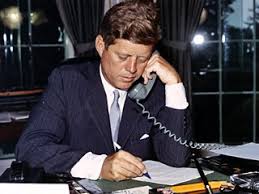
John F. Kennedy
In March, 1961, the program went into effect, with the President’s brother-in-law, Sergent Shriver, as director.
Starvation, illiteracy and disease were the enemies of the Corps. Any nation wanting aid could request it. The first group of volunteers went to the Philippines, the second to Ecuador and the third to Tanganyika.
The problems of the underdeveloped world were too great for any single organization to solve. But the Corps lifted the spirits of many living in those countries. And it captured the imagination of millions of Americans—especially those of thousands of idealistic youths who entered its ranks.
To combat the growing Communist threat to Latin America, Kennedy established the Alliance for Progress. He defined the Alliance’s goal as providing “revolutionary progress through powerful, democratic means.”
Within two years he could report:
“Some 140,000 housing units have been constructed. Slum clearance projects have begun, and 3,000 classrooms have been built. More than 4,000,000 school books have been distributed.
“The Alliance has fired the imagination and kindled the hopes of millions of our good neighbors. Their drive toward modernization is gaining momentum as it unleashes the energies of these millions.
“The United States is becoming increasingly identified in the minds of the people with the goal they move toward: a better life with freedom,” said Kennedy.
Critics of the program, however, charged that the President was trying to “dress up the old policies” of Franklin D. Roosevelt in new rhetoric. Since FDR’s time, the United States has believed in giving economic aid to Latin America.
Much—if not most—of these billions of dollars has wound up in the pockets of various right-wing dictators, such as Anastasio Somoza and Rafael Trujillo.
Meanwhile, Kennedy was urging action on another front—that of outer space.
“This generation does not intend to founder in the backwash of the coming age of space,” declared the President. He committed the United States to putting a man on the moon by the end of the decade.
As indeed it happened less than six years after his death—on July 20, 1969.
Kennedy’s idealistic rhetoric masked his real reason for going to the moon: To score a propaganda victory over the Soviet Union.
Another of his anti-Communist goals: To remove Fidel Castro from power in Cuba at almost any cost.
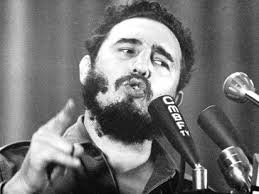
Fidel Castro
Immediately after the failed Bay of Pigs invasion, Kennedy appointed his brother, Robert–who was then the Attorney General—to oversee a CIA program to overthrow Castro.
The CIA and the Mafia entered into an unholy alliance to assassinate Castro—each for its own benefit:
- The CIA wanted to please Kennedy by overthrowing the Communist leader who had nationalized American corporate holdings.
- The Mafia wanted to regain its lucrative casino and brothel holdings that had made Cuba the playground of the rich in pre-Castro times.
The mobsters were authorized to offer $150,000 to anyone who would kill Castro and were promised any support the Agency could yield.
“We were hysterical about Castro at about the time of the Bay of Pigs and thereafter,” then-former Secretary of Defense Robert S. McNamara testified before Congress about these efforts. “And there was pressure from JFK and RFK to do something about Castro.”
Nor was everyone in the CIA enthusiastic about the “get Castro” effort.
“Everyone at CIA was surprised at Kennedy’s obsession with Fidel,” recalled Sam Halpern, who was assigned to the Cuba Project. “They thought it was a waste of time. We all knew [Fidel] couldn’t hurt us. Most of us at CIA initially liked Kennedy, but why go after this little guy?
“One thing is for sure: Kennedy wasn’t doing it out of national security concerns. It was a personal thing. The Kennedy family felt personally burnt by the Bay of Pigs and sought revenge.”
It was all-out war. Among the tactics used:
- Hiring Cuban gangsters to murder Cuban police officials and Soviet technicians.
- Sabotaging mines.
- Paying up to $100,000 per “hit” for the murder or kidnapping of Cuban officials.
- Using biological and chemical warfare against the Cuban sugar industry.
- Planting colorful seashells rigged to explode at a site where Castro liked to go skindiving.
- Trying to arrange for his being presented with a wetsuit impregnated with noxious bacteria and mold spores, or with lethal chemical agents.
- Attempting to infect Castro’s scuba regulator with tuberculous bacilli.
- Trying to douse his handkerchiefs, cigars, tea and coffee with other lethal bacteria.
But all of these efforts failed to assassinate Castro–or overthrow the Cuban Revolution he was heading.
“Bobby (Kennedy) wanted boom and bang all over the island,” recalled Halpern. “It was stupid. The pressure from the White House was very great.”
Americans would rightly label such methods as ”terrorist” if another power used them against the United States today. And the Cuban government saw the situation exactly the same way.
So Castro appealed to Nikita Khrushchev, leader of the Soviet Union, for assistance.
Khrushchev was quick to comply: “We must not allow the Communist infant to be strangled in its crib,” he told members of his inner circle.
2012 PRESIDENTIAL RACE, ALTERNET, AP, BARACK OBAMA, BAY OF PIGS, BBC, BERLIN WALL, BILL CLINTON, BRUCE GREENWOOD, BUZZFEED, CARLOS MARCELLO, CBS NEWS, CIA, CIVIL RIGHTS, CLIFF ROBERTSON, CNN, CUBAN MISSILE CRISIS, DAILY KOS, DAVID HALBERSTAM, DONALD J. TRUMP, FACEBOOK, FBI, FIDEL CASTRO, FRANK SINATRA, ICH BEN EIN BERLINNER SPEECH, INTERNET MOVIE DATABASE, J. EDGAR HOOVER, JAMES MARSDEN, JOHN F. KENNEDY, JOSEPH MCCARTHY, JOSEPH P. KENNEDY, LYNDON B. JOHNSON, MAFIA, MALCOM X, MARTIN LUTHER KING, MARTIN SHEEN, MOTHER JONES, MOVEON, MOVIES, NBC NEWS, NEWSWEEK, NEWT GINGRICH, NIKITA KHRUSHCHEV, NPR, NUCLEAR TEST BAN TREATY, POLITICO, PT-109, RAW STORY, REUTERS, RICK PERRY, ROBERT F. KENNEDY, ROBERT S. MCNAMARA, SALON, SAM GIANCANA, SANTOS TRAFFICANTE, Sarah Palin, SATURDAY NIGHT LIVE, SEATTLE TIMES, SLATE, SOVIET UNION, THE ATLANTIC, THE BEST AND THE BRIGHTEST, THE BUTLER, THE CHICAGO SUN-TIMES, THE CHICAGO TRIBUNE, THE DAILY BEAST, THE GUARDIAN, THE HILL, THE HUFFINGTON POST, THE LOS ANGELES TIMES, THE MISSILES OF OCTOBER, THE NEW YORK TIMES, THE RAT PACK, THE WALL STREET JOURNAL, THE WASHINGTON POST, THIRTEEN DAYS, TIME, TWILIGHT ZONE, TWITTER, U.S. NEWS & WORLD REPORT, UPI, USA TODAY, VIETNAM WAR, WILLIAM DEVANE, WILLIAM PETERSON
In Bureaucracy, Business, History, Law, Law Enforcement, Military, Politics, Social commentary on May 4, 2017 at 12:03 am
May 29, 2017, will mark the 100th anniversary of the birth of President John Fitzgerald Kennedy in Brookline, Massachusetts.
Today—-56 years after he took office—those who voted for him bitterly contrast his memory with the current President, Donald John Trump:
JFK – A decorated war hero
DJT – A five-times draft-dodger
JFK – Youthful (43 upon taking office) and handsome
DJT – Old (70) and overweight
JFK – A fervent anti-Communist
DJT – Elected with support from Russian Communist Intelligence
JFK – Witty, self-mocking
DJT – Humorless, self-bragging
JFK – Optimistic, well-informed, appealing to the best in Americans
DJT – Doom-saying, uninformed, appealing to the “darker side” of his Right-wing base
Some have called the Kennedy administration a golden era in American history. A time when touch football, lively White House parties, stimulus to the arts and the antics of the President’s children became national obsessions.
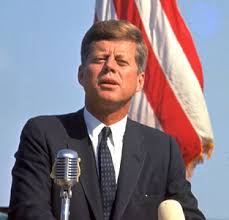
John F. Kennedy
Others have called the Kennedy Presidency a monument to the unchecked power of wealth and ambition. An administration staffed by young novices playing at statesmen, riddled with nepotism, and whose legacy includes the Bay of Pigs, the Vietnam war and the world’s first nuclear confrontation.
The opening days of the Kennedy Presidency raised hopes for a dramatic change in relations between the United States and the Soviet Union.
But detente was not possible then. The Russians had not yet experienced their coming agricultural problems and the setback in Cuba during the Missile Crisis. And the United States had not suffered defeat in Vietnam.
Kennedy’s first brush with international Communism came on April 17, 1961, with the invasion of Cuba at the Bay of Pigs. This operation had been planned and directed by the Central Intelligence Agency during the final months of Dwight D. Eisenhower’s term as President.
The U.S. Navy was to land about 1,400 Cuban exiles on the island to overthrow the Communist government of Fidel Castro. They were supposed to head into the mountains—as Castro himself had done against the dictatorship of Fulgencio Batista in 1956—and raise the cry of revolution.
The invasion would occur after an American air strike had knocked out the Cuban air force. But the airstrike failed and Kennedy, under the pressure of world opinion, called off a second try.
Even so, the invasion went ahead. When the invaders surged onto the beaches, they found Castro’s army waiting for them. Many of the invaders were killed on the spot. Others were captured—to be ransomed by the United States in December, 1962, in return for medical supplies.
It was a major public relations setback for the newly-installed Kennedy administration, which had raised hopes for a change in American-Soviet relations.
Kennedy, trying to abort widespread criticism, publicly took the blame for the setback: “There’s an old saying that victory has a hundred fathers and defeat is an orphan….I’m the responsible officer of the Government.”
The Bay of Pigs convinced Kennedy that he had been misled by the CIA and the Joint Chiefs of Staff. Out of this came his decision to rely heavily on the counsel of his brother, Robert, whom he had installed as Attorney General.
The failed Cuban invasion—unfortunately for Kennedy—convinced Soviet Premier Nikita S. Khrushchev that the President was weak.
Khrushchev told an associate that he could understand if Kennedy had not decided to invade Cuba. But once he did, Kennedy should have pressed on and wiped out Castro.
Khrushchev attributed this to Kennedy’s youth, inexperience and timidity—and believed he could bully the President.
On June 4, 1961, Kennedy met with Khrushchev in Vienna to discuss world tensions. Khrushchev threatened to go to nuclear war over the American presence in West Berlin—the dividing line between Western Europe, protected by the United States, and Eastern Europe, controlled by the Soviet Union.
Kennedy, who prized rationality, was shaken by Khrushchev’s unexpected rage. After the conference, he told an associate: “It’s going to be a cold winter.”
Meanwhile, East Berliners felt they were about to be denied access to West Berlin. A flood of 3,000 refugees daily poured into West Germany.
Khrushchev was embarrassed at this clear showing of the unpopularity of the Communist regime. In August, he ordered that a concrete wall—backed up by barbed wire, searchlights and armed guards—be erected to seal off East Berlin.
As tensions mounted and a Soviet invasion of West Berlin seemed likely, Kennedy sent additional troops to the city in a massive demonstration of American will.
Two years later, on June 26, 1963, during a 10-day tour of Europe, Kennedy visited Berlin to deliver his “I am a Berliner” speech to a frenzied crowd of thousands.
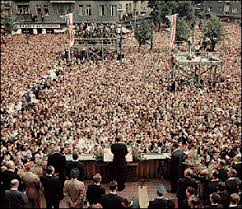
JFK addresses crowds at the Berlin Wall
“There are many people in the world who really don’t understand, or say they don’t, what is the great issue between the free world and the Communist world,” orated Kennedy. “Let them come to Berlin.”
Standing within gunshot of the Berlin wall, he lashed out at the Soviet Union and praised the citizens of West Berlin for being “on the front lines of freedom” for more than 20 years.
“All free men, wherever they may live,” said Kennedy, “are citizens of Berlin. And therefore, as a free man, I take pride in the words, ‘Ich ben ein Berliner.’”
2016 PRESIDENTIAL RACE, ABC NEWS, ALTERNET, AMERICABLOG, AP, BABY BOOMER RESISTANCE, BBC, BERNIE SANDERS, BLOOD FEUD, BLOOMBERG NEWS, BROTHERS: THE HIDDEN HISTORY OF THE KENNEDY YEARS, BUZZFEED, CARLOS MARCELLO, CBS NEWS, CIA, CNN, COTTER SMITH, CROOKS AND LIARS, CUBA, DAILY KOS, DAVID TALBOT, DONALD TRUMP, ERNEST BORGNINE, FBI, FIDEL CASTRO, FIVETHIRTYEIGHT, GUS RUSSO, HARPER’S MAGAZINE, HILLARY CLINTON, HUFFINGTON POST, INTERNATIONAL BROTHERHOOD OF TEAMSTERS, J. EDGAR HOOVER, JAMES R. HOFFA, JUSTICE DEPARTMENT, LIVE BY THE SWORD: THE SECRET WAR AGAINST CASTRO AND THE DEATH OF JFK, MAFIA, MEDIA MATTERS, MOTHER JONES, MOVEON, MSNBC, NBC NEWS, NEW REPUBLIC, NEWSDAY, NEWSWEEK, NPR, PBS NEWSHOUR, POLITICO, POLITICUSUSA, RAFAEL EDWARD CRUZ, RAW STORY, REUTERS, ROBERT BLAKE, ROBERT F. KENNEDY, SALON, SAM GROOM, SEATTLE TIMES, Secret Service, SENATE LABOR RACKETS COMMITTEE, SLATE, TALKING POINTS MEMO, THE ATLANTIC, THE CHICAGO SUN-TIMES, THE CHICAGO TRIBUNE, THE DAILY BEAST, THE DAILY BLOG, THE GUARDIAN, THE HILL, THE HUFFINGTON POST, THE INTERCEPT, THE LOS ANGELES TIMES, THE NATION, THE NEW REPUBLIC, THE NEW YORK TIMES, THE NEW YORKER, THE VILLAGE VOICE, THE WALL STREET JOURNAL, THE WASHINGTON POST, THINKPROGRESS, TIME, TRUTHDIG, TRUTHOUT, TWITTER, U.S. NEWS & WORLD REPORT, UPI
In Bureaucracy, History, Law, Law Enforcement, Politics, Social commentary on April 25, 2016 at 12:10 am
The 1983 TV mini-series, Blood Feud, chronicles the decade-long struggle between Robert F. Kennedy (Cotter Smith) and James R. Hoffa (Robert Blake), president of the International Brotherhood of Teamsters Union.
With Kennedy as Attorney General and facing relentless pressure from the Justice Department, the Mafia despairs of a solution. At a swanky restaurant, several high-ranking Mafiosi agree that “something” must be done.
On November 22, 1963, President John F. Kennedy is assassinated in Dallas, Texas.
Blood Feud clearly implies that the Mafia was responsible.
[The House Assassinations Committee investigated this possibility in 1978, and determined that Carlos Marcello, the Mafia boss of New Orleans, had the means, motive and opportunity to kill JFK. But it could not find any conclusive evidence of his involvement.]
Even with the President dead, RFK’s Justice Department continues to pursue Hoffa. In 1964, he is finally convicted of jury tampering and sentenced to 13 years’ imprisonment.
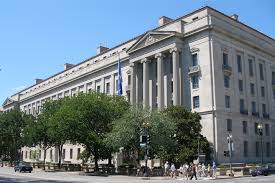
U.S. Department of Justice
Hoping to avoid prison, Hoffa phones Robert Kennedy, offering future Teamsters support if RFK runs for President. To prove he can deliver, he tells Kennedy that the Teamsters have even penetrated the FBI.
[In March, 1964, Kennedy met with Hoffa on an airfield at Dulles International Airport in Washington, D.C. He was accompanied by two Secret Service agents from the detail assigned to ex-First Lady Jacqueline Kennedy.
[FBI Director J. Edgar Hoover, no longer afraid to cross RFK, had withdrawn the agents previously assigned to guard Kennedy.
[Accompanying Hoffa were two muscular bodyguards–at least one of whom was packing two pistols in shoulder holsters.
[While the Secret Service agents watched from a respectful distance, Kennedy spoke quietly with Hoffa. The Attorney General showed a document to Hoffa, and the Teamsters leader at times nodded or shook his head.
[The agents drove Kennedy back to Washington. During the ride, he said nothing about the reason for the meeting.
[David Talbot, in his book, Brothers: The Hidden History of the Kennedy Years, speculates that it could have been to discuss Hoffa’s conviction for jury tampering.
[But Gus Russo–author of Live By the Sword: The Secret War Against Castro and the Death of JFK–writes that the reason might have been Dallas.
[Perhaps, he speculates, RFK had wanted to look into Hoffa’s eyes while asking him: Did you have anything to do with the assassination? RFK had, in fact, done this with CIA Director John McCone almost immediately after his brother’s death.]
In Blood Feud, Kennedy confronts J. Edgar Hoover (Ernest Borgnine) and accuses him of illegally planting wiretaps in Mob hangouts all over the country.
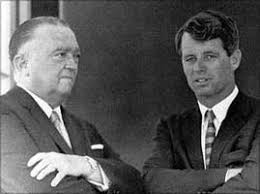
J. Edgar Hoover and Robert F. Kennedy
Hoover retorts that this had been the only way to obtain the prosecution-worthy intelligence Kennedy had demanded: “You loved that flow of information. You didn’t want it to stop.”
Kennedy: Why did you keep the FBI out of the fight against the Mob for decades?
Hoover: “Every agency that came to grips with them got corrupted by their money.”
[So far as is known, Hoover never made any such confession. Historians continue to guess his reason for leaving the Mob alone for decades.]
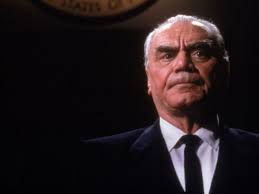

Ernest Borgnine as J. Edgar Hoover
RFK then mentions the CIA’s plots to employ the Mob to assassinate Cuban dictator Fidel Castro
[The agency had wanted to please President Kennedy, and the Mafia had wanted to regain its casinos lost to the Cuban Revolution. The role the Kennedy brothers played in the CIA’s assassination plots remains murky, and has been the subject of endless speculation.]
“The CIA, doing business with the Mob,” says Kennedy. “The FBI, leaking information to its enemies [the Teamsters].” Then, sadly: “I guess it’s true–everyone does business with everyone.”
[So far as is known, the FBI did not pass on secrets to the Teamsters. But during the 1970s, the Mafia penetrated the Cleveland FBI office through bribes to a secretary. Several FBI Mob informants were “clipped” as a result.]
In 1967, Hoffa goes to prison. He stays there until, in 1971, President Richard Nixon commutes his sentence in hopes of gaining Teamsters’ support for his 1972 re-election.
Kennedy leaves the Justice Department in 1964 and is elected U.S. Senator from New York. In 1968 he runs for President. On June 5, after winning the California primary, he’s assassinated.
In Blood Feud, just before his assassination, RFK asks: “How will I ever really know if the Mob killed Jack because of my anti-Mob crusade?”
Hoffa schemes to return to the presidency of the Teamsters–a post now held by his successor, Frank Fitzsimmons. He runs the union in a more relaxed style than Hoffa, thus giving the Mob greater control over its pension fund.
And the Mafia likes it that way.
On July 30, 1975, Hoffa disappears from the parking lot of the Machus Red Fox Restaurant near Detroit. He had gone there to meet with two Mafia leaders.
Almost 41 years after the death of James R. Hoffa, and almost 48 years after that of Robert F. Kennedy:
- Labor unions are a shadow of their former power.
- The threat they once represented to national prosperity has been replaced by that of predatory corporations like Enron and AIG.
- The war RFK began on the Mafia has continued, sending countless mobsters to prison.
- Millions of Americans who once expected the Federal Government to protect them from crime now believe the Government is their biggest threat.
- The idealism that fueled RFK’s life has virtually disappeared from politics.
2016 PRESIDENTIAL RACE, ABC NEWS, ABCNEWS, ALTERNET, AMERICABLOG, AP, BABY BOOMER RESISTANCE, BBC, BERNIE SANDERS, BLOOD FEUD, BLOOMBERG NEWS, BROTHERS: THE HIDDEN HISTORY OF THE KENNEDY YEARS, BUZZFEED, CARLOS MARCELLO, CBS NEWS, CIA, CNN, COTTER SMITH, CROOKS AND LIARS, CUBA, DAILY KOS, DAVID TALBOT, DONALD TRUMP, ERNEST BORGNINE, FBI, FIDEL CASTRO, FIVETHIRTYEIGHT, GUS RUSSO, HARPER’S MAGAZINE, HILLARY CLINTON, HUFFINGTON POST, INTERNATIONAL BROTHERHOOD OF TEAMSTERS, J. EDGAR HOOVER, JAMES R. HOFFA, JOHN F. KENNEDY, JUSTICE DEPARTMENT, LIVE BY THE SWORD: THE SECRET WAR AGAINST CASTRO AND THE DEATH OF JFK, MAFIA, MEDIA MATTERS, MOTHER JONES, MOVEON, MSNBC, NBC NEWS, NEW REPUBLIC, NEWSDAY, NEWSWEEK, NPR, PBS NEWSHOUR, POLITICO, POLITICUSUSA, RAFAEL EDWARD CRUZ, RAW STORY, REUTERS, ROBERT BLAKE, ROBERT F. KENNEDY, SALON, SAM GROOM, SEATTLE TIMES, Secret Service, SENATE LABOR RACKETS COMMITTEE, SLATE, TALKING POINTS MEMO, THE ATLANTIC, THE CHICAGO SUN-TIMES, THE CHICAGO TRIBUNE, THE DAILY BEAST, THE DAILY BLOG, THE GUARDIAN, THE HILL, THE HUFFINGTON POST, THE INTERCEPT, THE LOS ANGELES TIMES, THE NATION, THE NEW REPUBLIC, THE NEW YORK TIMES, THE NEW YORKER, THE VILLAGE VOICE, THE WALL STREET JOURNAL, THE WASHINGTON POST, THINKPROGRESS, TIME, TRUTHDIG, TRUTHOUT, TWITTER, U.S. NEWS & WORLD REPORT, UPI
In Bureaucracy, History, Law, Law Enforcement, Politics, Social commentary on April 22, 2016 at 12:10 am
The 1983 TV mini-series, Blood Feud, chronicles the decade-long struggle between Robert F. Kennedy and James R. Hoffa.
Having “helped” Kennedy (Cotter Smith) to oust corrupt Teamsters President Dave Beck, Hoffa (Robert Blake) believes that Kennedy should now be satisfied: “He’s got his scalp. Now he can move on to other things while I run the union.”
But Hoffa has guessed wrong–with fatal results. Realizing that he’s been “played” by Hoffa, a furious Kennedy strikes back.
He orders increased surveillance of Hoffa and his topmost associates. He subpoenas union records and members of both the Teamsters and the Mafia to appear before his committee in public hearings.
And he tries to enlist the aid of legendary FBI Director J. Edgar Hoover (Ernest Borgnine). But Hoover wants no part of a war against organized crime, whose existence he refuses to admit.

Meanwhile, Kennedy’s confrontations with Hoffa grow increasingly fierce. In open hearings, Kennedy accuses Hoffa of receiving kickbacks in the name of his wife. Hoffa damns him for “dirtying my wife’s name.”
Kennedy secures an indictment against Hoffa for hiring a spy to infiltrate the Senate Labor Rackets Committee. He’s so certain of a conviction that he tells the press he’ll “jump off the Capitol building” if Hoffa beats the rap.
But Hoffa’s lawyer, Edward Bennett Williams (Jose Ferrer) puts Kennedy himself on the witness stand. There he portrays Kennedy as a spoiled rich man who’s waging a vendetta against Hoffa.
Hoffa beats the rap, and offers to send Kennedy a parachute. But he jokingly warns reporters: “Hey, Bobby, you better have it checked. I don’t trust myself!”
By 1959, Robert Kennedy’s work as chief counsel for the Senate Labor Rackets Committee is over. But not his determination to send Teamsters President James Hoffa to prison.
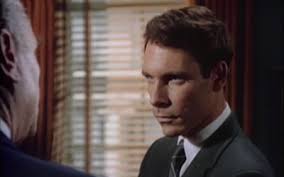
Cotter Smith as Robert Kennedy
Throughout 1960, he manages the Presidential campaign for his brother, John F. Kennedy (Sam Groom). By a margin of only 100,000 votes, JFK wins the election.
Hoffa thinks that his troubles are over, that “Bobby” will move on to other pursuits and forget about the Teamsters.
Hoffa is partly right: Kennedy moves on to another job. But it’s the office of United States Attorney General.
JFK, needing someone in the Cabinet he can trust completely, browbeats Robert into becoming the the nation’s top cop.
For Hoffa, it’s a nightmare come true.
As Attorney General, Kennedy no longer has to beg J. Edgar Hoover to attack organized crime. He can–and does–order him to do so.
Throughout the country, the Mafia feels a new heat as FBI agents plant illegal electronic microphones (“bugs”) in their innermost sanctums. Agents openly tail mobsters–and send them to prison in large numbers.
And Kennedy sets up a special unit, composed of topflight prosecutors and investigators, to go after just one man: James Riddle Hoffa. The press comes to call it the “Get Hoffa” squad.
Hoffa continues to beat federal prosecutors in court. But he believes he’s under constant surveillance by the FBI, and his nerves are starting to crack.
Convinced that the FBI has bugged his office, he literally tears apart the room, hoping to find the bug. But he fails to do so.
What he doesn’t know is he’s facing a more personal danger–from one of his closest associates.
He tells a trusted colleague, Edward Grady Partin (Brian Dennehy) how easy it would be to assassinate Kennedy with a rifle or bomb.
Later, Partin gets into a legal jam–and is abandoned by the Teamsters. Hoping to cut a deal, he relays word to the Justice Department of Hoffa’s threats against the Attorney General.
Now working for the Justice Department, Partin sends in reports on Hoffa’s juror-bribing efforts in yet another trial. Hoffa again beats the rap–but now Kennedy has the insider’s proof he needs to put him away for years.
Meanwhile, the Mafia despairs of the increasing pressure of the Justice Department. At a swanky restaurant, several high-ranking members agree that “something” must be done.
[Although this scene is fictional, it’s clearly based on an infamous outburst of Carlos Marcello, the longtime Mafia boss of New Orleans.
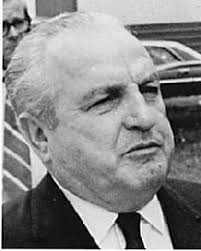
Carlos Marcello
[In 1961, Marcello was deported to his native Guatemala on orders by RFK. After illegally re-entering the country, he swore vengeance against the Attorney General.
[In September, 1962, during a meeting with several mob colleagues, he flew into a rage when someone mentioned Kennedy.
“Take the stone out of my shoe!” he shouted, echoing a Sicilian curse. “Don’t you worry about that little Bobby sonofabitch. He’s going to be taken care of!”
[When one of his colleagues warned that murdering RFK would trigger the wrath of his brother, President John F.Kennedy, Marcello replied: “In Sicily they say if you want to kill a dog you don’t cut off the tail. You go for the head.”
[Marcello believed that the death of President Kennedy would render the Attorney General powerless. And he added that he planned to use a “nut” to do the job.]
On November 22, 1963, President John F. Kennedy is assassinated in Dallas, Texas.
Blood Feud clearly implies that the Mafia was responsible.
2016 PRESIDENTIAL RACE, ABC NEWS, ALTERNET, AMERICABLOG, AP, BABY BOOMER RESISTANCE, BBC, BERNIE SANDERS, BLOOD FEUD, BLOOMBERG NEWS, BROTHERS: THE HIDDEN HISTORY OF THE KENNEDY YEARS, BUZZFEED, CARLOS MARCELLO, CBS NEWS, CIA, CNN, COTTER SMITH, CROOKS AND LIARS, CUBA, DAILY KOS, DAVID TALBOT, DONALD TRUMP, ERNEST BORGNINE, FBI, FIDEL CASTRO, FIVETHIRTYEIGHT, GUS RUSSO, HARPER’S MAGAZINE, HILLARY CLINTON, HUFFINGTON POST, INTERNATIONAL BROTHERHOOD OF TEAMSTERS, J. EDGAR HOOVER, JAMES R. HOFFA, JOHN F. KENNEDY, JUSTICE DEPARTMENT, LIVE BY THE SWORD: THE SECRET WAR AGAINST CASTRO AND THE DEATH OF JFK, MAFIA, MEDIA MATTERS, MOTHER JONES, MOVEON, MSNBC, NBC NEWS, NEW REPUBLIC, NEWSDAY, NEWSWEEK, NPR, PBS NEWSHOUR, POLITICO, POLITICUSUSA, RAFAEL EDWARD CRUZ, RAW STORY, REUTERS, ROBERT BLAKE, ROBERT F. KENNEDY, SALON, SAM GROOM, SEATTLE TIMES, Secret Service, SENATE LABOR RACKETS COMMITTEE, SLATE, TALKING POINTS MEMO, THE ATLANTIC, THE CHICAGO SUN-TIMES, THE CHICAGO TRIBUNE, THE DAILY BEAST, THE DAILY BLOG, THE GUARDIAN, THE HILL, THE HUFFINGTON POST, THE INTERCEPT, THE LOS ANGELES TIMES, THE NATION, THE NEW REPUBLIC, THE NEW YORK TIMES, THE NEW YORKER, THE VILLAGE VOICE, THE WALL STREET JOURNAL, THE WASHINGTON POST, THINKPROGRESS, TIME, TRUTHDIG, TRUTHOUT, TWITTER, U.S. NEWS & WORLD REPORT, UPI
In Bureaucracy, History, Law, Law Enforcement, Politics, Social commentary on April 21, 2016 at 12:37 pm
Today, America has four major candidates running for President: Donald Trump, Rafael Edward Cruz, Hillary Clinton and Bernie Sanders.
Trump is a billionaire businessman; Cruz is a U.S. Senator from Texas; Clinton is a former First Lady, U.S. Senator and Secretary of State; and Sanders is a U.S. Senator from Vermont.
Despite the great differences in their backgrounds, they all share one thing in common: Extremely high negatives among voters.
But 48 years ago, Senator Robert Francis Kennedy aroused passions of an altogether different sort.
Kennedy had been a United States Attorney General (1961-1964) and Senator (1964-1968). But it was his connection to his beloved and assassinated brother, President John F. Kennedy, for which he was best known.

Robert F. Kennedy campaigning for President
Millions saw RFK as the only candidate who could make life better for America’s impoverished–while standing firmly against those who threatened the Nation’s safety.
As television correspondent Charles Quinn observed: “I talked to a girl in Hawaii who was for [George] Wallace [the segregationist governor of Alabama]. And I said ‘Really?’ [She said] ‘Yeah, but my real candidate is dead.’
“You know what I think it was? All these whites, all these blue collar people who supported Kennedy…all of these people felt that Kennedy would really do what he thought best for the black people, but, at the same time, would not tolerate lawlessness and violence.
“They were willing to gamble…because they knew in their hearts that the country was not right. They were willing to gamble on this man who would try to keep things within reasonable order; and at the same time do some of the things they knew really should be done.”
Campaigning for the Presidency in 1968, RFK had just won the crucial California primary on June 4–when he was shot in the back of the head. His killer: Sirhan Sirhan, a young Palestinian furious at Kennedy’s support for Israel.
On June 8, 1,200 men and women boarded a specially-reserved passenger train at New York’s Pennsylvania Station. They were accompanying Kennedy’s body to its final resting place at Arlington National Cemetery.
As the train slowly moved along 225 miles of track, throngs of men, women and children lined the rails to pay their final respects to a man they considered a genuine hero.
Little Leaguers clutched their baseball caps across their chests. Uniformed firemen and policemen saluted. Burly men in shirtsleeves held hardhats over their hearts. Black men in overalls waved small American flags. Women from all levels of society stood and cried.

A nation says goodbye to Robert Kennedy
Commenting on RFK’s legacy, historian William L. O’Neil wrote in Coming Apart: An Informal History of America in the 1960′s:
“…He aimed so high that he must be judged for what he meant to do, and, through error and tragic accident, failed at….He will also be remembered as an extraordinary human being who, though hated by some, was perhaps more deeply loved by his countrymen than any man of his time.
“That too must be entered into the final account, and it is no small thing. With his death something precious disappeared from public life.”
Eleven years earlier, as a young, idealistic attorney, Kennedy had declared war on James Riddle Hoffa, the president of the Mafia-dominated International Brotherhood of Teamsters Union.
As chief counsel for the Senate Labor Rackets Committee, Kennedy was appalled at the corruption he discovered among high-ranking Teamster officials. As he saw it, under Hoffa’s leadership, the union was nothing less than “a conspiracy of evil.”
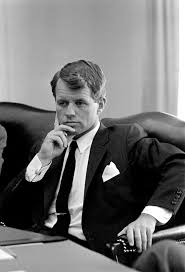
Robert Francis Kennedy as Chief Counsel, Senate Labor Rackets Committee
Hoffa, in turn, held an equally unflattering view of Kennedy. “A rich punk,” said Hoffa, who didn’t know or care about “the average workingman.”
In 1983, Blood Feud, a two-part TV mini-series, depicted the 11-year animosity between Kennedy and Hoffa. Although it took some dramatic liberties, its portrayal of the major events of that period remains essentially accurate.
Today, labor unions are a rapidly-vanishing species, commanding far less political influence than they did 50 years ago. As a result, young viewers of this series may find it hard to believe that labor ever held such sway, or that the Teamsters posed such a threat.
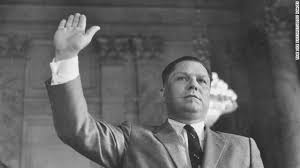
James Riddle Hoffa testifying before the Senate Labor Rackets Committee
And in an age when millions see “Big Government” as the enemy, they may feel strong reservations about the all-out war that Robert F. Kennedy waged against Hoffa.
Blood Feud opens in 1957, when Hoffa (Robert Blake) is a rising figure within the Teamsters. Kennedy (Cotter Smith) is chief counsel for the Senate Labor Rackets Committee.
At first, Hoffa tries to ingratiate himself with Kennedy, telling him: “I know everybody who can help me and anybody who can hurt me.”
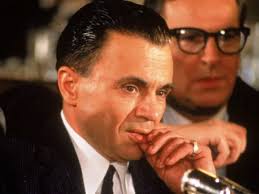
Robert Blake as James R. Hoffa
A wily Hoffa decides to parley Kennedy’s anti-corruption zeal into a path to power for himself. Via his attorney, Eddie Cheyfitz, he feeds Kennedy incriminating evidence against Dave Beck, president of the Teamsters.
Confronted with a Senate subpoena, Beck flees the country–paving the way for Hoffa to assume the top position in the union. Hoffa believes he has solved two problems at once.
ABC NEWS, AIG, BLOOD FEUD, CARLOS MARCELLO, CBS NEWS, CNN, COTTER SMITH, CUBA, ENRON, ERNEST BORGNINE, FACEBOOK, FBI, FIDEL CASTRO, INTERNATIONAL BROTHERHOOD OF TEAMSTERS, J. EDGAR HOOVER, JAMES R. HOFFA, JOHN F. KENNEDY, JUSTICE DEPARTMENT, LABOR UNIONS, MAFIA, NBC NEWS, ROBERT BLAKE, ROBERT F. KENNEDY, SAM GROOM, SENATE LABOR RACKETS COMMITEE, THE CHICAGO SUN-TIMES, THE CHICAGO TRIBUNE, THE LOS ANGELES TIMES, THE NEW YORK TIMES, THE WALL STREET JOURNAL, THE WASHINGTON POST, TWITTER, USA TODAY
In Bureaucracy, History, Law Enforcement, Politics, Social commentary on June 9, 2015 at 12:02 am
The 1983 TV mini-series, “Blood Feud,” chronicles the decade-long struggle between Robert F. Kennedy and James R. Hoffa.
As Attorney General, Kennedy declares war–for the first time in American history–on the Mafia. He forces longtime FBI Director J. Edgar Hoover–who has long refused to tackle the Mob–to investigate and arrest mobsters throughout the nation.
He also brings new charges against Hoffa–and, once again, is outraged to see Hoffa acquitted.
But under the unrelenting pressures of being in the crosshairs of the FBI, Hoffa begins to crack. He tells a trusted colleague, Edward Grady Partin (Brian Dennehy) how easy it would be to assassinate Kennedy with a rifle or a bomb.
Later, Partin gets into a legal jam–and is abandoned by the Teamsters. Hoping to cut a deal, he relays word to the Justice Department of Hoffa’s threats against the Attorney General.
Now working for the Justice Department, Partin sends in reports on Hoffa’s juror-bribing efforts in yet another trial. Hoffa again beats the rap–but now Kennedy has the insider’s proof he needs to put him away for years.
Meanwhile, the Mafia despairs of the increasing pressure of the Justice Department. At a swanky restaurant, several high-ranking members agree that “something” must be done.
[Although this scene is fictional, it’s clearly based on an infamous outburst of Carlos Marcello, the longtime Mafia boss of New Orleans.
Carlos Marcello
In 1962, Marcello–who had been deported to Guatemala by RFK, then illegally re-entered the country–flew into a rage when a business colleague mentioned Kennedy.
“Take the stone out of my shoe!” he shouted, echoing a Sicilian curse. “Don’t you worry about that little Bobby sonofabitch. He’s going to be taken care of!”
When his colleague warned that murdering RFK would trigger the wrath of his brother, President John F.Kennedy, Marcello replied: “In Sicily they say if you want to kill a dog you don’t cut off the tail. You go for the head.”
Marcello considered President Kennedy to be the head. And he added that he planned to use a “nut” to do the job.]
On November 22, 1963, President John F. Kennedy is assassinated in Dallas. “Blood Feud” clearly implies that the Mafia was responsible.
[The House Assassinations Committee investigated this possibility in 1978, and determined that Marcello had the means, motiva and opportunity to kill JFK. But it could not find any conclusive evidence of his involvement.]
Even with the President dead, RFK’s Justice Department continues to pursue Hoffa. In 1964, he is finally convicted of jury tampering and sentenced to 13 years’ imprisonment.
Hoping to avoid prison, Hoffa phones Robert Kennedy, offering future Teamsters support if RFK runs for President. To prove he can deliver, he tells Kennedy that the Teamsters have even penetrated the FBI.
Kennedy confronts J. Edgar Hoover, accusing him of illegally planting wiretaps in Mob hangouts all over the country.
J. Edgar Hoover and Robert F. Kennedy
Hoover retorts that this had been the only way to obtain the prosecution-worthy intelligence Kennedy had demanded: “You loved that flow of information. You didn’t want it to stop.”
Kennedy: Why did you keep the FBI out of the fight against the Mob for decades?
Hoover: “Every agency that came to grips with them got corrupted by their money.”
[So far as is known, Hoover never made any such confession. Historians continue to guess his reason for leaving the Mob alone for decades.]
RFK then mentions the CIA’s plots to employ the Mob to assassinate Cuban dictator Fidel Castro
[The agency had wanted to please President Kennedy, and the Mafia had wanted to regain its casinos lost to the Cuban Revolution.]
“The CIA, doing business with the Mob,” says Kennedy. “The FBI, leaking information to its enemies [the Teamsters].” Then, sadly: “I guess it’s true–everyone does business with everyone.”
[So far as is known, the FBI did not pass on secrets to the Teamsters. But during the 1970s, the Mafia penetrated the Cleveland FBI office through bribes to a secretary. Several FBI Mob informants were “clipped” as a result.]
In 1967, Hoffa goes to prison. He stays there until, in 1971, President Richard Nixon commutes his sentence in hopes of gaining Teamsters support for his 1972 re-election.
Kennedy leaves the Justice Department in 1964 and is elected U.S. Senator from New York. In 1968 he runs for President. On June 5, after winning the California primary, he’s assassinated.
Hoffa schemes to return to the presidency of the Teamsters–a post now held by his successor, Frank Fitzsimmons. He runs the union in a more relaxed style than Hoffa, thus giving the Mob greater control over its pension fund.
And the Mafia likes it that way.
On July 30, 1975, Hoffa disappears from the parking lot of the Machus Red Fox Restaurant near Detroit. He had gone there to meet with two Mafia leaders.
Forty years later:
- Labor unions are a shadow of their former power.
- The threat they once represented to national prosperity has been replaced by that of predatory corporations like Enron and AIG.
- The war RFK began on the Mafia has continued, sending countless mobsters to prison.
- Millions of Americans who once expected the Federal Government to protect them from crime now believe the Government is their biggest threat.
- The idealism that fueled RFK’s life has virtually disappeared from politics.
ABC NEWS, AIG, BLOOD FEUD, CARLOS MARCELLO, CBS NEWS, CNN, COTTER SMITH, CUBA, ENRON, ERNEST BORGNINE, FACEBOOK, FBI, FIDEL CASTRO, INTERNATIONAL BROTHERHOOD OF TEAMSTERS, J. EDGAR HOOVER, JAMES R. HOFFA, JOHN F. KENNEDY, JUSTICE DEPARTMENT, LABOR UNIONS, MAFIA, NBC NEWS, ROBERT BLAKE, ROBERT F. KENNEDY, SAM GROOM, SENATE LABOR RACKETS COMMITEE, THE CHICAGO SUN-TIMES, THE CHICAGO TRIBUNE, THE LOS ANGELES TIMES, THE NEW YORK TIMES, THE WALL STREET JOURNAL, THE WASHINGTON POST, TWITTER, USA TODAY
In Bureaucracy, History, Law Enforcement, Politics, Social commentary on June 8, 2015 at 12:01 am
Forty-seven years ago today, Senator Robert Francis Kennedy was laid to rest in Arlington Cemetary, only feet away from the grave of his elder brother–President John Fitzgerald Kennedy.
Campaigning for the Presidency in 1968, he had just won the crucial California primary on June 4–when he was shot in the back of the head. His killer: Sirhan Sirhan, a young Palestinian furious at Kennedy’s support for Israel.
Eleven years earlier, as a young, idealistic attorney, Kennedy had declared war on James Riddle Hoffa, the president of the Mafia-dominated International Brotherhood of Teamsters Union.
As chief counsel for the Senate Labor Rackets Committee, Kennedy was appalled at the corruption he discovered among high-ranking Teamster officials. As he saw it, under Hoffa’s leadership, the union was nothing less than “a conspiracy of evil.”
Robert F. Kennedy as Chief Counsel, Senate Labor Rackets Committee
Hoffa, in turn, held an equally unflattering view of Kennedy. “A rich punk,” said Hoffa, who didn’t know or care about “the average workingman.”
In 1983, Blood Feud, a two-part TV mini-series, depicted the 11-year animosity between Kennedy and Hoffa. Although it took some dramatic liberties, its portrayal of the major events of that period remains essentially accurate.
Today, labor unions are a rapidly-vanishing species, commanding far less political influence than they did 50 years ago. As a result, young viewers of this series may find it hard to believe that labor ever held such sway, or that the Teamsters posed such a threat.
James Riddle Hoffa testifying before the Senate Labor Rackets Committee
And in an age when millions see “Big Government” as the enemy by millions, they may feel strong reservations about the all-out war that Robert F. Kennedy waged against Hoffa.
The series opens in 1957, when Hoffa (Robert Blake) is a rising figure within the Teamsters. Kennedy (Cotter Smith) is chief counsel for the Senate Labor Rackets Committee.
At first, Hoffa tries to ingratiate himself with Kennedy, telling him: “I know everybody who can help me and anybody who can hurt me.”
A wily Hoffa decides to parley Kennedy’s anti-corruption zeal into a path to power for himself. Via his attorney, Eddie Cheyfitz, he feeds Kennedy incriminating evidence against Dave Beck, president of the Teamsters.
Robert Blake as James Hoffa
Confronted with a Senate subpoena, Beck flees the country–paving the way for Hoffa to assume the top position in the union. Hoffa believes he has solved two problems at once.
With the ousting of Beck, Kennedy should now be satisfied: “He’s got his scalp. Now he can move on to other things while I run the union.”
But Hoffa has guessed wrong–with fatal results. Realizing that he’s been “played” by Hoffa, a furious Kennedy strikes back.
Cotter Smith as Robert Kennedy
He orders increased surveillance of Hoffa and his topmost associates. He subpoenas union records and members of both the Teamsters and Mafia to appear before his committee in public hearings.
And he tries to enlist the aid of legendary FBI Director J. Edgar Hoover (Ernest Borgnine). But Hoover wants no part of a war against organized crime, whose existence he refuses to admit.
Meanwhile, Kennedy’s confrontations with Hoffa grow increasingly fierce. In open hearings, Kennedy accuses Hoffa of receiving kickbacks in the name of his wife. Hoffa damns him for “dirtying my wife’s name.”
Kennedy secures an indictment against Hoffa for hiring a spy to infiltrate the Senate Labor Rackets Committee. He’s so certain of a conviction that he tells the press he’ll “jump off the Capitol building” if Hoffa beats the rap.
But Hoffa’s lawyer, Edward Bennett Williams (Jose Ferrer) puts Kennedy himself on the witness stand. There he portrays Kennedy as a spoiled rich man who’s waging a vendetta against Hoffa.
Hoffa beats the rap, and offers to send Kennedy a parachute. But he jokingly warns reporters: “Hey, Bobby, you better have it checked. I don’t trust myself!”
By 1959, Kennedy’s work as chief counsel for the Senate Labor Rackets Committee is over. But not his determination to send Hoffa to prison.
Throughout 1960, he manages the Presidential campaign for his brother, John F. Kennedy (Sam Groom). By a margin of only 100,000 votes, John wins the election.
Hoffa thinks that his troubles are over, that “Bobby” will move on to other pursuits and forget about the Teamsters.
Kennedy moves on to another job–the office of United States Attorney General. For Hoffa, it’s a nightmare come true.
JFK, needing someone in the Cabinet he can trust completely, browbeats Robert into becoming the the nation’s top cop.
As Attorney General, Kennedy must no longer beg J. Edgar Hoover to attack organized crime. He can–and does–order him to do so.
Throughout the country, the Mafia feels a new heat as FBI agents plant illegal electronic microphones (“bugs”) in their innermost sanctums. Agents openly tail mobsters–and send them to prison in large numbers.
And Kennedy sets up a special unit, composed of topflight prosecutors and investigators, to go after just one man: James Riddle Hoffa. The press comes to call it the “Get Hoffa” squad.
Hoffa continues to beat federal prosecutors in court. But he believes he’s under constant surveillance by the FBI, and his nerves are starting to give way.
Convinced that the FBI has bugged his office, he literally tears apart the room, hoping to find the bug. But he fails to do so.
What he doesn’t know is he’s facing a more personal danger–from one of his closest associates.
2012 PRESIDENTIAL RACE, ABC NEWS, BARACK OBAMA, BAY OF PIGS, CARLOS MARCELLO, CBS NEWS, CIA, CNN, COLD WAR, COMMUNISM, CUBA, FACEBOOK, FBI, FIDEL CASTRO, FLORIDA, JOHN F. KENNEDY, JOHN ROSELLI, MAFIA, MITT ROMNEY, NBC NEWS, NEWT GINGRICH, RICK SANTORUM, ROBERT F. KENNEDY, ROBERT MCNAMARA, RON PAUL, SAM GIANCANA, THE LOS ANGELES TIMES, THE NEW YORK TIMES, THE WASHINGTON POST, TWITTER
In Bureaucracy, History, Military, Politics, Social commentary on April 16, 2015 at 12:05 am
On April 17, 1961, the U.S. Navy landed 1,700 CIA-trained Cuban exiles ashore at Cuba’s Bay of Pigs.
President John F. Kennedy–wanting to disguise the role of the United States in the invasion–refused to commit U.S. Marines and Air Force bombers to the attack.
Long forewarned of the coming invasion, Fidel Castro sent in his forces to decimate the invaders.
Kennedy took responsibility for the failure. But privately he blamed Castro for refusing to be overthrown.
As a result, Kennedy and his brother, Robert–then Attorney General–created their own covert operation to depose Castro.
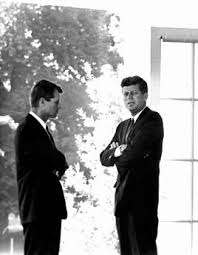
Robert and John F. Kennedy
Known as the Special Group, and overseen by Robert Kennedy, it launched a secret war against the Castro regime, code-named Operation Mongoose.
“We were hysterical about Castro at about the time of the Bay of Pigs and thereafter,” Secretary of Defense Robert S. McNamara later testified before Congress about these efforts. “And there was pressure from JFK and RFK to do something about Castro.”
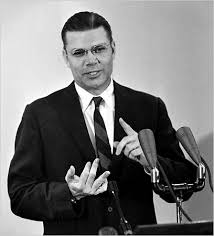
Robert S. McNamara
Nor was everyone in the CIA enthusiastic about the “get Castro” effort.
“Everyone at CIA was surprised at Kennedy’s obsession with Fidel,” recalled Sam Halpern, who was assigned to the Cuba Project. “They thought it was a waste of time. We all knew [Castro] couldn’t hurt us. Most of us at CIA initially liked Kennedy, but why go after this little guy?
“One thing is for sure: Kennedy wasn’t doing it out of national security concerns. It was a personal thing. The Kennedy family felt personally burnt by the Bay of Pigs and sought revenge.”
It was all-out war. Among the tactics used:
- Hiring Cuban gangsters to murder Cuban police officials and Soviet technicians.
- Sabotaging mines.
- Paying up to $100,000 per “hit” for the murder or kidnapping of Cuban officials.
- Using biological and chemical warfare against the Cuban sugar industry.
“Bobby (Kennedy) wanted boom and bang all over the island,” recalled Halpern. “It was stupid. The pressure from the White House was very great.”
Among that “boom and bang” were a series of assassination plots against Castro, in which the Mafia was to be a key player.
Chicago Mobster Johnny Rosselli proposed a simple plan: through its underworld connections in Cuba, the Mafia would recruit a Cuban in Castro’s entourage, such as a waiter or bodyguard, who would poison him.
The CIA’s Technical Services division produced a botulinus toxin which was then injected into Castro’s favorite brand of cigars. The CIA also produced simpler botulinus toxin pills that could be dissolved in his food or drink.
But the deputized Mafia contacts failed to deliver any of the poisons to Castro.
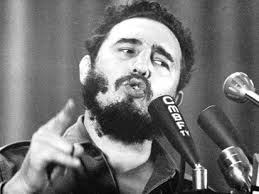
Fidel Castro
As Rosselli explained to the CIA, the first poisoner had been discharged from Castro’s employ before he could kill him, while a back-up agent got “cold feet.”
Other proposals or attempts included:
- Planting colorful seashells rigged to explode at a site where Castro liked to go skindiving.
- Trying to arrange for his being presented with a wetsuit impregnated with noxious bacteria and mould spores, or with lethal chemical agents.
- Attempting to infect Castro’s scuba regulator with tuberculous bacilli.
- Trying to douse his handkerchiefs, tea and coffee with other lethal bacteria.
Americans would rightly label such methods as “terrorist” if another power used them against the United States today. And the Cuban government saw the situation exactly the same way.
So Castro appealed to Nikita Khrushchev, leader of the Soviet Union, for assistance.
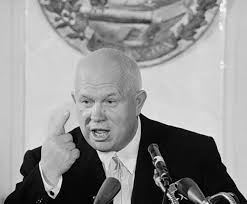
Nikita Khrushchev
Khrushchev was quick to comply: “We must not allow the communist infant to be strangled in its crib,” he told members of his inncer circle.
By October, 1962, the Soviet Union had sent more than 40,000 soldiers, 1,300 field pieces, 700 anti-airctaft guns, 350 tanks and 150 jets to Cuba to deter another invasion.
Khrushchev also began supplying Castro with nuclear-tipped ballistic missiles–whose discovery, on October 15, 1962, ignited the single most dangerous confrontation of the Cold War.
Suddenly, the two most powerful nuclear countries–the United States and the Soviet Union–found themselves on the brink of nuclear war.
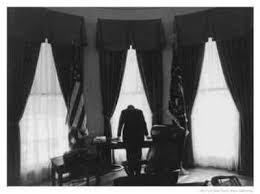
John F. Kennedy in the Oval Office
At the time, Kennedy officials claimed they couldn’t understand why Khrushchev had placed nuclear missiles in Cuba. “Maybe Khrushchev’s gone mad” was a typical musing.
None of these officials admitted that JFK had been waging a no-holds-barred campaign to overthrow the Cuban government and assassinate its leader.
The crisis ended when, after 13 harrowing days, Khrushchev agreed to remove the missiles from Cuba. Behind its resolution lay a promise by the Kennedy administration to not invade Cuba.
But President Kennedy was not finished with Castro. While continuing the campaign of sabotage throughout Cuba, the Kennedys were preparing something far bigger: A fullscale American invasion of the island.
On October 4, 1963, the Joint Chiefs of Staff submitted its latest version of the invasion plan, known as OPLAN 380-63. Its timetable went:
- January, 1964: Infiltration into Cuba by Cuban exiles.
- July 15, 1964: U.S. conventional forces join the fray.
- August 3, 1964: All-out U.S. air strikes on Cuba.
- October 1, 1964: Full-scale invasion to install “a government friendly to the U.S.”
But then fate–in the otherwise unimpressive form of Lee Harvey Oswald–suddenly intervened.
2012 PRESIDENTIAL RACE, ABC NEWS, BARACK OBAMA, BAY OF PIGS, CARLOS MARCELLO, CBS NEWS, CIA, CNN, COLD WAR, COMMUNISM, CUBA, FACEBOOK, FBI, FIDEL CASTRO, FLORIDA, JOHN F. KENNEDY, JOHN ROSELLI, MAFIA, MITT ROMNEY, NBC NEWS, NEWT GINGRICH, RICK SANTORUM, ROBERT F. KENNEDY, ROBERT MCNAMARA, RON PAUL, SAM GIANCANA, THE LOS ANGELES TIMES, THE NEW YORK TIMES, THE WASHINGTON POST, TWITTER
In Bureaucracy, History, Military, Politics, Social commentary on April 15, 2015 at 12:10 am
On January 23, 2012, Newt Gingrich, Rick Santorum, Mitt Romney and Ron Paul–all seeking the Republican nomination for President–attended a candidates’ debate in Tampa, Florida.
Gingrich, Santorum and Romney played to the huge–and influential–Cuban community in Florida, especially in Miami.
All three had carefully avoided military service. But all three “chickenhawks” now wanted to show how eagerly they could send others into harm’s way.
Former House Speaker Gingrich spoke for all three when he said: “The policy of the United States should be aggressively to overthrow the [Castro] regime and to do everything we can to support those Cubans who want freedom.”
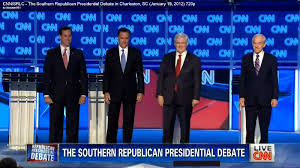
Rick Santorum, Mitt Romney, Newt Gingrich, Ron Paul
Only Texas Congressman Ron Paul–who had served as a flight surgeon in the U.S. Air Force from 1963 to 1968–dared to call for normalization of relations between the United States and Cuba.
But even Paul’s courage ignored a great many ugly historical truths. Among these:

- In October, 1962, Castro stopped regularly scheduled travel between the two countries, and asylum seekers began sailing from Cuba to Florida.
- Between 1962 and 1979, hundreds of thousands of Cubans entered the United States under the Attorney General’s parole authority.
- The overwhelming majority of Cubans who immigrated into the United States settled in Florida, whose political, economic, and cultural life they transformed.
- By 2008, more than 1.24 million Cuban Americans were living in the United States, mostly in South Florida, where the population of Miami was about one-third Cuban.
- Many of these Cubans viewed themselves as political exiles, rather than immigrants, hoping to return to Cuba after its communist regime fell from power.
- The large number of Cubans in South Florida, particularly in Miami’s “Little Havana,” allowed them to preserve their culture and customs to a degree rare for immigrant groups.
- These discontented immigrants became a potential force for politicians to court.
- Unsurprisingly, most of their votes went to Right-wing Republicans.
John F. Kennedy was the first President to face this dilemma.

John F. Kennedy
During the closing months of the administration of President Dwight D. Eisenhower, the CIA had begun training Cuban exiles for an invasion of their former homeland.
The goal: To do what Castro had done–seek refuge in the mountains and launch a successful anti-Castro revolution.
But word of the coming invasion quickly leaked: The exiles were terrible secret-keepers. (A joke at the CIA went: “A Cuban thinks a secret is something you tell to only 300 people.”)
Kennedy insisted the invasion must appear to be an entirely Cuban enterprise. He refused to commit U.S. Marines and Air Force bombers.
The invasion force was quickly overwhelmed at the Bay of Pigs, with hundreds of its men taken prisoner.
Kennedy publicly took the blame for its failure: “Victory has a hundred fathers but defeat is an orphan.” But privately he seethed, and ordered the CIA to redouble its efforts to remove Castro at all costs.
To make certain his order was carried out, he appointed his brother, Robert–then Attorney General–to oversee the CIA’s “Castro removal” program.
It’s here that America’s obsession with Cuba entered its darkest and most disgraceful period.
The CIA and the Mafia entered into an unholy alliance to assassinate Castro–each for its own benefit.
The CIA wanted to please Kennedy. The Mafia wanted to regain its casino and brothel holdings that had made Cuba the playground of the rich in pre-Castro times.
The CIA supplied poisons and explosives to various members of the Mafia. It was then up to the mobsters to assassinate Castro.
The available sources disagree on what actually happened. Some believe that the Mob made a genuine effort to “whack” Fidel.
Others are convinced the mobsters simply ran a scam on the government. They pretended to carry out their “patriotic duty” while in fact making no effort at all to penetrate Castro’s security.
The mobsters hoped to use their pose as patriots to win immunity from future prosecution.
The CIA asked John Roselli, a mobster linked to the Chicago syndicate, to go to Florida in 1961 and 1962 to organize assassination teams of Cuban exiles. They were to infiltrate their homeland and assassinate Castro.

John Roselli
Rosselli called upon two other crime figures: Chicago Mafia boss Sam Giancana and Santos Trafficante, the Costra Nostra chieftain for Cuba, to help him.
Giancana, using the name “Sam Gold” in his dealings with the CIA, was being hounded by the FBI on direct orders of Attorney General Kennedy.

Sam Giancana
ABC NEWS, AIG, BLOOD FEUD, CARLOS MARCELLO, CBS NEWS, CNN, COTTER SMITH, CUBA, ENRON, ERNEST BORGNINE, FACEBOOK, FBI, FIDEL CASTRO, INTERNATIONAL BROTHERHOOD OF TEAMSTERS, J. EDGAR HOOVER, JAMES R. HOFFA, JOHN F. KENNEDY, JUSTICE DEPARTMENT, LABOR UNIONS, MAFIA, NBC NEWS, ROBERT BLAKE, ROBERT F. KENNEDY, SAM GROOM, SENATE LABOR RACKETS COMMITEE, THE CHICAGO SUN-TIMES, THE CHICAGO TRIBUNE, THE LOS ANGELES TIMES, THE NEW YORK TIMES, THE WALL STREET JOURNAL, THE WASHINGTON POST, TWITTER, USA TODAY
In Bureaucracy, History, Politics, Social commentary on December 11, 2014 at 12:01 am
The 1983 TV mini-series, “Blood Feud,” chronicles the decade-long struggle between Robert F. Kennedy and James R. Hoffa.
As Attorney General, Kennedy declares war–for the first time in American history–on the Mafia. He forces longtime FBI Director J. Edgar Hoover–who has long refused to tackle the Mob–to investigate and arrest mobsters throughout the nation.
He also brings new charges against Hoffa–and, once again, is outraged to see Hoffa acquitted.
But under the unrelenting pressures of being in the crosshairs of the FBI, Hoffa begins to crack. He tells a trusted colleague, Edward Grady Partin (Brian Dennehy) how easy it would be to assassinate Kennedy with a rifle or a bomb.
Later, Partin gets into a legal jam–and is abandoned by the Teamsters. Hoping to cut a deal, he relays word to the Justice Department of Hoffa’s threats against the Attorney General.
Now working for the Justice Department, Partin sends in reports on Hoffa’s juror-bribing efforts in yet another trial. Hoffa again beats the rap–but now Kennedy has the insider’s proof he needs to put him away for years.
Meanwhile, the Mafia despairs of the increasing pressure of the Justice Department. At a swanky restaurant, several high-ranking members agree that “something” must be done.
[Although this scene is fictional, it’s clearly based on an infamous outburst of Carlos Marcello, the longtime Mafia boss of New Orleans.
Carlos Marcello
In 1962, Marcello–who had been deported to Guatemala by RFK, then illegally re-entered the country–flew into a rage when a business colleague mentioned Kennedy.
“Take the stone out of my shoe!” he shouted, echoing a Sicilian curse. “Don’t you worry about that little Bobby sonofabitch. He’s going to be taken care of!”
When his colleague warned that murdering RFK would trigger the wrath of his brother, President John F.Kennedy, Marcello replied: “In Sicily they say if you want to kill a dog you don’t cut off the tail. You go for the head.”
Marcello considered President Kennedy to be the head. And he added that he planned to use a “nut” to do the job.]
On November 22, 1963, President John F. Kennedy is assassinated in Dallas. “Blood Feud” clearly implies that the Mafia was responsible.
[The House Assassinations Committee investigated this possibility in 1978, and determined that Marcello had the means, motiva and opportunity to kill JFK. But it could not find any conclusive evidence of his involvement.]
Even with the President dead, RFK’s Justice Department continues to pursue Hoffa. In 1964, he is finally convicted of jury tampering and sentenced to 13 years’ imprisonment.
Hoping to avoid prison, Hoffa phones Robert Kennedy, offering future Teamsters support if RFK runs for President. To prove he can deliver, he tells Kennedy that the Teamsters have even penetrated the FBI.
Kennedy confronts J. Edgar Hoover, accusing him of illegally planting wiretaps in Mob hangouts all over the country.
J. Edgar Hoover and Robert F. Kennedy
Hoover retorts that this had been the only way to obtain the prosecution-worthy intelligence Kennedy had demanded: “You loved that flow of information. You didn’t want it to stop.”
Kennedy: Why did you keep the FBI out of the fight against the Mob for decades?
Hoover: “Every agency that came to grips with them got corrupted by their money.”
[So far as is known, Hoover never made any such confession. Historians continue to guess his reason for leaving the Mob alone for decades.]
RFK then mentions the CIA’s plots to employ the Mob to assassinate Cuban dictator Fidel Castro
[The agency had wanted to please President Kennedy, and the Mafia had wanted to regain its casinos lost to the Cuban Revolution.]
“The CIA, doing business with the Mob,” says Kennedy. “The FBI, leaking information to its enemies [the Teamsters].” Then, sadly: “I guess it’s true–everyone does business with everyone.”
[So far as is known, the FBI did not pass on secrets to the Teamsters. But during the 1970s, the Mafia penetrated the Cleveland FBI office through bribes to a secretary. Several FBI Mob informants were “clipped” as a result.]
In 1967, Hoffa goes to prison. He stays there until, in 1971, President Richard Nixon commutes his sentence in hopes of gaining Teamsters support for his 1972 re-election.
Kennedy leaves the Justice Department in 1964 and is elected U.S. Senator from New York. In 1968 he runs for President. On June 5, after winning the California primary, he’s assassinated.
Hoffa schemes to return to the presidency of the Teamsters–a post now held by his successor, Frank Fitzsimmons. He runs the union in a more relaxed style than Hoffa, thus giving the Mob greater control over its pension fund.
And the Mafia likes it that way.
On July 30, 1975, Hoffa disappears from the parking lot of the Machus Red Fox Restaurant near Detroit. He had gone there to meet with two Mafia leaders.
Forty years later:
- Labor unions are a shadow of their former power.
- The threat they once represented to national prosperity has been replaced by that of predatory corporations like Enron and AIG.
- The war RFK began on the Mafia has continued, sending countless mobsters to prison.
- The idealism that fueled RFK’s life has virtually disappeared from politics.
- Millions of Americans who once expected the Federal Government to protect them from crime now believe the Government is their biggest threat.


-33510-W&docid=hCd9k6PuglvZAM&tbnid=CAo7BRzGtBWa3M%3A&w=500&h=375&bih=469&biw=819&ved=0ahUKEwiissafvJ_MAhUGKWMKHTZZA_MQxiAIAg&iact=c&ictx=1)


&docid=SiluTuHYHtjaZM&tbnid=uLB-PLYDVdkkVM%3A&w=455&h=341&ei=zeN_VI_hKYHjoATGs4Bo&ved=0CAIQxiAwAA&iact=c)
 Bureaucracybuster's Blog
2012 PRESIDENTIAL RACE, ALTERNET, AP, BARACK OBAMA, BAY OF PIGS, BBC, BERLIN WALL, BILL CLINTON, BRUCE GREENWOOD, BUZZFEED, CARLOS MARCELLO, CBS NEWS, CIA, CIVIL RIGHTS, CLIFF ROBERTSON, CNN, CUBAN MISSILE CRISIS, DAILY KOS, DAVID HALBERSTAM, DONALD J. TRUMP, FACEBOOK, FBI, FIDEL CASTRO, FRANK SINATRA, HERMAN CAIN, ICH BEN EIN BERLINNER SPEECH, INTERNET MOVIE DATABASE, J. EDGAR HOOVER, JAMES MARSDEN, JOHN F. KENNEDY, JOSEPH MCCARTHY, JOSEPH P. KENNEDY, LYNDON B. JOHNSON, MAFIA, MALCOM X, MARTIN LUTHER KING, MARTIN SHEEN, MOTHER JONES, MOVEON, MOVIES, NBC NEWS, NEWSWEEK, NEWT GINGRICH, NIKITA KHRUSHCHEV, NPR, NUCLEAR TEST BAN TREATY, POLITICO, PT-109, RAW STORY, REUTERS, RICK PERRY, ROBERT F. KENNEDY, ROBERT S. MCNAMARA, SALON, SAM GIANCANA, SANTOS TRAFFICANTE, Sarah Palin, SATURDAY NIGHT LIVE, SEATTLE TIMES, SLATE, SOVIET UNION, THE ATLANTIC, THE BEST AND THE BRIGHTEST, THE BUTLER, THE CHICAGO SUN-TIMES, THE CHICAGO TRIBUNE, THE DAILY BEAST, THE GUARDIAN, THE HILL, THE HUFFINGTON POST, THE LOS ANGELES TIMES, THE MISSILES OF OCTOBER, THE NEW YORK TIMES, THE RAT PACK, THE WALL STREET JOURNAL, THE WASHINGTON POST, THIRTEEN DAYS, TIME, TWILIGHT ZONE, TWITTER, U.S. NEWS & WORLD REPORT, UPI, USA TODAY, VIETNAM WAR, WILLIAM DEVANE, WILLIAM PETERSON
JFK: ONE HUNDRED YEARS LATER: PART TWO (OF TEN)
In Bureaucracy, Business, History, Law, Law Enforcement, Military, Politics, Social commentary on May 5, 2017 at 12:10 amDuring the 1960 Presidential campaign, then-Senator John F. Kennedy promised to build a Peace Corps to train people in underdeveloped nations to help themselves.
John F. Kennedy
In March, 1961, the program went into effect, with the President’s brother-in-law, Sergent Shriver, as director.
Starvation, illiteracy and disease were the enemies of the Corps. Any nation wanting aid could request it. The first group of volunteers went to the Philippines, the second to Ecuador and the third to Tanganyika.
The problems of the underdeveloped world were too great for any single organization to solve. But the Corps lifted the spirits of many living in those countries. And it captured the imagination of millions of Americans—especially those of thousands of idealistic youths who entered its ranks.
To combat the growing Communist threat to Latin America, Kennedy established the Alliance for Progress. He defined the Alliance’s goal as providing “revolutionary progress through powerful, democratic means.”
Within two years he could report:
“Some 140,000 housing units have been constructed. Slum clearance projects have begun, and 3,000 classrooms have been built. More than 4,000,000 school books have been distributed.
“The Alliance has fired the imagination and kindled the hopes of millions of our good neighbors. Their drive toward modernization is gaining momentum as it unleashes the energies of these millions.
“The United States is becoming increasingly identified in the minds of the people with the goal they move toward: a better life with freedom,” said Kennedy.
Critics of the program, however, charged that the President was trying to “dress up the old policies” of Franklin D. Roosevelt in new rhetoric. Since FDR’s time, the United States has believed in giving economic aid to Latin America.
Much—if not most—of these billions of dollars has wound up in the pockets of various right-wing dictators, such as Anastasio Somoza and Rafael Trujillo.
Meanwhile, Kennedy was urging action on another front—that of outer space.
“This generation does not intend to founder in the backwash of the coming age of space,” declared the President. He committed the United States to putting a man on the moon by the end of the decade.
As indeed it happened less than six years after his death—on July 20, 1969.
Kennedy’s idealistic rhetoric masked his real reason for going to the moon: To score a propaganda victory over the Soviet Union.
Another of his anti-Communist goals: To remove Fidel Castro from power in Cuba at almost any cost.
Fidel Castro
Immediately after the failed Bay of Pigs invasion, Kennedy appointed his brother, Robert–who was then the Attorney General—to oversee a CIA program to overthrow Castro.
The CIA and the Mafia entered into an unholy alliance to assassinate Castro—each for its own benefit:
The mobsters were authorized to offer $150,000 to anyone who would kill Castro and were promised any support the Agency could yield.
“We were hysterical about Castro at about the time of the Bay of Pigs and thereafter,” then-former Secretary of Defense Robert S. McNamara testified before Congress about these efforts. “And there was pressure from JFK and RFK to do something about Castro.”
Nor was everyone in the CIA enthusiastic about the “get Castro” effort.
“Everyone at CIA was surprised at Kennedy’s obsession with Fidel,” recalled Sam Halpern, who was assigned to the Cuba Project. “They thought it was a waste of time. We all knew [Fidel] couldn’t hurt us. Most of us at CIA initially liked Kennedy, but why go after this little guy?
“One thing is for sure: Kennedy wasn’t doing it out of national security concerns. It was a personal thing. The Kennedy family felt personally burnt by the Bay of Pigs and sought revenge.”
It was all-out war. Among the tactics used:
But all of these efforts failed to assassinate Castro–or overthrow the Cuban Revolution he was heading.
“Bobby (Kennedy) wanted boom and bang all over the island,” recalled Halpern. “It was stupid. The pressure from the White House was very great.”
Americans would rightly label such methods as ”terrorist” if another power used them against the United States today. And the Cuban government saw the situation exactly the same way.
So Castro appealed to Nikita Khrushchev, leader of the Soviet Union, for assistance.
Khrushchev was quick to comply: “We must not allow the Communist infant to be strangled in its crib,” he told members of his inner circle.
Share this: