bureaucracybusters

Posts Tagged ‘BOOKS’

CENSORSHIP: IT’S THE REPUBLICAN WAY

In Bureaucracy, Entertainment, History, Law, Law Enforcement, Politics, Social commentary on January 16, 2025 at 12:12 am

Republican Governor Ron DeSantis likes to refer to his state as “the free state of Florida.”   

But for those who cherish the right to read whatever they want, Florida’s legislative agenda offers anything but freedom.  

Among those books pulled from public libraries—temporarily or permanently—are John Green’s “Looking for Alaska,” Colleen Hoover’s “Hopeless,” Margaret Atwood’s “The Handmaid’s Tale” and Grace Lin’s picture story Dim Sum for Everyone!” 

Florida’s Martin County school district removed dozens of books from its middle schools and high schools. Among these: Toni Morrison’s Pulitzer Prize-winning “Beloved,” James Patterson’s “Maximum Ride” thrillers, and numerous novels by Jodi Picoult. 

Ron DeSantis

Bill O’Reilly, the former Fox News host, staunchly supported Florida’s book ban laws enacted by DeSantis. Then two of his own books—Killing Jesus and Killing Reagan: The Violent Assault That Changed a Presidencywere temporarily removed from the Escambia County School District.

Suddenly, O’Reilly changed his mind. 

“It’s absurd. Preposterous,” O’Reilly told Newsweek. He threatened to “find out exactly who made the decisions … [and] put their pictures on television and on my website … and I’m going to ask them for a detailed explanation of why they did that. 

“When DeSantis signed the book law, I supported the theme because there was abuse going on in Florida. There were far-left progressive people trying to impose an agenda on children, there’s no doubt about it.” 

So O’Reilly believes it’s OK to censor books promoting a “far-left progressive” view. Censorship is wrong only when it condemns his books to oblivion. 
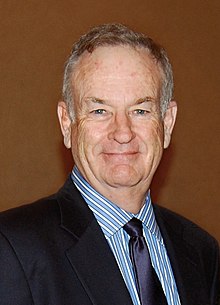
Bill O’Reilly

Bill O’Reilly at the World Affairs Council of Philadelphia.jpg: World Affairs Council of Philadelphiaderivative work: Karppinen, CC BY 3.0 <https://creativecommons.org/licenses/by/3.0&gt;, via Wikimedia Commons

Under Florida’s HB 1069 bill, affected titles include dictionaries, The Autobiography of Malcolm X,  and Anne Frank’s Diary of a Young Girl.

A partial list of the 1,600 books banned in Escambia County, Florida, includes:  

  • The Guinness Book of World Records
  • Ripley’s Believe It or Not
  • Biographies of Beyonce, Lady Gaga, Oprah Winfrey, Thurgood Marshall
  • The Gods and Goddesses of Olympus
  • Titans and Olympians: Greek and Roman Myths
  • I Know Why the Caged Bird Sings
  • The Martian Chronicles
  • Van Gough and Gauguin: The Studio of the South
  • Invisible Man
  • As I Lay Dying
  • Light in August
  • The Reivers
  • The Sound and the Fury
  • Tender Is the Night
  • Lord of the Flies
  • I Never Promised You a Rose Garden

The Negative Effects Of Book Banning In The Classroom – Maryville Pawprint

  • Catch-22
  • For Whom the Bell Tolls
  • Heretics of Dune
  • Brave New World
  • Ulysses
  • Dubliner
  • A Portrait of the Artist as a Young Man
  • Carrie
  • Pet Sematary
  • Daniel Boone
  • Babbitt
  • Doctor Zhivago
  • Coping with Date Rape and Acquaintance Rape
  • Super Human Encyclopedia: Discover the Amazing Things Your Body Can Do
  • HIV infection: The Facts You Need to Know 
  • King Arthur and the Knights of the Round Table
  • Malcolm: The Life of a Man Who Changed Black America 
  • Tess of the D’Urbervilles
  • The Fountainhead 

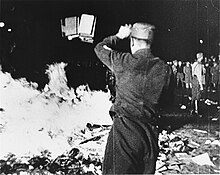
Nazi book burning 

  • The Lizard King: The Essential Jim Morrison 
  • Black Like Me
  • Atlas Shrugged 
  • Flowers for Algernon 
  • James Dean: Rebel Life 
  • The Silence of the Lambs
  • Slaughterhouse Five 
  • The Last Boy: Mickey Mantle and the End of America’s Childhood
  • Serial Killers: The Method and Madness of Monsters 
  • Paul McCartney: The Life
  • Augustus Caesar
  • Dracula  
  • Coping As a Survivor of Violent Crime 
  • Schindler’s List
  • Date Rape 
  • France: A History in Art 
  • The AIDS Epidemic: Disaster & Survival
  • Divine Secrets of the Ya-Ya Sisterhood 

The Impact of Book Banning – The Live Wire

  • The Adventures of Tom Sawyer 
  • Tupac Shakur
  • Hernan Cortes
  • Female Serial Killers: How and Why Women Become Monsters
  • Native Son
  • The Clear and Simple Thesaurus Dictionary 
  • Illustrated Who’s Who in Mythology
  • Black Enough: Stories of Being Young & Black in America
  • STDs
  • Merriam-Webster’s Elementary Dictionary
  • Encyclopedia of World Costume
  • The Winds of War
  • Early Humans
  • Child Abuse
  • The Bible Book 
  • Les Misérables

All of which means: If you want to read something forbidden by the State and can’t meet the high prices of bookstores, you’re not going to read it.

At least, not in Florida.

In 1969, the Young Rascals sang:

All the world over, so easy to seePeople everywhere just wanna be free.

But this ignores a grim and fundamental truth: Many people don’t want to be free. And they don’t want you to be free, either.

Psychoanalyst  Erich Fromm noted this in his 1941 bestseller, Escape From Freedom.

Its thesis: People who can’t accept the dangers and responsibilities that come with freedom will probably turn to authoritarianism.

Democracy has freed many people, but it also makes others feel alienated and dehumanized. Many Germans turned to Nazism for a sense of belonging and purpose.

Many people hold a twisted concept of what accounts for freedom. They accuse their enemies of being tyrants, while fiercely supporting a dictatorship of their own. A favorite marching song of Hitler’s SS went:

Clear the streets, the SS marches!They will take the road from tyranny to freedom!

Such people fervently believe that they are being persecuted if they aren’t allowed to persecute those they hate.

Thus, during the Presidency of Barack Obama, millions of Republicans believed themselves victims because they weren’t allowed  to

(1)  discriminate  on  the  basis of  race  or sex; and

(2) deny medical care to millions of poor and middle-class Americans

The same holds true for the followers of Ron DeSantis.
CENSORSHIP: IT’S THE REPUBLICAN WAY

In Bureaucracy, Entertainment, History, Law, Law Enforcement, Politics, Social commentary on February 5, 2024 at 12:38 am

Republican Governor Ron DeSantis likes to refer to his state as “the free state of Florida.”  

But for those who cherish the right to read whatever they want, Florida’s legislative agenda offers anything but freedom.  

Among those books pulled from public libraries—temporarily or permanently—are John Green’s “Looking for Alaska,” Colleen Hoover’s “Hopeless,” Margaret Atwood’s “The Handmaid’s Tale” and Grace Lin’s picture story “Dim Sum for Everyone!” 

Florida’s Martin County school district removed dozens of books from its middle schools and high schools. Among these: Toni Morrison’s Pulitzer Prize-winning “Beloved,” James Patterson’s “Maximum Ride” thrillers, and numerous novels by Jodi Picoult. 

Ron DeSantis

Bill O’Reilly, the former Fox News host, staunchly supported Florida’s book ban laws enacted by DeSantis. Then two of his own books—Killing Jesus and Killing Reagan: The Violent Assault That Changed a Presidencywere temporarily removed from the Escambia County School District.

Suddenly, O’Reilly changed his mind. 

“It’s absurd. Preposterous,” O’Reilly told Newsweek. He threatened to “find out exactly who made the decisions … [and] put their pictures on television and on my website … and I’m going to ask them for a detailed explanation of why they did that. 

“When DeSantis signed the book law, I supported the theme because there was abuse going on in Florida. There were far-left progressive people trying to impose an agenda on children, there’s no doubt about it.” 

So O’Reilly believes it’s OK to censor books promoting a “far-left progressive” view. Censorship is wrong only when it condemns his books to oblivion. 

Bill O’Reilly

Bill O’Reilly at the World Affairs Council of Philadelphia.jpg: World Affairs Council of Philadelphiaderivative work: Karppinen, CC BY 3.0 <https://creativecommons.org/licenses/by/3.0&gt;, via Wikimedia Commons

Under Florida’s HB 1069 bill, affected titles include dictionaries, The Autobiography of Malcolm X,  and Anne Frank’s Diary of a Young Girl.

A partial list of the 1,600 books banned in Escambia County, Florida, includes:  

  • The Guinness Book of World Records
  • Ripley’s Believe It or Not
  • Biographies of Beyonce, Lady Gaga, Oprah Winfrey, Thurgood Marshall
  • The Gods and Goddesses of Olympus
  • Titans and Olympians: Greek and Roman Myths
  • I Know Why the Caged Bird Sings
  • The Martian Chronicles
  • Van Gough and Gauguin: The Studio of the South
  • Invisible Man
  • As I Lay Dying
  • Light in August
  • The Reivers
  • The Sound and the Fury
  • Tender Is the Night
  • Lord of the Flies
  • I Never Promised You a Rose Garden

The Negative Effects Of Book Banning In The Classroom – Maryville Pawprint

  • Catch-22
  • For Whom the Bell Tolls
  • Heretics of Dune
  • Brave New World
  • Ulysses
  • Dubliner
  • A Portrait of the Artist as a Young Man
  • Carrie
  • Pet Sematary
  • Daniel Boone
  • Babbitt
  • Doctor Zhivago
  • Coping with Date Rape and Acquaintance Rape
  • Super Human Encyclopedia: Discover the Amazing Things Your Body Can Do
  • HIV infection: The Facts You Need to Know 
  • King Arthur and the Knights of the Round Table
  • Malcolm: The Life of a Man Who Changed Black America 
  • Tess of the D’Urbervilles
  • The Fountainhead 

Nazi book burning 

  • The Lizard King: The Essential Jim Morrison 
  • Black Like Me
  • Atlas Shrugged 
  • Flowers for Algernon 
  • James Dean: Rebel Life 
  • The Silence of the Lambs
  • Slaughterhouse Five 
  • The Last Boy: Mickey Mantle and the End of America’s Childhood
  • Serial Killers: The Method and Madness of Monsters 
  • Paul McCartney: The Life
  • Augustus Caesar
  • Dracula  
  • Coping As a Survivor of Violent Crime 
  • Schindler’s List
  • Date Rape 
  • France: A History in Art 
  • The AIDS Epidemic: Disaster & Survival
  • Divine Secrets of the Ya-Ya Sisterhood 

The Impact of Book Banning – The Live Wire

  • The Adventures of Tom Sawyer 
  • Tupac Shakur
  • Hernan Cortes
  • Female Serial Killers: How and Why Women Become Monsters
  • Native Son
  • The Clear and Simple Thesaurus Dictionary 
  • Illustrated Who’s Who in Mythology
  • Black Enough: Stories of Being Young & Black in America
  • STDs
  • Merriam-Webster’s Elementary Dictionary
  • Encyclopedia of World Costume
  • The Winds of War
  • Early Humans
  • Child Abuse
  • The Bible Book 
  • Les Misérables

All of which means: If you want to read something forbidden by the State and can’t meet the high prices of bookstores, you’re not going to read it.

At least, not in Florida.

In 1969, the Young Rascals sang:

All the world over, so easy to seePeople everywhere just wanna be free

but this ignores a grim and fundamental truth: Many people don’t want to be free.

Psychoanalyst  Erich Fromm noted this in his 1941 bestseller, Escape From Freedom.

Its thesis: People who can’t accept the dangers and responsibilities that come with freedom will probably turn to authoritarianism.

Democracy has freed many people, but it also makes others feel alienated and dehumanized. Many Germans turned to Nazism for a sense of belonging and purpose.

Many people hold a twisted concept of what accounts for freedom. They accuse their enemies of being tyrants, while fiercely supporting a dictatorship of their own. A favorite marching song of Hitler’s SS went:

Clear the streets, the SS marches!They will take the road from tyranny to freedom!

Such people fervently believe that they are being persecuted if they aren’t allowed to persecute those they hate.

Thus, during the Presidency of Barack Obama, millions of Republicans believed themselves victims because they weren’t allowed  to

(1)  discriminate  on  the  basis of  race  or sex; and

(2) deny medical care to millions of poor and middle-class Americans

The same holds true for the followers of Ron DeSantis.

IS THERE A HITLER IN YOUR CEO?

In Bureaucracy, Business, History, Military, Politics, Social commentary on March 27, 2015 at 4:19 pm

Would-be CEOs and Fuehrers, listen up: Character is destiny.

Case in point: The ultimate Fuehrer and CEO, Adolf Hitler.

Ever since he shot himself in his underground Berlin bunker on April 30, 1945, historians have fiercely debated: Was der Fuehrer a military genius or an imbecile?

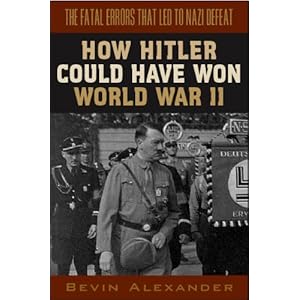
With literally thousands of titles to choose, the average reader may feel overwhelmed.  But if you’re looking for an understandable, overall view of Hitler’s generalship, an excellent choice would be How Hitler Could Have Won World War II by Bevin Alexander.

Among “the fatal errors that led to Nazi defeat” (as proclaimed on the book jacket) were:

  • Wasting hundreds of Luftwaffe pilots, fighters and bombers in a half-hearted attempt to conquer England.
  • Ignoring the pleas of generals like Erwin Rommel to conquer Syria, Iraq and Saudi Arabia–thus giving Germany control of most of the world’s oil.
  • Attacking his ally, the Soviet Union, while still at war with Great Britain.
  • Needlessly turning millions of Russians into enemies rather than allies by his brutal and murderous policies.
  • Declaring war on the United States after the Japanese attacked Pearl Harbor.  (Had he not done so, Americans would have focused all their attention on conquering Japan.)
  • Refusing to negotiate a separate peace with Soviet dictator Joseph Stalin–thus granting Germany a large portion of captured Russian territory in exchange for letting Stalin remain in power.
  • Insisting on a “not one step back” military “strategy” that led to the unnecessary surrounding, capture and/or deaths of hundreds of thousands of German servicemen.

As the war turned increasingly against him, Hitler became ever more rigid in his thinking.

He demanded absolute control over the smallest details of his forces.  This, in turn, led to astounding and needless losses in German soldiers.

One such incident was immortalized in the 1962 movie, The Longest Day, about the Allied invasion of France known as D-Day.

On June 6, 1944, Rommel ordered the panzer tanks to drive the Allies from the Normandy beaches.  But these could not be released except on direct order of theFuehrer.  As Hitler’s chief of staff, General Alfred Jodl, informed Rommel: The Fuehrer was asleep–and, no, he, Jodl, would not wake him. By the time Hitler awoke and issued the order, it was too late.

Nor could he accept responsibility for the policies that were clearly leading Germany to certain defeat.  Hitler blamed his generals, accused them of cowardice, and relieved many of the best ones from command.

Among those sacked was Heinz Guderian, creator of the German panzer corps–and thus responsible for its highly effective “blitzkrieg” campaign against France in 1940.

Heinz Guderian

Another was Erich von Manstein, designer of the strategy that defeated France in six weeks–something Germany couldn’t do during the four years of World War 1.

Erich von Manstein

Finally, on April 29, 1945–with the Russians only blocks from his underground bunker in Berlin–Hitler dictated his “Last Political Testament.”

Once again, he refused to accept responsibility for unleashing a war that would ultimately consume 50 million lives:

“It is untrue that I or anyone else in Germany wanted war in 1939.  It was desired and instigated exclusively by those international statesmen who either were of Jewish origin or worked for Jewish interests.”

Hitler had launched the war with a lie–that Poland had attacked Germany, rather than vice versa.  And he closed the war–and his life–with a final lie.

All of which brings us to Niccolo Machiavelli, the father of political science.

In his classic book, The Discourses, he wrote at length on the best ways to maintain liberty within a republic.

In Book Three, Chapter 31, Machiavelli declares: “Great Men and Powerful Republics Preserve an Equal Dignity and Courage in Prosperity and Adversity.”

It is a chapter that Adolf Hitler would have done well to read.

“…A truly great man is ever the same under all circumstances.  And if his fortune varies, exalting him at one moment and oppressing him at another, he himself never varies, but always preserves a firm courage, which is so closely interwoven with his character that everyone can readily see that the fickleness of fortune has no power over him.

“The conduct of weak men is very different.  Made vain and intoxicated by good fortune, they attribute their success to merits which they do not possess, and this makes them odious and insupportable to all around them. 

And when they have afterwards to meet a reverse of fortune, they quickly fall into the other extreme, and become abject and vile.  

“Thence it comes that princes of this character think more of flying in adversity than of defending themselves, like men who, having made a bad use of prosperity, are wholly unprepared for any defense against reverses.”

Stay alert to signs of such character flaws among your own business colleagues–and especially your superiors.  They are the warning signs of a future catastrophe.

IS THERE A HITLER IN YOUR CEO?

In Bureaucracy, History, Military, Social commentary on September 2, 2013 at 12:01 am

Each Labor Day, American politicians offer lip-service tribute to those millions of American workers who make corportate profits a reality.

But no one ever says anything about those over-pampered, over-paid CEOs who all too often take credit for the work done by those millions of American workers.

Too many CEOs have–consciously or not–patterened themselves after the ultimate CEO: Adolf Hitler.

Ever since he shot himself in his underground Berlin bunker on April 30, 1945, historians have fiercely debated:  Was der Fuehrer a military genius or an imbecile?

With literally thousands of titles to choose, the average reader may feel overwhelmed.  But if you’re looking for an understandable, overall view of Hitler’s generalship, an excellent choice would be How Hitler Could Have Won World War II by Bevin Alexander.

How Hitler Could Have Won World War II

Among “the fatal errors that led to Nazi defeat” (as proclaimed on the book jacket) were:

  • Wasting hundreds of Luftwaffe pilots, fighters and bombers in a half-hearted attempt to conquer England.
  • Ignoring the pleas of generals like Erwin Rommel to conquer Syria, Iraq and Saudi Arabia–thus giving Germany control of most of the world’s oil.
  • Attacking his ally, the Soviet Union, while still at war with Great Britain.
  • Needlessly turning millions of Russians into enemies rather than allies by his brutal and murderous policies.
  • Declaring war on the United States after the Japanese attacked Pearl Harbor.  (Had he not done so, Americans would have focused all their attention on conquering Japan.)
  • Refusing to negotiate a separate peace with Soviet dictator Joseph Stalin–thus granting Germany a large portion of captured Russian territory in exchange for letting Stalin remain in power.
  • Insisting on a ”not one step back” military “strategy” that led to the unnecessary surrounding, capture and/or deaths of hundreds of thousands of German servicemen.

As the war turned increasingly against him, Hitler became ever more rigid in his thinking.  He demanded absolute control over the smallest details of his forces.  This, in turn, led to astounding and needless losses in German soldiers.

One such incident was immortalized in the 1962 movie, The Longest Day, about the Allied invasion of France known as D-Day.

On June 6, 1944, Rommel ordered the panzer tanks to drive the Allies from the Normandy beaches.  But these could not be released except on direct order of the Fuehrer.

As Hitler’s chief of staff, General Alfred Jodl, informed Rommel: The Fuehrer was asleep–and, no, he, Jodl, would not wake him.

By the time Hitler awoke and issued the order, it was too late.

Nor could he accept responsibility for the policies that were clearly leading Germany to certain defeat.  Hitler blamed his generals, accused them of cowardice, and relieved many of the best ones from command.

Among those sacked was Heinz Guderian, creator of the German panzer corps–and thus responsible for its highly effective “blitzkrieg” campaign against France in 1940.

Heinz Guderian

Another was Erich von Manstein, designer of the strategy that defeated France in six weeks–something Germany couldn’t do during the four years of World War 1.

Erich von Manstein

Finally, on April 29, 1945–with the Russians only blocks from his underground bunker in Berlin–Hitler dictated his “Last Political Testament.”  Once again, he refused to accept responsibility for unleashing a war that would ultimately consume 50 million lives:

“It is untrue that I or anyone else in Germany wanted war in 1939.  It was desired and instigated exclusively by those international statesmen who either were of Jewish origin or worked for Jewish interests.”

Hitler had launched the war with a lie–that Poland had attacked Germany, rather than vice versa.  And he closed the war–and his life–with a final lie.

All of which, once again, brings us back to Niccolo Machiavelli, the father of political science.

In his classic book, The Discourses, he wrote at length on the best ways to maintain liberty within a republic.  In Book Three, Chapter 31, Machiavelli declares: “Great Men and Powerful Republics Preserve an Equal Dignity and Courage in Prosperity and Adversity.”

It is a chapter that Adolf Hitler would have done well to read.

“…A truly great man is ever the same under all circumstances.  And if his fortune varies, exalting him at one moment and oppressing him at another, he himself never varies, but always preserves a firm courage, which is so closely interwoven with his character that everyone can readily see that the fickleness of fortune has no power over him.

“The conduct of weak men is very different.  Made vain and intoxicated by good fortune, they attribute their success to merits which they do not possess, and this makes them odious and insupportable to all around them. 

And when they have afterwards to meet a reverse of fortune, they quickly fall into the other extreme, and become abject and vile.  

“Thence it comes that princes of this character think more of flying in adversity than of defending themselves, like men who, having made a bad use of prosperity, are wholly unprepared for any defense against reverses.”

Stay alert to signs of such character flaws among your own business colleagues–and especially your superiors.  They are the warning signs of a future catastrophe.

A NEW WAY TO COMBAT TERRORISM: PART TWO (END)

In Bureaucracy, History, Politics on May 20, 2013 at 12:00 am

Within investigative agencies such as the FBI and CIA, there are divisions specializing in two types of Intelligence:

Tactical Intelligence: This concerns matters that are of immediate importance. Examples: Al Qaeda is planning to set off a bomb at a particular place, or a top Islamic terrorist is due to arrive at a particular plce on such-and-such date.

Strategic Intelligence: This concerns matters that are of long-term importance. Examples: How does Al Qaeda recruit new members?  How does it launder its money?

For too long, Intelligence agencies have followed the “buy and bust” example of local and Federal narcotics enforcement agencies. That is: They have gone for the quick arrest of smalltime criminals while ignoring the operating processes of criminal organizations.

To actively combat Islamic terrorism, the American Intelligence community must thoroughly understand the enemy it is facing. Thus, that community should create a corps of experts specializing in:

(1) Islamic religion (2) Islamic history (3) Islamic culture.

Granted, only timely tactical intelligence will reveal Al Qaeda’s latest plans for destruction.

But no matter how adept Islamic terrorists prove at concealing their momentary aims, they cannot conceal the insights and long-term objectives of the religion, history and culture which have scarred and molded them.

While accumulating such intelligence, one question above all others should be kept constantly in mind: “How can we turn this religion / history / culture into a weapon against the terrorists we face?”

To demonstrate how the American Intelligence community could effectively apply such intelligence:

Cultural Intelligence: A U.S. News & World Report story has noted that Palestinian suicide-bombers have been deterred by the Israelis’ use of police dogs.

For religious and cultural reasons, Muslims consider dogs defiled—and defiling—creatures. Islamic terrorists fear that blowing up themselves near a dog risks mingling their blood with that of the dead or wounded animal—thus forfeiting their opportunity to enter Paradise and claim those 72 willing virgins.

Historical Intelligence: The age-old ethnic conflicts between majority Sunni and minority Shiite Muslims are now on lethal display in Iraq. The FBI and CIA can successfully exploit these when recruiting informants or fomenting rivalries among terrorist groups.

These are similar to the animosities once existing between American Indian tribes, such as the Pawnee and Cheyenne. Veteran Army officers used these hatreds to recruit warriors of opposing Indian tribes to scout against warriors of their longtime enemies.

Religious Intelligence: Contrary to politically-correct pundits, it is not only social or economic inequalities which inspire Islamic terrorists, but the Koran itself. Within its pages are numerous exhortations to wage war on “kaffirs” or “unbelievers.”

Dying for Allah is not seen as a waste of life. In fact, the Koran encourages it. Muhammad commands in Surah [chapter] 4:74: “To him who fighteth in the cause of Allah—whether he is slain or gets victory—soon shall we give him a reward of great (value).”

The American Intelligence community must become as intimately familiar with the mindset of its Islamic enemies as the best frontier Army officers became with the mindset of the Indians they fought.

General George A. Custer once freed several white female captives by threatening to hang the chiefs of the tribes responsible. The Indians scorned death by knife or gunshot.

But they feared that the spirit of a hanged man remained forever trapped within his body, thus preventing him from reaching the Happy Hunting Ground. And Custer, knowing this, put this intelligence to effective, life-saving use.

American Intelligence agencies must learn what our Islamic enemies most seek, most prize, and—above all—most hate and fear. Then these agencies must ruthlessly apply that knowledge in defense of America’s survival.

Ali Soufan was one of the few FBI agents intimately familiar with Arabic culture and language at the time of 9/11.  In his 2011 book, The Black Banners: The Inside Story of 9/11 and the War Against al-Qaeda, he sums up the importance of “knowing your enemy.”

People ask what is the most important weapon we have against al-Qaeda, and I reply, “Knowledge.”

….As Sun Tzu wrote in The Art of War, when we know our enemy’s strengths and weaknesses, and at the same time we know our capabilities–that’s when we are best-placed to achieve victory.

…Our greatest successes against al-Qaeda have come when we understood how they recruited, brainwashed and operated, and used our knowledge to outwit and defeat them. 

Our failures have come when we instead let ourselves be guided by ignorance, fear and brutality.

A NEW WAY TO COMBAT TERRORISM: PART ONE (OF TWO)

In Bureaucracy, History, Politics on May 17, 2013 at 1:25 am

It’s long past time to re-think the role that inflexible bureaucracies have played–and continue to play–in the so-called “war on terror.”

In fact, a good place to start would be scrapping that phrase.

“Terrorism” is not and never has been an end in itself. It is, instead, a means to an end, nearly always used by organizations unable to field conventional armies.

“Terror,” as such, can never be eliminated. But those who practice it can be targeted for destruction.

Thus, a more accurate–if politically incorrect–title for the conflict now raging between the United States and its Islamic enemies would be: “The War on Islamic Aggression.”

It’s true that not all Islamics are terrorists. But it’s equally true that most of the terrorists now threatening America are Islamics.

Bureaucracies are, by their very nature, conservative institutions. They may start out as innovators, but, over time, techniques that were new and fresh become old and brittle.

What worked in the past against one problem fails to work when pitted against an entirely new challenge.

Since 1981, the United States has been on the defensive against Islamic terrorism. As noted investigative journalist Bob Woodward warned in a 2001 Frontline documentary:

“These terrorist incidents–they [American Intelligence agencies] used the tools that were available, but it was never in a coherent way.

“I know from talking to those people at the time, it was always, ‘Oh, we’ve got this crisis. We’re dealing with the Achille Lauro now,’ or ‘We’re dealing with Quaddafi,’ or ‘We’re dealing with Libyan hit squads,’ or ‘We’re dealing with Beirut.’

“And it never- they never got in a position where they said, ‘You know, this is a real serious threat,’ not just episodically, but it’s going to be a threat to this country throughout the administration, future administrations.

“We need to organize to fight it. It can’t be a back-bench operation for the FBI and the CIA. It’s got to be somebody’s issue, so it’s on their desk every day. What do we know? What’s being planned? What are the threats out there?”

It’s time for the United States to cast aside its hidebound, case-by-case approach to fighting Islamic aggression. It’s time for American Intelligence to recognize that the secrets to defeating Islamic terrorism lie within the history, culture and religion of the enemies we face.

In Warriors of God: Richard the Lionheart, Saladin and the Third Crusade [Doubleday, 2001] James Reston, Jr. demonstrates that the past is truly prologue for the soldiers of Islam.

Suicide Warriors: Rashid al-Din Sinan, known as “The Old Man of the Mountain,” was the head of the Assassins. He was imam to a cadre of young men, known as fidai, who swore personal allegiance to him.

Once, to prove the devotion of his followers to a Crusader leader, Sinan gave a quick hand signal to two fidai high in a tower. At once, both leaped to their death in the ravine below. Sinan then asked the Crusader if he would like to see another such example of loyalty; the Frank said this wasn’t necessary, that he was convinced.

Promises of Paradise: “Assassins” is derived from “hashish.” During the fidai indoctrination ceremony, a devotee was given a potion laced with cannabis, put to sleep, and then transported to a beautiful garden.

When he awoke, he believed he was being given a glimpse of the Paradise to come. He would extend his hand and receive a dagger–and instructions for murder: “Go and slay so-and-so, and when you return, my angels will bear you into Paradise.”

Sunnis vs. Shiites: Sinan–from Basra–belonged to the Shi’ite (minority) branch of Islam. Even in the twelfth century, the rivalry between Shi’ism and Sunnism was intense. Sinan blamed Saladin for defeating and erasing the Shi’ite Fatamid Caliphate of Cairo and imposing Sunnism in its place. Sinan ordered two attempts on the life of Saladin himself.

The first failed when the assassins were intercepted and killed only a few feet from Saladin. The second almost succeeded: Posing as one of the Sultan’s bodyguards, the assailant slashed at Saladin’s head.

Bleeding and terrified, Saladin fought off his attacker until his guards intervened. Saladin survived only because he wore a mailed headdress beneath his turban.

Saladin quickly negotiated a non-aggression pact with Sinan

“The Enemy of My Enemy is My Friend”: The Latin Christians were not Sinan’s greatest enemy. This honor was reserved for the Muslim viziers in Aleppo and Mosul. As a result, Sinan reached an accommodation with the Templers.

The Assassins and the military monks understood each other well, for they had much in common: Both groups were luxury-spurning religious fanatics.

On occasion, the two went to war: After a boundary dispute in 1154, the Assassins murdered Raymond II of Tripoli; in return, the Templers butchered a number of Muslims.

After that, an accommodation was reached. For a time, the Assassins paid the Templers a hefty tribute to be left alone.

IS THERE A HITLER IN YOUR CEO?

In Bureaucracy, Business, Politics, Social commentary on May 3, 2013 at 12:35 am

Would-be CEOs and Fuehrers, listen up: Character is destiny.

Case in point: The ultimate Fuehrer and CEO, Adolf Hitler.

Ever since he shot himself in his underground Berlin bunker on April 30, 1945, historians have fiercely debated: Was der Fuehrer a military genius or an imbecile?

With literally thousands of titles to choose, the average reader may feel overwhelmed. But if you’re looking for an understandable, overall view of Hitler’s generalship, an excellent choice would be How Hitler Could Have Won World War II by Bevin Alexander.

How Hitler Could Have Won World War II

Among “the fatal errors that led to Nazi defeat” (as proclaimed on the book jacket) were:

  • Wasting hundreds of Luftwaffe pilots, fighters and bombers in a half-hearted attempt to conquer England.
  • Ignoring the pleas of generals like Erwin Rommel to conquer Syria, Iraq and Saudi Arabia–thus giving Germany control of most of the world’s oil.
  • Attacking his ally, the Soviet Union, while still at war with Great Britain.
  • Needlessly turning millions of Russians into enemies rather than allies by his brutal and murderous policies.
  • Declaring war on the United States after the Japanese attacked Pearl Harbor. (Had he not done so, Americans would have focused all their attention on conquering Japan.)
  • Refusing to negotiate a separate peace with Soviet dictator Joseph Stalin–thus granting Germany a large portion of captured Russian territory in exchange for letting Stalin remain in power.
  • Insisting on a “not one step back” military “strategy” that led to the unnecessary surrounding, capture and/or deaths of hundreds of thousands of German servicemen.

As the war turned increasingly against him, Hitler became ever more rigid in his thinking. He demanded absolute control over the smallest details of his forces. This, in turn, led to astounding and needless losses in German soldiers.

One such incident was immortalized in the 1962 movie, The Longest Day, about the Allied invasion of France known as D-Day.

On June 6, 1944, Rommel ordered the panzer tanks to drive the Allies from the Normandy beaches. But these could not be released except on direct order of the Fuehrer.

As Hitler’s chief of staff, General Alfred Jodl, informed Rommel: The Fuehrer was asleep–and, no, he, Jodl, would not wake him.

By the time Hitler awoke and issued the order, it was too late.

Nor could he accept responsibility for the policies that were clearly leading Germany to certain defeat. Hitler blamed his generals, accused them of cowardice, and relieved many of the best ones from command.

Among those sacked was Heinz Guderian, creator of the German panzer corps–and thus responsible for its highly effective “blitzkrieg” campaign against France in 1940.

Heinz Guderian

Another was Erich von Manstein, designer of the strategy that defeated France in six weeks–something Germany couldn’t do during the four years of World War 1.

Erich von Manstein

Finally, on April 29, 1945–with the Russians only blocks from his underground bunker in Berlin–Hitler dictated his “Last Political Testament.” Once again, he refused to accept responsibility for unleashing a war that would ultimately consume 50 million lives:

“It is untrue that I or anyone else in Germany wanted war in 1939. It was desired and instigated exclusively by those international statesmen who either were of Jewish origin or worked for Jewish interests.”

Hitler had launched the war with a lie–that Poland had attacked Germany, rather than vice versa. And he closed the war–and his life–with a final lie.

All of which, once again, brings us back to Niccolo Machiavelli, the father of political science.

In his classic book, The Discourses, he wrote at length on the best ways to maintain liberty within a republic. In Book Three, Chapter 31, Machiavelli declares: “Great Men and Powerful Republics Preserve an Equal Dignity and Courage in Prosperity and Adversity.”

It is a chapter that Adolf Hitler would have done well to read.

“…A truly great man is ever the same under all circumstances. And if his fortune varies, exalting him at one moment and oppressing him at another, he himself never varies, but always preserves a firm courage, which is so closely interwoven with his character that everyone can readily see that the fickleness of fortune has no power over him.

“The conduct of weak men is very different. Made vain and intoxicated by good fortune, they attribute their success to merits which they do not possess, and this makes them odious and insupportable to all around them.

“And when they have afterwards to meet a reverse of fortune, they quickly fall into the other extreme, and become abject and vile.

“Thence it comes that princes of this character think more of flying in adversity than of defending themselves, like men who, having made a bad use of prosperity, are wholly unprepared for any defense against reverses.”

Stay alert to signs of such character flaws among your own business colleagues–and especially your superiors. They are the warning signs of a future catastrophe.