Posts Tagged ‘BBC’
ABC NEWS, ABORTION, ABRAHAM LINCOLN, ADOLF HITLER, ALBERT SPEER, ALTERNET, AMERICABLOG, AMY CONEY BARRETT, AP, BABY BOOMER RESISTANCE, BBC, BLOOMBERG NEWS, BRETT M. KAVANAUGH, BUZZFEED, CATHOLIC CHURCH, CBS NEWS, CLARENCE THOMAS, CNN, CROOKS AND LIARS, DAILY KOZ, DOBBS VS. JACKSON WOMEN’S HEALTH ORGANIZATION, FACEBOOK, FIVETHIRTYEIGHT, GERALD FORD, HARPER’S MAGAZINE, HUFFINGTON POST, JAMES A. GARFIELD, JOHN F. KENNEDY, JOHN J. ROBERTS, JOSEPH BIDEN, MAFIA, MEDIA MATTERS, MOTHER JONES, MOVEON, MSNBC, NBC NEWS, NEIL J. GORSUCH, NEW REPUBLIC, NEWSDAY, NEWSWEEK, NPR, ORGANIZED CRIME, PBS NEWSHOUR, POLITICO, POLITICUSUSA, RAW STORY, REUTERS, ROE V. WADE, Ronald Reagan, RUTH BADER GINSBURG, RUTH SENT US, SALON, SAMUEL A ALITO, SEATTLE TIMES, SLATE, TALKING POINTS MEMO, THE ATLANTIC, THE CHICAGO SUN-TIMES, THE CHICAGO TRIBUNE, THE DAILY BEAST, THE DAILY BLOG, THE GUARDIAN, THE HILL, THE HUFFINGTON POST, THE INTERCEPT, THE LOS ANGELES TIMES, THE NATION, THE NEW REPUBLIC, THE NEW YORK TIMES, THE NEW YORKER, THE VILLAGE VOICE, THE WASHINGTON POST, THEODORE ROOSEVELT, THINKPROGRESS, THIRD RICH, TIME, TRUTHDIG, TRUTHOUT, TWITTER, TWO POLITICAL JUNKIES, U.S. NEWS & WORLD REPORT, UNITED STATES SECRET SERVICE, UNITED STATES SUPREME COURT, UPI, USA TODAY, WILLIAM MCKINLEY, WITNESS SECURITY PROGRAM, WONKETTE
In Bureaucracy, History, Law, Law Enforcement, Politics, Social commentary on June 22, 2022 at 12:12 am
The United States Marshals Service is now charged with protecting the nine Justices who comprise the Supreme Court of the United States.
Deputy U.S. marshals have had decades of experience in protecting Federal judges, members of Congress and organized crime witnesses
As protectors, they are probably best-known as the operators of the Justice Department’s Witness Security Program. Launched as part of the Organized Crime Control Act of 1970, they have successfully protected and relocated thousands of endangered organized crime witnesses.
But there are significant differences between the security provided for Mafia witnesses and that being provided for Supreme Court Justices.
While a witness is testifying, s/he receives 24-hour protection from five to a score of marshals. Since visits to courthouses are especially dangerous, marshals often use deception as a vital weapon in keeping their charges alive.
A caravan of marshals cars, with sirens blaring, will pull up to the front of a courthouse, with a deputy playing the role of the witness. While all eyes (including those of mob assassins) are focused on this, a postal truck will enter the building through an underground passage. Inside: The witness and one or two guards dressed as mailmen.
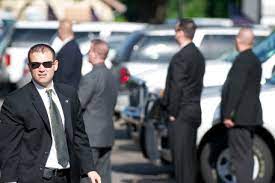
A witness security detail
Helicopters and speedboats have also been used to transport witnesses to and from court.
In at least one case, marshals installed Joseph “The Animal” Barboza, the most-feared Mafia hitman in New England, in a fortified room inside the courthouse. When it came time to testify, he would be brought into the courtroom through the judges’ elevator.
But once testifying is completed, the marshals no longer offer 24-hour protection. Instead, they provide witnesses (and their wives and children, if there are any) with new names, Social Security numbers, driver’s licenses and other records supporting their new identities.
Then they are shipped off to a new state where—hopefully—they can start their lives over on the right side of the law and safe from their enemies.
Thus, round-the-clock protection by the marshals isn’t intended to be permanent.
But in the case of at least six Supreme Court Justices this may well prove different. These are the ones who are preparing to strike down Roe v. Wade and re-criminalize abortion for millions of women.
To prevent attacks on the Justices at the Supreme Court, an eight-foot, “non-scalable” fence now surrounds the building.
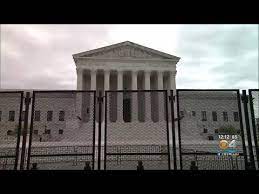
Once a long-held fundamental right is revoked, anger toward those responsible becomes the natural reaction. And for some people, that anger can easily flare into violence.
Thanks to the Supreme Court’s January 22, 1973 Roe decision, abortion has been legal throughout the United States for 49 years. Those who have been born since can’t recall a time when it was a criminal offense.
On June 8, Nicholas John Roske, 26, of Simi Valley, California, was arrested by deputy U.S. marshals near Justice Brett Kavanaugh’s house in Maryland after threatening to kill the Justice. He was armed with a Glock 17 pistol, ammunition, a knife, zip ties, pepper spray and duct tape.
In this case, the marshals had been alerted by Roske’s threat. But the truly dangerous assassin is one who doesn’t announce his intentions and simply acts on them.
Knowing you are so hated that people want to murder you creates huge psychological pressures on those threatened. Some people become prisoners of their own bodyguard, venturing out only when absolutely necessary.
Others adopt a “Live it up, because tomorrow I may die” attitude. They chafe at the security regimen imposed on them, sometimes even trying to elude their protectors.
Security specialists for the Marshals Service have warned countless witnesses: “You’ve got to realize that your life’s in danger. Keep your eyes open. Use your head. Don’t lie to us. Stay close to us.
“Keep us apprised of everything that’s going on. Suppose you’re sitting out on your balcony and you see something flash. What could it be? A pair of binoculars? A rifle-scope? Be aware of your position, and help us protect you.”
Presidents have been protected by the United States Secret Service since 1901, when Vice President Theodore Roosevelt became the first Chief Executive to be assigned agents.

Before this, three Presidents had been assassinated—Abraham Lincoln (1865); James A. Garfield (1881) and William McKinley, Roosevelt’s predecessor (1901).
In 1963, John F. Kennedy would become the fourth.
Two attempts were made on Gerald Ford (1975) and, in 1981, Ronald Reagan was seriously wounded.
As a result, it’s unthinkable that a President would not be guarded round-the-clock.
But no Supreme Court Justice has ever been assassinated.
Justices have been able to come and go as they please, without even being recognized by the vast majority of citizens they affect with their rulings.
That will soon change—at least for those who intend to strike down Roe. They will become familiar faces—for those who hate them. Already, their home addresses have been splashed across the Internet.
At least 13 states will automatically ban abortion in the first and second trimesters if Roe is overturned. This will create legions of new enemies for the Justices. And there will be no end-date to this hatred.
Which means the Justices will likely live in fear—and under heavy armed guard—for the rest of their lives.
ABC NEWS, ABORTION, ABRAHAM LINCOLN, ADOLF HITLER, ALBERT SPEER, ALTERNET, AMERICABLOG, AMY CONEY BARRETT, AP, BABY BOOMER RESISTANCE, BBC, BLOOMBERG NEWS, BRETT M. KAVANAUGH, BUZZFEED, CATHOLIC CHURCH, CBS NEWS, CLARENCE THOMAS, CNN, CROOKS AND LIARS, DAILY KOZ, DOBBS VS. JACKSON WOMEN’S HEALTH ORGANIZATION, FACEBOOK, FIVETHIRTYEIGHT, GERALD FORD, HARPER’S MAGAZINE, HUFFINGTON POST, JAMES A. GARFIELD, JOHN F. KENNEDY, JOHN J. ROBERTS, JOSEPH BIDEN, MAFIA, MEDIA MATTERS, MOTHER JONES, MOVEON, MSNBC, NBC NEWS, NEIL J. GORSUCH, NEW REPUBLIC, NEWSDAY, NEWSWEEK, NPR, ORGANIZED CRIME, PBS NEWSHOUR, POLITICO, POLITICUSUSA, RAW STORY, REUTERS, ROE V. WADE, Ronald Reagan, RUTH BADER GINSBURG, RUTH SENT US, SALON, SAMUEL A ALITO, SEATTLE TIMES, SLATE, TALKING POINTS MEMO, THE ATLANTIC, THE CHICAGO SUN-TIMES, THE CHICAGO TRIBUNE, THE DAILY BEAST, THE DAILY BLOG, THE GUARDIAN, THE HILL, THE HUFFINGTON POST, THE INTERCEPT, THE LOS ANGELES TIMES, THE NATION, THE NEW REPUBLIC, THE NEW YORK TIMES, THE NEW YORKER, THE VILLAGE VOICE, THE WASHINGTON POST, THEODORE ROOSEVELT, THINKPROGRESS, THIRD RICH, TIME, TRUTHDIG, TRUTHOUT, TWITTER, TWO POLITICAL JUNKIES, U.S. NEWS & WORLD REPORT, UNITED STATES SECRET SERVICE, UNITED STATES SUPREME COURT, UPI, USA TODAY, WILLIAM MCKINLEY, WITNESS SECURITY PROGRAM, WONKETTE
In Bureaucracy, History, Law, Law Enforcement, Politics, Social commentary on June 21, 2022 at 12:13 am
Tyrants know they lack legitimate authority–and so they must live behind armed guards and high fences. They constantly fear being overthrown–or killed.
“It was only years later, when I was imprisoned at Spandau, that I really understood what it must be like to live each day under such intense psychological pressure,” Albert Speer, architect and Minister of Armaments to Adolf Hitler, told Playboy during a 1971 interview.
“Looking back on Hitler’s physical environment in his military bunkers in Berlin and Rastenburg, I realized how similar the atmosphere was to a prison—immense concrete walls and ceilings, harsh electric light instead of daylight, iron doors and iron grilles over the few windows.
“Even Hitler’s brief strolls through the barbed wire perimeters, surrounded by armed guards and police dogs, resembled a convict’s exercise in the jail yard. Hitler had turned all of Europe into a prison, but he had become its leading prisoner.”
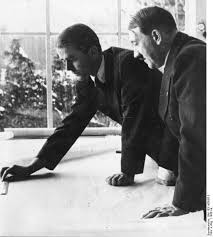
Albert Speer and Adolf Hitler
Bundesarchiv, Bild 183-V00555-3 / CC-BY-SA 3.0, CC BY-SA 3.0 DE <https://creativecommons.org/licenses/by-sa/3.0/de/deed.en>, via Wikimedia Commons
At least six Justices of the United States Supreme Court have joined Adolf Hitler as prisoners of their own bodyguard.
In the past, Justices came and went as ordinary citizens did. Occasionally they made a controversial decision, but then the uproar died down and everything stayed the same.
It took the alleged gutting of Roe v. Wade to change all that.
On May 2, Politico published a leaked draft of the Supreme Court majority decision in Dobbs vs. Jackson Women’s Health Organization that would explicitly overturn Roe v. Wade.
In doing so, it would end the Court’s 49-year-old decision guaranteeing a woman’s right to obtain an abortion.
Reaction was swift—and devastatingly angry.
Threats of violence against the Justices have poured in—especially the six Right-wing ones behind the decision:
- Amy Coney Barrett
- Brett M. Kavanaugh
- Clarence Thomas
- Samuel A. Alito
- Neil M. Gorsuch and
- John J. Roberts.
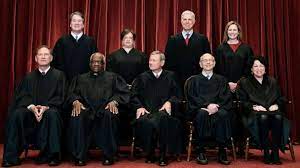
Justices of the Supreme Court
As a result, all nine Justices have been given extra security through the U.S. Marshals Service.
The marshals have had decades of experience in protecting Federal organized crime witnesses, members of Congress and Federal judges. So the odds are that the Justices will remain safe from violent attack.
The question that remains to be answered: How well will they hold up under the intense pressures of facing potential violence—and having to live under constant guard?
Almost immediately after Politico published its article on the Justices’ decision to overturn Roe, an eight-foot steel fence went up around the Supreme Court building. All entry points were blocked to vehicles and police patrols were beefed up.

As if that were not claustrophobic enough, the Justices’ home addresses were quickly shared online.
Justices have received threatening phone calls at their homes.
The group, “Ruth Sent Us”—named in honor of deceased Supreme Court Justice Ruth Bader Ginsburg—planned a protest at what it called “the homes of the six extremist justices.”
“ANNOUNCING: Walk-by Wednesday, May 11, 2022! At the homes of the six extremist justices, three in Virginia and three in Maryland. If you’d like to join or lead a peaceful protest, let us know,” the website stated.
“Our 6-3 extremist Supreme Court routinely issues rulings that hurt women, racial minorities, LGBTQ+ and immigrant rights. We must rise up to force accountability using a diversity of tactics.”
The group even published a Google Maps graphic pinpointing homes “where the six Christian fundamentalist Justices issue their shadow docket rulings from.
“We intend to stop the corruption of our Supreme Court, and stop the spread of fascist laws,” the group said. “Instead of waiting for the extremist Court to strip our rights further, we must rise up now.”
In Virginia, where three of the six justices live, protesting outside a private home is illegal.
Justice Samuel Alito, author of the draft majority opinion, canceled a scheduled appearance in Nashville, and the other justices are also cutting back on public events.
Meanwhile, the Court has been thrown into a frenzy of self-investigation to discover who leaked the upcoming decision.
Far more attention has been paid to this by the Justices than to the enormous implications for millions of American women if abortion once becomes a criminal act. Chief Justice John Roberts publicly said: “To the extent this betrayal of the confidences of the court was intended to undermine the integrity of our operations, it will not succeed.”
Not all protests were aimed at the Justices.
Ruth Sent Us also planned to target Catholic churches on Mother’s Day—telling followers to protest “that six extremist Catholics set out to overturn Roe.” It published a video of churchgoers trying to kick out protesters who interrupted a service, chanting, “Without this basic right, women can’t be free — abortion on demand and without apology.”
The Catholic group, CatholicVote, demanded that President Joe Biden condemn Ruth Sent Us for targeting Catholic churches and disrupting Mass on Mother’s Day.

Joseph Biden
Biden, a lifelong Catholic, strongly favors abortion rights.
The U.S. Marshals Service has operated the Witness Security Program for threatened organized crime witnesses since 1970. Of its approximately 19,100 participants, none have been killed who followed its guidelines.
But there are serious differences between the security afforded Mafia witnesses—and that being accorded Supreme Court Justices.
ABC NEWS, ALTERNET, AMERICABLOG, AP, APPEALS, ARIZONA, ARIZONA STATE PRISON COMPLEX AT FLORENCE, BABY BOOMER RESISTANCE, BBC, BLOOMBERG NEWS, BUZZFEED, CBS NEWS, CNN, CROOKS AND LIARS, DAILY KOZ, DEATH PENALTY, DEATH ROW, FACEBOOK, FIVETHIRTYEIGHT, FRANK ATWOOD, HARPER’S MAGAZINE, HUFFINGTON POST, INSANITY DEFENSE, MEDIA MATTERS, MOTHER JONES, MOVEON, MSNBC, MURDER (DEFINITION), NBC NEWS, NEW REPUBLIC, NEWSDAY, NEWSWEEK, NINTH CIRCUIT COURT OF APPEALS, NPR, PBS NEWSHOUR, POLITICO, POLITICUSUSA, RAW STORY, RECIDIVISM, REUTERS, SALON, SEATTLE TIMES, SLATE, TALKING POINTS MEMO, THE ATLANTIC, THE CHICAGO SUN-TIMES, THE CHICAGO TRIBUNE, THE DAILY BEAST, THE DAILY BLOG, THE GUARDIAN, THE HILL, THE HUFFINGTON POST, THE INTERCEPT, THE LOS ANGELES TIMES, THE NATION, THE NEW REPUBLIC, THE NEW YORK TIMES, THE NEW YORKER, THE VILLAGE VOICE, THE WASHINGTON POST, THINKPROGRESS, TIME, TRUTHDIG, TRUTHOUT, TWITTER, TWO POLITICAL JUNKIES, U.S. NEWS & WORLD REPORT, UNITED STATES SUPREME COURT, UPI, USA TODAY, WONKETTE
In Bureaucracy, History, Law, Law Enforcement, Politics, Social commentary on June 20, 2022 at 12:10 am
On June 8, justice finally caught up with Frank Atwood.
On September 17, 1984, eight-year-old Vicki Lynne Hoskinson was riding her bike home when Atwood kidnapped and murdered her. Then he left her body in an Arizona desert. A hiker found the child’s remains about seven months later.
Making Vicki’s murder even worse: Atwood had previously been convicted of “lewd and lascivious acts and kidnapping” two young children in California.
Ten days after Vicki’s disappearance, eyewitness testimony and physical evidence led to Atwood’s arrest. He was charged with one count of kidnapping.
Atwood’s trial began in January, 1987. He was found guilty of first degree murder on March 26, and sentenced to death on May 8, 1987. But it took until 2020 for all of his appeals to be exhausted.
Finally, at just after 10:15 a.m. local time, on June 8, Atwood met his own death by lethal injection at the Arizona State Prison Complex in Florence, Arizona.

Frank Atwood
While Atwood had no concern for the pain of others, he had plenty of it for himself. He tried to halt the execution by claiming the procedure would violate his constitutional rights.
How?
In an appeal to the U.S. Ninth Circuit Court of Appeals, Atwood’s lawyers claimed that lying flat on the execution table would cause him excruciating pain due to a spinal condition he developed while in prison.
The appeals court agreed with a federal judge in Phoenix, who noted that the table can be raised to an inclined position.
A district court dismissed Atwood’s “poor, pity me” excuse and on June 7, the Ninth Circuit Court of Appeals upheld the decision to execute him.

A typical execution room
The next day, the United States Supreme Court dashed Atwood’s last hope to escape justice and denied his petition to halt the execution.
About 111 inmates remain on Arizona’s Death Row.
The Atwood case offers serious reasons for a complete overhaul of how the death penalty is administered.
First: There is genuine wisdom in the saying: “Justice delayed is justice denied.”
Imagine how the parents and relatives of Vicki Hoskinson have felt for 36 years:
- Knowing that she died violently, probably after being sexually abused.
- Knowing that she wasn’t given even the dignity of a funeral—that her body had been left in the desert, with her remains scattered by animals.
- Knowing that the man responsible for her death was not only still alive but had far more rights conferred on him by the State than he had provided Vicki.
- With every appeal they had to relive the horror of their loved one’s brutal murder.

Second: The life of a murderer should not be considered as sacred—if not more so—than the lives of those he has murdered.
People don’t get sent to Death Row by stealing food or picking pockets, as they did in England during the 19th century. They don’t even get there by killing someone accidentally or in the heat of passion.
According to 18 U.S. Code § 1111: “Murder is the unlawful killing of a human being with malice aforethought. Every murder perpetrated by poison, lying in wait, or any other kind of willful, deliberate, malicious, and premeditated killing; or committed for the perpetration of, or attempt to perpetrate, any arson, escape, murder, kidnapping, treason, espionage, sabotage, aggravated assault abuse or sexual abuse, child abuse, burglary, or robbery, or perpetrated as part of a pattern or practice of assault or torture against a child, or children….is murder in the first degree.”
They get there, in short, by deliberately choosing to take the life of someone—and then doing so.
Third: The insanity defense should be abolished.
Too many perfectly sane murderers use this as a defense to escape justice for the human carnage they have left in their wake. Even if they are ruled criminally insane—on a “Hannibal the Cannibal” level—they should not be allowed to avoid the death penalty.
Consider this: A beloved dog gets rabies. It isn’t his fault. But from now on he presents “a clear and present danger” to everyone he meets. The same is true with someone who has demonstrated a taste for cold-blooded murder.
Fourth: The number of appeals should be severely limited—to three or four, at most.
This would ensure that the accused had his sentence carefully reviewed, and yet allow a fair time for justice—acquittal or execution—to occur.
Fifth: Violent offenders should not be released, even if they’re not given the death penalty.
The rate of recidivism in the United States is 70%. Within three years of their release, two out of three former inmates are rearrested and more than 50% are reincarcerated.
Atwood had previously been convicted of “lewd and lascivious acts and kidnapping” two young children in California. Had Atwood not been released, he could not have murdered Vicki.
It’s true that some inmates have radically turned their lives around in prison and spent the rest of their lives as model citizens. But this happens so rarely and unpredictably that taking this chance is not worth jeopardizing the safety of the public at large.
ABC NEWS, ALTERNET, AMERICABLOG, AP, BABY BOOMER RESISTANCE, BBC, BLOOMBERG NEWS, BUZZFEED, CBS NEWS, CHRISTOPHER DORNER, CNN, CROOKS AND LIARS, DAILY KOZ, DEATH THREATS, FACEBOOK, FIVETHIRTYEIGHT, GEORGE ZIMMERMAN, HARPER’S MAGAZINE, HAWAII FIVE-O, HUFFINGTON POST, JACK LORD, LORI TANKEL, LOS ANGELES POLICE DEPARTMENT, MEDIA MATTERS, MOTHER JONES, MOVEON, MSNBC, NBC NEWS, NEW REPUBLIC, NEWSDAY, NEWSWEEK, NPR, PBS NEWSHOUR, POLICE, POLITICO, POLITICUSUSA, RAW STORY, REUTERS, ROBERT DALEY, SALON, SEATTLE TIMES, SLATE, TALKING POINTS MEMO, TARGET BLUE, THE ATLANTIC, THE CHICAGO SUN-TIMES, THE CHICAGO TRIBUNE, THE DAILY BEAST, THE DAILY BLOG, THE GUARDIAN, THE HILL, THE HUFFINGTON POST, THE INTERCEPT, THE LOS ANGELES TIMES, THE NATION, THE NEW REPUBLIC, THE NEW YORK TIMES, THE NEW YORKER, THE VILLAGE VOICE, THE WASHINGTON POST, THINKPROGRESS, TIME, TRAYVON MARTIN, TRUTHDIG, TRUTHOUT, TWITTER, TWO POLITICAL JUNKIES, U.S. NEWS & WORLD REPORT, UPI, USA TODAY
In Bureaucracy, History, Law, Law Enforcement, Politics, Social commentary on June 17, 2022 at 1:11 am
Lori Tankel had a problem: A lot of angry people thought she was George Zimmerman.
She began getting death threats on her
Unfortunately for Tankel, her number was one digit away from the number Zimmerman used to make his call to police just before he fatally shot Martin.
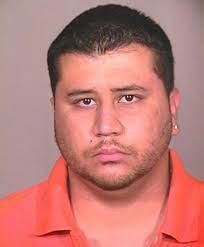
George Zimmerman
Trump The phone number had been shown throughout the trial. And, believing the number was Zimmerman’s, someone posted Tankel’s number online.
Just minutes after the verdict, Tankel began getting death threats.
“We’re going to kill you. We’re going to get you. Watch your back,” threatened a typical call.Tankel worked as a sales representative for several horse companies. She had grown used to relying on her phone to keep her business going.
But, almost as soon as the Zimmerman verdict came in, “My phone just started to blow up. Phone call after phone call, multiple phone
So she did what any ordinary citizen, faced with multiple death threats, would do: She called the police.
According to her, the Sheriff’s Office in Seminole County, Florida, told her the department itself receives around 400 death threats a minute on social media sites.
In short: Unless you’re wealthy, a politician or—best of all—a cop, don’t expect the police to protect you if your life is threatened.
If you doubt it, consider the lessons to be learned when the Los Angeles Police Department found itself threatened by one of its former officers
First, above everyone else, police look out for each other.
Robert Daley bluntly revealed this truth in his 1971 bestseller, Target Blue: An Insider’s View of the N.Y.P.D. A police reporter for the New York Times, he served for one year as a deputy police commissioner.
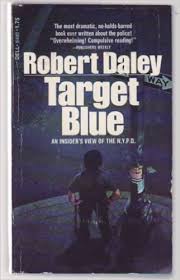
A great many solvable crimes in the city were never solved, because not enough men were assigned to the case. Or because those assigned were lazy or hardly cared or got sidetracked.
“But when a cop got killed, no other cop got sidetracked.
Detectives worked on the case night and day….“In effect, the citizen who murdered his wife’s lover was sought by a team of detectives, two men. But he who killed a cop was sought by 32,000.”
Second, don’t expect the police to do for you what they’ll do for one another.
In February, 2013, Christopher Dorner declared war on his former fellow officers of the Los Angeles Police Department.
The LAPD assigned security and surveillance details to at least 50 threatened officers and their families. A typical detail consists of two to five or more guards. And those guards must be changed every eight to 12 hours.

SWAT team
Oregon Department of Transportation, CC BY 2.0 <https://creativecommons.org/licenses/by/2.0>, via Wikimedia Commons
the Those details stayed in place long after Dorner was killed in a firefight on February 12.
But if your bullying neighbor threatens to kill you, don’t expect the police to send a guard detail over. They’ll claim: ”We can’t do anything until the guy does something. If he does, give us a call.”
Third, the more status and wealth you command, the more likely the police are to address your complaint or solve your case.
If you’re rich, your complaint will likely get top priority and the best service the agency can provide.
But if you’re poor or even middle-class without high-level political or police connections, you’ll be told: “We just don’t have the resources to protect everybody.”
Fourth, don’t expect your police department to operate with the vigor or efficiency of TV police agencies.
“I want this rock [Hawaii] sealed off,” Steve McGarrett (Jack Lord) routinely ordered when pursuing criminals on “Hawaii Five-O.”

Jack Lord as Steve McGarrett
Real-life police departments, on the other hand:
- Often lack state-of-the-art crime labs to analyze evidence.
- Often lose or accidentally destroy important files.
- Are–like all bureaucracies–staffed by those who are lazy, indifferent or incompetent.
- Are notoriously competitive, generally refusing to share information with other police departments—thus making it easier for criminals to run amok.
Even when police ”solve” a crime, that simply means making an arrest. After that, there are at least three possible outcomes:
- The District Attorney may decide not to file charges.
- Or the perpetrator may plead to a lesser offense and serve only a token sentence—or none at all.
- Or he might be found not guilty by a judge or jury.
Fifth, the result of all this can only be increased disrespect for law enforcement from a deservedly—and increasingly—cynical public.
It is the witnessing of blatant inequities and hypocrisies such as those displayed in the Christopher Dorner case that most damages public support for police at all levels.
When citizens believe police care only about themselves, and lack the ability—or even the will—to protect citizens or avenge their victimization by arresting the perpetrators, that is a deadly blow to law enforcement.
Police depend on citizens for more than crime tips. They depend upon them to support hiring more cops and buying state-of-the-art police equipment. When public support vanishes, so does much of that public funding.
The result can only be a return to the days of the lawless West, where citizens—as individuals or members of vigilante committees—looked only to themselves for protection.
ABC NEWS, ADOLF HITLER, ALEXI KOSYGIN, ALTERNET, AMERICABLOG, AP, BABY BOOMER RESISTANCE, BBC, BLOOMBERG NEWS, BUZZFEED, CBS NEWS, CENSORSHIP, CNN, COVID-19, CROOKS AND LIARS, DAILY KOZ, DAVID MCCULLOUGH, DEMOCRATS, DISNEY, FACEBOOK, FIRST AMENDMENT, FIVETHIRTYEIGHT, HARPER’S MAGAZINE, HISTORICAL ILLITERACY, HISTORY, HUFFINGTON POST, JAY LENO, JOE BIDEN, LEONID BREZHNEV, MARK ZUCKERBERG, MEDIA MATTERS, MOTHER JONES, MOVEON, MSNBC, NAZI GERMANY, NBC NEWS, NEVILLE CHAMBERLAIN, NEW REPUBLIC, NEWSDAY, NEWSWEEK, NPR, PAUL VON HINDENBURG, PBS NEWSHOUR, POLITICO, POLITICUSUSA, RAW STORY, REPUBLICANS, REUTERS, SALON, SEATTLE TIMES, SHERYL SANDBERG, SLATE, SMITHSONIAN INSTITUTE, TALKING POINTS MEMO, THE ATLANTIC, THE CHICAGO SUN-TIMES, THE CHICAGO TRIBUNE, THE DAILY BEAST, THE DAILY BLOG, THE GUARDIAN, THE HILL, THE HUFFINGTON POST, THE INTERCEPT, THE LOS ANGELES TIMES, THE NATION, THE NEW REPUBLIC, THE NEW YORK TIMES, THE NEW YORKER, THE VILLAGE VOICE, THE WASHINGTON POST, THINKPROGRESS, TIME, TONIGHT SHOW, TRUTHDIG, TRUTHOUT, TWITTER, TWO POLITICAL JUNKIES, U.S. NEWS & WORLD REPORT, UPI, USA TODAY, WEIMAR REPUBLIC, WONKETTE, YEVGENEY YEVTUSHENKO
In Bureaucracy, Business, Entertainment, History, Politics, Social commentary on June 16, 2022 at 12:10 am
Facebook likes to promote itself as a place for “more than three billion people around the world to share ideas, offer support and make a difference.”
But there are limits to the ideas that can be shared on Facebook. And while Facebook likes to boast about its “Community Standards,” these are enforced in a totally arbitrary way.
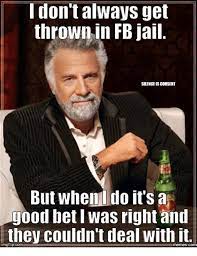
There is simply no predicting what will trigger Facebook’s ire and land a post—and its poster—in “Facebook Jail.”
Facebook doesn’t restrict itself to banning posts that are libelous and/or harassing. Its definition of “Hate speech” is so all-encompassing it can be stretched to cover anything—including historically valid statements.
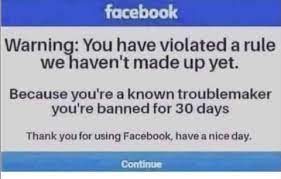
In Part One I laid out the reason for my sending a letter of protest to Sheryl Sandberg, Facebook’s longtime Chief Operating Officer.
In this part, I will offer specific steps Facebook can take to keep faith with its stated mission to be a place where people can “share ideas.”
Noting that I had been banned from Facebook for seven days for posting “Americans are historical illiterates,” I cited the noted historian, David McCullough, and an article from the Smithsonian Institute to support my statement.

David McCullough
fourandsixty, CC BY-SA 3.0 <https://creativecommons.org/licenses/by-sa/3.0>, via Wikimedia Commons
I then quoted my offending paragraph in full:
“Tyrants cannot be appeased by giving into their demands–it just convinces them that they can demand even more from their victims. British Prime Minister Neville Chamberlain tried that approach at Munich in September, 1938, giving Adolf Hitler a big chunk of Czechoslovakia. The reason: To prevent a war with Nazi Germany. Less than a year later, war broke out anyway.”
This referred to yet another act of cowardice by Democrats in refusing to stand up to the aggression of the Republican Right.
There are serious historical parallels between the closing days of the German Weimar Republic and the rise of Adolf Hitler—and what is happening today in the United States.
Example: In the Weimar Republic, all that stood between Hitler and total power was a frail old man—President Paul von Hindenburg. In the United States, all that stands between Donald Trump and absolute power is a frail old man: President Joe Biden.
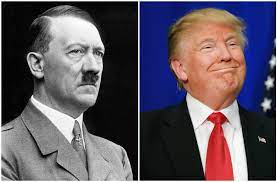
Adolf Hitler and Donald Trump
Too many Americans remain ignorant of their own history—not to mention that of other countries.
That was the point of my post. But on Facebook, it’s “Hate speech” to point out the ignorance of criminally ignorant people.
Then came my third and last point.
Third: Facebook claimed: “You can disagree with the decision if you think we got it wrong.” That implied that I would be given the opportunity to state why I believed the decision was wrong and have that objection carefully reviewed.
But, immediately afterward, Facebook stated: “We usually offer the chance to request a review and follow up if we got decisions wrong.
“We have fewer reviewers available right now because of the coronavirus (COVID-19) outbreak. We’re trying hard to prioritize reviewing content with the most potential for harm. This means we may not be able to follow up with you, though your feedback helps us do better in the future.”
Using COVID as an excuse to avoid responsible behavior is despicable. If Facebook is going to ban people for supposedly violating its “Community Standards,” it has a moral obligation—if not a legal one—-to give them a chance to share their side of the story.
That is how a court in a democracy behaves. Making a decision based on whim and secrecy, with no appeal possible, is the behavior of a star chamber.
I then noted two ways by which Facebook could avoid such disgraceful episodes in the future:
- Providing its users with an 800 number whereby they can interact directly with the Censorship Committee and share their reasons for posting the comment(s) they did;
- Providing its users with at least an Instant Messaging capability, so they can do so.
My letter to Sheryl Sandberg closed as follows:
I‘m aware that Facebook is a private company and thus can do whatever it likes. But it is also—supposedly—a market for the airing of competing ideas. And to behave in the despicable manner I have described is as much a disservice to the reputation Facebook wishes to have as to those who are negatively affected by its censorship decisions.
Frankly, I don’t expect to get an answer from Sandberg, any more than I expected one from Facebook CEO Mark Zuckerberg.
Still, there is this:
On August 23, 1968, Russian poet Yevgeney Yevtushenko sent a telegram to Communist Party Boss Leonid Brezhnev and Premier Aleksei Kosygin, protesting their invasion of Czechoslovakia.
No doubt, Yevtushenko didn’t expect his protest to change Soviet policy—just as I don’t expect any major changes—for the good—from Facebook.
These will come about only if:
- Enough Facebook users get so fed up with arbitrary bullying that they seek another social media format to speak their minds; and/or
- Enough members of Congress demand major changes in the way Facebook regularly makes a mockery of the First Amendment.
Neither of these is likely to happen anytime soon.
ABC NEWS, ADOLF HITLER, ALEXI KOSYGIN, ALTERNET, AMERICABLOG, AP, BABY BOOMER RESISTANCE, BBC, BLOOMBERG NEWS, BUZZFEED, CBS NEWS, CENSORSHIP, CNN, COVID-19, CROOKS AND LIARS, DAILY KOZ, DAVID MCCULLOUGH, DEMOCRATS, DISNEY, FACEBOOK, FIRST AMENDMENT, FIVETHIRTYEIGHT, HARPER’S MAGAZINE, HISTORICAL ILLITERACY, HISTORY, HUFFINGTON POST, JAY LENO, JOE BIDEN, LEONID BREZHNEV, MARK ZUCKERBERG, MEDIA MATTERS, MOTHER JONES, MOVEON, MSNBC, NAZI GERMANY, NBC NEWS, NEVILLE CHAMBERLAIN, NEW REPUBLIC, NEWSDAY, NEWSWEEK, NPR, PAUL VON HINDENBURG, PBS NEWSHOUR, POLITICO, POLITICUSUSA, RAW STORY, REPUBLICANS, REUTERS, SALON, SEATTLE TIMES, SHERYL SANDBERG, SLATE, SMITHSONIAN INSTITUTE, TALKING POINTS MEMO, THE ATLANTIC, THE CHICAGO SUN-TIMES, THE CHICAGO TRIBUNE, THE DAILY BEAST, THE DAILY BLOG, THE GUARDIAN, THE HILL, THE HUFFINGTON POST, THE INTERCEPT, THE LOS ANGELES TIMES, THE NATION, THE NEW REPUBLIC, THE NEW YORK TIMES, THE NEW YORKER, THE VILLAGE VOICE, THE WASHINGTON POST, THINKPROGRESS, TIME, TONIGHT SHOW, TRUTHDIG, TRUTHOUT, TWITTER, TWO POLITICAL JUNKIES, U.S. NEWS & WORLD REPORT, UPI, USA TODAY, WEIMAR REPUBLIC, WONKETTE, YEVGENEY YEVTUSHENKO
In Bureaucracy, Business, Entertainment, History, Politics, Social commentary on June 15, 2022 at 12:10 am
Facebook likes to promote itself as a place for “more than three billion people around the world to share ideas, offer support and make a difference.”
But there are limits to the ideas that can be shared on Facebook. And while Facebook likes to boast about its “Community Standards,” these are enforced in a totally arbitrary way.
There is simply no predicting what will trigger Facebook’s ire and land a post—and its poster—in “Facebook Jail.”

It’s true that standards against libel and harassment are absolutely essential.
Twitter has earned an unsavory reputation for refusing to take action against those guilty of one or both. As a result, the Disney company has refused to partner with this company.
But Facebook doesn’t restrict itself to banning posts that are libelous and/or harassing. Its definition of “Hate speech” is so all-encompassing it can be stretched to cover anything.
For example: On June 3, I received the following message from Facebook: “You can’t post or comment for 7 days. This is because you previously posted something that didn’t follow our Community Standards.
“This comment goes against our standards on hate speech and inferiority, so only you and the admins of Private Liberal Group can see it.
“If your content goes against our Community Standards again, your account may be restricted or disabled.”

Facebook / Meta headquarters in Menlo Park, California
LPS.1, CC0, via Wikimedia Commons
And just what was my comment that qualified as “hate speech”?
Facebook refused to publish the comment or news story to which I responded. So I can only assume that I was referring to yet another act of cowardice by Democrats in standing up to the Fascistic Right:
“Americans are historical illiterates, and this is just another example proving it. Tyrants cannot be appeased by giving into their demands–it just convinces them that they can demand even more from their victims. British Prime Minister Neville Chamberlain tried that approach at Munich in September, 1938, giving Adolf Hitler a big chunk of Czechoslovakia. The reason: To prevent a war with Nazi Germany. Less than a year later, war broke out anyway.”
Apparently, for Facebook, “Americans are historical illiterates” qualifies as “hate speech.”
When Donald Trump boasted, during his 2016 campaign for President, “I love the poorly educated!” he was not alone. The leadership of Facebook apparently feels the same way.
Making a decision based on whim and secrecy, with no appeal possible—as Facebook routinely does—is the behavior of a star chamber.
In the past, I had sent letters to Mark Zuckerberg, Facebook’s CEO, protesting Facebook’s star chamber approach to justice. Zuckerberg’s life features two accomplishments that dwarf all others:
- He’s worth $71.5 billion, courtesy of Facebook’s revenues; and
- In multiple appearances before Congress, he’s managed to unite Right-wing Republicans and Liberal Democrats—in their rage at his perceived arrogance and stonewalling.
I didn’t expect Zuckerberg to show the courtesy of a fair-minded CEO by replying to my letters—and I wasn’t disappointed.
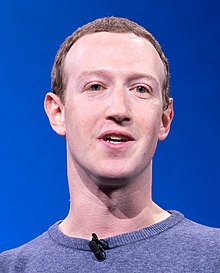
Mark Zuckerberg
Anthony Quintano from Westminster, United States, CC BY 2.0 <https://creativecommons.org/licenses/by/2.0>, via Wikimedia Commons
So, this time, on June 3, I decided to write someone else: Sheryl Sandberg, longtime Chief Operating Officer for Facebook. (She will be stepping down from that position in the fall of 2022, She will, however, remain a member of Facebook’s board of directors.)
Early on in my letter I quickly laid out my case: Apparently what aroused the ire of Facebook’s Censorship Committee was my statement that “Americans are historical illiterates,” and this was interpreted as “hate speech and inferiority.” Taken to its logical conclusion, only comments celebrating the ignorance of ignorant people will be considered acceptable on Facebook.

Then I offered three reasons why I strongly objected to the decision to ban my post—and me—from Facebook:
First: What I said about Americans’ historical illiteracy was entirely accurate. No less an authority than the acclaimed historian David McCullough has said: “I think we are raising a generation of young Americans who are, to a very large degree, historically illiterate.”
Nor is he alone. A May 5, 2015 article by the Smithsonian Institute asks: “How Much U.S. History Do Americans Actually Know?” And it answers the question: “Less Than You Think.”
Comedians have long gained laughs at Americans’ historical illiteracy. When Jay Leno hosted The Tonight Show, he often did “Jaywalking Tours” where he would ask people about seemingly well-known historical events. It was common to see people say the Civil War happened in the 1940s (instead of 1861-1865) or to believe that the Texans won at the battle of the Alamo.
Second: I quoted the rest of my paragraph: “Tyrants cannot be appeased by giving into their demands–it just convinces them that they can demand even more from their victims. British Prime Minister Neville Chamberlain tried that approach at Munich in September, 1938, giving Adolf Hitler a big chunk of Czechoslovakia. The reason: To prevent a war with Nazi Germany. Less than a year later, war broke out anyway.”
I challenge you—and anyone else who reads this letter—to refute one line of that paragraph.
2020 PRESIDENTIAL CAMPAIGN, ABC NEWS, ALTERNET, AMERICABLOG, AP, BABY BOOMER RESISTANCE, BBC, BERNADINE DOHRN, BILL AYERS, BLOOMBERG, BLOOMBERG NEWS, BURGUARY, BUZZFEED, CALIFORNIA ATTORNEY GENERAL, CBS NEWS, CHESA BOUDIN, CNN, CROOKS AND LIARS, DAILY KOZ, DEMOCRATS, DISTRICT ATTORNEY OF SAN FRANCISCO, DONALD TRUMP, DRUDGE REPORT, FACEBOOK, FIVETHIRTYEIGHT, GEORGETOWN UNIVERSITY’S INSTITUTE OF POLITICS AND PUBLIC SERVICE, GRETCHEN WHI8TMER, HARPER’S MAGAZINE, HOMELESS, HUFFINGTON POST, ILLEGAL ALIENS, IMMIGRATION LAWS, JOE BIDEN, Kamala Harris, LAW ENFORCEMENT, MEDIA MATTERS, MO ELLEITHEE, MOTHER JONES, MOVEON, MSNBC, NBC NEWS, NEW REPUBLIC, NEWSDAY, NEWSWEEK, NPR, PBS NEWSHOUR, POLITICO, POLITICUSUSA, RAW STORY, RECALL ELECTION, REPUBLICANS, REUTERS, SALON, SAN FRANCISCO, SAN FRANCISCO DISTRICT ATTORNEY, SEATTLE TIMES, SENATE JUDICIARY COMMITTEE, SHOPLIFTING, SLATE, TALKING POINTS MEMO, TAMMY DUCKWORTH, THE ATLANTIC, THE CHICAGO SUN-TIMES, THE CHICAGO TRIBUNE, THE DAILY BEAST, THE DAILY BLOG, THE GUARDIAN, THE HILL, THE HUFFINGTON POST, THE INTERCEPT, THE LOS ANGELES TIMES, THE NATION, THE NEW REPUBLIC, THE NEW YORK TIMES, THE NEW YORKER, THE TRUTHS WE HOLD (BOOK), THE VILLAGE VOICE, THE WASHINGTON POST, THINKPROGRESS, TIME, TRUTHDIG, TRUTHOUT, TWITTER, TWO POLITICAL JUNKIES, U.S. NEWS & WORLD REPORT, UNITED STATES SENATE, UPI, USA TODAY, VIOLENT CRIME CONTROL AND LAW ENFORCEMENT ACT OF 1994, WEATHER UNDERGROUND, WONKETTE
In Bureaucracy, History, Law, Law Enforcement, Politics, Social commentary on June 14, 2022 at 12:10 am
On June 7, San Francisco residents voted—60% to 40%—to oust District Attorney Chesa Boudin.
Since “liberal” has become a taboo word even among liberals, Boudin was praised by his supporters—and saw himself—as a “progressive prosecutor.”
This meant he favored—and implemented:
- Abolishing cash bail;
- Refusing to prosecute minors as adults—regardless of their crime;
- Lowering the jail population during the COVID crisis;
- Refusing to seek tougher sentences under California’s anti-gang (“three strikes”) law.
Boudin, 41, had previously served as a deputy public defender for the city’s Public Defender office. As such, he was expected to provide his clients with a vigorous defense. His mistake was taking that same mentality into the office of District Attorney.
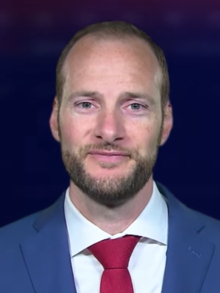
Chesa Boudin
Shoplifters ran rampant in the city, victimizing not only high-end stores but even pharmacies. As a result, Walgreens has closed at least 10 stores since the beginning of 2019. Five closed in November 2021. Six CVS stores have closed for the same reason.
Owing to President Donald Trump’s attacks on China as the incubator of COVID-19, assaults on Asian-Americans steadily rose—in a city where they make up 34.40% of the population.
Overall crime in San Francisco is up nearly 8% in 2022, with a 20% surge in larcenies, as well as spikes in homicides, rapes and assaults.
Boudin and his supporters blamed conservative and business groups for the recall effort. And, in fact, they had raised more than $7 million to secure his ouster.
But the recall clearly tapped into existing anger about soaring levels of quality-of-life crimes in the Bay Area—car break-ins, burglaries and shoplifting.
San Francisco’s notorious tolerance for “the homeless”—most of whom consist of drug addicts, alcoholics, mentally ill and outright bums—also played a major role. Tax-paying citizens have grown fed up with sidewalks littered with oversize tents, empty wine bottles and beer cans, human feces and urine, used hypodermic syringes—and the Untermenschen responsible for them.
Boudin had been elected District Attorney on November 5, 2019.
In hindsight, Boudin’s priorities as District Attorney—and the reasons for his recall—seem foretold.
His parents, David Gilbert and Kathy Boudin, were members of the radical Weather Underground. In 1981, when Boudin was 14 months old, both served as getaway drivers in a Brink’s robbery. And both were convicted of the murder of two police officers and a security guard.
Kathy Boudin was sentenced to 20 years to life; David Gilbert drew 75 years. Kathy Boudin was paroled in 2003, dying of cancer in May. Gilbert was paroled in October, 2003.
As a result, the raising of Chesa fell to two other members of the Weather Underground: Bill Ayers and Bernadine Dohrn. So discovering why Boudin considers criminals as oppressed victims is relatively easy.
For Michael Shellenberger, author of San Fransicko: Why Progressives Ruin Cities, none of this has come as a surprise.
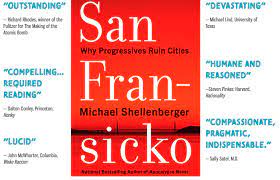
From the inside cover flap:
“Michael Shellenberger has lived in the San Francisco Bay Area for 30 years. During that time, he advocated for the decriminalization of drugs, affordable housing and alternatives to jail and prison.
“But as homeless encampments spread and overdose deaths skyrocketed, Shellenberger decided to take a closer look at the problem.
“What he discovered shocked him. The problems had grown worse, not in spite of but because of progressive policies. San Francisco and other West Coast cities—Los Angeles, Seattle, Portland—had gone beyond merely tolerating homelessness, drug dealing and crime to actively enabling them….
“The real problem is an ideology that designates some people, by identity or experience, as victims entitled to destructive behaviors. The result is an undermining of the values that make cities, and civilization itself, possible.”
Anyone who doubts Shellenberger’s conclusions need only examine the city’s COVID-19 Alternative Housing Program.
It’s the creation of San Francisco Mayor London Breed and the Board of Supervisors, and run by the city’s Department of Public Health (DPH),
It works in two stages:
Stage 1: Move the “homeless” into the city’s hotels—at city expense.
Stage 2: Provide them with not only free food and shelter but free alcohol, cannabis and cigarettes.
According to a May 11, 2020 story in City Journal.org:
“The program’s primary purpose is to keep homeless people, the majority of whom are addicts, out of harm’s way during the pandemic. By getting their substance of choice delivered, the thinking goes, the guests may be more apt to remain in their government-funded rooms….
“The city doesn’t want homeless people who should be staying in their rooms roaming the neighborhood in search of the substances, potentially infecting others.”
Referring to these people as “guests,” DPH said in a statement that they are screened for substance addictions and asked if they’d like to stop or have support to reduce their use.
If they say they want to remain alcoholics and/or drug addicts, they’re provided with their substance of choice.
In 2020, and lasting until at least 2022, San Francisco lost its longstanding convention, Oracle’s OpenWorld, to Las Vegas. A chief reason cited: “Poor street conditions.”
And “a major medical association” will move its convention out of San Francisco after 2023
Tourism is San Francisco’s largest industry, generating $8.4 billion annually. When tourism revenues dry up, so will the city.
2020 PRESIDENTIAL CAMPAIGN, ABC NEWS, ALTERNET, AMERICABLOG, AP, BABY BOOMER RESISTANCE, BBC, BERNADINE DOHRN, BILL AYERS, BLOOMBERG, BLOOMBERG NEWS, BURGUARY, BUZZFEED, CALIFORNIA ATTORNEY GENERAL, CBS NEWS, CHESA BOUDIN, CNN, CROOKS AND LIARS, DAILY KOZ, DEMOCRATS, DISTRICT ATTORNEY OF SAN FRANCISCO, DONALD TRUMP, DRUDGE REPORT, FACEBOOK, FIVETHIRTYEIGHT, GEORGETOWN UNIVERSITY’S INSTITUTE OF POLITICS AND PUBLIC SERVICE, GRETCHEN WHI8TMER, HARPER’S MAGAZINE, HOMELESS, HUFFINGTON POST, ILLEGAL ALIENS, IMMIGRATION LAWS, JOE BIDEN, Kamala Harris, LAW ENFORCEMENT, MEDIA MATTERS, MO ELLEITHEE, MOTHER JONES, MOVEON, MSNBC, NBC NEWS, NEW REPUBLIC, NEWSDAY, NEWSWEEK, NPR, PBS NEWSHOUR, POLITICO, POLITICUSUSA, RAW STORY, RECALL ELECTION, REPUBLICANS, REUTERS, SALON, SAN FRANCISCO, SAN FRANCISCO DISTRICT ATTORNEY, SEATTLE TIMES, SENATE JUDICIARY COMMITTEE, SHOPLIFTING, SLATE, TALKING POINTS MEMO, TAMMY DUCKWORTH, THE ATLANTIC, THE CHICAGO SUN-TIMES, THE CHICAGO TRIBUNE, THE DAILY BEAST, THE DAILY BLOG, THE GUARDIAN, THE HILL, THE HUFFINGTON POST, THE INTERCEPT, THE LOS ANGELES TIMES, THE NATION, THE NEW REPUBLIC, THE NEW YORK TIMES, THE NEW YORKER, THE TRUTHS WE HOLD (BOOK), THE VILLAGE VOICE, THE WASHINGTON POST, THINKPROGRESS, TIME, TRUTHDIG, TRUTHOUT, TWITTER, TWO POLITICAL JUNKIES, U.S. NEWS & WORLD REPORT, UNITED STATES SENATE, UPI, USA TODAY, VIOLENT CRIME CONTROL AND LAW ENFORCEMENT ACT OF 1994, WEATHER UNDERGROUND, WONKETTE
In Bureaucracy, History, Law, Law Enforcement, Politics, Social commentary on June 13, 2022 at 12:11 am
On August 11, 2020, former Vice President Joe Biden—having become the Democratic nominee for President—chose California United States Senator Kamala Harris as his Vice Presidential running mate.
Harris had served as District Attorney of San Francisco (2004 – 2011) and as California Attorney General (2011 – 2017). Then, in 2016, she won election to the United States Senate.
In 2019, she ran for the Presidency of the United States. But after 11 months of failing to win major support among voters, she withdrew from the race on December 3.
To tout her candidacy, she had published her memoirs: The Truths We Hold. In these, she described herself as a “progressive prosecutor.” But there was one major truth she didn’t tout.

Today, with millions of illegal aliens from Central and Latin America flooding into the United States, the spotlight has shifted from the incarceration of blacks to that of Hispanics.
Illegal immigration—and what to do about it—is now one of the hottest political issues in the country.
For liberals of the Democratic party, “open borders” appears to be the solution to illegal immigration. Yet the vast majority of Americans support legal immigration—while rejecting illegal immigration.
And Kamala Harris’ record as San Francisco District Attorney violated those desires with a vengeance.
Secretly, she created a program, called Back on Track, to keep convicted illegal alien felons in the country—and to train them for jobs they could not legally hold. This was a flagrant violation of Federal immigration law.

U.S. Senator Kamala Harris
Completion led to the expunging of a felony conviction, making it highly popular among convicted criminals.
One such alumnus was Alexander Izaguirre, an illegal alien who had been arrested twice within eight months—for purse-snatching and selling cocaine.
In July, 2008, four months after pleading guilty to selling cocaine, Izaguirre assaulted Amanda Kiefer, a legal San Francisco resident.
Snatching her purse, he jumped into an SUV, then tried to run Kiefer down. Terrified, she leaped onto the hood and saw Izaguirre and a driver laughing.
The driver slammed on the brakes, sending Kiefer flying onto the pavement and fracturing her skull.
D.A.’s office let illegal immigrants go https://tinyurl.com/yyhp3hb6
Back on Track became a centerpiece of Harris’ campaign for state Attorney General.
Until the the Los Angeles Times questioned her about the Izaguirre case, Harris had never publicly admitted that the program included illegal aliens.
Harris claimed she first learned that illegal aliens were training for jobs only after Izaguirre was arrested for the Kiefer assault.
Harris said it was a “flaw in the design” of the program to let illegal aliens into the program. “I believe we fixed it,” she told the Times.
Harris never released statistics on how many illegal aliens were included since the program started in 2005.
She said that after Izaguirre’s arrest she never asked—or learned—how many illegal aliens were in Back on Track.
A strange lapse in curiosity for a prosecutor charged with enforcing the law.
When Harris learned that illegal aliens were enrolled, she allowed those who were following the rules to finish the program and have their criminal records expunged.
It is not the duty of local law enforcement, she said, to enforce Federal immigration laws.
So much for her oath to faithfully defend the Constitution of the United States and that of the state of California “against all enemies, foreign and domestic.”
From 2005 to 2009, 113 admitted drug dealers graduated from Back on Track. Another 99 were kicked off the program for failing to meet the requirements. They were sentenced under their guilty plea, the D.A.’s office claimed.
Harris told the Times that graduates of Back on Track were less likely than other offenders to commit crimes again. But her spokeswoman refused to offer detailed statistics to back this up.
When Harris became San Francisco District Attorney, she vowed she would “never charge the death penalty.”
Amanda Kiefer left California. Interviewed by the Times, she said she could not understand why San Francisco police and prosecutors would allow convicted illegal aliens back onto the streets.
“If they’re committing crimes,” she said, “I think there’s something wrong that they’re not being deported.”
At the outset of his Presidential campaign, Joe Biden pledged to choose a woman for his Vice Presidential running mate. Among those he could have chosen:
- Michigan Governor Gretchen Whitmer, who stood up to Trump-inspired anti-mask protesters threatening violence; and
- Illinois United States Senator Tammy Duckworth, who, as an Army officer, lost both legs in Iraq in 2004 after her helicopter was shot down by Iraqi insurgents.
Either would have lent significant gravitas to Biden’s candidacy. But Whitmer and Duckworth suffered the misfortune of being white—at a time when Uber liberals were demanding that Biden pick a “woman of color.”
By which they meant: Any color other than white.
Harris, with her record of protecting criminal illegal aliens at the expense of law-abiding American citizens, will prove an easy target for attacks that she’s “soft on crime.”
Eight years after Kamala Harris’ tenure as a “progressive prosecutor,” Chesa Boudin sought to carry on her “legacy.”.
ABC NEWS, ALEXI KOSYGIN, ALTERNET, AMERICABLOG, AP, BABY BOOMER RESISTANCE, BBC, BLOOMBERG NEWS, BORIS YELTSIN, BUZZFEED, CATHERINE THE GREAT, CBS NEWS, CENSORSHIP, CNN, COMMUNISM, CROOKS AND LIARS, CZARS, CZECHOSLOVAKIA, DAILY KOZ, DONALD TRUMP, FACEBOOK, FIVETHIRTYEIGHT, HARPER’S MAGAZINE, HUFFINGTON POST, JOSEPH STALIN, LEONID BREZHNIEV, MEDIA MATTERS, MIKHAIL TUKHACHEVSKY, MOTHER JONES, MOVEON, MSNBC, NBC NEWS, NEW REPUBLIC, NEWSDAY, NEWSWEEK, NIKOLAI ZHILAYEV, NPR, OLGA MISIK, PBS NEWSHOUR, POLITICO, POLITICUSUSA, PROPAGANDA, RAW STORY, REUTERS, RUSSIA, SALON, SEATTLE TIMES, SLATE, TALKING POINTS MEMO, THE ATLANTIC, THE CHICAGO SUN-TIMES, THE CHICAGO TRIBUNE, THE DAILY BEAST, THE DAILY BLOG, THE GUARDIAN, THE HILL, THE HUFFINGTON POST, THE INTERCEPT, THE LOS ANGELES TIMES, THE NATION, THE NEW REPUBLIC, THE NEW YORK TIMES, THE NEW YORKER, THE VILLAGE VOICE, THE WASHINGTON POST, THINKPROGRESS, TIME, TRUTHDIG, TRUTHOUT, TWITTER, TWO POLITICAL JUNKIES, U.S. NEWS & WORLD REPORT, UKRAINE, UPI, USA TODAY, VLADIMIR PUTIN, VOLODYMYR ZELENSKY, WONKETTE, YEMELYAN PUGACHEF, YEVGENEY YEVTUSHENKO
In Bureaucracy, History, Law, Law Enforcement, Military, Politics, Social commentary on June 8, 2022 at 12:11 am
In Vladimir Putin’s Russia, conscience comes with a price. It can range anywhere from house arrest to years of imprisonment in the Gulag—to being shot or poisoned by the FSB, the secret police successor to the infamous KGB.
It has always been so.
Mikhail Nikolayevich Tukhachevsky was a major Soviet military leader and theoretician from 1918 to 1937. He fought to modernize Soviet armament, as well as develop airborne, aviation and mechanized forces. Almost singlehandedly, he created the theory of deep operations for Soviet forces.
But he fell victim to the paranoia of Soviet dictator Joseph Stalin.

Mikhail Nikolayevich Tukhachevsky
Arrested on May 22, 1937, he was interrogated and tortured. As a result, he “confessed” to being a German agent plotting to overthrow Stalin and seize power.
On June 11, 1937, the Soviet Supreme Court quickly sentenced Tukhachevsky for treason. Hours later, he was executed.
Among his friends had been Nikolai Sergeyvich Zhilayev. a Russian musicologist and the teacher of several 20th-century Russian composers. Knowing that he was a marked man, Zhilayev did something truly extraordinary.
He had a large portrait of Tukhachevsky in his room, and after the announcement that Tukhachevsky had been shot as a traitor to the homeland, Zhilayev did not take the picture down. If discovered, it meant instant arrest—and almost certain execution.
When the secret police came for him, even they were awed: ”“What, it’s still up?”
“The time will come,” Zhilayev replied, “when they’ll erect a monument to him.”
As, in fact, has happened.
Standing before a Russian judge, accused of vandalism for participating in a demonstration against Putin’s suppression of human rights, 19-year-old Olga Misik dared to speak truths most Russians fear to even whisper.
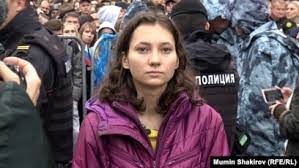
Olga Misik
From her statement to the court on May 11, 2021:
The prosecution is putting all its efforts into proving that I am implicated in the incident. I’m not going to spend much time showing that they can’t even do that professionally: They are using falsified fingerprint analysis, and, as you saw when you were examining the evidence, there was no trace of paint on my clothes….
But what does that matter when no law was broken? What difference does it make whether I was there or not when no crime was committed?….There is a crime, and it was committed by the police and the prosecutors. And I very much hope, Comrade Judge, that you will not become an accomplice to this crime.
This is precisely why I demand a complete and unconditional acquittal. I am not accepting any half measures, like settling for a fine. I am sure of my innocence and am prepared to uncompromisingly defend it to the end….
The past nine months have been very difficult, you know, and I wouldn’t like to repeat them. I kept thinking to myself, What could have happened if, and, Everything could have gone differently. But I was lying to myself, because nothing could have gone differently.
From the moment I picked up the constitution, my fate was set in stone, and I accepted it with pride. I made the right choice, and making the right choice in a totalitarian state will always have horrifying consequences. I always knew I’d end up behind bars—it was only a matter of when.
My lawyer brought up Sophie Scholl [a German student and anti-Nazi political activist] today. Her story is shockingly similar to mine. She was put on trial for flyers and graffiti; I’m being tried for posters and paint.
Like she was, I am essentially on trial for thought crimes. My trial is very similar to Sophie’s, and today’s Russia really resembles Nazi Germany.
Right up to the guillotine, Sophie did not stray from her beliefs. Her story inspired me not to agree to charges being dropped. Sophie Scholl is the embodiment of youth, individuality, and freedom. I would like to believe that to be another thing that makes us similar.
The Nazi regime eventually crumbled, as will the fascist regime in Russia. I don’t know when it will happen, be it a week, a year, or decade, but I know that someday we will be victorious, because love and youth always prevail….
Sophie Scholl’s last words before her execution were, “The sun still shines.” Indeed, the sun still shines. I couldn’t see it out the window of the detention center, but I always knew it was there. And if now, in such dark times, we can turn to the light, then maybe victory isn’t so far after all.
In his 1960 poem, “Conversation With an American Writer,” the Russian poet, Yevgeney Yevtushenko spoke for those Russians who had maintained their integrity in the face of Stalinist terror:
“You have courage,” they tell me.
It’s not true. I was never courageous.
I simply felt it unbecoming
to stoop to the cowardice of my colleagues.
Demonstrating his own moral courage, on August 22, 1968—the day after the Soviet Union invaded Czechoslovakia—Yevtushenko sent a telegram protesting the invasion to Communist Party Boss Leonid Brezhnev and Premier Aleksei Kosygin:
In Russia—under Czars or Commissars—acting on moral courage is no small thing.
A revered poet demonstrated it in 1968. And a teenage girl demonstrated it in 2021.
ABC NEWS, ALEXI KOSYGIN, ALTERNET, AMERICABLOG, AP, BABY BOOMER RESISTANCE, BBC, BLOOMBERG NEWS, BORIS YELTSIN, BUZZFEED, CATHERINE THE GREAT, CBS NEWS, CENSORSHIP, CNN, COMMUNISM, CROOKS AND LIARS, CZARS, CZECHOSLOVAKIA, DAILY KOZ, DONALD TRUMP, FACEBOOK, FIVETHIRTYEIGHT, HARPER’S MAGAZINE, HUFFINGTON POST, JOSEPH STALIN, LEONID BREZHNIEV, MEDIA MATTERS, MIKHAIL TUKHACHEVSKY, MOTHER JONES, MOVEON, MSNBC, NBC NEWS, NEW REPUBLIC, NEWSDAY, NEWSWEEK, NIKOLAI ZHILAYEV, NPR, OLGA MISIK, PBS NEWSHOUR, POLITICO, POLITICUSUSA, PROPAGANDA, RAW STORY, REUTERS, RUSSIA, SALON, SEATTLE TIMES, SLATE, TALKING POINTS MEMO, THE ATLANTIC, THE CHICAGO SUN-TIMES, THE CHICAGO TRIBUNE, THE DAILY BEAST, THE DAILY BLOG, THE GUARDIAN, THE HILL, THE HUFFINGTON POST, THE INTERCEPT, THE LOS ANGELES TIMES, THE NATION, THE NEW REPUBLIC, THE NEW YORK TIMES, THE NEW YORKER, THE VILLAGE VOICE, THE WASHINGTON POST, THINKPROGRESS, TIME, TRUTHDIG, TRUTHOUT, TWITTER, TWO POLITICAL JUNKIES, U.S. NEWS & WORLD REPORT, UKRAINE, UPI, USA TODAY, VLADIMIR PUTIN, VOLODYMYR ZELENSKY, WONKETTE, YEMELYAN PUGACHEF, YEVGENEY YEVTUSHENKO
In Bureaucracy, History, Law, Law Enforcement, Military, Politics, Social commentary on June 7, 2022 at 12:11 am
For 300 years, Russians feared the wrath of their czars, who ruthlessly decreed what their subjects could read, write and say.
Protests were brutally punished, even by so-called “enlightened” Czars. Catherine the Great had Cossack rebel Yemelyan Ivanovich Pugachev beheaded, then drawn and quartered.

Catherine the Great
Czarist rule ended in 1917, when the installation of a democratic Provisional Government. But just nine months later, the Bolsheviks seized power—and starvation, mass executions, forced exiles and repression of religion, speech and press followed until Communism collapsed in 1991.
Then came the wholesale corruption and ineptness of Boris Yeltsin’s brief reign. When Yeltsin picked Vladimir Putin, a former member of the KGB, as his successor, many Russians welcomed his arrival.
Unlike the fat, alcoholic Yeltsin, he appeared to be a man’s man who plunged into icy rivers, slammed opponents to the floor in judo matches, and—shirtless—hunted tigers and bears.
He promised that so long as ordinary Russians stayed out of politics, they would enjoy a level of personal independence totally absent during the 74-year Communist regime.
But, gradually, that promise was revealed as a lie.
At no time has that been more true than following his brutal invasion of Ukraine on February 24. Most Russians can’t imagine waging war against a “brotherly nation.”

Ukraine vs. Russia
Putin’s government unleashed a massive propaganda campaign to convince Russians that Russia was battling Fascists and taking no casualties. And many have believed it.
(Volodymyr Zelensky, Ukraine’s president, is Jewish, and Western intelligence agencies estimate that 7,000 to 15,000 Russian soldiers have died.)
Nevertheless, thousands flocked to streets and squares throughout Russia despite government threats of prosecution for high treason.
More than 6,500 demonstrators were arrested over a five-day period. Several Russian and Ukrainian news outlets were blocked for covering the invasion.
One of those who has repeatedly demonstrated against Putini’s repressive regime is Olga Misik, a former journalism student at the University of Moscow.
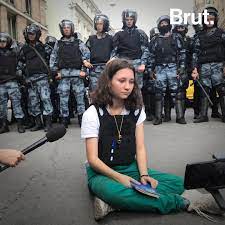
Olga Misik
Accused of vandalism, standing before a judge who could sentence her to literally any punishment he wished, 19-year-old Olga Misik dared to speak forbidden truths about life in Vladimir Putin’s Russia.
On May 11, 2021, she did so again in a Moscow district court.
Below follows relevant portions of her statement to the court:
And maybe I was scared on the way to the protest after all, but I knew I had no other choice. I understood that anything else would be wrong. That if I stayed silent this time, I would never be able to forgive myself….
Of course I was at that protest. I don’t regret it and more so am proud of my actions. In reality, I had no choice. I had to do everything in my power, thus I have no right to regret it. And if I had the option to go back in time, I would do it again.
If I was being threatened with execution, I would do it again. I would do it time and time again, until it finally started to make some change. They say that doing the same thing over and over expecting a different result is the definition of insanity.
I guess hope is insanity. But not doing something you believe in, just because everyone around you thinks it’s pointless, that is learned hopelessness. And better to be insane in your eyes than hopeless in my own….
Denying my participation in the protest would not only be unprincipled, it would erase all of the fear and agony, all we have achieved, all of my pain and rage. I can’t afford such dishonor with which our interrogator and prosecutor live their days….
A fascist government never seems fascist from the inside. It seems like just some minuscule, inconsequential censorship and some targeted repression that will never reach you. I’m not the one on trial today. Today, you are deciding not my fate but yours, and you still have a chance to do the right thing.
You can’t keep lying to yourselves. You know what goes on here. You know what it’s called. You know that there is good and evil, freedom and fascism, love and hatred, and denying that there are sides to take would be a colossal lie.
Those who chose evil have preordered their tickets to the defense table. The Hague awaits all who had a hand in this chaos. I am not promising victory tomorrow, the day after, in a year, or 10. But someday we will win, because love and youth always win. I can’t promise to make it there alive, but I really hope you live to see it.
You’re lying to yourselves if you maintain that I am here because of the protest at the office of the prosecutor general….You know why I’m here….You know what I’m actually being tried for.
For reading the constitution. For my political positions. For being named person of the year. For my principles. For my actions.
I might even be flattered by being singled out for a political trial, if only I really were singled out—when in fact the state is repressing anyone who has an opinion.

 Bureaucracybuster's Blog
ABC NEWS, ABORTION, ABRAHAM LINCOLN, ADOLF HITLER, ALBERT SPEER, ALTERNET, AMERICABLOG, AMY CONEY BARRETT, AP, BABY BOOMER RESISTANCE, BBC, BLOOMBERG NEWS, BRETT M. KAVANAUGH, BUZZFEED, CATHOLIC CHURCH, CBS NEWS, CLARENCE THOMAS, CNN, CROOKS AND LIARS, DAILY KOZ, DOBBS VS. JACKSON WOMEN’S HEALTH ORGANIZATION, FACEBOOK, FIVETHIRTYEIGHT, GERALD FORD, HARPER’S MAGAZINE, HUFFINGTON POST, JAMES A. GARFIELD, JOHN F. KENNEDY, JOHN J. ROBERTS, JOSEPH BIDEN, MAFIA, MEDIA MATTERS, MOTHER JONES, MOVEON, MSNBC, NBC NEWS, NEIL J. GORSUCH, NEW REPUBLIC, NEWSDAY, NEWSWEEK, NPR, ORGANIZED CRIME, PBS NEWSHOUR, POLITICO, POLITICUSUSA, RAW STORY, REUTERS, ROE V. WADE, Ronald Reagan, RUTH BADER GINSBURG, RUTH SENT US, SALON, SAMUEL A ALITO, SEATTLE TIMES, SLATE, TALKING POINTS MEMO, THE ATLANTIC, THE CHICAGO SUN-TIMES, THE CHICAGO TRIBUNE, THE DAILY BEAST, THE DAILY BLOG, THE GUARDIAN, THE HILL, THE HUFFINGTON POST, THE INTERCEPT, THE LOS ANGELES TIMES, THE NATION, THE NEW REPUBLIC, THE NEW YORK TIMES, THE NEW YORKER, THE VILLAGE VOICE, THE WASHINGTON POST, THEODORE ROOSEVELT, THINKPROGRESS, THIRD RICH, TIME, TRUTHDIG, TRUTHOUT, TWITTER, TWO POLITICAL JUNKIES, U.S. NEWS & WORLD REPORT, UNITED STATES SECRET SERVICE, UNITED STATES SUPREME COURT, UPI, USA TODAY, WILLIAM MCKINLEY, WITNESS SECURITY PROGRAM, WONKETTE
WHEN TYRANTS FACE RETRIBUTION: PART TWO (END)
In Bureaucracy, History, Law, Law Enforcement, Politics, Social commentary on June 22, 2022 at 12:12 amThe United States Marshals Service is now charged with protecting the nine Justices who comprise the Supreme Court of the United States.
Deputy U.S. marshals have had decades of experience in protecting Federal judges, members of Congress and organized crime witnesses
As protectors, they are probably best-known as the operators of the Justice Department’s Witness Security Program. Launched as part of the Organized Crime Control Act of 1970, they have successfully protected and relocated thousands of endangered organized crime witnesses.
But there are significant differences between the security provided for Mafia witnesses and that being provided for Supreme Court Justices.
While a witness is testifying, s/he receives 24-hour protection from five to a score of marshals. Since visits to courthouses are especially dangerous, marshals often use deception as a vital weapon in keeping their charges alive.
A caravan of marshals cars, with sirens blaring, will pull up to the front of a courthouse, with a deputy playing the role of the witness. While all eyes (including those of mob assassins) are focused on this, a postal truck will enter the building through an underground passage. Inside: The witness and one or two guards dressed as mailmen.
A witness security detail
Helicopters and speedboats have also been used to transport witnesses to and from court.
In at least one case, marshals installed Joseph “The Animal” Barboza, the most-feared Mafia hitman in New England, in a fortified room inside the courthouse. When it came time to testify, he would be brought into the courtroom through the judges’ elevator.
But once testifying is completed, the marshals no longer offer 24-hour protection. Instead, they provide witnesses (and their wives and children, if there are any) with new names, Social Security numbers, driver’s licenses and other records supporting their new identities.
Then they are shipped off to a new state where—hopefully—they can start their lives over on the right side of the law and safe from their enemies.
Thus, round-the-clock protection by the marshals isn’t intended to be permanent.
But in the case of at least six Supreme Court Justices this may well prove different. These are the ones who are preparing to strike down Roe v. Wade and re-criminalize abortion for millions of women.
To prevent attacks on the Justices at the Supreme Court, an eight-foot, “non-scalable” fence now surrounds the building.
Once a long-held fundamental right is revoked, anger toward those responsible becomes the natural reaction. And for some people, that anger can easily flare into violence.
Thanks to the Supreme Court’s January 22, 1973 Roe decision, abortion has been legal throughout the United States for 49 years. Those who have been born since can’t recall a time when it was a criminal offense.
On June 8, Nicholas John Roske, 26, of Simi Valley, California, was arrested by deputy U.S. marshals near Justice Brett Kavanaugh’s house in Maryland after threatening to kill the Justice. He was armed with a Glock 17 pistol, ammunition, a knife, zip ties, pepper spray and duct tape.
In this case, the marshals had been alerted by Roske’s threat. But the truly dangerous assassin is one who doesn’t announce his intentions and simply acts on them.
Knowing you are so hated that people want to murder you creates huge psychological pressures on those threatened. Some people become prisoners of their own bodyguard, venturing out only when absolutely necessary.
Others adopt a “Live it up, because tomorrow I may die” attitude. They chafe at the security regimen imposed on them, sometimes even trying to elude their protectors.
Security specialists for the Marshals Service have warned countless witnesses: “You’ve got to realize that your life’s in danger. Keep your eyes open. Use your head. Don’t lie to us. Stay close to us.
“Keep us apprised of everything that’s going on. Suppose you’re sitting out on your balcony and you see something flash. What could it be? A pair of binoculars? A rifle-scope? Be aware of your position, and help us protect you.”
Presidents have been protected by the United States Secret Service since 1901, when Vice President Theodore Roosevelt became the first Chief Executive to be assigned agents.
Before this, three Presidents had been assassinated—Abraham Lincoln (1865); James A. Garfield (1881) and William McKinley, Roosevelt’s predecessor (1901).
In 1963, John F. Kennedy would become the fourth.
Two attempts were made on Gerald Ford (1975) and, in 1981, Ronald Reagan was seriously wounded.
As a result, it’s unthinkable that a President would not be guarded round-the-clock.
But no Supreme Court Justice has ever been assassinated.
Justices have been able to come and go as they please, without even being recognized by the vast majority of citizens they affect with their rulings.
That will soon change—at least for those who intend to strike down Roe. They will become familiar faces—for those who hate them. Already, their home addresses have been splashed across the Internet.
At least 13 states will automatically ban abortion in the first and second trimesters if Roe is overturned. This will create legions of new enemies for the Justices. And there will be no end-date to this hatred.
Which means the Justices will likely live in fear—and under heavy armed guard—for the rest of their lives.
Share this: