Posts Tagged ‘ADULTERY’
1992 REPUBLICAN CONVENTION, ABC NEWS, ABORTION, ADULTERY, ALTERNET, AMERICABLOG, AP, BABY BOOMER RESISTANCE, BBC, BILL CLINTON, BLOOMBERG NEWS, BOB LIVINGSTON, BUZZFEED, CBS NEWS, CNN, CROOKS AND LIARS, DAILY KOS, DEFENSE OF MARRIAGE ACT (DOMA), DEFICITS, DENNIS HASTERT, ECONOMY, EDWIN MEESE, FAMILY VALUES, FIVETHIRTYEIGHT, GEORGE H.W. BUSH, HARPER’S MAGAZINE, HOMOSEXUALITY, HUFFINGTON POST, JERRY FALWELL, MEDIA MATTERS, MIA FARROW, MONICA LEWINSKY, MORAL MAJORITY, MOTHER JONES, MOVEON, MSNBC, NBC NEWS, NEW REPUBLIC, NEWSDAY, NEWSWEEK, NEWT GINGRICH, NPR, PBS NEWSHOUR, POLITICO, POLITICUSUSA, PORNOGRAPHY, RAW STORY, REPUBLICANS, REUTERS, Ronald Reagan, SALON, SEATTLE TIMES, SLATE, TALKING POINTS MEMO, TARGET CORPORATION, THE ATLANTIC, THE CHICAGO SUN-TIMES, THE CHICAGO TRIBUNE, THE DAILY BEAST, THE DAILY BLOG, THE GUARDIAN, THE HILL, THE HUFFINGTON POST, THE INTERCEPT, THE LOS ANGELES TIMES, THE NATION, THE NEW REPUBLIC, THE NEW YORK TIMES, THE NEW YORKER, THE VILLAGE VOICE, THE WASHINGTON POST, THINKPROGRESS, TIME, TRANSGENDERS, TRUTHDIG, TRUTHOUT, TWITTER, U.S. NEWS & WORLD REPORT, UPI, USA TODAY, WOODY ALLEN, WORLD WAR 11
In Bureaucracy, Business, History, Law, Law Enforcement, Politics, Social commentary on May 26, 2016 at 12:33 am
In 1992, Republicans wanted to re-elect President George H.W. Bush, who had succeeded Ronald Reagan in 1989.
But they had a problem: Whipping up voter enthusiasm for him.
Bush wasn’t charismatic like Reagan, so he didn’t inspire the intense loyalty Reagan had. He was seen as drab, even wimpy.

George H.W. Bush
Ironically, Bush had performed heroically during World War II.
On August 1, 1944, Bush piloted one of four aircraft that attacked the Japanese installations on Chichijima.
Bush’s aircraft was hit by flak and his engine caught on fire. Despite this, Bush completed his attack and released bombs over his target, scoring several damaging hits.
Reagan, by contrast, spent World War II on a Hollywood sound stage as part of the First Motion Picture Unit, turning out propaganda films to boost civilian morale.
Yet he was seen by millions as a genuine war hero.
Then there was the stalled economy.
Early in his term, Bush faced leftover deficits spawned by the Reagan years. Reagan had given tax-cuts to the rich, bloated the military budget and cut government programs to aid the poor and middle class.
As a result, the deficit had grown by 1990 to $220 billion, three times its size since 1980.

In 1991, many corporations, claiming the need to reorganize, laid off hundreds of thousands of workers, who had believed that their jobs were secure.
By mid-year, the unemployment rate reached 7.8%, the highest since 1984. In September 1992, the Census Bureau reported that 14.2% of all Americans lived in poverty.
Bush’s Democratic challenger in 1992 was Bill Clinton, who had been the Governor of Arkansas from 1979 to 1981 and 1983 to 1992. At 45, Clinton was young, vigorous, and for many evoked memories of an equally young and vigorous John F. Kennedy.
To overcome these disadvantages, Republicans needed a way to generate enthusiasm among their base.
The answer: “Family values.”
Supposedly this meant support for values traditionally learned or reinforced within a family, such as those of high moral standards and discipline.
In reality, it was a Right-wing excuse for the failed economic policies of the Reagan-Bush years.
By citing “a decline in family values,” Bush’s re-election team could blame jobless Americans for their own misery: “If only you had lived up to the high standards set by your Republican superiors, you wouldn’t now be in this position.”
“Family values” carried a sexual subtext as well. Since abortion had became legal in 1973, Republicans had appropriated re-criminalizing it as their pet sex-related issue.
During the Reagan years, Attorney General Edwin Meese had launched a crackdown on pornography. And much of Reagan’s support had come from sexually-obsessed Christian Right evangelists such as Jerry Falwell of the “Moral Majority.”
Thus, a Bush supporter held up a sign reading, “Woody Allen is Clinton’s Adviser on Family Values,” at the 1992 Republican Presidential convention. Allen had recently become notorious for an affair with the adopted stepdaughter of his lover, actress Mia Farrow.
The slogan wasn’t enough to get Bush re-elected. Bill Clinton was elected President.
But “family values” lived on for decades as Republican code language for: “Only Republicans are sexually upright.”
Throughout the eight-year Clinton Presidency, Republicans focused on his longtime reputation as a sex-crazed Rasputin. When the news broke that Clinton had been diddling a White House intern named Monica Lewinsky, Republicans demanded his resignation.
When Clinton refused to resign, they unsuccessfully tried to impeach him. Meanwhile, they ignored the extramarital affairs of their own members—such as then-House Speaker Newt Gingrich.
Gingrich had been boffing a mistress while demanding Clinton’s impeachment for similar adultery. After Gingrich resigned from the House of Representatives in 1999, his would-be successor, Bob Livingston, was forced to resign from Congress. He had been outed by Hustler publisher Larry Flynt as a serial philanderer.
In 1996, Republicans pushed through Congress the Defense of Marriage Act (DOMA) which defined marriage for federal purposes as the union of one man and one woman. It allowed states to refuse to recognize same-sex marriages allowed in other states.
DOMA was advertised as a necessary defense against “predatory homosexuals” who, like vampires, were thought to be preying on innocent heterosexuals.
A major backer of anti-gay legislation was Dennis Hastert, Republican Speaker of the House from 1999 to 1007.

Dennis Hastert
In 2006, Hastert spearheaded a bill to toughen punishments for sex crimes against children.
“We’ve all seen the disturbing headlines about sex offenders and crimes against children,” said Hastert. “Protecting our children from Internet predators and child exploitation enterprises are just as high a priority as securing our border from terrorists.”
On April 29, 2016, a federal judge repeatedly damned Hastert as a “serial child molester” for sexually abusing several boys he coached on the Yorkville High School wrestling team in the 1960s and 1970s.
Having targeted the poor, blacks, Hispanics, women and gays, Republicans are now training their sights on transgenders.
And Target Corporation’s April 19 announcement that its customers could pick the bathroom that “matched their gender identity” gave Republicans a new venue for their attacks on sex-related issues.
There is no known epidemic of transgender attacks on heterosexuals in bathrooms. But Republicans will ride this issue so long as there are citizens willing to believe it.
ABC NEWS, ADULTERY, AIRLINES, ANTHEM INSURANCE, ASHLEY MADISON, BUSINESS, CBS NEWS, CHINA, CNN, COMPUTER SECURITY, CREDIT CARDS, CYBERSECURITY, DAIRY QUEEN, FACEBOOK, HACKING, JOHN HERING, JPMORGAN/CHASE, LILY TOMLIN, LOOKOUT INC., LUGGAGE THEFTS, MA BELL, NBC NEWS, SOCIAL SECURITY, SONY PICTURES, STAPLES, TARGET, THE CHICAGO SUN-TIMES, THE CHICAGO TRIBUNE, THE LOS ANGELES TIMES, THE NEW YORK TIMES, TWITTER, U.S. POSTAL SERVICE
In Bureaucracy, Business, Entertainment, Law, Law Enforcement, Social commentary on April 14, 2016 at 12:07 am
It’s the nightmare-come-true for corporate America.
Name-brand companies, trusted by millions, hit with massive data breaches.
And with a series of keystrokes, the most sensitive financial and personal information of their employees and/or customers is compromised.
Among those companies:
- Target
- Kmart
- Home Depot
- JPMorgan/Chase
- Staples
- Dairy Queen
- Anthem, Inc.
- Sony Pictures
- Primera Blue Cross
- U.S. Postal Service
Click here: Data Breach Tracker: All the Major Companies That Have Been Hacked | Money.com
And as of July 15, 2015, Ashley Madison joined this list.
Ashley Madison is, of course, the notorious website for cheating wives and husbands.
Launched in 2001, its catchy slogan is: “Life is short. Have an affair.”
One of its ads featured a photo of a woman apparently kneeling at the feet of a bare-chested man, her hand passionately clawing at his belt. Next to her was the caption: “Join FREE & change your life today. Guaranteed!”

Now millions of its clients may find their lives changed in ways they never imagined–and for the worse.
Ashley Madison claims to have more than 37 million members. And now, untold numbers of them may find their lives changed forever.
Its hackers were enraged at the company’s refusal to fully delete users’ profiles unless it received a $19 fee.
Referring to themselves as “The Impact Team,” they stated in an online manifesto: “Full Delete netted [Avid Life Media, the parent company of Ashley Madison] $1.7 million in revenue in 2014. It’s also a complete lie.
“Users almost always pay with credit card; their purchase details are not removed as promised, and include real names and address, which is of course the most important information the users want removed.”
On July 20, Avid Life Media defended the service, and said it would make it free.

The hackers demanded: “AM [Ashley Madison] AND EM [Established Men] MUST SHUT DOWN IMMEDIATELY PERMANENTLY.
“We have taken over all systems in your entire office and production domains, all customer information databases, source code repositories, financial records, emails.
“Shutting down AM and EM will cost you, but non-compliance will cost you more.”
The hackers threatened to “release all customer records, including profiles with all the customers’ secret sexual fantasies and matching credit card transactions, real names and addresses, and employee documents and emails.”
ABC NEWS, ADULTERY, AIRLINES, ANTHEM INC., ASHLEY MADISON, BUSINESS, CBS NEWS, CHINA, CNN, COMPUTER SECURITY, CREDIT CARDS, CYBERSECURITY, DAIRY QUEEN, FACEBOOK, HACKING, JOHN HERING, JPMORGAN/CHASE, LILY TOMLIN, LOOKOUT, LUGGAGE THEFTS, MA BELL, NBC NEWS, ROWAN & MARTIN'S LAUGH-IN, SOCIAL SECURITY, STAPLES, TARGET, THE CHICAGO SUN-TIMES, THE CHICAGO TRIBUNE, THE LOS ANGELES TIMES, THE NEW YORK TIMES, THE WALL STREET JOURNAL, THE WASHINGTON POST, TWITTER, USA TODAY
In Bureaucracy, Business, Law Enforcement, Social commentary on August 26, 2015 at 9:50 am
It’s the nightmare-come-true for corporate America.
Name-brand companies, trusted by millions, hit with massive data breaches.
And with a series of keystrokes, the most sensitive financial and personal information of their employees and/or customers is compromised.
Among those companies:
- Target
- Kmart
- Home Depot
- JPMorgan/Chase
- Staples
- Dairy Queen
- Anthem, Inc.
- Sony Pictures
- Primera Blue Cross
- U.S. Postal Service
Click here: Data Breach Tracker: All the Major Companies That Have Been Hacked | Money.com
And as of July 15, Ashley Madison joined this list.
Ashley Madison is, of course, the notorious website for cheating wives and husbands.
Launched in 2001, its catchy slogan is: “Life is short. Have an affair.”
One of its ads featured a photo of a woman apparently kneeling at the feet of a bare-chested man, her hand passionately clawing at his belt. Next to her was the caption: “Join FREE & change your life today. Guaranteed!”
Ashley Madison claims to have more than 37 million members. And now, untold numbers of them may find their lives changed forever.
Its hackers were enraged at the company’s refusal to fully delete users’ profiles unless it received a $19 fee.
Referring to themselves as “The Impact Team,” they stated in an online manifesto: “Full Delete netted [Avid Life Media, the parent company of Ashley Madison] $1.7 million in revenue in 2014. It’s also a complete lie.
“Users almost always pay with credit card; their purchase details are not removed as promised, and include real names and address, which is of course the most important information the users want removed.”
On July 20, Avid Life Media defended the service, and said it would make it free.
The hackers demanded: “AM [Ashley Madison] AND EM [Established Men] MUST SHUT DOWN IMMEDIATELY PERMANENTLY.
“We have taken over all systems in your entire office and production domains, all customer information databases, source code repositories, financial records, emails.
“Shutting down AM and EM will cost you, but non-compliance will cost you more.”
The hackers threatened to “release all customer records, including profiles with all the customers’ secret sexual fantasies and matching credit card transactions, real names and addresses, and employee documents and emails.”
ABC NEWS, ADULTERY, AIRLINES, ANTHEM INC., ASHLEY MADISON, BUSINESS, CBS NEWS, CHINA, CNN, COMPUTER SECURITY, CREDIT CARDS, CYBERSECURITY, DAIRY QUEEN, FACEBOOK, HACKING, JOHN HERING, JPMORGAN/CHASE, LILY TOMLIN, LOOKOUT, LUGGAGE THEFTS, MA BELL, NBC NEWS, ROWAN & MARTIN'S LAUGH-IN, SOCIAL SECURITY, STAPLES, TARGET, THE CHICAGO SUN-TIMES, THE CHICAGO TRIBUNE, THE LOS ANGELES TIMES, THE NEW YORK TIMES, THE WALL STREET JOURNAL, THE WASHINGTON POST, TWITTER, USA TODAY
In Bureaucracy, Business, History, Law, Law Enforcement, Social commentary on July 21, 2015 at 9:35 am
It’s become as routine as the robbery of the corner liquor store.
Name-brand companies, trusted by millions, hit with massive data breaches that compromise their customers’ and/or employees’ most sensitive financial and personal information.
Among those companies:
- Target
- Kmart
- Home Depot
- JPMorgan/Chase
- Staples
- Dairy Queen
- Anthem, Inc.
- Sony Pictures
- Primera Blue Cross
- U.S. Postal Service
Click here: Data Breach Tracker: All the Major Companies That Have Been Hacked | Money.com
And as of July 15, Ashley Madison joined this list.
Ashley Madison is, of course, the notorious website for cheating wives and husbands.
Launched in 2001, its catchy slogan is: “Life is short. Have an affair.”
One of its ads featured a photo of a woman apparently kneeling at the feet of a bare-chested man, her hand passionately clawing at his belt. Next to her was the caption: “Join FREE & change your life today. Guaranteed!”
Ashley Madison claims to have more than 37 million members.
Calling themselves “The Impact Team,” hackers appear to be enraged at the company’s “full delete” service, which promises to completely erase a user’s profile and all associated data for a $19 fee.
“Full Delete netted [Avid Life Media, the parent company of Ashley Madison] $1.7 million in revenue in 2014,” the hackers were quoted as saying in an online manifesto. “It’s also a complete lie.
“Users almost always pay with credit card; their purchase details are not removed as promised, and include real names and address, which is of course the most important information the users want removed.”
On July 20, Avid Life Media defended the service, and said it would make it free.
The hackers demanded: “AM [Ashley Madison] AND EM [Established Men] MUST SHUT DOWN IMMEDIATELY PERMANENTLY.
“We have taken over all systems in your entire office and production domains, all customer information databases, source code repositories, financial records, emails.
“Shutting down AM and EM will cost you, but non-compliance will cost you more.”
The hackers threatened to “release all customer records, including profiles with all the customers’ secret sexual fantasies and matching credit card transactions, real names and addresses, and employee documents and emails.”
Interestingly, the hackers did not target the company’s “CougarLife” website, which caters to female members seeking “a young stud.”
Avid Life Media assured its customers that it had hired “one of the world’s top IT security teams” to work on the breach:
“At this time, we have been able to secure our sites, and close the unauthorized access points. We are working with law enforcement agencies, which are investigating this criminal act.”
This statement gives new meaning to the phrase, “Closing the barn door after the cow has gotten out.”
It’s almost comical, except for the fact that the marriages of millions of people are likely to be threatened by the release of such information.
And it raises the question: Why wasn’t this “top IT security team” hired at the outset?
A website offering cheating services to those wealthy enough to afford high-priced fees is an obvious target for hackers. After all, its database is a blackmailer’s dream-come-true.
This latest breach comes about two months after a similar dating site, Adult FriendFinder–with an estimated 64 million members–was hit with a similar attack.
Again, it was clear that a site like this would be a prime target for those seeking information for blackmail. Yet apparently its owners didn’t care enough about the privacy of their customers to provide adequate security.
“Without question, this is incredibly valuable information,” said J.J. Thompson, founder and chief executive of Rook Security, an IT security firm.
“[Ashley Madison’s customers] are now vulnerable to a significant secret.”
As usual when a corporation’s data breach occurs, Ashley Madison issued a reassuring statement: “We are working with law enforcement agencies, which are investigating this criminal act.
“Any and all parties responsible for this act of cyber-terrorism will be held responsible.”
Brave-sounding words. But if the hackers make good on their threat, many prominent men in business and politics may soon find themselves facing expensive divorces.
And if that happens, at least some of them may well decide to take out their anger and embarrassment on the websits that assured them that the highly private information they shared was “100% secure.”
That could set a precedent for lawsuits by other victims of such data breaches. Which, in turn, could force profit-obsessed corporations to responsibly protect the highly sensitive information entrusted to them.
There is an important lesson to be learned from this latest disaster.
“Stuff that’s online is pretty much not private, no matter what you might hope or think or wish for,” said Geoff Webb, senior director of solution strategy for security management firm NetIQ.
Old records, like transactions and account details, remain in company databases long after you’ve deleted an account, he said, because the company needs them for tax and other business purposes.
“There used to be an old saying that everybody ends up naked on the Internet at some point,” said Webb.
Although that was meant figuratively, patrons of websites like Ashley Madison could soon find it applying literally.
ABC NEWS, ADULTERY, AIRLINES, ANTHEM INC., ASHLEY MADISON, BUSINESS, CBS NEWS, CHINA, CNN, COMPUTER SECURITY, CREDIT CARDS, CYBERSECURITY, DAIRY QUEEN, FACEBOOK, HACKING, JOHN HERING, JPMORGAN/CHASE, LILY TOMLIN, LOOKOUT, LUGGAGE THEFTS, MA BELL, NBC NEWS, ROWAN & MARTIN'S LAUGH-IN, SOCIAL SECURITY, STAPLES, TARGET, THE CHICAGO SUN-TIMES, THE CHICAGO TRIBUNE, THE LOS ANGELES TIMES, THE NEW YORK TIMES, THE WALL STREET JOURNAL, THE WASHINGTON POST, TWITTER, USA TODAY
In Bureaucracy, Business, Law, Law Enforcement, Social commentary on July 20, 2015 at 12:20 pm
Comedian Lily Tomlin rose to fame on the 1960s comedy hit, Rowan & Martin’s Laugh-In, as Ernestine, the rude, sarcastic switchboard operator for Ma Bell.
She would tap into customers’ calls, interrupt them, make snide remarks about their personal lives. And her victims included celebrities as much as run-of-the-mill customers.

Lily Tomlin as Ernestine
She introduced herself as working for “the phone company, serving everyone from presidents and kings to the scum of the earth.”
But perhaps the line for which her character is best remembered was: “We don’t care. We don’t have to. We’re the phone company.”
Watching Ernestine on Laugh-In was a blast for millions of TV viewers. But facing such corporate arrogance in real-life is no laughing matter.
Clearly, too many companies take the same attitude as Ernestine: “We don’t care. We don’t have to.”
This is especially true for companies that are supposed to safeguard their customers’ most sensitive information–such as their credit card numbers, addresses, emails and phone numbers.
An October 22, 2014 “commentary” published in Forbes magazine raised the highly disturbing question: “Cybersecurity: Does Corporate America Really Care?”
And the answer is clearly: No.
Its author is John Hering, co-founder and executive director of Lookout, which bills itself as “the world leader in mobile security for consumers and enterprises alike.”
Click here: Cybersecurity: Does corporate America really care?
October, 2014 proved a bad month for credit card-using customers of Kmart, Staples and Dairy Queen.
All these corporations reported data breeches involving the theft of credit card numbers of countless numbers of customers.
Earlier breaches had hit Target, Home Depot and JPMorgan/Chase.
And on February 5, 2015, health insurance giant Anthem Inc. announced that hackers had breached its computer system and accessed the medical records of tens of millions of its customers and employees.

Anthem, the nation’s second-largest health insurer, said the infiltrated database held records on up to 80 million people.
Among the customers’ information accessed:
- Names
- Birthdates
- Social Security numbers
- Member ID numbers
- Addresses
- Phone numbers
- Email addresses and
- Employment information.
Some of the customer data may also include details on their income.
Click here: Anthem hack exposes data on 80 million; experts warn of identity theft – LA Times
Bad as that news was, worse was to come.
A February 5 story by the Wall Street Journal revealed that Anthem stored the Social Security numbers of 80 million customers without encrypting them.

The company believes that hackers used a stolen employee password to access the database
Anthem’s alleged reason for refusing to encrypt such sensitive data: Doing so would have made it harder for the company’s employees to track health care trends or share data with state and Federal health providers.
Anthem spokeswoman Kristin Binns blamed the data breach on employers and government agencies who “require us to maintain a member’s Social Security number in our systems so that their systems can uniquely identify their members.”
She said that Anthem encrypts personal data when it moves in or out of its database–but not where it is stored.
This is a commonplace practice in the healthcare industry.
The FBI is now investigating the hack.
According to an anonymous source, the hackers used malware that has been used almost exclusively by Chinese cyberspies.
Naturally, China has denied any wrongdoing. With a completely straight face, Chinese Foreign Ministry spokesman Hong Lei said:
“We maintain a cooperative, open and secure cyberspace, and we hope that countries around the world will make concerted efforts to that end.”
He also said that the charge that the hackers were Chinese was “groundless.”
Click here: Health Insurer Anthem Didn’t Encrypt Stolen Data – WSJ
Meanwhile, John Hering’s complaints remain as valid today as they did last October.
“One thing is clear,” writes Hering. “CEOs need to put security on their strategic agendas alongside revenue growth and other issues given priority in boardrooms.”
Hering warns that “CEOs don’t seem to be making security a priority.” And he offers several reasons for this:
- The sheer number of data compromises;
- Relatively little consumer outcry;
- Almost no impact on the companies’ standing on Wall Street;
- Executives may consider such breaches part of the cost of doing business.
“There’s a short-term mindset and denial of convenience in board rooms,” writes Hering.
“Top executives don’t realize their systems are vulnerable and don’t understand the risks. Sales figures and new products are top of mind; shoring up IT systems aren’t.”
There are three ways corporations can be forced to start behaving responsibly on this issue.
- Smart attorneys need to start filing class-action lawsuits against companies that refuse to take steps to protect their customers’ private information. There is a name for such behavior: Criminal negligence. And there are laws carrying serious penalties for it.
- There must be Federal legislation to ensure that multi-million-dollar fines are levied against such companies–and especially their CEOs–when such data breaches occur.
- Congress should enact legislation allowing for the prosecution of CEOs whose companies’ negligence leads to such massive data breaches. They should be considered as accessories to crime, and, if convicted, sentenced to lengthy prison terms.
Only then will the CEO mindset of “We don’t care, we don’t have to” be replaced with: “We care, because our heads will roll if we don’t.”
2012 ELECTION, 2016 PRESIDENTIAL RACE, ABC NEWS, ADOLF HITLER, ADULTERY, CBS NEWS, CNN, FACEBOOK, HUMOR, JOSEPH MCCARTHY, LANGUAGE, NBC NEWS, NEWT GINGRICH, OPEN MARRIAGE, REPUBLICANS, SOUTH CROLINA PRIMARY, THE CHICAGO SUN-TIMES, THE CHICAGO TRIBUNE, THE LOS ANGELES TIMES, THE NEW YORK TIMES, THE WASHINGTON POST, TWITTER, USA TODAY
In Bureaucracy, History, Politics, Social commentary on February 2, 2015 at 12:09 am
Even so every good tree bringeth forth good fruit; but a corrupt tree bringeth forth evil fruit. A good tree cannot bring forth evil fruit, neither can a corrupt tree bring forth good fruit.
Every tree that bringeth not forth good fruit is hewn down, and cast into the fire. Wherefore by their fruits ye shall know them.
—Matthew 7: 17-20
Meet the Gingrich Twins: Good Newt and Bad Newt.
Both of them ran–unsuccessfully–for President in 2012. And both of them plan to again seek the Oval Office in 2016.
Both of them also have much to teach America about the effective–and unscrupulous–use of language.as used by ambitious, ruthless politicians.
Here’s how Good Newt responded to a question by CNN Moderator John King during the GOP Presidential debate at Charleston, South Carolina, on January 19, 2012:

Newt Gingrich, once again giving “the finger” to America
King: As you know, your ex-wife gave an interview to ABC News and another interview with The Washington Post.
And this story has now gone viral on the internet. In it, she says that you came to her in 1999, at a time when you were having an affair. She says you asked her, sir, to enter into an open marriage. Would you like to take some time to respond to that?
Good Newt: No, but I will. I think the destructive, vicious, negative nature of much of the news media makes it harder to govern this country, harder to attract decent people to run for public office. And I am appalled that you would begin a presidential debate on a topic like that….
To take an ex-wife and make it two days before the primary a significant question for a presidential campaign is as close to despicable as anything I can imagine….
Every personal friend I have who knew us in that period said the story was false. We offered several of them to ABC to prove it was false.
They weren’t interested because they would like to attack any Republican. They’re attacking the governor. They’re attacking me. I’m sure they’ll presently get around to Senator Santorum and Congressman Paul.
Good Newt is “appalled” that anyone could stoop so low. He’s concerned not only for himself and his party, but the country.
Unfortunately, for Good Newt, he has an identical evil twin: Bad Newt. And sometimes people–especially Democrats–mistake one for the other.
It was Bad Newt who, as Speaker of the House of Representatives, wrote a 1996 memo that encouraged Republicans to “speak like Newt.”
Entitled “Language: A Key Mechanism of Control,” it urged Republicans to attack Democrats with such words as “corrupt,” “selfish,” “destructive,” “hypocrisy,” “liberal,” “sick,” and “traitors.”
Even worse, Bad Newt encouraged the news media to disseminate such accusations. Among his suggestions:
- “Fights make news.”
- Create a “shield issue” to deflect criticism: “A shield issue is, just, you know, your opponent is going to attack you as lacking compassion. You better…show up in the local paper holding a baby in the neonatal center.”
In the memo, Bad Newt advised:
“….In the video “We are a Majority,” Language is listed as a key mechanism of control used by a majority party, along with Agenda, Rules, Attitude and Learning.
As the tapes have been used in training sessions across the country and mailed to candidates we have heard a plaintive plea: ‘I wish I could speak like Newt.’
“That takes years of practice. But, we believe that you could have a significant impact on your campaign and the way you communicate if we help a little. That is why we have created this list of words and phrases….
“This list is prepared so that you might have a directory of words to use in writing literature and mail, in preparing speeches, and in producing electronic media.
“The words and phrases are powerful. Read them. Memorize as many as possible. And remember that like any tool, these words will not help if they are not used.”
Here is the list of words Bad Newt urged his followers to use in describing “the opponent, their record, proposals and their party”:
- abuse of power
- anti- (issue): flag, family, child, jobs
- betray
- bizarre
- bosses
- bureaucracy
- cheat
- coercion
- “compassion” is not enough
- collapse(ing)
- consequences
- corrupt
- corruption
- criminal rights
- crisis
- cynicism
- decay
- deeper
- destroy
- destructive
- devour
- disgrace
- endanger
- excuses
- failure (fail)
- greed
- hypocrisy
- ideological
- impose
- incompetent
- insecure
- insensitive
|
- intolerant
- liberal
- lie
- limit(s)
- machine
- mandate(s)
- obsolete
- pathetic
- patronage
- permissive attitude
- pessimistic
- punish (poor …)
- radical
- red tape
- self-serving
- selfish
- sensationalists
- shallow
- shame
- sick
- spend(ing)
- stagnation
- status quo
- steal
- taxes
- they/them
- threaten
- traitors
- unionized
- urgent (cy)
- waste
- welfare
|
Yes, speaking like Newt–or Adolf Hitler or Joseph McCarthy–“takes years of practice.”
So you can understand why Good Newt hates being mistaken for his evil twin, Bad Newt.
Unfortunately, they look–and sound–so alike it’s impossible to tell them apart.
But since they’re both 71, perhaps one day soon we’ll find out which one we’re left with–Good Newt or Bad Newt.
Unless, of course, they both drop off at the same time. Then we will never know which was which.
It’s definitely a mystery worth living with.
2012 PRESIDENTIAL RACE, ABC NEWS, ADULTERY, BARACK OBAMA, BIBLE, BILL MAHER, BIRTH CONTROL, CATHOLICS, CBS NEWS, CIVIL LIBERTIES, CNN, ELEANOR ROOSEVELT, FACEBOOK, FRANKLIN GRAHAM, HOMOSEXUALITY, ISLAM, JESUS CHRIST, JEWS, MITT ROMNEY, MUSLIMS, NBC NEWS, NEWT GINGRICH, RELIGION, REPUBLICAN PARTY, RICHARD FEYNMAN, RICK SANTORUM, SAUDI ARABIA, SCIENCE, SLAVERY, SPANISH INQUISITION, SUPREME COURT, TEA PARTY, THE CHICAGO SUN-TIMES, THE CHICAGO TRIBUNE, THE LOS ANGELES TIMES, THE NEW YORK TIMES, THE WALL STREET JOURNAL, THE WASHINGTON POST, THEOLOGY, TOMAS DE TORQUEMADA, TWITTER, USA TODAY, WAR, WOMEN
In Bureaucracy, History, Law, Military, Politics, Social commentary on January 22, 2015 at 12:10 am
On February 18, 2012, Republican Presidential candidate Rick Santorum warned about the “phony theology” of President Barack Obama.
“It’s not about you,” Santorum told supporters of the right-wing Tea Party in Columbus, Ohio. “It’s not about your quality of life. It’s not about your jobs.
“It’s about some phony ideal. Some phony theology. Oh, not a theology based on the Bible. A different theology.”
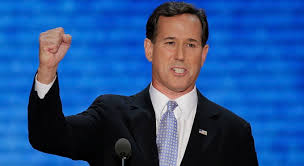
Rick Santorum
Which raises an interesting question: What would a Bible-based agenda mean for the country?
The death penalty would be vastly expanded to cover such “crimes” as:
- Sabbath-breaking: Because the Lord considers it a holy day, anyone who works on the Sabbath must be put to death. (Exodus 31:12-15)
- Adultery: If a man commits adultery with another man’s wife, both the man and the woman must be put to death. (Leviticus 20:10)
- Fornication: A priest’s daughter who loses her honor by committing fornication and thereby dishonors her father also, shall be burned to death. (Leviticus 21:9)
- Nonbelievers: They entered into a covenant to seek the Lord, the God of their fathers, with all their heart and soul; and everyone who would not seek the Lord, the God of Israel, was to be put to death, whether small or great, whether man or woman. (2 Chronicles 15:12-13)
- Homosexuality: If a man also lies with mankind, as he lies with a woman, both of them have committed an abomination. They shall surely be put to death. Their blood shall be upon them. (Leviticus 20-13)

A modern-day stoning–in Somalia
The Thirteenth Amendment to the Constitution–which forbids slavery–would be repealed. The Bible not only permits slavery but lays out rules for its practice–such as:
Almost all scientific progress would be discarded, since most of its findings conflict with the Bible:
- One generation passes away, and another generation comes: but the earth abides forever. (Ecclesiastes 1:4). This claim is totally contradicted by what astronomers now know about the eventual fate of the Earth: In about 7.6 billion years, the sun will exhaust its nuclear fuels. This will vastly increase its heat and gravitational pull, and at least Mercury, Earth and Venus will be vaporized.

The sun
- The Bible speaks of a world where physical laws are often violated by the will of God. Thus, Jesus turns water into wine and raises Lazarus from the dead; Jonah lives inside a fish for three days; Noah dies at 950 years; and demons are exorcised.
- In Biblical times, mental illness was seen as a manifestation of demonic possession. Today we know that mental illness has nothing to do with evil spirits.
Laws guaranteeing equal rights for women would be repealed:
- I do not permit a woman to teach or to have authority over a man; she must be silent. (1 Timothy 12:10)
- Wives, submit to your husbands as to the Lord. (Ephesians 5:22)
- A woman should learn in quietness and full submission. (1 Timothy 2:11)
- But if…and evidence of the girl’s virginity is not found, they shall bring the girl to the entrance of her father’s house and there her townsman shall stone her to death. (Deuteronomy 22:20-21)
Military conflicts would be fought without regard to the Geneva Convention–as the Israelites did:
- “You are my battle-ax and sword,” says the Lord. “With you I will shatter nations and destroy many kingdoms. With you I will shatter armies, destroying the horse and rider, the chariot and charioteer. With you I will shatter men and women, old people and children, young men and maidens. With you I will shatter shepherds and flocks, farmers and oxen, captains and rulers.” (Jeremiah 51:20-23)

Depiction of the taking of Jericho by the Israelites
- Samuel said to Saul, “This is what the Lord Almighty says: ‘I will punish the Amalekites for what they did to Israel when they waylaid them as they came up from Egypt. Now go, attack the Amalekites and totally destroy everything that belongs to them. Do not spare them; put to death men and women, children and infants, cattle and sheep, camels and donkeys.’” (1 Samuel 15, 1-3)
* * * * *
Yes, a nation governed by “a theology based on the Bible” would be one far different from the United States we know today.
Since a number of Old Testament practices might lend themselves to easy abuse, this is not a matter to be taken lightly.
2012 PRESIDENTIAL RACE, ABC NEWS, ADULTERY, BARACK OBAMA, BIBLE, BILL MAHER, BIRTH CONTROL, CATHOLICS, CBS NEWS, CIVIL LIBERTIES, CNN, ELEANOR ROOSEVELT, FACEBOOK, FRANKLIN GRAHAM, HOMOSEXUALITY, ISLAM, JESUS CHRIST, JEWS, MITT ROMNEY, MUSLIMS, NBC NEWS, NEWT GINGRICH, RELIGION, REPUBLICAN PARTY, RICHARD FEYNMAN, RICK SANTORUM, SAUDI ARABIA, SCIENCE, SLAVERY, SPANISH INQUISITION, SUPREME COURT, TEA PARTY, THE CHICAGO SUN-TIMES, THE CHICAGO TRIBUNE, THE LOS ANGELES TIMES, THE NEW YORK TIMES, THE WALL STREET JOURNAL, THE WASHINGTON POST, THEOLOGY, TOMAS DE TORQUEMADA, TWITTER, USA TODAY, WAR, WOMEN
In Bureaucracy, History, Law, Military, Politics, Social commentary on January 21, 2015 at 12:20 am
Franklin Graham, son of Billy Graham, America’s most famous preacher, spends a lot of time thinking about who qualifies as a Christian–and who doesn’t.
He said just that on the February 21, 2012 edition of the MSNBC show, “Morning Joe.”

Franklin Graham
First, however, he offered his views on the relative Christian dedication of the major contenders for the Presidency in 2012:
President Barack Obama: “Islam sees him as a son of Islam…. I can’t say categorically that [Obama is not Muslim] because Islam has gotten a free pass under Obama.”
Former Speaker of the House Newt Gingrich:“Newt’s been married several times… but he could make a good candidate. I think Newt is a Christian. At least he told me he is.”
Former Pennsylvania U.S. Senator Rick Santorum: “His values are so clear on moral issues. No question about it. I think he is, no question, a man of faith.”
Former Massachusetts Governor Mitt Romney: “I’m just saying most Christians would not recognize Mormonism. Of course they believe in Jesus Christ, but they have a lot of other things that they believe in, too, that we don’t accept theologically.”
Toward the end of the program, Mike Barnicle, one of the panelists interviewing Graham, said: “You must spend a big part of the day checking out what you conceive to be people’s depth of faith, in terms of measuring.”
“This is my business,” replied Graham. “You guys go through newspapers every day. I look at a person’s political interest, but more importantly I look at their spiritual interests….
“You have to go by what a person says, and how they live their lives. Are they faithful church-goers? Or do they just go when the cameras are on them?”
Another man who dedicated his life to judging the religious commitment of others was Bernard Gui, the chief inquisitor at Toulouse from 1308 to 1322.
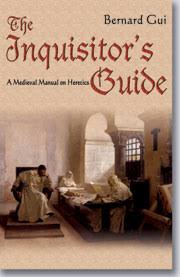
His inquisition of those suspected or accused of heresy led to over 900 guilty verdicts. Of those convicted during examination by Gui, 42 were executed–by being burned at the stake.
Gui closely studied the best methods for interrogating “heretics.” He set forth his findings in his most important and famous work, Practica Inquisitionis Heretice Pravitatis. or “Conduct of the Inquisition into Heretical Wickedness.”
In this, he offered a vivid example of how such interrogations might go. The following is taken from that manual:
Interrogator: You call your faith Christian, for you consider ours as false and heretical. But I ask whether you have ever believed as true another faith than that which the Roman Church holds to be true?
Accused Heretic: I believe the true faith which the Roman Church believes, and which you openly preach to us.
Interrogator: Perhaps you have some of your sect at Rome whom you call the Roman Church. I, when I preach, say many things, some of which are common to us both, as that God liveth, and you believe some of what I preach. Nevertheless you may be a heretic in not believing other matters which are to be believed.
Accused Heretic: I believe all things that a Christian should believe.
Interrogator: I know your tricks. What the members of your sect believe you hold to be that which a Christian should believe. But we waste time in this fencing. Say simply, Do you believe in one God the Father, and the Son, and the Holy Ghost?
Accused Heretic: I believe.
Interrogator: Do you believe in Christ born of the Virgin, suffered, risen, and ascended to heaven?
Accused Heretic: (Briskly) I believe.
Interrogator: Do you believe the bread and wine in the mass performed by the priests to be changed into the body and blood of Christ by divine virtue?
Accused Heretic: Ought I not to believe this?
Interrogator: I don’t ask if you ought to believe, but if you do believe.
Accused Heretic: I believe whatever you and other good doctors order me to believe.
Inquisitor: Those good doctors are the masters of your sect; if I accord with them you believe with me; if not, not.
Accused Heretic: I willingly believe with you if you teach what is good to me.
Inquisitor: You consider it good to you if I teach what your other masters teach. Say, then, do you believe the body of our Lord, Jesus Christ to be in the altar?
Accused Heretic: (Promptly) I believe that a body is there, and that all bodies are of our Lord.
Interrogator: I ask whether the body there is of the Lord who was born of the Virgin, hung on the cross, arose from the dead, ascended, etc.
Accused Heretic: And you, sir, do you not believe it?
Interrogator: I believe it wholly.
Accused Heretic: I believe likewise.
Men like Franklin Graham and Bernard Gui do not seek a golden future. They crave to return to a “golden” past–which includes the one-time power of Christians to impose their religious beliefs on others.
2012 PRESIDENTIAL RACE, ABC NEWS, ADULTERY, BARACK OBAMA, BIBLE, BILL MAHER, BIRTH CONTROL, CATHOLICS, CBS NEWS, CIVIL LIBERTIES, CNN, ELEANOR ROOSEVELT, FACEBOOK, FRANKLIN GRAHAM, HOMOSEXUALITY, ISLAM, JESUS CHRIST, JEWS, MITT ROMNEY, MUSLIMS, NBC NEWS, NEWT GINGRICH, RELIGION, REPUBLICAN PARTY, RICHARD FEYNMAN, RICK SANTORUM, SAUDI ARABIA, SCIENCE, SLAVERY, SPANISH INQUISITION, SUPREME COURT, TEA PARTY, THE CHICAGO SUN-TIMES, THE CHICAGO TRIBUNE, THE LOS ANGELES TIMES, THE NEW YORK TIMES, THE WALL STREET JOURNAL, THE WASHINGTON POST, THEOLOGY, TOMAS DE TORQUEMADA, TWITTER, USA TODAY, WAR, WOMEN
In Bureaucracy, History, Law, Military, Politics, Social commentary on January 20, 2015 at 12:05 am
American right-wing elements have recently raised the cry that President Barack Obama is waging “a war on religion.”
It’s clear that GOP candidates like Rick Santorum, Newt Gingrich and Mitt Romney intend to make this a major theme of their respective campaigns for President.
Obama supports a woman’s right
- to obtain abortion–including in cases of rape and incest;
- to obtain birth control; and
- to obtain amniocentesis (pre-natal testing).
So, according to American fascists, the President is “waging a war against religion.”
Meanwhile, those Americans who do not support the theocratic agenda of the Right may well be confused.
Since access to such medical procedures as birth control and pre-natal testing has long been entirely legal, what’s all the fuss about?
Those Americans would be well-advised to learn a simple Russian phrase: “Kto-kovo.” This translates as “Who-whom.” Or, to be more precise: “Who can do what to whom?”
In short, the Right is not waging a “war for religious liberty.”
It’s waging a bitter struggle to establish a government that uses force or the threat of it to impose highly conservative religious beliefs on religionists who do not share such religious beliefs.
And on atheists or agnostics, who share none at all.
These Rightists and their theocratic allies have more in common with Tomas de Torquemada (1420 – 1498) the infamous Grand Inquisitor of the Spanish Inquisition, than with Jesus Christ.
Christ never ordered the torture or death of anyone. Torquemada–claiming to act in “defense” of the Roman Catholic Church–presided over the deaths of at least 2,000 “heretics.”

Tomas de Torquemada
Nor did these unfortunate victims of religious fanaticism meet their death quickly or painlessly. They died by perhaps the cruelest means possible–by being burned alive at the stake.
Torquemada didn’t hesitate to pronounce someone a heretic. He “knew” who such people were. They were Jews. They were Muslims. They were “lapsed Catholics” who, in his view, failed to show fervent devotion to the religious authorities who ruled their lives.
For such people, Torquemada believed, the only road to salvation lay in being “cleansed” of their sins. And nothing burns away impurities like fire.
But before the fire-stakes came the fire-mindset: The arrogance of “knowing” who qualified as “saved” and who would be forever “damned.”
Unless, of course, his or her soul had been “purified” by fire.

“Heretic” burned at the stake
This mindset was vividly put on display by no less a religious authority than Franklin Graham, son of America’s most famous preacher, Billy Graham.

Franklin Graham
Appearing on the MSNBC program, “Morning Joe,” on February 21, 2012, Graham was asked if he thought that Barack Obama, Rick Santorum, Newt Gingrich and Mitt Romney qualified as Christians.
On Obama, Graham said: “Islam sees him as a son of Islam… I can’t say categorically that [Obama is not Muslim] because Islam has gotten a free pass under Obama.”
On Santorum: “I think so. His values are so clear on moral issues. No question about it… I think he’s a man of faith.”
On Gingrich: “I think Newt Gingrich is a Christian, at least he told me he is.”
On Romney: “Most Christians would not recognize Mormons as part of the Christian faith. They believe in Jesus Christ. They have a lot of other things they believe in too, that we don’t accept, theologically.”
Thus, Graham had no problem in pronouncing as “saved” a notorious multiple-adulterer like Gingrich, or a rights-denying religious zealot like Santorum.
But he clearly refused to pronounce as “saved” a longtime church-goer like Obama or a Mormon like Romney (whose faith, most evangelicals like Graham believe, is actually a non-Christian cult).
It’s easy to imagine Graham transported to the French city of Toulouse in the 14th century. And to imagine him wearing the robes of Bernardo Gui, the chief inquisitor of the Dominican Order during the Medieval Inquisition (1184 – 1230s).

Bernardo Gui
Gui closely studied the best methods for interrogating “heretics.” He set forth his findings in his most important and famous work, Practica Inquisitionis Heretice Pravitatis. or “Conduct of the Inquisition into Heretical Wickedness.”
In this, he offered a vivid example of how such interrogations might go. The following is taken from that manual:
When a heretic is first brought up for examination, he assumes a confident air, as though secure in his innocence. I ask him why he has been brought before me. He replies, smiling and courteous, “Sir, I would be glad to learn the cause from you.”
Interrogator: You are accused as a heretic, and that you believe and teach otherwise than Holy Church believes.
Accused Heretic: (Raising his eyes to heaven, with an air of the greatest faith) Lord, thou knowest that I am innocent of this, and that I never held any faith other than that of true Christianity.
2012 PRESIDENTIAL RACE, ABC NEWS, ADULTERY, BARACK OBAMA, BIBLE, BILL HAMHRER, BIRTH CONTROL, CATHOLICS, CBS NEWS, CIVIL LIBERTIES, CNN, ELEANOR ROOSEVELT, FACEBOOK, FRANKLIN GRAHAM, HOMOSEXUALITY, ISLAM, JESUS CHRIST, JEWS, MITT ROMNEY, MUSLIMS, NBC NEWS, NEWT GINGRICH, RELIGION, REPUBLICAN PARTY, RICHARD FEYNMANN, RICK SANTORUM, SAUDI ARABIA, SCIENCE, SLAVERY, SPANISH INQUISITION, SUPREME COURT, TEA PARTY, THE CHICAGO SUN-TIMES, THE CHICAGO TRIBUNE, THE LOS ANGELES TIMES, THE NEW YORK TIMES, THE WALL STREET JOURNAL, THE WASHINGTON POST, THEOLOGY, TOMAS DE TORQUEMADA, TWITTER, USA TODAY, WAR, WOMEN
In Bureaucracy, History, Law, Military, Politics, Social commentary on January 17, 2015 at 4:16 pm
Hamza Kashgari, a 23-year-old columnist in Saudi Arabia, decided to celebrate the birthday of the Islamic prophet Muhammed in a truly unique way.

Hamza Kashgar
In early February, 2012, he posted on Twitter a series of mock conversations between himself and Muhammad:
“On your birthday, I will say that I have loved the rebel in you, that you’ve always been a source of inspiration to me, and that I do not like the halos of divinity around you. I shall not pray for you.”
“On your birthday, I find you wherever I turn. I will say that I have loved aspects of you, hated others, and could not understand many more.”
“On your birthday, I shall not bow to you. I shall not kiss your hand. Rather, I shall shake it as equals do, and smile at you as you smile at me. I shall speak to you as a friend, no more.”
“No Saudi women will go to hell, because it’s impossible to go there twice.”
The tweets sparked some 30,000 infuriated responses. Many Islamic clerics demanded that he face execution for blasphemy.
Kashgari posted an apology tweet: “I deleted my previous tweets because…I realized that they may have been offensive to the Prophet and I don’t want anyone to misunderstand.”
Soon afterward, King Abdullah ordered his arrest.
 Saudi King King Abdullah
Kashgari fled to Malaysia, another majority-Muslim country. He was quickly arrested by police as he passed through Kuala Lumpur international airport. Three days later, he was deported to Saudi Arabia.
Human rights groups feared that he would be executed for blasphemy, a capitol offense in Saudi Arabia.
After nearly two years in prison, Kashgari was freed on October 29, 2013. Kashgari used Twitter to inform his supporters of his release.
Outrageous? By Western standards, absolutely.
Clearly there is no tolerence in Saudi Arabia for the freedoms of thought and expression that Americans take for granted.
But before you say, “Religious oppression like that could never happen in the United States,” think again.
Right-wing American ayatollahs are now working overtime to create just that sort of society–where theocratic despotism rules the most intimate aspects of our lives.
One of these is the former GOP Presidential candidate and U.S. Senator Rick Santorum. In early January, 2012, he said that states should have the right to outlaw birth control without the interference of the Supreme Court.
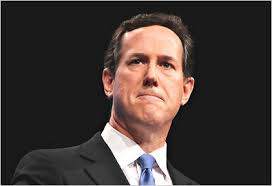 Rick Santorum
In an interview with ABC News, Santorum said he opposed the Supreme Court’s ruling that made birth control legal:
“The state has a right to do that [ban contraception]. I have never questioned that the state has a right to do that. It is not a Constitutional right. The state has the right to pass whatever statutes they have.
“That’s the thing I have said about the activism of the Supreme Court–they are creating rights, and it should be left up to the people to decide.”
In the landmark 1965 decision, Griswold v. Connecticut, the Court struck down a law that made it a crime to sell contraceptives to married couples. The Constitution, ruled the Justices, protected a right to privacy.
Two years later, in Eisenstadt v. Baird, the Court extended Griswold by striking down a law banning the sale of contraceptives to unmarried couples.
Santorum has left no doubt as to where he stands on contraception. On October 19, 2011, he said:
“One of the things I will talk about that no President has talked about before is I think the dangers of contraception in this country, the whole sexual libertine idea. Many in the Christian faith have said, ‘“Well, that’s okay. Contraception’s okay.’
“It’s not okay because it’s a license to do things in the sexual realm that is counter to how things are supposed to be. They’re supposed to be within marriage, they are supposed to be for purposes that are, yes, conjugal, but also…procreative.
“That’s the perfect way that a sexual union should happen. We take any part of that out, we diminish the act….And all of a sudden, it becomes deconstructed to the point where it’s simply pleasure.”
“How things are supposed to be”–according to Right-wing fanatics like Santorum and the evangelicals who support them.
Like the Saudi religious religious zealots who demand the death of a “blasphemer,” they demand that their religious views should govern everyone. Both groups have far more in common than they want to admit.
The important difference–for Americans who value their freedom–is this:
The United States has a Supreme Court that can–and does–overturn laws that threaten civil liberties. Laws that GOP Presidential candidates clearly want to revive and force on those who don’t share their peculiar religious views.
Eleanor Roosevelt once said: “No one can make you feel inferior without your consent.”
The same holds true–in a democracy–for candidates who seek dictatorial power over their fellow citizens. Don’t give them your consent.


 Bureaucracybuster's Blog
1992 REPUBLICAN CONVENTION, ABC NEWS, ABORTION, ADULTERY, ALTERNET, AMERICABLOG, AP, BABY BOOMER RESISTANCE, BBC, BILL CLINTON, BLOOMBERG NEWS, BOB LIVINGSTON, BUZZFEED, CBS NEWS, CNN, CROOKS AND LIARS, DAILY KOS, DEFENSE OF MARRIAGE ACT (DOMA), DEFICITS, DENNIS HASTERT, ECONOMY, EDWIN MEESE, FAMILY VALUES, FIVETHIRTYEIGHT, GEORGE H.W. BUSH, HARPER’S MAGAZINE, HOMOSEXUALITY, HUFFINGTON POST, JERRY FALWELL, MEDIA MATTERS, MIA FARROW, MONICA LEWINSKY, MORAL MAJORITY, MOTHER JONES, MOVEON, MSNBC, NBC NEWS, NEW REPUBLIC, NEWSDAY, NEWSWEEK, NEWT GINGRICH, NPR, PBS NEWSHOUR, POLITICO, POLITICUSUSA, PORNOGRAPHY, RAW STORY, REPUBLICANS, REUTERS, Ronald Reagan, SALON, SEATTLE TIMES, SLATE, TALKING POINTS MEMO, TARGET CORPORATION, THE ATLANTIC, THE CHICAGO SUN-TIMES, THE CHICAGO TRIBUNE, THE DAILY BEAST, THE DAILY BLOG, THE GUARDIAN, THE HILL, THE HUFFINGTON POST, THE INTERCEPT, THE LOS ANGELES TIMES, THE NATION, THE NEW REPUBLIC, THE NEW YORK TIMES, THE NEW YORKER, THE VILLAGE VOICE, THE WASHINGTON POST, THINKPROGRESS, TIME, TRANSGENDERS, TRUTHDIG, TRUTHOUT, TWITTER, U.S. NEWS & WORLD REPORT, UPI, USA TODAY, WOODY ALLEN, WORLD WAR 11
“FAMILY VALUES” = HYPOCRITICAL SLOGANEERING
In Bureaucracy, Business, History, Law, Law Enforcement, Politics, Social commentary on May 26, 2016 at 12:33 amIn 1992, Republicans wanted to re-elect President George H.W. Bush, who had succeeded Ronald Reagan in 1989.
But they had a problem: Whipping up voter enthusiasm for him.
Bush wasn’t charismatic like Reagan, so he didn’t inspire the intense loyalty Reagan had. He was seen as drab, even wimpy.
George H.W. Bush
Ironically, Bush had performed heroically during World War II.
On August 1, 1944, Bush piloted one of four aircraft that attacked the Japanese installations on Chichijima.
Bush’s aircraft was hit by flak and his engine caught on fire. Despite this, Bush completed his attack and released bombs over his target, scoring several damaging hits.
Reagan, by contrast, spent World War II on a Hollywood sound stage as part of the First Motion Picture Unit, turning out propaganda films to boost civilian morale.
Yet he was seen by millions as a genuine war hero.
Then there was the stalled economy.
Early in his term, Bush faced leftover deficits spawned by the Reagan years. Reagan had given tax-cuts to the rich, bloated the military budget and cut government programs to aid the poor and middle class.
As a result, the deficit had grown by 1990 to $220 billion, three times its size since 1980.
In 1991, many corporations, claiming the need to reorganize, laid off hundreds of thousands of workers, who had believed that their jobs were secure.
By mid-year, the unemployment rate reached 7.8%, the highest since 1984. In September 1992, the Census Bureau reported that 14.2% of all Americans lived in poverty.
Bush’s Democratic challenger in 1992 was Bill Clinton, who had been the Governor of Arkansas from 1979 to 1981 and 1983 to 1992. At 45, Clinton was young, vigorous, and for many evoked memories of an equally young and vigorous John F. Kennedy.
To overcome these disadvantages, Republicans needed a way to generate enthusiasm among their base.
The answer: “Family values.”
Supposedly this meant support for values traditionally learned or reinforced within a family, such as those of high moral standards and discipline.
In reality, it was a Right-wing excuse for the failed economic policies of the Reagan-Bush years.
By citing “a decline in family values,” Bush’s re-election team could blame jobless Americans for their own misery: “If only you had lived up to the high standards set by your Republican superiors, you wouldn’t now be in this position.”
“Family values” carried a sexual subtext as well. Since abortion had became legal in 1973, Republicans had appropriated re-criminalizing it as their pet sex-related issue.
During the Reagan years, Attorney General Edwin Meese had launched a crackdown on pornography. And much of Reagan’s support had come from sexually-obsessed Christian Right evangelists such as Jerry Falwell of the “Moral Majority.”
Thus, a Bush supporter held up a sign reading, “Woody Allen is Clinton’s Adviser on Family Values,” at the 1992 Republican Presidential convention. Allen had recently become notorious for an affair with the adopted stepdaughter of his lover, actress Mia Farrow.
The slogan wasn’t enough to get Bush re-elected. Bill Clinton was elected President.
But “family values” lived on for decades as Republican code language for: “Only Republicans are sexually upright.”
Throughout the eight-year Clinton Presidency, Republicans focused on his longtime reputation as a sex-crazed Rasputin. When the news broke that Clinton had been diddling a White House intern named Monica Lewinsky, Republicans demanded his resignation.
When Clinton refused to resign, they unsuccessfully tried to impeach him. Meanwhile, they ignored the extramarital affairs of their own members—such as then-House Speaker Newt Gingrich.
Gingrich had been boffing a mistress while demanding Clinton’s impeachment for similar adultery. After Gingrich resigned from the House of Representatives in 1999, his would-be successor, Bob Livingston, was forced to resign from Congress. He had been outed by Hustler publisher Larry Flynt as a serial philanderer.
In 1996, Republicans pushed through Congress the Defense of Marriage Act (DOMA) which defined marriage for federal purposes as the union of one man and one woman. It allowed states to refuse to recognize same-sex marriages allowed in other states.
DOMA was advertised as a necessary defense against “predatory homosexuals” who, like vampires, were thought to be preying on innocent heterosexuals.
A major backer of anti-gay legislation was Dennis Hastert, Republican Speaker of the House from 1999 to 1007.
Dennis Hastert
In 2006, Hastert spearheaded a bill to toughen punishments for sex crimes against children.
“We’ve all seen the disturbing headlines about sex offenders and crimes against children,” said Hastert. “Protecting our children from Internet predators and child exploitation enterprises are just as high a priority as securing our border from terrorists.”
On April 29, 2016, a federal judge repeatedly damned Hastert as a “serial child molester” for sexually abusing several boys he coached on the Yorkville High School wrestling team in the 1960s and 1970s.
Having targeted the poor, blacks, Hispanics, women and gays, Republicans are now training their sights on transgenders.
And Target Corporation’s April 19 announcement that its customers could pick the bathroom that “matched their gender identity” gave Republicans a new venue for their attacks on sex-related issues.
There is no known epidemic of transgender attacks on heterosexuals in bathrooms. But Republicans will ride this issue so long as there are citizens willing to believe it.
Share this: