Posts Tagged ‘2016 PRESIDENTIAL CAMPAIGN’
2016 PRESIDENTIAL CAMPAIGN, ABC NEWS, ALTERNET, ANTHONY SCARAMUCCI, AP, BARACK OBAMA, BBC, BUZZFEED, CBS NEWS, CIA, CLINTON WATTS, CNN, CYBERWARFARE, DAILY KOS, DEMOCRATIC NATIONAL COMMITTEE, DIRECTOR OF NATIONAL INTELLIGENCE, DONALD TRUMP, DONALD TRUMP JUNIOR, ERIC TRUMP, ERIK PRINCE, ESPIONAGE, EUROPEAN UNION (EU), FACEBOOK, FBI, GEORGE PAPADOPOULOS, GRU, HILLARY CLINTON, JAMES B. COMEY, JAMES R. CLAPPER, JARED KUSHNER, JEFF SESSIONS, MICHAEL COHEN, MICHAEL T. FLYNN, MIKE PENCE, MOSCOW PROJECT, MOTHER JONES, MOVEON, NBC NEWS, NEWSWEEK, NORTH ATLANTIC TREATY ORGANIZATION (NATO), NPR, PAUL MANAFORT, POLITICO, RAW STORY, REUTERS, REX TILLERSON, RICK GATES, ROBERT S. MUELLER, RUSSIA, SALLY YATES, SALON, SEATTLE TIMES, SLATE, THE ATLANTIC, THE CHICAGO SUN-TIMES, THE CHICAGO TRIBUNE, THE DAILY BEAST, THE GUARDIAN, THE HILL, THE HUFFINGTON POST, THE LOS ANGELES TIMES, THE NEW YORK TIMES, THE WALL STREET JOURNAL, THE WASHINGTON POST, TIME, TWITTER, U.S. NEWS & WORLD REPORT, U.S. SENATE SELECT COMMITTEE ON INTELLIGENCE, UPI, USA TODAY, VLADIMIR PUTIN, WIKILEAKS
In Bureaucracy, History, Law Enforcement, Military, Politics, Social commentary on July 26, 2018 at 12:08 am
More than a year and a half after taking office, President Donald Trump remains haunted by “the Russian connection.”
Throughout 2016, the CIA, FBI and National Security Agency (NSA) found numerous ties between officials of the Trump Presidential campaign and Russian Intelligence agents.
And many of those he has appointed to office have strong ties to the government of Russian President Vladimir Putin.
One of these was Secretary of State Rex Tillerson. In 2013, as the chief executive of ExxonMobil, he was presented with the 2013 Order of Friendship award. He had just signed deals with the state-owned Russian oil company Rosneft. Its chief, Igor Sechin, is a loyal Putin lieutenant.

Rex Tillerson
Another such official is Attorney General Jeff Sessions. During the 2016 campaign, Sessions—then serving as a surrogate for Donald Trump’s campaign—twice spoke with Russian Ambassador Sergey Kislyak.
But during his Senate nomination hearings, Sessions denied that he had had “communications with the Russians” during the campaign.
The discovery of numerous contacts between Trump campaign officials and Russian Intelligence agents led the FBI to investigate Russia’s efforts to subvert the 2016 Presidential election. That investigation is still ongoing.
So did the House and Senate Intelligence Committees.
On March 30, 2017, Clinton Watts, an expert on cyber warfare, testified before the U.S. Senate Select Committee on Intelligence. As part of his testimony, he presented a prepared statement on “Disinformation: A Primer In Russian Active Measures And Influence Campaigns.”

FROM WATTS’ STATEMENT: Russia certainly seeks to promote Western candidates sympathetic to their worldview and foreign policy objectives. But winning a single election is not their end goal.
Russian Active Measures hope to topple democracies….from the inside out [by] creating political divisions….
[Their ultimate goals are] the dissolution of the European Union and the break up of the North American Treaty Organization (NATO).
Achieving these two victories against the West will allow Russia to reassert its power globally and pursue its foreign policy objectives bilaterally through military, diplomatic and economic aggression.
On July 22, 2016, Wikileaks released 19,252 emails and 8,034 attachments hacked from computers of the highest-ranking officials of the Democratic National Committee (DNC). Early reports traced the leak to Russian hackers.
On July 27, at a press conference in Doral, Florida, Trump declared: “Russia, if you are listening, I hope you are able to find the 33,000 emails that are missing—I think you will probably be rewarded mightily by our press.”
This was nothing less than treason—calling upon a foreign power, hostile to the United States, to interfere in its Presidential election.
On numerous occasions, Trump has fiercely denied any Russian connections. For example:
July 27, 2016: “I mean I have nothing to do with Russia. I don’t have any jobs in Russia. I’m all over the world but we’re not involved in Russia.”
January 11, 2017: “Russia has never tried to use leverage over me. I HAVE NOTHING TO DO WITH RUSSIA – NO DEALS, NO LOANS, NO NOTHING!”
February 7, 2017: “I don’t know [Russian President Vladimir] Putin, have no deals in Russia, and the haters are going crazy.”
Yet, in 2008, Donald Trump, Jr. said at a New York real estate conference: “In terms of high-end product influx into the US, Russians make up a pretty disproportionate cross-section of a lot of our assets. Say, in Dubai, and certainly with our project in SoHo, and anywhere in New York. We see a lot of money pouring in from Russia.”
And Trump’s son, Eric, has been quoted as saying in 2014: “Well, we don’t rely on American banks. We have all the funding we need out of Russia. We’ve got some guys that really, really love golf, and they’re really invested in our programs. We just go there all the time.”
The Moscow Project is an initiative of the Center for American Progress Action Fund. Its objective: “Analyzing the facts behind Trump’s collusion with Russia and communicating the findings to the public.”
According to its March 21, 2018 report (updated on July 10): “In total, we have learned of 80 contacts between Trump’s team and Russia linked operatives, including at least 23 meetings.
“And we know that at least 24 high-ranking campaign officials and Trump advisors were aware of contacts with Russia-linked operatives during the campaign and transition. None of these contacts were ever reported to the proper authorities. Instead, the Trump team tried to cover up every single one of them….
“The Trump campaign issued at least 15 blanket denials of contacts with Russia, all of which have been proven false.”
Members of the Trump team who had contacts with Russians during the campaign or transition include:
- Michael Cohen
- Roger Stone
- Donald Trump Jr.
- Jeff Sessions
- Paul Manafort
- Jared Kushner
- Carter Page
- Michael Flynn
- Erik Prince
- George Papadopoulos
- Anthony Scaramucci
- Rick Gates
Flynn and Papadopoulos have pleaded guilty to making false statements about their contacts with Russians to investigators.
Manafort faces trial for money-laundering relating to his work for the government of Putin-supported government of Ukraine.
In July, Special Counsel Robert S. Mueller charged 12 officers of the GRU, Russia’s military intelligence agency, with crimes committed to the high-profile hacking and leaking emails from the Democratic National Committee during the 2016 campaign.
As trials begin and indicted men begin to sweat, expect more revelations to come.
2016 PRESIDENTIAL CAMPAIGN, ABC NEWS, ALTERNET, ANTHONY SCARAMUCCI, AP, BBC, BUZZFEED, CBS NEWS, CIA, CLINTON WATTS, CNN, CYBERWARFARE, DAILY KOS, DEMOCRATIC NATIONAL COMMITTEE, DIRECTOR OF NATIONAL INTELLIGENCE, DONALD TRUMP, DONALD TRUMP JUNIOR, ERIC TRUMP, ERIK PRINCE, ESPIONAGE, EUROPEAN UNION (EU), FACEBOOK, FBI, GEORGE PAPADOPOULOS, GRU, JAMES B. COMEY, JAMES R. CLAPPER, JARED KUSHNER, JEFF SESSIONS, MICHAEL COHEN, MICHAEL T. FLYNN, MOSCOW PROJECT, MOTHER JONES, MOVEON, NBC NEWS, NEWSWEEK, NORTH ATLANTIC TREATY ORGANIZATION (NATO), NPR, PAUL MANAFORT, POLITICO, RAW STORY, REUTERS, REX TILLERSON, RICK GATES, ROBERT S. MUELLER, RUSSIA, SALON, SEATTLE TIMES, SLATE, THE ATLANTIC, THE CHICAGO SUN-TIMES, THE CHICAGO TRIBUNE, THE DAILY BEAST, THE GUARDIAN, THE HILL, THE HUFFINGTON POST, THE LOS ANGELES TIMES, THE NEW YORK TIMES, THE WALL STREET JOURNAL, THE WASHINGTON POST, TIME, TWITTER, U.S. NEWS & WORLD REPORT, U.S. SENATE SELECT COMMITTEE ON INTELLIGENCE, UPI, USA TODAY, VLADIMIR PUTIN, WIKILEAKS
In Bureaucracy, History, Law Enforcement, Military, Politics, Social commentary on July 25, 2018 at 12:09 am
On July 16, President Donald Trump attended a press conference in Helsinki, Finland, with Russian President Vladimir Putin.
There he blamed American Intelligence agencies—such as the FBI, CIA and National Security Agency—instead of Putin for Russia’s subversion of the 2016 Presidential election.
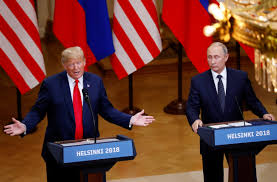
Donald Trump, Vladimir Putin in Helsinki
“Just now President Putin denied having anything to do with the election interference in 2016,” Associated Press Reporter Jonathan Lemire said to Trump. “Every U.S. intelligence agency has concluded that Russia did. My first question for you, sir, is who do you believe?”
Trump chose to attack Democrats and the FBI as partners in a conspiracy: “You have groups that are wondering why the FBI never took the server, why haven’t they taken the server? Why was the FBI told to leave the office of the Democratic National Committee?
“…Where is the server? I want to know where is the server and what is the server saying….
“I have President Putin. He just said it’s not Russia. I will say this: I don’t see any reason why it would be, but I really do want to see the server.”
Clinton Watts is a consultant and researcher on cyberwarfare. He has served as
- An FBI Special Agent on a Joint Terrorism Task Force (JTTF);
- The Executive Officer of the Combating Terrorism Center at West Point (CTC); and
- As a consultant to the FBI’s Counter Terrorism Division (CTD) and National Security Branch (NSB).
In a statement he prepared for the U.S. Senate Select Committee on Intelligence, Watts outlined cyberwarfare measures that Russia used to subvert the 2016 Presidential campaign.
He delivered this on March 30. 2017. Part of this reads as follows:
Through the end of 2015 and start of 2016, the Russian influence system….began pushing themes and messages seeking to influence the outcome of the U.S. Presidential election.
Russia’s overt media outlets and covert trolls sought to sideline opponents on both sides of the political spectrum with adversarial views toward the Kremlin. The final months leading up to the election have been the predominate focus of Russian influence discussions to date.
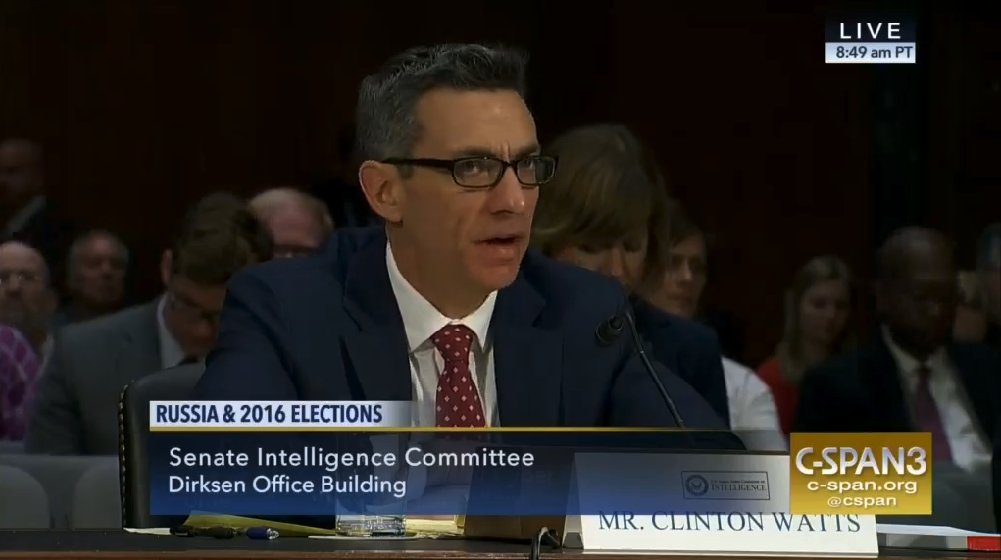
Clinton Watts
However, Russian Active Measures were in full swing during both the Republican and Democratic primary season and may have helped sink the hopes of candidates more hostile to Russian interests long before the field narrowed.
The final piece of Russia’s modern Active Measures surfaced in the summer of 2016 as hacked materials from previous months were strategically leaked.
On 22 July 2016, Wikileaks released troves of stolen communications from the Democratic National Committee and later batches of campaign emails. Guccifer 2.0 and DC Leaks revealed hacked information from a host of former U.S. government officials throughout July and August 2016.
For the remainder of the campaign season, this compromising material powered the influence system Russia successfully constructed in the previous two years.
Meanwhile, Donald Trump—as the Republican nominee for President—steadfastly refused to acknowledge the efforts of Vladimir Putin’s government to ensure his election:
October 24, 2016: “I have nothing to do with Russia, folks, I’ll give you a written statement.”
December 11, 2016 “They have no idea if it’s Russia or China or somebody. It could be somebody sitting in a bed some place. I mean, they have no idea.”
On December 16, 2016, then-FBI Director James B. Comey and Director of National Intelligence James R. Clapper Jr. agreed with a CIA assessment that Russia intervened in the 2016 election in part to help Donald Trump win the White House.
Even after the release of this Intelligence statement, Trump continued to deny that Russia had played a role in his election.
On February 16, 2017, as President, he tweeted: “The Democrats had to come up with a story as to why they lost the election, and so badly (306), so they made up a story – RUSSIA. Fake news!”
FROM WATTS’ STATEMENT: This pattern of Russian falsehoods and social media manipulation of the American electorate continued through Election Day and persists today.
Many of the accounts we watched push the false Incirlik story in July now focus their efforts on shaping the upcoming European elections, promoting fears of immigration or false claims of refugee criminality.
They’ve not forgotten about the United States either. This past week, we observed social media campaigns targeting Speaker of the House Paul Ryan hoping to foment further unrest amongst U.S. democratic institutions, their leaders and their constituents.
As we noted two days before the Presidential election in our article describing Russian influence operations, Russia certainly seeks to promote Western candidates sympathetic to their worldview and foreign policy objectives.
But winning a single election is not their end goal. Russian Active Measures hope to topple democracies through the pursuit of five complementary objectives:
- Undermine citizen confidence in democratic governance;
- Foment and exacerbate divisive political fractures;
- Erode trust between citizens and elected officials and democratic institutions;
- Popularize Russian policy agendas within foreign populations;
- Create general distrust or confusion over information sources by blurring the lines between fact and fiction.
From these objectives, the Kremlin can crumble democracies from the inside out creating political divisions resulting in two key milestones:
- The dissolution of the European Union and
- The break up of the North American Treaty Organization (NATO).
2016 PRESIDENTIAL CAMPAIGN, ABC NEWS, ALEXANDER SHUSTOROVICH, ALTERNET, ANDREW INTRATER, AP, BBC, BUZZFEED, CBS NEWS, CIA, CITIZENS UNITED, CNN, CROOKS AND LIARS, DAILY KOS, DAILY KOZ, DONALD TRUMP, FACEBOOK, FBI, FOX NEWS, JOHN MCCAIN, LEN BLAVATNIK, LINDSEY GRAHAM, MARCO RUBIO, MITCH MCCONNELL, MOTHER JONES, MOVEON, NATIONAL SECURITY AGENCY, NBC NEWS, NEWSWEEK, NPR, OLIGARCHS, POLITICAL ACTION COMMITTEES (PACS), POLITICO, RAW STORY, REPUBLICAN PARTY, REPUBLICANS, REUTERS, RICHARD NIXON, ROBERT MUELLER, ROD ROSENSTEIN, Ronald Reagan, RUSSIA, SALON, SEATTLE TIMES, SIMON KUKES, SLATE, SOVIET UNION, SUPREME COURT, THE ATLANTIC, THE CHICAGO SUN-TIMES, THE CHICAGO TRIBUNE, THE DAILY BEAST, THE GUARDIAN, THE HILL, THE HUFFINGTON POST, THE LOS ANGELES TIMES, THE NATION, THE NEW YORK TIMES, THE WALL STREET JOURNAL, THE WASHINGTON POST, TIME, TWITTER, U.S. NEWS & WORLD REPORT, UPI, USA TODAY, VLADIMIR PUTIN
In Bureaucracy, History, Law, Law Enforcement, Military, Politics, Social commentary on July 24, 2018 at 12:06 am
A Pew Research Center survey released on August 29, 2017, found that 36% of Americans approved of President Donald Trump. Most other polling rated his approval between 35 and 40%.
About Republicans, the survey found:
- Just over two-thirds agreed with his positions;
- 19% didn’t like his conduct;
- 46% said they had mixed feelings;
- 34% liked the way he behaved as President.
When asked what they liked most about Trump’s Presidency, those who approved of his performance cited his personality and conduct four times more often than his policies.
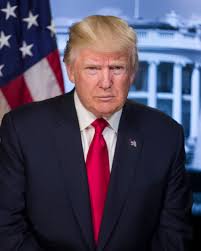
Donald Trump
On August 30, 2017, an article in Salon tackled this group head-on: “Most Americans Strongly Dislike Trump, But the Angry Minority That Adores Him Controls Our Politics.”
It described these voters as representing about one-third of the Republican party:
“These are older and more conservative white people, for the most part, who believe he should not listen to other Republicans and should follow his own instincts….
“They like Trump’s coarse personality, and approve of the fact that he treats women like his personal playthings. They enjoy it when he expresses sympathy for neo-Nazis and neo-Confederate white supremacists.
“They cheer when he declares his love for torture, tells the police to rough up suspects and vows to mandate the death penalty for certain crimes. (Which of course the president cannot do.)
“…This cohort of the Republican party didn’t vote for Trump because of his supposed policies on trade or his threat to withdraw from NATO. They voted for him because he said out loud what they were thinking. A petty, sophomoric, crude bully is apparently what they want as a leader.”
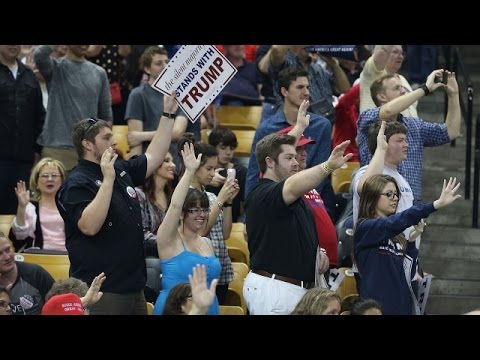
Supporters giving the Nazi “Sieg Heil” salute to Trump
According to the Pew survey, they only comprise 16% of the population. That leaves 65% of Republicans who are revolted by Trump’s personality and behavior. But they are being advised by GOP political consultants to vigorously support him.
“Your heart tells you that he’s bad for the country,” one anonymous consultant told the Salon reporter. “Your head looks at polling data among Republican primary voters and sees how popular he is.”
It’s precisely these hard-core Fascists who come out in mid-term elections—and they’re scaring the remaining 65% who make up the GOP establishment.
That’s one reason why the vast majority of Republicans continue to fanatically support Trump: They fear he will turn his hate-filled base on them.
But there’s a second reason why Republicans back Trump—especially against Special Counsel Robert S. Mueller’s probe of Russia’s subversion of the 2016 election.
Many House and Senate Republicans have received millions of dollars in “campaign contributions” from Russian oligarchs who are answerable to Russian dictator Vladimir Putin.
In 2017, for example, Russian oligarch Len Blavatnik gave millions of dollars to top Republican leaders—such as Senators Mitch McConnell, Marco Rubio and Lindsey Graham.
Altogether, four Russian oligarchs—Blavatnik, Alexander Shustorovich, Andrew Intrater and Simon Kukes––contributed $10.4 million from the start of the 2015-16 election cycle through September 2017.
Of this, 99% went to Republicans—including Senator John McCain and Governors John Kasich and Scott Walker.
And, thanks to the Supreme Court’s 2010 Citizens United decision, the donations are entirely legal.
Republicans don’t fear that Trump will destroy the institutions that Americans have long cherished—such as:
- An independent judiciary
- A free press
- An incorruptible Justice Department
- Intelligence agencies (such as the FBI and CIA) charged with protecting the country against subversion.
Trump has furiously attacked all of these—and Republicans have either said nothing or rushed to his defense.
Republicans don’t fear that he has all but destroyed decades of solid relations between the United States and longtime allies, such as Canada and Great Britain.
Republicans don’t even fear that he will sell out the Nation to Russian president Vladimir Putin.
The American Intelligence community—the FBI, CIA and National Security Agency—has unanimously determined that Russia subverted the 2016 Presidential election. But Trump—who has repeatedly praised Putin—has repeatedly denied it.

What Republicans fear is that Trump will finally cross one line too many—like firing Special Counsel Robert Mueller.
And that the national outrage following this will force them to launch impeachment proceedings against him.
But it isn’t even Trump they most fear will be destroyed.
What they most fear losing is their own hold on nearly absolute power in Congress and the White House.
If Trump is impeached and possibly indicted, he will become a man no one any longer fears. He will be a figure held up to ridicule and condemnation—like Richard Nixon.
And his Congressional supporters will be branded as losers along with him.
Republicans vividly remember what happened after Nixon was forced to resign in disgrace on August 9, 1974: Democrats, riding a wave of reform fever, swept Republicans out of the House and Senate—and Jimmy Carter into the White House.
If Republicans are conflicted about supporting Trump, their dilemma boils down to this:
- Can I hold onto my power—and all the privileges that go with it—by supporting Trump? Or:
- Can I hold onto my power—and privileges—by deserting him?
This is how Republicans define morality today.
2012 PRESIDENTIAL CAMPAIGN, 2016 PRESIDENTIAL CAMPAIGN, ABC NEWS, ABORTION, ALTERNET, AP, ARMY-MCCARTHY HEARINGS, BIRTH CONTROL, BUZZFEED, CBS NEWS, CNN, COMMUNISM, CROOKS AND LIARS, DAILY KOZ, DONALD TRUMP, FACEBOOK, HELSINKI SUMMIT, HONOR, HURRICANE SANDY, JAPAN, JOSEPH MCCARTHY, MATTHEW 7:17-20, MOTHER JONES, MOVEON, MSNBC, NBC NEWS, NEWSWEEK, NPR, POLITICO, RAW STORY, REUTERS, RICK SANTORUM, SALON, SAMURAI, SEATTLE TIMES, SLATE, THE ATLANTIC, THE CHICAGO SUN-TIMES, THE CHICAGO TRIBUNE, THE DAILY BEAST, THE GUARDIAN, THE HILL, THE HUFFINGTON POST, THE LOS ANGELES TIMES, THE NATION, THE NEW YORK TIMES, THE WALL STREET JOURNAL, THE WASHINGTON POST, TIME, TWITTER, U.S. NEWS & WORLD REPORT, UPI, USA TODAY, VLADIMIR PUTIN
In Bureaucracy, History, Politics, Social commentary on July 23, 2018 at 12:01 am
“Senator, may we not drop this?…You’ve done enough. Have you no sense of decency, sir? At long last, have you left no sense of decency?”
The speaker was Joseph N. Welch, chief counsel for the United States Army—then under investigation by Joseph McCarthy’s Senate Permanent Subcommittee on Investigations for alleged Communist activities.
It was June 9, 1954, the 30th day of the Army-McCarthy hearings.
And it was the pivotal moment that finally destroyed the career of the Wisconsin Senator whose repeated slanders of Communist subversion had bullied and frightened Americans for four years.
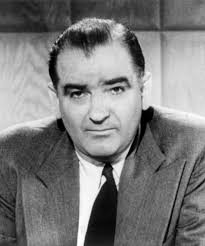
Joseph McCarthy
When the Senate gallery erupted in applause, McCarthy—totally surprised at his sudden reversal of fortune—was finished.
Today, however, other Americans should be asking themselves the question asked by Welch: “At long last, have you left no sense of decency?”
Americans like Rick Santorum, former United States Senator from Pennsylvania (1997 – 2007) and Republican Presidential candidate in 2012.
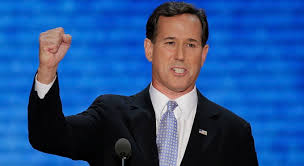
Rick Santorum
Santorum has fervently sought to ban legalized abortion—even in rape cases.
He also wants to ban birth control: “It’s not okay. It’s a license to do things in a sexual realm that is counter to how things are supposed to be.”
But this did not stop him from marrying, in 1990, a woman—Karen Garver—who had spent six years as the unmarried bedmate of an OBGYN-abortionist named Tom Allen, who was 40 years her senior.
Today, as Mrs. Santorum, she has totally reversed her view on abortion and wants to see it banned.
Then there’s President Donald Trump.
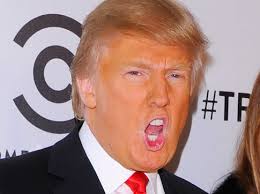
Donald Trump
On July 15, 2018, Trump tweeted: “Our relationship with Russia has NEVER been worse thanks to many years of U.S. foolishness and stupidity and now, the Rigged Witch Hunt!”
He was, of course, referring to Special Counsel Robert S. Mueller, charged by the Justice Department with investigating the subversion of the 2016 Presidential election by Russian Intelligence agents.
The next day, Trump attended a press conference in Helsinki, Finland, with Russian President Vladimir Putin.
“Mr. President,” said Jeff Mason, a reporter from Reuters, “do you hold Russia at all accountable for anything in particular?”
Trump, refusing to condemn Russia, blasted the Mueller probe: “I think that the probe is a disaster for our country. I think it’s kept us apart. It’s kept us separated. There was no collusion at all. Everybody knows it.
“People are being brought out to the fore. So far that I know, virtually, none of it related to the campaign. They will have to try really hard to find something that did relate to the campaign.”
Associated Press Reporter Jonathan Lemire said to Trump: “Just now President Putin denied having anything to do with the election interference in 2016. Every U.S. intelligence agency has concluded that Russia did. My first question for you, sir, is who do you believe?”
Trump responded by attacking Democrats and the FBI as partners in a conspiracy:
“You have groups that are wondering why the FBI never took the server, why haven’t they taken the server? Why was the FBI told to leave the office of the Democratic National Committee?
“I’ve been wondering that. I’ve been asking that for months and months and I’ve been tweeting it out and calling it out on social media. Where is the server? I want to know where is the server and what is the server saying. With that being said, all I can do is ask the question.
“I have President Putin. He just said it’s not Russia. I will say this: I don’t see any reason why it would be, but I really do want to see the server.”
Clearly, the word “hypocrisy” meant nothing to McCarthy—just as it means nothing to Santorum and Trump.
But it should mean something to the rest of us.
In samurai Japan, officials who publicly disgraced themselves knew what to do. The samurai code of Bushido told them when they had crossed the line into eternal damnation.
And it gave them a way to redeem their lost honor—seppuku. With a small “belly-cutting” knife and the help of a trusted assistant who sliced off their head to spare them the agonizing pain of disembowelment.
In the armies of America and Europe, the method was slightly different: A pistol in a private room.

Considering the ready availability of firearms among Right-wing Republicans, redeeming lost honor shouldn’t be a problem for either man.
But of course it will be. It takes more than a trigger pull to “do the right thing.”
It takes insight to recognize that you’ve “done the wrong thing.” And it takes courage to act on that insight.
In men who live only for their own egos and wallets, such insight and courage will be forever missing. They are beyond redemption.
Their lives give proof to the warning offered in Matthew 7:17-20:
“Even so every good tree bringeth forth good fruit; but a corrupt tree bringeth forth evil fruit. A good tree cannot bring forth evil fruit, neither can a corrupt tree bring forth good fruit.
“Every tree that bringeth not forth good fruit is hewn down, and cast into the fire. Wherefore by their fruits ye shall know them.”
2016 PRESIDENTIAL CAMPAIGN, ABC NEWS, ALTERNET, AP, BUZZFEED, CARLO GAMBINO, CARMINE GALANTE, CBS NEWS, CNN, CROOKS AND LIARS, DAILY KOZ, DONALD TRUMP, DONALD TRUMP JR., ESQUIRE, FACEBOOK, FBI, FRANK LOCASCIO, GAMBINO MAFIA FAMILY, GEORGE STEPHANOPOULOS, HILLARY CLINTON, IVANA TRUMP, JARED KUSHNER, LOUIS DIBONO, LOUIS MILITO, MAFIA, MICHAEL COHEN, MOTHER JONES, MOVEON, MSNBC, NBC NEWS, NEWSWEEK, NPR, OLEG DERIPASKA, PAUL CASTELLANO, PAUL MANAFORT, POLITICO, Racketeer Influenced Corrupt Organizations (RICO) Act, RAVENITE SOCIAL CLUB, RAW STORY, REPUBLICANS, REUTERS, ROBERT DIBERNARDO, ROBERT MUELLER, SALON, SAMMY "THE BULL" GRAVANO, SEAN SPICER, SEATTLE TIMES, SLATE, STORMY DANIELS, THE ATLANTIC, THE CHICAGO SUN-TIMES, THE CHICAGO TRIBUNE, THE DAILY BEAST, THE GUARDIAN, THE HILL, THE HUFFINGTON POST, THE LOS ANGELES TIMES, THE NATION, THE NEW YORK TIMES, THE WASHINGTON POST, TIME, TRUMP ORGANIZATION, TRUMP TOWER, TWITTER, U.S. NEWS & WORLD REPORT, UPI, USA TODAY, VIkTOR YANUKOVYCH, VINCENT "THE CHINS" GIGANTE, VLADIMIR PUTIN
In Bureaucracy, History, Law, Law Enforcement, Politics, Social commentary on July 12, 2018 at 12:04 am
President Donald Trump shares more than a few striking similarities with John Gotti, who, for five years, ruled as the boss of the most powerful Mafia family in the United States: The Gambino Family.
Among those similarities: A complete lack of loyalty to anyone.
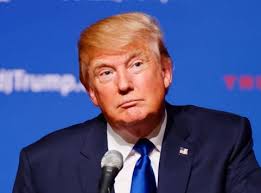
Donald Trump
Unknowingly speaking into an FBI electronic bug, Gotti charged that Sammy “The Bull” Gravano, his underboss, or second-in command, was too greedy. He also blamed him for the murders of three Mafiosi whom Gotti had ordered hit.
When Gravano learned of these slanders at a pretrial hearing, he agreed to testify against Gotti and other Mafiosi in exchange for a five-year prison sentence.
And just as Gotti’s disloyalty ultimately destroyed him, the same may yet prove true for Trump.
Consider the case of attorney Michael Cohen.
- An executive of the Trump Organization, Cohen acted as “Trump’s pit bull.” “If somebody does something Mr. Trump doesn’t like,” he told ABC News in 2011, “I do everything in my power to resolve it to Mr. Trump’s benefit.”
- In 2015, a reporter for The Daily Beast asked Cohen about Ivana Trump’s charge (later recanted) that Trump had raped her while they were married. Cohen: “I’m warning you, tread very fucking lightly, because what I’m going to do to you is going to be fucking disgusting.”
- In 2016, while Trump was running for President, Cohen acted as the go-between for a $130,000 hush-money payoff to porn star Stormy Daniels. The reason: To prevent her from revealing a 2006 tryst she had had with Trump.
In April 2018, the United States Attorney for the Southern District of New York began investigating Cohen. Charges reportedly include bank fraud, wire fraud and violations of campaign finance law.

Michael Cohen
By IowaPolitics.com (Trump executive Michael Cohen 012) [CC BY-SA 2.0 (https://creativecommons.org/licenses/by-sa/2.0)%5D, via Wikimedia Commons
On April 9, 2018, the FBI, executing a federal search warrant, raided Cohen’s office at the law firm of Squire Patton Boggs, as well as his home and his hotel room in the Loews Regency Hotel in New York City. Agents seized emails, tax and business records and recordings of phone conversations that Cohen had made.
Trump’s response: “Michael Cohen only handled a tiny, tiny fraction of my legal work.”
Thus Trump undermined the argument of Cohen’s lawyers that he was the President’s personal attorney—and therefore everything Cohen did was protected by attorney-client privilege.
Then there’s Paul Manafort—a lobbyist, political consultant and lawyer.
- He joined Trump’s presidential campaign team in March 2016 and was campaign chairman from March to August 2016. He attended the Republican Convention in July, where Trump was officially nominated as the GOP candidate for President.
- On June 9, 2016, Manafort, Jared Kushner, Trump’s son-in-law, and Donald Trump Jr. met with Russian Intelligence agents at Trump Tower. The reason: The Russians claimed to have “dirt” on Democratic Presidential nominee Hillary Clinton.
In March, 2017, news broke that Manafort, in his work as a lobbyist, had represented Oleg Deripaska, a Russian oligarch and close associate of Russian president Vladimir Putin. The story fueled growing controversy over the Trump campaign’s documented ties to Russia,
Trump’s response:
“The President was not aware of Paul’s clients from the last decade,” White House Press Secretary Sean Spicer told reporters.
Describing Manafort’s role as chairman of the Trump campaign, Spicer said that he “played a very limited role for a very limited amount of time.”
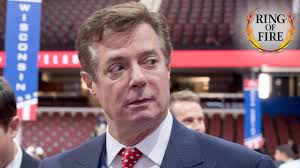
Paul Manafort
An April 19, 2018 headline in Esquire magazine warned: “If the Water is Rising, Donald Trump Will Throw You Overboard.”
The article read in part:
“No matter how long or how intimately you’ve known Donald Trump, you’re one news cycle away from being tossed overboard….
“An old friend becomes a needy acquaintance; a campaign chairman becomes someone you got from the temp agency; a national security adviser becomes a ‘volunteer.'”
Trump’s desertion of his former allies places them in jeopardy—but it also endangers him.
Cohen wasn’t just Trump’s lawyer. He was his fixer, a man who made problems “go away” with threats and bribes. He knows many—if not most—of Trump’s darkest secrets.
And he may be preparing to reveal them.
In a recent off-camera interview with ABC’s George Stephanopoulos, Cohen warned: “I will not be a punching bag as part of anyone’s defense strategy” if Trump or his attorneys try to discredit him.
And unlike Trump—who has repeatedly asserted that Russia didn’t interfere with the 2016 Presidential election—Cohen said he believed it did.
As for Manafort: He resigned as Trump’s campaign manager when news broke that he had received $12.7 million from then-Ukrainian President Viktor Yanukovych, a Puttin lackey.
Given Special Counsel Robert Mueller’s focus on Trump’s ties to Russia, Manafort—through his own ties there—can deliver a mother-lode of secrets if he so desires.
Donald Trump now faces the dilemma—and possibly the same fate—of John “Teflon Don” Gotti: Faced with increasing evidence of his blatant criminality and possibly even treason, does he:
- Stand by those whose secrets can destroy him? or
- Throw them to the wolves, hoping they will still not betray him?
2016 PRESIDENTIAL CAMPAIGN, ABC NEWS, ALTERNET, AP, BUZZFEED, CARLO GAMBINO, CARMINE GALANTE, CBS NEWS, CNN, CROOKS AND LIARS, DAILY KOZ, DONALD TRUMP, DONALD TRUMP JR., ESQUIRE, FACEBOOK, FBI, FRANK LOCASCIO, GAMBINO MAFIA FAMILY, GEORGE STEPHANOPOULOS, HILLARY CLINTON, IVANA TRUMP, JARED KUSHNER, LOUIS DIBONO, LOUIS MILITO, MAFIA, MICHAEL COHEN, MOTHER JONES, MOVEON, MSNBC, NBC NEWS, NEWSWEEK, NPR, OLEG DERIPASKA, PAUL CASTELLANO, PAUL MANAFORT, POLITICO, Racketeer Influenced Corrupt Organizations (RICO) Act, RAVENITE SOCIAL CLUB, RAW STORY, REPUBLICANS, REUTERS, ROBERT DIBERNARDO, ROBERT MUELLER, SALON, SAMMY "THE BULL" GRAVANO, SEAN SPICER, SEATTLE TIMES, SLATE, STORMY DANIELS, THE ATLANTIC, THE CHICAGO SUN-TIMES, THE CHICAGO TRIBUNE, THE DAILY BEAST, THE GUARDIAN, THE HILL, THE HUFFINGTON POST, THE LOS ANGELES TIMES, THE NATION, THE NEW YORK TIMES, THE WASHINGTON POST, TIME, TRUMP ORGANIZATION, TRUMP TOWER, TWITTER, U.S. NEWS & WORLD REPORT, UPI, USA TODAY, VIkTOR YANUKOVYCH, VINCENT "THE CHINS" GIGANTE, VLADIMIR PUTIN
In Bureaucracy, History, Law, Law Enforcement, Politics, Social commentary on July 11, 2018 at 12:11 am
On December 11, 1990, FBI agents and NYPD detectives raided the Ravenite Social Club in Manhattan.
They had arrest warrants for John Gotti, boss of the Gambino Mafia Family, and his two lieutenants: Sammy “The Bull” Gravano, his underboss, or second-in-command, and Frankie Locascio, his Consigliere, or adviser.
Gotti had become boss of the Gambino Family in December, 1985—by arranging the execution of its then-boss, Paul “Big Paul” Castellano, on December 16.
Since then, he had moved his headquarters from Queens to the Ravenite. And, like a king holding court, he had ordered all of his captains to report to him at the Ravenite once a week.
Word quickly reached the FBI—and agents in vans shot video as they staked out Prince Street.
Gotti had handed the FBI a mob organization chart.
FBI Seal
It was only a matter of time before the FBI’s Technical Surveillance Squad (TSS) breached the security of the Ravenite.
In 1989, the TSS planted a hidden microphone in an apartment above the Ravenite where Gotti held his secret meetings. Tape recorders were running when he bragged that he had ordered three murders—and was running a criminal enterprise: The Gambino Mafia Family.
When he wasn’t bragging, Gotti was badmouthing virtually everyone—past and present—in the Mafia: Paul Castellano, Carlo Gambino, Vincent “The Chins” Gigante. And, most fatally, his own underboss: Sammy “The Bull” Gravano.
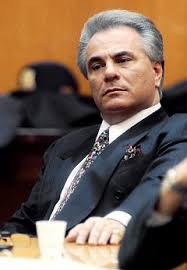
John Gotti
On December 12, 1989, the electronic bug picked up the following conversation between Gotti and his Consigliere, or adviser, Frankie Locascio.
The subject: The murders of three former Gambino Family mobsters: Robert “Deebee” DiBernardo, Louis Milito and Louis DiBono.
DiBernardo had been murdered over Gravano’s objections. A fellow mobster had told Gotti that DiBernardo had made “subversive” comments behind Gotti’s back.
But that wasn’t the way Gotti told it.
GOTTI: “Deebee, did he ever talk subversive to you?”
LOCASCIO: “Never.”
GOTTI: “Never talked it to Angelo, never talked it to [Joseph Armone] either. I took Sammy’s word that he talked about me behind my back….I was in jail when I whacked him. I knew why it was being done. I done it anyway. I allowed it to be done anyway.”
Next Gotti focused on the murders of Louis Milito and Louis DiBono. Milito had been “whacked” for questioning Gotti’s judgment. And DiBono had been hit because he refused to answer a Gotti summons.
But Gotti was determined to lay the blame on Gravano. He claimed that both men had been killed because Gravano had asked for permission to remove his business partners.
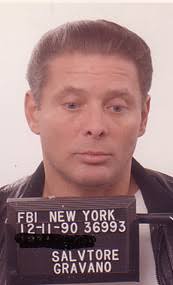
Sammy “The Bull” Gravano
GOTTI: “Every time we get a partner that don’t agree with us, we kill him. [The] boss kills him. He kills him. He okays it. Says it’s all right, good.”
And there was more: Gotti accused Gravano of excessive greed—and hoarding money for himself at the expense of the Family.
GOTTI: “That’s Sammy….Every fucking time I turn around there’s a new company poppin’ up. Building. Consulting. Concrete. Where the hell did all these new companies come from? Where did five new companies come from?
“Paul [Castellano, the Gambino Family’s previous boss] sold the Family out for a fucking construction company. And that’s what Sammy’s doing now. Three, four guys will wind up with every fuckin’ thing. And the rest of the Family looks like waste.”
He accused Gravano of creating “a fuckin’ army inside an army,” adding: “You know what I’m saying, Frankie? I saw that shit and I don’t need that shit.”
Gotti’s effort to rewrite history soon came back to haunt him.
At a pretrial hearing following the arrests of Gotti, Gravano and Locascio, prosecutors played the FBI’s tapes of Gotti’s unintended confessions—including his badmouthing of Gravano.
Gravano suddenly realized that his future in the Mafia was nil.
Gravano, Gotti and Locascio were all facing life imprisonment as targets of RICO—the Racketeer Influenced Corrupt Organizations Act.
And if the Feds didn’t send him to prison, mob gunmen—sent by Gotti—would eventually get him. Gotti clearly planned to make him the fall guy—in court or in a coffin—for murders that Gotti himself had ordered.
Only John Gotti was shocked when Gravano agreed to testify against him—and other Mafiosi—in exchange for a five-year prison sentence.
Gravano, as Gotti’s second-in-command, had literally been at the seat of power for five years. He knew the secrets of the Gambino Family—and the other four Mafia families who ruled New York.
On April 2, 1992, a jury convicted Gotti of five murders, conspiracy to murder, loansharking, illegal gambling, obstruction of justice, bribery and tax evasion. He drew a life sentence, without possibility of parole.
Gotti was incarcerated at the United States Penitentiary at Marion, Illinois, in virtual solitary confinement. He died of throat cancer on June 10, 2002, at the age of 61.
Donald Trump resembles his fellow New Yorker, John Gotti, in more ways than he would like to admit: In his greed, arrogance, egomania, love of publicity and vindictiveness.
So far, he has survived his lifelong hubris. But he may not survive his lifelong dedication to “looking out for Number One.”
2016 PRESIDENTIAL CAMPAIGN, ABC NEWS, ALTERNET, AP, “FAT TONY” SALERNO, BUZZFEED, CARLO GAMBINO, CARMINE GALANTE, CBS NEWS, CNN, CROOKS AND LIARS, DAILY KOZ, DONALD TRUMP, EMANUEL GAMBINO, FACEBOOK, FBI, JOSEPH R. MCCARTHY, MAFIA, MICHAEL COHEN, MOTHER JONES, MOVEON, MSNBC, NBC NEWS, NEWSWEEK, NPR, PAM BONDI, PAUL CASTELLANO, POLITICO, RAW STORY, REPUBLICANS, REUTERS, ROY COHN, SALON, SAMMY "THE BULL" GRAVANO, SEATTLE TIMES, SLATE, THE ATLANTIC, THE CHICAGO SUN-TIMES, THE CHICAGO TRIBUNE, THE DAILY BEAST, THE GUARDIAN, THE HILL, THE HUFFINGTON POST, THE LOS ANGELES TIMES, THE NATION, THE NEW YORK TIMES, THE WASHINGTON POST, TIME, TWITTER, U.S. NEWS & WORLD REPORT, UPI, USA TODAY, VINCENT "THE CHINS" GIGANTE
In Bureaucracy, History, Law Enforcement, Politics, Social commentary, Uncategorized on July 5, 2018 at 12:02 am
In August 1983, two members of John Gotti’s “crew” were arrested for dealing heroin.
Paul Castellano, the most powerful Mafia boss in the nation, had continued the Gambino Family’s longtime “deal and die” policy against trafficking in narcotics. Castellano threatened to “whack” Gotti and his entire crew.
For Gotti, it was literally a case of kill-or-be-killed.
On December 16, 1985, four gunmen, wearing white trench coats and black Cossack Diplomat hats, shot Castellano as he exited his car to enter Sparks Steakhouse in downtown Manhattan. With him died his underboss, or second-in-command, Thomas Bilotti.
Gotti and his closest associates pretended they didn’t know who ordered the execution. But nearly all of the Family’s capos knew it was Gotti. Gotti assumed the position of “acting boss,” but nobody dared challenge his leadership.
Suddenly, Gotti burst into the public’s consciousness. He swaggered down streets, gave impromptu press conferences to reporters, partied at discos and nightclubs. He delighted in being approached by average citizens on streets and in restaurants.

John Gotti
Old-style Mafia bosses like Carlo Gambino had carefully avoided publicity. During the 1950s, newspapers didn’t have photos of Gambino in their files.
Gotti moved his headquarters from Queens to the Ravenite Social Club in Manhattan. Like a king holding court, Gotti ordered all of his captains to report to him at the Ravenite once a week. Word quickly reached the FBI—and agents in vans shot video as they staked out Prince Street.
Gotti handed the FBI a mob organization chart.
Like other mobsters, he often found himself under indictment. Unlike other mobsters, he didn’t claim physical infirmity to avoid prison. He claimed he was a victim of anti-Italian prejudice. He taunted the FBI agents he knew were stalking him.
He swaggered into courtrooms and smirked as his attorney, Bruce Cutler, viciously attacked the prosecution’s witnesses. And he emerged victorious in three high-profile trials in a row.
Local and Federal prosecutors didn’t realize his secret: Jury tampering and witness intimidation.
The press dubbed him “The Teflon Don.”
In 1989, the FBI planted a hidden microphone in an apartment above the Ravenite where Gotti held his secret meetings. Tape recorders were running when he bragged that he had ordered three murders—and was running a criminal enterprise: The Gambino Mafia Family.
When he wasn’t bragging, he was badmouthing virtually everyone—past and present—in the Mafia: Paul Castellano, Carlo Gambino, Vincent “The Chins” Gigante. And, most fatally, his own underboss: Sammy “The Bull” Gravano.
Sammy Gravano
Gotti charged that Gravano was too greedy—and tried to frame him for the murders of three Mafiosi Gotti had ordered hit.
On December 11, 1990, FBI agents and NYPD detectives raided the Ravenite, arresting Gotti and Gravano. At a pretrial hearing, prosecutors played the FBI’s tapes of Gotti’s unintended confessions—including his badmouthing of Gravano.
Gravano, enraged, agreed to testify against Gotti and other Mafiosi in exchange for a five-year prison sentence.
On April 2, 1992, a jury convicted Gotti of five murders, conspiracy to murder, loansharking, illegal gambling, obstruction of justice, bribery and tax evasion. He drew a life sentence, without possibility of parole.
Gotti was incarcerated at the United States Penitentiary at Marion, Illinois, in virtual solitary confinement. In 1998, he was diagnosed with throat cancer. He died on June 10, 2002, at the age of 61.
Donald Trump resembles his fellow New Yorker, John Gotti, in more ways than he would like to admit:
Donald Trump
- He craves publicity like a drug.
- His egomania long ago reached psychotic heights: In a 1990 interview with Playboy magazine, he offered his worldview: “The show is Trump, and it is sold-out performances everywhere.”
- He impulsively and brutally badmouths virtually everyone—in press conferences and on Twitter.
- He brags constantly—about his wealth, his intelligence, his sexual prowess, his achievements: “My fingers are long and beautiful, as, it has been well documented, are various other parts of my body.”
- He has bought his way out of legal trouble: Florida Attorney General Pam Bondi personally solicited a political contribution from him while her office deliberated joining an investigation of alleged fraud at Trump University and its affiliates. After Bondi dropped the case against Trump, he wrote her a $25,000 check for her re-election campaign.
- He repeatedly threatens violence against his opponents: On March 16, 2016, he warned Republicans that if he didn’t win the GOP nomination in July, “I think you’d have riots….I think bad things would happen.”
- Although not a member of the Mafia, he has often been linked—directly or indirectly—to men who are, such as “Fat Tony” Salerno and Paul Castellano.
- He prizes being seen as a tough guy: “I could stand in the middle of Fifth Avenue and shoot somebody and I wouldn’t lose voters.” At a Las Vegas rally in 2016, he said about a protester: “I’d like to punch him in the face.”
- He has no loyalty to anyone: In April, 2018, his longtime attorney, Michael Cohen, came under investigation for bank fraud, wire fraud and violations of campaign finance law. Trump’s reaction: Cohen handled only a “tiny, tiny little fraction” of Trump’s overall legal affairs.
History still waits to learn if the hubris that struck down John Gotti will overtake Donald Trump.
2016 PRESIDENTIAL CAMPAIGN, ABC NEWS, ALTERNET, AP, “FAT TONY” SALERNO, BUZZFEED, CARLO GAMBINO, CARMINE GALANTE, CBS NEWS, CNN, CROOKS AND LIARS, DAILY KOZ, DONALD TRUMP, EMANUEL GAMBINO, FACEBOOK, FBI, JOSEPH R. MCCARTHY, MAFIA, MICHAEL COHEN, MOTHER JONES, MOVEON, MSNBC, NBC NEWS, NEWSWEEK, NPR, PAM BONDI, PAUL CASTELLANO, POLITICO, RAW STORY, REPUBLICANS, REUTERS, ROY COHN, SALON, SAMMY "THE BULL" GRAVANO, SEATTLE TIMES, SLATE, THE ATLANTIC, THE CHICAGO SUN-TIMES, THE CHICAGO TRIBUNE, THE DAILY BEAST, THE GUARDIAN, THE HILL, THE HUFFINGTON POST, THE LOS ANGELES TIMES, THE NATION, THE NEW YORK TIMES, THE WASHINGTON POST, TIME, TWITTER, U.S. NEWS & WORLD REPORT, UPI, USA TODAY
In Bureaucracy, History, Law Enforcement, Politics, Social commentary on July 4, 2018 at 1:08 am
He was tall, broad-shouldered and bushy-haired. He spoke in a heavily New York-accented voice, and his speech was often laced with crudities and obscenities.
He loved to strut in public, wearing $2,000 custom-made suits, and surrounded by a phalanx of tough-looking bodyguards. He loved being noticed, especially in restaurants and discos, by “my public.” Making the cover of Time magazine was probably the greatest thrill of his life.
And he loved to brag: He was the toughest, the smartest, the guy nobody dared cross. And when he wasn’t bragging about himself, he was disparaging even his closest associates.
He was rumored to be implicated in a long string of felonies. He knew the FBI was watching him. But he continually met openly with his cronies at the same place—a social club in Little Italy.
He ordered his subordinates to be extremely cautious when they talked on the phone. But he totally ignored his own advice—and created a litany of incriminating tapes that would destroy him.
No, he wasn’t Donald Trump.
He was John Gotti, once the boss of the most powerful crime family in America.

John Gotti’s 1990 mugshot
And he shared more than a few striking similarities with Donald Trump—another New Yorker who has since become President of the United States.
Like Trump, Gotti spent a good portion of his time in court—although Trump’s 3,500 lawsuits (filed by and against him) completely dwarf Gotti’s four high-profile trials.
Like Trump, he seemed invincible in court: He won three of those legal confrontations—and thus earned the nickname, “The Teflon Don.”
And, like Trump, he loved to taunt the FBI agents he knew were stalking him. After each court victory he gave a press conference, claiming he had been framed by FBI agents who hated Italians.
Warned to knock it off, to show humility instead of arrogance, Gotti told his would-be protectors to go to hell. He wasn’t going to be anything but what he was.
Years afterward, the FBI learned the reason for the Teflon: Gotti had used jury tampering and witness intimidation to beat the rap.
It was the fourth trial that did him in—and sent him away for life.
Unlike Trump, he wasn’t born into a wealthy family, with a father who gave him $200 million to start his own real estate business. Instead, he grew up in poverty, resenting a father who worked as a day laborer and liked to gamble.
He was born on October 27, 1940—almost six years before Trump (June 14, 1946). He turned to crime at the age of 12, working with street gangs affiliated with the New York City Mafia. By 1966 he had been jailed twice.
He hijacked trucks at John F. Kennedy Airport. Arrested three times for hijacking, he pleaded guilty and was sentenced to three years at Pennsylvania’s Lewisburg Federal Penitentiary.
Paroled in 1972, Gotti’s big break came in 1973. Emanuel Gambino, the nephew of the Mafia’s “Boss of all Bosses” Carlo Gambino, was kidnapped and murdered. Gambino sent a trio of hitmen—one of them Gotti—after the culprit: James McBratney. Although not the actual killer, Gotti was identified by eyewitnesses as a participant.
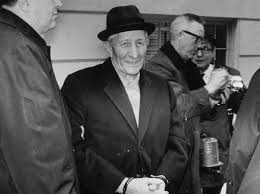
Carlo Gambino
Through a plea bargain arranged by attorney Roy Cohn, Gotti received a four-year prison sentence for attempted manslaughter.
Cohn had earned an infamous reputation as chief counsel for Red-baiting Wisconsin United States Senator Joseph R. McCarthy in the 1950s. After leaving government service in 1954, Cohn went into private practice. Among his clients: Mafia bosses “Fat Tony” Salerno and Carmine Galante—and real estate mogul Donald Trump.
Released from prison in July, 1977, after only two years, Gotti finally received his dream gift: He was fully initiated as a “made man” into the Gambino Family.
Gambino himself had died of natural causes in 1976, and was now succeeded by his son-in-law, Paul “Big Paul” Castellano.
Gambino had represented the “old-school” Mafia: Men who shunned publicity like the plague and cultivated the image of a harmless small businessman. Although he had ordered his “soldiers” to steer clear of the drug trade, which brought too much heat, Gambino reaped millions from loansharking, extortion, hijacking, bookmaking and labor racketeering.
Castellano sought to “legitimize” the Mafia by moving it into legitimate business. He launched Dial Poultry, a poultry distribution business that once supplied 300 butchers in New York City. He profited as well by supplying construction concrete. No one could pour concrete for a project worth more than $2 million without the approval from the “Concrete Club”—a mob-controlled enterprise.

Paul Castellano
“Big Paul,” who had never “whacked” anyone, didn’t see himself as a gangster. He liked socializing with bankers and even once told his maid (with whom he was having an extramarital affair) that “I could even do a favor for a President.”
John Gotti, by contrast, was neither publicity-shy like Gambino nor seeking to enter the legitimate business world like Castellano. There was no point, he reasoned, in being a gangster if you weren’t going to act like one.
For Gotti, those two traits—his love of publicity and desire to be “a real gangster”—would prove a fatal combination.
2016 PRESIDENTIAL CAMPAIGN, ABC NEWS, ALTERNET, AP, “THE FBI” TV SERIES, BARACK OBAMA, BUZZFEED, CBS NEWS, CIA, CNN, CROOKS AND LIARS, DAILY KOZ, DEPARTMENT OF JUSTICE, DIRECTOR OF NATIONAL INTELLIGENCE, DONALD TRUMP, FACEBOOK, J. EDGAR HOOVER, JAMES B. COMEY, JAMES R. CLAPPER, KGB, MAFIA, MARJORY STONEMAN DOUGLAS HIGH SCHOOL, MICHAEL FLYNN, MOTHER JONES, MOVEON, MSNBC, NBC NEWS, NEWSWEEK, NPR, NRA, POLITICO, RAW STORY, REUTERS, ROBERT MUELLER, RUSSIAN ESPIONAGE, SALON, SEATTLE TIMES, SERGEY KISYLYAK, SERGEY LAVOV, SLATE, THE ATLANTIC, THE CHICAGO SUN-TIMES, THE CHICAGO TRIBUNE, THE DAILY BEAST, THE GUARDIAN, THE HILL, THE HUFFINGTON POST, THE LOS ANGELES TIMES, THE NATION, THE NEW YORK TIMES, THE WASHINGTON POST, TIME, TWITTER, U.S. NEWS & WORLD REPORT, UPI, USA TODAY, USA TODAY FBI, VLADIMIR PUTIN
In Bureaucracy, History, Law, Law Enforcement, Politics, Social commentary, Uncategorized on July 3, 2018 at 10:32 am
From 1965 to 1974, Americans watched “The FBI,” a highly fictionalized TV drama supposedly based on real stories from the files of the Federal Bureau of Investigation.
J. Edgar Hoover, the legendary director of the Bureau since 1924, made certain the series reflected the image of the FBI that he wanted seen.
FBI agents:
- Didn’t smoke or swear and seldom fired a gun.
- Never cheated on their wives.
- Never planted illegal bugs or wiretaps,
- Never suffered marital problems from the strains of an FBI career.
- Could summon a helicopter—like the show’s hero, Inspector Lewis Erskine—with the snap of their fingers.
Yet none of this mattered to the millions who tuned in every week to make this one of the highest-rated series on TV.

After decades of a generous self-advertising campaign, Americans generally saw the Bureau as not simply incorruptible but infallible. When agents zeroed in on a criminal—a bank robber, terrorist or member of the Mob—he was as good as caught.
So it would have been unimaginable to such an audience that the greatest threat to the Bureau would come not from the KGB or Mafia hitmen, but from the President of the United States.
Yet, 53 years after “The FBI” premiered on the ABC network in 1965, that is exactly the case.
On May 9, 2017, FBI Director James B. Comey was brutally fired without warning by President Donald Trump. Trump has since given several explanations why he did it. But the most convincing was the one he gave in the Oval Office to Russian Foreign Minister Sergey Lavov and Russian Ambassador Sergey Kislyak.
“I just fired the head of the F.B.I.,” Trump told the two dignitaries. “He was crazy, a real nut job. I faced great pressure because of Russia. That’s taken off.”

James Comey
Trump had three reasons for firing Comey:
- Comey had refused to pledge his personal loyalty to Trump. Trump had made this “request” during a private dinner at the White House in January. After refusing to make that pledge, Comey told Trump that he would always be honest with him. But that didn’t satisfy Trump’s demand that the head of the FBI act as his personal secret police chief.
- Trump had tried to coerce him into dropping the FBI’s investigation into former National Security Adviser Michael Flynn, for his secret ties to Russia and Turkey. Comey had similarly resisted that demand.
- Comey had recently asked the Justice Department to fund an expanded FBI investigation into contacts between Trump’s 2016 Presidential campaign and Russian Intelligence agents.
During that meeting where he disparaged Comey, Trump gave the Russian dignitaries sensitive Intelligence on ISIS that had been supplied by Israel.
On December 16, 2016, Comey and Director of National Intelligence James R. Clapper Jr. had agreed with a CIA assessment that Russia intervened in the 2016 election in part to help Donald Trump win the White House.
Trump, however, has steadfastly denied any such role by Russia: “I think it’s ridiculous,” he told “Fox News Sunday.” “I think it’s just another excuse. I don’t believe it….No, I don’t believe it at all.”
Since the FBI launched its counterintelligence investigation into collusion between Trump’s campaign and Russian Intelligence agents, Trump has repeatedly attacked the American Intelligence and law-enforcement communities. But he has yet to condemn Moscow for its election interference.
![]()
FBI Seal
In fact, he has—at least publicly—accepted Russian dictator Vladimir Putin’s assertion that the Kremlin did not interfere in the 2016 election.
On February 17, 2018—three days after a gunman killed 17 people at Marjory Stoneman Douglas Douglas High School, in Parkland, Florida, Trump tweeted:
“Very sad that the FBI missed all of the many signals sent out by the Florida school shooter. This is not acceptable. They are spending too much time trying to prove Russian collusion with the Trump campaign – there is no collusion. Get back to the basics and make us all proud!”
This ignored that:
- The shooting was not a Federal crime, since it didn’t happen on Federal property nor involve Federal officials.
- Trump has steadfastly opposed any efforts at gun control—while accepting $21 million from the NRA during the 2016 Presidential race. This was the largest contribution the NRA has ever made to a Presidential candidate.
On May 20, 2018, he tweeted: “I hereby demand, and will do so officially tomorrow, that the Department of Justice look into whether or not the FBI/DOJ infiltrated or surveilled the Trump Campaign for Political Purposes – and if any such demands or requests were made by people within the Obama Administration!”
Donald Trump
Trump was demanding that information about an FBI confidential source—in a probe directly relating to himself—be revealed to his cronies in the Republican party.
Trump was desperate to derail the investigation by Special Counsel Robert Mueller into proven ties between Russian Intelligence agents and members of his 2006 Presidential campaign. So now he was creating a false charge—that he had been illegally spied upon by the FBI—to divert public attention from that investigation.
With July 4—the 242nd anniversary of America’s Declaration of Independence—fast approaching, the outcome of Trump vs. the FBI remains to be seen.
2016 PRESIDENTIAL CAMPAIGN, ABC NEWS, ACADEMY AWARDS, ALEXANDER SHUSTOROVICH, ALTERNET, ANDREW INTRATER, AP, ARCHIBALD COX, BARACK OBAMA, BENGHAZI INVESTIGATION, BEST ACTOR OSCAR, BUZZFEED, CBS NEWS, CHUCK GRASSLEY, CIA, CNN, CROOKS AND LIARS, DAILY KOZ, DAVID BROOKS, DEPARTMENT OF HOMELAND SECURITY, DEVIN NUNES, DONALD TRUMP, DONALD TRUMP JR., DONALD TRUMP’S INAUGURAL COMMITTEE, DWIGHT D. EISENHOWER, EMAILS INVESTIGATION, FACEBOOK, FBI, FEDERAL ELECTIONS COMMISSION, FOX NEWS, FRED ZINNEMANN, GARY COOPER, GEORGE W. BUSH, GRACE KELLY, HIGH NOON, HILLARY CLINTON, HOUSE INTELLIGENCE COMMITTEE, JAMES COMEY, JARED KUSHNER, JEFF SESSIONS, JOHN KASICH, JOHN MCCAIN, JOSEPH R. MCCARTHY, KGB, LEN BLAVATNIK, LESTER HOLT, LINDSEY GRAHAM, MARCO RUBIO, MARK SHIELDS, MICHAEL FLYNN, MITCH MCCONNELL, MOTHER JONES, MOVEON, MSNBC, NATIONAL SECURITY AGENCY, NBC NEWS, NEWSWEEK, NPR, OFFICE OF THE DIRECTOR OF NATIONAL INTELLIGENCE, PAUL MANAFORT, PAUL RYAN, PBS NEWSHOUR, PEW RESEARCH SURVEY, POLITICAL ACTION COMMITTEES (PACS), POLITICAL CONSULTANTS, POLITICO, PRINCETON UNIVERSITY, RAW STORY, REPUBLICAN PARTY, REPUBLICANS, REUTERS, RICHARD M. NIXON, ROBERT S. MUELLER 111, ROD ROSENSTEIN, RUDOLPH GIULIANI, RUSSIA, RUSSIAN OLIGARCHS, SALON, SCOTT WALKER, SEATTLE TIMES, SENATE INTELLIGENCE COMMITTEE, SENATE LEADERSHIP FUND, SERGEY KISLYAK, SERGEY LAVROV, SIMON KUKES, SLATE, SOVIET UNION, TEX RITTER, THE ATLANTIC, THE CHICAGO SUN-TIMES, THE CHICAGO TRIBUNE, THE DAILY BEAST, THE GUARDIAN, THE HILL, THE HUFFINGTON POST, THE LOS ANGELES TIMES, THE NATION, THE NEW YORK TIMES, THE WASHINGTON POST, TIME, TRUMP INAUGURAL COMMITTEE, TRUMP TOWER, TWITTER, U.S. NEWS & WORLD REPORT, UNITED STATES DEPARTMENT OF JUSTICE, UNITED STATES DEPARTMENT OF STATE, UNITED STATES HOUSE OF REPRESENTATIVES, UNITED STATES MARINE CORPS, UNITED STATES SENATE, UNIVERSITY OF VIRGINIA LAW SCHOOL, UP, UPI, USA TODAY, VIETNAM WAR, VLADIMIR PUTIN, WILL KANE
In Bureaucracy, Entertainment, History, Law Enforcement, Military, Social commentary on May 24, 2018 at 12:04 am
On April 27, 2018, the House Intelligence Committee, after a sham “investigation,” concluded there had been “no collusion” between Russian Intelligence agents and members of the Trump Presidential campaign.
Among the evidence ignored: The now-infamous meeting at Trump Tower, in June, 2016, between Donald Trump’s son, Donald Jr.; his son-in-law, Jared Kushner; and his then-campaign manager, Paul Manafort, with Russian Intelligence agents.
The reason for the meeting: The Russians claimed to have dirt to offer on Hillary Clinton.
The “no collusion” verdict was inevitable, since the committee was chaired by California’s Republican Representative Devin Nunes, a wholly-owned subsidiary of Trump. Nunes had even improperly shared “secret” committee documents with the President.

Devin Nunes
The Senate Intelligence Committee, on the other hand, agreed with the conclusions previously reached by the American Intelligence community (CIA, FBI, National Security Agency): The Russians had worked to subvert the American political process and elect Trump over Clinton.
March 17, 2018, marked the start of the second year of Special Counsel Robert Mueller’s investigation to uncover “any links and/or coordination between the Russian government and individuals associated with the campaign of President Donald Trump, and any matters that arose or may arise directly from the investigation.”
By that date, Mueller had:
- Indicted 19 people—including four former Trump campaign advisers.
- Indicted three Russian companies.
- Obtained five guilty pleas—and the cooperation of all five defendants.
- Unveiled Russians’ determination to elect Trump over Hillary Clinton.
- Revealed that former National Security Adviser Michael Flynn discussed removing sanctions against Russia with then-Russian ambassador, Sergey Kislyak, during the transition period.
- Discovered that Trump associates knew about Russian outreach efforts during the campaign.
By contrast:
- Republicans spent four years investigating the 2012 attack on the United States embassy in Benghazi, Libya. Their goal: To derail the presumed 2016 Presidential candidacy of then-Secretary of State Hillary Clinton. But no indictments followed.
- Republicans spent two years investigating Hillary Clinton’s use of a private email server while Secretary of State. Again, no indictments followed.
It’s past time for Republicans to remember the lesson taught by High Noon, the classic 1952 Western starring Gary Cooper and Grace Kelly.

Town marshal Will Kane (Cooper) has just married Amy Fowler (Kelly) a Quaker. It should be the happiest day of his life. But shortly after the ceremony, word comes that Frank Miller—a notorious murderer Kane once sent to prison—has been released.
Even worse, Miller—joined by three other killers—is coming into town on the noon train to kill Kane.
Kane’s first instinct is to flee: He and his wife get into a buggy and dash out of town. But then his sense of duty takes over. He returns to town, intending to recruit a posse.
But this proves impossible—everyone is scared to death of Miller and his gang. And everyone Kane approaches has a reason for not backing him up.
Even Amy—a fervent believer in non-violence—threatens to leave him if he stands up to Miller. She will be on the noon train leaving town—with or without him.
When the clock strikes noon, the train arrives, and Kane—alone—faces his enemies. He shoots and kills two of them.
Then, as he’s pinned down by the third, he gets some unexpected help—from his wife: Amy shoots the would-be killer in the back—only to be taken hostage by Miller himself.
Miller tells Kane to leave his concealed position or he’ll kill Amy. Kane steps into the open—and Amy claws at Miller’s face, buying Kane the time he needs to shoot Miller down.
At that point, the townspeople rush to embrace Kane and congratulate him. But he’s now seen them for the cowards they are and holds them in total contempt.
Saying nothing, he drops the marshal’s star into the dirt. He and Amy then get into a buggy and leave town.
Fred Zinnemann, the film’s director, intended the movie as an attack on those frightened into silence by Joseph McCarthy, the infamous Red-baiting Senator from Wisconsin.
Will Kane fought to protect himself and his town from a gang of murderous outlaws.
Robert Mueller is fighting to discover the truth behind Russian subversion of the American political system.
The difference between these two conflicts is this: We know how Kane’s fight ended—with a good man defeating evil men.
We do not know if Mueller will ultimately triumph over his—and America’s—mortal enemies.
Robert Mueller—as a soldier, prosecutor, FBI director and now Special Counsel—took an oath to “support and defend the Constitution of the United States against all enemies, foreign and domestic.”
So did Donald Trump when he was inaugurated President. And so did every member of the House of Representatives and the Senate.
The difference between Robert Mueller, and the overwhelming majority of Republican Congressional members who have refused to support him, is this: Mueller, like a compass pointing True North, has always stayed faithful to that oath.
In doing so, he is carrying on his shoulders the burdens created when millions of racist, hate-filled Americans deliberately sent a Russian-backed egomaniac and would-be dictator to the White House.


 Bureaucracybuster's Blog
2016 PRESIDENTIAL CAMPAIGN, ABC NEWS, ALTERNET, ANTHONY SCARAMUCCI, AP, BARACK OBAMA, BBC, BUZZFEED, CBS NEWS, CIA, CLINTON WATTS, CNN, CYBERWARFARE, DAILY KOS, DEMOCRATIC NATIONAL COMMITTEE, DIRECTOR OF NATIONAL INTELLIGENCE, DONALD TRUMP, DONALD TRUMP JUNIOR, ERIC TRUMP, ERIK PRINCE, ESPIONAGE, EUROPEAN UNION (EU), FACEBOOK, FBI, GEORGE PAPADOPOULOS, GRU, HILLARY CLINTON, JAMES B. COMEY, JAMES R. CLAPPER, JARED KUSHNER, JEFF SESSIONS, MICHAEL COHEN, MICHAEL T. FLYNN, MIKE PENCE, MOSCOW PROJECT, MOTHER JONES, MOVEON, NBC NEWS, NEWSWEEK, NORTH ATLANTIC TREATY ORGANIZATION (NATO), NPR, PAUL MANAFORT, POLITICO, RAW STORY, REUTERS, REX TILLERSON, RICK GATES, ROBERT S. MUELLER, RUSSIA, SALLY YATES, SALON, SEATTLE TIMES, SLATE, THE ATLANTIC, THE CHICAGO SUN-TIMES, THE CHICAGO TRIBUNE, THE DAILY BEAST, THE GUARDIAN, THE HILL, THE HUFFINGTON POST, THE LOS ANGELES TIMES, THE NEW YORK TIMES, THE WALL STREET JOURNAL, THE WASHINGTON POST, TIME, TWITTER, U.S. NEWS & WORLD REPORT, U.S. SENATE SELECT COMMITTEE ON INTELLIGENCE, UPI, USA TODAY, VLADIMIR PUTIN, WIKILEAKS
THE KGB COMES TO THE WHITE HOUSE: PART TWO (END)
In Bureaucracy, History, Law Enforcement, Military, Politics, Social commentary on July 26, 2018 at 12:08 amMore than a year and a half after taking office, President Donald Trump remains haunted by “the Russian connection.”
Throughout 2016, the CIA, FBI and National Security Agency (NSA) found numerous ties between officials of the Trump Presidential campaign and Russian Intelligence agents.
And many of those he has appointed to office have strong ties to the government of Russian President Vladimir Putin.
One of these was Secretary of State Rex Tillerson. In 2013, as the chief executive of ExxonMobil, he was presented with the 2013 Order of Friendship award. He had just signed deals with the state-owned Russian oil company Rosneft. Its chief, Igor Sechin, is a loyal Putin lieutenant.
Rex Tillerson
Another such official is Attorney General Jeff Sessions. During the 2016 campaign, Sessions—then serving as a surrogate for Donald Trump’s campaign—twice spoke with Russian Ambassador Sergey Kislyak.
But during his Senate nomination hearings, Sessions denied that he had had “communications with the Russians” during the campaign.
The discovery of numerous contacts between Trump campaign officials and Russian Intelligence agents led the FBI to investigate Russia’s efforts to subvert the 2016 Presidential election. That investigation is still ongoing.
So did the House and Senate Intelligence Committees.
On March 30, 2017, Clinton Watts, an expert on cyber warfare, testified before the U.S. Senate Select Committee on Intelligence. As part of his testimony, he presented a prepared statement on “Disinformation: A Primer In Russian Active Measures And Influence Campaigns.”
FROM WATTS’ STATEMENT: Russia certainly seeks to promote Western candidates sympathetic to their worldview and foreign policy objectives. But winning a single election is not their end goal.
Russian Active Measures hope to topple democracies….from the inside out [by] creating political divisions….
[Their ultimate goals are] the dissolution of the European Union and the break up of the North American Treaty Organization (NATO).
Achieving these two victories against the West will allow Russia to reassert its power globally and pursue its foreign policy objectives bilaterally through military, diplomatic and economic aggression.
On July 22, 2016, Wikileaks released 19,252 emails and 8,034 attachments hacked from computers of the highest-ranking officials of the Democratic National Committee (DNC). Early reports traced the leak to Russian hackers.
On July 27, at a press conference in Doral, Florida, Trump declared: “Russia, if you are listening, I hope you are able to find the 33,000 emails that are missing—I think you will probably be rewarded mightily by our press.”
This was nothing less than treason—calling upon a foreign power, hostile to the United States, to interfere in its Presidential election.
On numerous occasions, Trump has fiercely denied any Russian connections. For example:
July 27, 2016: “I mean I have nothing to do with Russia. I don’t have any jobs in Russia. I’m all over the world but we’re not involved in Russia.”
January 11, 2017: “Russia has never tried to use leverage over me. I HAVE NOTHING TO DO WITH RUSSIA – NO DEALS, NO LOANS, NO NOTHING!”
February 7, 2017: “I don’t know [Russian President Vladimir] Putin, have no deals in Russia, and the haters are going crazy.”
Yet, in 2008, Donald Trump, Jr. said at a New York real estate conference: “In terms of high-end product influx into the US, Russians make up a pretty disproportionate cross-section of a lot of our assets. Say, in Dubai, and certainly with our project in SoHo, and anywhere in New York. We see a lot of money pouring in from Russia.”
And Trump’s son, Eric, has been quoted as saying in 2014: “Well, we don’t rely on American banks. We have all the funding we need out of Russia. We’ve got some guys that really, really love golf, and they’re really invested in our programs. We just go there all the time.”
The Moscow Project is an initiative of the Center for American Progress Action Fund. Its objective: “Analyzing the facts behind Trump’s collusion with Russia and communicating the findings to the public.”
According to its March 21, 2018 report (updated on July 10): “In total, we have learned of 80 contacts between Trump’s team and Russia linked operatives, including at least 23 meetings.
“And we know that at least 24 high-ranking campaign officials and Trump advisors were aware of contacts with Russia-linked operatives during the campaign and transition. None of these contacts were ever reported to the proper authorities. Instead, the Trump team tried to cover up every single one of them….
“The Trump campaign issued at least 15 blanket denials of contacts with Russia, all of which have been proven false.”
Members of the Trump team who had contacts with Russians during the campaign or transition include:
Flynn and Papadopoulos have pleaded guilty to making false statements about their contacts with Russians to investigators.
Manafort faces trial for money-laundering relating to his work for the government of Putin-supported government of Ukraine.
In July, Special Counsel Robert S. Mueller charged 12 officers of the GRU, Russia’s military intelligence agency, with crimes committed to the high-profile hacking and leaking emails from the Democratic National Committee during the 2016 campaign.
As trials begin and indicted men begin to sweat, expect more revelations to come.
Share this: