Archive for the ‘Military’ Category
2016 PRESIDENTIAL CAMPAIGN, ABC NEWS, ANTHEM INC., ASHLEY MADISON, BERNIE SANDERS, CBS NEWS, CNN, CYBERSECURITY, DAIRY QUEEN, DEBBIE WASSERMAN-SCHULTZ, DEMOCRATIC NATIONAL COMMITTEE, DEMOCRATIC PARTY, DONALD TRUMP, FACEBOOK, HACKING, HILLARY CLINTON, HOME DEPOT, JPMORGAN/CHASE, KMART, NAPOLEON BONAPARTE, NATIONAL LEGAL AND POLICY CENTER, NBC NEWS, NICCOLO MACHIAVELLI, REPUBLICAN PARTY, SONY PICTURES, STAPLES, TARGET, THE DISCOURSES, THE LOS ANGELES TIMES, THE NEW YORK TIMES, THE OFFICE OF PERSONNEL MANAGEMENT, THE PENTAGON, THE PRINCE, THE U.S. DEPARTMENT OF STATE, THE WASHINGTON POST, TWITTER, WIKILEAKS
In Bureaucracy, History, Military, Politics, Social commentary on July 26, 2016 at 12:15 am
On July 22, Wikileaks released 19,252 emails and 8,034 attachments hacked from computers of the highest-ranking officials of the Democratic National Committee (DNC).
The emails were exchanged from January 2015 through May 2016.
These clearly reveal a bias for Hillary Clinton and against her lone challenger, Vermont U.S. Senator Bernie Sanders.
One email revealed that Brad Marshall, the chief financial officer of the DNC, suggested that Sanders, who is Jewish, could be portrayed as an atheist.
Sanders’ supporters have long charged that the DNC and its chair, Debbie Wasserman-Schultz, were plotting to undercut his campaign. Now thousands of them are expected to descend on the Democratic convention as furious protesters.
The leak could not have come at a worse time for Hillary Clinton, the former First Lady, U.S. Senator from New York and Secretary of State under President Barack Obama.
About to receive the Democratic nomination for President, she finds herself charged with undermining the electoral process.
Wasserman-Schultz has proven the first casualty of the leak, resigning from her position as chair of the DNC and saying she would not open the Democratic convention as previously scheduled.
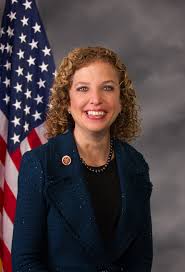
Debbie Wasserman-Schultz
As for Clinton: Her campaign manager, Bobby Mook, blamed the Russians for the leak. Their alleged motive: To help Republican Presidential nominee Donald Trump.
Cyber-security experts believe the hackers originated from Russia–and that Russian President Vladimir Putin may have authorized it.
His alleged motive: Trump has repeatedly attacked United States’ membership in the North Atlantic Treaty Organization (NATO).
He believes the United States is paying an unfairly large portion of the monies needed to maintain this alliance–and he wants other members to contribute far more. Otherwise, if he is elected President, they would be on their own if attacked by Russia.
Trump took to twitter to offer his take on the release: “How much BAD JUDGEMENT was on display by the people in DNC in writing those really dumb e-mails, using even religion, against Bernie!”
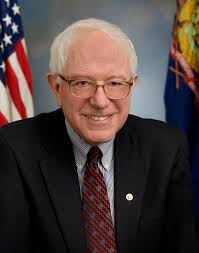
Bernie Sanders
Which brings up the obvious question: Why was such sensitive information entrusted to computers that could be hacked?
This is not the first time a major corporation or government agency has fallen prey to hackers.
Name-brand companies, trusted by millions, have been hit with massive data breaches that compromised their customers’ and/or employees’ most sensitive financial and personal information.
Among those companies and agencies:
- Target
- Kmart
- Home Depot
- JPMorgan/Chase
- Staples
- Dairy Queen
- Anthem, Inc.
- Sony Pictures
- The U.S. State Department
- The Pentagon
- The Office of Personnel Management
Perhaps the most notorious target so far hacked is Ashley Madison, the website for cheating wives and husbands. Launched in 2001, its catchy slogan is: “Life is short. Have an affair.”

On July 15, 2015, its more than 37 million members learned that highly embarrassing secrets they had entrusted to Ashley Madison had been compromised.
This included their sexual fantasies, matching credit card transactions, real names and addresses, and employee documents and emails.
A website offering cheating services to those wealthy enough to afford high-priced fees is an obvious target for hackers. After all, its database is a blackmailer’s dream-come-true.
And the same is true for computers of one of the two major political parties of the United States.
Among the secrets unearthed in the WikiLeaks document-dump: Plans by Democratic party officials to reward large donors and prominent fundraisers with lucrative appointments to federal boards and commissions.
Most of the donors listed gave to Clinton’s campaign. None gave to Sanders.
According to Ken Boehm, chairman of the National Legal and Policy Center, a government watchdog group:
“The disclosed DNC emails sure look like the potential Clinton Administration has intertwined the appointments to federal government boards and commissions with the political and fund raising operations of the Democratic Party. That is unethical, if not illegal.”
Centuries before the invention of computers–and the machinery needed to hack into them–Niccolo Machiavelli offered cautionary advice to those thinking of entering into a conspiracy. He did so in his masterwork on politics, The Discourses.

Niccolo Machiavelli
Unlike his better-known work, The Prince, which deals with how to secure power, The Discourses lays out rules for preserving liberty within a republic.
In Book Three, Chapter Six (“Of Conspiracies”) he writes:
“I have heard many wise men say that you may talk freely with any one man about everything, for unless you have committed yourself in writing, the ‘Yes’ of one man is worth as much as the ‘No’ of another.
“And therefore one should guard most carefully against writing, as against a dangerous rock, for nothing will convict you quicker than your own handwriting.”
In 1804, Napoleon Bonaparte, then First Consul of France, ordered the execution of the popular Louis Antoine de Bourbon, Duke of Enghien, claiming that he had aided Britain and plotted against France.
The aristocracy of Europe, still recalling the slaughters of the French Revolution, was shocked.
Asked for his opinion on the execution, Napoleon’s chief of police, Joseph Fouche, said: “It was worse than a crime; it was a blunder.”
This may prove to be history’s verdict on the storing of so many incriminating computer files by the DNC.
ABC NEWS, ASTROLOGY, BARACK OBAMA, BILL CLINTON, CBS NEWS, CNN, COMMUNIST CHINA, DONALD REGAN, DONALD TRUMP, EMPRESS ALEXANDRA, FACEBOOK, FBI, GEORGE W. BUSH, GERALD R. FORD, GRIGORY RASPUTIN, HILLARY CLINTON, HOUSE OF REPRESENTATIVES, JAMES COMEY, JIMMY CARTER, JOAN QUIGLEY, JODIE FOSTER, JOHN W. HINCKLEY, JUSTICE DEPARTMENT, KEVIN MCCARTHY, MERV GRIFFIN, MIKHAIL GORBACHEV, MITT ROMNEY, NANCY REAGAN, NBC NEWS, NICHOLAS II, PAUL RYAN, REPUBLICANS, Ronald Reagan, SOVIET UNION, SUPERSTITION, THE CHICAGO SUN-TIMES, THE CHICAGO TRIBUNE, THE LOS ANGELES TIMES, THE NEW YORK TIMES, THE WALL STREET JOURNAL, THE WASHINGTON POST, TWITTER, USA TODAY
In Bureaucracy, History, Military, Politics, Social commentary on July 7, 2016 at 12:16 am
On July 6, FBI Director James Comey recommended that the Justice Department not prosecute Hillary Clinton for using a private email server during her tenure as Secretary of State.
Almost immediately afterward, Donald Trump, the presumptive Republican nominee for President, responded on Twitter: “FBI director said Crooked Hillary compromised our national security. No charges. Wow! #RiggedSystem.”
Paul Ryan, the Republican Speaker of the House of Representatives, claimed to be similarly outraged: “Declining to prosecute Secretary Clinton for recklessly mishandling and transmitting national security information will set a terrible precedent.”
“What Director Comey’s statements made clear was that Hillary Clinton’s decision to use a personal unsecured server to send work-related emails while service as Secretary of State—including classified information—was extremely irresponsible,” said House Republican Majority leader Kevin McCarthy.
But 28 years ago, Republicans maintained a tight-lipped silence on another matter involving sensitive national security secrets. That was when news broke that Nancy Reagan, as First Lady, had shared these with a court astrologer.
When President Ronald Reagan wanted advice on whether to nuke the Soviet Union or meet with its leader, Mikhail Gorbachev, his most important adviser wasn’t the CIA or Pentagon.
It was Joan Quigley, a San Francisco-based astrologer.
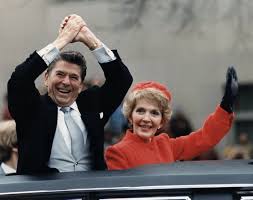
Ronald and Nancy Reagan
Nancy had met Quigley on “The Merve Griffin Show” in 1973. Quigley gave Nancy–and through her, Reagan himself—astrological advice during the latter’s campaign for the Republican Presidential nomination in 1976.
That effort failed to unseat President Gerald Ford–who was defeated by Jimmy Carter. But four years later, in 1980, Reagan defeated Carter to become the 40th President of the United States.
On March 30, 1981, a mentally-disturbed loner named John W. Hinckley shot and critically wounded Reagan. Fixated on actress Jodie Foster, he believed that by shooting the President he could gain her affection.
Shortly after the shooting, Merv Griffin told Nancy that Quigley had told him: If Nancy had called her on that fateful day, she–Quigley–could have warned that the President’s astrological charts had foretold a bad day.
From that moment on, Nancy regularly consulted Quigley on virtually everything that she and the President intended to do.
When Reagan learned of Nancy’s consultations with Quigley, he warned her: Be careful, because it might look odd if it came out.
Nancy may have been speaking on a scrambler-equipped phone. But Quigley–at her San Francisco office–was on an unsecured line. Thus, foreign powers–most notably the Soviet Union and Communist China–could have been privy to President Reagan’s most secret intentions.

Joan Quigley
Nancy passed on Quigley’s suggestions as commands to Donald Regan, chief of the White House staff.
As a result, Regan kept a color-coded calendar on his desk to remember when the astrological signs were good for the President to speak, travel, or negotiate with foreign leaders: Green ink highlighted “good” days; red ink “bad” days; yellow ink “iffy” days.
Donald Regan, no fan of Nancy’s, chafed under such restrictions: “Obviously, this list of dangerous or forbidden dates left very little latitude for scheduling,” he later wrote.
Forced out of the White House in 1987 by Nancy, Regan struck back in a 1988 tell-all memoir: For the Record: From Wall Street to Washington.
Regan’s book revealed, for the first time, how Ronald Reagan had actually made his Presidential decisions.
All–including decisions to risk nuclear war with the Soviet Union–were based on a court astrologer’s horoscopes. Rationality and the best military intelligence available played a lesser, secondary role.
The last major world leader to turn to the supernatural for advice had been Russian Czar Nicholas II. His adviser had been Grigori Rasputin, a Siberian peasant whom Empress Alexandra believed was the only man who could save her hemophiliac son–and heir to the throne.
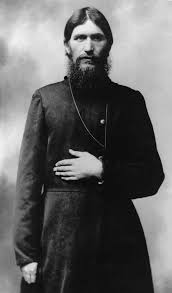
Grigori Rasputin
In 1990, Quigley confirmed the allegations in an autobiography, What Does Joan Say?: My Seven Years As White House Astrologer to Nancy and Ronald Reagan.
The title came from the question that Ronald Reagan asked Nancy before making important decisions–including those that could risk the destruction of the United States.
Bragged Quigley: “Not since the days of the Roman emperors–and never in the history of the United States Presidency—has an astrologer played such a significant role in the nation’s affairs of State.”
Among the successes Quigley took credit for:
- Strategies for winning the Presidential elections of 1980 and 1984;
- Helping Nancy Reagan overhaul her image as a spoiled rich girl;
- Defusing the controversy over Reagan’s visiting a graveyard for SS soldiers in Bitburg, Germany;
- Pursuing “Star Wars” as a major part of his strategy against the Soviet Union;
- The Intermediate-Range Nuclear Forces Treaty;
- Protecting Reagan from would-be assassins through timely warnings to Nancy; and
- Moving Reagan from seeing the Soviet Union as the “Evil Empire” to accepting Mikhail Gorbachev as a peace-seeking leader.
Thirty-five years after he became President, Ronald Reagan remains the most popular figure among Republicans. His deliberately-crafted myth is held up as the example of Presidential greatness by Right-wing candidates.
Curiously, however, none of them mention his approach to government-by-astrologer.
ABC NEWS, AFRIKA KORPS, ALTERNET, AMERICABLOG, AP, BABY BOOMER RESISTANCE, BARACK OBAMA, BASHAR AL-ASAD, BBC, BERNARD MONTGOMERY, BILL KRISTOL, BLOOMBERG NEWS, BUZZFEED, CBS NEWS, CNN, CONDOLEEZA RICE, CROOKS AND LIARS, DAILY KOZ, FACEBOOK, FIVETHIRTYEIGHT, FOOD STAMPS, GEORGE C. SCOTT, GEORGE S. PATTON, HARPER’S MAGAZINE, HUFFINGTON POST, IRAN, IRAQ, IRAQ WAR, JOHN MCCAIN, LINDSEY GRAHAM, MEDIA MATTERS, MOTHER JONES, MOVEON, MSNBC, NBC NEWS, NEW REPUBLIC, NEWSDAY, NEWSWEEK, NPR, OSAMA BIN LADEN, PATTON (MOVIE), PBS NEWSHOUR, PENTAGON, POLITICO, POLITICUSUSA, RAW STORY, REPUBLICANS, REUTERS, SALON, SEATTLE TIMES, SLATE, SYRIA, TALKING POINTS MEMO, THE ATLANTIC, THE CHICAGO SUN-TIMES, THE CHICAGO TRIBUNE, THE DAILY BEAST, THE DAILY BLOG, THE GUARDIAN, THE HILL, THE HUFFINGTON POST, THE LOS ANGELES TIMES, THE NATION, THE NEW REPUBLIC, THE NEW YORK TIMES, THE NEW YORKER, THE VILLAGE VOICE, THE WASHINGTON POST, THINKPROGRESS, TIME, TOMAHAWK CRUISE MISSILES, TRUTHDIG, TRUTHOUT, TWITTER, TWO POLITICAL JUNKIES, U.S. NEWS & WORLD REPORT, UPI, USA TODAY, WORLD WAR ii
In Bureaucracy, History, Military, Politics, Social commentary on June 30, 2016 at 12:17 am
In the 1970 film, Patton, General George S. Patton is a man driven by his obsession to be the best field commander in the war–and to be recognized for it.
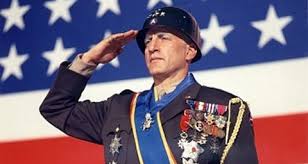
George C. Scott as George S. Patton
And he sees British General Bernard Montgomery–his equally egotistical rival–as a potential obstacle to that latter ambition.
So, in Algeria, he conjures up a plan that will sideline “Monty” while he, Patton, defeats the Germans–and bags the glory.
The trick lies in throwing a sumptuous dinner–in the middle of the African desert–for a visiting British general: Harold Alexander.
As Patton (George C. Scott, in an Oscar-winning performance) tells his aide: “I want to give a dinner for General Alexander. I want to get to him before Montgomery does. I want the finest food and the best wine available. Everything.”
The aide pulls off the dinner–where, indeed, “the finest food and the best wine” are on full display, along with attentive waiters and a candelabra.
So think about it:
- In the middle of the desert
- while American and British forces are forced to subsist on C-rations
- and are under repeated air attack by the Luftwaffe
- and tank attack by the Afrika Korps
a handful of ultra-pampered American and British military officers find the time–and luxuries–to throw themselves a fine party.
Now, fast-forward from Algeria in 1943 to Washington, D.C. in 2016.
Returning to Congress after their traditional summer recess, House Republicans planned to cut $23 billion in food stamps for the poor. This would include include ending waivers that allow some adults to get temporary assistance, while they are in school or training for a job.
The cuts could include drug tests of applicants and tougher work rules. As Republicans see it: There’s no point in “helping” the poor if you can’t humiliate them.

The food stamp program, now called the Supplemental Nutrition Assistance Program, or SNAP, served more than 46 million Americans and cost $74 billion in 2015.
A single person is eligible for food stamps if his total monthly income is under $1,265 ($15,180 per year). A family of four is eligible if their total income is less than $2,584 per month ($31,008 per year).
Republicans claim the program is unbearably expensive at $74.1 billion a year.
Meanwhile, Republicans are eager to spend billions of dollars for another project: An unnecessary war with Syria.
One of these right-wingers is Bill Kristol, editor of the Weekly Standard–and one of the leading instigators of the 2003 war with Iraq.
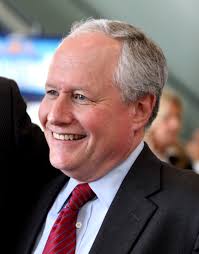
Bill Kristol
He–like senior officials on the George W. Bush administration–falsely claimed that Iraqi dictator Saddam Hussein had weapons of mass destruction and planned to use them against the United States.
Another Kristol lie: Hussein planned 9/11 with Osama bin Laden.
He has never apologized for either lie–or the resulting war that killed 4,487 American soldiers and wounded another 32,226.
In a September, 2013 column, Kristol called for a return to slaughter–not only in Syria but Iran as well:
“…Soon after voting to authorize the use of force against the Assad regime, Republicans might consider moving an authorization for the use of force against the Iranian nuclear weapons program.
“They can explain that Obama’s dithering in the case of Syria shows the utility of unequivocally giving him the authority to act early with respect to Iran.”
Former Secretary of State Condoleeza Rice–who also helped lie the nation into the needless 2003 Iraq war–is another big promoter of “give war a chance:”
“My fellow Americans, we do not have a choice. We cannot be reluctant to lead–and one cannot lead from behind.”
Among Republican U.S. Senators calling for war are John McCain (Arizona) and Lindsey Graman (South Carolina), who issued a joint statement:
“Using stand-off weapons, without boots on the ground, and at minimal risk to our men and women in uniform, we can significantly degrade Assad’s air power and ballistic missile capabilities and help to establish and defend safe areas on the ground.
“In addition, we must begin a large-scale effort to train and equip moderate, vetted elements of the Syrian opposition with the game-changing weapons they need to shift the military balance against [Syrian dictator Bashar] Assad’s forces.”
Except that there are no “moderate, vetted elements” of the Syrian opposition. The opposition is just as murderous as the Assad regime–and eager to replace one dictator with another.
In addition: A major weapon for “degrading Assad’s air power” would be Tomahawk Cruise missiles. A single one of these costs $1,410,000.

Firing of a Tomahawk Cruise missile
A protracted missile strike would rain literally billions of dollars’ worth of American missiles on Syria.
Meanwhile, the Pentagon is spending about $27 million a week to maintain the increased U.S. Navy presence in the Mediterranean Sea and Middle East region to keep watch over Syria and be prepared to strike.
Navy officials say it costs about $25 million a week for the carrier group and $2 million a week for each destroyer.
Is there a lesson to be learned from all this?
Yes.
Powerful people–whether generals, politicians or the wealthy–will always find abundant money and resources available for projects they consider important.
It’s only when it comes to projects that other people actually need that the powerful will claim there is, unfortunately, a cash shortage.
9/11 ATTACKS, ABC NEWS, ADOLF HITLER, AFGHANISTAN, AL QAEDA, ARTHUR M. CUMMINGS, BARACK OBAMA, BOKO HARAM, BOSTON MARATHON BOMBING, CANADA, CBS NEWS, CENSORSHIP, CNN, DAVID CAMERON, DEPARTMENT OF JUSTICE, DONALD TRUMP, FACEBOOK, FBI, GEORGE W. BUSH, HATE CRIMES, IRAQ, ISLAM, ISLAMIC STATE OF IRAQ AND SYRIA, ISLAMIC STATE OF IRAQ AND SYRIA (ISIS), ISLAMIC TERRORISM, LORETTA LYNCH, MOHAMMED, NAZI GERMANY, NBC NEWS, OMAR MATEEN, ORLANDO SHOOTINGS, PAUL RYAN, POLITICAL CORRECTNESS, PULSE, RELIGION, REPUBLICAN PARTY, RONALD KESSLER, SAMUEL HUNTINGTON, STEVEN EMERSON, SYRIA, TALIBAN, TERRORISM, THE CLASH OF CIVILIZATIONS, THE INVESTIGATIVE PROJECT ON TERRORISM, THE LOS ANGELES TIMES, THE NEW YORK TIMES, THE SECRETS OF THE FBI, THE WALL STREET JOURNAL, THE WASHINGTON POST, TWITTER, WORLD TRADE CENTER, WORLD WAR ii
In Bureaucracy, History, Law Enforcement, Military, Politics, Social commentary on June 29, 2016 at 12:01 am
Even at the height of World War II, citizens of the United States could take comfort in the following:
- Nazi Germany had a capitol–Berlin–and a single, all-powerful leader–Adolf Hitler. Once Berlin was occupied and Hitler dead or captured, the war would be over.
- And, for all their ferocity, German soldiers were easy to recognize: They wore gray uniforms, spoke German and waved flags emblazoned with swastikas or imperial eagles.
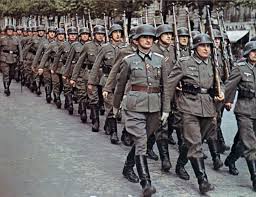
Wehrmacht soldiers marching through conquered France
Today, Western nations under attack by Islamic “holy warriors” face none of those advantages. Islam has no single capitol city–or leader.
Nor do Islam’s jihadist legions wear uniforms. Many of them don’t speak Arabic or wear clothing associated with Arabs, such as flowing robes and headdresses.
More ominously, millions of Islam’s potential “warriors” live within the very Western nations they despise. They can get all the instruction and inspiration they need to wreck havoc simply by going to the Internet.
Or, if they have the money, by traveling overseas to such terrorist-recruiting centers as Syria or Afghanistan.
And yet, faced with an unprecedented threat to their security, many Western leaders refuse to publicly acknowledge this fundamental truth:
Even if the West isn’t at war with Islam, Islam is at war with the West.
Leaders like President Barack Obama, who insisted, at a White House Summit on Countering Violent Extremism in February, 2015: “We are not at war with Islam. We are at war with people who have perverted Islam.”

David Cameron
And leaders like British Prime Minister David Cameron, who said on August 29, 2014: “Islam is a religion observed peacefully by over a billion people. Islamist extremism is a poisonous ideology observed by a minority.”
On June 20, the Federal Bureau of Investigation (FBI) issued a censored version of gunman Omar Mateen’s call to a 9-1-1 operator. While taking a break from slaughtering 49 defenseless men and women and wounding another 53, Mateen pledged his loyalty to ISIS.
Fortunately for the United States, the Bureau hasn’t always been so craven.
Ronald Kessler, author of the 2011 book, The Secrets of the FBI, quotes Arthur M. Cummings, the Bureau’s then-executive assistant director for national security:
“I had this discussion with the director of a very prominent Muslim organization here in [Washington] D.C. And he said, ‘Why are you guys always looking at the Muslim community?’”
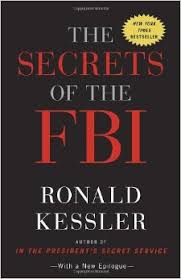
“I can name the homegrown cells, all of whom are Muslim, all of whom were seeking to kill Americans,” replied Cummings. “It’s not the Irish, it’s not the French, it’s not the Catholics, it’s not the Protestants. It’s the Muslims.”
Occasionally, Muslims will condemn Al Qaeda. But “rarely do we have them coming to us and saying, ‘There are three guys in the community that we’re very concerned about,’” said Cummings.
“They don’t want anyone to know they have extremists in their community. Well, beautiful. Except do you read the newspapers? Everybody already knows it. The horse has left the barn.”
Cummings has no use for such Politically Correct terms as “man-caused disasters” to refer to terrorism. Nor does he shy away from terms such as “jihadists” or “Islamists.”
“Of course Islamists dominate the terrorism of today,” he says bluntly.
In May, 2014, Steven Emerson, a nationally recognized expert on terrorism, posted an ad in The New York Times, warning about the dangers of PC-imposed censorship. And he posed the question: “How can we win the war against radical Islam if we can’t even name the enemy?”
He has a point–and a highly legitimate one.
Imagine the United States fighting World War II–and President Franklin Roosevelt banning the use of “fascist” in referring to Nazi Germany or “imperialist” in describing Imperial Japan.
Imagine CNN-like coverage of the Nazi extermination camps, with their piles of rotting corpses and smoking gas ovens, while a commentator reminds us that “Nazism is an ideology of peace.”
Then consider these Islamic terrorist outrages of our own time:
- The 9/11 attacks on the World Trade Center in New York City and the Pentagon in Washington, D.C., which snuffed out the lives of 3,000 Americans.
- The 2004 bombing of Madrid’s commuter train system.
- The attack on the London subway in 2005.
- The killing of 13 U.S. Army personnel at Fort Hood, Texas, by a Muslim army major in 2009.
- The bombing of the Boston Marathon in 2013.
- The kidnapping of 300 Nigerian schoolgirls by Boko Haram in 2014.
- The slaughter of 12 people at a Paris satirical magazine that had published cartoons about the Prophet Mohammed in 2015.
- The murders of more than 100 people in ISIS attacks across Paris in 2015.
- A series of deadly terrorist attacks in Brussels, killing 31 and injuring 270 in 2016.
In every one of these attacks, the perpetrators openly announced that their actions had been motivated by their Islamic beliefs.
In his groundbreaking book, The Clash of Civilizations (1996) Samuel Huntington, the noted political scientist at Harvard University, noted:
“The fundamental problem for the West is not Islamic fundamentalism. It is Islam, a different civilisation whose people are convinced of the superiority of their culture and are obsessed with the inferiority of their power.”
The West may not be at war with Islam–as countless Western politicians repeatedly assert. But Islamics have no qualms about declaring that they are at war with the West.
9/11 ATTACKS, ABC NEWS, ADOLF HITLER, AFGHANISTAN, AL QAEDA, ARTHUR M. CUMMINGS, BARACK OBAMA, BOKO HARAM, BOSTON MARATHON BOMBING, CANADA, CBS NEWS, CENSORSHIP, CNN, DAVID CAMERON, DEPARTMENT OF JUSTICE, DONALD TRUMP, FACEBOOK, FBI, GEORGE W. BUSH, HATE CRIMES, IRAQ, ISLAM, ISLAMIC STATE OF IRAQ AND SYRIA, ISLAMIC STATE OF IRAQ AND SYRIA (ISIS), ISLAMIC TERRORISM, LORETTA LYNCH, MOHAMMED, NAZI GERMANY, NBC NEWS, OMAR MATEEN, ORLANDO SHOOTINGS, PAUL RYAN, POLITICAL CORRECTNESS, PULSE, RELIGION, REPUBLICAN PARTY, RONALD KESSLER, SAMUEL HUNTINGTON, STEVEN EMERSON, SYRIA, TALIBAN, TERRORISM, THE CLASH OF CIVILIZATIONS, THE INVESTIGATIVE PROJECT ON TERRORISM, THE LOS ANGELES TIMES, THE NEW YORK TIMES, THE SECRETS OF THE FBI, THE WALL STREET JOURNAL, THE WASHINGTON POST, TWITTER, WORLD TRADE CENTER, WORLD WAR ii
In Bureaucracy, History, Law Enforcement, Military, Politics, Social commentary on June 28, 2016 at 12:06 am
On June 12, Omar Mateen, a 29-year-old former security guard, slaughtered 49 men and women and injured 53 more inside Pulse, a gay nightclub in Orlando, Florida.
Mateen was then shot to death by Orlando police after a three-hour standoff.
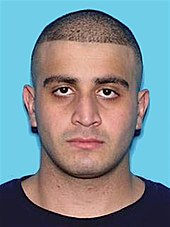
Omar Mateen
It was the deadliest mass shooting by a single gunman in American history–and the deadliest terrorist attack in the United States since the Al Qaeda attacks of September 11, 2001.
The massacre was widely decried as an act of Islamic terrorism. But many others insisted it was simply a hate crime.
Among those opting for the latter: Officials at the Department of Justice (DOJ) and the Federal Bureau of Investigation (FBI).
This despite the fact that:
- Mateen, born in New York in 1986 to Afghan parents, praised the highjackers who carried out the September 11, 2001 attacks that slaughtered 3,000 Americans. At the time, he was attending an alternative high school for problem students.
- He also said that Osama bin Laden was his uncle who had taught him how to shoot an AK-47–this while it was not known that bin Laden had masterminded the attacks.
- During the night of the Orlando massacre, Mateen stopped killing long enough to call 9-1-1, take responsibility for the attack and pledge his allegiance to the Islamic State of Iraq and Syria (ISIS) and its leader, Abu Bakr al-Baghdadi.
In releasing a transcript of the 9-1-1 call, the Justice Department claimed that it would withhold some details to avoid putting the victims through any more pain–and to not further the propaganda efforts of ISIS.

The Robert F. Kennedy Department of Justice
“What we’re not going to do is further proclaim this man’s pledges of allegiance to terrorist groups and further his propaganda,” Attorney General Loretta Lynch told moderator Chuck Todd on the June 19 edition of Meet the Press.
“We will hear him talk about some of these things, but we are not going to hear him make his assertions of allegiance.”
On the morning of June 20, the FBI released the following edited version of the transcript:
MATEEN: Praise be to God, and prayers as well as peace be upon the prophet of God [in Arabic]. I let you know, I’m in Orlando and I did the shootings.
OPERATOR: What’s your name?
MATEEN: My name is I pledge of allegiance to [omitted].
OPERATOR: OK, what’s your name?
MATEEN: I pledge allegiance to [omitted] may God protect him [in Arabic], on behalf of [omitted].
A firestorm of protest erupted from Republican Congressional leaders, most notably Speaker of the House Paul Ryan. Since Mateen’s pledge to ISIS had become widely known, they demanded, what was the point of censoring it in the transcript of his phone call?
“We know the shooter was a radical Islamist extremist inspired by ISIS,” Ryan said in a statement. “We also know he intentionally targeted the LGBT community. The administration should release the full, unredacted transcript so the public is clear-eyed about who did this, and why.”
An additional reason for the fury aimed at the Justice Department: On June 12, ISIS had claimed responsibility for the massacre:
“The armed attack that targeted a gay night club in the city of Orlando in the American state of Florida which left over 100 people dead or injured was carried out by an Islamic State fighter.”
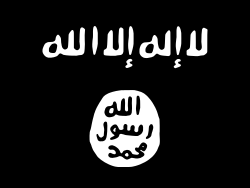
Flag of ISIS
Finally, buckling to pressure, on the afternoon of June 20, the FBI released the full, uncensored transcript of Mateen’s call to 9-1-1:
OPERATOR: Emergency 911, this is being recorded.
MATEEN: In the name of God the Merciful, the beneficent [Arabic]
OPERATOR: What?
MATEEN: Praise be to God, and prayers as well as peace be upon the prophet of God [Arabic]. I wanna let you know, I’m in Orlando and I did the shootings.
OPERATOR: What’s your name?
MATEEN: My name is I pledge of allegiance to Abu Bakr al-Baghdadi of the Islamic State.
OPERATOR: OK, what’s your name?
MATEEN: I pledge allegiance to Abu Bakr al-Baghdadi may God protect him [Arabic], on behalf of the Islamic State.
OPERATOR: Alright, where are you at?
MATEEN: In Orlando.
OPERATOR: Where in Orlando?
[End of call]

J. Edgar Hoover FBI Building
Neither the FBI nor the Justice Department apologized for having censored the transcript.
“Unfortunately, the unreleased portions of the transcript that named the terrorist organizations and leaders have caused an unnecessary distraction from the hard work that the FBI and our law enforcement partners have been doing to investigate this heinous crime,” both the DOJ and FBI said in a statement.
Since September 11, 2001, Americans have been actively at war with Islamic nations such as Afghanistan, Iraq and Syria.
Yet high-ranking officials in the administrations of George W. Bush and Barack Obama have repeatedly and loudly denied that America is at war with Islam.
Even if this is true, a large portion of the Islamic world is at war with the United States.
Only Donald Trump–alone of the 2016 Presidential candidates–has dared to say what the vast majority of Americans know: America is at war with Islamics who openly proclaim that their actions are motivated by their Islamic religious beliefs.
And it’s a major reason why Trump is about to receive the Republican nomination for President.
ABC NEWS, ANCHOR BABIES, BARACK OBAMA, BARBARA LEE, CBS NEWS, CNN, DEMOCRATIC PARTY, DONALD TRUMP, DREAM ACT, FACEBOOK, HILLARY CLINTON, HISPANICS, illegal immigration, MEXICO, MSNBC, NBC NEWS, NEWT GINGRICH, PAUL RYAN, RACIAL PROFILING, REPUBLICAN PARTY, THE CHICAGO SUN-TIMES, THE CHICAGO TRIBUNE, THE HUFFINGTON POST, THE LOS ANGELES TIMES, THE NEW YORK TIMES, THE WASHINGTON POST, TWITTER, U.S. SUPREME COURT, WAL-MART
In Bureaucracy, Business, History, Law, Law Enforcement, Military, Politics, Social commentary on June 27, 2016 at 12:19 am
If Americans decide they truly want to control access to their own borders, there is a realistic way to accomplish this.
And it doesn’t involve building a wall along the Mexican border–which would prove ridiculously expensive and easily circumvented.

(1) The Justice Department should vigorously attack the “sanctuary movement” that officially thwarts the immigration laws of the United States.
Among the 31 “sanctuary cities” of this country: Washington, D.C.; New York City; Los Angeles; Chicago; San Francisco; Santa Ana; San Diego; Salt Lake City; Phoenix; Dallas; Houston; Austin; Detroit; Jersey City; Minneapolis; Miami; Denver; Baltimore; Seattle; Portland, Oregon; New Haven, Connecticut; and Portland, Maine.
These cities have adopted “sanctuary” ordinances that do not allow municipal funds or resources to be used to enforce federal immigration laws, usually by not allowing police or municipal employees to inquire about one’s immigration status.
(2) The most effective way to combat this movement: Indict the highest-ranking officials of those cities which have actively violated Federal immigration laws.
In San Francisco, for example, former District Attorney Kamala Harris—who is now California’s Attorney General—created a secret program called Back on Track, which provided training for jobs that illegal aliens could not legally hold.
She also prevented Immigration and Customs Enforcement (ICE) from deporting even those illegal aliens convicted of a felony.
(3) Indicting such officials would be comparable to the way that President Andres Jackson dealt with the threat South Carolinians once made to “nullify”–or ignore–any Federal laws they didn’t like.
Jackson quashed that threat by making one of his own: To lead an army into that State and purge all who dared defy the laws of the Federal Government.

(4) Even if some indicted officials escaped conviction, the results would prove worthwhile.
City officials would be forced to spend huge sums of their own money for attorneys and face months or even years of prosecution.
And this, in turn, would send a devastating warning to officials in other “sanctuary cities” that the same fate lies in store for them.
(5) CEOs whose companies–like Wal-Mart–systematically employ illegal aliens should be held directly accountable for the actions of their subordinates.
They should be indicted by the Justice Department under the Racketeer Influenced Corrupt Organizations (RICO) Act, the way Mafia bosses are prosecuted for ordering their own subordinates to commit crimes.
Upon conviction, the CEO should be sentenced to a mandatory prison term of at least twenty years.
This would prove a more effective remedy for combating illegal immigration than stationing tens of thousands of soldiers on the U.S./Mexican border. CEOs forced to account for their subordinates’ actions would take drastic steps to ensure that their companies strictly complied with Federal immigration laws.
Without employers luring illegal aliens at a fraction of the money paid to American workers, the flood of such illegal job-seekers would quickly dry up.

(6) The Government should stop granting automatic citizenship to “anchor babies” born to illegal aliens in the United States.
A comparable practice would be allowing bank robbers who had eluded the FBI to keep their illegally-obtained loot.
A person who violates the bank robbery laws of the United States is legally prosecutable for bank robbery, whether he’s immediately arrested or remains uncaught for years. The same should be true for those born illegally within this country.
If they’re not here legally at the time of birth, they should not be considered citizens and should–like their parents–be subject to deportation.
(7) The United States Government–from the President on down–should stop apologizing for the right to control the country’s national borders.
The Mexican Government doesn’t hesitate to apply strict laws to those immigrating to Mexico. And it feels no need to apologize for this.
Neither should we.
(8) Voting materials and ballots should be published in one language–English.
In Mexico, voting materials are published in one language–Spanish.
Throughout the United States, millions of Mexican illegals refuse to learn English and yet demand that voting materials and ballots be made available to them in Spanish.

(9) Those who are not legal citizens of the United States should not be allowed to vote in its elections.
In Mexico, those who are not Mexican citizens are not allowed to participate in the country’s elections.
The Mexican Government doesn’t consider itself racist for strictly enforcing its immigration laws.
The United States Government should not consider itself racist for insisting on the right to do the same.
(10) The United States should impose economic and even military sanctions against countries–such as China and Mexico–whose citizens make up the bulk of illegal aliens.
Mexico, for example, uses its American border to rid itself of those who might demand major reforms in the country’s political and economic institutions.
Such nations must learn that dumping their unwanteds on the United States now comes at an unaffordably high price. Otherwise those dumpings will continue.
ABC NEWS, ANCHOR BABIES, BARACK OBAMA, BARBARA LEE, CBS NEWS, CNN, DEMOCRATIC PARTY, DONALD TRUMP, DREAM ACT, FACEBOOK, HILLARY CLINTON, HISPANICS, illegal immigration, MEXICO, MSNBC, NBC NEWS, PAUL RYAN, REPUBLICAN PARTY, THE CHICAGO SUN-TIMES, THE CHICAGO TRIBUNE, THE HUFFINGTON POST, THE LOS ANGELES TIMES, THE NEW YORK TIMES, THE WASHINGTON POST, TWITTER, U.S. SUPREME COURT, WAL-MART
In Bureaucracy, Business, History, Law, Law Enforcement, Military, Politics, Social commentary on June 24, 2016 at 1:30 am
In 2014, President Barack Obama issued an executive order, declaring that illegal aliens living in the United States since 2010 could become citizens or lawful residents, thus shielding them from deportation.
Texas challenged that executive order, claiming that Obama had acted unconstitutionally by encroaching on the duties of Congress. Another 25 Republican states joined the lawsuit.
The case went to the Supreme Court–which, on June 23, blocked the implementation of Obama’s executive order.
The Justices deadlocked on the issue 4-4, thus returning the case to the lower court in Texas that ruled against the administration’s carrying out the policy.
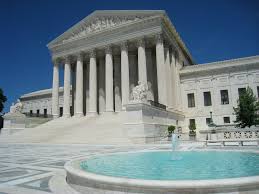
U.S. Supreme Court
In doing so, the Justices denied at least 4 million illegal aliens the right to remain in the country without fear of deportation.
For Republicans, the ruling upheld the separation of powers.
Donald Trump–the presumptive Republican nominee for President–issued a statement: “Today’s 4-4 Supreme Court ruling has blocked one of the most unconstitutional actions ever undertaken by a president.”
And House Speaker Paul Ryan (R-Wis) declared:
“The Supreme Court’s ruling makes the president’s executive action on immigration null and voice. The Constitution is clear: The president is not permitted to write laws—only Congress. This is another major victory in our fight to restore the separation of powers.”
Obama quickly expressed his disappointment, saying that the decision “takes us further from the country that we aspire to be.”
Other Democrats were equally upset by the Court’s decision.
One of these was Rep. Barbara Lee of California, who wrote on Twitter: “Deeply saddened by divided #SCOTUS decision in #USvTexas. We should be keeping families together, not tearing them apart!”
Another was Hillary Clinton–the presumed Democratic Presidential nominee–who used the Court’s decision as a way to troll for Hispanic votes.
“[Donald] Trump has pledged to repeal President Obama’s executive actions on his first day in office,” Clinton said.
“He has called Mexican immigrants ‘rapists’ and ‘murderers.’ He has called for creating a deportation force” to tear 11 million people away from their families and their homes. I believe we are stronger together.”
Both Lee’s and Clinton’s accusations ignored a blunt reality: Families of illegal aliens did not have to break up.
Some members did not have to stay in the United States while others were deported. Instead, they could leave together and live together in the Latin or Central American country of their origin.
Illegal immigration has always been a highly emotional issue for conservatives. But it’s been given added impetus this year.

For years, Republicans and Democrats have clashed over the subject of illegal immigration.
Democrats favor wholesale grants of unearned citizenship to the estimated 11 to 20 million illegal aliens who brazenly violated the law when they sneaked across American borders.
And Republicans favor beefing up security against future waves of such invaders.
But the brutal truth is that neither Democrats nor Republicans truly want to end these invasions. Nor do they want to deport the millions of illegals who have already taken up residence here.
They don’t care that these illegals:
- Flood the United States with millions of poor non-citizens who don’t speak English.
- Overwhelm the public school system with children–who also don’t speak English–who require bilingual education.
- Overwhelm the public healthcare system–especially emergency rooms–with poor illegal aliens. As a result, urgently-needed medical care is often denied to legal American citizens.
Democrats, primarily governed by liberal ideology, believe it’s racist for whites to demand control of their own national borders. They also see illegal aliens as a huge constituency.
And Republicans want them as low-skilled, low-wage fodder for their major campaign contributors–such as corporate-farms and retail outlets like Wal-Mart.
Unlike Democrats, however, Republicans like to feign outrage at the presence of so many illegal aliens within their midst.
It’s the Republican base that’s demanding an end to illegal immigration.
Those masses of alienated and angry whites who find themselves living in a nation that’s increasingly alien from themselves. And who have made Donald Trump their overwhelming choice for President in 2016.
Meanwhile, both Democrats and Republicans ignore a blunt reality: Mexico–America’s largest source of illegal aliens–strictly enforces control of its own borders.
Mexico has a single, streamlined law that ensures that foreign visitors and immigrants are:
- in the country legally;
- have the means to sustain themselves economically;
- not destined to be burdens on society;
- of economic and social benefit to society;
- of good character and have no criminal records; and
- contribute to the general well-being of the nation.
The law also ensures that:
- immigration authorities have a record of each foreign visitor;
- foreign visitors do not violate their visa status;
- foreign visitors are banned from interfering in the country’s internal politics;
- foreign visitors who enter under ralse pretenses are imprisoned or deported;
- foreign visitors violating the terms of their entry are imprisoned are deported;
- those who aid in illegal immigration will be sent to prison.
Meanwhile, Mexico uses its American border to rid itself of those who might otherwise demand major reforms in the country’s political and economic institutions.
ABC NEWS, ADVICE, BAY OF PIGS, CBS NEWS, CNN, CORPORATIONS, CUBA, FACEBOOK, FIDEL CASTRO, JOHN F. KENNEDY, NBC NEWS, NICCOLO MACHIAVELLI, POLITICS, THE CHICAGO SUN-TIMES, THE CHICAGO TRIBUNE, THE DISCOURSES, THE LOS ANGELES TIMES, THE NEW YORK TIMES, THE PRINCE, THE WASHINGTON POST, TWITTER
In Bureaucracy, Business, History, Military, Politics on June 23, 2016 at 1:14 am
On the rare occasion when most people think of Niccolo Machiavelli, the image of the devil comes to mind.

Niccolo Machiavelli
In fact, “The Old Nick” became an English term used to describe Satan and slander Machiavelli at the same time.
The truth, however, is more complex. Machiavelli was a passionate Republican, who spent most of his adult life in the service of his beloved city-state, Florence.
The years he spent as a diplomat were tumultuous ones for Italy–with men like Pope Julius II and Caesare Borgia vying for power and plunging Italy into one bloodbath after another.
Machiavelli is best-known for his writing of The Prince, a pamphlet on the arts of gaining and holding power. Its admirers have included Benito Mussolini and Joseph Stalin.

But his longer and more thoughtful work is The Discourses, in which he offers advice on how to maintain liberty within a republic. Among its admirers were many of the men who framed the Constitution of the United States.

Also contrary to what most people believe about Machiavelli, he did not advocate evil for its own sake. Rather, he recognized that sometimes there is no perfect–or perfectly good–solution to a problem.
Sometimes it’s necessary to take stern–even brutal–action to stop an evil (such as a riot) before it becomes widespread.
His counsel remains as relevant today as it did during his lifetime (1469 – 1527)–especially for politicians.
But plenty of ordinary citizens can also benefit from the advice he has to offer–such as those who are asked to give advice to more powerful superiors.
Machiavelli warns there is danger in urging rulers to take a particular course of action:
“For men only judge of matters by the result, all the blame of failure is charged upon him who first advised it, while in case of success he receives commendations. But the reward never equals the punishment.”
This puts would-be counselors in a difficult position: “If they do not advise what seems to them for the good of the republic or the prince, regardless of the consequences to themselves, then they fail to do their duty.
“And if they do advise it, then it is at the risk of their position and their lives, for all men are blind in thus, that they judge of good or evil counsels only by the results.”
Thus, Machiavelli warns that an adviser should “take things moderately, and not to undertake to advocate any enterprise with too much zeal, but to give one’s advice calmly and modestly.”
The person who asked for the advice may follow it, or not, as of his own choice, and not because he was led or forced into it by the adviser.
Above all, the adviser must avoid the danger of urging a course of action that runs “contrary to the wishes of the many.
“For the danger arises when your advice has caused the many to be contravened. In that case, when the result is unfortunate, they all concur in your destruction.”
Or, as President John F. Kennedy famously said after the disastrous invasion of Cuba at the Bay of Pigs in April, 1961: “Victory has a hundred fathers and defeat is an orphan.”

John F. Kennedy
By “not advocating any enterprise with too much zeal,” the adviser gains two advantages:
“The first is, you avoid all danger.
“And the second consists in the great credit which you will have if, after having modestly advised a certain course, your counsel is rejected, and the adoption of a different course results unfortunately.”
Finally, the time to give advice is before a catastrophe occurs, not after. Machiavelli gives a vivid example of what can happen if this rule is ignored.
King Perseus of Macedon had gone to war with Paulus Aemilius–and suffered a humiliating defeat. Fleeing the battlefield with a handful of his men, he later bewailed the disaster that had overtaken him.
Suddenly, one of his lieutenants began to lecture Perseus on the many errors he had committed, which had led to his ruin.
“Traitor,” raged the king, turning upon him, “you have waited until now to tell me all this, when there is no longer any time to remedy it–” And Perseus slew him with his own hands.
Niccolo Machiavelli sums up the lesson as this:
“Thus was this man punished for having been silent when he should have spoken, and for having spoken when he should have been silent.”
Be careful that you don’t make the same mistake.
ABC NEWS, AFGHANISTAN, BARACK OBAMA, CBS NEWS, CNN, FACEBOOK, GENERAL STANLEY MCCRYSTAL, HAMID KARZAI, JOHN F. KENNEDY, MICHAEL HASTINGS, NBC NEWS, NGO DINH DIEM, NORTH VIETNAMESE ARMY, ROLLING STONE MAGAZINE, THE CHICAGO SUN-TIMES, THE CHICAGO TRIBUNE, THE LOS ANGELES TIMES, THE NEW YORK TIMES, THE OPERATORS, THE PENTAGON, THE WASHINGTON POST, TWITTER, VIETCONG, VIETNAM
In Bureaucracy, History, Military, Politics, Social commentary on June 22, 2016 at 12:39 am
Michael Hastings was the Rolling Stone reporter whose 2010 article on “The Runaway General” ended the illustrious military career of General Stanley McCrystal.
In 2012, Hastings greatly expanded on his article with a 2012 book: The Operators: The Wild and Terrifying Inside Story of America’s War in Afghanistan.
According to its hardcover dust jacket: “General Stanley McCrystal, the innovative, forward-thinking, commanding general of international and U.S. forces in Afghanistan, was living large. He was better known to some as Big Stan, M4, Stan, and his loyal staff liked to call him a ‘rock star.’
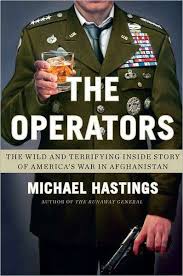
“During a spring 2010 trip across Europe to garner additional allied help for the war effort, McCrystal was accompanied by journalist Michael Hastings of Rolling Stone.
“For days, Hastings looked on as McCrystal and his staff let off steam, partying and openly bashing the Obama administration for what they saw as a lack of leadership.
“When Hastings’ piece appeared a few months later, it set off a poiltical firestorm: McCrystal was ordered to Washington where he was fired unceremoniously.”
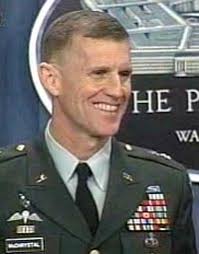
General Stanley A. McCrystal
But there is an even deeper element to be found within Hastings’ book–that is, for anyone with even a general knowledge of the war in Vietnam.
Hastings (who died in a high-speed car accident in 2013) does not make any direct parallels between the almost 11-year conflict in Afghanistan and the 14-year conflict in Vietnam.
But those parallels are definitely there for anyone to see:
- Ngo Dinh Diem, the “president” of South Vietnam (1955 -1963) was a Catholic mandarin who was alienated from an overwhelmingly poor, 95% Buddhist country.
- Hamid Karzai, the “president” of Afghanistan (2004 – 2014) was from a wealthy Pashtun family and is alienated from members of other Afghan tribes.
- Diem’s authority didn’t extend far beyond Saigon.
- Karzai’s authority didn’t extend beyond Kabul.
- Diem didn’t believe in democracy–despite American claims to support his efforts to bring it to Vietnam.
- Ditto for Karzai–despite American claims that he sought to bring democracy to Afghanistan.
- Diem was widely regarded in Vietnam as an illegitimate leader, imposed by the Americans.
- Ditto for Karzai.
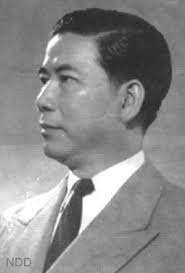
Ngo Dinh Diem
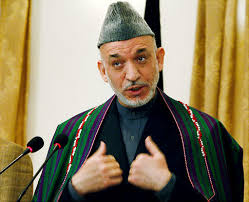
Hamid Karzai
- American soldiers were sent to Vietnam because America feared Communism.
- American soldiers were sent to Afghanistan because America feared terrorism.
- Americans were ordered to train the South Vietnamese to defend themselves against Communism.
- American troops were ordered to train the Afghan army to defend themselves against terrorism.
- Americans quickly determined that the South Vietnamese army was worthless–and decided to fight the Vietcong in its place.
- Americans quickly determined that the Afghan army was worthless–and decided to fight the Taliban in its place.
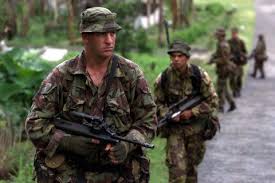
American soldiers in Vietnam
- There was massive distrust between American and South Vietnamese soldiers.
- Ditto for relations between American and Afghan soldiers.
- American soldiers in Vietnam felt surrounded by enemies and hamstrung by unrealistic orders to win “hearts and minds” at the risk of their own lives.
- Ditto for American soldiers stationed in Afghanistan.
- President John F. Kennedy doubted that Americans could win a war in Vietnam and tried to contain the conflict.
- President Barack Obama came into office determined to contain the Afghan conflict and withdraw American troops as soon as possible.
- The Pentagon saw Vietnam as “the only war we’ve got” and pressed to insert greater numbers of men.
- The Pentagon sees Afghanistan as one of several wars “we’ve got” and has pressed to insert greater numbers of men.
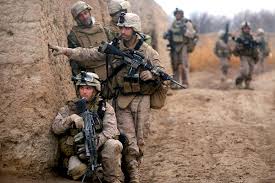
American soldiers in Afghanistan
- The Vietcong and North Vietnamese Army (NVA) posed no threat to the security of the United States.
- The Taliban poses no threat to the security of the United States.
- The far Right embraced the Vietnam war as a way to assert American power in Asia.
- The far Right embraces the Afghan war as a way to assert American power in the Middle East.
- Counterinsurgency was preached as the key to defeating the Vietcong in Vietnam–where it didn’t work.
- Counterinsurgency is now being preached as the key to defeating the Taliban in Afghanistan–where it hasn’t worked.
- Americans entered Vietnam without an exit strategy.
- Americans entered Afghanistan without an exit strategy.
From this, the United States should draw several conclusions:
- Commit forces only when American security is truly threatened.
- Go in with overwhelming force, destroy as much of the enemy as quickly as possible, then get out.
- Occupations are costly in lives and treasure–as Napoleon Bonaparte and Adolf Hitler discovered–and should be avoided.
- Don’t try to remake the cultures of other nations–especially those of a primitive, alien nature such as Afghanistan.
Hastings’ book does not cover the Afghan war to its end. It can’t, since there is no telling when that war will end.
But by the end of its 379 pages, it’s clear what that outcome will be: Another futile exercise in “nation-building” at an exorbitant cost in American lives and treasure.
ABC NEWS, ALTERNET, AMERICABLOG, AP, ATOMIC BOMB, BABY BOOMER RESISTANCE, BARACK OBAMA, BBC, BEIRUT BOMBING, BILL CLINTON, BLOOMBERG, BUZZFEED, CBS NEWS, CHRIS MATTHEWS, CNN, COMMUNISM, CROOKS AND LIARS, CULTS, DAILY KOS, DAILY KOZ, ECONOMICS, FIVETHIRTYEIGHT, GEORGE H.W. BUSH, HARDBALL, HARPER’S MAGAZINE, HUFFINGTON POST, IRAN, IRAN-CONTRA AFFAIR, JOHN F. KENNEDY, JOSEPH STALIN, MEDIA MATTERS, MEET THE PRESS, MOTHER JONES, MOVEON, MSNBC, NBC NEWS, NEW REPUBLIC, NEWSDAY, NEWSWEEK, NPR, PBS NEWSHOUR, POLITICO, POLITICUSUSA, POLLUTION, RAW STORY, REPUBLICAN PARTY, REUTERS, Ronald Reagan, SALON, SEATTLE TIMES, Secret Service, SLATE, SOVIET NUCLEAR PHYSICS, SOVIET UNION, TALKING POINTS MEMO, TAX CUTS, TERRORISM, THE ATLANTIC, THE CHICAGO SUN-TIMES, THE CHICAGO TRIBUNE, THE DAILY BEAST, THE DAILY BLOG, THE GUARDIAN, THE HILL, THE HUFFINGTON POST, THE INTERCEPT, THE LOS ANGELES TIMES, THE NATION, THE NEW REPUBLIC, THE NEW YORK TIMES, THE NEW YORKER, THE VILLAGE VOICE, THE WASHINGTON POST, THINKPROGRESS, THIS WEEK, TIME, TRUTHDIG, TRUTHOUT, TWO POLITICAL JUNKIES, U.S. NEWS & WORLD REPORT, UPI, USA TODAY, Vladimir Lenin, X
In Bureaucracy, Business, History, Military, Politics, Social commentary on May 11, 2016 at 12:01 am
On February 6, 2011, Ronald Reagan, if he had been alive, would have been 100 years old.
Publishers rushed to put out worshipful tributes to his eight years as President. Network political programs such as “This Week” and “Meet the Press” assembled surviving members of his administration to re-live the “glory days” of Reagan’s—and their—time in power.
This is where it all started going wrong for America—a Right-wing legacy of huge Federal deficits, tax-cuts for the rich, bloated military budgets and cutbacks in government programs to aid the poor and middle-class.
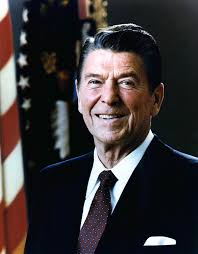
Ronald Reagan
The Republican party, of course, has done the most to create and promote this “cult of Reagan.” And it has done so for the same reason the Communist party of the Soviet Union created and fostered the “cult of Lenin.”
No two men could have been more different than Vladimir Lenin and Ronald Reagan. Lenin created the Soviet Union in 1917 and became its first in a series of absolute dictators. Reagan spent his life fighting Communism, most notably as President.
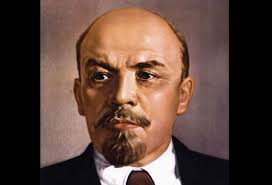
Vladimir Lenin
So it’s ironic that both men, in death, got essentially the same funeral—and for the same reason: To sanctify and legitimize their respective organizations—and the authority of their potential successors.
Lenin died in 1924 and was immediately succeeded by Joseph Stalin. Stalin knew that, despite Communism’s official atheistic stance, most Russians remained loyal to the Russian Orthodox Church.
So in giving Lenin’s funeral oration, Stalin used the language of religion to confer sainthood upon a militant atheist–and upon his successor, Stalin himself.
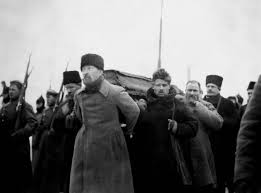
Funeral for Vladimir Lenin
Stalin and his fellow Communists immediately launched the “cult of Lenin,” depicting him as a fatherly, all-wise leader whose genius could only be bestowed upon his closest disciples.
Lenin’s extensive political writings were treated as divine writ, and were used to justify everything Stalin and his own successors wanted to do.
A classic example: Although Lenin died 20 years before the American creation of the atomic bomb, Lenin was hailed by the Soviets as the “father” of “Soviet nuclear physics.”
Similarly, the Republican party wasted no time turning its own former leader, Ronald Reagan, into a modern-day saint of mythical proportions.
They have done so for the same reason that Stalin deliberately forged a cult around the dead Lenin—to create a “holy” figure of whom other Republicans can claim to be true disciples.
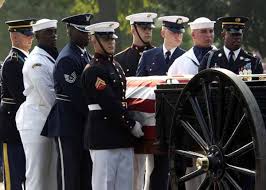
Funeral for Ronald Reagan
These deliberate fictions conveniently ignore a series of ugly truths:
- Reagan was only one of a series of Presidents who held the line against the Soviet Union.
- His budgets were just as stained with red ink as those of all previous Presidents.
- Far from standing up to Iranian terrorists, Reagan sold them our most sophisticated missiles in a weak-kneed exchange for American hostages. Then he went on television and brazenly lied that any such “arms for hostages” deal had ever happened.
- By the end of his term, 138 Reagan administration officials had been investigated, indicted or convicted for official misconduct and/or criminal violations.
- His “trickle-down” Reganomics brought prosperity to only the wealthiest 1% of Americans, proving that “a rising tide lifted some yachts.”
- By drastically shrinking the tax-base, bloating the defense budget and destroying programs to benefit the poor and middle-class, Reagan produced a $1 trillion deficit—which only the Clinton Administration eliminated.
- Reagan believed that government should not help the impoverished. Those who lacked wealth to buy such necessities as housing and medical insurance were written off as unimportant.
- John F. Kennedy had praised government service as an honor. Reagan repeatedly said that “the best and the brightest” could be found only in business.
- This denigration of government service continues among Republicans to this day–defaming the very institutions they lust to control.
- Although he often berated the poor for their “laziness,” Reagan adhered to a “banker’s hours” schedule: During his working hours in the Oval Office, he often had blocks of free time–two to three hours. He would call for his fan mail and answer it.
- Reagan saw no need to protect America’s fragile environment against corporate polluters, eager to enrich themselves at its expense: “Approximately 80% of our air pollution stems from hydrocarbons released by vegetation, so let’s not go overboard in setting and enforcing tough emission standards from man-made sources.”
Reagan famously attacked “welfare queens” and sought to deny government benefits for the poor. But he didn’t hesitate to enrich himself at public expense.
- Before his Presidency ended, 18 wealthy Californians contributed $156,000 apiece to buy him a 7,200 square-foot mansion overlooking Beverly Hills.
- Reagan signed a multi-million dollar deal to write his Presidential memoirs and publish a collection of his speeches.
- He signed an exclusive contract with a Washington lecture bureau, which paid him $50,000 per speech given in the United States and $100,000 overseas. This made him the highest-paid speaker in the country.
- These monies came in addition to his Presidential pension of $99,500 a year for life and his $30,000 annual pension as a former governor of California.
- At a cost to the government of $10 million annually, Reagan—a millionaire who could afford private security—continued to receive lifetime Secret Service protection from 40 fulltime agents.
The “cult of Lenin” died when the Soviet Union collapsed in 1991. The “cult of Reagan” continues to flourish, and will do so for as long as the Republican party finds voters willing to believe in it.


2016 PRESIDENTIAL CAMPAIGN, ABC NEWS, ANTHEM INC., ASHLEY MADISON, BERNIE SANDERS, CBS NEWS, CNN, CYBERSECURITY, DAIRY QUEEN, DEBBIE WASSERMAN-SCHULTZ, DEMOCRATIC NATIONAL COMMITTEE, DEMOCRATIC PARTY, DONALD TRUMP, FACEBOOK, HACKING, HILLARY CLINTON, HOME DEPOT, JPMORGAN/CHASE, KMART, NAPOLEON BONAPARTE, NATIONAL LEGAL AND POLICY CENTER, NBC NEWS, NICCOLO MACHIAVELLI, REPUBLICAN PARTY, SONY PICTURES, STAPLES, TARGET, THE DISCOURSES, THE LOS ANGELES TIMES, THE NEW YORK TIMES, THE OFFICE OF PERSONNEL MANAGEMENT, THE PENTAGON, THE PRINCE, THE U.S. DEPARTMENT OF STATE, THE WASHINGTON POST, TWITTER, WIKILEAKS
THE FIRST RULE OF CONSPIRACIES–AND COMPUTERS
In Bureaucracy, History, Military, Politics, Social commentary on July 26, 2016 at 12:15 amOn July 22, Wikileaks released 19,252 emails and 8,034 attachments hacked from computers of the highest-ranking officials of the Democratic National Committee (DNC).
The emails were exchanged from January 2015 through May 2016.
These clearly reveal a bias for Hillary Clinton and against her lone challenger, Vermont U.S. Senator Bernie Sanders.
One email revealed that Brad Marshall, the chief financial officer of the DNC, suggested that Sanders, who is Jewish, could be portrayed as an atheist.
Sanders’ supporters have long charged that the DNC and its chair, Debbie Wasserman-Schultz, were plotting to undercut his campaign. Now thousands of them are expected to descend on the Democratic convention as furious protesters.
The leak could not have come at a worse time for Hillary Clinton, the former First Lady, U.S. Senator from New York and Secretary of State under President Barack Obama.
About to receive the Democratic nomination for President, she finds herself charged with undermining the electoral process.
Wasserman-Schultz has proven the first casualty of the leak, resigning from her position as chair of the DNC and saying she would not open the Democratic convention as previously scheduled.
Debbie Wasserman-Schultz
As for Clinton: Her campaign manager, Bobby Mook, blamed the Russians for the leak. Their alleged motive: To help Republican Presidential nominee Donald Trump.
Cyber-security experts believe the hackers originated from Russia–and that Russian President Vladimir Putin may have authorized it.
His alleged motive: Trump has repeatedly attacked United States’ membership in the North Atlantic Treaty Organization (NATO).
He believes the United States is paying an unfairly large portion of the monies needed to maintain this alliance–and he wants other members to contribute far more. Otherwise, if he is elected President, they would be on their own if attacked by Russia.
Trump took to twitter to offer his take on the release: “How much BAD JUDGEMENT was on display by the people in DNC in writing those really dumb e-mails, using even religion, against Bernie!”
Bernie Sanders
Which brings up the obvious question: Why was such sensitive information entrusted to computers that could be hacked?
This is not the first time a major corporation or government agency has fallen prey to hackers.
Name-brand companies, trusted by millions, have been hit with massive data breaches that compromised their customers’ and/or employees’ most sensitive financial and personal information.
Among those companies and agencies:
Perhaps the most notorious target so far hacked is Ashley Madison, the website for cheating wives and husbands. Launched in 2001, its catchy slogan is: “Life is short. Have an affair.”
On July 15, 2015, its more than 37 million members learned that highly embarrassing secrets they had entrusted to Ashley Madison had been compromised.
This included their sexual fantasies, matching credit card transactions, real names and addresses, and employee documents and emails.
A website offering cheating services to those wealthy enough to afford high-priced fees is an obvious target for hackers. After all, its database is a blackmailer’s dream-come-true.
And the same is true for computers of one of the two major political parties of the United States.
Among the secrets unearthed in the WikiLeaks document-dump: Plans by Democratic party officials to reward large donors and prominent fundraisers with lucrative appointments to federal boards and commissions.
Most of the donors listed gave to Clinton’s campaign. None gave to Sanders.
According to Ken Boehm, chairman of the National Legal and Policy Center, a government watchdog group:
“The disclosed DNC emails sure look like the potential Clinton Administration has intertwined the appointments to federal government boards and commissions with the political and fund raising operations of the Democratic Party. That is unethical, if not illegal.”
Centuries before the invention of computers–and the machinery needed to hack into them–Niccolo Machiavelli offered cautionary advice to those thinking of entering into a conspiracy. He did so in his masterwork on politics, The Discourses.
Niccolo Machiavelli
Unlike his better-known work, The Prince, which deals with how to secure power, The Discourses lays out rules for preserving liberty within a republic.
In Book Three, Chapter Six (“Of Conspiracies”) he writes:
“I have heard many wise men say that you may talk freely with any one man about everything, for unless you have committed yourself in writing, the ‘Yes’ of one man is worth as much as the ‘No’ of another.
“And therefore one should guard most carefully against writing, as against a dangerous rock, for nothing will convict you quicker than your own handwriting.”
In 1804, Napoleon Bonaparte, then First Consul of France, ordered the execution of the popular Louis Antoine de Bourbon, Duke of Enghien, claiming that he had aided Britain and plotted against France.
The aristocracy of Europe, still recalling the slaughters of the French Revolution, was shocked.
Asked for his opinion on the execution, Napoleon’s chief of police, Joseph Fouche, said: “It was worse than a crime; it was a blunder.”
This may prove to be history’s verdict on the storing of so many incriminating computer files by the DNC.
Share this: