Archive for the ‘Law Enforcement’ Category
ABC NEWS, ABORTION, ABORTION CLINICS, ADAM LANZA, AESOP'S FABLES, ALTERNET, AMERICABLOG, AP, ” 9/11, BABY BOOMER RESISTANCE, BBC, BLOOMBERG NEWS, BUZZFEED, CBS NEWS, CIA, CNN, CROOKS AND LIARS, DAILY KOZ, FACEBOOK, FBI, FIVETHIRTYEIGHT, HARPER’S MAGAZINE, HUFFINGTON POST, JOANN WINDHOLZ, MEDIA MATTERS, MOTHER JONES, MOVEON, MSNBC, NATIONAL ABORTION FEDERATION, NATIONAL RIFLE ASSOCIATION, NBC NEWS, NEW REPUBLIC, NEW YORK POLICE DEPARTMENT (NYPD), NEWSDAY, NEWSWEEK, NEWTOWN SCHOOL SHOOTINGS, NICCOLO MACHIAVELLI, NPR, NYPD, PBS NEWSHOUR, PLANNED PARENTHOOD, POLITICO, POLITICUSUSA, RAW STORY, REPUBLICANS, REUTERS, ROBERT DEAR, ROE V. WADE, SALON, SANDY HOOK ELEMENTARY SCHOOL, SEATTLE TIMES, SLATE, TALKING POINTS MEMO, TERRORISM, THE ATLANTIC, THE CHICAGO SUN-TIMES, THE CHICAGO TRIBUNE, THE DAILY BEAST, THE DAILY BLOG, THE GUARDIAN, THE HILL, THE HUFFINGTON POST, THE INTERCEPT, THE LOS ANGELES TIMES, THE NATION, THE NEW REPUBLIC, THE NEW YORK TIMES, THE NEW YORKER, THE PRINCE, THE VILLAGE VOICE, THE WASHINGTON POST, THINKPROGRESS, TIME, TRUTHDIG, TRUTHOUT, TWITTER, TWO POLITICAL JUNKIES, U.S. NEWS & WORLD REPORT, UPI, USA TODAY, WAYNE LA PIERRE, WAYNE LAPIERRE, WONKETTE, WORLD TRADE CENTER
In Bureaucracy, History, Law, Law Enforcement, Medical, Politics, Social commentary on May 30, 2022 at 12:12 am
Guns and abortion—Republicans’ two most inflammatory issues.
Who would have thought that the first might lead to a solution for the second?
On December 14, 2012, 20-year-old Adam Lanza fatally shot 20 children and six adult staffers at Sandy Hook Elementary School in Newtown, Connecticut.
As it usually does after a mass shooting, the National Rifle Association (NRA) remained silent for a few days.
Then on December 18, its executive vice president, Wayne LaPierre, broke that silence. In doing so, he offered his suggestion for preventing further tragedies perpetrated by heavily armed criminals.
Speaking at an NRA press conference, LaPierre said: “The only thing that stops a bad guy with a gun is a good guy with a gun.
“Would you rather have your 911 call bring a good guy with a gun from a mile away or a minute away?”

Wayne La Pierre
And LaPierre demanded that armed guards be placed in every school in the United States:
“Politicians pass laws for gun-free school zones. They issue press releases bragging about them. They post signs advertising them, and in doing so, they tell every insane killer in America that schools are the safest place to inflict maximum mayhem with minimum risk.
“We care about our president, so we protect him with armed Secret Service agents. Members of Congress work in offices surrounded by Capitol Police officers.
“Yet, when it comes to our most beloved, innocent and vulnerable members of the American family–our children–we as a society leave them everyday utterly defenseless.
“And the monsters and the predators of the world know it and exploit it.
Without knowing it, Wayne LaPierre produced a way to end attacks on Planned Parenthood clinics.
Between 1973, when the Supreme Court made abortion legal throughout the United States via Roe v. Wade, and 2003, abortion providers were targeted for more than 300 acts of extreme violence, including arson, bombings, murders and butyric acid attacks.
The National Abortion Federation documents more than 176,000 instances of picketing at clinics (and nearly 34,000 arrests) since 1977. More than 16,000 hate mail or harassing phone calls, over 1,500 acts of vandalism and 400 death threats have been aimed at clinics.
On November 27, 2015, an anti-abortionist shot and killed a police officer and two civilians at a Planned Parenthood clinic in Colorado Springs, Colorado. An additional five police officers and four civilians were injured.
The arrested suspect, Robert Lewis Dear, mentioned “baby parts” as his reason for the attack. During questioning by police, Dear expressed anti-abortion and anti-government views, a police source told CNN.
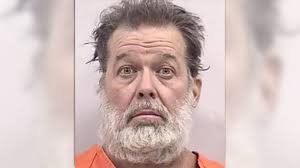
Robert Lewis Dear, Jr.
Those on the Left were outraged at this latest attack on the reproductive rights of women. But those on the Right offered no sympathy for the victims—or women who sought out medical care at Planned Parenthood clinics.
Colorado state Rep. JoAnn Windholz issued a statement blaming Planned Parenthood for the attack:
“Violence is never the answer, but we must start pointing out who is the real culprit. The true instigator of this violence and all violence at any Planned Parenthood facility is Planned Parenthood themselves. Violence begets violence. So Planned Parenthood: YOU STOP THE VIOLENCE INSIDE YOUR WALLS.” [Italics added]

Rep. JoAnn Windholz
Planned Parenthood offers reproductive health care, sex education to women and men and, at some clinics, abortions.
Since Planned Parenthood can’t expect help from Republican lawmakers, perhaps it’s time for its officials to consider the advice of Niccolo Machiavelli.
“For among other evils caused by being disarmed, it renders you contemptible,” he writes in Chapter 14 of The Prince, his primer on gaining political power.
“Because there is no comparison whatever between an armed and a disarmed man. It is not reasonable to suppose that one who is armed will obey willingly one who is unarmed….”
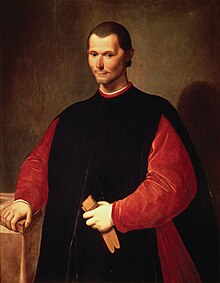
Niccolo Machiavelli
In short: Planned Parenthood should begin training its personnel in the use of automatic firearms. And widely advertising the fate that awaits future terrorist attackers.
This would send an unmistakable message to future would-be terrorists: We will no longer be passive victims to your violent fanaticism. Attack us—and die.
By doing so, Planned Parenthood would be following the advice of Wayne La Pierre—and the example set by New York City after 9/11.
In 1993, Islamic terrorists unsuccessfully bombed the World Trade Center. Six people were killed and 1,042 others were injured during escape attempts.
Eight years later, on September 11, 2001, they launched their second—and this time successful–attack on the Center, killing 2,977 New Yorkers.
On both occasions, New Yorkers had expected the Federal Government to protect them. After 9/11, the NYPD decided it could no longer rely on the FBI and CIA for protection.
The NYPD greatly expanded the ranks of its Counterterrorism Division. More than 600 officers and operatives both stateside and worldwide now stood guard over New York City.
Since 9/11, New York has not faced a similar terrorist attack.
Finally, an Aesop’s fable serves up a lesson known long ago—but repeatedly ignored by the idealistic but ineffectual Left:
A snake was stepped on by so many people that, one day, he prayed to Zeus for help. And Zeus replied: “If you had bitten the first person who stepped on you, the second would have thought twice about it.”
ABC NEWS, ALTERNET, AMERICABLOG, AP, AR-15, ATOMIC BOMB, BABY BOOMER RESISTANCE, BBC, BENEATH THE PLANET OF THE APES, BLOOMBERG NEWS, BUZZFEED, C-PAC, CBS NEWS, CIA, CNN, CROOKS AND LIARS, DAILY KOZ, DEMOCRATIC PARTY, DONALD TRUMP, FACEBOOK, FBI, FIVETHIRTYEIGHT, GUNS, HARPER’S MAGAZINE, HUFFINGTON POST, MARJORY STONEMAN DOUGLAS HIGH SCHOOL, MEDIA MATTERS, MOTHER JONES, MOVEON, MSNBC, NATIONAL RIFLE ASSOCIATION, NBC NEWS, NEW REPUBLIC, NEWSDAY, NEWSWEEK, NPR, NSA, PBS NEWSHOUR, POLITICO, POLITICUSUSA, RAW STORY, REUTERS, RUSSIA, SALON, SANDY HOOK ELEMENTARY SCHOOL, SEATTLE TIMES, SECOND AMENDMENT, SECURITY GUARDS, SLATE, SOCIALISM, TALKING POINTS MEMO, THE ATLANTIC, THE CHICAGO SUN-TIMES, THE CHICAGO TRIBUNE, THE DAILY BEAST, THE DAILY BLOG, THE GUARDIAN, THE HILL, THE HUFFINGTON POST, THE INTERCEPT, THE LOS ANGELES TIMES, THE NATION, THE NEW REPUBLIC, THE NEW YORK TIMES, THE NEW YORKER, THE VILLAGE VOICE, THE WASHINGTON POST, THINKPROGRESS, TIME, TRUTHDIG, TRUTHOUT, TWITTER, TWO POLITICAL JUNKIES, U.S. NEWS & WORLD REPORT, UPI, USA TODAY, USA TODAY NIKOLAS CRUZ, VLADIMIR PUTIN, WAYNE LAPIERRE, WONKETTE
In Bureaucracy, History, Law, Law Enforcement, Politics, Social commentary on May 27, 2022 at 12:10 am
On February 14, 2018, 19-year-old Nikolas Cruz slaughtered two faculty members and 15 students at Marjory Stoneman Douglas High School in Parkland, Florida.
His weapon of choice: An AR-15 assault rifle, often favored by gun massacre killers.
Eight days later, on February 22, Wayne LaPierre, executive vice president of the National Rifle Association, attacked those he held responsible for the series of massacres plaguing American schools.
And it wasn’t crazed gunmen armed with automatic weapons designed for military use.

Wayne LaPierre
With funerals still being planned for some of the victims, LaPierre blamed “the elites,” “saboteurs” and “new European-style socialists” for this and other gun massacres.
He did so at the Conservative Political Action Conference (C-PAC) in National Harbor, Maryland.
“They hate the NRA, they hate the Second Amendment. They hate individual freedom. In the rush of calls for more government, they have also revealed…their true selves.
“The elites do not care about America’s schoolchildren. If they truly cared, they would protect them. For them, it is not a safety issue. It is a political issue.
“Their goal is to eliminate the Second Amendment and our firearms freedoms, so they can eradicate all individual freedoms.”
His C-PAC congregation gave him a wild ovation.
And he accused the Democratic party of being “infested with saboteurs who do not believe in capitalism, do not believe in the Constitution, do not believe in our freedom, and do not believe in America as we know it.”
These “saboteurs” were “new European-style socialists.”
Which was ironic: In 2016, the NRA spent $30 million to elect Donald Trump—who fiercely defends Russian Communist dictator Vladimir Putin against the FBI, NSA and CIA.
He then outlined his solution for protecting America’s schoolchildren: Turning schools into virtual concentration camps patrolled by heavily-armed security guards.
The highlight of LaPierre’s speech came at its close: “And there is no greater personal, individual freedom than the right to keep and bear arms, the right to protect yourself, and the right to survive.
“It is not bestowed by man, but granted by God to all Americans as our American birthright.”
Anyone who’s seen the 1970 sci-fi movie, Beneath the Planet of the Apes, remembers the final scene: Where seemingly normal underground dwellers strip off their human face masks and reveal themselves to be radiation-scarred mutants.
They wear white robes, and stand silently during a sermon or shout “Amen!” in what is clearly a dark parody of a religious service. It’s immediately clear what they are worshiping: An atomic bomb standing upright.

And they pay tribute to the engine of obliteration that has destroyed human civilization and brought about a world ruled by apes.
Their leader, Mendez, chants:
“Glory be to the Bomb, and to the Holy Fallout. As it was in the beginning, is now, and ever shall be. World without end. Amen.
“His sound has gone out to all lands, and his light unto the end of the world.
“Almighty and everlasting Bomb, who came down among us to make Heaven under Earth. Lighten our darkness. O instrument of God—grant us thy peace!”
Reading Wayne LaPierre’s eulogy to the Gun and his passionate invoking of God, it’s easy to re-imagine his giving a slightly altered version of the sermon offered in Beneath the Planet of the Apes. It’s also easy to imagine this taking place during an NRA convention.
WAYNE LAPIERRE: The heavens declare the Glory of the Gun. And the body-count showeth His handiwork.
NRA CONGREGATION: His sound is gone out to all lands; and his Light unto the end of the world.
WAYNE LAPIEREE: He descendeth from the outermost part of Heaven; and there is nothing hid from the lead thereof. There is neither speech nor language after His voice is heard among them.
NRA CONGREGATION: Praise Him! Praise Him! My Strength and my Redeemer!
WAYNE LAPIERRE: Glory be to the Gun, and to the Holy Bodycount! As it was in the Beginning, is now and ever shall be, massacres without end. Amen!
NRA CHORUS: Amen! Amen! Amen! Amen!
WAYNE LAPIERRE: Almighty and Everlasting Gun, who came down among us to make Heaven unto Earth. Lighten our darkness with your muzzle flashes. O instrument of God, grant us They peace.
NRA CHOIR: Almighty Gun, who destroyed all men—to create corpses! Behold His glory!
WAYNE LAPIERRE: Behold that Truth that abides in us. To reveal that Truth unto that Maker.
WAYNE LAPIERRE AND NRA CONGREGATION: I reveal my inmost self unto my God.
NRA CHORUS (singing): Unto my God!
NRA CONGREGATION (singing):
All guns bright and beautiful. All creatures dead with lead.
The good Gun makes us what we are!
He takes out eyes to see with, and lips that might yet speak. How great the Gun Almighty, who has made all things dead. Amen!
WAYNE LAPIERRE: May the Blessing of the Gun Almighty and the fellowship of the Holy Bodycount descend on us all, this night and forevermore!
* * * * * *
In 2020, gunfire killed more than 45,000 Americans—an average of 124 people dying every day. Between 2009 and 2018, there were 288 school shootings. By May 25, 2022, there have been 248 mass shootings, killing more than 250 people.
ABC NEWS, ALTERNET, AMERICABLOG, AP, BABY BOOMER RESISTANCE, BBC, BLOOMBERG NEWS, BUZZFEED, CBS NEWS, CNN, CRIME, CROOKS AND LIARS, DAILY KOZ, FACEBOOK, FIVETHIRTYEIGHT, GUN CONTROL, HARPER’S MAGAZINE, HUFFINGTON POST, MARTIN LUTHER KING, MEDIA MATTERS, MISSISSIPPI ATTORNEY GENERAL MIKE MOORE, MOTHER JONES, MOVEON, MSNBC, NATIONAL RIFLE ASSOCIATION, NBC NEWS, NEW REPUBLIC, NEWSDAY, NEWSWEEK, NPR, PBS NEWSHOUR, POLITICO, POLITICUSUSA, RAW STORY, REUTERS, ROBERT F. KENNEDY, SALON, SEATTLE TIMES, SECOND AMENDMENT, SELF-DEFENSE, SLATE, STAND-YOUR-GROUND LAWS, TALKING POINTS MEMO, THE ATLANTIC, THE CHICAGO SUN-TIMES, THE CHICAGO TRIBUNE, THE DAILY BEAST, THE DAILY BLOG, THE GUARDIAN, THE HILL, THE HUFFINGTON POST, THE INTERCEPT, THE LOS ANGELES TIMES, THE NATION, THE NEW REPUBLIC, THE NEW YORK TIMES, THE NEW YORKER, THE VILLAGE VOICE, THE WASHINGTON POST, THINKPROGRESS, TIME, TRUTHDIG, TRUTHOUT, TWITTER, TWO POLITICAL JUNKIES, U.S. CONSTITUTION, U.S. NAVY SEALS, U.S. NEWS & WORLD REPORT, UPI, USA TODAY, WONKETTE, WRONGFUL-DEATH LAWSUITS
In Bureaucracy, Business, History, Law, Law Enforcement, Politics, Social commentary on May 26, 2022 at 12:13 am
The victims of the violence are black and white, rich and poor, young and old, famous and unknown. They are, most important of all, human beings whom other human beings loved and needed. No one—no matter where he lives or what he does— can be certain who will suffer from some senseless act of bloodshed. And yet it goes on and on.
–Robert F. Kennedy, April 4, 1968

Senator Robert F. Kennedy announcing the murder of Dr. Martin Luther King, Jr.
What should the surviving victims of gun massacres do to seek redress?
And how can the relatives and friends of those who didn’t survive seek justice for those they loved?
Two things:
First, don’t count on politicians to support a ban on assault weapons.
Politicians—with rare exceptions—have only two goals:
- Get elected to office, and
- Stay in office.
And too many of them fear the economic and voting clout of the NRA to risk its wrath.
Consider Republican Presidential candidate Mitt Romney and President Barack Obama.
Both rushed to offer condolences to the surviving victims of the massacre at the Century 16 Theater in Aurora, Colorado, on July 20, 2012.
And both steadfastly refused to even discuss gun control—let alone support a ban on the type of assault weapons used by James Holmes, leaving 12 dead and 58 wounded.
Second, those who survived the massacre—and the relatives and friends of those who didn’t—should file wrongful death, class-action lawsuits against the NRA.
There is sound, legal precedent for this.
- For decades, the American tobacco industry peddled death and disability to millions and reaped billions of dollars in profits.
- The industry vigorously claimed there was no evidence that smoking caused cancer, heart disease, emphysema or any other ailment.
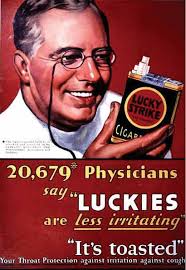
- Tobacco companies spent billions on slick advertising campaigns to win new smokers and attack medical warnings about the dangers of smoking.
- Tobacco companies spent millions to elect compliant politicians and block anti-smoking legislation.
- From 1954 to 1994, over 800 private lawsuits were filed against tobacco companies in state courts. But only two plaintiffs prevailed, and both of those decisions were reversed on appeal.
- In 1994, amidst great pessimism, Mississippi Attorney General Mike Moore filed a lawsuit against the tobacco industry. But other states soon followed, ultimately growing to 46.
- Their goal: To seek monetary, equitable and injunctive relief under various consumer-protection and anti-trust laws.
- The theory underlying these lawsuits was: Cigarettes produced by the tobacco industry created health problems among the population, which badly strained the states’ public healthcare systems.
- In 1998, the states settled their Medicaid lawsuits against the tobacco industry for recovery of their tobacco-related, health-care costs. In return, they exempted the companies from private lawsuits for tobacco-related injuries.
- The companies agreed to curtail or cease certain marketing practices. They also agreed to pay, forever, annual payments to the states to compensate some of the medical costs for patients with smoking-related illnesses.
The parallels with the NRA are obvious:
- For decades, the NRA has peddled deadly weapons to millions, reaped billions of dollars in profits and refused to admit the carnage those weapons have produced: “Guns don’t kill people. People kill people.” With guns.
- The NRA has spent millions on political contributions to block gun-control legislation.
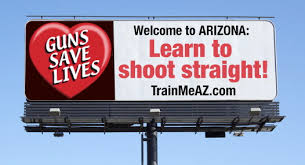
- The NRA has bitterly fought background checks on gun-buyers, in effect granting even criminals and the mentally ill the right to own arsenals of death-dealing weaponry.
- The NRA has spent millions on slick advertising campaigns to win new members and frighten them into buying guns.
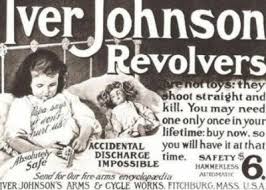
- The NRA has spent millions attacking political candidates and elected officials who warned about the dangers of unrestricted access to assault and/or concealed weapons.
- The NRA has spent millions pushing “Stand Your Ground” laws in more than half the states, which potentially give every citizen a “license to kill.”
- The NRA receives millions of dollars from online sales of ammunition, high-capacity ammunition magazines, and other accessories through its point-of-sale Round-Up Program—thus directly profiting by selling a product that kills about 30,288 people a year.
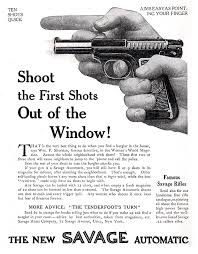
- Firearms made indiscriminately available through NRA lobbying have filled hospitals with casualties, and have thus badly strained the states’ public healthcare systems.
It will take a series of highly expensive and well-publicized lawsuits to significantly weaken the NRA, financially and politically.
The first ones will have to be brought by the surviving victims of gun violence—and by the friends and families of those who did not survive it. Only they will have the courage and motivation to take such a risk.
As with the cases first brought against tobacco companies, there will be losses. And the NRA will rejoice with each one.
But, in time, state Attorneys General will see the clear parallels between lawsuits filed against those who peddle death by cigarette and those who peddle death by armor-piercing bullet.
And then the NRA—like the tobacco industry—will face an adversary wealthy enough to stand up for the rights of the gun industry’s own victims.
Only then will those politicians supporting reasonable gun controls dare to stand up for the victims of these needless tragedies.
ABC NEWS, ABCNEWS, ABILENE, ALTERNET, AMERICABLOG, AP, BABY BOOMER RESISTANCE, BBC, BLOOMBERG NEWS, BUFFALO BILL, BUZZFEED, CBS NEWS, CNN, CROOKS AND LIARS, DAILY KOS, DAILY KOZ, FACEBOOK, FIVETHIRTYEIGHT, GUNFIGHTERS, HARPER’S MAGAZINE, HUFFINGTON POST, JACK MCCALL, MEDIA MATTERS, MOTHER JONES, MOVEON, MSNBC, NATIONAL RIFLE ASSOCIATION, NBC NEWS, NEW REPUBLIC, NEWSDAY, NEWSWEEK, NPR, PBS NEWSHOUR, POLITICO, POLITICUSUSA, RAW STORY, REUTERS, SALON, SEATTLE TIMES, SLATE, TALKING POINTS MEMO, THE ATLANTIC, THE CHICAGO SUN-TIMES, THE CHICAGO TRIBUNE, THE DAILY BEAST, THE DAILY BLOG, THE GUARDIAN, THE HILL, THE HUFFINGTON POST, THE INTERCEPT, THE LOS ANGELES TIMES, THE NATION, THE NEW REPUBLIC, THE NEW YORK TIMES, THE NEW YORKER, THE VILLAGE VOICE, THE WALL STREET JOURNAL, THE WASHINGTON POST, THINKPROGRESS, TIME, TRUTHDIG, TRUTHOUT, TWITTER, TWO POLITICAL JUNKIES, U.S. NEWS & WORLD REPORT, UPI, USA TODAY, WILD BILL HICKOK
In History, Law, Law Enforcement, Politics, Social commentary on May 25, 2022 at 12:12 am
After being fired as town marshal of Abilene, Kansas, James Butler “Wild Bill” Hickok lived another five years. But they weren’t good ones.
Unlike William F. “Buffalo Bill” Cody, Hickok couldn’t adjust to the changing West.
It was becoming less wild. His scouting days were over—the Indian wars were rapidly coming to an end.
(On June 25, 1876, barely two months before his own death, the Sioux and Cheyenne would wipe out the other famous “Long Hair” of the plains—George Armstrong Custer—at the battle of Little Bighorn.)
And most towns, like Abilene, increasingly had little use for lead-slinging lawmen like Hickok.
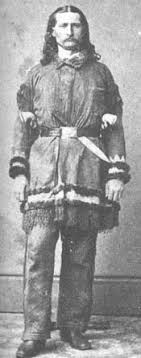
James Butler “Wild Bill” Hickok
Worst of all, he was going blind—either from a venereal disease he had contracted or from the glare of too many prairie sunrises.
In 1873, Hickok tried his hand as an actor in Buffalo Bill’s Wild West Show. But he was a terrible performer—and knew it.
The fault, however, did not lie entirely with him. Even Laurence Oliver would have rebelled at spouting lines like: “Fear not, fair maiden, for you are ever safe with Will Bill, who has sworn to defend to the death your maidenly virtue.”
Not that the audiences cared. They had come to see legendary plainsmen—such as Hickok and Cody—in the flesh, not great theater.
Hickok asked Cody to release him from his contract. Cody refused. So Hickok once again turned to his guns for a solution.
In this case, it meant shooting blanks into the legs and buttocks of “dead” Indians who suddenly sprang to life and rushed off the stage. And one night, Hickok put a real bullet through a stage light that was hurting his already sensitive eyes.
That, finally, convinced Cody that Hickok’s acting days were over.
In March, 1876, he married Agnes Lake Thatcher, a circus acrobat several years his senior.
In April, he told Agnes he was heading for the gold rush country of Deadwood, South Dakota. After he made his fortune, he would send for her.
But she never saw him again.
Deadwood was the sort of town the National Rifle Association wants to see replicated across modern-day America. Everyone wore a gun, and there was no town ordinance against doing so. Nor were there any law-enforcers like Hickok to protect the public from the kill-crazy antics of liquored-up gunmen.

Grave of “Wild Bill” Hickok
Worse for Hickok, he had two strikes against him: His reputation as a matchless gunfighter had preceded him—and his failing vision put him at a disadvantage in backing it up.
Arriving in Deadwood, he quickly decided that the strenuous life of a gold-miner was not for him. Instead, he would seek his fortune as he often had—in saloons as a gambler.
And, as he had so often, he spent more of his time losing money than making it.
On August 2, 1876, his long trail of bad luck finally ran out.
He had always sat with his back to a wall, as a precaution against ambush. On this afternoon, he found his preferred seat taken by another gambler named Charles Rich. Hickok asked Rich to trade places with him, but when the latter refused, Hickok didn’t press the matter.
Hickok paid no attention as a whiskey bum named Jack McCall walked around to the corner of the saloon to where the ex-lawman was playing.

Jack McCall
The previous night, Hickok had won considerable money from McCall in a poker game—and had generously given him back enough to buy something to eat.
Suddenly, McCall pulled a double-action .45 from under his coat, shouted “Take that!” and shot Hickok in the back of the head.
Hickok died instantly. He was 39.
As he slid from the table, he dropped the cards he had been holding—a pair of eights and another pair of Aces, which has ever since been known as “the dead man’s hand.”
McCall was “tried” by a mining court. He claimed that Hickok had murdered his brother and he had sought revenge. He was acquitted.
He headed for Wyoming, where he incessantly bragged that he had killed the famous “Wild Bill” Hickok.
McCall was arrested in Laramie and charged with murder. The trial in Deadwood was found to have been invalid—owing to the town’s being in Indian territory and outside the reach of United States law.
Once again forced to stand trial, McCall found himself convicted. On March 1, 1877, he was hanged. Later, it was discovered that McCall had never had a brother.
In its zeal to return to the “glory days” of the Wild West, the National Rifle Association deliberately overlooks an uncomfortable truth: It was men like Hickok who brought order and safety to countless towns—by forbidding the wearing of firearms.
If worn into town, they were to be surrendered at the marshal’s office—and returned when the visitors left. Those who resisted could leave town in a hearse.
ABC NEWS, ABCNEWS, ABILENE, ALTERNET, AMERICABLOG, AP, BABY BOOMER RESISTANCE, BBC, BLOOMBERG NEWS, BUFFALO BILL, BUZZFEED, CBS NEWS, CNN, CROOKS AND LIARS, DAILY KOS, DAILY KOZ, FACEBOOK, FIVETHIRTYEIGHT, GUNFIGHTERS, HARPER’S MAGAZINE, HUFFINGTON POST, JACK MCCALL, MEDIA MATTERS, MOTHER JONES, MOVEON, MSNBC, NATIONAL RIFLE ASSOCIATION, NBC NEWS, NEW REPUBLIC, NEWSDAY, NEWSWEEK, NPR, PBS NEWSHOUR, POLITICO, POLITICUSUSA, RAW STORY, REUTERS, SALON, SEATTLE TIMES, SLATE, TALKING POINTS MEMO, THE ATLANTIC, THE CHICAGO SUN-TIMES, THE CHICAGO TRIBUNE, THE DAILY BEAST, THE DAILY BLOG, THE GUARDIAN, THE HILL, THE HUFFINGTON POST, THE INTERCEPT, THE LOS ANGELES TIMES, THE NATION, THE NEW REPUBLIC, THE NEW YORK TIMES, THE NEW YORKER, THE VILLAGE VOICE, THE WALL STREET JOURNAL, THE WASHINGTON POST, THINKPROGRESS, TIME, TRUTHDIG, TRUTHOUT, TWITTER, TWO POLITICAL JUNKIES, U.S. NEWS & WORLD REPORT, UPI, USA TODAY, WILD BILL HICKOK, WONKETTE
In History, Law, Law Enforcement, Politics, Social commentary on May 24, 2022 at 12:10 am
Almost everyone has heard of “Wild Bill” Hickok—the legendary Western scout, Indian fighter, two-gun lawman and crack shot.
And the legend, not the man, is often invoked—inaccurately—by “gun rights” advocates who seek to reduce the entire Constitution to a single amendment: The Second Amendment.
But there is a vast difference between Hickok the legend—and Hickok the actual man.
For one thing, his real name wasn’t “Bill”—or even “William.” It was James Butler Hickok.
He supposedly got the name “Wild Bill” after thwarting an attempted lynching—and a woman applauded his bravery with: “Good for you, Wild Bill!”
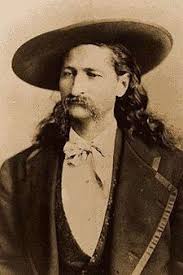
James Butler “Wild Bill” Hickok
For another, Hickok didn’t spend most of his life as a town marshal. His gunslinging days as a lawman lasted just two years—1869 to 1871.
And they ended badly. His first stint as a lawman came at Hays City, Kansas. As sheriff, he shot and killed at least two men.
According to legend, one of these shootings occurred when Hickok, looking in a bar mirror, saw a ruffian named Strawhan pull a pistol to shoot him in the back.
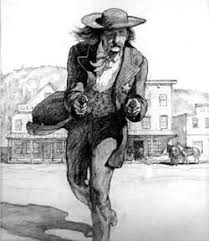
The two-gun lawman
Hickok, looking into the mirror, threw a “trick shot” over his shoulder–and nailed Strawhan dead.
Then Hickok’s luck ran out. On July 17, 1870, several members of the 7th U.S. Cavalry attacked him in Drum’s Saloon. Knocked to the floor and repeatedly kicked, Hickok had reason to fear death.
Drawing his pistols, he killed one private and wounded another. Although he had acted in self-defense and the shootings were entirely justifiable, Hickok now faced even greater danger from other, enraged members of the same regiment.
He decided to leave Hays before they could take their revenge.
His next posting as town marshal came in Abilene, Kansas. This stint lasted from April to December, 1871.
And, like his last one as a “town-tamer,” it ended with a deadly shootout.
A major portion of his duties lay in enforcing the “no firearms worn or used in town” edict.
Abilene was a cattle town, the end of the line for many outfits seeking a major railhead where their hundreds of beeves could be dropped off and shipped eastward.
When cowboys—most of them in their teens or early 20s—reached Abilene, they wanted to celebrate. Their long drive was over, and now they could finally get paid. And there were plenty of bars and whores waiting to pick up their newly-issued monies.
This combination of randy men and ready supplies of alcohol and women often led to trouble. One cowboy might make a pass at another’s “lady” for the night. Or an argument might erupt over a card game.
It was Hickok’s duty to make sure that such arguments were settled only with fists. And that meant demanding that all cowboys’ guns be checked at the marshal’s office until the “boys” were ready to leave Abilene.

Hickok’s 1860 .44 caliber Colt Army revolver
This, of course, contradicts the “open carry” demands of the National Rifle Association. And most of its members—if transported to the Old West—would find themselves on the wrong side of Hickok.
And that wasn’t a good place to be—as Texas gambler Phil Coe learned to his dismay.
Coe and Hickok had clashed before.
As co-owner of the Bull’s head Saloon, Coe had advertised its wares with a sign depicting a bull with oversized sexual organs. A number of citizens raged that this was obscene and demanded that the animal’s sexuality be greatly reduced.
The city fathers agreed. Hickok stood nearby with a shotgun while a painter made the necessary deletions.
On October 5, 1971, cowboys were flooding into Abilene, looking for a good time. Coe, feeling in high spirits, decided to celebrate by firing his pistol into the air several times.
The shots quickly brought Hickok to the scene.
“Did you fire that shot?” Hickok demanded.
Coe supposedly replied: “I shot at a dog—and I’ll shoot at another.”
Coe threw a shot at Hickok—which missed.
Hickok whipped out his two revolvers and put two bullets into Coe’s stomach, mortally wounding the Texan, who died three days later.
With Coe’s Texas buddies surrounding him, Hickok suddenly heard someone rushing at him from behind. Hickok whirled and fired twice more—into the chest of his own deputy, Mike Williams, who had been running to his aid.
Hickok, aghast at his mistake, gently carried Williams into a saloon and placed his body onto a billiard table. Then he raged through Abilene, ordering an end to the festivities and knocking down any cowboys foolish enough to resist.
Owing to this latest explosion in violence, the city fathers quickly reached two decision: First, they put an end to Abilene’s years as a major cattle shipping point. From now on, cattlemen were no longer welcome there.
And then they fired Hickok as city marshal in December, 1871.
For James Butler “Wild Bill” Hickok, it was time to find a new career.
2016 PRESIDENTIAL ELECTION, 2020 PRESIDENTIAL ELECTION, ABC NEWS, ALTERNET, AMERICABLOG, AP, ASSAULT, BABY BOOMER RESISTANCE, BLACK LIBERATION ARMY, BLACK LIVES MATTER, BLACKS, BLOOMBERG, BURGLARY, BUZZFEED, CBS NEWS, CNN, CRIME, CROOKS AND LIARS, DAILY KOZ, DARREN WILSON, DONALD TRUMP, DRUDGE REPORT, DRUGS, EMERYVILLE, FACEBOOK, FBI, FELONIOUS ASSAULT, FELONY SEX CRIMES, FERGUSON POLICE DEPARTMENT, FIVETHIRTYEIGHT, GEORGE FLOYD, GRAND LARCENY, HARPER’S MAGAZINE, HISPANICS, HUFFINGTON POST, JASON BLAKE, KENOSHA COUNTY, MANSLAUGHTER, MEDIA MATTERS, MICHAEL BROWN, MISDEMEANOR ASSAULT, MISDEMEANOR ASSAULT AND RELATED OFFENSES, MISDEMEANOR SEX CRIMES, MOTHER JONES, MOVEON, MSNBC, MURDER, NBC NEWS, NEW YORK CITY, NEW YORK POLICE DEPARTMENT, NEWSWEEK, NON-NEGLIGENT MANSLAUGHTER, NPR, OAKLAND, PBS NEWSHOUR, PETIT LARCENY, POLITICO, POLITICUSUSA, PROACTIVE PROPERTY CRIMES, RAPE, RAW STORY, RESTRAINING ORDER, REUTERS, ROBBERY, ROBERT DALEY, RUSTEN SHESKEY, SALON, SAN FRANCISCO, SAN JOSE, SEATTLE TIMES, SEX CRIMES, SEXUAL ASSAULT, SHOOTINGS, SLATE, TALKING POINTS MEMO, TARGET BLUE: AN INSIDER'S VIEW OF THE NYPD (BOOK), THE ATLANTIC, THE CHICAGO SUN-TIMES, THE CHICAGO TRIBUNE, THE DAILY BEAST, THE DAILY BLOG, THE GUARDIAN, THE HILL, THE HUFFINGTON POST, THE LOS ANGELES TIMES, THE NATION, THE NEW REPUBLIC, THE NEW YORK TIMES, THE VILLAGE VOICE, THE WALL STREET JOURNAL, THE WASHINGTON POST, THINKPROGRESS, TIME, TRUTHDIG, TRUTHOUT, TWITTER, TWO POLITICAL JUNKIES, U.S. NEWS & WORLD REPORT, UPI, USA TODAY, WALNUT CREEK, WONKETTE
In Bureaucracy, History, Law, Law Enforcement, Politics, Social commentary on May 20, 2022 at 12:12 am
On August 23, 2021, Jacob S. Blake, a 29-year-old black man, was shot and seriously injured by police in Kenosha, Wisconsin.
The shooting occurred as officers attempted to arrest him. Blake was tasered as he scuffled with police. When he opened the driver’s door to his SUV and leaned in, Officer Rusten Sheskey fired seven shots, striking him four times in the back.
Blake is now paralyzed from the waist down, and may never walk again.
Protests followed.
Kenosha County declared a state of emergency overnight on August 24 after police vehicles were damaged, a dump truck set on fire, and the local courthouse vandalized. Police urged 24-hour businesses to close owing to armed robberies and shots being fired. Up to 200 members of the Wisconsin National Guard were deployed to maintain public safety.
Missing from the story—in most news media—has been one crucial fact:
At the time of the shooting, Blake faced a criminal complaint charging him with third-degree sexual assault in connection with domestic abuse on July 6.
The officers had come to arrest Blake for violating a restraining order stemming from that complaint. A 911 call on August 23 alerted them that Blake was at the home of his alleged victim.

A sample restraining order
The restraining order stemmed from a criminal complaint, which accused Blake of breaking into the home of a woman he knew and sexually assaulting her in May. The victim told police she was asleep when Blake broke in at 6 a.m. and said, “I want my shit.”
She told police that Blake used his finger to sexually assault her. She said the incident “caused her pain and humiliation and was done without her consent.”
After Blake left, she realized her keys were missing and “immediately called 911,” the complaint said.
An arrest warrant was issued on July 7.
On August 9, 2014, a similar police/media incident had occurred.
Michael Brown, an 18-year-old black man, was fatally shot by a white police officer named Darren Wilson in Ferguson, Missouri, a suburb of St. Louis.
Brown’s 22-year-old friend, Dorian Johnson claimed that Wilson shot him in the back. Wilson claimed he shot Brown after the latter charged at him.
An FBI investigation found that there was no evidence that Brown had his hands up in surrender or said “don’t shoot” before he was shot. It also found that Brown was struck six times, all in the front of his body.
The shooting ignited nationwide protests.
Yet many of the media “covering” the story refused to note that, shortly before his shooting, a video camera taped Brown robbing a grocery store and manhandling its owner.
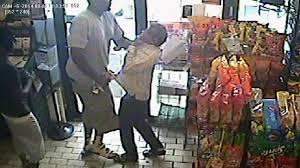
Michael Brown (left) roughing up a store owner
Had this been more widely noted, “Saint Michael” would have been seen as a mere thug who learned that assaulting a cop wasn’t the same as attacking a store owner.
On May 25, George Floyd, a former black security guard, was murdered in Minneapolis, Minnesota. While Floyd was handcuffed and lying face down on a city street during an arrest, Derek Chauvin, a white Minneapolis police officer, kept his knee on the right side of Floyd’s neck for eight minutes and 46 seconds.
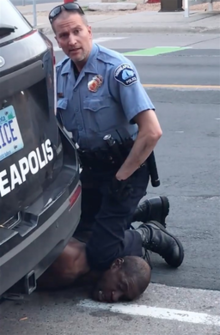
Death of George Floyd
Across the nation, cities were convulsed by protests—including those in the San Francisco Bay Area. Among these: Oakland, San Jose, Emeryville, Walnut Creek and San Francisco itself.
On May 30, an initially peaceful protest march exploded into looting shortly before 9 p.m. as looters broke off and began smashing shop windows and ransacking stores in Union Square and on Market Street.
Among stores looted: A Sak’s Off-Fifth Avenue, an Old Navy clothing store, a Cartier Boutique and a Coach store. Looters especially targeted CVS and Walgreens drugstores. Liquor stores and a BevMo were also hit.
“Thirty businesses were looted or destroyed,” said David Perry, from Union Square Business Improvement District.
Undoubtedly many of victims of those looters and arsonists had been horrified by the Floyd killing. But many of them undoubtedly lost sympathy for the Black Lives Matter movement as they surveyed the wreckage of their stores.
Store owners were infuriated at having to replace stock that had been stolen or destroyed. And employees resented having to clean up the wreckage. Some stores no doubt were forced to close, leaving their former employees suddenly jobless.
And President Donald Trump quickly moved to capitalize on that resentment. His brand of “divide and rule” politics brought him to the White House in 2016. And he was determined to play on white fears of further black crime to win a second term.
White fears of black crime are reflected in the crime rate statistics for New York City.
While Blacks make up 24.3% of New York City’s population, they comprise:
- 58.0% of its murder and non-negligent manslaughter arrests;
- 40.7% of its rape arrests;
- 34.6% of its known other felony sex crime arrests;
- 59.4% of its robbery arrests;
- 51.8% of its felonious assault arrests;
- 51.7% of its grand larceny arrests;
- 71.6% of its shooting arrests;
- 45.0% of its drug felony arrests;
- 48.5% of its drug misdemeanor arrests;
- 54.7% of its felony stolen property arrests;
- 45.9% of its misdemeanor stolen property arrests;
- 51.8% of its violent crime suspects;
- 60.0% of its juvenile crime complaint arrests.
This is admittedly unfair to those blacks who are law-abiding citizens. But the fear factor will continue until crime rates among blacks start falling dramatically.
2016 PRESIDENTIAL ELECTION, 2020 PRESIDENTIAL ELECTION, ABC NEWS, ALTERNET, AMERICABLOG, AP, ASSAULT, BABY BOOMER RESISTANCE, BLACK LIBERATION ARMY, BLACK LIVES MATTER, BLACKS, BLOOMBERG, BURGLARY, BUZZFEED, CBS NEWS, CNN, CRIME, CROOKS AND LIARS, DAILY KOZ, DARREN WILSON, DONALD TRUMP, DRUDGE REPORT, DRUGS, EMERYVILLE, FACEBOOK, FBI, FELONIOUS ASSAULT, FELONY SEX CRIMES, FERGUSON POLICE DEPARTMENT, FIVETHIRTYEIGHT, GEORGE FLOYD, GRAND LARCENY, HARPER’S MAGAZINE, HISPANICS, HUFFINGTON POST, JACOB BLAKEOB, JASON BLAKE, KENOSHA COUNTY, MANSLAUGHTER, MEDIA MATTERS, MICHAEL BROWN, MISDEMEANOR ASSAULT, MISDEMEANOR ASSAULT AND RELATED OFFENSES, MISDEMEANOR SEX CRIMES, MOTHER JONES, MOVEON, MSNBC, MURDER, NBC NEWS, NEW YORK CITY, NEW YORK POLICE DEPARTMENT, NEWSWEEK, NON-NEGLIGENT MANSLAUGHTER, NPR, OAKLAND, PBS NEWSHOUR, PETIT LARCENY, POLITICO, POLITICUSUSA, PROACTIVE PROPERTY CRIMES, RAPE, RAW STORY, RESTRAINING ORDER, REUTERS, ROBBERY, ROBERT DALEY, RUSTEN SHESKEY, SALON, SAN FRANCISCO, SAN JOSE, SEATTLE TIMES, SEX CRIMES, SEXUAL ASSAULT, SHOOTINGS, SLATE, TALKING POINTS MEMO, TARGET BLUE: AN INSIDER'S VIEW OF THE NYPD (BOOK), THE ATLANTIC, THE CHICAGO SUN-TIMES, THE CHICAGO TRIBUNE, THE DAILY BEAST, THE DAILY BLOG, THE GUARDIAN, THE HILL, THE HUFFINGTON POST, THE LOS ANGELES TIMES, THE NATION, THE NEW REPUBLIC, THE NEW YORK TIMES, THE VILLAGE VOICE, THE WALL STREET JOURNAL, THE WASHINGTON POST, THINKPROGRESS, TIME, TRUTHDIG, TRUTHOUT, TWITTER, TWO POLITICAL JUNKIES, U.S. NEWS & WORLD REPORT, UPI, USA TODAY, WALNUT CREEK, WONKETTE
In Bureaucracy, History, Law, Law Enforcement, Politics, Social commentary on May 19, 2022 at 12:10 am
On May 16, 2022, a white supremacist shot and murdered 10 people and wounded three others at the Tops Supermarket in Buffalo, New York.
Eleven victims were black; two were white.
The mass shooting has once again ignited calls for gun control and a national dialogue on race.
Undoubtedly the motivation for the killings was race. But the sensationalistic publicity given this crime obscures a brutal truth ignored by liberals—and blacks:
Blacks kill far more blacks than whites do. And blacks are responsible for a disproportionate portion of crimes.
Blacks make up 13% of the American population, according to the 2010 census of the United States.
But they committed 52% of homicides between 1980 and 2008, according to the Justice Department’s Bureau of Justice Statistics. Only 45% of whites were offenders in such cases.
Blacks were disproportionately likely to commit homicide and to be the victims.
In 2008 blacks were seven times more likely than whites to commit homicide. And they were six times more likely than whites to be homicide victims.
According to the FBI, blacks were responsible for 38% of murders, compared to 31.1% for whites, in 2013.
From 2011 to 2013, 38.5% of people arrested for murder, manslaughter, rape, robbery, and aggravated assault were black.
In 1971, Robert Daley, a reporter for the New York Times, became a deputy police commissioner for the New York Police Department (NYPD).
In that capacity, he saw the NYPD from the highest levels to the lowest—from the ornate, awe-inspiring office of Police Commissioner Patrick Murphy to the gritty, sometimes blood-soaked streets of New York.
He spent one year on the job before resigning—later admitting that when he agreed to take the job, he got more than he bargained for.
For the NYPD, 1972 proved to be a tumultuous year. Among those challenge faced were the murders of several police officers, committed by members of the militant Black Liberation Army.
Two of those murdered officers were Waverly Jones and Joseph Piagentini. Jones was black, Piagentini white; both were partners. Both were shot in the back without a chance to defend themselves.
Writing about these murders in a bestselling 1973 book—Target Blue: An Insider’s View of the N.Y.P.D.—Daley noted:
- Jones and Piagentini were the sixth and seventh policemen—of ten—murdered in 1971.
- About 18 men were involved in these murders. All were black.
- The city’s politicians knew this—and so did Commissioner Murphy. None dared say so publicly.
“But the fact remained,” wrote Daley, “that approximately 65% of the city’s arrested murderers, muggers, armed robbers, proved to be black men; about 15% were of Hispanic origin; and about 20% were white [my Italics].”
The overall racial breakdown of the city was approximately:
- Whites, 63%;
- Blacks, 20%;
- Hispanics 17%.
Stated another way: Blacks, who made up 20% of the city’s population, were responsible for 65% of the city’s major crimes.
Or, as Daley himself put it: “So the dangerous precincts, any cop would tell you, were the black precincts.”
That was 50 years ago.
Now, consider the following statistics released by the NYPD for “Crime and Enforcement Activity in New York City” in 2019:

Murder and Non-Negligent Manslaughter Victims
- Black (56.6%)
- Hispanic (31.2%)
- White (4.9%)
- Asian/Pacific Islander (6.9%)
Murder and Non-Negligent Manslaughter Suspects
- Black (62.4%)
- Hispanic (30.8%)
- White (3.0%)
- Asian/Pacific Islander (3.8%)
Murder and Non-Negligent Manslaughter Arrestees
- Black 58.0%
- Hispanic 35.2%
- White 3.3%
- Asian/Pacific Islander 3.0%
Rape Victims
Rape Suspects
- Black 46.5%)
- Hispanic (34.8%)
- White (10.8%)
- Asian/Pacific Islander (7.3%)
Rape Arrestees
- Black (40.7%)
- Hispanic (45.4%
- )White (6.7%)
- Asian/Pacific Islander (7.0%)
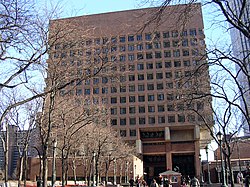
NYPD Headquarters at One Police Plaza
Other Felony Sex Crimes Victims
- Black (33.8%)
- Hispanic (37.3%)
- White (21.3%)
- Asian/Pacific Islander (7.0%)
Other Felony Sex Crime Suspects
- Black (41.6%)
- Hispanic (37.5%)
- White (12.9%)
- Asian/Pacific Islander (7.3%)
Other Felony Sex Crime Arrestees
- Black (34.6%)
- Hispanic (47.4%)
- White (11.3%)
- Asian /Pacific Islander (6.4%)
Robbery Victims
Robbery Suspects
- Black (66.2%
- Hispanic (27.1%)
- White (4.3%)
- Asian/Pacific islander (2.3%)
Robbery Arrestees
- Black (59.4%)
- Hispanic (32.2%)
- White (5.2%)
- Asian/Pacific Islander (3.2%)
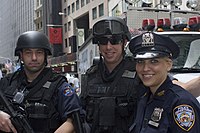
NYPD officers
Nick.Allen, CC BY 2.0 <https://creativecommons.org/licenses/by/2.0>, via Wikimedia Commons
Misdemeanor Assault Victims
Misdemeanor Assault Suspects
Misdemeanor Assault Arrestees
Felonious Assault Victims
Felonious Assault Suspects
- Black (53.4%)
- Hispanic (32.6%)
- White (7.9%)
- Asian/Pacific Islanders (5.8%)
Felonious Assault Arrestees
- Black (51. 8%)
- Hispanic (33.1%)
- White (8.3%)
- Asian/Pacific Islanders (6.4%)
Grand Larceny Victims
- Black (24.4%)
- Hispanic (23.0%)
- White (35.9%)
- Asian/Pacific Islanders (15.7%)
Grand Larceny Suspects
- Black (50.5%)
- Hispanic (23.5%)
- White (11.7%)
- Asian/Pacific Islanders (3.9%)
Grand Larceny Arrestees
- Black (51.7%)
- Hispanic (28.5%)
- White (13.7%)
- Asian/Pacific Islanders (6.0%)
Firearm Arrest Population
Shooting Victims
Shooting Suspects
- Black (74.4%)
- Hispanic (22.0%)
- White (2.4%)
- Asian/Pacific Islander (1.1%)
Shooting Arrestees
- Black (71.6%)
- Hispanic (24.1%)
- White (2.7%)
- Asian/Pacific Islander (1.5%)
Drug Felony Arrest Population
- Black (45.0%)
- Hispanic (40.2%)
- White (9.7%)
- Asian Pacific Islanders (4.9%)
Drug Misdemeanor Arrestees
- Black (48.5%)
- Hispanic (35.3%)
- White (12.5%)
- Asian Pacific Islanders (3.6%)
Misdemeanor Sex Crime Victims
- Black (35.5%)
- Hispanic (36.7%)
- White (18.6%)
- Asian/Pacific Islanders (8.6%)
Misdemeanor Sex Crime Suspects
- Black (42.4%)
- Hispanic (34.2%)
- White (14.0%)
- Asian/Pacific Islanders (8.7%)
Misdemeanor Sex Crime Arrestees
- Black (52.5%)
- Hispanic (28.9%)
- White (14.5%)
- Asian/Pacific Islanders (4.0%)
Misdemeanor Stolen Property Arrest Population
- Black (45.9%)
- Hispanic (31.9%)
- White (16.8%)
- Asian/Pacific Islanders (5.1%)
Felony Stolen Property Arrest Population
- Black (54.7%)
- Hispanic (28.6%)
- White (11.5%)
- Asian/Pacific Islanders (5.0%)
Petit Larceny Victims
- Black (31.6%)
- Hispanic (29.9%)
- White (28.8%)
- Asian/Pacific Islanders (12.7%)
Petit Larceny Suspects
- Black (53.8%)
- Hispanic (26.8%)
- White (15.7%)
- Asian/Pacific Islanders (3.3%)
Petit Larceny Arrestees
- Black (44.7%)
- Hispanic (32.5%)
- White (17.9%)
- Asian/Pacific Islanders (3.3%)
Misdemeanor Criminal Mischief Victims
- Black (38.5%)
- Hispanic (29.8%)
- White (19.5%)
- Asian/Pacific Islanders (11.2%)
Misdemeanor Criminal Mischief Suspects
Misdemeanor Criminal Mischief Arrestees
Reported Crime Complaint Juvenile Victims
Juvenile Crime Complaint Suspects
Juvenile Arrest Population
ABC NEWS, ABORTION, AFFORDABLE CARE ACT, ALABAMA, ALTERNET, AMERICABLOG, AP, ASSASSINATION, BABY BOOMER RESISTANCE, BBC, BLOOMBERG NEWS, BRIAN KEMP, BUZZFEED, CARL AUSTIN WEISS, CBS NEWS, CNN, CROOKS AND LIARS, DAILY KOZ, DONALD TRUMP, FACEBOOK, FIVETHIRTYEIGHT, GEORGE C. WALLACE, GEORGIA, HARPER’S MAGAZINE, HUEY LONG, HUFFINGTON POST, INCEST, KAY IVEY, MARK JOSEPH STERN, MEDIA MATTERS, MOTHER JONES, MOVEON, MSNBC, NBC NEWS, NEW REPUBLIC, NEWSDAY, NEWSWEEK, NICCOLO MACHIAVELLI, NPR, PBS NEWSHOUR, POLITICO, POLITICUSUSA, RACHELLE GRIMMER, RAPE, RAW STORY, REINHARD HEYDRICH, REPUBLICANS, REUTERS, ROE V. WADE, Ronald Reagan, SALON, SEATTLE TIMES, Secret Service, SLATE, TALKING POINTS MEMO, THE ATLANTIC, THE CHICAGO SUN-TIMES, THE CHICAGO TRIBUNE, THE DAILY BEAST, THE DAILY BLOG, THE GUARDIAN, THE HILL, THE HUFFINGTON POST, THE INTERCEPT, THE LOS ANGELES TIMES, THE NATION, THE NEW REPUBLIC, THE NEW YORK TIMES, THE NEW YORKER, THE PRINCE, THE VILLAGE VOICE, THE WASHINGTON POST, THINKPROGRESS, TIME, TRUTHDIG, TRUTHOUT, TWITTER, TWO POLITICAL JUNKIES, U.S. NEWS & WORLD REPORT, UNITED STATES SUPREME COURT, UPI, USA TODAY, WELFARE
In Bureaucracy, History, Law, Law Enforcement, Politics, Social commentary on May 17, 2022 at 12:10 am
In The Prince, Niccolo Machiavelli, the father of modern political science, raised the question of “whether it is better to be loved than feared, or feared more than loved.”
And he answered it: “The reply is, that one ought to be both feared and loved, but as it is difficult for the two to go together, it is much safer to be feared than loved.”
But Machiavelli warned against relying primarily on fear:
“Still, a prince should make himself feared in such a way that if he does not gain love, he at any rate avoids hatred, for fear and the absence of hatred may well go together, and will always be attained by one who abstains from interfering with the property of his citizens….or with their women.”
If the Republicans governing Georgia and Alabama ever read this warning, they have ignored it with a vengeance.
Niccolo Machiavelli
On May 7, 2019, Georgia Governor Brian Kemp signed an anti-abortion law that—in defiance of the 1973 Supreme Court decision in Roe v. Wade—re-criminalizes abortion.
The law bans abortions as soon as a fetal heartbeat is detectable. This usually occurs about six weeks into a pregnancy—even before many women know they’re pregnant.
The law permits abortions
- Only if the mother’s life is at risk; or
- If the fetus cannot survive.
No exceptions are made for cases of rape or incest.
“HB 481 would also have consequences for women who get abortions from doctors or miscarry,” writes Mark Joseph Stern for Slate.
“A woman who seeks out an illegal abortion from a health care provider would be a party to murder, subject to life in prison. And a woman who miscarries because of her own conduct—say, using drugs while pregnant—would be liable for second-degree murder, punishable by 10 to 30 years’ imprisonment.
“Prosecutors may interrogate women who miscarry to determine whether they can be held responsible; if they find evidence of culpability, they may charge, detain, and try these women for the death of their fetuses.” [Emphasis added.]
In addition, a woman could be sentenced to 10 years’ imprisonment if she leaves Georgia to obtain an abortion in another state.
And on May 14, 2019, Alabama Governor Kay Ivey signed into law the “Alabama Human Life Protection Act.” The law only allows exceptions “to avoid a serious health risk to the unborn child’s mother,” for ectopic pregnancy and if the “unborn child has a lethal anomaly.”
Again, no exceptions are made for rape or incest.
Ivey admitted that the new law may be unenforceable owing to Roe v. Wade, which legalized abortion in all 50 states. But the whole point of the law is to challenge that decision, Ivey said.
Republicans constantly claim to be “the party of small government.” But there can be no more intrusive act than dictating to a woman that she must give birth—even if she’s the victim of rape or incest.
At the same time:
- Republicans have proven uniformly hostile to providing poor mothers with access to food, clothing and medical care.
- Donald Trump made repealing the Affordable Care Act—which provides medical insurance to more than 20 million Americans—the hallmark of his Presidency.
It’s easy to imagine many of these women fatally cracking under the strain.
On December 6, 2011, Rachelle Grimmer, a 38-year-old resident of San Antonio, pulled a gun in a state welfare office and held off police for seven hours. Then she shot and wounded her two children—ages 10 and 12—before fatally shooting herself.
For months, she had been unable to qualify for food stamps.
Thus, women living in abortion-banning states face Right-wing hypocrisy on one hand and draconian laws punishing the most intimate acts—of sexuality and reproductive freedom—on the other.
It’s easy to imagine some pregnant women—especially the victims of incest and/or rape—desperately seeking redress through violence. And the targets of their wrath could easily be the Republican legislators of their states who have made their lives a living hell.
Trump is constantly guarded by the Secret Service. And governors are protected by state police. But state assemblymen and senators aren’t assigned such details—unless there’s a specific threat made against them. Nor are anti-abortion Right-wing commentators like Tucker Carlson.
In fact, Right-wing figures have often been the targets of successful—and unsuccessful—assassination attempts.
- On September 8, 1935, Louisiana U.S. Senator Huey Long was shot and fatally wounded by Carl Austin Weiss, an idealistic young doctor. Long had intended to run for President in 1936 and unseat Franklin D. Roosevelt.
- On May 27, 1942, SS Obergruppenführer (General) Reinhard Heydrich—“The Butcher of Prague”—was killed with a hand grenade by two Czech patriots.
- On May 15, 1972, Presidential candidate George C. Wallace was shot and paralyzed by a crazed gunman while mingling with supporters in a Maryland shopping center.
- On March 30, 1981, President Ronald Reagan was shot and almost killed by a psychotic gunman while walking to his bulletproof limousine in Washington, D.C.
All but one of these men (Heydrich) were protected by bodyguards when they were attacked.
Given the ferocity of laws aimed specifically at them, some women may decide to abort more than fetuses.
ABC NEWS, ADULTERY, ALTERNET, AMERICABLOG, AP, BABY BOOMER RESISTANCE, BARACK OBAMA, BBC, BIBLE, BILLY GRAHAM, BLOOMBERG NEWS, BUZZFEED, CBS NEWS, CNN, CROOKS AND LIARS, DAILY KOZ, FACEBOOK, FIVETHIRTYEIGHT, FRANKLIN GRAHAM, HARPER’S MAGAZINE, HOMOSEXUALITY, HUFFINGTON POST, I USA TODAY, MEDIA MATTERS, MITT ROMNEY, MOTHER JONES, MOVEON, MSNBC, NBC NEWS, NEW REPUBLIC, NEWSDAY, NEWSWEEK, NEWT GINGRICH, NPR, PBS NEWSHOUR, POLITICO, POLITICUSUSA, RAW STORY, REUTERS, RICK SANTORUM, SALON, SCIENCE, SEATTLE TIMES, SLATE, SLAVERY, SPANISH INQUISITION, TALKING POINTS MEMO, TEA PARTY, THE ATLANTIC, THE CHICAGO SUN-TIMES, THE CHICAGO TRIBUNE, THE DAILY BEAST, THE DAILY BLOG, THE GUARDIAN, THE HILL, THE HUFFINGTON POST, THE INTERCEPT, THE LOS ANGELES TIMES, THE NATION, THE NEW REPUBLIC, THE NEW YORK TIMES, THE NEW YORKER, THE VILLAGE VOICE, THE WASHINGTON POST, THEOLOGY, THINKPROGRESS, TIME, TRUTHDIG, TRUTHOUT, TWITTER, TWO POLITICAL JUNKIES, U.S. NEWS & WORLD REPORT, UP, UPI, USA TODAY, WAR, WOMEN
In Bureaucracy, History, Law, Law Enforcement, Military, Politics, Social commentary on May 13, 2022 at 12:10 am
On February 18, 2012, GOP Presidential candidate Rick Santorum warned about the “phony theology” of President Barack Obama.
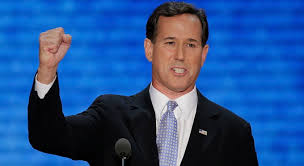
Rick Santorum
“It’s not about you,” Santorum told supporters of the right-wing Tea Party in Columbus, Ohio. “It’s not about your quality of life.
“It’s not about your jobs. It’s about some phony ideal. Some phony theology. Oh, not a theology based on the Bible. A different theology.”
Which raises an interesting question: What would a Bible-based agenda mean for the country?
The death penalty would be vastly expanded to cover such “crimes” as:
- Sabbath-breaking: Because the Lord considers it a holy day, anyone who works on the Sabbath must be put to death. (Exodus 31:12-15)
- Adultery: If a man commits adultery with another man’s wife, both the man and the woman must be put to death. (Leviticus 20:10)
- Fornication: A priest’s daughter who loses her honor by committing fornication and thereby dishonors her father also, shall be burned to death. (Leviticus 21:9)
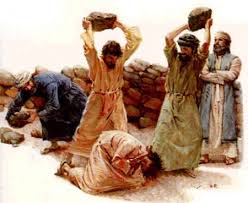
A Biblical-era stoning
- Nonbelievers: They entered into a covenant to seek the Lord, the God of their fathers, with all their heart and soul; and everyone who would not seek the Lord, the God of Israel, was to be put to death, whether small or great, whether man or woman. (2 Chronicles 15:12-13)
- Homosexuality: If a man also lies with mankind, as he lies with a woman, both of them have committed an abomination. They shall surely be put to death. Their blood shall be upon them. (Leviticus 20-13)
- Taking the Lord’s name in vain: Anyone who blasphemes the name of the Lord is to be put to death. The entire assembly must stone them. (Leviticus 24:16)
The Thirteenth Amendment to the Constitution—which forbids slavery—would be repealed. The Bible not only permits slavery but lays out rules for its practice—such as:
Almost all scientific progress would be discarded, since most of its findings conflict with the Bible:
- One generation passes away, and another generation comes: but the earth abides forever. (Ecclesiastes 1:4). This claim is totally contradicted by what astronomers now know about the eventual fate of the Earth: In about 7.6 billion years, the sun will exhaust its nuclear fuels. This will vastly increase its heat and gravitational pull, and at least Mercury, Earth and Venus will be vaporized.
- The Bible speaks of a world where physical laws are often violated by the will of God. Thus, Jesus turns water into wine and raises Lazarus from the dead; Jonah lives inside a fish for three days; Noah dies at 950 years; and demons are exorcised.
- In Biblical times, mental illness was seen as a manifestation of demonic possession. Today we know that mental illness has nothing to do with evil spirits.
Laws guaranteeing equal rights for women would be repealed:
- I do not permit a woman to teach or to have authority over a man; she must be silent. (1 Timothy 12:10)
- Wives, submit to your husbands as to the Lord. (Ephesians 5:22)
- A woman should learn in quietness and full submission. (1 Timothy 2:11)
- But if…evidence of the girl’s virginity is not found, they shall bring the girl to the entrance of her father’s house and there her townsman shall stone her to death. (Deuteronomy 22:20-21)
Military conflicts would be fought without regard to the Geneva Convention–as the Israelites did:
- “You are my battle-ax and sword,” says the Lord. “With you I will shatter nations and destroy many kingdoms….With you I will shatter men and women, old people and children, young men and maidens. With you I will shatter shepherds and flocks, farmers and oxen, captains and rulers.” (Jeremiah 51:20-23)
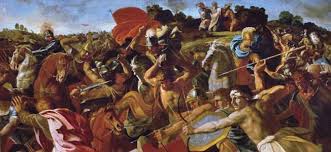
Depiction of the taking of Jericho by the Israelites
- Samuel said to Saul, “This is what the Lord Almighty says: ‘I will punish the Amalekites for what they did to Israel when they waylaid them as they came up from Egypt. Now go, attack the Amalekites and totally destroy everything that belongs to them. Do not spare them; put to death men and women, children and infants, cattle and sheep, camels and donkeys.’” (1 Samuel 15, 1-3)
Yes, a nation governed by “a theology based on the Bible” would be one far different from the United States we know today.
Since a number of Old Testament practices might lend themselves to easy abuse, this is not a matter to be taken lightly.
ABC NEWS, ADULTERY, ALTERNET, AMERICABLOG, AP, BABY BOOMER RESISTANCE, BARACK OBAMA, BBC, BIBLE, BILLY GRAHAM, BLOOMBERG NEWS, BUZZFEED, CBS NEWS, CNN, CROOKS AND LIARS, DAILY KOZ, FACEBOOK, FIVETHIRTYEIGHT, FRANKLIN GRAHAM, HARPER’S MAGAZINE, HOMOSEXUALITY, HUFFINGTON POST, I USA TODAY, MEDIA MATTERS, MITT ROMNEY, MOTHER JONES, MOVEON, MSNBC, NBC NEWS, NEW REPUBLIC, NEWSDAY, NEWSWEEK, NEWT GINGRICH, NPR, PBS NEWSHOUR, POLITICO, POLITICUSUSA, RAW STORY, REUTERS, RICK SANTORUM, SALON, SCIENCE, SEATTLE TIMES, SLATE, SLAVERY, SPANISH INQUISITION, TALKING POINTS MEMO, TEA PARTY, THE ATLANTIC, THE CHICAGO SUN-TIMES, THE CHICAGO TRIBUNE, THE DAILY BEAST, THE DAILY BLOG, THE GUARDIAN, THE HILL, THE HUFFINGTON POST, THE INTERCEPT, THE LOS ANGELES TIMES, THE NATION, THE NEW REPUBLIC, THE NEW YORK TIMES, THE NEW YORKER, THE VILLAGE VOICE, THE WASHINGTON POST, THEOLOGY, THINKPROGRESS, TIME, TRUTHDIG, TRUTHOUT, TWITTER, TWO POLITICAL JUNKIES, U.S. NEWS & WORLD REPORT, UP, UPI, USA TODAY, WAR, WOMEN
In Bureaucracy, History, Law, Law Enforcement, Military, Politics, Social commentary on May 12, 2022 at 12:13 am
Franklin Graham, son of Billy Graham, America’s most famous preacher, spends a lot of time deciding who qualifies as a Christian—and who doesn’t.

Franklin Graham
He said just that on the February 21, 2012 edition of the MSNBC show, “Morning Joe.”
First, however, he offered his views on the relative Christian dedication of the major contenders for the Presidency in 2012:
President Barack Obama: “Islam sees him as a son of Islam….I can’t say categorically that [Obama is not Muslim] because Islam has gotten a free pass under Obama.”
Former Speaker of the House Newt Gingrich: “Newt’s been married several times… but he could make a good candidate. I think Newt is a Christian. At least he told me he is.”
Former Pennsylvania U.S. Senator Rick Santorum: “His values are so clear on moral issues. No question about it. I think he is, no question, a man of faith.”
Former Massachusetts Governor Mitt Romney: “I’m just saying most Christians would not recognize Mormonism. Of course they believe in Jesus Christ, but they have a lot of other things that they believe in, too, that we don’t accept theologically.”
Thus, Graham had no problem in pronouncing as “saved” a notorious multiple-adulterer like Gingrich, or a rights-denying religious zealot like Santorum.
But he clearly refused to pronounce as “saved” a longtime church-goer like Obama or a Mormon like Romney (whose faith, most evangelicals like Graham believe, is actually a non-Christian cult).
Toward the end of the program, Mike Barnicle, one of the panelists interviewing Graham, said: “You must spend a big part of the day checking out what you conceive to be people’s depth of faith, in terms of measuring.”
“This is my business,” replied Graham. “You guys go through newspapers every day. I look at a person’s political interest, but more importantly I look at their spiritual interests….
“You have to go by what a person says, and how they live their lives…Are they faithful church goers? Or do they just go when the cameras are on them?”
Another man who dedicated his life to judging the religious commitment of others was Bernard Gui, the chief inquisitor at Toulouse from 1308 to 1322.
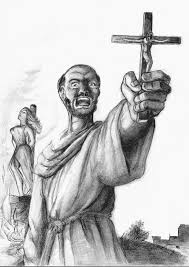
Bernard Gui
His inquisition of those suspected or accused of heresy led to over 900 guilty verdicts. Of those convicted during examination by Gui, 42 were executed—by being burned at the stake.
Gui closely studied the best methods for interrogating “heretics.” He set forth his findings in his most important and famous work, Practica Inquisitionis Heretice Pravitatis. or “Conduct of the Inquisition into Heretical Wickedness.”
In this, he offered a vivid example of how such interrogations might go. The following is taken from that manual:
Interrogator: You call your faith Christian, for you consider ours as false and heretical. But I ask whether you have ever believed as true another faith than that which the Roman Church holds to be true?
Accused Heretic: I believe the true faith which the Roman Church believes, and which you openly preach to us.
Interrogator: Perhaps you have some of your sect at Rome whom you call the Roman Church. I, when I preach, say many things, some of which are common to us both, as that God liveth, and you believe some of what I preach. Nevertheless you may be a heretic in not believing other matters which are to be believed.

“Heretic” being burned at the stake
Accused Heretic: I believe all things that a Christian should believe.
Interrogator: I know your tricks. What the members of your sect believe you hold to be that which a Christian should believe. But we waste time in this fencing. Say simply, Do you believe in one God the Father, and the Son, and the Holy Ghost?
Accused Heretic: I believe.
Interrogator: Do you believe in Christ born of the Virgin, suffered, risen, and ascended to heaven?
Accused Heretic: (Briskly) I believe.
Interrogator: Do you believe the bread and wine in the mass performed by the priests to be changed into the body and blood of Christ by divine virtue?
Accused Heretic: Ought I not to believe this?
Interrogator: I don’t ask if you ought to believe, but if you do believe.
Accused Heretic: I believe whatever you and other good doctors order me to believe.
Inquisitor: Those good doctors are the masters of your sect; if I accord with them you believe with me; if not, not.
Accused Heretic: I willingly believe with you if you teach what is good to me.
Inquisitor: You consider it good to you if I teach what your other masters teach. Say, then, do you believe the body of our Lord, Jesus Christ to be in the altar?
Accused Heretic: (Promptly) I believe that a body is there, and that all bodies are of our Lord.
Interrogator: I ask whether the body there is of the Lord who was born of the Virgin, hung on the cross, arose from the dead, ascended, etc.
Accused Heretic: And you, sir, do you not believe it?
Interrogator: I believe it wholly.
Accused Heretic: I believe likewise.


ABC NEWS, ABORTION, ABORTION CLINICS, ADAM LANZA, AESOP'S FABLES, ALTERNET, AMERICABLOG, AP, ” 9/11, BABY BOOMER RESISTANCE, BBC, BLOOMBERG NEWS, BUZZFEED, CBS NEWS, CIA, CNN, CROOKS AND LIARS, DAILY KOZ, FACEBOOK, FBI, FIVETHIRTYEIGHT, HARPER’S MAGAZINE, HUFFINGTON POST, JOANN WINDHOLZ, MEDIA MATTERS, MOTHER JONES, MOVEON, MSNBC, NATIONAL ABORTION FEDERATION, NATIONAL RIFLE ASSOCIATION, NBC NEWS, NEW REPUBLIC, NEW YORK POLICE DEPARTMENT (NYPD), NEWSDAY, NEWSWEEK, NEWTOWN SCHOOL SHOOTINGS, NICCOLO MACHIAVELLI, NPR, NYPD, PBS NEWSHOUR, PLANNED PARENTHOOD, POLITICO, POLITICUSUSA, RAW STORY, REPUBLICANS, REUTERS, ROBERT DEAR, ROE V. WADE, SALON, SANDY HOOK ELEMENTARY SCHOOL, SEATTLE TIMES, SLATE, TALKING POINTS MEMO, TERRORISM, THE ATLANTIC, THE CHICAGO SUN-TIMES, THE CHICAGO TRIBUNE, THE DAILY BEAST, THE DAILY BLOG, THE GUARDIAN, THE HILL, THE HUFFINGTON POST, THE INTERCEPT, THE LOS ANGELES TIMES, THE NATION, THE NEW REPUBLIC, THE NEW YORK TIMES, THE NEW YORKER, THE PRINCE, THE VILLAGE VOICE, THE WASHINGTON POST, THINKPROGRESS, TIME, TRUTHDIG, TRUTHOUT, TWITTER, TWO POLITICAL JUNKIES, U.S. NEWS & WORLD REPORT, UPI, USA TODAY, WAYNE LA PIERRE, WAYNE LAPIERRE, WONKETTE, WORLD TRADE CENTER
AN NRA SOLUTION TO PLANNED PARENTHOOD’S TERRORISM PROBLEM
In Bureaucracy, History, Law, Law Enforcement, Medical, Politics, Social commentary on May 30, 2022 at 12:12 amGuns and abortion—Republicans’ two most inflammatory issues.
Who would have thought that the first might lead to a solution for the second?
On December 14, 2012, 20-year-old Adam Lanza fatally shot 20 children and six adult staffers at Sandy Hook Elementary School in Newtown, Connecticut.
As it usually does after a mass shooting, the National Rifle Association (NRA) remained silent for a few days.
Then on December 18, its executive vice president, Wayne LaPierre, broke that silence. In doing so, he offered his suggestion for preventing further tragedies perpetrated by heavily armed criminals.
Speaking at an NRA press conference, LaPierre said: “The only thing that stops a bad guy with a gun is a good guy with a gun.
“Would you rather have your 911 call bring a good guy with a gun from a mile away or a minute away?”
Wayne La Pierre
And LaPierre demanded that armed guards be placed in every school in the United States:
“Politicians pass laws for gun-free school zones. They issue press releases bragging about them. They post signs advertising them, and in doing so, they tell every insane killer in America that schools are the safest place to inflict maximum mayhem with minimum risk.
“We care about our president, so we protect him with armed Secret Service agents. Members of Congress work in offices surrounded by Capitol Police officers.
“Yet, when it comes to our most beloved, innocent and vulnerable members of the American family–our children–we as a society leave them everyday utterly defenseless.
“And the monsters and the predators of the world know it and exploit it.
Without knowing it, Wayne LaPierre produced a way to end attacks on Planned Parenthood clinics.
Between 1973, when the Supreme Court made abortion legal throughout the United States via Roe v. Wade, and 2003, abortion providers were targeted for more than 300 acts of extreme violence, including arson, bombings, murders and butyric acid attacks.
The National Abortion Federation documents more than 176,000 instances of picketing at clinics (and nearly 34,000 arrests) since 1977. More than 16,000 hate mail or harassing phone calls, over 1,500 acts of vandalism and 400 death threats have been aimed at clinics.
On November 27, 2015, an anti-abortionist shot and killed a police officer and two civilians at a Planned Parenthood clinic in Colorado Springs, Colorado. An additional five police officers and four civilians were injured.
The arrested suspect, Robert Lewis Dear, mentioned “baby parts” as his reason for the attack. During questioning by police, Dear expressed anti-abortion and anti-government views, a police source told CNN.
Robert Lewis Dear, Jr.
Those on the Left were outraged at this latest attack on the reproductive rights of women. But those on the Right offered no sympathy for the victims—or women who sought out medical care at Planned Parenthood clinics.
Colorado state Rep. JoAnn Windholz issued a statement blaming Planned Parenthood for the attack:
“Violence is never the answer, but we must start pointing out who is the real culprit. The true instigator of this violence and all violence at any Planned Parenthood facility is Planned Parenthood themselves. Violence begets violence. So Planned Parenthood: YOU STOP THE VIOLENCE INSIDE YOUR WALLS.” [Italics added]
Rep. JoAnn Windholz
Planned Parenthood offers reproductive health care, sex education to women and men and, at some clinics, abortions.
Since Planned Parenthood can’t expect help from Republican lawmakers, perhaps it’s time for its officials to consider the advice of Niccolo Machiavelli.
“For among other evils caused by being disarmed, it renders you contemptible,” he writes in Chapter 14 of The Prince, his primer on gaining political power.
“Because there is no comparison whatever between an armed and a disarmed man. It is not reasonable to suppose that one who is armed will obey willingly one who is unarmed….”
Niccolo Machiavelli
In short: Planned Parenthood should begin training its personnel in the use of automatic firearms. And widely advertising the fate that awaits future terrorist attackers.
This would send an unmistakable message to future would-be terrorists: We will no longer be passive victims to your violent fanaticism. Attack us—and die.
By doing so, Planned Parenthood would be following the advice of Wayne La Pierre—and the example set by New York City after 9/11.
In 1993, Islamic terrorists unsuccessfully bombed the World Trade Center. Six people were killed and 1,042 others were injured during escape attempts.
Eight years later, on September 11, 2001, they launched their second—and this time successful–attack on the Center, killing 2,977 New Yorkers.
On both occasions, New Yorkers had expected the Federal Government to protect them. After 9/11, the NYPD decided it could no longer rely on the FBI and CIA for protection.
The NYPD greatly expanded the ranks of its Counterterrorism Division. More than 600 officers and operatives both stateside and worldwide now stood guard over New York City.
Since 9/11, New York has not faced a similar terrorist attack.
Finally, an Aesop’s fable serves up a lesson known long ago—but repeatedly ignored by the idealistic but ineffectual Left:
A snake was stepped on by so many people that, one day, he prayed to Zeus for help. And Zeus replied: “If you had bitten the first person who stepped on you, the second would have thought twice about it.”
Share this: