Archive for July, 2014|Monthly archive page
ABC NEWS, BEDBUGS, BUILDING INSPECTION, BUSINESS, CBS NEWS, CNN, ELLIS ACT, FACEBOOK, FEDERAL ASSET FORFEITURE STATUTES, LANDLORDS, NBC NEWS, RENT CONTROL, RENTERS, SAN FRANCISCO, SAN FRANCISCO DEPARTMENT OF BUILDING INSPECTION, SAN FRANCISCO DEPARTMENT OF PUBLIC HEALTH, SLUMLORDS, THE HUFFINGTON POST, THE NEW YORK TIMES, THE WALL STREET JOURNAL, THE WASHINGTON POST, TWITTER, URBAN GREEN INVESTMENTS
In Bureaucracy, Law, Law Enforcement, Social commentary on July 17, 2014 at 11:49 am
Slumlords would have everyone believe that San Francisco is a “renters’ paradise.” A place where hard-working landlords are routinely taken advantage of by rent-avoiding bums who want to be constantly pampered.
On the contrary: It’s not renters who hold “untouchable” status, but slumlords themselves.

In fact, San Francisco is long overdue for serious reforms in protecting tenants.
Part One of this series outlined three overdue reforms needed at the Department of Building Inspection (DBI), San Francisco’s primary tenant-protecting agency. Here are an additional 17:
- If the landlord fails to comply with the actions ordered within 30 days, the entire fine should go into the City’s coffers–to be divided among DBI and other agencies charged with protecting San Francisco residents.
- In addition, he shuld be hit again with a fine that’s at least twice the amount of the first one.
- Inspectors for DBI should be allowed to cite landlords for violations that fall under the jurisdiction of the Department of Public Health (DPH). They can then pass the information on to DPH for its own investigation.
- If the DBI Inspector later discovers that the landlord has not corrected the violation within a designated time-period, DBI should be allowed to levy its own fine for his failure to do so.
- If DPH objects to this, DBI should propose that DPH’s own Inspectors be armed with similar cross-jurisdictional authority. Each agency would thus have increased motivation for spotting and correcting health/safety violations that threaten the lives of San Francisco residents.
- This would instantly turn DBI and DPH into allies, not competitors. And it would mean that whether a citizen called DBI or DPH, s/he could be assured of getting necessary assistance. As matters now stand, many residents are confused by the conflicting jurisdictions of both agencies.
- DBI should insist that its Inspectors Division be greatly expanded. DBI can attain this by arguing that reducing the number of Inspectors cuts (1) protection for San Francisco renters–and (2) monies that could go to the general City welfare.
- The Inspection Division should operate independently of DBI. Currently, too many high-ranking DBI officials tilt toward landlords because they are landlords themselves.
- DBI should create a Special Research Unit that would compile records on the worst slumlord offenders. Thus, a slumlord with a repeat history of defying DBI NOVs could be treated more harshly than a landlord who was a first-time offender.
- Turning DBI into a revenue-producing one would enable the City to raise desperately-needed revenues—in a highly popular way. Fining delinquent slumlords would be as unpopular as raising taxes on tobacco companies. Only slumlords and their hired lackey allies would object.
- Slumlords, unlike drug-dealers, can’t move their operations from one street or city to another. Landlords aren’t going to demolish their buildings and move them somewhere else.
- DBI should order landlords to post their Notices of Violation in public areas of their buildings–on pain of serious financial penalties for failing to do so. When DBI orders a slumlord to take corrective action, s/he is the only person who is notified. Thus, if that slumlord refuses to comply with those directives, s/he is the only one who realizes it. Tenants have a right to know if their landlord is complying with the law.
- DBI should launch and maintain a city-wide advertising campaign to alert residents to its services. Everyone knows the FBI pursues bank robbers, but too many San Franciscans do not even know that DBI exists, let alone what laws it enforces.
- This should be an in-your-face campaign: “Do you have bedbugs in your apartment? Has your stove stopped working? Are you afraid to ride in your building elevator because it keeps malfunctioning? Have you complained to your landlord and gotten nowhere? Then call DBI at —–. Or drop us an email at ——.”
- Landlords should be legally required to give each tenant a list of the major city agencies (such as DBI, Department of Public Health and the Rent Board) that exist to help tenants resolve problems with their housing.
- Landlords should be legally required to rehabilitate a unit every time a new tenant moves in, or at least have it examined by a DBI inspector every two years. A tenant can occupy a unit for ten or more years, then die or move out, and the landlord immediately rents the unit to the first person who comes along, without making any repairs or upgrades whatsoever.
- Landlords should be required to bring all the units in a building up to existing building codes, and not just those in need of immediate repair.
- Landlords should be legally required to hire a certified-expert contractor to perform building repairs. Many landlords insist on making such repairs despite their not being trained or experienced in doing so, thereby risking the lives of their tenants.
ABC NEWS, BEDBUGS, BUILDING INSPECTION, BUSINESS, CBS NEWS, CNN, ELLIS ACT, FACEBOOK, FEDERAL ASSET FORFEITURE STATUTES, LANDLORDS, NBC NEWS, RENT CONTROL, RENTERS, SAN FRANCISCO, SAN FRANCISCO DEPARTMENT OF BUILDING INSPECTION, SAN FRANCISCO DEPARTMENT OF PUBLIC HEALTH, SLUMLORDS, THE NEW YORK TIMES, THE WALL STREET JOURNAL, THE WASHINGTON POST, TWITTER, URGAN GREEN INVESTMENTS
In Bureaucracy, Law, Law Enforcement, Social commentary on July 16, 2014 at 9:16 am
To hear slumlords tell it, San Francisco is a “renters’ paradise,” where obnoxious, lazy, rent-evading tenants constantly take advantage of hard-working, put-upon landlords.
Don’t believe it.
A 98-year-old San Francisco woman is being evicted from her apartment of 50 years, because the building’s owners want to sell the place to take advantage of the city’s booming real estate market.
“I’ve been very happy here,” Mary Phillips told KRON 4, an independent San Francisco TV station. “I’ve always paid my rent. I’ve never been late.”
The landlord, Urban Green Investments, is evicting her and several other tenants through the Ellis Act. This is a 1986 California law that allows landlords evict tenants to get out of the rental business.
Urban Green Investments has bought several buildings in San Francisco, evicted their residents through the Ellis Act, and is reselling the buildings for profit. Many of those being evicted are low income families and seniors.
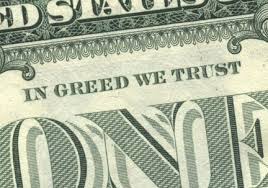
Phillips has vowed to fight her eviction: “They’re going to have to take me out of here feet first,” she told KRON. “Just because of your age, don’t let people push you around.”
Phillips says she has nowhere else to live and now she and her attorneys are fighting the eviction.
Even in the city misnamed as a “renter’s paradise,” slumlords are treated like gods by the very agencies that are supposed to protect tenants against their abuses.
Many landlords are eager to kick out long-time residents in favor of new, wealthier high-tech workers moving to San Francisco. An influx of these workers and a resulting housing shortage has proven a godsend for slumlords.
The power of slumlords calls to mind the scene in 1987′s The Untouchables, where Sean Connery’s veteran cop tells Eliot Ness: “Everybody knows where the liquor is. It’s just a question of: Who wants to cross Capone?”
Many tenants have lived with rotting floors, bedbugs, nonworking toilets, mice/rats, chipping lead-based paint and other outrages for not simply months but years.
Consider the situation at the San Francisco Department of Building Inspection (DBI), which is supposed to ensure that apartment buildings are in habitable condition:
- A landlord is automatically given 30 days to correct a health/safety violation. If he drags his feet on the matter, the tenant must live with that problem until it’s resolved.
- If the landlord claims for any reason that he can’t fix the problem within one month, DBI doesn’t demand that he prove this. Instead, it automatically gives him another month.
- A slumlord has to work at being hit with a fine—by letting a problem go uncorrected for three to six months.
- And even then, repeat slumlord offenders often avoid the fine by pleading for leniency.
- That’s because many DBI officials are themselves landlords.

But the situation doesn’t have to remain this way.
DBI could:
- Vastly enhance its own prestige and authority
- Improve living conditions for thousands of San Francisco renters, and
- Bring millions of desperately-needed dollars into the City’s cash-strapped coffers.
How?
By learning some valuable lessons from the “war on drugs” and applying them to regulating slumlords.
Consider:
- At least 400,000 rape kits containing critical DNA evidence that could convict rapists sit untested in labs around the country.
- But illegal drug kits are automatically rushed to the had of the line.
It isn’t simply because local/state/Federal lawmen universally believe that illicit drugs pose a deadly threat to the Nation’s security.
It’s because:
- Federal asset forfeiture laws allow the Justice Department to seize properties used to “facilitate” violations of Federal anti-drug laws.
- Local and State law enforcement agencies are allowed to keep some of the proceeds once the property has been sold.
- Thus, financially-strapped police agencies have found that pursuing drug-law crimes is a great way to fill their own coffers.
- Prosecutors and lawmen view the seizing of drug-related properties as crucial to eliminating the financial clout of drug-dealing operations.

It’s long past time for San Francisco agencies to apply the same attitude–and methods–toward slumlords.
Such reforms must start with the Department of Building Inspection (DBI)–the primary agency charged with protecting tenants.
Presently, there is no bureaucratic incentive for DBI to rigorously control the criminality of slumlords. But this can be instilled–by making DBI not merely a law-enforcing agency but a revenue-creating one.
And those revenues should come from predatory slumlords who routinely violate the City’s laws protecting tenants.
Among those reforms it should immediately enact:
- Hit slumlord violators up-front with a fine–payable immediately–for at least $2,000 to $5,000 for each health/safety-code violation.
- The slumlord could reclaim 75-80% of the money only if he fully corrected the violation within 30 days. The remaining portion of the levied fine would go into the City coffers, to be shared among DBI and other City agencies.
- This would put the onus on the slumlord, not DBI. Appealing to his greed would ensure his willingness to comply with the ordered actions. As matters now stand, it is DBI who must repeatedly check with the slumlord to find out if its orders have been complied with.
ABC NEWS, AESOP'S FABLES, ARABS, BOMBING ISRAELI DEFENSE FORCES, CBS NEWS, CIVIL WAR, CNN, FACEBOOK, GAZA STRIP, GULF WAR, HAMAS, HAMBURG RAID, ISLAMICS, ISRAEL, NAZI GERMANY, NBC NEWS, NICCOLO MACHIAVELLI, ROYAL AIR FORCE, SADDAM HUSSEIN, THE DISCOURSES, THE LOS ANGELES TIMES, THE NEW YORK TIMES, THE WASHINGTON POST, THOMAS "STONEWALL" JACKSON, TWITTER, UNITED STATES AIR FORCE, WILLIAM TECUMSEH SHERMAN, WORLD WAR 11
In History, Military, Politics on July 15, 2014 at 9:19 am
Thomas Jonathan “Stonewall” Jackson, the great Southern general of the American Civil War (1861-1865) had a simple philosophy of war.
To end Union efforts to crush the newly-minted Confederate States of America, he urged, Southerners should quickly make its cost as high as possible.
Confederates, he believed, should take no prisoners. Instead, they should kill every Union soldier they could lay hands on.
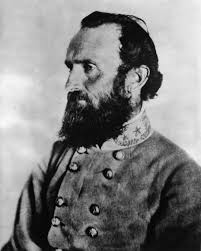
Thomas “Stonewall” Jackson
Jackson’s views on war were shared by not only his fellow Southerners but, ironically, by one of the fiercest enemies of the Confederacy: William Tecumseh Sherman.
Sherman was the Union general who cut a swath of destruction through the South while “marching through Georgia.”
He is credited–or reviled–as the father of “total war,” thus making the suffering of civilians an integral part of any conflict.
In March, 1985, a staff officer told Sherman about Jackson’s opinion on not taking prisoners. Asked for his reaction, Sherman said: “Perhaps he was right.
“It seems cruel, but if there were no quarter given, most men would keep out of war. Rebellions would be few and short.”
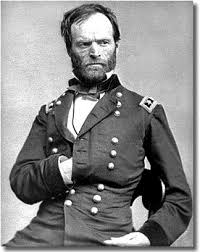
William Tecumseh Sherman
Contrast that with the way Israel is now responding to hundreds of unprovoked rocket attacks by the Hamas terrorist group.
Since July 8, the Israeli Air Force has bombarded more than 900 Hamas targets in the Gaza Strp.
Israel claims it’s trying to avoid civilian casualties in the crowded urban landscape. Members of the Israeli military have been telephoning Palestinian residents whose homes have been targeted, warning them to leave.
One resident, Sawsan Kawarea, claimed she received a call from “David,” who said he was with the Israeli military.
“He asked for me by name. He said: ‘You have women and children in the house. Get out. You have five minutes before the rockets come,’” Kawarea said in an interview.
She ran outside with her children. A small rocket hit the house soon afterward. Five minutes later, a larger missile hit, destroying the house.
For years, the Israeli military has delivered such warnings via cellphone calls and small “warning rockets”–usually sent from drones.
The strategy has a nickname: “Roof knocking.”
It’s Israel’s response to longtime criticism for “collateral damage.” That is: Civilians killed while its military takes action in the crowded Palestinian territories.
The policy allows Israel to say: We did our bes to avoid killing civilians.
But in waging Politically Correct warfare to head off criticism, Israel has made a dangerous mistake.
Niccolo Machiavelli, the 15th century Florentine statesmen, carefully studied both war and politics. In his major work, The Discourses, he advises:
…Often individual men, and sometimes a whole city, will act so culpably against the state that as an example to others and for his own security the prince has no other remedy but to destroy it entirely.
Honor consists in being able, and knowing when and how, to chastise evil-doers. And a prince who fails to punish them, so that they shall not be able to do any more harm, will be regarded as either ignorant or cowardly….
Meanwhile, on the Gaza Strip: After a week of Israeli bombing more than 900 Hamas targets, Palestinian medical officials claimed that 186 people had been killed and at least 1,390 wounded.
That works out to about 26 people killed every day.
Contrast those figures with the casualties suffered by a single German city during World War 11 air raids during eight days and seven nights.
Beginning on July 24, 1943, the U.S. Air Force and the British Royal Air Force over several days killed 42,600 civilians and wounded 37,000 in Hamburg and practically destroyed the entire city.
The bombing ignited a firestorm that incinerated more than eight square miles, baking alive many of those who sought safety in cellars and bomb shelters.
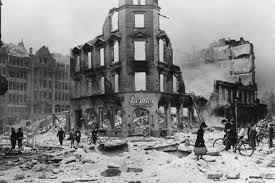
Hamburg, Germany, after Allied bombing raids
For the vaunted Israeli Air Force to have killed so few of its enemies after dropping so many bombs testifies to a massive waste of ordinance.
Clearly, the only people making good on these raids are the arms makers supplying the bombs.
If the United States had managed to kill only 26 Germans a day in World War II, America and Nazi Germany would still be at war today.
No wonder Hamas continues to fire rockets into Israel.
Machiavelli knew–and often warned–that while it was useful to avoid hatred, it was fatal to be despised. And he also warned that humility toward insolent enemies will only encourage their hatred for you.
An Aesop’s fable well sums up the lesson Israel should have learned long ago:
A snake was stepped on by so many people he prayed to Zeus for help. And Zeus said: “If you’d bitten the first person who stepped on you, the second would have thought twice about it.”
9/11, ABC NEWS, BILL CLINTON, BUREAUCRACY, CBS NEWS, CNN, COMMUNIST JOKES, FACEBOOK, GERMANS, GULF WAR, HUMOR, ILLEGAL ALIENS, immigration, INVESTIGATIVE PROJECT ON TERRORISM, IRAQIS, ISLAMOFASCISM, ISRAEL, JAPANESE, JIHAD, JIHADIST, JIHIADI, KGB, LANGUAGE, MADELINE ALBRIGHT, MUSLIMS, NBC NEWS, NICCOLO MACHIAVELLI, POLITICAL CORRECTNESS, SATIRE, STEVEN EMERSON, TERRORISM, THE, THE LOS ANGELES TIMES, THE NEW YORK TIMES, THE PRINCE, THE WASHINGTON POST, TWITTER, U.S. STATE DEPARTMENT, UNDOCUMENTED IMMIGRANTS, VIETNAM WAR, VIETNAMESE, WORLD WAR 11
In Bureaucracy, History, Law Enforcement, Military, Politics on July 14, 2014 at 10:37 am
On June 8, 2010, newspapers around the world headlined the latest triumph of Politically Correct language.
The Israeli government had apologized for circulating a video parodying the lyrics of Michael Jackson’s hit, “We Are the World.” Its purpose: To mock terrorists from the Gaza flotilla smuggling arms into Gaza.
In early June, 2010, six Hamas ships set out in defiance of the Israel’s blockade of Gaza. One of those ships, the Mavi Marmara, suffered nine casualties during a subsequent Israeli raid on the flotilla.
In the video, Israelis dressed up as activists offer their own take on the incident through song.

Among its lyrics:
We’ll make the world
Abandon reason
We’ll make them all believe that the Hamas
Is Momma Theresa
We are peaceful travelers
We’re waving our own knives
The truth will never find its way to your TV
Click here: The Flotilla Choir Presents We Con The World – YouTube
The Israeli Government Press Office distributed footage of the music video to foreign journalists on June 4, but then sent an apology to reporters just hours later, insisting it had been an accident.
“The contents of the video in no way represent the official policy of either the Government Press Office or of the State of Israel,” Israel’s Government Press Office later told CNN.
But the retraction did not stop “We Con the World” from becoming an Internet hit, getting over three million views in less than a week
By issuing such an apology the Israeli government forfeited a vital weapon in its ongoing struggle for not simply sovereignty but survival: Ridicule.
Every great tyrant has feared the laughter of his enemies. For that reason, the Roman Emperor Augustus banished the satirical poet, Ovid, from Rome and the KGB worked overtime to suppress anti-Communist jokes.

It’s clear that Israeli bureaucrats–like American ones–have caught the Political Correctness disease, where even the most criminally depraved are off-limits as targets for satire.
During most of the eight-year Presidency of Bill Clinton, the State Department applied the “rogue state” moniker to nations like Iran, Iraq and North Korea.
In a 1994 lecture, Madeleine Albright, then U.S. ambassador to the United Nations, defined a rogue state as one that actively tried to undermine the international system.
But in 2000, the State Department declared that it would no longer refer to such nations as “rogues.” Instead, they would now be referred to as “states of concern.”
“Rogue,” said a State Department spokesman, was inflammatory, and might hamper the efforts of the United States to reach agreements with its sworn enemies.
In short, it’s become Politically Incorrect to refer to even our sworn enemies as enemies.
As Steven Emerson, president of the Investigative Project on Terrorism (IPT) puts it: “If you can’t name your enemy, how can you defeat him?”
During World War 11, GIs–and their commanders–routinely referred to German soldiers as “krauts.” Japense soldiers were universally referred to as “Japs.”
Throughout the Vietnam war, North Vietnamese troops were called “gooks,” “dinks” and “Charlie.” During the 1991 Gulf War, American soldiers called Iraqi soldiers “ragheads.”
Admittedly, that’s not the sort of language to use in polite company.
But there is nothing polite about war, and it’s unrealistic to expect those whose lives could be snuffed out at any moment to be Politically Correct in talking about their enemies.
The United States has been at war with Islamic nations since September 11, 2001. But terms such as “jihadist,” “jihadi” and “mujahedeen” are now officially forbidden by the Pentagon.
So is “Islamofascism,” a term often used to describe Islamic aggression against other countries–especially non-Muslim ones.
Similarly, the American government now seeks to impose the same Political Correctness restrictions on how to refer to daily invasions of its sovereign bordeers.
“Illegal alien” is taboo–although totally accurate. An “alien” is defined as “a foreigner, especially one who is not a naturalized citizen of the country where they are living.”
And a foreigner who violates another country’s immigration laws is in that country illegally.
“Undocumented immigrant” is the new fashionable term to be used by all federal agents charged with enforcing our immigration laws.
Liberals feel that this sounds nicer, and won’t offend our “little brown brothers” south of the Rio Grande.
“Undocumented immigrant” makes it seem as though the mass violations of America’s national border are no big deal. You might even think the illegal alien simply lost his legal papers while sneaking across the border.
More than 500 years ago, Niccolo Machiavelli, the father of modern political science, laid out the guidelines for effective propaganda. In his notorious book, The Prince, he wrote:
…Men in general judge more by the eyes than by the hands, for every one can see, but very few have to feel. Everyone sees what you appear to be, few feel what you are….
Apparently, many people in government are now convinced: If you don’t admit there is a problem, the problem doesn’t exist.
ABC NEWS, ALTERNET, AMERICABLOG, AP, BABY BOOMER RESISTANCE, BBC, BLOOMBERG NEWS, BUREAU OF LABOR STATISTICS, BUZZFEED, CBS NEWS, CNN, COLLEGE EDUCATION, CROOKS AND LIARS, DAILY KOZ, EMPLOYMENT, FACEBOOK, FIVETHIRTYEIGHT, HARPER’S MAGAZINE, HUFFINGTON POST, JOB INTERVIEWS, JOB RECRUITERS, MARY POPPINS, MEDIA MATTERS, MOTHER JONES, MOVEON, MSNBC, NANNYS, NBC NEWS, NEW REPUBLIC, NEWSDAY, NEWSWEEK, NPR, PBS NEWSHOUR, PLUTOCRACY, POLITICO, POLITICUSUSA, RAW STORY, RESUMES, REUTERS, SALON, SEATTLE TIMES, SLATE, TALKING POINTS MEMO, THE ATLANTIC, THE CHICAGO SUN-TIMES, THE CHICAGO TRIBUNE, THE DAILY BEAST, THE DAILY BLOG, THE GUARDIAN, THE HILL, THE HUFFINGTON POST, THE LOS ANGELES TIMES, THE NATION, THE NEW REPUBLIC, THE NEW YORK TIMES, THE NEW YORKER, THE VILLAGE VOICE, THE WASHINGTON POST, THINKPROGRESS, TIME, TRUTHDIG, TRUTHOUT, TUITION COSTS, TWITTER, TWO POLITICAL JUNKIES, U.S. NEWS & WORLD REPORT, UPI, USA TODAY
In Business, History, Law, Social commentary on July 10, 2014 at 11:41 am
Once again, June has come and gone–and, with it, an annual rite of passage for tens of thousands of college students: Graduation.
That occasion when young innocents formally leave the academic nest to make their way into the harsh realities of the work

Among those harsh realities: The average college graduate faces a debt loan of more than $29,400.
Click here: Average student loan debt: $29,400 – Dec. 4, 2013
But wait! There’s something even more demoralizing awaiting these “heirs of tomorrow.”
The discovery that, for all the “we hire only the brightest” rhetoric by employers, having a college degree actually means little to most CEOs.
A new report from the Center for College Affordability and Productivity concludes that nearly half of the nation’s recent college graduates hold jobs that don’t require a degree.
In short, many of the jobs they hold aren’t worth the price of that diploma.
From that report:
Increasing numbers of recent college graduates are ending up in relatively low-skilled jobs that, historically, have gone to those with lower levels of educational attainment. This study examines this phenomenon in some detail, concluding:
- About 48 percent of employed U.S. college graduates are in jobs that the Bureau of Labor Statistics (BLS) suggests requires less than a four-year college education. Eleven percent of employed college graduates are in occupations requiring more than a high-school diploma but less than a bachelor’s, and 37 percent are in occupations requiring no more than a high-school diploma;
- The proportion of overeducated workers in occupations appears to have grown substantially; in 1970, fewer than one percent of taxi drivers and two percent of firefighters had college degrees, while now more than 15 percent do in both jobs;
- About five million college graduates are in jobs the BLS says require less than a high-school education;
Click here: Underemployment of College Graduates
But the future isn’t completely bleak–at least not for women willing to transform themselves into glorified babysitters for obscenely-rich families.
Consider a recent post on Facebook by AC Connections, which describes itself as “a nanny and household placement agency.”
Under the headline, “Growing Nanny Industry Is Enticing More College Graduates,” the ad/article begins:
“As more college graduates leave school and struggle to find work, they’re turning to the nanny industry.
“Many working moms love the idea of a highly-educated, experienced nanny providing individualized care for their children in their own homes. But it can come with a substantial price tag.
“In this challenging economic climate, more college graduates are finding a little spoonful of sugar in the burgeoning nanny industry.
“These ‘modern day Mary Poppinses’ are educated, experienced, and in increasingly high demand.”
The International Nanny Association claims that the average salary is about $16 an hour.
The ad asserts that “highly qualified and educated nannies in certain locations can make $100,000 or more each year. It’s not uncommon for nannies to start out with salaries comparable to entry-level finance careers.”
Click here: Growing Nanny Industry Is Enticing More College Graduates
Besides the money, says the ad, there are other reasons for becoming a nanny:
“Many love working with children, want a chance to use their college education, or enjoy the role of caretaker.”
“A chance to use their college education”? As in cleaning up spills, changing diapers and feeding baby food to infants?

So if you’re a college graduate who can’t convince an employer within your chosen profession–such as pharmacy or engineering–to hire you, there’s always the Mary Poppins option.
Or some similar menial “career” that caters to the indulgences of the American plutocracy, for whom $16 an hour amounts to a Snicker’s candy bar for the fast-disappearing middle class.
It should be enough to make you hesitate before signing up for a loan to cover the average $57,000 cost of a public college education.
Or an even larger loan to cover the $132,000 cost of a private college education.
But if you’re still thinking that “employers really respect that degree,” consider this: Job recruiters spend exactly six seconds examining your resume.
According to The Ladders research, recruiters spend an average of “six seconds before they make the initial ‘fit or not fit’ decision” to interview you.
Not hire you–just meet you. You’ll still have plenty of chances to get shot down during or after the interview.
Click here: What Recruiters Look At During The 6 Seconds They Spend On Your Resume
According to the study, when scanning a resume, recruiters looked at the following items:
-
Your name
- Current title and company
- Current position start and end dates
- Previous title and company
- Previous position start and end dates
- Education
American employers should be legally compelled to hire as responsibly as college students are expected to pursue an education.
Until this happens, those young men and women thinking of committing a big chunk of their time and going into massive debt to pursue a college degree should think twice before doing so.
1991 IRAQ WAR, 2003 IRAQ WAR, ABC NEWS, BARACK OBAMA, BOMBING, CBS NEWS, CNN, D-DAY, FACEBOOK, FLAMETHROWERS, GENERAL CURTIS E. LEMAY, ISLAMIC STATE OF IRAQ AND SYRIA, NAVY SEALS, NAZI GERMANY, NBC NEWS, PREDATOR DRONES, REPUBLICANS, THE LOS ANGELES TIMES, THE NEW YORK TIMES, THE WASHINGTON POST, TWITTER, U.S. AIR FORCE, VICTORY THROUGH AIR POWER, VIETNAM WAR, WALT DISNEY, WORLD WAR 11
In Bureaucracy, History, Military, Politics on July 9, 2014 at 10:35 am
Victory Through Air Power is a 1943 Walt Disney animated Technocolor feature film released during World War II. It’s based on the book–of the same title–by Alexander P. de Seversky.
Its thesis is summed up in its title: That by using bombers and fighter aircraft, the United States can attain swift, stunning victory over its Axis enemies: Germany, Italy and Japan.
Although it’s not explicitly stated, the overall impression given is that, through the use of air power, America can defeat its enemies without deploying millions of ground troops.

The movie has long since been forgotten except by film buffs, but its message has not. Especially by the highest officials within the U.S. Air Force.
Although the Air Force regularly boasted of the tonage of bombs its planes dropped over Nazi Germany, it failed to attain its primary goal: Break the will of the Germans to resist.
On the contrary: Just as the German bombings of England had solidified the will of the British people to resist, so, too, did Allied bombing increase the determination of the Germans to fight on.
Nor did the failure of air power end there.
On June 6, 1944–D-Day–the Allies launched their invasion of Nazi-occupied France.
It opened shortly after midnight, with an airborne assault of 24,000 American, British, Canadian and Free French troops. This was followed at 6:30 a.m. by an amphibious landing of Allied infantry and armored divisions on the French coast.
The operation was the largest amphibious invasion in history. More than 160,000 troops landed–73,000 Americans, 61,715 British and 21,400 Canadians.
Allied air power bombed and strafed German troops out in the open. But it couldn’t dislodge soldiers barricaded in steel-and-concrete-reinforced bunkers or pillboxes. Those had to be dislodged, one group at a time, by Allied soldiers armed with rifles, dynamite and flamethrowers.
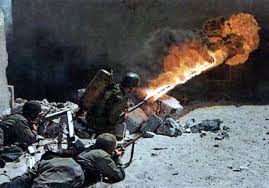
This situation proved true throughout the rest of the war.
Then, starting in 1964, the theory of “Victory Through Air Power” once again proved a dud–in Vietnam.
Air Force General Curtis E. LeMay said, “We should bomb Vietnam back into the Stone Age.” And the bombers under his command did their best to achieve this.
From 1964 to 1975, 7 million tons of bombs were dropped on Vietnam, Laos, and Cambodia–more than twice the amount of bombs dropped on Europe and Asia in World War II.
Yet the result proved exactly the same as it had in World War II: The bombing enraged the North Vietnamese and steeled their resolve to fight on to the end.

The belief that victory could be achieved primarily–if not entirely–through air power had another unforeseen result during the Vietnam war. It gradually sucked the United States ever deeper into the conflict.
To bomb North Vietnam, the United States needed air force bases in South Vietnam. This required that those bombers and fighters be protected.
So a force to provide round-the-clock security had to be maintained. But there weren’t enough guards to defend themselves against a major attack by North Vietnamese forces.
So more American troops were needed–to guard the guards.
North Vietnam continued to press greater numbers of its soldiers into attacks on American bases. This forced America to provide greater numbers of its own soldiers to defend against such attacks.
Eventually, the United States had more than 500,000 ground troops fighting in Vietnam–with no end in sight to the conflict.
Now, with forces of the Islamic State of Iraq and Syria (ISIS) launching a blitzkreig throughout Iraq, President Barack Obama seems to have caught the “Victory Through Airpower” disease.
ISIS has thrown the American-trained Iraqi Army into a panic, with soldiers dropping their rifles and running for their lives.
This has led Republicans to accuse the President of being about to “lose” Iraq.
As a result, he has shipped at least 300 American “advisors” to Iraq, to provide support and security for U.S. personnel and the American Embassy in Baghdad.
And he has authorized American Predator drones to traverse Iraq, keeping tabs on the advancing ISIS forces.
So far, no American aircraft has fired on the insurgent army. But this could happen at any moment that Obama gives the order.
Yet the giving of that order will not alter the balance of power in Iraq. It certainly didn’t work for America in the 1991 and 2003 wars against Iraq.
Both wars opened with massive barrages of American missiles and bombs. The 1991 war saw the first use of the vaunted “stealth bomber,” which could avoid detection by enemy radar.
The 2003 war opened with an even greater bombardment to “shock and awe” the Iraqis into surrendering.
They didn’t.
Nor did air power prove effective on the Iraqi insurgency that erupted after American forces occupied Baghdad and much of the rest of the country.
That war had to be fought by U.S. Army regulars and Special Operations soldiers–especially Navy SEALS. It was a dirty and private effort, marked by nightly kidnappings of suspected Iraqi insurgents.
If American troops once again face off with Iraqis, “Victory Through Air Power” will prove as hollow a slogan as it has in the past.
ADOLF HITLER, BARACK OBAMA, BILL CLINTON, CHRIS MATTHEWS, CNN'S "STARTING POINT", CZECHOSLAVAKIA, DARRELL ISSA, DEBT CEILING, EXECUTIVE ORDERS, EXTORTION, FACEBOOK, GEORGE W. BUSH, HOUSE SPEAKER JOHN BOEHNER, immigration reform, JIMMY CARTER, MSNBC'S "HARDBALL", NAZI GERMANY, NEGOTIATING, NEVILLE CHAMBERLAIN, NEWT GINGRICH, NICCOLO MACHIAVELLI, PAP SMEARS, PLANNED PARENTHOOD, POLAND, R.I.CO. ACT, REPUBLICAN PARTY, REPUBLICANS, Ronald Reagan, THE PRINCE, TITLE X, TWITTER, WARREN BUFFET, WINSTON CHURCHILL, WORLD WAR 11
In Bureaucracy, History, Law, Law Enforcement, Politics on July 8, 2014 at 12:22 am
In 2011, Republicans threatened to destroy the Nation’s credit rating unless their budgetary demands were met.
As Ernst Casier, chairman of philosophy at Hamburg University once warned:
“Those who are willing to risk everything, even death and destruction, to attain their ends will prevail over more responsible and prudent men who have more to lose and are rational, not suicidal.”
Yet President Barack Obama could have ended that threat via the Racketeer Influenced Corrupt Organizations (RICO) Act.
Passed by Congress in 1970, as Title 18, United States Code, Sections 1961-1968, its goal was to destroy the Mafia.
Originally, RICO was aimed at the Mafia and other organized crime syndicates. But in United States v. Turkette, 452 U.S. 576 (1981), the Supreme Court held that RICO applied as well to legitimate enterprises being operated in a criminal manner.
After Turkette, RICO could also be used against corporations, political protest groups, labor unions and loosely knit-groups of people.
RICO opens with a series of definitions of “racketeering activity” which can be prosecuted by Justice Department attorneys. Among those crimes: Extortion.

Extortion is defined as “a criminal offense which occurs when a person unlawfully obtains either money, property or services from a person(s), entity, or institution, through coercion.”
The RICO Act defines “a pattern of racketeering activity” as “at least two acts of racketeering activity, one of which occurred after the effective date of this chapter and the last of which occurred within ten years…after the commission of a prior act of racketeering activity.”
And if President Obama had believed that RICO was not sufficient to deal with Republicans’ extortion attempts, he could have relied on the USA Patriot Act of 2001, passed in the wake of 9/11.
In Section 802, the Act defines domestic terrorism. Among the behavior that is defined as criminal:
“Activities that…appear to be intended…to influence the policy of a government by intimidation or coercion [and]…occur primarily within the territorial jurisdiction of the United States.”
The remedies for punishing such criminal behavior were now legally in place. President Obama needed only to direct the Justice Department to apply them.
- President Obama could have directed Attorney General Eric Holder to investigate whether actions by Republican Congressman—and their Tea Party cohorts—broke Federal anti-racketeering and/or anti-terrorism laws.
- Holder, in turn, could have ordered the FBI to conduct that investigation.
- If the FBI found sufficient evidence that these laws had been violated, Holder could have empaneled criminal grand juries to indict those violators.
Criminally investigating and possibly indicting members of Congress would not violate the separation-of-powers principle. Congressmen have in the past been investigated, indicted and convicted for various criminal offenses.
Such indictments and prosecutions–and especially convictions–would have served notice on current and future members of Congress: The lives and fortunes of American citizens may not be held hostage to gain leverage in a political settlement.
In short: Obama could have replaced the law of fear with the rule of law.
But Obama could have stood up to Republican extortionists in another way: By urging his fellow Americans to rally to him in a moment of supreme national danger.
President John F. Kennedy did just that–successfully–during the most dangerous crisis of his administration.
Addressing the Nation on October 22, 1962, Kennedy shocked his fellow citizens by revealing that the Soviet Union had installed offensive nuclear missiles in Cuba.

John F. Kennedy
Kennedy outlined a series of steps he had taken to end the crisis–most notably, a blockade of Cuba. Then he sought to reassure and inspire his audience:
“The cost of freedom is always high, but Americans have always paid it. And one path we shall never choose, and that is the path of surrender or submission.”
President Obama could have sent that same message to the extortionists of the Republican Party–by explaining to the American people:
- Republicans have adopted the same my-way-or-else “negotiating” stance as Adolf Hitler.
- Like the Nazis, they are determined to gain absolute power–or destroy the Nation they claim to love.
- They raised the debt ceiling seven times during the eight-year Presidency of George W. Bush.
- But now that a Democrat holds the White House, raising the debt ceiling is unacceptable.
- Despite Republican lies, we cannot revitalize the economy by slashing taxes on the wealthy and on cash-hoarding corporations while cutting benefits for millions of average Americans.
- We will need both tax increases and sensible entitlement cuts to regain our economic strength.
And he could have ended his speech with a direct call for action by the American people:
“We stand on the edge of economic disaster. Therefore, I am asking each of you to stand up for America tonight–by demanding the recall of the entire membership of the Republican Party.
“This is the moment when each of us must decide–whether we will survive as a Republic, or allow ruthless political fanatics to destroy what has lasted and thrived for more than 200 years.”
To paraphrase Winston Churchill: President Obama had to choose between timidity and confrontation.
He chose timidity.
He would get contempt and obstruction at every turn.
ADOLF HITLER, BARACK OBAMA, BILL CLINTON, CHRIS MATTHEWS, CNN'S "STARTING POINT", CZECHOSLAVAKIA, DARRELL ISSA, DEBT CEILING, EXECUTIVE ORDERS, EXTORTION, FACEBOOK, GEORGE W. BUSH, HOUSE SPEAKER JOHN BOEHNER, immigration reform, JIMMY CARTER, MSNBC'S "HARDBALL", NAZI GERMANY, NEGOTIATING, NEVILLE CHAMBERLAIN, NEWT GINGRICH, NICCOLO MACHIAVELLI, PAP SMEARS, PLANNED PARENTHOOD, POLAND, R.I.CO. ACT, REPUBLICAN PARTY, REPUBLICANS, Ronald Reagan, THE PRINCE, TITLE X, TWITTER, WARREN BUFFET, WINSTON CHURCHILL, WORLD WAR 11
In Bureaucracy, History, Law, Law Enforcement, Politics on July 7, 2014 at 9:21 am
In November, 1995, Newt Gingrich, then Speaker of the House of Representatives, carried out his threat to shut down the government.
Then he unwisely admitted that he did so because President Bill Clinton had put him in the back of Air Force One during a recent trip to Israel.

Newt Gingrich
The shutdown proved a disaster for Republicans. Clinton was handily re-elected in 1996 and Gingrich suddenly resigned from Congress in 1998.
Still, the Republicans continued their policy of my-way-or-else.
In April, 2011, the United States government almost shut down over Republican demands about subsidized pap smears.
During a late-night White House meeting with President Barack Obama and key Congressional leaders, Republican House Speaker John Boehner made this threat:
His conference would not approve funding for the government if any money were allowed to flow to Planned Parenthood through Title X legislation.
Facing an April 8 deadline, negotiators worked day and night to strike a compromise–and finally reached one.
Three months later–on July 9–Republican extortionists again threatened the Nation with financial ruin and international disgrace unless their demands were met.

President Obama had offered to make historic cuts in the federal government and the social safety net–on which millions of Americans depend for their most basic needs.
But House Speaker John Boehner rejected that offer. He could not agree to the tax increases that Democrats wanted to impose on the wealthiest 1% as part of the bargain.

John Boehner
As the calendar moved ever closer to the fateful date of August 2, Republican leaders continued to insist: Any deal that includes taxes “can’t pass the House.”
One senior Republican said talks would go right up to–and maybe beyond–the brink of default.
“I think we’ll be here in August,” said Republican Representative Pete Sessions, of Texas. “We are not going to leave town until a proper deal gets done.”
President Obama had previously insisted on extending the debt ceiling through 2012. But in mid-July, he simply asked congressional leaders to review three options with their members:
- The “Grand Bargain” choice—favored by Obama–would cut deficits by about $4 trillion, including spending cuts and new tax revenues.
- A medium-range plan would aim to reduce the deficit by about $2 trillion.
- The smallest option would cut between $1 trillion and $1.5 trillion, without increased tax revenue or any Medicare and Medicaid cuts.
And the Republican response?
Said Rep. Darrell Issa, chairman of the Oversight and Government Reform Committee:“Quite frankly, [Republican] members of Congress are getting tired of what the president won’t do and what the president wants.”
Noted political analyst Chris Matthews summed up the sheer criminality of what happened within the House of Representatives.
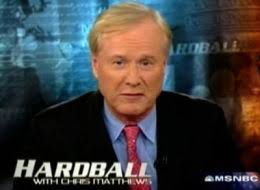
Chris Matthews
Speaking on MSNBC’s “Hardball,” on July 28–five days before Congress reached its August 2 deadline to raise the debt-ceiling–Matthews noted:
“The first people to bow to the demands of those threatening to blow up the economy were the Republicans in the House, the leaders. The leaders did what the followers told them to do: meet the demands, hold up the country to get their way.
“Those followers didn’t win the Senate, or the Presidency, just the House.
“But by using the House they were able to hold up the entire United States government. They threatened to blow things up economically and it worked.
“They said they were willing to do that–just to get their way–not by persuasion, not by politics, not by democratic government, but by threatening the destruction of the country’s finances.
“Right. So what’s next? The power grid? Will they next time threaten to close down the country’s electricity and communications systems?”
With the United States teetering on the brink of national bankruptcy, President Obama faced three choices:
- Prosecute Republican extortionists under the Racketeer Influenced Corrupt Oganizations Act;
- Seek to rally the American people against a criminal threat to the financial security of the Nation;
- Cave in to Republican demands.
Unfortunately for Obama and the Nation, he chose Number Three.
A graduate of Columbia University and Harvard Law School, Obama is easily one of the most academically gifted Presidents in United States history.
But for all this, he failed–from the onset of his Presidency–to grasp and apply this fundamental lesson taught by Niccolo Machiavelli, the father of modern political science.
In his classic work on politics, The Prince, Machiavelli warns:
From this arises the question whether it is better to be loved than feared, or feared more than loved.
The reply is, that one ought to be both feared and loved, but as it is difficult for the two to go together, it is much safer to be feared than loved….
Men have less scruple in offending one who makes himself loved than one who makes himself feared. For love is held by a chain of obligations which, men being selfish, is broken whenever it serves their purpose. But fear is maintained by a dread of punishment which never fails.
Obama has failed to heed this advice. And, predictably, his sworn enemies–which is what Republicans consider themselves to be–have felt free to demonize and obstruct him at every turn.
ADOLF HITLER, BARACK OBAMA, CHRIS MATTHEWS, CNN'S "STARTING POINT", CZECHOSLAVAKIA, DEBT CEILING, EXECUTIVE ORDERS, EXTORTION, FACEBOOK, GEORGE W. BUSH, GOVERNMENT SHUTDOWN, HOUSE SPEAKER JOHN BOEHNER, immigration reform, JIMMY CARTER, MSNBC'S "HARDBALL", NAZI GERMANY, NEGOTIATING, NEVILLE CHAMBERLAIN, NEWT GINGRICH, NICCOLO MACHIAVELLI, PAP SMEARS, PLANNED PARENTHOOD, POLAND, R.I.CO. ACT, REPUBLICAN PARTY, REPUBLICANS, Ronald Reagan, THE PRINCE, TWITTER, WARREN BUFFET, WINSTON CHURCHILL, WORLD WAR 11
In Bureaucracy, History, Law, Law Enforcement, Politics on July 4, 2014 at 3:05 pm
After winning the bloodless conquest of Czechoslavakia by threatening France and Britain with war, Adolf Hitler turned his attention to Poland.
When his generals balked, warning that an invasion would trigger a war with France and Britain, Hitler quickly brushed aside their fears: “Our enemies are little worms. I saw them at Munich.”
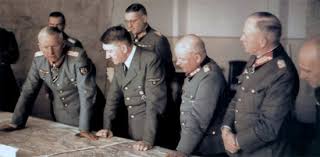
Adolf Hitler and his generals
Hitler ordered the invasion of Poland on September 1, 1939–unintentionally triggering World War II.
In time, historians and statesmen would regard Munich as an object lesson in the futility—and danger—in appeasing evil and aggression.
But for the postwar Republican party, Hitler’s my-way-or-else “negotiating” methods would become standard operating procedure.
During the summer of 2011, Republicans refused to raise the debt ceiling unless Democrats agreed to massively cut social programs for the elderly, poor and disabled.
And while Republicans demanded that the disadvantaged tighten their belts, they rejected any raising of taxes on their foremost constituency–the wealthiest 1%.
To raise taxes on the wealthy, they insisted, would be a “jobs-killer.” It would “discourage” corporate CEOs from creating tens of thousands of jobs they “want” to create.
If Congress failed to raise the borrowing limit of the federal government by August 2, 2011, the date when the U.S. reached the limit of its borrowing abilities, America would begin defaulting on its loans.
As Warren Buffett, CEO of Berkshire Hathaway, explained the looming economic catastrophe:
“If you don’t send out Social Security checks, I would hate to think about the credit meeting at S&P and Moody’s the next morning.
“If you’re not paying millions and millions and millions of people that range in age from 65 on up, money you promised them, you’re not a AAA,” said Buffett.
A triple-A credit rating is the highest possible rating that can be received.
Republicans knew this argument is a lie. And so did the editors of Time. The difference is, the editors of Time were willing to reveal the truth.
In its June 20, 2011 cover-story on “What U.S. Economic Recovery? Five Destructive Myths,” Rana Foroohar, the magazine’s assistant managing editor in charge of economics and business, delivered this warning:
Profit-seeking corporations can’t be relied on to ”make it all better.”
American companies “are doing quite well,” but most American workers “are earning a lower hourly wage now than they did during the recession.”
Corporations, in short, are doing extremely well. But they don’t spend their profits on American workers.
“There may be $2 trillion sitting on the balance sheets of American corporations globally, but firms show no signs of wanting to spend it in order to hire workers at home.”
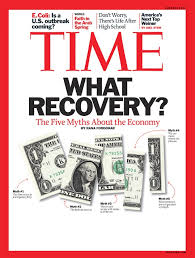
In short: Giving even greater tax breaks to mega-corporations–the standard Republican mantra–has not persuaded them to stop “outsourcing” jobs. Nor has it convinced them to start hiring Americans.
Many American companies prefer opening factories in Brazil, China or India to doing so in the United States–and thus creating jobs for American workers.
While embarrassingly overpaid CEOs squander corporate wealth on themselves, millions of Americans can’t afford medical care or must depend on charity to feed their families.
Yet there is also a disconnect between the truth of this situation and the willingness of Americans to face up to that truth.
The reason, writes Foroohar:
Republicans have convinced most Americans they can revitalize the economy by slashing “taxes on the wealthy and on cash-hoarding corporations while cutting benefits for millions of Americans.”
And she concludes: To restore prosperity America needs both tax increases and cuts in entitlement programs.
Click here: What U.S. Economic Recovery? Five Destructive Myths – TIME
According to Mein Kampf-–”My Struggle”–-Hitler’s autobiography and political treatise:
- Most people are ruled by sentiment, not reason.
- This sentiment is simple and consistent. It is rooted in notions of love and hatred, right and wrong, truth and falsehood.
- Propaganda isn’t based on objective truth but must present only that partof the truth that makes its own side look good.
- People are not intelligent, and quickly forget.
- Confine propaganda to a few bare essentials and express these in easily-remembered in stereotyped images.
- Persistently repeat these slogans until the very last individual has come to grasp the idea that has been put forward.
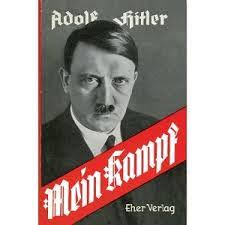
Following these principles, Republicans have proved hugely successful at persuading millions that truth is whatever their party claims it to be at any given moment.
“Fascism,” said author Ernest Hemingway, “is a lie told by bullies.” Thus, when Republicans couldn’t attain their goals by lying, they sought to do so by force–or at least the threat of it.
Republicans have repeatedly threatened to shut down the government unless their constantly escalating demands were met.
In November, 1995, Newt Gingrich, then Speaker of the House of Representatives, carried out his threat. Gingrich unwisely admitted that he did so because President Bill Clinton had put him in the back of Air Force One during a recent trip to Israel.
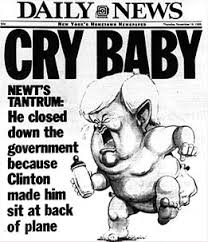
The shutdown proved a disaster for Republicans. Clinton was handily re-elected in 1996 and Gingrich suddenly resigned from Congress in 1998.
ADOLF HITLER, BARACK OBAMA, CHRIS MATTHEWS, CNN'S "STARTING POINT", CZECHOSLAVAKIA, DEBT CEILING, EXECUTIVE ORDERS, EXTORTION, FACEBOOK, GEORGE W. BUSH, GOVERNMENT SHUTDOWN, HOUSE SPEAKER JOHN BOEHNER, immigration reform, JIMMY CARTER, MSNBC'S "HARDBALL", NAZI GERMANY, NEGOTIATING, NEVILLE CHAMBERLAIN, NEWT GINGRICH, NICCOLO MACHIAVELLI, PAP SMEARS, PLANNED PARENTHOOD, POLAND, R.I.CO. ACT, REPUBLICAN PARTY, REPUBLICANS, Ronald Reagan, THE PRINCE, TWITTER, WARREN BUFFET, WINSTON CHURCHILL, WORLD WAR 11
In Bureaucracy, History, Law, Law Enforcement, Politics on July 3, 2014 at 9:50 am
On February 12, 1938, two Chancellors—Adolf Hitler of Germany, and Kurt von Schuschnigg of Austria—met at Hitler’s retreat at Obersalzberg, Germany. At stake lay the future independence of Austria.
That meeting ended with Hitler’s bullying Schnuschigg into submission. Austria became a vassal-state of Nazi Germany.
Seven months later, in September, 1938, Hitler gave another exhibition of his “negotiating” methods. This time, the target of his rage and aggression was Czechoslovakia.
Once again, he opened “negotiations” with a lie: The Czechoslovak government was trying to exterminate 3.5 million Germans living in the “Sudetenland.”
This consisted of the northern, southwest and western regions of Czechoslovakia, inhabited mostly by ethnic Germans.
Then he followed this up with the threat of war: Germany would protect its citizens and halt such “oppression.”
For British Prime Minister Neville Chamberlain, the thought of another European war erupting less than 20 years after the end of World War I was simply unthinkable.

The Cenotaph, in London, honoring the unknown British dead of World War 1
Something had to be done to prevent it. And he believed himself to be just the man to do it.
He quickly sent Hitler a telegram, offering to help resolve the crisis: “I could come to you by air and am ready to leave tomorrow. Please inform me of earliest time you can receive me, and tell me the place of the meeting. I should be grateful for a very early reply.”
Once again, another head-of-state was prepared to meet Hitler on his home ground. Again, Hitler took this concession as a sign of weakness. And Chamberlain’s use of such words as “please” and “grateful” only further convinced Hitler of another impending triumph.
Chamberlain was determined to grant his every demand–so long as this meant avoiding a second world war.
The two European leaders met in Berchtesgaden, Germany, on September 15, 1938.
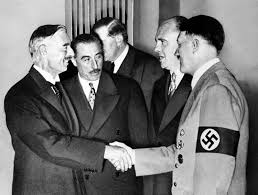
Neville Chamberlain and Adolf Hitler
During their talks, Chamberlain said he had come to discuss German grievances. But, he added, it was necessary in all circumstances to exclude the use of force.
Hitler appeared to be shocked that he could be accused of such intentions: “Force? Who speaks of force?“
Then, without warning, he switched to an aggressive mode. He accused the Czechs of having mobilized their army in May. They had mobilized—in response to the mobilization of the German army.
“I shall not put up with this any longer,” shouted Hitler. “I shall settle this question in one way or another. I shall take matters in my own hands!”
Suddenly, Chamberlain seemed alarmed—and possibly angry: “If I understood you right, you are determined to proceed against Czechoslovakia in any case. If this is so, why did you let me come to Berchtesgaden?
“In the circumstances, it is best for me to return at once. Anything else now seems pointless.”
Hitler was taken aback by the unexpected show of defiance. He realized he was about to lose his chance to bully the British into accepting his latest demands.
So he softened his tone and said they should consider the Sudetenland according to the principle of self-determination.
Chamberlain said he must immediately return to England to consult with his colleagues. Hitler appeared uneasy. But then the German translator finished the sentence: “…and then meet you again.” Hitler realized he still had a chance to attain victory without going to war.
Chamberlain agreed to the cession of the Sudetenland. Three days later, French Prime Minister Edouard Daladier did the same. No Czechoslovak representative was invited to these discussions.
Chamberlain met Hitler again in Godesberg, Germany, on September 22 to confirm the agreements. But Hitler aimed to use the crisis as a pretext for war.
He now demanded not only the annexation of the Sudetenland but the immediate military occupation of the territories. This would give the Czechoslovak army no time to adapt their defense measures to the new borders.
To achieve a solution, Italian dictator Benito Mussolini suggested a conference of the major powers in Munich.
On September 29, Hitler, Daladier and Chamberlain met and agreed to Mussolini’s proposal. They signed the Munich Agreement, which accepted the immediate occupation of the Sudetenland.
The Czechoslovak government had not been a party to the talks. Nevertheless, it promised to abide by the agreement on September 30.
It actually had no choice. It faced the threat of an immediate German invasion after being deserted by its pledged allies: Britain, France and the Soviet Union.
Chamberlain returned to England a hero. Holding aloft a copy of the worthless agreement he had signed with Hitler, he told cheering crowds in London: “I believe it is peace for our time.”
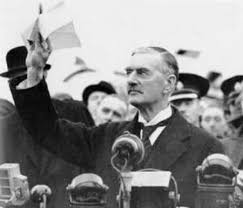
Neville Chamberlain
Winston Churchill knew better, predicting: “Britain and France had to choose between war and dishonor. They chose dishonor. They will have war.”
Hitler—still planning more conquests—also knew better. In March, 1939, the German army occupied the rest of Czechoslovakia.
Chamberlain would soon be seen as a naive weakling–even before bombs started falling on London.
Hitler next turned his attention–and demands–to Poland.


 Bureaucracybuster's Blog
ABC NEWS, BEDBUGS, BUILDING INSPECTION, BUSINESS, CBS NEWS, CNN, ELLIS ACT, FACEBOOK, FEDERAL ASSET FORFEITURE STATUTES, LANDLORDS, NBC NEWS, RENT CONTROL, RENTERS, SAN FRANCISCO, SAN FRANCISCO DEPARTMENT OF BUILDING INSPECTION, SAN FRANCISCO DEPARTMENT OF PUBLIC HEALTH, SLUMLORDS, THE HUFFINGTON POST, THE NEW YORK TIMES, THE WALL STREET JOURNAL, THE WASHINGTON POST, TWITTER, URBAN GREEN INVESTMENTS
SLUMLORDS–THE REAL UNTOUCHABLES: PART TWO (OF THREE)
In Bureaucracy, Law, Law Enforcement, Social commentary on July 17, 2014 at 11:49 amSlumlords would have everyone believe that San Francisco is a “renters’ paradise.” A place where hard-working landlords are routinely taken advantage of by rent-avoiding bums who want to be constantly pampered.
On the contrary: It’s not renters who hold “untouchable” status, but slumlords themselves.
In fact, San Francisco is long overdue for serious reforms in protecting tenants.
Part One of this series outlined three overdue reforms needed at the Department of Building Inspection (DBI), San Francisco’s primary tenant-protecting agency. Here are an additional 17:
Share this: