Posts Tagged ‘VIETNAM WAR’
9/11 ATTACKS, ABC NEWS, ASSOCIATED PRESS, BARACK OBAMA, BIRTHERS, CBS NEWS, CENSORSHIP, CNN, CREDIBILITY GAP, DAVID BROOKS, DAVID HALBERSTAM, DONALD TRUMP, FACEBOOK, FRANK STANTON, FULL METAL JACKET, GEORGE MCGOVERN, HILLARY CLINTON, JOHN F. KENNEDY, LYNDON B. JOHNSON, MARK SHIELDS, MORLEY SAFER, NAVY SEALS, NBC NEWS, OSAMA BIN LADEN, PBS NEWSHOUR, PETER ARNETT, RICHARD NIXON, RONALD ZIEGLER, STANLEY KUBRICK, THE CHICAGO SUN-TIMES, THE CHICAGO TRIBUNE, THE HUFFINGTON POST, THE LOS ANGELES TIMES, THE NEW YORK TIMES, THE WALL STREET JOURNAL, THE WASHINGTON POST, TWITTER, VIETNAM WAR, WATERGATE
In Bureaucracy, History, Law, Law Enforcement, Military, Politics, Social commentary on September 28, 2016 at 12:09 am
“Credibility gap” is a term that came into use during the mid-1960s to describe public and journalistic distrust of President Lyndon B. Johnson. In particular, the term was applied to his administration’s conduct of the Vietnam war.
It was, in short, a euphemism for accusing government officials of outright lying.
An example of the credibility gap in full swing appeared in Stanley Kubrick’s classic 1987 Vietnam war movie, Full Metal Jacket.
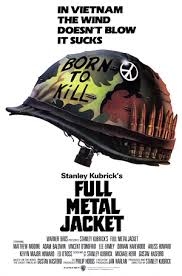
Vietnam was a war where military and political officials spewed a gung-ho version of constant American progress against a tough enemy.
And where civilian reporters like David Halberstam and Walter Cronkite saw–and labeled–the war as a brutal, wasteful and ultimately doomed effort.
Midway through the film, there’s an editorial meeting of The Sea Tiger, the official Marine newspaper.
Lieutenant Lockhart is presiding–and he is determined to give his superiors an endless stream of “all-systems-go” propaganda reports. He reads a series of stories that have been published:
Story #1: DIPLOMATS IN DUNGAREES–MARINE ENGINEERS LEND A HELPING HAND REBUILDING DONG PHUC VILLAGES.
LOCKHART: “Chili, “if we move Vietnamese, they are evacuees. If they come to us to be evacuated, they are refugees.”
Story #2: N.V.A. SOLDIER DESERTS AFTER READING PAMPHLETS.
LOCKHART: “A young North Vietnamese Army regular, who realized his side could not win the war, deserted from his unit after reading Open Arms program pamphlets.”
Story #3: NOT WHILE WE’RE EATING: N.V.A. LEARN MARINES ON A SEARCH AND DESTROY MISSION DON’T LIKE TO BE INTERRUPTED WHILE EATING CHOW.
LOCKHART: “‘Search and destroy.’ Uh, we have a new directive on this. In the future, in place of ‘search and destroy,’ substitute the phrase ‘sweep and clear.’ Got it?”
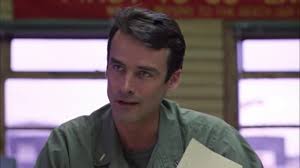
Lt. Lockhart, editor of The Sea Tiger
LOCKHART: “And, Joker–where’s the weenie?”
JOKER: “Sir?”
LOCKHART “The Kill, Joker. I mean, all that fire, the grunts must’ve hit something.”
JOKER: “Didn’t see ’em.”
LOCKHART: “Joker, I’ve told you, we run two basic stories here: Grunts who give half their pay to buy gooks toothbrushes and deodorants–winning of hearts and Minds–okay? And combat action that results in a kill–Winning the War. Now you must have seen blood trails … drag marks?”
JOKER: “It was raining, sir.”
LOCKHART: “Well, that’s why God passed the law of probability. Now rewrite it and give it a happy ending–say, uh, one kill. Make it a sapper or an officer. Grunts like reading about dead officers.”
JOKER: “Okay, an officer. How about a general?”
LOCKHART: “Joker, maybe you’d like our guys to read the paper and feel bad. I mean, in case you didn’t know it, this is not a particularly popular war. Now, it is our job to report the news that these why-are-we-here civilian newsmen ignore.”
So great became the divide between truth and lies during military “press briefings” that reporters started calling them “The Five O’clock Follies.” And even some soldiers took to wearing buttons that said: “Ambushed at Credibility Gap.”
Reporters who dared to write truthfully about the military’s crimes and failures–like David Halberstam of the New York Times and Peter Arnett of the Associated Press–were regarded as traitors by military and political officials.
In 1963, President John F. Kennedy became enraged by Halberstam’s reporting on the corruption of the South Vietnamese government. He pressured New York Times publisher Arthur Ochs Sulzberger to transfer Halberstam to another locale. Sulzberger politely refused–and then extended Halberstam’s stay in Vietnam another six months.
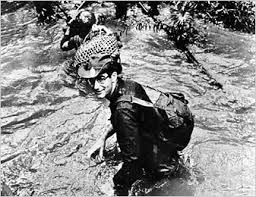
David Halberstam
In 1965, when CBS Correspondent Morley Safer filmed Marines setting fire to the village of Cam Ne with Zippo lighters, President Lyndon B. Johnson was similarly outraged.
He placed an early-morning call to CBS News President Frank Stanton and shouted: “Your boys shat on the American flag!”
The trail of deceit and attempted censorship continued right up to the end of the war–in April, 1975. That was when North Vietnamese forces invaded the South and quickly overwhelmed the incompetent defenses arrayed against them.
And while America was still bogged down in Vietnam, the Watergate scandal erupted on June 17, 1972.
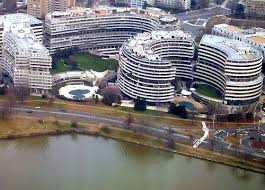
Watergate Hotel
Members of the Nixon administration’s secret “Plumbers Unit” burglarized the offices of the Democratic National Committee at the Watergate Hotel.
Obsessed with re-electing Richard Nixon, they sought incriminating information to discredit U.S. Senator George McGovern, the Democrats’ nominee for President.
When the burglars were caught, President Richard M. Nixon and his topmost officials lied and stonewalled both reporters and investigators seeking the truth.
Nixon’s press secretary, Ronald Ziegler, repeatedly slandered the integrity of The Washington Post for its coverage of the mushrooming Watergate scandal. He called the Watergate break-in “a third-rate burglary” and attacked the Post for “shabby journalism.”
Finally, on April 17, 1973, Ziegler, announced at a press conference: “This is the operative statement. The others are inoperative.”
In short: We’ve been lying to you for the last 10 months. But now we’re telling the truth.
Like Vietnam, the Watergate scandal destroyed the reputations of many of its chief architects. Forty government officials were indicted or jailed.
Vietnam and Watergate were seminal events for Americans coming of age in the late 1960s and early 1970s. They taught an entire generation: Don’t trust the government. Its officials routinely lie, and their lies can be deadly.
9/11 ATTACKS, ABC NEWS, ASSOCIATED PRESS, BARACK OBAMA, BIRTHERS, CBS NEWS, CENSORSHIP, CNN, CREDIBILITY GAP, DAVID BROOKS, DAVID HALBERSTAM, DONALD TRUMP, FACEBOOK, FRANK STANTON, FULL METAL JACKET, GEORGE MCGOVERN, HILLARY CLINTON, JOHN F. KENNEDY, LYNDON B. JOHNSON, MARK SHIELDS, MORLEY SAFER, NAVY SEALS, NBC NEWS, OSAMA BIN LADEN, PBS NEWSHOUR, PETER ARNETT, RICHARD NIXON, RONALD ZIEGLER, STANLEY KUBRICK, THE CHICAGO SUN-TIMES, THE CHICAGO TRIBUNE, THE HUFFINGTON POST, THE LOS ANGELES TIMES, THE NEW YORK TIMES, THE WALL STREET JOURNAL, THE WASHINGTON POST, TWITTER, VIETNAM WAR, WATERGATE
In Bureaucracy, History, Law, Law Enforcement, Military, Politics, Social commentary on September 26, 2016 at 3:03 pm
For five years, Donald Trump, more than anyone else, popularized the slander that President Barack Obama was born in Kenya–and was therefore not an American citizen.
In April, 2011, Obama released the long-form version of his Hawaiian birth certificate. Still, Trump questioned its–and Obama’s–legitimacy.
For more than a year during his 2016 Presidential campaign, Trump continued doing so.
Meanwhile, Trump’s popularity steadily fell among blacks. In June, 2016, a Quinnipiac poll revealed that Trump had 1% of support from black voters–while 91% of black voters backed Hillary Clinton.
Even the managers of Trump’s campaign urged him to put the “birther” issue behind him.
And so, on September 16, 2016–10 days before his scheduled first debate with Democratic Presidential nominee Hillary Clinton–Trump made his version of a reversal.
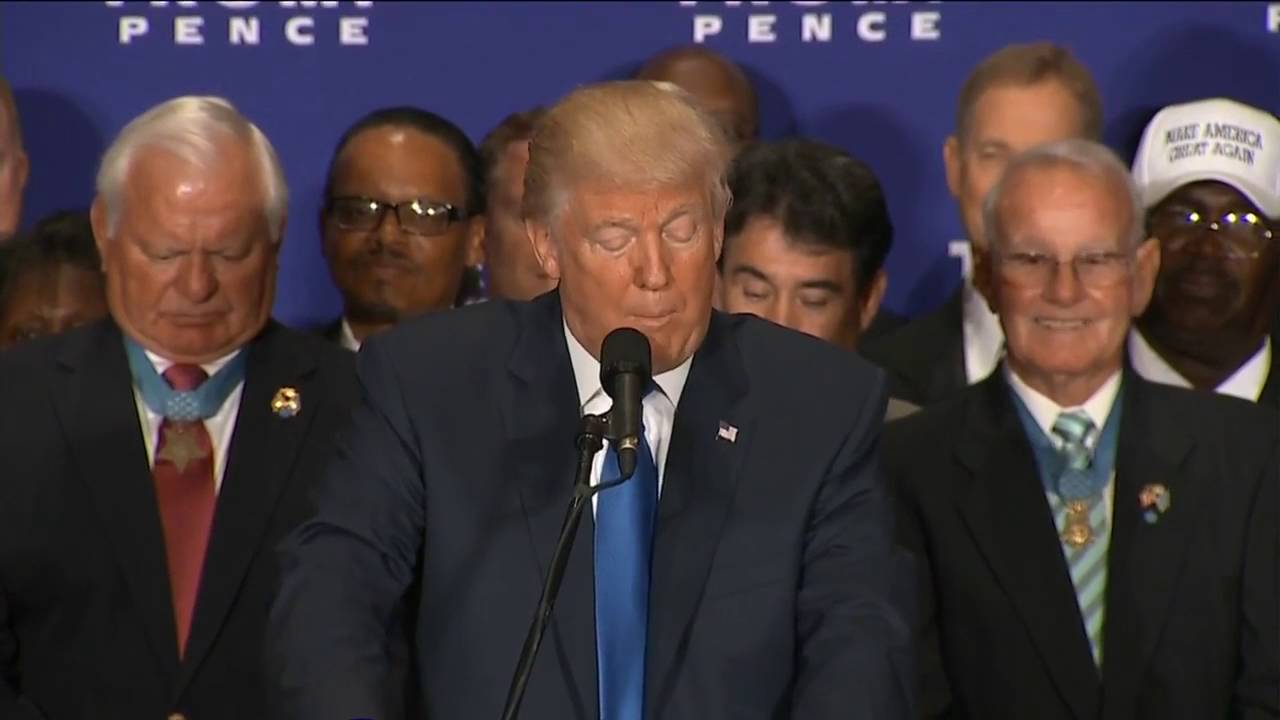
Donald Trump: “President Barack Obama was born in the United States.”
He did so in about seven seconds and 40 words–after spending a half hour paying tribute to the military and promoting his new upscale hotel in Washington, D.C.:
“Now, not to mention her in the same breath, but Hillary Clinton and her campaign of 2008 started the birther controversy.
“I finished it. I finished it. You know what I mean.
“President Barack Obama was born in the United States, period. Now we all want to get back to making America strong and great again.”
His tone made it clear that he felt uneasy making that statement–and wanted to get it over with as fast as possible.
He refused to take questions from reporters covering the event. Nor did he apologize for his five-year campaign of slander.
On the evening of September 16, Hillary Clinton strongly responded to Trump’s comments:
“For five years, he has led the birther movement to delegitimize our first black president. His campaign was founded on this outrageous lie. There is no erasing it in history.”
And First Lady Michelle Obama slammed Trump for his “birther” claims:
“Then, of course, there were those who questioned, and who continue to question for the past eight years, and up to this very day, whether my husband was even born in this country.
“Well, during his time in office, I think Barack has answered those questions with the examples he set, by going high when they go low. And he’s answered these questions with the progress we’ve achieved together.”

Michelle Obama
But perhaps the best perspective on this event was provided by syndicated columnist Mark Shields and New York Times columnist David Brooks. Each Friday they appear on the PBS Newshour to review the week’s major political events.
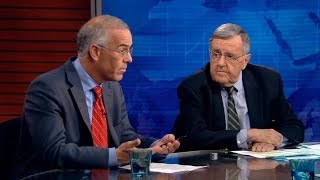
David Brooks and Mark Shields
On September 16, Shields (a liberal) and Brooks (a conservative) addressed Trump’s about-face on birtherism.
MARK SHIELDS: “I think it’s important to establish right at the outset that [Trump] wasn’t only the loudest and the highest-profile and the most persistent and the most well-publicized birther, he, Donald Trump. He lied. He lied consistently and persistently.
“And, today, without explanation or excuse, he just changed his position and tried to absolutely falsely shift the blame onto Hillary Clinton.
“And this was an appeal to–he debased democracy. He debased the national debate. He appealed to that which is most ignoble or least noble in all of us.”
DAVID BROOKS: “Usually, there’s some tangential relationship to the truth, but a corroding relationship to the truth, frankly, as politics has gone on over the years.
“But now we’re in a reverse, Orwellian inversion of the truth with this. And so we have a team of staffers and then the candidate himself who have taken the normal spin and smashed all the rules.
“And so we are really in Orwell land. We are in 1984. And it’s interesting that an authoritarian personality type comes in at the same time with a complete disrespect for even tangential relationship to the truth that words are unmoored.
“And so I do think this statement sort of shocked me with the purification of a lot of terrible trends that have been happening. And so what’s white is black, and what is up is down, what is down is up. And that really is something new in politics.
“And the fact that there is no penalty for it, apparently–he’s doing fantastic in the last two weeks in the polls–is just somehow where we have gotten.”
* * * * *
Americans were slow to recognize the dangers of their government’s committing armed forces to South Vietnam. But when the record of government lies reached critical mass, Americans demanded an end to the war.
Similarly, Americans were reluctant to brand Richard Nixon, their newly-re-elected President, a criminal worthy of impeachment. But when the evidence of his criminality steadily mounted, they demanded his ouster.
Today, Americans are flooded with overwhelming evidence of Donald Trump’s unfitness to become President. His narcissism, vindictiveness, ignorance and hair-trigger temper have been on public display for more than a year.
Yet millions of ignorant, hate-filled, Right-wing Americans plan to catapult this man–who “debased democracy, debased the national debate, appealed to that which is most ignoble or least noble in all of us”–to the Presidency.
If that happens, future historians–if there are any–may similarly condemn those Americans who stood by like “good Germans” and allowed their country to fall into the hands of a ruthless tyrant.
2016 PRESIDENTIAL RACE, ABC NEWS, APOLLO MOON LANDING, BARACK OBAMA, BARBARA TUCHMAN, CBS NEWS, CNN, COLD WAR, DONALD TRUMP, DREAMS FROM MY FATHER, EDUCATION, HERMAN CAIN, IGNORANCE, JOHN F. KENNEDY, LITERACY, NBC NEWS, NEVADA PRIMARY, NUCLEAR TEST BAN TREATY, REPUBLICANS, RICK PERRY, Sarah Palin, SOVIET UNION, THE AUDACITY OF HOPE, THE CHICAGO SUN-TIMES, THE CHICAGO TRIBUNE, THE GUNS OF AUGUST, THE LOS ANGELES TIMES, THE NEW YORK TIMES, THE WASHINGTON POST, VIETNAM WAR
In Bureaucracy, History, Politics, Social commentary on February 25, 2016 at 9:55 am
After winning the Republican Nevada primary with over 44% of the votes on February 23, Republican Presidential candidate Donald Trump gave the expected victory speech.
But it came with an unexpected moment:
“So we won the evangelicals. We won with young. We won with old. We won with highly educated. We won with poorly educated. I love the poorly educated. We’re the smartest people, we’re the most loyal people.”
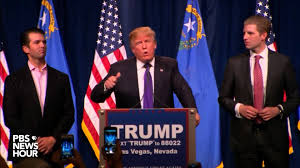
Donald Trump
“I love the poorly educated.”
As well he might: Polls have consistently shown that Trump relies on less-educated adults for his support.
Among Republicans, 71 percent of non-college graduates view Trump favorably, while 46 percent of college graduates support him.
In fact, appealing to the ignorant and uneducated has become a commonplace for politicians on the Right.
President John F. Kennedy speed-read several newspapers every morning. He nourished personal relationships with the press-–and not for altruistic reasons.
These journalistic relationships gave Kennedy additional sources of information and perspective on national and international issues.
But in 2012, Republican Presidential candidates celebrated their ignorance of both.
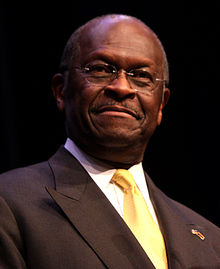
Herman Cain
Former Godfather’s Pizza CEO Herman Cain famously said, “We need a leader, not a reader.” In doing so, he stole this line from the fictionalized “President Schwarzenegger” in The Simpsons Movie.
Thus he excused his ignorance of the reasons for President Barack Obama’s intervention in Libya.
Then-Texas Governor Rick Perry showed similar pride in not knowing there are nine judges on the United States Supreme Court:
“Well, obviously, I know there are nine Supreme Court judges. I don’t know how eight came out my mouth. But the, uh, the fact is, I can tell you–I don’t have memorized all of those Supreme Court judges. And, uh, ah–
“Here’s what I do know. That when I put an individual on the Supreme Court, just like I done in Texas, ah, we got nine Supreme Court justices in Texas, ah, they will be strict constructionists….”
In short, it’s the media’s fault if they ask you a question and your answer reveals your own ignorance, stupidity or criminality.
Then there was Sarah Palin’s rewriting of history via “The Midnight Ride of Paul Revere”:
“He warned the British that they weren’t going to be taking away our arms by ringing those bells and, um, making sure as he’s riding his horse through town to send those warning shots and bells that, uh, we were going to be secure and we were going to be free.”
In fact, Revere wasn’t warning the British about anything. He was warning his fellow Americans about an impending British attack–as his celebrated catchphrase “The British are coming!” made clear.
Republicans have attacked President Obama for his Harvard education and articulate use of language. Among their taunts: “Hitler also gave good speeches.”
And they resent his having earned most of his income as a writer of two books: Dreams From My Father and The Audacity of Hope. As if being a writer is somehow subversive.
When President Kennedy was assassinated on November 22, 1963, it was said that he left three great legacies to his country:
- The Nuclear Test Ban Treaty;
- The Apollo moon landing; and
- The Vietnam War.
But there was a fourth legacy–and perhaps the most important of all: The belief that mankind could overcome its greatest challenges through rationality and perseverance.

White House painting of JFK
At American University on June 10, 1963, Kennedy called upon his fellow Americans to re-examine the events and attitudes that had led to the Cold War. And he declared that the search for peace was by no means absurd:
“Our problems are man-made; therefore, they can be solved by man. And man can be as big as he wants. No problem of human destiny is beyond human beings.
“Man’s reason and spirit have often solved the seemingly unsolvable, and we believe they can do it again.”
Today, politicians from both parties cannot agree on solutions to even the most vital national problems.
On November 21, 2011, the 12 members of the “Super-Committee” of Congress, tasked with finding $1.2 trillion in cuts in government spending, threw up their hands in defeat.
During the height of the Cuban Missile Crisis, Kennedy spoke with aides about a book he had just finished: Barbara Tuchman’s The Guns of August, on the events leading to World War 1.
He said that the book’s most important revelation was how European leaders had blindly rushed into war, without thought to the possible consequences.
Kennedy told his aides he did not intend to make the same mistake-–that, having read his history, he was determined to learn from it.
When knowledge and literacy are attacked as “highfalutin’” arrogance, and ignorance and incoherence are embraced as sincerity, national decline and collapse lie just around the corner.
60 MINUTES, 9/11 ATTACKS, ABC NEWS, ADOLF HITLER, AFGHANISTAN, AL QAEDA, AYATOLLAH RUHOLLAH KHOMEINI, BARACK OBAMA, BASHAR AL-ASSAD, CARL VON CLAUSEWITZ, CARLOS THE JACKAL, CBS NEWS, CIA, CNN, FACEBOOK, HARRY TRUMAN, IMPERIAL HUBRIS, IRAN, ISLAM, ISLAMIC STATE OF IRAQ AND THE LEVANT, ISRAEL, MARCHING TOWARD HELL, MICHAEL SCHEUER, MUSLIMS, NAZI GERMANY, NBC NEWS, OSAMA BIN LADEN, RUSSIA, SHAH OF IRAN, SOVIET UNION, SYRIA, TERRORISM, THE CHICAGO TIMES, THE CHICAGO TRIBUNE, THE LOS ANGELES TIMES, THE NEW YORK TIMES, THE WASHINGTON POST, TWITTER, USA TODAY, VIETNAM WAR, VLADIMIR PUTIN, WORLD WAR 1
In Bureaucracy, History, Military, Politics, Social commentary, Uncategorized on November 19, 2015 at 12:14 am
According to Micheal Scheuer, America needs to end its role as Israel’s permanent bodyguard.
Scheuer is a 20-year CIA veteran–as well as an author, historian, foreign policy critic and political analyst.
Testifying before the House Committee on Homeland Security on October 9, 2013, Scheuer warned:
“If it was up to me, I’d dump the Israelis tomorrow. All I worry about is that continuing preaching of American politicians to the American people that our relationship with the Israelis doesn’t cause us to have dead Americans and extraordinary expenses in fighting the Muslim world.”
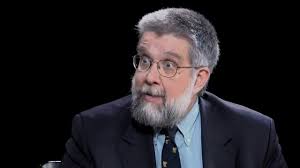
Michael Scheuer
For decades, the United States has pursued two policies in the Middle East, one based on relations with the Arab world and the other based on relations with Israel.
Policy 1: Maintaining access to vast amounts of Arab oil at low prices.
Policy 2: Maintaining the security of Israel.
Since the Arabs and Israelis hate each other, each side constantly tries to sway American support in its direction.
Every step the United States takes to defend Israel–diplomatically or militarily–ignites hatred of Americans among Islamics.
And every step–diplomatically or militarily–the United States takes to improve its relations with Islamic countries convinces Israelis that they’re being “sold out.”
President George W. Bush tilted strongly toward Israel. That convinced Israelis to go on building settlements in occupied Arab territory–and alienated the Arabs.
President Barack Obama, seeking a balanced approach, leaned heavily on Israel to stop building settlements. Israel has continued doing so–thus alienating the Israelis while leaving the Arabs enraged.
In short: The United States is like a giant who has one foot stuck in Israel and the other stuck in any Islamic country–leaving his private parts fully exposed to whichever side wants to take a shot at them.
This is not to deny that Israel has a right to exist. Every nation--including Israel–has the absolute right to defend itself from aggression.
But no nation–including Israel–should have the right to expect another nation to act as its permanent bodyguard.
Millions of Americans believe they are morally obligated to defend Israel owing to the barbarism of the Holocaust. America, however, was never a party to this, and has nothing to atone for.
But there is another reason many Americans feel committed to Israel. And it has nothing to do with concern for the fates of Israelis.
It lies in the mythology of the Christian Right: Many fundamentalist Christians believe that, for Jesus Christ to awaken from his 2,000-year slumber, Israel must first re-conquer every inch of territory it supposedly held during the reign of Kings David and Solomon.

Right-wing Christian fantasy: Dead man hovering
After Christ returns, they believe, the Jews will face a choice: Become Christians or go to hell. For evangelical Christians, Jews remain the eternal “Christ killers.”
And if Jews must assume temporary control of the Middle East to bring about the return of a man who died 2,000 years ago, so be it.
This is also the view of many Right-wing members of the House of Representatives and Senate. Clearly, people who hold such totally irrational views shouldn’t be allowed to hold public office.
Unfortunately, such unbalanced views are shared by millions of equally irrational evangelical Christians.
During his appearance before the House Committee on Homeland Security, Michael Scheuer absolutely rejected the conservatives’ assertion that jihadists wage war on us because they “hate us for our freedoms.”
SCHEUER: These people are fighting for something substantive, for something religious. ….They are not going to fight us because we have women in the workplace.
That is an insanity. What they are fighting us about is what we do.
…I would draw your attention to the reality that, to the best of my knowledge, neither we nor any of our NATO partners have yet to capture a Western Islamist fighter whose words or documents have shown a motivation to attack based on hatred for liberty, elections or gender equality.
Invariably, they attribute their motivation to U.S. and Western military intervention and support for Israel and Muslim tyrannies.
Scheuer’s take on Israel brought him into direct conflict with Rep. Peter T. King (R-New York).
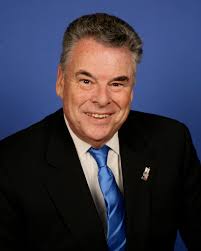
Congressman Peter T. King
KING: I would just say we would have more dead Americans if we didn’t stand by our allies in the Middle East. We would just be encourage al-Qaeda to take advantage of us.
SCHEUER: You know, you are presiding over a bankruptcy. What can be worse? What has been the goal of al-Qaeda since it was formed? To bankrupt the United States.
Who is winning today, sir? We are done like dinner.
KING: We are winning and we will continue to win unless we take the advice of people like you.
SCHEUER: Sir, you are exactly wrong. We are losing. Two U.S. field armies were defeated by men in the field with weapons from the Korean War.
KING: The fact is we have not been successfully attacked since September 11.
SCHEUER: The fact is, sir, we have had two military defeats overseas, which is far more important.
And, warns Scheuer, more defeats–domestic and international–lie ahead unless the United States radically changes its policies toward the Middle East.
60 MINUTES, 9/11 ATTACKS, ABC NEWS, ADOLF HITLER, AFGHANISTAN, AL QAEDA, AYATOLLAH RUHOLLAH KHOMEINI, BARACK OBAMA, BASHAR AL-ASSAD, CARL VON CLAUSEWITZ, CARLOS THE JACKAL, CBS NEWS, CHEMICAL WEAPONS, CHINA, CIA, CNN, FACEBOOK, HARRY TRUMAN, IMPERIAL HUBRIS, IRAN, ISLAM, ISLAMIC STATE OF IRAQ AND THE LEVANT, ISRAEL, MARCHING TOWARD HELL, MICHAEL SCHEUER, MUSLIMS, NAZI GERMANY, NBC NEWS, OSAMA BIN LADEN, RUSSIA, SHAH OF IRAN, SOVIET UNION, SYRIA, TERRORISM, THE CHICAGO TIMES, THE CHICAGO TRIBUNE, THE LOS ANGELES TIMES, THE NEW YORK TIMES, THE WASHINGTON POST, TWITTER, USA TODAY, VIETNAM WAR, VLADIMIR PUTIN, WORLD WAR 1
In Bureaucracy, History, Military, Politics, Social commentary on November 18, 2015 at 12:16 am
For America to avoid permanent military entanglements in the Middle East, it must learn to mind its own business.
So says Michael Scheuer, a 20-year CIA veteran who, from 1996 to 1999, headed Alec Station, the CIA’s unit assigned to track Osama bin Laden at the agency’s Counterterrorism Center.
He’s also the author of two seminal works on America’s fight against terrorism:Imperial Hubris: Why the West is Losing the War on Terror (2003) and Marching Toward Hell: America and Islam after Iraq (2008).
Scheuer has repeatedly warned: The United States must not deploy troops in Syria.
More than 310,000 people have been killed in Syria’s uprising-turned-civil war. The conflict began on March 15, 2011, triggered by protests demanding political reforms and the ouster of dictator Bashar al-Assad.
And many members of Congress are demanding that “we must do something” to stop all that killing.
Three reasons have already been given for why America should steer clear of the Syrian tar-baby. Among the others:
Fourth, the Assad regime is backed by–-among others–the Iranian-supported terrorist group, Hezbollah (Party of God). Its enemies include another terrorist group–Al Qaeda.
Hezbollah is comprised of Shiite Muslims. A sworn enemy of Israel, it has kidnapped scores of Americans suicidal enough to visit Lebanon and truck-bombed the Marine Barracks in Beirut in 1983, killing 299 Americans.
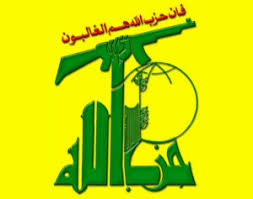
Flag of Hezbollah
Al-Qaeda, on the other hand, is made up of Sunni Muslims. Besides plotting 9/11, It has attacked the mosques and gatherings of liberal Muslims, Shias, Sufis and other non-Sunnis.
Examples of these sectarian attacks include the Sadr City bombings, the 2004 Ashoura massacre and the April, 2007 Baghdad bombings.
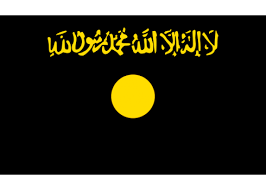
Flag of Al Qaeda
When your enemies are intent on killing each other, it’s best to stand aside and let them do it.
Fifth, intervening in Syria could produce unintended consequences for American forces–and make the United States a target for more Islamic terrorism.
President Obama has repeatedly said American warplanes are targeting the Islamic State of Iraq and the Levant (ISIL). But bombing is never as accurate as its proponents insist.
An accidental American strike on Syrian government forces could lead the country’s dictator, Bashar al-Assad, to attack Israel–perhaps even with chemical weapons.
Assad could do this simply because he hates Jews–or to lure Israel into attacking Syria.
If that happened, the Islamic world–which lusts to destroy Israelis even more than “apostate” Muslims–would rally to Syria against the United States, Israel’s chief ally.
Sixth, the United States cannot defeat ISIL through air power alone.
President Barack Obama authorized airstrikes against ISIL in September, 2014. Since then, the United States Air Force has dropped thousands of bombs on ISIL convoys.
This has not, however, destroyed ISIL. And its failure to do so has only led to demands by hawkish Republicans and Democrats for “boots on the ground.”
This was in fact predictable. Air power alone failed to secure victory over Nazi Germany during World War II and Vietnam during the Vietnam war. Nor did it “shock and awe” the Iraqis into surrendering during the 2003 Iraq war.
Seventh, while Islamic nations like Syria and Iraq wage war within their own borders, they will lack the resources to launch attacks against the United States.
When Adolf Hitler invaded the Soviet Union in 1941, then-Senator Harry Truman said: “I hope the Russians kill lots of Nazis and vice versa.”
That should be America’s view whenever its sworn enemies start killing themselves off. Americans should welcome such self-slaughters, not become entrapped in them.
Eighth, China and Russia are fully supporting the Assad dictatorship–-and the brutalities it commits against its own citizens.
Any move by the United States to directly attack the Assad regime could ignite an all-out war with Russia and/or China.
What happens if American and Russian forces start trading salvos? Or if Russian President Vladimir Putin orders an attack on Israel, in return for America’s attack on Russia’s ally, Syria?
It was exactly that scenario–Great Powers going to war over conflicts between their small-state allies–-that triggered World War l.
Ninth, America’s past efforts in the Middle East have usually gone horribly awry.
Two examples should suffice:
Iran: Mohammad Mosaddegh was the democratically elected prime minister of Iran from 1951 until 1953. His decision to nationalize the Iranian oil industry led to his overthrow in a CIA coup.
He was replaced by Shah Mohammad Reza Pahlavi, who ruled until 1979 when a national upheaval forced him to flee. Iranians have never forgiven the United States for subjecting them to the 25-year reign of a brutal despot.
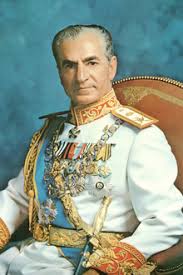
Shah of Iran
Afghanistan: In 1979, the Soviet Union invaded Afghanistan. America began supplying shoulder-fired Stinger anti-aircraft missiles to the Afghan Mujahideen fighters. These shifted the balance of the war to the Afghans, who brought down countless Soviet airplanes and helicopters.
Deprived of air supremacy, the Soviet army lost 14,453 killed and 53,753 wounded, and withdrew by 1989.
Americans congratulated themselves on their Realpolitic. But many of the Stingers remained in the hands of jihadists–who decided that America was now “The Great Satan.” One of those jihadists: Osama bin Laden.
60 MINUTES, 9/11 ATTACKS, ABC NEWS, ADOLF HITLER, AFGHANISTAN, AL QAEDA, BARACK OBAMA, BASHAR AL-ASSAD, CARL VON CLAUSEWITZ, CARLOS THE JACKAL, CBS NEWS, CHEMICAL WEAPONS, CHINA, CIA, CNN, FACEBOOK, HARRY TRUMAN, IMPERIAL HUBRIS, IRAN, ISLAM, ISLAMIC STATE OF IRAQ AND THE LEVANT, ISRAEL, MARCHING TOWARD HELL, MICHAEL SCHEUER, MUSLIMS, NAZI GERMANY, NBC NEWS, OSAMA BIN LADEN, RUSSIA, SOVIET UNION, SYRIA, TERRORISM, THE CHICAGO TIMES, THE CHICAGO TRIBUNE, THE LOS ANGELES TIMES, THE NEW YORK TIMES, THE WASHINGTON POST, TWITTER, USA TODAY, VIETNAM WAR, VLADIMIR PUTIN, WORLD WAR 1
In Bureaucracy, History, Military, Politics, Social commentary, Uncategorized on November 17, 2015 at 12:30 am
According to Micheal Scheuer, for all their ideological differences, Republicans and Democrats share one belief in common:
“An unquenchable ardor to have the United States intervene abroad in all places, situations and times.”
Scheuer is a 20-year CIA veteran–as well as an author, historian, foreign policy critic and political analyst.
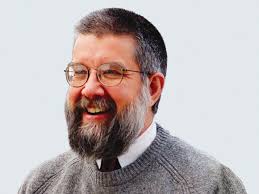
Michael Scheuer
From 1996 to 1999 he headed Alec Station, the CIA’s unit assigned to track Osama bin Laden at the agency’s Counterterrorism Center.
He is currently an adjunct professor at Georgetown University’s Center for Peace and Security Studies.
And he’s convinced that if America wants peace, it must learn to mind its own business.
He’s also the author of two seminal works on America’s fight against terrorism: Imperial Hubris: Why the West is Losing the War on Terror (2003) and Marching Toward Hell: America and Islam after Iraq (2008).
Scheuer says that Islamics don’t hate Americans because of “our way of life”–with its freedoms of speech and worship and its highly secular, commercialized culture.
Instead, Islamic hatred toward the United States stems from America’s six longstanding policies in the Middle East:
- U.S. support for apostate, corrupt, and tyrannical Muslim governments;
- U.S. and other Western troops on the Arabian Peninsula;
- U.S. support for Israel that keeps Palestinians in the Israelis’ thrall;
- U.S. pressure on Arab energy producers to keep oil prices low;
- U.S. occupation of Iraq and Afghanistan; and
- U.S. support for Russia, India, and China against their Muslim militants.
Scheuer contends that no amount of American propaganda will win “the hearts and minds” of Islamics who can “see, hear, experience, and hate” these policies firsthand.
But there is another danger facing America, says Scheuer, one that threatens “the core of our social and civil institutions.”
And in Marching Toward Hell he bluntly indicts that threat: The “profound and willful ignorance” of America’s “bipartisan governing elite.”

Scheuer defines this elite as “the inbred set of individuals who have influenced…drafted and conducted U.S. foreign policy” since 1973.
Within that group are:
- politicians
- journalists
- academics
- preachers
- civil servants
- military officers
- philanthropists.
“Some are Republicans, others Democrats; some are evangelicals, others atheists; some are militarists, others pacifists; some are purveyors of Western civilization, others are multiculturalists,” writes Scheuer.
But for all their political and/or philosophical differences, the members of this governing elite share one belief in common: “An unquenchable ardor to have the United States intervene abroad in all places, situations and times.”
And he warns that this “bipartisan governing elite” must radically change its policies–such as unconditional support for Israel and corrupt, tyrannical Muslim governments.
Otherwise, Americans will be locked in an endless “hot war” with the Islamic world.
On September 28, 2014, President Barack Obama provided an example of this “unquenchable ardor to have the United States intervene abroad in all places, situations and times.”
In an appearance on 60 Minutes, Obama spoke about his recent decision to commit American troops to fighting the Islamic State of Iraq and the Levant (ISIL).
Steve Kroft: I think everybody applauds the efforts that you’ve made and the size of the coalition that has been assembled.
But most of them are contributing money or training or policing the borders, not getting particularly close to the contact. It looks like once again we are leading the operation. We are carrying…
President Obama: Steve, that’s always the case. That’s always the case. America leads. We are the indispensable nation. We have capacity no one else has. Our military is the best in the history of the world.
And when trouble comes up anywhere in the world, they don’t call Beijing. They don’t call Moscow. They call us. That’s the deal.

President Barack Obama
Steve Kroft: I mean, it looks like we are doing 90%.
President Obama: Steve…when there’s an earthquake in Haiti, take a look at who’s leading the charge making sure Haiti can rebuild. That’s how we roll. And that’s what makes this America.
Scheuer believes that this mindset shouldn’t be what “makes this America.” And that the place to start is by not deploying troops to Syria.
More than 310,000 people have been killed in Syria’s uprising-turned-civil war. The conflict began on March 15, 2011, triggered by protests demanding political reforms and the ouster of dictator Bashar al-Assad.
Among the reasons why America should steer clear of the Syrian bloodbath:
First, since 1979, Syria has been listed by the U.S. State Department as a sponsor of terrorism.
Among the terrorist groups it supports are Hizbollah and Hamas. For years, Syria provided a safehouse in Damascus to Ilich Ramírez Sánchez–-the notorious terrorist better known as Carlos the Jackal.
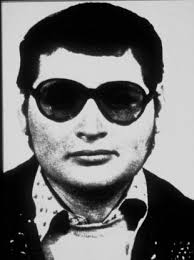
Ilich Ramírez Sánchez–“Carlos the Jackal”
Second, there are no “good Syrians” for the United States to support–-only murderers who have long served a tyrant and other murderers who now wish to become the next tyrant.
Third, the United States doesn’t know what it wants to do in Syria, other than “send a message.”
Carl von Clausewitz, the Prussian military theorist, wrote: “War is the continuation of state policy by other means.” But President Barack Obama hasn’t stated what his “state policy” is toward Syria–or what he intends to gain by attacking it.
Obama has said he’s “not after regime-change.” If true, that would leave Assad in power–-and free to go on killing those who resist his rule.
ABC NEWS, AL QAEDA, BASHAR AL-ASSAD, CBS NEWS, CNN, DR. JAMES COGBY, FACEBOOK, HEZBOLLAH, IRAQ WAR, ISLAM, NBC NEWS, NEOCONS, PRESIDENT BARACK OBAMA, PRESIDENT BILL CLINTON, Sarah Palin, SENATOR JOHN MCCAIN, SHIA MUSLIMS, SUNNI MUSLIMS, SYRIA, THE CHICAGO SUN-TIMES, THE CHICAGO TRIBUNE, THE LOS ANGELES TIMES, THE NEW YORK TIMES, THE WASHINGTON POST, TWITTER, USA TODAY, VIETNAM WAR
In Bureaucracy, History, Military, Politics, Social commentary on October 9, 2015 at 1:03 pm
Even confirmed imbeciles can sometimes get it right.
Or, in the case of former Alaska Governor Sarah Palin, partially right.
Speaking at the annual meeting of the Faith and Freedom Coalition on June 15, 2013, Palin said the United States should not intervene in Syria while Barack Obama holds the Presidency:
“Until we have a commander in chief who knows what he is doing… let Allah sort it out!”
Actually, she got it half-right: “Let Allah sort it out”–regardless of who is President.
But noted draft-dodger and former President Bill Clinton had different advice for President Obama.
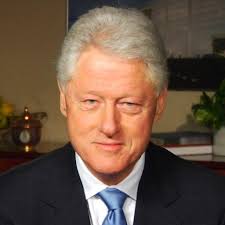
Bill Clinton
Clinton urged Obama to intervene in Syria:
“Suppose I had let a million people, two million people be refugees out of Kosovo, a couple hundred thousand people die, and they say, ‘You could have stopped this by dropping a few bombs. Why didn’t you do it?’ And I say, ‘Because the House of Representatives voted 75% against it’”?
“You look like a total wuss, and you would be.”
This was truly heady stuff, coming from a man who has proudly boasted how he outwitted his draft board and thus escaped military service in Vietnam.
Apparently, for Clinton, it’s OK for other Americans to risk their lives in pointless military misadventures on behalf of foreigners who hate us.
It’s just not OK for bullet-shy chicken-hawks like Bill Clinton to do it.
Clinton doesn’t seem aware, or concerned, that, in Syria, two of America’s most deadly enemies are now waging war–with each other.
Yes, it’s Hezbollah (Party of God) vs. Al-Qaeda (The Base).
Hezbollah is comprised of Shiite Muslims, who form a minority of Islamics. A sworn enemy of Israel, it has kidnapped scores of Americans suicidal enough to visit Lebanon and truck-bombed the Marine Barracks in Beirut in 1983, killing 299 Americans.
Flag of Hezbollah
Al-Qaeda, on the other hand, is made up of Sunni Muslims, who form the majority of that religion. It is intolerent of non-Sunni Muslims and has instigated violence against them. It denounces them as “takfirs”–heretics–and thus worthy of extermination.
Al Qaeda has attacked the mosques and gatherings of liberal Muslims, Shias, Sufis and other non-Sunnis. Examples of sectarian attacks include the Sadr City bombings, the 2004 Ashoura massacre and the April, 2007 Baghdad bombings.
Flag of Al Qaeda
In a June 1, 2013 column entitled, “Stop the Madness,” Dr. James J. Zogby, the founder and president of the Arab American Institute, warns:
“What began as a popular revolt against a brutal and ossified dictatorship, Syria has now degenerated into a bloody battlefield pitting sects and their regional allies against each other in a ‘dance unto death.’”
The Syrian conflict began on March 15, 2011, triggered by protests demanding political reforms and the ouster of dictator Bashar al-Assad.
Since then, more than 310,000 people have been killed in Syria’s uprising-turned-civil war.
“On the one side,” said Zogby, “is the Ba’ath regime, supported by Russia, Iran, Hizbullah, and elements in the Iraqi government.
“Arrayed against them are a host of Syrians (some of whom have defected from the armed forces and others who have formed militias receiving arms and support from a number of Arab states and Turkey) and a cast of thousands of foreign Sunni fighters (some of whom have affiliated with al Qaeda) who have entered Syria to wage war on behalf of their brethren.”
But Clinton isn’t the only one who has urged Obama to waste American lives in a cause that only Islamic terror groups and right-wing Americans find compelling.
Arizona U.S. Senator John McCain has repeatedly demanded that the Obama administration militarily intervene in Syria.
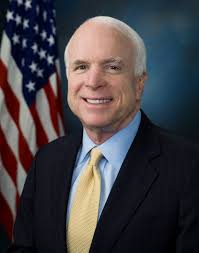
John McCain
He has demanded that the United States create a “no-fly” zone over Syria to deny Syrian dictator Bashar al Assad the use of his air force against his rebellious subjects.
McCain, unlike Clinton, did serve in Vietnam–as a U.S. Navy pilot. In October 1967, while on a bombing mission over Hanoi, he was shot down, seriously injured, and captured by the North Vietnamese. He remained a prisoner of war until his release in 1973.
Now McCain wants today’s young servicemen to have the same opportunities he did–to be blown out of the sky and taken prisoner for another worthless cause.
Just as Sarah Palin was partially correct in urging “let Allah sort it out,” so, too, was Clinton partially correct in his “total wuss” remarks.
President Obama can rightly be called a “total wuss”–but not for keeping Americans out of harm’s way in a war they have no stake in.
He can legitimately be called a “total wuss”–for surrendering to the demands of the same neocons who lied America into a needless 10-year war in Iraq.
But it’s not too late for Obama to recover from his mistake.
He can establish an all-volunteer brigade for those Americans willing to fight and possibly die in yet another pointless war. And he can offer to fly them to the border of Syria so they can carry out their self-appointed “conquer or die” mission.
If these armchair strategists refuse to put their own lives on the line in defense of a “cause” they claim to believe in, Obama should have the courage to brutally–and repeatedly–point this out.
60 MINUTES, 9/11 ATTACKS, ABC NEWS, ADOLF HITLER, AFGHANISTAN, AL QAEDA, BARACK OBAMA, BARCK OBAMA, BASHAR AL-ASSAD, CARL VON CLAUSEWITZ, CARLOS THE JACKAL, CBS NEWS, CHEMICAL WEAPONS, CHINA, CIA, CNN, DAVID BROOKS, DAVID CORN, FACEBOK, FACEBOOK, HARRY TRUMAN, IMPERIAL HUBRIS, IRAN, ISLAM, ISLAMIC STATE OF IRAQ AND THE LEVANT, ISRAEL, MARCHING TOWARD HELL, MICHAEL SCHEUER, MOTHER JONES MAGAZINE, MUSLIMS, NAZI GERMANY, NBC NEWS, OSAMA BIN LADEN, RUSSIA, SOVIET UNION, SYRIA, TERRORISM, THE CHICAGO TIMES, THE CHICAGO TRIBUNE, THE LOS ANGELES TIMES, THE NEW YORK TIMES, THE WASHINGTON POST, TWITTER, USA TODAY, VIETNAM WAR, VLADIMIR PUTIN, WORLD WAR 1
In Bureaucracy, History, Military, Politics, Social commentary on August 21, 2015 at 12:56 am
For America to avoid permanent military entanglements in the Middle East, it must learn to mind its own business.
So says Michael Scheuer, a 20-year CIA veteran who, from 1996 to 1999, headed Alec Station, the CIA’s unit assigned to track Osama bin Laden at the agency’s Counterterrorism Center.
He’s also the author of two seminal works on America’s fight against terrorism: Imperial Hubris: Why the West is Losing the War on Terror (2003) and Marching Toward Hell: America and Islam after Iraq (2008).
Scheuer has repeatedly warned: The United States must not deploy troops in Syria.
More than 310,000 people have been killed in Syria’s uprising-turned-civil war. The conflict began on March 15, 2011, triggered by protests demanding political reforms and the ouster of dictator Bashar al-Assad.
And many members of Congress are demanding that “we must do something” to stop all that killing.
Among the reasons why America should steer clear of the Syrian tar-baby:
The Assad regime is backed by–-among others–the Iranian-supported terrorist group, Hezbollah (Party of God). Its enemies include another terrorist group–Al Qaeda.
Hezbollah is comprised of Shiite Muslims. A sworn enemy of Israel, it has kidnapped scores of Americans suicidal enough to visit Lebanon and truck-bombed the Marine Barracks in Beirut in 1983, killing 299 Americans.
Flag of Hezbollah
Al-Qaeda, on the other hand, is made up of Sunni Muslims. Besides plotting 9/11, It has attacked the mosques and gatherings of liberal Muslims, Shias, Sufis and other non-Sunnis.
Examples of these sectarian attacks include the Sadr City bombings, the 2004 Ashoura massacre and the April, 2007 Baghdad bombings.
Flag of Al Qaeda
When your enemies are intent on killing each other, it’s best to stand aside and let them do it.
Intervening in Syria could produce unintended consequences for American forces–and make the United States a target for more Islamic terrorism.
An American military strike on Syrian government forces could lead the country’s dictator, Bashar al-Assad, to attack Israel–perhaps even with chemical weapons.
Assad could do this simply because he hates Jews–or to lure Israel into attacking Syria.
If that happened, the Islamic world–which lusts to destroy Israelis even more than “apostate” Muslims–would rally to Syria against the United States, Israel’s chief ally.
China and Russia are fully supporting the Assad dictatorship–-and the brutalities it commits against its own citizens.
This reflects badly on them–-not the United States.
And any move by the United States to directly attack the Assad regime could ignite an all-out war with Russia and/or China.
What happens if American and Russian forces start trading salvos? Or if Russian President Vladimir Putin orders an attack on Israel, in return for America’s attack on Russia’s ally, Syria?
It was exactly that scenario–Great Powers going to war over conflicts between their small-state allies–-that triggered World War l.
The United States cannot defeat the Islamic State of Iraq and the Levant (ISIL) through air power alone.
President Barack Obama authorized airstrikes against ISIL in September, 2014. Since then, the United States Air Force has dropped thousands of bombs on ISIL convoys.
This has not, however, destroyed ISIL. And its failure to do so has only led to demands by hawkish Republicans and Democrats for “boots on the ground.”
This was in fact predictable. Air power alone failed to secure victory over Nazi Germany during World War II and Vietnam during the Vietnam war. Nor did it “shock and awe” the Iraqis into surrendering during the 2003 Iraq war.
While Islamic nations like Syria and Iraq wage war within their own borders, they will lack the resources to launch attacks against the United States.
When Adolf Hitler invaded the Soviet Union in 1941, then-Senator Harry Truman said: “I hope the Russians kill lots of Nazis and vice versa.”
That should be America’s view whenever its sworn enemies start killing themselves off. Americans should welcome such self-slaughters, not become entrapped in them.
* * * * *
During his September 28, 2014 appearance on 60 Minutes, President Obama admitted that the mostly Sunni-Muslim Iraqi army had refused to combat the Sunni army of ISIL.
Then followed this exchange:
Steve Kroft: What happens if the Iraqis don’t fight or can’t fight?
President Obama: Well…
Steve Kroft: What’s the end game?
President Obama: I’m not going to speculate on failure at the moment. We’re just getting started. Let’s see how they do….
It was precisely such a mindset that led the United States, step by step, into the Vietnam quagmire.
As in the case of Vietnam, the United States lacks:
- Real or worthwhile allies in Iraq or Syria;
- A working knowledge of the peoples it wants to influence in either country;
- Clearly-defined goals that it seeks to accomplish in that region.
America rushed to disaster in Vietnam because its foreign policy elite felt it had to “do something” to fight Communism anywhere in the world.
And it is continuing to rush toward disaster in the Middle East because its foreign policy elite once again feel is must “do something.”
60 MINUTES, 9/11 ATTACKS, ABC NEWS, ADOLF HITLER, AFGHANISTAN, AL QAEDA, BARACK OBAMA, BARCK OBAMA, BASHAR AL-ASSAD, CARL VON CLAUSEWITZ, CARLOS THE JACKAL, CBS NEWS, CHEMICAL WEAPONS, CHINA, CIA, CNN, DAVID BROOKS, DAVID CORN, FACEBOK, FACEBOOK, HARRY TRUMAN, IMPERIAL HUBRIS, IRAN, ISLAM, ISLAMIC STATE OF IRAQ AND THE LEVANT, ISRAEL, MARCHING TOWARD HELL, MICHAEL SCHEUER, MOTHER JONES MAGAZINE, MUSLIMS, NAZI GERMANY, NBC NEWS, OSAMA BIN LADEN, RUSSIA, SOVIET UNION, SYRIA, TERRORISM, THE CHICAGO TIMES, THE CHICAGO TRIBUNE, THE LOS ANGELES TIMES, THE NEW YORK TIMES, THE WASHINGTON POST, TWITTER, USA TODAY, VIETNAM WAR, VLADIMIR PUTIN, WORLD WAR 1
In Bureaucracy, History, Military, Politics, Social commentary on August 20, 2015 at 12:10 am
The United States must learn to mind its own business. Otherwise, it will remain forever entangled in warfare–especially in the Middle East.
That’s the advice of former CIA agent Michael Scheuer.
Scheuer is a 20-year CIA veteran–as well as an author, historian, foreign policy critic and political analyst.
He is currently an adjunct professor at Georgetown University’s Center for Peace and Security Studies.
Michael Scheuer
He’s also the author of two seminal works on America’s fight against terrorism: Imperial Hubris: Why the West is Losing the War on Terror (2003) and Marching Toward Hell: America and Islam after Iraq (2008).
Scheuer says that Islamics don’t hate Americans because of “our way of life”–with its freedoms of speech and worship and its highly secular, commercialized culture.
Instead, Islamic hatred toward the United States stems from America’s six longstanding policies in the Middle East:
- U.S. support for apostate, corrupt, and tyrannical Muslim governments
- U.S. and other Western troops on the Arabian Peninsula
- U.S. support for Israel that keeps Palestinians in the Israelis’ thrall
- U.S. pressure on Arab energy producers to keep oil prices low
- U.S. occupation of Iraq and Afghanistan
- U.S. support for Russia, India, and China against their Muslim militants
Scheuer contends that no amount of American propaganda will win “the hearts and minds” of Islamics who can “see, hear, experience, and hate” these policies firsthand.
But there is another danger facing America, says Scheuer, one that threatens “the core of our social and civil institutions.”
And in Marching Toward Hell he bluntly indicts that threat: The “profound and willful ignorance” of America’s “bipartisan governing elite.”
Scheuer defines this elite as “the inbred set of individuals who have influenced…drafted and conducted U.S. foreign policy” since 1973.
Within that group are:
- politicians
- journalists
- academics
- preachers
- civil servants
- military officers
- philanthropists.
“Some are Republicans, others Democrats; some are evangelicals, others atheists; some are militarists, others pacifists; some are purveyors of Western civilization, others are multiculturalists,” writes Scheuer.
But for all their political and/or philosophical differences, the members of this governing elite share one belief in common: “An unquenchable ardor to have the United States intervene abroad in all places, situations and times.”
And he warns that this “bipartisan governing elite” must radically change its policies–such as unconditional support for Israel and corrupt, tyrannical Muslim governments.
Otherwise, Americans will be locked in an endless “hot war” with the Islamic world.
On September 28, 2014, President Barack Obama provided an example of this “unquenchable ardor to have the United States intervene abroad in all places, situations and times.”
In an appearance on 60 Minutes, Obama spoke about his recent decision to commit American troops to fighting the Islamic State of Iraq and the Levant (ISIL).
Steve Kroft: I think everybody applauds the efforts that you’ve made and the size of the coalition that has been assembled.
But most of them are contributing money or training or policing the borders, not getting particularly close to the contact. It looks like once again we are leading the operation. We are carrying…
President Obama: Steve, that’s always the case. That’s always the case. America leads. We are the indispensable nation. We have capacity no one else has. Our military is the best in the history of the world.
And when trouble comes up anywhere in the world, they don’t call Beijing. They don’t call Moscow. They call us. That’s the deal.
President Barack Obama
Steve Kroft: I mean, it looks like we are doing 90%.
President Obama: Steve…when there’s an earthquake in Haiti, take a look at who’s leading the charge making sure Haiti can rebuild. That’s how we roll. And that’s what makes this America.
Scheuer believes that this mindset shouldn’t be what “makes this America.” And that the place to start is by not deploying troops to Syria.
More than 310,000 people have been killed in Syria’s uprising-turned-civil war. The conflict began on March 15, 2011, triggered by protests demanding political reforms and the ouster of dictator Bashar al-Assad.
Among the reasons why America should steer clear of the Syrian bloodbath:
Since 1979, Syria has been listed by the U.S. State Department as a sponsor of terrorism.
Among the terrorist groups it supports are Hizbollah and Hamas. For years, Syria provided a safehouse in Damascus to Ilich Ramírez Sánchez–-the notorious terrorist better known as Carlos the Jackal.
Ilich Ramírez Sánchez–“Carlos the Jackal”
There are no “good Syrians” for the United States to support–-only murderers who have long served a tyrant and other murderers who now wish to become the next tyrant.
The United States doesn’t know what it wants to do in Syria, other than “send a message.”
Carl von Clausewitz, the Prussian military theorist, wrote: “War is the continuation of state policy by other means.” But President Barack Obama hasn’t stated what his “state policy” is toward Syria–or what he intends to gain by attacking it.
Obama has said he’s “not after regime-change.” If true, that would leave Assad in power–-and free to go on killing those who resist his rule.
60 MINUTES, 9/11 ATTACKS, ABC NEWS, ADOLF HITLER, AFGHANISTAN, AL QAEDA, BARACK OBAMA, BARCK OBAMA, BASHAR AL-ASSAD, CARL VON CLAUSEWITZ, CARLOS THE JACKAL, CBS NEWS, CHEMICAL WEAPONS, CHINA, CIA, CNN, DAVID BROOKS, DAVID CORN, FACEBOK, FACEBOOK, HARRY TRUMAN, IMPERIAL HUBRIS, IRAN, ISLAM, ISLAMIC STATE OF IRAQ AND THE LEVANT, ISRAEL, MARCHING TOWARD HELL, MICHAEL SCHEUER, MOTHER JONES MAGAZINE, MUSLIMS, NAZI GERMANY, NBC NEWS, OSAMA BIN LADEN, RUSSIA, SOVIET UNION, SYRIA, TERRORISM, THE CHICAGO TIMES, THE CHICAGO TRIBUNE, THE LOS ANGELES TIMES, THE NEW YORK TIMES, THE WASHINGTON POST, TWITTER, USA TODAY, VIETNAM WAR, VLADIMIR PUTIN, WORLD WAR 1
In Bureaucracy, History, Military, Politics, Social commentary on August 19, 2015 at 12:07 am
On April 16, the Syrian Observatory for Human Rights released some encouraging news for potential victims of Islamic terrorism–and those fighting it.

More than 310,000 people have been killed in Syria’s uprising-turned-civil war.
Put another way: More than 310,000 potential or actual Islamic terrorists will never again pose a threat to the United States or Western Europe.
The Syrian conflict began on March 15, 2011, triggered by protests demanding political reforms and the ouster of dictator Bashar al-Assad.
According to the Observatory, which is safely based in Britain:
- The total number of dead is now at 310,000.
- More than 37,000 rebels have been killed and over 46,000 from pro-Assad forces.
- At least 682 Hizbollah fighters.
- The true toll on both sides was likely much higher–by perhaps more than 60,000.
And who does the Syrian Observatory for Human Rights blame for this Islamic self-slaughter? Why, the West, of course.
According to its website:
“The silence of the International community for the war crimes and crimes against humanity committed in Syria encourages the criminals to kill more and more Syrian people because they have not found anyone that deter them from continuing their crimes that cause to wound more than 1500000 people; some of them with permanent disabilities, make hundreds of thousands children without parents, displace more than half of Syrian people and destroy infrastructure, private and public properties.”
310,000 people killed since the beginning of the Syrian Revolution | Syrian Observatory For Human Rights
Got that? “They have not found anyone that deter them from continuing their crimes”–as if it’s the duty of non-Muslims to bring civilized behavior to Islamics.
And why are all these murderers “continuing their crimes”? Because of a religious dispute within Islam that traces back to the fourth century.
Yes, it’s Sunni Muslims, who make up a majority of Islamics, versus Shiite Muslims, who comprise a minority.
Each group considers the other takfirs–that is, “apostates.” And, in Islam, being labeled an apostate can easily get you murdered.
But, according to the Syrian Observatory, it’s the duty of the infidel West to convince these murderers to stop slaughtering one another.
Think of it:
- In three years, 310,000 actual or potential enemies of Western Civilization have chosen to kill each other off.
- Additional thousands are certain to follow their example.
- And the United States cannot be held in any way responsible for it.
Meanwhile, Right-wing Republicans demand that the United States thrust itself into a conflict that doesn’t threaten or concern Americans in any way.
On August 14, conservative columnist David Brooks appeared on the “Week’s Roundup” segment of The PBS Newshour.
Speaking of the current Islamic self-slaughter in Iraq, he said:
“I do think that we abandoned Iraq too quickly, left too quickly, left a void in the Sunni areas, which ISIS was completely happy to fill.

David Brooks
“But more important–and this is a bigger indictment of the Obama administration–we did nothing about the Syrian civil war. And that created the biggest void.
“And that’s not necessarily [Senator] Hillary Clinton’s fault because she was arguing for a more aggressive policy. Nonetheless, we did nothing.
“Even today, our attacks on ISIS are paltry, and we have continue to do nothing. And there are strategic issues. There are just moral issues.
“Today, my newspaper [The New York Times] had a front-page story on just rape academies, this institutionalized rape.
“And the fact that we can stand by and do nothing while this is happening, to me, that’s an indictment of the sitting administration.”
David Corn, the Washington bureau chief for Mother Jones magazine, appeared on that Newshour segment. And he had a totally different take on the matter:
“…It wasn’t until after [President George W. Bush’s] invasion of Iraq that you had something called al-Qaida in Iraq. And that was the group that morphed into ISIS. So ISIS is a direct result of the war in Iraq right there….
“But then [Presidential candidate Jeb Bush] said what happened was that [President Barack] Obama and [then-Secretary of State] Hillary Clinton orchestrated this quick withdrawal after everything was secure.

David Corn
“Nothing was really secure in 2009-2010….But it was George W. Bush in December 2008 who created the agreement with [Iraqi] Prime Minister [Nouri] Maliki that said that U.S. troops had to be out by 2011.
“And then Obama didn’t renegotiate that. And there is a lot of question as to whether he could even have, given the political situation in Baghdad itself. So…Jeb Bush is totally rewriting this. And my question is, why is he even talking about Iraq?”
To which Brooks replied: “He wants to have an anti-terror foreign policy.”
According to Micheal Scheuer, for all their ideological differences, Republicans and Democrats share one belief in common: “An unquenchable ardor to have the United States intervene abroad in all places, situations and times.”
Scheuer is a 20-year CIA veteran–as well as an author, historian, foreign policy critic and political analyst.
Michael Scheuer
From 1996 to 1999 he headed Alec Station, the CIA’s unit assigned to track Osama bin Laden at the agency’s Counterterrorism Center.
And he’s convinced that if America wants peace, it must learn to mind its own business.


9/11 ATTACKS, ABC NEWS, ASSOCIATED PRESS, BARACK OBAMA, BIRTHERS, CBS NEWS, CENSORSHIP, CNN, CREDIBILITY GAP, DAVID BROOKS, DAVID HALBERSTAM, DONALD TRUMP, FACEBOOK, FRANK STANTON, FULL METAL JACKET, GEORGE MCGOVERN, HILLARY CLINTON, JOHN F. KENNEDY, LYNDON B. JOHNSON, MARK SHIELDS, MORLEY SAFER, NAVY SEALS, NBC NEWS, OSAMA BIN LADEN, PBS NEWSHOUR, PETER ARNETT, RICHARD NIXON, RONALD ZIEGLER, STANLEY KUBRICK, THE CHICAGO SUN-TIMES, THE CHICAGO TRIBUNE, THE HUFFINGTON POST, THE LOS ANGELES TIMES, THE NEW YORK TIMES, THE WALL STREET JOURNAL, THE WASHINGTON POST, TWITTER, VIETNAM WAR, WATERGATE
FROM “CREDIBILITY GAP” TO “ORWELL LAND”: PART ONE (OF THREE)
In Bureaucracy, History, Law, Law Enforcement, Military, Politics, Social commentary on September 28, 2016 at 12:09 am“Credibility gap” is a term that came into use during the mid-1960s to describe public and journalistic distrust of President Lyndon B. Johnson. In particular, the term was applied to his administration’s conduct of the Vietnam war.
It was, in short, a euphemism for accusing government officials of outright lying.
An example of the credibility gap in full swing appeared in Stanley Kubrick’s classic 1987 Vietnam war movie, Full Metal Jacket.
Vietnam was a war where military and political officials spewed a gung-ho version of constant American progress against a tough enemy.
And where civilian reporters like David Halberstam and Walter Cronkite saw–and labeled–the war as a brutal, wasteful and ultimately doomed effort.
Midway through the film, there’s an editorial meeting of The Sea Tiger, the official Marine newspaper.
Lieutenant Lockhart is presiding–and he is determined to give his superiors an endless stream of “all-systems-go” propaganda reports. He reads a series of stories that have been published:
Story #1: DIPLOMATS IN DUNGAREES–MARINE ENGINEERS LEND A HELPING HAND REBUILDING DONG PHUC VILLAGES.
LOCKHART: “Chili, “if we move Vietnamese, they are evacuees. If they come to us to be evacuated, they are refugees.”
Story #2: N.V.A. SOLDIER DESERTS AFTER READING PAMPHLETS.
LOCKHART: “A young North Vietnamese Army regular, who realized his side could not win the war, deserted from his unit after reading Open Arms program pamphlets.”
Story #3: NOT WHILE WE’RE EATING: N.V.A. LEARN MARINES ON A SEARCH AND DESTROY MISSION DON’T LIKE TO BE INTERRUPTED WHILE EATING CHOW.
LOCKHART: “‘Search and destroy.’ Uh, we have a new directive on this. In the future, in place of ‘search and destroy,’ substitute the phrase ‘sweep and clear.’ Got it?”
Lt. Lockhart, editor of The Sea Tiger
LOCKHART: “And, Joker–where’s the weenie?”
JOKER: “Sir?”
LOCKHART “The Kill, Joker. I mean, all that fire, the grunts must’ve hit something.”
JOKER: “Didn’t see ’em.”
LOCKHART: “Joker, I’ve told you, we run two basic stories here: Grunts who give half their pay to buy gooks toothbrushes and deodorants–winning of hearts and Minds–okay? And combat action that results in a kill–Winning the War. Now you must have seen blood trails … drag marks?”
JOKER: “It was raining, sir.”
LOCKHART: “Well, that’s why God passed the law of probability. Now rewrite it and give it a happy ending–say, uh, one kill. Make it a sapper or an officer. Grunts like reading about dead officers.”
JOKER: “Okay, an officer. How about a general?”
LOCKHART: “Joker, maybe you’d like our guys to read the paper and feel bad. I mean, in case you didn’t know it, this is not a particularly popular war. Now, it is our job to report the news that these why-are-we-here civilian newsmen ignore.”
So great became the divide between truth and lies during military “press briefings” that reporters started calling them “The Five O’clock Follies.” And even some soldiers took to wearing buttons that said: “Ambushed at Credibility Gap.”
Reporters who dared to write truthfully about the military’s crimes and failures–like David Halberstam of the New York Times and Peter Arnett of the Associated Press–were regarded as traitors by military and political officials.
In 1963, President John F. Kennedy became enraged by Halberstam’s reporting on the corruption of the South Vietnamese government. He pressured New York Times publisher Arthur Ochs Sulzberger to transfer Halberstam to another locale. Sulzberger politely refused–and then extended Halberstam’s stay in Vietnam another six months.
David Halberstam
In 1965, when CBS Correspondent Morley Safer filmed Marines setting fire to the village of Cam Ne with Zippo lighters, President Lyndon B. Johnson was similarly outraged.
He placed an early-morning call to CBS News President Frank Stanton and shouted: “Your boys shat on the American flag!”
The trail of deceit and attempted censorship continued right up to the end of the war–in April, 1975. That was when North Vietnamese forces invaded the South and quickly overwhelmed the incompetent defenses arrayed against them.
And while America was still bogged down in Vietnam, the Watergate scandal erupted on June 17, 1972.
Watergate Hotel
Members of the Nixon administration’s secret “Plumbers Unit” burglarized the offices of the Democratic National Committee at the Watergate Hotel.
Obsessed with re-electing Richard Nixon, they sought incriminating information to discredit U.S. Senator George McGovern, the Democrats’ nominee for President.
When the burglars were caught, President Richard M. Nixon and his topmost officials lied and stonewalled both reporters and investigators seeking the truth.
Nixon’s press secretary, Ronald Ziegler, repeatedly slandered the integrity of The Washington Post for its coverage of the mushrooming Watergate scandal. He called the Watergate break-in “a third-rate burglary” and attacked the Post for “shabby journalism.”
Finally, on April 17, 1973, Ziegler, announced at a press conference: “This is the operative statement. The others are inoperative.”
In short: We’ve been lying to you for the last 10 months. But now we’re telling the truth.
Like Vietnam, the Watergate scandal destroyed the reputations of many of its chief architects. Forty government officials were indicted or jailed.
Vietnam and Watergate were seminal events for Americans coming of age in the late 1960s and early 1970s. They taught an entire generation: Don’t trust the government. Its officials routinely lie, and their lies can be deadly.
Share this: