The outbreak of the Coronavirus has terrified Americans in ways not seen since the September 11, 2001 terror attacks on New York City and Washington, D.C.
For months after that horror, the two most profitable businesses in the country were video rental stores and food delivery services.
People stayed indoors—and at home, as if they believed this was the one place they would be safe. Everyone feared the next big terror attack—and didn’t want to be on hand when it exploded.
Restaurants, nightclubs, amusement parks and the airlines suffered accordingly.
World Trade Center – September 11, 2001
In the early 1980s, the AIDS epidemic had truly frightened millions of Americans. At first, no one knew what caused it—or, more importantly, how it was spread.
At first, gays were thought to be the only ones at risk. Then the list of potential victims kept expanding to
- Intravenous drug abusers
- Native Haitians
- Recipients of blood transfusions
- Those with multiple sex partners.
But with the passage of time—and the introduction of AIDS-fighting drugs that allowed victims to generally live ordinary lives—Americans’ fears gradually decreased. AIDS was seen as a disease like tuberculosis—dangerous, but unlikely to strike if you took reasonable precautions.
And now America is facing a new fear—that of the Coronavirus, otherwise known as COVID-19.
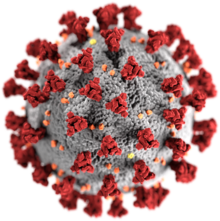
Coronavirus
In December 2019, a pneumonia outbreak was reported in Wuhan, China. By December 31, the outbreak was traced to a novel strain of Coronavirus.
Coronaviruses are a group of viruses that affect birds and mammals. In humans, Coronaviruses cause respiratory tract infections that are typically mild, such as the common cold. Coronaviruses can cause pneumonia and may cause bronchitis.
When the virus surfaced in China, Americans didn’t worry, as it seemed confined to Wuhan. But then it began spreading.
By January 30, 2020, 9,976 cases had been reported in at least 21 countries, including the first case in the United States.
At that time, United States health authorities repeatedly assured Americans they had nothing to worry about, that “we’re on it.”
For example: On January 28, Secretary of Health and Human Services Alex M. Azar II stated at a press conference: “We’ve been monitoring this virus and preparing a response since back in December, but it’s more than that. Preparing for these kinds of outbreaks is part of daily life at HHS and for America’s public health professionals.
“Preparedness is a day job around here. We are constantly making investments, training personnel at all levels, carrying out simulations and exercises, and sharing information.
“This commitment goes straight to the top: The President and I have been speaking regularly about this outbreak, and I have been speaking with the senior officials at HHS and the White House multiple times each day since the outbreak began to represent an international threat.”
This was strictly boilerplate rhetoric. What Azar didn’t say was this:
- Upon taking office as President, Donald Trump had gutted the permanent epidemic monitoring and command groups set up inside the White House: The National Security Council (NSC) and the Department of Homeland Security (DHS).
- The reason: Pathologically jealous of President Barack Obama, Trump has tried to destroy every vestige of Obama’s legacy as the first black President of the United States. And these disease-monitoring groups were set up by Obama following the Ebola outbreak in West Africa in 2014.
- Also: In the spring of 2018, Trump pushed Congress to cut $15 billion from national health spending—and cutting the global disease-fighting budgets of the CDC, National Security Council, Department of Homeland Security and the Department of Health and Human Services.
- The Federal $30 million fund for Complex Crises was eliminated as well.
- In April, 2018, National Security Adviser John Bolton forced Tom Bossert, director of the infectious disease unit at DHS, to resign—along with his entire team.
- In May, 2018, Trump ordered the NSC’s global health security unit shut down.
- Rear Admiral Timothy Ziemer, who headed the unit, was reassigned.
- Neither the NSC nor the DHS epidemic team has been replaced.
- The “advice” Trump has offered on the epidemic is misinformation—based on ignorance or willful lying. Example: “I think the [World Health Organization estimate of Coronavirus casualties of] 3.4 percent is really a false number—and this is just my hunch—but based on a lot of conversations with a lot of people that do this because a lot of people will have this and it’s very mild. They’ll get better very rapidly, they don’t even see a doctor, they don’t even call a doctor. You never hear about those people.”
Above all: Azar didn’t dare say that Trump doesn’t see Coronavirus as a threat to the lives of 300-plus American citizens. Instead, he sees it as a threat to his continued reign as President.
Trump has repeatedly “joked” about how great it would be if the United States—like China—had a “President-for-Life.” And he has accused those Democrats who impeached him for obstructing Congress and abuse of power as guilty of treason.
In the Coronavirus, Trump has met his match in an enemy he cannot bribe or intimidate. The tragedy is that untold numbers of Americans will pay the price for his ignorance and narcissism.

 Bureaucracybuster's Blog
2020 PRESIDENTIAL ELECTION, 9/11 ATTACKS, ABC NEWS, ABUSE OF POWER, AIDS, AIDS EPIDEMIC, AIRLINES, ALEX M. AZAR, ALTERNET, AMERICABLOG, AP, BABY BOOMER RESISTANCE, BARACK OBAMA, BUZZFEED, CARNIVAL CRUISE LINES, CBS NEWS, CENTERS FOR DISEASE CONTROL AND PREVENTION, CHARLES GEORGE GORDON, CHARLTON HESTON, CNN, CORONAVIRUS, CROOKS AND LIARS, CRUISE LINES, DAILY KOZ, DEPARTMENT OF HEALTH AND HUMAN SERVICES, DEPARTMENT OF HOMELAND SECURITY, DONALD TRUMP, DRUDGE RETORT, EBOLA, FACEBOOK, FIVETHIRTYEIGHT, HARPER’S MAGAZINE, IMPEACHMENT, JOHN BOLTON, KATHIE LEE GIFFORD, KHARTOUM (MOVIE), LAURENCE OLIVER, MASS HYSTERIA, MEDIA MATTERS, MOHAMMED, MOTHER JONES, MOVEON, MSNBC, NATIONAL SECURITY COUNCIL, NBC NEWS, NEWSWEEK, NPR, PBS NEWSHOUR, POLITICO, POLITICUSUSA, RAW STORY, REPUBLICANS, REUTERS, SALON, SEATTLE TIMES, SLATE, STOCK MARKET, SURGICAL MASKS, TALKING POINTS MEMO, THE ATLANTIC, THE CHICAGO SUN-TIMES, THE CHICAGO TRIBUNE, THE DAILY BEAST, THE DAILY BLOG, THE GUARDIAN, THE HILL, THE HUFFINGTON POST, THE LOS ANGELES TIMES, THE NATION, THE NEW REPUBLIC, THE NEW YORK TIMES, THE VILLAGE VOICE, THE WASHINGTON POST, THINKPROGRESS, TIME, TIMOTHY ZIEMER, TOM BOSSERT, TOM FRIEDMAN, TOURISM INDUSTRY, TRUTHDIG, TRUTHOUT, TWITTER, TWO POLITICAL JUNKIES, U.S. NEWS & WORLD REPORT, UNITED STATES HOUSE OF REPRESENTATIVES, UNITED STATES SENATE, UPI, USA TODAY, WONKETTE
DYING OF THE FEAR: PART TWO (END)
In Bureaucracy, Business, History, Politics, Social commentary on March 11, 2020 at 12:06 amThere’s an Arabian myth that offers a timely commentary on the hysteria surrounding the Coronavirus.
Mohammed is walking along the road from Medina to Mecca when he meets the Genie of Cholera.
“Where are you going, O Cursed One?” asks Mohammed.
“To Mecca, to kill 10,000 of the faithful,” replies the genie.
“All right,” says Mohammed. “See to it that you kill no more than 10,000.”
Six months later the two meet again—and Mohammed is furious: “You are a filthy liar!”
“Why do you say that?” demands the Genie of Cholera.
“Because when I reached Mecca, there were 30,000 dead, not the 10,000 you promised.”
“Oh, I kept by my word and killed only 10,000,” replies the genie. “But 20,000 more died of the fear.”
Fear is stalking the streets of the United States today.
Medical supply companies are rushing to turn out millions of surgical face masks—not for use by doctors but ordinary Americans.
Medical professionals warn that this will prove counter-productive for doctors and ordinary citizens.
Doctors and nurses need those masks when they’re performing surgery—or just coming in contact with patients who might be carrying the Coronavirus. They also wear them when examining patients suffering from routine illnesses.
Standard surgical masks are designed to protect against large, airborne droplets. They cannot protect against viruses. Their loose fit makes it possible for droplets to enter around the edges of the mask.
Standard surgical mask
The N-95 respirator mask is a tight-fitting upgrade that forces inhaled air toward the mask but not its edges. It can filter out 95% of particulates—but not viral particles.
Nor has panic-buying been restricted to face masks. Hand sanitizers, bottled water, toilet paper—even rubbing alcohol—have been snapped off shelves, leaving stores empty of them.
“It’s been nuts,” says Costco’s Chief Financial Officer, Richard A. Galanti.
Businesses that rely on regular patrons—such as restaurants and movie theaters—are especially suffering.
In New York City and San Francisco, businesses in the Chinese community have been hard-hit. It was in Wuhan, China, that the Coronavirus first erupted. Millions of people continue to identify it as a peculiarly Chinese ailment.
The industries most affected are those directly connected to tourism. Cruise ship lines have proven a ready source of contagion, bringing large numbers of people together in what can amount to a floating hothouse for viruses.
Cruise ships have played a major role in the outbreak. More than 700 cases have been linked to the Diamond Princess cruise ship, which was quarantined off the coast of Japan for two weeks. At least 21 more cases were confirmed aboard the Grand Princess cruise ship that docked in Oakland, Calif., on March 9.
Diamond Princess cruise ship
File:Diamond Princess (ship, 2004) and Port of Toba.jpg
The State Department and Centers for Disease Control and Prevention (CDC) have warned elderly and medically vulnerable Americans to avoid cruise ships until the outbreak ends. The CDC recommends that travelers “defer all cruise ship travel worldwide.”
During the 1980s, Kathie Lee Gifford appeared in a series of TV ads for Carnival Cruise Lines, singing an upbeat jingle:
This ode to pure hedonism has given way to a climate of sheer panic—among those still aboard cruise liners, those thinking about embarking on cruises and—most especially—among cruise shipping line companies.
A more updated version of Kathie Lee’s song could go:
And how is the cruise industry responding to the Coronavirus outbreak? By running more TV ads to sign up more passengers!
Perhaps it’s time for Americans to haul out their DVD players and watch Khartoum—a 1966 movie that offers a timely lesson in courage well-suited to the Coronavirus panic.
It’s based on the true story of British General Charles George Gordon (Charlton Heston) sent to the Sudan in 1884 to evacuate the city of Khartoum before it’s besieged by the army of a dervish fanatic called “The Madhi”—“The Expected One” (Laurence Oliver).
But the siege starts before Gordon can evacuate its 30,000 citizens.
The Madhi orders a bombardment, and frightened townspeople rush into the public square—where Gordon is calmly seated on a camel, holding a Sudanese girl.
As they look up expectedly for guidance, Gordon gently says to the little girl: “I don’t ask you to be unafraid, merely to act unafraid.”
Americans would do well to remember those words—and act on them.
Share this: