Posts Tagged ‘THE WASHINGTON POST’
2016 REPUBLICAN CONVENTION, ABC NEWS, AFFORDABLE CARE ACT (ACA), BARACK OBAMA, BILL CLINTON, CBS NEWS, CHRIS MATTHEWS, CNN, CUBAN MISSILE CRISIS, DEBT CEILING, DONALD TRUMP, EXTORTION, FACEBOOK, HARDBALL, JOHN F. KENNEDY, JUDGE MERRICK GARLAND, MAFIA, MSNBC, NBC NEWS, NEWT GINGRICH, NICCOLO MACHIAVELLI, OBAMACARE, Racketeer Influenced Corrupt Organizations (RICO) Act, REPUBLICANS, RICHARD WOLFFE, ROBERT PAYNE, THE CHICAGO SUN-TIMES, THE CHICAGO TRIBUNE, THE LIFE AND DEATH OF ADOLF HITLER, THE LOS ANGELES TIMES, THE NEW YORK TIMES, THE PRINCE, THE WALL STREET JOURNAL, THE WASHINGTON POST, TWITTER, U.S. HOUSE OF REPRESENTATIVES, U.S. JUSTICE DEPARTMENT, U.S. SENATE, U.S. SENATOR MITCH MCCONNELL, U.S. SUPREME COURT, USA PATRIOT ACT, WARREN BUFFETT
In Bureaucracy, History, Law, Law Enforcement, Politics, Social commentary on March 22, 2016 at 12:01 am
On March 16, Donald Trump, the front-runner for the Republican Presidential nomination, issued a warning to his fellow Right-wingers: If he didn’t win the GOP nomination at the convention in July, his supporters would literally riot.
“I think we’ll win before getting to the convention. But I can tell you if we didn’t, if we’re 20 votes short or if we’re 100 short and we’re at 1,100 and somebody else is at 500 or 400…I don’t think you can say that we don’t get it automatically. I think you’d have riots.
“I think you would see problems like you’ve never seen before. I think bad things would happen. I really do. I wouldn’t lead it, but I think bad things would happen.”
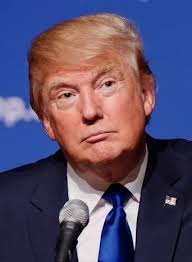
Donald Trump
An NBC reporter summed it up as follows: “As Trump indicated, there is a very real possibility he might lose the nomination if he wins only a plurality of delegates thanks to party rules that allow delegates to support different candidates after the initial ballot.
“In that context, the message to Republicans was clear on [March 16]: Nice convention you got there, shame if something happened to it.”
Anyone who’s ever watched a Mafia movie has heard similar threats: “You really ought to think about paying that protection money. Nice family you got–it would be a shame if anything happened to ’em.”
Paul Ryan, Republican Speaker of the House of Representatives, was quick to respond.
On March 17, he said that it was “unacceptable” for Trump to suggest there would be rioting if he was not chosen as the Republican nominee.
“Nobody should say such things in my opinion because to even address or hint to violence is unacceptable.”
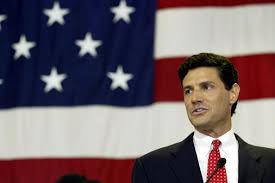
Paul Ryan
And Ohio governor and Republican presidential candidate John Kasich chinned in. “Leaders don’t imply violence,” Kasich told “Face the Nation” on March 20.
“When he says that there could be riots, that’s inappropriate. I think you understand that, okay? Secondly, while we have our differences and disagreements, we’re Americans. Americans don’t say, ‘Let’s take to the streets and have violence.’

John Kasich
“I don’t even want to use the word ‘riots’ or ‘violence.’ That’s inappropriate. Our kids are watching. Now…that doesn’t mean I’m not running a positive campaign, but those kind of comments are way out of bounds. Frankly, they’re outrageous,” said Kasich.”
Yet, for all their public outrage, Republicans are no strangers to the uses of extortion and threats. Their tactics are straight out of the playbook of Adolf Hitler.
Robert Payne, author of the bestselling biography, The Life and Death of Adolf Hitler (1973), described the “negotiating” style of the Nazi dictator thus:
“Although Hitler prized his own talents as a negotiator, a man always capable of striking a good bargain, he was totally lacking in finesse. He was incapable of bargaining. He was like a man who goes up to a fruit peddler and threatens to blow his brains out if he does not sell his applies at the lowest possible price.”
In 1994, Newt Gingrich, then Speaker of the House of Representatives, shut down the Federal Government. Officially, the reason was a budget impasse with President Bill Clinton.
Unofficially–and in reality–the reason was altogether different: Clinton had forced him to sit in the back of Air Force One on a trip to Israel for the funeral of former prime minister Yitzhak Rabin.
“This is petty,” Gingrich confessed to startled reporters. “I’m going to say up front it’s petty, But I think it’s human.
“When you land at Andrews [Air Force Base, in Washington, D.C.] and you’ve been on the plane for 25 hours and nobody has talked to you and they ask you to get off by the back ramp….You just wonder, where is their sense of manners, where is their sense of courtesy?”
Gingrich’s childish verbal tirade was a public relations disaster for the Republicans. “Cry Baby,” screamed the New York Daily News, next to a picture of Gingrich in a diaper.

When House Democrats brought a poster-sized image of the cartoon onto the floor, the Republican majority forced them to remove it.
But the damage was done, and Republicans paid a fearful price at the polls for the shutdown and Gingrich’s candor about the reason for it, losing heavily in the House and Senate.
Still, the Republicans continued their policy of my-way-or-else.
In April, 2011, the United States government almost shut down over Republican demands about subsidized pap smears.
During a late-night White House meeting with President Barack Obama and key Congressional leaders, Republican House Speaker John Boehner made this threat:
His conference would not approve funding for the government if any money were allowed to flow to Planned Parenthood through Title X legislation.
Facing an April 8 deadline, negotiators worked day and night to strike a compromise–and finally reached one.
Three months later–on July 9–Republican extortionists again threatened the Nation with financial ruin and international disgrace unless their demands were met.

Sign of The Black Hand
President Obama had offered to make historic cuts in the federal government and the social safety net–on which millions of Americans depend for their most basic needs.
But House Speaker John Boehner rejected that offer. He would not agree to the tax increases that Democrats wanted to impose on the wealthiest 1% as part of the bargain.

John Boehner
ABC NEWS, ALLEN DULLES, BRIDGE OF SPIES, CBS NEWS, CNN, COLD WAR, DWIGHT D. EISENHOWER, EAST GERMANY, FACEBOOK, FRANCIS GARY POWERS, JAMES DONOVAN, JOHN F. KENNEDY, JOSEPH MCCARTHY, KGB, NBC NEWS, RED SCARE, RUDOLPH ABEL, SOVIET UNION, STASI, STEVEN SPIELBERG, THE CHICAGO SUN-TIMES, THE CHICAGO TRIBUNE, THE LOS ANGELES TIMES, THE NEW YORK TIMES, THE WALL STREET JOURNAL, THE WASHINGTON POST, TOM HANKS, TWITTER, U-2
In Bureaucracy, Entertainment, History, Law, Law Enforcement, Military, Politics, Social commentary on March 21, 2016 at 12:01 am
“Bridge of Spies” vividly recaptures a now-forgotten time in American history.
It was the time of “the Cold War.” A time when:
- America was almost universally seen as “The Good Guy,” in contrast to “The Bad Guy” of the Soviet Union;
- The United States and the Soviet Union held each other at bay with arsenals of nuclear weapons;
- Wisconsin Senator Joseph R. McCarthy terrorized the nation, accusing anyone who disagreed with him of being a Communist–and leaving ruined lives in his wake;
- American TVs blared commercials warning that Soviet Premier Nikita Khrushchev had boasted: “We will bury you”; and
- Children and teenagers were taught in school that they could survive a nuclear attack through “duck and cover” drills. They were instructed to keep their bathtubs filled with water for safe drinking, in the event of a Soviet nuclear strike.
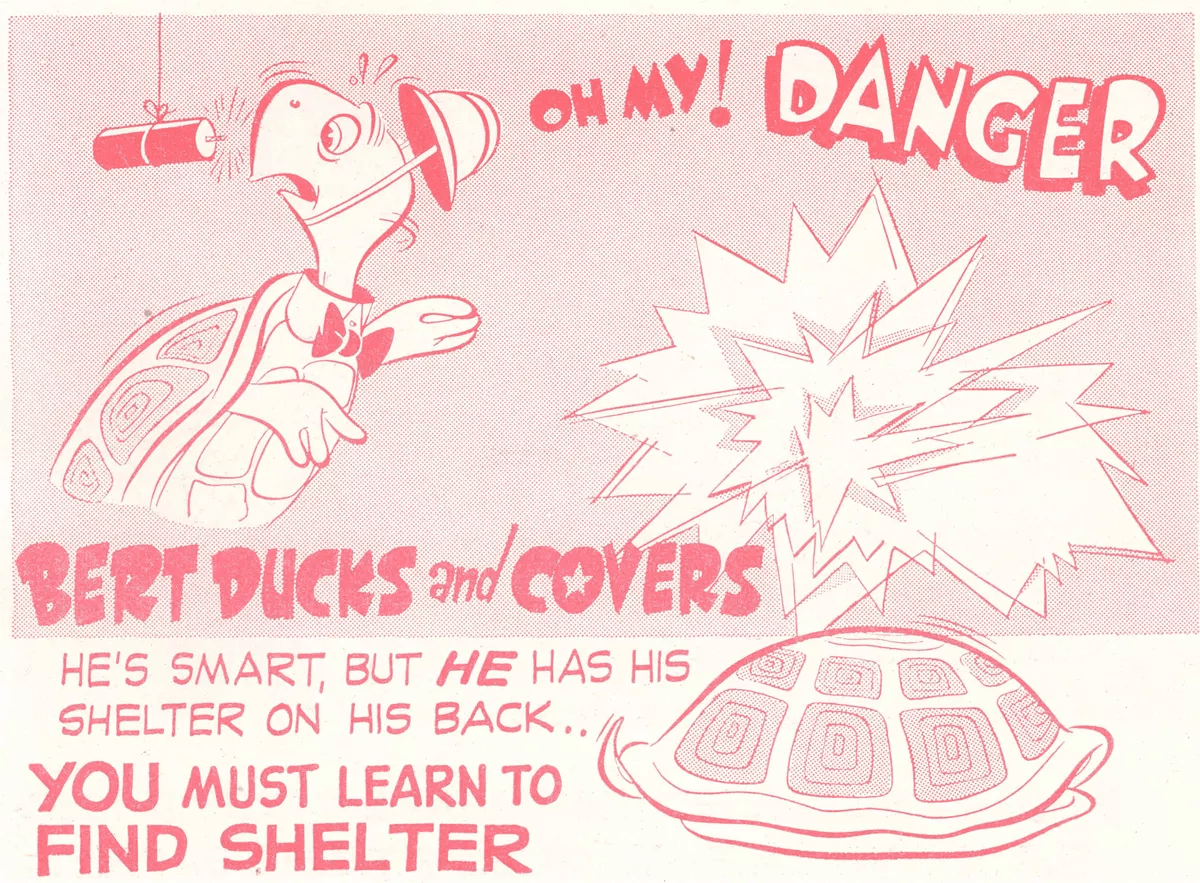
Bert the Turtle teaches schoolchildren to “Duck and Cover”
Yet even in this poisonous atmosphere of fear and denunciation, some men stood out as heroes–simply by holding fast to their consciences.
One of these was a New York insurance attorney named James B. Donovan (played by Tom Hanks). Asked by the Justice Department to defend arrested Soviet spy Rudolph Abel (Mark Rylance) Donovan did what no one expected.
He gave Abel a truly vigorous defense, arguing that the evidence used to convict him was the legally-tainted product of an invalid search warrant.
Upon Abel’s conviction and sentencing to 45 years’ imprisonment, Donovan again shocked the political and legal communities by appealing the case to the Supreme Court.
Donovan argued that Constitutional protections should apply to everyone–including non-Americans–tried in American courts. To do less made a mockery of the very freedoms we claimed to champion.
He lost by a vote of 5-4. But the arguments he made would resurface 50 years later when al-Qaeda suspects were hauled into American courts.

James B. Donovan
In 1961, Donovan was again called upon to render service by a Federal agency–this time the CIA. It wanted his help in negotiating the release of its spy, Francis Gary Powers, shot down over the Soviet Union in 1960 while flying a high-altitude U-2 spy plane.
Throughout “Bridge of Spies,” audiences learn some unsettling truths about how the American government–and governments generally– actually operate.
The first three of these were outlined in Part one of this series:
Truth #1: Appearance counts for more than reality.
Truth #2: Individual conscience can wreck the best-laid plans of government.
Truth #3: High-ranking government officials will ask citizens to take risks they themselves refuse to take.
Now for the remaining truths revealed in this movie.
Truth #4: Appeals to fear often prevail when appeals to humanity are ignored.
After crossing into East Germany, Donovan enters into negotiations with Wolfgang Vogel, a lawyer representing the East German government.
Vogel offers to exchange Frederic Pryor, an American economics graduate student seized by the East German secret police, for Abel. Donovan replies this is a deal-breaker; the United States (which is never mentioned during the negotiations) wants Powers, not Pryor.
Nevertheless, Donovan is equally concerned for Pryor, and adds him to the list of hostages to be released in return for Abel.
Then a new complication arises: The East German government that holds Pryor threatens to pull out. claiming to be insulted because Donovan did not inform them that the USSR was a party to the negotiation.
His reasoned, legal arguments having failed, Donovan resorts to a threat. He conveys a warning to the president of East Germany:
Abel has not yet revealed any Soviet secrets. But if this deal fails, he may well do so to earn favors from the United States government. And, in that case, the Soviets will blame you–Erich Honecker, the president of East Germany–for the resulting damage.
Where arguments based on humanity have failed, this one–based on fear–works. A prisoner-exchange is arranged.
Truth #5: Personal loyalty can supersede bureaucratic inventions.
On February 10, 1962, Donovan, Abel and several CIA agents arrive at the Glienicke Bridge, which connects East and West Germany. The Soviets have Powers, but not Pryor–who is to be released at Checkpoint Charlie, a crossing point between East and West Berlin.
Glienicke Bridge, the “Bridge of Spies”
The CIA agent in charge of the American delegation tells Abel he can cross into East Germany, even though Pryor has not been released.
But Abel has learned that Donovan has negotiated the release of not only Powers but Pryor. Out of loyalty to the man who has vigorously defended him, he waits on his side of the bridge until word arrives that Pryor has been released.
Then Abel crosses into East Germany while Powers crosses into the Western sector.
Donovan returns home. Before flying off to West Germany, he had told his wife he was going on a fishing trip in Scotland.
His wife and children learn the truth about the risks he ran and the success he attained only when a television newscast breaks the news:
Francis Gary Powers has been returned to the United States. And the man responsible is James Donovan, once the most reviled man in America for having defended a notorious Soviet spy.
ABC NEWS, ALLEN DULLES, BRIDGE OF SPIES, CBS NEWS, CIA, CNN, COLD WAR, DWIGHT D. EISENHOWER, EAST GERMANY, FACEBOOK, FRANCIS GARY POWERS, JOHN F. KENNEDY, JOSEPH MCCARTHY, KGB, NBC NEWS, RED SCARE, RUDOLPH ABEL, SOVIET UNION, STASI, STEVEN SPIELBERG, THE CHICAGO SUN-TIMES, THE CHICAGO TRIBUNE, THE LOS ANGELES TIMES, THE NEW YORK TIMES, THE WALL STREET JOURNAL, THE WASHINGTON POST, TOM HANKS, TWITTER, U-2
In Bureaucracy, Entertainment, History, Law, Law Enforcement, Military, Politics, Social commentary on March 18, 2016 at 12:01 am
Steven Spielberg’s new movie, “Bridge of Spies,” is that rarity among films: An intelligent mixture of history and drama, stripped of gratuitous sex and violence.
It’s also a film that accurately reveals unsettling truths about how government intelligence agencies really operate.

Truth #1: Appearance counts for more than reality.
The movie opens with the FBI’s arrest of KGB spy Rudolph Abel (Mark Rylance). The evidence against him is overwhelming. This–plus the “Red Scare” climate of 1957–will guarantee his conviction.
But the Eisenhower administration doesn’t want the upcoming trial to be seen as a hangman’s court. It must have the appearance of a fair proceeding.
So the Justice Department (through the Brooklyn Bar Association) asks a New York insurance attorney named James B. Donovan (Tom Hanks) to take on Abel’s defense. He’s expected to make a reasonably competent effort but not go all out on behalf of his client.
Truth #2: Individual conscience can wreck the best-laid plans of government.
Donovan has never handled a spy case before. And he has no delusions that Abel isn’t the spy he’s charged with being. But he’s determined to give Abel the same committed defense he would give to any other client.

Rudolph Abel (Mark Rylance) and James Donovan (Tom Hanks) in court
This comes as a shock to the prosecutors, the judge, his law firm and even his family.
A CIA agent approaches Donovan in a nearly deserted restaurant and asks him to reveal any secrets that might help win Abel’s conviction.
Donovan replies: “This conversation isn’t happening.”
“No, of course not,” replies the CIA agent, assuming Donovan is agreeing to keep the overture secret.
“No, I mean this conversation isn’t happening,” angrily says Donovan, who leaves the agent fuming.
Donovan becomes a pariah; his mailbox is stuffed with hate mail and one night a would-be drive-by killer riddles his house with bullets.
Abel is convicted and sentenced to 45 years’ imprisonment. But Donovan–again shocking everyone he knows–pursues an appeal up to the Supreme Court.
He argues that the evidence against Abel is tainted by an invalid search warrant. No American citizen could be convicted under such circumstances. And the Constitutional protections that hold true for Americans should hold equally true for non-Americans charged with crimes in American courts.
Donovan’s arguments will be heard a half-century later, when al-Qaeda suspects are hauled before American courts.
He puts on an impressive case on Abel’s behalf, but loses 5-4 at the Supreme Court.
That seems to be the end of Donovan’s relationship with Abel. But events soon dictate otherwise.
Before the judge could pronounce a death sentence on Abel, Donovan had argued that this might be a mistake. The day might come, he told the judge, when an American spy might fall into Soviet hands.
And then the United States would need to swap Abel to secure the release of its own agent.
The judge, moved by that argument, had given Abel a lengthy prison term instead.
That day comes sooner than anyone in the Pentagon expects.
On May 1, 1960, Francis Gary Powers, a former Air Force pilot, is flying a high-altitude U-2 plane above the Soviet Union for the CIA. The plane is equipped with state-of-the-art cameras, and Powers intends to photograph military sites and other important complexes.
Suddenly, a surface-to-air missile slams into the plane. Powers ejects before it crashes, but fails to commit suicide with a poison pin concealed in a phony silver dollar. He’s captured by the KGB and brutally interrogated, but maintains his silence.
At about the same time, Frederic Pryor, an American economics graduate student living in West Germany, visits his German girlfriend living in Soviet-dominated East Germany.
The Soviets are starting to build their infamous Berlin Wall, which will stop the flow of refugees from East to West. Pryor tries to bring his girlfriend and her father into West Berlin, but he’s stopped and arrested by agents of Stasi, the East German police, who accuse him of being a spy.
Meanwhile, the Soviet Union wants its spy, Abel, returned, before he can spell its secrets. In turn, the new Kennedy administration wants Powers returned, before he can be made to spill American secrets.
Truth #3: High-ranking government officials will ask citizens to take risks they themselves refuse to take.
In 1961, Donovan is once again sought out by the American government–this time by no less than CIA Director Allen Dulles.
And he’s asked to go where no official American representative can go–East Germany. His new assignment: Negotiate the exchange of Powers for Abel.
The CIA wants its spy back. And it’s willing to send Donovan into East Germany to negotiate his release. But it’s not willing to back him up if he’s arrested by Stasi, the notorious East German secret police.
The fiction must be maintained that Donovan is acting strictly on his own behalf, not that of the United States.
In such a case, Donovan could spend the rest of his life in a Communist prison cell.
2016 PRESIDENTIAL RACE, ABC NEWS, ABRAHAM LINCOLN, ALTERNET, AMERICABLOG, AP, BABY BOOMER RESISTANCE, BARACK OBAMA, BBC, BLOOMBERG NEWS, BUZZFEED, CBS NEWS, CIVIL RIGHTS ACT OF 1964, CIVIL WAR, CNN, CROOKS AND LIARS, DAILY KOS, DANIEL DAY-LEWIS, DONALD TRUMP, EMANCIPATION PROCLAMATION, FACEBOOK, FIVETHIRTYEIGHT, HARPER’S MAGAZINE, HUFFINGTON POST, LYNDON B. JOHNSON, MEDIA MATTERS, MITT ROMNEY, MOTHER JONES, MOVEON, MOVIES, MSNBC, NBC NEWS, NEW REPUBLIC, NEWSDAY, NEWSWEEK, NPR, PBS NEWSHOUR, POLITICO, POLITICUSUSA, RAW STORY, REUTERS, SALON, SEATTLE TIMES, SLATE, SLAVERY, STEVEN SPIELBERG, TALKING POINTS MEMO, THE ATLANTIC, THE CHICAGO SUN-TIMES, THE CHICAGO TRIBUNE, THE DAILY BEAST, THE DAILY BLOG, THE GUARDIAN, THE HILL, THE HUFFINGTON POST, THE INTERCEPT, THE LOS ANGELES TIMES, THE NATION, THE NEW REPUBLIC, THE NEW YORK TIMES, THE NEW YORKER, THE VILLAGE VOICE, THE WASHINGTON POST, THINKPROGRESS, THIRTEENTH AMENDMENT, TIME, TRUTHDIG, TRUTHOUT, TWITTER, U.S. NEWS & WORLD REPORT, UPI, VOTER ID LAWS, VOTING RIGHTS ACT OF 1965
In Bureaucracy, Entertainment, History, Law, Military, Politics, Social commentary on March 17, 2016 at 12:36 pm
Steven Spielberg’s Lincoln is more than a mesmerizing history lesson.
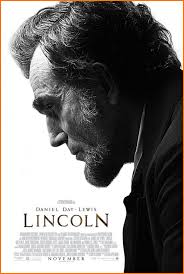
It’s a timely reminder that racism and repression are not confined to any one period or political party.
At the heart of the film: Abraham Lincoln (Daniel Day-Lewis) wants to win ratification of what will be the Thirteenth Amendment to the United States Constitution. An amendment that will forever ban slavery.
True, Lincoln, in 1862, had issued the Emancipation Proclamation. This—in theory—freed slaves held in the Confederate states that had seceded from the Union in 1861.
But Lincoln regards this as a temporary wartime measure. He fears that once the war ends, the Supreme Court may rule the Proclamation unconstitutional. This might allow Southerners to continue practicing slavery, even after losing the war.
To prevent this, Congress must pass an anti-slavery amendment.
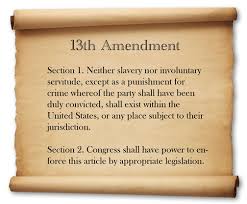
But winning Congressional passage of such an amendment won’t be easy.
The Senate had ratified its passage in 1864. But the amendment must secure approval from the House of Representatives to become law.
And the House is filled with men–there are no women menmbers during the 19th century–who seethe with hostility.
Some are hostile to Lincoln personally. One of them dubs him a dictator–Abraham Africanus.” Another accuses him of shifting his positions for the sake of expediency.
Other members–white men all–are hostile to the idea of “equality between the races.” To them, ending slavery means opening the door to interracial marriage–especially marriage between black men and white women.
Perhaps even worse, it means possibly giving blacks–or women–the the right to vote.
In fact, the possibility that blacks might win voting rights arises early in the movie. Lincoln is speaking to a couple of black Union soldiers, and one of them is unafraid to voice his discontent. He’s upset that black soldiers are paid less than white ones–and that they’re led only by white officers.
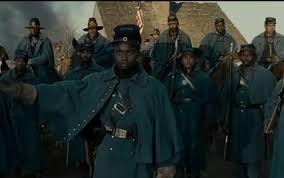
He says that, in time, maybe this will change. Maybe, in 100 years, he guesses, blacks will get the right to vote.
(To the shame of all Americans, that’s how long it will eventually take. Not until the passage of the Voting Rights Act of 1965 will blacks be guaranteed legal protection against discriminatory voting practices.)
To understand the Congressional debate over the Thirteenth Amendment, it’s necessary to remember this: In Lincoln’s time, the Republicans were the party of progressives.
The party was founded on an anti-slavery platform. Its members were thus reviled as “Black Republicans.” And until the 1960s, the South was solidly Democratic.
Democrats were the ones defending the status quo–slavery–and opposing freed blacks in the South of Reconstruction and long afterward.
In short, in the 18th century, Democrats in the South acted as Republicans do now. The South went Republican only after a Democratic President–Lyndon B. Johnson–rammed the Civil Rights Act of 1964 through Congress.
Watching this re-enactment of the 1865 debate in Lincoln is like watching the current Presidential campaign. The same mentalities are at work:
-
Those (in this case, slave-owners) who already have a great deal want to gain even more at the expense of others.
-
Those (slaves and freed blacks) who have little strive to gain more or at least hang onto what they have.
-
Those who defend the privileged wealthy refuse to allow their “social inferiors” to enjoy similar privileges (such as the right to vote).
During the 2012 Presidential race, Republicans tried to bar those likely to vote for President Barack Obama from getting into the voting booth. But their bogus “voter ID” restrictions were struck down in courts across the nation.
Listening to those opposing the amendment, one is reminded of Mitt Romney’s infamous comments about the “47%”:
“Well, there are 47% of the people who will vote for the president no matter what….
“Who are dependent upon government, who believe that–that they are victims, who believe that government has a responsibility to care for them, who believe that they’re entitled to healthcare, to food, to housing, to you name it. But that’s–it’s an entitlement. And the government should give it to them.”
Put another way: “Who says people have a right to obtain medical care, food and housing? If they can’t inherit unearned wealth the way I did, screw them.”
In the end, it’s Abraham Lincoln who has the final word–and leaves his nation the better for it. Through diplomacy and backroom dealings (trading political offices for votes) he wins passage of the anti-slavery amendment.
The ownership of human chattel is finally an ugly memory of the American past.
The movie closes with a historically-correct tribute to Lincoln’s generosity toward those who opposed him–in Congress and on the battlefield. It occurs during Lincoln’s Second Inaugural Address:
“With malice toward none, with charity for all….To bind up the nation’s wounds. To care for him who shall have bourne the battle, and for his widow and his orphan….”
This ending presents a vivid philosophical contrast with the increasingly mean-spirited rhetoric and policies of 2016’s Republican candidates for President–especially those of Donald Trump.
Watching Lincoln, you realize how incredibly lucky America was as a nation to have had such leadership when it was most urgently needed.
.
ABC NEWS, CBS NEWS, CENSORSHIP, CLIMATE CHANGE, CNN, FACEBOOK, FLOODING, FLORIDA, FLORIDA CENTER FOR INVESTIGATIVE REPORTING, FLORIDA DEPARTMENT OF ENVIRONMENTAL PROTECTION, GLOBAL WARMING, LYING, MIGRATIONS, NATIONAL OCEANIC AND ATMOSPHERIC ADMINISTRATION, NBC NEWS, REPUBLICANS, RICK SCOTT, THE CHICAGO SUN-TIMES, THE CHICAGO TRIBUNE, THE LOS ANGELES TIMES, THE NEW YORK TIMES, THE WASHINGTON POST, TWITTER
In Bureaucracy, Business, History, Politics, Social commentary on March 16, 2016 at 2:53 am
Politicians can lie to voters. And voters can lie to themselves. But Nature can never be fooled.
By 2100, more than 13 million Americans living along the coast could be displaced by rising sea levels. And these, in turn, are the result of melting polar ice caps–courtesy of a Republican-denied event called climate change.
At Ground Zero of this oncoming catastrophe lies Florida, Its densely populated coastal locales could see up to 6.06 million residents displaced if sea levels rise six feet.
“As the sea level rises, coastal parts of Florida will be inundated,” warns University of Georgia geography professor Deepak Mishra. “Sea level rise is the phenomenon that makes climate change a reality for millions of people worldwide. The sheer volume of people at risk of displacement and becoming climate refugees is the main threat.”
Mishra was one of several researchers for the United States National Oceanic and Atmospheric Administration (NOAA) who assessed sea level change scenarios by 2100 for coastal states along with population growth trends and projections in high-risk areas.
The number of people who could be displaced might be three times larger than previous estimates.
“These results suggest that the absence of protective measures could lead to U.S. population movements of a magnitude similar to the 20th century Great Migration of southern African-Americans,” the researchers wrote in the journal Nature Climate Change.
This referred to the exodus of more than six million blacks from the rural South to cities of the North, Midwest and West from 1910 until 1970.
More than a quarter of residents of major urban centers such as Miami and New Orleans could face coastal flooding. Three counties could see the displacement of 80 percent of their population:
- Florida’s Monroe County, site of the Florida Keys;
- Hyde County, North Carolina; and
- Tyrrell County, North Carolina.
In Florida, climate change reality is about to slam into Right-wing denial and censorship.
Rick Scott, its Republican Governor, doesn’t believe in “climate change’ or “global warming.” Asked by a reporter for his views on the subject, he fobbed off the question with, “Well, I’m not a scientist.”
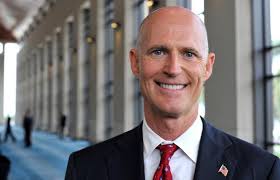
Smiling at the coming apocalypse: Rick Scott
Accordingly, he has ordered members of the Florida Department of Environmental Protection (DEP) to stop using those terms “global warming” and “climate change” in official correspondence.
DEP has a $1.4 billion budget and 3,200 employees, but is forbidden to speak openly about perhaps the foremost danger now facing Floridians.
According to the Florida Center for Investigative Reporting (FCIR) the policy is “unwritten” and was “distributed verbally statewide.”
Just as the Nazis passed down many of their orders verbally, to ensure deniability, so has Scott.
Accordingly, John Tupps, Scott’s spokesman, told The Washington Post: “There is no policy in existence. … Allegations and claims made in the [Florida investigative article] are not true. This policy, it doesn’t exist.”
But FCIR has no reservations about exposing the issue that threatens the very existence of the state.
“The irony is clearly apparent,” said Tristam Korten, one of FCIR’s writers. “Florida is a peninsula with 1,200 miles of coastline, and when it comes to climate change, we’re the canary in the coalmine. And we’re relying on the state government to protect us and to plan for these changes.”

Rising sea levels threaten Miami–and the rest of Florida
Further proof of the governor’s censorship decree comes from statements of former DEP employees. One of these, Kristina Trotta, was told during a 2014 meeting that she couldn’t employ terms such as “climate change” and “global warming.”
“We were told that we were not allowed to discuss anything that was not a true fact. The regional administrator told us that we are the governor’s agency; this is the message from the governor’s office. And that is the message we will portray.”
Many Americans believe climate change-denying politicians are simply ignorant of the truth: “If they knew, surely they would do something.”
While some politicians may genuinely believe that climate change is a hoax, others have self-interested reasons for denying its reality.
Among these is Rick Scott, whose 2014 financial disclosure records revealed that he was heavily invested in more than two dozen oil and gas ventures.
One was Spectra Energy, now working with Florida Power & Light to build the $3 billion Sabal Trail pipeline in North Florida.
Scott and his appointees at the Public Service Commission backed construction of Sabal Trail despite state ethics laws that generally forbid public officials from owning stock in businesses subject to their regulation.
Another entity in which Scott shares an interest is Regency Energy Partners, LP. In 2014, the governor valued his Regency units at $194,000. He also reported a $206,600 state in PRV Partners LP, which was acquired by Regency.
Scott’s oil and gas assets include 18 publicly traded master limited partnerships, some with significant ties to GE Energy Financial Services.
So while Scott and many other Right-wing politicians expect to handsomely profit from the coming onslaught of Nature, those at its epicenter will be its foremost victims.
Ironically, their victimization will result from their unswerving support for greed-addicted, Right-wing politicians, whose denial of climate change makes such catastrophes inevitable.
9/11, ABC NEWS, ABORTION, BECKET, CBS NEWS, CHURCH VS. STATE, CNN, DISCRIMINATION, ENGLAND, FACEBOOK, FIRST CHURCH OF CANNABIS, GAYS, HENRY II, HOMOSEXUALITY, INDIANA, ISLAM, ISLAMICS, LESBIANS, MARIJUANA, MIKE PENCE, MOVIES, NBC NEWS, PETER O'TOOLE, PREJUDICE, RELIGION VS. SCIENCE, RELIGIOUS FREEDOM RESTORATION ACT, REPUBLICAN PARTY, REPUBLICANS, RICHARD BURTON, SHARIA LAW, THE CHICAGO SUN-TIMES, THE CHICAGO TRIBUNE, THE LOS ANGELES TIMES, THE NEW YORK TIMES, THE WASHINGTON POST, THOMAS BECKET, TWITTER, WOMEN'S RIGHTS
In Bureaucracy, Business, Entertainment, History, Law, Law Enforcement, Politics, Social commentary on March 15, 2016 at 12:55 am
In 1964, Thomas Becket, archbishop of Canterbury, once again struggled against King Henry II for power over English citizens.
This time, the conflict was fought across thousands of movie screens, with Richard Burton as Becket and Peter O’Toole as Henry, as portrayed in Jean Anouilh’s 1959 play.

A quick summary:
Becket, a brilliant Saxon noble, is the favorite friend of Henry. They hunt, fight and bed women together. Henry even appoints him as Chancellor, the highest law enforcement officer in the country.
But there is a storm on the horizon: The power of the Catholic Church is steadily rising, and Henry needs a highly-placed ally against its power. When the Archbishop of Canterbury dies, Henry appoints Becket in his place.
But suddenly the entirely secular Becket undergoes a religious conversion–and an unexpected change in allegiance. He insists that priests accused of criminal offenses be tried only in the church’s own courts–thus making them immune from Henry’s secular ones.
As a moviegoer, it’s easy to root for conscience-stricken Becket, as played by the charming Burton. Henry, as played by O’Toole, is a brutish adolescent, alternately fearful and enraged at his own incompetence.
But in rooting for Becket/Burton, the audience can overlook the significance of allowing religious doctrine to trump secular law.
The consequences of this are now becoming clear in Indiana.
On March 26, 2015, its governor, Mike Pence, signed into law the Religious Freedom Restoration Act. This will allow any individual or corporation to cite its religious beliefs as a defense when sued by a private party.
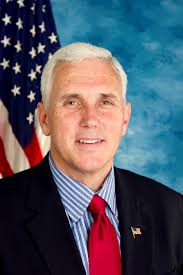
Mike Pence
Officially, its intent is to prevent the government from forcing business owners to act in ways contrary to strongly held religious beliefs. Unofficially, its intent is to appease the hatred of gays and lesbians by the religious Right, a key constituency of the Republican party.
In short, a bakery that doesn’t want to make a cake to be used at a gay wedding or a restaurant that doesn’t want to serve lesbian patrons will have the legal right to refuse to do so.
The same applies for a hospital that doesn’t want to provide care to a gay or lesbian patient.
The bill was passed overwhelmingly by both chambers of the Republican-controlled state legislature. And signed into law by a Republican governor.
“Today I signed the Religious Freedom Restoration Act, because I support the freedom of religion for every Hoosier of every faith,” Mike Pence said in a statement on the day he signed the bill.
“The Constitution of the United States and the Indiana Constitution both provide strong recognition of the freedom of religion but today, many people of faith feel their religious liberty is under attack by government action.”
Bill-signing ceremonies are usually highly public events. Governors–and presidents–normally want their constituents to see them creating new legislation.
Yet for all his praise for the bill, Pence signed it in a ceremony closed to the public and the press. The media were asked to leave even the waiting area of the governor’s office.
It’s almost as if Pence sensed that he was about to push open a door into a danger-filled room. And this may well be the case.
Through that door may soon march the First Church of Cannabis. The day after Pence signed the Act, church founder Bill Levin announced on his Facebook page that he had filed paperwork with the office of the Indiana Secretary of State.
Its registration had been approved–and Levin was ecstatic: “Now we begin to accomplish our goals of Love, Understanding, and Good Health.
“Donate $100 or more and become a GREEN ANGEL. Donate $500 or more and become a GOLD ANGEL. Donate $1000 or more and become a CHURCH POOHBA.”
And Levin had a personal comment for the governor who had made it all possible:
“Dear Mikey Pence…
“DUDE!.. keep crapping all over the state.. and I will plant a seed of LOVE, UNDERSTANDING and COMPASSION in each pile you leave.. and it will grow into a big skunky cannabis tree. Crap away Mikey.. Crap Away…”
No doubt many Indiana legislators are furious that their effort to attack gays may have brought legal marijuana to their highly conservative state. But worse may be to come.
Since 9/11, Right-wingers such as Rush Limbaugh and Sean Hannity have warned that Muslims are trying to impose Sharia (Islamic law) on America. And now Indiana’s legislators, in elevating religion above the law, may have laid the legal foundations for making that possible.
Ironically, this may not be so far removed from the goals of the Republican party as many think. Both the party and adherents of Sharia agree:
- Women should have fewer rights than men.
- Abortion should be illegal.
- There should be no separation between church and state.
- Religion should be taught in school.
- Religious doctrine trumps science.
- Government should be based on religious doctrine.
- Homosexuality should be outlawed.
What will happen when some Muslims in Indiana claim their right–guaranteed in Islamic religious law–to have as many as four wives?
And when they claim that the Religious Freedom Restoration Act protects that right?
Fasten your seatbelts, it’s going to be a bumpy nightmare.
ABC NEWS, ABORTION, CBS NEWS, CLIMATE CHANGE, CNN, DEPARTMENT OF HOMELAND SECURITY, ERNEST HEMINGWAY, FACEBOOK, FASCISM, GUN CONTROL, HARRISON E. SALISBURY, JOSEPH MCCARTHY, NATIONAL OCEANIC AND ATMOSPHERIC ADMINISTRATION, NATIONAL RIFLE ASSOCIATION, NBC NEWS, PLANNED PARENTHOOD, REPUBLICANS, RIGHT-WING TERRORISM, ROE V. WADE, SPANISH CIVIL WAR, THE CHICAGO SUN-TIMES, THE CHICAGO TRIBUNE, THE LOS ANGELES TIMES, THE NEW YORK TIMES, THE WASHINGTON POST, TWITTER, UNIVERSITY OF MISSOURI, WORLD WAR ii
In Bureaucracy, History, Law, Law Enforcement, Medical, Politics, Social commentary on March 14, 2016 at 3:41 pm
Ernest Hemingway knew his Fascists. He fought against them in 1930s Spain, where Right-wing general Francisco Franco–aided by Adolf Hitler–ultimately overthrew the Spanish Republic in 1939.
And he fought against them in France after American forces landed in Normandy. He was one of the first Americans to reach Paris and help “liberate” the bar of the Ritz Hotel.
In the 1950s, he opposed the growing plague of anti-Red hysteria as represented by Wisconsin U.S. Senator Joseph R. McCarthy.
Addressing a 1937 Writers Congress in a rare public speech, Hemingway said: “There is only one form of government that cannot produce good writers, and that system is fascism. For fascism is a lie told by bullies. A writer who will not lie cannot live and work under fascism.”
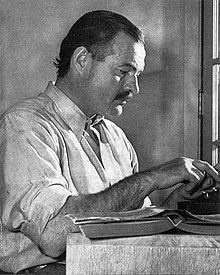
Ernest Hemingway
It’s thus clear what the Nobel-Prize winning author would think of a Missouri state senator’s efforts at censorship.
Lindsay Ruhr, a graduate student in the School of Social Work at the University of Missouri, chose to write her doctoral dissertation on the effects of the state’s recently imposed 72-hour waiting period for abortions.

Lindsay Ruhr
And this has drawn the ire of Missouri State Senator Kurt Schaefer, a Republican from Columbia, Missouri, who chairs the Missouri state senate’s interim Committee on the Sanctity of Life.
In late October, Schaefer sent a letter to the University of Missouri calling Ruhr’s dissertation “a marketing aid for Planned Parenthood — one that is funded, in part or in whole, by taxpayer dollars.”
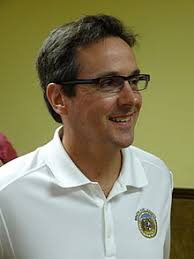
Kurt Schaefer
Schaefer demanded that the university hand over documents regarding the project’s approval and said that, because the University of Missouri is a public university, it should not fund research that he said would promote elective abortions.
Missouri law prohibits the use of public funds to promote non-life-saving abortions.
In September, 2014, Missouri enacted a 72-hour wait for abortions. Reproductive rights advocates believed this is an effort to deny women access to legal abortion as established by the Supreme Court’s Roe v. Wade decision in 1973.
Other Missouri legal restrictions require women seeking an abortion to undergo an ultrasound scan and receive informational material that aims to persuade them from obtaining an abortion.
Lindsay Ruhr wants to find out “how this policy [the 72-hour waiting limit] affects women. Whether this policy is having a harmful or beneficial effect, we don’t know.”
Schaefer claims that Ruhr is biased in favor of abortions because her adviser is affiliated with Planned Parenthood of Kansas.
“This is a concerning revelation considering the University’s recent troubling connections to Planned Parenthood,” wrote Schaefer in a letter to University of Missouri officials.
Schaefer argued that Ruhr is illegally using public funds to conduct her dissertation research.
“It is difficult to understand how a research study approved by the University, conducted by a University student, and overseen by the Director of the School of Social Work at the University can be perceived as anything but an expenditure of public funds to aid Planned Parenthood.”
Under Missouri law, it is illegal for public employees and facilities to use state money towards “encouraging or counseling” a woman to have an abortion not necessary to save her life.
Even though Ruhr is seeking a PhD at the university, she is employed by Planned Parenthood and the university is not paying for her research.
Abortions in Missouri aren’t the only scientific subject that Republicans have made it forbidden to study. Among these:
- A federal ban on studying gun-related deaths and the results of gun control. This followed aggressive efforts by the National Rifle Association to stop finding data that contradicted its “more guns are better” narrative. It’s prevented crucial research into how best to combat mass shootings and prevent gun accidents in the home.
- Harassment of climate scientists. Republicans have increasingly sought to cut funding to scientists studying the Earth’s climate because they keep finding more data to suggest the planet is actually warming. If the public demands an end to the use of fossil fuels–which are responsible for the warming–this will threaten Republicans’ ties to–and funding from–the oil and gas industries.
- The House Science Committee has demanded climate scientists working for the National Oceanic and Atmospheric Administration turn over all emails and documents–personal and professional–they wrote on this subject during the last seven years.

- Preventing scientists from studying Right-wing terrorism in the United States. The foremost expert on this subject–Daryl Johnson, a counter-terrorism analyst working at the Department of Homeland Security–was forced out of his job.
- Johnson had spent six years with the agency amassing a wealth of data on far-Right extremist groups–like the Ku Klux Klan and militia movement–that threaten the safety of American citizens. Republicans’ objection: The facts his research was finding on their constituents made conservatives look bad.
As Harrison E. Salisbury, former New York Times bureau chief in Moscow, observed: “…The message was always the same: Shut up! Don’t rock the boat. Keep those unpleasant truths to yourself. The truth, I was ultimately to learn, is the most dangerous thing. There are no ends to which men of power will not go to put out its eyes.”
ABC NEWS, ANWAR SADAT, ARTHUR BREMER, ASSASSINATION, CBS NEWS, CHARLES L. COTTON, CIA, CNN, DYLANN ROOF, EMANUEL AFRICAN METHODIST CHURCH, FACEBOOK, GEORGE C. WALLACE, GUN CONTROL, HATE CRIMES, NATIONAL RIFLE ASSOCIATION, NBC NEWS, RAFAEL CRUZ, REPUBLICAN PARTY, REPUBLICANS, Secret Service, THE CHICAGO SUN-TIMES, THE CHICAGO TRIBUNE, THE LOS ANGELES TIMES, THE NEW YORK TIMES, THE SECOND AMENDMENT, THE WASHINGTON POST, TWITTER
In Bureaucracy, History, Law, Law Enforcement, Politics, Social commentary on March 11, 2016 at 12:24 am
“You know the great thing about the state of Iowa is, I’m pretty sure you all define gun control the same way we do in Texas–hitting what you aim at.
“My wife, Heidi, who is a petite, 5’2 California blonde, she was standing at the tripod unloading the full machine gun with a pink baseball cap that said ‘armed and fabulous.’”
Yes, it was United States Senator Rafael Cruz (R-Texas) on the prowl for laughs–and votes–at a town hall meeting in Iowa. Normally, Cruz would do his vote-hunting in Texas.
But now Cruz has a bigger prize on his mind than simply being re-elected a United States Senator. Cruz wants to be President in 2016.
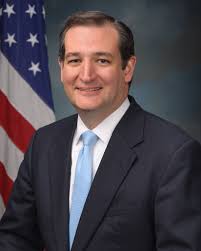
U.S. Senator Rafael Cruz
And Iowa held its precinct causes on February 1-2, 2016.
Cruz’ jokes about gun control came on June 19, 2015, only two days after Dylann Roof, a white high school dropout, gunned down three black men and six black women at Emanuel African Methodist Episcopal Church in Charleston, South Carolina.
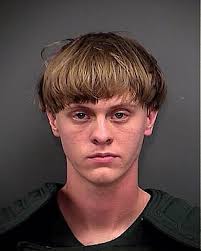
Dylann Roof
Following his remarks, Cruz headed to a shooting range, where he fired off rounds on a semiautomatic .223-caliber Smith and Wesson M&P 15.
Cruz’ remarks no doubt appeared insensitive to the latest victims of gun violence and those who now mourned for them. But the comments of Charles L. Cotton took insulting the dead to a whole new level.
Cotton is a National Rifle Association (NRA) board member who also runs TexasCHLForum.com, an online discussion forum about guns and gun owners’ rights in Texas and beyond.
In a discussion thread on June 18, 2015–one day after the church slaughter–a board member noted that Clementa C. Pinckney, one of the nine people slain, was a pastor and a state legislator in South Carolina.
Cotton responded: “And he voted against concealed-carry. Eight of his church members who might be alive if he had expressly allowed members to carry handguns in church are dead. Innocent people died because of his position on a political issue.”

That discussion thread has since been deleted.
During a subsequent phone interview, Cotton emphasized that he had been speaking as a private citizen–and not as an NRA board member:
“It was a discussion we were having about so called gun-free zones. It’s my opinion that there should not be any gun-free zones in schools or churches or anywhere else. If we look at mass shootings that occur, most happen in gun-free zones.”
If private citizens were allowed to carry guns everywhere, Cotton says, there will be fewer mass shootings because “if armed citizens are in there, they have a chance to defend themselves and other citizens.”
Cotton’s position–“there should not be any gun-free zones”–is exactly that of the NRA itself.
Under such circumstances, America will become a nation where anyplace, anytime, can be turned into the O.K. Corral.
Another point that Cotton didn’t mention: Dylann Roof did believe in concealed-carry–and it cost the lives of nine innocent men and women.
Finally, there is this: Even highly-trained shooters–such as those assigned to the United States Secret Service–don’t always respond as expected.
On May 15, 1972, Alabama Governor George Wallace was campaigning for President in Laurel, Maryland. He gave a speech behind a bulletproof podium at the Laurel Shopping Center. Then he moved from it to mingle with the crowd.
Since the 1968 assassination of Senator Robert F. Kennedy, all those campaigning for President have been assigned Secret Service bodyguards. And Wallace was surrounded by them as he shook hands with his eager supporters.
Suddenly, Arthur Bremer, a fame-seeking failure in life and romance, pushed his way forward, aimed a .38 revolver at Wallace’s abdomen and opened fire. Before he could be subdued, he hit Wallace four times, leaving him paralyzed for the rest of his life.

Arthur Bremer shoots George Wallace
Nor was he Bremer’s only victim. Three other people present were wounded unintentionally:
- Alabama State Trooper Captain E C Dothard, Wallace’s personal bodyguard, who was shot in the stomach;
- Dora Thompson, a campaign volunteer, who was shot in the leg; and
- Nick Zarvos, a Secret Service agent, who was shot in the neck, severely impairing his speech.
None of Wallace’s bodyguards got off a shot at Bremer–before or after he pulled the trigger.
On October 6, 1981, Egyptian President Anwar Sadat was reviewing a military parade in Cairo when a truck apparently broke down directly across from where he was seated.
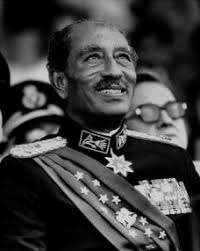
Anwar Sadat, moments before his assassination
Suddenly, soldiers bolted from the rear of the vehicle, throwing hand grenades and firing assault rifles. They rushed straight at Sadat–who died instantly under a hail of bullets.
Meanwhile, Sadat’s bodyguards–who had been trained by the CIA– panicked and fled.
Sadat had been assassinated by army officers who believed he had betrayed Islam by making peace with Israel in 1977.
The ultimate test of the NRA’s mantra that “there should not be any gun-free zones…anywhere” will come only when one or more heavily-armed gunmen target an NRA convention.
It will then be interesting to see if the surviving NRA members are as quick to blame themselves for being victims as they are the victims of other mass slaughters.
ABC NEWS, ASTROLOGY, BARACK OBAMA, BILL CLINTON, CBS NEWS, CNN, COMMUNIST CHINA, DONALD REGAN, EMPRESS ALEXANDRA, FACEBOOK, GEORGE W. BUSH, GERALD R. FORD, GRIGORY RASPUTIN, JIMMY CARTER, JOAN QUIGLEY, JODIE FOSTER, JOHN W. HINCKLEY, MERV GRIFFIN, MIKHAIL GORBACHEV, MITT ROMNEY, NANCY REAGAN, NBC NEWS, NICHOLAS II, Ronald Reagan, SOVIET UNION, SUPERSTITION, THE CHICAGO SUN-TIMES, THE CHICAGO TRIBUNE, THE LOS ANGELES TIMES, THE NEW YORK TIMES, THE WALL STREET JOURNAL, THE WASHINGTON POST, TWITTER, USA TODAY
In Bureaucracy, History, Politics, Social commentary on March 10, 2016 at 12:20 am
Nancy Reagan, widow of Ronald Reagan, the 40th President of the United States, died on March 6, at age 94, in Los Angeles, California.
She had survived her husband–who died of Alzheimer’s in 2004–by almost 12 years. Republicans–who have deified Ronald since he left the White House in 1989–rushed to pay tribute to her:
- Mitt Romney, 2012 Presidential candidate: “With the passing of Nancy Reagan, God and Ronnie have finally welcomed a choice soul home.”
- Former President George W. Bush: “Mrs Reagan was fiercely loyal to her beloved husband and that devotion was matched only by her devotion to our country. Her influence on the White House was complete and lasting.”
Democrats also pitched in:
- President Barack Obama: “We remain grateful for Nancy Reagan’s life.”
- Former President Bill Clinton: “Nancy was an extraordinary woman: a gracious first lady, proud mother and devoted wife to President Reagan – her Ronnie.”
The Presidency of Ronald W. Reagan consumed eight years of American history: 1981 – 1989. But its legacies continue to haunt us.
On October 21, 2014, Joan Quigley, the woman responsible for one of its most bizarre legacies–government by astrologer–passed away at age 87.
Quigley was the court astrologer to Ronald and Nancy Reagan.
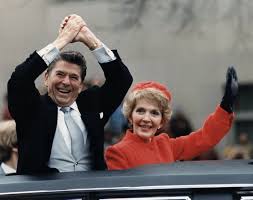
Ronald and Nancy Reagan
Nancy met Quigley on “The Merve Griffin Show” in 1973. Quigley gave Nancy–and through her, Reagan himself–astrological advice during the latter’s campaign for the Republican Presidential nomination in 1976.
That effort failed to unseat President Gerald Ford–who was defeated that November by Jimmy Carter. But four years later, in 1980, Reagan defeated Carter to become the 40th President of the United States.
On March 30, 1981, a mentally-disturbed loner named John W. Hinckley shot and critically wounded Reagan. Fixiated on actress Jodie Foster, he believed that by shooting the President he could gain her affection.
For Nancy, the assassination attempt proved a watershed.
Shortly after the shooting, Merv Griffin told her that Quigley had told him: If Nancy had called her on that fateful day, she–Quigley–could have warned that the President’s astrological charts had foretold a bad day.
From that moment on, Nancy made sure to regularly consult Quigley on virtually everything that she and the President intended to do.
When Reagan learned of Nancy’s consultations with Quigley, he warned her: Be careful, because it might look odd if it came out.
Many–if not most–of these calls from the White House to Quigley’s office in San Francisco were made on non-secure phone lines.

Joan Quigley
This meant that foreign powers–most notably the Soviet Union and Communist China–could have been privy to Reagan’s most secret intentions.
Nancy passed on Quigley’s suggestions as commands to Donald Regan, chief of the White House staff.
As a result, Regan kept a color-coded calendar on his desk to remember when the astrological signs were good for the President to speak, travel, or negotiate with foreign leaders: Green ink highlighted “good” days; red ink “bad” days; yellow ink “iffy” days.
Donald Regan, no fan of Nancy’s, chafed under such restrictions: “Obviously, this list of dangerous or forbidden dates left very little latitude for scheduling,” he later wrote.
Forced out of the White House in 1987 by Nancy, Regan struck back in a 1988 tell-all memoir: For the Record: From Wall Street to Washington.
In 1988, after her secret role in the Reagan White House was revealed, Quigley told the Associated Press that she was a “serious, scientific astrologer.”
Regan’s book revealed, for the first time, how Ronald Reagan had actually made his Presidential decisions.
All–including decisions to risk nuclear war with the Soviet Union–were based on a court astrologer’s horoscopes. Rationality and the best military intelligence available played a lesser, secondary role.
The last major world leader to turn to the supernatural for advice had been Russian Czar Nicholas II. His adviser had been Grigori Rasputin, a Siberian peasant whom Empress Alexandra believed was the only man who could save her hemophiliac son–and heir to the throne.
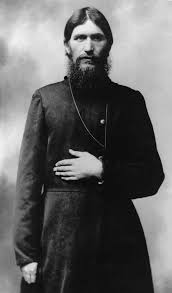
Grigori Rasputin
In 1990, Quigley confirmed the allegations in an autobiography, What Does Joan Say?: My Seven Years As White House Astrologer to Nancy and Ronald Reagan.
The title came from the question that Ronald Reagan asked Nancy before making important decisions–including those that could risk the destruction of the United States.
Among the successes Quigley took credit for:
- Strategies for winning the Presidential elections of 1980 and 1984;
- Helping Nancy Reagan overhaul her image as a spoiled rich girl;
- Defusing the controversy over Reagan’s visiting a graveyard for SS soldiers in Bitburg, Germany;
- Pursuing “Star Wars” as a major part of his strategy against the Soviet Union;
- The Intermediate-Range Nuclear Forces Treaty;
- Protecting Reagan from would-be assassins through timely warnings to Nancy; and
- Moving Reagan from seeing the Soviet Union as the “Evil Empire” to accepting Mikhail Gorbachev as a peace-seeking leader.
Thirty-five years after he became President, Ronald Reagan remains the most popular figure among Republicans. His name is constantly invoked by Right-wing candidates, while his deliberately-crafted myth is held up as the example of Presidential greatness.
Still, a number of precedents of the Reagan administration–like government by astrologer–might lend themselves to easy abuse. Thus, voters should consider this carefully before elevating “another Reagan” to the Presidency.
2000 PRESIDENTIAL RACE, 2012 PRESIDENTIAL RACE, 2016 PRESIDENTIAL RACE, ABC NEWS, AL GORE, BARACK OBAMA, CBS NEWS, CNN, DONALD TRUMP, ELECTORAL COLLEGE, FACEBOOK, GEORGE ORWELL, GEORGE W. BUSH, MARCO RUBIO, MEXICANS, MITT ROMNEY, MUSLIMS, NBC NEWS, NINETEEN-EIGHT-FOUR, POW'S, RAFAEL CRUZ, REPUBLICAN PARTY, THE CHICAGO SUN-TIMES, THE CHICAGO TRIBUNE, THE LOS ANGELES TIMES, THE WASHINGTON POST, TWITTER
In Bureaucracy, Business, History, Politics, Social commentary on March 9, 2016 at 2:14 pm
The Donald Trump-Mitt Romney bromance began with an insult, courtesy of Trump:
“He’d buy companies, he’d close companies. He’d get rid of jobs. I’ve built a great company. I’m a much bigger businessman and have a much, much bigger net worth. I mean, my net worth is many, many, many times Mitt Romney.”
Then Trump had a change of heart: “Mitt is tough. He’s smart. He’s sharp. He’s not going to allow bad things to continue to happen to this country that we all love. So, Governor Romney, go out and get ’em. You can do it.”
And Romney swooned with delight: “I’m so honored to have his endorsement. There are some things that you just can’t imagine in your life. This is one of them.”
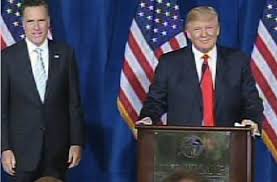
Mitt Romney and Donald Trump
But now the bromance is over, courtesy of a rousing, anti-Trump speech given by Romney at the University of Utah:
“Mr. Trump is directing our anger for less than noble purposes. He creates scapegoats of Muslims and Mexican immigrants, he calls for the use of torture and for killing the innocent children and family members of terrorists. He cheers assaults on protesters.
“He applauds the prospect of twisting the Constitution to limit First Amendment freedom of the press. This is the very brand of anger that has led other nations into the abyss.”
So how is Trump taking all this? “I don’t know what happened to him. You can see how loyal he is.
“He was begging for my endorsement. I could have said ‘Mitt, drop to your knees.’ He would have dropped to his knees.”
Fortunately for Trump, as his bromance with Romney has ended, another has emerged–with New Jersey Governor Chris Christie.
On February 26, Christie through his (political) weight behind Trump at a hastily-announced press conference in Fort Worth, Texas.
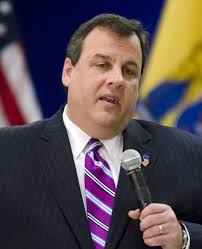
Chris Christie
Christie had not always been on such wonderful terms with the egocentric businessman. In fact, for months, the two had been rivals for the Presidency.
In a January speech before the New Hampshire primary, Christie said:
“Showtime is over. We are not electing an entertainer-in-chief. Showmanship is fun, but it is not the kind of leadership that will truly change America….
“If we are going to turn our frustration and anger with the D.C. insiders, the politicians of yesterday and the carnival barkers of today into something that will actually change American lives for the better, we must elect someone who has been tested.”
Then, without warning, Christie announced a sudden change of mind at a press conference in Fort Worth, Texas.
The previous night, Trump had been mauled by a surprisingly aggressive Marco Rubio during a CNN-hosted debate among the Presidential candidates. As a result, reporters gasped when Christie endorsed Trump and attacked Rubio:
“Part of his talking points now is to be entertaining and smile a lot now. Listen, it’s one act after another.”
Christie obviously felt it necessary to explain why he had gone from attacking Trump to promoting him:
“As a Republican I feel strongly about making sure that [Democratic front-runner] Hillary Clinton does not become president of the United states, and I believe Donald Trump is the best person–of those remaining–to do that.”
As for the attack made on Trump by former Massachusetts Governor Mitt Romney:
“I understand the things that Gov. Romney is saying, and he’s objected to. That’s his opinion, and I respect him as I always have, and he’s welcome to his view. I just happen to disagree with the conclusion that he comes to.”
By endorsing Trump, Christie became the first major establishment figure to validate the fitness of the former “reality TV star” to serve as President.
Considering Trump’s remaining opponents, it was not hard for Christie to reach that conclusion.
Texas United States Senator Rafael Cruz is an ideologue–and totally opposed to the pragmatic approach Christie brings to politics. And Christie genuinely dislikes Rubio.
In addition, Christie believed that Ohio Governor John Kasich–a moderate by Republican standards–could never secure his party’s Presidential nomination.
Ditto for neurosurgeon Ben Carson, who apparently believed his Right-wing party would elect another black man to succeed President Obama.
As for Trump: “This was an endorsement that really meant a lot. Chris is an outstanding man with an outstanding family, and this is the one endorsement that I’m really happy to get.”
While Christie and Trump share an innate aggressiveness and willingness to bully, that is not all they share.
In Never Enough, auhor Michael D’Antonio portrays Trump as a man with an insatiable appetite for wealth, attention, power, and conquest. The same can be said of Christie.
By taking on the role of Trump’s attack dog, Christie positions himself for the same role as vice presidential nominee. Or for a position such as Attorney General or Secretary of Homeland Security.
For those wishing to understand the realities of American political leaders, the best insight comes in a song popularized in George Orwell’s novel, 1984:
Under the spreading chestnut tree
I sold you and you sold me:
There lie they, and here lie we
Under the spreading chestnut tree.


2016 REPUBLICAN CONVENTION, ABC NEWS, AFFORDABLE CARE ACT (ACA), BARACK OBAMA, BILL CLINTON, CBS NEWS, CHRIS MATTHEWS, CNN, CUBAN MISSILE CRISIS, DEBT CEILING, DONALD TRUMP, EXTORTION, FACEBOOK, HARDBALL, JOHN F. KENNEDY, JUDGE MERRICK GARLAND, MAFIA, MSNBC, NBC NEWS, NEWT GINGRICH, NICCOLO MACHIAVELLI, OBAMACARE, Racketeer Influenced Corrupt Organizations (RICO) Act, REPUBLICANS, RICHARD WOLFFE, ROBERT PAYNE, THE CHICAGO SUN-TIMES, THE CHICAGO TRIBUNE, THE LIFE AND DEATH OF ADOLF HITLER, THE LOS ANGELES TIMES, THE NEW YORK TIMES, THE PRINCE, THE WALL STREET JOURNAL, THE WASHINGTON POST, TWITTER, U.S. HOUSE OF REPRESENTATIVES, U.S. JUSTICE DEPARTMENT, U.S. SENATE, U.S. SENATOR MITCH MCCONNELL, U.S. SUPREME COURT, USA PATRIOT ACT, WARREN BUFFETT
REPUBLICANS: EXTORTION IS US: PART ONE (OF FOUR)
In Bureaucracy, History, Law, Law Enforcement, Politics, Social commentary on March 22, 2016 at 12:01 amOn March 16, Donald Trump, the front-runner for the Republican Presidential nomination, issued a warning to his fellow Right-wingers: If he didn’t win the GOP nomination at the convention in July, his supporters would literally riot.
“I think we’ll win before getting to the convention. But I can tell you if we didn’t, if we’re 20 votes short or if we’re 100 short and we’re at 1,100 and somebody else is at 500 or 400…I don’t think you can say that we don’t get it automatically. I think you’d have riots.
“I think you would see problems like you’ve never seen before. I think bad things would happen. I really do. I wouldn’t lead it, but I think bad things would happen.”
Donald Trump
An NBC reporter summed it up as follows: “As Trump indicated, there is a very real possibility he might lose the nomination if he wins only a plurality of delegates thanks to party rules that allow delegates to support different candidates after the initial ballot.
“In that context, the message to Republicans was clear on [March 16]: Nice convention you got there, shame if something happened to it.”
Anyone who’s ever watched a Mafia movie has heard similar threats: “You really ought to think about paying that protection money. Nice family you got–it would be a shame if anything happened to ’em.”
Paul Ryan, Republican Speaker of the House of Representatives, was quick to respond.
On March 17, he said that it was “unacceptable” for Trump to suggest there would be rioting if he was not chosen as the Republican nominee.
“Nobody should say such things in my opinion because to even address or hint to violence is unacceptable.”
Paul Ryan
And Ohio governor and Republican presidential candidate John Kasich chinned in. “Leaders don’t imply violence,” Kasich told “Face the Nation” on March 20.
“When he says that there could be riots, that’s inappropriate. I think you understand that, okay? Secondly, while we have our differences and disagreements, we’re Americans. Americans don’t say, ‘Let’s take to the streets and have violence.’
John Kasich
“I don’t even want to use the word ‘riots’ or ‘violence.’ That’s inappropriate. Our kids are watching. Now…that doesn’t mean I’m not running a positive campaign, but those kind of comments are way out of bounds. Frankly, they’re outrageous,” said Kasich.”
Yet, for all their public outrage, Republicans are no strangers to the uses of extortion and threats. Their tactics are straight out of the playbook of Adolf Hitler.
Robert Payne, author of the bestselling biography, The Life and Death of Adolf Hitler (1973), described the “negotiating” style of the Nazi dictator thus:
“Although Hitler prized his own talents as a negotiator, a man always capable of striking a good bargain, he was totally lacking in finesse. He was incapable of bargaining. He was like a man who goes up to a fruit peddler and threatens to blow his brains out if he does not sell his applies at the lowest possible price.”
In 1994, Newt Gingrich, then Speaker of the House of Representatives, shut down the Federal Government. Officially, the reason was a budget impasse with President Bill Clinton.
Unofficially–and in reality–the reason was altogether different: Clinton had forced him to sit in the back of Air Force One on a trip to Israel for the funeral of former prime minister Yitzhak Rabin.
“This is petty,” Gingrich confessed to startled reporters. “I’m going to say up front it’s petty, But I think it’s human.
“When you land at Andrews [Air Force Base, in Washington, D.C.] and you’ve been on the plane for 25 hours and nobody has talked to you and they ask you to get off by the back ramp….You just wonder, where is their sense of manners, where is their sense of courtesy?”
Gingrich’s childish verbal tirade was a public relations disaster for the Republicans. “Cry Baby,” screamed the New York Daily News, next to a picture of Gingrich in a diaper.
When House Democrats brought a poster-sized image of the cartoon onto the floor, the Republican majority forced them to remove it.
But the damage was done, and Republicans paid a fearful price at the polls for the shutdown and Gingrich’s candor about the reason for it, losing heavily in the House and Senate.
Still, the Republicans continued their policy of my-way-or-else.
In April, 2011, the United States government almost shut down over Republican demands about subsidized pap smears.
During a late-night White House meeting with President Barack Obama and key Congressional leaders, Republican House Speaker John Boehner made this threat:
His conference would not approve funding for the government if any money were allowed to flow to Planned Parenthood through Title X legislation.
Facing an April 8 deadline, negotiators worked day and night to strike a compromise–and finally reached one.
Three months later–on July 9–Republican extortionists again threatened the Nation with financial ruin and international disgrace unless their demands were met.
Sign of The Black Hand
President Obama had offered to make historic cuts in the federal government and the social safety net–on which millions of Americans depend for their most basic needs.
But House Speaker John Boehner rejected that offer. He would not agree to the tax increases that Democrats wanted to impose on the wealthiest 1% as part of the bargain.
John Boehner
Share this: