Posts Tagged ‘THE PENTAGON’
9/11 ATTACKS, ABC NEWS, ABORTION, ADOLF HITLER, AL-QAEDA, ALTERNET, AMERICABLOG, ANDREW CUOMO, ANTHONY FAUCI, AP, BABY BOOMER RESISTANCE, BLOOMBERG, BOB WOODWARD, BUZZFEED, CARL BERNSTEIN, CBS NEWS, CENTERS FOR DISEASE CONTROL AND PREVENTION (CDC), CHICAGO, CHINA, CIA, CLOROX BLEACH, CNN, CORONAVIRUS, COVID-19, COVID-19 TEST KITS, CROOKS AND LIARS, DAILY KOZ, DAVID BROOKS, DEBORAH BIRX, DEMOCRATIC NATIONAL CONVENTION, DEPARTMENT OF HOMELAND SECURITY, DONALD RUMSFELD, DONALD TRUMP, DRUDGE REPORT, FACEBOOK, FBI, FEDERAL EMERGENCY MANAGEMENT AGENCY (FEMA), FIVETHIRTYEIGHT, FLORIDA, FORBES, FOX NEWS, FRANKLIN D. ROOSEVELT, GRETCHEN WHITMER, HARPER’S MAGAZINE, HUFFINGTON POST, JARED KUSHNER, JAY INSLEE, KOREAN WAR, KRISTI NOEM, KRISTIN URQUIZA, LARRY HOGAN, LOS ANGELES, MARK ANTHONY URQUIZA, MARK SHIELDS, MARYLAND, MASSACHUSSETS, MEDIA MATTERS, MICHIGAN, MICK MULVANEY, MIKE PENCE, MOLOCH, MOTHER JONES, MOVEON, MSNBC, N95 MASKS, NAVY SEALS, NBC NEWS, NEW YORK, NEW YORK CITY, NEWSWEEK, NPR, OSAMA BIN LADEN, PAULA REID, PBS NEWSHOUR, PERSONAL PROTECTIVE EQUIPMENT (PPE), PHOENIX RALLY, POLITICO, POLITICUSUSA, RAW STORY, REPUBLICANS, REUTERS, RICHARD NIXON, ROBERT MUELLER, RUDOLPH GIULIANI, SALON, SCHOOLS, SEAN HANNITY, SEAN HANNITY SHOW, SEATTLE TIMES, SLATE, SOUTH DAKOTA, STEVEN PRESSFIELD, TALKING POINTS MEMO, THE ATLANTIC, THE CHICAGO SUN-TIMES, THE CHICAGO TRIBUNE, THE DAILY BEAST, THE DAILY BLOG, THE GUARDIAN, THE HILL, THE HUFFINGTON POST, THE LOS ANGELES TIMES, THE NATION, THE NEW REPUBLIC, THE NEW YORK TIMES, THE PENTAGON, THE VILLAGE VOICE, THE WASHINGTON POST, THINKPROGRESS, TIME, TRUTHDIG, TRUTHOUT, TULSA OAKAHOMA RALLY, TWITTER, TWO POLITICAL JUNKIES, U.S. NEWS & WORLD REPORT, UPI, USA TODAY, UV LIGHT, VEIL: THE SECRET WARS OF THE CIA (BOOK), VIETNAM WAR, WALTER SHAUB, WASHINGTON, WASHINGTON D.C., WASHINGTON MONTHLY, WASHINGTON WEEK IN REVIEW, WATERGATE, WILLIAM J. CASEY, WONKETTE, WORLD TRADE CENTER
In History, Law, Law Enforcement, Medical, Military, Politics, Social commentary on September 18, 2020 at 1:17 am
The Federal Government has seized vitally-needed medical supplies in at least seven states. FEMA is not publicly reporting the thefts, despite the outlay of millions of dollars of taxpayer money. Nor has the administration explained how it decides which supplies to seize and where to reroute them.

TRUMP HAS SEIZED STATES’ MEDICAL SUPPLIES
The Federal Government has not informed states whose supplies it seized if they will receive the materials they ordered and paid for. That has fueled concerns about whether the Trump administration is fairly distributing scarce medical supplies.
“We can’t get any answers,” said a California hospital official who asked not to be identified for fear of retaliation from the White House.
Trump has said it’s the states’ responsibility to obtain critically-needed medical supplies. But when they aren’t outbid by the Federal Government, hospital systems and states find their shipments of medical supplies seized with no explanation.
Where are those supplies going?
To China?
To Trump’s private warehouses?
To Jared Kushner, Trump’s son-in-law, for sale on the black market?
No one as yet knows.
A March 2 Washington Monthly story concludes ominously: “What if the White House simply gives all the masks and ventilators to red states and counties, leaving blue ones to struggle? What mechanisms of accountability are left?
“U.S. democracy wasn’t set up to deal with a president openly behaving like a James Bond villain while being protected by a political party behaving more like a mafia than a civic institution.”
PROPAGANDA AS “NEWS”
Since Easter weekend, President Donald Trump began holding daily press briefings at the White House.
Their official purpose: To update the country on the administration’s ongoing response to the Coronavirus pandemic.
Their real purpose: To serve as a substitute for Trump’s hate-filled political rallies, which have been likened to those staged by Germany’s Fuhrer, Adolf Hitler, at Nuremberg.
These had been temporarily cancelled due to demands for social distancing to stem the rising tide of the COVID-19 pandemic. That has been Trump’s primary reason for seeking to end social distancing.
The White House tried hard to stage-manage these appearances. For example, on April 14, Trump interrupted the question-and-answer session by cutting to a White House-produced video to try to shame the media for critical coverage of his response to the crisis.
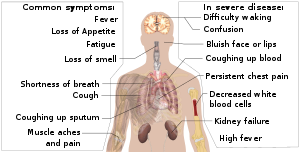
On April 26, The New York Times ran a story entitled: “Self-praise, hubris and self-pity: Examining 260,000 words about the Coronavirus from President Trump.” Summing up the image that Trump has tried to present of himself to the world, the Times concluded:
“The self-regard, the credit-taking, the audacious rewriting of recent history to cast himself as the hero of the pandemic rather than the president who was slow to respond: Such have been the defining features of Trump’s use of the bully pulpit during the coronavirus outbreak….
“By far the most recurring utterances from Trump in the [White House] briefings are self-congratulations, roughly 600 of them, which are often predicated on exaggerations and falsehoods….
“Trump’s attempts to display empathy or appeal to national unity (about 160 instances) amount to only a quarter of the number of times he complimented himself or a top member of his team.”
QUACKERY AS “MEDICINE”
On April 23, Donald Trump ventured into the equivalent of a PR minefield—and stepped on a mine of his own making.
After musing on new government research into how the virus reacts to different temperatures, climates and surfaces, Trump said: “So I asked Bill [William N. Bryan, acting Under Secretary for Science and Technology at the Department of Homeland Security] a question….
“So, supposing we hit the body with a tremendous—whether it’s ultraviolet or just very powerful light—and I think you said that that hasn’t been checked, but you’re going to test it. And then I said, supposing you brought the light inside the body, which you can do either through the skin or in some other way, and I think you said you’re going to test that too. It sounds interesting.
“And then I see the disinfectant, where it knocks it out in a minute. One minute! And is there a way we can do something like that, by injection inside or almost a cleaning. Because you see it gets in the lungs and it does a tremendous number on the lungs. So it would be interesting to check that. So, that, you’re going to have to use medical doctors with. But it sounds interesting to me.”
Trump was clearly seeking agreement with his latest medical theory. But Dr. Deborah Birx, the Coronavirus Task Force response coordinator, remained silent.
The Internet—and medical experts—did not.
On Twitter—the social media platform Trump routinely uses to attack everyone he hates—his suggestion that injecting disinfectants could treat Coronavirus drew scorn and ridicule.
One tweet showed Trump as a doctor hovering over a patient and saying: “Once I’ve pumped you full of disinfectant, I’ll zap you with this UV torch until you’re cured.”
Another meme featured Trump as Marie Antoinette saying: “Let them eat Clorox.”
Medical experts found Trump’s off-the-cuff remarks no laughing matter. Several doctors warned the public against injecting disinfectant or using UV light.
9/11 ATTACKS, ABC NEWS, ABORTION, ADOLF HITLER, AL-QAEDA, ALTERNET, AMERICABLOG, ANDREW CUOMO, ANTHONY FAUCI, AP, BABY BOOMER RESISTANCE, BLOOMBERG, BOB WOODWARD, BUZZFEED, CARL BERNSTEIN, CBS NEWS, CENTERS FOR DISEASE CONTROL AND PREVENTION (CDC), CHICAGO, CHINA, CIA, CLOROX BLEACH, CNN, CORONAVIRUS, COVID-19, COVID-19 TEST KITS, CROOKS AND LIARS, DAILY KOZ, DAVID BROOKS, DEBORAH BIRX, DEMOCRATIC NATIONAL CONVENTION, DEPARTMENT OF HOMELAND SECURITY, DONALD RUMSFELD, DONALD TRUMP, DRUDGE REPORT, FACEBOOK, FBI, FEDERAL EMERGENCY MANAGEMENT AGENCY (FEMA), FIVETHIRTYEIGHT, FLORIDA, FORBES, FOX NEWS, FRANKLIN D. ROOSEVELT, GRETCHEN WHITMER, HARPER’S MAGAZINE, HUFFINGTON POST, JARED KUSHNER, JAY INSLEE, KOREAN WAR, KRISTI NOEM, KRISTIN URQUIZA, LARRY HOGAN, LOS ANGELES, MARK ANTHONY URQUIZA, MARK SHIELDS, MARYLAND, MASSACHUSSETS, MEDIA MATTERS, MICHIGAN, MICK MULVANEY, MIKE PENCE, MOLOCH, MOTHER JONES, MOVEON, MSNBC, N95 MASKS, NAVY SEALS, NBC NEWS, NEW YORK, NEW YORK CITY, NEWSWEEK, NPR, OSAMA BIN LADEN, PAULA REID, PBS NEWSHOUR, PERSONAL PROTECTIVE EQUIPMENT (PPE), PHOENIX RALLY, POLITICO, POLITICUSUSA, RAW STORY, REPUBLICANS, REUTERS, RICHARD NIXON, ROBERT MUELLER, RUDOLPH GIULIANI, SALON, SCHOOLS, SEAN HANNITY, SEAN HANNITY SHOW, SEATTLE TIMES, SLATE, SOUTH DAKOTA, STEVEN PRESSFIELD, TALKING POINTS MEMO, THE ATLANTIC, THE CHICAGO SUN-TIMES, THE CHICAGO TRIBUNE, THE DAILY BEAST, THE DAILY BLOG, THE GUARDIAN, THE HILL, THE HUFFINGTON POST, THE LOS ANGELES TIMES, THE NATION, THE NEW REPUBLIC, THE NEW YORK TIMES, THE PENTAGON, THE VILLAGE VOICE, THE WASHINGTON POST, THINKPROGRESS, TIME, TRUTHDIG, TRUTHOUT, TULSA OAKAHOMA RALLY, TWITTER, TWO POLITICAL JUNKIES, U.S. NEWS & WORLD REPORT, UPI, USA TODAY, UV LIGHT, VEIL: THE SECRET WARS OF THE CIA (BOOK), VIETNAM WAR, WALTER SHAUB, WASHINGTON, WASHINGTON D.C., WASHINGTON MONTHLY, WASHINGTON WEEK IN REVIEW, WATERGATE, WILLIAM J. CASEY, WONKETTE, WORLD TRADE CENTER
In Bureaucracy, History, Law, Law Enforcement, Medical, Military, Politics, Social commentary on September 17, 2020 at 12:05 am
Like Nazi Germany’s Fuhrer, Adolf Hitler, President Donald Trump likes to pit individuals and organizations against each other. Hitler, for example, would assign several agencies to tackle the same problem: “That way, the stronger one gets the job done,” he told his architect, Albert Speer.
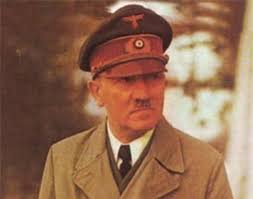
Adolf Hitler
PITTING CITIES AND STATES AGAINST EACH OTHER
This creates needless duplication of efforts and wasted resources. But it ensures that Trump—like Hitler—remains the final voice of authority, since so many others are competing for his favor and direction.
This has not, however, worked out well for the 50 states that make up the United States of America.
During the Great Depression, President Franklin D. Roosevelt intervened powerfully to ensure that all Americans received the help they needed.
Trump has made it clear that each state is responsible for securing its needed supply of Personal Protective Equipment (PPEs) for its doctors and nurses aiding Coronavirus patients. This has resulted in a dog-eat-dog atmosphere of cutthroat competition and scarcity, with Americans not only fighting the virus but each other.
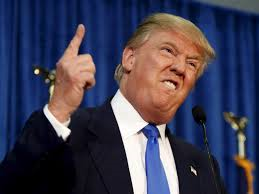
Donald Trump
USING A PLAGUE TO DESTROY AMERICANS
Even worse: Trump and Republicans are using a deadly plague as a weapon against those Americans they hate.
On March 26, during an interview on Fox News, Trump blamed the failures of his administration’s response to Coronavirus on Democratic state governors like Andrew Cuomo (NY), Jay Inslee (WA), and Gretchen Whitmer (MI).
On March 27, during his press briefing, Trump said he told Vice President Mike Pence—who’s officially in charge of the White House’s response effort—to not call Inslee and Whitmer because they weren’t “appreciative” enough of his efforts.
Trump said this even as hospitals in each of their states were being overwhelmed with Coronavirus patients:
“I tell him—I mean I’m a different type of person—I say, ‘Mike, don’t call the governor in Washington, you’re wasting your time with him. Don’t call the woman in Michigan. If they don’t treat you right, I don’t call.”
At his March 27 press briefing, Trump echoed French King Louis X1V’s infamous remark—“I am the State”: “When they’re [governors] not appreciative to me, they’re not appreciative to the Army Corps, they’re not appreciative to FEMA [Federal Emergency Management Agency]. It’s not right.”
On that same day, Trump attacked Michigan Governor Gretchen Whitmer on Right-wing Fox News’ “Sean Hannity Show”: “I don’t know if she knows what’s going on, but all she does is sit there and blame the Federal Government.”
On March 27, Michigan Governor Gretchen Whitmer told a local radio station: “What I’ve gotten back is that vendors with whom we’ve procured contracts—they’re being told not to send stuff to Michigan. It’s really concerning. I reached out to the White House last night and asked for a phone call with the president, ironically at the time this stuff was going on.”
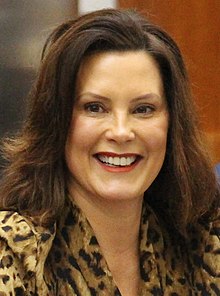
Gretchen Whitmer
A March 29 story in the Washington Monthly sheds light on what lay behind Whitmer’s inability to secure desperately-needed ventilators from her longtime vendors. Its headline ran: “What If Trump Decides to Save Republicans But Not Democrats?”
A sub-headline read: “He’s providing vital resources to red states and ignoring blue states.”
Florida submitted a request to FEMA on March 11 for 430,000 surgical masks, 180,000 N95 respirators, 82,000 face shields and 238,000 gloves—and received a shipment with everything three days later.
On Fox News, Rudy Giuliani, Trump’s personal lawyer, bluntly told governors: “Take the blame when you have to. When you play with your boss, sometimes it’s better when you don’t win the golf game. He’s the boss, he’s got all the resources.”
Translation: Suck up to the capo’s ego if you want to survive.
The mentality of the Black Hand has come to the Oval Office.

The Black Hand
TRUMP SEIZES STATES’ MEDICAL SUPPLIES
Trump isn’t simply refusing to provide states with vitally-needed medical supplies—he’s illegally seizing those supplies that states have ordered.
An April 20 Forbes story offers frightening insight into the tyrannical reach of the Trump administration. Entitled, “Maryland Gov. Hogan Takes Extraordinary Steps to Keep Feds From Confiscating COVID Tests,” the story unfolds like a spy thriller.
Governor Larry Hogan had heard reports that the federal government had confiscated crucial medical supplies from other states—like Massachusetts.
After obtaining 500,000 test kits from South Korea, Hogan ordered them flown into Baltimore–Washington International Airport rather than the larger Dulles International Airport in Virginia. From there they were escorted under guard to a secret location and constantly protected by the National Guard.
As they were sent out for distribution across the state, the tests remained under protection by the National Guard and state police.
The precautions were absolutely necessary. Hospitals in Florida and California reported that FEMA had seized their supplies without explanation.
Massachusetts ordered three million masks that were confiscated by the Federal Government at the Port of New York. This forced the state to ask New England Patriots’ owner Robert Kraft to use his team plane to fly in one million N95 masks from China.
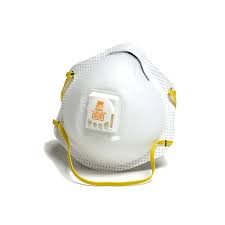
N95 mask
9/11 ATTACKS, ABC NEWS, ABORTION, ADOLF HITLER, AL-QAEDA, ALTERNET, AMERICABLOG, ANDREW CUOMO, ANTHONY FAUCI, AP, BABY BOOMER RESISTANCE, BLOOMBERG, BOB WOODWARD, BUZZFEED, CARL BERNSTEIN, CBS NEWS, CENTERS FOR DISEASE CONTROL AND PREVENTION (CDC), CHICAGO, CHINA, CIA, CLOROX BLEACH, CNN, CORONAVIRUS, COVID-19, COVID-19 TEST KITS, CROOKS AND LIARS, DAILY KOZ, DAVID BROOKS, DEBORAH BIRX, DEMOCRATIC NATIONAL CONVENTION, DEPARTMENT OF HOMELAND SECURITY, DONALD RUMSFELD, DONALD TRUMP, DRUDGE REPORT, FACEBOOK, FBI, FEDERAL EMERGENCY MANAGEMENT AGENCY (FEMA), FIVETHIRTYEIGHT, FLORIDA, FORBES, FOX NEWS, FRANKLIN D. ROOSEVELT, GRETCHEN WHITMER, HARPER’S MAGAZINE, HUFFINGTON POST, JARED KUSHNER, JAY INSLEE, KOREAN WAR, KRISTI NOEM, KRISTIN URQUIZA, LARRY HOGAN, LOS ANGELES, MARK ANTHONY URQUIZA, MARK SHIELDS, MARYLAND, MASSACHUSSETS, MEDIA MATTERS, MICHIGAN, MICK MULVANEY, MIKE PENCE, MOLOCH, MOTHER JONES, MOVEON, MSNBC, N95 MASKS, NAVY SEALS, NBC NEWS, NEW YORK, NEW YORK CITY, NEWSWEEK, NPR, OSAMA BIN LADEN, PAULA REID, PBS NEWSHOUR, PERSONAL PROTECTIVE EQUIPMENT (PPE), PHOENIX RALLY, POLITICO, POLITICUSUSA, RAW STORY, REPUBLICANS, REUTERS, RICHARD NIXON, ROBERT MUELLER, RUDOLPH GIULIANI, SALON, SCHOOLS, SEAN HANNITY, SEAN HANNITY SHOW, SEATTLE TIMES, SLATE, SOUTH DAKOTA, STEVEN PRESSFIELD, TALKING POINTS MEMO, THE ATLANTIC, THE CHICAGO SUN-TIMES, THE CHICAGO TRIBUNE, THE DAILY BEAST, THE DAILY BLOG, THE GUARDIAN, THE HILL, THE HUFFINGTON POST, THE LOS ANGELES TIMES, THE NATION, THE NEW REPUBLIC, THE NEW YORK TIMES, THE PENTAGON, THE VILLAGE VOICE, THE WASHINGTON POST, THINKPROGRESS, TIME, TRUTHDIG, TRUTHOUT, TULSA OAKAHOMA RALLY, TWITTER, TWO POLITICAL JUNKIES, U.S. NEWS & WORLD REPORT, UPI, USA TODAY, UV LIGHT, VEIL: THE SECRET WARS OF THE CIA (BOOK), VIETNAM WAR, WALTER SHAUB, WASHINGTON, WASHINGTON D.C., WASHINGTON MONTHLY, WASHINGTON WEEK IN REVIEW, WATERGATE, WILLIAM J. CASEY, WONKETTE, WORLD TRADE CENTER
In Bureaucracy, History, Law, Law Enforcement, Medical, Military, Politics, Social commentary on September 16, 2020 at 12:05 am
On February 7, 2020, during a recorded phone interview, President Donald J. Trump shared his thoughts—and the latest medical Intelligence—about the Coronavirus with Washington Post editor/investigative reporter Bob Woodward.
TRUMP CONFESSES TO BOB WOODWARD
Bob Woodward: And so, what was [Chinese] President Xi [Jinping] saying yesterday?
Donald Trump: Oh, we were talking mostly about the virus, and I think he’s going to have it in good shape. But it’s a very tricky situation.
Woodward: Indeed, it is.
Trump: It goes through air, Bob. That’s always tougher than the touch. The touch, you don’t have to touch things, right? But the air, you just breathe the air and that’s how it’s passed. And so that’s a very tricky one. That’s a very delicate one. It’s also more deadly than even your strenuous flues. People don’t realize, we lose 25,000, 30,000 people a year here. Who would ever think that, right?
Woodward: I know. It’s much forgotten.
Trump: It’s pretty amazing. And then I said, “Well, is that the same thing?”
Woodward: What are you able to do for—
Trump: This is more deadly. This is 5% versus 1%, and less than 1%. So this is deadly stuff.
“This is deadly stuff.”
Unfortunately for those who believed in him, Trump was not saying this in public.
WHAT TRUMP SAID IN PUBLIC
From January to early March, 2020, Trump and his allies within the Republican party and Fox News Network repeatedly assured Americans they had nothing to fear.
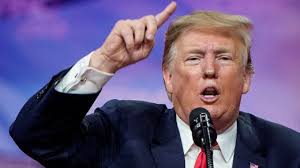
Donald Trump
Barnstorming the country in a series of hate-filled political rallies, Trump told his supporters:
- January 22:“We have it totally under control. It’s one person coming in from China.”
- February 2: “We pretty much shut it down coming in from China. It’s going to be fine.”
- February 24: “The Coronavirus is very much under control in the USA.”
- February 25: “CDC & my administration are doing a GREAT job of handling Coronavirus.”
- February 25: “I think that’s a problem that’s going to go away. They have studied it. They know very much. In fact, we’re very close to a vaccine.”
- February 26: “The 15 cases within a couple of days is going to be down to close to zero.”
- February 26: “We’re going very substantially down, not up.”
- February 27: “One day it’s like a miracle, it will disappear.”
- February 28: “We’re ordering a lot of supplies. We’re ordering a lot of, uh, elements that frankly we wouldn’t be ordering unless it was something like this. But we’re ordering a lot of different elements of medical.”
- February 28: “Now the Democrats are politicizing the Coronavirus….We did one of the great jobs….One of my people came up to me and said, ‘Mr. President, they tried to beat you on Russia, Russia, Russia’….They couldn’t do it. They tried the impeachment hoax….It’s all turning, they lost….And this is their new hoax.”
- March 4: “If we have thousands of people that get better just by, you know, sitting around and even going to work—some of them go to work, but they get better.”
- March 6: “I think we’re doing a really good job in this country of keeping it down. A tremendous job of keeping it down.”
- March 6: “Anybody right now, and yesterday, anybody that needs a test gets a test. And the tests are beautiful.”
- March 6: “I like this stuff. I really get it. People are surprised that I understand it. Every one of these doctors said, ‘How do you know so much about this?’ Maybe I have a natural ability. Maybe I should have done that instead of running for President.”
- March 8: “We have a perfectly coordinated and fine tuned plan at the White House for our attack on Coronavirus.”
- March 9: “The Fake News Media and their partner, the Democrat Party, is doing everything within its semi-considerable power (it used to be greater!) to inflame the CoronaVirus situation, far beyond what the facts would warrant. Surgeon General, The risk is low to the average American.”
- March 10: “It will go away. Just stay calm. It will go away.”
MORE CONFESSIONS TO BOB WOODWARD
But on March 19, Trump offered a completely different take on the virus in another phone interview with Woodward:
Donald Trump: Now it’s starting out it’s not just all people, Bob. But just today and yesterday, some startling facts came out. It’s not just old, older-
Bob Woodward: Yeah. Exactly.
Trump: Young people too. Plenty of young people. We’re looking at what’s going on in—
Woodward: So, give me a moment of talking to somebody, going through this with Fauci, or somebody who kind of… It caused a pivot in your mind, because it’s clear just from what’s on the public record, that you went through a pivot on this to, “Oh my God. The gravity is almost inexplicable and unexplainable.”
Trump: Well, I think Bob, really, to be honest with you-
Woodward: Sure. I want you to be.
Trump: I wanted to always play it down. I still like playing it down because I don’t want to create a panic.
9/11 ATTACKS, ABC NEWS, ABORTION, ADOLF HITLER, AL-QAEDA, ALTERNET, AMERICABLOG, ANDREW CUOMO, ANTHONY FAUCI, AP, BABY BOOMER RESISTANCE, BLOOMBERG, BOB WOODWARD, BUZZFEED, CARL BERNSTEIN, CBS NEWS, CENTERS FOR DISEASE CONTROL AND PREVENTION (CDC), CHICAGO, CHINA, CIA, CLOROX BLEACH, CNN, CORONAVIRUS, COVID-19, COVID-19 TEST KITS, CROOKS AND LIARS, DAILY KOZ, DAVID BROOKS, DEBORAH BIRX, DEMOCRATIC NATIONAL CONVENTION, DEPARTMENT OF HOMELAND SECURITY, DONALD RUMSFELD, DONALD TRUMP, DRUDGE REPORT, FACEBOOK, FBI, FEDERAL EMERGENCY MANAGEMENT AGENCY (FEMA), FIVETHIRTYEIGHT, FLORIDA, FORBES, FOX NEWS, FRANKLIN D. ROOSEVELT, GRETCHEN WHITMER, HARPER’S MAGAZINE, HUFFINGTON POST, JARED KUSHNER, JAY INSLEE, KOREAN WAR, KRISTI NOEM, KRISTIN URQUIZA, LARRY HOGAN, LOS ANGELES, MARK ANTHONY URQUIZA, MARK SHIELDS, MARYLAND, MASSACHUSSETS, MEDIA MATTERS, MICHIGAN, MICK MULVANEY, MIKE PENCE, MOLOCH, MOTHER JONES, MOVEON, MSNBC, N95 MASKS, NAVY SEALS, NBC NEWS, NEW YORK, NEW YORK CITY, NEWSWEEK, NPR, OSAMA BIN LADEN, PAULA REID, PBS NEWSHOUR, PERSONAL PROTECTIVE EQUIPMENT (PPE), PHOENIX RALLY, POLITICO, POLITICUSUSA, RAW STORY, REPUBLICANS, REUTERS, RICHARD NIXON, ROBERT MUELLER, RUDOLPH GIULIANI, SALON, SCHOOLS, SEAN HANNITY, SEAN HANNITY SHOW, SEATTLE TIMES, SLATE, SOUTH DAKOTA, STEVEN PRESSFIELD, TALKING POINTS MEMO, THE ATLANTIC, THE CHICAGO SUN-TIMES, THE CHICAGO TRIBUNE, THE DAILY BEAST, THE DAILY BLOG, THE GUARDIAN, THE HILL, THE HUFFINGTON POST, THE LOS ANGELES TIMES, THE NATION, THE NEW REPUBLIC, THE NEW YORK TIMES, THE PENTAGON, THE VILLAGE VOICE, THE WASHINGTON POST, THINKPROGRESS, TIME, TRUTHDIG, TRUTHOUT, TULSA OAKAHOMA RALLY, TWITTER, TWO POLITICAL JUNKIES, U.S. NEWS & WORLD REPORT, UPI, USA TODAY, UV LIGHT, VEIL: THE SECRET WARS OF THE CIA (BOOK), VIETNAM WAR, WALTER SHAUB, WASHINGTON, WASHINGTON D.C., WASHINGTON MONTHLY, WASHINGTON WEEK IN REVIEW, WATERGATE, WILLIAM J. CASEY, WONKETTE, WORLD TRADE CENTER
In Bureaucracy, History, Medical, Military, Politics, Social commentary on September 15, 2020 at 12:05 am
The 9/11 terror attacks frightened Americans more than any event since the Japanese attack on Pearl Harbor in 1941.. But they didn’t slaughter as many Americans nor affect their lives as intimately as has the advent of COVID-19, also known as Coronavirus.
First, COVID-19 has killed far more Americans than 9/11. As before mentioned, 9/11 snuffed out the lives of almost 3,000 Americans. But as of September 15, more than 194,000 Americans have died of COVID-19. And the plague has not finished its murderous work.
Second, while 9/11 affected two American cities—New York and Washington, D.C.—COVID-19 has spread throughout the country. As epicenters like New York City, Los Angeles and Chicago gain national attention, the virus continues to seep into rural centers—especially in the South and Midwest.
Third, the combination of evil and incompetence of the Trump administration has shaken Americans’ faith in the ability—and even the willingness—of the Federal Government to protect them.
TRUMP AND BOB WOODWARD
Conservative New York Times columnist David Brooks attacked President Donald Trump in terms usually reserved for serial killers. On the March 13 edition of The PBS Newshour, he said:
“This is what happens when you elect a sociopath as president, who doesn’t care, who has treated this whole thing for the past month as if it’s about him. ‘How do people like me?’ Minimizing the risks. ‘Does the stock market reflect well on me?’ And he hasn’t done the things a normal human being would do, which was to, let’s take precautions….
“And he’s incapable of that. And he’s even created an information distortion field around him.”
Yet even David Brooks could not have predicted the scandal that now threatens Trump’s chances for re-election on November 3.
To understand this, it’s necessary to compare what Trump was saying privately to legendary investigative reporter Bob Woodward—as opposed to what he was telling the American public in countless addresses.
Woodward—along with Carl Bernstein—achieved imperishable fame in 1972-74 as the Washington Post reporters whose Watergate-related stories led to the fall of President Richard M. Nixon.
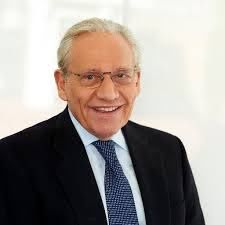
Bob Woodward
THE ADVENT OF CORONAVIRUS
First, some background on the Coronvirus itself:
The virus first appeared in Wuhan, China, in December, 2019. Its first reported victim became ill on December 1.
By December 31, the outbreak was traced to a novel strain of Coronavirus.
Coronaviruses are a group of viruses that affect birds and mammals. In humans, Coronaviruses can cause pneumonia and may cause bronchitis.
As President, Trump had access to Intelligence sources denied to his fellow citizens.
Trump first learned of the virus on January 3, 2020. This did not prevent him from playing golf on January 4, 5, 18 and 19.
On January 19, the first Coronavirus case appeared in the United States.
On January 27, then-acting chief of staff Mick Mulvaney tried to get the President to act.
But, according to officials who spoke with the Washington Post, Trump was “dismissive” of early briefings “because he did not believe that the virus had spread widely throughout the United States.”
Trump fired Mulvaney one month later.
Then, for Trump, it was back to the golf course—on February 1, 2 and 15.
TRUMP CONFESSES TO BOB WOODWARD
On February 7, he decided to share some of his Coronavirus Intelligence with legendary Washington Post editor and reporter Bob Woodward.
Why he chose to do this remains a mystery.
It’s possible that Trump—whose hatred of the press is infamous—thought he could “take” Woodward. Or perhaps even cultivate him.
Conservative New York Times columnist David Brooks thinks so. On the September 11 edition of The PBS Newshour, Brooks offered:
“First, the hubris to think, you could be the president and talk to Bob Woodward and not get hurt by it. Donald Trump walked right into this.
“Two, the extreme cynicism of not only bumbling around in February and March, because you didn’t know how serious the pandemic was, but the confirmation that you did know, and you still thought you could talk it down, as if you can talk down a force of nature, and that this—you wouldn’t end up getting caught.”
If Trump thought he could “take” or cultivate Woodward, it wasn’t the first time a high-ranking government official had done so.
During the Presidency of Ronald Reagan, CIA director William J. Casey spilled countless secrets to Woodward—which found their way into a 1987 book: Veil: The Secret Wars of the CIA, 1981-1987. Woodward admitted that he didn’t know why Casey had been so forthcoming.

On February 7, 2020, the following telephone interview between Trump and Woodward took place:
Bob Woodward: And so, what was [Chinese] President Xi [Jinping] saying yesterday?
Donald Trump: Oh, we were talking mostly about the virus, and I think he’s going to have it in good shape. But it’s a very tricky situation.
Woodward: Indeed, it is.
Trump: It goes through air, Bob. That’s always tougher than the touch. The touch, you don’t have to touch things, right? But the air, you just breathe the air and that’s how it’s passed. And so that’s a very tricky one. That’s a very delicate one. It’s also more deadly than even your strenuous flues. People don’t realize, we lose 25,000, 30,000 people a year here. Who would ever think that, right?
9/11 ATTACKS, ABC NEWS, ABORTION, ADOLF HITLER, AL-QAEDA, ALTERNET, AMERICABLOG, ANDREW CUOMO, ANTHONY FAUCI, AP, BABY BOOMER RESISTANCE, BLOOMBERG, BOB WOODWARD, BUZZFEED, CARL BERNSTEIN, CBS NEWS, CENTERS FOR DISEASE CONTROL AND PREVENTION (CDC), CHICAGO, CHINA, CIA, CLOROX BLEACH, CNN, CORONAVIRUS, COVID-19, COVID-19 TEST KITS, CROOKS AND LIARS, DAILY KOZ, DAVID BROOKS, DEBORAH BIRX, DEMOCRATIC NATIONAL CONVENTION, DEPARTMENT OF HOMELAND SECURITY, DONALD RUMSFELD, DONALD TRUMP, DRUDGE REPORT, FACEBOOK, FBI, FEDERAL EMERGENCY MANAGEMENT AGENCY (FEMA), FIVETHIRTYEIGHT, FLORIDA, FORBES, FOX NEWS, FRANKLIN D. ROOSEVELT, GRETCHEN WHITMER, HARPER’S MAGAZINE, HUFFINGTON POST, JARED KUSHNER, JAY INSLEE, KOREAN WAR, KRISTI NOEM, KRISTIN URQUIZA, LARRY HOGAN, LOS ANGELES, MARK ANTHONY URQUIZA, MARK SHIELDS, MARYLAND, MASSACHUSSETS, MEDIA MATTERS, MICHIGAN, MICK MULVANEY, MIKE PENCE, MOLOCH, MOTHER JONES, MOVEON, MSNBC, N95 MASKS, NAVY SEALS, NBC NEWS, NEW YORK, NEW YORK CITY, NEWSWEEK, NPR, OSAMA BIN LADEN, PAULA REID, PBS NEWSHOUR, PERSONAL PROTECTIVE EQUIPMENT (PPE), PHOENIX RALLY, POLITICO, POLITICUSUSA, RAW STORY, REPUBLICANS, REUTERS, RICHARD NIXON, ROBERT MUELLER, RUDOLPH GIULIANI, SALON, SCHOOLS, SEAN HANNITY, SEAN HANNITY SHOW, SEATTLE TIMES, SLATE, SOUTH DAKOTA, STEVEN PRESSFIELD, TALKING POINTS MEMO, THE ATLANTIC, THE CHICAGO SUN-TIMES, THE CHICAGO TRIBUNE, THE DAILY BEAST, THE DAILY BLOG, THE GUARDIAN, THE HILL, THE HUFFINGTON POST, THE LOS ANGELES TIMES, THE NATION, THE NEW REPUBLIC, THE NEW YORK TIMES, THE PENTAGON, THE VILLAGE VOICE, THE WASHINGTON POST, THINKPROGRESS, TIME, TRUTHDIG, TRUTHOUT, TULSA OAKAHOMA RALLY, TWITTER, TWO POLITICAL JUNKIES, U.S. NEWS & WORLD REPORT, UPI, USA TODAY, UV LIGHT, VEIL: THE SECRET WARS OF THE CIA (BOOK), VIETNAM WAR, WALTER SHAUB, WASHINGTON, WASHINGTON D.C., WASHINGTON MONTHLY, WASHINGTON WEEK IN REVIEW, WATERGATE, WILLIAM J. CASEY, WONKETTE, WORLD TRADE CENTER
In Bureaucracy, History, Law Enforcement, Medical, Military, Politics, Social commentary on September 14, 2020 at 12:15 am
On September 11, 2001, 19 Islamic terrorists snuffed out the lives of 3,000 Americans in New York, Washington, D.C. and Pennsylvania.
They did so by turning four commercial jetliners into fuel-bombs—and crashing them into, respectively, the Twin Towers of the World Trade Center in New York City; the Pentagon, in Washington, D.C.; and—unintentionally—a field in Somerset County, Pennsylvania.
(Its destination had been the White House or the Capitol Building. But its passengers, alerted by radio broadcasts of the doom awaiting them, resolved to take over the plane instead. The hijackers slammed the jet into the ground to avoid capture.)
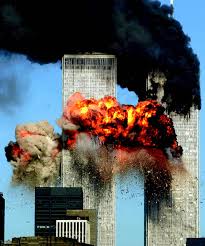
World Trade Center – September 11, 2001
But within less than a month, American warplanes began carpet-bombing Afghanistan, whose rogue Islamic “government” refused to surrender Osama bin Laden, the had of Al-Qaeda who had masterminded the attacks.
By December, 2001, the power of the Taliban was broken—and bin Laden was driven into hiding in Pakistan.
For more than 16 years, the United States—through its global military and espionage networks—relentlessly hunted down most of those responsible for that September carnage.
On May 1, 2011, U.S. Navy SEALS invaded bin Laden’s fortified mansion in Abbottabad, Pakistan—and shot him dead.
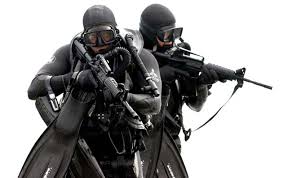
U.S. Navy SEALs
OSAMA BIN LADEN’S BOASTING
On December 13, 2001, the Pentagon released a videotape of Osama bin Laden discussing the attacks in Arabic with another man who appears to be a cleric.
The videotape had been discovered by American forces in a private home in Jalalabad, Afghanistan.
On the tape, bin Laden says he was pleasantly surprised by the amount of destruction caused at the World Trade Center. He had only expected the top portion of the Twin Towers to collapse:
“We calculated in advance the number of casualties from the enemy, who would be killed based on the position of the tower. We calculated that the floors that would be hit would be three or four floors. I was the most optimistic of them all.
“Due to my experience in this field [he had graduated from King Abdul Aziz University with a civil engineering degree in 1979] I was thinking that the fire from the gas in the plane would melt the iron structure of the building and collapse the area where the plane hit and all the floors above it only.
“This is all that we had hoped for.”
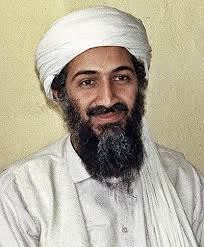
Osama bin Laden
9/11 VS. COVID-19
Now, consider this:
It’s September 11, 2020. Nineteen years to the day since the United States suffered its worst terrorist attack in history—a loss of 3,000 Americans.
And, in less than a year, the United States is nearing a death-toll of 200,000 from an enemy just as deadly and unrelenting as Al Qaeda.
That enemy is Coronavirus, also known as COVID-19.
The September 11 attacks jolted Americans out of their complacency toward Islamic terrorism. Since the 1980s, the United States had responded to terrorism via its legal system. After 9/11, Americans opted for a military response against Middle Eastern terror cells.
For months afterward, America feared the worst—that other cities would soon become targets for massive terror attacks. But, for all the death and destruction wrought that day, this didn’t happen.
There were two major reasons for this:
First, under its new director, Robert Mueller, the FBI completely refocused its mission from investigating crimes to preventing them. This resulted in a proactive rather than reactive mindset and approach. Even terrorists who felt safe abroad found themselves arrested by FBI agents employing the sort of techniques previously used against foreign spies.
Second, the attacks led to the creation of a huge new agency—the Department of Homeland Security. Massive sums of money were doled out to local police departments across the country, arming them with new hires and more sophisticated anti-crime technologies.
And for the first time since the dawning of the age of flight, the Federal Government took responsibility for preventing airline terrorism. Previously, this had fallen to individual airlines—which, seeing it as a financial drain, had assigned it a low priority.
The attacks also led to a complete restructuring of the United States military.
In the past, Americans had excelled in set-piece battles and wars. But when fighting enemies where guerrilla warfare negated overwhelming military power, the United States had done poorly—first in Korea (1950-1953) and then in Vietnam (1960-1975).
As a result, Secretary of Defense Donald Rumsfield reorganized the Pentagon’s bureaucracy, assigning highest priority to building unconventional military units such as the Army’s Green Berets and Delta Force, and the Navy’s SEALs.
These were all major changes resulting from the 9/11 attacks. They cost billions of dollars and got huge publicity. But they didn’t affect the lives of everyday Americans as intimately as has the advent of COVID-19, also known as Coronavirus.
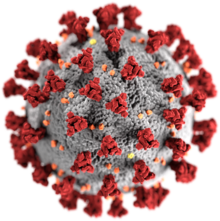
Coronavirus
The 9/11 terror attacks frightened Americans more than any event since the Japanese attack on Pearl Harbor in 1941.. But they slaughtered only a fraction of Americans, as compared with the 194,000 who have died from COVID-19, in less than a year..
Osama bin Laden deservedly gained infamy for plotting 9/11. But Donald Trump, who repeatedly lied about the dangers of COVID-19, remains beloved by about 40% of Americans.
2016 PRESIDENTIAL CAMPAIGN, ABC NEWS, ADOLF HITLER, ALTERNET, AMERICABLOG, AP, BABY BOOMER RESISTANCE, BEVIN ALEXANDER, BLOOMBERG, BUZZFEED, CBS NEWS, CNN, CROOKS AND LIARS, D-DAY, DAILY KOZ, DONALD TRUMP, DRUDGE REPORT, FACEBOOK, FIVETHIRTYEIGHT, GEORGE S. PATTON, GREAT BRITAIN, HARPER’S MAGAZINE, HEINZ GUDERIAN, HILLARY CLINTON, HOW HITLER COULD HAVE WON WORLD WAR II (BOOK), HUFFINGTON POST, MARK ESPER, MARK MEADOWS, MEDIA MATTERS, MILITARY TIMES, MOTHER JONES, MOVEON, MSNBC, NAZI GERMANY, NBC NEWS, NEWSWEEK, NICCOLO MACHIAVELLI, NPR, PBS NEWSHOUR, POLITICO, POLITICUSUSA, RAW STORY, REPUBLICANS, REUTERS, SALON, SEATTLE TIMES, SLATE, SOVIET UNION, STALINGRAD, TALKING POINTS MEMO, TERRORISM, THE ATLANTIC, THE CHICAGO SUN-TIMES, THE CHICAGO TRIBUNE, THE DAILY BEAST, THE DAILY BLOG, THE GUARDIAN, THE HILL, THE HUFFINGTON POST, THE LOS ANGELES TIMES, THE NATION, THE NEW REPUBLIC, THE NEW YORK TIMES, THE PENTAGON, THE PRINCE, THE VILLAGE VOICE, THE WASHINGTON POST, THINKPROGRESS, TIME, TRUTHDIG, TRUTHOUT, TWITTER, TWO POLITICAL JUNKIES, U.S. NEWS & WORLD REPORT, UPI, USA TODAY, WAFFEN-SS, WONKETTE, WORLD WAR 11
In Bureaucracy, History, Military, Politics, Social commentary on September 10, 2020 at 1:05 am
On September 3, a blockbuster story appeared in The Atlantic magazine under the headline: “Trump: Americans Who Died in War are ‘Losers’ and ‘Suckers'”.
The story opened: “When President Donald Trump canceled a visit to the Aisne-Marne American Cemetery near Paris in 2018, he blamed rain for the last-minute decision, saying that “the helicopter couldn’t fly” and that the Secret Service wouldn’t drive him there. Neither claim was true….
“In a conversation with senior staff members on the morning of the scheduled visit, Trump said, ‘Why should I go to that cemetery? It’s filled with losers.’ In a separate conversation on the same trip, Trump referred to the more than 1,800 marines who lost their lives at Belleau Wood as ‘suckers’ for getting killed.”
Donald Trump
The story has massive implications for Trump. During his 2016 campaign for President, he got huge support from military voters. A May 9, 2016 story in Military Times reported:
“In a new survey of American military personnel, Donald Trump emerged as active-duty service members’ preference to become the next U.S. president, topping Hillary Clinton by more than a 2-to-1 margin.”
When the story first appeared on Thursday, Trump demanded that aides deny it.
On Labor Day, Trump called a White House press conference. He was angry that more of the top brass at the Pentagon had not defended him.
And it showed:
“I’m not saying the military’s in love with me—the soldiers are, the top people in the Pentagon probably aren’t because they want to do nothing but fight wars so that all of those wonderful companies that make the bombs and make the planes and make everything else stay happy.”
The next day, his chief of staff, Mark Meadows said that Trump wasn’t referencing Defense Secretary Mark Esper, a former top lobbyist for Raytheon.
Attacking the “military industrial complex” hypocritically contradicted Trump’s efforts to broker multi-billion dollar arms sales with countries like Saudi Arabia. The companies which benefited from this $110 billion sale: Boeing, Lockheed Martin, Raytheon, and General Dynamics.
Trump’s rage reflected he mindset of an earlier CEO whose rage and egotism carried him—and his country—to ruin: Adolf Hitler.
Bevin Alexander provides an overall—but colorful—view of Hitler’s generalship in How Hitler Could have Won World War II.

Among the fatal military insist that led to the defeat of the defeat of the Third Reich:
- Wasting hundreds of Luftwaffe [air force] pilots, fighters and bombers in a halfhearted attempt to conquer England.
- Ignoring the pleas of generals like Erwin Rommel to conquer Syria, Iraq and Saudi Arabia, which would have given Germany control of most of the world’s oil.
- Attacking his ally, the Soviet Union, while still at war with Great Britain.
- Turning millions of Russians into enemies rather than allies by his brutal and murderous policies.
- Needlessly declaring war on the United States after the Japanese attacked Pearl Harbor. (Had he not done so, Americans would have focused all their attention on defeating Japan.)
- Refusing to negotiate a separate peace with Soviet dictator Joseph Stalin—thus granting Germany a large portion of captured Russian territory in exchange for letting Stalin remain in power.
- Insisting on a “not-one-step-back” military “strategy” that led to the needless surrounding, capture and/or deaths of hundreds of thousands of German servicemen.
As the war turned increasingly against him, Hitler became ever more rigid in his thinking.
He demanded absolute control over the smallest details of his forces. This, in turn, led to astonishing and unnecessary losses among their ranks.
On June 6, 1944, General Erwin Rommel insisted that Panzer tanks to drive the Allies from the Normandy beaches. But these could not be released except on direct orders of the Fuehrer.

Panzer tank
Hitler’s chief of staff, General Alfred Jodl, informed Rommel: The Fuhrer was asleep-–and was not to be awakened. By the time Hitler awoke and issued the order, it was too late.
Nor could Hitler accept responsibility for the policies that were leading Germany to certain defeat. He blamed his generals, accused them of cowardice, and relieved many of the best ones from command.
Among those sacked was Heinz Guderian, creator of the German Panzer corps—and responsible for the blitzkreig victory against France in 1940.
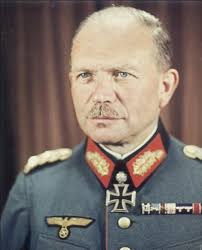
Heinz Guderian
Another was Erich von Manstein, designer of the strategy that defeated France in six weeks—which Germany had failed to do during four years of World War 1.

Erich von Manstein
Finally, on April 29, 1945—with the Russians only blocks from his underground Berlin bunker—Hitler dictated his “Last Political Testament.”
Once again, he refused to accept responsibility for unleashing a war that ultimately consumed 50 million lives:
“It is untrue that I or anyone else in Germany wanted war in 1939. It was desired and instigated exclusively by those international statesmen who either were of Jewish origin or worked for Jewish interests.”
Hitler had launched the invasion of Poland—and World War II—with a lie: That Poland had attacked Germany.
Fittingly, he closed the war—and his life—with a final lie.
The ancient Greeks believed that “a man’s character is his destiny.”
For Adolf Hitler—and the nations he ravaged—that proved fatally true.
It remains to be seen whether the same will prove true for Donald Trump—and the United States.
2016 PRESIDENTIAL CAMPAIGN, 9/11 ATTACKS, ABC NEWS, ADOLF HITLER, AFGHANISTAH, ALTERNET, AMERICABLOG, ANDREW CUOMO, AP, ARMY CORPS OF ENGINEERS, BABY BOOMER RESISTANCE, BARACK OBAMA, BILL CLINTON, BLOOMBERG, BUSES, BUZZFEED, CBS NEWS, CENTERS FOR DISEASE CONTROL AND PREVENTION (CDC), CNN, CORONAVIRUS, COVID-19, CROOKS AND LIARS, DAILY KOZ, DAVID BROOKS, DELTA FORCE, DOCTORS, DONALD RUMSFELD, DONALD TRUMP, DRUDGE RETORT, EBOLA, ELDERLY, FACEBOOK, FEAR, FEDERAL EMERGENCY MANAGEMENT AGENCY, FEEDING AMERICA, FIREFIGHTERS, FIVETHIRTYEIGHT, FOOD BANKS, FOX NEWS NETWORK, FRANKLIN D. ROOSEVELT, GARBAGE MEN, GEORGE H.W. BUSH, GEORGE W. BUSH, GREEN BERETS, GRETCHEN WHITMER, GROCERY SHOPPING, HARPER’S MAGAZINE, IRAQ, JAY INSLEE, LAUREN SAUER, MASKS, MEDIA MATTERS, MIKE PENCE, MOTHER JONES, MOVEON, MSNBC, MUSLIMS, NATIONAL SECURITY COUNCIL, NBC NEWS, NEWSWEEK, NPR, NURSES, NURSING HOMES, OSBMA BIN LADEN, PANIC SHOPPING, PBS NEWSHOUR, PERSONAL PROTECTIVE EQUIPMENT (PPES), POLICE, POLITICO, POLITICUSUSA, RAW STORY, REUTERS, RUDY GIULIANI, SADDAM HUSSEIN, SALON, SAN ANTONIO FOOD BANK, SCHOOLS, SEAN HANNITY, SEAN HANNITY SHOW, SEATTLE TIMES, SLATE, SOCIAL DISTANCING, SPANISH INFLUENZA, STEVEN PRESSFIELD, TALKING POINTS MEMO, TAXIS, THE ATLANTIC, THE CHICAGO SUN-TIMES, THE CHICAGO TRIBUNE, THE DAILY BEAST, THE DAILY BLOG, THE GUARDIAN, THE HILL, THE HUFFINGTON POST, THE LOS ANGELES TIMES, THE NATION, THE NEW REPUBLIC, THE NEW YORK TIMES, THE PENTAGON, THE VILLAGE VOICE, THE WASHINGTON POST, THINKPROGRESS, TIM ZIEMER, TIME, TRUTHDIG, TRUTHOUT, TWITTER, TWO POLITICAL JUNKIES, U.S. NAVY SEALS, U.S. NEWS & WORLD REPORT, UPI, USA TODAY, WASHINGTON MONTHLY, WHITE HOUSE PANDEMIC OFFICE, WILHELM 1, WONKETTE, WORLD TRADE CENTER, YAMICHE ALCINDOR
In Bureaucracy, History, Medical, Military, Politics, Social commentary on April 23, 2020 at 2:00 am
The Centers for Disease Control and Prevention (CDC) has urged Americans to keep at least six feet from their fellows. And most of the nation’s governors have issued stay-at-home orders that ban large gatherings—including visits to parks and beaches.
Yet President Donald Trump has openly encouraged defiance of those orders. On April 17 he issued a series of tweets to his supporters:
“LIBERATE MINNESOTA!”
“LIBERATE MICHIGAN!”
“LIBERATE VIRGINIA, and save your great 2nd Amendment. It is under siege!”
All these states have Democratic governors. Their residents are being urged to stay indoors, wear masks when they venture outside and keep a six-feet distance between themselves and others.
These states have been targeted for Right-wing protests—featuring large numbers of men and women standing close together, with most of them not wearing masks. They claim their “freedoms” are being infringed upon.

Writer Steven Pressfield summed up the immorality of these protests: “Why are we asked to wear surgical or face masks in public, to practice social distancing and to observe self-quarantining? Because these practices are not for the individual alone but for the protection of the whole [community].”
Washington Governor Jay Inslee tweeted: “The president’s statements this morning encourage illegal and dangerous acts. He is putting millions of people in danger of contracting COVID-19.
“His unhinged rantings and calls for people to ‘liberate’ states could also lead to violence. We’ve seen it before.”
After the September 11, 2001 terrorist attacks on New York and Washington, D.C. President George W. Bush publicly denounced harassment of American Muslims: “Muslim Americans make an incredibly valuable contribution to our country. They need to be treated with respect.”
But Trump has openly called for public—and illegal—defiance of the nation’s governors and the health experts of his own administration. Meanwhile, the United States has 855,255 Coronavirus cases—and 47,973 deaths.
During Trump’s 2016 Presidential campaign, he did—for Republicans—the unthinkable: He openly blamed Bush for 9/11.
“He was president, okay?” Trump said on Bloomberg Television. “Blame him or don’t blame him, but he was president. The World Trade Center came down during his reign.”
But now Trump holds the Presidency, with more than 47,000 Americans dead of the virus—after he spent two months dismissing as a threat.
On March 13, PBS NewsHour’s reporter Yamiche Alcindor bluntly asked Trump if he bore any responsibility for the surge in cases. Even more embarrassing for Trump, she noted that he had gutted the White House’s Pandemic Office set up by his predecessor, Barack Obama.
Trump’s reply: “I don’t take any responsibility at all.”

So much for the public side of COVID-19. Now for the personal.
At first, it was thought that only the elderly—those 65 and older—were the targets of the virus. Nursing homes started filling with corpses. By April 18, 6,900 nursing home occupants had died across the nation.
But then its victims started including those in their 20s to 40s—and even teenagers. An Illinois infant became the nation’s youngest casualty.
Schools closed across the country. Parents found themselves living with their children fulltime. Schools quickly moved to provide online learning via the Internet. In Colorado, computers were provided for children whose families could not afford them. But many students in other states were not so lucky.
People who must “fort up” carry a huge emotional burden—especially children, who by nature are highly sociable. They miss their friends and fear that their lives will never be normal again.
But even adults feel similar fears—especially those who have lost their jobs because their companies have shut down. Will an administration dedicated to bailing out wealthy organizations—like cruise ship companies and luxury hotels—care about providing them with life-saving subsidies?
At greatest risk are those whose jobs demand extensive contact with the public—firefighters, janitors, garbage men, police, store clerks (especially in high-volume stores).
At the top of the list are nurses and doctors who treat COVID-19 patients. Many of them do so without Personal Protective Equipment (PPEs)—thanks to Trump’s “you’re-on-your-own” attitude and feuding with governors he feels don’t appreciate him enough.
Each person who leaves home must deal with fear in his or her own way. Some, taking “the stiff upper lip” approach refuse to openly admit the fear that constantly gnaws at them. Others are entirely willing to confess it and refuse to leave home except when forced to. And there are those who seem to dare the virus to take them.
Each person knows there are countless ways to become accidentally exposed to the virus. You can:
- Put on your face mask wrong;
- Be forced by sheer numbers of people to violate the “six-feet-apart” rule;
- Take off your mask when you’re home and, before thoroughly washing your hands, involuntarily touch your face;
- Touch, with virus-contaminated hands, doorknobs, light switches, dishware when you return home.
The last time the United States faced a pandemics was 100 years ago—the Spanish influenza. Raging from January, 1918 to December, 1920, it infected 500 million people worldwide. Estimates of those killed range from 17 to 100 million. Of these, 675,000 were Americans.
With a vaccine for COVID-19 at least a year away, Americans—and the rest of the world—can only take the best precautions they can.
2016 PRESIDENTIAL CAMPAIGN, 9/11 ATTACKS, ABC NEWS, ADOLF HITLER, AFGHANISTAH, ALTERNET, AMERICABLOG, ANDREW CUOMO, AP, ARMY CORPS OF ENGINEERS, BABY BOOMER RESISTANCE, BARACK OBAMA, BILL CLINTON, BLOOMBERG, BUSES, BUZZFEED, CBS NEWS, CENTERS FOR DISEASE CONTROL AND PREVENTION (CDC), CNN, CORONAVIRUS, COVID-19, CROOKS AND LIARS, DAILY KOZ, DAVID BROOKS, DELTA FORCE, DOCTORS, DONALD RUMSFELD, DONALD TRUMP, DRUDGE RETORT, EBOLA, ELDERLY, FACEBOOK, FEAR, FEDERAL EMERGENCY MANAGEMENT AGENCY, FEEDING AMERICA, FIREFIGHTERS, FIVETHIRTYEIGHT, FOOD BANKS, FOX NEWS NETWORK, FRANKLIN D. ROOSEVELT, GARBAGE MEN, GEORGE H.W. BUSH, GEORGE W. BUSH, GREEN BERETS, GRETCHEN WHITMER, GROCERY SHOPPING, HARPER’S MAGAZINE, IRAQ, JAY INSLEE, LAUREN SAUER, MASKS, MEDIA MATTERS, MIKE PENCE, MOTHER JONES, MOVEON, MSNBC, MUSLIMS, NATIONAL SECURITY COUNCIL, NBC NEWS, NEWSWEEK, NPR, NURSES, NURSING HOMES, OSBMA BIN LADEN, PANIC SHOPPING, PBS NEWSHOUR, PERSONAL PROTECTIVE EQUIPMENT (PPES), POLICE, POLITICO, POLITICUSUSA, RAW STORY, REUTERS, RUDY GIULIANI, SADDAM HUSSEIN, SALON, SAN ANTONIO FOOD BANK, SCHOOLS, SEAN HANNITY, SEAN HANNITY SHOW, SEATTLE TIMES, SLATE, SOCIAL DISTANCING, SPANISH INFLUENZA, STEVEN PRESSFIELD, TALKING POINTS MEMO, TAXIS, THE ATLANTIC, THE CHICAGO SUN-TIMES, THE CHICAGO TRIBUNE, THE DAILY BEAST, THE DAILY BLOG, THE GUARDIAN, THE HILL, THE HUFFINGTON POST, THE LOS ANGELES TIMES, THE NATION, THE NEW REPUBLIC, THE NEW YORK TIMES, THE PENTAGON, THE VILLAGE VOICE, THE WASHINGTON POST, THINKPROGRESS, TIM ZIEMER, TIME, TRUTHDIG, TRUTHOUT, TWITTER, TWO POLITICAL JUNKIES, U.S. NAVY SEALS, U.S. NEWS & WORLD REPORT, UPI, USA TODAY, WASHINGTON MONTHLY, WHITE HOUSE PANDEMIC OFFICE, WILHELM 1, WONKETTE, WORLD TRADE CENTER, YAMICHE ALCINDOR
In Bureaucracy, History, Medical, Military, Politics, Social commentary on April 22, 2020 at 12:27 am
Before the COVID-19 pandemic, going to the supermarket was a routine matter.
You assumed—usually correctly—that those items you wanted would be in stock. Then you would find and load them into your car.
But post-COVID-19 shoppers face a totally different world. Much of the time store shelves are completely bare, as if a marauding army has cleaned them out.
In this case, that “army” consists of your fellow Americans. And their insatiable, fear-driven buying frenzy snapped up the following products as quickly as store clerks could restock shelves:
Week 1: Hand sanitizers, soaps and disinfectants.
Week 2: Toilet paper and paper towels.
Weeks 3 and 4: Spiral hams and baking yeast.
Week 5: Hair clippers and hair dye.
Those who could afford to shop at grocery stores—and find what they needed—were the lucky ones.
Increasingly, tens of thousands of Americans were forced to turn to food banks to keep their families alive.
On April 9, the San Antonio Food Bank aided about 10,000 households in a record-setting giveaway at a South Side flea market. Its drive-thru was the fourth such event for the Food Bank since March 31.
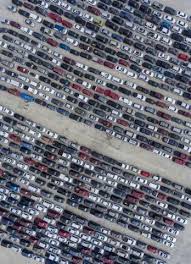
Motorists lined up to receive help from food bank
About 6,000 households preregistered for the food distribution on the Food Bank’s website. But thousands more showed up, hoping to put something on their tables.
Similar scenes occurred at food banks across the United States.
According to Feeding America, a national network of food banks, one in seven Americans relies on a local food bank to eat. Statistics from the U.S. Department of Agriculture reveal that 11.8 percent of Americans are food insecure.
But those who don’t need food banks face a serious question: “Is it better to order groceries or go to the store?”
A March 27 article in TIME addresses this and several other issues.
According to “Is It Safe to Go to the Grocery Store?”: “If you can afford to, it’s best to order food online, experts say. Delivery services dramatically reduce your contact with other people: you pay online, it’s packaged elsewhere and the food is left outside your door.”
A Centers for Disease Control and Prevention (CDC) spokesperson told TIME that “[currently] there is no evidence to support transmission of COVID-19 associated with food or food packaging.”
Centers for Disease Control and Prevention
But Jared Baeten, the vice dean of the School of Public Health and professor of global health, medicine and epidemiology at the University of Washington, advises that “for complete risk reduction, you might want to clean off your groceries,” while making sure to not get hazardous chemicals on what you eat.
Dr. Lauren Sauer, an assistant professor of emergency medicine at Johns Hopkins University School of Medicine, says your primary concern while shopping should be the risk of contracting the virus from other people, not surfaces. She also warns that “not everyone is going to be respectful of that six feet” of social distancing recommended by the CDC. If you see a crowded aisle, skip it or wait for people to leave.
A major casualty of COVID-19 has been the restaurant industry.
Forget about dining out at leisure: Restaurants have been closed across the country. Many of them still offer take-out—provided you can get there to pick up your order. But some that would have never dreamed of delivering their fare have hired platoons of drivers.
Another business that’s suffering badly is taxi services.
Fewer people are out on the streets. There are two reasons for this:
- Many people simply fear leaving their homes; and
- Stay-at-home orders by governors are restricting travel except for the most urgent needs.
So taxi drivers are hurting, making only a pittance of what they formerly made.
But there are risks for those who take cabs or buses.
Some cab drivers are reportedly sick with COVID-19 but, desperate for money, continue to haul passengers in extremely close confinement.
And while the CDC has urged Americans to keep at least six feet from their fellows, it’s impossible to do this on a crowded bus. Moreover, you can’t be certain that the seat you’re occupying hasn’t been sneezed or coughed on by a COVID-19 carrying passenger.
The White House and all prominent public health officials have urged people across the country to stay at home as much as possible to prevent the spread of the Coronavirus.
But as late as March 25, governors of five states—Arkansas, Iowa, Nebraska, North Dakota and South Dakota—had refused to issue lockdown orders for their residents. Three states issued only partial measures.
And the Right—headed by President Donald Trump—has erupted in outrage at being expected to show concern for their fellow Americans.
On April 15, Trump issued a series of tweets, calling on his supporters to “LIBERATE” Minnesota, Michigan and Virginia.
It’s no coincidence that all these states are headed by Democratic governors.And have been the targets of public protests by Right-wingers against stay-at-home orders.
Asked whether those states should lift their stay-at-home orders, Trump said, “No, but elements of what they’ve done are too much. …It’s too tough.”
2016 PRESIDENTIAL CAMPAIGN, 9/11 ATTACKS, ABC NEWS, ADOLF HITLER, AFGHANISTAH, ALTERNET, AMERICABLOG, ANDREW CUOMO, AP, ARMY CORPS OF ENGINEERS, BABY BOOMER RESISTANCE, BARACK OBAMA, BILL CLINTON, BLOOMBERG, BUSES, BUZZFEED, CBS NEWS, CENTERS FOR DISEASE CONTROL AND PREVENTION (CDC), CNN, CORONAVIRUS, COVID-19, CROOKS AND LIARS, DAILY KOZ, DAVID BROOKS, DELTA FORCE, DOCTORS, DONALD RUMSFELD, DONALD TRUMP, DRUDGE RETORT, EBOLA, ELDERLY, FACEBOOK, FEAR, FEDERAL EMERGENCY MANAGEMENT AGENCY, FEEDING AMERICA, FIREFIGHTERS, FIVETHIRTYEIGHT, FOOD BANKS, FOX NEWS NETWORK, FRANKLIN D. ROOSEVELT, GARBAGE MEN, GEORGE H.W. BUSH, GEORGE W. BUSH, GREEN BERETS, GRETCHEN WHITMER, GROCERY SHOPPING, HARPER’S MAGAZINE, IRAQ, JAY INSLEE, LAUREN SAUER, MASKS, MEDIA MATTERS, MIKE PENCE, MOTHER JONES, MOVEON, MSNBC, MUSLIMS, NATIONAL SECURITY COUNCIL, NBC NEWS, NEWSWEEK, NPR, NURSES, NURSING HOMES, OSBMA BIN LADEN, PANIC SHOPPING, PBS NEWSHOUR, PERSONAL PROTECTIVE EQUIPMENT (PPES), POLICE, POLITICO, POLITICUSUSA, RAW STORY, REUTERS, RUDY GIULIANI, SADDAM HUSSEIN, SALON, SAN ANTONIO FOOD BANK, SCHOOLS, SEAN HANNITY, SEAN HANNITY SHOW, SEATTLE TIMES, SLATE, SOCIAL DISTANCING, SPANISH INFLUENZA, STEVEN PRESSFIELD, TALKING POINTS MEMO, TAXIS, THE ATLANTIC, THE CHICAGO SUN-TIMES, THE CHICAGO TRIBUNE, THE DAILY BEAST, THE DAILY BLOG, THE GUARDIAN, THE HILL, THE HUFFINGTON POST, THE LOS ANGELES TIMES, THE NATION, THE NEW REPUBLIC, THE NEW YORK TIMES, THE PENTAGON, THE VILLAGE VOICE, THE WASHINGTON POST, THINKPROGRESS, TIM ZIEMER, TIME, TRUTHDIG, TRUTHOUT, TWITTER, TWO POLITICAL JUNKIES, U.S. NAVY SEALS, U.S. NEWS & WORLD REPORT, UPI, USA TODAY, WASHINGTON MONTHLY, WHITE HOUSE PANDEMIC OFFICE, WILHELM 1, WONKETTE, WORLD TRADE CENTER, YAMICHE ALCINDOR
In Bureaucracy, History, Medical, Military, Politics, Social commentary on April 21, 2020 at 12:11 am
One of the biggest differences between the September 11, 2001 terrorist attacks and the COVID-19 pandemic is this:
After 9/11, Americans drew strength from each other. During Coronavirus, Americans remain isolated and forced to rely on their own resources.
This has its origins at the top—with President Donald Trump.
Like Adolf Hitler, Trump likes to pit individuals and organizations against each other. Hitler, for example, would assign several agencies to tackle the same problem: “That way, the stronger one gets the job done,” he told his architect, Albert Speer.
This creates needless duplication of efforts and wasted resources. But it ensures that Trump—like Hitler—remains the final voice of authority, since so many others are competing for his favor and direction.
Donald Trump
This has not, however, worked out well for the 50 states that make up the United States of America.
During the Great Depression, President Franklin D. Roosevelt intervened powerfully to ensure that all Americans received the help they needed.
Trump has made it clear that each state is responsible for securing its needed supply of Personal Protective Equipment (PPEs) for its doctors and nurses aiding Coronavirus patients. This has resulted in a dog-eat-dog atmosphere of cutthroat competition and scarcity, with Americans not only fighting the virus but each other.
Even worse: Trump and Republicans are using a deadly plague as a weapon against those Americans they hate.
On March 26, during an interview on Fox News, Trump blamed the failures of his administration’s response to Coronavirus on Democratic state governors like Andrew Cuomo (NY), Jay Inslee (WA), and Gretchen Whitmer (MI).
On March 27, during his press briefing, Trump said he told Vice President Mike Pence—who’s officially in charge of the White House’s response effort—to not call Inslee and Whitmer because they weren’t “appreciative” enough of his efforts.
Trump said this even as hospitals in each of their states were being overwhelmed with Coronavirus patients.
“I tell him—I mean I’m a different type of person— I say, ‘Mike, don’t call the governor in Washington, you’re wasting your time with him. Don’t call the woman in Michigan,’” Trump said. “If they don’t treat you right, I don’t call.”
Trump said that when people criticized him, they were criticizing the federal government: “When they’re not appreciative to me, they’re not appreciative to the Army Corps, they’re not appreciative to FEMA [Federal Emergency Management Agency]. It’s not right.”
Trump also attacked Whitmer on Right-wing Fox News’ “Sean Hannity Show”: “I don’t know if she knows what’s going on, but all she does is sit there and blame the federal government.”
That same day—March 27—Whitmer told a Michigan radio station: “What I’ve gotten back is that vendors with whom we’ve procured contracts—they’re being told not to send stuff to Michigan. It’s really concerning. I reached out to the White House last night and asked for a phone call with the president, ironically at the time this stuff was going on.”
Gretchen Whitmer
A March 29 story in the Washington Monthly sheds light on what lay behind Whitmer’s inability to secure desperately-needed ventilators from her longtime vendors. Its headline ran: “What If Trump Decides to Save Republicans But Not Democrats?”
A sub-headline read: “He’s providing vital resources to red states and ignoring blue states.”
The Black Hand
Florida submitted a request to FEMA on March 11 for 430,000 surgical masks, 180,000 N95 respirators, 82,000 face shields and 238,000 gloves—and received a shipment with everything three days later.
On Fox News, Rudy Giuliani, Trump’s personal lawyer, bluntly told governors: “Take the blame when you have to. When you play with your boss, sometimes it’s better when you don’t win the golf game. He’s the boss, he’s got all the resources.”
The mentality of the Black Hand has come to the Oval Office.
The Washington Monthly story concludes ominously: “What if the White House simply gives all the masks and ventilators to red states and counties, leaving blue ones to struggle? What mechanisms of accountability are left?
“U.S. democracy wasn’t set up to deal with a president openly behaving like a James Bond villain while being protected by a political party behaving more like a mafia than a civic institution.”
But while corpses pile up and Trump wages repeated feuds with state governors, ordinary citizens daily face never-before-imagined fears and dangers.
Coronavirus has forced people to be apart, with each one forced to face his / her own fears of something that can’t be seen and can strike anywhere, anytime, at anyone.
Smart Americans no longer venture outdoors without wearing a mask—a medically-approved N95 one if possible, but at least a homemade one. It’s not unusual to see people wearing blue rubber gloves as well. 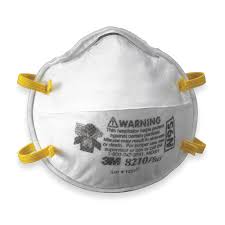
N95 mask
Before COVID-19, a masked man entering a bank meant: “This is a robbery!” Today, tellers aren’t surprised when they see a customer wearing a surgical mask.
Going to the supermarket used to be a routine matter: You would assume—usually correctly—that those items you wanted would be in stock. Then you would find and load them into your car.
No longer.
2016 PRESIDENTIAL CAMPAIGN, 9/11 ATTACKS, ABC NEWS, ADOLF HITLER, AFGHANISTAH, ALTERNET, AMERICABLOG, ANDREW CUOMO, AP, ARMY CORPS OF ENGINEERS, BABY BOOMER RESISTANCE, BARACK OBAMA, BILL CLINTON, BLOOMBERG, BUSES, BUZZFEED, CBS NEWS, CENTERS FOR DISEASE CONTROL AND PREVENTION (CDC), CNN, CORONAVIRUS, COVID-19, CROOKS AND LIARS, DAILY KOZ, DAVID BROOKS, DELTA FORCE, DOCTORS, DONALD RUMSFELD, DONALD TRUMP, DRUDGE RETORT, EBOLA, ELDERLY, FACEBOOK, FEAR, FEDERAL EMERGENCY MANAGEMENT AGENCY, FEEDING AMERICA, FIREFIGHTERS, FIVETHIRTYEIGHT, FOOD BANKS, FOX NEWS NETWORK, FRANKLIN D. ROOSEVELT, GARBAGE MEN, GEORGE H.W. BUSH, GEORGE W. BUSH, GREEN BERETS, GRETCHEN WHITMER, GROCERY SHOPPING, HARPER’S MAGAZINE, IRAQ, JAY INSLEE, LAUREN SAUER, MASKS, MEDIA MATTERS, MIKE PENCE, MOTHER JONES, MOVEON, MSNBC, MUSLIMS, NATIONAL SECURITY COUNCIL, NBC NEWS, NEWSWEEK, NPR, NURSES, NURSING HOMES, OSBMA BIN LADEN, PANIC SHOPPING, PBS NEWSHOUR, PERSONAL PROTECTIVE EQUIPMENT (PPES), POLICE, POLITICO, POLITICUSUSA, RAW STORY, REUTERS, RUDY GIULIANI, SADDAM HUSSEIN, SALON, SAN ANTONIO FOOD BANK, SCHOOLS, SEAN HANNITY, SEAN HANNITY SHOW, SEATTLE TIMES, SLATE, SOCIAL DISTANCING, SPANISH INFLUENZA, STEVEN PRESSFIELD, TALKING POINTS MEMO, TAXIS, THE ATLANTIC, THE CHICAGO SUN-TIMES, THE CHICAGO TRIBUNE, THE DAILY BEAST, THE DAILY BLOG, THE GUARDIAN, THE HILL, THE HUFFINGTON POST, THE LOS ANGELES TIMES, THE NATION, THE NEW REPUBLIC, THE NEW YORK TIMES, THE PENTAGON, THE VILLAGE VOICE, THE WASHINGTON POST, THINKPROGRESS, TIM ZIEMER, TIME, TRUTHDIG, TRUTHOUT, TWITTER, TWO POLITICAL JUNKIES, U.S. NAVY SEALS, U.S. NEWS & WORLD REPORT, UPI, USA TODAY, WASHINGTON MONTHLY, WHITE HOUSE PANDEMIC OFFICE, WILHELM 1, WONKETTE, WORLD TRADE CENTER, YAMICHE ALCINDOR
In Bureaucracy, History, Medical, Military, Politics, Social commentary on April 20, 2020 at 1:01 am
COVID-19 may well change our lives more fundamentally than even 9/11.
Yes, the terrorist attacks on the Twin Towers and the Pentagon were horrific—and costly in lives. Almost 3,000 Americans died that day.
After decades of ignoring Islamic terrorist attacks on American lives and property throughout the Middle East and the rest of the world, America shook off its complacency.
First came a much-anticipated invasion of Afghanistan–the “nation” which had given shelter to 9/11 mastermind Osama bin Laden. Starting on October 7, 2001, by December American planes and ground forces swept bin Laden’s hosts, the Taliban, from power.
Bin Laden disappeared into Pakistan, but was shot to death by United States Navy SEALs on May 1, 2011.
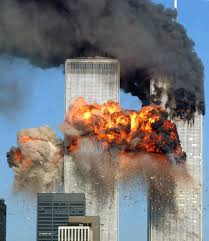
World Trade Center – September 11, 2001
The 9/11 attacks also resulted in unforeseen events. President George W. bush used them as an excuse to invade Iraq in 2003 and topple its dictator, Saddam Hussein, from power.
Bush had long blamed Hussein for not folding after the President’s father, George H.W. Bush, attacked Iraq in 1991 after its invasion of Kuwait. Hussein’s failure to fall from power, believed Bush Junior, had resulted in his father’s losing a second White House term in 1992 to Bill Clinton.
But once the United States invaded Afghanistan and Iraq, it got stuck there—and remains so to this day. What started as a purely military mission became a “nation-building” one.
Yet another result of the 9/11 attacks was a complete restructuring of the United States military. In the past, Americans had excelled in set-piece battles and wars.
Americans have never forgotten their overwhelming victories over the Germany of Kaiser Wilhelm II in 1918 and Fuhrer Adolf Hitler in 1945. But when it came to fighting enemies where guerrilla warfare negated overwhelming military power, the United States had done poorly—first in Korea (1950-1953) and then in Vietnam (1960-1975).
As a result, Secretary of Defense Donald Rumsfield reorganized the Pentagon’s bureaucracy, assigning highest priority to building unconventional military units such as the Army’s Green Berets and Delta Force, and the Navy’s SEALs.
These were all major changes resulting from the 9/11 attacks. They cost billions of dollars and got huge publicity. But they didn’t affect the lives of everyday Americans as intimately as has the advent of COVID-19, also known as Coronavirus.
Coronavirus
First, COVID-19 has killed far more Americans than 9/11. As before mentioned, 9/11 snuffed out the lives of almost 3,000 Americans. But as of April 20, more than 41,114 Americans have died of COVID-19. And the plague has not finished its murderous work.
Second, while 9/11 affected two American cities—New York and Washington, D.C.—COVID-19 has spread throughout the country. As epicenters like New York City, Los Angeles and Chicago gain national attention, the virus continues to seep into rural centers—especially in the South and Midwest.
Third, the combination of evil and incompetence of the Trump administration has shaken Americans’ faith in the ability—and even the willingness—of the Federal Government to protect them.
Conservative New York Times columnist David Brooks attacked President Donald Trump in terms usually reserved for serial killers. On the March 13 edition of The PBS Newshour, he said:
“This is what happens when you elect a sociopath as president, who doesn’t care, who has treated this whole thing for the past month as if it’s about him. ‘How do people like me?’ Minimizing the risks. ‘Does the stock market reflect well on me?’ And he hasn’t done the things a normal human being would do, which was to, let’s take precautions….
“And he’s incapable of that. And he’s even created an information distortion field around him.”
In 2014, following the Ebola outbreak in West Africa, President Barack Obama created the White House Pandemic Office, run by the White House’s National Security Council (NSC).

Barack Obama
Heading it was Rear Admiral Tim Ziemer. Under President George W. Bush, he had successfully fought malaria overseas. His topflight team of infectious disease and public health experts was creating a national bio-defense strategy. Their goal: Coordinate agencies to make the United States more resilient to the threat of epidemics and biological warfare.
In May, 2018, Trump ordered the NSC’s global health security unit shut down. The reason: Trump’s pathological jealousy of and hatred for Obama.
Compounding that outrage: From January to early March, 2020, Trump and his allies within the Republican party and Fox News Network repeatedly assured Americans they had nothing to fear.
Barnstorming the country in a series of hate-filled political rallies, Trump told his supporters:
- January 22: “We have it totally under control. It’s one person coming in from China.”
- February 24: “The Coronavirus is very much under control in the USA.”
- February 26: “The 15 cases within a couple of days is going to be down to close to zero.”
- February 27: “One day it’s like a miracle, it will disappear.”
- February 28: “Now the Democrats are politicizing the Coronavirus….We did one of the great jobs….One of my people came up to me and said, ‘Mr. President, they tried to beat you on Russia, Russia, Russia’….They couldn’t do it. They tried the impeachment hoax….It’s all turning, they lost….And this is their new hoax.”
- March 6: “I think we’re doing a really good job in this country of keeping it down. A tremendous job of keeping it down.”
 Bureaucracybuster's Blog
9/11 ATTACKS, ABC NEWS, ABORTION, ADOLF HITLER, AL-QAEDA, ALTERNET, AMERICABLOG, ANDREW CUOMO, ANTHONY FAUCI, AP, BABY BOOMER RESISTANCE, BLOOMBERG, BOB WOODWARD, BUZZFEED, CARL BERNSTEIN, CBS NEWS, CENTERS FOR DISEASE CONTROL AND PREVENTION (CDC), CHICAGO, CHINA, CIA, CLOROX BLEACH, CNN, CORONAVIRUS, COVID-19, COVID-19 TEST KITS, CROOKS AND LIARS, DAILY KOZ, DAVID BROOKS, DEBORAH BIRX, DEMOCRATIC NATIONAL CONVENTION, DEPARTMENT OF HOMELAND SECURITY, DONALD RUMSFELD, DONALD TRUMP, DRUDGE REPORT, FACEBOOK, FBI, FEDERAL EMERGENCY MANAGEMENT AGENCY (FEMA), FIVETHIRTYEIGHT, FLORIDA, FORBES, FOX NEWS, FRANKLIN D. ROOSEVELT, GRETCHEN WHITMER, HARPER’S MAGAZINE, HUFFINGTON POST, JARED KUSHNER, JAY INSLEE, KOREAN WAR, KRISTI NOEM, KRISTIN URQUIZA, LARRY HOGAN, LOS ANGELES, MARK ANTHONY URQUIZA, MARK SHIELDS, MARYLAND, MASSACHUSSETS, MEDIA MATTERS, MICHIGAN, MICK MULVANEY, MIKE PENCE, MOLOCH, MOTHER JONES, MOVEON, MSNBC, N95 MASKS, NAVY SEALS, NBC NEWS, NEW YORK, NEW YORK CITY, NEWSWEEK, NPR, OSAMA BIN LADEN, PAULA REID, PBS NEWSHOUR, PERSONAL PROTECTIVE EQUIPMENT (PPE), PHOENIX RALLY, POLITICO, POLITICUSUSA, RAW STORY, REPUBLICANS, REUTERS, RICHARD NIXON, ROBERT MUELLER, RUDOLPH GIULIANI, SALON, SCHOOLS, SEAN HANNITY, SEAN HANNITY SHOW, SEATTLE TIMES, SLATE, SOUTH DAKOTA, STEVEN PRESSFIELD, TALKING POINTS MEMO, THE ATLANTIC, THE CHICAGO SUN-TIMES, THE CHICAGO TRIBUNE, THE DAILY BEAST, THE DAILY BLOG, THE GUARDIAN, THE HILL, THE HUFFINGTON POST, THE LOS ANGELES TIMES, THE NATION, THE NEW REPUBLIC, THE NEW YORK TIMES, THE PENTAGON, THE VILLAGE VOICE, THE WASHINGTON POST, THINKPROGRESS, TIME, TRUTHDIG, TRUTHOUT, TULSA OAKAHOMA RALLY, TWITTER, TWO POLITICAL JUNKIES, U.S. NEWS & WORLD REPORT, UPI, USA TODAY, UV LIGHT, VEIL: THE SECRET WARS OF THE CIA (BOOK), VIETNAM WAR, WALTER SHAUB, WASHINGTON, WASHINGTON D.C., WASHINGTON MONTHLY, WASHINGTON WEEK IN REVIEW, WATERGATE, WILLIAM J. CASEY, WONKETTE, WORLD TRADE CENTER
DONALD TRUMP: KILLING MORE AMERICANS THAN OSAMA BIN LADEN: PART FIVE (OF EIGHT)
In History, Law, Law Enforcement, Medical, Military, Politics, Social commentary on September 18, 2020 at 1:17 amThe Federal Government has seized vitally-needed medical supplies in at least seven states. FEMA is not publicly reporting the thefts, despite the outlay of millions of dollars of taxpayer money. Nor has the administration explained how it decides which supplies to seize and where to reroute them.
TRUMP HAS SEIZED STATES’ MEDICAL SUPPLIES
The Federal Government has not informed states whose supplies it seized if they will receive the materials they ordered and paid for. That has fueled concerns about whether the Trump administration is fairly distributing scarce medical supplies.
“We can’t get any answers,” said a California hospital official who asked not to be identified for fear of retaliation from the White House.
Trump has said it’s the states’ responsibility to obtain critically-needed medical supplies. But when they aren’t outbid by the Federal Government, hospital systems and states find their shipments of medical supplies seized with no explanation.
Where are those supplies going?
To China?
To Trump’s private warehouses?
To Jared Kushner, Trump’s son-in-law, for sale on the black market?
No one as yet knows.
A March 2 Washington Monthly story concludes ominously: “What if the White House simply gives all the masks and ventilators to red states and counties, leaving blue ones to struggle? What mechanisms of accountability are left?
“U.S. democracy wasn’t set up to deal with a president openly behaving like a James Bond villain while being protected by a political party behaving more like a mafia than a civic institution.”
PROPAGANDA AS “NEWS”
Since Easter weekend, President Donald Trump began holding daily press briefings at the White House.
Their official purpose: To update the country on the administration’s ongoing response to the Coronavirus pandemic.
Their real purpose: To serve as a substitute for Trump’s hate-filled political rallies, which have been likened to those staged by Germany’s Fuhrer, Adolf Hitler, at Nuremberg.
These had been temporarily cancelled due to demands for social distancing to stem the rising tide of the COVID-19 pandemic. That has been Trump’s primary reason for seeking to end social distancing.
The White House tried hard to stage-manage these appearances. For example, on April 14, Trump interrupted the question-and-answer session by cutting to a White House-produced video to try to shame the media for critical coverage of his response to the crisis.
On April 26, The New York Times ran a story entitled: “Self-praise, hubris and self-pity: Examining 260,000 words about the Coronavirus from President Trump.” Summing up the image that Trump has tried to present of himself to the world, the Times concluded:
“The self-regard, the credit-taking, the audacious rewriting of recent history to cast himself as the hero of the pandemic rather than the president who was slow to respond: Such have been the defining features of Trump’s use of the bully pulpit during the coronavirus outbreak….
“By far the most recurring utterances from Trump in the [White House] briefings are self-congratulations, roughly 600 of them, which are often predicated on exaggerations and falsehoods….
“Trump’s attempts to display empathy or appeal to national unity (about 160 instances) amount to only a quarter of the number of times he complimented himself or a top member of his team.”
QUACKERY AS “MEDICINE”
On April 23, Donald Trump ventured into the equivalent of a PR minefield—and stepped on a mine of his own making.
After musing on new government research into how the virus reacts to different temperatures, climates and surfaces, Trump said: “So I asked Bill [William N. Bryan, acting Under Secretary for Science and Technology at the Department of Homeland Security] a question….
“So, supposing we hit the body with a tremendous—whether it’s ultraviolet or just very powerful light—and I think you said that that hasn’t been checked, but you’re going to test it. And then I said, supposing you brought the light inside the body, which you can do either through the skin or in some other way, and I think you said you’re going to test that too. It sounds interesting.
“And then I see the disinfectant, where it knocks it out in a minute. One minute! And is there a way we can do something like that, by injection inside or almost a cleaning. Because you see it gets in the lungs and it does a tremendous number on the lungs. So it would be interesting to check that. So, that, you’re going to have to use medical doctors with. But it sounds interesting to me.”
Trump was clearly seeking agreement with his latest medical theory. But Dr. Deborah Birx, the Coronavirus Task Force response coordinator, remained silent.
The Internet—and medical experts—did not.
On Twitter—the social media platform Trump routinely uses to attack everyone he hates—his suggestion that injecting disinfectants could treat Coronavirus drew scorn and ridicule.
One tweet showed Trump as a doctor hovering over a patient and saying: “Once I’ve pumped you full of disinfectant, I’ll zap you with this UV torch until you’re cured.”
Another meme featured Trump as Marie Antoinette saying: “Let them eat Clorox.”
Medical experts found Trump’s off-the-cuff remarks no laughing matter. Several doctors warned the public against injecting disinfectant or using UV light.
Share this: