Posts Tagged ‘TEXAS REVOLUTION’
ABC NEWS, ALAMO, ALTERNET, AMERICABLOG, ANDREW JACKSON, AP, BABY BOOMER RESISTANCE, BUZZFEED, CAMERON JUDD, CBS NEWS, CNN, CROCKETT OF TENNESSEE, CROOKS AND LIARS, DAILY KOZ, DAVID CROCKETT, DAVY CROCKETT: KING OF THE WILD FRONTIER, DONALD TRUMP, FACEBOOK, FIVETHIRTYEIGHT, INDIAN WARS, JAMES BOWIE, MITT ROMNEY, MOTHER JONES, MOVEON, MSNBC, NBC NEWS, NBCNEWS, NEWSWEEK, NPR, PBS NEWSHOUR, POLITICO, POLITICUSUSA, RAW STORY, REUTERS, SALON, SEATTLE TIMES, SLATE, TALKING POINTS MEMO, TEXAS REVOLUTION, THE ATLANTIC, THE CHICAGO SUN-TIMES, THE CHICAGO TRIBUNE, THE DAILY BEAST, THE DAILY BLOG, THE GUARDIAN, THE HILL, THE HUFFINGTON POST, THE LOS ANGELES TIMES, THE NATION, THE NEW YORK TIMES, THE WASHINGTON POST, THINKPROGRESS, TIME, TRUTHDIG, TWITTER, U.S. NEWS & WORLD REPORT, UPI, USA TODAY, WALT DISNEY, WILLIAM BARRETT TRAVIS
In Bureaucracy, Business, History, Military, Politics, Social commentary on December 13, 2019 at 12:04 am
March 6, 2019, marked the 183rd anniversary of the fall of the Alamo, a crumbling former Spanish mission in the heart of San Antonio, Texas.
It’s one of those battles like Thermopylae that have passed from history into legend.
It’s been the subject of novels, movies, biographies, histories and TV dramas (most notably Walt Disney’s 1955 “Davy Crockett: King of the Wild Frontier”).
Perhaps the most extraordinary scene in any Alamo movie or book occurs in the 1993 novel, Crockett of Tennessee, by Cameron Judd.
And it is no less affecting for its being—so far as we know—entirely fictional.
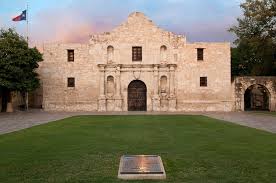
The Alamo
It’s March 5, 1836—the last night of life for the Alamo garrison. The night before the 2,000 men of the Mexican Army hurl themselves at the former mission and slaughter its 200 “Texian” defenders.
The fort’s commander, William Barrett Travis, has drawn his “line in the sand” and invited the garrison to choose: To surrender, to try to escape, or to stay and fight to the death.
And the garrison—except for one man—chooses to stay and fight.
For the garrison, immortality lies only hours away. Or does it?
An hour after deciding to stand and die in the Alamo, wrapped in the gloom of night, Crockett is seized with paralyzing fear.
“We’re going to die here,” he chokes out to his longtime friend, Persius Tarr. “You understand that, Persius? We’re going to die!” 
“I know, Davy. But there ain’t no news in that,” says Tarr. “We’re born to die. Every one of us. Only difference between us and most everybody else is we know when and where it’s going to be.”
“But I can’t be afraid—not me. I’m Crockett. I’m Canebrake Davy. I’m half-horse, half-alligator.”
“I know you are, Davy,” says Tarr. “So do all these men here. That’s why you’re going to get past this.
“You’re going to put that fear behind you and walk back out there and fight like the man you are. The fear’s come and now it’s gone. This is our time, Davy.”
“The glory-time,” says Crockett.
“That’s right, David. The glory-time.”
And then Tarr delivers a sentiment wholly alien to money-obsessed men like Mitt Romney and Donald Trump—who comprise the richest and most privileged 1% of today’s Americans.
“There’s men out there with their eyes on you. You’re the only thing keeping the fear away from them. You’re joking and grinning and fiddling—it gives them courage they wouldn’t have had without you.
“Maybe that’s why you’re here, Davy—to make the little men and the scared men into big and brave men. You’ve always cared about the little men, Davy. Remember who you are.
“You’re Crockett of Tennessee, and your glory-time has come. Don’t you miss a bit of it.”
The next morning, the Mexicans assault the Alamo. Crockett embraces his glory-time—and becomes a legend for all-time.

David Crockett (center) at the fall of the Alamo
David Crockett (1786-1836) lived—and died—a poor man. But this did not prevent him from trying to better the lives of his family and fellow citizens—and even his former enemies.
During the war of 1812, he served as a scout under Andrew Jackson. His foes were the Creek Indians, who had massacred 500 settlers at Fort Mims, Alabama—and threatened to do the same to Crockett’s family and neighbors in Tennessee.
As a Congressman from Tennessee, he championed the rights of poor whites. And he opposed then-President Jackson’s efforts to force the same defeated Indians to depart the lands guaranteed them by treaty.
To Crockett, a promise was sacred—whether given by a single man or the United States Government.

David Crockett
And his presence during the 13-day siege of the Alamo did cheer the spirits of the vastly outnumbered defenders. It’s a matter of historical record that he and a Scotsman named MacGregor often staged musical “duels” to see who could make the most noise.
It was MacGregor with his bagpipes against Crockett and his fiddle.
Contrast this devotion of Crockett to the rights of “the little men,” as Persius Tarr called them, with the attitude of Donald Trump, the alleged billionaire President of the United States.

Donald Trump
On June 16, 2015, while announcing his candidacy, Trump said:
- “…I don’t need anybody’s money. It’s nice. I don’t need anybody’s money. I’m using my own money. I’m not using lobbyists, I’m not using donors. I don’t care. I’m really rich.”
- “I did a lot of great deals and I did them early and young, and now I’m building all over the world….”
- “So I have a total net worth, and now with the increase, it’ll be well over $10 billion.”
- “But here, a total net worth of—net worth, not assets, not—a net worth, after all debt, after all expenses, the greatest assets—Trump Tower, 1290 Avenue of the Americas, Bank of America building in San Francisco, 40 Wall Street, sometimes referred to as the Trump building right opposite the New York—many other places all over the world. So the total is $8,737,540,000.”
Those who give their lives for others are rightly loved and remembered as heroes. Those who dedicate their lives solely to their wallets and egos are rightly soon forgotten.
ABC NEWS, ALAMO, ALTERNET, ANDREW JACKSON, AP, BUZZFEED, CAMERON JUDD, CBS NEWS, CNN, CROCKETT OF TENNESSEE, CROOKS AND LIARS, DAILY KOZ, DAVID CROCKETT, DAVY CROCKETT: KING OF THE WILD FRONTIER, DONALD TRUMP, FACEBOOK, INDIAN WARS, JAMES BOWIE, MITT ROMNEY, MOTHER JONES, MOVEON, NBC NEWS, NBCNEWS, NEWSWEEK, NPR, POLITICO, RAW STORY, REUTERS, SALON, SEATTLE TIMES, SLATE, TEXAS REVOLUTION, THE ATLANTIC, THE CHICAGO SUN-TIMES, THE CHICAGO TRIBUNE, THE DAILY BEAST, THE GUARDIAN, THE HILL, THE HUFFINGTON POST, THE LOS ANGELES TIMES, THE NATION, THE NEW YORK TIMES, THE WASHINGTON POST, TIME, TWITTER, U.S. NEWS & WORLD REPORT, UPI, USA TODAY, WALT DISNEY, WILLIAM BARRET
In Bureaucracy, History, Military, Politics, Social commentary on December 8, 2017 at 12:14 am
March 6, 2016, marked the 180th anniversary of the fall of the Alamo, a crumbling former Spanish mission in the heart of San Antonio, Texas.
It’s one of those battles like Thermopylae that have passed from history into legend.
It’s been the subject of novels, movies, biographies, histories and TV dramas (most notably Walt Disney’s 1955 “Davy Crockett: King of the Wild Frontier”).
The Alamo
Perhaps the most extraordinary scene in any Alamo movie or book occurs in the 1993 novel, Crockett of Tennessee, by Cameron Judd.
And it is no less affecting for its being—so far as we know—entirely fictional.
It’s March 5, 1836—the last night of life for the Alamo garrison. The night before the 2,000 men of the Mexican Army hurl themselves at the former mission and slaughter its 200 “Texian” defenders.
The fort’s commander, William Barret Travis, has drawn his “line in the sand” and invited the garrison to choose: To surrender, to try to escape, or to stay and fight to the death.
And the garrison—except for one man—chooses to stay and fight.
For the garrison, immortality lies only hours away. Or does it?
An hour after deciding to stand and die in the Alamo, wrapped in the gloom of night, Crockett is seized with paralyzing fear.
“We’re going to die here,” he chokes out to his longtime friend, Persius Tarr. “You understand that, Persius? We’re going to die!”
“I know, Davy. But there ain’t no news in that,” says Tarr. “We’re born to die. Every one of us. Only difference between us and most everybody else is we know when and where it’s going to be.”
“But I can’t be afraid—not me. I’m Crockett. I’m Canebrake Davy. I’m half-horse, half-alligator.”
“I know you are, Davy,” says Tarr. “So do all these men here. That’s why you’re going to get past this.
“You’re going to put that fear behind you and walk back out there and fight like the man you are. The fear’s come and now it’s gone. This is our time, Davy.”
“The glory-time,” says Crockett.
“That’s right, David. The glory-time.”
And then Tarr delivers a sentiment wholly alien to money-obsessed men like Mitt Romney and Donald Trump—who comprise the richest and most privileged 1% of today’s Americans.
“There’s men out there with their eyes on you. You’re the only thing keeping the fear away from them. You’re joking and grinning and fiddling—it gives them courage they wouldn’t have had without you.
“Maybe that’s why you’re here, Davy—to make the little men and the scared men into big and brave men. You’ve always cared about the little men, Davy. Remember who you are.
“You’re Crockett of Tennessee, and your glory-time has come. Don’t you miss a bit of it.”
The next morning, the Mexicans assault the Alamo. Crockett embraces his glory-time—and becomes a legend for all-time.
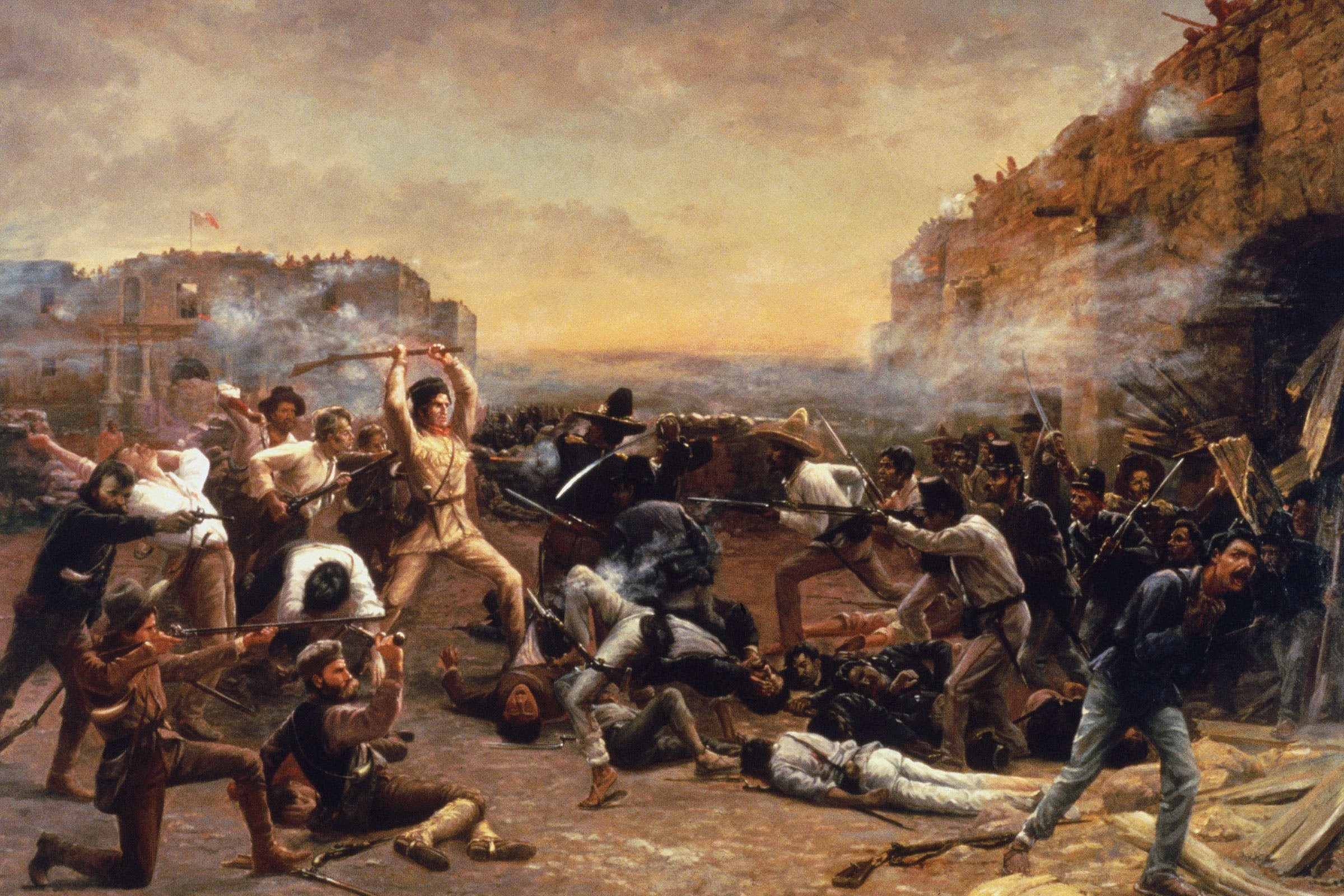
David Crockett (center) at the fall of the Alamo
David Crockett (1786-1836) lived—and died—a poor man. But this did not prevent him from trying to better the lives of his family and fellow citizens—and even his former enemies.

David Crockett
During the war of 1812, he served as a scout under Andrew Jackson. His foes were the Creek Indians, who had massacred 500 settlers at Fort Mims, Alabama—and threatened to do the same to Crockett’s family and neighbors in Tennessee.
As a Congressman from Tennessee, he championed the rights of poor whites. And he opposed then-President Jackson’s efforts to force the same defeated Indians to depart the lands guaranteed them by treaty.
To Crockett, a promise was sacred—whether given by a single man or the United States Government.
And his presence during the 13-day siege of the Alamo did cheer the spirits of the vastly outnumbered defenders. It’s a matter of historical record that he and a Scotsman named MacGregor often staged musical “duels” to see who could make the most noise.
It was MacGregor with his bagpipes against Crockett and his fiddle.
Contrast this devotion of Crockett to the rights of “the little men,” as Persius Tarr called them, with the attitude of Donald Trump, the 2016 Republican Presidential nominee.
Donald Trump
On June 16, 2015, while announcing his candidacy, Trump said:
- “…I don’t need anybody’s money. It’s nice. I don’t need anybody’s money. I’m using my own money. I’m not using lobbyists, I’m not using donors. I don’t care. I’m really rich.”
- “I did a lot of great deals and I did them early and young, and now I’m building all over the world….”
- “So I have a total net worth, and now with the increase, it’ll be well over $10 billion.”
- “But here, a total net worth of—net worth, not assets, not—a net worth, after all debt, after all expenses, the greatest assets—Trump Tower, 1290 Avenue of the Americas, Bank of America building in San Francisco, 40 Wall Street, sometimes referred to as the Trump building right opposite the New York—many other places all over the world. So the total is $8,737,540,000.”
Those who give their lives for others are rightly loved and remembered as heroes. Those who dedicate their lives solely to their wallets and egos are rightly soon forgotten.
ABC NEWS, ALAMO, ANDREW JACKSON, CAMERON JUDD, CBS NEWS, CNN, CROCKETT OF TENNESSEE, DAVID CROCKETT, DAVY CROCKETT: KING OF THE WILD FRONTIER, DONALD TRUMP, FACEBOOK, INDIAN WARS, JAMES BOWIE, MITT ROMNEY, NBCNEWS, TEXAS REVOLUTION, THE CHICAGO SUN-TIMES, THE CHICAGO TRIBUNE, THE LOS ANGELES TIMES, THE NEW YORK TIMES, THE WASHINGTON POST, TWITTER, WALT DISNEY, WILLIAM BARRET
In Business, History, Military, Politics, Social commentary on August 5, 2016 at 1:26 am
March 6, 2016, marked the 180th anniversary of the fall of the Alamo, a crumbling former Spanish mission in the heart of San Antonio, Texas.
It’s one of those battles like Thermopylae that have passed from history into legend.
It’s been the subject of novels, movies, biographies, histories and TV dramas (most notably Walt Disney’s 1955 “Davy Crockett: King of the Wild Frontier”).
The Alamo
Perhaps the most extraordinary scene in any Alamo movie or book occurs in the 1993 novel, Crockett of Tennessee, by Cameron Judd.
And it is no less affecting for its being–so far as we know–entirely fictional.
It’s March 5, 1836–the last night of life for the Alamo garrison. The night before the 2,000 men of the Mexican Army hurl themselves at the former mission and slaughter its 200 “Texian” defenders.
The fort’s commander, William Barret Travis, has drawn his “line in the sand” and invited the garrison to choose: To surrender, to try to escape, or to stay and fight to the death.
And the garrison–except for one man–chooses to stay and fight.
For the garrison, immortality lies only hours away. Or does it?
An hour after deciding to stand and die in the Alamo, wrapped in the gloom of night, Crockett is seized with paralyzing fear.
“We’re going to die here,” he chokes out to his longtime friend, Persius Tarr. “You understand that, Persius? We’re going to die!”
“I know, Davy. But there ain’t no news in that,” says Tarr. “We’re born to die. Every one of us. Only difference between us and most everybody else is we know when and where it’s going to be.”
“But I can’t be afraid–not me. I’m Crockett. I’m Canebrake Davy. I’m half-horse, half-alligator.”
“I know you are, Davy,” says Tarr. “So do all these men here. That’s why you’re going to get past this.
“You’re going to put that fear behind you and walk back out there and fight like the man you are. The fear’s come and now it’s gone. This is our time, Davy.”
“The glory-time,” says Crockett.
“That’s right, David. The glory-time.”
And then Tarr delivers a sentiment wholly alien to money-obsessed men like Mitt Romney and Donald Trump–who comprise the richest and most privileged 1% of today’s Americans.
“There’s men out there with their eyes on you. You’re the only thing keeping the fear away from them. You’re joking and grinning and fiddling–it gives them courage they wouldn’t have had without you.
“Maybe that’s why you’re here, Davy–to make the little men and the scared men into big and brave men. You’ve always cared about the little men, Davy. Remember who you are.
“You’re Crockett of Tennessee, and your glory-time has come. Don’t you miss a bit of it.”
The next morning, the Mexicans assault the Alamo. Crockett embraces his glory-time–and becomes a legend for all-time.
David Crockett (center) at the fall of the Alamo
David Crockett (1786-1836) lived–and died–a poor man. But this did not prevent him from trying to better the lives of his family and fellow citizens–and even his former enemies.
David Crockett
During the war of 1812, he served as a scout under Andrew Jackson. His foes were the Creek Indians, who had massacred 500 settlers at Fort Mims, Alabama–and threatened to do the same to Crockett’s family and neighbors in Tennessee.
As a Congressman from Tennessee, he championed the rights of poor whites. And he opposed then-President Jackson’s efforts to force the same defeated Indians to depart the lands guaranteed them by treaty.
To Crockett, a promise was sacred–whether given by a single man or the United States Government.
And his presence during the 13-day siege of the Alamo did cheer the spirits of the vastly outnumbered defenders. It’s a matter of historical record that he and a Scotsman named MacGregor often staged musical “duels” to see who could make the most noise.
It was MacGregor with his bagpipes against Crockett and his fiddle.
Contrast this devotion of Crockett to the rights of “the little men,” as Persius Tarr called them, with the attitude of Donald Trump, the 2016 Republican Presidential nominee.
Donald Trump
On June 16, 2015, while announcing his candidacy, Trump said:
- “…I don’t need anybody’s money. It’s nice. I don’t need anybody’s money. I’m using my own money. I’m not using lobbyists, I’m not using donors. I don’t care. I’m really rich.”
- “I did a lot of great deals and I did them early and young, and now I’m building all over the world….”
- “So I have a total net worth, and now with the increase, it’ll be well-over $10 billion.”
- “But here, a total net worth of–net worth, not assets, not–a net worth, after all debt, after all expenses, the greatest assets–Trump Tower, 1290 Avenue of the Americas, Bank of America building in San Francisco, 40 Wall Street, sometimes referred to as the Trump building right opposite the New York–many other places all over the world. So the total is $8,737,540,000.”
Those who give their lives for others are rightly loved and remembered as heroes. Those who dedicate their lives solely to their wallets and egos are rightly soon forgotten.
ABC NEWS, ALAMO, ALTERNET, ANTONIO LOPEZ DE SANTA ANNA, AP, BUZZFEED, CBS NEWS, CNN, CROOKS AND LIARS, DAILY KOZ, DAVID CROCKETT, FACEBOOK, JAMES BOWIE, MEXICO, MOTHER JONES, MOVEON, MSNBC, NBC NEWS, NEWSWEEK, NPR, PBS NEWSHOUR, POLITICO, RAW STORY, REUTERS, SALON, SAM HOUSTON, SAN ANTONIO, SEATTLE TIMES, SLATE, SLAVERY, STEPHEN F. AUSTIN, TEXAS, TEXAS DECLARATION OF INDEPENDENCE, TEXAS REVOLUTION, THE ATLANTIC, THE CHICAGO SUN-TIMES, THE CHICAGO TRIBUNE, THE DAILY BEAST, THE GUARDIAN, THE HILL, THE HUFFINGTON POST, THE LOS ANGELES TIMES, THE NATION, THE NEW YORK TIMES, THE WASHINGTON POST, THERMOPYLAE, THREE HUNDRED SPARTANS, TIME, TWITTER, U.S. NEWS & WORLD REPORT, UPI, USA TODAY, WILLIAM BARRET TRAVIS
In Bureaucracy, History, Military, Politics on March 6, 2016 at 12:01 am
On the night before the final Mexican assault, one man escaped the Alamo to testify to the defenders’ courage. Or so goes the most famous story of the 13-day siege.
He was Louis Rose, a veteran of the Napoleonic wars and the dreadful 1812 retreat from Moscow. Unwilling to die in a hopeless battle, he slipped over a wall and sneaked through Mexican siege lines.
At Grimes County, he found shelter at the homestead of Abraham and Mary Ann Zuber. Their son, William, later claimed that his parents told him of Rose’s visit–and his story of Travis’ “line in the sand” speech.
In 1873, he published the tale in the Texas Almanac.
But many historians believe it is a fabrication. The story comes to us third-hand–from Rose to the Zubers to their son. And it was published 37 years after the Alamo fell.
Even if Travis didn’t draw a line in the sand, every member of the garrison, by remaining to stay, had crossed over his own line.
After a 12-day siege, Santa Anna decided to overwhelm the Alamo.
Some of his officers objected. They wanted to wait for bigger siege cannon to arrive–to knock down the Alamo’s three-feet-thick adobe walls. Without shelter, the defenders would be forced to surrender.
But Santa Anna insisted on an all-out assault: “Without blood and tears, there is no glory.”
The first assault came at about 5 a.m. on Sunday, March 6, 1836.
The fort’s riflemen–aided by 14 cannons–repulsed it. And the second assault as well.
But the third assault proved unstoppable. The Alamo covered three acres, and held at most 250 defenders–against 2,000 Mexican soldiers.
When the Mexicans reached the fort, they mounted scaling ladders and poured over the walls.
Travis was one of the first defenders to fall–shot through the forehead after firing a shotgun into the Mexican soldiery below.

Death of William Barrett Travis (waving sword)
Mexicans broke into the room where the ailing James Bowie lay.
In Three Roads to the Alamo, historian William C. Davis writes that Bowie may have been unconscious or delirious. Mistaking him for a coward, the soldiers bayoneted him and blew out his brains.
But some accounts claim that Bowie died fighting–shooting two Mexicans with pistols, then plunging his famous knife into a third before being bayoneted. Nearly every Alamo movie depicts Bowie’s death this way.

James Bowie’s death
As the Mexicans poured into the fort, at least 60 Texans tried to escape over the walls into the surrounding prairie. But they were quickly dispatched by lance-bearing Mexican cavalry.
The death of David Crockett remains highly controversial.
Baby boomers usually opt for the Walt Disney version: Davy swinging “Old Betsy” as Mexicans surround him. Almost every Alamo movie depicts him fighting to the death.

David Crockett’s Death
But Mexican Lieutenant Colonel Jose Enrique de la Pena claimed Crockett was one of seven Texans who surrendered or were captured and brought before Santa Anna after the battle. Santa Anna ordered their immediate execution, and they were hacked to death with sabers.
Only the 2004 remake of The Alamo has dared to depict this version. Although this version is now accepted by most historians, some still believe the de la Pena diary from which it comes is a forgery.
An hour after the battle erupted, it was over.
That afternoon, Santa Anna ordered the bodies of the slain defenders stacked and burned in three pyres.
Contrary to popular belief, some of the garrison survived:
- Joe, a black slave who had belonged to William B. Travis, the Alamo’s commander;
- Susanah Dickinson, the wife of a lieutenant killed in the Alamo, and her baby, Angelina;
- Several Mexican women and their children.
Also contrary to legend, the bravery of the Alamo defenders did not buy time for Texas to raise an army against Santa Anna. This didn’t happen until after the battle.
But their sacrifice proved crucial in securing Texas’ independence:
- The Alamo’s destruction warned those Texans who had not supported the revolution that they had no choice: They must win, die or flee their homes to the safety of the United States.
- It stirred increasing numbers of Americans to enter Texas and enlist in Sam Houston’s growing army.
- Santa Anna’s army was greatly weakened, losing 600 killed and wounded–a casualty rate of 33%.
- The nearly two-week siege bought time for the Texas convention to meet at Washington-on-the-Brazos and declare independence from Mexico.
On April 21, 1836, Santa Anna made a crucial mistake: During his army’s afternoon siesta, he failed to post sentries around his camp.
That afternoon, Sam Houston’s 900-man army struck the 1,400-man Mexican force at San Jacinto. In 18 minutes, the Texans–shouting “Remember the Alamo!”–killed about 700 Mexican soldiers and wounded 200 others.
The next day, a Texas patrol captured Santa Anna–wearing the uniform of a Mexican private. Resisting angry demands to hang the Mexican dictator, Houston forced Santa Anna to surrender control of Texas in return for his life.
The victory at San Jacinto won the independence of Texas. But the 13-day siege and fall of the Alamo remains the most famous and celebrated part of that conflict.
In 480 B.C., 300 Spartans won immortality at Thermopylae, a narrow mountain pass in ancient Greece, by briefly holding back an invading Persian army of thousands.
Although they died to the last man, their sacrifice inspired the rest of Greece to defeat its invaders.
Like Thermopylae, the battle of the Alamo proved both a defeat–and a victory.
ABC NEWS, ALAMO, ALTERNET, ANTONIO LOPEZ DE SANTA ANNA, AP, BUZZFEED, CBS NEWS, CNN, CROOKS AND LIARS, DAILY KOZ, DAVID CROCKETT, FACEBOOK, JAMES BOWIE, MEXICO, MOTHER JONES, MOVEON, MSNBC, NBC NEWS, NEWSWEEK, NPR, PBS NEWSHOUR, POLITICO, RAW STORY, REUTERS, SALON, SAM HOUSTON, SAN ANTONIO, SEATTLE TIMES, SLATE, SLAVERY, STEPHEN F. AUSTIN, TEXAS, TEXAS DECLARATION OF INDEPENDENCE, TEXAS REVOLUTION, THE ATLANTIC, THE CHICAGO SUN-TIMES, THE CHICAGO TRIBUNE, THE DAILY BEAST, THE GUARDIAN, THE HILL, THE HUFFINGTON POST, THE LOS ANGELES TIMES, THE NATION, THE NEW YORK TIMES, THE WASHINGTON POST, THERMOPYLAE, THREE HUNDRED SPARTANS, TIME, TWITTER, U.S. NEWS & WORLD REPORT, UPI, USA TODAY, WILLIAM B. TRAVIS
In Bureaucracy, History, Military on March 4, 2016 at 12:28 am
Sunday, March 6, 2016, marks the 180th anniversary of the most famous event in Texas history: The fall of the Alamo, a crumbling former Spanish mission in the heart of San Antonio.
After a 12-day siege, 180 to 250 Texans were overwhelmed by 2,000 Mexican soldiers.
Mexican troops advancing on the Alamo
Americans “remember the Alamo”–but usually for the wrong reasons.
Some historians believe the battle should have never been fought.
The Alamo was not Thermopylae–a narrow mountain pass blocking the Persian march into ancient Greece. Santa Anna could have simply bypassed it.
In fact, several of Santa Anna’s generals urged the Mexican dictator to do just that–leave a small guard to hold down the fort’s defenders and wipe out the undefended, widely-separated Texas settlements.
But pride held Santa Anna fast to the Alamo. His brother-in-law, General Perfecto de Cos, had been forced to surrender the old mission to revolting Texans in December, 1835.
Santa Anna meant to redeem the fort–and his family honor–by force.
In virtually every Alamo movie, its two co-commanders, James Bowie and William Barret Travis, are portrayed as on the verge of all-out war–with each other.
In John Wayne’s heavily fictionalized 1960 film, The Alamo, Bowie and Travis agree to fight a duel as soon as they’ve whipped the Mexicans besieging them.

James Bowie

William B. Travis
In fact, the frictions between the two lasted only a short while. Just before the siege, some of Bowie’s volunteers–a far larger group than Travis’ regulars–got drunk.
Travis ordered them jailed–and Bowie ordered his men to release them. Bowie then went on a roaring drunk. The next day, a sober Bowie apologized to Travis and agreed they should share command.
This proved a wise decision, for just as the siege started, Bowie was felled by worsening illness–typhoid-pneumonia or tuberculosis.
In almost every Alamo movie, Bowie repeatedly leaves the fort to ambush unsuspecting Mexicans.
In reality, he stayed bed-ridden and lay close to death throughout the 13-day siege.
The Texans intended to make a suicidal stand.
Not true.
From the first day of the siege–February 23–almost to the last–March 6, 1836–messengers rode out of the Alamo seeking help. The defenders believed that if they could cram enough men into the three-acre former mission, they could hold Santa Anna at bay.
No reinforcements reached the Alamo.
Not so. On March 1, 32 men from Gonzalez–the only ones to answer Travis’ call–sneaked through the Mexican lines to enter the Alamo.
Meanwhile, the largest Texan force lay at Fort Deviance in Goliad, 85 miles away. This consisted of 500 men commanded by James Walker Fannin, a West Point dropout.
Fannin was better-suited for the role of Hamlet than military commander.
Upon receiving a plea of help from Travis, he set out in a halfhearted attempt to reach the mission. But when a supply wagon broke down, he returned to Fort Defiance and sat out the rest of the siege.
When the Mexican army approached Fort Defiance, Fannin and 400 of his men panicked and fled into the desert. They were surrounded, forced to surrender, and massacred on March 27
The Alamo garrison was fully prepared to confront the Mexican army.
False. When the Mexicans suddenly arrived in San Antonio on the morning of February 23, 1836, they caught the Texans completely by surprise.
The previous night, they had been celebrating the birthday of George Washington. The Texans rushed headlong into the Alamo, hauling all the supplies they could hastily scrounge.
Santa Anna sent a courier under a flag of truce to the Alamo, demanding unconditional surrender. In effect, the Texans were being given the choice of later execution.
Travis replied with a shot from the fort’s biggest cannon, the 18-pounder (so named for the weight of its cannonball).
Santa Anna ordered the hoisting of a blood-red flag and the opening of an artillery salvo. The siege of the Alamo was on.
San Houston, who was elected general of the non-existent army of Texas, desperately tried to relieve the siege.
Not so.
At Washington-on-the-Brazos, 169 miles east of San Antonio, Texan delegates assembled to form a new government. When news reached the delegates that Travis desperately needed reinforcements, many of them wanted to rush to his defense.
But Houston and others declared they must first declare Texas’ independence. On March 2, 1836, they did just that. Houston spent a good deal of the time drunk.

Sam Houston
Did Travis draw a line?
Easily the most famous Alamo story is that of “the line in the sand.”
On the night of March 5–just prior to the final assault–there was a lull in the near-constant Mexican bombardment. Travis assembled his men and gave them a choice:
They could try to surrender and hope that Santa Anna would be merciful. They could try to escape. Or they could stay and fight.
With his sword, Travis drew a line in the dirt and invited those who would stay to cross over to him.
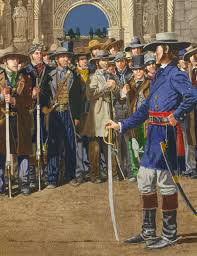
The entire garrison did–except for two men.
One of these was bed-ridden James Bowie. He asked that his sick-bed be carried over to Travis. The other was a veteran of the Napoleonic wars–Louis Rose.
ABC NEWS, ALAMO, ALTERNET, ANDREW JACKSON, ANTONIO LOPEZ DE SANTA ANNA, AP, BUZZFEED, CBS NEWS, CNN, CROOKS AND LIARS, DAILY KOZ, DAVID CROCKETT, FACEBOOK, JAMES BOWIE, MEXICO, MOTHER JONES, MOVEON, MSNBC, NBC NEWS, NEWSWEEK, NPR, PBS NEWSHOUR, POLITICO, RAW STORY, REUTERS, SALON, SAM HOUSTON, SAN ANTONIO, SEATTLE TIMES, SLATE, STEPHEN F. AUSTIN, TEXAS, TEXAS DECLARATION OF INDEPENDENCE, TEXAS REVOLUTION, THE ATLANTIC, THE CHICAGO SUN-TIMES, THE CHICAGO TRIBUNE, THE DAILY BEAST, THE GUARDIAN, THE HILL, THE HUFFINGTON POST, THE LOS ANGELES TIMES, THE NATION, THE NEW YORK TIMES, THE WASHINGTON POST, THERMOPYLAE, THREE HUNDRED SPARTANS, TIME, TWITTER, U.S. NEWS & WORLD REPORT, UPI, USA TODAY, WILLIAM BARRET TRAVIS
In Bureaucracy, History, Military on March 3, 2016 at 12:05 am
On March 2, 1836–180 years ago this year–Texas formally declared its independence from Mexico, of which it was then a province.
Sixty-one delegates took part in the convention held at Washington-on-the-Brazos.
Their signed statement proclaimed that the Mexican government had “ceased to protect the lives, liberty, and property of the people, from whom its legitimate powers are derived.”
Meanwhile, 169 miles away, the siege of the Alamo–a crumbling former Spanish mission in the heart of San Antonio–had entered its ninth day. The Alamo.
The mission that became a fortress. The fortress that has since become a shrine.

By Daniel Schwen – Own work, CC BY-SA 4.0
The Alamo Chapel
The combatants: 180 to 250 Texans (or “Texians,” as many of them preferred to be called) vs. 2,000 Mexican soldiers.
On the Texan side three names predominate: David Crockett, James Bowie and William Barret Travis. “The Holy Trinity,” as some historians ironically refer to them.
Crockett, at 49, was the most famous man in the Alamo. He had been a bear hunter, Indian fighter and Congressman. Rare among the men of his time, he sympathized with the Indian tribes he had helped subdue in the War of 1812.
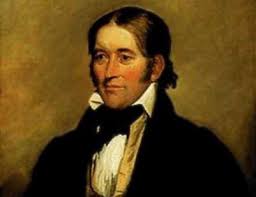
David Crockett
He believed Congress should honor the treaties made with the former hostiles and opposed President Andrew Jackson’s effort to move the tribes further West.Largely because of this, his constituents turned him out of office in November, 1835. He told them they could go to hell; he would go to Texas.
James Bowie, at 40, had been a slave trader with pirate Jean Lafitte and a land swindler. But his claim to fame lay in his skill as a knife-fighter.
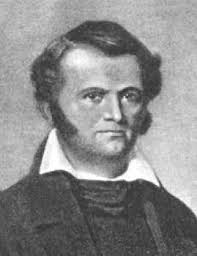
James Bowie
This grew out of his participating in an 1827 duel on a sandbar in Natchez, Mississippi. Bowie was acting as a second to one of the duelists who had arranged the event.
After the two duelists exchanged pistol shots without injury, they called it a draw. But those who had come as their seconds had scores to settle among themselves–and decided to do so. A bloody melee erupted.
Bowie was shot in the hip and then impaled on a sword cane wielded by Major Norris Wright, a longtime enemy. Drawing a large butcher knife he wore at his belt, he gutted Wright, who died instantly.
The brawl became famous as the Sandbar Fight, and cemented Bowie’s reputation across the South as a deadly knife fighter.
William Barret Travis had been an attorney and militia member. Burdened by debts and pursued by creditors, he fled Alabama in 1831 to start over in Texas. Behind him he left a wife, son, and unborn daughter.
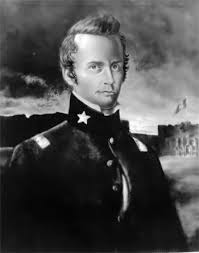
William Barret Travis
From the first, Travis burned to free Texas from Mexico and see it become a part of the United States.
In January, 1836, he was sent by the American provisional governor of Texas to San Antonio, to fortify the Alamo. He arrived there with a small party of regular soldiers and the title of lieutenant colonel in the state militia.
On the Mexican side, only one name matters: Antonio Lopez de Santa Anna, president (i.e., absolute dictator) of Mexico. After backing first one general and would-be “president” after another, Santa Anna maneuvered himself into the office in 1833.
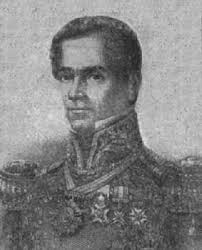
Antonio Lopez de Santa Anna
Texas was then legally a part of Mexico. Stephen F. Austin, “the father of Texas,” had received a grant from Spain–which ruled Mexico until 1821–to bring in 300 American families to settle there.
The Spaniards wanted to establish a buffer between themselves and warring Indian tribes like the Comanches. These imigrations continued after Mexico threw off Spanish rule and obtained its independence.
But as Americans kept flooding into Texas, the character of its population changed, alarming its Mexican rulers.
The new arrivals did not see themselves as Mexican citizens but as transplanted Americans. They were largely Protestant, as opposed to the Catholic Mexicans. And many of them not only owned slaves but demanded the expansion of slavery–a practice illegal under Mexican law.
In October, 1835, fighting erupted between American settlers and Mexican soldiers.
In November, Mexican forces took shelter in the Alamo, which had been built in 1718 as a mission to convert Indians to Christianity. Since then it had been used as a fort–by Spanish and then Mexican troops.
Texans lay siege to the Alamo from October 16 to December 10, 1835. With his men exhausted, and facing certain defeat, General Perfecto de Cos, Santa Anna’s brother-in-law, surrendered. He gave his word to leave Texas and never take up arms again against its settlers.
Most Texans rejoiced. They believed they had won their “war” against Mexico. But others knew better.
One was Bowie. Another was Sam Houston, a former Indian fighter, Congressman and protégé of Andrew Jackson.
Still another was Santa Anna, who styled himself “The Napoleon of the West.” In January, 1836, he set out from Mexico City at the head of an army totaling about 7,000.
He planned the 18th century version of a blitzkrieg, intending to arrive in Texas and take its “rebellious foreigners” by surprise.
His forced march proved costly in lives, but met his objective. He arrived in San Antonio with several hundred soldiers on February 23, 1836.
The siege of the Alamo–the most famous event in Texas history–was about to begin.
ABC NEWS, ALAMO, ALTERNET, AMERICABLOG, ANDREW JACKSON, AP, BABY BOOMER RESISTANCE, BUZZFEED, CAMERON JUDD, CBS NEWS, CNN, CROCKETT OF TENNESSEE, CROOKS AND LIARS, DAILY KOZ, DAVID CROCKETT, DAVY CROCKETT: KING OF THE WILD FRONTIER, DONALD TRUMP, DRUDGE RETORT, FACEBOOK, FIVETHIRTYEIGHT, HARPER’S MAGAZINE, INDIAN WARS, JAMES BOWIE, MEDIA MATTERS, MITT ROMNEY, MOTHER JONES, MOVEON, MSNBC, NBC NEWS, NBCNEWS, NEWSWEEK, NPR, PBS NEWSHOUR, POLITICO, POLITICUSUSA, RAW STORY, REUTERS, SALON, SEATTLE TIMES, SLATE, TALKING POINTS MEMO, TEXAS REVOLUTION, THE ATLANTIC, THE CHICAGO SUN-TIMES, THE CHICAGO TRIBUNE, THE DAILY BEAST, THE DAILY BLOG, THE GUARDIAN, THE HILL, THE HUFFINGTON POST, THE LOS ANGELES TIMES, THE NATION, THE NEW REPUBLIC, THE NEW YORK TIMES, THE VILLAGE VOICE, THE WASHINGTON POST, THINKPROGRESS, TIME, TRUTHDIG, TRUTHOUT, TWITTER, TWO POLITICAL JUNKIES, U.S. NEWS & WORLD REPORT, UPI, USA TODAY, WALT DISNEY, WILLIAM BARRET, WONKETTE
In Business, History, Military, Politics, Social commentary on February 23, 2016 at 10:58 am
March 6, 2016, will mark the 180th anniversary of the fall of the Alamo, a crumbling former Spanish mission in the heart of San Antonio, Texas.
It’s one of those battles like Thermopylae that have passed from history into legend.
It’s been the subject of novels, movies, biographies, histories and TV dramas (most notably Walt Disney’s 1955 “Davy Crockett: King of the Wild Frontier”).

The Alamo
By Mattstone911 – Own work, CC BY-SA 3.0,
Perhaps the most extraordinary scene in any Alamo movie or book occurs in the 1993 novel, Crockett of Tennessee, by Cameron Judd.
And it is no less affecting for its being–-so far as we know–-entirely fictional.
It’s March 5, 1836–the last night of life for the Alamo garrison. The night before the 2,000 men of the Mexican Army hurl themselves at the former mission and slaughter its 200 “Texian” defenders.  The fort’s commander, William Barret Travis, has drawn his “line in the sand” and invited the garrison to choose: To surrender, to try to escape, or to stay and fight to the death.
And the garrison–except for one man–chooses to stay and fight.
For the garrison, immortality lies only hours away. Or does it?
An hour after deciding to stand and die in the Alamo, wrapped in the gloom of night, Crockett is seized with paralyzing fear.
“We’re going to die here,” he chokes out to his longtime friend, Persius Tarr. “You understand that, Persius? We’re going to die!”
“I know, Davy. But there ain’t no news in that,” says Tarr. “We’re born to die. Every one of us. Only difference between us and most everybody else is we know when and where it’s going to be.”
“But I can’t be afraid–not me. I’m Crockett. I’m Canebrake Davy. I’m half-horse, half-alligator.”
“I know you are, Davy,” says Tarr. “So do all these men here. That’s why you’re going to get past this.
“You’re going to put that fear behind you and walk back out there and fight like the man you are. The fear’s come and now it’s gone. This is our time, Davy.”
“The glory-time,” says Crockett.
“That’s right, David. The glory-time.”
And then Tarr delivers a sentiment wholly alien to money-obsessed men like Mitt Romney and Donald Trump–who comprise the richest and most privileged 1% of today’s Americans.
“There’s men out there with their eyes on you. You’re the only thing keeping the fear away from them. You’re joking and grinning and fiddling-–it gives them courage they wouldn’t have had without you.
“Maybe that’s why you’re here, Davy–to make the little men and the scared men into big and brave men. You’ve always cared about the little men, Davy. Remember who you are.
“You’re Crockett of Tennessee, and your glory-time has come. Don’t you miss a bit of it.”
The next morning, the Mexicans assault the Alamo. Crockett embraces his glory-time-–and becomes a legend for all-time.

David Crockett (center) at the fall of the Alamo
David Crockett (1786-1836) lived–and died–a poor man. But this did not prevent him from trying to better the lives of his family and fellow citizens–and even his former enemies.

David Crockett
During the war of 1812, he served as a scout under Andrew Jackson. His foes were the Creek Indians, who had massacred 500 settlers at Fort Mims, Alabama–and threatened to do the same to Crockett’s family and neighbors in Tennessee.
As a Congressman from Tennessee, he championed the rights of poor whites. And he opposed then-President Jackson’s efforts to force the same defeated Indians to depart the lands guaranteed them by treaty.
To Crockett, a promise was sacred–whether given by a single man or the United States Government.
And his presence during the 13-day siege of the Alamo did cheer the spirits of the vastly outnumbered defenders. It’s a matter of historical record that he and a Scotsman named MacGregor often staged musical “duels” to see who could make the most noise.
It was MacGregor with his bagpipes against Crockett and his fiddle.
Contrast this devotion of Crockett to the rights of “the little men,” as Persius Tarr called them, with the attitude of Donald Trump, the front runner for the 2016 Republican Presidential nomination.
Donald Trump
On June 16, while announcing his candidacy, Trump said:
- “…I don’t need anybody’s money. It’s nice. I don’t need anybody’s money. I’m using my own money. I’m not using lobbyists, I’m not using donors. I don’t care. I’m really rich.”
- “I did a lot of great deals and I did them early and young, and now I’m building all over the world….”
- “So I have a total net worth, and now with the increase, it’ll be well-over $10 billion.”
- “But here, a total net worth of–net worth, not assets, not–a net worth, after all debt, after all expenses, the greatest assets–Trump Tower, 1290 Avenue of the Americas, Bank of America building in San Francisco, 40 Wall Street, sometimes referred to as the Trump building right opposite the New York–many other places all over the world. So the total is $8,737,540,000.”
Those who give their lives for others are rightly loved and remembered as heroes. Those who dedicate their lives solely to their wallets and egos are rightly soon forgotten.
ABC NEWS, ALAMO, CBS NEWS, CNN, DAVID CROCKETT, FACEBOOK, JAMES BOWIE, MEXICO, NBC NEWS, SAM HOUSTON, SAN ANTONIO, SLAVERY, STEPHEN F. AUSTIN, TEXAS, TEXAS DECLARATION OF INDEPENDENCE, TEXAS REVOLUTION, THE CHICAGO SUN-TIMES, THE CHICAGO TRIBUNE, THE LOS ANGELES TIMES, THE WASHINGTON POST, TWITTER, WASHINGTON-ON-THE-BRAZOS, WILLIAM B. TRAVIS
In Bureaucracy, History, Military on March 4, 2015 at 1:00 am
On the night before the final Mexican assault, one man escaped the Alamo to testify to the defenders’ courage. Or so goes the most famous story of the 13-day siege.
He was Louis Rose, a veteran of theNapoleonic wars and the dreadful 1812 retreat from Moscow. Unwilling to die in a hopeless battle, he slipped over a wall and sneaked through Mexican siege lines.
At Grimes County, he found shelter at the homestead of Abraham and Mary Ann Zuber. Their son, William, later claimed that his parents told him of Rose’s visit–and his story of Travis’ “line in the sand” speech.
In 1873, he published the tale in the Texas Almanac.
But many historians believe it is a fabrication. The story comes to us third-hand–from Rose to the Zubers to their son. And it was published 37 years after the Alamo fell.
After a 12-day siege, Santa Anna decided to overwhelm the Alamo.
Some of his officers objected. They wanted to wait for bigger siege cannon to arrive–to knock down the Alamo’s three-feet-thick adobe walls. Without shelter, the defenders would be forced to surrender.
But Santa Anna insisted on an all-out assault: “Without blood and tears, there is no glory.”
The first assault came at about 5 a.m. on March 6, 1836.
The fort’s riflemen–aided by 14 cannons–repulsed it. And the second assault as well. But the third assault proved unstoppable.
The Alamo covered three acres, and held at most 250 defenders–against 2,000 Mexican soldiers. When the Mexicans reached the fort, they mounted scaling ladders and poured over the walls.
Travis was one of the first defenders to fall–shot through the forehead after firing a shotgun into the Mexican soldiery below.
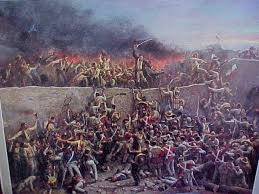
Death of William Barrett Travis (waving sword)
Mexicans broke into the room where the ailing James Bowie lay. In Three Roads to the Alamo, historian William C. Davis writes that Bowie may have been unconscious or delirious. Mistaking him for a coward, the soldiers bayoneted him and blew out his brains.
But some accounts claim that Bowie died fighting–shooting two Mexicans with pistols, then plunging his famous knife into a third before being bayoneted. Nearly every Alamo movie depicts Bowie’s death this way.
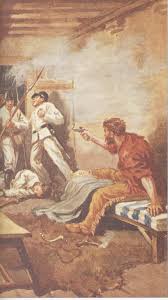
Jim Bowie’s death
As the Mexicans poured into the fort, at least 60 Texans tried to escape over the walls into the surrounding prairie. But they were quickly dispatched by lance-bearing Mexican cavalry.
The death of David Crockett remains highly controversial. Baby boomers usually opt for the Walt Disney version: Davy swinging Old Betsey as Mexicans surround him. Almost every Alamo movie depicts him fighting to the death.
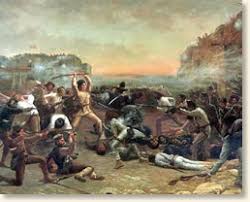
David Crockett’s death
But Mexican Colonel Jose Enrique de la Pena claimed Crockett was one of seven Texans who surrendered or were captured and brought before Santa Anna after the battle. Santa Anna ordered their immediate execution, and they were hacked to death with sabers.
Only the 2004 remake of The Alamo has dared to depict this version. Although this version is now accepted by most historians, some still believe the de la Pena diary from which it comes is a forgery.
An hour after the battle erupted, it was over.
That afternoon, Santa Anna ordered the bodies of the slain defenders stacked and burned in three pyres. Contrary to popular belief, some of the garrison survived:
- Joe, a black slave who had belonged to William B. Travis, the Alamo’s commander;
- Susannah Dickinson, the wife of a lieutenant killed in the Alamo, and her baby, Angelina;
- Several Mexican women and their children.
Also contrary to legend, the bravery of the Alamo defenders did not buy time for Texas to raise an army against Santa Anna. This didn’t happen until after the battle. But their sacrifice proved crucial in securing Texas’ independence:
- The Alamo’s destruction warned those Texans who had not supported the revolution that they had no choice: They must win, die or flee their homes to the safety of the United States.
- It stirred increasing numbers of Americans to enter Texas and enlist in Sam Houston’s growing army.
- Santa Anna’s army was greatly weakened, losing 600 killed and wounded–a casualty rate of 33%.
- The nearly two-week siege bought time for the Texas convention to meet at Washington-on-the-Brazos and declare independence from Mexico.
On April 21, 1836, Santa Anna made a crucial mistake: During his army’s afternoon siesta, he failed to post sentries around his camp.
That afternoon, Sam Houston’s 900-man army struck the 1,400-man Mexican force at San Jacinto. In 18 minutes, the Texans–shouting “Remember the Alamo!”–killed about 700 Mexican soldiers and wounded 200 others.
The next day, a Texas patrol captured Santa Anna. Resisting angry demands to hang the Mexican dictator, Houston forced Santa Anna to surrender control of Texas in return for his life. The victory at San Jacinto won the independence of Texas.
But the 13-day siege and fall of the Alamo remains the most famous and celebrated part of that conflict. Like Thermopylae, the battle of the Alamo proved both a defeat–and a victory.
ABC NEWS, ALAMO, CBS NEWS, CNN, DAVID CROCKETT, FACEBOOK, JAMES BOWIE, MEXICO, NBC NEWS, SAM HOUSTON, SAN ANTONIO, SLAVERY, STEPHEN F. AUSTIN, TEXAS, TEXAS DECLARATION OF INDEPENDENCE, TEXAS REVOLUTION, THE CHICAGO SUN-TIMES, THE CHICAGO TRIBUNE, THE LOS ANGELES TIMES, THE WASHINGTON POST, TWITTER, WASHINGTON-ON-THE-BRAZOS, WILLIAM B. TRAVIS
In Bureaucracy, History, Military on March 3, 2015 at 12:48 am
Americans “remember the Alamo”–but usually for the wrong reasons.
Some historians believe the battle should have never been fought.
The Alamo was not Thermopylae–a narrow mountain pass blocking the Persian march into ancient Greece. Santa Anna could have simply bypassed it.
Mexican troops advancing on the Alamo
In fact, several of Santa Anna’s generals urged the Mexican dictator to do just that–leave a small guard to hold down the fort’s defenders and wipe out the undefended, widely-separated Texas settlements.
But pride held Santa Anna fast to the Alamo. His brother-in-law, General Perfecto de Cos, had been forced to surrender the old mission to revolting Texans in December, 1835. Santa Anna meant to redeem the fort–and his family honor–by force.
In almost every movie made about the Alamo, its two co-commanders, James Bowie and William Barret Travis, are portrayed as on the verge of all-out war–with each other.
James Bowie
William B. Travis
In John Wayn’e heavily fictionalized 1960 film, The Alamo, Bowie and Travis agree to fight a duel as soon as they’ve whipped the Mexicans besieging them.
In fact, the frictions between the two lasted only a short while. Just before the siege, some of Bowie’s volunteers–a far larger group than the regular soldiers commanded by Travis–got drunk. Travis ordered them jailed–and Bowie ordered his men to release them. Bowie then went on a roaring drunk.
The next day, a sober Bowie apologized to Travis and agreed they should share command. This proved a wise decision, for just as the siege started, Bowie was felled by worsening illness–typhoid-pneumonia or tuberculosis.
In Wayne’s film, Bowie repeatedly leaves the Alamo to ambush unsuspecting Mexicans.
In reality, he stayed bed-ridden and lay close to death throughout the 13-day siege.
Most people believe the Texans intended to make a suicidal stand.
Not true. From the first day of the siege–February 23–almost to the last–March 6, 1836–messengers rode out of the Alamo seeking help. The defenders believed that if they could cram enough men into the three-acre former mission, they could hold Santa Anna at bay.
It’s widely believed that no reinforcements reached the Alamo.
Not so. On March 1, 32 men from Gonzalez–the only ones to answer Travis’ call–sneaked through the Mexican lines to enter the Alamo. Meanwhile, the largest Texan force lay at Fort Defiance in Goliad, 85 miles away.
This consisted of 500 men commanded by James Walker Fannin, a West Point dropout. Fannin was better-suited for the role of Hamlet than military commander. Upon receiving a plea of help from Travis, he set out in a half-hearted attempt to reach the mission.
But when a supply wagon broke down, he returned to Fort Defiance and sat out the rest of the siege.
After it became obvious that the Alamo would not be sufficiently reinforced, the Texans still refused to evacuate. “I’ll die before I run” might have been their official motto.
The Alamo garrison was fully prepared to confront the Mexican army.
False.
When the Mexicans suddenly arrived in San Antonio on the morning of February 23, 1836, they caught the Texans completely by surprise.
The previous night, they had been celebrating the birthday of George Washington. The Texans rushed headlong into the Alamo, hauling all the supplies they could hastily scrounge.
Santa Anna sent a courier under a flag of truce to the Alamo, demanding unconditional surrender. In effect, the Texans were being given the choice of later execution. Travis replied with a shot from the fort’s biggest cannon, the 18-pounder.
Santa Anna ordered the hoisting of a blood-red flag and the opening of an artillery salvo. The siege of the Alamo was on.
Many Americans believe that San Houston, who was elected general of the non-existent army of Texas, desperately tried to relieve the siege.
Not so.
At Washington-on-the-Brazos, 169 miles east of San Antonio, Texan delegates assembled to form a new government. When news reached the delegates that Travis desperately needed reinforcements, many of them wanted to rush to his defense.
Sam Houston
But Houston and others declared they must first declare Texas’ independence. On March 2, 1836, they did just that. Houston spent a good deal of the time drunk.
Did Travis draw a line?
Easily the most famous Alamo story is that of “the line in the sand.” On the night of March 5–just prior to the final assault–there was a lull in the near-constant Mexican bombardment. Travis assembled his men and gave them a choice:
They could surrender and hope that Santa Anna would be merciful. They could try to escape. Or they could stay and fight.
With his sword, Travis drew a line in the dirt and invited those who would stay to cross over to him. The entire garrison did–except for two men.
One of these was bed-ridden James Bowie. He asked that his sick-bed be carried over to Travis.
The other was a veteran of the Napoleonic wars–Louis Rose.
ABC NEWS, ALAMO, CBS NEWS, CNN, DAVID CROCKETT, FACEBOOK, JAMES BOWIE, MEXICO, NBC NEWS, SAM HOUSTON, SAN ANTONIO, SLAVERY, STEPHEN F. AUSTIN, TEXAS, TEXAS DECLARATION OF INDEPENDENCE, TEXAS REVOLUTION, THE CHICAGO SUN-TIMES, THE CHICAGO TRIBUNE, THE LOS ANGELES TIMES, THE WASHINGTON POST, TWITTER, WASHINGTON-ON-THE-BRAZOS, WILLIAM B. TRAVIS
In History, Military, Politics on March 2, 2015 at 11:08 am
On March 2, 1836–179 years ago today–Texas formally declared its independence from Mexico, of which it was then a province.
Sixty-one delegates took part in the convention held at Washington-on-the-Brazos. Their signed statement proclaimed that the Mexican government had “ceased to protect the lives, liberty, and property of the people, from whom its legitimate powers are derived.”
Meanwhile, 169 miles away, the siege of the Alamo–a crumbling former Spanish mission in the heart of San Antonio–had entered its ninth day.
The Alamo. The mission that became a fortress. The fortress that has since become a shrine.

The Alamo Chapel
The combatants: 180 to 250 Texans (or “Texians,” as many of them preferred to be called) vs. 2,000 Mexican soldiers.
On the Texan side three names predominate: David Crockett, James Bowie and William Barret Travis. “The Holy Trinity,” as some historians ironically refer to them.
Crockett, at 49, was the most famous man in the Alamo. He had been a bear hunter, Indian fighter and Congressman. Rare among the men of his time, he sympathized with the Indian tribes he had helped subdue in the War of 1812.
David Crockett
He believed Congress should honor the treaties made with the former hostiles and opposed President Andrew Jackson’s effort to move the tribes further West.
Largely because of this, his constituents turned him out of office in November, 1835. He told them they could go to hell; he would go to Texas.
James Bowie, at 40, had been a slave trader with pirate Jean Lafitte and a land swindler. His greatest claim to fame lay in his skill as a knife-fighter.
James Bowie
This grew out of his participating in an 1827 duel on a sandbar in Natchez, Mississippi. Bowie was acting as a second to one of the duelists who had arranged the event.
After the two duelists exchanged pistol shots without injury, they called it a draw. But those who had come as their seconds had scores to settle among themselves–and decided to do so. A bloody melee erupted.
Bowie was shot in the hip and then impaled on a sword cane wielded by Major Norris Wright, a longtime enemy. Drawing a large butcher knife he wore at his belt, he gutted Wright, who died instantly.
The brawl became famous as the Sandbar Fight, and cemented Bowie’s reputation across the South as a deadly knife fighter.
William Barret Travis had been an attorney and militia member. Burdened by debts and pursued by creditors, he fled Alabama in 1831 to start over in Texas. Behind him he left a wife, son, and unborn daughter.
William Barret Travis
From the first, Travis burned to free Texas from Mexico and see it become a part of the United States.
In January, 1836, he was sent by the American provisional governor of Texas to San Antonio, to fortify the Alamo. He arrived there with a small party of regular soldiers and the title of lieutenant colonel in the state militia.
On the Mexican side, only one name matters: Antonio Lopez de Santa Anna, president (i.e., absolute dictator) of Mexico. After backing first one general and would-be “president” after another, Santa Anna maneuvered himself into the office in 1833.
Antonio Lopez de Santa Anna
Texas was then legally a part of Mexico. Stephen F. Austin, “the father of Texas,” had received a grant from Spain–which ruled Mexico until 1821–to bring in 300 American families to settle there.
The Spaniards wanted to establish a buffer between themselves and warring Indian tribes like the Comanches.
These immigrations continued after Mexico threw off Spanish rule and obtained its independence.
But as Americans kept flooding into Texas, the character of its population changed, alarming its Mexican rulers.
The new arrivals did not see themselves as Mexican citizens but as transplanted Americans. They were largely Protestant, as opposed to the Catholic Mexicans. And many of them not only owned slaves but demanded the expansion of slavery–a practice illegal under Mexican law.
In October, 1835, fighting erupted between settlers and Mexican soldiers. In November, Mexican forces took shelter in the Alamo, which had been built in 1718 as a mission to convert Indians to Christianity. Since then it had been used as a fort–by Spanish and then Mexican troops.
Texans lay siege to the Alamo from October 16 to December 10, 1835. With his men exhausted, and facing certain defeat, General Perfecto de Cos, Santa Anna’s brother-in-law, surrendered. He gave his word to leave Texas and never take up arms again against its settlers.
Texans rejoiced. They believed they had won their “war” against Mexico.
But others knew better. One was Bowie. Another was Sam Houston, a former Indian fighter, Congressman and protégé of Andrew Jackson.
Still another was Santa Anna, who styled himself “The Napoleon of the West.” In January, 1836, he set out from Mexico City at the head of an army totaling about 7,000.
He planned the 18th century version of a blitzkrieg, intending to arrive in Texas and take its “rebellious foreigners” by surprise.
His forced march proved costly in lives, but met his objective. He arrived in San Aotonio with several hundred soldiers on February 23, 1836.
The siege of the Alamo–the most famous event in Texas history–was about to begin.


 Bureaucracybuster's Blog
ABC NEWS, ALAMO, ALTERNET, AMERICABLOG, ANDREW JACKSON, AP, BABY BOOMER RESISTANCE, BUZZFEED, CAMERON JUDD, CBS NEWS, CNN, CROCKETT OF TENNESSEE, CROOKS AND LIARS, DAILY KOZ, DAVID CROCKETT, DAVY CROCKETT: KING OF THE WILD FRONTIER, DONALD TRUMP, FACEBOOK, FIVETHIRTYEIGHT, INDIAN WARS, JAMES BOWIE, MITT ROMNEY, MOTHER JONES, MOVEON, MSNBC, NBC NEWS, NBCNEWS, NEWSWEEK, NPR, PBS NEWSHOUR, POLITICO, POLITICUSUSA, RAW STORY, REUTERS, SALON, SEATTLE TIMES, SLATE, TALKING POINTS MEMO, TEXAS REVOLUTION, THE ATLANTIC, THE CHICAGO SUN-TIMES, THE CHICAGO TRIBUNE, THE DAILY BEAST, THE DAILY BLOG, THE GUARDIAN, THE HILL, THE HUFFINGTON POST, THE LOS ANGELES TIMES, THE NATION, THE NEW YORK TIMES, THE WASHINGTON POST, THINKPROGRESS, TIME, TRUTHDIG, TWITTER, U.S. NEWS & WORLD REPORT, UPI, USA TODAY, WALT DISNEY, WILLIAM BARRETT TRAVIS
HEROES ARE REMEMBERED, THUGS ARE FORGOTTEN
In Bureaucracy, Business, History, Military, Politics, Social commentary on December 13, 2019 at 12:04 amMarch 6, 2019, marked the 183rd anniversary of the fall of the Alamo, a crumbling former Spanish mission in the heart of San Antonio, Texas.
It’s one of those battles like Thermopylae that have passed from history into legend.
It’s been the subject of novels, movies, biographies, histories and TV dramas (most notably Walt Disney’s 1955 “Davy Crockett: King of the Wild Frontier”).
Perhaps the most extraordinary scene in any Alamo movie or book occurs in the 1993 novel, Crockett of Tennessee, by Cameron Judd.
And it is no less affecting for its being—so far as we know—entirely fictional.
The Alamo
It’s March 5, 1836—the last night of life for the Alamo garrison. The night before the 2,000 men of the Mexican Army hurl themselves at the former mission and slaughter its 200 “Texian” defenders.
The fort’s commander, William Barrett Travis, has drawn his “line in the sand” and invited the garrison to choose: To surrender, to try to escape, or to stay and fight to the death.
And the garrison—except for one man—chooses to stay and fight.
For the garrison, immortality lies only hours away. Or does it?
An hour after deciding to stand and die in the Alamo, wrapped in the gloom of night, Crockett is seized with paralyzing fear.
“We’re going to die here,” he chokes out to his longtime friend, Persius Tarr. “You understand that, Persius? We’re going to die!”
“I know, Davy. But there ain’t no news in that,” says Tarr. “We’re born to die. Every one of us. Only difference between us and most everybody else is we know when and where it’s going to be.”
“But I can’t be afraid—not me. I’m Crockett. I’m Canebrake Davy. I’m half-horse, half-alligator.”
“I know you are, Davy,” says Tarr. “So do all these men here. That’s why you’re going to get past this.
“You’re going to put that fear behind you and walk back out there and fight like the man you are. The fear’s come and now it’s gone. This is our time, Davy.”
“The glory-time,” says Crockett.
“That’s right, David. The glory-time.”
And then Tarr delivers a sentiment wholly alien to money-obsessed men like Mitt Romney and Donald Trump—who comprise the richest and most privileged 1% of today’s Americans.
“There’s men out there with their eyes on you. You’re the only thing keeping the fear away from them. You’re joking and grinning and fiddling—it gives them courage they wouldn’t have had without you.
“Maybe that’s why you’re here, Davy—to make the little men and the scared men into big and brave men. You’ve always cared about the little men, Davy. Remember who you are.
“You’re Crockett of Tennessee, and your glory-time has come. Don’t you miss a bit of it.”
The next morning, the Mexicans assault the Alamo. Crockett embraces his glory-time—and becomes a legend for all-time.
David Crockett (center) at the fall of the Alamo
David Crockett (1786-1836) lived—and died—a poor man. But this did not prevent him from trying to better the lives of his family and fellow citizens—and even his former enemies.
During the war of 1812, he served as a scout under Andrew Jackson. His foes were the Creek Indians, who had massacred 500 settlers at Fort Mims, Alabama—and threatened to do the same to Crockett’s family and neighbors in Tennessee.
As a Congressman from Tennessee, he championed the rights of poor whites. And he opposed then-President Jackson’s efforts to force the same defeated Indians to depart the lands guaranteed them by treaty.
To Crockett, a promise was sacred—whether given by a single man or the United States Government.
David Crockett
And his presence during the 13-day siege of the Alamo did cheer the spirits of the vastly outnumbered defenders. It’s a matter of historical record that he and a Scotsman named MacGregor often staged musical “duels” to see who could make the most noise.
It was MacGregor with his bagpipes against Crockett and his fiddle.
Contrast this devotion of Crockett to the rights of “the little men,” as Persius Tarr called them, with the attitude of Donald Trump, the alleged billionaire President of the United States.
Donald Trump
On June 16, 2015, while announcing his candidacy, Trump said:
Those who give their lives for others are rightly loved and remembered as heroes. Those who dedicate their lives solely to their wallets and egos are rightly soon forgotten.
Share this: