Posts Tagged ‘SAN FRANCISCO CHRONICLE’
ABC NEWS, ADAM NATHAN, ALCOHOL ADDICTION, ALTERNET, AMERICABLOG, AP, BABY BOOMER RESISTANCE, BBC, BEER, BLOOMBERG, BUMS, BUZZFEED, CBS NEWS, CITY OF GRANTS PASS VS. JOHNSON, CNN, CROOKS AND LIARS, CURFEW, DAILY KOS, DRUG ADDICTION, DRUG MARKET AGENCY COORDINATION CENTER, EIGHTH AMENDMENT, FIVETHIRTYEIGHT, HARPER’S MAGAZINE, HOMELESSNESS, HUFFINGTON POST, LAURA POWELL, LONDON BREED, MANAGED ALCOHOL PROGRAM, MEDIA MATTERS, MENTAL ILLNESS, MOTHER JONES, MOVEON, MSNBC, NBC NEWS, NEW REPUBLIC, NEWSDAY, NEWSWEEK, NINTH CIRCUIT COURT OF APPEALS, NPR, PBS NEWSHOUR, POLITICO, POLITICUSUSA, RAW STORY, REUTERS, SALON, SALVATION ARMY’S ADVISORY BOARD, SAN FRANCISCO, SAN FRANCISCO CHRONICLE, SAN FRANCISCO DEPARTMENT OF PUBLIC HEALTH, SAN FRANCISCO POLICE DEPARTMENT, SEATTLE TIMES, SLATE, TALKING POINTS MEMO, TENDERLOIN DISTRICT, THE ATLANTIC, THE CHICAGO SUN-TIMES, THE CHICAGO TRIBUNE, THE DAILY BEAST, THE DAILY BLOG, THE GUARDIAN, THE HILL, THE HUFFINGTON POST, THE INTERCEPT, THE LOS ANGELES TIMES, THE NATION, THE NEW REPUBLIC, THE NEW YORK TIMES, THE NEW YORKER, THE VILLAGE VOICE, THE WASHINGTON POST, THINKPROGRESS, TIME, TRUTHDIG, TRUTHOUT, TWO POLITICAL JUNKIES, U.S. NEWS & WORLD REPORT, UNITED STATES SUPREME COURT, UPI, USA TODAY, VODKA, WALLETHUB, X
In Bureaucracy, Business, History, Law, Law Enforcement, Medical, Politics, Social commentary on July 24, 2024 at 12:10 am
San Francisco set up its Managed Alcohol Program (MAP) in 2020 as part of its COVID-19 response, to keep “homeless” people out of jails and emergency rooms.
Public health officials say that alcohol is given out by nurses, who give regimented doses of beer and vodka at certain points throughout the day, depending on a person’s specific care plan.
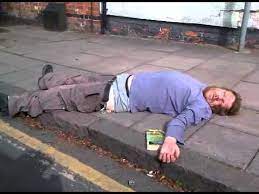
A typical San Francisco scene
Attorney Laura Powell damned the program on X, writing: “San Francisco’s managed alcohol program provides homeless alcoholics with housing, meals, activities (including crafts and outings to Giants games), and a quantity of alcoholic beverages determined by their ‘need and desire,’ with no expectation of reducing consumption.
“With a reported budget of $5 million for 20 beds (half set aside for Latinx or indigenous people), it would be cheaper to accommodate these people in all-inclusive resorts.”
San Francisco officials claim the program saves taxpayer money by reducing calls to emergency services.
But the San Francisco Chronicle found that, in July 2022, five alcoholics in the program needed ambulance transportation at least 1,727 times in a period of five years, costing the taxpayer $4 million.
Another critic of the program is addiction specialist Amara Durham: “Where’s the medical supervision for when someone does hit that tipping point and they have been over-served because they happen to come in and get their last drink that takes them over the edge from this facility?”
Perhaps the best way to evaluate the effectiveness of the Managed Alcohol Program is this: Since 2020, it has served just 55 clients.
Meanwhile, store owners are being forced to literally pay the price for San Francisco’s failed policies on “the homeless.”
On June 18, the San Francisco Board of Supervisors slapped a midnight-to-5-a.m. curfew on food markets and tobacco businesses in the city’s latest attempt to prevent drug abuse in the crime-ridden Tenderloin district.
But restaurants, bars and non-retail businesses are exempt. Stores can be fined up to $1,000 for each hour they operate in violation of the ordinance.
So what can San Francisco do to effectively combat the drug- and alcohol-related plagues of Druggies, Drunks, Mentals and Bums (DDMBs)?
They can recognize that the United States Supreme Court has finally supplied at least a partial answer to this problem.

“Homeless” tents lined up toward City Hall
On June 28, the Court, in City of Grants Pass vs. Johnson, empowered cities to enforce laws prohibiting camping and vagrancy.
On September 28, 2018, a three-judge panel of the Ninth Circuit Court of Appeals had issued Martin v. City of Boise. This held that “the Eighth Amendment prohibits the imposition of criminal penalties for sitting, sleeping, or lying outside on public property for homeless individuals who cannot obtain shelter.”
People could be evicted only if beds or shelter were available to those who were being evicted.
The Supreme Court’s ruling overrides that decision, stating that the Eighth Amendment does not prevent a municipality from evicting homeless people from public spaces. Now dozens of Western cities are armed with greater enforcement powers to keep those spaces open and safe for everyone.
As a result, communities nationwide can fine, ticket or arrest DDMBs. But they aren’t forced to take any specific actions or to actively engage in criminal punishment.
Given the extent of the “homeless” plague facing San Francisco, the city could—and should—impose the following reforms:
- Launch a “Please Do Not Feed the Bums” publicity campaign—as it has against feeding pigeons. And those caught doing so should be heavily fined.
- Trash cans should be equipped with locked doors, to prevent bums from using them as food dispensers.
- Those living on the street should be given two choices: Go to a local shelter or face arrest and the immediate confiscation of their possessions;
- An “Untermenschen City” should be set up near the city dump. There they can live in their tents and/or sleeping bags while being unable to daily confront or assault others to obtain free money.
- San Francisco’s rent control laws should be strengthened, to prevent future evictions owing to the unchecked greed of landlords. Tenants on fixed incomes should be given special protections against extortionate rent increases.
- Bus drivers should be able to legally refuse passengers who stink of urine/feces, as they present a potential health-hazard to others.
- The owners of restaurants, theaters and grocery stores should likewise be allowed to refuse service on the same basis.
- Those applying for welfare benefits should be required to provide proof of residence. Too many people come to San Francisco because, upon arrival, they can immediately apply for such benefits.
- Set up a special unit to remove “street people” and their possessions from city sidewalks. This could be a division of the Sanitation Department, since its personnel are used to removing filth and debris of all types.
- Forcefully tell alcoholics, drug addicts and bums: “Your anti-social behavior is not welcome here. Take your self-destructive lifestyles elsewhere. We won’t subsidize them.”
It may not be perfect, but it will certainly go further to clean up the drug- and alcohol-soaked Tenderloin than any program now on the books.
And it will not penalize those who are struggling to make a living as they brave long hours, often hostile customers, and the ever-present threat of armed robbery.
ABC NEWS, ADAM NATHAN, ALCOHOL ADDICTION, ALTERNET, AMERICABLOG, AP, BABY BOOMER RESISTANCE, BBC, BEER, BLOOMBERG, BUMS, BUZZFEED, CBS NEWS, CITY OF GRANTS PASS VS. JOHNSON, CNN, CROOKS AND LIARS, CURFEW, DAILY KOS, DRUG ADDICTION, DRUG MARKET AGENCY COORDINATION CENTER, EIGHTH AMENDMENT, FIVETHIRTYEIGHT, HARPER’S MAGAZINE, HOMELESSNESS, HUFFINGTON POST, LAURA POWELL, LONDON BREED, MANAGED ALCOHOL PROGRAM, MEDIA MATTERS, MENTAL ILLNESS, MOTHER JONES, MOVEON, MSNBC, NBC NEWS, NEW REPUBLIC, NEWSDAY, NEWSWEEK, NINTH CIRCUIT COURT OF APPEALS, NPR, PBS NEWSHOUR, POLITICO, POLITICUSUSA, RAW STORY, REUTERS, SALON, SALVATION ARMY’S ADVISORY BOARD, SAN FRANCISCO, SAN FRANCISCO CHRONICLE, SAN FRANCISCO DEPARTMENT OF PUBLIC HEALTH, SAN FRANCISCO POLICE DEPARTMENT, SEATTLE TIMES, SLATE, TALKING POINTS MEMO, TENDERLOIN DISTRICT, THE ATLANTIC, THE CHICAGO SUN-TIMES, THE CHICAGO TRIBUNE, THE DAILY BEAST, THE DAILY BLOG, THE GUARDIAN, THE HILL, THE HUFFINGTON POST, THE INTERCEPT, THE LOS ANGELES TIMES, THE NATION, THE NEW REPUBLIC, THE NEW YORK TIMES, THE NEW YORKER, THE VILLAGE VOICE, THE WASHINGTON POST, THINKPROGRESS, TIME, TRUTHDIG, TRUTHOUT, TWO POLITICAL JUNKIES, U.S. NEWS & WORLD REPORT, UNITED STATES SUPREME COURT, UPI, USA TODAY, VODKA, WALLETHUB, X
In Bureaucracy, Business, History, Law, Law Enforcement, Medical, Politics, Social commentary on July 23, 2024 at 12:11 am
In San Francisco, if your house is infested with bedbugs, don’t get rid of the bedbugs—close down the house.
Proof of this came on June 18, when the San Francisco Board of Supervisors unanimously approved legislation to place a curfew on food markets and tobacco businesses in the city’s latest attempt at preventing drug abuse in the crime-ridden Tenderloin district.
San Francisco’s Tenderloin district is about 50 square blocks in size, with a population of around 35,000 people. It’s bordered on the north by Geary Street, on the east by Mason Street, on the south by Market Street and on the west by Van Ness Avenue.

The Tenderloin
The new curfew rules will prevent businesses in the Tenderloin selling “prepackaged food or tobacco products from operating” between midnight and 5 a.m.
“The drug markets happening at night in this neighborhood are unacceptable and must be met with increased law enforcement and new strategies, but this must be done in partnership with community, which we are doing,” San Francisco Mayor London Breed said.
The legislation is designed as a two-year pilot program, according to the press release, and will be enforced by fines from the San Francisco Department of Public Health (SFDPH) and investigation from the San Francisco Police Department (SFPD).
The legislation does not apply to restaurants, bars, or non-retail businesses, such as event halls. Fines can be levied for up to $1,000 for each hour a store operates in violation of the ordinance.
The curfew program targets these businesses that, “in effect, facilitate the late night-time drug market by providing a lighted gathering point,” according to the legislation.
Some local businesses are saying if they take a loss in revenue or jobs, they want the city to offer financial mitigation, such as a reduction in fees.
Residents appear divided about the effectiveness of the legislation.
“That’s backwards,” said Abdul Malik Muhammad, about allowing liquor stores to remain open past midnight. “Those are the stores that should be shut down, I believe.”

Wallie, one of the owners of Plaza Snacks and Delli at 7th and McAllister street, said: “That’s not gonna make any difference, I guarantee you. I’ve been here for 20 years. They just move them from one block to the next.”
“Some of the stores are like magnets, and they attract problems,” said Muhammad. He accused some store owners of price-gouging their low-income customers.
Many residents feel imprisoned in their own homes “when the sun goes down,” several business organizations wrote the city. They speak of drug sales in the open, rapes, murders and shootings with human waste left in the wake.
Yet much of this can be traced directly to the city’s open door welcome to those euphemistically termed as “the homeless.” The vast majority of these fall into four major groups: Drug addicts, alcoholics, the mentally ill and those who refuse to work.
In short: DDMBs—Druggies, Drunks, Mentals and Bums.
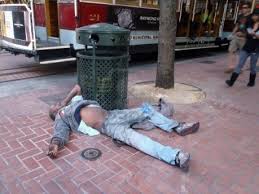
Another casualty of booze or drugs
“Our challenges still occur at night,” said Assistant Chief David Lazar. “Crowds of people that are there selling stolen property, selling narcotics. We have drug users all over. And the problem is that when you have businesses that are open, like liquor stores and smoke shops, it just attracts more people.”
A study by WalletHub, a personal finance company, recently found that San Francisco was the “worst run” city in the United States. The study measured the “effectiveness of local leadership” by comparing the quality of city services matched against the city’s total budget to determine its operating efficiency.
In a statement to Fox News Digital, Breed’s office defended the mayor’s policy actions to reduce drug use in San Francisco:
“Mayor Breed has taken aggressive steps to shut down open-air drug markets and that is why she established the Drug Market Agency Coordination Center (DMACC) in May 2023, activating resources across the City to dismantle the illegal drug markets in the Tenderloin and South of Market neighborhoods.
“Since May 28, 2023, SFPD has seized over 225 kilos of narcotics and made more than 3,400 arrests related to drug activity in these neighborhoods, including more than 1,400 drug dealers and over 1,500 drug users arrested. For fentanyl seizures, over 77 million lethal doses have been seized since the start of DMACC.”
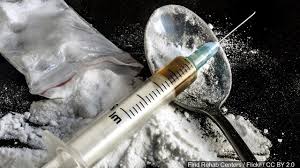
And while city officials laud their efforts to “crack down” on drug use, the city operates a second program to provide vodka or beer to “homeless” people struggling with severe alcohol addiction.
The city set up its Managed Alcohol Program (MAP) in 2020 as part of its COVID-19 response, to keep “homeless” people out of jails and emergency rooms.
Adam Nathan, chair of the Salvation Army’s advisory board in San Francisco, posted on X that he recently “stumbled across” the former hotel from which the program operates:
“It’s set up so people in the program just walk in and grab a beer, and then another one. All day. The whole thing is very odd to me and just doesn’t feel right. Providing free drugs to drug addicts doesn’t solve their problems. It just stretches them out. Where’s the recovery in all of this?”
ABC NEWS, ALTERNET, AMERICABLOG, AP, ASSAULT, BABY BOOMER RESISTANCE, BUZZFEED, CBS NEWS, CNN, CRIME, CROOKS AND LIARS, DAILY KOZ, DEPARTMENT OF POLICE ACCOUNTABILITY, FACEBOOK, FIVETHIRTYEIGHT, LAW ENFORCEMENT, MOTHER JONES, MOVEON, MSNBC, NBC NEWS, NEWSWEEK, NPR, PBS NEWSHOUR, POLITICO, POLITICUSUSA, RAW STORY, REUTERS, SALON, SAN FRANCISCO, SAN FRANCISCO CHRONICLE, SAN FRANCISCO POLICE DEPARTMENT, SEATTLE TIMES, SLATE, TALKING POINTS MEMO, THE ATLANTIC, THE CHICAGO SUN-TIMES, THE CHICAGO TRIBUNE, THE DAILY BEAST, THE DAILY BLOG, THE GUARDIAN, THE HILL, THE HUFFINGTON POST, THE LOS ANGELES TIMES, THE NATION, THE NEW YORK TIMES, THE WASHINGTON POST, THINKPROGRESS, TIME, TRUTHDIG, TWITTER, U.S. NEWS & WORLD REPORT, UPI, USA TODAY
In Bureaucracy, History, Law, Law Enforcement, Politics, Social commentary on November 7, 2019 at 12:16 am
“On August 7, 2017, I witnessed a brutal assault on a friend of mine named Hal [not his real name]. I was a passenger in his car as he waited for a parking space to open in front of the apartment building where we both live.”
So opened a letter from a man named Dave [not his real name] to the San Francisco Police Department (SFPD).
Summarizing his experience as a witness and assault victim, Dave wrote:
- A man commits assault and battery on another without the slightest provocation.
- He then uses his Jeep Cherokee to twice ram his victim’s car.
- These violations of criminal law are reported to the SFPD by two eyewitnesses/victims within an hour of their occurrence.
- One eyewitness gives the SFPD a photo of the license plate of the car used in the vehicular assaults.
- The SFPD doesn’t contact either witness/victim in this incident.
- Despite being provided with all this evidence, the SFPD does NOTHING.

Dave subsequently received a Complainant Satisfaction Survey from the SFPD’s Department of Police Accountability (DPA). After bluntly stating his disgust at the complete indifference of the SFPD to the assault, he got a letter from DPA on December 13, 2018, which stated:
“Your Request for an Investigative Hearing in the above-captioned case has been received. We have reviewed the investigative file and have determined that the facts and circumstances supported the DPA’s findings.”
And: “We understand that you may not agree with our finding(s), but it may be of some use to contact the investigator for better clarity and understanding in this matter.”
In short: We aren’t going to arrest the man who assaulted you, but we’ll try to convince you that it’s all for the best.
Determined to not let the SFPD have the last word, Dave sent back a letter to David Henderson, executive director of DPA.
He noted that he had never requested an investigative hearing. Nor had he written a December 5, 2018 letter to the SFPD, as the letter claimed.
He also noted that, 16 years earlier, on May 19, 2002, the San Francisco Chronicle had published a series of devastating reports on the SFPD. Among the newspaper’s findings:
- Violent criminals in San Francisco’s had a better chance of getting away with their crimes than predators in any other large American city.
- The San Francisco Police Department solved, on average, just 28% of the city’s murders, rapes, robberies, shootings, stabbings and other serious assaults between 1996 and 2000.
- Among the nation’s 20 largest cities, that was the lowest violent crime ‘clearance rate.
- The large-city average clearance rate was 42 percent.
“Judging from the results of my own experience with your agency, little—if anything—has changed within the SFPD during the last 16 years,” Dave wrote.

Referring to the DPA’s false claim that he had requested an investigative hearing, he ended his letter in cold fury:
“It’s a misdemeanor to file a false report with the police. It should be a felony for a police agency to write and send a letter filled with demonstrably false information.
“It is also the height of arrogance and stupidity to believe you can convince the victim of an assault that the criminal negligence he experienced at the hands of the police department didn’t happen.
“Undoubtedly this letter was written for placement in the official files of your department, as a way to cover itself against any possible legal action. No doubt this is common practice within your agency.
“It is precisely such conduct—as well as the refusal of your agency to aggressively investigate crimes of violence against San Francisco residents—that is guaranteed to produce widespread contempt for and refusal to cooperate with your police department.”
Dave didn’t receive another letter from the SFPD.
* * * * *
Unfortunately, real-life police departments do not operate like the ones depicted in movies and on TV. Among the realities of those departments:
Unless you’re wealthy, a politician or—best of all—a cop, don’t expect the police to protect you if your life is threatened. You’ll simply be told: “We don’t have the resources to protect everybody.”
Above everyone else, police look out for each other. If a citizen murders his lover, he’ll be tracked by two detectives. But whoever kills a cop is sought by the entire department.
Police departments are plagued by the same problems that haunt all major bureaucracies, such as:
- Often lacking state-of-the-art crime labs to analyze evidence.
- Often losing or accidentally destroying important files.
- Staffed by those who are lazy, indifferent, incompetent or even corrupt.
- Often refusing to share information with other police agencies, thus making it easier for criminals to run amok.
The result of all this can only be increased disrespect for law enforcement from a deservedly—and increasingly—cynical public.
When citizens believe police lack the ability-–or even the will-–to protect them or avenge their victimization, that is a deadly blow to law enforcement.
When public support vanishes, so does much of that public funding for hiring more cops and buying necessary equipment.
The result can only be a return to the days of the lawless West, where citizens—as individuals or members of vigilante committees—look only to themselves for protection.
ABC NEWS, ALTERNET, AMERICABLOG, AP, ASSAULT, BABY BOOMER RESISTANCE, BUZZFEED, CBS NEWS, CNN, CRIME, CROOKS AND LIARS, DAILY KOZ, DEPARTMENT OF POLICE ACCOUNTABILITY, FACEBOOK, FIVETHIRTYEIGHT, LAW ENFORCEMENT, MOTHER JONES, MOVEON, MSNBC, NBC NEWS, NEWSWEEK, NPR, PBS NEWSHOUR, POLITICO, POLITICUSUSA, RAW STORY, REUTERS, SALON, SAN FRANCISCO, SAN FRANCISCO CHRONICLE, SAN FRANCISCO POLICE DEPARTMENT, SEATTLE TIMES, SLATE, TALKING POINTS MEMO, THE ATLANTIC, THE CHICAGO SUN-TIMES, THE CHICAGO TRIBUNE, THE DAILY BEAST, THE DAILY BLOG, THE GUARDIAN, THE HILL, THE HUFFINGTON POST, THE LOS ANGELES TIMES, THE NATION, THE NEW YORK TIMES, THE WASHINGTON POST, THINKPROGRESS, TIME, TRUTHDIG, TWITTER, U.S. NEWS & WORLD REPORT, UPI, USA TODAY
In Bureaucracy, History, Law, Law Enforcement, Politics, Social commentary on November 6, 2019 at 12:07 am
For countless citizens, the adage proves unfortunately true: If you become a victim of crime, you’re victimized twice—once by the criminal, and again by the criminal justice system.
And this truth proves especially apt in San Francisco.
A friend of mine named Dave [not his real name] who lives in San Francisco, offers the following case:
“On August 7, 2017, I witnessed a brutal assault on a friend of mine named Hal [not his real name]. I was a passenger in his car as he waited for a parking space to open in front of the apartment building where we both live.
“A man—clearly in an agitated state—approached the driver’s side and accused Hal of using the wrong signal. After hearing him out, Hal asked him to back away. Instead, the man quickly began striking Hal in the face at least a half dozen times.”
Dave got out on the passenger’s side and threatened to call police. The assailant returned to his Jeep Cherokee truck, which was parked right behind Hal’s car. Dave re-entered Hal’s car and thought that the worst was over.
Suddenly the Jeep Cherokee slammed into the rear of Hal ‘s car. Then the driver pulled out.
“Hal started his car and followed the Jeep Cherokee to get a photo of its license plate. Using his iPhone, he did. The truck continued a short distance forward, then suddenly reversed and slammed into the front of Hal’s car. The driver then roared off.
“Hal and I then drove to the SFPD’s Central Station, where we both filled out statements and spoke individually with an officer. In addition, Hal provided a photo of the license plate of the vehicle that had rammed him.
“After that, Hal and I waited for a response from the SFPD. We never received one.
In early November, 2017—after waiting three months for a police response—Dave called the SFPD and arranged an appointment with a sergeant at Central Station.
“She showed me a series of photos that seemed to resemble the man who had assaulted Hal. Frankly, I had caught only a brief glimpse of the man when I exited Hal’s car and saw him heading for his Jeep. It certainly didn’t help that, three months later, I was now being asked to give an accurate description of him.
Later, Dave learned that the SFPD had chosen to not pursue criminal charges against the assailant. No reason was given for this decision.
In January, 2018, Dave filed a complaint with the SFPD’s Department of Police Accountability (DPA), formerly known as its Internal Affairs Division.
The investigator he met with was friendly and concerned. Even so, his complaint didn’t lead the SFPD to pursue criminal charges against the assailant. Again, no reason was offered by the agency.
“In November, 2018, I received a Complainant Satisfaction Survey from the SFPD’s Department of Police Accountability. But its Q&A format didn’t let me address the issues I thought important.”
To do so, on November 26, he sent back a memo, offering the following summation:
- A man commits assault and battery on another without the slightest provocation.
- He then uses his Jeep Cherokee to ram the rear of his victim’s car.
- He then uses his Jeep Cherokee to ram the front of his victim’s car.
- These violations of criminal law are reported to the SFPD within an hour of their occurrence.They are reported by not one but two eyewitnesses/victims.
- One of those eyewitnesses provides the SFPD with a photo of the license plate of the car used in the vehicular assaults.
- The SFPD makes no effort to contact either witness/victim in this incident.
- Despite being provided with all this evidence, the SFPD does NOTHING.
And he concluded his indictment:
“I have nothing but contempt for [the SFPD’s] refusal to take even a cursory interest in this case.
“If a friend of mine became the victim of a crime, I would advise him: ‘Don’t waste your time contacting the SFPD. There is simply no reason to set yourself up for a double injury—the first one inflicted by the criminal, and the second one inflicted by the criminally negligent SFPD.'”
San Francisco Hall of Justice
Dllu [CC BY-SA 4.0 (https://creativecommons.org/licenses/by-sa/4.0)%5D, from Wikimedia Commons
To his surprise, Dave received a letter from the DPA, dated December 13, 2018:
“Your Request for an Investigative Hearing in the above-captioned case has been received. We have reviewed the investigative file and have determined that the facts and circumstances supported the DPA’s findings.
“More specifically, we reviewed your letter dated December 5, 2018. The DPA strongly recommends that you call and make an appointment with your investigator in your case at (415) ###-#### to discuss our finding(s).
“We understand that you may not agree with our finding(s), but it may be of some use to contact the investigator for better clarity and understanding in this matter.
“Your Request for Investigative Hearing is therefore denied. Thank you for the time you took to ensure that the DPA understood your concerns. We view this as a positive step in keeping with the goals of the DPA.”
And it was signed by Paul David Henderson, the agency’s executive director.
AARON PESKIN, ABC NEWS, AIR POLLUTION, ALTERNET, AMERICABLOG, AP, BABY BOOMER RESISTANCE, BARBARA GARCIA, BAY AREA AIR QUALITY MANAGEMENT DISTRICT (BAAQQMD), BUZZFEED, CATERING, CBS NEWS, CNN, CROOKS AND LIARS, DAILY KOZ, FACEBOOK, FIVETHIRTYEIGHT, FOOD INSPECTION, HEALTH INSPECTION, MERAKAI MARKET, MILLENNIUM TOWER, MOTHER JONES, MOVEON, MSNBC, NAPA, NBC NEWS, NEWSWEEK, NPR, PBS NEWSHOUR, POLITICO, POLITICUSUSA, RAW STORY, REUTERS, SALON, SAN FRANCISCO, SAN FRANCISCO BOARD OF SUPERVISORS, SAN FRANCISCO CHRONICLE, SAN FRANCISCO DEPARTMENT OF BUILDING INSPECTION, SAN FRANCISCO DEPARTMENT OF PUBLIC HEALTH, SEATTLE TIMES, SLATE, SONOMA, STANLEE GATTI, TALKING POINTS MEMO, THE ATLANTIC, THE CHICAGO SUN-TIMES, THE CHICAGO TRIBUNE, THE DAILY BEAST, THE DAILY BLOG, THE GUARDIAN, THE HILL, THE HUFFINGTON POST, THE LOS ANGELES TIMES, THE NATION, THE NEW YORK TIMES, THE WASHINGTON POST, THINKPROGRESS, TIME, TRUTHDIG, TWITTER, U.S. NEWS & WORLD REPORT, UPI, USA TODAY, WOOD STOVES
In Bureaucracy, Business, History, Law, Law Enforcement, Politics, Social commentary on September 19, 2019 at 12:46 am
Officially, government health agencies exist to make our lives safer.
Oftentimes, this simply isn’t true.
Meraki Market opened in October, 2017, at 927 Post Street, directly across from the San Francisco apartment building where Valerie (not her real name) lives.
The main feature of this store—which offers expensive, deli-style food to local residents—is a wood-burning stove. Its fuel is almond and mesquite wood. Mesquite emits an aroma similar to that found in Texas barbecue restaurants.
Since this store opened, Valerie’s apartment—and other apartments on Post, Geary and O’Farrell Streets—has been swathed in thick, foul-smelling smoke that makes eyes water and throats constrict. It clings to clothes and furnishings.
And it poses a threat to tenants’ health.
An article published by the American Lung Association on February 8, 2016, warned: “Wood Burning Stoves Could Be Harming Your Health.” For example:
“…The reality is that smoke from residential wood heaters can be harmful to the health of those in your home and also in your community. This is especially true for people with lung conditions, as well as children, older adults, people with cardiovascular disease and diabetics….
“Smoke from wood-burning stoves can have both short-term and long-term effects. It can trigger coughing, wheezing, asthma attacks, heart attacks, and lead to lung cancer and premature death, among other health effects.
“This is because wood smoke contains fine particle pollution, carbon monoxide, volatile organic compounds, black carbon and air toxics such as benzene. The wood smoke can increase particle pollution to levels that pose serious health concerns both indoors and outdoors. In fact, fine particle pollution (PM2.5) is so tiny that it can get deep into the lungs, harming the lungs, blood vessels and heart.”
The San Francisco Chronicle’s online edition reported: “An inspector with the San Francisco Department of Public Health (DPH) paid Meraki a visit…and found everything in order.”
But this is not as reassuring as it might seem.
The city’s Department of Building Inspection also handed out premature building permits to the notorious Millennium Tower—a luxury residential high-rise in the South of Market district of downtown San Francisco.The result: Since its completion in 2008, the Tower has sunk 17 inches and tilted 14 inches.

The reason: The Millennium Partners did not build on bedrock.
As a result, this 58-story, 645-foot-tall apartment complex is now known as “the leaning tower of San Francisco.”
Meanwhile, Stanlee Gatti, the owner of the market, is one of the best-known event planners in the country. In 1999, he was described by a columnist as one of the three most powerful people in San Francisco.
Gatti’s enormous power as a friend of the city’s top politicians raises the question: “Is he the beneficiary of special consideration?”
The opening of Meraki Market came shortly after the extinguishing of the catastrophic fires in Napa and Sonoma in fall, 2017.
Starting in October, Valerie assumed these fires were still going on because the smell of burning wood was overwhelming the neighborhood.
It was only in early November that she learned the source of the pollution was the market across the street.
While there’s a health concern by those residents forced to live near the pollution-spewing market, it’s not shared by those city officials who don’t live near it.
On January 1, 2018, she emailed her local supervisor, Aaron Peskin. That same day, Peskin replied: “I’m looping in the Department of Public Health to follow up.”
On January 2, Valerie received a second email from Peskin, which contained a notation from Barbara Garcia, an official with the local Department of Public Health: “I’ve added our Environmental Health management for response.”
On January 4, Valerie received that response from the Health Department:
“While we share the concerns for air quality and particulate pollution the outdoor air is primarily regulated by the Bay Area Air Quality Management District (BAAQMD).
“The Department of Public Health’s Environmental Health Branch regulates the safe handling and preparation of the food sold at the market but the outdoor smoke issue is regulated by the BAAQMD.

“So in response to the complaints we received (November 2017) regarding the smoke from this location we directed the owner of Meraki Market to not use or operate the wood burning stove on the BAAQMD designated ‘No Burn Days.’”
Wow! Local residents will be spared breathing polluted air on whatever days BAAQMD deigns to declare as “No Burn Days”!
For those days not so designated—tough luck.
Valerie had already contacted BAAQMD—and found they didn’t have jurisdiction over pollution caused by restaurants. Moreover, one of its inspectors must actually come out and smell or see the pollution while it is occurring.
This is akin to a police department’s refusing to investigate reports of a murder unless one of its detectives actually saw it committed.
Valerie quickly drafted a reply to the Health Department: “Your email offers a textbook example why so many people have given up on government at any level.
“I [expected] the San Francisco Department of Public Health [to show] some interest in addressing the health concerns of a public that’s being daily exposed to toxic air. Obviously, that was a mistake on my part.”
She sent similar emails to Peskin and BAAQMD.
No action has been taken by any agency.
ABC NEWS, ALCOHOLISM, ALTERNET, AP, BEGGING, BUMS, BUZZFEED, CBS NEWS, CNN, DAILY KOS, DISEASE, DRUG ADDICTION, FACEBOOK, HEPATITIS B, HEPATITIS C, HILLARY RONEN, HIV, HOMELESS, HOMELESSNESS, MENTAL ILLNESS, MOTHER JONES, MOVEON, NBC NEWS, NEWSWEEK, NPR, PANHANDLING, POLITICO, PUBLIC HEALTH, RAW STORY, REUTERS, ROTAVIRUS, SALON, SAN FRANCISCO, SAN FRANCISCO CHRONICLE, SAN FRANCISCO DEPARTMENT OF PUBLIC WORKS, SEATTLE TIMES, SLATE, THE ATLANTIC, THE CHICAGO SUN-TIMES, THE CHICAGO TRIBUNE, THE DAILY BEAST, THE GUARDIAN, THE HILL, THE HUFFINGTON POST, THE LOS ANGELES TIMES, THE NEW YORK TIMES, THE WALL STREET JOURNAL, THE WASHINGTON POST, TIME, TWITTER, U.S. NEWS & WORLD REPORT, UPI, USA TODAY, WILLIE BROWN
In Bureaucracy, History, Law, Law Enforcement, Politics, Social commentary on March 29, 2019 at 12:17 am
In 2010, San Francisco voters passed the “No Sit/No Lie” ordinance, which “makes it unlawful, with certain exceptions, to sit or lie on a public sidewalk, or on an object placed on a public sidewalk, between 7AM and 11PM.”
It also prohibits sleeping in public parks at night and building encampments.
The number of sit-lie infractions peaked at 1,011 in 2013 before steadily declining to just 114 in 2017, according to San Francisco Superior Court records.
Meanwhile, the number of misdemeanors tracked by the SFPD spiked at 195 in 2016 and then declined sharply by almost half the next year.
This does not mean that San Francisco’s Untermenschen problem has abated.
It simply means that the city has essentially given up on trying to protect its contributing, tax-paying citizens from the thousands of tax-draining drug-abusers, alcoholics, mentally ill and bums who infest its streets.
Walk down almost any street in the downtown part of the city and you’ll find sidewalks crowded with stinking,
- disease-ridden,
- lice infested,
- drug-addicted,
- alcohol-soaked,
- often psychotic men and women
whom city officials politely refer to as “the homeless.”
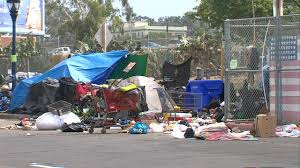
Among the trappings that go with this population:
- Tents
- Mattresses
- Piles of belongings
- Stolen shopping carts
- Trash
- Half-eaten food
- Empty cans/bottles of alcohol
- Feces
- Pools of urine
- Hypodermic needles
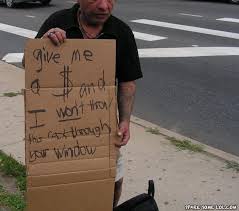
What you’ll almost never see: Police actually enforcing the “No Sit/No Lie” ordinance.
So much for the will of the voters.
San Francisco officials have effectively washed their hands—if not the streets—of the problem. If local residents must put up with repeated violations of the most basic sanitation laws, that’s their tough luck.
What matters to the Mayor and Board of Supervisors is this: The “rights” of those whose filth and behavior pose an immediate threat to public health and safety take precedence over those of tax-paying, law-abiding San Franciscans.
San Francisco residents can be fined $25 to $1,000 for feeding pigeons—but not for giving money to street bums.
Often those asking for money to “buy food” refuse offers to buy them food—no doubt because they intend to use the money on drugs or alcohol.
During the Mayorship of Willie Brown (1996 – 2004), Hizzonor proposed what he thought was a brilliant way for residents to “contribute” to “street people.”
Those who were somehow certified as “homeless” would be issued special electronic “cash cards.” When someone wanted to make a “donation,” s/he would swipe a credit card against the one owned by the street bum, for whatever amount s/he wanted to donate.
But before the program started, someone at City Hall realized a blunt truth: Residents—especially women—weren’t likely to whip out their credit cards in front of a ranting, foul-smelling, probably disease-ridden street bum.
Mercifully, the program died before it ever got started.
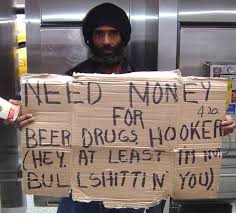
It’s long past time for San Francisco—and other cities—to stop catering to its population of DDMBs: Druggies, Drunks, Mental cases and Bums—who prey on the guilt or fear of law-abiding, tax-paying citizens.
The same laws that protect citizens against patients with highly communicable diseases like typhoid and cholera should be vigorously applied to those whose filthy habits threaten similar public contagion.
Among such reforms:
- The city should launch a “Please Do Not Feed the Bums” publicity campaign—as it has against feeding pigeons. And those caught doing so should be heavily fined.
- Trash cans should be equipped with locked doors, to prevent bums from using them as food dispensers.
- Those living on the street should be given a choice: Go to a local shelter or face arrest and the immediate confiscation of their possessions.
- For those who refuse shelter and insist on living on the streets, a special “Untermenschen City” should be set up near the city dump. There they can live in their tents and/or sleeping bags while being unable to daily confront or assault others to obtain free money.
- San Francisco’s rent control laws should be strengthened, to prevent future evictions owing to the unchecked greed of landlords. Tenants on fixed incomes should be given special protections against extortionate rent increases.
- Bus drivers should have the right to refuse passengers who stink of urine/feces, as they present a potential health-hazard to others.
- The owners of restaurants, theaters and grocery stores should likewise be allowed to refuse service on the same basis.
- Those applying for welfare benefits should be required to provide proof of residence. Too many people come to San Francisco because, upon arrival, they can immediately apply for such benefits.
- The city should set up a special unit to deal entirely with removing “street people” and their possessions from city sidewalks. This could be a division of the Sanitation Department, since its personnel are used to removing filth and debris of all types.
San Francisco officials need to:
- Forcefully tell alcoholics and drug addicts: “Your anti-social behavior is not welcome here. Take your self-destructive lifestyles elsewhere. We won’t subsidize them.”
- Take the mentally unstable off the street and place them in institutions where their needs can be met.
- Tell those who are just plain bums: Don’t expect us to support you.
Only then will San Francisco rightly reclaim its former glory as “the city by the Bay.”
ABC NEWS, ALCOHOLISM, ALTERNET, AP, BEGGING, BUMS, BUZZFEED, CBS NEWS, CNN, DAILY KOS, DISEASE, DRUG ADDICTION, FACEBOOK, HEPATITIS B, HEPATITIS C, HILLARY RONEN, HIV, HOMELESS, HOMELESSNESS, MENTAL ILLNESS, MOTHER JONES, MOVEON, NBC NEWS, NEWSWEEK, NPR, PANHANDLING, POLITICO, PUBLIC HEALTH, RAW STORY, REUTERS, ROTAVIRUS, SALON, SAN FRANCISCO, SAN FRANCISCO CHRONICLE, SAN FRANCISCO DEPARTMENT OF PUBLIC WORKS, SEATTLE TIMES, SLATE, THE ATLANTIC, THE CHICAGO SUN-TIMES, THE CHICAGO TRIBUNE, THE DAILY BEAST, THE GUARDIAN, THE HILL, THE HUFFINGTON POST, THE LOS ANGELES TIMES, THE NEW YORK TIMES, THE WALL STREET JOURNAL, THE WASHINGTON POST, TIME, TWITTER, U.S. NEWS & WORLD REPORT, UPI, USA TODAY, WILLIE BROWN
In Bureaucracy, History, Law, Law Enforcement, Politics, Social commentary on March 28, 2019 at 12:06 am
Huge areas of San Francisco are covered in feces, urine, trash and needles. Hospitals overflow with patients that have fallen ill due to the contamination.
And what has been the reaction of successive mayors and members of the Board of Supervisors?
A disgraceful combination of tolerance and indifference: Tolerance toward those who create such dangers—and indifference toward those who are their potential victims.
And yet those officials remain in office for years.
In February, 2018, NBC News surveyed 153 blocks of the city—an area more than 20 miles. That area includes popular tourist spots like Union Square and the cable car turnaround. It’s bordered by Van Ness Avenue, Market Street, Post Street and Grant Avenue. And it’s also home to City Hall, schools, playgrounds, and a police station.
A typical San Francisco scene
Most of the trash found consisted of heaps of garbage, food, and discarded junk—including 100 drug needles and more than 300 piles of feces throughout downtown. If you step on one of these needles, you can get HIV, Hepatitis C, Hepatitis B or a variety of other viral diseases.
But you don’t have to actually get stuck by a needle to become a victim. Once fecal matter dries, it can become airborne and release deadly viruses, such as the rotavirus.
“If you happen to inhale that, it can also go into your intestine,” says Dr. Lee Riley, an infectious disease specialist at the University of California, Berkeley. The results can prove fatal, especially in children.
As the news unit filmed a typical day’s activity in San Francisco, a group of preschool students, enjoying a field trip, walked to City Hall.
Responding to a reporter’s question, Adelita Orellana said: “We see poop, we see pee, we see needles, and we see trash.
“Sometimes they ask what is it, and that’s a conversation that’s a little difficult to have with a two-year old, but we just let them know that those things are full of germs, that they are dangerous, and they should never be touched.”
San Francisco’s political elite see this blight as well as everyone else. They can’t avoid seeing it, since the city covers only 47 square miles.
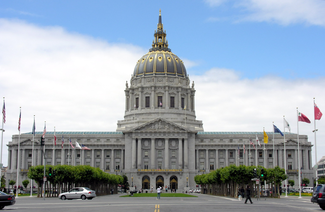
San Francisco City Hall
Cabe6403 at English Wikipedia [CC BY-SA 3.0 (https://creativecommons.org/licenses/by-sa/3.0) or GFDL (http://www.gnu.org/copyleft/fdl.html)%5D, from Wikimedia Commons
One of those who sees the disgrace up-front is Supervisor Hillary Ronen: “Unacceptable. Absolutely unacceptable. We’re losing tourists. We’re losing conventions in San Francisco.”
Yet what does she propose as the solution? “We need more temporary beds for street homelessness.”
This is on a par with a “pest control expert” recommending: “We need more sugar to clear up our roach problem.”
Thanks to its mild climate and social programs that dole out cash payments to virtually anyone with no residency requirement, San Francisco is often considered the “homeless capital” of the United States.
According to a 2016 article in the San Francisco Chronicle, there are about 13,000 “homeless” people in San Francisco. Of these, an estimated 3,000 to 5,000 refuse shelter.
In 2016, San Francisco spent $275 million on homelessness—up from $241 million in 2015. Public Works cleanup crews picked up more than 679 tons of trash from homeless tent camps—and collected more than 100,000 used syringes from the camps.
In 2016, San Francisco residents made 22,608 complaints about encampments—a five-fold increase from 2015.
City officials euphemistically call this population “the homeless.” That’s because they don’t want to use words that accurately describe those who comprise the overwhelming majority of this population:
- Druggies
- Drunks
- Mentally ill
- Bums.
Or, as even many police, social workers and paramedics who wrestle with this population privately refer to them: DDMBs.
Yet the mere citing of statistics—how many “homeless,” how much money is spent on how many people, how much filth they produce—doesn’t capture the true intensity of the problem.
To do that, you must confront its realities at the street level. Imagine:
- You’re elderly, and walking with a cane—and must often try to negotiate your way around big tents that take up most of a sidewalk.
- You’re riding in a wheelchair along a sidewalk until you come to a large mattress lying directly in your path, with a potentially psychotic “homeless” man lying upon it.
- You find a street teeming with rats—eating the food scraps left by “homeless” people.
- You walk into an underground Municipal Railway bus station—and find it littered with derelicts passed out or shooting up heroin in plain sight. Naturally, they don’t worry about picking up their used hypodermic needles. They leave those out for others to step on or pick up at their own risk.
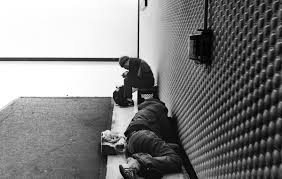
- You’re standing at a bus stop or eating in a restaurant—when a large, filthy, possibly disease-carrying man or woman demands a “handout” from you.
- You board a local bus and are forced to sit near a man stinking of feces and/or urine. Naturally, the driver doesn’t put him off—giving you the choice of surviving the stench or getting off to catch another bus.
- You can’t use the elevator at the Bay Area Rapid Transit (BART) station because “homeless” derelicts have ruined its mechanism with urine and feces.
ABC NEWS, ALTERNET, AMERICABLOG, AP, ASSAULT, BABY BOOMER RESISTANCE, BBC, BLOOMBERG NEWS, BUZZFEED, CBS NEWS, CNN, CRIME, CROOKS AND LIARS, DAILY KOZ, DEPARTMENT OF POLICE ACCOUNTABILITY, FACEBOOK, FIVETHIRTYEIGHT, HARPER’S MAGAZINE, HUFFINGTON POST, LAW ENFORCEMENT, MEDIA MATTERS, MOTHER JONES, MOVEON, MSNBC, NBC NEWS, NEW REPUBLIC, NEWSDAY, NEWSWEEK, NPR, PBS NEWSHOUR, POLITICO, POLITICUSUSA, RAW STORY, REUTERS, SALON, SAN FRANCISCO, SAN FRANCISCO CHRONICLE, SAN FRANCISCO POLICE DEPARTMENT, SEATTLE TIMES, SLATE, TALKING POINTS MEMO, THE ATLANTIC, THE CHICAGO SUN-TIMES, THE CHICAGO TRIBUNE, THE DAILY BEAST, THE DAILY BLOG, THE GUARDIAN, THE HILL, THE HUFFINGTON POST, THE INTERCEPT, THE LOS ANGELES TIMES, THE NATION, THE NEW REPUBLIC, THE NEW YORK TIMES, THE NEW YORKER, THE VILLAGE VOICE, THE WASHINGTON POST, THINKPROGRESS, TIME, TRUTHDIG, TRUTHOUT, TWITTER, TWO POLITICAL JUNKIES, U.S. NEWS & WORLD REPORT, UPI, USA TODAY
In Bureaucracy, History, Law Enforcement, Politics, Social commentary on February 5, 2019 at 12:09 am
“On August 7, 2017, I witnessed a brutal assault on a friend of mine named Hal [not his real name]. I was a passenger in his car as he waited for a parking space to open in front of the apartment building where we both live.”
So opened a letter from a man named Dave [not his real name] to the San Francisco Police Department (SFPD).
Summarizing his experience as a witness and assault victim, Dave wrote:
- A man commits assault and battery on another without the slightest provocation.
- He then uses his Jeep Cherokee to twice ram his victim’s car.
- These violations of criminal law are reported to the SFPD by two eyewitnesses/victims within an hour of their occurrence.
- One eyewitness gives the SFPD a photo of the license plate of the car used in the vehicular assaults.
- The SFPD doesn’t contact either witness/victim in this incident.
- Despite being provided with all this evidence, the SFPD does NOTHING.
Dave subsequently received a Complainant Satisfaction Survey from the SFPD’s Department of Police Accountability (DPA). After bluntly stating his disgust at the complete indifference of the SFPD to the assault, he got a letter from DPA on December 13, 2018, which stated:
“Your Request for an Investigative Hearing in the above-captioned case has been received. We have reviewed the investigative file and have determined that the facts and circumstances supported the DPA’s findings.”
And: “We understand that you may not agree with our finding(s), but it may be of some use to contact the investigator for better clarity and understanding in this matter.”
In short: We aren’t going to arrest the man who assaulted you, but we’ll try to convince you that it’s all for the best.
Determined to not let the SFPD have the last word, Dave sent back a letter to David Henderson, executive director of DPA.
He noted that he had never requested an investigative hearing. Nor had he written a December 5, 2018 letter to the SFPD, as the letter claimed.
He also noted that, 16 years earlier, on May 19, 2002, the San Francisco Chronicle had published a series of devastating reports on the SFPD. Among the newspaper’s findings:
- Violent criminals in San Francisco’s had a better chance of getting away with their crimes than predators in any other large American city.
- The San Francisco Police Department solved, on average, just 28% of the city’s murders, rapes, robberies, shootings, stabbings and other serious assaults between 1996 and 2000.
- Among the nation’s 20 largest cities, that was the lowest violent crime ‘clearance rate.
- The large-city average clearance rate was 42 percent.
“Judging from the results of my own experience with your agency, little—if anything—has changed within the SFPD during the last 16 years,” Dave wrote.
Referring to the DPA’s false claim that he had requested an investigative hearing, he ended his letter in cold fury:
“It’s a misdemeanor to file a false report with the police. It should be a felony for a police agency to write and send a letter filled with demonstrably false information.
“It is also the height of arrogance and stupidity to believe you can convince the victim of an assault that the criminal negligence he experienced at the hands of the police department didn’t happen.
“Undoubtedly this letter was written for placement in the official files of your department, as a way to cover itself against any possible legal action. No doubt this is common practice within your agency.
“It is precisely such conduct—as well as the refusal of your agency to aggressively investigate crimes of violence against San Francisco residents—that is guaranteed to produce widespread contempt for and refusal to cooperate with your police department.”
Dave didn’t receive another letter from the SFPD.
* * * * *
Unfortunately, real-life police departments do not operate like the ones depicted in movies and on TV. Among the realities of those departments:
Unless you’re wealthy, a politician or—best of all—a cop, don’t expect the police to protect you if your life is threatened. You’ll simply be told: “We don’t have the resources to protect everybody.”
Above everyone else, police look out for each other. If a citizen murders his lover, he’ll be tracked by two detectives. But whoever kills a cop is sought by the entire department.
Police departments are plagued by the same problems that haunt all major bureaucracies, such as:
- Often lacking state-of-the-art crime labs to analyze evidence.
- Often losing or accidentally destroying important files.
- Staffed by those who are lazy, indifferent, incompetent or even corrupt.
- Often refusing to share information with other police agencies, thus making it easier for criminals to run amok.
The result of all this can only be increased disrespect for law enforcement from a deservedly—and increasingly—cynical public.
When citizens believe police lack the ability-–or even the will-–to protect them or avenge their victimization, that is a deadly blow to law enforcement.
When public support vanishes, so does much of that public funding for hiring more cops and buying necessary equipment.
The result can only be a return to the days of the lawless West, where citizens—as individuals or members of vigilante committees—look only to themselves for protection.
ABC NEWS, ALTERNET, AMERICABLOG, AP, ASSAULT, BABY BOOMER RESISTANCE, BBC, BLOOMBERG NEWS, BUZZFEED, CBS NEWS, CNN, CRIME, CROOKS AND LIARS, DAILY KOZ, DEPARTMENT OF POLICE ACCOUNTABILITY, FACEBOOK, FIVETHIRTYEIGHT, HARPER’S MAGAZINE, HUFFINGTON POST, LAW ENFORCEMENT, MEDIA MATTERS, MOTHER JONES, MOVEON, MSNBC, NBC NEWS, NEW REPUBLIC, NEWSDAY, NEWSWEEK, NPR, PBS NEWSHOUR, POLITICO, POLITICUSUSA, RAW STORY, REUTERS, SALON, SAN FRANCISCO, SAN FRANCISCO CHRONICLE, SAN FRANCISCO POLICE DEPARTMENT, SEATTLE TIMES, SLATE, TALKING POINTS MEMO, THE ATLANTIC, THE CHICAGO SUN-TIMES, THE CHICAGO TRIBUNE, THE DAILY BEAST, THE DAILY BLOG, THE GUARDIAN, THE HILL, THE HUFFINGTON POST, THE INTERCEPT, THE LOS ANGELES TIMES, THE NATION, THE NEW REPUBLIC, THE NEW YORK TIMES, THE NEW YORKER, THE VILLAGE VOICE, THE WASHINGTON POST, THINKPROGRESS, TIME, TRUTHDIG, TRUTHOUT, TWITTER, TWO POLITICAL JUNKIES, U.S. NEWS & WORLD REPORT, UPI, USA TODAY
In Bureaucracy, History, Law, Law Enforcement, Politics, Social commentary on February 4, 2019 at 12:09 am
Officers of the San Francisco Police Department (SFPD) wear a shoulder patch bearing the motto, “Oro en Paz, Fierro en Guerra”—“Gold in peace, Iron in war.”
But for many San Franciscans, the true motto of the SFPD should be “You’re on your own.”

A friend of mine named Dave [not his real name] who lives in San Francisco, offers the following case:
“On August 7, 2017, I witnessed a brutal assault on a friend of mine named Hal [not his real name]. I was a passenger in his car as he waited for a parking space to open in front of the apartment building where we both live.
“A man—clearly in an agitated state—approached the driver’s side and accused Hal of using the wrong signal. After hearing him out, Hal asked him to back away. Instead, the man quickly began striking Hal in the face at least a half dozen times.”
Dave got out on the passenger’s side and threatened to call police. The assailant returned to his Jeep Cherokee truck, which was parked right behind Hal’s car. Dave re-entered Hal’s car and thought that the worst was over.
Suddenly the Jeep Cherokee slammed into the rear of Hal ‘s car. Then the driver pulled out.
“Hal started his car and followed the Jeep Cherokee to get a photo of its license plate. Using his iPhone, he did. The truck continued a short distance forward, then suddenly reversed and slammed into the front of Hal’s car. The driver then roared off.
“Hal and I then drove to the SFPD’s Central Station, where we both filled out statements and spoke individually with an officer. In addition, Hal provided a photo of the license plate of the vehicle that had rammed him.
“After that, Hal and I waited for a response from the SFPD. We never received one.
In early November, 2017—after waiting three months for a police response—Dave called the SFPD and arranged an appointment with a sergeant at Central Station.
“She showed me a series of photos that seemed to resemble the man who had assaulted Hal. Frankly, I had caught only a brief glimpse of the man when I exited Hal’s car and saw him heading for his Jeep. It certainly didn’t help that, three months later, I was now being asked to give an accurate description of him.
Later, Dave learned that the SFPD had chosen to not pursue criminal charges against the assailant. No reason was given for this decision.
In January, 2018, Dave filed a complaint with the SFPD’s Department of Police Accountability (DPA), formerly known as its Internal Affairs Division.
The investigator he met with was friendly and concerned. Even so, his complaint didn’t lead the SFPD to pursue criminal charges against the assailant. Again, no reason was offered by the agency.
“In November, 2018, I received a Complainant Satisfaction Survey from the SFPD’s Department of Police Accountability. But its Q&A format didn’t let me address the issues I thought important.”
To do so, on November 26, he sent back a memo, offering the following summation:
- A man commits assault and battery on another without the slightest provocation.
- He then uses his Jeep Cherokee to ram the rear of his victim’s car.
- He then uses his Jeep Cherokee to ram the front of his victim’s car.
- These violations of criminal law are reported to the SFPD within an hour of their occurrence.They are reported by not one but two eyewitnesses/victims.
- One of those eyewitnesses provides the SFPD with a photo of the license plate of the car used in the vehicular assaults.
- The SFPD makes no effort to contact either witness/victim in this incident.
- Despite being provided with all this evidence, the SFPD does NOTHING.
And he concluded his indictment:
“I have nothing but contempt for [the SFPD’s] refusal to take even a cursory interest in this case.
“If a friend of mine became the victim of a crime, I would advise him: ‘Don’t waste your time contacting the SFPD. There is simply no reason to set yourself up for a double injury—the first one inflicted by the criminal, and the second one inflicted by the criminally negligent SFPD.'”
San Francisco Hall of Justice
Dllu [CC BY-SA 4.0 (https://creativecommons.org/licenses/by-sa/4.0)%5D, from Wikimedia Commons
To his surprise, Dave received a letter from the DPA, dated December 13, 2018:
“Your Request for an Investigative Hearing in the above-captioned case has been received. We have reviewed the investigative file and have determined that the facts and circumstances supported the DPA’s findings.
“More specifically, we reviewed your letter dated December 5, 2018. The DPA strongly recommends that you call and make an appointment with your investigator in your case at (415) ###-#### to discuss our finding(s).
“We understand that you may not agree with our finding(s), but it may be of some use to contact the investigator for better clarity and understanding in this matter.
“Your Request for Investigative Hearing is therefore denied. Thank you for the time you took to ensure that the DPA understood your concerns. We view this as a positive step in keeping with the goals of the DPA.”
And it was signed by Paul David Henderson, the agency’s executive director.
ABC NEWS, ALCOHOLISM, ALTERNET, AP, BEGGING, BUMS, BUZZFEED, CBS NEWS, CNN, DAILY KOS, DISEASE, DRUG ADDICTION, FACEBOOK, HEPATITIS B, HEPATITIS C, HILLARY RONEN, HIV, HOMELESS, HOMELESSNESS, MENTAL ILLNESS, MOTHER JONES, MOVEON, NBC NEWS, NEWSWEEK, NPR, PANHANDLING, POLITICO, PUBLIC HEALTH, RAW STORY, REUTERS, ROTAVIRUS, SALON, SAN FRANCISCO, SAN FRANCISCO CHRONICLE, SAN FRANCISCO DEPARTMENT OF PUBLIC WORKS, SEATTLE TIMES, SLATE, THE ATLANTIC, THE CHICAGO SUN-TIMES, THE CHICAGO TRIBUNE, THE DAILY BEAST, THE GUARDIAN, THE HILL, THE HUFFINGTON POST, THE LOS ANGELES TIMES, THE NEW YORK TIMES, THE WALL STREET JOURNAL, THE WASHINGTON POST, TIME, TWITTER, U.S. NEWS & WORLD REPORT, UPI, USA TODAY, WILLIE BROWN
In Bureaucracy, History, Law, Law Enforcement, Medical, Politics, Social commentary on June 22, 2018 at 12:05 am
To capture the true intensity of the “homeless” problem in San Francisco, you must confront its realities at the street level. Imagine:
- You’re elderly, and walking with a cane—and must often try to negotiate your way around big tents that take up most of a sidewalk.
- You’re riding in a wheelchair along a sidewalk until you come to a large mattress lying directly in your path, with a potentially psychotic “homeless” man lying upon it.
- You find a street teeming with rats—eating the food scraps left by “homeless” people.
- You board a local bus and are forced to sit near a man stinking of feces and/or urine. Naturally, the driver doesn’t put him off—giving you the choice of surviving the stench or getting off to catch another bus.
- You walk into an underground Municipal Railway bus station—and find it littered with derelicts passed out or shooting up heroin in plain sight. Naturally, they don’t worry about picking up their used hypodermic needles. They leave those out for others to step on or pick up at their own risk.
- You’re standing at a bus stop or eating in a restaurant—when a large, filthy, possibly disease-carrying man or woman demands a “handout” from you.
- You can’t use the elevator at the Bay Area Rapid Transit (BART) station because “homeless” derelicts have ruined its mechanism with urine and feces.
In 2010, San Francisco voters passed the “No Sit/No Lie” ordinance, which “makes it unlawful, with certain exceptions, to sit or lie on a public sidewalk, or on an object placed on a public sidewalk, between 7AM and 11PM.”
But walk down almost any street in the downtown part of the city and you’ll find sidewalks crowded with stinking, disease-ridden, lice/bedbug-infested, drug-addicted, alcohol-soaked, often psychotic men and women whom city officials politely refer to as “the homeless.”
Among the trappings that go with this population:
- Tents
- Mattresses
- Piles of belongings
- Stolen shopping cards
- Trash
- Half-eaten food
- Empty cans/bottles of alcohol
- Feces
- Hypodermic needles
What you’ll almost never see: Police actually enforcing the “No Sit/No Lie” ordinance.
So much for the will of the voters.
San Francisco officials have effectively washed their hands of the problem. If local residents must put up with repeated violations of the most basic sanitation laws, that’s their tough luck.
What matters to the Mayor and Board of Supervisors is this: The “rights” of those whose filth and behavior pose an immediate threat to public health and safety take precedence over those of tax-paying, law-abiding San Franciscans.
San Francisco residents can be fined $25 to $1,000 for feeding pigeons—but not for feeding street bums.
During the Mayorship of Willie Brown (1996 – 2004), Hizzonor proposed what he thought was a brilliant way for residents to “contribute” to “street people.”
Those who were somehow certified as “homeless” would be issued special electronic “cash cards.” When someone wanted to make a “donation,” s/he would swipe a credit card against the one owned by the street bum, for whatever amount s/he wanted to donate.
But before the program started, someone at City Hall realized a blunt truth: Residents—especially women—weren’t likely to whip out their credit cards in front of a ranting, foul-smelling, probably disease-ridden street bum.
It’s long past time for San Francisco—and other cities—to stop catering to the druggies, alcoholics, mental cases and bums who prey on the guilt or fear of law-abiding, tax-paying citizens.
The same laws that protect citizens against patients with highly communicable diseases like typhoid and cholera should be vigorously applied to those whose filthy habits threaten similar public contagion.
Among such reforms:
- The city should launch a “Please Do Not Feed the Bums” publicity campaign—as it has against feeding pigeons. And it should be backed up with stiff fines for those caught doing so.
- Those living on the street should be given a choice: Go to a local shelter or face arrest and the immediate confiscation of their possessions.
- Bus drivers should have the right to refuse passengers who stink of urine/feces, as they present a potential health-hazard to others.
- The owners of restaurants should likewise be allowed to refuse service on the same basis.
- Those applying for welfare benefits should be required to provide proof of residence. Too many people come to San Francisco because, upon arrival, they can immediately apply for such benefits.
- The city should set up a special unit to deal entirely with removing “street people” and their possessions from city sidewalks. This could be a division of the Sanitation Department, since its personnel are used to removing filth and debris of all types.
San Francisco officials need to:
- Forcefully tell alcoholics and drug addicts: “Your anti-social behavior is not welcome here. Take your self-destructive lifestyles elsewhere. We won’t subsidize them.”
- Take the mentally unstable off the street and place them in institutions where their needs can be met.
- Tell those who are just plain bums: Don’t expect us to support you.
Only then will San Francisco rightly reclaim its former glory as “the city by the Bay.”


 Bureaucracybuster's Blog
ABC NEWS, ADAM NATHAN, ALCOHOL ADDICTION, ALTERNET, AMERICABLOG, AP, BABY BOOMER RESISTANCE, BBC, BEER, BLOOMBERG, BUMS, BUZZFEED, CBS NEWS, CITY OF GRANTS PASS VS. JOHNSON, CNN, CROOKS AND LIARS, CURFEW, DAILY KOS, DRUG ADDICTION, DRUG MARKET AGENCY COORDINATION CENTER, EIGHTH AMENDMENT, FIVETHIRTYEIGHT, HARPER’S MAGAZINE, HOMELESSNESS, HUFFINGTON POST, LAURA POWELL, LONDON BREED, MANAGED ALCOHOL PROGRAM, MEDIA MATTERS, MENTAL ILLNESS, MOTHER JONES, MOVEON, MSNBC, NBC NEWS, NEW REPUBLIC, NEWSDAY, NEWSWEEK, NINTH CIRCUIT COURT OF APPEALS, NPR, PBS NEWSHOUR, POLITICO, POLITICUSUSA, RAW STORY, REUTERS, SALON, SALVATION ARMY’S ADVISORY BOARD, SAN FRANCISCO, SAN FRANCISCO CHRONICLE, SAN FRANCISCO DEPARTMENT OF PUBLIC HEALTH, SAN FRANCISCO POLICE DEPARTMENT, SEATTLE TIMES, SLATE, TALKING POINTS MEMO, TENDERLOIN DISTRICT, THE ATLANTIC, THE CHICAGO SUN-TIMES, THE CHICAGO TRIBUNE, THE DAILY BEAST, THE DAILY BLOG, THE GUARDIAN, THE HILL, THE HUFFINGTON POST, THE INTERCEPT, THE LOS ANGELES TIMES, THE NATION, THE NEW REPUBLIC, THE NEW YORK TIMES, THE NEW YORKER, THE VILLAGE VOICE, THE WASHINGTON POST, THINKPROGRESS, TIME, TRUTHDIG, TRUTHOUT, TWO POLITICAL JUNKIES, U.S. NEWS & WORLD REPORT, UNITED STATES SUPREME COURT, UPI, USA TODAY, VODKA, WALLETHUB, X
SAN FRANCISCO’S SCHIZOID PLAN TO END ADDICTION: PART TWO (END)
In Bureaucracy, Business, History, Law, Law Enforcement, Medical, Politics, Social commentary on July 24, 2024 at 12:10 amSan Francisco set up its Managed Alcohol Program (MAP) in 2020 as part of its COVID-19 response, to keep “homeless” people out of jails and emergency rooms.
Public health officials say that alcohol is given out by nurses, who give regimented doses of beer and vodka at certain points throughout the day, depending on a person’s specific care plan.
A typical San Francisco scene
Attorney Laura Powell damned the program on X, writing: “San Francisco’s managed alcohol program provides homeless alcoholics with housing, meals, activities (including crafts and outings to Giants games), and a quantity of alcoholic beverages determined by their ‘need and desire,’ with no expectation of reducing consumption.
“With a reported budget of $5 million for 20 beds (half set aside for Latinx or indigenous people), it would be cheaper to accommodate these people in all-inclusive resorts.”
San Francisco officials claim the program saves taxpayer money by reducing calls to emergency services.
But the San Francisco Chronicle found that, in July 2022, five alcoholics in the program needed ambulance transportation at least 1,727 times in a period of five years, costing the taxpayer $4 million.
Another critic of the program is addiction specialist Amara Durham: “Where’s the medical supervision for when someone does hit that tipping point and they have been over-served because they happen to come in and get their last drink that takes them over the edge from this facility?”
Perhaps the best way to evaluate the effectiveness of the Managed Alcohol Program is this: Since 2020, it has served just 55 clients.
Meanwhile, store owners are being forced to literally pay the price for San Francisco’s failed policies on “the homeless.”
On June 18, the San Francisco Board of Supervisors slapped a midnight-to-5-a.m. curfew on food markets and tobacco businesses in the city’s latest attempt to prevent drug abuse in the crime-ridden Tenderloin district.
But restaurants, bars and non-retail businesses are exempt. Stores can be fined up to $1,000 for each hour they operate in violation of the ordinance.
So what can San Francisco do to effectively combat the drug- and alcohol-related plagues of Druggies, Drunks, Mentals and Bums (DDMBs)?
They can recognize that the United States Supreme Court has finally supplied at least a partial answer to this problem.
“Homeless” tents lined up toward City Hall
On June 28, the Court, in City of Grants Pass vs. Johnson, empowered cities to enforce laws prohibiting camping and vagrancy.
On September 28, 2018, a three-judge panel of the Ninth Circuit Court of Appeals had issued Martin v. City of Boise. This held that “the Eighth Amendment prohibits the imposition of criminal penalties for sitting, sleeping, or lying outside on public property for homeless individuals who cannot obtain shelter.”
People could be evicted only if beds or shelter were available to those who were being evicted.
The Supreme Court’s ruling overrides that decision, stating that the Eighth Amendment does not prevent a municipality from evicting homeless people from public spaces. Now dozens of Western cities are armed with greater enforcement powers to keep those spaces open and safe for everyone.
As a result, communities nationwide can fine, ticket or arrest DDMBs. But they aren’t forced to take any specific actions or to actively engage in criminal punishment.
Given the extent of the “homeless” plague facing San Francisco, the city could—and should—impose the following reforms:
It may not be perfect, but it will certainly go further to clean up the drug- and alcohol-soaked Tenderloin than any program now on the books.
And it will not penalize those who are struggling to make a living as they brave long hours, often hostile customers, and the ever-present threat of armed robbery.
Share this: