Posts Tagged ‘ROY COHN’
2016 PRESIDENTIAL CAMPAIGN, A HIGHER LOYALTY (BOOK), ABC NEWS, ALTERNET, AP, “FLIPPING”, BUZZFEED, CARMINE GALANTE, CBS NEWS, CNN, CROOKS AND LIARS, DAILY KOS, DON MCGAHN, DONALD TRUMP, EPSTEIN FILES, FBI, FOX AND FRIENDS, FOX NEWS, IRAN, JEFFREY EPSTEIN, JOHN DEAN, JOHN GOTTI, MAFIA, MICHACL COHEN, MICHAEL FLYNN, MOTHER JONES, MOVEON, MSNBC, NBC NEWS, NEWSWEEK, NICHOLAS MADURO, NPR, ORGANIZED CRIME, ORGANIZED CRIME CONTROL ACT OF 1970, POLITICO, RAW STORY, REUTERS, RICHARD NIXON, ROY COHN, RUSSIA, SALON, SEATTLE TIMES, SLATE, THE ATLANTIC, THE CHICAGO SUN-TIMES, THE CHICAGO TRIBUNE, THE DAILY BEAST, THE GUARDIAN, THE HILL, THE HUFFINGTON POST, THE LOS ANGELES TIMES, THE NATION, THE NEW YORK TIMES, THE WASHINGTON POST, TIME, U.S. NEWS & WORLD REPORT, UNITED STATES JUSTICE DEPARTMENT, UPI, USA TODAY, VENEZUELA, VLADIMIR PUTIN, X
In Bureaucracy, History, Law, Law Enforcement, Politics, Social commentary on March 13, 2026 at 12:10 am
James Comey has had a long and distinguished career in American law enforcement:
- 2002 – 2003: United States Attorney for the Southern District of New York
- 2003 – 2005: United States Deputy Attorney General
- 2013 – 2017: Director of the Federal Bureau of Investigation
As a result, Comey has firsthand experience in attacking organized crime—and in spotting its leaders.
In his bestselling memoir, A Higher Loyalty, he writes:
“As I found myself thrust into the Trump orbit, I once again was having flashbacks to my earlier career as a prosecutor against the mob. The silent circle of assent. The boss in complete control. The loyalty oaths. The us-versus-them worldview. The lying about all things, large and small, in service to some code of loyalty that put the organization above morality and the truth.”
On May 9, 2017, President Donald Trump fired Comey as FBI director. There were five reasons for this:
- Comey had refused to pledge his personal loyalty to Trump. Trump had made the “request” during a private dinner at the White House in January.
- Comey told Trump that he would always be honest with him. But that didn’t satisfy Trump’s demand that the head of the FBI act as his personal secret police chief—as was the case in the former Soviet Union.
- Trump had tried to coerce Comey into dropping the FBI’s investigation into former National Security Adviser Michael Flynn, for his secret ties to Russia and Turkey. Comey had similarly resisted that demand.
- Comey had recently asked the Justice Department to fund an expanded FBI investigation into well-documented contacts between Trump’s 2016 Presidential campaign and Russian Intelligence agents.
- The goal of that collaboration: To elect Trump over Hillary Clinton, a longtime foe of Russian President Vladimir Putin.

James Comey
Trump and his shills have adamantly denied that he demanded that Comey serve as his private police chief.
But then Trump proved that he—and not Comey—was the liar. And more like a mobster than a President.
On August 21, 2018, his former attorney, Michael Cohen, pleaded guilty to eight counts of campaign finance violations, tax fraud and bank fraud. And, more worrisome for Trump, Cohen said he had made illegal campaign contributions “in coordination and at the direction of a candidate for federal office”—Donald Trump.
On August 23, on the Fox News program, “Fox and Friends,” Trump attacked Cohen for “flipping” on him:
“For 30, 40 years I’ve been watching flippers. Everything’s wonderful and then they get 10 years in jail and they—they flip on whoever the next highest one is, or as high as you can go. It—it almost ought to be outlawed. It’s not fair.
“You know, campaign violations are considered not a big deal, frankly. But if somebody defrauded a bank and he’s going to get 10 years in jail or 20 years in jail but if you can say something bad about Donald Trump and you’ll go down to two years or three years, which is the deal he made.”

Making “flipping” illegal would undo decades of organized crime prosecutions—and make future ones almost impossible.
“It takes a small bum to catch a big bum,” as one deputy U.S. marshal once stated.
Boy Scouts simply won’t hang out with career criminals. To penetrate the secrets of criminal organizations, investigators and prosecutors need the testimony of those who are parties to those secrets.
The Organized Crime Control Act of 1970 gave Justice Department prosecutors unprecedented weapons for attacking crime syndicates across the country. One of these was the authority to give witnesses immunity from prosecution on the basis of their own testimony.
Thus, a witness to a criminal conspiracy could be forced to tell all he knew—and thus implicate his accomplices—and bosses. In turn, he wouldn’t be prosecuted on the basis of his testimony. (He could, however, be prosecuted if someone else accused him of criminal acts.)
Organized crime members aggressively damn such “rats.” There is no more obscene word in a mobster’s vocabulary.
But no President—until Trump—has ever attacked those who make possible a war on organized crime.
His former lawyer and mentor, Roy Cohn, represented some of the most notorious Mafiosi in the country—such as John Gotti and Carmine Galante. And both Gotti and Galante went to prison owing to “flippers.”
In 1973, former White House Counsel John Dean testified before the United States Senate on a litany of crimes committed by President Richard M. Nixon. Dean didn’t lie about Nixon—who ultimately resigned in disgrace.
For Trump, Dean’s sin is that he “flipped” on his former boss, violating the Mafia’s code of omerta, or silence.
For Donald Trump, there is no greater nightmare than becoming the victim of those who know—and are willing to share—his criminal secrets.
That’s why he fought the release of the “Epstein files,” which document his social relationship with convicted pedophile Jeffrey Epstein from the late 1980s to at least the early 2000s.
Since their partial release, he’s repeatedly tried to divert attention from their revelations. On January 3, 2026, he ordered the invasion of Venezuela to kidnap its dictator/president, Nicolás Maduro. Then on February 28 he launched an attack on Iran.
Both these assaults have only partially succeeded in obscuring revelations of the Epstein files.
ABC NEWS, ADOLF HITLER, ALBERT SPEER, ALTERNET, AMERICABLOG, AP, BABY BOOMER RESISTANCE, BBC, BETRAYAL, BIBLES, BLOOMBERG, BUZZFEED, CBS NEWS, CHINA, CNN, CROOKS AND LIARS, DAILY KOS, DONALD TRUMP, ERICH VON MANSTEIN, FBI, FIVETHIRTYEIGHT, FRANCE, HARPER’S MAGAZINE, HUFFINGTON POST, JAMES COMEY, JOSEPH R. MCCARTHY, MAGINOT LINE, MEDIA MATTERS, MICHAEL COHEN, MOTHER JONES, MOVEON, MSNBC, MUGS, NAZI GERMANY, NBC NEWS, NEW REPUBLIC, NEWSDAY, NEWSWEEK, NPR, PBS NEWSHOUR, PEW RESEARCH CENTER, POLITICO, POLITICUSUSA, RAW STORY, REUTERS, ROY COHN, SALON, SEATTLE TIMES, SLATE, SNEAKERS, SOVIET UNION, T-SHIRTS, TALKING POINTS MEMO, THE ATLANTIC, THE CHICAGO SUN-TIMES, THE CHICAGO TRIBUNE, THE DAILY BEAST, THE DAILY BLOG, THE GUARDIAN, THE HILL, THE HUFFINGTON POST, THE INTERCEPT, THE IRAN NUCLEAR DEAL, THE LOS ANGELES TIMES, THE NATION, THE NEW REPUBLIC, THE NEW YORK TIMES, THE NEW YORKER, THE PARIS AGREEMENT, THE VILLAGE VOICE, THE WASHINGTON POST, THE WEEK, THINKPROGRESS, TIME, TRANS-PACIFIC PARTNERSHIP, TRUTHDIG, TRUTHOUT, TWO POLITICAL JUNKIES, U.S. NEWS & WORLD REPORT, UPI, USA TODAY, WORLD WAR 11, X
In Bureaucracy, History, Law, Law Enforcement, Military, Politics, Social commentary on November 18, 2024 at 12:10 am
On January 27, 1944, Adolf Hitler convened a meeting of 100 of his military chiefs, including all the army group commanders of the Eastern front.
The war against the Soviet Union was going badly while the Americans and British were preparing to invade France. And Hitler believed he had the recipe for assuring victory: The Wehrmacht needed to be inoculated with the spirit of National Socialism.
At the end of his long-winded speech, he addressed this challenge to his generals:
“If the worse ever comes to the worst, and I am ever abandoned as Supreme Commander by my own people, I must still expect my entire officer corps to muster around me with daggers drawn—just as every field marshal or the commander of an army corps, division or regiment expects his subordinates to stand by him in the hour of crisis.”
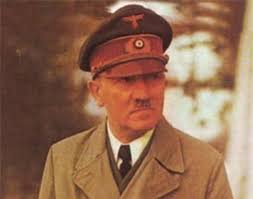
Adolf Hitler
Sitting in the front row was Field Marshal Erich von Manstein, perhaps the most brilliant member of the German General Staff. It was Manstein who had designed the “Sickle Cut” attack on France in May, 1940.
Bypassing the much-vaunted Maginot Line, the Wehrmacht struck through Belgium, taking the French completely by surprise. As a result, it defeated France in six weeks—something Germany had been unable to do during the four years of World War 1.
Now, in a loud voice, Manstein proclaimed: “And so it will be, Mein Fuhrer!”
Hitler froze; it had been more than a decade since anyone had dared interrupt him. Then, trying to make the best of a bad moment, he continued: “Very well. If this is the case, it will be impossible for us to lose this war.”
Hitler hoped that Manstein had intended to reassure him of his loyalty. But Martin Bormann, his all-powerful secretary, told him that the generals had interpreted the outburst differently: That the worse would indeed come to the worst.
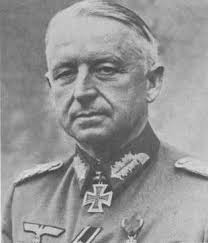
Erich von Manstein
And, which, in fact, happened.
As the Russian army closed in on his underground bunker in April, 1945, Hitler revealed his utter contempt for the Germans who had so blindly served him for 12 years.
“If the war is lost,” Hitler told his former architect and now Minister of Armaments, Albert Speer, “the nation will also perish. This fate is inevitable.
“There is no necessity to take into consideration the basis which the people will need to continue even a most primitive existence.
“On the contrary, it will be better to destroy these things ourselves, because this nation will have proved to be the weaker one and the future will belong solely to the stronger eastern nation.”
Just as Hitler demanded loyalty from his accomplices to infamy, so does Donald Trump.
Former FBI Director James Comey has had firsthand experience in attacking organized crime—and in spotting its leaders.
In his bestselling memoir, A Higher Loyalty, he writes:
“As I found myself thrust into the Trump orbit, I once again was having flashbacks to my earlier career as a prosecutor against the mob. The silent circle of assent. The boss in complete control. The loyalty oaths. The us-versus-them worldview. The lying about all things, large and small, in service to some code of loyalty that put the organization above morality and the truth.”

James Comey
When Comey refused to overlook Trump’s treasonous contacts with Russian dictator Vladimir Putin, Trump fired him.
On October 9, 2019, The Week published an article: “Note to Republicans: Trump will betray you just like he betrayed the Kurds. The one constant in the president’s life is betrayal.” Specifically:
“Trump’s forte is con artistry. He sells books he doesn’t write to people who don’t read. He failed as a businessman but succeeded as a fake businessman on TV. The supreme irony of his life is that he poses as a dealmaker when he is the opposite. Trump doesn’t make deals. He breaks them….
“If there’s a constant in Trump’s life, it’s betrayal. He has betrayed his business partners, his customers, his employees, his friends, his wives, and his voters. A man who is willing to betray those closest to him will not hesitate to turn his back on foreigners thousands of miles away.”
To enrich himself at the expense of his followers, Trump has peddled a variety of expensive products. Among these:
- “Never Surrender” sneakers;
- Mugshot T-shirts, mugs and posters;
- Bibles made in China (as he rails against a trade deficit between China and the United States.
On the international level, Trump has withdrawn the United States from a host of international agreements. Among these:
- The Trans-Pacific Partnership;
- The Paris Agreement to combat global warming;
- The Iran nuclear deal.
As a result, the world no longer trusts the United States to honor its commitments.
A 2018 Pew Research Center survey found that 82 percent of Europeans didn’t trust Trump’s handling of international issues. Seventy-five percent of Canadians and 91 percent of Mexicans didn’t trust him to do the right thing regarding world affairs.
For Trump, as for Hitler, loyalty goes only one way—from others to him. No one who served either man—no matter how loyally or how long—could be certain when he would be deemed disposable.
ABC NEWS, ADOLF HITLER, ALBERT SPEER, ALTERNET, AMERICABLOG, AP, BABY BOOMER RESISTANCE, BBC, BLOOMBERG, BUZZFEED, CBS NEWS, CNN, CROOKS AND LIARS, DAILY KOS, DONALD TRUMP, ERICH VON MANSTEIN, FBI, FIVETHIRTYEIGHT, FRANCE, HARPER’S MAGAZINE, HUFFINGTON POST, JAMES COMEY, JOSEPH R. MCCARTHY, MAGINOT LINE, MEDIA MATTERS, MICHAEL COHEN, MOTHER JONES, MOVEON, MSNBC, NAZI GERMANY, NBC NEWS, NEW REPUBLIC, NEWSDAY, NEWSWEEK, NPR, PBS NEWSHOUR, POLITICO, POLITICUSUSA, RAW STORY, REUTERS, ROY COHN, SALON, SEATTLE TIMES, SLATE, SOVIET UNION, TALKING POINTS MEMO, THE ATLANTIC, THE CHICAGO SUN-TIMES, THE CHICAGO TRIBUNE, THE DAILY BEAST, THE DAILY BLOG, THE GUARDIAN, THE HILL, THE HUFFINGTON POST, THE INTERCEPT, THE LOS ANGELES TIMES, THE NATION, THE NEW REPUBLIC, THE NEW YORK TIMES, THE NEW YORKER, THE VILLAGE VOICE, THE WASHINGTON POST, THINKPROGRESS, TIME, TRUTHDIG, TRUTHOUT, TWITTER, TWO POLITICAL JUNKIES, U.S. NEWS & WORLD REPORT, UPI, USA TODAY, WORLD WAR 11
In Bureaucracy, History, Law, Law Enforcement, Military, Politics, Social commentary on February 14, 2024 at 12:10 am
On January 27, 1944, Adolf Hitler convened a meeting of 100 of his military chiefs, including all the army group commanders of the Eastern front.
The war against the Soviet Union was going badly while the Americans and British were preparing to invade France. And Hitler believed he had the recipe for assuring victory: The Wehrmacht needed to be inoculated with the spirit of National Socialism.
At the end of his long-winded speech, he addressed this challenge to his generals:
“If the worse ever comes to the worst, and I am ever abandoned as Supreme Commander by my own people, I must still expect my entire officer corps to muster around me with daggers drawn—just as every field marshal or the commander of an army corps, division or regiment expects his subordinates to stand by him in the hour of crisis.”
Adolf Hitler
Sitting in the front row was Field Marshal Erich von Manstein, perhaps the most brilliant member of the German General Staff. It was Manstein who had designed the “Sickle Cut” attack on France in May, 1940.
Bypassing the much-vaunted Maginot Line, the Wehrmacht struck through Belgium, taking the French completely by surprise. As a result, it defeated France in six weeks—something Germany had been unable to do during the four years of World War 1.
Now, in a loud voice, Manstein proclaimed: “And so it will be, Mein Fuhrer!”
Hitler froze; it had been more than a decade since anyone had dared interrupt him. Then, trying to make the best of a bad moment, he continued: “Very well. If this is the case, it will be impossible for us to lose this war.”
Hitler hoped that Manstein had intended to reassure him of his loyalty. But Martin Bormann, his al-powerful secretary, told him that the generals had interpreted the outburst differently: That the worse would indeed come to the worst.
Erich von Manstein
And, which, in fact, happened.
As the Russian army closed in on his underground bunker in April, 1945, Hitler revealed his utter contempt for the Germans who had so blindly served him for 12 years.
“If the war is lost,” Hitler told his former architect and now Minister of Armaments, Albert Speer, “the nation will also perish. This fate is inevitable.
“There is no necessity to take into consideration the basis which the people will need to continue even a most primitive existence.
“On the contrary, it will be better to destroy these things ourselves, because this nation will have proved to be the weaker one and the future will belong solely to the stronger eastern nation.”
Just as Hitler demanded loyalty from his accomplices to infamy, so does Donald Trump.
Former FBI Director James Comey has had firsthand experience in attacking organized crime—and in spotting its leaders.
In his bestselling memoir, A Higher Loyalty, he writes:
“As I found myself thrust into the Trump orbit, I once again was having flashbacks to my earlier career as a prosecutor against the mob. The silent circle of assent. The boss in complete control. The loyalty oaths. The us-versus-them worldview. The lying about all things, large and small, in service to some code of loyalty that put the organization above morality and the truth.”
James Comey
Validating Comey’s comparison of Trump to a mobster is the case of Michael Cohen, Trump’s longtime attorney and fixer.
A longtime executive of the Trump Organization, Cohen told ABC news in 2011: “If somebody does something Mr. Trump doesn’t like, I do everything in my power to resolve it to Mr. Trump’s benefit.”
In April 2018, the United States Attorney for the Southern District of New York began investigating Cohen. Charges reportedly included bank fraud, wire fraud and violations of campaign finance law.

Michael Cohen
By IowaPolitics.com (Trump executive Michael Cohen 012) [CC BY-SA 2.0 (https://creativecommons.org/licenses/by-sa/2.0)%5D, via Wikimedia Commons
On April 9, 2018, the FBI, executing a federal search warrant, raided Cohen’s office at the law firm of Squire Patton Boggs, as well as at his home and his hotel room in the Loews Regency Hotel in New York City.
Agents seized emails, tax and business records and recordings of phone conversations that Cohen had made.
Trump’s response: “Michael Cohen only handled a tiny, tiny fraction of my legal work.”
Thus Trump undermined the argument of Cohen’s lawyers that he was the President’s personal attorney—and therefore everything Cohen did was protected by attorney-client privilege.
Cohen, feeling abandoned and enraged, struck back: He “rolled over” on the man he had once boasted he would take a bullet for.
On August 23, on the Fox News program, “Fox and Friends,” Trump attacked Cohen for “flipping” on him:
“For 30, 40 years I’ve been watching flippers. Everything’s wonderful and then they get 10 years in jail and they—they flip on whoever the next highest one is, or as high as you can go. It—it almost ought to be outlawed. It’s not fair.”
For Trump, as for Hitler, loyalty went only one way—from others to him. No one who served either man—no matter how loyally or how long—could be certain when he would be deemed disposable.
2016 PRESIDENTIAL CAMPAIGN, A HIGHER LOYALTY (BOOK), ABC NEWS, ALTERNET, AP, “FLIPPING”, BUZZFEED, CARMINE GALANTE, CBS NEWS, CNN, CROOKS AND LIARS, DAILY KOZ, DON MCGAHN, DONALD TRUMP, FACEBOOK, FBI, FOX AND FRIENDS, FOX NEWS, JOHN DEAN, JOHN GOTTI, MAFIA, MICHACL COHEN, MICHAEL FLYNN, MOTHER JONES, MOVEON, MSNBC, NBC NEWS, NEWSWEEK, NPR, ORGANIZED CRIME, ORGANIZED CRIME CONTROL ACT OF 1970, POLITICO, RAW STORY, REUTERS, RICHARD NIXON, ROY COHN, RUSSIA, SALON, SEATTLE TIMES, SLATE, THE ATLANTIC, THE CHICAGO SUN-TIMES, THE CHICAGO TRIBUNE, THE DAILY BEAST, THE GUARDIAN, THE HILL, THE HUFFINGTON POST, THE LOS ANGELES TIMES, THE NATION, THE NEW YORK TIMES, THE WASHINGTON POST, TIME, TWITTER, U.S. NEWS & WORLD REPORT, UNITED STATES JUSTICE DEPARTMENT, UPI, USA TODAY, VLADIMIR PUTIN
In Bureaucracy, History, Law, Law Enforcement, Politics, Social commentary on August 28, 2018 at 12:24 am
James Comey has had a long and distinguished career in American law enforcement:
- 2002 – 2003: United States Attorney for the Southern District of New York
- 2003 – 2005: United States Deputy Attorney General
- 2013 – 2017: Director of the Federal Bureau of Investigation
As a result, Comey has firsthand experience in attacking organized crime—and in spotting its leaders.
In his bestselling memoir, A Higher Loyalty, he writes:
“As I found myself thrust into the Trump orbit, I once again was having flashbacks to my earlier career as a prosecutor against the mob. The silent circle of assent. The boss in complete control. The loyalty oaths. The us-versus-them worldview. The lying about all things, large and small, in service to some code of loyalty that put the organization above morality and the truth.”
On May 9, 2017, President Donald Trump fired Comey as FBI director. There were five reasons for this:
- Comey had refused to pledge his personal loyalty to Trump. Trump had made the “request” during a private dinner at the White House in January.
- Comey told Trump that he would always be honest with him. But that didn’t satisfy Trump’s demand that the head of the FBI act as his personal secret police chief—as was the case in the former Soviet Union.
- Trump had tried to coerce Comey into dropping the FBI’s investigation into former National Security Adviser Michael Flynn, for his secret ties to Russia and Turkey. Comey had similarly resisted that demand.
- Comey had recently asked the Justice Department to fund an expanded FBI investigation into well-documented contacts between Trump’s 2016 Presidential campaign and Russian Intelligence agents.
- The goal of that collaboration: To elect Trump over Hillary Clinton, a longtime foe of Russian President Vladimir Putin.
James Comey
Trump and his shills have adamantly denied that he demanded that Comey serve as his private police chief.
But now Trump has proved that he—and not Comey—was the liar. And more like a mobster than a President.
On August 21, his former attorney, Michael Cohen, pleaded guilty to eight counts of campaign finance violations, tax fraud and bank fraud. And, more worrisome for Trump, Cohen said he had made illegal campaign contributions “in coordination and at the direction of a candidate for federal office”—Donald Trump.
On August 23, on the Fox News program, “Fox and Friends,” Trump attacked Cohen for “flipping” on him:
“For 30, 40 years I’ve been watching flippers. Everything’s wonderful and then they get 10 years in jail and they—they flip on whoever the next highest one is, or as high as you can go. It—it almost ought to be outlawed. It’s not fair.
“You know, campaign violations are considered not a big deal, frankly. But if somebody defrauded a bank and he’s going to get 10 years in jail or 20 years in jail but if you can say something bad about Donald Trump and you’ll go down to two years or three years, which is the deal he made.”
Making “flipping” illegal would undo decades of organized crime prosecutions—and make future ones almost impossible.
“It takes a small bum to catch a big bum,” as one deputy U.S. marshal once stated.
Boy Scouts simply won’t hang out with career criminals. To penetrate the secrets of criminal organizations, investigators and prosecutors need the testimony of those who are parties to those secrets.
The Organized Crime Control Act of 1970 gave Justice Department prosecutors unprecedented weapons for attacking crime syndicates across the country. One of these was the authority to give witnesses immunity from prosecution on the basis of their own testimony.
Thus, a witness to a criminal conspiracy could be forced to tell all he knew—and thus implicate his accomplices—and bosses. In turn, he wouldn’t be prosecuted on the basis of his testimony. (He could, however, be prosecuted if someone else accused him of criminal acts.)
Organized crime members aggressively damn such “rats.” There is no more obscene word in a mobster’s vocabulary.
But no President—until Trump—has ever attacked those who make possible a war on organized crime.
On August 19, he tweeted:
“The failing @nytimes wrote a Fake piece today implying that because White House Councel Don McGahn was giving hours of testimony to the Special Councel, he must be a John Dean type “RAT.” But I allowed him and all others to testify – I didn’t have to. I have nothing to hide……”
In 1973, former White House Counsel John Dean testified before the United States Senate on a litany of crimes committed by President Richard M. Nixon. Dean didn’t lie about Nixon—who ultimately resigned in disgrace.
For Trump, Dean’s sin is that he “flipped” on his former boss, violating the Mafia’s code of omerta, or silence.
Trump knows better than most how dangerous a “flipper” can be. His former lawyer and mentor, Roy Cohn, represented some of the most notorious Mafiosi in the country—such as John Gotti and Carmine Galante.
And both Gotti and Galante went to prison owing to “flippers.”
For Donald Trump, there is no greater nightmare than becoming the victim of those who know—and are willing to share—his criminal secrets.
2016 PRESIDENTIAL CAMPAIGN, ABC NEWS, ALTERNET, AP, “FAT TONY” SALERNO, BUZZFEED, CARLO GAMBINO, CARMINE GALANTE, CBS NEWS, CNN, CROOKS AND LIARS, DAILY KOZ, DONALD TRUMP, EMANUEL GAMBINO, FACEBOOK, FBI, JOSEPH R. MCCARTHY, MAFIA, MICHAEL COHEN, MOTHER JONES, MOVEON, MSNBC, NBC NEWS, NEWSWEEK, NPR, PAM BONDI, PAUL CASTELLANO, POLITICO, RAW STORY, REPUBLICANS, REUTERS, ROY COHN, SALON, SAMMY "THE BULL" GRAVANO, SEATTLE TIMES, SLATE, THE ATLANTIC, THE CHICAGO SUN-TIMES, THE CHICAGO TRIBUNE, THE DAILY BEAST, THE GUARDIAN, THE HILL, THE HUFFINGTON POST, THE LOS ANGELES TIMES, THE NATION, THE NEW YORK TIMES, THE WASHINGTON POST, TIME, TWITTER, U.S. NEWS & WORLD REPORT, UPI, USA TODAY, VINCENT "THE CHINS" GIGANTE
In Bureaucracy, History, Law Enforcement, Politics, Social commentary, Uncategorized on July 5, 2018 at 12:02 am
In August 1983, two members of John Gotti’s “crew” were arrested for dealing heroin.
Paul Castellano, the most powerful Mafia boss in the nation, had continued the Gambino Family’s longtime “deal and die” policy against trafficking in narcotics. Castellano threatened to “whack” Gotti and his entire crew.
For Gotti, it was literally a case of kill-or-be-killed.
On December 16, 1985, four gunmen, wearing white trench coats and black Cossack Diplomat hats, shot Castellano as he exited his car to enter Sparks Steakhouse in downtown Manhattan. With him died his underboss, or second-in-command, Thomas Bilotti.
Gotti and his closest associates pretended they didn’t know who ordered the execution. But nearly all of the Family’s capos knew it was Gotti. Gotti assumed the position of “acting boss,” but nobody dared challenge his leadership.
Suddenly, Gotti burst into the public’s consciousness. He swaggered down streets, gave impromptu press conferences to reporters, partied at discos and nightclubs. He delighted in being approached by average citizens on streets and in restaurants.

John Gotti
Old-style Mafia bosses like Carlo Gambino had carefully avoided publicity. During the 1950s, newspapers didn’t have photos of Gambino in their files.
Gotti moved his headquarters from Queens to the Ravenite Social Club in Manhattan. Like a king holding court, Gotti ordered all of his captains to report to him at the Ravenite once a week. Word quickly reached the FBI—and agents in vans shot video as they staked out Prince Street.
Gotti handed the FBI a mob organization chart.
Like other mobsters, he often found himself under indictment. Unlike other mobsters, he didn’t claim physical infirmity to avoid prison. He claimed he was a victim of anti-Italian prejudice. He taunted the FBI agents he knew were stalking him.
He swaggered into courtrooms and smirked as his attorney, Bruce Cutler, viciously attacked the prosecution’s witnesses. And he emerged victorious in three high-profile trials in a row.
Local and Federal prosecutors didn’t realize his secret: Jury tampering and witness intimidation.
The press dubbed him “The Teflon Don.”
In 1989, the FBI planted a hidden microphone in an apartment above the Ravenite where Gotti held his secret meetings. Tape recorders were running when he bragged that he had ordered three murders—and was running a criminal enterprise: The Gambino Mafia Family.
When he wasn’t bragging, he was badmouthing virtually everyone—past and present—in the Mafia: Paul Castellano, Carlo Gambino, Vincent “The Chins” Gigante. And, most fatally, his own underboss: Sammy “The Bull” Gravano.
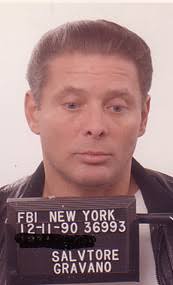
Sammy Gravano
Gotti charged that Gravano was too greedy—and tried to frame him for the murders of three Mafiosi Gotti had ordered hit.
On December 11, 1990, FBI agents and NYPD detectives raided the Ravenite, arresting Gotti and Gravano. At a pretrial hearing, prosecutors played the FBI’s tapes of Gotti’s unintended confessions—including his badmouthing of Gravano.
Gravano, enraged, agreed to testify against Gotti and other Mafiosi in exchange for a five-year prison sentence.
On April 2, 1992, a jury convicted Gotti of five murders, conspiracy to murder, loansharking, illegal gambling, obstruction of justice, bribery and tax evasion. He drew a life sentence, without possibility of parole.
Gotti was incarcerated at the United States Penitentiary at Marion, Illinois, in virtual solitary confinement. In 1998, he was diagnosed with throat cancer. He died on June 10, 2002, at the age of 61.
Donald Trump resembles his fellow New Yorker, John Gotti, in more ways than he would like to admit:
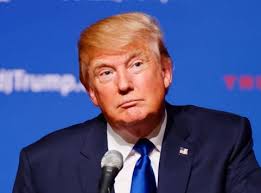
Donald Trump
- He craves publicity like a drug.
- His egomania long ago reached psychotic heights: In a 1990 interview with Playboy magazine, he offered his worldview: “The show is Trump, and it is sold-out performances everywhere.”
- He impulsively and brutally badmouths virtually everyone—in press conferences and on Twitter.
- He brags constantly—about his wealth, his intelligence, his sexual prowess, his achievements: “My fingers are long and beautiful, as, it has been well documented, are various other parts of my body.”
- He has bought his way out of legal trouble: Florida Attorney General Pam Bondi personally solicited a political contribution from him while her office deliberated joining an investigation of alleged fraud at Trump University and its affiliates. After Bondi dropped the case against Trump, he wrote her a $25,000 check for her re-election campaign.
- He repeatedly threatens violence against his opponents: On March 16, 2016, he warned Republicans that if he didn’t win the GOP nomination in July, “I think you’d have riots….I think bad things would happen.”
- Although not a member of the Mafia, he has often been linked—directly or indirectly—to men who are, such as “Fat Tony” Salerno and Paul Castellano.
- He prizes being seen as a tough guy: “I could stand in the middle of Fifth Avenue and shoot somebody and I wouldn’t lose voters.” At a Las Vegas rally in 2016, he said about a protester: “I’d like to punch him in the face.”
- He has no loyalty to anyone: In April, 2018, his longtime attorney, Michael Cohen, came under investigation for bank fraud, wire fraud and violations of campaign finance law. Trump’s reaction: Cohen handled only a “tiny, tiny little fraction” of Trump’s overall legal affairs.
History still waits to learn if the hubris that struck down John Gotti will overtake Donald Trump.
2016 PRESIDENTIAL CAMPAIGN, ABC NEWS, ALTERNET, AP, “FAT TONY” SALERNO, BUZZFEED, CARLO GAMBINO, CARMINE GALANTE, CBS NEWS, CNN, CROOKS AND LIARS, DAILY KOZ, DONALD TRUMP, EMANUEL GAMBINO, FACEBOOK, FBI, JOSEPH R. MCCARTHY, MAFIA, MICHAEL COHEN, MOTHER JONES, MOVEON, MSNBC, NBC NEWS, NEWSWEEK, NPR, PAM BONDI, PAUL CASTELLANO, POLITICO, RAW STORY, REPUBLICANS, REUTERS, ROY COHN, SALON, SAMMY "THE BULL" GRAVANO, SEATTLE TIMES, SLATE, THE ATLANTIC, THE CHICAGO SUN-TIMES, THE CHICAGO TRIBUNE, THE DAILY BEAST, THE GUARDIAN, THE HILL, THE HUFFINGTON POST, THE LOS ANGELES TIMES, THE NATION, THE NEW YORK TIMES, THE WASHINGTON POST, TIME, TWITTER, U.S. NEWS & WORLD REPORT, UPI, USA TODAY
In Bureaucracy, History, Law Enforcement, Politics, Social commentary on July 4, 2018 at 1:08 am
He was tall, broad-shouldered and bushy-haired. He spoke in a heavily New York-accented voice, and his speech was often laced with crudities and obscenities.
He loved to strut in public, wearing $2,000 custom-made suits, and surrounded by a phalanx of tough-looking bodyguards. He loved being noticed, especially in restaurants and discos, by “my public.” Making the cover of Time magazine was probably the greatest thrill of his life.
And he loved to brag: He was the toughest, the smartest, the guy nobody dared cross. And when he wasn’t bragging about himself, he was disparaging even his closest associates.
He was rumored to be implicated in a long string of felonies. He knew the FBI was watching him. But he continually met openly with his cronies at the same place—a social club in Little Italy.
He ordered his subordinates to be extremely cautious when they talked on the phone. But he totally ignored his own advice—and created a litany of incriminating tapes that would destroy him.
No, he wasn’t Donald Trump.
He was John Gotti, once the boss of the most powerful crime family in America.

John Gotti’s 1990 mugshot
And he shared more than a few striking similarities with Donald Trump—another New Yorker who has since become President of the United States.
Like Trump, Gotti spent a good portion of his time in court—although Trump’s 3,500 lawsuits (filed by and against him) completely dwarf Gotti’s four high-profile trials.
Like Trump, he seemed invincible in court: He won three of those legal confrontations—and thus earned the nickname, “The Teflon Don.”
And, like Trump, he loved to taunt the FBI agents he knew were stalking him. After each court victory he gave a press conference, claiming he had been framed by FBI agents who hated Italians.
Warned to knock it off, to show humility instead of arrogance, Gotti told his would-be protectors to go to hell. He wasn’t going to be anything but what he was.
Years afterward, the FBI learned the reason for the Teflon: Gotti had used jury tampering and witness intimidation to beat the rap.
It was the fourth trial that did him in—and sent him away for life.
Unlike Trump, he wasn’t born into a wealthy family, with a father who gave him $200 million to start his own real estate business. Instead, he grew up in poverty, resenting a father who worked as a day laborer and liked to gamble.
He was born on October 27, 1940—almost six years before Trump (June 14, 1946). He turned to crime at the age of 12, working with street gangs affiliated with the New York City Mafia. By 1966 he had been jailed twice.
He hijacked trucks at John F. Kennedy Airport. Arrested three times for hijacking, he pleaded guilty and was sentenced to three years at Pennsylvania’s Lewisburg Federal Penitentiary.
Paroled in 1972, Gotti’s big break came in 1973. Emanuel Gambino, the nephew of the Mafia’s “Boss of all Bosses” Carlo Gambino, was kidnapped and murdered. Gambino sent a trio of hitmen—one of them Gotti—after the culprit: James McBratney. Although not the actual killer, Gotti was identified by eyewitnesses as a participant.
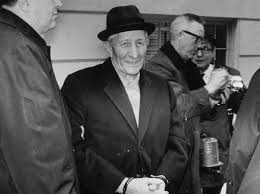
Carlo Gambino
Through a plea bargain arranged by attorney Roy Cohn, Gotti received a four-year prison sentence for attempted manslaughter.
Cohn had earned an infamous reputation as chief counsel for Red-baiting Wisconsin United States Senator Joseph R. McCarthy in the 1950s. After leaving government service in 1954, Cohn went into private practice. Among his clients: Mafia bosses “Fat Tony” Salerno and Carmine Galante—and real estate mogul Donald Trump.
Released from prison in July, 1977, after only two years, Gotti finally received his dream gift: He was fully initiated as a “made man” into the Gambino Family.
Gambino himself had died of natural causes in 1976, and was now succeeded by his son-in-law, Paul “Big Paul” Castellano.
Gambino had represented the “old-school” Mafia: Men who shunned publicity like the plague and cultivated the image of a harmless small businessman. Although he had ordered his “soldiers” to steer clear of the drug trade, which brought too much heat, Gambino reaped millions from loansharking, extortion, hijacking, bookmaking and labor racketeering.
Castellano sought to “legitimize” the Mafia by moving it into legitimate business. He launched Dial Poultry, a poultry distribution business that once supplied 300 butchers in New York City. He profited as well by supplying construction concrete. No one could pour concrete for a project worth more than $2 million without the approval from the “Concrete Club”—a mob-controlled enterprise.

Paul Castellano
“Big Paul,” who had never “whacked” anyone, didn’t see himself as a gangster. He liked socializing with bankers and even once told his maid (with whom he was having an extramarital affair) that “I could even do a favor for a President.”
John Gotti, by contrast, was neither publicity-shy like Gambino nor seeking to enter the legitimate business world like Castellano. There was no point, he reasoned, in being a gangster if you weren’t going to act like one.
For Gotti, those two traits—his love of publicity and desire to be “a real gangster”—would prove a fatal combination.


 Bureaucracybuster's Blog
2016 PRESIDENTIAL CAMPAIGN, A HIGHER LOYALTY (BOOK), ABC NEWS, ALTERNET, AP, “FLIPPING”, BUZZFEED, CARMINE GALANTE, CBS NEWS, CNN, CROOKS AND LIARS, DAILY KOS, DON MCGAHN, DONALD TRUMP, EPSTEIN FILES, FBI, FOX AND FRIENDS, FOX NEWS, IRAN, JEFFREY EPSTEIN, JOHN DEAN, JOHN GOTTI, MAFIA, MICHACL COHEN, MICHAEL FLYNN, MOTHER JONES, MOVEON, MSNBC, NBC NEWS, NEWSWEEK, NICHOLAS MADURO, NPR, ORGANIZED CRIME, ORGANIZED CRIME CONTROL ACT OF 1970, POLITICO, RAW STORY, REUTERS, RICHARD NIXON, ROY COHN, RUSSIA, SALON, SEATTLE TIMES, SLATE, THE ATLANTIC, THE CHICAGO SUN-TIMES, THE CHICAGO TRIBUNE, THE DAILY BEAST, THE GUARDIAN, THE HILL, THE HUFFINGTON POST, THE LOS ANGELES TIMES, THE NATION, THE NEW YORK TIMES, THE WASHINGTON POST, TIME, U.S. NEWS & WORLD REPORT, UNITED STATES JUSTICE DEPARTMENT, UPI, USA TODAY, VENEZUELA, VLADIMIR PUTIN, X
WHAT TRUMP MOST FEARS–WITNESSES
In Bureaucracy, History, Law, Law Enforcement, Politics, Social commentary on March 13, 2026 at 12:10 amJames Comey has had a long and distinguished career in American law enforcement:
As a result, Comey has firsthand experience in attacking organized crime—and in spotting its leaders.
In his bestselling memoir, A Higher Loyalty, he writes:
“As I found myself thrust into the Trump orbit, I once again was having flashbacks to my earlier career as a prosecutor against the mob. The silent circle of assent. The boss in complete control. The loyalty oaths. The us-versus-them worldview. The lying about all things, large and small, in service to some code of loyalty that put the organization above morality and the truth.”
On May 9, 2017, President Donald Trump fired Comey as FBI director. There were five reasons for this:
James Comey
Trump and his shills have adamantly denied that he demanded that Comey serve as his private police chief.
But then Trump proved that he—and not Comey—was the liar. And more like a mobster than a President.
On August 21, 2018, his former attorney, Michael Cohen, pleaded guilty to eight counts of campaign finance violations, tax fraud and bank fraud. And, more worrisome for Trump, Cohen said he had made illegal campaign contributions “in coordination and at the direction of a candidate for federal office”—Donald Trump.
On August 23, on the Fox News program, “Fox and Friends,” Trump attacked Cohen for “flipping” on him:
“For 30, 40 years I’ve been watching flippers. Everything’s wonderful and then they get 10 years in jail and they—they flip on whoever the next highest one is, or as high as you can go. It—it almost ought to be outlawed. It’s not fair.
“You know, campaign violations are considered not a big deal, frankly. But if somebody defrauded a bank and he’s going to get 10 years in jail or 20 years in jail but if you can say something bad about Donald Trump and you’ll go down to two years or three years, which is the deal he made.”
Making “flipping” illegal would undo decades of organized crime prosecutions—and make future ones almost impossible.
“It takes a small bum to catch a big bum,” as one deputy U.S. marshal once stated.
Boy Scouts simply won’t hang out with career criminals. To penetrate the secrets of criminal organizations, investigators and prosecutors need the testimony of those who are parties to those secrets.
The Organized Crime Control Act of 1970 gave Justice Department prosecutors unprecedented weapons for attacking crime syndicates across the country. One of these was the authority to give witnesses immunity from prosecution on the basis of their own testimony.
Thus, a witness to a criminal conspiracy could be forced to tell all he knew—and thus implicate his accomplices—and bosses. In turn, he wouldn’t be prosecuted on the basis of his testimony. (He could, however, be prosecuted if someone else accused him of criminal acts.)
Organized crime members aggressively damn such “rats.” There is no more obscene word in a mobster’s vocabulary.
But no President—until Trump—has ever attacked those who make possible a war on organized crime.
His former lawyer and mentor, Roy Cohn, represented some of the most notorious Mafiosi in the country—such as John Gotti and Carmine Galante. And both Gotti and Galante went to prison owing to “flippers.”
In 1973, former White House Counsel John Dean testified before the United States Senate on a litany of crimes committed by President Richard M. Nixon. Dean didn’t lie about Nixon—who ultimately resigned in disgrace.
For Trump, Dean’s sin is that he “flipped” on his former boss, violating the Mafia’s code of omerta, or silence.
For Donald Trump, there is no greater nightmare than becoming the victim of those who know—and are willing to share—his criminal secrets.
That’s why he fought the release of the “Epstein files,” which document his social relationship with convicted pedophile Jeffrey Epstein from the late 1980s to at least the early 2000s.
Since their partial release, he’s repeatedly tried to divert attention from their revelations. On January 3, 2026, he ordered the invasion of Venezuela to kidnap its dictator/president, Nicolás Maduro. Then on February 28 he launched an attack on Iran.
Both these assaults have only partially succeeded in obscuring revelations of the Epstein files.
Share this: