Posts Tagged ‘JAMES COMEY’
ABC NEWS, ABRAHAM LINCOLN, ALTERNET, AP, BUZZFEED, CBS NEWS, CNN, CONOSPIRACY AGAINST THE UNITED STATES, CROOKS AND LIARS, DAILY KOZ, DONALD TRUMP, DONALD TRUMP JR., ERIC TRUMP, FACEBOOK, FBI, FOREIGN REGISTRATION ACT, GEORGE PAPADOPOULOS, IVANKA TRUMP, JAMES COMEY, KGB, MONEY-LAUNDERING, MOTHER JONES, MOVEON, NBC NEWS, NEWSWEEK, NPR, PAUL MANAFORT, POLITICO, RAW STORY, REPUBLICANS, REUTERS, RICK GATES, ROBERT MUELLER, RUSSIA, SALON, SEATTLE TIMES, SLATE, THE ATLANTIC, THE CHICAGO SUN-TIMES, THE CHICAGO TRIBUNE, THE DAILY BEAST, THE GUARDIAN, THE HILL, THE HUFFINGTON POST, THE LOS ANGELES TIMES, THE NATION, THE NEW YORK TIMES, THE WASHINGTON POST, TIME, TREASON, TWITTER, U.S. NEWS & WORLD REPORT, UP, UPI, USA TODAY, VLADIMIR PUTIN
In History, Law, Law Enforcement, Politics, Social commentary on November 8, 2017 at 12:08 am
On October 30, Special Prosecutor Robert Mueller unveiled a pre-Halloween trick for President Donald Trump.
He unsealed indictments against Paul Manafort, Donald Trump’s former campaign manager, and his business partner Rick Gates.
And George Papadopoulos, a former Trump campaign foreign policy adviser, has pleaded guilty to lying to the FBI about his dealings with foreign officials close to the Russian government.
The charges:
- Conspiracy against the United States
- Conspiracy to launder money
- Unregistered agent of a foreign principal
- False and misleading Foreign Agent Registration Act statements
- False statements, and
- Seven counts of failure to file reports of foreign bank and financial accounts.
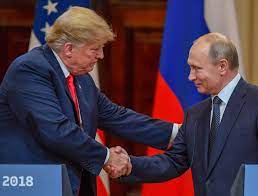
These are the first indictments in Mueller’s probe of collusion between Russian Intelligence agents and members of Donald Trump’s Presidential campaign.
They directly link a Trump campaign associate to such collusion. They make hash of Trump’s claims that he is the victim of a “witch hunt.” And they make it politically hazardous for Trump to fire the special prosecutor.
For those who are not ardent Trump supporters, it’s definitely Mueller time.
* * * * *
THE RUSSIAN CONNECTION
(To be sung to the tune of “The Rainbow Connection”)
Why are there so many
Tales about Russians
And Right-wingers taking bribes?
Russians are Commies
And have lots of rubles
For traitors with something to hide.
So I’ve been told
And some choose to believe it.
It’s clear as the old KGB.
Someday we’ll find it
The Russian Connection–
The bribers, the traitors–you’ll see.
Abraham Lincoln is watching and asking:
“How much more slime must there be?”
What’s so amazing is we just sit gazing
While traitors destroy liberty.
Someday we’ll find it
The Russian Connection–
The bribers, the traitors–you’ll see.
All of them under its spell
We know that it’s probably treason.
Why are we waiting
To throw out the traitors?
Let’s send them all straight to Hell.
Is this the money
That calls forth the traitors?
Their defenders are called G-O-P.
I’ve heard it too many times
To ignore it.
We are supposed to be free.
Someday we’ll find it
The Russian Connection–
The bribers, the traitors–you’ll see.
* * * * *
DONALD TRUMP: CRIMINAL
(To be sung to the tune of “Physical”)
I’m telling all the lies that my base will like
Making good Tweet sensation.
I gotta handle treason right–
You know what I mean.
I called the Russian KGB late at night
Said, “Come on in soon and see me.
I’ve got some secret stuff to share
That only Vlad can see.
“Let’s get criminal, criminal.
I wanna get criminal.
Let’s get into criminal.
Let me have that Russian gold, that Russian gold.
Let me have that Russian gold.
“Let’s get criminal, criminal.
I wanna get criminal.
Let’s get into criminal.
Let me have that Russian gold, that Russian gold!
Let me have that Russian gold!”
I’ve been evil, I’ve been bad
I’ve tried to keep Jim Comey at bay.
And now the FBI is after me
They’ll get me any day.
I’m sure they understand that I’m a crook
My whole life’s been one big crime-spree.
Committing treason is my latest thrill–
For rubles–yessirree!
Let’s get criminal, criminal
I wanna get criminal
Let’s get into criminal
Let me have that Russian gold, that Russian gold!
Let me have that Russian gold!
Let’s get criminal, criminal.
I wanna get criminal.
Let’s get into criminal.
Let me have that Russian gold!
Let me have that Russian gold!
* * * * *

TRUMPY TRAITOR
(To be sung to the tune, “Rockin’ Robin”)
He Tweets in the White House all the day long
Screamin’ and a-schemin’ and a-doin’ what’s wrong.
All the Special Agents in the FBI
Hope he goes to prison in the bye-and-bye.
Trumpy Traitor (tweet tweet)
Trumpy Traitor (tweet tweet)
Go Trumpy Traitor
‘Cause they’re gonna bust your ass tonight
Every act of treason, every act of crime—
America has never seen a bigger slime.
Bob Mueller’s ready, the cops are closin’ in
To put a grand finale to your reign of sin.
Trumpy Traitor (tweet tweet)
Trumpy Traitor (tweet tweet)
Go Trumpy Traitor
‘Cause they’re gonna bust your ass tonight.
Eric’s getting ready for his next big steal
While Daddy hugs Ivanka—who lets out a squeal.
Don Junior’s got the Russians coming once again—
It’s party-time for traitors and their lives of sin.
He Tweets in the White House all the day long
Screamin’ and a-schemin’ and a-doin’ what’s wrong.
Handing out secrets to the KGB
The biggest Right-wing traitor that you’ll ever see.
Trumpy Traitor (tweet tweet)
Trumpy Traitor (tweet tweet)
Go Trumpy Traitor
‘Cause they’re gonna bust your ass tonight.
Well, Eric’s getting ready for his next big steal
While Daddy hugs Ivanka—who lets out a squeal.
Don Junior’s got the Russians coming once again—
It’s party-time for traitors and their lives of sin.
He Tweets in the White House all the day long
Screamin’ and a-schemin’ and a-doin’ what’s wrong.
Handing out secrets to the KGB
The biggest Right-wing traitor that you’ll ever see.
Trumpy Traitor (tweet tweet)
Trumpy Traitor (tweet tweet)
Go Trumpy Traitor
‘Cause they’re gonna bust your ass tonight.
2016 PRESIDENTIAL CAMPAIGN, 2016 PRESIDENTIAL DEBATES, ABC NEWS, ALICIA MACHADO, AMERICAN CAESAR, BARACK OBAMA, BIRTHERISM, BLACKS, BOB CORKER, CBS NEWS, CNN, COLIN KAEPERNICK, DEMOCRATS, DONALD TRUMP, DOUGLAS MACARTHUR, FACEBOOK, FBI, FOX NEWS, HILLARY CLINTON, HISPANICS, INDIANAPOLIS COLTS, JAMES COMEY, JEFF SESSIONS, KIM JONG-UN, LEBRON JAMES, LESTER HOLT, MARCO RUBIO, MIKE PENCE, MISS UNIVERSE, NBC NEWS, NFL, POLITICO, RAFAEL "TED" CRUZ, REINCE PRIEBUS, REX TILLERSON, SAN FRANCISCO 49ERS, SEAN HANNITY, TAXPAYERS, THE ARIZONA REPUBLIC, THE CHICAGO SUN-TIMES, THE CHICAGO TRIBUNE, THE HUFFINGTON POST, THE LOS ANGELES TIMES, THE NEW YORK TIMES, THE O'REILLY FACTOR, THE WALL STREET JOURNAL, THE WASHINGTON POST, TWITTER, USA TODAY, WILLIAM MANCHESTER, WOMEN
In Bureaucracy, History, Law Enforcement, Politics, Social commentary on October 12, 2017 at 12:09 am
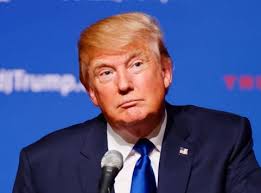
As a Presidential candidate, Donald Trump repeatedly used Twitter to attack hundreds of real and imagined enemies in politics, journalism, TV and films.
From June 15, 2015, when he launched his Presidential campaign, until October 24, 2016, Trump fired almost 4,000 angry, insulting tweets at 281 people and institutions that had somehow offended him.
Donald Trump
The New York Times needed two full pages of its print edition to showcase them.
Among his targets:
- Hillary Clinton
- President Barack Obama
- Actress Meryl Streep
- Singer Neil Young
- Actor Arnold Schwarzenegger
- Comedian John Oliver
- News organizations
- The State of New Jersey
- Beauty pageant contestants
Others he clearly delighted in insulting during the campaign included:
- Women
- Blacks
- Hispanics
- Asians
- Muslims
- The disabled
- Prisoners-of-war
As President, he has continued to insult virtually everyone, verbally and on Twitter. His targets have included Democrats, Republicans, the media, foreign leaders (most notably North Korea’s “Little Rocket Man” Kim Jong Un) and even members of his Cabinet. For example:
- His press secretary, Sean Spicer, quit on July 21. The reason: He believed—correctly—hat his loyalty to Trump had become a one-way street. Trump kept him in the dark about events Spicer needed to know—such as an interview that Trump arranged with the New York Times—and which ended disastrously.
- Trump has waged a Twitter-laced feud against Jeff Sessions, his Attorney General. Sessions’ “crime”? Recusing himself from any decisions involving investigations into well-established ties between Russian Intelligence agents and members of Trump’s Presidential campaign.
- Trump has publicly said that if he had known Sessions would recuse himself—because of his past contacts with Russian officials—he would have picked someone else for Attorney General.
- Trump fired FBI Director James Comey without warning on May 9. Comey’s “crimes”: Refusing to pledge his personal loyalty to Trump, thus turning the FBI into Trump’s secret police; and refusing to drop the Bureau’s investigation into Russia’s efforts during the 2016 election to elect Trump.
- Trump repeatedly humiliated his then-chief of staff, Reince Priebus—at one point ordering him to kill a fly that was buzzing about. On July 28, Priebus resigned.
- In October, 2016, as a Presidential candidate, Trump attacked Colin Kaepernick, then quarterback for the San Francisco 49ers, who had gained notoriety by kneeling during the national anthem to protest racial injustice.
- As President, he told a rally of his faithful in Alabama in September that players should be fired if they knelt during the anthem. He also encouraged people to leave the stadium if players knelt.
- On October 9, at Trump’s instigation, Vice President Mike Pence staged a walk-out during a match between the San Francisco 49ers and the Indianapolis Colts.
- The Trump/Pence stunt cost taxpayers about $242,500 in air fare for Air Force Two, advance personnel and Secret Service protection.
- After NBC News reported that Secretary of State Rex Tillerson called Trump a “moron,” Tillerson publicly refused to deny it. Trump then told Forbes magazine: “I think it’s fake news, but if he did that, I guess we’ll have to compare IQ tests. And I can tell you who is going to win.”
- Asked by reporters if he was undercutting Tillerson with the remark, Trump replied: “I didn’t undercut anybody. I don’t believe in undercutting people.”
As Americans have watched Trump’s behavior with morbid fascination, many of them have asked: “What makes him do the things he does?”
It’s a question asked—and answered—in the 1993 Western, Tombstone. And the answer given in that movie may be just hold the answer to the question so many Americans are now asking about Trump.
Tombstone recounts the legendary blood feud between the Ike Clanton outlaw gang and the Earp brothers—Wyatt, Morgan and Virgil—in the famous gold-mining town in 1880s Arizona.
Wyatt Earp has been challenged to a gunfight by quick-trigger gunman Johnny Ringo. Although he impulsively accepted the challenge, Wyatt now realizes he’s certain to be killed. Thus follows this exchange with his longtime friend, the pistol-packing dentist, John H. “Doc” Holliday:
WYATT EARP: What makes a man like Ringo, Doc? What makes him do the things he does?
JOHN H. “DOC” HOLLIDAY: A man like Ringo….got a great empty hole right through the middle of him. He can never kill enough or steal enough….or inflict enough pain to ever fill it.
EARP: What does he need?
HOLLIDAY: Revenge.
EARP: For what?
HOLLIDAY: Bein’ born.
Donald Trump was born into a world of wealth and privilege. He has claimed to be worth a billion dollars.
He has been linked to some of the most beautiful women in the world. He has literally stamped his name on hundreds of buildings. And now he holds the Presidency of the United States, the most powerful office in the Western world.
Yet he remains filled with a poisonous hatred that encompasses almost everyone.
Since taking office, he has offered nothing positive in his agenda. Instead, he has focused on what rights he can take from others. At the top of his list: The Affordable Care Act, providing access to medical care for millions who previously could not obtain it.
As first-mate Starbuck says of Captain Ahab in Herman Melville’s classic novel, Moby Dick: “He is a champion of darkness.”
2016 PRESIDENTIAL CAMPAIGN, 2016 PRESIDENTIAL DEBATES, ABC NEWS, ALICIA MACHADO, AMERICAN CAESAR, BARACK OBAMA, BIRTHERISM, BLACKS, BOB CORKER, CBS NEWS, CNN, COLIN KAEPERNICK, DEMOCRATS, DONALD TRUMP, DOUGLAS MACARTHUR, FACEBOOK, FBI, FOX NEWS, HILLARY CLINTON, HISPANICS, INDIANAPOLIS COLTS, JAMES COMEY, JEFF SESSIONS, KIM JONG-UN, LEBRON JAMES, LESTER HOLT, MARCO RUBIO, MIKE PENCE, MISS UNIVERSE, NBC NEWS, NFL, POLITICO, RAFAEL "TED" CRUZ, REINCE PRIEBUS, REX TILLERSON, SAN FRANCISCO 49ERS, SEAN HANNITY, TAXPAYERS, THE ARIZONA REPUBLIC, THE CHICAGO SUN-TIMES, THE CHICAGO TRIBUNE, THE HUFFINGTON POST, THE LOS ANGELES TIMES, THE NEW YORK TIMES, THE O'REILLY FACTOR, THE WALL STREET JOURNAL, THE WASHINGTON POST, TWITTER, USA TODAY, WILLIAM MANCHESTER, WOMEN
In Bureaucracy, History, Law Enforcement, Politics, Social commentary on October 11, 2017 at 1:08 am
“He appeared to need enemies the way other men need friends, and his conduct assured that he would always have plenty of them.”
So wrote William Manchester about General Douglas MacArthur in his monumental 1978 biography, American Caesar. But he could have written just as accurately about Donald Trump, both as Presidential candidate and President.
Donald Trump
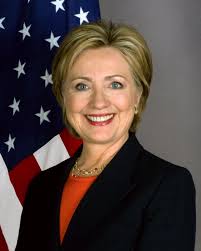
What some pundits have called “the worst week in Presidential campaigning history” started–or Trump—on September 26. That was when he finally squared off against Democratic Presidential nominee Hillary Clinton in the first of three debates.
Through a series of bare-knuckled debates, Trump had bullied his way to the Republican nomination. He had mocked his opponents (“Little Marco” Rubio, “Lyin Ted” Cruz) and attacked former Texas Governor Jeb Bush as the brother of the President he blamed for 9/11.
So it was widely expected that he would run over Clinton like a tank going over a rabbit.
Events proved otherwise.
Moderator Lester Holt—who anchors the weekday edition of NBC Nightly News—gave Trump more airtime than Clinton. But Clinton showed a greater command of foreign and domestic issues.
Hillary Clinton
Trump repeatedly sniffled throughout the debate, causing some viewers to wonder if he had a cocaine problem. And he often reached for his water glass, causing other viewers to mock him on Twitter (“Does anyone remember how badly Trump made fun of Marco Rubio for drinking water? Hmm..”).
For Trump—who had attacked Clinton’s health after she fainted on September 11 at a New York 9/11 commemoration ceremony—it was a disaster. Clinton seemed to be in better shape than he was.
When Clinton charged that he paid “nothing in Federal taxes,” Trump in effect admitted it: “That makes me smart.”
Clinton then cornered him on his claim that he had opposed the 2003 Iraq war. Trump replied that he had told Fox News host Sean Hannity that he opposed it. He asked the media to contact Hannity.
Clinton then attacked Trump as “a man who has called women pigs, slobs, and dogs, and someone who has said pregnancy is an inconvenience to employers.”
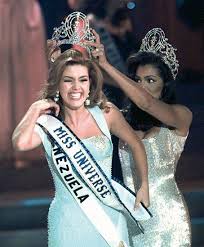
From there she segued into his attacks on former Miss Universe Alicia Machado: “And he called this woman Miss Piggy. Then he called her Miss Housekeeping because she was Latina.”
Alicia Machado as Miss Universe
This may have proved the worst part of the debate for Trump, because he later felt he had to respond to it—on TV and Twitter.
By the end of the debate, 62% of CNN viewers voted Clinton as the winner, with only 27% voting it was Trump.
The next day—September 27—Trump felt the need to renew his attack on Machado, courtesy of a telephone interview he gave to Fox News: “She was the worst [Miss Universe contestant] we ever had. The absolute worst. She was impossible….
“She was the winner and she gained a massive amount of weight, and we had a real problem. Not only that, her attitude, and we had a real problem with her.”
On September 28, Trump appeared on Fox News‘ “The O’Reilly Factor.” There he continued his attack on Machado: “It is a beauty contest. They know what they are getting into.”
He claimed that “I saved her job” because the pageant wanted “to fire her” for gaining so much weight.
On September 29, Trump added one more enemy to the list: The FBI.
Addressing a crowd in Bedford, New Hampshire, Trump falsely accused the agency of giving “immunity” to Hillary Clinton:
“They [the FBI] gave so much immunity there was nobody left to talk to. There was nobody left–except Hillary. They probably gave her immunity, too. Do you think Hillary got immunity? Yeah, she had the immunity.”
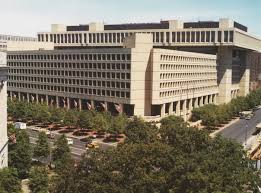
FBI headquarters
Also on September 29, Trump once again attacked a longtime target: President Barack Obama.
Thirteen days earlier, Trump had renounced “birtherism”—the slander that Obama was not an American citizen. It was a slander that Trump himself had created and vigorously promoted since 2011.
The reason for his renouncing it: His dismal standing among blacks in political polls.
At a press conference on September 16 to promote his new upscale hotel in Washington, D.C., Trump said: “Now, not to mention her in the same breath, but Hillary Clinton and her campaign of 2008 started the birther controversy.
“I finished it. I finished it. You know what I mean.
“President Barack Obama was born in the United States, period. Now we all want to get back to making America strong and great again.”
After falsely blaming Clinton for starting the birther lie, Trump seemed content to finally drop the slander campaign.
But on September 29—a mere 13 days later—Trump told a New Hampshire reporter that he was “very proud” of his “birther” campaign:
“I’m the one who got him to put up his birth certificate”—which clearly proved that Obama had been born in Hawaii, not Kenya, as Trump had claimed.
“[Hillary Clinton] tried [to get Obama to release his birth certificate] and she was unable to do it and I tried and I was able to do it so I’m very proud of that.”
Thus, the goodwill of black voters he sought on September 16 he cast aside on the 29th.
ABC NEWS, ADOLF HITLER, ALTERNET, ANTHONY SCARAMUCCI, AP, BUZZFEED, CBS NEWS, CNN, CROOKS AND LIARS, DAILY KOZ, DONALD TRUMP, FACEBOOK, FBI, GENRIKH GRIGORYEVICH YAGODA, GRIGORI ZIMOVIEV, HEINRICH HIMMLER, HERMANN GOERING, HOPE HICKS, JAMES COMEY, JOACHIM VON RIBBONTROP, JOSEPH STALIN, JUSTICE DEPARTMENT, KGB, LAVENTI BERIA, LEON TROTSKY, LEV KAMENEV, LUFTWAFFE, MIKE FLYNN, MOTHER JONES, MOVEON, NAZI GERMANY, NBC NEWS, NEWSWEEK, NIKOLAI, NIKOLAI YEZHOV, NKVD, NPR, POLITICO, RAW STORY, REINCE PRIEBUS, REUTERS, ROBERT MEULLER, RUDOLF HESS, SALLY YATES, SALON, SEAN SPICER, SEATTLE TIMES, SEBASTIAN GORKA, SLATE, STEVE BANNON, THE ATLANTIC, THE CHICAGO SUN-TIMES, THE CHICAGO TRIBUNE, THE DAILY BEAST, THE GUARDIAN, THE HILL, THE HUFFINGTON POST, THE LOS ANGELES TIMES, THE NATION, THE NEW YORK TIMES, THE WASHINGTON POST, TIME, TWITTER, U.S. NEWS & WORLD REPORT, UP, UPI, USA TODAY
In Bureaucracy, History, Law Enforcement, Politics, Social commentary on September 26, 2017 at 12:29 am
One summer night in 1923, during a booze-fueled dinner, Joseph Stalin opened his hear to his two fellow diners.
One of these was Felix Dzerzhinsky, then the chief of the Cheka, the dreaded Soviet secret police (and precursor to the KGB). The other was Lev Kamenev, a member of the powerful Central Committee of the Communist party.
Kamenev asked his companions: “What is your greatest pleasure?”
And Stalin is reported to have said: “To choose one’s victim, to prepare one’s plans minutely, to slake an implacable vengeance and then to go to bed. There is nothing sweeter in the world.”
Thirteen years later, in August, 1936, Kamenev would be forced to confess to forming a terrorist organization. Its alleged purpose: To assassinate Stalin and other leaders of the Soviet government.
On August 25, 1936, Kamenev was executed in the notorious Lubyanka prison.
Donald Trump may not have read Stalin’s notorious quote about finding pleasure in vengeance. But he has given his own variation of it.
While addressing the National Achievers Conference in Sidney, Australia, in 2011, he offered this advice on how to achieve success: “Get even with people. If they screw you, screw them back 10 times as hard. I really believe it.”
Throughout his business career, Trump strictly practiced what he preached—becoming a plaintiff or a defendant in no fewer than 3,500 lawsuits.
Since January 20, he has carried this “get even” philosophy into the Presidency.
The result has been unprecedented White House infighting, turmoil—and departures. Among the casualties:
- Steve Bannon – Chief strategist and senior counselor: On August 17, 2016, Bannon was appointed chief executive of Trump’s presidential campaign. On August 18, 211 days into his tenure, he was fired. A major reason: Trump was angered by the news media’s—and even many comedians’—depiction of Bannon as the real power in the White House.
- Anthony Scaramucci – White House communications director: To celebrate his new job, he gave an insult-ridden interview to The New Yorker. Among his targets: Then-Chief of Staff Reince Priebus (“a fucking paranoid schizophrenic”) and Steve Bannon (““I’m not Steve Bannon, I’m not trying to suck my own cock”). Scaramucci’s career ended in just six days—on July 31.
- Reince Priebus – White House Chief of Staff: After repeatedly being humiliated by Trump—who at one point ordering him to kill a fly that was buzzing about—Priebus resigned on July 28, 190 days into his tenure.
- Jeff Sessions – Attorney General: Trump made him the target of a Twitter-laced feud. Sessions’ “crime”? Recusing himself from any decisions involving investigations into well-established ties between Russian Intelligence agents and members of Trump’s Presidential campaign. Trump publicly said that if he had known Sessions would recuse himself—because of his own past contacts with Russian officials—he would have picked someone else for Attorney General.
- Sean Spicer – Press Secretary: Resigned on July 21, 183 days into his tenure. The reason: Trump kept him in the dark about events Spicer needed to know—such as an interview that Trump arranged with the New York Times—and which ended disastrously for Trump.
- James Comey – FBI Director: Comey did not work for the Trump Presidential campaign. But many political analysts believe he played perhaps the decisive role in electing the reality TV mogul. Comey’s announcement—11 days before Election Day—that he was re-opening the Hillary Clinton email server case convinced millions of voters that she had committed a crime. If, as some believed, Comey did so to curry favor with Trump, he proved mistaken. Trump summoned Comey to the White House and, in a private meeting, demanded a pledge of personal loyalty. Comey refused to give this—or to drop the FBI’s investigation into collaboration between Russian Intelligence agents and Trump campaign officials. On May 9, Trump sent his longtime private bodyguard and chief henchman, Keith Schiller, to the FBI with a letter announcing Comey’s firing. (FBI directors do not have Civil Service protection and can be fired at any time by the President.)
- Mike Flynn – National Security Advisor: After resigning from the Defense Intelligence Agency, he vigorously supported Trump at rallies and events—including at the Republican National Convention. As a reward, he was appointed National Security Advisor. But he was forced to resign just 25 days into his tenure. The reason: The media revealed that he hadmisled Vice President Mike Pence about his multiple meetings with Sergey Kislyak, Russian Ambassador to the United States, before Trump’s inauguration.
As if such turmoil wasn’t enough, even worse may be to come. According to Politico: Many White House staffers are starting to look for the exits, even though the one-year mark of Trump’s first term is still months away.
“There is no joy in Trumpworld right now,” one source told Politico. “Working in the White House is supposed to be the peak of your career, but everyone is unhappy, and everyone is fighting everyone else.”
A mass exodus would cause even greater difficulties for the Trump administration, which has not filled hundreds of available positions because many people don’t want to join.
The Trump administration is hiring at a slower pace than the administrations of George H.W. Bush, Bill Clinton, George W. Bush and Barack Obama—including nominations and confirmations.
Fewer positions filled means less effective enforcement of the Trump agenda. For those who oppose it, this is something to celebrate.
ABC NEWS, ADOLF HITLER, ALTERNET, ANTHONY SCARAMUCCI, AP, BUZZFEED, CBS NEWS, CNN, CROOKS AND LIARS, DAILY KOZ, DONALD TRUMP, FACEBOOK, FBI, GENRIKH GRIGORYEVICH YAGODA, GRIGORI ZIMOVIEV, HEINRICH HIMMLER, HERMANN GOERING, HOPE HICKS, JAMES COMEY, JOACHIM VON RIBBONTROP, JOSEPH STALIN, JUSTICE DEPARTMENT, KGB, LAVENTI BERIA, LEON TROTSKY, LEV KAMENEV, LUFTWAFFE, MIKE FLYNN, MOTHER JONES, MOVEON, NAZI GERMANY, NBC NEWS, NEWSWEEK, NIKOLAI, NIKOLAI YEZHOV, NKVD, NPR, POLITICO, RAW STORY, REINCE PRIEBUS, REUTERS, ROBERT MEULLER, RUDOLF HESS, SALLY YATES, SALON, SEAN SPICER, SEATTLE TIMES, SEBASTIAN GORKA, SLATE, STEVE BANNON, THE ATLANTIC, THE CHICAGO SUN-TIMES, THE CHICAGO TRIBUNE, THE DAILY BEAST, THE GUARDIAN, THE HILL, THE HUFFINGTON POST, THE LOS ANGELES TIMES, THE NATION, THE NEW YORK TIMES, THE WASHINGTON POST, TIME, TWITTER, U.S. NEWS & WORLD REPORT, UP, UPI, USA TODAY
In Bureaucracy, History, Law Enforcement, Politics, Social commentary on September 25, 2017 at 2:06 am
Donald Trump—as both Presidential candidate and President—has often been compared to Adolf Hitler.
Yet, in at least one sense, this comparison is inaccurate. As Germany’s Fuhrer (1933-1945) Hitler kept on the members of his Cabinet for no less than 12 years.
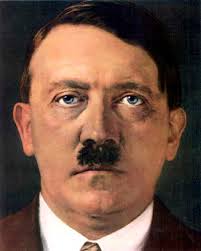
Adolf Hitler
Among these:
- Hermann Goering had repeatedly shown himself as the incompetent Reichsmarshall of the German air force, the Luftwaffe. Yet Hitler kept him on because Goering had been one of the “Old Fighters” who had supported Hitler long before the Nazis came to power. Only in April, 1945, when Hitler falsely believed that Goering was trying to supplant him as Fuhrer, did he expel him from the party and order his arrest.
- Rudolf Hess joined the Nazi party in 1920, and served as Deputy Fuhrer to Hitler from 1933 to 1941. That was when he flew to Scotland on a self-assigned mission to make peace with England. The British, believing him mad, locked him in the Tower of London until 1945. Afterward, he was convicted at Nuremberg for war crimes and sentenced to life imprisonment.
- Joachim von Ribbentrop had been a champagne salesman before Hitler appointed him Foreign Minister in 1938, and held that post until the Reich’s defeat in 1945. Although his arrogance and incompetence made him universally disliked by other high-ranking Nazi officials, Hitler never considered firing him.
- Heinrich Himmler, appointed Reichsfuhrer-SS in 1929, held that position throughout the 12 years (1933-1945) the Third Reich lasted. It was to Himmler that Hitler entrusted the most important project of his life: The destruction of European Jewry. Only after learning—in the final days of the Reich—that Himmler had sought to make peace with the Allies did Hitler expel him from the party and order his arrest.
Joseph Stalin, dictator of the Soviet Union (1928-1953) serves as a far better comparison figure for Trump.
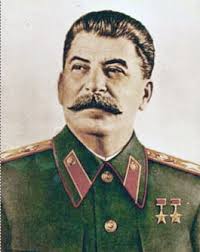
Joseph Stalin
In 1936, Stalin ordered the first of a series of purges—from high-ranking members of the Communist party to impoverished peasants. Among the most prominent of his victims:
- Grigory Zimoviev, former member of the Central Committee of the Communist party. He was arrested in 1934 on trumped-up charges of “moral complicity” in the assassination of Leniningrad party boss Sergei Kirov. He was executed in 1936.
- Leon Trotsky, onetime second-in-command only to Vladimir Lenin, clashed with Stalin before the November 7, 1917 Russian Revolution. They remained locked in combat until Lenin’s death of a cerebral hemorrhage in 1924. Stalin drove Trotsky out of the Communist party and even out of the Soviet Union. In 1940, on Stalin’s orders, he was assassinated while living under guard in Mexico.
- Genrikh Grigoryevich Yagoda served as director of the NKVD secret police (the precursor of the KGB) from 1934 to 1936. He supervised the arrest, show trial and execution of former Central Committee members Lev Kamenev and Grigory Zimoviev. Arrested in 1937, he was falsely charged with treason and conspiracy against the Soviet government. Yagoda was shot soon after the trial. His wife Ida Averbakh was also executed in 1938.
- Nikolai Yezhov became head of the NKVD secret police in 1936. He oversaw what historians have since named the Great Terror until 1939. Arrested in April, he was replaced by Lavrenty Beria. In 1940, Yezhov himself was executed by the executioners he had once commanded.
Like Joseph Stalin, Donald Trump has presided over a series of purges since reaching the White House.
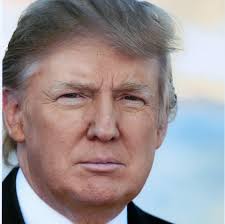
Donald Trump
Like Stalin, Trump demands unconditional loyalty from those who serve in his administration. And, also like Stalin, he does not believe that loyalty is a two-way street.
Moreover, it doesn’t take much to offend Trump’s fragile ego. When “Saturday Night Live” started doing skits showcasing his chief strategist, Steve Bannon, as a Rasputin-like figure who manipulated Trump, Bannon’s days were clearly numbered.
The same proved true for Anthony Scaramucci, who was to become White House communications director. All that it took to secure his dismissal was an expletive-ridden phone interview with The New Yorker‘s Ryan Lizza. It didn’t help Scaramucci that he bragged about purging the entire White House communications staff and even siccing the FBI on leakers.
Others have left the White House owing to its increasingly paranoid atmosphere. Reports have surfaced of staffers being ordered to turn over their cell phones for inspection. The reason: To ensure they weren’t communicating with reporters by text message or through encrypted apps.
Then there is the very real—and justified—fear of being caught up in Special Counsel Robert Mueller III’s ever-widening investigation into collusion between Russian Intelligence agents and members of Trump’s 2016 Presidential campaign.
One of those who has reportedly hired top-notch legal talent is Hope Hicks, interim White House communications director. According to Politico, the 28-year-old has retained the services of veteran criminal defense lawyer Robert Trout, who once worked for the Justice Department.
Even if a White House staffer is not ultimately indicted and convicted, the costs of hiring top-flight legal talent can prove ruinous.
During the 2016 campaign, Trump claimed a $9 billion fortune: “I’m really rich!” But he has shown no willingness to spend any of it defending those officials he has hired.
And for an administration already plagued with a shortage of desperately-needed talent, even worse may soon be to come.
2016 PRESIDENTIAL ELECTION, 9/11 ATTACKS, ABC NEWS, ALTERNET, AP, ASSOCIATED PRESS, BARACK OBAMA, BIRTHERS, BUZZFEED, CBS NEWS, CENSORSHIP, CIA, CNN, CROOKS AND LIARS, DAILY KOZ, DAVID BROOKS, DONALD TRUMP, DONALD TRUMP JUNIOR, FACEBOOK, FBI, FOX NEWS SUNDAY, HILLARY CLINTON, JAMES COMEY, JAY SEKULOW, LESTER HOLT, MOTHER JONES, MOVEON, NATIONAL SECURITY AGENCY, NBC NEWS, NEWSWEEK, NPR, PBS NEWSHOUR, POLITICO, RAW STORY, REUTERS, ROBERT MUELLER, RUSSIA, SALON, SARAH HUCKABEE SANDERS, SEATTLE TIMES, SLATE, THE ATLANTIC, THE CHICAGO SUN-TIMES, THE CHICAGO TRIBUNE, THE DAILY BEAST, THE GUARDIAN, THE HILL, THE HUFFINGTON POST, THE LOS ANGELES TIMES, THE NATION, THE NEW YORK TIMES, THE WALL STREET JOURNAL, THE WASHINGTON POST, TIME, TWITTER, U.S. NEWS & WORLD REPORT, UP, UPI, USA TODAY, VIETNAM WAR, VLADIMIR PUTIN, WATERGATE
In Bureaucracy, History, Law Enforcement, Politics, Social commentary on August 8, 2017 at 12:23 am
For five years, Donald Trump, more than anyone, popularized the fiction that President Barack Obama was born in Kenya—and was therefore ineligible to be President.
Now Trump finds himself haunted by something far worse than a slander: The truth.
Since taking office on January 20, Trump has been ensnared in a series of revelations about collaboration between members of his 2016 Presidential campaign and Russian Intelligence agents.
The FBI, CIA and National Security Agency have unequivocally stated that Russian Intelligence played a major role in trying to sway the election for Trump.

During the 2016 race, Trump furiously disagreed with this finding. “They have no idea if it’s Russia or China or somebody. It could be somebody sitting in a bed some place. I mean, they have no idea,” Trump told “Fox News Sunday” on Dec. 11.
And as late as August 3, 2017, addressing a rally of his Right-wing followers in West Virginia, Trump said: “Most people know there were no Russians in our campaign; there never were. We didn’t win because of Russia; we won because of you,”
But Trump’s denials contradict the revelations that have emerged about his behavior.
TRUMP’S DENIALS
July 27, 2016, in Doral, Florida: Trump told a local CBS news channel: “I mean I have nothing to do with Russia. I don’t have any jobs in Russia. I’m all over the world but we’re not involved in Russia.”
Donald Trump
October 24, 2016 at a Florida campaign rally: Trump said, “I have nothing to do with Russia, folks, I’ll give you a written statement.”
January 11, 2017: Trump launched the first in a series of tweets denying any ties between Russian Intelligence and his campaign: “Russia has never tried to use leverage over me. I HAVE NOTHING TO DO WITH RUSSIA – NO DEALS, NO LOANS, NO NOTHING!”
February 7, 2017: “I don’t know [Russian President Vladimir] Putin, have no deals in Russia, and the haters are going crazy – yet Obama can make a deal with Iran, #1 in terror, no problem!”
February 16, 2017: “The Democrats had to come up with a story as to why they lost the election, and so badly (306), so they made up a story – RUSSIA. Fake news!”
May 8, 2017: “The Russia-Trump collusion story is a total hoax, when will this taxpayer funded charade end?”
TRUMP’S BEHAVIOR
May 9, 2017: Trump fired FBI Director James Comey. Comey had been leading an investigation into alleged collusion between Trump advisers and Russian officials when he was fired.
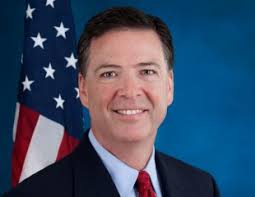
James Comey
At first, Trump claimed that he fired Comey for mishandling the FBI’s investigation into Hillary Clinton’s use of a private email server.
May 10, 2017: But, in a meeting at the White House, Trump told Russian Foreign Minister Sergey Lavrov and Russian Ambassador Sergey Kislyak: “I faced great pressure because of Russia. That’s taken off.”
May 11, 2017: And in an interview with NBC reporter Lester Holt, Trump admitted the real reason:
“And, in fact, when I decided to just do it, I said to myself, I said: ‘You know, this Russia thing with Trump and Russia is a made up story, it’s an excuse by the Democrats for having lost an election that they should’ve won.’”
July 8, 2017: The New York Times reported that Donald Trump Junior met at Trump Tower on June 9, 2016, with a Kremlin-connected Russian lawyer who promised to offer damaging information about Clinton.
Trump Junior released a statement: “We primarily discussed a program about the adoption of Russian children that was active and popular with American families years ago and was since ended by the Russian government, but it was not a campaign issue at the time and there was no follow up.”
July 12 and July 16, 2017: Trump’s lawyer, Jay Sekulow, denied that the President was involved in drafting his son’s statement about the Trump Tower meeting.
July 19, 2017: In an interview with The New York Times, Trump warned Special Counsel and former FBI Director Robert Mueller to avoid looking into his personal finances. Asked if he would fire Mueller over an examination of his finances, Trump made it clear that he might.
July 20, 2017: The Washington Post reported that Trump was consulting with advisers “about his power to pardon aides, family members and even himself” in connection to the probe led by Mueller.
July 31, 2017: The Washington Post reported that, to conceal the purpose of the Trump Tower meeting, President Trump dictated a misleading statement for his son. In this, the reason for the meeting was given as a discussion about the adoption of Russian children—and not to obtain damaging information on Clinton from Russian Intelligence agents.
August 1, 2017: White House press secretary Sarah Huckabee Sanders said President Trump was involved in drafting the false statement that Trump Junior released about the Trump Tower meeting. Sanders called the matter “of no consequence.”
August 3, 2017: The Wall Street Journal reported that Mueller had convened a grand jury in Washington, D.C. to investigate Russia’s interference in the 2016 election. This gives Mueller broad authority to subpoena documents and compel witnesses to testify under oath.
As the late New York Times reporter Harrison E. Salisbury warned: “The truth, I was ultimately to learn, is the most dangerous thing. There are no ends to which men of power will not go to put out its eyes.”
2016 PRESIDENTIAL ELECTION, 9/11 ATTACKS, ABC NEWS, ALTERNET, AP, ASSOCIATED PRESS, BARACK OBAMA, BIRTHERS, BUZZFEED, CBS NEWS, CENSORSHIP, CIA, CNN, CROOKS AND LIARS, DAILY KOZ, DAVID BROOKS, DONALD TRUMP, DONALD TRUMP JUNIOR, FACEBOOK, FBI, FOX NEWS SUNDAY, HILLARY CLINTON, JAMES COMEY, JAY SEKULOW, LESTER HOLT, MOTHER JONES, MOVEON, NATIONAL SECURITY AGENCY, NBC NEWS, NEWSWEEK, NPR, PBS NEWSHOUR, POLITICO, RAW STORY, REUTERS, ROBERT MUELLER, RUSSIA, SALON, SARAH HUCKABEE SANDERS, SEATTLE TIMES, SLATE, THE ATLANTIC, THE CHICAGO SUN-TIMES, THE CHICAGO TRIBUNE, THE DAILY BEAST, THE GUARDIAN, THE HILL, THE HUFFINGTON POST, THE LOS ANGELES TIMES, THE NATION, THE NEW YORK TIMES, THE WALL STREET JOURNAL, THE WASHINGTON POST, TIME, TWITTER, U.S. NEWS & WORLD REPORT, UP, UPI, USA TODAY, VIETNAM WAR, VLADIMIR PUTIN, WATERGATE
In Bureaucracy, History, Law Enforcement, Politics, Social commentary on August 7, 2017 at 12:12 am
In 2011, Donald Trump, host of NBC’s “The Apprentice,” was thinking of running for President against the incumbent, Barack Obama.
To gain popularity among America’s Right-wing, Trump almost singlehandedly created the popular fiction that the President was born in Kenya—and was not an American citizen.
His motive: To convince Americans that Obama was an illegitimate President.
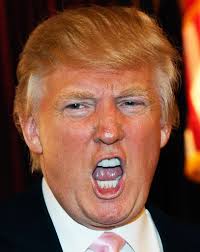
Donald Trump
Among the statements Trump made:
February 10, 2011: “Our current president came out of nowhere. Came out of nowhere. In fact, I’ll go a step further: The people that went to school with him, they never saw him, they don’t know who he is. It’s crazy.”
March 23, 2011: “I want him to show his birth certificate.…There’s something on that birth certificate that he doesn’t like.”
March 30, 2011: “If you are going to be president of the United States you have to be born in this country. And there is a doubt as to whether or not he was. …He doesn’t have a birth certificate. He may have one, but there’s something on that, maybe religion, maybe it says he is a Muslim. I don’t know. Maybe he doesn’t want that. Or he may not have one. But I will tell you this. If he wasn’t born in this country, it’s one of the great scams of all time.”
April 7, 2011: “I have people that have been studying it, and they cannot believe what they’re finding. You are not allowed to be a president if you’re not born in this country. Right now I have real doubts.”
April 25, 2011: “I’ve been told very recently…that the birth certificate is missing. I’ve been told that it’s not there or it doesn’t exist. And if that’s the case, it’s a big problem.”
On April 27, President Obama released his original, long-form Hawaiian birth certificate.
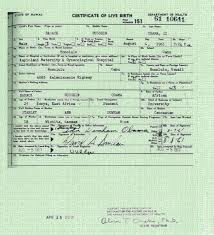
The long-form version of President Obama’s birth certificate
“We do not have time for this kind of silliness,” said Obama at a press conference. “We have better stuff to do. I have got better stuff to do. We have got big problems to solve.”
Still, Trump pursued his campaign of slander on Twitter:
May 18, 2012: “Let’s take a closer look at that birth certificate.@BarackObama was described in 2003 as being “born in Kenya.” http://bit.ly/Klc9Uu
August 6, 2012: “An ‘extremely credible source’ has called my office and told me that @BarackObama‘s birth certificate is a fraud.”
August 27, 2012: “Why do the Republicans keep apologizing on the so called “birther” issue? No more apologies—take the offensive!”
September 13, 2012: “Wake Up America! See article: “Israeli Science: Obama Birth Certificate is a Fake”
June 30, 2013: “@davidrhythmguit: @realDonaldTrump @Chuffman48 Mark Cuban accepts the fact that the President of the United States was born here. Doubt it”
August 22, 2013: “Why are people upset w/ me over Pres Obama’s birth certificate? I got him to release it, or whatever it was, when nobody else could!”
December 12, 2013: “How amazing, the State Health Director who verified copies of Obama’s “birth certificate” died in plane crash today. All others lived”
November 23, 2014: “@futureicon: @pinksugar61 Obama also fabricated his own birth certificate after being pressured to produce one by @realDonaldTrump“
Eventually, Trump decided not to run in 2012.
But he did declare his candidacy for President on June 16, 2015. And he continued to insist that Obama was an illegitimate President.
Meanwhile, Trump’s popularity among blacks steadily fell. In June, 2016, a Quinnipiac poll revealed that Trump had 1% of support from black voters—while 91% backed Hillary Clinton.
Even the managers of Trump’s campaign urged him to put the “birther” issue behind him.
And so, on September 16, 2016—10 days before his scheduled first debate with Democratic Presidential nominee Hillary Clinton—Trump made his version of a reversal.
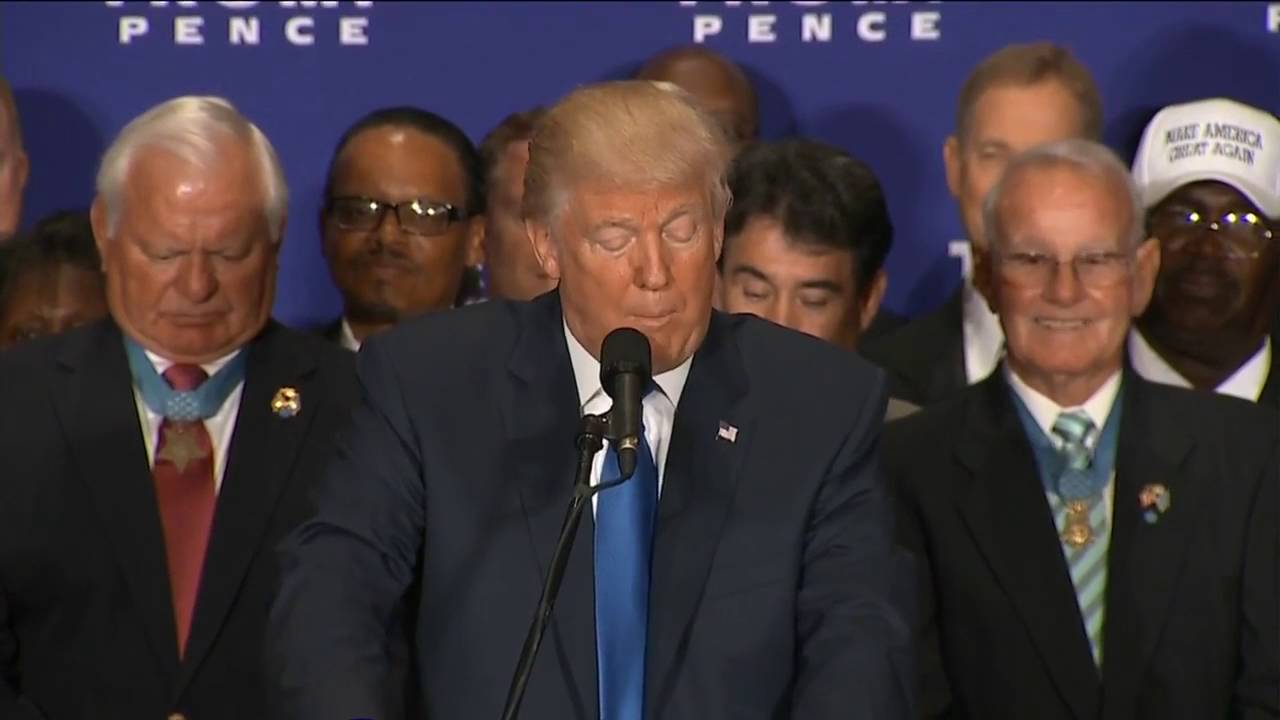
Donald Trump: “President Barack Obama was born in the United States.”
He did so in about seven seconds and 40 words—after spending a half hour paying tribute to the military and promoting his new upscale hotel in Washington, D.C.:
“Now, not to mention her in the same breath, but Hillary Clinton and her campaign of 2008 started the birther controversy.
“I finished it. I finished it. You know what I mean.
“President Barack Obama was born in the United States, period. Now we all want to get back to making America strong and great again.”
His tone made it clear that he felt uneasy making that statement—and wanted to get it over with as fast as possible.
He refused to take questions from reporters covering the event. Nor did he apologize for his five-year campaign of slander.
Eight months after winning the 2016 election, Trump finds himself pursued by a charge as deadly as the one he hurled at Barack Obama: That he colluded with Russian Intelligence agents to sabotage the electoral chances of Hillary Clinton.
Even worse for Trump: It’s backed up with evidence by America’s premier domestic and foreign Intelligence agencies: The FBI, CIA and National Security Agency.
The discovery of numerous contacts between Trump campaign officials and Russian Intelligence agents led the FBI to launch an investigation into Russia’s efforts to influence the outcome of the 2016 Presidential election.
That investigation is still ongoing.
And the House and Senate Intelligence Committees have launched their own investigations into the same.
ABC NEWS, ADOLF HITLER, ALTERNET, AP, BBC, BUZZFEED, CBS NEWS, CNN, DAILY KOS, DAVID BROOKS, DONALD TRUMP, FACEBOOK, FBI, GEORGE C. SCOTT, GEORGE S. PATTON, GESTAPO, HOGAN’S HEROES, JAMES COMEY, JIMMY CARTER, MEL BROOKS, MIKE FLYNN, MOTHER JONES, MOVEON, NAZI GERMANY, NBC NEWS, NEWSWEEK, NPR, PAUL RYAN, PBS NEWSHOUR, POLITICO, RAW STORY, REPUBLICAN PARTY, REUTERS, RICHARD GRUNBERGER, RICHARD NIXON, ROBERT MEULLER, Ronald Reagan, SALON, SEATTLE TIMES, SLATE, SOVIET UNION, THE 12-YEAR REICH, THE ATLANTIC, THE CHICAGO SUN-TIMES, THE CHICAGO TRIBUNE, THE DAILY BEAST, THE GUARDIAN, THE HILL, THE HUFFINGTON POST, THE LOS ANGELES TIMES, THE NEW YORK TIMES, THE WALL STREET JOURNAL, THE WASHINGTON POST, TIME, TWITTER, U.S. NEWS & WORLD REPORT, UPI, USA TODAY, WAFFEN-SS, WEHRMACHT
In Bureaucracy, History, Law, Law Enforcement, Military, Politics, Social commentary on June 20, 2017 at 12:05 am
While the Nazi Party ruled Germany from 1933 to 1945, its influence over all aspects of Germans’ lives was suffocating.
“The persuasive influence of the Nazi regime reached into every corner of everyday life in Germany,” reads the back cover of Richard Grunberger’s classic 1971 book, The 12-Year Reich.
“Censorship prevailed, education was undermined, family life was idealized, but children were encouraged to turn in disloyal parents.
“‘Volk’ festivals, party rallies, awards, uniforms, pageantry all played a part in the massive effort to shape the mind of a nation.”
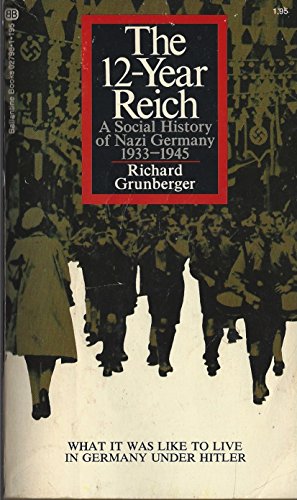
And yet, after the Reich surrendered unconditionally to the Allies on May 8, 1945, a strange thing happened: Virtually no one in Germany admitted to having been a Nazi—or having even known one.
American and British soldiers couldn’t find any German veterans willing to admit they had ever fought against Western, democratic nations. All the once-proud legionaries of the Wehrmacht and Waffen-SS swore they had been fighting “the real enemy”—the Russians—on the Eastern front.
And then there were all the stories of Germans who, at great risk to themselves, had hidden Jews in their attics. Which left unanswered the question: If so many “good Germans” had saved so many Jews, how had six million Jews died horrifically before the Reich fell?
In short: Adolf Hitler had lost the war he started—making him a loser nobody wanted to be identified with.
In the decades since, the “loser” tag has continued to stick with those who once served the Third Reich. Mel Brooks has repeatedly turned German soldiers—once the pride of the battlefield—into idiotic comic foils.
Even the fearsome Gestapo was spoofed for laughs on the long-running TV comedy, “Hogan’s Heroes.”

“Hogan’s Heroes”
“Americans love a winner,” George C. Scott as George S. Patton says at the outset of the classic 1970 movie. “And will not tolerate a loser.”
And that is why Republicans have stuck so closely with President Donald J. Trump.
A typical example of this occurred on June 8 after former FBI director James Comey testified before the United States Senate Select Committee on Intelligence.
Comey revealed that, on February 14, Trump had ordered everyone but Comey to leave a crowded meeting in the Oval Office.
“I want to talk about Mike Flynn,” said Trump.
Flynn had resigned the previous day from his position as National Security Adviser. The FBI was investigating him for his previously undisclosed ties to Russia.
“I hope you can see your way clear to letting this go, to letting Flynn go,” said Trump. “He is a good guy. I hope you can let this go.”
This was clearly an attempt by Trump to obstruct the FBI’s investigation.
Yet Republican House Speaker Paul Ryan rushed to excuse his clearly illegal behavior: “He’s new at government, so therefore I think he’s learning as he goes.”
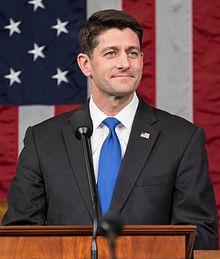
Paul Ryan
David Brooks, the conservative New York Times columnist, offered a more accurate explanation of Trump’s motives. Speaking on The PBS Newshour, Brooks said:
“We are a nation of laws. Donald Trump lives in an entirely different cultural universe. He is more clannist, believing in clan, believing in family, believing in loyalty, not recognizing objective law, not recognizing the procedures that is really how modern government operates….
“It’s not only that he doesn’t know the rules, but at all along and throughout his presidency, he has sort of trampled on the rules almost as a matter of policy, as a matter of character, because he doesn’t believe in that kind of relationships. It’s all personal loyalty, not about laws and norms and standards.”
Republicans don’t fear that Trump will trash the institutions that Americans have cherished for more than 200 years. Institutions like an independent judiciary, a free press, and an incorruptible Justice Department.
He has already attacked all of these—and Republicans have either said nothing or rushed to his defense.
What Republicans truly fear about Donald Trump is that he will finally cross one line too many—like firing Special Counsel Robert Meuller. And that the national outrage following this will force them to launch impeachment proceedings against him.
But it isn’t even Trump they fear will be destroyed.
What they most fear losing is their own hold on nearly absolute power in Congress and the White House.
If Trump is impeached and possibly indicted, he will become a man no one any longer fears. He will be a figure held up to ridicule and condemnation.
Like Adolf Hitler. Like Richard Nixon.
And his Congressional supporters will be branded as losers along with him.
Republicans vividly remember what happened after Nixon was forced to resign on August 9, 1974: Democrats, riding a wave of reform fever, swept Republicans out of the House and Senate—and Jimmy Carter into the White House.
What Ronald Reagan once said about the leadership of the Soviet Union now literally applies to that of the Republican Party:
“They…have openly and publicly declared that the only morality they recognize is what will further their cause, meaning they reserve unto themselves the right to commit any crime, to lie, to cheat, in order to attain that.”
ABC NEWS, ALEX ACOSTA, ALTERNET, ANASTAS MIKOYAN, AP, BBC, BUZZFEED, CBS NEWS, CNN, DAILY KOS, DEPARTMENT OF AGRICULTURE, DEPARTMENT OF HEALTH AND HUMAN SERVICES, DEPARTMENT OF JUSTICE, DEPARTMENT OF LABOR, DEPARTMENT OF TRANSPORTATION, DONALD TRUMP, ELAINE CHAO, FACEBOOK, FBI, GEORGI MALENKOV, JAMES COMEY, JEFF SESSIONS, JOSEPH STALIN, KIM JONG ON, KLIMENT VOROSHILOV, LAVRENTI P. BERIA, MICK MULVANEY, MIKE PENCE, MOTHER JONES, MOVEON, NBC NEWS, NEWSWEEK, NIKKI HALEY, NPR, OFFICE OF MANAGEMENT AND BUDGET, POLITICO, RAW STORY, REINCE PRIEBUS, REUTERS, ROBERT PAYNE, SALON, SEATTLE TIMES, SLATE, SONNY PERDUE, SOVIET UNION, THE ATLANTIC, THE CHICAGO SUN-TIMES, THE CHICAGO TRIBUNE, THE DAILY BEAST, THE GUARDIAN, THE HILL, THE HUFFINGTON POST, THE LOS ANGELES TIMES, THE NEW YORK TIMES, THE RISE AND FALL OF STALIN, THE WALL STREET JOURNAL, THE WASHINGTON POST, TIME, TOM PRICE, TWITTER, U.S. NEWS & WORLD REPORT, UNITED NATIONS, UNITED STATES ATTORNEY GENERAL, UPI, USA TODAY, VYACHESLAV MOLOTOV
In Bureaucracy, History, Politics, Social commentary on June 15, 2017 at 12:02 am
On December 21, 1949, Joseph Vissarionovich Djugashvili turned 70. And millions of Russians feverishly competed to out-do one another in singing his praises.
These celebrations weren’t prompted by love–but fear.
For the man being so honored was internationally known by a far different name: Stalin, which in Russian means: “Man of Steel.”
He had lived up to it: For almost 30 years, through purges and starvation caused by enforced collections of farmers’ crops, he had slaughtered 20 to 60 million people.
Joseph Stalin
The British historian, Robert Payne, described these rapturous events in his classic 1965 biography, The Rise and Fall of Stalin:
“The guns blazed in salute, the processions marched across the Red Square, and huge balloons bearing the features of a younger Stalin climbed into the wintry sky.
“The official buildings were draped in red, the color of happiness. From all over the country came gifts of embroidered cloth, tapestries and carpets bearing his name or his features.
“Ornamental swords, cutlasses, tankards, cups, everything that might conceivably please him, were sent to the Kremlin, and then displayed in the State Museum of the Revolution….Poets extolled him in verses, He was the sun, the splendor, the lord of creation.
“The novelist Leonid Lenov…foretold the day when all the peoples of the earth would celebrate his birthday; the new calendar would begin with the birth of Stalin rather than with the birth of Christ.”
Lavrenti P. Beria, Stalin’s sinister and feared secret police chief, oozed: “Millions of fighters for peace and democracy in all countries of the world are closing their ranks still firmer around Comrade Stalin.”
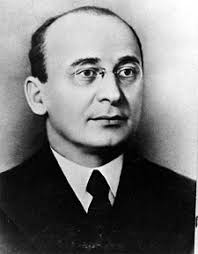
Lavrenti P. Beria
“With a feeling of great gratitude, turning their eyes to Stalin,” gushed Central Committee Secretary Georgi Malenkov, “the peoples of the Soviet Union, and hundreds of millions of peoples in all countries of the world, and all progressive mankind, see in Comrade Stalin their beloved leader and teacher….”
“The mighty voice of the Great Stalin, defending the peace of the world, has penetrated into all corners of the globe,” enthused Defense Commissar Kliment Voroshilov.
“Without Comrade Stalin’s special care,” extolled Trade and Supply Minister Anastas Mikoyan, “we would have never have had a network of meat combines equipped with the latest machinery, canneries and sugar refineries, a fishing industry….”
Foreign Minister Vyacheslav Molotov: “The gigantic Soviet army created during [World War II] was under the direct leadership of Comrade Stalin and built on the basis of the principles of Stalinist military science.”
So those Americans with a sense of history were alarmed and disgusted upon watching President Donald J. Trump–also 70–convene his first full Cabinet meeting since taking office on January 20.
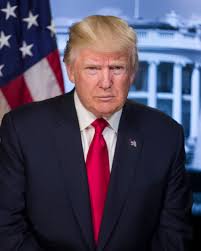
Donald Trump
On June 12, polls showed that only 36% of Americans approved of his conduct. But from his Cabinet members, Trump got praise traditionally lavished on dictators like Stalin and North Korea’s Kim Jong On.
While the Cabinet members sat around a mahogany table in the West Wing of the White House, Trump instructed each one to say a few words about the good work his administration was doing.
“Start with Mike,” ordered Trump, referring to Vice President Mike Pence.
“It is the greatest privilege of my life to serve as the vice president to a president who is keeping his word to the American people,” Pence dutifully said.
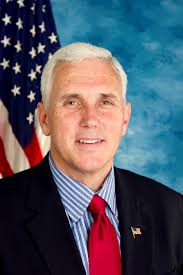
Mike Pence
Then it was the turn of Attorney General Jeff Sessions: “It’s an honor to be able to serve you.”
“My hat’s off to you,” oozed Energy Secretary Rick Perry, referring to Trump’s decision to withdraw from the Paris climate agreement.
Secretary of Agriculture Sonny Perdue: “I just got back from Mississippi. They love you there.”
“What an incredible honor it is to lead the Department of Health and Human Services at this pivotal time under your leadership,” gushed Tom Price. “I can’t thank you enough for the privilege that you’ve given me, and the leadership you’ve shown.”
Secretary of Labor Alex Acosta raved: “I’m deeply honored and I want to thank you for keeping your commitment to the American workers.”
“Thank you for coming over to the Department of Transportation,” eulogized Elaine Chao, its secretary. “I want to thank you for getting this country moving again, and also working again.”
“On behalf of the entire senior staff around you, Mr. President,” said Reince Prebus, Trump’s chief of staff, “we thank you for the opportunity and the blessing you’ve given us to serve your agenda and the American people, and we’re continuing to work very hard every day to accomplish those goals.”
Mick Mulvaney, director of the Office of Management and Budget: “At your direction, we were able to also focus on the forgotten men and women who are paying taxes, so I appreciate your support on pulling that budget together.”
On June 8, former FBI Director James Comey had testified before the Senate Select Committee on Intelligence.
Among the charges he aimed at Trump: The President had demanded a pledge of personal loyalty in return for Comey’s keeping his job.
This would have made Comey his secret police chief.
Comey had refused to give this. And Trump had fired him.
Trump publicly denied this.
Then came the Cabinet meeting–and all the proof anyone needed.
2016 PRESIDENTIAL CAMPAIGN, ABC NEWS, ALTERNET, AP, BBC, BILL CLINTON, BUZZFEED, CBS NEWS, CNN, DAILY KOS, DONALD TRUMP, FACEBOOK, FBI, HILLARY CLINTON, HOUSE OF REPRESENTATIVES, IMPEACHMENT, JAMES COMEY, JOSEPH STALIN, KEITH SCHILLER, KENNETH STARR, MIKE FLYNN, MONICA LEWINSKY, MOTHER JONES, MOVEON, NBC NEWS, NEWSWEEK, NICCOLO MACHIAVELLI, NPR, POLITICO, RAW STORY, REUTERS, ROBERT MEULLER 111, ROD ROSENSTEIN, RUSSIA, SALON, SEATTLE TIMES, SERGEY KISLYAK, SERGEY LAVOV, SLATE, SPECIAL PROSECUTOR, TAPES, THE ATLANTIC, THE CHICAGO SUN-TIMES, THE CHICAGO TRIBUNE, THE DAILY BEAST, THE DISCOURSES, THE GUARDIAN, THE HILL, THE HUFFINGTON POST, THE LOS ANGELES TIMES, THE NEW YORK TIMES, THE PRINCE, THE WALL STREET JOURNAL, THE WASHINGTON POST, TIME, TWITTER, U.S. NEWS & WORLD REPORT, UNITED STATES SENATE, UPI, USA TODAY, WHITEWATER
In Bureaucracy, History, Law, Law Enforcement, Politics, Social commentary on June 13, 2017 at 12:20 am
Hear that sound?
It’s the sound of Niccolo Machiavelli laughing at President Donald J. Trump.
Machiavelli (1469 – 1527) was an Italian Renaissance historian, diplomat and writer. Two of his books continue to profoundly influence modern politics: The Prince and The Discourses on the First Ten Books of Titus Livy.
The Prince has often been damned as a dictator’s guide on how to gain and hold power. But The Discourses outlines how citizens in a republic can maintain their liberty.
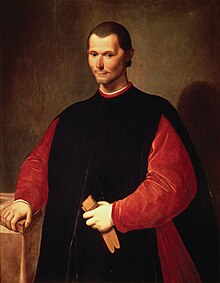
Niccolo Machiavelli
In Chapter 26 of The Discourses, he advises:
I hold it to be a proof of great prudence for men to abstain from threats and insulting words towards any one, for neither the one nor the other in any way diminishes the strength of the enemy—but the one makes him more cautious, and the other increases his hatred of you, and makes him more persevering in his efforts to injure you.
If Trump has read Machiavelli, he’s utterly forgotten the Florentine statesman’s advice. Or he decided long ago that it simply didn’t apply to him.
Consider his treatment of James Comey, the former FBI director whom the President fired on May 9.

James B. Comey (By Federal Bureau of Investigation)
In a move that Joseph Stalin would have admired, Trump gave no warning of his intentions.
Instead, he sent Keith Schiller, his longtime bodyguard and henchman, to the FBI with a letter announcing Comey’s dismissal.
Trump had three reasons for firing Comey:
- Comey had refused to pledge his personal loyalty to Trump. Trump had made this “request” during a private dinner at the White House in January. After refusing to make that pledge, Comey told Trump that he would always be honest with him. But that didn’t satisfy Trump’s demand that the head of the FBI act as his personal secret police chief.
- Trump had tried to coerce him into dropping the FBI’s investigation into former National Security Adviser Mike Flynn, for his secret ties to Russia and Turkey. Comey had similarly resisted that demand.
- Comey had recently asked the Justice Department to fund an expanded FBI investigation into contacts between Trump’s 2016 Presidential campaign and Russian Intelligence agents.
On May 10–the day after firing Comey–Trump met in the Oval Office with Russian Foreign Minister Sergey Lavov and Russian Ambassador Sergey Kislyak.

Donald Trump
Kislyak is reportedly a top recruiter for Russia’s SVR foreign intelligence agency. He has been closely linked with Jeff Sessions, now Attorney General, and fired National Security Adviser Mike Flynn.
“I just fired the head of the FBI,” Trump told the two dignitaries. “He was crazy, a real nut job. I faced great pressure because of Russia. That’s taken off.”
Two days later, on May 12, Trump tweeted a threat to the fired FBI director: “James Comey better hope that there are no ‘tapes’ of our conversations before he starts leaking to the press.”
It clearly didn’t occur to Trump that Comey might have created his own record of their exchanges. Or that he might choose to publicly release it.
But shortly afterward, that’s exactly what he did.
News stories surfaced that Comey had written memos to himself immediately after his private meetings with Trump. He had also told close aides that Trump was trying to pressure him into dropping the Russia investigation.
The news stories led to another result Trump had not anticipated: Acting Attorney General Rod Rosenstein yielded to demands from Democrats and appointed former FBI Director Robert Meuller III as a Special Prosecutor to investigate Trump’s Russian ties.
A Special Prosecutor (now euphemistically called an “Independent Counsel”) holds virtually unlimited power and discretion.
In 1993, Kenneth Starr was appointed Special Prosecutor to investigate Bill and Hillary Clinton’s involvement in “Whitewater.” This was a failed Arkansas land deal that had happened while Clinton was still governor there. It had nothing to do with his role as President.
Starr never turned up anything incriminating about Whitewater. But he discovered that Clinton had gotten oral sex in the Oval Office from a lust-hungry intern named Monica Lewinsky.
Clinton’s lying about these incidents before a Federal grand jury led to his impeachment by a Republican-dominated House of Representatives. But he avoided removal when the Senate refused to convict him by a vote of 55 to 45.
Finally, Trump’s implying that he had illegally taped his conversations with Comey was yet another dangerous mistake, with four possible outcomes:
- If Trump has such tapes, they can and will be subpoenaed by the Special Prosecutor and the House and Senate committees investigating Russia’s meddling in the 2016 election.
- If Trump has such tapes and refuses to turn them over, he can be charged with obstruction of justice–and impeached for that reason alone.
- If he has burned or erased such tapes, that, too, counts as obstruction of justice.
- If he doesn’t have such tapes, he will be revealed as a maker of empty threats.
This last outcome wouldn’t get him impeached. But it would make him a national laughingstock.
As Machiavelli also warns: Unwise princes cannot be wisely advised.


.jpg)


ABC NEWS, ABRAHAM LINCOLN, ALTERNET, AP, BUZZFEED, CBS NEWS, CNN, CONOSPIRACY AGAINST THE UNITED STATES, CROOKS AND LIARS, DAILY KOZ, DONALD TRUMP, DONALD TRUMP JR., ERIC TRUMP, FACEBOOK, FBI, FOREIGN REGISTRATION ACT, GEORGE PAPADOPOULOS, IVANKA TRUMP, JAMES COMEY, KGB, MONEY-LAUNDERING, MOTHER JONES, MOVEON, NBC NEWS, NEWSWEEK, NPR, PAUL MANAFORT, POLITICO, RAW STORY, REPUBLICANS, REUTERS, RICK GATES, ROBERT MUELLER, RUSSIA, SALON, SEATTLE TIMES, SLATE, THE ATLANTIC, THE CHICAGO SUN-TIMES, THE CHICAGO TRIBUNE, THE DAILY BEAST, THE GUARDIAN, THE HILL, THE HUFFINGTON POST, THE LOS ANGELES TIMES, THE NATION, THE NEW YORK TIMES, THE WASHINGTON POST, TIME, TREASON, TWITTER, U.S. NEWS & WORLD REPORT, UP, UPI, USA TODAY, VLADIMIR PUTIN
SONGS IN THE KEY OF TREASON
In History, Law, Law Enforcement, Politics, Social commentary on November 8, 2017 at 12:08 amOn October 30, Special Prosecutor Robert Mueller unveiled a pre-Halloween trick for President Donald Trump.
He unsealed indictments against Paul Manafort, Donald Trump’s former campaign manager, and his business partner Rick Gates.
And George Papadopoulos, a former Trump campaign foreign policy adviser, has pleaded guilty to lying to the FBI about his dealings with foreign officials close to the Russian government.
The charges:
These are the first indictments in Mueller’s probe of collusion between Russian Intelligence agents and members of Donald Trump’s Presidential campaign.
They directly link a Trump campaign associate to such collusion. They make hash of Trump’s claims that he is the victim of a “witch hunt.” And they make it politically hazardous for Trump to fire the special prosecutor.
For those who are not ardent Trump supporters, it’s definitely Mueller time.
* * * * *
THE RUSSIAN CONNECTION
(To be sung to the tune of “The Rainbow Connection”)
Why are there so many
Tales about Russians
And Right-wingers taking bribes?
Russians are Commies
And have lots of rubles
For traitors with something to hide.
So I’ve been told
And some choose to believe it.
It’s clear as the old KGB.
Someday we’ll find it
The Russian Connection–
The bribers, the traitors–you’ll see.
Abraham Lincoln is watching and asking:
“How much more slime must there be?”
What’s so amazing is we just sit gazing
While traitors destroy liberty.
Someday we’ll find it
The Russian Connection–
The bribers, the traitors–you’ll see.
All of them under its spell
We know that it’s probably treason.
Why are we waiting
To throw out the traitors?
Let’s send them all straight to Hell.
Is this the money
That calls forth the traitors?
Their defenders are called G-O-P.
I’ve heard it too many times
To ignore it.
We are supposed to be free.
Someday we’ll find it
The Russian Connection–
The bribers, the traitors–you’ll see.
* * * * *
DONALD TRUMP: CRIMINAL
(To be sung to the tune of “Physical”)
I’m telling all the lies that my base will like
Making good Tweet sensation.
I gotta handle treason right–
You know what I mean.
I called the Russian KGB late at night
Said, “Come on in soon and see me.
I’ve got some secret stuff to share
That only Vlad can see.
“Let’s get criminal, criminal.
I wanna get criminal.
Let’s get into criminal.
Let me have that Russian gold, that Russian gold.
Let me have that Russian gold.
“Let’s get criminal, criminal.
I wanna get criminal.
Let’s get into criminal.
Let me have that Russian gold, that Russian gold!
Let me have that Russian gold!”
I’ve been evil, I’ve been bad
I’ve tried to keep Jim Comey at bay.
And now the FBI is after me
They’ll get me any day.
I’m sure they understand that I’m a crook
My whole life’s been one big crime-spree.
Committing treason is my latest thrill–
For rubles–yessirree!
Let’s get criminal, criminal
I wanna get criminal
Let’s get into criminal
Let me have that Russian gold, that Russian gold!
Let me have that Russian gold!
Let’s get criminal, criminal.
I wanna get criminal.
Let’s get into criminal.
Let me have that Russian gold!
Let me have that Russian gold!
* * * * *
TRUMPY TRAITOR
(To be sung to the tune, “Rockin’ Robin”)
He Tweets in the White House all the day long
Screamin’ and a-schemin’ and a-doin’ what’s wrong.
All the Special Agents in the FBI
Hope he goes to prison in the bye-and-bye.
Trumpy Traitor (tweet tweet)
Trumpy Traitor (tweet tweet)
Go Trumpy Traitor
‘Cause they’re gonna bust your ass tonight
Every act of treason, every act of crime—
America has never seen a bigger slime.
Bob Mueller’s ready, the cops are closin’ in
To put a grand finale to your reign of sin.
Trumpy Traitor (tweet tweet)
Trumpy Traitor (tweet tweet)
Go Trumpy Traitor
‘Cause they’re gonna bust your ass tonight.
Eric’s getting ready for his next big steal
While Daddy hugs Ivanka—who lets out a squeal.
Don Junior’s got the Russians coming once again—
It’s party-time for traitors and their lives of sin.
He Tweets in the White House all the day long
Screamin’ and a-schemin’ and a-doin’ what’s wrong.
Handing out secrets to the KGB
The biggest Right-wing traitor that you’ll ever see.
Trumpy Traitor (tweet tweet)
Trumpy Traitor (tweet tweet)
Go Trumpy Traitor
‘Cause they’re gonna bust your ass tonight.
Well, Eric’s getting ready for his next big steal
While Daddy hugs Ivanka—who lets out a squeal.
Don Junior’s got the Russians coming once again—
It’s party-time for traitors and their lives of sin.
He Tweets in the White House all the day long
Screamin’ and a-schemin’ and a-doin’ what’s wrong.
Handing out secrets to the KGB
The biggest Right-wing traitor that you’ll ever see.
Trumpy Traitor (tweet tweet)
Trumpy Traitor (tweet tweet)
Go Trumpy Traitor
‘Cause they’re gonna bust your ass tonight.
Share this: