Posts Tagged ‘HEINZ GUDERIAN’
2016 PRESIDENTIAL RACE, ABC NEWS, ADOLF HITLER, ALTERNET, AMERICABLOG, AP, BABY BOOMER RESISTANCE, BBC, BLOOMBERG NEWS, BUZZFEED, CBS NEWS, CNN, CROOKS AND LIARS, DAILY KOS, DAILY KOZ, DAVID BROOKS, DONALD TRUMP, EDUARDO "TED" CRUZ, FIVETHIRTYEIGHT, FOX NEWS, HARPER’S MAGAZINE, HEINZ GUDERIAN, HUFFINGTON POST, LORD ACTON, MARK SHIELDS, MEDIA MATTERS, MEGYN KELLY, MOTHER JONES, MOVEON, MSNBC, NBC NEWS, NEW REPUBLIC, NEWSDAY, NEWSWEEK, NPR, PBS NEWSHOUR, POLITICO, POLITICUSUSA, RAW STORY, REPUBLICANS, REUTERS, ROBERT PAYNE, SALON, SEATTLE TIMES, SLATE, TALKING POINTS MEMO, THE ATLANTIC, THE CHICAGO SUN-TIMES, THE CHICAGO TRIBUNE, THE DAILY BEAST, THE DAILY BLOG, THE GUARDIAN, THE HILL, THE HUFFINGTON POST, THE INTERCEPT, THE LIFE AND DEATH OF ADOLF HITLER, THE LOS ANGELES TIMES, THE NATION, THE NEW REPUBLIC, THE NEW YORK TIMES, THE NEW YORKER, THE VILLAGE VOICE, THE WASHINGTON POST, THINKPROGRESS, TIME, TRUTHDIG, TRUTHOUT, TWITTER, U.S. NEWS & WORLD REPORT, UP, UPI, USA TODAY, WOMEN
In Bureaucracy, History, Military, Politics, Social commentary on March 22, 2018 at 12:30 am
“Power tends to corrupt and absolute power corrupts absolutely. Great men are almost always bad men, even when they exercise influence and not authority; still more when you superadd the tendency of the certainty of corruption by authority. There is no worse heresy than that the office sanctifies the holder of it.”
—Lord Acton
Syndicated columnist Mark Shields and New York Times columnist David Brooks appear every Friday on the PBS Newshour to review the week’s major political events.
On March 25, 2016, Shields—a liberal, and Brooks, a conservative—came to some disturbingly similar conclusions about the character of Republican Presidential front-runner Donald Trump.
As the business magnate moved ever closer to winning the 2016 Republican Presidential nomination, both columnists appeared increasingly dismayed.
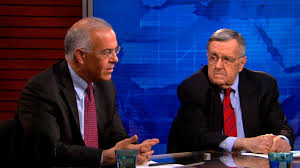
David Brooks and Mark Shields
Eerily, their conclusions about Trump’s character echoed those reached by former Panzer General Heinz Guderian about German dictator Adolf Hitler.
Guderian created the concept of motorized blitzkrieg warfare, whereby masses of tanks and planes moved in coordination to strike at the vital nerve centers of an enemy.
As a result, Guderian enabled Hitler to conquer France in only six weeks in 1940, and to come to the brink of crushing the Soviet Union in 1941. He recounted his career as the foremost tank commander of the Third Reich in his 1950 autobiography, Panzer Leader.
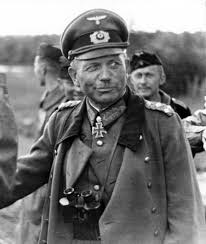
Heinz Guderian
Moderator Judy Woodruff opened the discussion by alluding to the blood feud then raging between Trump and his fellow Republican, Texas U.S. Senator Eduardo “Ted” Cruz.
Both were seeking their party’s Presidential nomination—and both were ruthlessly determined to attain it.
Cruz accused Trump of being behind a recent National Enquirer story charging him with having a series of extramarital affairs.
An anti-Trump Super PAC posted on Facebook a photo of a scantily-clad Melania Trump—his wife. The photo had been taken 16 years ago when, as a model, she posed for British GQ. Its publication came just ahead of the primary caucuses in sexually conservative Utah, which Cruz won.
Trump quickly responded on Twitter, accusing the Cruz campaign of leaking the photo, warning Cruz: “Be careful or I will spill the beans on your wife.”
Cruz struck back, defending his wife, Heidi, and calling Trump a coward. The next day, Trump retweeted an unflattering image of Mrs. Cruz.

Heidi Cruz
By MaverickLittle (Own work) [CC BY-SA 4.0 (https://creativecommons.org/licenses/by-sa/4.0)%5D, via Wikimedia Commons, CC BY-SA 4.0 <https://creativecommons.org/licenses/by-sa/4.0>, via Wikimedia Commons
This “war of the wives” had cost Trump dearly in his standing with American women. In March, a Washington Post/ABC News poll showed that 64% of women felt highly unfavorably disposed toward him.
DAVID BROOKS: “The Trump comparison of the looks of the wives, he does have, over the course of his life, a consistent misogynistic view of women as arm candy, as pieces of meat.
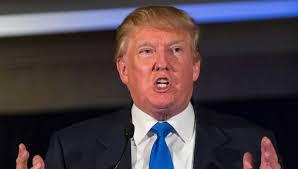
Donald Trump
“It’s a consistent attitude toward women which is the stuff of a diseased adolescent. And so we have seen a bit of that show up again.
“But if you go back over his past, calling into radio shows bragging about his affairs, talking about his sex life in public, he is childish in his immaturity. And his–even his misogyny is a childish misogyny….
“He’s of a different order than your normal candidate. And this whole week is just another reminder of that.”
HEINZ GUDERIAN: As Hitler’s self-confidence grew, and as his power became more firmly established both inside and outside Germany, he became overbearing and arrogant. Everyone appeared to him unimportant compared to himself.
Previously, Hitler had been open to practical considerations, and willing to discuss matters with others. But now he became increasingly autocratic.
Judy Woodruff asked Mark Shields if the uproar over Donald Trump’s disdain for women could really hurt his candidacy.
MARK SHIELDS: The ad featuring a scantily-clad Melania Trump “elicited from Donald Trump the worst of his personality, the bullying, the misogyny, as David has said, brought it out.
“But I think it’s more than childish and juvenile and adolescent. There is something creepy about this, his attitude toward women.
“Take Megyn Kelly of FOX News, who he just has an absolute obsession about, and he’s constantly writing about, you know, how awful she is and no talent and this and that.
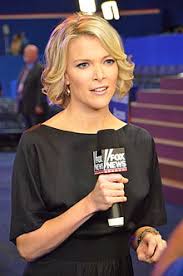
Megyn Kelly
“And I don’t know if he’s just never had women—strong, independent women in his life who have spoken to him. It doesn’t seem that way….”
Judy Woodruff noted that Kelly “has asked him tough questions” in a recent debate.
MARK SHIELDS: “She just asked him tough questions and was totally fair, by everybody else’s standards.”
HEINZ GUDERIAN: Hitler’s most outstanding quality was his will power. It was by this that he compelled men to follow him. When Hitler spoke to a small group he closely observed each person to determine how his words were affecting each man present.
If he noticed that some member of the group was not being swayed by his speech, he spoke directly to that person until he believed he had won him over. But if the target of his persuasive effort still remained obstinate, Hitler would exclaim: “I haven’t convinced that man!”
His immediate reaction was to get rid of such people. As he grew increasingly successful, he grew increasingly intolerant.
ABC NEWS, ADOLF HITLER, ALTERNET, AP, BBC, BUSINESS LEADERSHIP, BUZZFEED, CBS NEWS, CNN, DAILY KOS, DONALD TRUMP, ENGLAND, ERICH VON MANSTEIN, ERWIN ROMMEL, FACEBOOK, FBI, HEINZ GUDERIAN, HOW HITLER COULD HAVE WON WORLD WAR II, IOWA CAUCUSES, JAMES COMEY, JOSEPH STALIN, MIKE FLYNN, MOTHER JONES, MOVEON, MSNBC, NAZI GERMANY, NBC NEWS, NEWSWEEK, NPR, POLITICO, RAW STORY, REUTERS, RUSSIA INVESTIGATION, SALON, SEATTLE TIMES, SLATE, SOVIET UNION, THE ATLANTIC, THE CHICAGO SUN-TIMES, THE CHICAGO TRIBUNE, THE DAILY BEAST, THE GUARDIAN, THE HILL, THE HUFFINGTON POST, THE LOS ANGELES TIMES, THE NEW YORK TIMES, THE WALL STREET JOURNAL, THE WASHINGTON POST, TIME, TWITTER, U.S. NEWS & WORLD REPORT, U.S. SENATE INTELLIGENCE COMMITTEE, UPI, USA TODAY, VLADIMIR PUTIN, WORLD WAR 11
In Bureaucracy, History, Military, Politics, Social commentary on June 8, 2017 at 1:11 pm
“We will have so much winning if I get elected [President] that you may get bored with winning.”
It was vintage Donald Trump, speaking at a September, 2015 Capitol Hill rally to protest President Barack Obama’s nuclear deal with Iran.
That was before Trump became President–and, since then, has been entangled in multiple investigations into contacts between Russian Intelligence agents and high-level officials of his 2016 Presidential campaign.
That was before he was forced to fire retired General Mike Flynn as his national security adviser. The reason: Flynn’s close ties to Russia and its dictator, Vladimir Putin, had recently come to light in the press.
That was before he fired James Comey, the FBI director who had refused to give him a pledge of personal loyalty.
That was before Comey testified before the United States Senate’s Intelligence Committee and publicly branded Trump a liar on nationwide television.
And that was before an anonymous White House source told CNN: “He now lives within himself, which is a dangerous place for Donald Trump to be. I see him emotionally withdrawing. He’s gained weight. He doesn’t have anybody whom he trusts.”
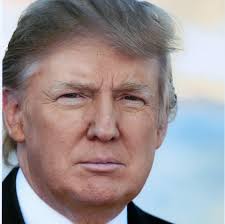
Donald Trump
Trump’s boast reflected he mindset–if not the words–of an earlier CEO whose ego carried him–and his country–to ruin: Adolf Hitler.
Literally thousands of books have been written on Hitler’s six-year stint as a self-appointed field commander. But for an overall view of Hitler’s generalship, an excellent choice is How Hitler Could have Won World War II by Bevin Alexander.

Among the fatal errors that led to the defeat of the defeat of the Third Reich:
- Wasting hundreds of Luftwaffe [air force] pilots, fighters and bombers in a halfhearted attempt to conquer England.
- Ignoring the pleas of generals like Erwin Rommel to conquer Syria, Iraq and Saudi Arabia, thus giving Germany control of most of the world’s oil.
- Attacking his ally, the Soviet Union, while still at war with Great Britain.
- Turning millions of Russians into enemies rather than allies by his brutal and murderous policies.
- Needlessly declaring war on the United States after the Japanese attacked Pearl harbor. (Had he not done so, Americans would have focused all their attention on defeating Japan.)
- Refusing to negotiate a separate peace with Soviet dictator Joseph Stalin–thus granting Germany a large portion of captured Russian territory in exchange for letting Stalin remain in power.
- Insisting on a “not-one-step-back” military “strategy” that led to the needless surrounding, capture and/or deaths of hundreds of thousands of German servicemen.
As the war turned increasingly against him, Hitler became ever more rigid in his thinking.
He demanded absolute control over the smallest details of his forces. This, in turn, led to astonishing and unnecessary losses among their ranks.
One such incident was immortalized in the 1962 movie, The Longest Day, about the Allied invasion of France known as D-Day.
On June 6, 1944, General Erwin Rommel ordered the panzer tanks to drive the Allies from the Normandy beaches. But these could not be released except on direct orders of the Fuehrer.

Panzer tank
As Hitler’s chief of staff, General Alfred Jodl, informed Rommel: The Fuehrer was asleep–and was not to be awakened. By the time Hitler awoke and issued the order, it was too late.
Nor could Hitler accept responsibility for the policies that were leading Germany to certain defeat. He blamed his generals, accused them of cowardice, and relieved many of the best ones from command.
Among those sacked was Heinz Guderian, creator of the German Panzer corps–and responsible for the blitzkreig victory against France in 1940.
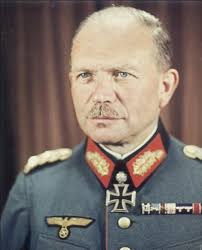
Heinz Guderian
Another was Erich von Manstein, designer of the strategy that defeated France in six weeks–which Germany had failed to do during four years of World War 1.
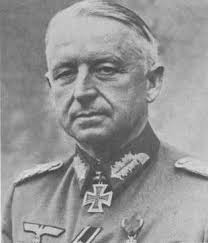
Erich von Manstein
Finally, on April 29, 1945–with the Russians only blocks from his underground Berlin bunker–Hitler dictated his “Last Political Testament.”
Once again, he refused to accept responsibility for unleashing a war that would ultimately consume 50 million lives:
“It is untrue that I or anyone else in Germany wanted war in 1939. It was desired and instigated exclusively by those international statesmen who either were of Jewish origin or worked for Jewish interests.”
Hitler had launched the invasion of Poland–and World War II–with a lie: That Poland had attacked Germany. Fittingly, he closed the war–and his life–with a final lie.
Joachim C. Fest, author of Hitler (1973), writes of the surprise that awaited Allied soldiers occupying Nazi Germany in 1945: “Almost without exception, virtually from one moment to the next, Nazism vanished after the death of Hitler and the surrender.
“It was as if National Socialism had been nothing but the motion, the state of intoxication and the catastrophe it had caused….
“Once again it became plain that National Socialism, like Fascism in general, was dependent to the core on superior force, arrogance, triumph, and by its nature had no resources in the moment of defeat.”
The ancient Greeks believed that “a man’s character is his destiny.” For Adolf Hitler–and the nations he ravaged–that proved fatally true.
It remains to be seen whether the same will prove true for Donald Trump–and the United States.
2016 PRESIDENTIAL RACE, ABC NEWS, ADOLF HITLER, ALTERNET, BUZZFEED, CBS NEWS, CNN, DAILY KOS, DAVID BROOKS, DONALD TRUMP, EDUARDO "TED" CRUZ, FACEBOOK, FOX NEWS, HEINZ GUDERIAN, MARK SHIELDS, MEGYN KELLY, MOTHER JONES, MOVEON, NBC NEWS, NEWSWEEK, NPR, PBS NEWSHOUR, POLITICO, RAW STORY, REPUBLICANS, ROBERT PAYNE, SALON, SLATE, THE CHICAGO SUN-TIMES, THE CHICAGO TRIBUNE, THE DAILY BEAST, THE HUFFINGTON POST, THE LIFE AND DEATH OF ADOLF HITLER, THE LOS ANGELES TIMES, THE NEW YORK TIMES, THE WASHINGTON POST, TIME, TWITTER, U.S. NEWS & WORLD REPORT, WOMEN
In Bureaucracy, History, Military, Politics, Social commentary on January 30, 2017 at 12:19 am
Syndicated columnist Mark Shields and New York Times columnist David Brooks appear every Friday on the PBS Newshour to review the week’s major political events.
On March 25, 2016, Shields–a liberal, and Brooks, a conservative–came to some disturbingly similar conclusions about Donald Trump.
Eerily, their conclusions echoed those reached by former Panzer General Heinz Guderian about German dictator Adolf Hitler.
Guderian created the concept of motorized blitzkrieg warfare, whereby masses of tanks and planes moved in coordination to strike at the vital nerve centers of an enemy.
Heinz Guderian
Guderian thus enabled Hitler to conquer France in only six weeks in 1940, and to come to the brink of crushing the Soviet Union in 1941. He recounted his career as the foremost tank commander of the Third Reich in his 1950 autobiography, Panzer Leader.
On the PBS Newshour, moderator Judy Woodruff noted that “polls show Trump’s standing with women voters had worsened in recent months.”
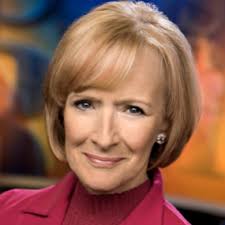
Judy Woodruff
David Brooks said that Trump had displayed “a consistent misogynistic view of women as arm candy, as pieces of meat. It’s a consistent attitude toward women which is the stuff of a diseased adolescent.”
MARK SHIELDS: “She just asked him tough questions and was totally fair, by everybody else’s standards.”
Donald Trump
HEINZ GUDERIAN: Once in power, Hitler quickly–and violently–eliminated his opposition. He make no attempt to disguise this aspect of his character, because the opposition was weak and divided and soon collapsed after the first violent attack. This allowed Hitler to pass laws which destroyed the safeguards enacted by the Weimar Republic against the the dangers of dictatorship.
MARK SHIELDS: “And I don’t know at what point it becomes…politically, he’s still leading. And I would have to say he’s the overwhelming favorite for the Republican nomination.”
HEINZ GUDERIAN: Hitler promised to “make Germany great again” both domestically and internationally. And this won him many followers. In time he controlled the largest party in the land and this allowed him, by democratic procedure, to assume power.
DAVID BROOKS: “The odd thing about [Trump’s] whole career and his whole language, his whole world view is there is no room for love in it. You get a sense of a man who received no love, can give no love, so his relationship with women, it has no love in it. It’s trophy.”
HEINZ GUDERIAN: [Hitler] was isolated as a human being. He had no real friend. There was nobody who was really close to him.
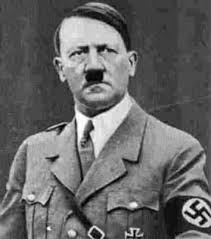
Adolf Hitler
There was nobody he could talk to freely and openly. And just as he never found a true friend, he was denied the ability to deeply love a woman.
DAVID BROOKS: “And [Trump’s] relationship toward the world is one of competition and beating, and as if he’s going to win by competition what other people get by love.”
HEINZ GUDERIAN: Everything on this earth that casts a glow of warmth over our life as mortals–friendship with fine men, the pure love for a wife, affection for one’s own children–all this was and forever remained unknown to him.
DAVID BROOKS: “And so you really are seeing someone who just has an odd psychology unleavened by kindness and charity, but where it’s all winners and losers, beating and being beat. And that’s part of the authoritarian personality, but it comes out in his attitude towards women.”
HEINZ GUDERIAN: He lived alone, cherishing his loneliness, with only his gigantic plans for company. His relationship with Eva Braun may seem to contradict what I have written. But it is obvious that she could not have had any influence over him. And this is unfortunate, for it could only have been a softening one.
* * * * *
In his bestselling 1973 biography, The Life and Death of Adolf Hitler, British historian Robert Payne harshly condemned the German people for the rise of the Nazi dictator:
“[They] allowed themselves to be seduced by him and came to enjoy the experience….[They] followed him with joy and enthusiasm because he gave them license to pillage and murder to their hearts’ content. They were his servile accomplices, his willing victims.”
On November 8, millions of ignorant, hate-filled, Right-wing Americans catapulted Donald Trump–a man with an “odd psychology unleavened by kindness and charity”–into the Presidency.
And so this man–“who received no love, can give no love”–came to assume all the awesome powers that go with that office.
Future historians–if there are any–will similarly and harshly condemn those Americans who, like “good Germans,” joyfully embraced a regime dedicated to celebrating Trump’s egomania, depriving America’s poor of their only source of healthcare, and further enriching the ultra-wealthy.
A regime based on lies (“alternative facts”), censorship and threats of force against those who desired to live as citizens in a republic, instead of a dictatorship.
2016 PRESIDENTIAL RACE, ABC NEWS, ADOLF HITLER, ALTERNET, BUZZFEED, CBS NEWS, CNN, DAILY KOS, DAVID BROOKS, DONALD TRUMP, EDUARDO "TED" CRUZ, FACEBOOK, FOX NEWS, HEINZ GUDERIAN, MARK SHIELDS, MEGYN KELLY, MOTHER JONES, MOVEON, NBC NEWS, NEWSWEEK, NPR, PBS NEWSHOUR, POLITICO, RAW STORY, REPUBLICANS, ROBERT PAYNE, SALON, SLATE, THE CHICAGO SUN-TIMES, THE CHICAGO TRIBUNE, THE DAILY BEAST, THE HUFFINGTON POST, THE LIFE AND DEATH OF ADOLF HITLER, THE LOS ANGELES TIMES, THE NEW YORK TIMES, THE WASHINGTON POST, TIME, TWITTER, U.S. NEWS & WORLD REPORT, WOMEN
In Bureaucracy, History, Military, Politics, Social commentary on January 27, 2017 at 12:31 am
Less than one week since Donald Trump became President of the United States, many of those who voted for him have come to regret their decision.
So many, in fact, that a new Twitter account has emerged to voice their rage and disappointment: Trump_Regrets. At present, it has accrued almost 60,000 followers.
Yet many of the behaviors attacked–Trump’s egomania, his plans to gut the Affordable Care Act and give tax breaks to the wealthy–were known long before the election.
Among those who discussed them: Syndicated columnist Mark Shields and New York Times columnist David Brooks, who appear every Friday on the PBS Newshour to review the week’s major political events.
On March 25, 2016, Shields–a liberal, and Brooks, a conservative–came to some disturbingly similar conclusions about the character of Trump, then the Republican Presidential front-runner.
David Brooks and Mark Shields
Eerily, their conclusions echoed those reached by former Panzer General Heinz Guderian about the character of German dictator Adolf Hitler.
Guderian created the concept of motorized blitzkrieg warfare, whereby masses of tanks and planes moved in coordination to strike at the vital nerve centers of an enemy.
As a result, Guderian enabled Hitler to conquer France in only six weeks in 1940, and to come to the brink of crushing the Soviet Union in 1941. He recounted his career as the foremost tank commander of the Third Reich in his 1950 autobiography, Panzer Leader.

Heinz Guderian
Bundesarchiv, Bild 101I-139-1112-17 / Knobloch, Ludwig / CC-BY-SA [CC BY-SA 3.0 de (https://creativecommons.org/licenses/by-sa/3.0/de/deed.en)%5D, via Wikimedia Commons
Moderator Judy Woodruff opened the discussion by alluding to the blood feud then raging between Trump and his fellow Republican, Texas U.S. Senator Rafael Eduardo “Ted” Cruz.
Both were seeking their party’s Presidential nomination–and both were ruthlessly determined to attain it.
Cruz accused Trump of being behind a recent National Enquirer story charging him with having a series of extramarital affairs.
An anti-Trump Super PAC posted on Facebook a photo of a scantily-clad Melania Trump–his wife. The photo had been taken 16 years ago when, as a model, she posed for British GQ. Its publication came just ahead of the primary caucuses in sexually conservative Utah, which Cruz won.
Trump quickly responded on Twitter, accusing the Cruz campaign of leaking the photo, warning Cruz: “Be careful or I will spill the beans on your wife.”
Cruz struck back, defending his wife, Heidi, and calling Trump a coward. The next day, Trump retweeted an unflattering image of Mrs. Cruz.

This “war of the wives” had cost Trump dearly in his standing with American women. In March, a Washington Post/ABC News poll showed that 64% of women felt highly unfavorably disposed toward him.
DAVID BROOKS: “The Trump comparison of the looks of the wives, he does have, over the course of his life, a consistent misogynistic view of women as arm candy, as pieces of meat.
Donald Trump
“It’s a consistent attitude toward women which is the stuff of a diseased adolescent. And so we have seen a bit of that show up again.
“But if you go back over his past, calling into radio shows bragging about his affairs, talking about his sex life in public, he is childish in his immaturity. And his–even his misogyny is a childish misogyny….
“He’s of a different order than your normal candidate. And this whole week is just another reminder of that.”
HEINZ GUDERIAN: As Hitler’s self-confidence grew, and as his power became more firmly established both inside and outside Germany, he became overbearing and arrogant. Everyone appeared to him unimportant compared to himself.
Previously, Hitler had been open to practical considerations, and willing to discuss matters with others. But now he became increasingly autocratic.
Judy Woodruff asked Mark Shields if the uproar over Donald Trump’s disdain for women could really hurt his candidacy.
MARK SHIELDS: The ad featuring a scantily-clad Melania Trump “elicited from Donald Trump the worst of his personality, the bullying, the misogyny, as David has said, brought it out.
“But I think it’s more than childish and juvenile and adolescent. There is something creepy about this, his attitude toward women.
“Take Megyn Kelly of FOX News, who he just has an absolute obsession about, and he’s constantly writing about, you know, how awful she is and no talent and this and that.
Megyn Kelly
“And I don’t know if he’s just never had women–strong, independent women in his life who have spoken to him. It doesn’t seem that way….
“She just asked him tough questions and was totally fair, by everybody else’s standards.”
HEINZ GUDERIAN: Hitler’s most outstanding quality was his will power. It was by this that he compelled men to follow him. When Hitler spoke to a small group he closely observed each person to determine how his words were affecting each man present.
If he noticed that some member of the group was not being swayed by his speech, he spoke directly to that person until he believed he had won him over. But if the target of his persuasive effort still remained obstinate, Hitler would exclaim: “I haven’t convinced that man!”
His immediate reaction was to get rid of such people. As he grew increasingly successful, he grew increasingly intolerant.
ABC NEWS, BARACK OBAMA, CBS NEWS, CNN, COLIN POWELL, CONDOLEEZA RICE, D-DAY, EMAIL SERVER, FACEBOOK, GEORGE S. PATTON, GEORGE W. BUSH, GREAT BRITAIN, HEINZ GUDERIAN, HILLARY CLINTON, NAZI GERMANY, NBC NEWS, NICCOLO MACHIAVELLI, REPUBLICANS, STALINGRAD, THE CHICAGO SUN-TIMES, THE CHICAGO TRIBUNE, THE LOS ANGELES TIMES, THE NEW YORK TIMES, THE PRINCE, THE WASHINGTON POST, TWITTER, U.S. STATE DEPARTMENT, WAFFEN-SS, WORLD WAR 11
In Bureaucracy, History, Military, Politics, Social commentary on November 2, 2016 at 12:04 am
Most Americans believe that Nazi Germany was defeated because “we were the Good Guys and they were the Bad Guys.”
Not so.
The United States–and its allies, Great Britain and the Soviet Union–won the war for reasons that had nothing to do with the righteousness of their cause. These included:
- Nazi Germany–i.e, its Fuehrer, Adolf Hitler–made a series of disastrous decisions. Chief among these: Attacking its ally, the Soviet Union, and declaring war on the United States;
- The greater material resources of the Soviet Union and the United States; and
- The Allies waged war as brutally as the Germans.
On this last point:
- From D-Day to the fall of Berlin, Americans often shot captured Waffen-SS soldiers out of hand.
- When American troops came under fire in the German city of Aachen, Lt. Col. Derrill Daniel brought in a self-propelled 155mm artillery piece and opened up on a theater housing German soldiers. After the city surrendered, a German colonel labeled the use of the 155 “barbarous” and demanded that it be outlawed.
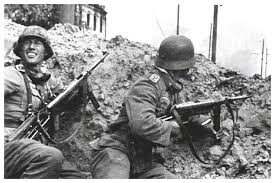
German soldiers at Stalingrad
- During the battle of Stalingrad in 1942, Wilhelm Hoffman, a young German soldier and diarist, was appalled that the Russians refused to surrender. He wrote: “You don’t see them at all, they have established themselves in houses and cellars and are firing on all sides, including from our rear–barbarians, they used gangster methods….”
In short: The Allies won because they dared to meet the brutality of a Heinz Guderian with that of a George S. Patton or a Georgi Zhukov.
This is a lesson that has been totally lost on the liberals of the Democratic Party.
Which explains why they lost most of the Presidential elections of the 20th century.
It also explains why Hillary Clinton finds herself on the defensive in the last week of the 2016 Presidential race.
Throughout her campaign, the Democratic Presidential nominee has been stalked by her use of a private email server at her home in Chappaqua, New York, while Secretary of State (2009-2013).
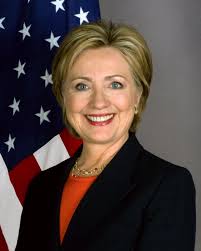
Hillary Clinton
She did not use, or even activate, a State Department email account, which would have been hosted on servers owned and managed by the United States government.
Republicans have portrayed this as a criminal act–and their Presidential candidate, Donald Trump, has threatened to send her to prison for it if he’s elected.
It wasn’t.
When she became Secretary of State, the 1950 Federal Records Act mandated that officials using personal email accounts turn over their official correspondence to the government.
Clinton maintains that most of her emails went to, or were forwarded to, people with government accounts, so they were automatically archived.
In November 2014, President Barack Obama signed the Presidential and Federal Records Act Amendments, which require government officials to forward any official correspondence to the government within 20 days. But even under this new law, the penalties are only administrative, not criminal.
In May, 2016, the State Department’s Inspector General found that:
- Clinton’s email system violated government policy;
- She did not receive permission in setting it up; and
- The agency wouldn’t have granted approval had she asked.
Nevertheless, her behavior did not constitute criminal conduct.
Clinton’s use of a private email system became a major political issue when The New York Times broke the story in March, 2015.
Since then, Republicans have attacked her as having endangered national security as a result.
In doing so, they have totally ignored two embarrassing facts:
First: During the George W. Bush Presidency, Clinton’s two Republican predecessors as Secretary of State–Colin Powell and Condoleeza Rice–also used private email accounts; and
Second: Government computer systems are not secure–and have been repeatedly hacked. Among the agencies attacked:
- The White House (2014)
- Federal Aviation Administration (2015)
- Department of Defense (2015)
- Internal Revenue Service (2015)
- Pentagon (2015)
- Department of State (2014)
- Department of Homeland Security
As soon as Republicans began attacking Clinton’s use of a private server, Democrats should have threatened to convene hearings spotlighting similar behavior by Powell and Rice.

Colin Powell and Condoleeza Rice
Powell and Rice–both still highly influential figures within the Republican party–would have pressured their fellow Republicans: Knock this off–now.
Even if Republicans had continued to hound Clinton on her email server, Democrats could have summoned and publicly grilled Powell and Rice.
This would have served Republicans a lesson on Realpolitik straight out of Niccolo Machiavelli’s primer, The Prince:
From this arises the question whether it is better to be loved than feared, or feared more than loved.
The reply is, that one ought to be both feared and loved, but as it is difficult for the two to go together, it is much safer to be feared than loved….
And men have less scruple in offending one who makes himself loved than one who makes himself feared; for love is held by a chain of obligations which, men being selfish, is broken whenever it serves their purpose; but fear is maintained by a dread of punishment which never fails.
For Democrats to win elective victories and enact their agenda, they must find their own George Pattons to take on the Waffen-SS generals among Republican ranks.
2016 PRESIDENTIAL RACE, ABC NEWS, ADOLF HITLER, ALTERNET, AP, BUZZFEED, CBS NEWS, CNN, CROOKS AND LIARS, DAILY KOZ, DAVID BROOKS, DONALD TRUMP, EDUARDO "TED" CRUZ, FACEBOOK, FOX NEWS, HEINZ GUDERIAN, MARK SHIELDS, MEGYN KELLY, MOTHER JONES, MOVEON, NBC NEWS, NEWSWEEK, NPR, PBS NEWSHOUR, POLITICO, RAW STORY, REPUBLICANS, REUTERS, ROBERT PAYNE, SALON, SEATTLE TIMES, SLATE, THE ATLANTIC, THE CHICAGO SUN-TIMES, THE CHICAGO TRIBUNE, THE DAILY BEAST, THE GUARDIAN, THE HILL, THE HUFFINGTON POST, THE LIFE AND DEATH OF ADOLF HITLER, THE LOS ANGELES TIMES, THE NATION, THE NEW YORK TIMES, THE WASHINGTON POST, TIME, TWITTER, U.S. NEWS & WORLD REPORT, UP, UPI, USA TODAY, WOMEN
In Bureaucracy, History, Military, Politics, Social commentary on August 18, 2016 at 12:05 am
Syndicated columnist Mark Shields and New York Times columnist David Brooks appear every Friday on the PBS Newshour to review the week’s major political events.
On March 25, Shields–a liberal, and Brooks, a conservative–came to some disturbingly similar conclusions about Donald Trump.
Eerily, their conclusions echoed those reached by former Panzer General Heinz Guderian about German dictator Adolf Hitler.
Guderian created the concept of motorized blitzkrieg warfare, whereby masses of tanks and planes moved in coordination to strike at the vital nerve centers of an enemy.
Heinz Guderian
Guderian thus enabled Hitler to conquer France in only six weeks in 1940, and to come to the brink of crushing the Soviet Union in 1941. He recounted his career as the foremost tank commander of the Third Reich in his 1950 autobiography, Panzer Leader.
On the PBS Newshour, moderator Judy Woodruff noted that “polls show Trump’s standing with women voters had worsened in recent months.”
Judy Woodruff
David Brooks said that Trump had displayed “a consistent misogynistic view of women as arm candy, as pieces of meat. It’s a consistent attitude toward women which is the stuff of a diseased adolescent.”
MARK SHIELDS: “She just asked him tough questions and was totally fair, by everybody else’s standards.”
Donald Trump
HEINZ GUDERIAN: Once in power, Hitler quickly–and violently–eliminated his opposition. He make no attempt to disguise this aspect of his character, because the opposition was weak and divided and soon collapsed after the first violent attack. This allowed Hitler to pass laws which destroyed the safeguards enacted by the Weimar Republic against the the dangers of dictatorship.
MARK SHIELDS: “And I don’t know at what point it becomes…politically, he’s still leading. And I would have to say he’s the overwhelming favorite for the Republican nomination.”
HEINZ GUDERIAN: Hitler promised to “make Germany great again” both domestically and internationally. And this won him many followers. In time he controlled the largest party in the land and this allowed him, by democratic procedure, to assume power.
DAVID BROOKS: “The odd thing about [Trump’s] whole career and his whole language, his whole world view is there is no room for love in it. You get a sense of a man who received no love, can give no love, so his relationship with women, it has no love in it. It’s trophy.”
HEINZ GUDERIAN: [Hitler] was isolated as a human being. He had no real friend. There was nobody who was really close to him.
Adolf Hitler
There was nobody he could talk to freely and openly. And just as he never found a true friend, he was denied the ability to deeply love a woman.
DAVID BROOKS: “And [Trump’s] relationship toward the world is one of competition and beating, and as if he’s going to win by competition what other people get by love.”
HEINZ GUDERIAN: Everything on this earth that casts a glow of warmth over our life as mortals–friendship with fine men, the pure love for a wife, affection for one’s own children–all this was and forever remained unknown to him.
DAVID BROOKS: “And so you really are seeing someone who just has an odd psychology unleavened by kindness and charity, but where it’s all winners and losers, beating and being beat. And that’s part of the authoritarian personality, but it comes out in his attitude towards women.”
HEINZ GUDERIAN: He lived alone, cherishing his loneliness, with only his gigantic plans for company. His relationship with Eva Braun may seem to contradict what I have written. But it is obvious that she could not have had any influence over him. And this is unfortunate, for it could only have been a softening one.”
* * * * *
In his bestselling 1973 biography, The Life and Death of Adolf Hitler, British historian Robert Payne harshly condemned the German people for the rise of the Nazi dictator:
“[They] allowed themselves to be seduced by him and came to enjoy the experience….[They] followed him with joy and enthusiasm because he gave them license to pillage and murder to their hearts’ content. They were his servile accomplices, his willing victims.”
There is a very real danger that millions of ignorant, hate-filled, Right-wing Americans will catapult Donald Trump–a man with an “odd psychology unleavened by kindness and charity”–into the Presidency.
And that this man–“who received no love, can give no love”–will assume all the awesome power that goes with that office.
If that happens, future historians–if there are any–may similarly condemn those Americans who stood by like “good Germans” and allowed their country to fall into the hands of a ruthless tyrant.
2016 PRESIDENTIAL RACE, ABC NEWS, ADOLF HITLER, ALTERNET, AP, BUZZFEED, CBS NEWS, CNN, CROOKS AND LIARS, DAILY KOZ, DAVID BROOKS, DONALD TRUMP, EDUARDO "TED" CRUZ, FACEBOOK, FOX NEWS, HEINZ GUDERIAN, MARK SHIELDS, MEGYN KELLY, MOTHER JONES, MOVEON, NBC NEWS, NEWSWEEK, NPR, PBS NEWSHOUR, POLITICO, RAW STORY, REPUBLICANS, REUTERS, ROBERT PAYNE, SALON, SEATTLE TIMES, SLATE, THE ATLANTIC, THE CHICAGO SUN-TIMES, THE CHICAGO TRIBUNE, THE DAILY BEAST, THE GUARDIAN, THE HILL, THE HUFFINGTON POST, THE LIFE AND DEATH OF ADOLF HITLER, THE LOS ANGELES TIMES, THE NATION, THE NEW YORK TIMES, THE WASHINGTON POST, TIME, TWITTER, U.S. NEWS & WORLD REPORT, UP, UPI, USA TODAY, WOMEN
In Bureaucracy, History, Military, Politics, Social commentary on August 17, 2016 at 1:00 am
Syndicated columnist Mark Shields and New York Times columnist David Brooks appear every Friday on the PBS Newshour to review the week’s major political events.
On March 25, Shields–a liberal, and Brooks, a conservative–came to some disturbingly similar conclusions about the character of Republican Presidential front-runner Donald Trump.
As the business magnate moved ever closer to winning the 2016 Republican Presidential nomination, both columnists appeared increasingly dismayed.
David Brooks and Mark Shields
Eerily, their conclusions about Trump’s character echoed those reached by former Panzer General Heinz Guderian about German dictator Adolf Hitler.
Guderian created the concept of motorized blitzkrieg warfare, whereby masses of tanks and planes moved in coordination to strike at the vital nerve centers of an enemy.
As a result, Guderian enabled Hitler to conquer France in only six weeks in 1940, and to come to the brink of crushing the Soviet Union in 1941. He recounted his career as the foremost tank commander of the Third Reich in his 1950 autobiography, Panzer Leader.

Heinz Guderian
Bundesarchiv, Bild 101I-139-1112-17 / Knobloch, Ludwig / CC-BY-SA 3.0 [CC BY-SA 3.0 de (https://creativecommons.org/licenses/by-sa/3.0/de/deed.en)%5D
Moderator Judy Woodruff opened the discussion by alluding to the blood feud then raging between Trump and his fellow Republican, Texas U.S. Senator Eduardo “Ted” Cruz.
Both were seeking their party’s Presidential nomination–and both were ruthlessly determined to attain it.
Cruz accused Trump of being behind a recent National Enquirer story charging him with having a series of extramarital affairs.
An anti-Trump Super PAC posted on Facebook a photo of a scantily-clad Melania Trump–his wife. The photo had been taken 16 years ago when, as a model, she posed for British GQ. Its publication came just ahead of the primary caucuses in sexually conservative Utah, which Cruz won.
Trump quickly responded on Twitter, accusing the Cruz campaign of leaking the photo, warning Cruz: “Be careful or I will spill the beans on your wife.”
Cruz struck back, defending his wife, Heidi, and calling Trump a coward. The next day, Trump retweeted an unflattering image of Mrs. Cruz.
This “war of the wives” had cost Trump dearly in his standing with American women. In March, a Washington Post/ABC News poll showed that 64% of women felt highly unfavorably disposed toward him.
DAVID BROOKS: “The Trump comparison of the looks of the wives, he does have, over the course of his life, a consistent misogynistic view of women as arm candy, as pieces of meat.
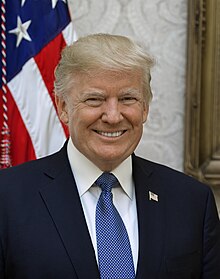
Donald Trump
“It’s a consistent attitude toward women which is the stuff of a diseased adolescent. And so we have seen a bit of that show up again.
“But if you go back over his past, calling into radio shows bragging about his affairs, talking about his sex life in public, he is childish in his immaturity. And his–even his misogyny is a childish misogyny….
“He’s of a different order than your normal candidate. And this whole week is just another reminder of that.”
HEINZ GUDERIAN: As Hitler’s self-confidence grew, and as his power became more firmly established both inside and outside Germany, he became overbearing and arrogant. Everyone appeared to him unimportant compared to himself.
Previously, Hitler had been open to practical considerations, and willing to discuss matters with others. But now he became increasingly autocratic.
Judy Woodruff asked Mark Shields if the uproar over Donald Trump’s disdain for women could really hurt his candidacy.
MARK SHIELDS: The ad featuring a scantily-clad Melania Trump “elicited from Donald Trump the worst of his personality, the bullying, the misogyny, as David has said, brought it out.
“But I think it’s more than childish and juvenile and adolescent. There is something creepy about this, his attitude toward women.
“Take Megyn Kelly of FOX News, who he just has an absolute obsession about, and he’s constantly writing about, you know, how awful she is and no talent and this and that.
Megyn Kelly
“And I don’t know if he’s just never had women–strong, independent women in his life who have spoken to him. It doesn’t seem that way….”
Judy Woodruff noted that Kelly “has asked him tough questions” in a recent debate.
MARK SHIELDS: “She just asked him tough questions and was totally fair, by everybody else’s standards.”
HEINZ GUDERIAN: Hitler’s most outstanding quality was his will power. It was by this that he compelled men to follow him. When Hitler spoke to a small group he closely observed each person to determine how his words were affecting each man present.
If he noticed that some member of the group was not being swayed by his speech, he spoke directly to that person until he believed he had won him over. But if the target of his persuasive effort still remained obstinate, Hitler would exclaim: “I haven’t convinced that man!”
His immediate reaction was to get rid of such people. As he grew increasingly successful, he grew increasingly intolerant.
ABC NEWS, ADOLF HITLER, ALTERNET, ANWAR AL-AWLAKI, AP, BARACK OBAMA, BERNIE SANDERS, BILL CLINTON, BUZZFEED, CBS NEWS, CNN, CROOKS AND LIARS, D-DAY, DAILY KOZ, FACEBOOK, GEORGE H.W. BUSH, GEORGE S. PATTON, GEORGE W. BUSH, GREAT BRITAIN, HEINZ GUDERIAN, HERMAN CAIN, HILLARY CLINTON, ISLAM, MOTHER JONES, MOVEON, NAZI GERMANY, NBC NEWS, NEWSWEEK, NICCOLO MACHIAVELLI, NPR, POLITICO, PREDATOR DRONES, RAND PAUL, RAW STORY, RENEGADE: THE MAKING OF A PRESIDENT, REPUBLICANS, REUTERS, RICHARD NIXON, RICHARD WOLFFE, Ronald Reagan, SALON, SEATTLE TIMES, SENATOR RAND PAUL, SLATE, SOVIET UNION, STALINGRAD, TERRORISM, THE ATLANTIC, THE CHICAGO SUN-TIMES, THE CHICAGO TRIBUNE, THE DAILY BEAST, THE GUARDIAN, THE HILL, THE HUFFINGTON POST, THE LOS ANGELES TIMES, THE NATION, THE NEW YORK TIMES, THE PRINCE, THE WASHINGTON POST, TIME, TWITTER, U.S. NEWS & WORLD REPORT, UPI, USA TODAY, WAFFEN-SS, WORLD WAR ii
In Bureaucracy, History, Law, Military, Politics, Social commentary on April 28, 2016 at 12:01 am
Most Americans believe that Nazi Germany was defeated because “we were the Good Guys and they were the Bad Guys.”
Not so.
The United States–and its allies, Great Britain and the Soviet Union–won the war for reasons that had nothing to do with the righteousness of their cause. These included:
- Nazi Germany–i.e, its Fuehrer, Adolf Hitler–made a series of disastrous decisions. Chief among these: Attacking its ally, the Soviet Union, and declaring war on the United States;
- The greater material resources of the Soviet Union and the United States; and
- The Allies waged war as brutally as the Germans.
On this last point:
- From D-Day to the fall of Berlin, captured Waffen-SS soldiers were often shot out of hand.
- When American troops came under fire in the German city of Aachen, Lt. Col. Derrill Daniel brought in a self-propelled 155mm artillery piece and opened up on a theater housing German soldiers. After the city surrendered, a German colonel labeled the use of the 155 “barbarous” and demanded that it be outlawed.
German soldiers at Stalingrad
- During the battle of Stalingrad in 1942, Wilhelm Hoffman, a young German soldier and diarist, was appalled that the Russians refused to surrender. He wrote: “You don’t see them at all, they have established themselves in houses and cellars and are firing on all sides, including from our rear–barbarians, they used gangster methods….”
In short: The Allies won because they dared to meet the brutality of a Heinz Guderian with that of a George S. Patton.
This is a lesson that has been totally lost on the liberals of the Democratic Party.
Which explains why they lost most of the Presidential elections of the 20th century.
It also explains why President Barack Obama has found most of his legislative agenda stymied by Right-wing Republicans.
Consider this example: In 2014, Senator Rand Paul (R-Ky.) warned then-Senate Majority Leader Harry Reid (D-Nev.) that he would place a hold on one of President Obama’s appellate court nominees.
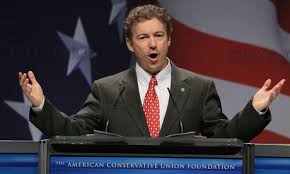
Rand Paul
David Barron had been nominated to the First Circuit Court of Appeals. And Paul objected to this because Barron authored memos justifying the killing of an American citizen by a drone in Yemen.
The September 30, 2011 drone strike killed Anwar al-Awlaki, a radical Muslim cleric notorious on the Internet for encouraging Muslims to attack the United States.
So President Obama authorized a Predator drone stroke against him, thus removing that danger. Paul demanded that the Justice Department release the memos Barron crafted justifying the drone policy.
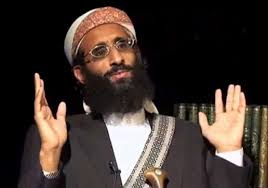
Anwar al-Awlaki
Imagine how Republicans would depict Paul–or a Democratic Senator–if he behaved in a similar manner with a Republican President: “Rand Paul: A traitor who supports terrorists. he sides with America’s sworn enemies against its own lawfully elected President.”
On May 22, 2014, the Senate voted 53–45 to confirm Barron to the First Circuit Court of Appeals.
To Republicans, “lawfully elected” applies only to Republican Presidents. A Democrat who runs against a Republican is automatically considered a traitor.
And a Democrat who defeats a Republican is automatically considered a usurper, and thus deserves to be slandered and obstructed, if not impeached.
Unable to defeat Bill Clinton in 1992 and 1996, Republicans tried in 1998 to impeach him for getting oral sex in the White House.
Similarly, 2012 Presidential candidate Herman Cain, asked in a conference call with bloggers why Republicans couldn’t just impeach President Obama, replied:
“That’s a great question and it is a great–it would be a great thing to do but because the Senate is controlled by Democrats we would never be able to get the Senate first to take up that action.”
In Renegade: The Making of a President, Richard Wolffe chronicled Obama’s successful 2008 bid for the White House. Among his revelations:
Obama, a believer in rationality and decency, felt more comfortable in responding to attacks on his character than in making them on the character of his enemies.
A graduate of Columbia University and Harvard Law School, Obama is easily one of the most academically gifted Presidents in United States history.
But for all this, he failed–from the onset of his Presidency–to grasp and apply this fundamental lesson taught by Niccolo Machiavelli, the father of modern political science.
In The Prince, Machiavelli warns:
From this arises the question whether it is better to be loved than feared, or feared more than loved.
The reply is, that one ought to be both feared and loved, but as it is difficult for the two to go together, it is much safer to be feared than loved….
And men have less scruple in offending one who makes himself loved than one who makes himself feared; for love is held by a chain of obligations which, men being selfish, is broken whenever it serves their purpose; but fear is maintained by a dread of punishment which never fails.
On Facebook and Twitter, liberals are already celebrating the “certain” Presidency of Vermont U.S. Senator Bernie Sanders or former First Lady Hillary Clinton in 2016.
They forget that, in 1968, 1980, 1988 and 2000, liberals couldn’t believe America would elect, respectively, Richard Nixon, Ronald Reagan, George H.W. Bush and George W. Bush.
For Democrats to win elective victories and enact their agenda, they must find their own George Patton to take on the Waffen-SS generals among Republican ranks.
2016 PRESIDENTIAL RACE, ABC NEWS, ADOLF HITLER, CBS NEWS, CNN, DAVID BROOKS, DONALD TRUMP, EDUARDO "TED" CRUZ, FACEBOOK, FOX NEWS, HEINZ GUDERIAN, MARK SHIELDS, MEGYN KELLY, PBS NEWSHOUR, REPUBLICANS, ROBERT PAYNE, THE CHICAGO SUN-TIMES, THE CHICAGO TRIBUNE, THE LIFE AND DEATH OF ADOLF HITLER, THE LOS ANGELES TIMES, THE NEW YORK TIMES, THE WASHINGTON POST, TWITTER, WOMEN
In Bureaucracy, History, Politics, Social commentary on April 20, 2016 at 12:05 am
Syndicated columnist Mark Shields and New York Times columnist David Brooks appear every Friday on the PBS Newshour to review the week’s major political events.
On March 25, Shields–a liberal, and Brooks, a conservative–came to some disturbingly similar conclusions about Donald Trump.
Eerily, their conclusions echo those reached by former Panzer General Heinz Guderian about German dictator Adolf Hitler.
Guderian created the concept of motorized blitzkrieg warfare, whereby masses of tanks and planes moved in coordination to strike at the vital nerve centers of an enemy.
Heinz Guderian
As a result, Guderian enabled Hitler to conquer France in only six weeks in 1940, and to come to the brink of crushing the Soviet Union in 1941.
He recounted his career as the foremost tank commander of the Third Reich in his 1950 autobiography, Panzer Leader.
Moderator Judy Woodruff noted that “polls show Trump’s standing with women voters has worsened in recent months.”
A Washington Post/ABC News poll reveals that 64% of women say they have a strongly unfavorable reaction to Trump. That’s 18 points higher than it was in August, 2015.
Judy Woddruff
This led David Brooks to declare that Trump has shown “a consistent misogynistic view of women as arm candy, as pieces of meat. It’s a consistent attitude toward women which is the stuff of a diseased adolescent.”
Judy Woodruff noted that Fox News Correspondent Megyn Kelly “has asked him tough questions” in a recent debate.
MARK SHIELDS: “She just asked him tough questions and was totally fair, by everybody else’s standards.
“But there is something really creepy about this that’s beyond locker room. It’s almost like a stalker, and I just–I thought this was–it actually did the impossible. It made Ted Cruz look like an honorable, tough guy on the right side of an issue.”
Donald Trump
HEINZ GUDERIAN: Once in power, Hitler quickly–and violently–eliminated his opposition.
He make no attempt to disguise this aspect of his character, because the opposition was weak and divided and soon collapsed after the first violent attack.
This allowed Hitler to pass laws which destroyed the safeguards enacted by the Weimar Republic against the the dangers of dictatorship.
MARK SHIELDS: “And I don’t know at what point it becomes…politically, he’s still leading. And I would have to say he’s the overwhelming favorite for the Republican nomination.”
HEINZ GUDERIAN: Hitler promised to “make Germany great again” both domestically and internationally. And this won him many followers. In time he controlled the largest party in the land and this allowed him, by democratic procedure, to assume power.
DAVID BROOKS: “The odd thing about [Trump’s] whole career and his whole language, his whole world view is there is no room for love in it. You get a sense of a man who received no love, can give no love, so his relationship with women, it has no love in it. It’s trophy.”
HEINZ GUDERIAN: [Hitler] was isolated as a human being. He had no real friend. There was nobody who was really close to him.
Adolf Hitler
There was nobody he could talk to freely and openly. And just as he never found a true friend, he was denied the ability to deeply love a woman.
DAVID BROOKS: “And [Trump’s] relationship toward the world is one of competition and beating, and as if he’s going to win by competition what other people get by love.”
HEINZ GUDERIAN: Everything on this earth that casts a glow of warmth over our life as mortals–friendship with fine men, the pure love for a wife, affection for one’s own children–all this was and forever remained unknown to him.
DAVID BROOKS: “And so you really are seeing someone who just has an odd psychology unleavened by kindness and charity, but where it’s all winners and losers, beating and being beat. And that’s part of the authoritarian personality, but it comes out in his attitude towards women.”
HEINZ GUDERIAN: He lived alone, cherishing his loneliness, with only his gigantic plans for company.
His relationship with Eva Braun may seem to contradict what I have written. But it is obvious that she could not have had any influence over him. And this is unfortunate, for it could only have been a softening one.
* * * * *
In his bestselling 1973 biography, The Life and Death of Adolf Hitler, British historian Robert Payne harshly condemned the German people for the rise of the Nazi dictator:
“[They] allowed themselves to be seduced by him and came to enjoy the experience….[They] followed him with joy and enthusiasm because he gave them license to pillage and murder to their hearts’ content.”
There is a very real danger that millions of ignorant, hate-filled, Right-wing Americans will catapult Donald Trump–a man with an “odd psychology unleavened by kindness and charity”–into the Presidency.
And that this man–“who received no love, can give no love”–will assume all the awesome power that goes with that office.
If that happens, future historians–if there are any–may similarly condemn those Americans who stood by like “good Germans” and allowed their country to fall into the hands of a ruthless tyrant.
2016 PRESIDENTIAL RACE, ABC NEWS, ADOLF HITLER, CBS NEWS, CNN, DAVID BROOKS, DONALD TRUMP, EDUARDO "TED" CRUZ, FACEBOOK, FOX NEWS, HEINZ GUDERIAN, MARK SHIELDS, MEGYN KELLY, NBC NEWS, PBS NEWSHOUR, REPUBLICANS, ROBERT PAYNE, THE CHICAGO SUN-TIMES, THE CHICAGO TRIBUNE, THE LIFE AND DEATH OF ADOLF HITLER, THE LOS ANGELES TIMES, THE NEW YORK TIMES, THE WASHINGTON POST, TWITTER, WOMEN
In Bureaucracy, Business, History, Politics, Social commentary on April 19, 2016 at 12:11 am
Syndicated columnist Mark Shields and New York Times columnist David Brooks appear every Friday on the PBS Newshour to review the week’s major political events.
On March 25, Shields–a liberal, and Brooks, a conservative–came to some disturbingly similar conclusions about the character of Republican Presidential front-runner Donald Trump.
As the business magnate moves ever closer to winning the 2016 Republican Presidential nomination, both columnists appear increasingly dismayed.
David Brooks and Mark Shields
Eerily, their conclusions about Trump’s character echo those reached by former Panzer General Heinz Guderian about German dictator Adolf Hitler.
Guderian created the concept of motorized blitzkrieg warfare, whereby masses of tanks and planes moved in coordination to strike at the vital nerve centers of an enemy.
As a result, Guderian enabled Hitler to conquer France in only six weeks in 1940, and to come to the brink of crushing the Soviet Union in 1941.
He recounted his career as the foremost tank commander of the Third Reich in his 1950 autobiography, Panzer Leader.

Heinz Guderian
Moderator Judy Woodruff opened the discussion by alluding to the blood feud raging between Trump and his fellow Republican, Texas U.S. Senator Eduardo “Ted” Cruz.
Both are seeking their party’s Presidential nomination–and both are ruthlessly determined to attain it.
Cruz accused Trump of behind a recent National Enquirer story charging him with having a series of extramarital affairs.
An anti-Trump Super PAC posted on Facebook a photo of a scantily-clad Melania Trump–his wife. The photo had been taken 16 years ago when, as a model, she posed for “British GQ.
Its publication came just ahead of the primary caucuses in sexually conservative Utah, which Cruz won.
Trump quickly responded on Twitter, accusing the Cruz campaign of leaking the photo, warning Cruz: “Be careful or I will spill the beans on your wife.”
Cruz struck back, defending his wife, Heidi, and calling Trump a coward. The next day, Trump retweeted an unflattering image of Mrs. Cruz.
This “war of the wives” has cost Trump dearly in his standing with American women. In March, a Washington Post/ABC News poll showed that 64% of women felt highly unfavorably disposed toward him.
DAVID BROOKS: “The Trump comparison of the looks of the wives, he does have, over the course of his life, a consistent misogynistic view of women as arm candy, as pieces of meat.
“It’s a consistent attitude toward women which is the stuff of a diseased adolescent.

Donald Trump
“And so we have seen a bit of that show up again. But if you go back over his past, calling into radio shows bragging about his affairs, talking about his sex life in public, he is childish in his immaturity. And his–even his misogyny is a childish misogyny….
“He’s of a different order than your normal candidate. And this whole week is just another reminder of that.”
HEINZ GUDERIAN: As Hitler’s self-confidence grew, and as his power became more firmly established both inside and outside Germany, he became overbearing and arrogant. Everyone appeared to him unimportant compared to himself.
Previously, Hitler had been open to practical considerations, and willing to discuss matters with others. But now he became increasingly autocratic.
Judy Woodruff asked Mark Shields if the uproar over Donald Trump’s disdain for women could really hurt his candidacy.
MARK SHIELDS: The ad featuring a scantily-clad Melania Trump “elicited from Donald Trump the worst of his personality, the bullying, the misogyny, as David has said, brought it out.
“But I think it’s more than childish and juvenile and adolescent. There is something creepy about this, his attitude toward women.
“Take Megyn Kelly of FOX News, who he just has an absolute obsession about, and he’s constantly writing about, you know, how awful she is and no talent and this and that.
Megyn Kelly
“And I don’t know if he’s just never had women–strong, independent women in his life who have spoken to him. It doesn’t seem that way….”
HEINZ GUDERIAN: Hitler’s most outstanding quality was his will power. It was by this that he compelled men to follow him.
When Hitler spoke to a small group he closely observed each person to determine how his words were affecting each man present.
If he noticed that some member of the group was not being swayed by his speech, he spoke directly to that person until he believed he had won him over.
But if the target of his persuasive effort still remained obstinate, Hitler would exclaim: “I haven’t convinced that man!”
His immediate reaction was to get rid of such people. As he grew increasingly successful, he grew increasingly intolerant.


2016 PRESIDENTIAL RACE, ABC NEWS, ADOLF HITLER, ALTERNET, AMERICABLOG, AP, BABY BOOMER RESISTANCE, BBC, BLOOMBERG NEWS, BUZZFEED, CBS NEWS, CNN, CROOKS AND LIARS, DAILY KOS, DAILY KOZ, DAVID BROOKS, DONALD TRUMP, EDUARDO "TED" CRUZ, FIVETHIRTYEIGHT, FOX NEWS, HARPER’S MAGAZINE, HEINZ GUDERIAN, HUFFINGTON POST, LORD ACTON, MARK SHIELDS, MEDIA MATTERS, MEGYN KELLY, MOTHER JONES, MOVEON, MSNBC, NBC NEWS, NEW REPUBLIC, NEWSDAY, NEWSWEEK, NPR, PBS NEWSHOUR, POLITICO, POLITICUSUSA, RAW STORY, REPUBLICANS, REUTERS, ROBERT PAYNE, SALON, SEATTLE TIMES, SLATE, TALKING POINTS MEMO, THE ATLANTIC, THE CHICAGO SUN-TIMES, THE CHICAGO TRIBUNE, THE DAILY BEAST, THE DAILY BLOG, THE GUARDIAN, THE HILL, THE HUFFINGTON POST, THE INTERCEPT, THE LIFE AND DEATH OF ADOLF HITLER, THE LOS ANGELES TIMES, THE NATION, THE NEW REPUBLIC, THE NEW YORK TIMES, THE NEW YORKER, THE VILLAGE VOICE, THE WASHINGTON POST, THINKPROGRESS, TIME, TRUTHDIG, TRUTHOUT, TWITTER, U.S. NEWS & WORLD REPORT, UP, UPI, USA TODAY, WOMEN
POWER CORRUPTS–IN GERMANY AND AMERICA: PART ONE (OF TWO)
In Bureaucracy, History, Military, Politics, Social commentary on March 22, 2018 at 12:30 am“Power tends to corrupt and absolute power corrupts absolutely. Great men are almost always bad men, even when they exercise influence and not authority; still more when you superadd the tendency of the certainty of corruption by authority. There is no worse heresy than that the office sanctifies the holder of it.”
—Lord Acton
Syndicated columnist Mark Shields and New York Times columnist David Brooks appear every Friday on the PBS Newshour to review the week’s major political events.
On March 25, 2016, Shields—a liberal, and Brooks, a conservative—came to some disturbingly similar conclusions about the character of Republican Presidential front-runner Donald Trump.
As the business magnate moved ever closer to winning the 2016 Republican Presidential nomination, both columnists appeared increasingly dismayed.
David Brooks and Mark Shields
Eerily, their conclusions about Trump’s character echoed those reached by former Panzer General Heinz Guderian about German dictator Adolf Hitler.
Guderian created the concept of motorized blitzkrieg warfare, whereby masses of tanks and planes moved in coordination to strike at the vital nerve centers of an enemy.
As a result, Guderian enabled Hitler to conquer France in only six weeks in 1940, and to come to the brink of crushing the Soviet Union in 1941. He recounted his career as the foremost tank commander of the Third Reich in his 1950 autobiography, Panzer Leader.
Heinz Guderian
Moderator Judy Woodruff opened the discussion by alluding to the blood feud then raging between Trump and his fellow Republican, Texas U.S. Senator Eduardo “Ted” Cruz.
Both were seeking their party’s Presidential nomination—and both were ruthlessly determined to attain it.
Cruz accused Trump of being behind a recent National Enquirer story charging him with having a series of extramarital affairs.
An anti-Trump Super PAC posted on Facebook a photo of a scantily-clad Melania Trump—his wife. The photo had been taken 16 years ago when, as a model, she posed for British GQ. Its publication came just ahead of the primary caucuses in sexually conservative Utah, which Cruz won.
Trump quickly responded on Twitter, accusing the Cruz campaign of leaking the photo, warning Cruz: “Be careful or I will spill the beans on your wife.”
Cruz struck back, defending his wife, Heidi, and calling Trump a coward. The next day, Trump retweeted an unflattering image of Mrs. Cruz.
Heidi Cruz
By MaverickLittle (Own work) [CC BY-SA 4.0 (https://creativecommons.org/licenses/by-sa/4.0)%5D, via Wikimedia Commons, CC BY-SA 4.0 <https://creativecommons.org/licenses/by-sa/4.0>, via Wikimedia Commons
This “war of the wives” had cost Trump dearly in his standing with American women. In March, a Washington Post/ABC News poll showed that 64% of women felt highly unfavorably disposed toward him.
DAVID BROOKS: “The Trump comparison of the looks of the wives, he does have, over the course of his life, a consistent misogynistic view of women as arm candy, as pieces of meat.
Donald Trump
“It’s a consistent attitude toward women which is the stuff of a diseased adolescent. And so we have seen a bit of that show up again.
“But if you go back over his past, calling into radio shows bragging about his affairs, talking about his sex life in public, he is childish in his immaturity. And his–even his misogyny is a childish misogyny….
“He’s of a different order than your normal candidate. And this whole week is just another reminder of that.”
HEINZ GUDERIAN: As Hitler’s self-confidence grew, and as his power became more firmly established both inside and outside Germany, he became overbearing and arrogant. Everyone appeared to him unimportant compared to himself.
Previously, Hitler had been open to practical considerations, and willing to discuss matters with others. But now he became increasingly autocratic.
Judy Woodruff asked Mark Shields if the uproar over Donald Trump’s disdain for women could really hurt his candidacy.
MARK SHIELDS: The ad featuring a scantily-clad Melania Trump “elicited from Donald Trump the worst of his personality, the bullying, the misogyny, as David has said, brought it out.
“But I think it’s more than childish and juvenile and adolescent. There is something creepy about this, his attitude toward women.
“Take Megyn Kelly of FOX News, who he just has an absolute obsession about, and he’s constantly writing about, you know, how awful she is and no talent and this and that.
Megyn Kelly
“And I don’t know if he’s just never had women—strong, independent women in his life who have spoken to him. It doesn’t seem that way….”
Judy Woodruff noted that Kelly “has asked him tough questions” in a recent debate.
MARK SHIELDS: “She just asked him tough questions and was totally fair, by everybody else’s standards.”
HEINZ GUDERIAN: Hitler’s most outstanding quality was his will power. It was by this that he compelled men to follow him. When Hitler spoke to a small group he closely observed each person to determine how his words were affecting each man present.
If he noticed that some member of the group was not being swayed by his speech, he spoke directly to that person until he believed he had won him over. But if the target of his persuasive effort still remained obstinate, Hitler would exclaim: “I haven’t convinced that man!”
His immediate reaction was to get rid of such people. As he grew increasingly successful, he grew increasingly intolerant.
Share this: