bureaucracybusters

Posts Tagged ‘GORDON SONDLAND’

MACHIAVELLI: STUPID LEADERS CANNOT BE WISELY ADVISED

In Bureaucracy, History, Law, Military, Politics, Social commentary on February 14, 2025 at 12:05 am

“There is no other way of guarding oneself against flattery than by letting men understand that they will not offend you by speaking the truth.  But when every one can tell you the truth, you lose their respect.           

“A prudent prince must therefore take a third course, by choosing for his counsel wise men, and giving them alone full liberty to speak the truth to him, but only of those things that he asks and of nothing else.”

So wrote the Italian statesman Niccolo Machiavelli more than 500 years ago in his famous treatise on politics, The Prince. And he added:

“But he must be a great asker about everything and hear their opinions, and afterwards deliberate by himself in his own way, and in these counsels and with each of these men comport himself so that every one may see that the more freely he speaks, the more he will be acceptable. 

“Beyond these he should listen to no one, go about the matter deliberately, and be determined in his decisions.”

Machiavelli’s words remain as true in our day as they were in his.

Especially for “a very stable genius,” as Donald J. Trump once referred to himself.

Related image

Niccolo Machiavelli

Asked on MSNBC’s “Morning Joe” who he consults about foreign policy, Trump replied; “I’m speaking with myself, number one, because I have a very good brain and I’ve said a lot of things.”

Machiavelli offers a related warning that especially applies to Trump: Unwise princes cannot be wisely advised:

“It is an infallible rule that a prince who is not wise himself cannot be well advised, unless by chance he leaves himself entirely in the hands of one man who rules him in everything, and happens to be a very prudent man. In this case, he may doubtless be well governed, but it would not last long, for the governor would in a short time deprive him of the state.”

Competent executives surround themselves with experts in diverse fields and pay attention to their expertise. They don’t feel threatened by it but rely on it to implement their agenda. Advisers whose counsel proves correct are to be retained and rewarded.

Machiavelli offers practical advice on this: 

“The prince, in order to retain his fidelity, ought to think of his minister, honoring and enriching him, doing him kindnesses and conferring on him favors and responsible tasks, so that the great favors and riches bestowed on him cause him not to desire other honors and riches, and the offices he holds make him fearful of changes.”

But rewarding those who try to head off ruinous decision-making is not Trump’s way. 

Consider the case of John Rood, the Pentagon’s top policy official until February 19, 2020. That was when he resigned, saying he was leaving at Trump’s request.

John Rood official photo.jpg

John Rood

Rood had certified in 2019 that Ukraine had made enough anti-corruption progress to justify the release of Congressionally-authorized aid for its efforts to thwart Russian aggression.

And that totally conflicted with Trump’s attempt to extort a “favor” from Ukrainian President Volodymyr Zelensky.

In July, 2019, Trump told his acting chief of staff, Mick Mulvaney, to withhold almost $400 million in promised military aid for Ukraine.

On July 25, Trump telephoned Zelensky to “request” a “favor”: Investigate presumed 2020 Democratic Presidential Candidate Joseph Biden and his son, Hunter, who had had business dealings in Ukraine.

The reason for such an investigation: To find embarrassing “dirt” on Biden.

Joe Biden presidential portrait.jpg

Joe Biden

But then a CIA whistleblower filed a complaint about the extortion attempt—and this led directly to impeachment proceedings by the Democratically-controlled House for abuse of power and obstruction of Congress.

But the Republican-dominated Senate voted to acquit him.

Afterwards, Trump purged several officials he considered disloyal for cooperating with the impeachment hearings:

  • Army Lt. Col. Alexander Vindman, from the National Security Council.
  • White House Attorney Lt. Col. Yevgeny Vindman, Vindman’s twin brother.
  • Gordon Sondland, Trump’s ambassador to the European Union.

“The truth has cost Lt. Col. Alexander Vindman his job, his career, and his privacy,” his attorney David Pressman, said in a statement.

For Trump, Rood had been “disloyal” on two occasions: 

  • He stated in a May 23, 2019 letter to Congress that the Pentagon had thoroughly assessed Ukraine’s anti-corruption actions. And he said that those reforms justified the authorized $400 million in aid.
  • He told reporters last year: “In the weeks after signing the certification I did become aware that the aid had been held. I never received a very clear explanation other than there were concerns about corruption in Ukraine.”

Asked about Rood’s resignation, chief Pentagon spokesman Jonathan Hoffman declined to speculate on the reason for Trump’s decision.

According to Secretary of Defense Mark Esper, Rood played “a critical role” on issues such as nuclear deterrence, NATO, missile defense and the National Defense Strategy.

That did not protect him, however, from Trump’s vendetta against those who dared to reveal his crimes to Democratic impeachment committees.

All of which would lead Niccolo Machiavelli to warn, if he could witness American politics today: “This bodes ill for your Republic.”

MACHIAVELLI: HOW TO RECOGNIZE GOOD–AND STUPID–LEADERS

In Bureaucracy, History, Law, Military, Politics, Social commentary on August 19, 2024 at 12:11 am

“There is no other way of guarding oneself against flattery than by letting men understand that they will not offend you by speaking the truth.  But when every one can tell you the truth, you lose their respect.  

“A prudent prince must therefore take a third course, by choosing for his counsel wise men, and giving them alone full liberty to speak the truth to him, but only of those things that he asks and of nothing else.”

So wrote the Italian statesman Niccolo Machiavelli more than 500 years ago in his famous treatise on politics, The Prince. And he added:

“But he must be a great asker about everything and hear their opinions, and afterwards deliberate by himself in his own way, and in these counsels and with each of these men comport himself so that every one may see that the more freely he speaks, the more he will be acceptable. 

“Beyond these he should listen to no one, go about the matter deliberately, and be determined in his decisions.”

Machiavelli’s words remain as true in our day as they were in his.

Especially for “a very stable genius,” as ex-President Donald J. Trump once referred to himself.

Related image

Niccolo Machiavelli

Asked on MSNBC’s “Morning Joe” who he consults about foreign policy, Trump replied; “I’m speaking with myself, number one, because I have a very good brain and I’ve said a lot of things.”

Machiavelli offers a related warning that especially applies to Trump: Unwise princes cannot be wisely advised:

“It is an infallible rule that a prince who is not wise himself cannot be well advised, unless by chance he leaves himself entirely in the hands of one man who rules him in everything, and happens to be a very prudent man. In this case, he may doubtless be well governed, but it would not last long, for the governor would in a short time deprive him of the state.”

Competent executives surround themselves with experts in diverse fields and pay attention to their expertise. They don’t feel threatened by it but rely on it to implement their agenda. Advisers whose counsel proves correct are to be retained and rewarded.

Machiavelli offers practical advice on this: 

“The prince, in order to retain his fidelity, ought to think of his minister, honoring and enriching him, doing him kindnesses and conferring on him favors and responsible tasks, so that the great favors and riches bestowed on him cause him not to desire other honors and riches, and the offices he holds make him fearful of changes.”

But rewarding those who try to head off ruinous decision-making is not Trump’s way. 

Consider the case of John Rood, the Pentagon’s top policy official until February 19. That was when he resigned, saying he was leaving at Trump’s request.
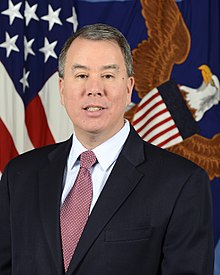
John Rood official photo.jpg

John Rood

Rood had certified in 2019 that Ukraine had made enough anti-corruption progress to justify the release of Congressionally-authorized aid for its efforts to thwart Russian aggression.

And that totally conflicted with Trump’s attempt to extort a “favor” from Ukrainian President Volodymyr Zelensky.

In July, 2019, Trump told his acting chief of staff, Mick Mulvaney, to withhold almost $400 million in promised military aid for Ukraine.

On July 25, Trump telephoned Zelensky to “request” a “favor”: Investigate Democratic Presidential Candidate Joseph Biden and his son, Hunter, who has had business dealings in Ukraine.

The reason for such an investigation: To find embarrassing “dirt” on Biden.

Joe Biden presidential portrait.jpg

Joe Biden

But then a CIA whistleblower filed a complaint about the extortion attempt—and this led directly to impeachment proceedings by the Democratically-controlled House for abuse of power and obstruction of Congress.

But the Republican-dominated Senate voted to acquit him.

Afterwards, Trump purged several officials he considered disloyal for cooperating with the impeachment hearings:

  • Army Lt. Col. Alex Vindman, from the National Security Council.
  • White House Attorney Lt. Col. Yevgeny Vindman, Vindman’s twin brother.
  • Gordon Sondland, Trump’s ambassador to the European Union.

“The truth has cost Lt. Col. Alexander Vindman his job, his career, and his privacy,” his attorney David Pressman, said in a statement.

For Trump, Rood had been “disloyal” on two occasions: 

  • He stated in a May 23, 2019 letter to Congress that the Pentagon had thoroughly assessed Ukraine’s anti-corruption actions. And he said that those reforms justified the authorized $400 million in aid.
  • He told reporters last year: “In the weeks after signing the certification I did become aware that the aid had been held. I never received a very clear explanation other than there were concerns about corruption in Ukraine.”

Asked about Rood’s resignation, chief Pentagon spokesman Jonathan Hoffman declined to speculate on the reason for Trump’s decision.

According to Secretary of Defense Mark Esper, Rood played “a critical role” on issues such as nuclear deterrence, NATO, missile defense and the National Defense Strategy.

That did not protect him, however, from Trump’s vendetta against those who dared to reveal his crimes to Democratic impeachment committees.

All of which would lead Niccolo Machiavelli to warn, if he could witness American politics today: “This bodes ill for your Republic.”

MACHIAVELLI: STUPID LEADERS CANNOT BE WISELY ADVISED

In Bureaucracy, History, Law, Military, Politics, Social commentary on April 15, 2022 at 12:13 am

“There is no other way of guarding oneself against flattery than by letting men understand that they will not offend you by speaking the truth.  But when every one can tell you the truth, you lose their respect.  

“A prudent prince must therefore take a third course, by choosing for his counsel wise men, and giving them alone full liberty to speak the truth to him, but only of those things that he asks and of nothing else.”

So wrote the Italian statesman Niccolo Machiavelli more than 500 years ago in his famous treatise on politics, The Prince. And he added:

“But he must be a great asker about everything and hear their opinions, and afterwards deliberate by himself in his own way, and in these counsels and with each of these men comport himself so that every one may see that the more freely he speaks, the more he will be acceptable. 

“Beyond these he should listen to no one, go about the matter deliberately, and be determined in his decisions.”

Machiavelli’s words remain as true in our day as they were in his.

Especially for “a very stable genius,” as ex-President Donald J. Trump once referred to himself.

Related image

Niccolo Machiavelli

Asked on MSNBC’s “Morning Joe” who he consults about foreign policy, Trump replied; “I’m speaking with myself, number one, because I have a very good brain and I’ve said a lot of things.”

Machiavelli offers a related warning that especially applies to Trump: Unwise princes cannot be wisely advised:

“It is an infallible rule that a prince who is not wise himself cannot be well advised, unless by chance he leaves himself entirely in the hands of one man who rules him in everything, and happens to be a very prudent man. In this case, he may doubtless be well governed, but it would not last long, for the governor would in a short time deprive him of the state.”

Competent executives surround themselves with experts in diverse fields and pay attention to their expertise. They don’t feel threatened by it but rely on it to implement their agenda. Advisers whose counsel proves correct are to be retained and rewarded.

Machiavelli offers practical advice on this: 

“The prince, in order to retain his fidelity, ought to think of his minister, honoring and enriching him, doing him kindnesses and conferring on him favors and responsible tasks, so that the great favors and riches bestowed on him cause him not to desire other honors and riches, and the offices he holds make him fearful of changes.”

But rewarding those who try to head off ruinous decision-making is not Trump’s way. 

Consider the case of John Rood, the Pentagon’s top policy official until February 19. That was when he resigned, saying he was leaving at Trump’s request.

John Rood official photo.jpg

John Rood

Rood had certified last year that Ukraine had made enough anti-corruption progress to justify the release of Congressionally-authorized aid for its efforts to thwart Russian aggression.

And that totally conflicted with Trump’s attempt to extort a “favor” from Ukrainian President Volodymyr Zelensky.

In July, 2019, Trump told his acting chief of staff, Mick Mulvaney, to withhold almost $400 million in promised military aid for Ukraine.

On July 25, Trump telephoned Zelensky to “request” a “favor”: Investigate Democratic Presidential Candidate Joseph Biden and his son, Hunter, who has had business dealings in Ukraine.

The reason for such an investigation: To find embarrassing “dirt” on Biden.

Joe Biden presidential portrait.jpg

Joe Biden

But then a CIA whistleblower filed a complaint about the extortion attempt—and this led directly to impeachment proceedings by the Democratically-controlled House for abuse of power and obstruction of Congress.

But the Republican-dominated Senate voted to acquit him.

Afterwards, Trump purged several officials he considers disloyal for cooperating with the impeachment hearings:

  • Army Lt. Col. Alex Vindman, from the National Security Council.
  • White House Attorney Lt. Col. Yevgeny Vindman, Vindman’s twin brother.
  • Gordon Sondland, Trump’s ambassador to the European Union.

“The truth has cost Lt. Col. Alexander Vindman his job, his career, and his privacy,” his attorney David Pressman, said in a statement.

For Trump, Rood had been “disloyal” on two occasions: 

  • He stated in a May 23, 2019 letter to Congress that the Pentagon had thoroughly assessed Ukraine’s anti-corruption actions. And he said that those reforms justified the authorized $400 million in aid.
  • He told reporters last year: “In the weeks after signing the certification I did become aware that the aid had been held. I never received a very clear explanation other than there were concerns about corruption in Ukraine.”

Asked about Rood’s resignation, chief Pentagon spokesman Jonathan Hoffman declined to speculate on the reason for Trump’s decision.

According to Secretary of Defense Mark Esper, Rood played “a critical role” on issues such as nuclear deterrence, NATO, missile defense and the National Defense Strategy.

That did not protect him, however, from Trump’s vendetta against those who dared to reveal his crimes to Democratic impeachment committees.

All of which would lead Niccolo Machiavelli to warn, if he could witness American politics today: “This bodes ill for your Republic.”

MACHIAVELLI: STUPID LEADERS CANNOT BE WISELY ADVISED

In Bureaucracy, History, Law, Military, Politics, Social commentary on February 24, 2020 at 12:05 am

“There is no other way of guarding oneself against flattery than by letting men understand that they will not offend you by speaking the truth.  But when every one can tell you the truth, you lose their respect.  

“A prudent prince must therefore take a third course, by choosing for his counsel wise men, and giving them alone full liberty to speak the truth to him, but only of those things that he asks and of nothing else.”

So wrote the Italian statesman Niccolo Machiavelli more than 500 years ago in his famous treatise on politics, The Prince. And he added:

“But he must be a great asker about everything and hear their opinions, and afterwards deliberate by himself in his own way, and in these counsels and with each of these men comport himself so that every one may see that the more freely he speaks, the more he will be acceptable. 

“Beyond these he should listen to no one, go about the matter deliberately, and be determined in his decisions.”

Machiavelli’s words remain as true in our day as they were in his.

Except, of course for “a very stable genius,” as President Donald J. Trump once referred to himself.

Related image

Niccolo Machiavelli

Asked on MSNBC’s “Morning Joe” who he consults about foreign policy, Trump replied; “I’m speaking with myself, number one, because I have a very good brain and I’ve said a lot of things.”

Machiavelli offers a related warning that especially applies to Trump: Unwise princes cannot be wisely advised:

“It is an infallible rule that a prince who is not wise himself cannot be well advised, unless by chance he leaves himself entirely in the hands of one man who rules him in everything, and happens to be a very prudent man. In this case, he may doubtless be well governed, but it would not last long, for the governor would in a short time deprive him of the state.”

Competent executives surround themselves with experts in diverse fields and pay attention to their expertise. They don’t feel threatened by it but rely on it to implement their agenda. Advisers whose counsel proves correct are to be retained and rewarded.

Machiavelli offers practical advice on this: 

“The prince, in order to retain his fidelity, ought to think of his minister, honoring and enriching him, doing him kindnesses and conferring on him favors and responsible tasks, so that the great favors and riches bestowed on him cause him not to desire other honors and riches, and the offices he holds make him fearful of changes.”

But rewarding those who try to head off ruinous decision-making is not Trump’s way. 

Consider the case of John Rood, the Pentagon’s top policy official until February 19. That was when he resigned, saying he was leaving at Trump’s request.

John Rood official photo.jpg

John Rood

Rood had certified last year that Ukraine had made enough anti-corruption progress to justify the release of Congressionally-authorized aid for its efforts to thwart Russian aggression.

And that totally conflicted with Trump’s attempt to extort a “favor” from Ukrainian President Volodymyr Zelensky.

In July, 2019, Trump told his acting chief of staff, Mick Mulvaney, to withhold almost $400 million in promised military aid for Ukraine.

On July 25, Trump telephoned Zelensky to “request” a “favor”: Investigate Democratic Presidential Candidate Joseph Biden and his son, Hunter, who has had business dealings in Ukraine.

The reason for such an investigation: To find embarrassing “dirt” on Biden.

Official portrait of Joe Biden as president of the United States

Joe Biden

But then a CIA whistleblower filed a complaint about the extortion attempt—and this led directly to impeachment proceedings by the Democratically-controlled House for abuse of power and obstruction of Congress.

But the Republican-dominated Senate voted to acquit him.

Since then, Trump has purged several officials he considers disloyal for cooperating with the impeachment hearings:

  • Army Lt. Col. Alex Vindman, from the National Security Council.
  • White House Attorney Lt. Col. Yevgeny Vindman, Vindman’s twin brother.
  • Gordon Sondland, Trump’s ambassador to the European Union.

“The truth has cost Lt. Col. Alexander Vindman his job, his career, and his privacy,” his attorney David Pressman, said in a statement.

For Trump, Rood had been “disloyal” on two occasions: 

  • He stated in a May 23, 2019 letter to Congress that the Pentagon had thoroughly assessed Ukraine’s anti-corruption actions. And he said that those reforms justified the authorized $400 million in aid.
  • He told reporters last year: “In the weeks after signing the certification I did become aware that the aid had been held. I never received a very clear explanation other than there were concerns about corruption in Ukraine.”

Asked about Rood’s resignation, chief Pentagon spokesman Jonathan Hoffman declined to speculate on the reason for Trump’s decision.

According to Secretary of Defense Mark Esper, Rood played “a critical role” on issues such as nuclear deterrence, NATO, missile defense and the National Defense Strategy.

That did not protect him, however, from Trump’s vendetta against those who dared to reveal his crimes to Democratic impeachment committees.

All of which would lead Niccolo Machiavelli to warn, if he could witness American politics today: “This bodes ill for your Republic.”

LIKE FUHRER, LIKE PRESIDENT: “PROTECT ME!”

In Bureaucracy, History, Law, Law Enforcement, Military, Politics, Social commentary on October 23, 2019 at 12:06 am

On January 27, 1944, Adolf Hitler—Nazi Germany’s Fuhrer—called an assembly of his principal generals from the Russian front.   

The war he had started on September 1, 1939, was not going well for the Fatherland. 

Germany faced the two-front war that Hitler himself had warned against in Mein Kampf: With the Americans and British closing in from the West, and the Russians inexorably closing in from the East.

Rows of generals sat before Hitler in the dining room of a converted inn, near his Wolf’s Lair military headquarters, near the East Prussian town of Rastenburg,

Hitler and his generals

Hitler spoke about the crucial role war played in the life of nations, and how important dynamic leadership and racial purity were to a nation’s morale.  He boasted that powerful new weapons would soon be available for turning the tide of the conflict: New radar equipment, new submarines, new torpedoes. 

Victory would emerge after May, 1944. Meanwhile, his armies must hold out.

And then he threw down a challenge: 

“If the worst comes to the worst and I am ever abandoned as Supreme Commander by my people, I must still expect my entire officer corps to muster around me with daggers drawn—just as every field marshal or the commander of an army, corps, division or regiment expects his subordinates to stand by him in the hour of crisis.”

Suddenly, the unbelievable happened: For the first time since he had taken command of Germany almost 11 years earlier, he was loudly interrupted. 

“And so it will be, Mein Fuhrer!”

The voice belonged to Field Marshal Erich von Manstein, the military genius who had crafted the successful conquest of France in June, 1940.

Erich von Manstein

Hitler hoped that Manstein had meant to reassure him of the generals’ loyalty.

But Martin Bormann, his toadying chief secretary, cautioned otherwise: The generals had interpreted the outburst to mean that the worst would indeed come to the worst.

As indeed it did. 

Seventy-five years later, another powerful dictator, fighting for his life, issued a similar challenge to members of his political party. 

President Donald Trump faced an impeachment inquiry from Democrats in the House of Representatives. And he believed that his fellow Republicans in the United States Senate and House were not supporting him vigorously enough. 

So, on October 21, 2019, he lectured them during a meeting of his Cabinet. The two things they [Democrats] have: They’re vicious and they stick together.  They don’t have Mitt Romney in their midst. They don’t have people like that.” 

Romney, the United States Senator from Utah, is the only Republican who has said he might be open to impeaching Trump. He has also called Trump’s calls for Ukraine and China to investigate former Vice President Joe Biden and his son, Hunter, “appalling.”

Joe Biden is a potential White House rival for Trump in 2020.  

“I watched a couple of people on television today,” continued Trump. “They were talking about what a phony deal it is. What a phony investigation it is.

“And Republicans have to get tougher and fight. We have some that are great fighters, but they have to get tougher and fight because the Democrats are trying to hurt the Republican party for the election, which is coming up, where we’re doing very well.”

Related image

Donald Trump

The following day, October 22, Trump doubled down on the unfairness of the impeachment inquiry he was facing.

Reaching out to his fanatical base, he took to Twitter: “So some day, if a Democrat becomes President and the Republicans win the House, even by a tiny margin, they can impeach the President, without due process or fairness or any legal rights.

“All Republicans must remember what they are witnessing here – a lynching. But we will WIN!”

By comparing a Constitutionally-sanctioned process to an illegal “lynching,” Trump hoped to strip the impeachment inquiry of its legitimacy.

Trump’s slander came on the same day that William Taylor, the former ambassador to Ukraine, testified before House lawmakers behind closed doors for more than nine hours.

Reading a 15-page statement, Taylor said that he had grown increasingly alarmed as American officials tried to coerce Ukraine into investigating Joe and Hunter Biden.  And he laid out a series of events that directly tied Trump to a quid pro quo with Ukraine.  

Specifically:

  • Trump insisted that Ukrainian President Volodymyr Zelenskiy “go to a microphone and say he is opening investigations of Biden and 2016 election interference.”  
  • Gordon Sondland, the ambassador to the European Union told Taylor that “everything was dependent on such an announcement, including security assistance.”

Trump’s White House secretary, Stephanie Graham, responded with more slanders:

“President Trump has done nothing wrong—this is a coordinated smear campaign from far-left lawmakers and radical unelected bureaucrats waging war on the Constitution. There was no quid pro quo.

“Today was just more triple hearsay and selective leaks from the Democrats’ politically-motivated, closed door, secretive hearings….

“President Trump is leading the way for the American people by delivering a safer, stronger and more secure country. The do-nothing Democrats should consider doing the same.” 

Adolf Hitler’s demands for loyalty-unto-death by his generals didn’t save him from final destruction.

There’s an increasing chance that Trump’s similar demands on Republicans may not save him, either.