Presidential legacies live on in unexpected ways.
Right now, the legacies of Barack Obama and Donald Trump are vying for the attention of—fiction readers.
In Hope Never Dies: An Obama-Biden Mystery, author Andrew Shaffer has fashioned a novel that is half-mystery, half-bromance.
Vice President Joe Biden has just left the Obama White House and doesn’t know what he wants to do with the rest of his life. Then Finn Donnelly, his favorite railroad conductor, dies in a suspicious accident, leaving behind an ailing wife and a trail of clues.
To unravel the mystery, “Amtrak Joe” calls on the skills of his former boss: The 44th President of the United States. Together they scour biker bars, cheap motels and other memorable haunts throughout Delaware.

Then Biden unearths a disturbing truth about his longtime—and now dead—friend. This, in turn, leads Biden and Obama to uncover the sinister forces behind America’s opioid epidemic.
The book is pure fantasy fun, as evidenced from this review by Alexandra Alter in The New York Times:
“[Hope Never Dies is] a roughly 300-page work of political fanfiction, an escapist fantasy that will likely appeal to liberals pining for the previous administration, longing for the Obama-Biden team to emerge from political retirement as action heroes. But it’s also at times a surprisingly earnest story about estranged friends who are reunited under strange circumstances.”
A reader named Casey, reviewing the novel for Goodreads, writes: “While Shaffer could have leaned into nostalgia alone, he’s written a solid mystery with the characters fleshed out as more than just cliches.
“The reader really feels Biden’s longing to be helpful and his anguish over seeing 44’s legacy undone so quickly by an individual who shall remain nameless. (The presidential zings in this book are incredible, truly.)
“The tension between the two rings as true as it did when they were in office….By all means, this book shouldn’t work as well as it does. For a few hours, I got to enjoy the company of politicians who behaved like adults (mostly). It sure was nice.”
Contrasting with the relatively lighthearted fictional image of Barack Obama is the immensely darker one of Donald Trump.
Don Winslow offers Trump an extended cameo appearance in The Border, his massive, 736-page novel about America’s war on drugs—and the horrific violence it has spawned in Mexico. It’s the third of a trilogy of novels vividly portraying the violent costs of an unwinnable conflict.
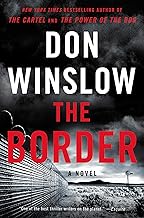
Art Keller is a dedicated agent of the Federal Drug Enforcement Administration (DEA). For over 40 years, he has waged all-out war on Adán Barrera, the godfather of the powerful Sinaloa Cartel.
Appointed director of the DEA, Keller now faces a series of deadly enemies:
- A heroin epidemic surging across America;
- Hitmen who want to kill him;
- Politicians who want to sabotage his agenda; and
- An incoming administration that’s allied with the very drug traffickers he’s trying to destroy.
And heading this administration is John Dennison—Donald Trump in all but name—who:
- Gratuitously insults people on Twitter;
- Fires a Special Counsel;
- Gets blackmailed by a woman he once bedded; and
- Colludes with drug traffickers for a multi-million dollar loan to finance his Presidential campaign.
Whereas the reviews for Hope Never Dies were as upbeat as the book itself, those of The Border reflect the novel’s mercilessly grim take on a war that can’t be won.
Los Angeles Times: “The Border is intricate, mean and swift, a sprawling canvass of characters including narco kingpins, a Guatemalan stowaway, a Staten Island heroin addict, a kinky hit woman, a barely veiled Donald Trump and DEA agent Art Keller, who….has been noble and merciless, a conflicted wanderer who makes America face the transgressions committed in its name.”
Rolling Stone: “Clocking in at over 700 pages, it is his most overtly political installment yet. He takes on the Trump administration directly, creating a fictional candidate, then president, who stokes racist fears of Mexicans, campaigns on ‘building the wall’ and, along with his venal son-in-law, gets caught up in a shady real estate deal involving Cartel money.”
NPR: “The Border becomes a book for our times. Like Shakespeare, it makes a three-act drama of our modern moment. Like Shakespeare’s plays, it shows us a world that is our own, a history that is our own, a burden that is our own, rendered out into the rhythm of scenes and arcs, chapters and parts.”
The signature slogan of Obama’s 2008 Presidential campaign was: “Yes, We Can!” The slogan of Trump’s 2016 effort could have been: “No, You Can’t.”
Obama concentrated the full force of his attention on reforming American healthcare—by making it available to millions whose insurance refused to provide coverage.
Trump’s top priority is to separate the United States from Mexico with an impenetrable wall—and he has even diverted $3.6 billion from Pentagon funding to pay for it.
Like John F. Kennedy, Barack Obama will likely be positively remembered as much for what he tried to do as what he succeeded at doing.
Like Richard M. Nixon, Donald Trump will likely be remembered as a menacing stain on American history.


 Bureaucracybuster's Blog
2008 PRESIDENTIAL CAMPAIGN, 2016 PRESIDENTIAL CAMPAIGN, ABC NEWS, AFFORDABLE CARE ACT, ALTERNET, AMERICABLOG, ANDREW SHAFFER, AP, BABY BOOMER RESISTANCE, BARACK OBAMA, BORDER WALL, BUZZFEED, CBS NEWS, CNN, CROOKS AND LIARS, DAILY KOZ, DON WINSLOW, DONALD TRUMP, DRUG ENFORCEMENT ADMINISTRATION, DRUG TRAFFICKING, FACEBOOK, FIVETHIRTYEIGHT, GOODREADS, HEROIN, HOPE NEVER DIES (BOOK), JOE BIDEN, JOHN F. KENNEDY, LOS ANGELES TIMES, MEXICO, MOTHER JONES, MOVEON, MSNBC, NBC NEWS, NEWSWEEK, NPR, PBS NEWSHOUR, POLITICO, POLITICUSUSA, RAW STORY, REUTERS, RICHARD M. NIXON, ROLLING STONE, SALON, SEATTLE TIMES, SINALOA CARTEL, SLATE, TALKING POINTS MEMO, THE ATLANTIC, THE BORDER (BOOK), THE CHICAGO SUN-TIMES, THE CHICAGO TRIBUNE, THE DAILY BEAST, THE DAILY BLOG, THE GUARDIAN, THE HILL, THE HUFFINGTON POST, THE LOS ANGELES TIMES, THE NATION, THE NEW YORK TIMES, THE WASHINGTON POST, THINKPROGRESS, TIME, TRUTHDIG, TWITTER, U.S. NEWS & WORLD REPORT, UPI, USA TODAY, WAR ON DRUGS
OBAMA VS. TRUMP—IN FICTION
In Bureaucracy, History, Politics, Social commentary on January 10, 2020 at 12:04 amPresidential legacies live on in unexpected ways.
Right now, the legacies of Barack Obama and Donald Trump are vying for the attention of—fiction readers.
In Hope Never Dies: An Obama-Biden Mystery, author Andrew Shaffer has fashioned a novel that is half-mystery, half-bromance.
Vice President Joe Biden has just left the Obama White House and doesn’t know what he wants to do with the rest of his life. Then Finn Donnelly, his favorite railroad conductor, dies in a suspicious accident, leaving behind an ailing wife and a trail of clues.
To unravel the mystery, “Amtrak Joe” calls on the skills of his former boss: The 44th President of the United States. Together they scour biker bars, cheap motels and other memorable haunts throughout Delaware.![]()
Then Biden unearths a disturbing truth about his longtime—and now dead—friend. This, in turn, leads Biden and Obama to uncover the sinister forces behind America’s opioid epidemic.
The book is pure fantasy fun, as evidenced from this review by Alexandra Alter in The New York Times:
“[Hope Never Dies is] a roughly 300-page work of political fanfiction, an escapist fantasy that will likely appeal to liberals pining for the previous administration, longing for the Obama-Biden team to emerge from political retirement as action heroes. But it’s also at times a surprisingly earnest story about estranged friends who are reunited under strange circumstances.”
A reader named Casey, reviewing the novel for Goodreads, writes: “While Shaffer could have leaned into nostalgia alone, he’s written a solid mystery with the characters fleshed out as more than just cliches.
“The reader really feels Biden’s longing to be helpful and his anguish over seeing 44’s legacy undone so quickly by an individual who shall remain nameless. (The presidential zings in this book are incredible, truly.)
“The tension between the two rings as true as it did when they were in office….By all means, this book shouldn’t work as well as it does. For a few hours, I got to enjoy the company of politicians who behaved like adults (mostly). It sure was nice.”
Contrasting with the relatively lighthearted fictional image of Barack Obama is the immensely darker one of Donald Trump.
Don Winslow offers Trump an extended cameo appearance in The Border, his massive, 736-page novel about America’s war on drugs—and the horrific violence it has spawned in Mexico. It’s the third of a trilogy of novels vividly portraying the violent costs of an unwinnable conflict.
Art Keller is a dedicated agent of the Federal Drug Enforcement Administration (DEA). For over 40 years, he has waged all-out war on Adán Barrera, the godfather of the powerful Sinaloa Cartel.
Appointed director of the DEA, Keller now faces a series of deadly enemies:
And heading this administration is John Dennison—Donald Trump in all but name—who:
Whereas the reviews for Hope Never Dies were as upbeat as the book itself, those of The Border reflect the novel’s mercilessly grim take on a war that can’t be won.
Los Angeles Times: “The Border is intricate, mean and swift, a sprawling canvass of characters including narco kingpins, a Guatemalan stowaway, a Staten Island heroin addict, a kinky hit woman, a barely veiled Donald Trump and DEA agent Art Keller, who….has been noble and merciless, a conflicted wanderer who makes America face the transgressions committed in its name.”
Rolling Stone: “Clocking in at over 700 pages, it is his most overtly political installment yet. He takes on the Trump administration directly, creating a fictional candidate, then president, who stokes racist fears of Mexicans, campaigns on ‘building the wall’ and, along with his venal son-in-law, gets caught up in a shady real estate deal involving Cartel money.”
NPR: “The Border becomes a book for our times. Like Shakespeare, it makes a three-act drama of our modern moment. Like Shakespeare’s plays, it shows us a world that is our own, a history that is our own, a burden that is our own, rendered out into the rhythm of scenes and arcs, chapters and parts.”
The signature slogan of Obama’s 2008 Presidential campaign was: “Yes, We Can!” The slogan of Trump’s 2016 effort could have been: “No, You Can’t.”
Obama concentrated the full force of his attention on reforming American healthcare—by making it available to millions whose insurance refused to provide coverage.
Trump’s top priority is to separate the United States from Mexico with an impenetrable wall—and he has even diverted $3.6 billion from Pentagon funding to pay for it.
Like John F. Kennedy, Barack Obama will likely be positively remembered as much for what he tried to do as what he succeeded at doing.
Like Richard M. Nixon, Donald Trump will likely be remembered as a menacing stain on American history.
Share this: