Posts Tagged ‘DONALD TRUMP’
ABC NEWS, ABORTION, ADOLF HITLER, ALTERNET, AMERICABLOG, ANTHONY FAUCI, ANTI-SCIENCE, AP, BABY BOOMER RESISTANCE, BLOOMBERG, BRIGHAM AND WOMEN’S HOUSPITAL, BUZZFEED, CBS NEWS, CENTERS FOR DISEASE CONTROL AND PREVENTION, CNN, COLUMBIA UNIVERSITY MEDICAL CENTER, CORONAVIRUS, COSTCO, COVID-19, CRAIG SPENCER, CROOKS AND LIARS, DAILY KOZ, DAVID ABRAMS, DEMOCRATS, DONALD TRUMP, DRUDGE RETORT, EDUCATION, FACEBOOK, FASCISM, FIVETHIRTYEIGHT, FLORIDA ATLANTIC UNIVERSITY, HARPER’S MAGAZINE, HYPOCRISY, JENNY FAUST, JOE BIDEN, KRISTI NOEM, MASKS, MEDIA MATTERS, MIKE PENCE, MOTHER JONES, MOUNT RUSHMORE, MOVEON, MSNBC, NANCY PELOSI, NAZI GERMANY, NBC NEWS, NEWSWEEK, NICCOLO MACHIAVELLI, NPR, NYU SCHOOL OF GLOBAL PUBLIC HEALTH, PBS NEWSHOUR, PETER GLICK, POLITICO, POLITICUSUSA, RAW STORY, RELIGIOUS FANATICISM, REPUBLICANS, REUTERS, RUSH LIMBAUGH, SALON, SCIENCE, SCIENTIFIC AMERICAN, SEATTLE TIMES, SLATE, SOCIAL DISTANCING, STUDENTS FOR TRUMP RALLY, SUPREME COURT, TALKING POINTS MEMO, TARGET, THE ATLANTIC, THE CHICAGO SUN-TIMES, THE CHICAGO TRIBUNE, THE DAILY BEAST, THE DAILY BLOG, THE DISCOURSES, THE GUARDIAN, THE HILL, THE HUFFINGTON POST, THE LOS ANGELES TIMES, THE NATION, THE NEW REPUBLIC, THE NEW YORK TIMES, THE VILLAGE VOICE, THE WASHINGTON POST, THINKPROGRESS, TIME, TRUTHDIG, TRUTHOUT, TULSA RALLY, TWITTER, TWO POLITICAL JUNKIES, TYPHOID MARY MALLON, U.S. NEWS & WORLD REPORT, UPI, USA TODAY, WONKETTE, WORLD HEALTH ORGANIZATION
In Bureaucracy, History, Law, Law Enforcement, Politics, Social commentary on July 24, 2020 at 12:11 am
There are five reasons why millions of Americans refuse to wear masks during a deadly pandemic:
- A feeling of solidarity against authority.
- “If liberals do it, it’s fascistic.”
- Rejection of the death-toll caused by COVID-19.
- Disdain for education in general—and science in particular.
- Religious fanaticism.
To these must be added:
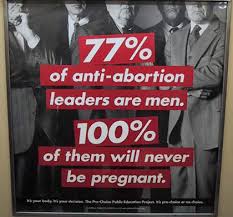
Sixth: Hypocrisy. Since the Supreme Court legalized abortion in 1973, the Right has demanded that even women who are pregnant due to rape or incest carry the fetus to term.
Yet now that Right-wingers are being asked to wear masks in public—to protect themselves and others from a deadly plague—they’ve suddenly discovered the mantra: “It’s my body!”
Seventh: Identifying with Donald Trump. The President has made it clear that his followers don’t wear masks. And they have fallen into line, refusing to mask up even in crowded, indoor arenas where infection is most likely.
The following states require their citizens to wear masks when in public: Alabama, Arkansas, California, Colorado, Connecticut, Delaware, District of Columbia, Hawaii, Idaho, Illinois, Kansas, Kentucky, Louisiana, Maine, Massachusetts, Maryland, Michigan, Mississippi, Nevada, New Jersey, New Mexico, New York, North Carolina, Ohio, Oregon, Pennsylvania, Rhode Island, Texas, Virginia, Washington, West Virginia.
The following states still refuse to order their citizens to wear masks when in public: Arizona, Alaska, Florida, Georgia, Iowa, Indiana, Minnesota, Missouri, Montana, Nebraska, New Hampshire, North Dakota, Oklahoma, South Carolina, South Dakota, Tennessee, Utah, Vermont, Wisconsin, Wyoming.
Yet even in states where wearing a mask is mandatory when venturing out in public, many people refuse to do so. Fights have erupted before mask-less and mask-wearing customers—and sometimes store employees—who asked them to put on a mask before entering.
- Two men were arrested for felony battery after starting a fight with employees at a Los Angeles Target store over wearing masks inside the store.
- A woman entered Curbside Eatery in La Mesa, California, without a mask, pulling her T-shirt over her face. When the owner told her to mask up or leave, the woman yelled: “This is ridiculous! You’re discriminating against me!’ and threatened a lawsuit.
- In a Costco in Fort Myers, Florida, a masked man asked an unmasked customer to wear a mask. The unmasked man screamed that he was being harassed: “I feel threatened!”
So: How should those who refuse to wear a mask—and thus present a clear and present danger to others—be dealt with?
Ideally, President Donald Trump should issue a mandatory emergency order requiring everyone to wear a mask when out in public. But Trump cannot admit to error—let alone one that could cost him votes among his most fanatical followers. So that’s not going to happen.
Governors, mayors and business owners need to fill the leadership void. They should issue emergency orders mandating the wearing of masks in public. And these orders should be forcibly backed up by the following:
- Stop mollycoddling Right-wing thugs.
- Stop stressing that wearing a mask will protect others from “you.” Most people don’t care about strangers. Emphasize that wearing a mask will protect “you and your family” from others.
- Don’t hand out tickets to mask-evaders. They will simply ignore them—or write them off as a cheap price for going without a mask.
- Major retailers should hire professional guards to handle mask-evaders—who should be turned over to police.
- Police should arrest everyone not wearing a mask in public and jail them—without bond—until the plague is over or a vaccine is found.
- These inmates should be lodged together—and away from those who are not infected with COVID-19.
- Police should create tip hotlines for reporting mask-evaders.
- Police should offer rewards for tips that lead to arrests.
- The media should publicize these arrests and jailings—to warn other potential mask-evaders.
- Many Right-wingers openly threaten unarmed civilians with assault rifles. They must be forcibly taught the penalties for endangering the lives of others—via firearms or as potential carriers of a deadly virus.
It was the failure of German police and courts to abort Right-wing violence during the Weimar Republic that led to even greater violence through the rise of Adolf Hitler and his Nazi party.
This is how United States authorities dealt with “Typhoid Mary” Mallon (September 23, 1869 – November 11, 1938).

Mary Mallon
An Irish-born cook, she was an asymptomatic carrier of typhoid fever and is believed to have infected 53 people, three of whom died. Because she persisted in working as a cook, she exposed others to the disease.
As a result, she was twice forcibly quarantined by authorities, and died after a total of nearly 30 years in isolation at Riverside Hospital on North Brother Island, in New York City.
Laws are useless if citizens believe they are unfairly or unpredictably enforced. As Niccolo Machiavelli warns in his classic work, The Discourses:
All those who have written upon civil institutions demonstrate…that whoever desires to found a state and give it laws, must start with assuming that all men are bad and ever ready to display their vicious nature, whenever they may find occasion for it.
ABC NEWS, ABORTION, ADOLF HITLER, ALTERNET, AMERICABLOG, ANTHONY FAUCI, ANTI-SCIENCE, AP, BABY BOOMER RESISTANCE, BLOOMBERG, BRIGHAM AND WOMEN’S HOUSPITAL, BUZZFEED, CBS NEWS, CENTERS FOR DISEASE CONTROL AND PREVENTION, CNN, COLUMBIA UNIVERSITY MEDICAL CENTER, CORONAVIRUS, COSTCO, COVID-19, CRAIG SPENCER, CROOKS AND LIARS, DAILY KOZ, DAVID ABRAMS, DEMOCRATS, DONALD TRUMP, DRUDGE RETORT, EDUCATION, FACEBOOK, FASCISM, FIVETHIRTYEIGHT, FLORIDA ATLANTIC UNIVERSITY, HARPER’S MAGAZINE, HYPOCRISY, JENNY FAUST, JOE BIDEN, KRISTI NOEM, MASKS, MEDIA MATTERS, MIKE PENCE, MOTHER JONES, MOUNT RUSHMORE, MOVEON, MSNBC, NANCY PELOSI, NAZI GERMANY, NBC NEWS, NEWSWEEK, NICCOLO MACHIAVELLI, NPR, NYU SCHOOL OF GLOBAL PUBLIC HEALTH, PBS NEWSHOUR, PETER GLICK, POLITICO, POLITICUSUSA, RAW STORY, RELIGIOUS FANATICISM, REPUBLICANS, REUTERS, RUSH LIMBAUGH, SALON, SCIENCE, SCIENTIFIC AMERICAN, SEATTLE TIMES, SLATE, SOCIAL DISTANCING, STUDENTS FOR TRUMP RALLY, SUPREME COURT, TALKING POINTS MEMO, TARGET, THE ATLANTIC, THE CHICAGO SUN-TIMES, THE CHICAGO TRIBUNE, THE DAILY BEAST, THE DAILY BLOG, THE DISCOURSES, THE GUARDIAN, THE HILL, THE HUFFINGTON POST, THE LOS ANGELES TIMES, THE NATION, THE NEW REPUBLIC, THE NEW YORK TIMES, THE VILLAGE VOICE, THE WASHINGTON POST, THINKPROGRESS, TIME, TRUTHDIG, TRUTHOUT, TULSA RALLY, TWITTER, TWO POLITICAL JUNKIES, TYPHOID MARY MALLON, U.S. NEWS & WORLD REPORT, UPI, USA TODAY, WONKETTE, WORLD HEALTH ORGANIZATION More stats
In Bureaucracy, History, Law, Law Enforcement, Medical, Politics, Social commentary on July 23, 2020 at 12:22 am
Not only does President Donald Trump refuse to wear a mask, but he suspects the loyalty of his staffers and Republican allies who don’t follow his mask-less example.
On April 28, Vice President Mike Pence toured the Mayo Clinic in Rochester, Minnesota. Pence, who leads the White House task force on the virus, refused to wear a mask, even though all the officials and medical personnel clustered around him did. Pence even visited with a patient who had survived the Coronavirus and was going to give blood.
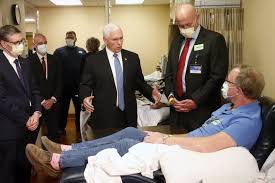
Mike Pence at the May Clinic
Few White House aides wear masks, although they claim that Trump hasn’t told them not to wear them. Some Republican allies have asked Trump’s campaign how they would be seen by Trump if he saw them wearing a mask.
“It’s a vanity thing, I guess, with him,” Nancy Pelosi, speaker of the House of Representatives, said. “You’d think, as the President of the United States, you would have the confidence to honor the guidance he’s giving the country.”
By refusing to wear a mask, Trump has convinced untold numbers of Americans—mostly males—that ignoring the dangers of Coronavirus is the manly thing to do.
(On July 20, he tweeted an image of himself wearing a mask and called it “patriotic” to wear one. Hours later, however, he appeared without a mask at a fundraiser at the Trump International Hotel in Washington.)
Meanwhile, former Vice President Joe Biden, the presumptive Democratic nominee for President, has often appeared in public wearing a mask. During a June 26 television interview he said that, if he were elected President, he would require wearing face masks in public to prevent the spread of the Coronavirus.
“The one thing we do know—these masks make a gigantic difference,” Biden said. “I would insist that everybody out in public be wearing that mask.”
Yet even in states such as California and New York, where this is required, many people still refuse to do so.
From May 5 to May 12, the Centers for Disease Control and Prevention (CDC) surveyed 4,042 adults throughout the country on wearing masks. The agency found that 60.3% of respondents said they always wore a mask when out in public. Another 13.8% said they often wore a mask in public.
But 17.1% said they either rarely or never wore a mask in public.
The CDC found that women were more likely than men to say they always wore a mask in public.
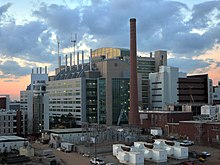
CDC headquarters in Atlanta
There are several reasons why people refuse to wear masks.
First: A feeling of solidarity. According to David Abrams, a professor of social and behavioral sciences at NYU School of Global Public Health: People who don’t wear masks may see it as a sign of solidarity, as if they are taking a stand against authority.
Second: If liberals do it, it’s fascistic. Many mask protesters accuse those who wear masks of being fascists. This is a hallmark of Right-wing politics—accusing their opponents of being what they are themselves.
Third: They have utterly rejected the rising death-toll caused by the virus. They claim stories of such deaths are mere “fake news”—the term Trump uses to dismiss any news stories that highlight his mistakes and criminality.
Fourth: Republicans disdain education in general—and science in particular. In March, an NBC News poll found that only 30% of Republicans said that they would actually listen to the advice of doctors to stay away from large, crowded areas to avoid Coronavirus.
These are the same people who get their version of reality from Right-wing sources like Fox News Network and radio broadcaster Rush Limbaugh.
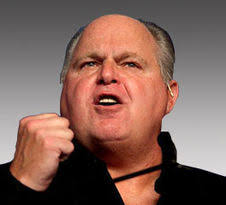
Rush Limbaugh
On his March 27 show, Limbaugh dismissed Coronavirus as “the common cold,” then added: “We didn’t elect a president to defer to a bunch of health experts that we don’t know.
“And how do we know they’re even health experts? Well, they wear white lab coats, and they’ve been in the job for a while, and they’re at the CDC [Centers for Disease Control and Prevention] and they’re at the NIH [National Institutes of Health] and they’re up, well—yeah, they’ve been there, and they are there.
“But has there been any job assessment for them? They’re just assumed to be the best because they’re in government. But, these are all kinds of things that I’ve been questioning.”
In 2015, Limbaugh said: “Firsthand smoke takes 50 years to kill people, if it does. Not everybody that smokes gets cancer. Now, it’s true that everybody who smokes dies, but so does everyone who eats carrots.”
Five years later, Limbaugh—a longtime and heavy cigar smoker—announced that he had Stage Four lung cancer.
Fifth: Religious Fanaticism: Many fundamentalist Christians believe that their faith in Jesus will protect them against COVID-19. They continue to attend services indoors in defiance of CDC warnings by meeting in large numbers indoors.
A female member of the Solid Red Rock Church in Monroe, Ohio, told CNN: “I wouldn’t be anywhere else. I’m covered in Jesus’ blood. I’m covered in Jesus’ blood.”
ABC NEWS, ABORTION, ADOLF HITLER, ALTERNET, AMERICABLOG, ANTHONY FAUCI, ANTI-SCIENCE, AP, BABY BOOMER RESISTANCE, BLOOMBERG, BRIGHAM AND WOMEN’S HOUSPITAL, BUZZFEED, CBS NEWS, CENTERS FOR DISEASE CONTROL AND PREVENTION, CNN, COLUMBIA UNIVERSITY MEDICAL CENTER, CORONAVIRUS, COSTCO, COVID-19, CRAIG SPENCER, CROOKS AND LIARS, DAILY KOZ, DAVID ABRAMS, DEMOCRATS, DONALD TRUMP, DRUDGE RETORT, EDUCATION, FACEBOOK, FASCISM, FIVETHIRTYEIGHT, FLORIDA ATLANTIC UNIVERSITY, HARPER’S MAGAZINE, HYPOCRISY, JENNY FAUST, JOE BIDEN, KRISTI NOEM, MASKS, MEDIA MATTERS, MIKE PENCE, MOTHER JONES, MOUNT RUSHMORE, MOVEON, MSNBC, NANCY PELOSI, NAZI GERMANY, NBC NEWS, NEWSWEEK, NICCOLO MACHIAVELLI, NPR, NYU SCHOOL OF GLOBAL PUBLIC HEALTH, PBS NEWSHOUR, PETER GLICK, POLITICO, POLITICUSUSA, RAW STORY, RELIGIOUS FANATICISM, REPUBLICANS, REUTERS, RUSH LIMBAUGH, SALON, SCIENCE, SCIENTIFIC AMERICAN, SEATTLE TIMES, SLATE, SOCIAL DISTANCING, STUDENTS FOR TRUMP RALLY, SUPREME COURT, TALKING POINTS MEMO, TARGET, THE ATLANTIC, THE CHICAGO SUN-TIMES, THE CHICAGO TRIBUNE, THE DAILY BEAST, THE DAILY BLOG, THE DISCOURSES, THE GUARDIAN, THE HILL, THE HUFFINGTON POST, THE LOS ANGELES TIMES, THE NATION, THE NEW REPUBLIC, THE NEW YORK TIMES, THE VILLAGE VOICE, THE WASHINGTON POST, THINKPROGRESS, TIME, TRUTHDIG, TRUTHOUT, TULSA RALLY, TWITTER, TWO POLITICAL JUNKIES, TYPHOID MARY MALLON, U.S. NEWS & WORLD REPORT, UPI, USA TODAY, WONKETTE, WORLD HEALTH ORGANIZATION
In History, Law, Law Enforcement, Medical, Politics, Social commentary on July 22, 2020 at 12:24 am
The United States is now into the seventh month of a deadly plague. More than 3.9 million Americans have become infected with COVID-19 and at least 142,028 have died.
Wearing a mask and “social distancing”—keeping at least six feet between yourself and others while in public—have been the Golden Rules urged by public health officials for months.
And yet vast numbers of Americans still refuse to do either.

Surgical mask
In the early weeks and months of the pandemic, cloth face masks weren’t universally endorsed, even by public health experts.
“One, we didn’t know whether they were actually helpful, and two, there was a lot of concern that if people were using medical masks then people like myself, were not going to have access to them,” said Dr. Craig Spencer, director of global health in emergency medicine at Columbia University Medical Center.
No less an authority than Dr. Anthony Fauci, the country’s leading infectious disease expert, said in March that “people should not be walking around with masks.”
Only in early June did the World Health Organization (WHO) urge non-healthcare workers to mask up. The WHO advised people to don masks when social distancing was not possible, such as when visiting stores and using public transportation.

According to Dr. Jeremy Faust, the change in attitudes toward masks should be seen as the nature of science, and not as a flaw.
“That is what experts, in fact, do. They don’t just have an opinion and stick to it,” said Faust, an emergency physician at Brigham and Women’s Hospital, in Boston, Massachusetts. “They actually let their opinions develop and evolve as better information becomes available.”
Scientists have learned, for example, that COVID-19 can be spread by those who show no symptom of the disease. And mounting evidence has proven that masks are essential for protecting people from the virus.
Coronavirus is spread by respiratory droplets when an infected person coughs, sneezes or talks—especially if large numbers of people are packed indoors. The danger goes up if the talker is shouting or singing loudly.
If not blocked by a face covering, the droplets can travel six to 13 feet.
Researchers at Florida Atlantic University found that some masks were more effective than others. One study showed that well-fitted homemade masks with multiple layers of fabric, as well as off-the-shelf cone style masks, were the most effective in reducing droplet dispersal.
Bandannas turned out to be the least effective in reducing transmission.
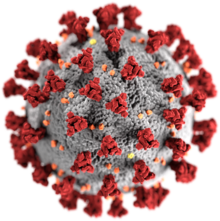
Coronavirus
In cases involving SARS, MERS and COVID, the chance of transmission of an infection was significantly reduced when a mask was worn.
So why do so many Americans refuse to wear a mask?
Start at the top: With Donald Trump, 45th President of the United States.
From the outset, Trump refused to wear a mask in public.
A colossal egotist, Trump is orange-skinned, morbidly obese and lacking a neck. (His head seems to pop right out of his shoulders.) Yet he still thinks of himself as dangerously handsome. And he fears that covering his face would diminish his power and appeal.
“Appearing to play it safe contradicts a core principle of masculinity: show no weakness,” wrote social sciences professor Peter Glick at Scientific American magazine. “Defying experts’ warnings about personal danger signals ‘I’m a tough guy, bring it on.’”
On May 21, Trump refused to wear a face mask as he toured a Ford facility in Michigan that’s manufacturing ventilators and personal protective equipment. This violated the policies of the facility, the governor’s executive order and warnings from the state’s attorney general.
Once states across the country began “reopening,” Trump scheduled his first 2020 re-election rally in Tulsa, Oklahoma.
It was held on June 20 at the BOK Center. Scientists had learned that Coronavirus is more likely to be transmitted indoors than outdoors, when masses of people are packed together, and when people are loudly talking—or, worse, shouting.
Masks were available for those who wanted them, but Trump made it clear that his supporters shouldn’t wear masks, as a sign of support for him. Photos of the rally show men and women densely packed together, with none of them wearing masks.
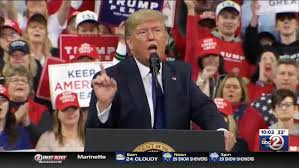
A Trump rally
The Tulsa event was followed by another indoor rally in Phoenix on June 23. “Students for Trump” featured a packed crowd, with almost no one wearing masks.
After staging COVID-spreading rallies at Tulsa, Oklahoma, and Phoenix, Arizona, Trump scheduled another one for July 3 at Mount Rushmore, in Keystone, South Dakota.
Such rallies had been put on hold since March, due to the issuing of stay-at-home orders across the country by states’ mayors and governors.
Although health experts expressed fears about a large gathering during the Coronavirus pandemic, South Dakota Governor Kristi Noem said people would “not be social distancing” during the celebration:
“In South Dakota, we’ve told people to focus on personal responsibility….Those who want to come and join us, we’ll be giving out free face masks, if they choose to wear one. But we won’t be social distancing.”
ABC NEWS, ADOLF HITLER, ALAMO, ALTERNET, AMERICABLOG, ANDREW CUOMO, ANTHONY FAUCI, ANTONIO LOPEZ DE SANTA ANNA, AP, BABY BOOMER RESISTANCE, BLOOMBERG, BUZZFEED, CALIFORNIA, CBS NEWS, CLOROX, CNN, CORONAVIRUS, COVID-19, CROOKS AND LIARS, DAILY KOZ, DAVID CROCKETT, DONALD TRUMP, DRUDGE RETORT, FACEBOOK, FEDERAL EMERGENCY MANAGEMENT AGENCY (FEMA), FIVETHIRTYEIGHT, GAVIN NEWSOM, HARPER’S MAGAZINE, JAMES BOWIE, MANUEL CASTILLON, MASKS, MEDIA MATTERS, MICHIGAN, MINNESOTA, MOTHER JONES, MOVEON, MSNBC, NBC NEWS, NEW YORK, NEWSWEEK, NPR, NUREMBERG RALLIES, PBS NEWSHOUR, PERSONAL PROTECTIVE EQUIPMENT (PPE), POLITICO, POLITICUSUSA, RAW STORY, REUTERS, SALON, SEATTLE TIMES, SLATE, SOCIAL DISTANCING, TALKING POINTS MEMO, THE ATLANTIC, THE CHICAGO SUN-TIMES, THE CHICAGO TRIBUNE, THE DAILY BEAST, THE DAILY BLOG, THE GUARDIAN, THE HILL, THE HUFFINGTON POST, THE LOS ANGELES TIMES, THE NATION, THE NEW REPUBLIC, THE NEW YORK TIMES, THE VILLAGE VOICE, THE WASHINGTON POST, THINKPROGRESS, TIME, TRUTHDIG, TRUTHOUT, TWITTER, TWO POLITICAL JUNKIES, U.S. NEWS & WORLD REPORT, UPI, USA TODAY, UV LIGHT, VIRGINIA, WONKETTE
In Bureaucracy, Business, History, Medical, Military, Politics, Social commentary on July 21, 2020 at 12:31 am
It was the night of March 5, 1836. For the roughly 200 men inside the surrounded Alamo, death lay only hours away.
Inside a house in San Antonio, Texas, Mexican dictator Antonio Lopez de Santa Anna was holding a council of war with his generals.
For 12 days, his army had bombarded the old mission. Still, the Texians—whose numbers included the legendary bear hunter and Congressman David Crockett and knife fighter James Bowie—held out.
Now Santa Anna was in a hurry to take the makeshift fortress. Once its defenders were dead, he could march on to sweep all American settlers from Texas.
One of his generals, Manuel Castrillón, urged Santa Anna to wait just a few more days. By then, far bigger cannon would be available. When the Alamo’s three-feet-thick walls had been knocked down, the defenders would be forced to surrender.
The lives of countless Mexican soldiers would thus be spared.
Santa Anna was eating a late-night chicken dinner. He held up a chicken leg and said: “What are the lives of soldiers but those of so many chickens?”
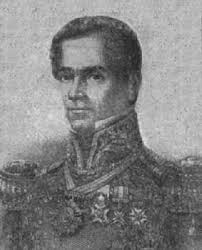
Antonio Lopez de Santa Anna
Santa Anna ordered his generals to prepare an all-out attack on the Alamo, to be launched the next morning—March 6, 1836—at 5 a.m.
Hours later, the attack went forward. Within 90 minutes, every Alamo defender was dead—and so were at least 600 Mexican soldiers.
“What are the lives of Americans but those of so many chickens?”
That could well be the slogan of President Donald Trump in his approach to COVID-19.
The United States has become the country worst-affected by Coronavirus—with more than 3.9 million diagnosed cases and more than 143,000 deaths.
Coronavirus
Americans are living through their seventh month with the virus, and still the Trump administration cannot—or will not—design a coordinated plan to combat it.
Trump started out 2020 by dismissing COVID-19 as a threat. On January 22 he said: “We have it totally under control. It’s one person coming in from China.”
By February 28, he had termed the disease the Democrats’ “new hoax.”
By March, he was making it clear that each state was responsible for securing its needed supply of Personal Protective Equipment (PPEs) for its doctors and nurses aiding Coronavirus patients.
This has resulted in a dog-eat-dog atmosphere of cutthroat competition and scarcity, with Americans not only fighting the virus but each other.
Even worse: Trump didn’t simply refuse to provide states with vitally-needed medical supplies—he ordered the Federal Emergency Management Agency (FEMA) to illegally seize those supplies that states had ordered.
Donald Trump
When states’ governors issued stay-at-home orders, Trump was forced to cancel his campaign rallies. Starting Easter weekend, he held almost 50 daily press briefings at the White House.
Their official purpose: To update the country on the administration’s ongoing response to the Coronavirus pandemic. Their real purpose: To serve as a substitute for Trump’s hate-filled political rallies, which have been likened to those staged by Germany’s Fuhrer, Adolf Hitler, at Nuremberg.
Eager to return to his mass rallies and reignite his support from Right-wingers, he began furiously campaigning to end social distancing and the wearing of masks. Both of these had been mandated by such governors as California’s Gavin Newsom and New York’s Andrew Cuomo.
He also demanded the reopening of businesses across the nation—although there was no vaccine nor even adequate testing and contact-tracing facilities. This led many states—especially in the South and Midwest—to reopen prematurely—with a resulting rise in COVID infections and deaths.
He urged his Right-wing supporters to flood into the capitols of such states as Michigan, Minnesota and Virginia—whose governors were Democrats—and demand an end to mask-wearing and social distancing. This was in direct defiance of the laws legally in force in those states.
And they did as he ordered—massing shoulder-to-shoulder, most of them not wearing masks, and with many of them carrying automatic rifles.
On April 23, at a White House press briefing, he suggested that UV light and disinfectant—such as Clorox—might prove an effective preventative or cure for Coronavirus. This prompted alarm from medical professionals—even as some Americans believed him and swallowed disinfectant to prevent COVID-19.
Unable—or unwilling—to effectively attack the virus, Trump chose to attack the medical professionals desperately trying to save lives. He accused them of hoarding scarce medical supplies and lying about the number of COVID cases they were treating.
His chief target: Dr. Anthony Fauci, director of the U.S. National Institute of Allergy and Infectious Diseases. There were two reasons for this:
- Fauci repeatedly warned about the dangers of the virus—and criticized the failure of the Federal Government to effectively combat it; and
- His warnings and criticisms repeatedly proved correct, while Trump’s rosy predictions proved wrong.
Now Trump demands that Americans put their children at risk by sending them back to school in the fall—so their parents can return to work. Then he can claim he’s “saved” the American economy—and be re-elected.
Donald Trump’s ultimate “strategy” on COVID-19: “Pretend it’s over and re-elect me. Then drop dead for all I care.”
ABC NEWS, ALTERNET, AMERICABLOG, AP, BABY BOOMER RESISTANCE, BLOOMBERG, BUZZFEED, CANAANITES, CBS NEWS, CHILD SACRIFICE, CNN, CORONAVIRUS, COVID-19, CROOKS AND LIARS, DAILY KOZ, DEBORAH BIRX, DONALD TRUMP, DRUDGE RETORT, FACEBOOK, FIVETHIRTYEIGHT, HARPER’S MAGAZINE, MEDIA MATTERS, MICHIGAN, MINNESOTA, MOLOCH, MOTHER JONES, MOVEON, MSNBC, NBC NEWS, NEWSWEEK, NPR, PAULA REID, PBS, PBS NEWSHOUR, POLITICO, POLITICUSUSA, RAW STORY, REUTERS, SALON, SCHOOLS, SEATTLE TIMES, SLATE, STAY-AT-HOME ORDERS, TALKING POINTS MEMO, THE ATLANTIC, THE CHICAGO SUN-TIMES, THE CHICAGO TRIBUNE, THE DAILY BEAST, THE DAILY BLOG, THE GUARDIAN, THE HILL, THE HUFFINGTON POST, THE LOS ANGELES TIMES, THE NATION, THE NEW REPUBLIC, THE NEW YORK TIMES, THE VILLAGE VOICE, THE WASHINGTON POST, THINKPROGRESS, TIME, TRUTHDIG, TRUTHOUT, TWITTER, TWO POLITICAL JUNKIES, U.S. NEWS & WORLD REPORT, UPI, USA TODAY, VIRGINIA, WASHINGTON WEEK, WONKETTE
In Bureaucracy, History, Medical, Politics, Social commentary, Uncategorized on July 20, 2020 at 12:09 am
The United States has become the country worst-affected by Coronavirus—with more than 3.83 million diagnosed cases and at least 143,000 deaths.
But President Donald J. Trump wants children to return to school—and not through virtual classes at home.
And he’s not asking parents to send their children back to school after summer. On July 8, he tweeted that he may withhold federal funding from schools that do not resume in-person classes this fall.
“In Germany, Denmark, Norway, Sweden and many other countries, SCHOOLS ARE OPEN WITH NO PROBLEMS. The Dems think it would be bad for them politically if U.S. schools open before the November Election, but is important for the children & families. May cut off funding if not open!”
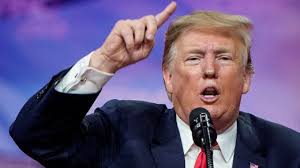
Donald Trump
Most school funding in America comes from states and municipalities, not the federal government. Nonetheless, the White House is exploring ways to use the next Coronavirus relief bill to tie the slice of school funding that does come from Washington to the pace of different schools’ reopenings.
And moments after making that threat, Trump said the guidelines of his own Centers for Disease Prevention and Control (CDC) for safely reopening schools were too expensive and impractical:
“I disagree with @CDCgov on their very tough & expensive guidelines for opening schools. While they want them open, they are asking schools to do very impractical things. I will be meeting with them!!!”
Among those guidelines:
- Schools should have markings on sidewalks and walls, that mark off six feet, and signs reminding students of protective measures.
- Masks should be worn by students and faculty, “as feasible,” and especially when keeping a distance isn’t possible.
- Sharing equipment, games and supplies should be avoided. If that’s not possible, they should be cleaned after each use.
- Playgrounds, cafeterias and dining halls should be shut. Students eat in their classrooms.
- Rooms should be well-ventilated.
- Schools should allow sick staff members to “stay home when they are sick, have been exposed, or caring for someone who is sick,” without being punished for staying home.
Coronavirus
Many Americans have asked: “How can President Trump demand that children return to school in the midst of a deadly plague? Especially when we don’t have adequate testing facilities—and, most importantly, a reliable vaccine?”
On July 10, Paula Reid, White House correspondent for CBS News, provided the answer on the PBS program, Washington Week. Every Friday a panel of distinguished journalists reports and analyses major Washington-related stories.
According to Reid:
“Well, up until now the administration has really deferred to local leaders to determine when they want to reopen their communities based on the situation on the ground. But then you saw this week, when it comes to schools, the president issuing this broad mandate that all schools must open in the fall or else potentially he will cut funding, when in fact we know most schools are locally funded, and he’s also made other threats.
“He’s made it clear that he is putting pressure on governors, and the question is, why is he taking this approach to schools specifically when he’s deferred to states on so many other aspects of this pandemic?
“And just speaking with White House advisers, I’m told the president knows that in order to get parents back to work you need to get kids back to class, and for the president a lot of this is about hoping that that would give an economic boost to the U.S. ahead of his reelection in November.“
For which he could then claim credit.
And Reid warned: “But one of the most significant things out of the administration this week is the fact that Dr.[Deborah] Birx [Coronavirus Response Coordinator for the White House Coronavirus Task Force] said that we really don’t have that much data on COVID in children because the under-10 set is really the least tested.”
In short: As always for Donald Trump, the bottom line is: “It’s all about me.”
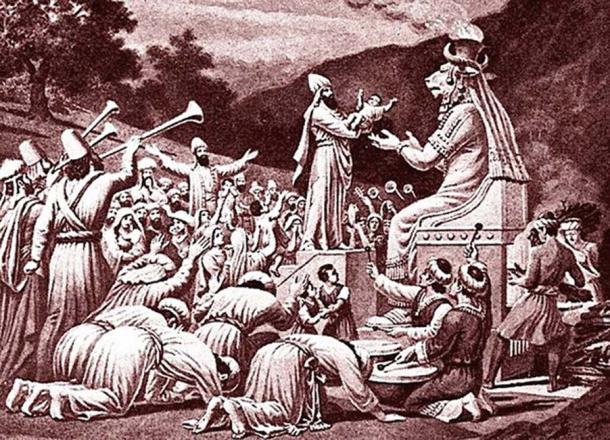
Ancient Canaanites offering their children as sacrifices to Moloch
When governors began issuing “stay-at-home” orders in March, Trump saw these as a two-fold threat to himself:
- He couldn’t return to his hate-filled mass rallies until these orders were lifted; and
- The stock market wouldn’t start soaring again so long as the country was “locked down.”
Without his Nuremberg-style rallies and a roaring stock market, Trump faced the danger of being a one-term President. And for a monumental egomaniac who has repeatedly “joked” about becoming “President-for-Life,” that is no small danger.
On April 17, Trump, via Twitter, ordered his supporters to violate stay-at-home orders of Minnesota, Michigan and Virginia.
Masses of protesters—most of them unmasked, many carrying guns, wearing Trump MAGA caps and brandishing Confederate flags—descended on the capitols of those states. They claimed to be defending constitutional freedoms to refuse to wear masks or maintain “social distance” from others.
Thus, Trump risked the lives of thousands of his followers to “reopen the country” and save his endangered Presidency.
Just as the ancient Canaanites sacrificed their children to the god Moloch, so does Trump expect his followers—and opponents—to risk their children’s lives for him.
2016 PRESIDENTIAL CAMPAIGN, ABC NEWS, ACADEMY AWARDS, ALEXANDER SHUSTOROVICH, ALTERNET, AMERICABLOG, ANDREW INTRATER, AP, ARCHIBALD COX, BABY BOOMER RESISTANCE, BARACK OBAMA, BEST ACTOR OSCAR, BLOOMBERG, BUZZFEED, CBS NEWS, CIA, CNN, CROOKS AND LIARS, DAILY KOZ, DAVID BROOKS, DEPARTMENT OF HOMELAND SECURITY, DONALD TRUMP, DONALD TRUMP JR., DONALD TRUMP’S INAUGURAL COMMITTEE, DRUDGE RETORT, FACEBOOK, FBI, FEDERAL ELECTIONS COMMISSION, FIVETHIRTYEIGHT, FOX NEWS, FRED ZINNEMANN, FRED ZINNENANN, GARY COOPER, GEORGE W. BUSH, GRACE KELLY, HARPER’S MAGAZINE, HIGH NOON, HILLARY CLINTON, HOUSE INTELLIGENCE COMMITTEE, JAMES COMEY, JARED KUSHNER, JEFF SESSIONS, JENNIFER TAUB, JOHN KASICH, JOHN MCCAIN, JOSEPH R. MCCARTHY, LEN BLAVATNIK, LESTER HOLT, LINDSEY GRAHAM, MARCO RUBIO, MARK SHIELDS, MEDIA MATTERS, MICHAEL FLYNN, MITCH MCCONNELL, MOTHER JONES, MOVEON, MSNBC, NATIONAL SECURITY AGENCY, NBC NEWS, NEWSWEEK, NPR, OFFICE OF THE DIRECTOR OF NATIONAL INTELLIGENCE, PAUL MANAFORT, PAUL RYAN, PBS NEWSHOUR, PEW RESEARCH SURVEY, POLITICAL ACTION COMMITTEES (PACS), POLITICAL CONSULTANTS, POLITICO, POLITICUSUSA, PRINCETON UNIVERSITY, RAW STORY, REPUBLICAN PARTY, REPUBLICANS, REUTERS, RICHARD M. NIXON, ROBERT MUELLER III, ROD ROSENSTEIN, RUDOLPH GIULIANI, RUSSIA, RUSSIAN OLIGARCHS, SALON, SCOTT WALKER, SEATTLE TIMES, SENATE INTELLIGENCE COMMITTEE, SENATE LEADERSHIP FUND, SERGEY KISLYAK, SERGEY LAVROV, SIMON KUKES, SLATE, SOVIET UNION, TALKING POINTS MEMO, TEX RITTER, THE ATLANTIC, THE CHICAGO SUN-TIMES, THE CHICAGO TRIBUNE, THE DAILY BEAST, THE DAILY BLOG, THE GUARDIAN, THE HILL, THE HUFFINGTON POST, THE LOS ANGELES TIMES, THE NATION, THE NEW REPUBLIC, THE NEW YORK TIMES, THE VILLAGE VOICE, THE WASHINGTON POST, THINKPROGRESS, TIME, TRUMP INAUGURAL COMMITTEE, TRUMP TOWER, TRUTHDIG, TRUTHOUT, TWITTER, TWO POLITICAL JUNKIES, U.S. NEWS & WORLD REPORT, UNITED STATES DEPARTMENT OF JUSTICE, UNITED STATES DEPARTMENT OF STATE, UNITED STATES HOUSE OF REPRESENTATIVES, UNITED STATES MARINE CORPS, UNITED STATES SENATE, UNIVERSITY OF VIRGINIA LAW SCHOOL, UPI, USA TODAY, VIETNAM WAR, VLADIMIR PUTIN, WILL KANE, WILLIAM BARR, WONKETTE
In Bureaucracy, History, Law, Law Enforcement, Military, Politics, Social commentary on July 17, 2020 at 12:15 am
Special Counsel Robert Mueller III submitted his findings to Attorney General William Barr on March 22, 2019. A redacted version of the 448-page report was publicly released by the Department of Justice on April 18.
By that date, Mueller had:
- Indicted 34 people—including four former Trump campaign advisers.
- Indicted three Russian companies.
- Obtained eight guilty pleas to felonies or convictions—including five Trump associates and campaign officials.
- Unveiled Russians’ determination to elect Trump over Hillary Clinton.
- Revealed that former National Security Adviser Michael Flynn discussed removing sanctions against Russia with then-Russian ambassador, Sergey Kislyak, during the transition period.
- Discovered that Trump associates knew about Russian outreach efforts during the campaign.
On July 24, 2019, Mueller testified before the House Judiciary Committee. There he revealed that Donald Trump, the President of the United States, had:
- Sought Russian interference during the 2016 Presidential campaign.
- Benefited from that intervention.
- Concealed his close personal economic ties to Vladimir Putin by lying to the public about his hidden attempts to secure a construction project in Moscow.
- Lied to the special prosecutor.
- Directed subordinates to falsify records.
- Tried to exert “undue influence” on law enforcement in order to protect himself and his allies.
While appearing before Congress, Mueller was forced to:
- Testify for seven hours before the House Judiciary Committee and the House Intelligence Committee.
- Endure powerful, hot klieg lights needed by television cameras.
- Patiently take questions that were at times self-serving
- Respectfully answer questions meant to attack his personal and professional integrity.
- Simplify complex legal scenarios for men and women who have the attention span of a gnat.
Although Mueller was joined by former deputy special counsel Aaron Zebley, Zebley was forbidden to give testimony. He could only serve as Mueller’s counsel, giving quiet advice.
So the entire seven hours of public testimony fell on the shoulders of a 74-year-old man. No wonder he appeared tired by the end of the day.
And what was his reward?
A July 26, 2019 article in The Atlantic—entitled “The Press Has Adopted Trump’s Reality-Show Standards”—sums up the general reaction of the nation’s press to these bombshell revelations:
“In any other administration, in any other time, a special prosecutor, former FBI director, and decorated Marine testifying that the president of the United States was an unprosecuted felon who encouraged and then benefited from an attack on American democracy in pursuit of personal and political gain would bring the country to a grinding halt.
“But the American political press found Mueller insufficiently dazzling.”
Among those media:
- The New York Times: “Mueller’s Performance Was a Departure From His Much-Fabled Stamina.”
- The Washington Post: “On Mueller’s Final Day on the National Stage, a Halting, Faltering Performance.” And another reporter dubbed him a “weary old man.”
- The Hill: “Muller’s ‘Blockbuster’ Appearance Turned into ‘Bomb’ of Performance.”
- Politico: “Bob Mueller Is Struggling.”
- Right-wing media openly questioned Mueller’s health. These same media never mentioned that Trump is grotesquely overweight, never walks when he can ride, and eats a diet high in fats and calories.
In short: The nation’s most influential news media—on which citizens depend for their understanding of national and international personalities and events—has adopted the standards of teenagers.
* * * * *
Americans like their heroes young and powerful—preferably invincible. They want their heroes to be handsome and their villains to be ugly. They want to see lots of explosions and collapsing buildings.
And if a superhero can deliver a zinger of a line while throwing a KO punch, so much the better.
Lacking a sense of history—or concern for it—most Americans remain ignorant of the men, women and events that have shaped the era in which they live.
Most of those who watched Robert Mueller testify before Congress knew nothing of the sacrifices he had made for his country:
- As a Marine Vietnam veteran decorated for heroism (1968-1971);
- As a United States Attorney (1986-1987 and 1998-2001);
- As a United States Assistant Attorney General (1990-1993 and 2001); and
- As director of the FBI (2001-2013).
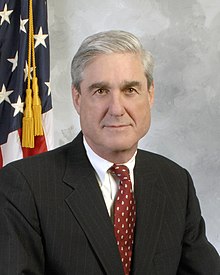
Robert Mueller
A news media that prizes glitz over substance has abdicated the role intended for it by the Founding Fathers: To act as a watchdog over the nation’s leaders.
That does not, however, diminish the legacy of Robert Mueller’s achievements—as Special Counsel and every other position he has held.
Revered within the law enforcement community, he will forever rank among the giants who personify courage and integrity
As a soldier, prosecutor, FBI director and Special Counsel, Robert Mueller took an oath to “support and defend the Constitution of the United States against all enemies, foreign and domestic.”
So did Donald Trump when he was inaugurated the nation’s 45th President. And so did every Republican member of the House of Representatives and the Senate.
The difference between Robert Mueller and Trump—and the overwhelming majority of Republican Congressional members—is this: Mueller, like a compass pointing True North, has always stayed faithful to that oath.
In doing so, he carried on his shoulders the burdens created when millions of racist, hate-filled Americans deliberately sent a corrupt, Russian-backed egomaniac and would-be dictator to the White House.
2016 PRESIDENTIAL CAMPAIGN, ABC NEWS, ACADEMY AWARDS, ALEXANDER SHUSTOROVICH, ALTERNET, AMERICABLOG, ANDREW INTRATER, AP, ARCHIBALD COX, BABY BOOMER RESISTANCE, BARACK OBAMA, BEST ACTOR OSCAR, BLOOMBERG, BUZZFEED, CBS NEWS, CIA, CNN, CROOKS AND LIARS, DAILY KOZ, DAVID BROOKS, DEPARTMENT OF HOMELAND SECURITY, DONALD TRUMP, DONALD TRUMP JR., DONALD TRUMP’S INAUGURAL COMMITTEE, DRUDGE RETORT, FACEBOOK, FBI, FEDERAL ELECTIONS COMMISSION, FIVETHIRTYEIGHT, FOX NEWS, FRED ZINNEMANN, FRED ZINNENANN, GARY COOPER, GEORGE W. BUSH, GRACE KELLY, HARPER’S MAGAZINE, HIGH NOON, HILLARY CLINTON, HOUSE INTELLIGENCE COMMITTEE, JAMES COMEY, JARED KUSHNER, JEFF SESSIONS, JENNIFER TAUB, JOHN KASICH, JOHN MCCAIN, JOSEPH R. MCCARTHY, LEN BLAVATNIK, LESTER HOLT, LINDSEY GRAHAM, MARCO RUBIO, MARK SHIELDS, MEDIA MATTERS, MICHAEL FLYNN, MITCH MCCONNELL, MOTHER JONES, MOVEON, MSNBC, NATIONAL SECURITY AGENCY, NBC NEWS, NEWSWEEK, NPR, OFFICE OF THE DIRECTOR OF NATIONAL INTELLIGENCE, PAUL MANAFORT, PAUL RYAN, PBS NEWSHOUR, PEW RESEARCH SURVEY, POLITICAL ACTION COMMITTEES (PACS), POLITICAL CONSULTANTS, POLITICO, POLITICUSUSA, PRINCETON UNIVERSITY, RAW STORY, REPUBLICAN PARTY, REPUBLICANS, REUTERS, RICHARD M. NIXON, ROBERT MUELLER III, ROD ROSENSTEIN, RUDOLPH GIULIANI, RUSSIA, RUSSIAN OLIGARCHS, SALON, SCOTT WALKER, SEATTLE TIMES, SENATE INTELLIGENCE COMMITTEE, SENATE LEADERSHIP FUND, SERGEY KISLYAK, SERGEY LAVROV, SIMON KUKES, SLATE, SOVIET UNION, TALKING POINTS MEMO, TEX RITTER, THE ATLANTIC, THE CHICAGO SUN-TIMES, THE CHICAGO TRIBUNE, THE DAILY BEAST, THE DAILY BLOG, THE GUARDIAN, THE HILL, THE HUFFINGTON POST, THE LOS ANGELES TIMES, THE NATION, THE NEW REPUBLIC, THE NEW YORK TIMES, THE VILLAGE VOICE, THE WASHINGTON POST, THINKPROGRESS, TIME, TRUMP INAUGURAL COMMITTEE, TRUMP TOWER, TRUTHDIG, TRUTHOUT, TWITTER, TWO POLITICAL JUNKIES, U.S. NEWS & WORLD REPORT, UNITED STATES DEPARTMENT OF JUSTICE, UNITED STATES DEPARTMENT OF STATE, UNITED STATES HOUSE OF REPRESENTATIVES, UNITED STATES MARINE CORPS, UNITED STATES SENATE, UNIVERSITY OF VIRGINIA LAW SCHOOL, UPI, USA TODAY, VIETNAM WAR, VLADIMIR PUTIN, WILL KANE, WILLIAM BARR, WONKETTE
In Bureaucracy, History, Law, Law Enforcement, Military, Politics, Social commentary on July 16, 2020 at 12:30 am
Altogether, four Russian oligarchs—Len Blavatnik, Alexander Shustorovich, Andrew Intrater and Simon Kukes––contributed $10.4 million from the start of the 2015-16 election cycle through September 2017. Of this, 99% went to Republicans.
As Senate Majority Leader, Kentucky United States Senator Mitch McConnell participated in high-level intelligence briefings in 2016. From agencies such as the FBI, CIA and the code-cracking National Security Agency, he learned that the Russians were trying to subvert the electoral process.

In October, 2016, the Department of Homeland Security (DHS) and the Office of the Director of National Intelligence (DNI) issued a joint statement: The Russian government had directed the effort to subvert the 2016 Presidential election.
Two weeks later, McConnell’s PAC accepted a $1 million donation from Blavatnik.
On March 30, 2017, McConnell’s PAC accepted another $1 million from Blavatnik. This was just 10 days after former FBI Director James Comey testified before the House Intelligence Committee about Russia’s efforts to subvert the 2016 election.
Billionaires don’t give huge sums to politicians without expecting to get something in return. And this is especially true—and frightening—when the contributors are linked to a former KGB agent like Vladimir Putin, whose aggressive intentions are increasingly on display.
Special Counsel Robert Mueller thus faced increased hostility from Republicans who no doubt feared their own ownership by Moscow would become a focus of his investigation.
But there was another powerful reason why so many Republicans closed ranks with President Donald Trump against him:
#2: Republicans feared enraging Trump’s fanatical base.
On August 30, 2017, an article in Salon sought to explain why Trump was so popular among his supporters.
Its headline ran: “Most Americans Strongly Dislike Trump, But the Angry Minority That Adores Him Controls Our Politics.”
It described these voters as representing about one-third of the Republican party:
“These are older and more conservative white people, for the most part, who believe he should not listen to other Republicans and should follow his own instincts….
“They like Trump’s coarse personality, and approve of the fact that he treats women like his personal playthings. They enjoy it when he expresses sympathy for neo-Nazis and neo-Confederate white supremacists.
“They cheer when he declares his love for torture, tells the police to rough up suspects and vows to mandate the death penalty for certain crimes. (Which of course the president cannot do.)
“…This cohort of the Republican party didn’t vote for Trump because of his supposed policies on trade or his threat to withdraw from NATO. They voted for him because he said out loud what they were thinking. A petty, sophomoric, crude bully is apparently what they want as a leader.”
And keeping that cohort constantly stirred up was the Right-wing Fox News Network. This was not a source of legitimate news but the propaganda arm of the Fascistic Right and the Republican party.
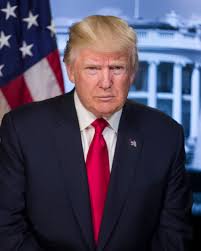
Donald Trump
On May 18, 2018, conservative New York Times columnist David Brooks offered this political commentary on The PBS Newshour: “I would just say, I observe politically, I do think if Trump fired Mueller tomorrow, the Republican Party would back him.
“Because I think Fox News has created a predicate. They have done thousands of surveys and investigations about Mueller as a political operative.”
And Brooks’ fellow political commentator, liberal syndicated columnist Mark Shields, echoed those sentiments: “At the same time, I think what we learned is that the defense of Donald Trump, led by himself and [his attorney] Rudy Giuliani, is to savage and torment, denigrate, vilify and libel Bob Mueller.
“Bob Mueller happens to be an American who turned down an eight-figure income to be a major corporate lawyer, instead became a public servant. He’s a man who volunteered and carries the wounds of battle from having been a Marine platoon leader in Vietnam.
“He is a public servant. He has not said a word. He has not given an interview. He has not leaked to anybody. And he stands vilified by Trump and Giuliani and their cohorts and their outriders. It is indefensible.
“And they are trying to exact the same damage upon the Justice Department of the country, the FBI and this country that Joe McCarthy did on the State Department, which has never fully recovered from his libelous attacks.”
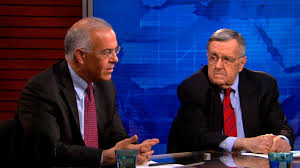
David Brooks and Mark Shields
According to a Pew Research Center survey, that one-third of Republicans who fanatically supported Trump comprised only 16% of the population. That left 65% of Republicans who were revolted by Trump’s personality and behavior.
But that 65% of Republicans were being advised by GOP political consultants to vigorously support him.
“Your heart tells you that he’s bad for the country,” one anonymous consultant told the Salon reporter. “Your head looks at polling data among Republican primary voters and sees how popular he is.”
It’s precisely these hard-core Fascists who come out in mid-term elections—and they’re scaring the remaining 65% who make up the GOP establishment.
The highest priority of that establishment, after all, is to hold onto their privileged positions in the House and Senate. And anything that might jeopardize that—including what’s best for the country—can go hang.
2016 PRESIDENTIAL CAMPAIGN, ABC NEWS, ACADEMY AWARDS, ALEXANDER SHUSTOROVICH, ALTERNET, AMERICABLOG, ANDREW INTRATER, AP, ARCHIBALD COX, BABY BOOMER RESISTANCE, BARACK OBAMA, BEST ACTOR OSCAR, BLOOMBERG, BUZZFEED, CBS NEWS, CIA, CNN, CROOKS AND LIARS, DAILY KOZ, DAVID BROOKS, DEPARTMENT OF HOMELAND SECURITY, DONALD TRUMP, DONALD TRUMP JR., DONALD TRUMP’S INAUGURAL COMMITTEE, DRUDGE RETORT, FACEBOOK, FBI, FEDERAL ELECTIONS COMMISSION, FIVETHIRTYEIGHT, FOX NEWS, FRED ZINNEMANN, FRED ZINNENANN, GARY COOPER, GEORGE W. BUSH, GRACE KELLY, HARPER’S MAGAZINE, HIGH NOON, HILLARY CLINTON, HOUSE INTELLIGENCE COMMITTEE, JAMES COMEY, JARED KUSHNER, JEFF SESSIONS, JENNIFER TAUB, JOHN KASICH, JOHN MCCAIN, JOSEPH R. MCCARTHY, LEN BLAVATNIK, LESTER HOLT, LINDSEY GRAHAM, MARCO RUBIO, MARK SHIELDS, MEDIA MATTERS, MICHAEL FLYNN, MITCH MCCONNELL, MOTHER JONES, MOVEON, MSNBC, NATIONAL SECURITY AGENCY, NBC NEWS, NEWSWEEK, NPR, OFFICE OF THE DIRECTOR OF NATIONAL INTELLIGENCE, PAUL MANAFORT, PAUL RYAN, PBS NEWSHOUR, PEW RESEARCH SURVEY, POLITICAL ACTION COMMITTEES (PACS), POLITICAL CONSULTANTS, POLITICO, POLITICUSUSA, PRINCETON UNIVERSITY, RAW STORY, REPUBLICAN PARTY, REPUBLICANS, REUTERS, RICHARD M. NIXON, ROBERT MUELLER III, ROD ROSENSTEIN, RUDOLPH GIULIANI, RUSSIA, RUSSIAN OLIGARCHS, SALON, SCOTT WALKER, SEATTLE TIMES, SENATE INTELLIGENCE COMMITTEE, SENATE LEADERSHIP FUND, SERGEY KISLYAK, SERGEY LAVROV, SIMON KUKES, SLATE, SOVIET UNION, TALKING POINTS MEMO, TEX RITTER, THE ATLANTIC, THE CHICAGO SUN-TIMES, THE CHICAGO TRIBUNE, THE DAILY BEAST, THE DAILY BLOG, THE GUARDIAN, THE HILL, THE HUFFINGTON POST, THE LOS ANGELES TIMES, THE NATION, THE NEW REPUBLIC, THE NEW YORK TIMES, THE VILLAGE VOICE, THE WASHINGTON POST, THINKPROGRESS, TIME, TRUMP INAUGURAL COMMITTEE, TRUMP TOWER, TRUTHDIG, TRUTHOUT, TWITTER, TWO POLITICAL JUNKIES, U.S. NEWS & WORLD REPORT, UNITED STATES DEPARTMENT OF JUSTICE, UNITED STATES DEPARTMENT OF STATE, UNITED STATES HOUSE OF REPRESENTATIVES, UNITED STATES MARINE CORPS, UNITED STATES SENATE, UNIVERSITY OF VIRGINIA LAW SCHOOL, UPI, USA TODAY, VIETNAM WAR, VLADIMIR PUTIN, WILL KANE, WILLIAM BARR, WONKETTE
In Bureaucracy, History, Law, Law Enforcement, Politics, Social commentary on July 15, 2020 at 12:12 am
On November 8, 2016, millions of racist, hate-filled Americans took “revenge” on the nation’s first black President—by deliberately voting a Russian-backed egomaniac and would-be dictator into the White House.
By doing so, they set in motion events that would lead Robert S. Mueller III to assume the consequences—and burdens—of their brutal, Fascistic desires.
On May 9, 2017, President Donald Trump abruptly fired FBI Director James Comey.
By doing so, he hoped to derail the Bureau’s investigation of documented ties between Russian Intelligence agents and high-ranking officials of the 2016 Trump Presidential campaign.
A national firestorm erupted—unprecedented since President Richard M. Nixon had fired Watergate Special Prosecutor Archibald Cox on October 20, 1973.
To squelch it, Deputy Attorney General Rod Rosenstein moved quickly.
On May 17, 2017, he appointed Robert S. Mueller 111 to serve as Special Counsel for the United States Department of Justice.
Rosenstein charged Mueller to investigate “any links and/or coordination between the Russian government and individuals associated with the campaign of President Donald Trump, and any matters that arose or may arise directly from the investigation.”
Trump claimed from the outset that there was “no collusion” between him and members of Russia’s Intelligence community. But he acted like a guilty man desperate to stop the investigation before it uncovers the full extent of his criminality.
Since then, Trump, his shills in Congress and Right-wing Fox News relentlessly attacked Mueller’s integrity and investigative methods.
From the outset of that investigation, there were widespread fears that Trump would fire Mueller, just as he did Comey. Those fears increased over the weekend of March 17-18, 2018, when Trump spewed a series of angry tweets on Twitter:
- “The Mueller probe should never have been started in that there was no collusion and there was no crime. It was based on fraudulent activities and a Fake Dossier paid for by Crooked Hillary and the DNC, and improperly used in FISA COURT for surveillance of my campaign. WITCH HUNT!”
- “Why does the Mueller team have 13 hardened Democrats, some big Crooked Hillary supporters, and Zero Republicans? Another Dem recently added…does anyone think this is fair? And yet, there is NO COLLUSION!”
- “A total WITCH HUNT with massive conflicts of interest!”
On October 30, details emerged about a Right-wing plot to discredit the probe by falsely accusing Mueller of sexually abusing or harassing women.
Jennifer Taub, a law professor at Vermont Law School, told The Atlantic that a man working for Surefire Intelligence, a private investigative agency, had offered to pay her if she could provide dirt on Mueller. She didn’t respond and forwarded the information to the Special Counsel’s office.
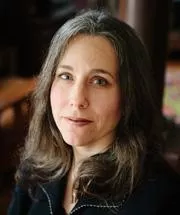
Jennifer Taub
House and Senate Republicans almost universally refused to speak out against threats by Trump to fire deputy Attorney General Rod Rosenstein and/or Special Counsel Robert Mueller.
Or, more importantly, to take action to prevent or punish him for doing so.
On April 17, 2018, Republican Senate Majority Leader Mitch McConnell said he would not allow legislation to protect Robert Mueller’s independent investigation into Russian subversion of the 2016 Presidential election to reach the Senate floor.

Mitch McConnell
“I’m the one who decides what we take to the floor. That’s my responsibility as majority leader. We’ll not be having this on the floor of the Senate,” the Kntucky Republican said in an interview on Fox News.
Earlier that day, another Republican, Speaker of the House Paul Ryan, claimed that legislation to protect Mueller was “unnecessary.”
“It would not be in the President’s interest to [fire Mueller] and I think he knows that,” said the Wisconsin Congressman.
Why have so few Republicans dared to stand against Trump?
Two major reasons:
#1: Because many House and Senate Republicans received millions of dollars in “campaign contributions” from Russian oligarchs who are answerable to Russian dictator Vladimir Putin.
In short: Bribe monies.
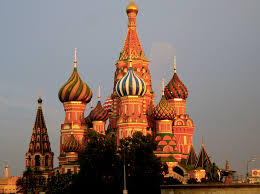
The Kremlin
The following data comes from the Federal Elections Commission.
One major Russian contributor is Len Blavatnik. During the 2015-16 election cycle, he proved one of the largest donors to GOP Political Action Committees (PACs).
Blavatnik’s net worth is estimated at $20 billion. In 2016, he gave $6.35 million to GOP PACs.
In 2017, he gave millions of dollars to top Republican leaders—such as Senators Mitch McConnell, Marco Rubio (Florida) and Lindsey Graham (South Carolina).
Specifically, Blavatnik contributed:
- A total of $1.5 million to PACs associated with Rubio.
- $1 million to Trump’s Inaugural Committee.
- $1 million to McConnell’s Senate Leadership Fund.
- $3.5 million to a PAC associated with McConnell.
- $1.1 million to Unintimidated PAC, associated with Wisconsin Governor Scott Walker.
- $200,000 to the Arizona Grassroots Action PAC, associated with Arizona Senator John McCain.
- $250,000 to New Day for America PAC, associated with Ohio Governor John Kasich.
- $800,000 went to the Security is Strength PAC, associated with Senator Lindsey Graham.
Another Russian oligarch, Alexander Shustorovich, contributed $1 million to Trump’s Inaugural Committee.
A third oligarch, Andrew Intrater, contributed $250,000 to Trump’s Inaugural Committee.
And a fourth, Simon Kukes, contributed a total of $283,000, much of it to the Trump Victory Fund.
2016 PRESIDENTIAL CAMPAIGN, ABC NEWS, ACADEMY AWARDS, ALEXANDER SHUSTOROVICH, ALTERNET, AMERICABLOG, ANDREW INTRATER, AP, ARCHIBALD COX, BABY BOOMER RESISTANCE, BARACK OBAMA, BLOOMBERG, BUZZFEED, CBS NEWS, CIA, CNN, CROOKS AND LIARS, DAILY KOZ, DAVID BROOKS, DEPARTMENT OF HOMELAND SECURITY, DONALD TRUMP, DONALD TRUMP JR., DONALD TRUMP’S INAUGURAL COMMITTEE, DRUDGE RETORT, FACEBOOK, FBI, FEDERAL ELECTIONS COMMISSION, FIVETHIRTYEIGHT, FOX NEWS, FRED ZINNEMANN, GARY COOPER, GEORGE W. BUSH, GRACE KELLY, HARPER’S MAGAZINE, HIGH NOON, HILLARY CLINTON, HOUSE INTELLIGENCE COMMITTEE, JAMES COMEY, JARED KUSHNER, JEFF SESSIONS, JENNIFER TAUB, JOHN KASICH, JOHN MCCAIN, JOSEPH R. MCCARTHY, LEN BLAVATNIK, LESTER HOLT, LINDSEY GRAHAM, MARCO RUBIO, MARK SHIELDS, MEDIA MATTERS, MICHAEL FLYNN, MITCH MCCONNELL, MOTHER JONES, MOVEON, MSNBC, NATIONAL SECURITY AGENCY, NBC NEWS, NEWSWEEK, NPR, OFFICE OF THE DIRECTOR OF NATIONAL INTELLIGENCE, PAUL MANAFORT, PAUL RYAN, PBS NEWSHOUR, PEW RESEARCH SURVEY, POLITICAL ACTION COMMITTEES (PACS), POLITICAL CONSULTANTS, POLITICO, POLITICUSUSA, PRINCETON UNIVERSITY, RAW STORY, REPUBLICAN PARTY, REPUBLICANS, REUTERS, RICHARD M. NIXON, ROBERT MUELLER III, ROBERT S. MUELLER 111, ROD ROSENSTEIN, RUDOLPH GIULIANI, RUSSIA, RUSSIAN OLIGARCHS, SALON, SCOTT WALKER, SEATTLE TIMES, SENATE INTELLIGENCE COMMITTEE, SENATE LEADERSHIP FUND, SERGEY KISLYAK, SERGEY LAVROV, SIMON KUKES, SLATE, SOVIET UNION, SUPREME COURT, TALKING POINTS MEMO, TEX RITTER, THE ATLANTIC, THE CHICAGO SUN-TIMES, THE CHICAGO TRIBUNE, THE DAILY BEAST, THE DAILY BLOG, THE GUARDIAN, THE HILL, THE HUFFINGTON POST, THE LOS ANGELES TIMES, THE NATION, THE NEW REPUBLIC, THE NEW YORK TIMES, THE VILLAGE VOICE, THE WASHINGTON POST, THINKPROGRESS, TIME, TRUMP INAUGURAL COMMITTEE, TRUMP TOWER, TRUTHDIG, TRUTHOUT, TWITTER, TWO POLITICAL JUNKIES, U.S. NEWS & WORLD REPORT, UNITED STATES DEPARTMENT OF JUSTICE, UNITED STATES DEPARTMENT OF STATE, UNITED STATES HOUSE OF REPRESENTATIVES, UNITED STATES MARINE CORPS, UNITED STATES SENATE, UNIVERSITY OF VIRGINIA LAW SCHOOL, UPI, USA TODAY, VIETNAM WAR, VLADIMIR PUTIN, WILL KANE, WILLIAM BARR, WONKETTE
In Bureaucracy, History, Law, Law Enforcement, Military, Politics, Social commentary on July 14, 2020 at 1:01 am
His face is lined and his gray hair is topped with a black hat. This is clearly not a young man. If he’s seen his share of violence, he doesn’t talk about it.
His name: Will Kane, as played by Gary Cooper. And he’s the local marshal of an anonymous Western town.
He’s about to face four armed and vicious criminals who intend to murder him. And he’s going to do it without support from the very citizens he’s sworn to defend.
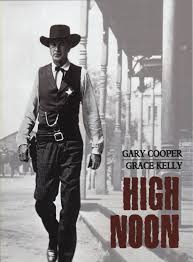
“High Noon,” the 1952 movie in which this story takes place, won a Best Actor Academy Award for its star, Cooper. It was nominated for another six Academy Awards and won four (Actor, Editing, Music-Score, and Music-Song).
Its opening tune, “Do Not Forsake Me, Oh My Darling,” played incessantly on radios throughout the United States. President Dwight D. Eisenhower added his kudos to the movie, and often hummed its theme in the White House.
Fast forward to an America 66 years later.
A similar morality play opened—-in real life, not on a movie set. At stake wasn’t simply the life of one man but perhaps the future of American democracy.
Carrying that burden was Robert Swan Mueller III.
Like the Gary Cooper character in “High Noon,” he was not a young man—born on August 7, 1944. And, like Cooper’s Will Kane, he is tall, gray-haired and tight-lipped.
But while Cooper never saw military service, Mueller did. A 1966 graduate of Princeton University, he served as a Marine Corps infantry platoon commander during the Vietnam War.
Wounded in combat, among the military awards he received were:
- The Bronze Star Medal with Combat “V” for heroism (for saving a wounded Marine while under enemy fire).
- The Purple Heart Medal (awarded for wounds in combat).
- Two Navy and Marine Corps Commendation Medals with Combat “V”.
- Combat Action Ribbon.
- National Defense Service Medal.
Having given three years of his life (1968-1971) to the Marines, Mueller devoted the rest of his life to law enforcement.
Robert Mueller
A 1973 graduate of the University of Virginia Law School, Mueller served as:
- United States Attorney for the District of Massachusetts (1986-1987);
- United States Assistant Attorney General for the Criminal Division (1990-1993);
- United States Attorney for the Northern District of California (1998-2001);
- United States Deputy Attorney General (January 20, 2001– May 10, 2001).
On September 4, 2001—seven days before Al-Qaeda’s monstrous 9/11 attacks on Washington and New York—President George W. Bush appointed him director of the Federal Bureau of Investigation (FBI).
Widely praised for his integrity and effectiveness, he served his full 10-year term—the legal maximum.
But when President Barack Obama took office in 2009, he asked Mueller—a lifelong Republican—to stay on for an additional two years until a suitable replacement could be found.
Mueller agreed—and was succeeded by a fellow Justice Department colleague named James Comey.
Retiring from the FBI in 2013 at age 69, Mueller’s 27-year career as a dedicated law enforcer seemed at last to be over.
Then, on May 9, 2017, President Donald Trump fired Comey as FBI director. There were five reasons for this:
- Comey had refused to pledge his personal loyalty to Trump. Trump had made the “request” during a private dinner at the White House in January.
- Comey told Trump that he would always be honest with him. But that didn’t satisfy Trump’s demand that the head of the FBI act as his personal secret police chief—as was the case in the former Soviet Union.
- Trump had tried to coerce Comey into dropping the FBI’s investigation into former National Security Adviser Michael Flynn, for his secret ties to Russia and Turkey. Comey had similarly resisted that demand.
- Comey had recently asked the Justice Department to fund an expanded FBI investigation into well-documented contacts between Trump’s 2016 Presidential campaign and Russian Intelligence agents.
- The goal of that collaboration: To elect Trump over Hillary Clinton, a longtime foe of Russian President Vladimir Putin.

James Comey
On May 10—the day after firing Comey—Trump met in the Oval Office with Russian Foreign Minister Sergey Lavrov and Russian Ambassador Sergey Kislyak.
Kislyak was reportedly a top recruiter for Russia’s SVR foreign intelligence agency. He had been closely linked with Jeff Sessions, now Attorney General, and fired National Security Adviser Mike Flynn.
“I just fired the head of the F.B.I.,” Trump told the two dignitaries. “He was crazy, a real nut job. I faced great pressure because of Russia. That’s taken off.”
And on May 11, Trump, interviewed on NBC News by reporter Lester Holt, said: “And in fact when I decided to just do it, I said to myself, I said ‘you know, this Russia thing with Trump and Russia is a made-up story, it’s an excuse by the Democrats for having lost an election that they should have won.'”
2016 PRESIDENTIAL CAMPAIGN, ABC NEWS, ADOLF HITLER, ALTERNET, AMERICABLOG, ANTHONY FAUCI, AP, BABY BOOMER RESISTANCE, BLOOMBERG, BUZZFEED, CBS NEWS, CLIMATE CHANGE, CNN, CORONAVIRUS, CORONAVIRUS PARTIES, COVID-19, CROOKS AND LIARS, DAILY KOZ, DONALD TRUMP, DRUDGE RETORT, FACEBOOK, FIVETHIRTYEIGHT, HARPER’S MAGAZINE, HOAX, HOUE OF REPRESENTATIVES, IMPEACHMENT, JANE APPLBY, MARGARET LEVI, MEDIA MATTERS, METHODIST HOSPITAL, MOTHER JONES, MOVEON, MSNBC, NAZI GERMANY, NBC NEWS, NEWSWEEK, NPR, PBS NEWSHOUR, POLITICO, POLITICUSUSA, RAW STORY, REUTERS, RUSIA, RUSSIAN INTELLIGENCE AGENTS, SALON, SEATTLE TIMES, SLATE, STANFORD UNIVERSITY, TALKING POINTS MEMO, TEXAS, THE ATLANTIC, THE CHICAGO SUN-TIMES, THE CHICAGO TRIBUNE, THE DAILY BEAST, THE DAILY BLOG, THE GUARDIAN, THE HILL, THE HUFFINGTON POST, THE LOS ANGELES TIMES, THE NATION, THE NEW REPUBLIC, THE NEW YORK TIMES, THE VILLAGE VOICE, THE WASHINGTON POST, THINKPROGRESS, TIME, TRUTHDIG, TRUTHOUT, TWITTER, TWO POLITICAL JUNKIES, U.S. NEWS & WORLD REPORT, UPI, USA TODAY, WONKETTE, WORLD WAR ii
In Bureaucracy, History, Medical, Politics, Social commentary on July 13, 2020 at 1:26 am
Well, come on all of you Right-wing men
Donald Trump needs your help again.
He’s got himself in a terrible jam
He’s spread a virus throughout the land.
So throw off those masks, give a big cheer
Your Coronavirus-in-Chief is here!
“I think I made a mistake. I thought this was a hoax, but it’s not.”
So spoke a 30-year-old patient who died at Methodist Hospital in San Antonio, Texas. His last words came after attending a so-called “COVID party,” according to the hospital.


Methodist Hospital in San Antoioo
According to Dr. Jane Appleby, chief medical officer for Methodist Hospital and Methodist Children’s Hospital: “Someone will be diagnosed with the disease, and they’ll have a party to invite their friends over to see if they can beat the disease.
“One of the things that was heart-wrenching that he said to his nurse was, ‘You know, I think I made a mistake.’ And this young man went to a COVID party.. He didn’t really believe. He thought the disease was a hoax. He thought he was young and invincible and wouldn’t get affected by the disease.”
And it’s one-two-three
What are they dyin’ for?
Don’t ask em’, they don’t give a damn
Right here in COVID-land.
And it’s five-six-seven
Open up those graveyard gates
Well, there ain’t no time to wonder why
Whoopee! They’re all going to die.
It’s understandable that this patient believed COVID-19 was a hoax. He was, after all, from Texas, which overwhelmingly gave its votes to Donald J. Trump in 2016.
And it was President Trump who infamously said, on February 28: “Now the Democrats are politicizing the Coronavirus….We did one of the great jobs….One of my people came up to me and said, ‘Mr. President, they tried to beat you on Russia, Russia, Russia’….They couldn’t do it. They tried the impeachment hoax….It’s all turning, they lost….And this is their new hoax.”
“Hoax” is one of Trump’s favorite words.
He called the well-documented ties between Russian Intelligence agents and his 2016 Presidential campaign “a hoax.”
Ditto for the efforts of the House of Representatives to remove him for trying to extort Ukraine into smearing former Vice President Joe Biden: “The impeachment hoax.”
Climate change, for Trump, is “an expensive hoax.”
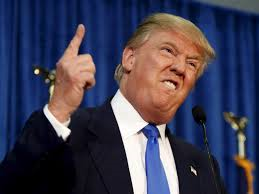
Donald Trump
“Trump is trying to undermine the trustworthiness of any source but himself,” said Margaret Levi, professor of political science at Stanford University. “The point is to make himself the only credible authority, to be fully trusted as a ‘war-time’ president.”
And in the case of the anonymous San Antonio patient—and untold numbers of his other supporters—he has succeeded brilliantly. To their misfortune.
Well, grifters and traitors throughout the land
Pack yourselves off to COVID-land.
Don’t be shy, don’t hesitate
Satan is ready, so don’t make ‘em wait.
Just be glad that Donald Trump’s your man
As you’re dyin’ off as fast as you can.
By July 11, there were 8,332 new confirmed Coronavirus cases in Texas, according to a New York Times database. More than 258,000 cases and more than 3,200 deaths have been recorded in Texas so far.
Yet for those attending the Coronavirus party, such facts meant nothing compared to the assurances of Donald Trump—a proven serial liar—that there was nothing to fear.
“People will come into the hospital] initially, and they don’t look so bad,” said Appleby. “They don’t look really sick. But when you check their oxygen levels and their lab tests, they’re really sicker than they appear on the surface.”
Among the COVID-19 danger signs to look for, advised Appleby: If you’re not feeling well, have a high fever, cough and severe muscle aches.
Well, come on Republicans, let’s move fast,
Your big chance is here at last.
It doesn’t matter that Trump is Red
As he walks on the bodies of Americans dead.
Just be sure Vlad Putin knows your name
Treason’s just a part of your game.
Meanwhile, Trump is trying to discredit Dr. Anthony Fauci, the country’s leading infectious disease expert.
The reason: Fauci has not hesitated to warn about the dangers of COVID-19—and the failures of the Federal Government to effectively control it.


Anthony Fauci
Cmichel67, CC BY-SA 4.0 <https://creativecommons.org/licenses/by-sa/4.0>, via Wikimedia Commons
Trump sees the virus not as a danger to Americans but to his chances for re-election. Among his “efforts” to “deal” with it:
- Denying the dangers of the virus
- Lying about the extent of its spread
- Pitting states against each other for scarce medical supplies
- Seizing medical supplies ordered by states
- Demanding an end to governors’ “stay-at-home” orders so the country can “reopen”—before proper safeguards can be installed.
For tyrants, truth is always the most dangerous enemy.
As World War II went increasingly against Nazi Germany, those who dared to say “The war is lost” were strung up with piano wire—often on lamp posts, as a warning to others.
Trump would clearly like to employ the same “solution” to those who dare to disagree with him.
And it’s one-two-three
What are they dyin’ for?
Don’t ask em’, they don’t give a damn
Right here in COVID-land.
And it’s five-six-seven
Open up those graveyard gates
Well, there ain’t no time to wonder why
Whoopee! They’re all going to die.


ABC NEWS, ABORTION, ADOLF HITLER, ALTERNET, AMERICABLOG, ANTHONY FAUCI, ANTI-SCIENCE, AP, BABY BOOMER RESISTANCE, BLOOMBERG, BRIGHAM AND WOMEN’S HOUSPITAL, BUZZFEED, CBS NEWS, CENTERS FOR DISEASE CONTROL AND PREVENTION, CNN, COLUMBIA UNIVERSITY MEDICAL CENTER, CORONAVIRUS, COSTCO, COVID-19, CRAIG SPENCER, CROOKS AND LIARS, DAILY KOZ, DAVID ABRAMS, DEMOCRATS, DONALD TRUMP, DRUDGE RETORT, EDUCATION, FACEBOOK, FASCISM, FIVETHIRTYEIGHT, FLORIDA ATLANTIC UNIVERSITY, HARPER’S MAGAZINE, HYPOCRISY, JENNY FAUST, JOE BIDEN, KRISTI NOEM, MASKS, MEDIA MATTERS, MIKE PENCE, MOTHER JONES, MOUNT RUSHMORE, MOVEON, MSNBC, NANCY PELOSI, NAZI GERMANY, NBC NEWS, NEWSWEEK, NICCOLO MACHIAVELLI, NPR, NYU SCHOOL OF GLOBAL PUBLIC HEALTH, PBS NEWSHOUR, PETER GLICK, POLITICO, POLITICUSUSA, RAW STORY, RELIGIOUS FANATICISM, REPUBLICANS, REUTERS, RUSH LIMBAUGH, SALON, SCIENCE, SCIENTIFIC AMERICAN, SEATTLE TIMES, SLATE, SOCIAL DISTANCING, STUDENTS FOR TRUMP RALLY, SUPREME COURT, TALKING POINTS MEMO, TARGET, THE ATLANTIC, THE CHICAGO SUN-TIMES, THE CHICAGO TRIBUNE, THE DAILY BEAST, THE DAILY BLOG, THE DISCOURSES, THE GUARDIAN, THE HILL, THE HUFFINGTON POST, THE LOS ANGELES TIMES, THE NATION, THE NEW REPUBLIC, THE NEW YORK TIMES, THE VILLAGE VOICE, THE WASHINGTON POST, THINKPROGRESS, TIME, TRUTHDIG, TRUTHOUT, TULSA RALLY, TWITTER, TWO POLITICAL JUNKIES, TYPHOID MARY MALLON, U.S. NEWS & WORLD REPORT, UPI, USA TODAY, WONKETTE, WORLD HEALTH ORGANIZATION
WHO WAS THAT UNMASKED MAN?: PART THREE (END)
In Bureaucracy, History, Law, Law Enforcement, Politics, Social commentary on July 24, 2020 at 12:11 amThere are five reasons why millions of Americans refuse to wear masks during a deadly pandemic:
To these must be added:
Sixth: Hypocrisy. Since the Supreme Court legalized abortion in 1973, the Right has demanded that even women who are pregnant due to rape or incest carry the fetus to term.
Yet now that Right-wingers are being asked to wear masks in public—to protect themselves and others from a deadly plague—they’ve suddenly discovered the mantra: “It’s my body!”
Seventh: Identifying with Donald Trump. The President has made it clear that his followers don’t wear masks. And they have fallen into line, refusing to mask up even in crowded, indoor arenas where infection is most likely.
The following states require their citizens to wear masks when in public: Alabama, Arkansas, California, Colorado, Connecticut, Delaware, District of Columbia, Hawaii, Idaho, Illinois, Kansas, Kentucky, Louisiana, Maine, Massachusetts, Maryland, Michigan, Mississippi, Nevada, New Jersey, New Mexico, New York, North Carolina, Ohio, Oregon, Pennsylvania, Rhode Island, Texas, Virginia, Washington, West Virginia.
The following states still refuse to order their citizens to wear masks when in public: Arizona, Alaska, Florida, Georgia, Iowa, Indiana, Minnesota, Missouri, Montana, Nebraska, New Hampshire, North Dakota, Oklahoma, South Carolina, South Dakota, Tennessee, Utah, Vermont, Wisconsin, Wyoming.
Yet even in states where wearing a mask is mandatory when venturing out in public, many people refuse to do so. Fights have erupted before mask-less and mask-wearing customers—and sometimes store employees—who asked them to put on a mask before entering.
So: How should those who refuse to wear a mask—and thus present a clear and present danger to others—be dealt with?
Ideally, President Donald Trump should issue a mandatory emergency order requiring everyone to wear a mask when out in public. But Trump cannot admit to error—let alone one that could cost him votes among his most fanatical followers. So that’s not going to happen.
Governors, mayors and business owners need to fill the leadership void. They should issue emergency orders mandating the wearing of masks in public. And these orders should be forcibly backed up by the following:
It was the failure of German police and courts to abort Right-wing violence during the Weimar Republic that led to even greater violence through the rise of Adolf Hitler and his Nazi party.
This is how United States authorities dealt with “Typhoid Mary” Mallon (September 23, 1869 – November 11, 1938).
Mary Mallon
An Irish-born cook, she was an asymptomatic carrier of typhoid fever and is believed to have infected 53 people, three of whom died. Because she persisted in working as a cook, she exposed others to the disease.
As a result, she was twice forcibly quarantined by authorities, and died after a total of nearly 30 years in isolation at Riverside Hospital on North Brother Island, in New York City.
Laws are useless if citizens believe they are unfairly or unpredictably enforced. As Niccolo Machiavelli warns in his classic work, The Discourses:
All those who have written upon civil institutions demonstrate…that whoever desires to found a state and give it laws, must start with assuming that all men are bad and ever ready to display their vicious nature, whenever they may find occasion for it.
Share this: