Posts Tagged ‘DAVID BROOKS’
2016 PRESIDENTIAL CAMPAIGN, 9/11 ATTACKS, ABC NEWS, ACADEMY AWARDS, ASSOCIATED PRESS, BARACK OBAMA, BEST ACTRESS, BEST SUPPORTING ACTRESS, BIRTHERS, BULLYING, CBS NEWS, CENSORSHIP, CHRIS CUOMO, CNN, CREDIBILITY GAP, DAVID BROOKS, DAVID HALBERSTAM, DISABILITY, DONALD TRUMP, FACEBOOK, FOX AND FRIENDS, FRANK STANTON, FULL METAL JACKET, GEORGE MCGOVERN, GOLDEN GLOBES, HILLARY CLINTON, JOHN F. KENNEDY, KELLEYANNE CONWAY, KRAMER VS. KRAMER, LYNDON B. JOHNSON, MARK SHIELDS, MERYL STREEP, MORLEY SAFER, MOTHER JONES, MOVEON, NAVY SEALS, NBC NEWS, NEEWSWEEK, NEW DAY, NPR, OSAMA BIN LADEN, PBS NEWSHOUR, PETER ARNETT, POLITICO, RICHARD NIXON, RONALD ZIEGLER, SALON, SERGE KOVALESKI, SLATE, SOPHIE'S CHOICE, STANLEY KUBRICK, THE CHICAGO SUN-TIMES, THE CHICAGO TRIBUNE, THE HUFFINGTON POST, THE IRON LADY, THE LOS ANGELES TIMES, THE NEW YORK TIMES, THE WALL STREET JOURNAL, THE WASHINGTON POST, TIME, TWITTER, U.S. NEWS & WORLD REPORT, USA TODAY, VIETNAM WAR, WATERGATE
In Bureaucracy, History, Law, Law Enforcement, Military, Politics, Social commentary on January 16, 2017 at 12:14 am
After being presented with the Cecil B. DeMille Lifetime Achievement Award, Meryl Streep criticized Donald Trump’s mocking of disabled New York Times reporter Serge Kovaleski.
Kovaleski suffers from arthrogryposis, a congenital condition that restricts the movement of the muscles in his arms.
At a South Carolina rally on November 24, 2015, Trump claimed that Kovaleski was backing away from an article he had written four years earlier.
Trump had earlier said the article proved that New Jersey Muslims had celebrated the September 11, 2001 terror attacks. Kovaleski had insisted there was no credible proof of such celebrations.
Angered at being contradicted, Trump mocked Kovaleski: He flopped his right arm around with his hand held at an odd angle while imitating the reporter: “Now, the poor guy, you’ve got to see this guy: ‘Uhh, I don’t know what I said. Uhh, I don’t remember,’ he’s going like ‘I don’t remember. Maybe that’s what I said.'”
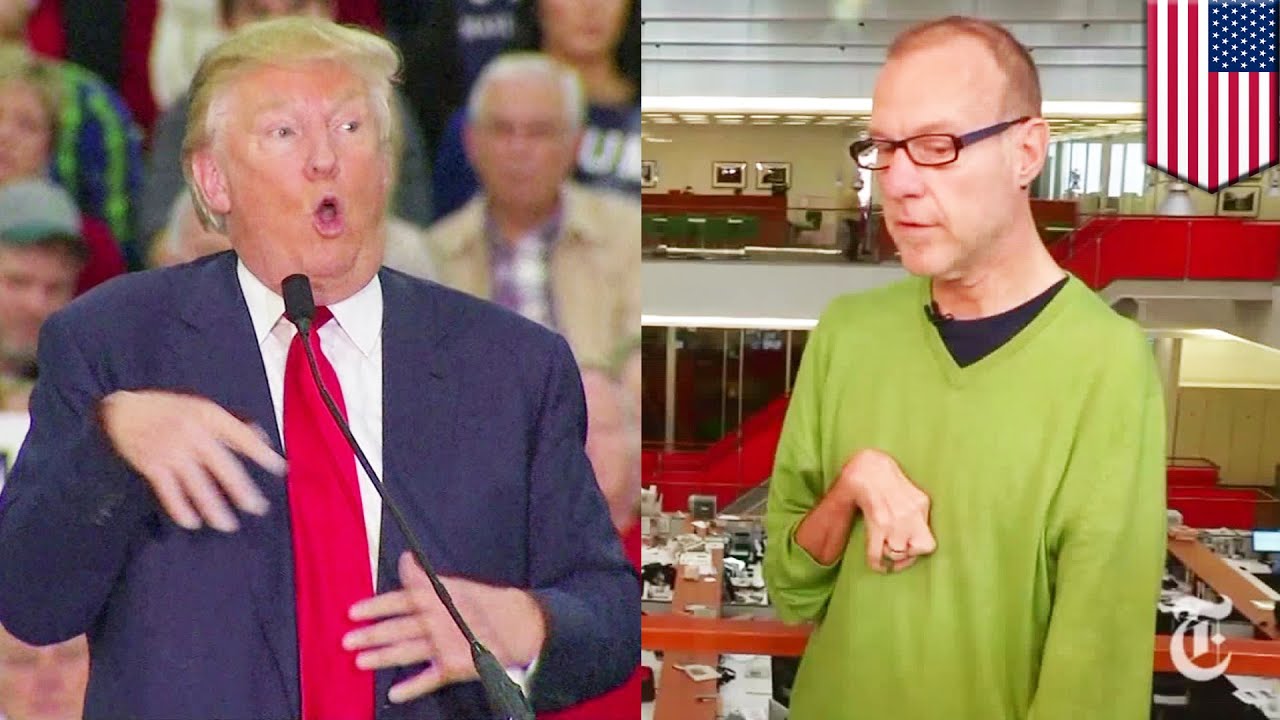
Trump mocking Kovaleski, left; Kovaleski, right
At the Golden Globe Awards on January 8, Streep denounced this behavior that “broke my heart.”
“And this instinct to humiliate, when it’s modeled by someone in the public platform, by someone powerful, it filters down into everybody’s life, because it kind of gives permission for other people to do the same thing.
“Disrespect invites disrespect. Violence incites violence. When the powerful use their position to bully others, we all lose.”
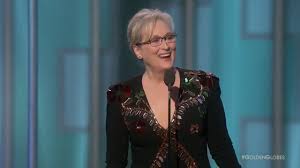
Meryl Streep at the Golden Globes
Streep’s words outraged Trump’s supporters–especially his mouthpiece, Kelleyanne Conway.
Appearing on Right-wing Fox and Friends the next morning, she said: “We have to now form a government, and I’m concerned that somebody with a platform like Meryl Streep is also, I think, inciting people’s worst instincts.
“When she won’t get up there and say, ‘I don’t like it, but let’s try to support him and see where we can find some common ground with him, which [Trump] has actually done from moment one.”
Conway didn’t say what common ground Streep should find with Trump. Perhaps agreeing on mocking the disabled?

Kelleyanne Conway
Then Conway visited CNN’s “New Day,” where she offered a “black-is-white” defense for Trump’s videotaped ridiculing of Kovaleski: It didn’t happen.
The host, Chris Cuomo, having seen the video, wasn’t buying it.
CUOMO: But is [Streep] wrong? Is she wrong that it was wrong for Trump to make gestures like that about a man with disabilities?
CONWAY: He didn’t–but that is not what he did and he has said that a thousand times. As he tweeted out today–
CUOMO: He can say it a million. Look at the video.
CONWAY: Why can’t you–wait, excuse me. Why can’t you give him the benefit of the doubt the way the benefit of the doubt was given to CNN’s polling, all of its analysts?
CUOMO: Because he’s making a disgusting gesture on video talking about Serge.
CONWAY: Not about that reporter and that’s just a fact. That is what he’s said. You should give him–
CUOMO: But how is it not about the reporter?
CONWAY: –the deference and respect if he says that it was–he was not mocking, he was mocking the groveling. He said it again this morning. He has three tweets out about it.
CUOMO: But he’s doing a gesture that goes right to the guy’s vulnerability.
CONWAY: You’re saying you don’t believe him. You’re calling him a liar and you shouldn’t.
CUOMO: Look, Kellyanne, to me that’s like you’re trying to scare me off the point and we both know it’s a waste of time.
CONWAY: I’m not going to scare you off anything.
CUOMO: He’s making a gesture that is so keenly tuned to what Serge’s vulnerability is.
CONWAY: And now you’re giving oxygen to what Meryl Streep said.
CUOMO: Forget about Meryl Streep. This happened before her. If our kids did that, could you imagine what we would say to them?
Conway said she would not bring her children into the discussion.
CUOMO: I will. If my kid did something like that, it’d be a really tough day.
CONWAY: You have to listen to what the president has said about that. Why don’t you believe him?
Conway tried to change the subject to Hillary Clinton: “She was given the benefit of the doubt here constantly.”
When Cuomo asked for specifics, she refused to give them. Then she returned to claiming that Trump had never mocked Kovaleski:
CONWAY: You can’t give him the benefit of the doubt on this, when he’s telling you what was in his heart? You always want to go by what’s come out of his mouth, rather than look at what’s in his heart.
* * * * *
Previously, politicians had defended themselves with arguments like: “You can see right here on the tape, I did (or, I didn’t)….”
Trump has cast aside that logic–and the taped evidence–by demanding: “Believe what I’m telling you, not what you’ve just seen.”
By that rationale, if a security camera shows Trump robbing a bank at gunpoint, we’re supposed to believe him if he says: “No, I didn’t rob that bank. I was simply checking my bank balance.”
Such “logic” holds appeal for paid shills like Kelleyanne Conway. But most people will continue to judge by the evidence.
2016 PRESIDENTIAL CAMPAIGN, 9/11 ATTACKS, ABC NEWS, ACADEMY AWARDS, ASSOCIATED PRESS, BARACK OBAMA, BEST ACTRESS, BEST SUPPORTING ACTRESS, BIRTHERS, BULLYING, CBS NEWS, CENSORSHIP, CHRIS CUOMO, CNN, CREDIBILITY GAP, DAVID BROOKS, DAVID HALBERSTAM, DISABILITY, DONALD TRUMP, FACEBOOK, FOX AND FRIENDS, FRANK STANTON, FULL METAL JACKET, GEORGE MCGOVERN, GOLDEN GLOBES, HILLARY CLINTON, JOHN F. KENNEDY, KELLEYANNE CONWAY, KRAMER VS. KRAMER, LYNDON B. JOHNSON, MARK SHIELDS, MERYL STREEP, MORLEY SAFER, MOTHER JONES, MOVEON, NAVY SEALS, NBC NEWS, NEEWSWEEK, NEW DAY, NPR, OSAMA BIN LADEN, PBS NEWSHOUR, PETER ARNETT, POLITICO, RICHARD NIXON, RONALD ZIEGLER, SALON, SERGE KOVALESKI, SLATE, SOPHIE'S CHOICE, STANLEY KUBRICK, THE CHICAGO SUN-TIMES, THE CHICAGO TRIBUNE, THE HUFFINGTON POST, THE IRON LADY, THE LOS ANGELES TIMES, THE NEW YORK TIMES, THE WALL STREET JOURNAL, THE WASHINGTON POST, TIME, TWITTER, U.S. NEWS & WORLD REPORT, USA TODAY, VIETNAM WAR, WATERGATE
In Bureaucracy, History, Law, Law Enforcement, Military, Politics, Social commentary on January 13, 2017 at 12:02 am
For five years, Donald Trump, more than anyone else, popularized the slander that Barack Obama was born in Kenya–and was therefore an illegitimate President.
For more than a year during his 2016 Presidential campaign, Trump continued doing so.
As his popularity fell to less than 1% among blacks, the managers of his campaign urged: Put the “birther” issue behind you.
So, on September 16, 2016–10 days before his scheduled first debate with Democratic Presidential nominee Hillary Clinton–Trump made his version of a reversal.
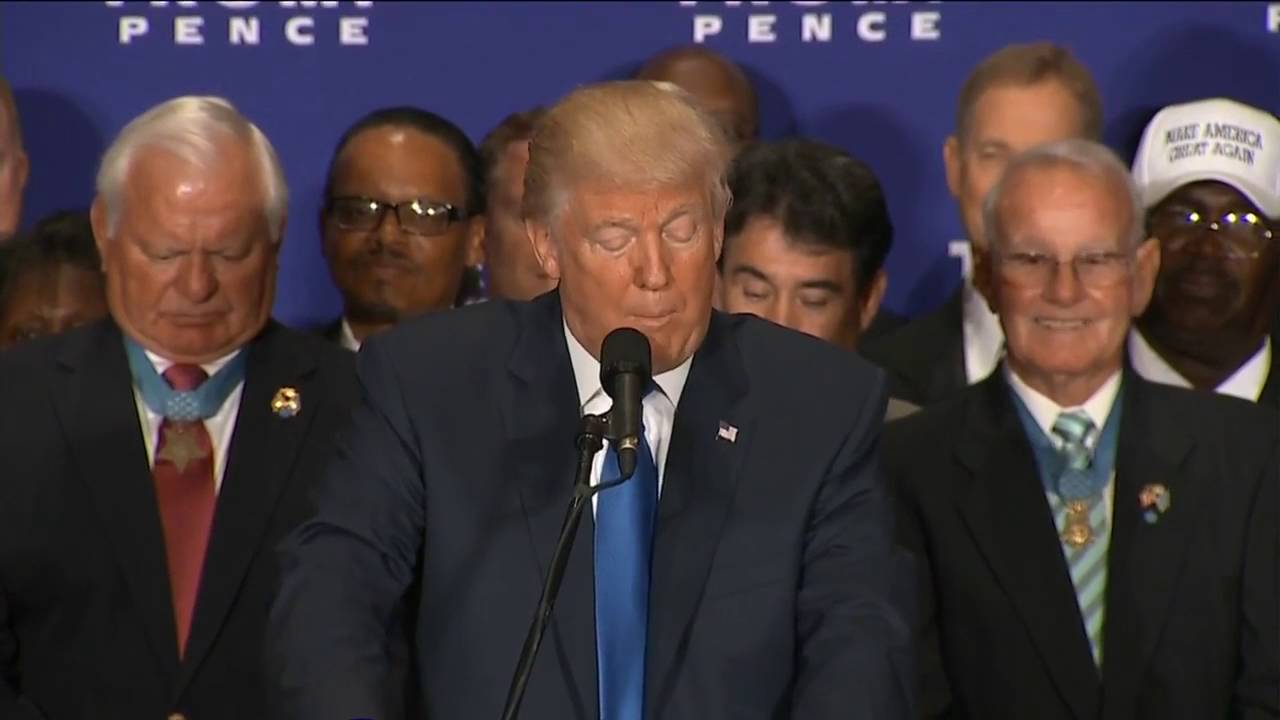
Donald Trump: “President Barack Obama was born in the United States.”
He did so in about seven seconds and 40 words–after spending a half hour paying tribute to the military and promoting his new upscale hotel in Washington, D.C.:
“Now, not to mention her in the same breath, but Hillary Clinton and her campaign of 2008 started the birther controversy.
“I finished it. I finished it. You know what I mean.
“President Barack Obama was born in the United States, period. Now we all want to get back to making America strong and great again.”
His tone made it clear that he felt uneasy making that statement–and wanted to get it over with as fast as possible.
He refused to take questions from reporters covering the event. Nor did he apologize for his five-year campaign of slander.
On the evening of September 16, Hillary Clinton strongly responded to Trump’s comments:
“For five years, he has led the birther movement to de-legitimize our first black president. His campaign was founded on this outrageous lie. There is no erasing it in history.”
And First Lady Michelle Obama slammed Trump for his “birther” claims:
“Then, of course, there were those who questioned, and who continue to question for the past eight years, and up to this very day, whether my husband was even born in this country.
“Well, during his time in office, I think Barack has answered those questions with the examples he set, by going high when they go low. And he’s answered these questions with the progress we’ve achieved together.”
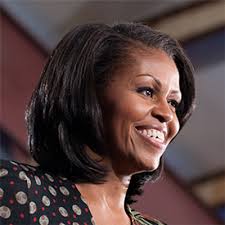
Michelle Obama
But perhaps the best perspective on this event was provided by syndicated columnist Mark Shields and New York Times columnist David Brooks. Each Friday they appear on the PBS Newshour to review the week’s major political events.
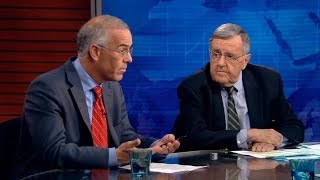
David Brooks and Mark Shields
On September 16, Shields (a liberal) and Brooks (a conservative) addressed Trump’s about-face on birtherism.
MARK SHIELDS: “I think it’s important to establish right at the outset that [Trump] wasn’t only the loudest and the highest-profile and the most persistent and the most well-publicized birther, he, Donald Trump. He lied. He lied consistently and persistently.
“And, today, without explanation or excuse, he just changed his position and tried to absolutely falsely shift the blame onto Hillary Clinton.
“And this was an appeal to–he debased democracy. He debased the national debate. He appealed to that which is most ignoble or least noble in all of us.”
DAVID BROOKS: “Usually, there’s some tangential relationship to the truth, but a corroding relationship to the truth, frankly, as politics has gone on over the years.
“But now we’re in a reverse, Orwellian inversion of the truth with this. And so we have a team of staffers and then the candidate himself who have taken the normal spin and smashed all the rules.
“And so we are really in Orwell land. We are in 1984. And it’s interesting that an authoritarian personality type comes in at the same time with a complete disrespect for even tangential relationship to the truth that words are unmoored.
“And so I do think this statement sort of shocked me with the purification of a lot of terrible trends that have been happening. And so what’s white is black, and what is up is down, what is down is up. And that really is something new in politics.
“And the fact that there is no penalty for it, apparently–he’s doing fantastic in the last two weeks in the polls–is just somehow where we have gotten.”
Less than two months later, Trump won the Presidency.
Since then, Trump has continued to inhabit what David Brooks called “Orwell land.”
The most recent example of this occurred on January 9, 2017.
The night before, Meryl Streep had enraged Trump and his mouthpiece, Kelleyanne Conway, at the Golden Globes Awards ceremony.
While being presented with the Cecil B. DeMille Lifetime Achievement Award, she had criticized Trump’s mocking, on November 25, 2015, of disabled New York Times reporter Serve Kovaleski:
“There was one performance this year that stunned me. It sank its hooks in my heart. Not because it was good. There was nothing good about it. But it was effective, and it did its job. It made its intended audience laugh and show their teeth.
“It was that moment when the person asking to sit in the most respected seat in our country imitated a disabled reporter. Someone he outranked in privilege, power and the capacity to fight back. It kind of broke my heart when I saw it. I still can’t get it out of my head because it wasn’t in a movie. It was real life.”
2016 PRESIDENTIAL CAMPAIGN, 9/11 ATTACKS, ABC NEWS, ACADEMY AWARDS, ASSOCIATED PRESS, BARACK OBAMA, BEST ACTRESS, BEST SUPPORTING ACTRESS, BIRTHERS, BULLYING, CBS NEWS, CENSORSHIP, CHRIS CUOMO, CNN, CREDIBILITY GAP, DAVID BROOKS, DAVID HALBERSTAM, DISABILITY, DONALD TRUMP, FACEBOOK, FOX AND FRIENDS, FRANK STANTON, FULL METAL JACKET, GEORGE MCGOVERN, GOLDEN GLOBES, HILLARY CLINTON, JOHN F. KENNEDY, KELLEYANNE CONWAY, KRAMER VS. KRAMER, LYNDON B. JOHNSON, MARK SHIELDS, MERYL STREEP, MORLEY SAFER, MOTHER JONES, MOVEON, NAVY SEALS, NBC NEWS, NEEWSWEEK, NEW DAY, NPR, OSAMA BIN LADEN, PBS NEWSHOUR, PETER ARNETT, POLITICO, RICHARD NIXON, RONALD ZIEGLER, SALON, SERGE KOVALESKI, SLATE, SOPHIE'S CHOICE, STANLEY KUBRICK, THE CHICAGO SUN-TIMES, THE CHICAGO TRIBUNE, THE HUFFINGTON POST, THE IRON LADY, THE LOS ANGELES TIMES, THE NEW YORK TIMES, THE WALL STREET JOURNAL, THE WASHINGTON POST
In Bureaucracy, History, Law, Law Enforcement, Politics, Social commentary on January 12, 2017 at 12:10 am
In 2011, Donald Trump, host of NBC’s “The Apprentice,” was thinking of running for President against Barack Obama.
Seeking to gain popularity among America’s Right-wing, Trump almost singlehandedly created the popular fiction that the President was born in Kenya–and was not an American citizen.
His motive: To convince Americans that Obama was an illegitimate President.
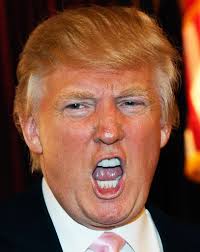
Donald Trump
Among the statements Trump made:
February 10, 2011: “Our current president came out of nowhere. Came out of nowhere. In fact, I’ll go a step further: The people that went to school with him, they never saw him, they don’t know who he is. It’s crazy.”
March 23, 2011: “I want him to show his birth certificate. I want him to show his birth certificate. … There’s something on that birth certificate that he doesn’t like.”
March 28, 2011: “I am really concerned” [that Obama wasn’t born in the United States]. He said that the birth announcement for Obama in a Hawaii newspaper could have been planted “for whatever reason.”
March 30, 2011: “If you are going to be president of the United States you have to be born in this country. And there is a doubt as to whether or not he was. … He doesn’t have a birth certificate. He may have one, but there’s something on that, maybe religion, maybe it says he is a Muslim. I don’t know. Maybe he doesn’t want that. Or he may not have one. But I will tell you this. If he wasn’t born in this country, it’s one of the great scams of all time.”
April 7, 2011: “I have people that have been studying it, and they cannot believe what they’re finding. You are not allowed to be a president if you’re not born in this country. Right now I have real doubts.”
April 25, 2011: “I’ve been told very recently…that the birth certificate is missing. I’ve been told that it’s not there or it doesn’t exist. And if that’s the case, it’s a big problem.”
On April 27, President Obama released his original, long-form Hawiian birth certificate.
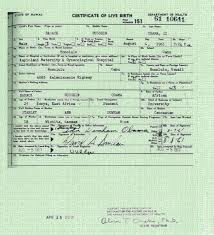
The long-form version of President Obama’s birth certificate
“We do not have time for this kind of silliness,” said Obama at a press conference, speaking as a father might to a roomful of spiteful children. “We have better stuff to do. I have got better stuff to do. We have got big problems to solve.
“We are not going to be able to do it if we are distracted, we are not going to be able to do it if we spend time vilifying each other…if we just make stuff up and pretend that facts are not facts, we are not going to be able to solve our problems if we get distracted by side shows and carnival barkers.”
And on May 1, he announced the solving of one of those “big problems”: Osama bin Laden, mastermind of the September 11, 2001 terrorist attacks, had been tracked down and shot dead by elite U.S. Navy SEALS in Pakistan.
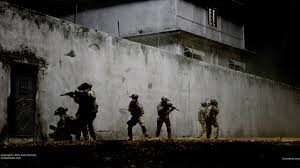
SEALS attacking bin Laden’s compound in the 2012 movie, “Zero Dark Thirty”
And how did Trump respond? With the following series of Tweets on Twitter:
May 18, 2012: “Let’s take a closer look at that birth certificate.@BarackObama was described in 2003 as being “born in Kenya.” http://bit.ly/Klc9Uu
August 6, 2012: “An ‘extremely credible source’ has called my office and told me that @BarackObama‘s birth certificate is a fraud.”
August 27, 2012: “Why do the Republicans keep apologizing on the so called “birther” issue? No more apologies–take the offensive!”
September 13, 2012: “Wake Up America! See article: “Israeli Science: Obama Birth Certificate is a Fake”
June 30, 2013: “@davidrhythmguit: @realDonaldTrump @Chuffman48 Mark Cuban accepts the fact that the President of the United States was born here. Doubt it”
August 22, 2013: “Why are people upset w/ me over Pres Obama’s birth certificate? I got him to release it, or whatever it was, when nobody else could!”
December 12, 2013: “How amazing, the State Health Director who verified copies of Obama’s “birth certificate” died in plane crash today. All others lived”
November 23, 2014: “@futureicon: @pinksugar61 Obama also fabricated his own birth certificate after being pressured to produce one by @realDonaldTrump“
Even after declaring his candidacy for President on June 16, 2015, Trump continued to insist that Barack Obama was an illegitimate President.
Meanwhile, Trump’s popularity among blacks had steadily fallen. In June, 2016, a Quinnipiac poll revealed that Trump had 1% of support from black voters. By comparison, 91% of black voters backed Hillary Clinton.
Among the reasons for this:
- His enthusiastic support by racist white supremacist organizations such as the Ku Klux Klan and the American Nazi Party.
- His “birther” attacks on President Obama as a non-citizen from Kenya–and thus ineligible to hold the Presidency.
- His attacks on the Black Lives Matter movement and calling on his supporters at rallies to rough up minority protesters.
Even the managers of Trump’s campaign urged him to put the “birther” issue behind him.
And so, on September 16–10 days before his scheduled first debate with Democratic Presidential nominee Hillary Clinton–Trump made his version of a reversal.
In doing so, he entered into what conservative New York Times political columnist David Brooks called “Orwell land.”
2016 PRESIDENTIAL CAMPAIGN, 9/11 ATTACKS, ABC NEWS, ACADEMY AWARDS, ASSOCIATED PRESS, BARACK OBAMA, BEST ACTRESS, BEST SUPPORTING ACTRESS, BIRTHERS, BULLYING, CBS NEWS, CENSORSHIP, CHRIS CUOMO, CNN, CREDIBILITY GAP, DAVID BROOKS, DAVID HALBERSTAM, DISABILITY, DONALD TRUMP, FACEBOOK, FOX AND FRIENDS, FRANK STANTON, FULL METAL JACKET, GEORGE MCGOVERN, GOLDEN GLOBES, HILLARY CLINTON, JOHN F. KENNEDY, KELLEYANNE CONWAY, KRAMER VS. KRAMER, LYNDON B. JOHNSON, MARK SHIELDS, MERYL STREEP, MORLEY SAFER, MOTHER JONES, MOVEON, NAVY SEALS, NBC NEWS, NEEWSWEEK, NEW DAY, NPR, OSAMA BIN LADEN, PBS NEWSHOUR, PETER ARNETT, POLITICO, RICHARD NIXON, RONALD ZIEGLER, SALON, SERGE KOVALESKI, SLATE, SOPHIE'S CHOICE, STANLEY KUBRICK, THE CHICAGO SUN-TIMES, THE CHICAGO TRIBUNE, THE HUFFINGTON POST, THE IRON LADY, THE LOS ANGELES TIMES, THE NEW YORK TIMES, THE WALL STREET JOURNAL, THE WASHINGTON POST, TIME, TWITTER, U.S. NEWS & WORLD REPORT, USA TODAY, VIETNAM WAR, WATERGATE
In Bureaucracy, History, Law, Law Enforcement, Military, Politics, Social commentary on January 11, 2017 at 12:02 am
“Credibility gap” is a term that came into use during the mid-1960s to describe public and journalistic distrust of President Lyndon B. Johnson. In particular, the term was applied to his administration’s conduct of the Vietnam war.
It was, in short, a euphemism for accusing government officials of outright lying.
An example of the credibility gap in full swing appeared in Stanley Kubrick’s classic 1987 Vietnam war movie, Full Metal Jacket.
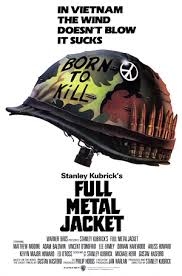
Vietnam was a war where military and political officials spewed a gung-ho version of constant American progress against a tough enemy.
And where civilian reporters like David Halberstam and Walter Cronkite saw–and labeled–the war as a brutal, wasteful and ultimately doomed effort.
Midway through the film, there’s an editorial meeting of The Sea Tiger, the official Marine newspaper.
Lieutenant Lockhart is presiding–and he is determined to give his superiors an endless stream of “all-systems-go” propaganda reports. He reads a series of stories that have been published:
Story #1: DIPLOMATS IN DUNGAREES–MARINE ENGINEERS LEND A HELPING HAND REBUILDING DONG PHUC VILLAGES.
LOCKHART: “Chili, “if we move Vietnamese, they are evacuees. If they come to us to be evacuated, they are refugees.”
Story #2: N.V.A. SOLDIER DESERTS AFTER READING PAMPHLETS.
LOCKHART: “A young North Vietnamese Army regular, who realized his side could not win the war, deserted from his unit after reading Open Arms program pamphlets.”
Story #3: NOT WHILE WE’RE EATING: N.V.A. LEARN MARINES ON A SEARCH AND DESTROY MISSION DON’T LIKE TO BE INTERRUPTED WHILE EATING CHOW.
LOCKHART: “‘Search and destroy.’ Uh, we have a new directive on this. In the future, in place of ‘search and destroy,’ substitute the phrase ‘sweep and clear.’ Got it?”
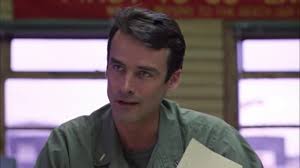
Lt. Lockhart, editor of The Sea Tiger
LOCKHART: “And, Joker–where’s the weenie?”
JOKER: “Sir?”
LOCKHART “The Kill, Joker. I mean, all that fire, the grunts must’ve hit something.”
JOKER: “Didn’t see ’em.”
LOCKHART: “Joker, I’ve told you, we run two basic stories here: Grunts who give half their pay to buy gooks toothbrushes and deodorants–winning of hearts and Minds–okay? And combat action that results in a kill–Winning the War. Now you must have seen blood trails … drag marks?”
JOKER: “It was raining, sir.”
LOCKHART: “Well, that’s why God passed the law of probability. Now rewrite it and give it a happy ending–say, uh, one kill. Make it a sapper or an officer. Grunts like reading about dead officers.”
JOKER: “Okay, an officer. How about a general?”
LOCKHART: “Joker, maybe you’d like our guys to read the paper and feel bad. I mean, in case you didn’t know it, this is not a particularly popular war. Now, it is our job to report the news that these why-are-we-here civilian newsmen ignore.”
So great became the divide between truth and lies during military “press briefings” that reporters started calling them “The Five O’clock Follies.” And even some soldiers took to wearing buttons that said: “Ambushed at Credibility Gap.”
Reporters who dared to write truthfully about the military’s crimes and failures–like David Halberstam of the New York Times and Peter Arnett of the Associated Press–were regarded as traitors by military and political officials.
In 1963, President John F. Kennedy became enraged by Halberstam’s reporting on the corruption of the South Vietnamese government. He pressured New York Times publisher Arthur Ochs Sulzberger to transfer Halberstam to another locale. Sulzberger politely refused–and then extended Halberstam’s stay in Vietnam another six months.
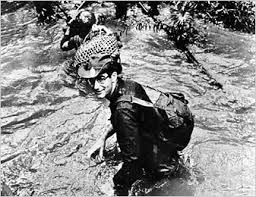
David Halberstam
In 1965, when CBS Correspondent Morley Safer filmed Marines setting fire to the village of Cam Ne with Zippo lighters, President Lyndon B. Johnson was similarly outraged.
He placed an early-morning call to CBS News President Frank Stanton and shouted: “Your boys shat on the American flag!”
The trail of deceit and attempted censorship continued right up to the end of the war–in April, 1975. That was when North Vietnamese forces invaded the South and quickly overwhelmed the incompetent defenses arrayed against them.
And while America was still bogged down in Vietnam, the Watergate scandal erupted on June 17, 1972.
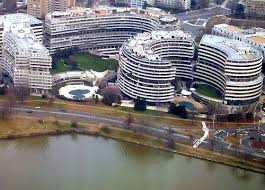
Watergate Hotel
Members of the Nixon administration’s secret “Plumbers Unit” burglarized the offices of the Democratic National Committee at the Watergate Hotel.
Obsessed with re-electing Richard Nixon, they sought incriminating information to discredit U.S. Senator George McGovern, the Democrats’ nominee for President.
When the burglars were caught, President Richard M. Nixon and his topmost officials lied and stonewalled both reporters and investigators seeking the truth.
Nixon’s press secretary, Ronald Ziegler, repeatedly slandered the integrity of The Washington Post for its coverage of the mushrooming Watergate scandal. He called the Watergate break-in “a third-rate burglary” and attacked the Post for “shabby journalism.”
Finally, on April 17, 1973, Ziegler, announced at a press conference: “This is the operative statement. The others are inoperative.”
In short: We’ve been lying to you for the last 10 months. But now we’re telling the truth.
Like Vietnam, the Watergate scandal destroyed the reputations of many of its chief architects. Forty government officials were indicted or jailed.
Vietnam and Watergate were seminal events for Americans coming of age in the late 1960s and early 1970s. They taught an entire generation: Don’t trust the government. Its officials routinely lie, and their lies can be deadly.
2016 PRESIDENTIAL RACE, ABC NEWS, BOEING, CBS NEWS, CNN, DAVID BROOKS, DONALD TRUMP, FACEBOOK, GEORGE C. WALLACE, HILLARY CLINTON, JOHN F. KENNEDY, JOHN MCCAIN, JUSTICE DEPARTMENT, MAFIA, NBC NEWS, PRISONERS OF WAR, ROBERT F. KENNEDY, SAUDI ARABIA, STATE DEPARTMENT, THE CHICAGO SUN-TIMES, THE CHICAGO TRIBUNE, THE KENNEDYS, THE LOS ANGELES TIMES, THE NEW YORK TIMES, THE WALL STREET JOURNAL, THE WASHINGTON POST, TWITTER, WOMEN
In Bureaucracy, History, Politics, Social commentary on October 31, 2016 at 9:15 am
Today, America has two major candidates running for President: Donald Trump and Hillary Clinton.
Trump is a billionaire businessman and television personality. Clinton is a former First Lady (1993-2001), U.S. Senator from New York (2001-2009) and Secretary of State (2009-2013).
Despite the great differences in their backgrounds, they both share one thing in common: They are fiercely hated by millions of their fellow Americans.
Trump’s character has been poignantly summed up by David Brooks, a conservative political columnist for The New York Times:
“The odd thing about [Trump’s] whole career and his whole language, his whole world view is there is no room for love in it. You get a sense of a man who received no love, can give no love, so his relationship with women, it has no love in it. It’s trophy.
“And so you really are seeing someone who just has an odd psychology unleavened by kindness and charity, but where it’s all winners and losers, beating and being beat. And that’s part of the authoritarian personality, but it comes out in his attitude towards women.”
For Republicans, Hillary Clinton arouses hatred that is often as much directed at her sex as her political views: She’s a bitch, a lesbian, physically unattractive. She’s not feminine enough. She “shrieks” and “shouts” when making speeches. She hates men–and, worse, castrates them.
She will abolish religion and force everyone to become atheists. She will authorize U.N. soldiers to confiscate the more than 300 million guns Americans privately hold. She will throw open American borders to millions of illegal aliens from Central and South America. She will sell out America to whoever pays the highest bribe to the Clinton Foundation.
But 48 years ago, Senator Robert Francis Kennedy aroused passions of an altogether different sort.
Kennedy had been a United States Attorney General (1961-1964) and Senator from New York (1964-1968). But it was his connection to his beloved and assassinated brother, President John F. Kennedy, for which he was best known.
In October, 1962, during the Cuban Missile Crisis, his wise counsel helped steer America from the brink of nuclear war with the Soviet Union. As a U.S Senator he championed civil rights and greater Federal efforts to fight poverty.

Robert F. Kennedy campaigning for President
Millions saw RFK as the only candidate who could make life better for America’s impoverished–while standing firmly against those who threatened the Nation’s safety.
As television correspondent Charles Quinn observed: “I talked to a girl in Hawaii who was for [George] Wallace [the segregationist governor of Alabama]. And I said ‘Really?’ [She said] ‘Yeah, but my real candidate is dead.’
“You know what I think it was? All these whites, all these blue collar people who supported Kennedy…all of these people felt that Kennedy would really do what he thought best for the black people, but, at the same time, would not tolerate lawlessness and violence.
“They were willing to gamble…because they knew in their hearts that the country was not right. They were willing to gamble on this man who would try to keep things within reasonable order; and at the same time do some of the things they knew really should be done.”
Campaigning for the Presidency in 1968, RFK had just won the crucial California primary on June 4–when he was shot in the back of the head.
His killer: Sirhan Sirhan, a young Palestinian furious at Kennedy’s support for Israel.
Kennedy died at 1:44 a.m. on June 6.
On June 8, 1,200 men and women boarded a specially-reserved passenger train at New York’s Pennsylvania Station. They were accompanying Kennedy’s body to its final resting place at Arlington National Cemetery.
As the train slowly moved along 225 miles of track, throngs of men, women and children lined the rails to pay their final respects to a man they considered a genuine hero.
Little Leaguers clutched baseball caps across their chests. Uniformed firemen and policemen saluted. Burly men in shirtsleeves held hardhats over their hearts. Black men in overalls waved small American flags. Women from all levels of society stood and cried.

A nation says goodbye to Robert Kennedy
Commenting on RFK’s legacy, historian William L. O’Neil wrote in Coming Apart: An Informal History of America in the 1960′s:
“…He aimed so high that he must be judged for what he meant to do, and, through error and tragic accident, failed at….He will also be remembered as an extraordinary human being who, though hated by some, was perhaps more deeply loved by his countrymen than any man of his time.
“That too must be entered into the final account, and it is no small thing. With his death something precious disappeared from public life.”
America has never again seen a Presidential candidate who combined toughness on crime and compassion for the poor.
Republican candidates have waged war on crime–and the poor. And Democratic candidates have moved to the Right in eliminating anti-poverty programs.
RFK had the courage to fight the Mafia–and the compassion to fight poverty. At a time when Americans long for candidates to give them positive reasons for voting, his kind of politics are sorely missed.
9/11 ATTACKS, ABC NEWS, ASSOCIATED PRESS, BARACK OBAMA, BIRTHERS, CBS NEWS, CENSORSHIP, CNN, CREDIBILITY GAP, DAVID BROOKS, DAVID HALBERSTAM, DONALD TRUMP, FACEBOOK, FRANK STANTON, FULL METAL JACKET, GEORGE MCGOVERN, HILLARY CLINTON, JOHN F. KENNEDY, LYNDON B. JOHNSON, MARK SHIELDS, MORLEY SAFER, NAVY SEALS, NBC NEWS, OSAMA BIN LADEN, PBS NEWSHOUR, PETER ARNETT, RICHARD NIXON, RONALD ZIEGLER, STANLEY KUBRICK, THE CHICAGO SUN-TIMES, THE CHICAGO TRIBUNE, THE HUFFINGTON POST, THE LOS ANGELES TIMES, THE NEW YORK TIMES, THE WALL STREET JOURNAL, THE WASHINGTON POST, TWITTER, VIETNAM WAR, WATERGATE
In Bureaucracy, History, Law, Law Enforcement, Military, Politics, Social commentary on September 30, 2016 at 1:31 am
For five years, Donald Trump, more than anyone else, popularized the slander that President Barack Obama was born in Kenya–and was therefore not an American citizen.
In April, 2011, Obama released the long-form version of his Hawaiian birth certificate. Still, Trump questioned its–and Obama’s–legitimacy.
For more than a year during his 2016 Presidential campaign, Trump continued doing so.
Meanwhile, Trump’s popularity steadily fell among blacks. In June, 2016, a Quinnipiac poll revealed that Trump had 1% of support from black voters–while 91% of black voters backed Hillary Clinton.
Even the managers of Trump’s campaign urged him to put the “birther” issue behind him.
And so, on September 16, 2016–10 days before his scheduled first debate with Democratic Presidential nominee Hillary Clinton–Trump made his version of a reversal.
Donald Trump: “President Barack Obama was born in the United States.”
He did so in about seven seconds and 40 words–after spending a half hour paying tribute to the military and promoting his new upscale hotel in Washington, D.C.:
“Now, not to mention her in the same breath, but Hillary Clinton and her campaign of 2008 started the birther controversy.
“I finished it. I finished it. You know what I mean.
“President Barack Obama was born in the United States, period. Now we all want to get back to making America strong and great again.”
His tone made it clear that he felt uneasy making that statement–and wanted to get it over with as fast as possible.
He refused to take questions from reporters covering the event. Nor did he apologize for his five-year campaign of slander.
On the evening of September 16, Hillary Clinton strongly responded to Trump’s comments:
“For five years, he has led the birther movement to delegitimize our first black president. His campaign was founded on this outrageous lie. There is no erasing it in history.”
And First Lady Michelle Obama slammed Trump for his “birther” claims:
“Then, of course, there were those who questioned, and who continue to question for the past eight years, and up to this very day, whether my husband was even born in this country.
“Well, during his time in office, I think Barack has answered those questions with the examples he set, by going high when they go low. And he’s answered these questions with the progress we’ve achieved together.”
Michelle Obama
But perhaps the best perspective on this event was provided by syndicated columnist Mark Shields and New York Times columnist David Brooks. Each Friday they appear on the PBS Newshour to review the week’s major political events.
David Brooks and Mark Shields
On September 16, Shields (a liberal) and Brooks (a conservative) addressed Trump’s about-face on birtherism.
MARK SHIELDS: “I think it’s important to establish right at the outset that [Trump] wasn’t only the loudest and the highest-profile and the most persistent and the most well-publicized birther, he, Donald Trump. He lied. He lied consistently and persistently.
“And, today, without explanation or excuse, he just changed his position and tried to absolutely falsely shift the blame onto Hillary Clinton.
“And this was an appeal to–he debased democracy. He debased the national debate. He appealed to that which is most ignoble or least noble in all of us.”
DAVID BROOKS: “Usually, there’s some tangential relationship to the truth, but a corroding relationship to the truth, frankly, as politics has gone on over the years.
“But now we’re in a reverse, Orwellian inversion of the truth with this. And so we have a team of staffers and then the candidate himself who have taken the normal spin and smashed all the rules.
“And so we are really in Orwell land. We are in 1984. And it’s interesting that an authoritarian personality type comes in at the same time with a complete disrespect for even tangential relationship to the truth that words are unmoored.
“And so I do think this statement sort of shocked me with the purification of a lot of terrible trends that have been happening. And so what’s white is black, and what is up is down, what is down is up. And that really is something new in politics.
“And the fact that there is no penalty for it, apparently–he’s doing fantastic in the last two weeks in the polls–is just somehow where we have gotten.”
* * * * *
Americans were slow to recognize the dangers of their government’s committing armed forces to South Vietnam. But when the record of government lies reached critical mass, Americans demanded an end to the war.
Similarly, Americans were reluctant to brand Richard Nixon, their newly-re-elected President, a criminal worthy of impeachment. But when the evidence of his criminality steadily mounted, they demanded his ouster.
Today, Americans are flooded with overwhelming evidence of Donald Trump’s unfitness to become President. His narcissism, vindictiveness, ignorance and hair-trigger temper have been on public display for more than a year.
Yet millions of ignorant, hate-filled, Right-wing Americans plan to catapult this man–who “debased democracy, debased the national debate, appealed to that which is most ignoble or least noble in all of us”–to the Presidency.
If that happens, future historians–if there are any–may similarly condemn those Americans who stood by like “good Germans” and allowed their country to fall into the hands of a ruthless tyrant.
9/11 ATTACKS, ABC NEWS, ASSOCIATED PRESS, BARACK OBAMA, BIRTHERS, CBS NEWS, CENSORSHIP, CNN, CREDIBILITY GAP, DAVID BROOKS, DAVID HALBERSTAM, DONALD TRUMP, FACEBOOK, FRANK STANTON, FULL METAL JACKET, GEORGE MCGOVERN, HILLARY CLINTON, JOHN F. KENNEDY, LYNDON B. JOHNSON, MARK SHIELDS, MORLEY SAFER, NAVY SEALS, NBC NEWS, OSAMA BIN LADEN, PBS NEWSHOUR, PETER ARNETT, RICHARD NIXON, RONALD ZIEGLER, STANLEY KUBRICK, THE CHICAGO SUN-TIMES, THE CHICAGO TRIBUNE, THE HUFFINGTON POST, THE LOS ANGELES TIMES, THE NEW YORK TIMES, THE WALL STREET JOURNAL, THE WASHINGTON POST, TWITTER, VIETNAM WAR, WATERGATE
In Bureaucracy, History, Law, Law Enforcement, Military, Politics, Social commentary on September 29, 2016 at 12:01 am
In 2011, Donald Trump, host of NBC’s “The Apprentice,” was thinking of running for President against Barack Obama.
Seeking to gain popularity among America’s Right-wing, Trump almost singlehandedly created the popular fiction that the President was born in Kenya–and was not an American citizen.
His motive: To convince Americans that Obama was an illegitimate President.
Donald Trump
Among the statements Trump made:
February 10, 2011: “Our current president came out of nowhere. Came out of nowhere. In fact, I’ll go a step further: The people that went to school with him, they never saw him, they don’t know who he is. It’s crazy.”
March 23, 2011: “I want him to show his birth certificate. I want him to show his birth certificate. … There’s something on that birth certificate that he doesn’t like.”
March 28, 2011: “I am really concerned” [that Obama wasn’t born in the United States]. He said that the birth announcement for Obama in a Hawaii newspaper could have been planted “for whatever reason.”
March 30, 2011: “If you are going to be president of the United States you have to be born in this country. And there is a doubt as to whether or not he was. … He doesn’t have a birth certificate. He may have one, but there’s something on that, maybe religion, maybe it says he is a Muslim. I don’t know. Maybe he doesn’t want that. Or he may not have one. But I will tell you this. If he wasn’t born in this country, it’s one of the great scams of all time.”
April 7, 2011: “I have people that have been studying it, and they cannot believe what they’re finding. You are not allowed to be a president if you’re not born in this country. Right now I have real doubts.”
April 25, 2011: “I’ve been told very recently…that the birth certificate is missing. I’ve been told that it’s not there or it doesn’t exist. And if that’s the case, it’s a big problem.”
On April 27, President Obama released his original, long-form Hawiian birth certificate.
The long-form version of President Obama’s birth certificate
“We do not have time for this kind of silliness,” said Obama at a press conference, speaking as a father might to a roomful of spiteful children. “We have better stuff to do. I have got better stuff to do. We have got big problems to solve.
“We are not going to be able to do it if we are distracted, we are not going to be able to do it if we spend time vilifying each other…if we just make stuff up and pretend that facts are not facts, we are not going to be able to solve our problems if we get distracted by side shows and carnival barkers.”
And on May 1, he announced the solving of one of those “big problems”: Osama bin Laden, mastermind of the September 11, 2001 terrorist attacks, had been tracked down and shot dead by elite U.S. Navy SEALS in Pakistan.
SEALS attacking bin Laden’s compound in the 2012 movie, “Zero Dark Thirty”
And how did Trump respond? With the following series of Tweets on Twitter:
May 18, 2012: “Let’s take a closer look at that birth certificate.@BarackObama was described in 2003 as being “born in Kenya.” http://bit.ly/Klc9Uu
August 6, 2012: “An ‘extremely credible source’ has called my office and told me that @BarackObama‘s birth certificate is a fraud.”
August 27, 2012: “Why do the Republicans keep apologizing on the so called “birther” issue? No more apologies–take the offensive!”
September 13, 2012: “Wake Up America! See article: “Israeli Science: Obama Birth Certificate is a Fake”
June 30, 2013: “@davidrhythmguit: @realDonaldTrump @Chuffman48 Mark Cuban accepts the fact that the President of the United States was born here. Doubt it”
August 22, 2013: “Why are people upset w/ me over Pres Obama’s birth certificate? I got him to release it, or whatever it was, when nobody else could!”
December 12, 2013: “How amazing, the State Health Director who verified copies of Obama’s “birth certificate” died in plane crash today. All others lived”
November 23, 2014: “@futureicon: @pinksugar61 Obama also fabricated his own birth certificate after being pressured to produce one by @realDonaldTrump“
Even after declaring his candidacy for President on June 16, 2015, Trump continued to insist that Barack Obama was an illegitimate President.
Meanwhile, Trump’s popularity among blacks had steadily fallen. In June, 2016, a Quinnipiac poll revealed that Trump had 1% of support from black voters. By comparison, 91% of black voters backed Hillary Clinton.
Among the reasons for this:
- His enthusiastic support by racist white supremacist organizations such as the Ku Klux Klan and the American Nazi Party.
- His “birther” attacks on President Obama as a non-citizen from Kenya–and thus ineligible to hold the Presidency.
- His attacks on the Black Lives Matter movement and calling on his supporters at rallies to rough up minority protesters.
Even the managers of Trump’s campaign urged him to put the “birther” issue behind him.
And so, on September 16–10 days before his scheduled first debate with Democratic Presidential nominee Hillary Clinton–Trump made his version of a reversal.
9/11 ATTACKS, ABC NEWS, ASSOCIATED PRESS, BARACK OBAMA, BIRTHERS, CBS NEWS, CENSORSHIP, CNN, CREDIBILITY GAP, DAVID BROOKS, DAVID HALBERSTAM, DONALD TRUMP, FACEBOOK, FRANK STANTON, FULL METAL JACKET, GEORGE MCGOVERN, HILLARY CLINTON, JOHN F. KENNEDY, LYNDON B. JOHNSON, MARK SHIELDS, MORLEY SAFER, NAVY SEALS, NBC NEWS, OSAMA BIN LADEN, PBS NEWSHOUR, PETER ARNETT, RICHARD NIXON, RONALD ZIEGLER, STANLEY KUBRICK, THE CHICAGO SUN-TIMES, THE CHICAGO TRIBUNE, THE HUFFINGTON POST, THE LOS ANGELES TIMES, THE NEW YORK TIMES, THE WALL STREET JOURNAL, THE WASHINGTON POST, TWITTER, VIETNAM WAR, WATERGATE
In Bureaucracy, History, Law, Law Enforcement, Military, Politics, Social commentary on September 28, 2016 at 12:09 am
“Credibility gap” is a term that came into use during the mid-1960s to describe public and journalistic distrust of President Lyndon B. Johnson. In particular, the term was applied to his administration’s conduct of the Vietnam war.
It was, in short, a euphemism for accusing government officials of outright lying.
An example of the credibility gap in full swing appeared in Stanley Kubrick’s classic 1987 Vietnam war movie, Full Metal Jacket.
Vietnam was a war where military and political officials spewed a gung-ho version of constant American progress against a tough enemy.
And where civilian reporters like David Halberstam and Walter Cronkite saw–and labeled–the war as a brutal, wasteful and ultimately doomed effort.
Midway through the film, there’s an editorial meeting of The Sea Tiger, the official Marine newspaper.
Lieutenant Lockhart is presiding–and he is determined to give his superiors an endless stream of “all-systems-go” propaganda reports. He reads a series of stories that have been published:
Story #1: DIPLOMATS IN DUNGAREES–MARINE ENGINEERS LEND A HELPING HAND REBUILDING DONG PHUC VILLAGES.
LOCKHART: “Chili, “if we move Vietnamese, they are evacuees. If they come to us to be evacuated, they are refugees.”
Story #2: N.V.A. SOLDIER DESERTS AFTER READING PAMPHLETS.
LOCKHART: “A young North Vietnamese Army regular, who realized his side could not win the war, deserted from his unit after reading Open Arms program pamphlets.”
Story #3: NOT WHILE WE’RE EATING: N.V.A. LEARN MARINES ON A SEARCH AND DESTROY MISSION DON’T LIKE TO BE INTERRUPTED WHILE EATING CHOW.
LOCKHART: “‘Search and destroy.’ Uh, we have a new directive on this. In the future, in place of ‘search and destroy,’ substitute the phrase ‘sweep and clear.’ Got it?”
Lt. Lockhart, editor of The Sea Tiger
LOCKHART: “And, Joker–where’s the weenie?”
JOKER: “Sir?”
LOCKHART “The Kill, Joker. I mean, all that fire, the grunts must’ve hit something.”
JOKER: “Didn’t see ’em.”
LOCKHART: “Joker, I’ve told you, we run two basic stories here: Grunts who give half their pay to buy gooks toothbrushes and deodorants–winning of hearts and Minds–okay? And combat action that results in a kill–Winning the War. Now you must have seen blood trails … drag marks?”
JOKER: “It was raining, sir.”
LOCKHART: “Well, that’s why God passed the law of probability. Now rewrite it and give it a happy ending–say, uh, one kill. Make it a sapper or an officer. Grunts like reading about dead officers.”
JOKER: “Okay, an officer. How about a general?”
LOCKHART: “Joker, maybe you’d like our guys to read the paper and feel bad. I mean, in case you didn’t know it, this is not a particularly popular war. Now, it is our job to report the news that these why-are-we-here civilian newsmen ignore.”
So great became the divide between truth and lies during military “press briefings” that reporters started calling them “The Five O’clock Follies.” And even some soldiers took to wearing buttons that said: “Ambushed at Credibility Gap.”
Reporters who dared to write truthfully about the military’s crimes and failures–like David Halberstam of the New York Times and Peter Arnett of the Associated Press–were regarded as traitors by military and political officials.
In 1963, President John F. Kennedy became enraged by Halberstam’s reporting on the corruption of the South Vietnamese government. He pressured New York Times publisher Arthur Ochs Sulzberger to transfer Halberstam to another locale. Sulzberger politely refused–and then extended Halberstam’s stay in Vietnam another six months.
David Halberstam
In 1965, when CBS Correspondent Morley Safer filmed Marines setting fire to the village of Cam Ne with Zippo lighters, President Lyndon B. Johnson was similarly outraged.
He placed an early-morning call to CBS News President Frank Stanton and shouted: “Your boys shat on the American flag!”
The trail of deceit and attempted censorship continued right up to the end of the war–in April, 1975. That was when North Vietnamese forces invaded the South and quickly overwhelmed the incompetent defenses arrayed against them.
And while America was still bogged down in Vietnam, the Watergate scandal erupted on June 17, 1972.
Watergate Hotel
Members of the Nixon administration’s secret “Plumbers Unit” burglarized the offices of the Democratic National Committee at the Watergate Hotel.
Obsessed with re-electing Richard Nixon, they sought incriminating information to discredit U.S. Senator George McGovern, the Democrats’ nominee for President.
When the burglars were caught, President Richard M. Nixon and his topmost officials lied and stonewalled both reporters and investigators seeking the truth.
Nixon’s press secretary, Ronald Ziegler, repeatedly slandered the integrity of The Washington Post for its coverage of the mushrooming Watergate scandal. He called the Watergate break-in “a third-rate burglary” and attacked the Post for “shabby journalism.”
Finally, on April 17, 1973, Ziegler, announced at a press conference: “This is the operative statement. The others are inoperative.”
In short: We’ve been lying to you for the last 10 months. But now we’re telling the truth.
Like Vietnam, the Watergate scandal destroyed the reputations of many of its chief architects. Forty government officials were indicted or jailed.
Vietnam and Watergate were seminal events for Americans coming of age in the late 1960s and early 1970s. They taught an entire generation: Don’t trust the government. Its officials routinely lie, and their lies can be deadly.
9/11 ATTACKS, ABC NEWS, ASSOCIATED PRESS, BARACK OBAMA, BIRTHERS, CBS NEWS, CENSORSHIP, CNN, CREDIBILITY GAP, DAVID BROOKS, DAVID HALBERSTAM, DONALD TRUMP, FACEBOOK, FRANK STANTON, FULL METAL JACKET, GEORGE MCGOVERN, HILLARY CLINTON, JOHN F. KENNEDY, LYNDON B. JOHNSON, MARK SHIELDS, MORLEY SAFER, NAVY SEALS, NBC NEWS, OSAMA BIN LADEN, PBS NEWSHOUR, PETER ARNETT, RICHARD NIXON, RONALD ZIEGLER, STANLEY KUBRICK, THE CHICAGO SUN-TIMES, THE CHICAGO TRIBUNE, THE HUFFINGTON POST, THE LOS ANGELES TIMES, THE NEW YORK TIMES, THE WALL STREET JOURNAL, THE WASHINGTON POST, TWITTER, VIETNAM WAR, WATERGATE
In Bureaucracy, History, Law, Law Enforcement, Military, Politics, Social commentary on September 26, 2016 at 3:03 pm
For five years, Donald Trump, more than anyone else, popularized the slander that President Barack Obama was born in Kenya–and was therefore not an American citizen.
In April, 2011, Obama released the long-form version of his Hawaiian birth certificate. Still, Trump questioned its–and Obama’s–legitimacy.
For more than a year during his 2016 Presidential campaign, Trump continued doing so.
Meanwhile, Trump’s popularity steadily fell among blacks. In June, 2016, a Quinnipiac poll revealed that Trump had 1% of support from black voters–while 91% of black voters backed Hillary Clinton.
Even the managers of Trump’s campaign urged him to put the “birther” issue behind him.
And so, on September 16, 2016–10 days before his scheduled first debate with Democratic Presidential nominee Hillary Clinton–Trump made his version of a reversal.
Donald Trump: “President Barack Obama was born in the United States.”
He did so in about seven seconds and 40 words–after spending a half hour paying tribute to the military and promoting his new upscale hotel in Washington, D.C.:
“Now, not to mention her in the same breath, but Hillary Clinton and her campaign of 2008 started the birther controversy.
“I finished it. I finished it. You know what I mean.
“President Barack Obama was born in the United States, period. Now we all want to get back to making America strong and great again.”
His tone made it clear that he felt uneasy making that statement–and wanted to get it over with as fast as possible.
He refused to take questions from reporters covering the event. Nor did he apologize for his five-year campaign of slander.
On the evening of September 16, Hillary Clinton strongly responded to Trump’s comments:
“For five years, he has led the birther movement to delegitimize our first black president. His campaign was founded on this outrageous lie. There is no erasing it in history.”
And First Lady Michelle Obama slammed Trump for his “birther” claims:
“Then, of course, there were those who questioned, and who continue to question for the past eight years, and up to this very day, whether my husband was even born in this country.
“Well, during his time in office, I think Barack has answered those questions with the examples he set, by going high when they go low. And he’s answered these questions with the progress we’ve achieved together.”
Michelle Obama
But perhaps the best perspective on this event was provided by syndicated columnist Mark Shields and New York Times columnist David Brooks. Each Friday they appear on the PBS Newshour to review the week’s major political events.
David Brooks and Mark Shields
On September 16, Shields (a liberal) and Brooks (a conservative) addressed Trump’s about-face on birtherism.
MARK SHIELDS: “I think it’s important to establish right at the outset that [Trump] wasn’t only the loudest and the highest-profile and the most persistent and the most well-publicized birther, he, Donald Trump. He lied. He lied consistently and persistently.
“And, today, without explanation or excuse, he just changed his position and tried to absolutely falsely shift the blame onto Hillary Clinton.
“And this was an appeal to–he debased democracy. He debased the national debate. He appealed to that which is most ignoble or least noble in all of us.”
DAVID BROOKS: “Usually, there’s some tangential relationship to the truth, but a corroding relationship to the truth, frankly, as politics has gone on over the years.
“But now we’re in a reverse, Orwellian inversion of the truth with this. And so we have a team of staffers and then the candidate himself who have taken the normal spin and smashed all the rules.
“And so we are really in Orwell land. We are in 1984. And it’s interesting that an authoritarian personality type comes in at the same time with a complete disrespect for even tangential relationship to the truth that words are unmoored.
“And so I do think this statement sort of shocked me with the purification of a lot of terrible trends that have been happening. And so what’s white is black, and what is up is down, what is down is up. And that really is something new in politics.
“And the fact that there is no penalty for it, apparently–he’s doing fantastic in the last two weeks in the polls–is just somehow where we have gotten.”
* * * * *
Americans were slow to recognize the dangers of their government’s committing armed forces to South Vietnam. But when the record of government lies reached critical mass, Americans demanded an end to the war.
Similarly, Americans were reluctant to brand Richard Nixon, their newly-re-elected President, a criminal worthy of impeachment. But when the evidence of his criminality steadily mounted, they demanded his ouster.
Today, Americans are flooded with overwhelming evidence of Donald Trump’s unfitness to become President. His narcissism, vindictiveness, ignorance and hair-trigger temper have been on public display for more than a year.
Yet millions of ignorant, hate-filled, Right-wing Americans plan to catapult this man–who “debased democracy, debased the national debate, appealed to that which is most ignoble or least noble in all of us”–to the Presidency.
If that happens, future historians–if there are any–may similarly condemn those Americans who stood by like “good Germans” and allowed their country to fall into the hands of a ruthless tyrant.
2016 PRESIDENTIAL RACE, ABC NEWS, ADOLF HITLER, ALTERNET, AP, BUZZFEED, CBS NEWS, CNN, CROOKS AND LIARS, DAILY KOZ, DAVID BROOKS, DONALD TRUMP, EDUARDO "TED" CRUZ, FACEBOOK, FOX NEWS, HEINZ GUDERIAN, MARK SHIELDS, MEGYN KELLY, MOTHER JONES, MOVEON, NBC NEWS, NEWSWEEK, NPR, PBS NEWSHOUR, POLITICO, RAW STORY, REPUBLICANS, REUTERS, ROBERT PAYNE, SALON, SEATTLE TIMES, SLATE, THE ATLANTIC, THE CHICAGO SUN-TIMES, THE CHICAGO TRIBUNE, THE DAILY BEAST, THE GUARDIAN, THE HILL, THE HUFFINGTON POST, THE LIFE AND DEATH OF ADOLF HITLER, THE LOS ANGELES TIMES, THE NATION, THE NEW YORK TIMES, THE WASHINGTON POST, TIME, TWITTER, U.S. NEWS & WORLD REPORT, UP, UPI, USA TODAY, WOMEN
In Bureaucracy, History, Military, Politics, Social commentary on August 18, 2016 at 12:05 am
Syndicated columnist Mark Shields and New York Times columnist David Brooks appear every Friday on the PBS Newshour to review the week’s major political events.
On March 25, Shields–a liberal, and Brooks, a conservative–came to some disturbingly similar conclusions about Donald Trump.
Eerily, their conclusions echoed those reached by former Panzer General Heinz Guderian about German dictator Adolf Hitler.
Guderian created the concept of motorized blitzkrieg warfare, whereby masses of tanks and planes moved in coordination to strike at the vital nerve centers of an enemy.
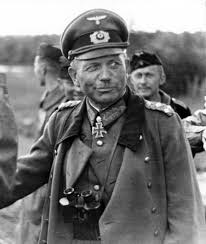
Heinz Guderian
Guderian thus enabled Hitler to conquer France in only six weeks in 1940, and to come to the brink of crushing the Soviet Union in 1941. He recounted his career as the foremost tank commander of the Third Reich in his 1950 autobiography, Panzer Leader.
On the PBS Newshour, moderator Judy Woodruff noted that “polls show Trump’s standing with women voters had worsened in recent months.”
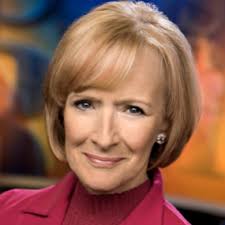
Judy Woodruff
David Brooks said that Trump had displayed “a consistent misogynistic view of women as arm candy, as pieces of meat. It’s a consistent attitude toward women which is the stuff of a diseased adolescent.”
MARK SHIELDS: “She just asked him tough questions and was totally fair, by everybody else’s standards.”
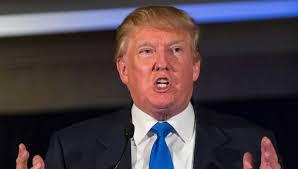
Donald Trump
HEINZ GUDERIAN: Once in power, Hitler quickly–and violently–eliminated his opposition. He make no attempt to disguise this aspect of his character, because the opposition was weak and divided and soon collapsed after the first violent attack. This allowed Hitler to pass laws which destroyed the safeguards enacted by the Weimar Republic against the the dangers of dictatorship.
MARK SHIELDS: “And I don’t know at what point it becomes…politically, he’s still leading. And I would have to say he’s the overwhelming favorite for the Republican nomination.”
HEINZ GUDERIAN: Hitler promised to “make Germany great again” both domestically and internationally. And this won him many followers. In time he controlled the largest party in the land and this allowed him, by democratic procedure, to assume power.
DAVID BROOKS: “The odd thing about [Trump’s] whole career and his whole language, his whole world view is there is no room for love in it. You get a sense of a man who received no love, can give no love, so his relationship with women, it has no love in it. It’s trophy.”
HEINZ GUDERIAN: [Hitler] was isolated as a human being. He had no real friend. There was nobody who was really close to him.
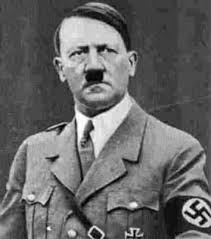
Adolf Hitler
There was nobody he could talk to freely and openly. And just as he never found a true friend, he was denied the ability to deeply love a woman.
DAVID BROOKS: “And [Trump’s] relationship toward the world is one of competition and beating, and as if he’s going to win by competition what other people get by love.”
HEINZ GUDERIAN: Everything on this earth that casts a glow of warmth over our life as mortals–friendship with fine men, the pure love for a wife, affection for one’s own children–all this was and forever remained unknown to him.
DAVID BROOKS: “And so you really are seeing someone who just has an odd psychology unleavened by kindness and charity, but where it’s all winners and losers, beating and being beat. And that’s part of the authoritarian personality, but it comes out in his attitude towards women.”
HEINZ GUDERIAN: He lived alone, cherishing his loneliness, with only his gigantic plans for company. His relationship with Eva Braun may seem to contradict what I have written. But it is obvious that she could not have had any influence over him. And this is unfortunate, for it could only have been a softening one.”
* * * * *
In his bestselling 1973 biography, The Life and Death of Adolf Hitler, British historian Robert Payne harshly condemned the German people for the rise of the Nazi dictator:
“[They] allowed themselves to be seduced by him and came to enjoy the experience….[They] followed him with joy and enthusiasm because he gave them license to pillage and murder to their hearts’ content. They were his servile accomplices, his willing victims.”
There is a very real danger that millions of ignorant, hate-filled, Right-wing Americans will catapult Donald Trump–a man with an “odd psychology unleavened by kindness and charity”–into the Presidency.
And that this man–“who received no love, can give no love”–will assume all the awesome power that goes with that office.
If that happens, future historians–if there are any–may similarly condemn those Americans who stood by like “good Germans” and allowed their country to fall into the hands of a ruthless tyrant.


2016 PRESIDENTIAL CAMPAIGN, 9/11 ATTACKS, ABC NEWS, ACADEMY AWARDS, ASSOCIATED PRESS, BARACK OBAMA, BEST ACTRESS, BEST SUPPORTING ACTRESS, BIRTHERS, BULLYING, CBS NEWS, CENSORSHIP, CHRIS CUOMO, CNN, CREDIBILITY GAP, DAVID BROOKS, DAVID HALBERSTAM, DISABILITY, DONALD TRUMP, FACEBOOK, FOX AND FRIENDS, FRANK STANTON, FULL METAL JACKET, GEORGE MCGOVERN, GOLDEN GLOBES, HILLARY CLINTON, JOHN F. KENNEDY, KELLEYANNE CONWAY, KRAMER VS. KRAMER, LYNDON B. JOHNSON, MARK SHIELDS, MERYL STREEP, MORLEY SAFER, MOTHER JONES, MOVEON, NAVY SEALS, NBC NEWS, NEEWSWEEK, NEW DAY, NPR, OSAMA BIN LADEN, PBS NEWSHOUR, PETER ARNETT, POLITICO, RICHARD NIXON, RONALD ZIEGLER, SALON, SERGE KOVALESKI, SLATE, SOPHIE'S CHOICE, STANLEY KUBRICK, THE CHICAGO SUN-TIMES, THE CHICAGO TRIBUNE, THE HUFFINGTON POST, THE IRON LADY, THE LOS ANGELES TIMES, THE NEW YORK TIMES, THE WALL STREET JOURNAL, THE WASHINGTON POST, TIME, TWITTER, U.S. NEWS & WORLD REPORT, USA TODAY, VIETNAM WAR, WATERGATE
“AMBUSH AT CREDIBILITY GAP”: PART FOUR (END)
In Bureaucracy, History, Law, Law Enforcement, Military, Politics, Social commentary on January 16, 2017 at 12:14 amAfter being presented with the Cecil B. DeMille Lifetime Achievement Award, Meryl Streep criticized Donald Trump’s mocking of disabled New York Times reporter Serge Kovaleski.
Kovaleski suffers from arthrogryposis, a congenital condition that restricts the movement of the muscles in his arms.
At a South Carolina rally on November 24, 2015, Trump claimed that Kovaleski was backing away from an article he had written four years earlier.
Trump had earlier said the article proved that New Jersey Muslims had celebrated the September 11, 2001 terror attacks. Kovaleski had insisted there was no credible proof of such celebrations.
Angered at being contradicted, Trump mocked Kovaleski: He flopped his right arm around with his hand held at an odd angle while imitating the reporter: “Now, the poor guy, you’ve got to see this guy: ‘Uhh, I don’t know what I said. Uhh, I don’t remember,’ he’s going like ‘I don’t remember. Maybe that’s what I said.'”
Trump mocking Kovaleski, left; Kovaleski, right
At the Golden Globe Awards on January 8, Streep denounced this behavior that “broke my heart.”
“And this instinct to humiliate, when it’s modeled by someone in the public platform, by someone powerful, it filters down into everybody’s life, because it kind of gives permission for other people to do the same thing.
“Disrespect invites disrespect. Violence incites violence. When the powerful use their position to bully others, we all lose.”
Meryl Streep at the Golden Globes
Streep’s words outraged Trump’s supporters–especially his mouthpiece, Kelleyanne Conway.
Appearing on Right-wing Fox and Friends the next morning, she said: “We have to now form a government, and I’m concerned that somebody with a platform like Meryl Streep is also, I think, inciting people’s worst instincts.
“When she won’t get up there and say, ‘I don’t like it, but let’s try to support him and see where we can find some common ground with him, which [Trump] has actually done from moment one.”
Conway didn’t say what common ground Streep should find with Trump. Perhaps agreeing on mocking the disabled?
Kelleyanne Conway
Then Conway visited CNN’s “New Day,” where she offered a “black-is-white” defense for Trump’s videotaped ridiculing of Kovaleski: It didn’t happen.
The host, Chris Cuomo, having seen the video, wasn’t buying it.
CUOMO: But is [Streep] wrong? Is she wrong that it was wrong for Trump to make gestures like that about a man with disabilities?
CONWAY: He didn’t–but that is not what he did and he has said that a thousand times. As he tweeted out today–
CUOMO: He can say it a million. Look at the video.
CONWAY: Why can’t you–wait, excuse me. Why can’t you give him the benefit of the doubt the way the benefit of the doubt was given to CNN’s polling, all of its analysts?
CUOMO: Because he’s making a disgusting gesture on video talking about Serge.
CONWAY: Not about that reporter and that’s just a fact. That is what he’s said. You should give him–
CUOMO: But how is it not about the reporter?
CONWAY: –the deference and respect if he says that it was–he was not mocking, he was mocking the groveling. He said it again this morning. He has three tweets out about it.
CUOMO: But he’s doing a gesture that goes right to the guy’s vulnerability.
CONWAY: You’re saying you don’t believe him. You’re calling him a liar and you shouldn’t.
CUOMO: Look, Kellyanne, to me that’s like you’re trying to scare me off the point and we both know it’s a waste of time.
CONWAY: I’m not going to scare you off anything.
CUOMO: He’s making a gesture that is so keenly tuned to what Serge’s vulnerability is.
CONWAY: And now you’re giving oxygen to what Meryl Streep said.
CUOMO: Forget about Meryl Streep. This happened before her. If our kids did that, could you imagine what we would say to them?
Conway said she would not bring her children into the discussion.
CUOMO: I will. If my kid did something like that, it’d be a really tough day.
CONWAY: You have to listen to what the president has said about that. Why don’t you believe him?
Conway tried to change the subject to Hillary Clinton: “She was given the benefit of the doubt here constantly.”
When Cuomo asked for specifics, she refused to give them. Then she returned to claiming that Trump had never mocked Kovaleski:
CONWAY: You can’t give him the benefit of the doubt on this, when he’s telling you what was in his heart? You always want to go by what’s come out of his mouth, rather than look at what’s in his heart.
* * * * *
Previously, politicians had defended themselves with arguments like: “You can see right here on the tape, I did (or, I didn’t)….”
Trump has cast aside that logic–and the taped evidence–by demanding: “Believe what I’m telling you, not what you’ve just seen.”
By that rationale, if a security camera shows Trump robbing a bank at gunpoint, we’re supposed to believe him if he says: “No, I didn’t rob that bank. I was simply checking my bank balance.”
Such “logic” holds appeal for paid shills like Kelleyanne Conway. But most people will continue to judge by the evidence.
Share this: