Posts Tagged ‘COLUMBIA UNIVERSITY’
9/11, ABC NEWS, ADOLF HITLER, BOSTON MARATHON BOMBING, CBS NEWS, CHRISTIANITY, CNN, COLUMBIA UNIVERSITY, FACEBOOK, HARVARD UNIVERSITY, IRAN, ISLAM, LEBANON, MUNICH OLYMPICS MASSACRE, NBC NEWS, POLITICAL CORRECTNESS, RACIAL PROFILING, RELIGION, SAMUEL P. HUNTINGTON, TERRORISM, THE CHICAGO SUN-TIMES, THE CHICAGO TRIBUNE, THE CLASH OF CIVILIZATIONS, THE LOS ANGELES TIMES, THE NEW YORK TIMES, THE SPECTATOR, THE WASHINGTON POST, TWITTER, USA TODAY, WINSTON CHURCHILL, WORLD TRADE CENTER
In History, Military, Politics, Social commentary on September 18, 2015 at 12:11 am
During the 1930s, Winston Churchill, a seemingly failed politican, repeatedly warned his British countrymen against the growing menace of Nazi Germany.
The leaders of Britain and France–the two great victors of World War 1–hoped that if they simply ignored the increasingly aggressive behavior of German Fuehrer Adolf Hitler, they could somehow escape catastrophe.
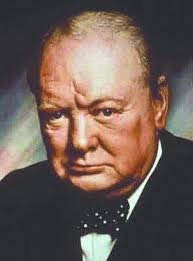
Winston Churchill
This behavior included:
- In the early 1930s, Hitler began re-building a powerful German army in open defiance of the Versallies Treaty that had ended World War 1.
- Hitler ordered his army to occupy his native Austria in 1938.
- In 1938, Hitler demanded that Czechoslavakia cede the Sudetenland, its northern, southwest and western regions, which were inhabited mostly by ethnic Germans.
- British Prime Minister Nveille Chamberlain surrendered to Hitler’s demands at the infamous “Munich conference.” Believing they had avoided war, his fellow Britons were ecstatic.
- In March, 1939, the German army occupied the rest of Czechoslovakia.
- Hitler next turned his attention to Poland–which he invaded on September 1.
- In doing so, he unintentionally triggered World War II.
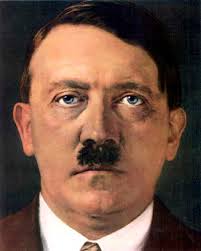
Adolf Hitler
In time, historians and statesmen would agree: Trying to appease dictators is futile–and a guarantee for their further aggression.
It is a lesson that current world leaders have forgotten as Islamic fundamentalists increasingly flex their military and economic muscles–and demand that Western nations bow to their demands.
- In Iran, scientists continue to fashion a nuclear weapons program–while insisting they intend to use the atom only for “peaceful purposes.”
- In Pakistan–which has 90-110 nuclear warheads–Osama bin Laden lived less than a mile from the Pakistan Military Academy, the country’s West Point. So much for America’s “ally” in the “war on terror.”
- On January 7, 2015, the worst terrorist act in France since World War II occurred when three Islamics slaughtered 12 people at a satirical magazine that had published cartoons about the Prophet Muhammed.
- The rising tide of Muslim population growth spells deadly challenges for non-Islamic nations.
Winston Churchill’s warnings were ignored by other world leaders–most notably Franklin Roosevelt and Joseph Stalin–until their countries became victims of unprovoked aggression.
So were the warnings of Harvard political science professor Samuel P. Huntington.
In 1993, he published an essay in Foreign Affairs called “The Clash of Civilizations.” Its thesis: In the post-Cold War world, nationalism would decline and differing cultures and religions would emerge as the primary sources of conflict.
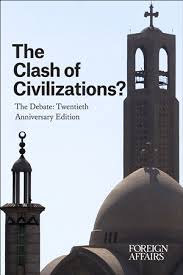
Huntington’s critique of Islamic civilizations ignited a firestorm of controversey–especially his statement: “Islam has bloody borders.”
In 1996, Huntington expanded his thesis into a book–called The Clash of Civilizations and the Remaking of World Order.
Among his assertions:
- People are divided along religious and cultural lines.
- Islamic civilization do not share the general ideals of the Western world–such as individualism and democracy.
- Their primary attachment is to their religion, not to their nation-state.
- When the Muslim world conflicts with other civilizations, tensions and wars result.
- Arab dictatorships were fragile and could be overturned by the masses of unemployed young men. But even if they fell, the new regimes would not modernize along Western lines.
- A fundamental clash of civilizations between Islam and the West is inevitable.
- Relations between Muslims and non-Muslims–such as Catholics, Protestants, Hindus, Buddhists and Jews–have been marked by Islamic antagonism and violence.
- Western nations should distance themselves from Islamic ones. The more both civilizations interact, the greater tensions between them will be.
Huntington cited several reasons for an inevitable war between the West and Islam:
- Western secular vs. Islamic religious values.
- Past historical rivalry between Christianity and Islam.
- Jealousy of Western power by Islamic nations.
- Islamic resentments of Western domination during the post-colonial restructuring of the Middle East.
- Islamic bitterness and humiliation at the achiveements of Western civilization over the last 200 years.
A point of Islamic irony:
Islamic terror groups such as Al Qaeda and ISIS damn Western nations as havens of corrupt infidels. But it’s to Europe and the United States that tens of thousands of Syrians and Iraqis are now fleeing.
And they are fleeing to escape the barbaric slaughters of their fellow Islamics.
Following the 1979 Iranian Revolution, a quasi-war developed between some Islamic nations and some Western ones.
On the Islamic side:
- Iran
- Sudan
- Iraq
- Libya
- Syria.
On the Western side:
- The United States
- Great Britain.
“In this quasi war,” wrote Huntington, “each side has capitalized on its own strengths and the other side’s weaknesses.” For example:
- Muslim terrorists exploited the openness of Western societies to plant car bombs at selected targets.
- Western powers used their superior air power to bomb selected targets in Islamic countries.
- Islamics plotted the assassination of Western leaders.
- The United States plotted the overthrow of hostile Islamic regimes.
Writing at a time before the United States directed its full military power at conquering Afghanistan and Iraq, Huntington ominously noted:
“During the 15 years between 1980 and 1995…the United States engaged in 17 military operations in the Middle East, all of them directed against Muslims. No comparable pattern of U.S. military operations occurred against the people of any other civilization.”
The war that Huntington warned was coming and was, in fact, already in progress, has since erupted into full-scale conflict, with no end in sight.
9/11, ABC NEWS, ADOLF HITLER, BOSTON MARATHON BOMBING, CBS NEWS, CHRISTIANITY, CNN, COLUMBIA UNIVERSITY, FACEBOOK, HARVARD UNIVERSITY, IRAN, ISLAM, LEBANON, MUNICH OLYMPICS MASSACRE, NBC NEWS, POLITICAL CORRECTNESS, RACIAL PROFILING, RELIGION, SAMUEL P. HUNTINGTON, TERRORISM, THE CHICAGO SUN-TIMES, THE CHICAGO TRIBUNE, THE CLASH OF CIVILIZATIONS, THE LOS ANGELES TIMES, THE NEW YORK TIMES, THE SPECTATOR, THE WASHINGTON POST, TWITTER, USA TODAY, WINSTON CHURCHILL, WORLD TRADE CENTER
In History, Military, Politics, Social commentary on September 17, 2015 at 12:01 am
There is a famous joke about racial profiling that’s long made the rounds of the Internet. It appears in the guise of a “history test,” and offers such multiple-choice questions as:
In 1972 at the Munich Olympics, athletes were kidnapped and massacred by:
- Olga Korbut
- Sitting Bull
- Arnold Schwarzenegger
- Muslim male extremists mostly between the ages of 17 and 40
In 1979, the US embassy in Iran was taken over by:
- Lost Norwegians
- Elvis
- A tour bus full of 80-year-old women
- Muslim male extremists mostly between the ages of 17 and 40
During the 1980s a number of Americans were kidnapped in Lebanon by:
- John Dillinger
- The King of Sweden
- The Boy Scouts
- Muslim male extremists mostly between the ages of 17 and 40
In 1983, the US Marine barracks in Beirut was blown up by:
- A pizza delivery boy
- Pee Wee Herman
- Geraldo Rivera
- Muslim male extremists mostly between the ages of 17 and 40
On September 11, 2001, four airliners were hijacked. Two were used as missiles to take out the World Trade Center; one crashed into the Pentagon; and the other was diverted and crashed by the passengers. Thousands of people were killed by:
- Bugs Bunny, Wiley E. Coyote, Daffy Duck and Elmer Fudd
- The Supreme Court of Florida
- Mr. Bean
- Muslim male extremists mostly between the ages of 17 and 40
* * * * *
It’s well to remember the bitter truth behind this joke, especially in light of such Islamic atrocities as:
- On April 15, 2013, two pressure-cooker bombs exploded at the finish line of the Boston Marathon, killing 3 people and injuring 264. The culprits: Two Muslim brothers, Dzhokhar Tsarnaev and Tamerlan Tsarnaev, who had emigrated to the United States from the former Soviet Union.
- On May 22, 2013, two Islamic terrorists, wielding machetes and shouting “Allahu Akbar!” (“God is Great!”) hacked a British soldier to death on a London street.
- On January 7, 2015, 2015, the worst terrorist act in France since World War II occurred when three Islamics slaughtered 12 people at a satirical magazine that had published cartoons about the Prophet Muhammed.
Writing in the British newspaper, The Spectator, Douglas Murray issued a warning to his fellow Britons: “Over recent years, those who have warned that such attacks would come here have been attacked as ‘racists’, ‘fascists’ and, most commonly, ‘Islamophobes.’
“A refusal to recognise the actual threat (a growingly radicalised Islam) has dominated most of our media and nearly all our political class.”
One man who did foresee the present conflicts with stunning clarity–and had the courage to say what has since become Politically Incorrect–was Samuel P. Huntington.

Samuel P. Huntington
A political scientist, Huntington taught government at Harvard University (1950-1959, then at Columbia University (1959-1962). He returned to Harvard in 1963, and remained there until his death in 2008.
The author of nine books, in 1996 he published his most influential one: The Clash of Civilizations and the Remaking of World Order. Its thesis was that, in the post-Cold War world, people’s cultural and religious identities would be the primary sources of conflict.
Among the points he makes:
- Modernization does not mean Westernization.
- Economic progress has come with a revival of religion.
- Post-Cold War politics emphasize ethnic nationalism over ideology.
- Civilizations are fundamentally differentiated from each other by centuries-old history, language, culture, tradition, and, most important, religion.
- As the world becomes smaller, different civilizations increasingly interact. These intensify civilization consciousness and the awareness of differences between civilizations.
- Economic modernization and social change separate people from age-old identities (such as hometowns and familiar neighbors). Religion has replaced this gap, providing a basis for identity, socialization and commitment that transcends national boundaries and unites civilizations.
- The West, at the peak of its power, is confronting non-Western countries that increasingly have the desire, will and resources to shape the world in non-Western ways.
- Cultural characteristics and differences are less mutable and hence less easily compromised and resolved than political and economic ones.
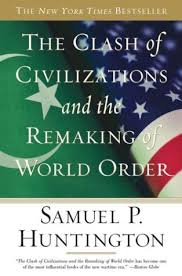
The most controversial part of The Clash of Civilizations focuses on Islam. Huntington points out, for example, that Muslim countries are involved in far more intergroup violence than others.
And he warns that the West’s future conflcts with Islamic nations will be rooted in the Islamic religion:
“Islam’s borders are bloody and so are its innards. The fundamental problem for the West is not Islamic fundamentalism. It is Islam, a different civilisation whose people are convinced of the superiority of their culture and are obsessed with the inferiority of their power.”
Huntington argues that civilizational conflicts are “particularly prevalent between Muslims and non-Muslims.” Among the reasons for these conflicts: Both Islam and Christianity have similarities which heighten conflicts between their followers:
- Both seek to convert others.
- Both are “all-or-nothing” religions; each side believes that only its faith is the correct one.
- The followers of both Islam and Christianity believe that people who violate the base principles of their religion are idolators and thus damned.
Other reasons for the Western-Islamic clash are:
- The Islamic revival, which began in the 1970s and is manifested in greater religious piety and in a growing adoption of Islamic culture, values, dress, separation of the sexes, speech and media censorship.
- Western universalism–the belief that all civilizations should adopt Western values–infuriates Islamic fundamentalists.
These are not differences that will disappear–overnight or even over the span of several centuries. Nor will they be sweet-talked away by Politically Correct politicians, however well-meaning.
9/11, ADOLF HITLER, BOSTON MARATHON BOMBING, CHRISTIANITY, COLUMBIA UNIVERSITY, FACEBOOK, HARVARD UNIVERSITY, IRAN, ISLAM, LEBANON, MUNICH OLYMPICS MASSACRE, POLITICAL CORRECTNESS, RACIAL PROFILING, RELIGION, SAMUEL P. HUNTINGTON, TERRORISM, THE CLASH OF CIVILIZATIONS, THE LOS ANGELES TIMES, THE NEW YORK TIMES, THE SPECTATOR, THE WASHINGTON POST, TWITTER, WINSTON CHURCHILL, WORLD TRADE CENTER
In History, Military, Politics, Social commentary on August 19, 2014 at 9:10 am
During the 1930s, Winston Churchill, a seemingly failed politican, repeatedly warned his British countrymen against the growing menace of Nazi Germany.
The leaders of Britain, France and the United States–the three great victors of World War 1–hoped that if they simply ignored the increasingly aggressive behavior of Adolf Hitler, they could somehow escape catastrophe.
Winston Churchill
When, in the early 1930s, Hitler began re-building a powerful German army (Whermacht) in open defiance of the Versallies Treaty that had ended World War 1, Churchill gave warning–and was ignored.
When Hitler ordered his army to occupy his native Austria in 1938, Churchill warned that the Nazis would not be content with the conquest of one nation. And was ignored.
In 1938, Hitler demanded that Czechoslavakia cede the Sudetenland, its northern, southwest and western regions, which were inhabited mostly by ethnic Germans.
Adolf Hitler
When British Prime Minister Nveille Chamberlain surrendered to Hitler’s demands at the infamous “Munich conference,” his fellow Britons were ecstatic. He returned to England as a hero.
Churchill knew better: “Britain and France had to choose between war and dishonor. They chose dishonor. They will have war.”
In March, 1939, the German army occupied the rest of Czechoslovakia.
Hitler next turned his attention to Poland–which he invaded on September 1, unintentionally triggering World War II.
In time, historians and statesmen would regard Munich as an object lesson in the futility—and danger—in appeasing evil and aggression.
It is a lesson that current world leaders have forgotten as Islamic fundamentalists increasingly flex their military and economic muscles–and demand that Western nations bow to their demands.
- In Iran, scientists continue to fashion a nuclear weapons program–while insisting they intend to use the atom only for “peaceful purposes.”
- In Pakistan–which has 90-110 nuclear warheads–Osama bin Laden lived less than a mile from the Pakistan Military Academy, the country’s West Point. So much for America’s “ally” in the “war on terror.”
- The rising tide of Muslim population growth spells deadly challenges for non-Islamic nations.
Winston Churchill’s warnings fell on deaf ears until other world leaders–most notably Franklin Roosevelt and Joseph Stalin–were forced by events to take action.
So did the warnings of Harvard political science professor Samuel P. Huntington.
In 1993, he published an essay in Foreign Affairs called “The Clash of Civilizations?” In this, he argued that the post-Cold War would be marked by civilizational conflict. Among his assertions:
- People are divided along religious and cultural lines.
- Islamic civilization do not share the general ideals of the Western world–such as individualism and democracy.
- Their primary attachment is to their religion, not to their nation-state.
- When the Muslim world conflicts with other civilizations, tensions and wars result.
- Arab dictatorships were fragile and could be overturned by the masses of unemployed young men. But even if they fell, the new regimes would not modernize along Western lines.
- A fundamental clash of civilizations between Islam and the West is inevitable.
- Relations between Muslims and non-Muslims–such as Catholics, Protestants, Hindus, Buddhists and Jews–have been marked by Islamic antagonism and violence.
- Western nations should distance themselves from Islamic ones. The more both civilizations interact, the greater tensions between them will be.
Huntington’s critique of Islamic civilizations ignited a firestorm of controversey–especially his statement: “Islam has bloody borders.”
In 1996, Huntington expanded his thesis into a book–also called The Clash of Civilizations. Once again, he minced no words:
“Some Westerners, including President Bill Clinton, have argued that the West does not have problems with Islam but only with violent Islamist extremists. Fourteen hundred years of history demonstrate otherwise.”
Huntington cited British scholar Barry Buzan as giving several reasons for an inevitable war between the West and Islam:
- Western secular vs. Islamic religious values.
- Past historical rivalry between Christianity and Islam.
- Jealousy of Western power by Islamic nations.
- Islamic resentments of Western domination during the post-colonial restructuring of the Middle East.
- Islamic bitterness and humiliation at the achiveements of Western civilization over the last 200 years.
Much of the fury Muslims were directing toward the West, wrote Huntington, was aimed at its embrace of secularism. Westerners were attacked not for being Christian but “for not adhering to any religion at all.”
Following the 1979 Iranian Revolution, a quasi-war developed between some Islamic nations and some Western ones. On the Islamic side: Iran, Sudan, Iraq, Libya and Syria. On the Western side: The United States and Britain.
“In this quasi war,” wrote Huntington, “each side has capitalized on its own strengths and the other side’s weaknesses.” For example:
- Muslim terrorists exploited the openness of Western societies to plant car bombs at selected targets.
- Western powers used their superior air power to bomb selected targets in Islamic countries.
- Islamics plotted the assassination of Western leaders.
- The United States plotted the overthrow of hostile Islamic regimes.
Writing at a time before the United States directed its full military power at conquering Afghanistan and Iraq, Huntington ominously noted:
“During the 15 years between 1980 and 1995…the United States engaged in 17 military operations in the Middle East, all of them directed against Muslims. No comparable pattern of U.S. military operations occurred against the people of any other civilization.”
The war that Huntington warned was coming and was, in fact, already in progress, has since erupted into full-scale conflict, with no end in sight.
9/11, ADOLF HITLER, BOSTON MARATHON BOMBING, CHRISTIANITY, COLUMBIA UNIVERSITY, FACEBOOK, HARVARD UNIVERSITY, IRAN, ISLAM, LEBANON, MUNICH OLYMPICS MASSACRE, POLITICAL CORRECTNESS, RACIAL PROFILING, RELIGION, SAMUEL P. HUNTINGTON, TERRORISM, THE CLASH OF CIVILIZATIONS, THE LOS ANGELES TIMES, THE NEW YORK TIMES, THE SPECTATOR, THE WASHINGTON POST, TWITTER, WINSTON CHURCHILL, WORLD TRADE CENTER
In History, Military, Politics, Social commentary on August 16, 2014 at 10:54 am
There is a famous joke about racial profiling that’s long made the rounds of the Internet. It appears in the guise of a “history test,” and offers such multiple-choice questions as:
In 1972 at the Munich Olympics, athletes were kidnapped and massacred by:
- Olga Korbut
- Sitting Bull
- Arnold Schwarzenegger
- Muslim male extremists mostly between the ages of 17 and 40
In 1979, the US embassy in Iran was taken over by:
- Lost Norwegians
- Elvis
- A tour bus full of 80-year-old women
- Muslim male extremists mostly between the ages of 17 and 40
During the 1980s a number of Americans were kidnapped in Lebanon by:
- John Dillinger
- The King of Sweden
- The Boy Scouts
- Muslim male extremists mostly between the ages of 17 and 40
In 1983, the US Marine barracks in Beirut was blown up by:
- A pizza delivery boy
- Pee Wee Herman
- Geraldo Rivera
- Muslim male extremists mostly between the ages of 17 and 40
On September 11, 2001, four airliners were hijacked. Two were used as missiles to take out the World Trade Center; one crashed into the Pentagon; and the other was diverted and crashed by the passengers. Thousands of people were killed by:
- Bugs Bunny, Wiley E. Coyote, Daffy Duck and Elmer Fudd
- The Supreme Court of Florida
- Mr. Bean
- Muslim male extremists mostly between the ages of 17 and 40
It’s well to remember the bitter truth behind this joke, especially in light of the latest Islamic atrocities:
- On April 15, two pressure-cooker bombs exploded at the finish line of the Boston Marathon, killing 3 people and injuring 264. The culprits: Two Muslim brothers, Dzhokhar Tsarnaev and Tamerlan Tsarnaev, who had emigrated to the United States from the former Soviet Union.
- On May 22, two Islamic terrorists, wielding machetes and shouting “Allahu Akbar!” (“God is Great!”) hacked a British soldier to death on a London street.
Writing in the British newspaper, The Spectator, Douglas Murray issued a warning to his fellow Britons: “Over recent years, those who have warned that such attacks would come here have been attacked as ‘racists’, ‘fascists’ and–most commonly–‘Islamophobes.’
“A refusal to recognise the actual threat (a growingly radicalised Islam) has dominated most of our media and nearly all our political class.”
One man who did foresee the present conflicts with stunning clarity–and had the courage to say what has since become Politically Incorrect–was Samuel P. Huntington.
Samuel P. Huntington
A political scientist, Huntington taught government at Harvard University (1950-1959, then at Columbia University (1959-1962). He returned to Harvard in 1963, and remained there until his death in 2008.
The author of nine books, in 1996 he published his most invluential one: The Clash of Civilizations and the Remaking of World Order. Its thesis was that, in the post-Cold War world, people’s cultural and religious identities would be the primary sources of conflict.
Among the points he makes:
- Modernization does not mean Westernization.
- Economic progress has come with a revival of religion.
- Post-Cold War politics emphasize ethnic nationalism over ideology.
- Civilizations are fundamentally differentiated from each other by centuries-old history, language, culture, tradition, and, most important, religion.
- As the world becomes smaller, different civilizations increasingly interact. These intensify civilization consciousness and the awareness of differences between civilizations.
- Economic modernization and social change separate people from age-old identities (such as hometowns and familiar neighbors). Religion has replaced this gap, providing a basis for identity, socialization and commitment that transcends national boundaries and unites civilizations.
- The West, at the peak of its power, is confronting non-Western countries that increasingly have the desire, will and resources to shape the world in non-Western ways.
- Cultural characteristics and differences are less mutable and hence less easily compromised and resolved than political and economic ones.
The most controversial part of The Clash of Civilizations focuses on Islam. Huntington points out, for example, that Muslim countries are involved in far more intergroup violence than others.
And he warns that the West’s future conflcts with Islamic nations will be rooted in the Islamic religion:
“Islam’s borders are bloody and so are its innards. The fundamental problem for the West is not Islamic fundamentalism. It is Islam, a different civilisation whose people are convinced of the superiority of their culture and are obsessed with the inferiority of their power.”
Huntington argues that civilizational conflicts are “particularly prevalent between Muslims and non-Muslims.” Among the reasons for these conflicts: Both Islam and Christianity have similarities which heighten conflicts between their followers:
- Both seek to convert others.
- Both are “all-or-nothing” religions; each side believes that only its faith is the correct one.
- The followers of both Islam and Christianity believe that people who violate the base principles of their religion are idolators and thus damned.
Other reasons for the Western-Islamic clash are:
- The Islamic revival, which began in the 1970s and is manifested in greater religious piety and in a growing adoption of Islamic culture, values, dress, separation of the sexes, speech and media censorship.
- Western universalism–the belief that all civilizations should adopt Western values–infuriates Islamic fundamentalists.
These are not differences that will disappear–overnight or even over the span of several centuries. Nor will they be sweet-talked away by Politically Correct politicians, however well-meaning.
ABC NEWS, AFFORDABLE CARE ACT, AIR TRAFFIC CONTROLLERS STRIKE, BARACK OBAMA, CBS NEWS, CNN, COLUMBIA UNIVERSITY, EXTORTION, FACEBOOK, FBI, GEORGE W. BUSH, HARVARD LAW SCHOOL, HENRY J. KAISER FAMILY FOUNDATION, JOBS, JON STEWART, JONATHAN ALTER, JUSTICE DEPARTMENT, NBC NEWS, NICCOLO MACHIAVELLI, OBAMACARE, PATRIOT ACT, public relations, RACKETEER INFLUENCED AND CORRUPT ORGANIZATIONS ACT, REFORM, RICHARD WOLFFE, Ronald Reagan, TERRORISM, THE DAILY SHOW, THE LOS ANGELES TIMES, THE NEW YORK TIMES, THE PRINCE, THE WASHINGTON POST, TWITTER, UNEMPLOYMENT
In Bureaucracy, Business, History, Law, Politics, Social commentary on August 8, 2014 at 2:45 pm
President Obama claims to be a serious student of Realpolitick. If this were so, he would have predicted that most businesses would seek to avoid compliance with his Affordable Care Act (ACA).
And the remedy would have been simple: Require all employers to provide insurance coverage for all of their employees, regardless of their fulltime or part-time status.
This, in turn, would have produced two substantial benefits:
- All employees would have been able to obtain medical coverage; and
- Employers would have been encouraged to provide fulltime positions rather than part-time ones.
The reason: Employers would feel: “Since I’m paying for fulltime insurance coverage, I should be getting fulltime work in return.”
If the President ever considered the merits of this, he apparently decided against pressing for such a requirement.
Obama is one of the most rational and educated men to occupy the White House. So what accounts for this failure to expect the worst in people–especially his self-declared enemies–and prepare to counter it?
Niccolo Machiavelli’s brilliant assessments have repeatedly proven invaluable to understanding the failures of the Obama Presidency. Once again, he provides a shrewd insight into what may be the central reason for all of them.
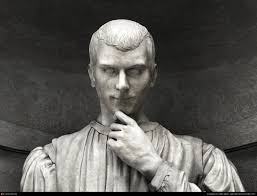
Niccolo Machiavelli
Writing in The Prince, his classic work on the realities of politics, Machiavelli states:
I also believe that he is happy whose mode of procedure accords with the needs of the times, and similarly, he is unfortunate whose mode of procedure is opposed to the times….
On this depend also the changes in prosperity, for if it happens that time and circumstances are favorable to one who acts with caution and prudence he will be successful. But if time and circumstances change he will be ruined, because he does not change the mode of his procedure.
No man can be found so prudent as to be able to adopt himself to this, either because he cannot deviate from that to which his nature disposes him, or else because having always prospered by walking in one path, he cannot persuade himself that it is well to leave it.
And therefore the cautious man, when it is time to act suddenly, does not know how to do so and is consequently ruined. For if one could change one’s nature with time and circumstances, fortune would never change.
Obama is by nature a supreme rationalist and conciliator–not a confronter nor an attacker. And his career before reaching the White House greatly strengthened this predisposition.
From 1985 to 1988, Obama worked as a community organizer–setting up a job training program, a college preparatory tutoring program, and a tenants’ rights organization. Such activity demands skills in building consensus, not confrontation.
He then taught at the University of Chicago Law School for 12 years—as a Lecturer from 1992 to 1996, and as a Senior Lecturer from 1996 to 2004, teaching constitutional law.

University of Chicago Law School
Law professors spend their time in clean, civil classrooms–far removed from the rough-and-tumble of criminal defense/prosecution.
If Obama had accused President George W. Bush of conspiring with Al Qaeda–as Republicans have repeatedly accused Obama–retribution would have been swift and brutal.
In short: Obama–who believes in reason and conciliation–is paying the price for allowing his sworn enemies to insult and obstruct him
Obama Mistake No. 6: Failing to closely study his proposed legislation.
Throughout his campaign to win support for the ACA, Obama had repeatedly promised: “If you like your health insurance plan, you can keep your plan. Period. If you like your doctor, you can keep your doctor. Period.”
But, hidden in the 906 pages of the law, was a fatal catch for the President’s own credibility.
The law stated that those who already had medical insurance could keep their plans–so long as those plans met the requirements of the new healthcare law.
If their plans didn’t meet those requirements, they would have to obtain coverage that did.
It soon turned out that a great many Americans wanted to keep their current plan–even if it did not provide the fullest possible coverage.
Suddenly, the President found himself facing a PR nightmare: Charged and ridiculed as a liar.
Even Jon Stewart, who on “The Daily Show” had supported the implementation of “Obamacare,” ran footage of Obama’s “you can keep your doctor” promise.
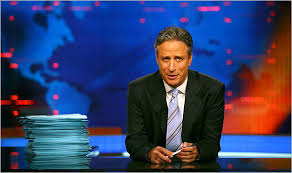
Jon Stewart
The implication: You said we could keep our plan/doctor; since we can’t, you must be a liar.
As a result, the President now finds his reputation for integrity–long his greatest asset–shattered.
All of which takes us to the final warning offered by Niccolo Machiavelli:
Whence it may be seen that hatred is gained as much by good works as by evil….
ABC NEWS, AFFORDABLE CARE ACT, AIR TRAFFIC CONTROLLERS STRIKE, BARACK OBAMA, CBS NEWS, CNN, COLUMBIA UNIVERSITY, EXTORTION, FACEBOOK, FBI, GEORGE W. BUSH, HARVARD LAW SCHOOL, HENRY J. KAISER FAMILY FOUNDATION, JOBS, JON STEWART, JONATHAN ALTER, JUSTICE DEPARTMENT, NBC NEWS, NICCOLO MACHIAVELLI, OBAMACARE, PATRIOT ACT, public relations, RACKETEER INFLUENCED AND CORRUPT ORGANIZATIONS ACT, REFORM, RICHARD WOLFFE, Ronald Reagan, TERRORISM, THE DAILY SHOW, THE LOS ANGELES TIMES, THE NEW YORK TIMES, THE PRINCE, THE WASHINGTON POST, TWITTER, UNEMPLOYMENT
In Bureaucracy, Business, History, Law, Politics, Social commentary on August 7, 2014 at 12:42 pm
Barack Obama is one of the most highly educated Presidents to occupy the White House.
When he took office, he intended to make healthcare available to all Americans–and not just the wealthiest 1%.
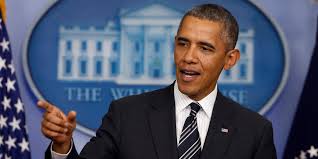
President Barack Obama
But he made a series of deadly mistakes:
- In crafting the Affordable Care Act (better known as Obamacare);
- In building public support for it;
- In underestimating the venom and opposition of his Republican enemies;
- In failing to effectively counter that Right-wing venom and opposition; and
- In underestimating the opposition of the business community to complying with the law.
Three of those mistakes have already been outlined. Here are the remaining three.
Obama Mistake No. 4: He allowed himself to be cowed by his enemies.
In The Prince, Machiavelli laid out the qualities that a successful ruler must possess. There were some to be cultivated, and others to be avoided at all costs. For example:
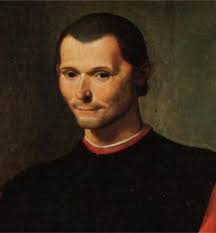
Niccolo Machiavelli
He is rendered despicable by being thought changeable, frivolous, effeminate, timid and irresolute—which a prince must guard against as a rock of danger….
[He] must contrive that his actions show grandeur, spirit, gravity and fortitude. As to the government of his subjects, let his sentence be irrevocable, and let him adhere to his decisions so that no one may think of deceiving or cozening him.
So how has Obama fared by this standard?
On July 2, 2013, the Treasury Department issued a press release about a major change in the applicability of the Affordable Care Act:
“Over the past several months, the Administration has been engaging in a dialogue with businesses – many of which already provide health coverage for their workers – about the new employer and insurer reporting requirements under the Affordable Care Act (ACA).
“We have heard concerns about the complexity of the requirements and the need for more time to implement them effectively….We have listened to your feedback. And we are taking action.
“The Administration is announcing that it will provide an additional year before the ACA mandatory employer and insurer reporting requirements begin.”
[Boldface in the original document.]
In short: The administration is delaying until 2015 the law’s requirement that medium and large companies provide coverage for their workers or face fines.
And how did Obama’s self-declared enemies react to this announcement?
On July 30, House Republicans voted to proceed with a lawsuit against the President, claiming that he had failed to enforce the Affordable Care Act.
“In 2013, the president changed the health care law without a vote of Congress, effectively creating his own law by literally waiving the employer mandate and the penalties for failing to comply with it,” House Speaker John A. Boehner said in a statement.
“That’s not the way our system of government was designed to work. No president should have the power to make laws on his or her own.”
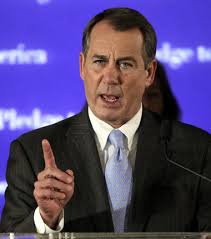
John Boehner
Thus, Boehner intends to sue the President to enforce the law that the House has voted 54 times to repeal, delay or change.
Obama Mistake Nol 5: Believing that public and private comployers would universally comply with the law.
The Affordable Care Act requires employers to provide insurance for part-time employees who work more than 30 hours per week.
Yet many government employers claim they can’t afford it–and plan to limit worker hours to 29 per week instead. Among those states affected:
- “Our choice was to cut the hours or give them health care, and we could not afford the latter,” Dennis Hanwell, the Republican mayor of Medina, Ohio, said in an interview with the New York Times.
- Lawrence County, in western Pennsylvania, reduced the limit for part-time employees to 28 hours a week, from 32.
- In Virginia, part-time state employees are generally not allowed to work more than 29 hours a week on average over a 12-month period.
President Obama and those who helped craft the Act may be surprised at what has happened. But they shouldn’t be.
Greed-addicted officials will always seek ways to avoid complying with the law–or achieve minimum compliance with it.
And what goes for public employers goes for private ones, too.
A company isn’t penalized for failing to provide health insurance coverage for part-time employees who work fewer than 30 hours.
The result was predictable. And its consequences are daily becoming more clear.
Increasing numbers of employers are moving fulltime workers into part-time positions–and thus avoiding
- providing their employees with medical insurance and
- a fine for non-compliance with the law.
Some employers have openly shown their contempt for President Obama–and the idea that employers actually have an obligation to those who make their profits a reality.
One of these is John Schnatter, CEO of Papa John’s Pizza, who has been quoted as saying:
- The prices of his pizzas will go up–by eleven to fourteen cents price increase per pizza, or fifteen to twenty cents per order; and
- He will pass along these costs to his customers.
“If Obamacare is in fact not repealed,” Schnatter told Politico, “we will find tactics to shallow out any Obamacare costs and core strategies to pass that cost onto consumers in order to protect our shareholders’ best interests.”
After all, why should a multi-million-dollar company show any concern for those who make its profits a reality?
ABC NEWS, AFFORDABLE CARE ACT, AIR TRAFFIC CONTROLLERS STRIKE, BARACK OBAMA, CBS NEWS, CNN, COLUMBIA UNIVERSITY, EXTORTION, FACEBOOK, FBI, GEORGE W. BUSH, HARVARD LAW SCHOOL, HENRY J. KAISER FAMILY FOUNDATION, JOBS, JON STEWART, JONATHAN ALTER, JUSTICE DEPARTMENT, NBC NEWS, NICCOLO MACHIAVELLI, OBAMACARE, PATRIOT ACT, public relations, RACKETEER INFLUENCED AND CORRUPT ORGANIZATIONS ACT, REFORM, RICHARD WOLFFE, Ronald Reagan, TERRORISM, THE DAILY SHOW, THE LOS ANGELES TIMES, THE NEW YORK TIMES, THE PRINCE, THE WASHINGTON POST, TWITTER, UNEMPLOYMENT
In Bureaucracy, Business, History, Law, Politics, Social commentary on August 6, 2014 at 11:44 am
In The Prince, his classic treatise on Realpolitick, Niccolo Machiavelli, the Florentine statesman, warned:
“There is nothing more difficult to carry out, nor more doubtful of success, nor more dangerous to handle, than to initiate a new order of things.”
This proved exactly the case with the proposed Affordable Care Act (ACA). Its supporters–even when they comprised a majority of the Congress–have always shown far less fervor than its opponents.
This was true before the Act became effective on March 23, 2010. And it has remained true since, with House Republicans voting 54 times to repeal, delay or revise the law.
So before President Barack Obama launched his signature effort to reform the American medical system, he should have taken this truism into account.
Obama Mistake No. 3: Failing to consider–and punish–the venom of his political enemies.
The ancient Greeks used to say: “A man’s character is his fate.” It is Obama’s character–and our fate–that he is by nature a conciliator, not a confronter.
Richard Wolffe chronicled Obama’s winning of the White House in his book Renegade: The Making of a President. He noted that Obama was always more comfortable when responding to Republican attacks on his character than he was in making attacks on his enemies.
Obama came into office determined to find common ground with Republicans. But they quickly made it clear to him that they only wanted his political destruction.
At that point, he should have put aside his hopes for a “Kumbaya moment” and re-read what Niccolo Machiavelli famously said in The Prince on the matter of love versus fear:

From this arises the question whether it is better to be loved than feared, or feared more than loved. The reply is, that one ought to be both feared and loved, but as it is difficult for the two to go together, it is much safer to be feared than loved.
For it may be said of men in general that they are ungrateful, voluble, dissemblers, anxious to avoid danger and covetous of gain.
As long as you benefit them, they are entirely yours: they offer you their blood, their goods, their life and their children, when the necessity is remote. But when it approaches, they revolt….
And men have less scruple in offending one who makes himself loved than one who makes himself feared; for love is held by a chain of obligations which, men being selfish, is broken whenever it serves their purpose; but fear is maintained by a dread of punishment which never fails.
Moreover, Machiavelli warns that even a well-intentioned leader can unintentionally bring on catastrophe. This usually happens when, hoping to avoid conflict, he allows a threat to go unchecked. Thus:
A man who who wishes to make a profession of goodness in everything must inevitably come to grief among so many who are not good.
And therefore it is necessary, for a prince, who wishes to maintain himself, to learn how not to be good, and to use this knowledge and not use it, according to the necessity of the case.
For President Obama, such a moment came in October, 2013, when House Republicans shut down the government to force Obama to scrap Obamacare.
Obama, a former attorney, heatedly denounced House Republicans for “extortion” and “blackmail.”
Unless he was exaggerating, both of these are felony offenses that are punishable under the 2001 Patriot Act and the Racketeer Influenced Corrupt Organizations (RICO) Act of 1970.
All that he needed do was to order his Attorney General, Eric Holder, to ask the FBI to investigate whether either or both of these laws have been violated.
If violations had been discovered, indictments could have quickly followed– and then prosecutions.
The results of such action can be easily predicted.
- Facing lengthy prison terms, those indicted Republicans would first have to lawyer-up. That in itself would have been no small thing, since good criminal lawyers cost big bucks.
- Obsessed with their own personal survival, they would have found little time for engaging in more of the same thuggish behavior that got them indicted. In fact, doing so would have only made their conviction more likely.
- Those Republicans who hadn’t (yet) been indicted would have realized: “I could be next.” This would have produced a chilling effect on their willingness to engage in further acts of subversion and extortion.
- The effect on Right-wing Republicans would have been the same as that of President Ronald Reagan’s firing of striking air traffic controllers: “You cross me and threaten the security of this nation at your own peril.”
It would no doubt be a long time before Republicans dared to engage in such behavior–if they ever so dared again.
So: Why didn’t the President act to punish such criminal conduct?
ABC NEWS, AFFORDABLE CARE ACT, AIR TRAFFIC CONTROLLERS STRIKE, BARACK OBAMA, CBS NEWS, CNN, COLUMBIA UNIVERSITY, EXTORTION, FACEBOOK, FBI, GEORGE W. BUSH, HARVARD LAW SCHOOL, HENRY J. KAISER FAMILY FOUNDATION, JOBS, JON STEWART, JONATHAN ALTER, JUSTICE DEPARTMENT, NBC NEWS, NICCOLO MACHIAVELLI, OBAMACARE, PATRIOT ACT, public relations, RACKETEER INFLUENCED AND CORRUPT ORGANIZATIONS ACT, REFORM, RICHARD WOLFFE, Ronald Reagan, TEA PARTY, TERRORISM, THE DAILY SHOW, THE LOS ANGELES TIMES, THE NEW YORK TIMES, THE PRINCE, THE WASHINGTON POST, TWITTER, UNEMPLOYMENT
In Bureaucracy, Business, History, Law, Politics, Social commentary on August 5, 2014 at 8:56 am
A majority of Americans–53%–disapprove of the Affordable Care Act (ACA), better known as Obamacare.
So says a July healthcare tracking poll of the Henry J. Kaiser Family Foundation, a non-profit organization focusing on national health issues
This is clearly a plus/minus situation for President Barack Obama.
On the positive side: According to the Department of Health and Human Services, Obamacare enrollment has cut the number of uninsured people in the nation by 10 million.
On the negative side: Obamacare has always had weak support among the American public. Among the reasons for this:
- Constant Republican attacks labeling the law as “socialistic” (by which they mean “communistic”).
- Public opposition to the individual mandate that almost everyone obtain coverage.
- Many Americans think they can’t afford the insurance sold on the Obamacare exchanges–and don’t know that financial aid is available.
Among the poll’s findings:
- Sixty percent of the public wants Congress to improve the Affordable Care Act, not repeal and replace it.
- Thirty-eight percent were unaware that the Act offers consumers a choice among private health plans.
- Less than half of those polled–47%–say they have discussed the law with friends or family.
- Of that 47%, a majority–27%–say they’ve heard more bad than good about the law in these conversations.
- Healthcare isn’t a top priority for Americans right now–except for medical care for veterans (71%).
Among those issues the public does rate as highly important:
- Economy and jobs (70%)
- Federal budget deficit (68%)
- Education (66%)
- Social Security (65%)
- Illegal imigration (61%)
Click here: Kaiser Health Tracking Poll: July 2014 | The Henry J. Kaiser Family Foundation
Barack Obama is easily one of the most highly educated Presidents in United States history.
He is a graduate of Columbia University (B.A. in political science in 1983).
In 1988, he entered Harvard Law School, graduating magna cum laude–“with great honor”–in 1991. He was selected as an editor of the Harvard Law Review at the end of his first year, and president of the journal in his second year.
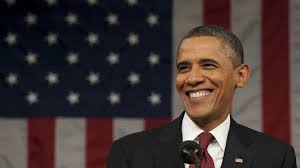
President Barack Obama
He then taught constitutional law at the University of Chicago Law School for 12 years—as a Lecturer from 1992 to 1996, and as a Senior Lecturer from 1996 to 2004.
So where did he go so wrong? Several ways:
Obama Mistake No. 1: Putting off what people wanted while concentrating on what they didn’t.
Obama started off well when he took office. Americans had high expectations of him.
This was partly due to his being the first black elected President. And it was partly due to the disastrous legacies of needless war and financial catastrophe left by his predecessor, George W. Bush.
Obama entered office intending to reform the American healthcare system, to make medical care available to all citizens, and not just the richest.
But that was not what the vast majority of Americans wanted him to concentrate his energies on. With the loss of 2.6 million jobs in 2008, Americans wanted Obama to find new ways to create jobs.
This was especially true for the 11.1 million unemployed, or those employed only part-time.
Jonathan Alter, who writes sympathetically about the President in The Center Holds: Obama and His Enemies, candidly states this.
But Obama chose to spend most of his first year as President pushing the Affordable Care Act (ACA)–which soon became known as Obamacare–through Congress.
The results were:
- Those desperately seeking employment felt the President didn’t care about them.
- The reform effort became a lightning rod for Right-wing groups like the Tea Party.
- In 2010, a massive Rightist turnout cost the Democrats the House of Representatives, and threatened Democratic control of the Senate.
Obama Mistake No. 2: He underestimated the amount of opposition he would face to the ACA.
For all of Obama’s academic brilliance and supposed ruthlessness as a “Chicago politician,” he has displayed an incredible naivety in dealing with his political opposition.
Niccolo Machiavelli (4169-1527), the Florentine statesman and father of modern politics, could have warned him of the consequences of this–through the pages of his famous treatise on the realities of politics: The Prince.

Niccolo Machiavelli
And either Obama skipped those chapters or ignored their timeless advice for political leaders.
He should have started with Chapter Six: “Of New Dominions Which Have Been Acquired By One’s Own Arms and Ability”:
…There is nothing more difficult to carry out, nor more doubtful of success, nor more dangerous to handle, than to initiate a new order of things.
For the reformer has enemies in all those who profit by the old order, and only lukewarm defenders in all those who would profit by the new order, this lukewarmness arising partly from fear of their adversaries, who have the laws in their favor, and partly from the incredulity of mankind, who do not truly believe in anything new until they have had actual experience of it.
9/11, ADOLF HITLER, BOSTON MARATHON BOMBING, CHRISTIANITY, COLUMBIA UNIVERSITY, FACEBOOK, HARVARD UNIVERSITY, IRAN, ISLAM, LEBANON, MUNICH OLYMPICS MASSACRE, POLITICAL CORRECTNESS, RACIAL PROFILING, RELIGION, SAMUEL P. HUNTINGTON, TERRORISM, THE CLASH OF CIVILIZATIONS, THE LOS ANGELES TIMES, THE NEW YORK TIMES, THE SPECTATOR, THE WASHINGTON POST, TWITTER, WINSTON CHURCHILL, WORLD TRADE CENTER
In History, Politics, Social commentary on May 27, 2013 at 6:02 pm
During the 1930s, Winston Churchill, a seemingly failed politican, repeatedly warned his British countrymen against the growing menace of Nazi Germany.
The leaders of Britain, France and the United States–the three great victors of World War 1–hoped that if they simply ignored the increasingly aggressive behavior of Adolf Hitler, they could somehow escape catastrophe.
Winston Churchill
When, in the early 1930s, Hitler began re-building a powerful German army (Whermacht) in open defiance of the Versallies Treaty that had ended World War 1, Churchill gave warning–and was ignored.
When Hitler ordered his army to occupy his native Austria in 1938, Churchill warned that the Nazis would not be content with the conquest of one nation. And was ignored.
In 1938, Hitler demanded that Czechoslavakia cede the Sudetenland, its northern, southwest and western regions, which were inhabited mostly by ethnic Germans.
Adolf Hitler
When British Prime Minister Nveille Chamberlain surrendered to Hitler’s demands at the infamous “Munich conference,” his fellow Britons were ecstatic. He returned to England as a hero.
Churchill knew better: “Britain and France had to choose between war and dishonor. They chose dishonor. They will have war.”
In March, 1939, the German army occupied the rest of Czechoslovakia.
Hitler next turned his attention to Poland–which he invaded on September 1, unintentionally triggering World War II.
In time, historians and statesmen would regard Munich as an object lesson in the futility—and danger—in appeasing evil and aggression.
It is a lesson that current world leaders have forgotten as Islamic fundamentalists increasingly flex their military and economic muscles–and demand that Western nations bow to their demands.
- In Iran, scientists continue to fashion a nuclear weapons program–while insisting they intend to use the atom only for “peaceful purposes.”
- In Pakistan–which has 90-110 nuclear warheads–Osama bin Laden lived less than a mile from the Pakistan Military Academy, the country’s West Point. So much for America’s “ally” in the “war on terror.”
- The rising tide of Muslim population growth spells deadly challenges for non-Islamic nations.
Winston Churchill’s warnings fell on deaf ears until other world leaders–most notably Franklin Roosevelt and Joseph Stalin–were forced by events to take action.
So did the warnings of Harvard political science professor Samuel P. Huntington.
In 1993, he published an essay in Foreign Affairs called “The Clash of Civilizations?” In this, he argued that the post-Cold War would be marked by civilizational conflict. Among his assertions:
- People are divided along religious and cultural lines.
- Islamic civilization do not share the general ideals of the Western world–such as individualism and democracy.
- Their primary attachment is to their religion, not to their nation-state.
- When the Muslim world conflicts with other civilizations, tensions and wars result.
- Arab dictatorships were fragile and could be overturned by the masses of unemployed young men. But even if they fell, the new regimes would not modernize along Western lines.
- A fundamental clash of civilizations between Islam and the West is inevitable.
- Relations between Muslims and non-Muslims–such as Catholics, Protestants, Hindus, Buddhists and Jews–have been marked by Islamic antagonism and violence.
- Western nations should distance themselves from Islamic ones. The more both civilizations interact, the greater tensions between them will be.
Huntington’s critique of Islamic civilizations ignited a firestorm of controversey–especially his statement: “Islam has bloody borders.”
In 1996, Huntington expanded his thesis into a book–also called The Clash of Civilizations. Once again, he minced no words:
“Some Westerners, including President Bill Clinton, have argued that the West does not have problems with Islam but only with violent Islamist extremists. Fourteen hundred years of history demonstrate otherwise.”
Huntington cited British scholar Barry Buzan as giving several reasons for an inevitable war between the West and Islam:
- Western secular vs. Islamic religious values.
- Past historical rivalry between Christianity and Islam.
- Jealousy of Western power by Islamic nations.
- Islamic resentments of Western domination during the post-colonial restructuring of the Middle East.
- Islamic bitterness and humiliation at the achiveements of Western civilization over the last 200 years.
Much of the fury Muslims were directing toward the West, wrote Huntington, was aimed at its embrace of secularism. Westerners were attacked not for being Christian but “for not adhering to any religion at all.”
Following the 1979 Iranian Revolution, a quasi-war developed between some Islamic nations and some Western ones. On the Islamic side: Iran, Sudan, Iraq, Libya and Syria. On the Western side: The United States and Britain.
“In this quasi war,” wrote Huntington, “each side has capitalized on its own strengths and the other side’s weaknesses.” For example:
- Muslim terrorists exploited the openness of Western societies to plant car bombs at selected targets.
- Western powers used their superior air power to bomb selected targets in Islamic countries.
- Islamics plotted the assassination of Western leaders.
- The United States plotted the overthrow of hostile Islamic regimes.
Writing at a time before the United States directed its full military power at conquering Afghanistan and Iraq, Huntington ominously noted:
“During the 15 years between 1980 and 1995…the United States engaged in 17 military operations in the Middle East, all of them directed against Muslims. No comparable pattern of U.S. military operations occurred against the people of any other civilization.”
The war that Huntington warned was coming and was, in fact, already in progress, has since erupted into full-scale conflict, with no end in sight.
9/11, ADOLF HITLER, BOSTON MARATHON BOMBING, CHRISTIANITY, COLUMBIA UNIVERSITY, FACEBOOK, HARVARD UNIVERSITY, IRAN, ISLAM, LEBANON, MUNICH OLYMPICS MASSACRE, POLITICAL CORRECTNESS, RACIAL PROFILING, RELIGION, SAMUEL P. HUNTINGTON, TERRORISM, THE CLASH OF CIVILIZATIONS, THE LOS ANGELES TIMES, THE NEW YORK TIMES, THE SPECTATOR, THE WASHINGTON POST, TWITTER, WINSTON CHURCHILL, WORLD TRADE CENTER
In History, Politics, Social commentary on May 24, 2013 at 5:42 pm
There is a famous joke about racial profiling that’s long made the rounds of the Internet. It appears in the guise of a “history test,” and offers such multiple-choice questions as:
In 1972 at the Munich Olympics, athletes were kidnapped and massacred by:
- Olga Korbut
- Sitting Bull
- Arnold Schwarzenegger
- Muslim male extremists mostly between the ages of 17 and 40
In 1979, the US embassy in Iran was taken over by:
- Lost Norwegians
- Elvis
- A tour bus full of 80-year-old women
- Muslim male extremists mostly between the ages of 17 and 40
During the 1980s a number of Americans were kidnapped in Lebanon by:
- John Dillinger
- The King of Sweden
- The Boy Scouts
- Muslim male extremists mostly between the ages of 17 and 40
In 1983, the US Marine barracks in Beirut was blown up by:
- A pizza delivery boy
- Pee Wee Herman
- Geraldo Rivera
- Muslim male extremists mostly between the ages of 17 and 40
On September 11, 2001, four airliners were hijacked. Two were used as missiles to take out the World Trade Center; one crashed into the Pentagon; and the other was diverted and crashed by the passengers. Thousands of people were killed by:
- Bugs Bunny, Wiley E. Coyote, Daffy Duck and Elmer Fudd
- The Supreme Court of Florida
- Mr. Bean
- Muslim male extremists mostly between the ages of 17 and 40
It’s well to remember the bitter truth behind this joke, especially in light of the latest Islamic atrocities:
- On April 15, two pressure-cooker bombs exploded at the finish line of the Boston Marathon, killing 3 people and injuring 264. The culprits: Two Muslim brothers, Dzhokhar Tsarnaev and Tamerlan Tsarnaev, who had emigrated to the United States from the former Soviet Union.
- On May 22, two Islamic terrorists, wielding machetes and shouting “Allahu Akbar!” (“God is Great!”) hacked a British soldier to death on a London street.
Writing in the British newspaper, The Spectator, Douglas Murray issued a warning to his fellow Britons: “Over recent years, those who have warned that such attacks would come here have been attacked as ‘racists’, ‘fascists’ and, most commonly, ‘Islamophobes.’
“A refusal to recognise the actual threat (a growingly radicalised Islam) has dominated most of our media and nearly all our political class.”
One man who did foresee the present conflicts with stunning clarity–and had the courage to say what has since become Politically Incorrect–was Samuel P. Huntington.

Samuel P. Huntington
A political scientist, Huntington taught government at Harvard University (1950-1959, then at Columbia University (1959-1962). He returned to Harvard in 1963, and remained there until his death in 2008.
The author of nine books, in 1996 he published his most influential one: The Clash of Civilizations and the Remaking of World Order. Its thesis was that, in the post-Cold War world, people’s cultural and religious identities would be the primary sources of conflict.
Among the points he makes:
- Modernization does not mean Westernization.
- Economic progress has come with a revival of religion.
- Post-Cold War politics emphasize ethnic nationalism over ideology.
- Civilizations are fundamentally differentiated from each other by centuries-old history, language, culture, tradition, and, most important, religion.
- As the world becomes smaller, different civilizations increasingly interact. These intensify civilization consciousness and the awareness of differences between civilizations.
- Economic modernization and social change separate people from age-old identities (such as hometowns and familiar neighbors). Religion has replaced this gap, providing a basis for identity, socialization and commitment that transcends national boundaries and unites civilizations.
- The West, at the peak of its power, is confronting non-Western countries that increasingly have the desire, will and resources to shape the world in non-Western ways.
- Cultural characteristics and differences are less mutable and hence less easily compromised and resolved than political and economic ones.
The most controversial part of The Clash of Civilizations focuses on Islam. Huntington points out, for example, that Muslim countries are involved in far more intergroup violence than others.
And he warns that the West’s future conflcts with Islamic nations will be rooted in the Islamic religion:
“Islam’s borders are bloody and so are its innards. The fundamental problem for the West is not Islamic fundamentalism. It is Islam, a different civilisation whose people are convinced of the superiority of their culture and are obsessed with the inferiority of their power.”
Huntington argues that civilizational conflicts are “particularly prevalent between Muslims and non-Muslims.” Among the reasons for these conflicts: Both Islam and Christianity have similarities which heighten conflicts between their followers:
- Both seek to convert others.
- Both are “all-or-nothing” religions; each side believes that only its faith is the correct one.
- The followers of both Islam and Christianity believe that people who violate the base principles of their religion are idolators and thus damned.
Other reasons for the Western-Islamic clash are:
- The Islamic revival, which began in the 1970s and is manifested in greater religious piety and in a growing adoption of Islamic culture, values, dress, separation of the sexes, speech and media censorship.
- Western universalism–the belief that all civilizations should adopt Western values–infuriates Islamic fundamentalists.
These are not differences that will disappear–overnight or even over the span of several centuries. Nor will they be sweet-talked away by Politically Correct politicians, however well-meaning.
.jpg)


.jpg)
 Bureaucracybuster's Blog
9/11, ABC NEWS, ADOLF HITLER, BOSTON MARATHON BOMBING, CBS NEWS, CHRISTIANITY, CNN, COLUMBIA UNIVERSITY, FACEBOOK, HARVARD UNIVERSITY, IRAN, ISLAM, LEBANON, MUNICH OLYMPICS MASSACRE, NBC NEWS, POLITICAL CORRECTNESS, RACIAL PROFILING, RELIGION, SAMUEL P. HUNTINGTON, TERRORISM, THE CHICAGO SUN-TIMES, THE CHICAGO TRIBUNE, THE CLASH OF CIVILIZATIONS, THE LOS ANGELES TIMES, THE NEW YORK TIMES, THE SPECTATOR, THE WASHINGTON POST, TWITTER, USA TODAY, WINSTON CHURCHILL, WORLD TRADE CENTER
BEHIND THE SYRIAN EXODUS: PART TWO (END)
In History, Military, Politics, Social commentary on September 18, 2015 at 12:11 amDuring the 1930s, Winston Churchill, a seemingly failed politican, repeatedly warned his British countrymen against the growing menace of Nazi Germany.
The leaders of Britain and France–the two great victors of World War 1–hoped that if they simply ignored the increasingly aggressive behavior of German Fuehrer Adolf Hitler, they could somehow escape catastrophe.
Winston Churchill
This behavior included:
Adolf Hitler
In time, historians and statesmen would agree: Trying to appease dictators is futile–and a guarantee for their further aggression.
It is a lesson that current world leaders have forgotten as Islamic fundamentalists increasingly flex their military and economic muscles–and demand that Western nations bow to their demands.
Winston Churchill’s warnings were ignored by other world leaders–most notably Franklin Roosevelt and Joseph Stalin–until their countries became victims of unprovoked aggression.
So were the warnings of Harvard political science professor Samuel P. Huntington.
In 1993, he published an essay in Foreign Affairs called “The Clash of Civilizations.” Its thesis: In the post-Cold War world, nationalism would decline and differing cultures and religions would emerge as the primary sources of conflict.
Huntington’s critique of Islamic civilizations ignited a firestorm of controversey–especially his statement: “Islam has bloody borders.”
In 1996, Huntington expanded his thesis into a book–called The Clash of Civilizations and the Remaking of World Order.
Among his assertions:
Huntington cited several reasons for an inevitable war between the West and Islam:
A point of Islamic irony:
Islamic terror groups such as Al Qaeda and ISIS damn Western nations as havens of corrupt infidels. But it’s to Europe and the United States that tens of thousands of Syrians and Iraqis are now fleeing.
And they are fleeing to escape the barbaric slaughters of their fellow Islamics.
Following the 1979 Iranian Revolution, a quasi-war developed between some Islamic nations and some Western ones.
On the Islamic side:
On the Western side:
“In this quasi war,” wrote Huntington, “each side has capitalized on its own strengths and the other side’s weaknesses.” For example:
Writing at a time before the United States directed its full military power at conquering Afghanistan and Iraq, Huntington ominously noted:
“During the 15 years between 1980 and 1995…the United States engaged in 17 military operations in the Middle East, all of them directed against Muslims. No comparable pattern of U.S. military operations occurred against the people of any other civilization.”
The war that Huntington warned was coming and was, in fact, already in progress, has since erupted into full-scale conflict, with no end in sight.
Share this: